Saturday, July 18, 2026


Sweeteners shown to slow growth of important gut bacteria in lab tests


University of Cambridge


Cambridge researchers have shown how commonly-used sweeteners slow the growth of certain gut bacteria. One sweetener in particular – isosteviol – when combined with the anti-depressant duloxetine significantly impaired two important gut bacteria linked to regulating blood sugar and gut health and may affect the body’s immune responses.

The scientists say more research is needed to understand the real-world health impacts of this laboratory study, one of the first to assess the direct impact of sweeteners on gut bacteria, particularly when they are combined with other substances.

Sweeteners are widely used in a range of food and drinks, including soft drinks, sweets, desserts, snacks and cereals. While marketed as healthier alternatives to sugar, there is increasing evidence of links to diseases such as type 2 diabetes, obesity and cancer.

Despite their pervasive use, there have been very few studies that look at the direct interactions between sweeteners and gut bacteria – the vast community of microorganisms that live in the digestive tract and play a crucial role in keeping our bodies healthy.

Professor Kiran Patil from the Medical Research Council (MRC) Toxicology Unit at the University of Cambridge said: “Most of what we know about the potential impact of sweeteners on our health comes from animal research or from population studies. While these studies have indicated involvement of the microbiome in mediating the effect of sweeteners, it’s difficult to know how sweeteners act in the body – is it through direct interactions with our gut bacteria?”

“Answering this is further complicated by the fact that we rarely ever take sweeteners by themselves – we take them with drinks, in snacks, or even in medication to mask bitterness,” added Dr Sonja Blasche, a lead author of the study, also the MRC Toxicology Unit.

In research published in Molecular Systems Biology, Dr Blasche and colleagues looked at how artificial and low‑calorie sweeteners affect the bacteria living in our gut, and how these effects change when sweeteners are consumed together with other common substances such as caffeine, flavourings or medicines.

The researchers grew each of 25 gut bacterial species – including beneficial, neutral, and potentially harmful bacteria – in the lab. They then exposed each culture individually to 39 common, commercially-used sweeteners, some of which are artificial, others natural, and measured how well the bacteria multiplied.

Around three‑quarters of the sweeteners changed how at least one bacterial species grew. Some sweeteners slowed down or stopped the growth of certain bacteria linked to a healthy gut.

The researchers then tested each sweetener in combination with common compounds such as caffeine, vanillin (vanilla extract), advantame (an artificial sweetener) and eight commonly-used drugs to assess whether this had any impact on the gut bacteria. They found over 100 interactions where sweeteners acted differently when combined with other substances. In 34 cases, combinations made the effects stronger, while in 68 cases the effects were weaker.

Most striking was the combination of a sweetener called isosteviol, widely used in the food and beverage industry, and the antidepressant duloxetine. This combination strongly suppressed Roseburia intestinalis and Parabacteroides merdae, two gut bacteria that play important roles in maintaining a healthy digestive system. In the US in 2023, over 4.2 million patients were prescribed duloxetine.

As no gut bacterium exists alone, but rather as part of a ‘community’ within the gut, the researchers created a synthetic community containing all 25 bacteria. After allowing it to grow over time, they tested the community against a variety of sweetener and drug combinations, looking at which species increased or decreased and whether the overall diversity changed.

By mimicking in this simplified way what might happen in the human gut, they showed that the combination of isosteviol and duloxetine reduced microbial diversity. A diverse microbiome is considered important for good gut health. The sweetener-drug combination also altered which bacterial species thrived or declined.

Further analysis showed that the effect of the isosteviol-duloxetine combination on the community increased toxicity towards certain host cells and interfered with other cells that play a role in the body’s inflammation and immune responses.

Dr Blasche said: “Sweeteners are often marketed as metabolically neutral, but our study challenges this idea. We found that they can directly affect gut bacteria, particularly when mixed with other compounds such as medication and food additives. These common combinations could have unintended effects on our gut microbiome.”

The researchers stress that, as their experiments were carried out in the lab, not tested in humans, more research needs to be done before it is possible to conclude that there will be direct health effects in people.

Professor Patil, the study’s senior author, added: “Our study suggests that artificial sweeteners don’t just pass through the body passively — they can interact with gut microbes, and these effects can be amplified or altered by other substances like medications. These findings can help guide new studies towards understanding how sweeteners might influence health in unexpected ways.”

The research was funded by the European Union’s Horizon 2020 programme and the UK Medical Research Council.

Reference

Blasche, S. et al. Common xenobiotics modulate gut microbial responses to low‑calorie sweeteners in vitro. MSB; 25 Jun 2026; DOI: 10.1038/s44320-026-00225-6


Common diet tips about water intake and spicy foods could be dead wrong


Cornell University


ITHACA, N.Y. -- The common rationale for drinking water at meals is that it physically stretches the stomach, triggering fullness so you don’t eat too much. 

But a new Cornell study found no support for that idea in practice. 

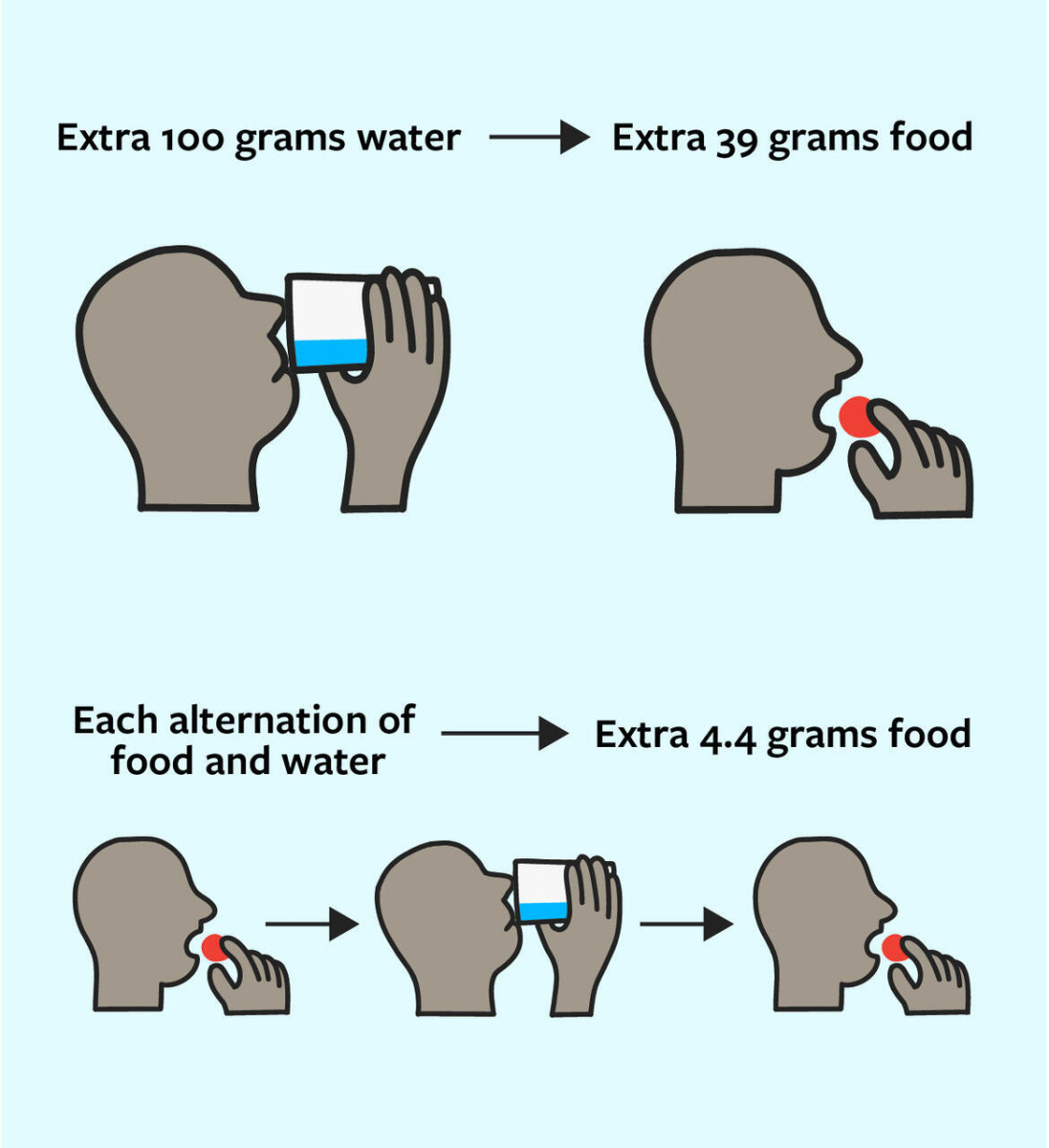
Instead, for every additional 100 grams of water participants drank, they ate about 39 more grams of food – roughly 49 more calories. People who frequently switched back and forth between bites of food and sips of water ate even more: each additional switch was tied to about 4.4 more grams of food consumed.

Researchers suspect this “switching” effect works by delaying something called sensory-specific satiety – the way a food’s appeal naturally fades the longer you eat it. Alternating with water may reintroduce contrast that keeps the meal appealing longer, delaying the point at which people stop eating.

, Click to open gallery view

Credit:Laila Milevski/Cornell University

“There’s been this widespread advice that if we drink water, it fills us up,” said Paige Cunningham, assistant professor in the Division of Nutritional Sciences in the College of Human Ecology. “But water is emptied quickly from the stomach so it likely doesn’t fill us up for long. Instead, water may increase how much we eat, providing lubrication which can speed up eating, and preventing a dry mouth which can prolong enjoyment of the food.”

Cunningham is the corresponding author on the new analysis, published in July in the journal Appetite and conducted with longtime collaborator John Hayes of Penn State’s Department of Food Science. In a second related study, the researchers measured the effect of spicy salsa on eating volume – and again found a surprising result.

“Both studies show how mealtime behaviors and food properties can significantly influence how much we eat, without us even realizing. We found that just drinking more water was associated with greater consumption, while adding a bit more spice to a snack slowed eating and decreased how much participants ate,” said Cunningham.

The drinking water study pooled data from two earlier lab experiments, 86 adults in all, who ate as much as they wanted of a lunch (either beef chili or chicken tikka masala) served with water, while researchers recorded every bite and sip on video.

One result cut against the researchers’ own expectations: Participants who drank water faster during a meal ended up eating less, not more. The paper offers this as a genuine open question rather than a settled explanation, noting it may reflect how long water sits in the mouth, or may simply track with how long a meal lasts overall. 

“This was a secondary analysis looking at associations,” Cunningham said. “We are following up on this right now so we can make those causal inferences.”

In a separate experiment, whose results published April in Food Quality and Preference, 49 adults were served tortilla chips alongside a mild or spicy salsa, once a week for two weeks; only the salsa’s cayenne content changed between conditions. The spicier version cut total snack intake by 28% – not just of the salsa itself, but of the chips too, even though the chips themselves didn’t change.

, Click to open gallery view

Credit:Laila Milevski/Cornell University

Participants ate the spicy snack about 30% more slowly than the mild one, which the researchers suspect drove the decrease: Heat slowed people down, and slower eating meant less eaten overall. Water intake during the snack was unaffected by spice level, which the researchers note rules it out as an explanation for the reduced intake.

“We were interested in whether making the salsa spicy would result in people eating the same amount of chips,” Cunningham said. “And they didn’t. The takeaway is that adding spice to one part of the snack can significantly influence how much people eat overall.”

Read together, the two papers make a case that runs against two different strands of popular nutrition advice at once: that water at meals is a simple ally in eating less, and that spicy food is something to approach with caution if you're watching what you eat. This research showed the opposite might be true: water tracked with eating more, and spice tracked with eating less.

“These strategies might help consumers achieve their goals to reduce energy intake,” Cunningham said. 

Both papers are explicit about their limits: the meals and snacks tested were a narrow set – chili, tikka masala and one chip-and-salsa combination – all eaten in a controlled lab setting, and the researchers caution against assuming the same patterns would hold for very different foods or in everyday, uncontrolled eating.

“We are looking to future experiments that explore what other factors or properties of foods can we leverage to influence behaviors,” Cunningham said.  

-30-


How bacteria sacrifice themselves to render antibiotics ineffective


University of Cologne


Bacteria can defend themselves against antibiotics with the help of an enzyme released by dying cells. That is the conclusion reached by a research group made up of researchers from the Institute for Biological Physics at the University of Cologne and Wageningen University & Research. This discovery helps scientists understand the survival mechanisms of bacteria and, as a result, to improve the effectiveness of antibiotics. The team led by Professor Dr Joachim Krug in Cologne and Professor Dr Arjan de Visser in Wageningen demonstrated that Escherichia coli (E. coli) bacteria are capable of producing an enzyme that chemically breaks down the antibiotic, thereby rendering it ineffective. Since the enzyme is released in particular by dying bacteria, the researchers refer to this as ‘altruistic cell death’, which ensures the survival of the population as a whole. These findings help explain the collective survival mechanisms of bacteria, which, in turn, contribute to improving the effectiveness of existing and future antibiotics. The results were published under the title “Contributions of intra- and extracellular antibiotic degradation to collective β-lactam survival” in the journal Proceedings of the National Academy of Sciences (PNAS). The Research was funded by the German Research Foundation (DFG) as part of the work of the Collaborative Research Centre 1310 ‘Predictability in Evolution’.

The project was prompted by a discovery made by the study’s  first author, Dr Rotem Gross (University of Cologne), demonstrating that although bacterial cultures initially die off when exposed to the antibiotic, they eventually recover and continue to grow unhindered. The team investigated two different strains of E. coli bacteria – pathogens responsible for urinary tract infections, among other conditions, as well as for septicaemia and hospital-acquired infections – and their response to the administration of beta-lactams, the most widely used class of antibiotics worldwide. The bacteria produce the enzyme beta-lactamase, which chemically breaks down the antibiotic. As soon as its concentration had fallen below a threshold level as a result of enzymatic activity, the bacterial cultures began to recover. “Therefore, the death of some of the bacteria contributes significantly to the long-term survival of the population as a whole, which can be interpreted as an example of altruistic collective behaviour,” says Joachim Krug.

In addition to the dying bacteria, the surviving bacteria also help to fight off the antibiotic. They, too, produce the enzyme, but it remains inside the cell, where it degrades the absorbed antibiotic. The dying bacteria release the enzyme. This occurs in both E. coli stands under investigation. However, the researchers noted that the extent to which cell death contributes to the reduction of the antibiotic varies considerably between the two E. coli strains studied. This suggests that the strains will also react differently to the administration of beta-lactamase inhibitors, as these are only effective in the culture medium and cannot penetrate intact cells. Beta-lactamase inhibitors are substances designed to circumvent the resistance mechanism of bacteria. A higher level of altruistic cell death therefore makes the population more susceptible to these substances, which are already routinely used to treat infections. Joachim Krug: “We were amazed by the variety of defence mechanisms that the bacteria are able to mobilise even under simple laboratory conditions.” This makes predicting the efficacy of specific antibiotics under realistic physiological conditions a major challenge, a task the team hopes to tackle in the future.


Even invertebrates can specifically distinguish between bacteria


Marine biology: Publication in Nature Communications


Heinrich-Heine University Duesseldorf

Sea anemone Nematostella vectensis 

image: 

The sea anemone Nematostella vectensis. In the enlarged section, the nematosomes – which are key to the immune system of these invertebrates – are highlighted. (Image: HHU/Nida Kaya)

view more 

Credit: HHU/Nida Kaya


Researchers from Heinrich Heine University Düsseldorf (HHU) and Kiel University (CAU) have examined immune system function in an early branching animal – a sea anemone. They discovered that the immune system of these animals is capable of selectively distinguishing between different microorganisms and thus protecting beneficial over harmful bacteria – an ability, which has only been attributed to vertebrates to date. So-called “nematosomes” play an important role in this, as the researchers now describe in the scientific journal Nature Communications. The findings emerged from work in the Collaborative Research Centre CRC 1182.

The innate immune system is seen as the first line of defence against pathogens. According to conventional wisdom, it reacts immediately, but largely non-specifically to infecting microorganisms. By contrast, the adaptive immune system of vertebrates is able to discriminate between beneficial and harmful bacteria. This is because only the adaptive immune system has antibodies and memory cells, which are trained by contact with pathogens over the lifetime of the animal.

In the study that has now been published in Nature Communications, a research team headed by Professor Dr Sebastian Fraune from the HHU Institute of Zoology and Organismic Interactions has now established in collaboration with colleagues from Kiel University (CAU) that this view needs to be updated. The researchers proved that even the sea anemone Nematostella vectensis – an animal that represents an early branch of animal evolution – can selectively distinguish between microorganisms although it only possesses an innate immune system.

The study focused on motile multicellular bodies inside the sea anemone – so-called nematosomes. The researchers showed that these structures preferentially engulf and break down non-native bacteria, while they largely spare bacteria, which naturally belong to the sea anemone and are beneficial for it – its “microbiome”. In this way, the nematosomes contribute to maintaining a stable and healthy microbial community.

The cJun gene plays a key role in controlling nematosome function. Using the genetic scissor CRISPR/Cas, the researchers explicitly switched off this gene. The modified sea anemones produced significantly fewer nematosomes and lost the ability to distinguish reliably between non-native and their body’s own bacteria. This resulted in a microbiome imbalance and the animals became more susceptible to bacterial infections.

Dr Nida Kaya is the lead author of the study and the research formed the focus of her doctoral studies: “Our findings show that the targeted identification of microorganisms is not a privilege restricted to the adaptive immune system. Rather, even invertebrates already possess sophisticated mechanisms for supporting beneficial microorganisms and selectively controlling potentially harmful bacteria.”

Professor Fraune adds: “The ability to identify microorganisms on a selective basis is thus likely to be significantly older than assumed to date and already developed early on in the evolution of these animals. This study thus supplies important new findings about the evolutionary origins of the immune system. It shows how animals have maintained a balance between beneficial microorganisms and pathogens for hundreds of millions of years.”

The study offers new perspectives for research into the innate immune system and its evolutionary development. At the same time, it raises the question as to the extent of the innate immune system’s capabilities. The sea anemone represents a good model system for decoding fundamental principles of immunobiology, which may have been preserved in many animal groups up to the present day.

Professor Fraune: “The so-called immunological memory of invertebrates is particularly interesting in this context. Once they have encountered certain pathogens, they seem to be able to respond more quickly or effectively to repeated contact, even without an adaptive immune system. This phenomenon is referred to as ‘trained immunity’ or innate immune memory.”

The nematosomes described in the study represent a promising model system for examining the cellular and molecular mechanisms of such memory effects. As the cells can differentiate between closely related bacterial strains and their activity is controlled by cJun, future research can focus explicitly on the signalling pathways, which form the basis for improved recognition of microorganisms.

CRC 1182 “Origin and Function of Metaorganisms”

The Collaborative Research Centre “Origin and Function of Metaorganisms” is an interdisciplinary network involving around 80 researchers that investigates the interactions of specific microbial communities with multicellular host organisms. It is supported by the German Research Foundation (DFG) and deals with the question of how plants and animals, including humans, form functional units (metaorganisms) together with highly specific communities of microbes.

The aim is to understand why and how microbial communities enter into these long-term connections with their host organisms and what functional consequences these interactions have. CRC 1182 brings together scientists from Kiel University (CAU), the GEOMAR Helmholtz Centre for Ocean Research Kiel, the Max Planck Institute for Evolutionary Biology in Plön, Heinrich Heine University Düsseldorf, the Leibniz Institute for Science and Mathematics Education, and the Muthesius University of Fine Arts and Design in Kiel.

Original publication

N. H. Kaya, M. Abukhalaf, G. Fuentes, J. Taubenheim, U. Hentschel, A. Tholey & S. Fraune; c-JUN controls microbial colonization via selective phagocytosis in the sea anemone Nematostella; Nat Commun 17, 6087 (2026)

DOI: 10.1038/s41467-026-75511-w

Nematosome 

Images of a nematosome taken using a scanning electron microscope (left) and a confocal microscope (right). (Image: HHU/Nida Kaya)

Credit

HHU/Nida Kaya


Wild snapdragons paint themselves in subtle shades to attract bees


John Innes Centre
Wild Snapdragon 

image: 

Flower colour patterns have been selected over evolutionary time to favour the dance and visit of bees.

view more 

Credit: Annabel Whibley


Just as careful blending of eye shadow can make a difference to our looks, a recent study has shown how flowers go to considerable trouble to fine tune their shades.  In the relentless competition to attract bees, a slight edge can make the difference between life and death of a gene. 

John Innes Centre researchers in the group of Professor Enrico Coen working alongside colleagues in Austria, China and Australia, investigated shades of yellow in wild populations of snapdragons (Antirrhinum majus). 

The study makes use of a remarkable natural research resource in the Pyrenees – a hybrid zone where two varieties meet.  One variety has yellow flowers with a magenta spot to highlight the bees entry point; the other has a complementary signpost, magenta flowers with a yellow spot.   

The colour difference between varieties depends on seven genes which interact to control how the flower paints itself magenta and yellow. Three control the magenta paintbrush, four the yellow. 

In the hybrid zone, genes from the two varieties mix to give a display of different colour combinations, including orange and white.  While perhaps appealing to a gardener, the hybrid colour combinations are less attractive to bees, so natural selection keeps the geographic region of gene mixing narrow, only 1 km wide. The narrowness of the mixing region allows researchers to estimate the strength of natural selection on each gene. 

The team has shown how four paintbrush genes work together to create a gradient of yellow. For the variety with magenta flowers, the gradient is steep, producing a yellow spot.  For the variety with yellow flowers, the gradient is shallow, giving a graded blush of yellow.  The effect of an individual paintbrush can be very subtle, hardly visible to the human eye, yet detectable by bees, bringing it under the radar of natural selection.  The study shows how the effects of the four genes multiply to produce the two different yellow gradients.  

First co-author of the study Dr Desmond Bradley said: “We have looked at how fascinating colour patterns in nature are formed and shaped, the genes that make such patterns and how their working together has been selected over evolutionary time to favour the dance and visit of bees.” 

“Together these four genes act together to precisely hone the yellow gradient. Some genes have very subtle effects, but each contributes to the gradient pattern that is monitored by the bee. Even those patterns which we could hardly discern can be distinguished by the bee in the hybrid zone.” 

Molecular gradients control a wide range of processes in biology, from butterfly wing colour patterns to drosophila egg development.  

But it was not known how natural selection acts to hone such gradients, nor if it acts on one gene or multiple genes with different degrees of effect. 

This study addressing this question offers a mechanism that may explain other molecular gradients in biology. 

The Shaping of developmental gradients through selection on multiple loci in Antirrhinum, is in Science Advances  


Cave-dwelling snail discovered in Greece, named for Hermes and the nymph who nurtured him


Pensoft Publishers
Cyllena hermes, views of a single immature specimen 

image: 

Cyllena hermes, views of a single immature specimen

view more 

Credit: Radea et al., 2026


A team of researchers from the National and Kapodistrian University of Athens has discovered a completely new genus and species of subterranean freshwater snail in the Peloponnese region of southern Greece. The species, Cyllena hermes, is small, unpigmented, eyeless aquatic snail fully adapted to life underground.

The full details of the discovery have been published as a research article in Subterranean Biology, a peer-reviewed open-access journal published by the International Society for Subterranean Biology.

The new snail is currently known to exist in only one highly localized geographic location in the Peloponnese region of southern Greece. Researchers discovered the species within a single karstic spring situated at an elevation of approximately 610 meters on the foothills of Mt. Kyllini in Korinthia. The groundwater from this spring emerges from the carbonate bedrock of the mountain to form a small stream that flows toward Lake Stymphalia, tapping into the extensive and dynamic underground hydrological network of the Stymphalia closed karst basin. 

Because the snail relies entirely on this single, isolated water source, it is highly sensitive to environmental stressors such as prolonged droughts and water extraction for surrounding neighboring areas, leading the research team to classify the species as Vulnerable under the IUCN Red List criteria.

When establishing this new monotypic genus and species, the researchers chose a scientific name steeped in ancient Greek mythology tied directly to the mountain where the snail was found. The genus name, Cyllena, acts as a tribute to Cyllena (Κυλλήνη), a nymph of Mt. Kyllini who, according to Greek myth, nurtured god Hermes. The species name, hermes, honors Hermes (Ἑρμῆς) himself, the divine messenger and one of the twelve primary Olympian gods from ancient Greek mythology, who is famously said to have been born in a cave on Mt. Kyllini.

This significant finding highlights the rich, yet often undocumented biodiversity dwelling within Greece's extensive underground karst ecosystems, while also bringing attention to the fragile nature of these highly localized environments.

Original source:
Radea C, Protopapas D, Parmakelis A, Koskeridou E (2026) From the dark to the light: A new genus and species of stygobiont hydrobiid (Caenogastropoda, Truncatelloidea) from southern Greece. Subterranean Biology 57: 1-21. https://doi.org/10.3897/subtbiol.57.189090