Friday, July 31, 2026


British oil giant BP prepares to sell North Sea business
A logo of BP at a gas station in London, on Nov. 1, 2022
Copyright AP Photo/Kin Cheung, File

By Indrabati Lahiri
Published on

Amid higher windfall taxes and volatile global energy markets, BP's proposed sale could bring an end to around 60 years of North Sea production under the British energy giant’s ownership.

British oil and gas giant BP said on Friday that it had launched a process to market its North Sea business for a potential sale, as it looks to focus on its “highest-value opportunities”.

Its North Sea portfolio off the UK coast comprises five production hubs and employs about 1,100 people, BP added in a statement.

Its North Sea portfolio off the UK coast comprises five production hubs and employs about 1,100 people, BP added in a statement.

“The UK has been our home for more than 100 years and will continue to play an important role in our future. We’re proud of the jobs we create, the contribution we make to the UK economy, and the work we do to keep energy flowing every day,” BP chief executive Meg O'Neill said in the statement.

She added: “The North Sea remains integral to the UK's energy system. However, as we focus our portfolio and direct capital to our highest-value opportunities, we believe our North Sea business will be better positioned as part of another company. It has world-class people, resilient assets and a proud heritage, and it is precisely these qualities that can attract an owner ready to back its next chapter."

O'Neill said BP would seek a deal that recognised the business’s “people, assets and heritage”.

The announcement came a day after new UK Prime Minister Andy Burnham signalled that he could take a more flexible approach to North Sea oil and gas production, amid concerns about the UK's energy security and volatile global energy markets.

US President Donald Trump has repeatedly called on Britain to ramp up oil and gas production in the North Sea. Burnham said on Thursday that he intended to take “a pragmatic approach” to developing and using the region’s resources.

BP said it would continue to focus on operating the business safely and reliably throughout the sale process.

Why North Sea production is losing its appeal

BP's North Sea business currently employs approximately 1,100 workers, and the company has operated in the region for more than 60 years. In 2025, the business produced around 117,000 barrels of oil equivalent a day, accounting for approximately 5% of BP’s global oil and gas output.

However, the ageing basin has steadily lost some of its appeal in recent years as production has declined and the UK’s frequently changing tax regime has increased the burden on producers.

However, the basin has steadily lost some of its appeal in recent years due to declining production, higher windfall taxes and the previous Labour government’s decision not to issue new licences to explore new oil and gas fields.

Oil and gas companies have also criticised the windfall tax and broader policy uncertainty, arguing that they have discouraged investment.

The company is now choosing to focus more on its core oil and gas businesses, after scaling back its investments in renewable energy. The strategic reversal followed pressure from investors to improve returns and reduce debt.

Over the past year, BP has agreed to or completed several divestments. These include an agreement to sell a 65% controlling stake in Castrol, its lubricants business, to infrastructure investment firm Stonepeak. The deal is expected to close by the end of 2026, subject to regulatory approval.

In the last year, the company has already agreed to or completed a number of divestments, including the sale of Castrol, its lubricants business. This is in an attempt to further simplify its portfolio, focus investment on core upstream, downstream and trading operations and bolster its balance sheet.

BP's move follows similar retreats by several other global energy companies. ExxonMobil, Chevron and ConocoPhillips have sold North Sea assets, while Shell and Equinor have combined their offshore UK businesses in a joint venture. TotalEnergies has also reduced and reorganised parts of its regional portfolio as companies respond to declining production and seek more profitable projects elsewhere.

 

UK announces £8 billion investment in nuclear submarines

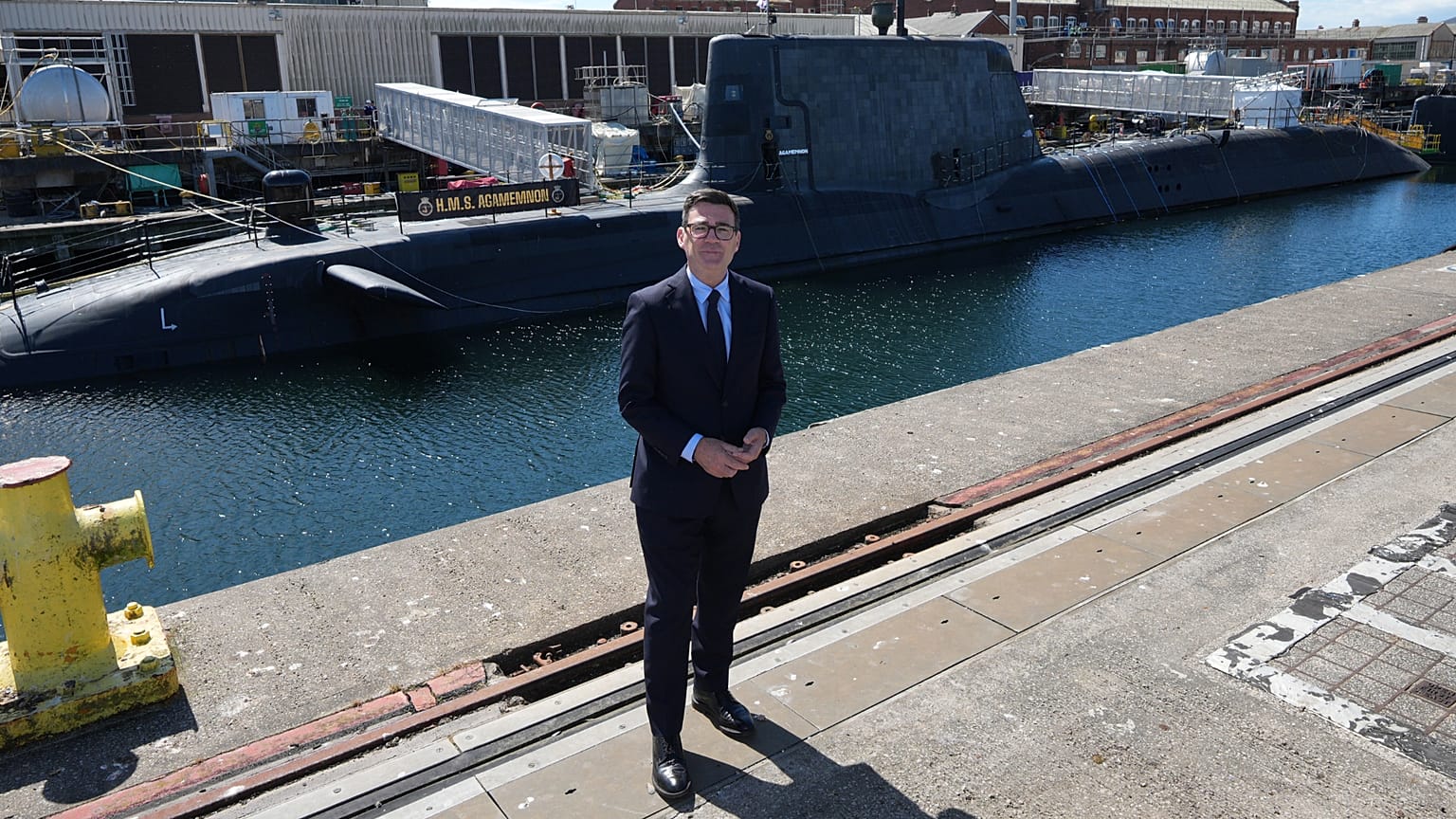
British Prime Minister Andy Burnham poses in front of HMS Agamemnon as he visits Submarine Academy for Skills and Knowledge at BAE Systems, in England, July 30, 2026.
Copyright Christopher Furlong/Pool Photo via AP


By Emma De Ruiter
Published on


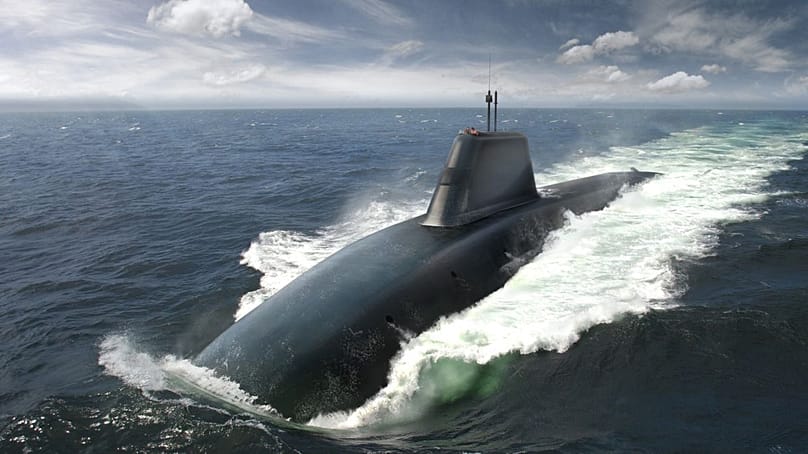
UK defence contractor BAE Systems has been tasked with delivering four Dreadnought Class nuclear-powered submarines as part of Britain's nuclear deterrent.

The United Kingdom has announced it plans it invest £8.4 billion (€9.8 billion) for the next phase of its Dreadnought Class nuclear submarine programme.

"A major £8.4bn investment in the UK's nuclear deterrent, delivering jobs and opportunity for young people for years to come," Prime Minister Andy Burnham's office said in a press release.

UK defence contractor BAE Systems is set to receive £5.9 billion (€6.9 billion) with the remaining going to the wider supply chain.

BAE Systems is taking decades of flight controls expertise underwater on-board the UK’s next generation submarine, Dreadnought.
BAE Systems is taking decades of flight controls expertise underwater on-board the UK’s next generation submarine, Dreadnought. AP Photo/BAE Systems

BAE Systems has been tasked with delivering four Dreadnought Class nuclear-powered submarines as part of Britain's nuclear deterrent.

The investment was set to help the first of four submarines, the HMS Dreadnought, complete its sea trials and "be ready to enter service with the Royal Navy in the early 2030s", Downing Street said.

Burnham's government said the programme would support 47,000 jobs and apprenticeships over the next decade.

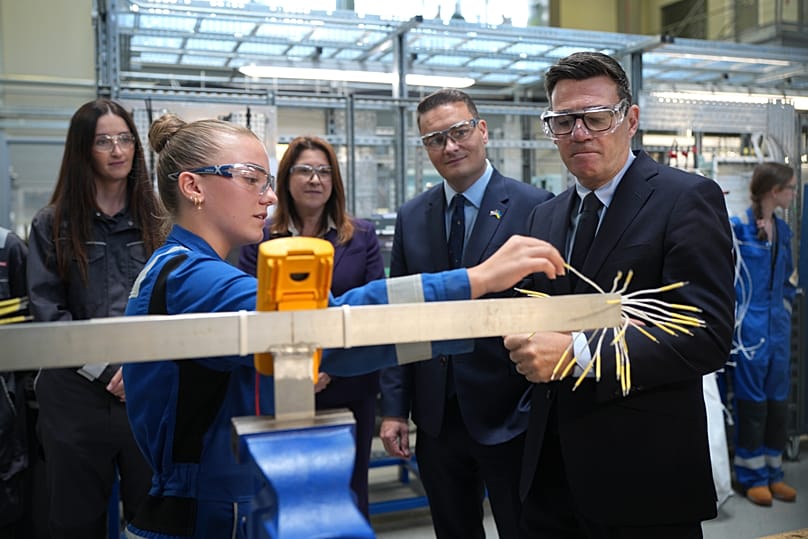
British Prime Minister Andy Burnham and Defence Secretary Wes Streeting visit Submarine Academy for Skills and Knowledge at BAE Systems, in England, July 30, 2026.
British Prime Minister Andy Burnham and Defence Secretary Wes Streeting visit Submarine Academy for Skills and Knowledge at BAE Systems, in England, July 30, 2026. Christopher Furlong/Pool Photo via AP

Defence Secretary Wes Streeting said the investment "secures our commitment to deliver Dreadnought Class submarines by backing British industry".

The UK government has earmarked more than £63 billion over the next four years to fund its nuclear deterrent as part of its Defence Investment Plan.

That includes the Dreadnought submarines and new attack submarines part of its AUKUS military alliance with Australia and the United States.

FIFA insists it will proceed with private investor plan proposal despite UEFA boycott threat
Head of FIFA Gianni Infantino presses through with private investing plan despite widespread criticism. The Associated Press. All rights reserved


The Associated Press. 
By Gael Camba  & AFP
Published on 31/07/2026 - EURONEWS

FIFA vowed on Friday to press ahead with an "open and democratic" consultation on a proposed private investment plan, despite widespread opposition to the proposal.

"Nobody is selling football," FIFA said in a statement hitting back at widespread criticism over a plan to allow private investors to acquire stakes in upcoming World Cup tournaments.

"This is not something FIFA would ever entertain." In a statement, FIFA said all of its member associations should have a chance to consider the plan, calling for an "open and democratic" consultation.

But it appeared to back off from establishing a public equity entity, the so-called FIFA Forward Enterprise (FFE), if all member countries do not agree. It was not immediately clear, however, how the process would proceed in substance.

The Union of European Football Associations (UEFA) had threatened to boycott the World Cup over Infantino's plan on Thursday afternoon. Soon after, the football federations of CONCACAF (North and Central America), also voiced their unanimous opposition to the plan.

UEFA and CONCACAF comprise of 55 and 41 member associations respectively. The total number of member associations under FIFA is 211, and the plan would need to be approved by a simple majority in order to pass.

'We will proceed with the consultation process'

"Our planned consultation process was disrupted by incorrect media reports. We will proceed with this consultation process to ensure that each (member association) has the ability to express its vote based on facts."

FIFA has said the plan it announced on Tuesday could raise up to $4.2 billion based on a valuation of $20 billion for the FIFA Forward Enterprise (FFE), the commercial subsidiary it proposed to run events such as the World Cup.

If approved, the project could provide each of FIFA's 211 member associations with a one-off payment of $20 million in early 2027 and increase their funding allocation for the 2027-2030 cycle from $8.0 million to $20 million.

Private investors would be allowed under the proposal to acquire stakes in the company but would remain minority shareholders. The original plan involves selling stakes of up to ​20% to external investors, including Joshua Kushner, whose brother Jared is US President Donald Trump’s son-in-law.

But FIFA said that without the support of FIFA's 211 member associations, “FIFA’s commercial activities would remain unchanged. FFE would not be established.”

'The World Cup is not for sale'

UEFA said in its statement that none of its national teams would participate in any FIFA competition "for so long as these proposals remain alive".

"The World Cup cannot be treated as an investment product... No part of it should ever be surrendered to private investors. The World Cup is not for sale," it said.

FIFA president Gianni Infantino on Wednesday had described the initiative as a "golden opportunity to turbocharge the development of the game globally".

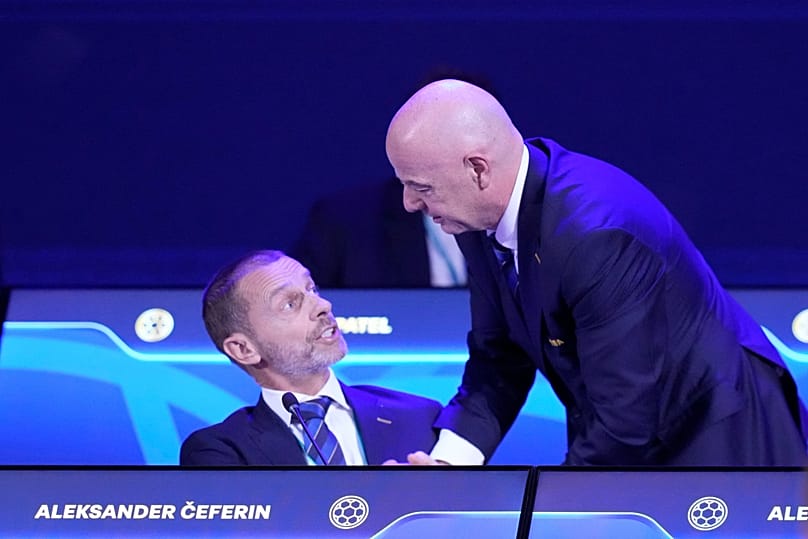
President Gianni Infantino, right, talks to UEFA President Aleksander Ceferin during the FIFA 75th Congress at the Conmebol Convention Center in Luque, Paraguay. The Associated Press. All rights reserved

However, UEFA President Aleksander Ceferin, who boycotted the World Cup final earlier this month to show his displeasure with FIFA which pre-dates this latest incident, said there was no place in world football for such a model.

"Football's future cannot be dictated by the expectations of those whose first duty is to maximise financial return," he said.

Several leading European federations and European Union officials also criticised the proposal as another step in the commercialisation of sport, while also raising concerns about potential conflicts of interest.

The EU praised UEFA on Thursday for "defending the integrity of the game".

"Proud to see Europe's football associations leading on governance, standing firm on their principles," European commissioner for sports Glenn Micallef said in a social media post.

'Game over, Gianni #InfantinOUT'

UEFA said in its statement on Thursday that the World Cup was "one of football's greatest sporting legacies" and described the proposal as "a failure of leadership" and "governance by intimidation".

Infantino’s high-stakes financial gambit now could threaten his previously secure 11-year presidency of FIFA as anger and frustration with him rise among soccer stakeholders, including three of the six continental bodies.

FIFA has set a 18 November deadline for potential candidates to declare in a presidential vote of the 211 members scheduled next March in Rabat, Morocco.

Infantino had seemed — 11 days ago after the World Cup final in East Rutherford, New Jersey — to have a clear path to being re-elected unopposed for a fourth and final term in office through 2031, despite a furore over letting United States forward Folarin Balogun play against Belgium despite a red card in his previous game.

"Game over, Gianni #InfantinOUT," the Football Supporters Europe group, which advises UEFA on fan issues such as ticket prices, posted after the boycott threat.

The next scheduled FIFA tournament is within weeks in Europe — the Women’s Under-20 World Cup hosted by Poland from September 5 — and the four British federations comprise FIFA’s only bidder to host the 2035 Women’s World Cup. That decision is due 23 November.


Breaking news. UEFA announces boycott of future FIFA World Cups over investment plan


Retirement ages today vs the future: How long will Europeans work?

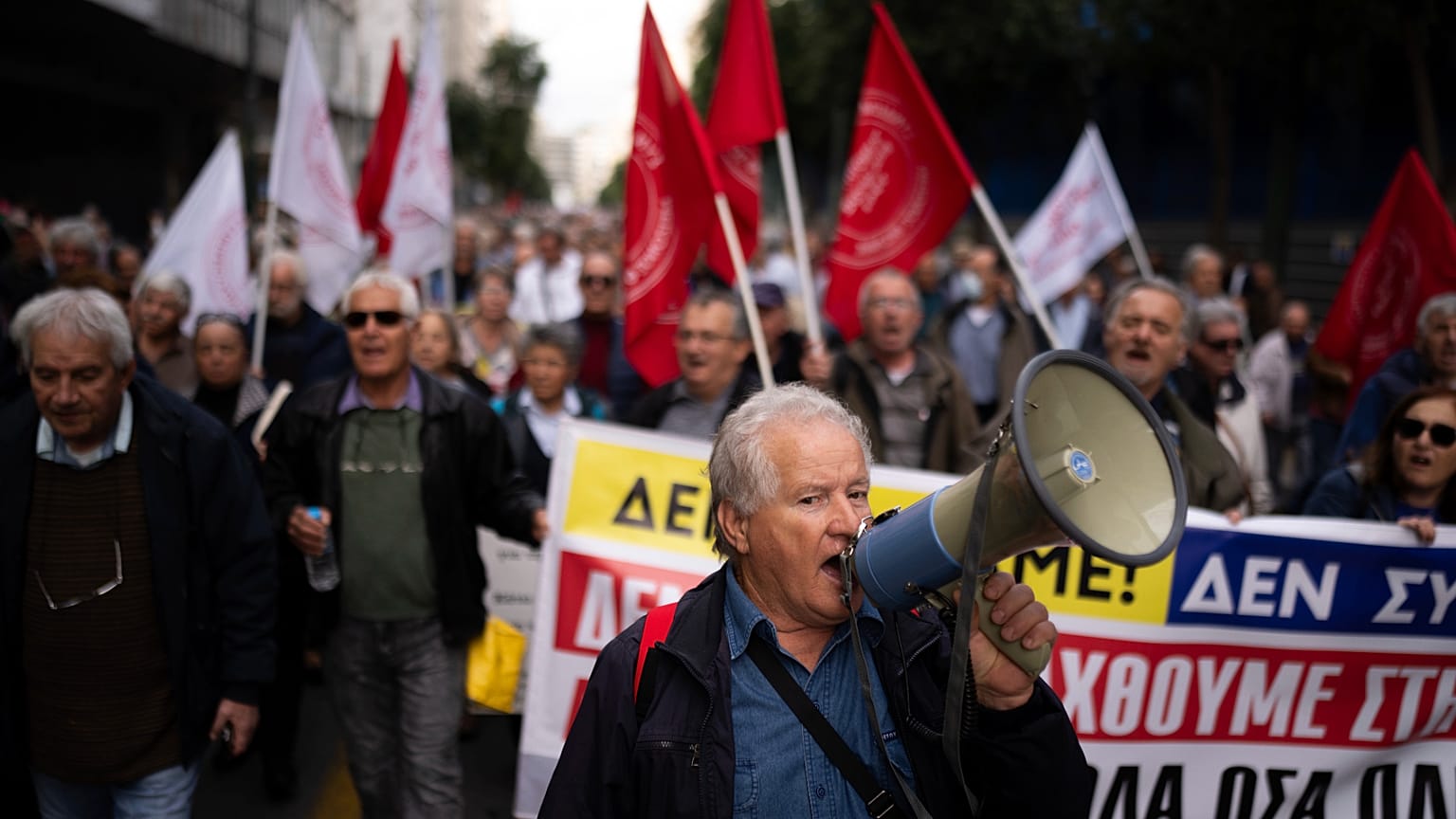
Pensioners protest in Athens, on Friday, Nov. 24, 2023.
Copyright Copyright 2023 The Associated Press. All rights reserved

By Servet Yanatma
Published on

The retirement age in the EU will rise from 64.7 to 66.9 years for men and from 64 to 66.6 years for women by the late 2060s.

Around two-thirds of European countries are expected to raise the retirement age for men, while three-quarters will raise it for women

According to Euronews’ analysis of data for 32 countries, men face higher retirement ages in 21 and women in 24.

Across the EU, the normal retirement age is expected to rise by about 2.1 years for men and 2.6 years for women, according to the Organisation for Economic Co-operation and Development’s (OECD) Pensions at a Glance 2025 report.

The comparison is between people retiring in 2024 and those who entered the labour market at 22 that year, assuming an uninterrupted career. The latter group would typically retire in the late 2060s.

“Increasing retirement ages remains a common strategy to improve the financial sustainability of pension systems without reducing pension levels,” the report said.

“Alternatively, financial sustainability can be pursued through raising contributions paid or reducing benefit levels.”

So, where will retirement ages rise the most, and which countries will have the highest?

Where do men retire earliest and latest today?

According to OECD data as of 2024, the highest retirement age for men is 67, recorded in Denmark, Norway, Iceland and the Netherlands. The EU average is 64.7 years.

Turkey is a significant outlier, with a retirement age of 52. The next lowest is 62, recorded in Greece, Slovenia and Luxembourg.

Among Europe’s five largest economies, Germany has the highest retirement age for men, at 66.2, while France has the lowest, at 64.3.

Where will men’s retirement ages reach 70 or higher?

Across the EU, men who entered the labour market at 22 in 2024 are projected to retire at 66.9 on average, around 2069.

Denmark will have the highest retirement age for men, at 74. By the late 2060s, it will reach 71 in Estonia and 70 in Italy, the Netherlands, Sweden and Cyprus.

The lowest retirement age for men will be 62 in Slovenia and Luxembourg.

Among Europe’s largest economies, men in Italy will have the highest future retirement age, at 70, followed by those in the United Kingdom, at 68, and Germany, at 67. The retirement age for men will be 65 in both France and Spain.

Turkey faces the biggest rise for men: 13 years

Men in Turkey will face the largest increase, with their retirement age projected to rise by 13 years, from 52 to 65.

Denmark will see a seven-year rise for men, followed by Estonia, Italy, Slovakia and Cyprus, where the increase will be at least five years.

Men’s retirement age will rise by four years in both Sweden, reaching 70, and Greece, reaching 66. It will increase by three years in the Netherlands, to 70, and Finland, to 68.

The increase will also be at least two years in Portugal and the UK, where the retirement age will reach 68, as well as Czechia, Romania and Belgium, where it will reach 67.

Men in Germany and France will face increases of less than one year, while their retirement age will remain unchanged in several other countries.

Where will women’s retirement ages be highest?

For women, Denmark, the Netherlands, Iceland and Norway currently have the highest retirement age, at 67. The EU average is 64.

Turkey has by far the lowest current retirement age for women, at 49, followed by Poland at 60.

Across the EU, women who entered the labour market at 22 in 2024 are projected to retire at 66.6 on average — 2.6 years later than women who retired in 2024.

As with men, Denmark will have the highest future retirement age for women, at 74. It is projected to reach 71 in Estonia and 70 in Italy, while women in the Netherlands, Sweden and Cyprus will also retire at 70.

Within the EU, Poland will continue to have the lowest retirement age for women in the late 2060s, at 60.

Among Europe’s largest economies, women in Italy will have the highest retirement age, at 70, followed by those in the UK, at 68. The retirement age for women will reach 67 in Germany and 65 in both France and Spain.

As Turkey's current retirement age for women is exceptionally low, the country will record the largest increase: 14 years, from 49 to 63.

The rise will be 6.2 years in Italy and seven years in Denmark. Increases of at least four years are also projected in Estonia, at 6.3 years; Slovakia, 5.8; Cyprus, five; Romania, 4.8; Austria, 4.5; and Sweden and Greece, four years each.

In Spain, the retirement age for women will remain at 65. Germany and France will see a rise of less than a year, while the UK will see a two-year increase.

Ageing populations put pension systems under pressure

In some countries, changes in life expectancy will affect the retirement age. For example, Denmark may soften the current one-to-one link between retirement age and life expectancy.

In that case, “the projected future normal retirement age would be lower than 74”, according to the report.

The report warns that populations across the OECD will age rapidly over the next 25 years. For every 100 people aged between 20 and 64, the number aged 65 and over is projected to rise from 33 in 2025 to 52 in 2050. In 2000, the figure was 22.


LA REVUE GAUCHE - Left Comment: Search results for SOCIAL SECURITY


LA REVUE GAUCHE - Left Comment: Search results for PENSIONS


Behind Europe’s mega fires: Would France and Spain still be ablaze if it weren’t for climate change?

Firefighters work to extinguish a fire in the forest near Blagon, during wildfires in southwestern France, Wednesday, July 29, 2026.
Copyright Copyright 2026 The Associated Press. All rights reserved

By Liam Gilliver
Published on

Climate change made recent fire-prone conditions at least twice as likely in southwestern France and at least 20 times as likely in central Spain, new analysis shows.

Human-induced climate change made the fire-prone conditions that have devastated large swathes of Europe up to 20 times more likely, scientists have warned.

Spain and France have been grappling with uncontained blazes that have scorched more than 120,000 hectares of land and forced around 300,000 people to evacuate their homes. The EU activated its emergency response system, sending firefighting aircraft and ground vehicles to tackle the blazes – but warned it was quickly running “out of capacity”.

Earlier this week, a wildfire in France grew so powerful that its own smoke column turned into a thunderstorm, generating lightning that struck the ground and ignited even more fires. It also produced heavy winds that pushed the flames in new directions.

More recently, wildfires have broken out in Greece – killing three firefighters on the island of Crete – while hundreds have been evacuated along Türkiye’s western and southern coasts.

While the blazes have garnered global media attention, many outlets have avoided linking Europe’s so-called ‘mega fires’ to climate change.

Has climate change increased the likelihood of Europe’s mega fires?

A new study from World Weather Attribution (WWA) analysed historical weather observations – but not climate models – to see how fire-prone weather conditions have changed over time.

To do this, they used a metric called the Daily Severity Rating (DSR), which incorporates hot, dry, and windy conditions and reflects how difficult a fire is to suppress once it has started. The researchers looked at the seven-day period with the highest DSR across southwestern France and central Spain, where the fires occurred.

They found that human-induced climate change made the fire-prone conditions at least twice as likely in southwestern France and at least 20 times as likely in central Spain. The scientists note that these are conservative estimates.

“When wildfires break out simultaneously across different regions, it becomes clear that human-induced climate change is not only increasing the likelihood of more extreme fires but also their synchronicity,” says Andreia Ribeiro, a climate scientist at the Helmholtz Centre for Environmental Research in Germany.

“That comes with a real cost, as overlapping fire extremes make it harder for countries to cooperate and share firefighting resources with each other when that support is needed most.”

The analysis found that in today’s climate, events of this intensity are expected to occur once every 20 years in southwestern France and once every six years in central Spain.

Dr Clair Barnes, a research associate in extreme weather and climate change at the Centre for Environmental Policy at Imperial College London, says the wildfires aren’t just a case of “bad luck” and are a “clear sign on the escalating impacts of anthropogenic warming”.

“A wet winter, followed by this intensely dry summer and a succession of heatwaves has left forests loaded with dry fuel, and relentless heat – fuelled by human-caused climate change – has created the conditions for sparks to take hold and become massive, dangerous wildfires,” she says.

Yesterday (30 July), a separate study published in the journal Scientific Reports analysed national wildfire records from Portugal, Spain, France, Italy and Greece alongside weather and climate data between 1981 and 2025.

Researchers found that in parts of France and Spain, the intensity of fire-promoting weather had increased by up to 50 per cent between 2016 and 2025 compared with 1981 to 2010.

The number of days with “highly fire-promoting conditions” also increased from fewer than 10 days per summer in 1981 to 2010 to around 25 days over the last decade in parts of each country studied.

UN urges Europe to move from fossil fuels ‘faster’

Following WWA’s attribution analysis, UN climate change Executive Secretary Simon Steill says Europe’s mega fires show how fast climate change-driven extreme heat and dry landscapes can turn wildfires into “devastating national disasters”.

“Humanity continuing to burn colossal amounts of coal, oil and gas is baking our planet, making these conditions more dangerous, and these mega fires more deadly and destructive,” he says.

“But the solutions are equally clear: all countries must move faster from fossil fuels to renewables and protect people from worsening climate impacts, from wildfires, to megastorms and floods, to droughts hitting food production.”

According to the European Commission, the number of people living near wildland and exposed to high-to-extreme fire danger levels for at least 10 days per year in the EU would grow by 15 million with just 3°C of warming. Human-caused climate change has already pushed the global surface temperature up by approximately 1.3-1.5℃ compared to pre-industrial levels.


White House's Rick and Morty AI parody featuring Donald Trump sparks huge backlash

Screenshot of the now-viral clip posted by the White House which parodies Rick and Morty
Copyright Screenshot The White House/X


By David Mouriquand
Published on

“People can’t afford gas, groceries, rent, and healthcare,” wrote former congresswoman and once Trump ally Marjorie Taylor Greene in response to Rick and Morty parody video posted by the White House.

An AI-generated video parodying the hit show Rick and Morty was posted on the White House’s official social media channel and has sparked backlash, with many pointing out its insensitivity to the current climate.

The now-viral clip is based on the opening sequence of the popular animated science-fiction sitcom created by Dan Harmon and Justin Roiland.

It sees Donald Trump and J.D. Vance piloting a flying saucer as they are chased by a winged demon, showing a space alien being arrested by border czar Tom Homan, and Senate Minority Leader Chuck Schumer removing his face to reveal he is a robot.

The parody video posted by the White House
The parody video posted by the White House Screenshot The White House/X

The clip ends with a glowing "MAGA" title.

Screenshot of the viral clip
Screenshot of the viral clip Screenshot The White House/X

The short clip is consistent with many posts by the White House and Trump, who attempt to harness trending memes, shows and movies to drive their brand.

Trump has heavily relied on AI-generated visuals and pop culture pilfering antics to ridicule his political adversaries and marginalised groups – something Kurt Sengul, a researcher at Macquarie University in Australia, ferred to as “memetic warfare” when speaking to Euronews Culture.

However, the timing of this recent video's release has led critics, including former congresswoman and former Trump ally Marjorie Taylor Greene, to slam the video as "tone-deaf", "unserious" and "pathetic" - especially at time when the US is at war with Iran and prices continue to rise.

“People can’t afford gas, groceries, rent, and healthcare and this is the weird embarrassing crap the official White House account is putting out,” wrote Marjorie Taylor Greene.

One social media user wrote: “I know it’s all become background noise but the official White House account posting an AI Rick and Morty parody just really feels like new lows in having no shame, abjectly pathetic and pure uncut Reddit at the same time - not to buy into norms but there used to be some dignity.”

Many are calling for the creators of Rick and Morty to sue, while commentator Harry Sisson added: “WTF…We just want health care and not whatever the hell this is.”

The bizarre post from the White House coincides with Dan Harmon admitting that aspects of Trump and his predecessor Barack Obama have inspired his new Rick and Morty spin-off cartoon, titled President Curtis.

The series follows President Andre Curtis from Rick and Morty, showing how he and his staff respond to interdimensional and paranormal crises.

Harmon told The Hollywood Reporter: “Curtis has a naïveté that you could overlap with Trump, who is like, ‘I’m an outsider, and I consider this job simple, and I don’t care about the bureaucracy of it.’ On the Obama side, it’s the charmer and the guy who gets organic joy in being liked – that whole rock star aspect of Obama.”

Harmon's new show, President Curtis, premiered on Adult Swim on 26 July.