It’s possible that I shall make an ass of myself. But in that case one can always get out of it with a little dialectic. I have, of course, so worded my proposition as to be right either way (K.Marx, Letter to F.Engels on the Indian Mutiny)
Saturday, August 01, 2026
‘Idiot Reich’: US State Department Map Mislabeled African Nations
“This is what happens when the US Department of State fires career experts and tries to have AI conduct diplomacy.”
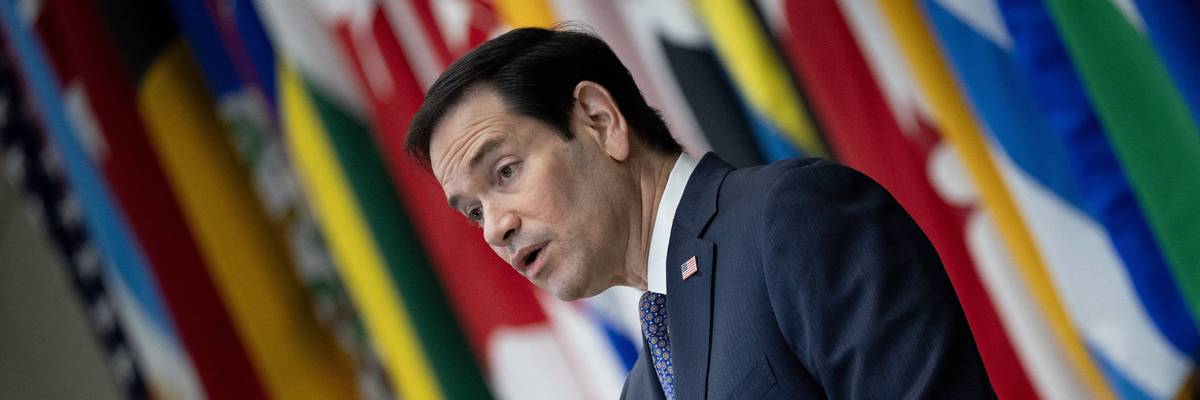
US Secretary of State Marco Rubio makes opening statement during an event on July 16, 2026, in Washington, DC. (Photo by Brendan Smialowski / AFP via Getty Images)
Those were just some of the responses to Thursday reporting on a US Department of State map presented at a global conference in Brazil that mislabeled every African country it included.
“Reuters viewed a video of the presentation given at the AIDS 2026 conference in Rio de Janeiro, which shows the errant map displayed halfway during a presentation about the State Department’s new health agreements,” the news agency reported.
“A Reuters analysis found the image of the map included in the presentation contained an artificial intelligence watermark that signals it was made with OpenAI tools,” the outlet noted. “The company said it was investigating the report.”
While Jeff Graham, who oversees the President’s Emergency Plan for AIDS Relief (PEPFAR) and was speaking at the conference, did not respond to Reuters’ requests for comment, the State Department said that “we take full responsibility for the confusion and misrepresentation it caused for attendees, including our African partners.”
Critics around the world, including Democrats in Congress, blasted the department under Secretary of State Marco Rubio and President Donald Trump, who have reduced staff by 3,000 between layoffs and voluntary departures.
A recent Financial Times article headlined “RIP the US State Department” noted that “as of late June more than half of American ambassadorships were vacant, including high-status posts from Germany to Saudi Arabia,” and nearly 80% of American embassies across Africa lack an ambassador.
Sharing the Reuters reporting on social media Thursday, Nick Cleveland-Stout, a research associate in the Democratizing Foreign Policy program at the Quincy Institute for Responsible Statecraft, commented, “Checking in on the whole defund the State Department thing.”
Former US Ambassador to Jamaica Luis Moreno said that “this is the pathetic result when you fire career, nonpartisan diplomatic personnel and replace them with unqualified partisan hacks who rely on faulty AI.”
US Senate Foreign Relations Committee Ranking Member Jeanne Shaheen (D-NH) declared: “What an embarrassment. This is what happens when the US Department of State fires career experts and tries to have AI conduct diplomacy.”
Congressman Jonathan Jackson (D-Ill.) stressed that “Trump’s Department of State showed up to a global conference with an AI-generated map that mislabeled nations across Africa. Every. Single. One. This isn’t just an embarrassing mistake.”
“It’s a symbol of an administration that has treated a continent of 1.5 billion people as an afterthought while China is deepening engagement across the African continent,” he argued. “That’s what happens when you hollow out expertise and stop taking diplomacy seriously. Our African partners and the American people deserve better.”
Raskin Launches Probe of Scheme to Sell Insider Access to Trump Truth Social Posts
“This White House-Wall Street-Trump-Business feedback loop represents the depraved essence of insider trading,” said the Maryland Democrat.
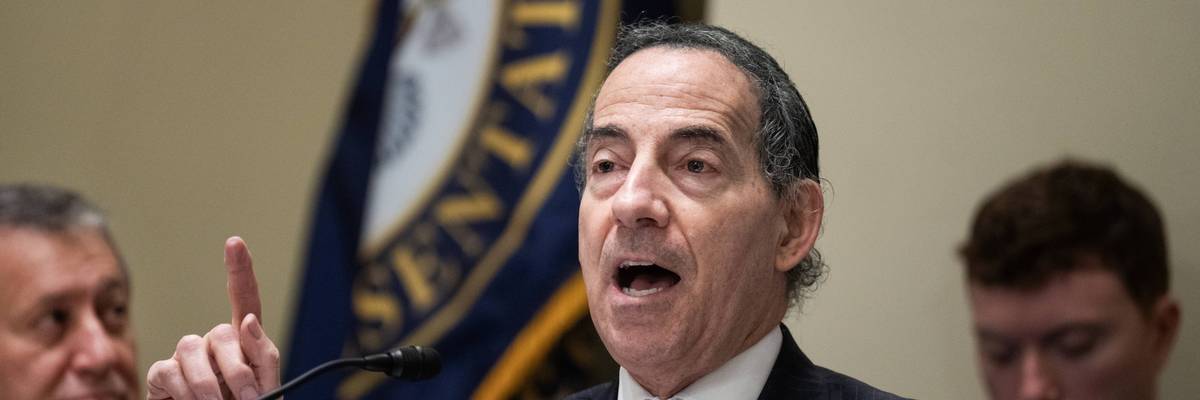
US Rep. Jamie Raskin (D-Md.) speaks during a congressional hearing on June 10, 2026. (Photo by Tom Williams/CQ-Roll Call, Inc. via Getty Images)
“Are you helping the president sell people advance access to market-moving information?”
That’s the opening line of a Thursday letter that US House Judiciary Committee Ranking Member Jamie Raskin (D-Md.) sent to Kevin McGurn, interim CEO of President Donald Trump’s Trump Media & Technology Group (TMTG) Corp.
TMTG runs Trump’s Truth Social platform and earlier this month announced plans to launch “Truth API” by August 1. API, or application programming interface, lets software applications talk to each other. Critics have warned that the new endeavor will give Wall Street firms faster access to posts by the president and other top accounts.
“Trump Media’s target market for buyers of this service is ‘high-frequency and algorithmic trading firms,’ which would each pay a handsome $100,000 monthly subscription fee,” Raskin wrote. “Nearly half of each fee would go directly into the pocket of Donald Trump, who owns roughly 41% of the company’s shares through a trust that he continues to control.”
“Put another way, Trump Media will soon be selling early access to President Trump’s so-called ‘Truth’ missives to the most sophisticated investment firms in the world,” he stressed. “This insider-information scheme will enable Wall Street to profit from the president’s frequent market-moving posts on major businesses and cash in on swings in stock prices caused by the president’s buying and selling (or pumping and dumping, if you prefer) of publicly traded stocks to unwitting retail investors.”
As Investopedia pointed out Thursday: “In recent months Trump has posted about new developments in the Iran War, which is particularly important for buyers and sellers of futures contracts who are trying to ascertain where oil prices are headed. Over the past year, he has also posted about tariff policy, government investments in publicly traded companies, and other corporate news developments.”
Additionally, as Raskin highlighted, “Trump has promoted over 20 companies on his Truth Social account shortly after purchasing the companies’ stocks, including government contractors where the Trump administration exerted substantial ability to move markets in those companies’ favor. Donald Trump Jr.'s investment firm, 1789 Capital, has posted a staggering 200% investment return since his father’s return to the White House, with the president recently admitting that his oldest sons are coventurers in his corruption.”
Once the new service is up and running, “whenever President Trump uses Truth Social to announce that a ceasefire is imminent, or prematurely leaks US jobs data, his customers will now be able to front-run the market using their privileged access to his social media posts, leaving retail investors, pension plans, and retirement accounts irreparably disadvantaged,” he warned. “This is precisely the type of harm that federal securities laws are designed to prevent.”
Concerns about TMTG’s plans led Democratic Sens. Elizabeth Warren (Mass.) and Adam Schiff (Calif.) to demand that US Securities and Exchange Commission Chair Paul Atkins launch an investigation. The senators wrote to the Trump-nominated SEC leader on Tuesday that the current administration “is the most corrupt in the nation’s history,” and the company’s “new service threatens to undermine the integrity of capital markets.”
In the meantime, Raskin—a constitutional scholar who managed Trump’s historic second impeachment—is conducting his own probe of what he called a “reverse Robin Hood scheme,” arguing that “this White House-Wall Street-Trump-Business feedback loop represents the depraved essence of insider trading.” The congressman is demanding a lengthy list of records from the CEO of Trump’s company by August 13.
“The president of the United States should be using the office to ‘take care’ that laws are enforced and to advance the public interest,” he said, nodding to the US Constitution. “Instead, President Trump is, once again, using it to enrich in spectacular fashion himself, his family, and corporate cronies while also destroying the integrity of financial markets in the process.”
Progressives Rip Newsom Over Reported Meddling in Suit Against Paramount-Warner Merger
“You’re not going to believe this but Gavin Newsom is taking the side of capital over workers,” said one critic.
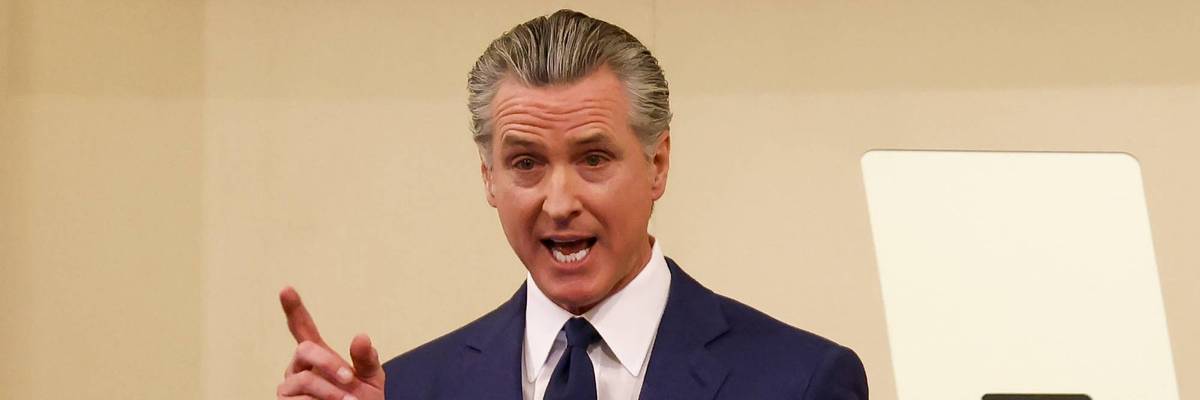
California Governor Gavin Newsom delivers his State of the State Address in Sacramento on January 8, 2026. (Photo by Jessica Christian/San Francisco Chronicle via Getty Images)
The Wall Street Journal on Friday reported that California Gov. Gavin Newsom has expressed reservations about his state’s antitrust lawsuit that aims to block the $110 billion megamerger between Paramount Skydance and Warner Bros.
According to the Journal’s sources, Newsom, who is widely expected to seek the Democratic Party’s nomination for the presidency in 2028, has expressed concern about the impact that blocking the merger would have on jobs in Hollywood, and his office has reportedly “encouraged” California Attorney General Rob Bonta to reach a settlement with Paramount.
“It is unclear what impact, if any, Newsom’s urging will have on the California attorney general’s suit,” the Journal reported. “Newsom doesn’t have a role in the litigation and doesn’t have authority over the state attorney general’s actions.”
Bonta, along with several other Democratic state attorneys general who are co-plaintiffs in the antitrust suit, scored a major victory last week when a federal judge granted a temporary restraining order to pause the merger from going forward. In response, the companies have agreed not to close the deal until five days after a trial is held or next June 1, whichever is sooner.
The combination of Paramount and Warner Bros. has long been controversial because it would put control of CBS, CNN, HBO, TikTok, and other major media properties all under the control of David Ellison, the son of billionaire Larry Ellison, a major donor to President Donald Trump.
Newsom earlier this year told Semafor media reporter Maxwell Tani that he’s known David Ellison for years, while emphasizing that California’s probe of the proposed merger “isn’t a personal attack” on the Paramount CEO.
David Dayen, executive editor of The American Prospect, expressed mock surprise at Newsom reportedly going to bat for the merger.
“You’re not going to believe this but Gavin Newsom is taking the side of capital over workers,” Dayen wrote. “In this case it’s tricky because he’s backing the very MAGA allies his cosplaying X account claims he’s fighting.”
Tech journalist Karl Bode described Newsom’s reported efforts to push the merger through as a “nice sneak peak of the sort of media policies you can expect under his presidency.”
Elections analyst Nick Field questioned Newsom’s reported concern about Hollywood jobs being lost if the merger gets blocked, as corporate consolidation usually coincides with mass layoffs.
“Paramount will undoubtedly cut tons of jobs if they buy Warner Bros., as the Ellisons did when they bought Paramount in the first place,” wrote Field. “To say nothing of allowing the Ellisons to own CNN and consolidate more power. Just disgusting supplication from Newsom.”
Antitrust advocate Matt Stoller, however, expressed skepticism at the Journal’s reporting on Newsom, if for no other reason than the California governor was unlikely to risk hurting his image among Democratic primary voters by pushing through an unpopular corporate merger.
“It would be an odd for Gavin Newsom to encourage the control of Hollywood by close allies of Donald Trump considering his 2028 ambitions,” wrote Stoller. “He’s not stupid.”
Stevens Posts Bizarre, Racist Rant Against El-Sayed as He Surges Ahead in Polls
The Stevens campaign has already faced scrutiny over some of her backers’ racist and Islamophobic messaging.
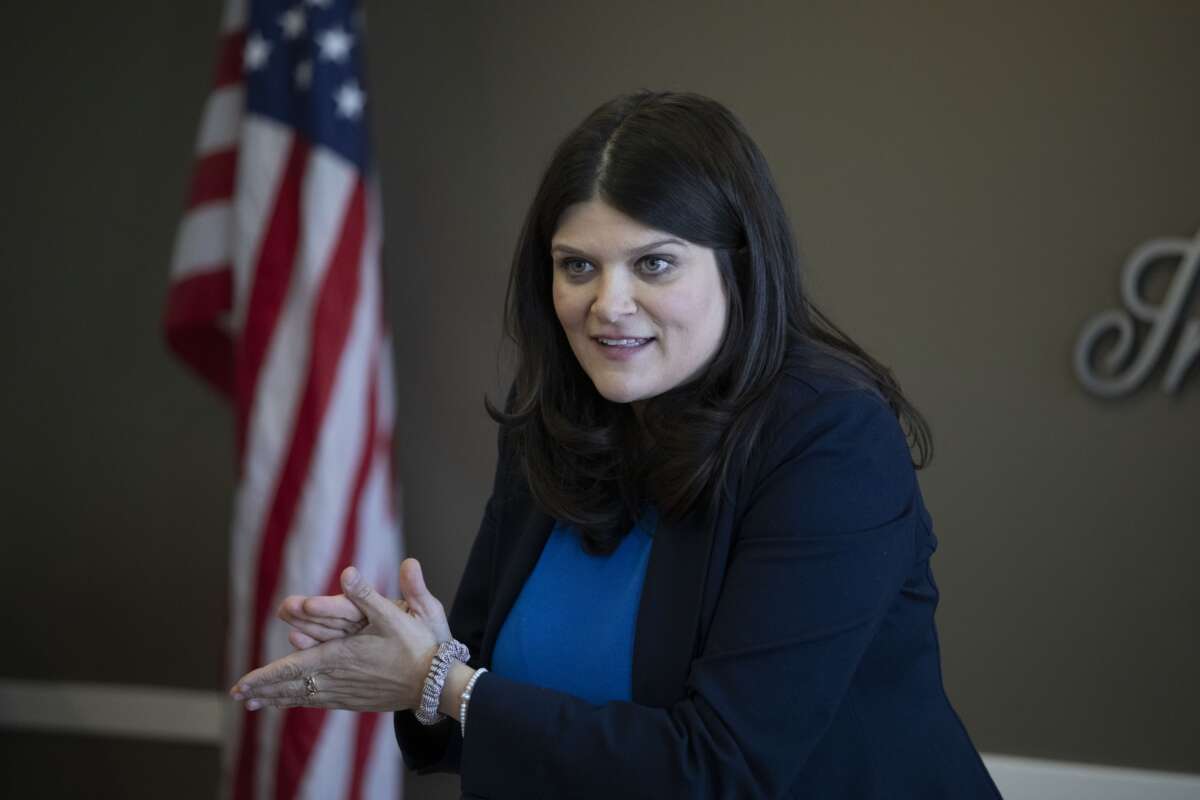
Rep. Haley Stevens, a candidate for Michigan’s open U.S. Senate seat, attends the Lansing Regional Chamber of Commerce “Meet the Candidate” series on July 29, 2026 in Lansing, Michigan.Bill Pugliano / Getty Images
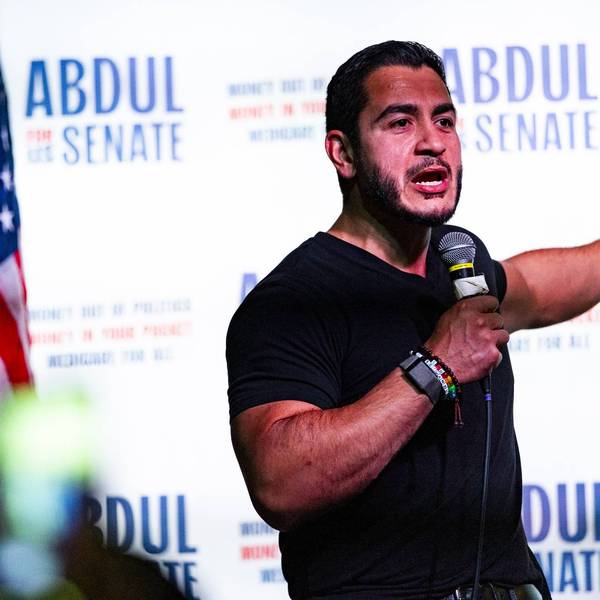
On Thursday, Rep. Haley Stevens (D-Michigan) posted a bizarre and racist rant against opponent Abdul El-Sayed over his criticisms of AIPAC — even as Stevens’s campaign has already faced pushback for embracing bigoted attacks.
In a post on X addressed directly to El-Sayed late Thursday evening, Stevens said that “[e]veryone in America understands you want to blame all of your problems on Jewish Americans.” She said, without basis, that El-Sayed is a “celebrity” and a “part of the complainer class” who is in the race to secure the “next book or podcast deal.”
“Bro, I just want to work for Michigan,” Stevens concluded in her post.
The post was a quote tweet of an interview clip in which El-Sayed taunted AIPAC, which has spent roughly $30 million on Stevens’s campaign — a record amount of spending on one race for the pro-Israel group — via its super PAC, United Democracy Project (UDP). In all, UDP and other outside groups have spent $60 million backing Stevens, while El-Sayed has received $4.6 million from outside groups.
“When AIPAC watches this — come for me, see what happens,” El-Sayed said. “If you think you can beat money out of politics, money in your pocket, Medicare for All, come. But I’ll tell you what people don’t want, they don’t want money in a foreign government. They want money here.”
El-Sayed has criticized the U.S. policy of funding Israel, but has also previously called for ending unconditional foreign military aid to other countries that commit abuses like Egypt, Saudi Arabia, Qatar, the UAE, Jordan, and Pakistan.
Stevens’s post has been lambasted by critics as racist and Islamophobic, in part due to its invocation of the bigoted trope that Muslim people want to commit violence against Jewish people.
“Haley Stevens trying hard to compete with John Fetterman for the title of most racist elected Democrat in America,” said Zeteo editor-in-chief Mehdi Hasan.
Pro-Israel lobby watchdog AIPAC Tracker criticized Stevens for conflating AIPAC with Jewish people. “AIPAC isn’t a Jewish organization, Haley. It’s a pro-Israel organization. You, a non-Jewish person, are stoking dangerous antisemitism by conflating the two,” the group wrote.
The post came after two polls came out this week showing that El-Sayed is surging in the polls, just days before the primary election next week.
On Wednesday, a poll by Tavern Research found that 46 percent of likely primary voters said they were choosing El-Sayed, versus 36 for Stevens. Meanwhile, Emerson College Polling/WLNS/WOODTV found in another poll on Thursday that El-Sayed would get 54 percent of the vote, pulling out a 15-point lead over Stevens’s 39 percent.
Stevens’s campaign has already faced criticism in recent weeks over some of her backers’ bigotry — including from fellow Democrats who vocally back Stevens as well as right-wing figures.
Earlier this week, Stevens backer Rep. Hillary Scholten (D-Michigan) did not say whether she would back El-Sayed if he becomes the Democratic nominee. Her reasoning was openly Islamophobic, as she said to Semafor: “I will not stand beside someone who has allowed distinctly anti-American sentiment to enter our public dialogue.”
Last week, a woman who sits on Farmington’s school board, Angie Smith, also came under fire when she said she’s backing Stevens because she would represent “not just one race, but all races.”
“You have to know how to work the room, don’t just come in here speaking Arabic, don’t come out with your Arabic music on,” she went on. The video went viral online. Smith later apologized, and the Stevens campaign distanced itself from her comments.
Haley Stevens Is an Enemy of International Law
If Michigan Democrats nominate someone so out of touch with her constituents and so supportive of Trump’s opposition to human rights, many thousands of Michiganders will likely vote third party or stay at home in November.
US Rep. Haley Stevens (D-Mich.) tours the Webasto Plymouth Plant on May 1, 2026 in Plymouth, Michigan. (Photo by Sarah Rice/Getty Images)
Much attention has been given to the Stevens campaign’s dependence on contributions from corporate donors and conservative political action committees (PACs), including those affiliated with the American Israel Public Affairs Committee (AIPAC). Various PACs supportive of Israel’s far-right government have donated up to $30 million to her campaign in appreciation of her strident opposition to conditioning military aid to Prime Minister Benjamin Netanyahu amid ongoing occupation, ethnic cleansing, apartheid, and genocide.
El-Sayed, on the other hand, opposes Israel’s actions in Gaza and the US’ provision of military aid. He has underscored the importance of conditional military aid in adherence to internationally recognized human rights standards to all nations and supports international legal institutions that consistently advocate for universal standards. He has stressed the differences between criticizing a government and attacking the religion or ethnicity of a nation’s population. For example, he also opposesUS military aid to Egypt, an Arab Muslim country from which his parents came.
She could potentially use her position in the Senate, if elected, to support the Trump administration’s efforts to “dismantle” the International Criminal Court.
But Stevens’ dismissal of international humanitarian law goes well beyond Israel. She opposes any accountability for war crimes by any US ally.
Stevens was one of only a handful of Democratic members of the House to support a 2024 Republican-sponsored bill designed to punish anyone who directly or indirectly participates in the investigation or prosecution of those suspected of war crimes if they are part of a government allied with the United States.
The bill, which passed the House that June but never made it to the floor of the Senate, was rooted in the belief that the prosecution of suspected war criminals by the International Criminal Court (ICC) should be based not on the available evidence, the severity of the crimes, or what the law says, but on the geopolitical orientation of the government of those accused. While Stevens has no objections to prosecuting war criminals belonging to organizations or governments that the US government opposes, her backing of this bill would seem to indicate that she believes those supported by Washington should somehow be held unaccountable.
It’s not as if the ICC has an anti-Western bias. Since its founding in 2002, the ICC has indicted 73 people, including African warlords, Vladimir Putin and other Russian officials, and Hamas terrorist leaders. Only 2 of those 73 indicted have been affiliated with US-allied governments. However, it would appear that even that is too many for Stevens.
Indeed, Stevens’s list of those impacted by the sanctions she supported would have included some of the world’s most prominent human rights lawyers and international jurists, along with their immediate family members. Their property and other assets held in the United States would have been subjected to seizure and they would have been banned from entering the country.
Almost all of these targeted individuals have been involved in other war crimes prosecutions, including those stemming from atrocities in Rwanda, Sudan, the former Yugoslavia, Myanmar, Liberia, and elsewhere. None of them have ever shown any ideological bias against Israel or any other US ally. They simply believe that international humanitarian law should be defended regardless of political considerations—which is exactly what seems to upset Stevens.
Among those targeted by these sanctions would have been Theodor Meron—a Holocaust survivor, former Israeli Ambassador to Canada, and president of the International Criminal Tribunal for the former Yugoslavia—because he was one of the experts consulted by the ICC regarding suspected war crimes committed by Israeli leaders.
Another target would have been the prominent British human rights lawyer Amal Clooney, who has been involved in human rights cases in dozens of countries. She would be subjected to sanctions for her participation in an ICC Panel of Experts in International Law which, in addition to recommending the prosecution of three Hamas terrorist leaders, also supported the prosecution of two Israeli leaders. She is married to American actor George Clooney, a major Democratic Party fundraiser, and would have been banned from ever again living with or even visiting her husband in California.
The Biden administration, despite its own criticisms of the ICC and support for Israel in the face of large-scale war crimes in Gaza and elsewhere, issued a statement in June 2024 saying that it “strongly” opposed the bill because it “could require sanctions against court staff, judges, witnesses, and US allies and partners who provide even limited, targeted support to the court in a range of aspects of its work.”
Stevens, however, sided with Trump and her Republican House colleagues against the Democratic administration.
Indeed, the Trump administrationimposed its own sanctions on the ICC in February 2025, although they were not quite as severe or comprehensive as those supported by Stevens. She could potentially use her position in the Senate, if elected, to support the Trump administration’s efforts to “dismantle” the International Criminal Court.
Stevens’s hostility to the ICC is not popular. Polls show that Americans have been broadly supportive of the ICC, with only a small minority supporting sanctions. And a poll released July 23 showed that Americans, by a nearly 2 to 1 margin, support arresting Israeli Prime Minister Benjamin Netanyahu, who was indicted by the ICC in 2024 (along with a Hamas leader) for multiple war crimes, including crimes against humanity.
This could be a big political mistake. If Michigan Democrats nominate someone so out of touch with her constituents and so supportive of Trump’s opposition to international law and human rights, many thousands of Michiganders will likely vote third party or stay at home in November, thereby risking handing this critical Senate seat to a right-wing Republican.
Stephen Zunes Stephen Zunes is a Professor of Politics and International Studies at the University of San Francisco, where he serves as coordinator of the program in Middle Eastern Studies. Recognized as one the country's leading scholars of U.S. Middle East policy and of strategic nonviolent action, Professor Zunes serves as a senior policy analyst for the Foreign Policy in Focus project of the Institute for Policy Studies, an associate editor of Peace Review, a contributing editor of Tikkun, and co-chair of the academic advisory committee for the International Center on Nonviolent Conflict. Full Bio >
Stevens Dismisses Concerns About Campaign Finance, Super PAC Funding as ‘Educated Issue’
“It can’t be overstated how flippant and arrogant Stevens comes off when questioned about $60 million in super PAC spending for her in this race,” said one observer. US Rep. Haley Stevens (D-Mich.) attends the Lansing Regional Chamber of Commerce “Meet the Candidate” series on July 29, 2026 in Lansing, Michigan. (Photo by Bill Pugliano/Getty Images)
With just days to go until the Michigan US Senate primary election, Rep. Haley Stevens, the preferred candidate of several Democratic establishment figures, suggested this week that campaign finance—a top issue in her race against former public health official Abdul El-Sayed—is a niche interest held by “educated” people and not working families, and appeared eager for voters and the press to stop asking her about the roughly $60 million outside groups have poured into the race on her behalf.
“It seems like we got the campaign finance zoomies,” the Michigan Democrat told reporters at an event with business leaders in Lansing on Wednesday, appearing mystified at the suggestion that ordinary voters would be interested to know her position on super political action committees, which can raise unlimited money from corporations and other groups and individuals to support a candidate’s run, and her significant backing from a super PAC affiliated with the increasingly unpopular American Israel Public Affairs Committee (AIPAC).
“My opponent has done a great job talking about campaign finance. It’s an educated issue,” Stevens said, according to a report from Michigan Advance Thursday. “I even had someone who’s got a law degree asking me about some of the campaign finance stuff today. That’s totally fine, but you know what else? These families on paid leave? They need affordable daycare. They need good public schools to go.”
Journalist David Sirota of The Lever said that in what amounts to Steven’s “final argument” ahead of the election, the candidate suggested that pro-Israel and other groups’ attempt to “buy her a Senate seat—is merely an esoteric ‘educated issue’ that has nothing to do with corrupt lawmakers creating corrupt policies fueling the affordability crisis.”
As Mother Jones reported Friday, about half of the super PAC spending on Stevens’ behalf has come from United Democracy Project, which is affiliated with AIPAC, while a large chunk comes from the super PACs A Stronger Michigan and Center Forward.
Those groups have received millions of dollars from PhRHMA, a trade group representing pharmaceutical firms, and UnitedHealth Group—both key players in the for-profit healthcare industry that’s raised household costs for families across the country in recent years, with UnitedHealth slashing care expenses for nursing home patients and unlawfully using an artificial intelligence algorithm to deny coverage to people with Medicare Advantage. El-Sayed has notably made Medicare for All a key priority of his campaign.
“The outside spending picture for El-Sayed looks much different,” reported Mother Jones. “The biggest individual donor to Fighting for Michigan—El-Sayed’s main outside backer—is the candidate’s father-in-law, a nephrologist at a Detroit hospital who had given $300,000 as of July 15. Overall, the super PAC has expended about $2.8 million—less than one-tenth of what has been spent against El-Sayed by the United Democracy Project alone.”
Stevens attempted to shift the focus to her opponent’s support from his father-in-law at her meeting with the Lansing Regional Chamber on Wednesday, after she was asked about the record-breaking outside spending in the race by a business leader in the very first question of the event.
But another attendee brought up the issue again later, noting she had not specifically addressed concerns about the groups whose spending her campaign is benefiting from and asking whether she would back a bill proposed by Sen. Bernie Sanders (I-Vt.), an El-Sayed supporter, to abolish super PACs.
Stevens was noncommittal once again, suggesting concerns about super PACs are part of “campaign platform” favored by Sanders.
“He’s in the independent party,” she added. “I haven’t talked to him about it. I’m not trying to do any division.”
Stevens did allow that she “would love a constitutional amendment to get rid of money in politics and maybe make our elections shorter” and said she had spoken to Republicans about such a proposal.
But one observer said Stevens’ overall message that the financing of her campaign is an issue only voters with “a law degree” are interested in was “flippant and arrogant.”
Stevens has benefited from millions in AIPAC-backed super PAC spending as public approval has plummeted regarding the powerful pro-Israel lobby and the United States’ funding of Israel’s military, after nearly three years of the Israel Defense Forces’ assault on Gaza and Prime Minister Benjamin Netanyahu’s push for the US to join in attacking Iran—a conflict that has also had a direct impact on working families’ household budgets as gas prices have soared.
On Thursday, Stevens took direct aim at El-Sayed, a Muslim, for his focus on AIPAC during the campaign, addressing him in a lengthy post on X in which she said, “Everyone in America understands you want to blame all of your problems on Jewish Americans.”
The remark was widely condemned as “race-baiting,” and interpreted as one that conflated Jewish Americans with the pro-Israel lobby.
“When someone points out AIPAC is spending $50 million, it’s presented as ‘blaming Jewish Americans,’” said podcast host Adam Johnson. “I hate this shit so much, it’s gross, it’s bad faith, it’s sleazy, and it’s more manipulative, crybully smarm.”
Swing District Voters Want Major Change. That Could Help Democratic Socialists.
Two-thirds of voters said that “the country’s political and economic systems need fundamental change,” the poll found.
Voters cast their ballots at a polling location at Washington-Liberty High School on April 21, 2026 in Arlington, Virginia.Win McNamee / Getty Images
Anew poll released this week suggests that voters in swing districts across the country are more supportive of candidates who will bring about swift change to flawed institutions, rather than establishment politicians who promise only incremental change.
The Working Families Party/Justice Research Group poll, conducted July 26-27 in swing House districts across the country (with Michigan counted as a swing state in its entirety), found that a plurality of voters in those areas, 47 percent, are likely to back Democratic candidates, while just 38 percent say they prefer Republican choices instead.
Aside from that question, the survey strayed away from partisan questions, asking voters instead what kind of candidate they might prefer. Participants’ answers indicated a stronger leaning toward those seeking major institutional changes.
The poll found that voters largely had a negative view of the status quo, with 80 percent agreeing with the statement that “elected officials care more about wealthy donors and powerful interests than about people like me.” Nearly two-thirds of voters, 64 percent, also agreed with the idea that “the country’s political and economic systems need fundamental change, not just small adjustments.”
Indeed, more than 6 in 10 voters in the poll said the country is “off on the wrong track,” versus 3 in 10 who said it’s going in the “right direction.”
The survey also demonstrated that voters are longing for changes to institutions, with 58 percent saying they agree with the statement that the “government needs leaders who will challenge the political establishment and fight for major change,” versus 36 percent saying they prefer experienced leaders who vow incremental change instead.
The poll found that the two most appealing qualities of a candidate were “push[ing] for change, even if it disrupts the usual way of doing things” and “challeng[ing] leaders of their own party when they believe the party is wrong.”
The polling data could help to explain why democratic socialist candidates are becoming more popular throughout the country.
Results from a CNBC poll conducted earlier this month show that democratic socialist candidates face challenges in courting voters overall. But the survey found that 32 percent of respondents would be more likely to back a candidate who describes themselves as a democratic socialist— outpacing the number who said they’d be more likely to support a self-described MAGA candidate (27 percent).
Democratic socialists are also more likely to promote ideas that disrupt established institutions, including expanding workers’ rights, expanding access to health care (including Medicare for All), abolishing federal agencies like ICE, and raising the minimum wage.
Many establishment Democrats have tried to tell voters that their democratic socialist opponents cannot win in the general election against Republicans. But the data doesn’t support that talking point. In the “purple” state of Wisconsin, for example, democratic socialist state Rep. Francesca Hong (D), the frontrunner in the Democratic Party’s primary for governor, is currently leading presumptive GOP candidate U.S. Rep. Tom Tiffany (R) by 1 point.
Democratic Socialism Is the Compromise Position
Given our scale of inequality, the egalitarian reforms of democratic socialism are only the start of what we should strive for.
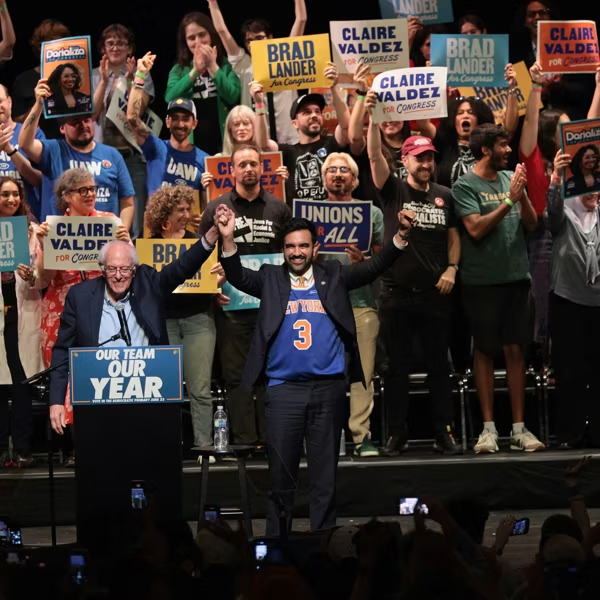
Congressional candidate Claire Valdez, Congressional candidate Brad Lander, Mayor Zohran Mamdani, and Congressional candidate Darializa Avila Chevalier raise their hands during a Get Out the Vote rally at King’s Theater on June 18, 2026 in New York City. (Photo by Michael M. Santiago/Getty Images)
Other than the continual circus in the White House, the most important political story in America may be the resurgence of democratic socialism. Ignited by the 2016 and 2020 presidential campaigns of Vermont Senator Bernie Sanders, the movement achieved its biggest victory last year when self-described democratic socialist Zohran Mamdani was elected mayor of New York City. Now, fueled by backlash to the extremist MAGA agenda and multiple ongoing crises, the Democratic Socialists of America (DSA) have claimed 38 electoral wins so far this year and 120,000 active members, making them the largest socialist organization in US history.
Naturally, this has the establishment’s hair on fire in both political parties. On the Democratic side, leadership oscillates between snubbing democratic socialists and disowning them outright, with Sen. John Fetterman (D-Pa.) calling Mamdani’s rise a “gift to the Republicans” that makes Democrats look radical. Centrist-liberal magazine The Atlantic referred to DSA as “a parasite” that was “hijacking the Democratic Party.”
On the Republican side, the hysteria is even more severe. President Donald Trump, who seems quite enamored of Mamdani on a personal level, called him a “100% communist lunatic.” Recently Trump has been trying to resurrect the Red Scare, labeling DSA candidates “hardcore, godless communists” and invoking communism some 94 times in just a few weeks. Trump’s Deputy Chief of Staff for Policy, Stephen Miller, connected leftist politicians, communism, and political terrorism into one vast conspiracy and declared it the “fatal cancer of civilization.”
Despite the delirium, many democratic socialist policies are popular, particularly those that expand public services and safety nets for healthcare and childcare. Such ideas only sound radical in a nation grown numb to the extremes of capitalism. But following decades of upward redistribution, worsening public services, deteriorating labor power, and all the other abuses of our current system, democratic socialism isn’t radical at all—it’s a compromise.
Defining “Democratic Socialism”
Like most political labels in America, “socialism” has been thoroughly twisted and misused. In 1952, President Harry Truman remarked that socialism was “a scare word they have hurled at every advance the people have made in the last 20 years.” It was a Republican slur for the New Deal, public power, social security, bank deposit insurance, free and independent labor organizations, and “almost anything that helps all the people,” in Truman’s words.
To this day, that’s about as good a definition as any. In America, “socialism” is often used to describe—or denigrate—almost any publicly funded, government-run service: libraries, parks, fire departments, Medicare, Medicaid, Social Security, highways, public schools, safety net hospitals, animal shelters, community pools, and so on. Under this definition, the US military might be the most expensive socialist program in history.
Elites should feel relieved that people are only demanding, say, a few public options for groceries, rather than revolting.
This American concept of socialism, though, bears little resemblance to the theories formulated by Karl Marx. Marx articulated socialism in direct opposition to capitalism, under which individuals or companies own and control land, natural resources, and means of production. Capitalists rent labor—at least in societies where they can’t own it—and fight to make the terms of that rental as favorable to themselves as possible. This tug of war between owners and workers, in Marx’s view, is the central struggle of history. Marx sought to invert that structure, advocating that ownership, control, and the fruits of labor belong to workers, and theorizing that the only way to achieve such a reality was through revolution.
Democratic socialism, then, is also distinct from Marxist socialism. Both may strive for populist control of the political economy, but democratic socialists in America largely pursue their goals through reform, working within existing institutions. Democratic socialism often more closely resembles the Nordic model: a capitalist economy in which government takes a larger role in protecting human rights and guaranteeing certain essential goods and services.
Actually, this compromise of preserving the fundamentals of capitalism while trying to achieve the egalitarian goals of socialism is precisely what more committed Marxists don’t like about democratic socialism. They might argue that capitalism is inherently unsustainable, exploitative, and unreformable, relying as it does on never-ending growth and abuse of labor, and that working within it is doomed to only limited successes at best. Reforming the Second Gilded Age
Whether or not one agrees with such ideas, it’s a discussion that free people are within their rights to have. Though we often treat capitalism as a national religion, there’s nothing sacred about it. Even the US Constitution is surprisingly agnostic on questions of economic organization. It’s not encoded in our DNA—in fact, we are much more naturally inclined toward cooperation than competition. Humans have a virtually infinite number of ways we can arrange society, and we are in desperate need of rethinking ours.
We live in a society that’s obsessed with law and order for things like shoplifting or overstaying a visa, but largely looks the other way on corporate crimes like pollution, wage theft, and fraud—not to mention war crimes and genocide. The president is a convicted felon who wants you to ignore his decades-long friendship with a child sex trafficker and instead fear and hate the immigrant next door.
In such a system, elites should feel relieved that people are only demanding, say, a few public options for groceries, rather than revolting. The wealthy surely all took note of the public reaction to Luigi Mangione, who is accused of murdering United Healthcare CEO Brian Thompson on the streets of New York City. Mangione became a cultural icon who was openly celebrated in many circles, making clear the rage simmering within America’s dispossessed.
There’s a reason the progressive California Rep. Ro Khanna refers to a tax on wealth as an anti-revolution tax, or an attempt to save capitalism from itself. Progressive Democrats like Khanna often mediate between capitalist centers of power and the party’s left-wing base, who largely feel fed up with the party’s incremental approach of making small tweaks here and there. Democratic socialism, as practiced in today’s America, is still essentially incrementalism, but they’re much bigger increments.
Such a model works well in places like Finland, Iceland, and Denmark. These countries have high taxes, but they get far more out of them than we do. As a result they are consistently ranked as the happiest countries on Earth, with excellent numbers for education, homelessness, poverty, healthcare, life expectancy, and infant mortality—all areas in which the US, with its profit-first approach to every problem, is lagging behind.
High taxes and a mixed economy also once worked well in the United States. We dug ourselves out of the Great Depression with the New Deal. Government programs brought electricity to rural areas and established safety nets and Social Security. Our middle class boomed after World War II, when taxes were the highest they’ve ever been.
The rich and powerful pay good money for their political representation, and the main things they expect in return are to be untaxed and unregulated. When Mayor Mamdani announced a pied-a-terre tax on luxury second homes, The Washington Post—which is owned by megabillionaire Jeff Bezos—published a column criticizing Mamdani’s “’creepy and weird’ attack on success.” Billionaire Steve Roth said on an earnings call, “I consider the phrase ‘tax the rich’... to be just as hateful as some disgusting racial slurs… [the rich]... should be praised and thanked.”
So it goes whenever anything similar is proposed: Socialism punishes success; the rich will flee if we tax them and leave us simple folk immiserated; and the government will take your home, car, TV, coffee machine, and everything else until, eventually, we’re all sitting in the dirt, eating worms and hitting each other with sticks.
There is no limit to the hysteria Republicans can drum up around socialism, no lie so bold that they won’t tell it with a straight face on TV. In 2016, for instance, the right-wing Institute for Policy Innovation accused the Democratic Party of going even beyond full-blown communism for supporting things like higher wages, vacation time, a 30-hour workweek, maternity leave, and universal health insurance—each of which sound like terrific ideas that would improve human lives, and almost none of which, sadly, are actually supported by establishment Democrats.
Rather than push people to the depths of despair while society breaks down all around us, progressives and democratic socialists want to prioritize human needs over the bottomless appetites of corporations and capital.
By design, Americans have come to expect very little from our system. We’re taught to regard the very concept of government as fundamentally incompetent, wasteful, and oppressive, rather than a tool we can take control of and use to improve lives. Despite the popularity of socialistic policies and goals, the word itself remains divisive. Some of those who have the least are the most aggressively anti-socialist. For this reason, there’s an open debate whether the movement should even label itself socialist.
However, public opinion is slowly evolving. Self-identifying as a socialist could have upsides, like signaling loftier aspirations for people who are desperate for change. And since Republicans will call anyone left of Sean Hannity a communist anyway, reclaiming the word could also blunt their attacks if people come to equate socialism with popular reforms like raising taxes on the wealthy and public options for healthcare.
Unfortunately, winning hearts and minds may not be enough. Because if the wealthy are unable to protect their power legally at the ballot box, the Trump administration has already declared its intention to combat democratic socialism with brutality and repression.
According to polls, Trump and the Republicans are heading toward a trouncing in the midterms, particularly in the House. As a result, Trump is already setting the stage for rigging or cancelling the election, using the threat of communism as one of his predicates. Stephen Miller and Secretary of State Marco Rubio have also been on the offensive, attempting to characterize leftist movements as inherently terroristic and calling on the state to “keep our people safe” from such threats.
Rubio said: “They can call themselves anti-capitalist or anti-imperialist, communist, anarchist or Marxist… It is a poisonous resentment cloaked in the language of equality and justice liberation.” Leftists, Rubio said, are “an encroaching darkness” and “the enemies of civilization.” Miller said: “The leftist looks at what is beautiful and what is good and what is natural and is filled with envy and hatred… We must stay the course and be completely unflinching in the pursuit of justice against these enemies of civilization.”
These dehumanizing comments echo some of the worst periods in history, including the Red Scare of Sen. Joseph McCarthy. Exactly what the administration plans to do is kept vague on purpose. The framework to take extreme actions—effectively criminalizing certain political beliefs—is laid out in National Security Presidential Memorandum 7 (NSPM-7). Perhaps, if democratic socialism appears too strong on the ballot in November, they will see fit to protect the voters from their own bad decisions.
Society Is in Desperate Need of Rebalancing
While the establishment tries to trigger a panic about democratic socialism, Mamdani remains popular in New York and his brief tenure as mayor has already been, by many measures, a success. There are no gulags, and he hasn’t seized anybody’s home. He’s the first high-profile politician in recent memory to speak to, and start delivering on, people’s desire for more access to dignity, time, and their personal pursuit of happiness. Perhaps unsurprisingly, that message is resonating.
Every society has a mix of public and private endeavors. America is no different. The goal of the left is, broadly, to tilt the balance toward public support for education, healthcare, environmental initiatives, jobs programs, and so on. The goal of the right is to eliminate public investments, if not civic life altogether, and let people fend for themselves in a cutthroat social Darwinism. Our challenge as a society is to find a balance that fosters the kind of world we want to live in.
Capitalists will argue that our inequality is a natural consequence of the brilliance and drive of business leaders, that we all benefit from the largesse of the rich and anyone can get a piece of the pie if they work hard enough. But our inequality goes far beyond, say, a brain surgeon owning nicer golf clubs than an op-ed writer. The issue is a rigged system powered by insatiable greed, where a tiny handful own private islands and the masses can’t afford insulin.
Make no mistake: Corporate America wages class war constantly. Profit is their main motivation, and by definition, profit is created by getting more out of a deal than you put in. A little bit may be fine. Most people happily pay extra for good service or a worthy product. But trillions in profit means trillions in unpaid wages, overcharged rent, exorbitant medical bills, unpaid insurance claims, usurious lending, or any number of other ways the rich and powerful squeeze the poor.
In a business-run, profit-oriented society, human needs will inevitably suffer because they are simply not a factor in the decision-making. Libertarian right-wingers will argue that free-market capitalism meets human needs naturally through the invisible hand, but this amounts to a lot of hocus-pocus. If you value a more egalitarian distribution of labor, leisure, comfort, health, education, and happiness, the only way to achieve it is through some form of socialism.
Once you peel back the hype and fearmongering, democratic socialism looks more and more reasonable. Rather than push people to the depths of despair while society breaks down all around us, progressives and democratic socialists want to prioritize human needs over the bottomless appetites of corporations and capital. They want to pool our collective resources, distribute them communally, and work toward a more dignified life for everybody. It wouldn’t actually be socialism, though Republicans will surely call it that—but it could be a start toward something better.
Our work is licensed under Creative Commons (CC BY-NC-ND 3.0). Feel free to republish and share widely.
Kyle Schmidlin Kyle Schmidlin is a freelance writer who also runs the Third Rail News blog. Full Bio >
‘A Slap in the Face to Moms and Dads’: GOP Blocks Attempt to Stop Trump From Raising Childcare Costs
“If Trump had simply done nothing... some of these families would have ended up saving as much as $15,000 a year,” said Sen. Patty Murray
US Sen. Patty Murray (D-Wash.) speaks to reporters after a weekly Senate Democratic Policy luncheon at the US Capitol in Washington, DC, on July 29, 2026. (Photo by Anna Moneymaker/Getty Images)
In what Democratic Sen. Patty Murray described as a “slap in the face to moms and dads,” Republicans have blocked her proposed resolution to restore a rule that could have saved low-income parents thousands of dollars per year on childcare before the Trump administration axed it.
Under a rule that went into effect earlier this month, the Department of Health and Human Services (HHS) rescinded a Biden-era rule that capped families’ copayments at 7% of their household income for the Child Care and Development Fund (CCDF), which helps about 994,000 low-income families pay for childcare so parents can work, attend school, or participate in job training.
The program is administered at the state level, and under the abandoned rule that was enacted in 2024, all states were required to begin phasing in the 7% cap, which is considered a federal affordability benchmark.
Under the Trump policy change, states will not be required to cap parents’ copayments as long as they continue to use a sliding scale based on income level and don’t present a “barrier” to receiving assistance, though it’s not specified what that means.
As of March 2026, 19 states had not lowered their maximum copayment to 7%.
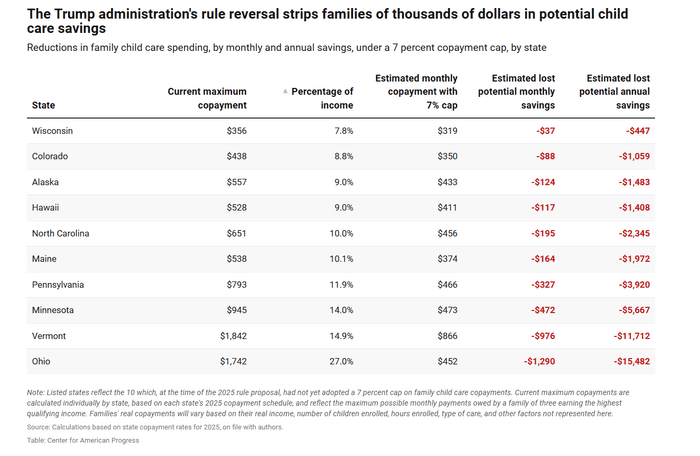
An April analysis by the Center for American Progress found that, by eliminating the federal cap, families in 10 states that have not enacted it would lose between $450 and more than $15,000 in potential annual savings, depending on how high their state sets the threshold.
In Ohio, which caps copayments at 27% of household income, families could lose up to $15,482 in annual savings under the maximum copayment. In Vermont, which caps copayments at 14.9% of household income, families could lose up to $11,712.
(Graphic from the Center for American Progress)
Murray (D-Wash), the former chair of the Senate Committee on Health, Education, Labor, and Pensions (HELP), introduced a resolution last month under the Congressional Review Act, which would have nullified the administration’s elimination of the 7% cap.
It also would have restored other Biden-era requirements that were reversed under the same rule, including requirements that states pay childcare providers based on enrollment rather than attendance, pay them in advance, and use grants and contracts to fund childcare for infants, children with disabilities, and those in underserved communities.
In a speech on the Senate floor before the resolution came to a procedural vote on Thursday, she told her colleagues bluntly, “You are either voting to lower childcare costs or to increase them.”
She challenged the senators who planned to vote against the resolution to “go home and tell the parents in your state you voted to raise their childcare bill,” adding that “you cannot call yourself pro-family while voting to make it more expensive to raise one.”
In a party-line vote on Friday, the bill was blocked from advancing by a margin of 52-47, with every Republican voting against it except for Sen. Mitch McConnell (R-Ky.), who is absent after being hospitalized in June.
After the vote failed, Murray described it as an example of Republicans taking money away from American families struggling to afford the basics of life while pushing for lavish spending on war and tax cuts for corporations and the wealthy.
“How about instead of a $1.5 trillion war budget, we make sure every working family in America can afford childcare?” Murray said. “If Trump had simply done nothing, and left the 7% cap in place, some of these families would have ended up saving as much as $15,000 a year for their family.”
According to a Century Foundation analysis of Bureau of Labor Statistics data, childcare costs increased by 5% from August 2024 to August 2025 and now average more than $13,000 per child per year across age groups.
Trump has been surprisingly open about the fact that, under his control, and in direct contrast with his campaign promises, the federal government is prioritizing spending on his war in Iran instead of providing government subsidies for Americans’ basic needs, including daycare.
“We’re fighting wars. We can’t take care of daycare,” he said during a speech in April. “You gotta let a state take care of daycare, and they should pay for it too. It’s not possible for us to take care of daycare, Medicaid, Medicare, all these individual things.”
“Trump says we can’t afford childcare. But he is wrong,” said Murray, who has co-introduced legislation to expand federal childcare subsidies and cover nearly all costs for low-income families. “The truth is we can’t afford to ignore childcare.”










 (Graphic from the Center for American Progress)