Sunday, August 02, 2026

TACO

Trump flip-flops on Patriot license for Ukraine promise

Trump flip-flops on Patriot license for Ukraine promise
During their meeting in Ankara US President Donald Trump promised Ukrainian President Volodymyr Zelenskiy a license to make Patriot interceptor missiles in Ukraine, but a week later he appears to have cooled on the idea. / IntelliNewsFacebook
By Ben Aris in Berlin August 2, 2026

Ukrainian President Volodymyr Zelenskiy has asked Washington for an emergency package of 300 Patriot missiles before winter, warning that Ukraine’s reserves are running dangerously low and that the country cannot reliably defend itself against Russian ballistic missiles without them.

During a heavy bombardment of Kyiv at the weekend that killed nine people, Ukraine was only able to bring down one of the 50-odd missiles Russia fired, in a testament to how low its stock of air defence ammo is.

But Zelenskiy’s request has landed at a bad time for the White House as America’s stock of the sought after missiles is also running dangerously low after heavy expenditure in the Iran war. Able to only produce about 600 new PAC-3 interceptor missiles a year, the production bottleneck has seen the order book back up for years to come.

Trump added a further layer of uncertainty on July 31 when he said he was “not sure” whether Washington would allow Ukraine to make Patriot interceptors domestically, retreating from a pledge he had made at the Nato summit in Ankara earlier in July.

“It’s a very extraordinary weapon, and we have to be a little bit careful of who we license it to. We don’t really license equipment,” Trump told the Financial Times.

“I’m not looking for missiles. We’re looking for peace,” he added, saying that his priority was ending the war rather than expanding Ukraine’s long-term weapons-production capacity.

While Zelenskiy boasted earlier this year that Ukraine now produces 60% of what it needs domestically, it still has no large scale production capacity for the most sophisticated missiles and counter measures. Currently, the PAC-3 is the only munition Ukraine has that can reliably bring down Russian ballistic missiles, and Russia has been pouring resources into expanding its missile production capacity.

Kyiv has turned to European production as the only durable solution to its dependence on intermittent US supplies, but the clock is ticking. Ukraine has launched dozens of joint ventures with European defence companies under the so-called Danish model, but these facilities will not start coming on line until 2027 at the earliest and Ukraine’s need for more air defence measures is immediate and urgent.

Zelenskiy raised the licensing issue directly with Trump during their meeting in Washington on July 28. Zelenskiy described the talks as “good”, while Trump said afterwards: “I would like him to end the war. It’s very simple.”

Yet even if Trump were to give formal approval, Ukraine would still face a more fundamental obstacle: Boeing’s reported refusal to licence production of the seeker head used in the PAC-3 interceptor is a potential deal-killer.

The seeker bottleneck

The PAC-3 MSE is the best Patriot interceptor for Ukraine, and its seeker uses Ka-band active electronically scanned array technology, among the most advanced systems of its kind, developed by Boeing.

In reality, even if the Patriot license is granted, Ukraine won’t actually make these missiles, but will be forced to import the components from US producers as it will remain beyond Kyiv’s ability to build the production to make many of the components. The US production bottleneck will remain in effect to begin with as these components are in as high demand as the completed missiles themselves.

That makes Boeing’s seeker a critical bottleneck in any attempt to establish production outside the US.

According to reports, Boeing is not prepared to share the relevant technology with third countries. Without access to the seeker design and manufacturing process, Ukraine cannot build a genuinely domestic PAC-3 supply chain, even if other parts of the missile could be produced locally.

The problem is not limited to intellectual property. Building a complete production network would require licences, specialist factories, qualified suppliers and several years of work.

Even Boeing’s own expansion plans are slow. The company is estimated to need roughly seven years to triple production of the relevant components.

Factories built inside Ukraine would also obviously become priority targets for Russian missile and drone attacks. During this weekend’s missile barrage on Kyiv, the residential damage was widely reported, but less well reported was the strikes on a military industrial complex in Bucha on the outskirts of the capital. As the tit-for-tat missile war continues to escalate, both sides are specifically targeting defence sector factories. That has prompted more discussion of placing at least some production capacity in Western Europe, where it would be less vulnerable but still accessible to Kyiv.

Competing with the US stockpile

Ukraine is seeking 300 missiles, but Washington has used roughly one-third of its pre-war Patriot inventory and around half of its THAAD interceptors since the Iran conflict began.

That would leave the US with an estimated 759-827 Patriot interceptors and 234-278 THAAD interceptors, compared with approximately 2,330 Patriots and 452 THAAD interceptors before the war, the FT reports.

On those estimates, granting Kyiv 300 Patriot missiles would consume a very large share of the remaining American inventory. Secretary of War Pete Hegseth has already cancelled arms deliveries for Ukraine, arguing that the remaining stockpiles have already fallen to below the strategic minimum requirements.

Washington is already trying to reverse the shortage. On March 6 — six days into Operation Epic Fury, the joint US-Israeli campaign against Iran — Trump summoned the chief executives of the seven largest US defence contractors to the White House: Lockheed Martin, RTX (Raytheon's parent), Boeing, Northrop Grumman, BAE Systems, L3Harris and Honeywell Aerospace.

The meeting came as the Pentagon admitted the first four days of strikes had burned through more long-range munitions than four years of fighting in Ukraine, and lawmakers were openly asking whether US missile stockpiles could sustain a prolonged campaign.

Trump characterised the outcome as a win, posting on Truth Social: "We just concluded a very good meeting with the largest US Defence Manufacturing Companies where we discussed Production and Production Schedules. They have agreed to quadruple Production of the 'Exquisite Class' Weaponry in that we want to reach, as rapidly as possible, the highest levels of quantity."

Lockheed Martin's statement struck a similar note, "We are moving with urgency, and we will deliver", as did Northrop Grumman's.

But then they admitted to how long it would take to achieve: a multiyear framework based on agreements with the Pentagon already in place since January. In other words, nothing changed. The production of systems like the Patriot PAC-3 and THAAD interceptors runs at roughly 600-650 units a year, with replenishment timelines industry executives themselves described as measured in years, not weeks or months.

Last week the US Army awarded Lockheed Martin a new contract worth up to $58.6bn to produce PAC-3 MSE interceptors through fiscal year 2032. The agreement expands an earlier one-year, $4.7bn contract into a seven-year procurement programme. Lockheed Martin says it will use the money to triple PAC-3 MSE production capacity by the end of 2030.

That is far too late for Bankova. The start of what is expected to be an intense Russian missile barrage this winter, targeting what is left of Ukraine’s generation capacity is expected to start in a few months; Ukraine started the war with Russia with just under 60GW of installed power capacity but only has 14GW left, according to various estimates. Russia has reportedly already started stockpiling missiles for the campaign.

Finding more air defence ammo has become a problem with no solution. As IntelliNews reported, Europe’s reluctance to sign the defence sector procurement contracts in the early stages of the war has turned into a strategic blunder that will likely cost Ukraine the war. Germany also has a patriot license from the US to make the less-good PAC-2 interceptors, but the first missile is not expected to roll off the conveyer belt of the new factory in Bavaria until 2027.

The most realistic route may be a hybrid arrangement: final assembly or component production in Europe, continued US control over the seeker and other sensitive systems, and long-term purchasing commitments from Ukraine and its allies. But even this model leaves Kyiv dependent on US export approval and American industrial capacity.

Rebuilding Before Peace: How Ukraine Is Reshaping Europe And The International Order – Analysis

LONG READ


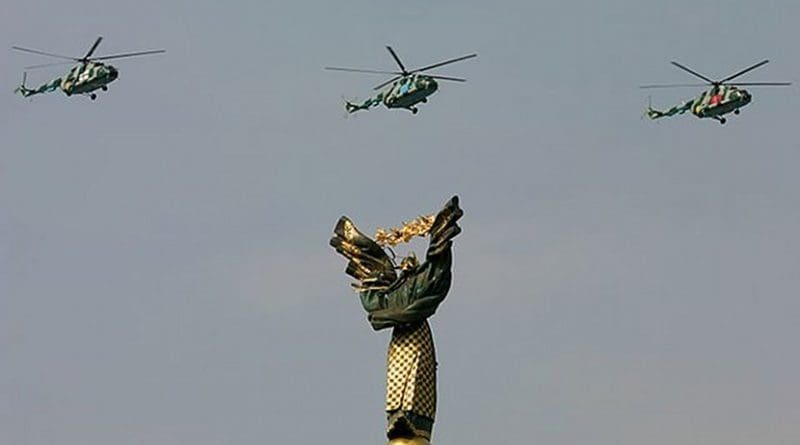
File photo of Ukraine army helicopters flying over Kyiv. Photo Credit: Oleg V. Belyakov, Wikimedia Commons.


July 31, 2026
By Ramesh Jaura


Key Takeaways:

Russia’s 2022 invasion ended the post-Cold War order of assumed peace and interdependence. It restored deterrence, great-power competition, and military power to the center of European and global politics.

Reconstruction of Ukraine and of the international system is already underway while the war continues. Europe is rearming, diversifying energy and supply chains, pursuing enlargement, and treating economic resilience as a security issue.

The emerging order is more plural, fragmented, and transactional. Influence is dispersing beyond the West, institutions face pressure to adapt, and the central challenge is managing rivalry while preserving sovereignty, law, and cooperation.


The invasion of Ukraine by Russia has now gone well beyond being just a conflict in a particular region; it has changed Europe’s strategic position, brought deterrence back to the heart of its security policy and sped up the development of a more divided international order. Before the last of the guns has been silenced, governments are altering their alliances, reviving their economies and reconsidering the institutions which had previously underpinned the stability that followed the Cold War. The rebuilding of Ukraine is now closely linked to the reconstruction of the international order itself.

The End of Waiting

History seldom announces a new era; it becomes visible only as the certainties of the old one fail. Russia’s invasion of Ukraine on 24 February 2022 was such a moment. More than Europe’s largest war since 1945, it marked the violent end of the post-Cold War order and the start of a period in which many long-held assumptions about international politics no longer held.

For decades, Europe believed history had entered a calmer phase. The Cold War had ended peacefully, and NATO and EU enlargement seemed to show that democracy, interdependence and law were replacing old rivalries. Major war appeared almost unthinkable, pushed to the margins of European politics.

Ukraine shattered that confidence.

Russia’s attack challenged the political and legal foundations of post-Cold War Europe. At stake was not only Ukraine’s independence, but questions many Europeans thought settled: can borders be changed by force, do sovereign states choose their own destiny, and what weight do international agreements carry against military power?

The consequences reach far beyond Eastern Europe. Ukraine has become a central arena for testing the twenty-first-century balance of power, shaping calculations in Europe, the Indo-Pacific and the Middle East. What began as a regional conflict has become a wider struggle over the rules that will guide international politics for decades.

Yet the greatest paradox is that reconstruction has already begun while the war continues.

Defence strategies, energy systems, industrial policies and alliances are being reshaped. Financial institutions are preparing Ukraine’s recovery even as missiles continue to destroy its infrastructure. NATO has restored collective deterrence to the centre of its mission, while the European Union adapts to a strategic reality unlike the one inherited after 1989.


The reversal is striking. Reconstruction is no longer waiting for peace; war itself has become the catalyst for rebuilding Ukraine, reshaping Europe’s security architecture and influencing the international order. Today’s decisions will shape institutions, alliances and cooperation long after the fighting ends.

The effects extend beyond Ukraine. They are redefining Europe’s strategic identity, accelerating a more divided international system and forcing democracies to revisit assumptions that guided policy for a generation. Economic integration has not ended geopolitical rivalry; security, resilience and sovereignty have returned to the centre of international affairs.

Ukraine’s historical importance lies not only in its people’s courage or its cities’ destruction, but in its role as the arena where a new international order is being formed. Whether that order proves more stable or more dangerous remains uncertain. What is already clear is that the world before February 2022 is gone.

The breakdown of the post-Cold War order

International orders rest on power, legitimacy and the willingness of major actors to follow shared rules. When those foundations weaken, institutions may endure, but the order itself begins to erode before its decline is fully visible.

The post-Cold War order emerged from a moment of optimism. The fall of the Berlin Wall in 1989 and the Soviet Union’s collapse two years later seemed to end one of modern history’s most dangerous phases. Many in Europe and North America believed democracy, markets and cooperation would now guide global affairs.

That optimism had substance. The idea of a “Europe whole and free,” rooted in the Helsinki Final Act and reaffirmed in the Charter of Paris, sought to replace confrontation with cooperation. Security would rest less on military balance than on sovereignty, peaceful dispute settlement and the integration of former adversaries. For a generation, the vision seemed to work.

History, however, rarely moves in a straight line.


The institutions that flourished after 1989 proved resilient, but the assumptions behind them were less durable. Interdependence reduced incentives for conflict, but it did not erase history, geography, national ambition or competing ideas of security.

The warning signs accumulated. Russia’s war against Georgia in 2008 showed that force had not disappeared from European politics. Crimea’s annexation and the conflict in eastern Ukraine in 2014 confirmed the point. Yet most governments treated these as grave exceptions, not evidence of a changing strategic reality. Diplomacy and trade continued even as trust declined.

Only in February 2022 did the full significance become impossible to ignore.

Russia’s invasion was more than another breach of international law. It rejected the principles behind Europe’s post-Cold War settlement. By claiming a privileged sphere of influence over a sovereign neighbour, Moscow challenged the post-1945 principle that every nation, large or small, has the right to choose its own future.

The implications reached beyond Europe.

The war revived an old question: can legal norms restrain power when major states put strategic interests first? The post-Cold War order assumed institutions, diplomacy and economic integration had reduced that danger. Ukraine showed that international law still depends on states’ willingness to defend it.

The 1994 Budapest Memorandum illustrates the dilemma. Ukraine gave up the world’s third-largest nuclear stockpile in return for security assurances from Russia, the United States and the United Kingdom. Though not a defence treaty, its failure to protect Ukraine has weakened confidence in political assurances in a more competitive world.

The consequences extend beyond military security.

Economic interdependence, once seen as stabilising, has become a field of strategic competition. Energy, sanctions, advanced technologies, critical minerals and supply chains are now treated as matters of national security. The line between economics and geopolitics has blurred.

The post-Cold War order did not collapse because of one invasion alone. The invasion exposed a longer process in which old assumptions no longer matched geopolitical reality. The institutions of 1989 survived, but they were overtaken by forces they could not contain.

The question is no longer whether the old order can be restored, but what will replace it. The urgent task is to shape a system that can manage renewed great-power competition while preserving cooperation. That challenge begins in Europe, but it cannot end there.

Europe Rediscovers Power

For more than seven decades, European integration was one of history’s most remarkable political achievements. A continent twice devastated by war remade itself around reconciliation, interdependence and law. The European Union became more than a common market: it offered a model in which cooperation replaced confrontation and shared institutions tempered old rivalries.

That success reshaped Europe’s understanding of security.

During the Cold War, Europe relied largely on the United States and NATO for protection. This allowed European leaders to focus on recovery, social progress and integration while ultimate deterrence remained an American responsibility. Military power did not disappear, but it moved away from the centre of political thought.

The end of the Cold War seemed to confirm that approach. Defence budgets fell, armed forces shrank, and military strength seemed less central to statecraft. Europe relied increasingly on trade, integration, institutions and regulatory influence. It became what scholars called a normative power, shaping rules more than projecting force.

That vision was not naïve. European integration remains a great peace project, but it depended on an international environment that proved less stable than many assumed.

Ukraine shattered that assumption.

Russia’s invasion showed that interdependence cannot preserve peace when faced with geopolitical ambition. Markets do not end power politics, and law alone cannot deter aggression. Peace also depends on the credible capacity to defend it.

Germany’s Zeitenwende became the clearest expression of this shift. It marked not only a policy change, but a psychological turning point: a country shaped by military restraint accepted that its old security assumptions no longer matched reality. Strengthening the Bundeswehr reflected a wider European reassessment.

Similar changes followed across Europe. Defence spending rose, military-industrial cooperation accelerated, ammunition production expanded, and procurement was modernised. The EU crossed a historic threshold by financing military assistance to Ukraine while strengthening its own defence-industrial base.

The reassessment went beyond military affairs.

The war showed that economic and national security can no longer be separated—Europe’s dependence on Russian energy exposed wider vulnerabilities. Supply chains, semiconductors, telecommunications, critical minerals and advanced technologies are now treated as strategic assets. Efficiency still matters, but resilience matters too.


This logic also shapes Europe’s approach to China. Instead of full disengagement, governments speak of de-risking: reducing excessive dependence while preserving legitimate trade and investment. The goal is a more durable balance between openness and security.

The transformation is clearest on Europe’s political map.

For years, enlargement fatigue slowed the EU’s expansion. The war changed that calculation. Ukraine’s candidacy, alongside Moldova’s and renewed momentum in the Western Balkans, signals a strategic conviction that Europe’s future should be shaped by sovereign democratic choice, not external coercion or spheres of influence.

The implications go beyond accession. A larger EU will need institutional reform, more flexible decision-making, stronger financing and closer foreign-policy coordination. Reconstruction is therefore not only about Ukraine; Europe itself is renewing its institutions for a changed strategic landscape.

None of this rejects the ideals of European integration. It seeks to preserve them under harsher conditions. Democracy, openness and law remain central, but they now require resilience, cohesion and, when necessary, credible collective defence.

Europe is entering a new chapter. It is not abandoning law and cooperation; it is rediscovering that lasting peace depends on strong institutions and the will to protect them.

Deterrence Returns: Living Under the Nuclear Shadow

For much of the post-Cold War generation, deterrence seemed to belong to another age. Nuclear brinkmanship survived in military planning, but largely vanished from public debate as attention shifted to globalisation, climate change and technology. Few Europeans expected nuclear strategy to shape daily government calculations again.

Ukraine brought that illusion to an abrupt end.

Russia’s invasion showed that military power remains decisive when diplomacy fails. It also revived a twentieth-century reality: conventional wars may be fought with tanks, drones and missiles, but they unfold under the shadow of nuclear weapons. Even unused, those weapons shape every major decision.

This is one of the war’s defining features. Ukraine is not a nuclear conflict, yet nuclear deterrence has shaped the calculations of every principal actor. Military aid, sanctions and strategic signalling have all been weighed against the danger of escalation between nuclear powers.

Moscow has repeatedly invoked its nuclear capabilities, chiefly to shape Western calculations and inject uncertainty into decision-making. Each expansion of support for Ukraine, from advanced air defence to long-range missiles, has therefore required careful escalation assessments.

The Western response has been equally revealing.


The United States and NATO have tried to help Ukraine defend its sovereignty without entering direct war with Russia. Support has grown steadily, but each step has been calibrated to strengthen Ukraine while avoiding confrontation between nuclear powers.

This careful management of risk illustrates how profoundly deterrence has evolved since the Cold War.

Cold War bipolar stability has given way to a more complex rivalry. Nuclear powers now compete through cyber operations, economic coercion, technology, information campaigns and space. The boundaries between peace, crisis and conflict have blurred, making ambiguity itself a strategic tool.

The erosion of arms control has deepened these risks. Agreements that once supported strategic stability have lapsed or been abandoned, while dialogue has narrowed just when it is most needed. With trust diminished, miscalculation has become harder to contain.

The implications reach well beyond Europe.

Governments across Asia, the Middle East and the Indo-Pacific are studying Ukraine’s lessons. The war has reinforced the importance of resilience, alliances and technological superiority, while reopening debates on missile defence, extended deterrence, strategic autonomy and security guarantees.

Yet Ukraine has also demonstrated the limits of deterrence.

Deterrence may reduce the risk of direct major-power confrontation, but it cannot prevent regional wars, hybrid attacks, cyber operations or prolonged rivalry. Military strength can discourage aggression, but lasting stability still requires institutions, diplomacy and political trust.

This is the central paradox. Nuclear weapons remain instruments of unimaginable destruction, yet they have helped prevent direct war between NATO and Russia. Europe again lives under a condition earlier generations knew well: peace preserved not by the absence of fear, but by its management.

The return of deterrence is therefore less a triumph than a warning. It shows that post-Cold War hopes of lasting great-power restraint can no longer be assumed. The task ahead is to maintain credible deterrence while rebuilding the diplomatic habits and safeguards that can one day make it less central.

Beyond Europe: The Fragmentation of the International Order

The war in Ukraine is a European conflict with global consequences, but that understates its reach. Its meaning is now debated worldwide, as governments reassess alliances, strategic priorities and assumptions that shaped politics after the Cold War.

One Western expectation proved misplaced. Russia’s invasion did unite North America, Europe, Japan, Australia and several democratic partners behind Ukraine through military aid, sanctions and political support. Beyond that coalition, however, responses were far more varied.

Many governments in Asia, Africa, Latin America and the Middle East condemned the invasion but avoided comprehensive sanctions. Others maintained ties with both Moscow and Washington, seeking room for diplomatic and strategic manoeuvre rather than permanent alignment.

Interpreting this as support for Russia would be a mistake.

It reflects a wider redistribution of confidence. Many emerging powers no longer see themselves as participants in an order designed elsewhere. They increasingly act as independent centres of influence, pursuing national interests without exclusive alignment.

History goes a long way towards explaining that perspective.


For many countries in the Global South, appeals to defend the “rules-based international order” evoke both agreement and scepticism. They support sovereignty and territorial integrity, but memories of colonialism, selective interventions and uneven legal application shape judgement. The demand is not fewer norms, but equal application.

Ukraine has therefore revealed more than geopolitical divisions. It has exposed differences in historical experience and political memory.

Europe views the war through territorial aggression and collective security. Many developing countries recognise those concerns while facing debt, inflation, food insecurity, climate pressure, energy costs and development needs. For them, Ukraine is important, but not the only defining crisis.

The conflict has nevertheless accelerated changes that were already under way.

The war has accelerated existing shifts. China has deepened its partnership with Russia without direct military involvement. India balances ties with Moscow and the West, while Türkiye, Brazil, Indonesia, Saudi Arabia, South Africa and others pursue pragmatic, multi-directional diplomacy. Global politics is increasingly organised around flexible partnerships rather than rigid blocs.

The same pattern is visible within international institutions.

BRICS expansion, stronger regional organisations and more confident middle powers point to a world where influence is more dispersed. Political authority is spreading across regions whose priorities and historical experiences often differ from the transatlantic community’s.

Economic relations tell a similar story.


Sanctions on Russia showed the continuing weight of Western finance and technology. They also encouraged diversification in trade, payments and reserve exposure. Efficiency still matters, but resilience now shapes supply chains, energy networks, digital infrastructure and access to advanced technologies.

This does not mean post-1945 institutions are disappearing or that a classic Cold War is returning. The emerging system is more plural, fluid and transactional: states may cooperate on climate, compete on technology, deepen trade and strengthen military partnerships elsewhere. Alignment is increasingly selective and issue-specific.

For Europe and its democratic partners, this demands different diplomacy. Influence will depend not only on power, but on credibility, consistency and engagement with countries shaped by different histories. Durable partnerships require respect and more consistent application of international principles.

Ukraine did not create this transformation; it accelerated it. The war has made visible a shift from a world dominated by a small number of powers to one defined by multiple centres of influence, competing priorities and more intricate diplomacy.

The challenge extends beyond restoring peace in Ukraine. It is to build an order that accommodates diversity without abandoning sovereign equality, territorial integrity, international law and peaceful dispute settlement. That balance will shape Europe and the wider international system for decades.

Ukraine and the Reconstruction of the International Order

History rarely lets nations rebuild only after peace. New orders often take shape while conflict continues and outcomes remain uncertain. The Congress of Vienna, the post-1945 settlement and the end of the Cold War all began before their final architecture was clear. Ukraine belongs to that pattern: reconstruction has already begun.

Across Europe and beyond, governments are redesigning defence strategies, strengthening industry, diversifying energy and redefining partnerships. The EU is adapting for enlargement, NATO has restored deterrence to the centre of European security, and financial institutions are preparing Ukraine’s recovery. These are early blocks of a wider political reconstruction.

The transformation reaches deeper than institutions alone. It is changing the way governments think about security, sovereignty and international cooperation.

For three decades, international politics centred on managing globalisation. Today, governments again focus on territorial security, resilience, technological sovereignty and the balance between interdependence and autonomy. The language has changed because the world has changed.

No international order is sustained by military strength alone. Armed power can deter aggression, but it cannot create legitimacy. Economic prosperity can reduce tensions, but not erase rivalry. Lasting peace requires institutions seen as effective and fair.

That challenge has rarely been more pressing.

The system emerging from the war is likely to be more plural. Middle powers will matter more, regional organisations will carry greater responsibility and strategic competition will persist. Influence is becoming more dispersed and complex.

This need not be read as the decline of multilateralism. Properly understood, it may become an opportunity for its renewal.

Post-1945 institutions have proved resilient, but they still reflect an earlier age. To retain authority, they must adapt to broader representation and more consistent application of international law. Reform is not failure; it is the price of relevance.

Ukraine has become the focal point of that wider transformation.

Ukraine’s significance lies not only in its people’s resolve or its cities’ devastation. It lies in how clearly the war exposes unresolved tensions: sovereignty versus spheres of influence, law versus force, interdependence versus rivalry, and universal principles versus uneven application.

Every generation faces moments that redefine the international landscape. Reconstruction after 1945 transformed Europe; the Cold War’s end opened another chapter of democratic and economic confidence. Ukraine has opened a third. Its final shape is uncertain, but its consequences are already global.

The conflict’s legacy will not be measured only by territory, reconstruction or treaties. It will depend on whether the international community restores confidence in sovereignty, peaceful dispute settlement, collective security, accountable institutions and international law.

Rebuilding before peace is one of history’s hardest tasks. It asks governments to look beyond war’s immediate demands and consider the international system they want to leave behind. That responsibility belongs not only to Ukraine or Europe, but to all states willing to defend both principles and the institutions that give them meaning.

History rarely reveals exactly when one era ends and another begins. Future generations may remember Ukraine not only as the battlefield where a nation defended its independence, but as the place where a new international order first came into view. Long before peace returned, the next chapter had begun.


About Ramesh Jaura
Ramesh Jaura is a journalist with 60 years of experience as a freelancer, head of Inter Press Service, and founder-editor of IDN-InDepthNews. His work draws on field reporting and coverage of international conferences and events.
View all posts by Ramesh Jaura →


The Russia, Ukraine drone war shifts to crippling ports

The Russia, Ukraine drone war shifts to crippling ports
The escalating drone war between Russia and Ukraine has shifted to crippling ports and as the missile gap between the two adversiries narrows, both sides are feeling the pain. / bne IntelliNewsFacebook
By Ben Aris in Berlin August 1, 2026

Ukraine's long-range drone campaign has entered a new phase, shifting from attacks on Russia's military infrastructure to systematic strikes on the commercial ports, grain terminals and oil export facilities that underpin both Moscow's wartime economy and Kazakhstan's energy exports.

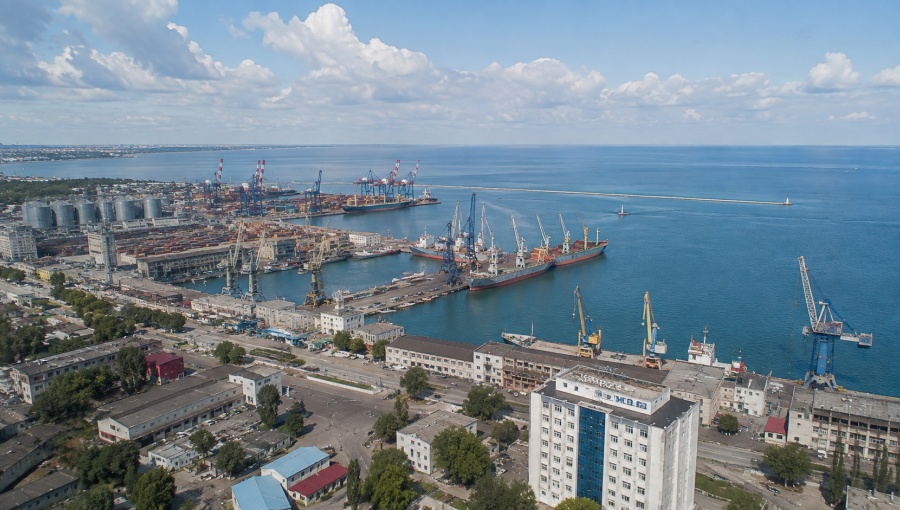
Russia has countered by targeting Ukraine’s six commercial ports of which Odesa is the key transport asset that accounts for two thirds of Ukraine’s seaborne exports by volume and half by value.

Both Ukraine’s and Russia’s ports have already been brought to standstills that will hurt export revenues and has already caused Ferrexpo, a leading Ukrainian metallurgical plant, to shut down production as its warehouses are full to bursting. Russian exports of oil are likely to be impacted as well, although it has several alternative export channels to ease the pressure.

Attacks are escalating as part of the unfolding brutal tit-for-tat missile war and have simultaneously disrupted Russia's two most important Black Sea export businesses: agricultural exports and crude oil shipments.

On July 30, the Caspian Pipeline Consortium (CPC) again suspended tanker loadings at its marine terminal near Novorossiysk after Ukrainian drones struck two oil tankers waiting to load crude. Hours earlier, Ukrainian analyst Kyrylo Shevchenko reported that Russian attacks on Ukrainian ports and Ukraine's own strikes on Russian grain terminals had left both sides' Black Sea trade under increasing pressure.

Kyiv is widening its economic warfare strategy beyond refineries to target the logistics network that moves Russia's most valuable exports. As IntelliNews reported, Ukraine's strategy of attacking Russia’s oil refineries has settled into a routine of damage, repair and restart that make for spectacular headlines, but after having reduced the throughput by an estimated 45%, according to the Financial Times, has seen the fuel crisis abate in the last weeks as Russia imports petrol from friendly states such as Belarus, Kazakhstan and India. As oil analyst Sergey Vakulenko put it in a recent paper: Russia oil refinery sector is battered but not broken.

Vakhtang Partsvania argued in a comment for Riddle Russia that Bankova, Ukraine’s presidential administration, has become dissatisfied with its previous strategy of hitting oil refineries is working terminals, such as the week-long attacks on Primorsk and Ust-Luga, which temporarily reduce traffic, but the damage can be quickly repaired and the port soon goes back to work, as tank farms are designed to lose individual tanks rather than whole facilities, and loadings usually resume once pipeline and rail links survive, says Partsvania.

The Armed Forces of Ukraine (AFU) has refined its strategy, using new and more accurate long-range “sanctions”, as Ukrainian President Volodymyr Zelenskiy has taken to calling them: Ukraine has been aiming at the more sophisticated and difficult to replace equipment in the refineries that is starting to put them out of action completely. For example, the Moscow refinery was hit in May and will not come back online until the start of next year, Reuters reports.

Economic costs mount

With its limited access to the sea, the Russian counteroffensive is hurting Ukraine more than the pain Ukraine is inflicting on Russia. Every day that Greater Odesa's ports remain idle costs an estimated $70mn in delayed exports, according to Shevchenko. In June alone the three ports handled $2.1bn of exports out of Ukraine's total monthly exports of $3.5bn.

During the first half of 2026, 34mn tonnes of cargo—roughly two-thirds of Ukraine's total exports of 50.7mn tonnes—passed through Greater Odesa, which also handles around 60% of Ukraine's cross-border cargo traffic. Russian attacks have already eliminated roughly one-third of Ukraine's Black Sea grain export capacity. That comes at a time where the Ministry of Finance (MinFin) already says there is a $20bn hole in the budget thanks to inflated defence costs.

Still, the pain to Russia is also significant, at a time when its economy has slowed sharply and the budget deficit is swelling alarmingly. Three of the country's largest Black Sea grain terminals—NZT and KSK in Novorossiysk and ZTKT at Taman, together capable of handling more than 20mn tonnes annually—have restricted truck deliveries following repeated Ukrainian drone attacks. According to Shevchenko, operations at Taman have effectively stopped, while shipping through the Sea of Azov has largely frozen.

The impact is now starting to show up in the export statistics. Russian wheat exports in July fell to just 1.5mn tonnes, their lowest monthly level since 2017 and roughly one-third below the same month last year. The decline threatens between $10bn and $15bn of annual grain trade if disruptions continue. Moscow is exploring alternative export routes through the Baltic and Caspian Seas, but Shevchenko says there is so far little evidence that those corridors are absorbing the lost Black Sea volumes.

CPC in the firing line

The innocent bystander in this slugfest is Kazakhstan which sends 80% of its oil to international markets via the CPC pipeline and the Russian port of Novorossiysk.

The CPC said drones struck the Marshall Islands-flagged tanker Nissos Sifnos, which was loading Tengiz crude from the consortium's Single Point Mooring-3 at the weekend. The attack ignited a fire near the vessel's cargo manifolds before being extinguished by the crew with assistance from three CPC support vessels.

A second tanker, the Isle of Man-flagged Marathi, was attacked around six nautical miles from the terminal while approaching to load. CPC said neither vessel suffered casualties or oil spills and both remained afloat, but loading operations were suspended once again while inspections continue.

The consortium made an unusually pointed political statement, noting that the attacks had occurred despite repeated appeals from Astana and other international shareholders—including approaches made through the US State Department—calling for international energy infrastructure not to be targeted.

The terminal occupies a unique position in Eurasian energy markets. Although located on Russia's Black Sea coast, the 1,511km CPC pipeline primarily exports crude from western Kazakhstan. Its shareholders include Transneft, KazMunayGas, and subsidiaries of Chevron (NYSE: CVX), ExxonMobil (NYSE: XOM), Lukoil and a Rosneft-Shell joint venture. Every disruption therefore affects Kazakhstan's export revenues as much as Russia's, highlighting the increasingly international economic consequences of the conflict.

Taken together, the Black Sea has become one of the war's principal economic battlefields on a par with the twin closure of the global chokepoints of Strait of Hormuz and Bab al-Mandab at the end of the Red Sea.

For much of the conflict, Ukraine focused on breaking Russia's naval blockade and reopening its own export corridor from Odesa. Russia, meanwhile, repeatedly attacked Ukrainian port infrastructure in an effort to choke Kyiv's agricultural and metal exports and the Ukrainian economy is already beginning to shut down as a result. Ukraine continues to lose export revenue every day its ports are disrupted, while Russia's own grain terminals, oil export infrastructure and shipping are increasingly exposed to Zelenskiy’s long-range “sanctions” after the formal EU and US sanctions have delivered little to pressure Putin into talks.

Despite Russia’s clear advantage in the drones vs missiles arms race and Kyiv’s nearly exhausted supply of PAC-3 interceptor missiles, neither side appears capable of protecting its commercial maritime infrastructure completely. Both now face the same difficult choice: absorb the economic cost of interrupted trade or reroute exports through longer, more expensive overland and alternative maritime corridors.

The result is that the economic war in the Black Sea is becoming increasingly symmetrical. At the same time Ukraine’s missile development programme is also rapidly closing the gap with Russia as new classes of long-range and more powerful missiles appear such as the famed Flamingo cruise missile, which is already in service, and the F-9, Ukraine’s first true cruise missile, that is expected to appear at the end of this year.

What began as an attempt to blockade Ukraine's exports has evolved into a contest in which ports, grain terminals, oil tankers and shipping lanes on both sides of the sea have become legitimate military targets, raising the cost of trade for Moscow and Kyiv alike.

Ukrainian Drone Attacks On Refineries Far From Only Threat To Russia’s Oil Industry – Analysis


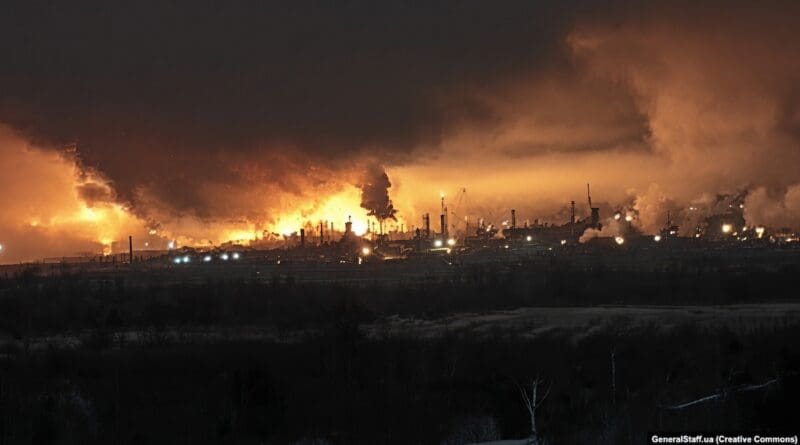
An oil refinery in Kstovo, in Russia's Nizhny Novgorod region, is seen burning after a Ukrainian strike. Photo Credit: Generalstaff.ua, RFE/RL

July 31, 2026
By Paul Goble

Key Takeaways:


Ukrainian drone attacks on Russian refineries have sparked a country-wide gas shortage and cost Moscow significant export earnings. They are far from the only threat to Russia’s oil industry. Other, less dramatic threats are likely to prove more significant.

Much of Russia’s pipeline network and tanker capacity, dating from Soviet times, is aging and increasingly prone to leaks, reducing the flow of oil to refineries and export markets on which the Kremlin relies while fueling growing anger among Russians.

As older fields are exhausted, Russia is being forced to develop new ones in the Far North, where global warming threatens infrastructure and collapse and requires money Moscow lacks or refuses to spend to prevent new disasters.


Ukrainian drone attacks on Russian refineries have sparked a country-wide gas shortage and cost Moscow significant export earnings. They are far from the only threat to Russia’s oil industry and even to Russian President Vladimir Putin’s standing (see EDM, December 22, 2025, July10, 14). Other underlying threats, while less dramatic so far, may prove more significant, as they could reduce Russia’s production and earnings over time (see EDM, June 25).

Much of Russia’s domestic pipeline network and tanker capacity, dating largely from Soviet times, is aging and increasingly prone to leaks that reduce the flow of oil over the longer term to refineries as well as to export markets on which the Kremlin relies, while sparking ever more domestic anger among Russians (Window on Eurasia, April 14, 2024, July 24; Novye Izvestia, June 24, 2025; Meduza, September 3, 2025; Arctida, July 14). As Russia’s older fields are exhausted, it is being forced to develop new and more distant ones in the Far North, where global warming threatens infrastructure collapse and requires money Moscow does not have or is unwilling to spend to prevent new disasters (Window on Eurasia, August 18, 2021, May 17, December 6, 2025; see EDM, March 4, 2025; Nasha Versia, February 10).

To keep public alarm over the current crisis from spreading to these deeper, longer-term problems, the Russian government has played down these risks, blocking coverage of many of these developments in the central media and even ending the release of data that could allow others to track and report on what is happening (Yesli Byt’ Tochnym, March 22, 2023; IStories, July 14, 2025).


Environmental activists, both in Russia and internationally, have been sounding the alarm and documenting their concerns with evidence drawn from government sources, where leaks of another kind are also a problem for the Kremlin. The most prominent coverage of the oil industry’s problems has come from the Bellona organization in Norway, which gained fame for reporting on Soviet-era dumping of nuclear waste in the Arctic, and from Arctida, a Russian émigré group that tracks developments in the northern regions of the Russian Federation (The Moscow Times, March 31; Arctida, July 14). Arctida’s coverage is significant for tracking problems in the Russian oil industry that extend beyond the refineries Ukrainian drones have destroyed.

In the wake of those attacks, Raya Levashova, climate and environment analyst at Arсtida, has drawn particular attention to these broader problems. More than half of Russia’s 250,000-kilometer (155,342-mile) oil pipeline network is worn out, she notes, and should be repaired or replaced because leaks are now a significant problem. In some places, as much as 80 percent of the oil-carrying infrastructure needs to be replaced now (Arctida, July 14). She adds that, in 2023, the last year Moscow released such data, there were 14,716 major pipeline ruptures, spilling oil into the surrounding environment, contaminating it and limiting the flow of oil to refineries. That figure, already alarming, has almost certainly grown since then, which explains why Moscow has worked so hard to keep such information under wraps.


The Arctida analyst says worse is yet to come as the number of such leaks will skyrocket in the coming years as Rosneft builds a new 9,000-kilometer (5,592-mile) network in the Russian Far North, where it is developing new fields. This pipeline system will be new and thus avoid the problems of aging infrastructure, yet global warming, melting permafrost, and the company’s unwillingness or inability to spend the money needed to ensure its stability could certainly increase the risk of leaks. Rosneft is upbeat about the new routes, saying shipments from the Taymyr Peninsula will begin this September. Levashova sees little reason to accept those claims. Only 700 kilometers (435 miles) of the projected 9,000 kilometers (5,592 miles) have been laid as of June, and the company faces serious problems coping with global warming’s impact on pipeline stability (Arctida, July 14).

Levashova says environmentalists such as her are worried that as the project proceeds, the risk of leaks will rise dramatically and harm the fragile ecosystems of the High North. Rosneft’s approach, she argues, is based on the assumption that environmental conditions will remain stable rather than deteriorate, despite scientific projections. Even pipeline segments that are stable today will be at risk as temperatures rise and the permafrost melts further. Specifically, the relatively inexpensive but low-capacity thermosyphons (passive heat exchange systems that allow for the circulation of air in the ground) that the company is installing will no longer work effectively since they rely on larger differences between air and ground temperatures than those already present in many places in the Russian North and expected across the entire region in only a few years (Arctida, July 14).

Even “at current rates of warming,” she concludes, “localized engineering solutions can no longer guarantee the safety and stability of industrial pipelines; the risks of deformation and loss of containment are rising in step with the climate crisis. In addition, this crisis is being worsened in part by the oil being burned after traveling through these pipes.” She points out that the Russian government has failed to impose fines stiff enough to discourage Rosneft and others from cutting corners, thereby allowing the companies to build in ways that make accidents more likely. Moscow has instead reduced rather than strengthened environmental protections and enforcement (Novaya Gazeta, June 24). As Levashova puts it, “It is often more cost-effective for Russian oil companies to pay fines and compensate for damage than to invest” to prevent such disasters (Arctida, July 14).


Taken together, these trends mean the oil crisis in the Russian Federation will not end even if Ukrainian attacks on refineries do, unless Moscow redirects spending to ensure its pipelines and tankers are safe. The Putin regime is unlikely to take those steps, even with prices remaining high due to the U.S. conflict with Iran. The consequences for the Russian economy and for people across the Russian Federation—first in the Far North, then more broadly—could be enormous and, over time, exceed those of the current Ukrainian drone attacks (Yesli Byt’ Tochnym, September 22, 2023; Arctida, March 25, 2025; East Russia, May 13, 2025; Caspy.Land, July 9).


This article was published by the Jamestown Foundation


About Paul Goble
Paul Goble is a longtime specialist on ethnic and religious questions in Eurasia. Most recently, he was director of research and publications at the Azerbaijan Diplomatic Academy. Earlier, he served as vice dean for the social sciences and humanities at Audentes University in Tallinn and a senior research associate at the EuroCollege of the University of Tartu in Estonia. He has served in various capacities in the U.S. State Department, the Central Intelligence Agency and the International Broadcasting Bureau as well as at the Voice of America and Radio Free Europe/Radio Liberty and at the Carnegie Endowment for International Peace. Mr. Goble maintains the Window on Eurasia blog and can be contacted directly at paul.goble@gmail.com .
View all posts by Paul Goble →


Fire reported at another Wildberries warehouse in Russia

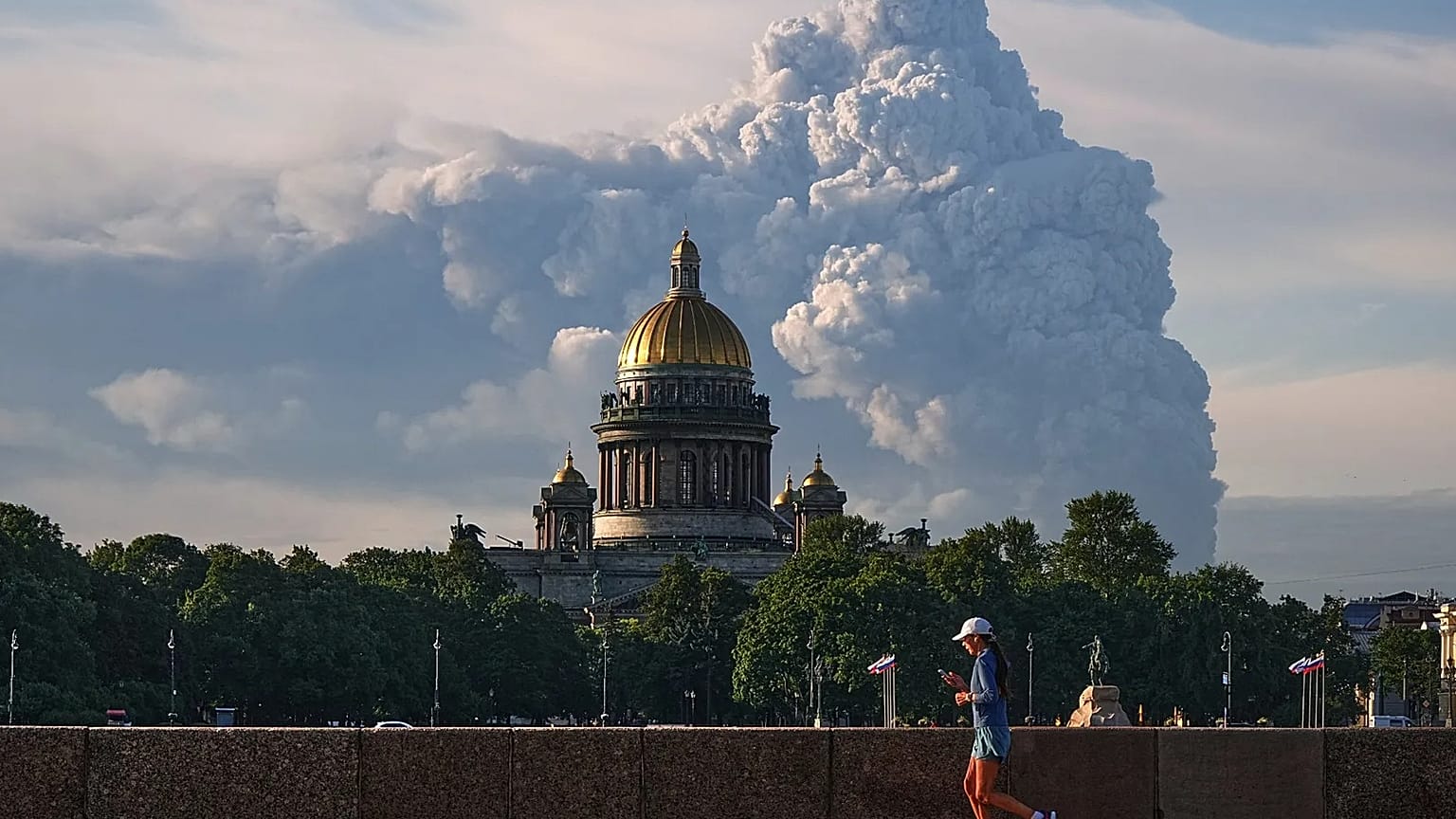
Smoke billows into the sky following Ukrainian drone strikes on warehouses of Russia's online retailer Wildberries, in St. Petersburg, Russia, Friday, July 24, 2026.
Copyright AP photo

By Nathan Rennolds
Published on

Video footage circulating on social media appears to show a large blaze at the warehouse, with flames engulfing the building and huge plumes of black smoke billowing into the sky.

A fire broke out at a Wildberries warehouse in Russia's Samara region on Sunday following an attack, the company's press service has said.

In a post on Telegram, the Russian online retailer said there were currently no reported casualties and that "logistics chains have been reorganised."

"The receipt of deliveries and dispatch of orders are now being handled at other facilities," it added.

Video footage circulating on social media appears to show a large blaze at the warehouse, with flames engulfing the building and huge plumes of black smoke billowing into the sky.

In July, Ukrainian forces targeted multiple Wildberries logistics facilities across Russia as part of Kyiv's "long-range sanctions" against Moscow, with Ukrainian President Volodymyr Zelenskyy saying the warehouses were involved in supplying drone parts and navigation equipment for the Russian military.

Wildberries was founded in 2004 by Russian billionaire Tatyana Kim and has gone on to become the country's largest online marketplace. Products offered on its website now include items such as knives, helmets, camouflage, and night-vision devices.

Russian strikes on Ukraine

In a social media post on Sunday, Zelenskyy said Russian forces had launched around 1,900 drones, roughly 1,600 aerial bombs, and 144 missiles against 16 regions of Ukraine this week.

"Today, Sumy was struck by aerial bombs. In Brovary, one person was killed in a drone strike, and six people were injured," he wrote.

The Ukrainian air force said Russia attacked Ukraine with 133 drones and loitering munitions overnight.

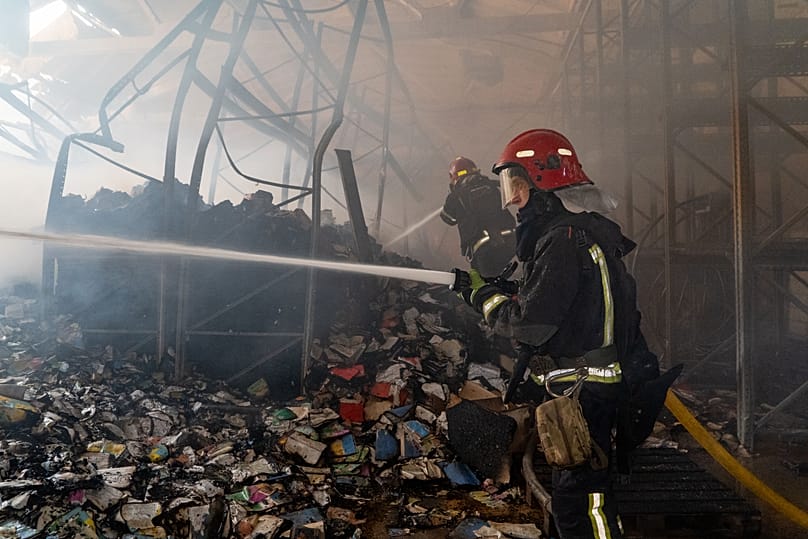
Firefighters put out a fire at a major book warehouse following Russian drone strikes in Kharkiv, Ukraine, Saturday, Aug. 1, 2026. Copyright 2026 The Associated Press. All rights reserved

"According to preliminary data, as of 8:00 am, air defences had shot down or neutralised 109 enemy UAVs of the Shahed, Gerber, and Italmas types, ‘Banderole’ loitering munitions and other types of drones in the north, south and east of the country," the air force said in a statement.

Ukrainian forces targeted Russia's Saratov oil refinery and Engels military air base overnight, per Zelenskyy. An oil depot in the Kaluga region and a facility involved in the storage of attack drones in Brysansk were also hit, he added.

Zelenskyy renews calls for Patriot missiles

It comes as the Ukrainian leader made a fresh plea for more Patriot interceptors.

The US-made Patriot is one of the world's most advanced air defence systems and can be used to defend against ballistic and cruise missiles, loitering munitions, and aircraft. The coveted system is expensive and limited in supply, but it is seen by Kyiv as crucial to success in its fight against Russian President Vladimir Putin's invading forces.

"The world has Patriot missiles," Zelenskyy said on Saturday evening. "What matters now is for our partners to make the political decision to provide the necessary packages. The United States knows what we need. Europe knows what we need. Anti-ballistic missiles must protect people – not sit in stockpiles."

On Friday, US President Donald Trump appeared to go back on a promise to let Kyiv build its own Patriot missiles.

"We have not agreed to that. We're talking about it. But it's a hard thing to give away that kind of technology," Trump said during a cabinet meeting - despite having told Zelenskyy at the 2026 NATO summit in Turkey that Washington would give Ukraine a license to build Patriots.

"We'll show them how to do it," Trump said at the summit in July, adding: "This way you can't complain that we're not giving them enough."


Iran's foreign ministry defends Hormuz blockade, tanker strikes as lawful self-defence

Iran's foreign ministry defends Hormuz blockade, tanker strikes as lawful self-defence
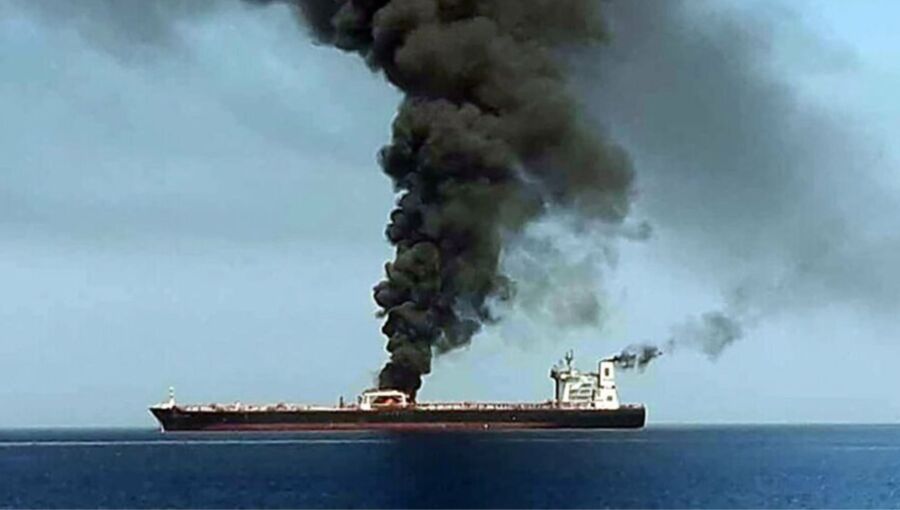
File: Images of a struck ship previously provided by Iran. / bne IntelliNewsFacebook
By bnm Tehran bureau August 1, 2026

Iran's foreign ministry defended the country's naval blockade of the Strait of Hormuz and its strikes on tankers as legitimate self-defence against US aggression, in a statement issued on August 1.

The statement sets out Tehran's formal legal case for actions that have choked one of the world's most important oil chokepoints, framing continued US military operations rather than Iran's own conduct as the cause of the disruption.

It came the same day the IRGC said it had struck two more tankers attempting to transit the strait, and hours after Iran's waterway authority said it would issue no transit permits until US military operations ceased.

The ministry said the US had continued to breach the ceasefire understanding that ended the war on June 18 through a maritime siege of Iran's ports and shipping, alongside attacks on various regions, economic pressure and what it called unlawful threats.

It said the continued naval siege met the United Nations definition of aggression under General Assembly resolution 3314 of December 14, 1974, and that Iran reserved the right to use all means for legitimate self-defence.

The ministry said a new round of what it described as US military aggression had begun on the evening of July 8, coinciding with funeral ceremonies for the supreme leader, using as a pretext claims of incidents involving three ships crossing an unsafe and unauthorised route through the strait.

It said countries whose ships were involved had known that management of the strait rested with Iran and that the southern route was unauthorised, yet had attempted to send the three vessels through it.

It said such actions violated a fifth clause of the ceasefire understanding, coming only days after the accord was signed, alongside provocative statements by the Gulf Cooperation Council and intervention by US Secretary of State Marco Rubio dated July 26.

The ministry said that between July 27 and July 8, US forces had repeatedly misused commercial vessels to move military personnel, equipment and materiel, and that vessels using the southern route with transponders switched off were seeking to evade Iranian monitoring. It said that on July 8 a CENTCOM warship had crossed the southern route under cover of a large gas tanker.

The US military has rejected Iran's claim to control the strait, saying its forces remain in the region to ensure freedom of navigation, and has directed hundreds of strikes against Iranian targets in the south. The confrontation has left tankers hit and crews killed in recent weeks, and shipping largely suspended through the waterway, which normally carries about a quarter of the world's seaborne oil.

The ministry said Iran held no hostility towards regional states and sought friendly relations based on mutual respect and good neighbourliness with all countries bordering the southern Persian Gulf.