Sunday, August 02, 2026

Graham Sanctions Bill Has Bite, Trump Will Use It To Terrorize India – OpEd


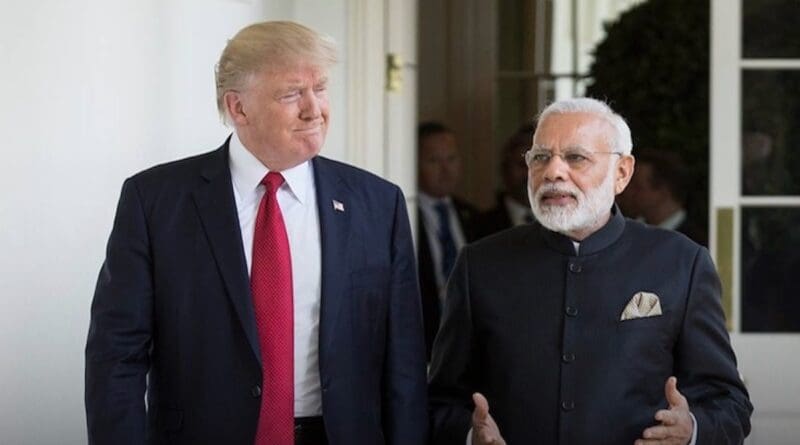
US President Donald Trump with India's Prime Minister Narendra Modi. Photo Credit: POTUS, X

July 31, 2026
By M.K. Bhadrakumar

Key Takeaways:

A US Senate bill advancing secondary sanctions threatens 100% tariffs on major buyers of Russian oil, including India. The Lindsey O. Graham Sanctioning Russia and Iran Act of 2026 has strong bipartisan support and could soon reach Trump’s desk for discretionary enforcement.

India already faces competitive disadvantages under existing US tariffs. New Section 301 duties and the lack of textile quota exemptions leave Indian apparel and other exports more expensive than those from Bangladesh, Mexico, and some ASEAN competitors.

The measure is seen as pressure on India’s strategic autonomy. Critics argue the bill aims to force Delhi to cut Russian energy imports and that evasive official responses risk subordinating national interest to US demands.


The Commerce and Industry Minister Piyush Goyal’s characterisation of the reports suggesting the US could impose a 100 percent tariff on countries such as India that import Russian oil as speculative cannot be taken as a statement of fact. “We don’t comment on speculation,” he told the media. On closer look, it is an evasive remark.

What is absolutely certain is that the US Congress will pass the bill. In the amended form, the bill, named The Lindsey O. Graham Sanctioning Russia and Iran Act of 2026, tightens US sanctions against Russia and Iran. It passed its second procedural vote in the US Senate on Wednesday. Eighty-four senators voted to launch debates on it, while 12 were against.

The final voting can even be expected by the end of the week. The bill envisages restrictions on Russia and Iran’s political and military leaders and state-owned companies as well as secondary sanctions against the two countries’ trade partners. Senators also proposed a 100% tariff for the five main buyers of Russian oil.


Earlier on Wednesday, President Donald Trump actually supported the bill and remarked that he saw no need for the House of Representatives to interrupt the parliamentary recess in August to review the bill. The bill is a veritable reality now. It is upto Trump’s discretion entirely to decide on the implementation of the sanctions.

Equally, it remains a pious hope still that the first tranche of India’s trade agreement with the US, announced by Trump and Prime Minister Narendra Modi on February 3, will materialise soon.

The catch is, Delhi is pinning hopes that Trump accedes to our wish to be granted a comparative advantage over our competitors, namely, countries in our neighbourhood, the ASEAN region “and other nations with whom we compete,” as Goyal remarked yesterday.

Meanwhile, although the US’ temporary 150-day 10% global tariff expired on July 24, Washington immediately replaced it with permanent Section 301 forced-labor duties of 10% to 12.5% targeting over 60 trading partners, including India.

Unlike competitors such as Bangladesh, Indonesia, and Malaysia, India did not receive a textile and apparel tariff-rate quota (TRQ) exemption for using US-origin cotton, putting Indian apparel exports at a relative price disadvantage. Also, products already governed by Section 232 such as steel, aluminium, and copper continue to face separate existing structural tariffs ranging from 25% to 50%.


Curiously, under the new Section 301 rules effective July 24, India actually faces severe competitiveness disadvantages in its key export sectors when compared to Mexico and Bangladesh. While all three nations technically occupy the baseline 10% tariff tier, specific country exemptions for the other two countries leave India uniquely exposed.

Bangladesh has secured a specialised Textile TRQ Mechanism, whereby a specific volume of Bangladeshi apparel is allowed to enter the US free of tariff, provided they use US-sourced raw cotton and fibre. Whereas, India did not receive a textile mechanism or quota exception. Consequently, Indian ready-made garments face an additional 10% duty stacked on top of regular MFN rates, making Indian textiles significantly more expensive than Bangladeshi exports in the US market. So much for our insistence on preferential tariffs vis-a-vis competitors!

The most controversial element of the Russia sanctions bill in the Congress is the possibility of Washington imposing duties on countries purchasing Russian energy resources (so-called secondary duties). Indeed, Trump has already used secondary tariffs against Indian the past. On August 6, 2025, he signed an executive order “Countering Threats to the United States by the Government of the Russian Federation.” An additional punitive tariff of 25% was imposed on India, effectively increasing the then-current tariff rate on India to 50%. Therefore, in effect, the Graham bill effectively restores Trump’s ability to impose tariffs above 15%.

Ivan Timofeev, Director General of the Russian International Affairs Council (an affiliate of Russian foreign ministry) has compared the bill to a gun that Trump could keep on the table and brandish to extract concessions from the other side. Timofeev emphasised: ”Trump’s support for the law is unlikely to have any impact on Russian policy. Perhaps it will add a psychological effect. Even from a purely pragmatic perspective, what’s the point of seriously considering this factor in political calculations if it doesn’t change anything de facto?”


Arguably, the bill is supposed to be another way to pressure Russia to extract further concessions in the Ukrainian conflict. However, the ground reality is that Russian policy has hardened lately and is now focusing on a military solution that ensures there won’t be another war. Trump cannot but be aware of it too.

Addressing a meeting of naval officers in St. Petersburg recently, Putin hinted at what Eurasia’s map would look like in a conceivable future: “I am confident that sooner or later Ukraine will lose these western territories [west of Dnieper River], lands that once belonged to Poland, Hungary and Romania. It may not happen tomorrow or the day after tomorrow. It may take one year, two years, 10 years or 15 years, but history will ultimately put everything back in its place.

“There was only one guarantor of Ukraine’s territorial integrity. It was Russia. But they decided it was necessary, possible and beneficial for them to declare Russia their enemy,” Putin sardonically noted.

It is plain to see that the bill’s real objective is to derail India’s strategic partnership with Russia and force Delhi to cut back its oil imports from Russia. Lindsey Graham never really cared to hide this unpleasant truth. Make no mistake, this is a bipartisan legislation which has had strong backing from members in both parties for over a year. And it advanced on an 86-12 vote in the 100-member senate.

Sen. Richard Blumenthal (D-Conn.), the co-author of the bill, said the measure is intended to punish China and India for financing Russia’s war with their purchases of Russian energy. As he put it, “To be really blunt, China and India are the main culprits here. They purchase the vast majority of oil and gas. They are fuelling Russia’s war machine and they are doing us no favours anywhere else in the world.”

China should have been a ‘natural ally’ for India in countering the US pressure going forward. On the contrary, the government threw its weight with gusto behind the recent US-led statement by a clutch of western countries to reaffirm the 2016 ruling against China’s South China Sea claims. What was the urgency? Beijing has reacted sharply.

Goyal’s evasive remark is shocking. A comprador mindset is tantamount to betraying national interest. India’s continued import of Russian oil once again becomes the litmus test of the country’s strategic autonomy and independent foreign policy.


About M.K. Bhadrakumar
M.K. Bhadrakumar is a former Indian diplomat.
View all posts by M.K. Bhadrakumar →
Turkey’s Former PM Davutoglu Quits Politics After Failing To Unite Conservatives


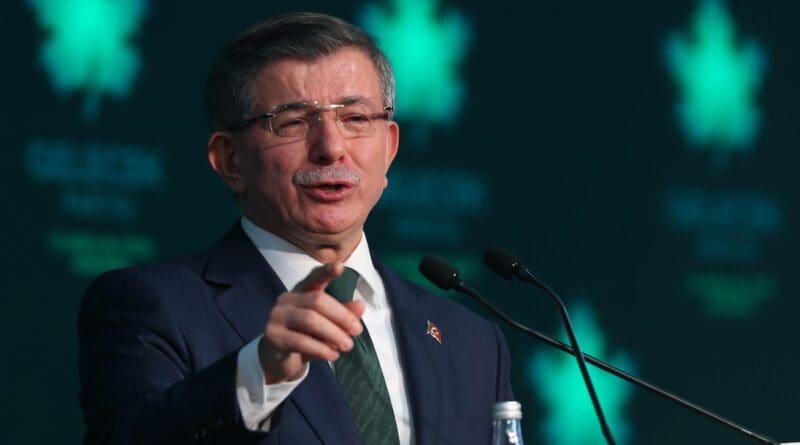
Turkey's Ahmet Davutoglu. Photo: Future Party.

Balkan Insight
By Hamdi Firat Buyuk


Key Takeaways:

Former Turkish Prime Minister Ahmet Davutoglu is dissolving his Future Party and quitting party politics. He cited the need to avoid a “polluted political climate” after the party failed to attract significant conservative support.

The party never gained traction as an alternative to Erdoğan’s AKP. Founded in 2019 mainly by ex-AKP figures, it entered parliament in 2023 only through an alliance with the CHP and currently holds just four seats.

Davutoglu remains a notable figure for his earlier foreign-policy legacy. As the architect of the “zero problems with neighbours” doctrine and author of Strategic Depth, he shaped Turkey’s regional soft-power outreach before falling out with Erdoğan and resigning as prime minister in 2016.


Former Turkish Prime Minister Ahmet Davutoglu announced on Wednesday that he is leaving politics and is dissolving his failing Future Party.

“We have decided to withdraw from party politics and bring the Future Party’s political activities to an end, in order to avoid becoming part of the polluted political climate,” Davutoglu said in a statement.


The party currently has four seats in parliament. The party was established in 2019 with high hopes and entered parliament in 2023 thanks to a political alliance with the main opposition Republican People’s Party, CHP.

However, it failed to become a popular choice among conservative and Islamist voters, who are seen as the bastion of President Recep Tayyip Erdogan’s ruling Justice and Development Party, AKP.

According to Davutoglu, his party tried to gather conservative forces together but did not succeed.

“From the outset, we sought to unite this new group internally first and then, if possible, merge it with the other conservative parties into a single party. Where that was not possible, we aimed to build a close, organic alliance. However, those efforts were ultimately unsuccessful,” he said.

Davutoglu was an architect of an AKP foreign policy that has seen Turkey extend its influence across the former Ottoman lands of the Balkans and the Middle East.

Known as the policy of “zero problems with neighbours”, Davutoglu developed the strategy while working as a professor of international relations at institutions including the prestigious Malaysian Islamic University.

In 2003, he was appointed an ambassador by then Prime Minister Abdullah Gul before going on to become chief foreign policy advisor to Gul’s successor, Erdogan, and then foreign minister in 2009.

The neighbourhood policy was outlined in his 2001 book, Strategic Depth, which advocated greater Turkish engagement and influence in the region, focusing on the Balkans, the Caucasus, the Middle East and Central Asia.

His star rose when he was appointed prime minister in 2014, when Erdogan moved into the presidency. But a number of disagreements between the two and Davutoglu’s efforts to play a more visible role in domestic and foreign policy led to his resignation in 2016, under pressure from Erdogan. He finally resigned from the AKP in 2019.


Davutoglu saw the Balkans as a “natural and historical hinterland” for Turkish foreign policy given the strong bonds forged through centuries of Ottoman domination.

His promotion of Turkish ‘soft power’ saw the growth of government-backed bodies such as the Turkish aid agency, TIKA, the Yunus Emre cultural institutes, Turkish universities in the Balkans, media outlets and the Turkish Religious Authority, Diyanet.

Davutoglu founded the Future Party mainly with former AKP figures in a bid to challenge the President. According to recent opinion polls, however, the party had lost support.

The four Future Party MPs are expected to join the AKP or remain independent in parliament.

Despite his fading career in politics, Davutoglu still sounded a proud note. “This is not a decision of surrender. It is a decision to draw a moral line. This is not an abandonment of politics; it is a call for everyone to rethink politics.” Davutoglu wrote.


About Balkan Insight

The Balkan Insight (formerly the Balkin Investigative Reporting Network, BIRN) is a close group of editors and trainers that enables journalists in the region to produce in-depth analytical and investigative journalism on complex political, economic and social themes. BIRN emerged from the Balkan programme of the Institute for War & Peace Reporting, IWPR, in 2005. The original IWPR Balkans team was mandated to localise that programme and make it sustainable, in light of changing realities in the region and the maturity of the IWPR intervention. Since then, its work in publishing, media training and public debate activities has become synonymous with quality, reliability and impartiality. A fully-independent and local network, it is now developing as an efficient and self-sustainable regional institution to enhance the capacity for journalism that pushes for public debate on European-oriented political and economic reform.
View all posts by Balkan Insight →
Soft Power And Strategic Ports: China’s Expanding Media Presence In Panama – Analysis


August 1, 2026
Diálogo Américas
By Paolo Manzo


Key Takeaways:

China pairs economic investments in ports, telecom, energy, and logistics with coordinated media and digital campaigns that portray it as a reliable development partner and reduce scrutiny of strategic dependencies.

In Panama, after the country left the Belt and Road Initiative and a court struck down Chinese-linked port concessions, Beijing’s messaging shifted from cooperative to confrontational, framing the decisions as U.S. pressure rather than independent national choices.

Similar influence efforts appear across Central America and the Caribbean, integrating infrastructure projects with narratives that can normalize dependencies; analysts recommend stronger independent media, fact-checking, and transparency to counter them.


In recent years, China has paired its economic expansion with growing media and digital influence efforts, using strategic communications to strengthen its presence in key sectors such as ports, telecommunications, energy, and logistics. Through state media, embassies, social media platforms, and local partners, Beijing promotes narratives that portray China as a reliable partner and a driver of development.

These campaigns are not solely intended to improve China’s image. They also seek to shape the political and social environment in which projects involving strategic infrastructure are debated. The goal is to build support for Chinese investments while reducing public scrutiny of potential risks related to economic dependencies, control of critical infrastructure, and security concerns.


“Beijing has progressively shaped public debate and policy orientations in ways that discourage critical examination of strategic dependencies, governance risks, and security concerns associated with major Chinese investments,” Martin Vladimirov, program director at the Europe-based Center for the Study of Democracy, told Diálogo.

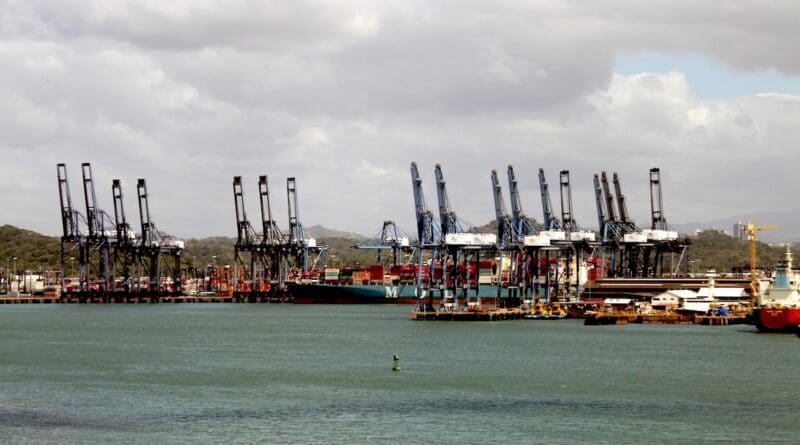
Panama offers a particularly revealing example of how this strategy has evolved. For years, China’s presence at the ports of Balboa and Cristóbal was accompanied by narratives emphasizing cooperation, modernization, and economic growth. But after Panama withdrew from the Belt and Road Initiative (BRI) and the Supreme Court declared the Panama Ports Company concessions unconstitutional, Chinese messaging became noticeably more confrontational, raising questions about how Beijing may respond when its strategic interests are challenged in the region.
The battle over the ports narrative

The dispute surrounding the ports of Balboa and Cristóbal marked a turning point in China’s communications strategy in Panama. Following the country’s withdrawal from the BRI, the strengthening of ties with Washington, and the January 2026 ruling against Panama Ports Company, controlled by Hong Kong-based CK Hutchison, messages from Chinese state media and diplomatic channels adopted a much more confrontational tone.


According to Beijing’s narrative, Panama’s decisions were not the result of an independent national choice but rather the product of pressure exerted by the United States. At the same time, CK Hutchison was portrayed as the victim of an injustice and a violation of the rule of law, while Chinese authorities emphasized the need to protect the company’s “legitimate rights and interests.”

As Vladimirov noted, “In Panama, Beijing has portrayed criticism of Chinese involvement in strategic infrastructure as politically motivated or driven by geopolitical competition.”

This approach represents an evolution of the model identified in a 2025 report by Expediente Abierto. The study identified three pillars of Chinese messaging in Panama: China as a historic partner through the presence of the Chinese-Panamanian community for more than 170 years; China as a driver of economic and infrastructure development; and China as an alternative to U.S. influence.

Through a network that includes Xinhua, CGTN Español, the Chinese Embassy, and a range of local amplifiers, port and logistics investments were presented as tools for growth and modernization. While the port concessions dispute has not altered the fundamental objectives of China’s communications strategy, it has changed the tone. Themes of national sovereignty and historic U.S. interference, already present in earlier messaging, have become central to the debate.


Vladimirov believes this phase may be temporary. “Over time, I expect China to rely instead on economic incentives, trade partnerships, and diplomatic engagement to preserve its position,” he said. Panama remains too important as a logistics and commercial hub for China.

The Panama case is particularly significant because it combines critical logistics infrastructure, global maritime connectivity, and a geographic position of strategic importance to international trade. In this context, debates over ports, concessions, and investments extend beyond economics and become closely linked to sovereignty, institutional resilience, and the protection of strategic infrastructure.
A strategy that extends beyond Panama

Panama’s experience is not unique. Across Central America and the Caribbean, China’s economic expansion has been accompanied by communications efforts designed to strengthen its political and social legitimacy.

In El Salvador, for example, construction of the new National Stadium and the La Libertad tourist pier has been presented as tangible evidence of China’s contribution to the country’s development. Chinese official messaging has also highlighted cooperation with the Salvadoran government in the areas of security, technology, and education.

In Costa Rica, meanwhile, the strategy has focused on cultural diplomacy, academic exchanges, and telecommunications. The controversy surrounding Huawei and other Chinese providers’ exclusion from the country’s 5G network has often been portrayed by media outlets and voices aligned with Beijing as an example of geopolitical pressure. Costa Rican authorities, however, have argued that the restrictions stem from cybersecurity regulations requiring suppliers of critical telecommunications infrastructure to originate from countries that are parties to the Budapest Convention on Cybercrime, a criterion that China does not meet.

Cuba offers another important example. On the island, China’s presence extends to telecommunications through companies such as Huawei and ZTE, as well as to port and airport infrastructure and the energy sector, where Beijing has invested in power grid modernization and new solar energy projects. This has been accompanied by close media cooperation between Cuban and Chinese state media organizations, including content-sharing agreements, co-productions, and converging narratives.
Infrastructure and information

According to analysts, one of the most significant aspects of China’s strategy is its ability to integrate economic and informational influence. Investments and narratives advance in parallel.


Alongside its commercial expansion, Beijing has built a network that includes embassies, state media outlets, cultural institutes, universities, research centers, and local interlocutors. Together, these actors help disseminate favorable messaging about Chinese investments and reinforce the image of the People’s Republic of China as a reliable and indispensable development partner.

According to Vladimirov, Chinese influence is typically exercised through a mutually reinforcing network of actors. “State media and embassies partner with local political figures and commercial stakeholders to amplify narratives that promote Chinese investments and portray China as a reliable development partner,” he said.

Experts warn that the primary concern is that these narratives may normalize strategic dependencies and limit public debate about the geopolitical, economic, and security costs associated with control of critical infrastructure. As Vladimirov noted, “These dependencies can eventually become economic and political levers that are difficult to remove.”

To counter propaganda and influence campaigns, Vladimirov argues that it is essential to strengthen independent media and promote fact-checking mechanisms capable of identifying coordinated or misleading narratives. Increasing transparency regarding who funds and disseminates certain content, as well as developing institutional capabilities to monitor foreign influence operations, is equally important.


This article was published by Diálogo Américas

About Diálogo Américas
Diálogo Américas is a professional magazine published by U.S. Southern Command as an international forum for security issues in Latin America.
View all posts by Diálogo Américas →
How France’s Fall Signals China’s Rise In The Sahel – Analysis


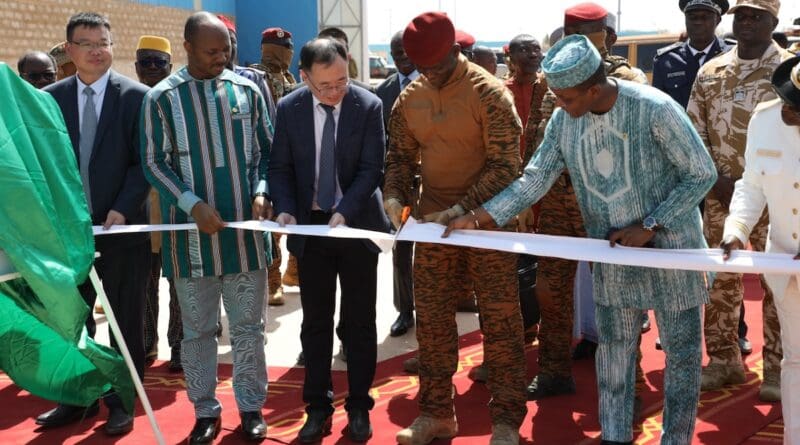
Captain Ibrahim Traoré inaugurated the Chinese-backed Sino-Burkina Ciments SA (CISINOB) industrial company at a 2025 ceremony in Burkina Faso. 
(Source: commerce.gov.bf)


Key Takeaways:

Burkina Faso severed diplomatic ties with France in June 2026. Ouagadougou accused Paris of neo-colonial interference and supporting subversive networks, completing a process that began with the expulsion of French troops in 2023 and diplomats in 2024.

The break is part of a wider Sahel realignment. Burkina Faso, Mali, and Niger have withdrawn from ECOWAS and the Rome Statute while consolidating the Alliance of Sahel States under Captain Ibrahim Traoré’s rotating presidency.

China has rapidly become the central external partner. Through arms deliveries, infrastructure financing, mineral access, and flexible terms, Beijing is filling the vacuum left by the West and advancing a broader strategy linking the Sahel hinterland to Atlantic coastal access.


(FPRI) — In a disturbing, though predictable, move, Burkina Faso severed diplomatic relations with France on June 26, 2026, accusing its former colonial ruler of pursuing “neo-colonial ambitions,” and maintaining “subversive networks,” and even supporting terrorist groups against the Burkinabè state. Paris describedthe decision as “hostile and unfounded.” Ouagadougou, however, called it long overdue, citing France’s alleged interference in Burkina Faso’s internal affairs along with the absence of trust, mutual respect, and respect for sovereignty that serve as the basis of normal diplomatic relations. The inevitability of this severing of the last institutional thread was predictable, as French troops were expelled from Burkina Faso in 2023, followed by French diplomats in 2024.

The diplomatic rupture is accompanied by a broader regional realignment. In June 2026, Burkina Faso, along with with Mali and Niger, formally withdrew from the Economic Community of West African States (ECOWAS), arguing that the regional bloc had increasingly come to serve the interests of France and other Western partners at the expense of their own national interests and sovereignty. Viewed alongside their decision to also withdraw from the Rome Statute, these moves signal a broader effort by these states to de-Westernize the normative architecture of the post-Cold War international order.


These decisions also reinforced these three states’ commitment to consolidating the Alliance of Sahel States (AES), whose rotating presidency is held by Burkina Faso’s Captain Ibrahim Traoré in 2026. The AES was established through the Liptako-Gourma Charter, signed on September 16, 2023, creating a confederation that spans approximately 2.8 million square kilometers and is home to nearly 75 million people. Although initially conceived as a mutual defense and collective security pact, the alliance has since evolved into a broader political, security, and economic framework.

The diplomatic rupture should therefore be understood as a part of a broader geopolitical realignment rather than simply another de-Westernization surge in the coup-détente dominated politics of the Sahel region in response to Western calls for democratization. Two factors help explain this shift.
The Region’s History Makes What Is All Too Predictable

First, the ongoing push for de-Westernization in Sahelian states such as Burkina Faso is deeply rooted in the region’s colonial history and enjoys significant, materially grounded popular support. Captain Ibrahim Traoré, Burkina Faso’s military ruler and interim president, has consciously and effectively utilized this sentiment by invoking the anti-imperialist legacy and iconography of Thomas Sankara, the country’s revered revolutionary and president, who was assassinated in 1987. Regarded as the “Father of the Burkinabè Revolution,” Sankara is often described as “Africa’s Che Guevara.”


Traoré has transformed Sankara’s legacy into a powerful instrument of political mobilization. His message has been further amplified across Africa and its diaspora through a dense digital ecosystem of sympathetic—and, at times, coordinated and inauthentic—media networks supported by non-Western partners.

Unlike earlier forms of rhetorical Third-Worldism—a movement advocating for solidarity and unity of developing, decolonized nations in Africa, Asia, and Latin America against both Western capitalist influence and Soviet-style communism, prioritizing economic self-sufficiency and anti-imperialism during the Cold War period—or dependency-driven critiques of the West, the current sovereignty narrative in Burkina Faso seeks to translate de-Westernization into tangible economic and political outcomes.

The question of whether the de-Westernization narrative is successful or not does not matter as long as it is presented as delivering real nationalistic gains. For example, the nationalization of gold reserves, a billion-dollar agro-pastoral program, is yielding huge benefits. As a result, rice imports were suspended following record domestic cereal production, and a massive push of infrastructural development, including the construction of roads, dams, and food processing plants, are presented as evidence that self-reliance can be achieved without IMF-backed structural adjustment conditionalities in exchange for emergency financial assistance, such as fiscal austerity, privatization, and market deregulation.


However, much Western analysis continues to interpret the Sahel’s realignment through the lens of how authoritarian regimes in these states work towards junta survival and military rule. But in doing so, this analysis ignores the domestic demand for beneficiation, sovereignty, and development that also drives these shifts. Meanwhile, the West’s repeated use of economic sanctions and diplomatic isolation risks strengthening the very anti-Western sentiment it seeks to counter.
China Seizes the Opportunity

The second factor has a wider geopolitical significance. As the Sahel in general, and Burkina Faso in particular, have become the laboratory of Africa’s de-Westernization movement, China has seized the opportunity to embed itself deep into the region’s political, economic and security structures, using the moment to expand its sphere of influence and strategic depth. Burkina Faso, a landlocked and war-torn state, is central to Beijing’s strategic ambition in the region. Sitting at the center of West Africa, Burkina Faso connects the Sahara to the Gulf of Guinea’s hinterland. As such, nearly every commercial network and trade route from the ports of Abidjan, Lomé, and Cotonou to the Sahelian interior runs through Burkina Faso or its AES partners, making the confederation a strategically important hub.

Moreover, Burkina Faso is also Africa’s fourth-largest producer of gold, recording a record 94 tons in 2025. Recent finds of lithium, rare-earth elements, and cobalt reserves have further positioned the country at the center of the global critical mineral landscape, which is of interest to the US, China, and other powers. At the same time, Burkina Faso has also emerged as the epicentre of jihadist violence in the Sahel. The Jama’at Nusrat al-Islam wal-Muslimin, for example, is estimated to contest control over nearly 60 percent of the country’s territory through a sustained violent insurgency, making the country one of Africa’s most fragileand conflict-prone states. This deteriorating security landscape contributed to Burkina Faso being ranked as the world’s second-most terrorism-affected country in 2025. For Traoré, this is his single biggest challenge. As such, whoever helps him fight Ouagadougou’s battles gains strategic leverage over the entire Sahelian heartland—and over the logistics corridors that link it to the Atlantic seaboard. As such, China has gone all out in providing the financial, military, diplomatic, logistical, and technological support that has sustained Burkina Faso’s efforts to combat jihadist groups.

The Traoré government, however, has not simply exchanged one external patron for another. Rather, Burkina Faso is pursuing a strategy of polyalignment, simultaneously cultivating functionally differentiated partnerships with multiple non-Western powers simultaneously in order to maximize strategic autonomy. Each partner serves distinct strategic needs. Russia, for example, provides the political and security pillar through the foundational bilateral agreement signed between the two countries in Moscow in February 2026. The agreement envisages the deployment of Africa Corps personnel for regime protection, cooperation on Rosatom’s proposed civil nuclear program, and networked support to the information ecosystem that reinforces the Traoré government’s narrative of sovereignty and de-Westernization. In addition, Turkey has emerged as a crucial defense and critical infrastructure partner, supplying Traoré with armed drones while expanding its role in the country’s energy sector. One example is the Turkish-built 119 MW power plant, financed by the Africa Finance Corporation, which is expected to become Burkina Faso’s largest electricity facility when it becomes functional in 2027. Investments from the Gulf states, meanwhile, fill important financing gaps across various sectors.


Nonetheless, Russia’s economic constraints and the ongoing Russia-Ukraine conflict have posed severe structural limitations on Moscow’s ability to maintain long-term support. According to SIPRI, Russian arms exports declined by roughly 64 percent between 2015–19 and 2020–24, highlighting Russia’s diminishing capacity to sustain long-term economic and security partnerships abroad. Although Russia can reinforce the politics of geopolitical realignment, it lacks the economic depth to finance Burkina Faso’s developmental and defense ambitions. Against this backdrop, China assumes far greater significance than any other country engaging with Burkina Faso. Beijing can serve as the one-stop solution, capable of combining capital for long-term financing at scale, infrastructure, industrial capacity, defense equipment, and information ecosystem. These comprehensive offerings have positioned China as the material center of gravity in Burkina Faso’s evolving network of external partnerships.

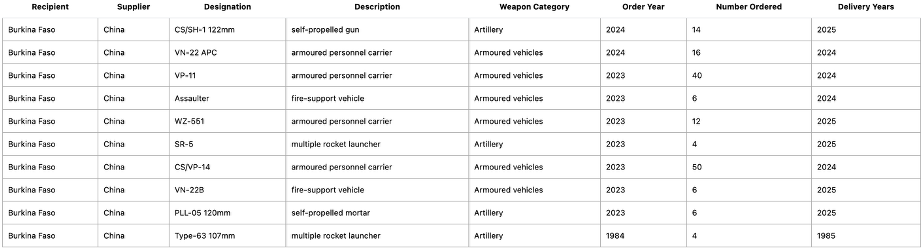
China has moved swiftly moved to fill the vacuum that the West never managed to fill. Since restoring diplomatic relations with China in 2018 after severing ties with Taipei, Burkina Faso has witnessed a deep and rapid strengthening of its strategic partnership with Beijing. The relationship has built momentum following a recent multi-phase defense agreement with the PRC-owned arms conglomerate NORINCO in 2024, aimed at boosting the Traoré government’s defense capacity. Since then, Ouagadougou has received successive deliveries of Chinese defense equipment, including VP11 and CS/VP14 mine-resistant armoured vehicles, VN22B fire-support platforms, PLL-05 self-propelled gun-mortars, SR5 multiple rocket launchers, and other advanced military platforms. This technology has provided Burkina Faso’s forces with long-range strike capabilities, significantly enhancing its firepower and mobility for the first time against JNIM. More importantly, these defense systems were delivered in months rather than years and are reportedly financed through flexible arrangements that are backed by future gold exports, without the political and structural economic conditionalities that usually accompany Western security assistance.

Arms Transfers Database for Burkina Faso
Source: SIPRI

It is therefore unsurprising that China now accounts for roughly 26 percent of West African arms importsand has displaced Russia as sub-Saharan Africa’s largest weapons supplier. However, the partnership extends well beyond weapons. Beijing has also become a major development partner, funding energy projects, critical infrastructure, and digital connectivity, in addition to the extraction and processing of critical minerals, a sector in which China holds a global monopoly. Technology transfer (which France never provided over six decades), satellite communications systems, the Smart Burkina urban policing and security program, Chinese state-owned enterprise Yunhong’s involvement in rare-earth exploration, and the appointment of Chinese businessman Li Yubao, who acquired Burkinabè citizenship, as a special adviser to the president, indicates the growing institutionalization of the relationship between Ouagadougou and Beijing. The relationship provides both capacity and capability rather than a purely transactional exchange. For instance, Beijing has provided more than US$30 million in grant aid to Burkina Faso and brought the country within the implementation framework of the 2024–27 Forum on China–Africa Cooperation (FOCAC) Action Plan. This framework has paved the way for deeper institutionalized cooperation in security, infrastructure, and development, reflecting Beijing’s strategic ambition to position Burkina Faso as a model of its integrated security-development approach in the Sahel.


To view China’s Sahel engagement as merely continental or country-centric is to overlook its most consequential dimension: Beijing’s geo-economic strategy. For Beijing, strategically located, landlocked, resource-rich states in the Sahel region are not ends in themselves but cartographic means in order to gain strategic access to the Atlantic coast. China’s template is now becoming predictable and clearly visible. In the Indian Ocean, China translated more than two decades of ports, pipelines, and undersea cables projects investment in Djibouti into a naval base and logistics nodes to facilitate the People’s Liberation Army Navy’s (PLAN) “far seas defense” doctrine. As such, the strategic and tactical depth that China has gained in the western Indian Ocean region is now being replicated, more quietly and with less international scrutiny, on West Africa’s Atlantic-facing seaboard. The substantive evidence is quite visible, as the Chinese-built Niger-Benin pipeline, a 2,000-kilometer pipeline built at a cost of roughly US$6 billion and one of the longest on the continent, does not just terminate in the Sahel; rather, it terminates at the Atlantic export terminal of Sèmè-Kraké.

Furthermore, China’s state-owned defense giant NORINCO’s newest African primary support and service office is located in Dakar, Senegal, an important Atlantic connectivity hub, and is strategically positioned to service and cater for the arms supply ecosystem of all three AES militaries through personnel training, maintenance, and logistical support in the heart of West Africa. Beyond defense and security cooperation, Chinese-financed strategic port infrastructure now stretches from the re-expanded Friendship Port in Nouakchott, Mauritania, through the Gulf of Guinea, which US strategic planners have identified as consistent with Beijing’s strategy to establish a permanent naval facility on the eastern flank of the Atlantic. In January 2026, the first- ever BRICS-plus naval exercise was conducted off South Africa’s Western Cape in Atlantic waters involving Chinese, Russian, and Iranian warships. These developments suggest that China’s deeper engagement in the Sahelian interior is part of a larger strategy to weave a strategic corridor from the hinterland to the Atlantic coast, connecting gradually—corridor by corridor and contract by contract—to an emerging Atlantic maritime network that could provide PLAN strategic and tactical depth in “far off seas.”


The strategic implications are difficult to ignore. Since the Second World War, the Atlantic has largely remained the strategic heartland of Western (primarily US) maritime power—a maritime space where NATO and the US have enjoyed overwhelming naval dominance. An expanding Chinese strategic presence along Africa’s Atlantic rim—supported mostly by strategic Chinese investments in commercial ports with potential dual-use functions, integrated defense logistics, digital and satellite infrastructure, and access to the resource-rich Sahel—would provide Beijing with strategic options comparable to those created through its investment in Djibouti and Gwadar in the Indian Ocean. Such a network will give PLAN the capacity to sustain a long-term presence along critical sea lines of communication, broaden the geographical scope of strategic competition beyond the Indo-Pacific, and incrementally overturn the balance of power. In this respect, Burkina Faso is a critical frontier when viewed through Alfred Thayer Mahan’s famous observation that, “sea power begins ashore.” Burkina Faso, a landlocked country, may never host a Chinese naval base, but it provides Beijing with inroads that gradually shape and anchor strategic geography for greater maritime influence in the Atlantic.

However, China’s Sahel strategy also faces significant constraints. In Niger, for instance, Beijing has faced severe headwinds when Niger expelled Chinese oil executives and unilaterally revised the contractual terms governing Chinese National Petroleum Company’s operations. Its investment in the Niger–Benin oil pipeline has also come under severe strain due to repeated attacks by the Front patriotique de libération, an anti-junta rebel group. In Mali, the government has recently summoned the Chinese ambassador over deep concerns relating to illicit artisanal and illegal mining, a sector which has come under attack from JNIM. Across Africa, particularly among military regimes, governments have increasingly applied their resource nationalism clause in equal measure to Beijing as to Paris. Moreover, Chinese-supplied military platforms have not fundamentally altered the security balance, as JNIM still continues to expand its operational reach despite successive arms acquisitions by Sahel military governments. As such, China’s expanding footprint in this part of Africa is often described by strategists as built on politically fragile and highly contested ground.


Nonetheless, the broader direction of China’s expansion is becoming increasingly clear. The West has relied heavily on sanctions, the suspensions of diplomatic ties, and political and economic conditionality, a strategy that has, in many respects, done more harm than anticipated by further accelerating the very geopolitical realignment it sought to prevent. Consequently, non-Western democracies and responsible middle and emerging powers have become increasingly relevant to this evolving geopolitical landscape. However, they will need to compete on the scale and speed of delivery, infrastructure, finance, technology transfer, and credible partnerships, rather than relying primarily on normative messaging. In this context, India and other Global South middle powers have the opportunity to provide Ouagadougou with additional strategic options to de-risk and diversify without prescribing whom it should choose. Through demand-driven development finance partnership, capacity building and capability enhancement, technology transfer, resource beneficiation, and digital public infrastructure offered as sovereign public goods, they can strengthen Burkina Faso’s genuine strategic autonomy while ensuring that every external partner, including China, operates within a competitive environment rather than assuming the role of another neo-colonial actor. Ultimately, the defining moment in Africa’s quest for de-Westernization in an emerging multipolar order will hinge largely on whether the process produces genuine strategic autonomy and multilateral alignment rather than merely reproducing another cycle of dependency.


About the author: Raghvendra Kumar is a Non-Resident Fellow in FPRI’s Asia Program and a Postdoctoral Fellow at the School of International Relations and Peace Studies, Nalanda University.

Source: This article was published by FPRI

About Published by the Foreign Policy Research Institute
Founded in 1955, FPRI is a 501(c)(3) non-profit organization devoted to bringing the insights of scholarship to bear on the development of policies that advance U.S. national interests and seeks to add perspective to events by fitting them into the larger historical and cultural context of international politics.


Logging Operations Leave Distinct Damage Patterns In Nepal’s Sal Forests

Damage to residual plants during felling and timber extraction on Sal (Shorea robusta Gaertn. f.) dominant forest in Nepal CREDIT Nisha Dhungel, Rajeev Joshi, Jeetendra Gautam, Aman Prabhakar, Saraswoti Adhikari, Tek Maraseni & Han Zhang

Key Takeaways:

  • Timber felling and extraction damage residual plants differently in Nepal’s Sal forests: felling mainly harms mature trees’ crowns, while extraction causes more severe injury to seedlings by bending, crushing, or uprooting them.
  • Seedlings are especially vulnerable during log extraction, with over half of damaged seedlings suffering medium- or high-severity injuries that can hinder natural regeneration.
  • Practical steps such as directional felling, carefully planned extraction routes that avoid dense seedling areas, and simple post-harvest damage monitoring can substantially reduce ecological harm while supporting sustainable timber harvesting.

Timber harvesting supports local economies and supplies essential forest products, but the process can also harm the plants left behind. A new study in Nepal has revealed that tree felling and timber extraction affect different parts of the forest in different ways, highlighting practical opportunities to reduce ecological damage during logging.

“Our findings show that sustainable harvesting is not only about deciding which trees to cut. It is also about protecting the seedlings and trees that will form the next generation of the forest,” said corresponding author Rajeev Joshi. “Better planning, directional felling, carefully designed extraction routes, and operator training can substantially reduce avoidable damage.”

The study examined Sal forests dominated by Shorea robusta, an ecologically and economically important tree species in Nepal. Sal forests provide timber and other resources, store carbon, support biodiversity, and contribute to the livelihoods of forest-dependent communities.

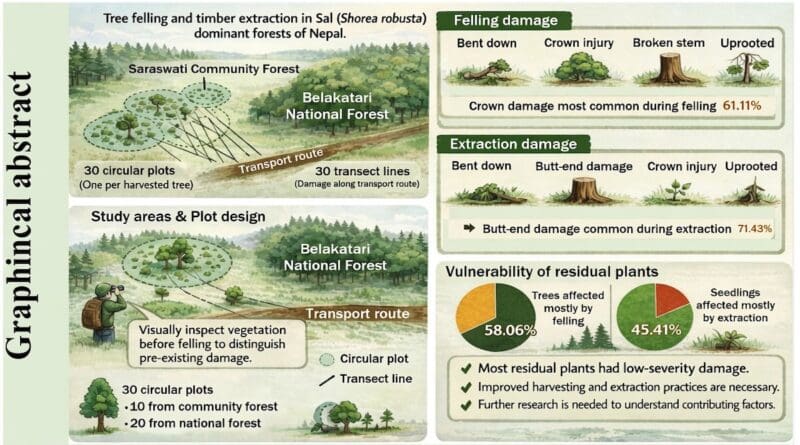
Researchers conducted field assessments in the Saraswati Community Forest and the Belakatari National Forest in Udayapur district. They established 30 circular plots around trees selected for harvesting and assessed another 30 transects along timber extraction routes. Vegetation was inspected before harvesting so that newly caused damage could be distinguished from existing injuries.

The results showed a clear difference between the effects of felling and extraction. Among damaged seedlings, 45.41% of the damage was associated with timber extraction, compared with 43.35% from felling and 11.24% from other human activities. In contrast, 58.06% of damage to residual trees was caused by felling, while extraction accounted for 22.58%.

Seedlings were especially vulnerable to being bent, crushed, or uprooted. During felling, 44.4% of damaged seedlings were bent down, 38.4% experienced stem damage, and 17.2% were uprooted. During extraction, bending remained the most frequent injury at 47.1%, followed by stem damage at 29.6% and uprooting at 23.3%.

The remaining mature trees displayed a different pattern. During felling, crown damage accounted for 61.1% of recorded tree injuries, probably because falling trunks and branches struck neighboring canopies. During extraction, 71.4% of damaged trees experienced injury around the butt end, or lower trunk, often caused by dragged logs striking standing trees.

Although most damage to residual trees was classified as low severity, the researchers found greater concern among seedlings. During extraction, 53.4% of damaged seedlings experienced either medium or high-severity damage, suggesting that timber movement can interfere with natural forest regeneration even when mature trees appear relatively unaffected.

The authors recommend several measures to reduce these impacts. Before harvesting, forest managers can map areas with dense regeneration and plan extraction trails that avoid them. Workers can use precision directional felling to guide trees toward existing gaps rather than neighboring crowns or seedling patches. Machinery should remain on designated trails, and logs can be winched toward those trails instead of being dragged through larger areas of the forest.

The study also recommends adding simple post-harvest damage records to Nepal’s existing forest management registers. Such monitoring could help community forest user groups and government offices adjust future harvesting plans based on observed ecological impacts.

Protecting residual plants is essential because today’s seedlings and surviving trees determine the structure, productivity, carbon storage, and resilience of tomorrow’s forest. The findings provide a practical basis for reduced-impact logging and more sustainable management of Nepal’s Sal forests.

Climate Change Demands National Governance Overhaul – Analysis


July 31, 2026
Anbound
By Zhou Chao


Key Takeaways:

Extreme climate is imposing structural costs on Gulf economies. Rising temperatures, droughts, and flash floods are driving up energy demand for cooling and desalination, straining water systems, and exposing highly urbanized infrastructure to compound risks.
Energy and water systems are being redefined as foundations of national security.

 Renewable energy, storage, smart grids, low-carbon desalination, and water recycling are shifting from emission-reduction tools to essential pillars of resilience and continuous urban operation.

Climate adaptation is becoming a source of new competitive advantage. Gulf states are leveraging capital, engineering capacity, and sovereign wealth funds to build green infrastructure, AI data centers, and climate-resilient industries, positioning themselves in the global adaptation market.

The military conflict between the United States and Iran, which had been temporarily eased previously, has heated up again. The Gulf region has re-emerged as the focus of attention for the international community. From shipping safety in the Strait of Hormuz and the stability of regional energy supplies to changes in the geopolitical landscape of the Middle East, global attention has been increasingly focused on the security risks that the conflict might bring. Meanwhile, another wave of extreme weather spanning multiple continents continues to shock global public opinion. Driven by the combined effects of the ongoing development of El Niño and global climate change, parts of coastal China have been repeatedly experiencing rainstorms and floods, while Europe has seen persistent heatwaves rarely seen in recent years, with multiple countries breaking historical temperature records for the same period. Extreme weather has once again become a major global issue of widespread concern.

As the shadows of war loom, a relatively overlooked fact in the Gulf region is gradually coming to light, that the Gulf countries are likewise not immune to this global climate change. Despite being geographically distant from the Pacific Ocean, the El Niño phenomenon and the atmospheric circulation changes it triggers continue to exert cross-regional transmission effects on Gulf countries through channels such as grain markets, energy demand, international trade, and capital flows. Concurrently, as global climate change intensifies, various extreme weather events such as extreme high temperatures, prolonged droughts, and sudden rainstorms, alongside incidents like flash floods and water scarcity, are showing more frequent and complex trends in the Gulf region. The State of the Climate in the Arab Region report, released by the World Meteorological Organization, notes that warming in the Arab region has been significantly faster than the global average, with heatwaves, droughts, and extreme precipitation events continuing to intensify. The frequency of regional extreme weather disasters has increased significantly compared to the end of the twentieth century, further exacerbating the problem of water scarcity. In other words, while El Niño is certainly the most watched climate event at present, it functions more as a concentrated manifestation of the continuous intensification of global extreme climate rather than the entirety of the challenges facing the Gulf countries.


Compared to agriculture-based countries that directly bear the shock of reduced yields, Gulf countries face a different kind of structural pressure. Their high dependence on international grain markets forces them to bear the fiscal costs brought about by global agricultural product price fluctuations. At the same time, their high dependence on seawater desalination for water supply causes extreme high temperatures to continuously drive up the energy consumption of cooling and water supply systems. Meanwhile, their highly urbanized development model makes critical infrastructure such as power grids, ports, logistics, and data centers increasingly vulnerable to extreme weather. As it stands, their high degree of economic globalization means that any fluctuations in international shipping, supply chains, and capital markets can rapidly impact their economic operations through cross-market transmission. This risk is no longer manifested as isolated high temperatures, droughts, or floods, but rather as compound risks formed by the combined effects of multiple extreme weather events, the operation of energy systems, the functioning of water resource systems, fiscal expenditure pressures, and global supply chain fluctuations. For Gulf countries possessing stronger fiscal strength, the main issue is the cost required to maintain their existing modernized development models is constantly rising, and the conventional development path relying on oil revenues and infrastructure expansion is causing new constraints.


It is precisely against this backdrop that the series of adjustments undertaken by Gulf countries in recent years on energy systems, water resource systems, and climate resilience are no longer merely components of environmental governance or green transition, but are increasingly part of an overall restructuring of their national development logic. The era of extreme climate is redefining national competitiveness. What will truly determine the long-term development potential of these countries is not merely how much oil and natural gas they possess, but whether they can take the lead in completing the upgrading of their national capability systems, allowing their advantages in energy, water resources, infrastructure, and capital to jointly constitute new development supports.

When it comes to the Gulf countries that have long relied on oil and gas resources for development, the energy system has historically served more to support economic growth and resource exports. As global extreme climates continue intensifying, their strategic positioning is undergoing profound changes. El Niño and global climate change have caused more frequent extreme high-temperature events, leading to a continuous climb in summer cooling demand and a simultaneous increase in electricity consumption for critical infrastructure such as seawater desalination, water supply, transportation, communications, and data centers. Therefore, the energy system is no longer merely related to economic development, but directly concerns urban operations and national security. The International Energy Agency projects that by 2035, cooling and seawater desalination will account for approximately 40% of new electricity demand in the Middle East and North Africa region, implying that the tasks undertaken by future energy systems have gradually shifted from guaranteeing supply to ensuring the sustained operation of the entire modern society.

This change is driving Gulf countries to have a new understanding of energy security. In the past, renewable energy was largely viewed as an important tool for achieving emission reduction targets. Today, the International Renewable Energy Agency (IRENA) increasingly emphasizes that renewable energy itself is also a key support for enhancing national climate resilience and infrastructure resilience. The development of solar energy, wind energy, energy storage, smart grids, and distributed energy not only reduces carbon emissions but also improves power supply continuity under extreme weather conditions, providing more stable energy security for critical facilities such as desalination plants, hospitals, ports, and communication networks. Consequently, the energy systems of these nations have begun to shift from the single pursuit of efficiency and scale toward balancing security, resilience, and adaptive capacity. All in all, the connotation of energy transition has expanded from industrial upgrading to national survival capability building.


The practices of Gulf countries have already reflected this trend. Data from IRENA shows that although the proportion of installed renewable energy capacity in Gulf Cooperation Council countries remains relatively limited for now, the United Arab Emirates has captured the majority share of regional renewable energy capacity and continues to expand investments in new energy. Meanwhile, Saudi Arabia, relying on “Vision 2030”, continues to advance large-scale photovoltaic, green hydrogen, grid upgrade, and energy storage project construction, hoping to reduce the proportion of traditional oil and gas power generation and improve the risk resistance of the energy system. This adjustment serves both economic diversification and responds to the new reality of extreme climate continuously raising the operating costs of energy systems. As heatwaves prolong and extreme weather becomes more frequent, the energy system is no longer merely a resource development system, but has become a foundational capability ensuring the stable operation of the nation and supporting the continuous functioning of modern cities, as well as an important link for Gulf countries to reconstruct their development logic.

In addition, there is the restructuring of national development capabilities, where water resources become a new foundation for development. If the energy system determines whether Gulf countries can operate stably, the water resource system increasingly determines the extent to which Gulf countries can develop. Gulf countries have long relied on seawater desalination to break through the constraints of natural endowments, achieving population growth, industrial agglomeration, and urban expansion. However, the continuous intensification of global extreme climate is constantly raising the operating costs of this model. Under the combined effects of El Niño and global climate change, high temperatures continue to increase the energy consumption of seawater desalination and water supply systems, long-term droughts compress natural freshwater resources, and localized rainstorms and flash floods continuously test drainage facilities and urban resilience, making water security gradually become a crucial variable affecting economic development and fiscal sustainability.


This challenge manifests differently within the Gulf countries. Kuwait, Qatar, and Bahrain depend almost entirely on seawater desalination for their drinking water, and the related infrastructure is highly sensitive to stable power supplies and energy prices. Although Saudi Arabia and the UAE also widely rely on desalinated water, they have in recent years continuously advanced water-saving technologies, reclaimed water utilization, smart irrigation, and renewable energy-driven seawater desalination, accumulating stronger buffering capacities in addressing climate risks. The “Water-Energy Nexus” theory proposed by the World Bank further points out that what Gulf countries truly need to restructure in the future is not a single water resource system, but the overall synergistic capacity among energy, water supply, wastewater treatment, fiscal subsidies, price mechanisms, and infrastructure operations. The reason for this is that a shock to any single link can amplify overall risks through system coupling.

Therefore, Gulf countries have continuously increased investments in recent years in fields such as low-carbon seawater desalination, digital water resource management, water recycling, and smart agriculture. The significance of this has transcended simply improving water supply conditions. Rather, it is about building a more stable foundation for development. For resource-based economies, oil still determines the scale of wealth, but water security increasingly determines the quality of development, industrial carrying capacity, and the sustained operational capability of modern cities. Whoever can take the lead in establishing a more efficient and resilient comprehensive water resource system is more likely to maintain long-term development advantages in the era of extreme climate.


Then, there is the restructuring of national competitive capabilities where climate adaptation might mean new international advantages. With the escalating pressure to restructure energy and water resource systems, the thinking of Gulf countries regarding climate change response is also undergoing new changes, namely gradually shifting from purely reducing risks to cultivating new competitive advantages. The United Nations Environment Programme estimates that the current global climate adaptation funding gap still remains as high as USD 194 billion to USD 366 billion annually, and resilient infrastructure, water resource management, flood control engineering, smart agriculture, and urban adaptive capacity building will maintain robust demand for a long time. For Gulf countries possessing fiscal strength, rich large-scale engineering experience, and mature infrastructure construction capabilities, climate adaptation implies not only new fiscal expenditures, but also new industrial directions and international markets.

In recent years, national strategies such as Saudi Arabia’s “Vision 2030” and “We the UAE 2031” have elevated energy transition, water security, green infrastructure, and sustainable development to the level of national long-term development. The UAE continues to expand investments in renewable energy and green infrastructure, while Saudi Arabia relies on the Public Investment Fund to deploy green hydrogen, smart cities, and large-scale infrastructure construction. Their goal is no longer merely to rid themselves of dependence on oil and gas revenues, but rather to translate capital strength, engineering capabilities, and governance experience into new advantages for participating in the global climate adaptation industry competition. The World Bank similarly believes that future global infrastructure construction will increasingly emphasize climate resilience, and countries capable of providing related technologies, capital, and governance solutions will occupy more favorable positions in international competition.

Equally worthy of attention is that in recent years, two representative new trends have also emerged regarding the capacity building of Gulf countries in the era of extreme climate, and their importance is continuously rising. On the one hand, the rapid development of artificial intelligence is driving data centers to gradually become a new type of strategic infrastructure. According to the “Energy and AI” report released by the International Energy Agency (IEA), global data center electricity consumption in 2024 was approximately 415 terawatt-hours (TWh), accounting for about 1.5% of global electricity consumption; this figure is projected to increase to approximately 945 terawatt-hours by 2030, with artificial intelligence applications becoming a major driving force behind the growth of data center electricity demand. Meanwhile, aside from the servers themselves, cooling systems are also a vital component of energy consumption for data centers. For Gulf countries that have long faced high-temperature environments, whether the UAE, Saudi Arabia, and other countries continue to advance the layout of their AI industries or build large-scale computing power centers and data centers in the future, it will further raise requirements for stable power supplies, cooling capacity, and energy system resilience. This means that the functions of the energy system are extending further from guaranteeing traditional industries and residential living to new infrastructure supporting the development of the digital economy and artificial intelligence, thereby continuously enhancing its strategic significance. On the other hand, the functional positioning of sovereign wealth funds in Gulf countries is also undergoing new changes. In recent years, institutions such as the Saudi Public Investment Fund (PIF) and Abu Dhabi’s Mubadala Investment Company have continuously increased their investment layouts in fields such as artificial intelligence, green energy, and digital infrastructure. Reuters cited public statements from the head of the PIF indicating that Saudi Arabia hopes to rely on its advantages in energy, capital, and policy to build an important artificial intelligence hub outside the U.S., and to take data centers as one of its key future development directions. From this, it can be seen that sovereign wealth funds are gradually moving away from traditional wealth management tools to further shoulder the important functions of cultivating future industries and shaping national competitive advantages. Although these new changes are still in the process of continuous advancement, they already reflect that Gulf countries are more closely combining their advantages in energy, capital, and industrial upgrading, continuously expanding the connotation of national capacity building, and further demonstrating that the restructuring of their development logic is continuing to evolve to deeper levels.


This change also provides new growth space for China-Gulf cooperation. China possesses complete industrial chains and scale advantages in fields such as photovoltaics, energy storage, power grid equipment, seawater desalination, digital infrastructure, and engineering construction, while Gulf countries possess capital, markets, and continuously growing green investment demand. Both sides exhibit strong complementarities in fields such as new energy, water resource management, smart agriculture, and resilient infrastructure. As global competition gradually extends from resource competition to climate adaptation capability competition, Gulf countries are striving to further transform the energy systems, water resource systems, and infrastructure advantages formed during the process of addressing extreme climates into new international competitiveness. In the future, the measurement criteria for a country’s competitiveness will not only be how many resources and capital it possesses, but also whether it can establish a development system that is safer, more resilient, and better adapted to the era of extreme climate. This is precisely the direction most worthy of attention in the restructuring of the development logic of Gulf countries.

The era of extreme climate is reshaping the rules of international competition. The standards for measuring a country’s competitiveness in the future will not only include resource endowments and capital scale, but will also encompass energy systems, water resource systems, infrastructure resilience, and comprehensive governance capabilities. Gulf countries are attempting to leverage this round of adjustments to transform their capabilities in coping with climate risks into new development advantages, thereby securing a more prominent position in the global green transition and climate adaptation industries.

Final analysis conclusion:

As extreme climates continue to intensify, natural climate phenomena have long been an important window for observing changes in the global economy, energy systems, and national development models. For Gulf countries, what truly needs to be restructured is not merely the energy structure or industrial layout, but the foundational logic of their entire national development. From enhancing the resilience of energy systems and reshaping water security to cultivating climate adaptation capabilities and new international competitive advantages, Gulf countries are likewise actively or passively responding to the long-term challenges brought by the era of extreme climate amid pressure. Whoever can take the lead in completing this restructuring of development logic will be more likely to maintain sustained competitiveness in the new environment where global climate change continues to deepen, and occupy a more favorable position in the evolution of the international economic landscaped.


Zhou Chao is a Research Fellow for Geopolitical Strategy programme at ANBOUND, an independent think tank.

About Anbound
Anbound Consulting (Anbound) is an independent Think Tank with the headquarter based in Beijing. Established in 1993, Anbound specializes in public policy research, and enjoys a professional reputation in the areas of strategic forecasting, policy solutions and risk analysis. Anbound's research findings are widely recognized and create a deep interest within public media, academics and experts who are also providing consulting service to the State Council of China.
View all posts by Anbound →
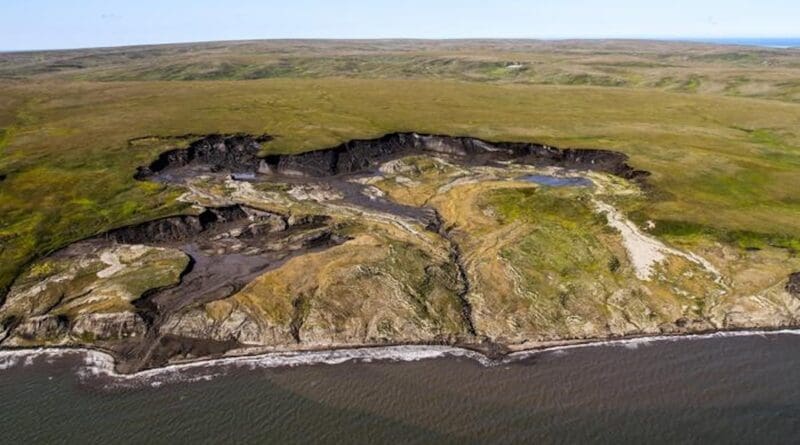
The Arctic Ocean Keeps Permafrost Carbon Firmly Locked


Permafrost in the Arctic stores large quantities of organic carbon. When the frozen ground thaws or coastal sections erode, this carbon can enter the sea, where microorganisms can break it down and convert it into climate-damaging greenhouse gases. 
CREDIT: Alfred-Wegener-Institut / Jaroslav Obu


August 1, 2026
 Eurasia Review

Key Takeaways:

Arctic permafrost stores vast amounts of organic carbon that is thawing rapidly due to warming, with up to 0.02 gigatonnes entering the ocean each year—an outflow projected to rise 70–150% by 2100.

Analysis of sediment cores off Herschel Island shows that only about 10% of this land-derived carbon is converted by microorganisms into greenhouse gases; the majority is stored in the seabed.

“Gourmet” bacteria prefer fresh algal carbon over older permafrost material, suggesting the climate impact of thawing permafrost may be smaller than feared, though further research is needed on pre-seabed breakdown and broader ecosystem effects.


Arctic terrestrial permafrost ecosystems store around 1,300 gigatonnes of carbon from organic sources, such as from the remains of plants. Sediments in oceans and river deltas contain a further 400 gigatonnes. Global warming, however, is taking its toll on this natural freezer: temperatures in the Arctic are rising faster than anywhere else on our planet, with the result that permafrost in the region is thawing rapidly. The carbon stored here can then enter the Arctic Ocean via rivers and eroding coastlines.

“Consequently, up to 0.02 gigatonnes are entering the sea each year, and according to forecasts, this outflow could rise by 70 to 150 per cent by the year 2100,” says Dr Manuel Ruben, lead author of the study from the Alfred Wegener Institute, Helmholtz Centre for Polar and Marine Research (AWI). “However, how much of this is released back into the atmosphere as a greenhouse gas and how much is stored in the seabed has, until now, been largely unknown.” Yet, this knowledge is essential for assessing the climate impact of thawing permafrost.

To get to the bottom of this unknown, the researchers retrieved and analysed sediment cores taken at various intervals off the coast of the Canadian island of Herschel Island. The cores contain deposits spanning around 50 years. Analysis of the sediments revealed something surprising: “Although the sea here carries away huge quantities of organic carbon from the coast, surprisingly little of it ends up in the ocean’s active carbon cycle,” says Manuel Ruben. “Microorganisms convert around ten per cent of the organic carbon from the sediments into gases, which rise into the water and can then enter our atmosphere.” The major share, however, is stored in the seabed.


In conducting their analysis, the researchers first examined the composition of the sediment cores in detail and also investigated how rapidly permafrost deposits accumulate on the seabed. To this end, they measured how much inorganic dissolved carbon accumulates in tiny cavities within the sediment layers – known as pore water. This provides an indication of how much CO₂ microorganisms have ‘exhaled’ after ‘digesting’ the organic carbon. The isotopic composition of the pore water provides insights into which organic material from which source has been broken down. ”Carbon isotopes represent our atomic indicators that can identify the food source of the microorganisms,” says Prof. Gesine Mollenhauer, a geochemist at the AWI and co-spokesperson for the ‘The Ocean Floor – Earth’s Unexplored Interface’ cluster of Excellence. “The 13C isotope, for example, tells us whether they have consumed carbon from land or from the sea. By way of the 14C isotope, we were able to determine whether the single-celled organisms preferred old organic carbon from permafrost or fresh organic carbon from algae remains.”

One explanation for this lies in the eating habits of these tiny organisms: “The sediment is home to ‘gourmet’ bacteria that apparently prefer fresh carbon stemming from, for example, more recent algal remains over the ‘old’ carbon from permafrost deposits,” explains Gesine Mollenhauer. This suggests that the organic carbon entering the sea from land contributes less to the amount of greenhouse gases in the atmosphere than originally feared. “However, we do need further research here. This is because some of the organic carbon from the permafrost may already have been broken down before it reaches the seabed.”


In addition to the impact of land-ocean carbon transport on atmospheric greenhouse gas levels, further effects are possible. For instance, this transport influences the biogeochemistry of coastal waters, which also play an important role in providing food for the local population. This is because the sediments alter the amount of sunlight available: on the one hand, the freshly broken-off fragments cloud the coastal ocean, while on the other hand, the organic carbon they contain discolours the water as it dissolves into it. Single-celled organisms such as algae, however, need light to convert this into biomass and oxygen. This primary production, in turn, forms the foundation for marine life such as fish, crustaceans and seals. The researchers aim to investigate these complex interrelationships, among other things, as part of the international ‘Arctic Pulse’ campaign planned for 2027. Through coordinated measurement campaigns aboard the Polarstern research icebreaker, using the AWI’s research aircraft and on land, they will investigate how rapid environmental change is altering ecosystems in the Arctic.

“Our study shows, more precisely than ever before, how much carbon is safely stored in the seabed – and just how much of the decomposed material actually originates from the old permafrost,” says Manuel Ruben. “This provides an important foundation for climate models that can predict the consequences of permafrost thawing for the global climate.”