Saturday, August 15, 2026

 The Two Terrorists: Britain Jails Tweets While the West Crowns al-Qaeda’s Man in Damascus


by | Aug 14, 2026ANTIWAR.COM

Two men, one word. Next Monday, at Kingston Crown Court in London, a 72-year-old grandfather goes on trial for terrorism; the evidence is a tweet of seven words, and the maximum sentence is 14 years. Nine months ago, a man who founded al-Qaeda’s Syrian branch and carried a $10 million American bounty on his head became the first Syrian head of state ever received at the White House. Tony Greenstein and Ahmed al-Sharaa have never met. Between them they define what the word “terrorist” now means – and for American readers there is a further twist: the seven words that may cost the pensioner his freedom are fully protected speech in the United States, which is why Washington has developed other methods for its own dissidents.

Take the pensioner first, and take his record in full, because the prosecution will. Greenstein was expelled from the Labour Party in 2018; he lost a libel action against the Campaign Against Antisemitism, which had called him a “notorious antisemite,” the court finding the phrase protected as honest opinion; he accepted a suspended sentence over a Palestine Action attack on an Elbit arms factory. He is abrasive, litigious and unrepentant – a Jewish socialist from Brighton, a carer, the son of an Orthodox rabbi who marched against Mosley’s Blackshirts. None of that is the charge. The charge is that in November 2023, goaded by an anonymous account demanding he declare himself, he posted: “I support Hamas against the Israeli army.” Five weeks later, at 6:30 in the morning, counter-terrorism officers took his computers and phones, held him for nine hours, and released him under conditions that banned him from posting about the war at all. “This is Orwellian,” he told the arresting officers. He undersold it.

Now the other man, whose record requires no libel lawyer to establish, because the United States government wrote it down. Ahmed al-Sharaa – then Abu Mohammad al-Jolani – joined al-Qaeda in Iraq in 2003, was captured by American forces and imprisoned for five years, then crossed into Syria to found al-Nusra Front, al-Qaeda’s Syrian branch, pledging allegiance on video to Ayman al-Zawahiri. The State Department’s own wanted notice recorded that under his leadership the group “carried out multiple terrorist attacks throughout Syria, often targeting civilians” – and itemized them: roughly 300 Kurdish civilians abducted from a checkpoint; 20 residents of the Druze village of Qalb Lawzeh massacred in Idlib; suicide bombings claimed in Damascus, Homs and Quneitra. In 2014 he called for retaliatory attacks on the American-led coalition itself. For this the UN froze his assets and banned his travel, and the $10 million bounty placed him among the five most wanted jihadist leaders on earth, on the same short list as Baghdadi and Zawahiri. That is the conduct the word “terrorist” was coined for: emptied villages, detonated city centers, a decade of American soldiers and Syrian civilians in the ground.

While the state prepared its case against the tweeter, it laid siege to the man. Eleven months to charge him; a trial date pushed back the better part of a year; thirty-two months, in the end, between the dawn raid and the jury. And one by one, his banks left him. In a statement published two weeks before trial, Greenstein described being cut off by five institutions since his arrest: Nationwide after a quarter-century, HSBC and First Direct – closing, among others, the account kept for the care of his autistic son – then Santander, which froze his personal accounts and those of a registered charity he serves as treasurer, then a savings bank that shut out his family entirely. None gave a reason; none has to, since banks warned about a customer are forbidden by law to tip him off. Nor is his suspicion of state involvement far-fetched: the government’s own Independent Reviewer of Terrorism Legislation warned in 2023 that proscription enforcement would push banks toward jettisoning clients – “de-risking,” the trade calls it. When Coutts closed one account belonging to Nigel Farage, the affair drew condemnation from the prime minister and toppled a chief executive. A pensioner debanked six times en route to a terror trial has drawn silence. A defendant is presumed innocent; his accounts are not.

And while the pensioner’s accounts froze, the warlord’s thawed. Damascus fell on December 8, 2024; twelve days later an American delegation sat with al-Sharaa and announced the $10 million bounty was being dropped – the file unchanged, the graves at Qalb Lawzeh exactly where they had been. Britain’s prime minister said deproscription was “far too early” to consider; his government then spent 2025 considering it at speed. In March 2025, as government-aligned militias swept the Alawite coast, Amnesty documented the deliberate sectarian killing of civilians and demanded a war-crimes investigation; al-Sharaa’s own fact-finding committee would eventually confirm 1,426 dead, most of them civilians. Two months after those massacres, Trump received him in Riyadh and reviewed him for the cameras: “Young, attractive guy, tough guy, strong past.” In June came an executive order lifting sanctions to “give Syrians a chance at greatness”; in July, Washington revoked the terrorist designation of the organization he built. Britain’s Foreign Secretary flew to Damascus that same July to shake his hand – while HTS was still proscribed under the Terrorism Act as an alias of al-Qaeda, the identical legal status Hamas holds in Greenstein’s indictment. Only in October did Parliament tidy up, erasing the proscription on the stated ground that it “serves the national interest.” By November al-Sharaa was in the Oval Office, enrolling Syria in the anti-ISIS coalition while the Treasury halted most remaining sanctions. No jury weighed the graves. No dawn raid preceded the handshakes. The men who wrote the wanted poster simply took it down – and wrote into Hansard, in their own words, what proscription is: an instrument of the national interest, adjustable by ministerial order.

Hold the two files side by side and the statute confesses. Under Section 12 of the Terrorism Act, as amended in 2019, a person commits an offense by expressing an opinion supportive of a proscribed organization, reckless as to whether anyone is encouraged – an offense Parliament created precisely because the courts had ruled the old law could not touch opinions. By its literal terms, a Foreign Secretary renewing relations with the commander of a then-proscribed organization sits closer to the offense than anything Greenstein typed; nobody suggests prosecuting him, and that is the point. In the United States such a statute could not exist at all: even Holder v. Humanitarian Law Project, the Supreme Court’s furthest reach into “material support,” held that “any independent advocacy in which plaintiffs wish to engage is not prohibited.”

Britain criminalized exactly what America’s highest court fenced off, and then demonstrated, through Damascus, that the criminal category is edited by hand. The Terrorism Act carries a clause no draftsman wrote: it binds the powerless and dissolves on contact with the useful.

The state’s own ledgers show which of the two uses is the real one. Across fourteen years to mid-2025, the Ministry of Justice records 55 people prosecuted under the Act’s membership and support sections – four a year, through the entire era of ISIS. Then the subject changed from bombs to opinions. In the twelve months to September 2025 the Home Office counted 1,886 terrorism arrests – up 660 percent – and 86 percent of them were for supporting Palestine Action, a group proscribed for spray-painting warplanes weeks after HTS’s rehabilitation began. The share of arrests producing a charge collapsed from 47 percent to 17: five of six people seized under terror law are never meant to face trial, because the arrest is the product. The UN human rights chief called the ban “disproportionate and unnecessary”; more than 2,700 arrests followed anyway, 522 in a single day, pensioners and priests led off over cardboard signs. When the High Court ruled the ban unlawful in February, police paused, then resumed – “We must enforce the law as it is at the time,” a commissioner explained, arresting 18 more on the steps of Scotland Yard – and the Supreme Court will rule in November on whether any of it was ever legal. The government’s own reviewer confirms that terror prosecutions now run at record levels, “dominated by documentary offences and proscription related charges.” An apparatus built against the authors of Qalb Lawzeh is processing placards – while the author of Qalb Lawzeh signs coalition documents in the Oval Office.

The American half of the mirror completes itself. The administration that lifted the bounty cannot, thanks to the First Amendment, prosecute its own citizens’ words – so it deports the speakers instead. Mahmoud Khalil, a green-card holder, was seized by plainclothes ICE agents over his campus advocacy, held 104 days in Louisiana, made to miss the birth of his first child, never charged with a crime – detained on the Secretary of State’s certification that his presence compromised American foreign policy. Rümeysa Öztürk was taken off a street by masked agents and jailed 45 days over an op-ed; a judge found the whole policy unconstitutional, her case was thrown out, and she left for Turkey anyway, while Khalil’s protections were stripped on appeal and his fate rides on the Supreme Court.

Hold that against Damascus: the same State Department that certified a student op-ed a threat to American foreign policy spent the year unwinding the terrorist status of a man it once ranked beside Baghdadi. The department’s terror lists and its visa lists are, it turns out, the same list, kept for the same purpose – sorting the useful from the inconvenient.

The inconvenient include the press. Richard Medhurst, an independent journalist covering Gaza, became the first reporter arrested under the statute now aimed at Greenstein – 14 months under investigation, no charge, his files handed to Austria so the ordeal could continue abroad. Ten officers raided the home of Asa Winstanley of The Electronic Intifada over his posts; a court found the warrants improperly obtained and ordered his devices returned. No conviction anywhere; months of seized equipment and fear everywhere – a fair description of the function. Even in Kingston, the instinct holds: by Greenstein’s account, prosecutors have fought to keep his published writings out of the jury bundle, the judge citing an old rule that “courts are not sounding boards for anybody’s political views” – in a trial where the defendant’s political views are the offense.

So the ledger closes where it opened, with two men and one word. One commanded an organization that committed atrocities at scale, and the two governments that hunted him have concluded, in Hansard’s own language, that his rehabilitation serves the national interest. The other posted seven words, and those same two governments – one with its Terrorism Act, one with its immigration code – have spent three years demonstrating what happens to the powerless who say the wrong thing about the wrong war. Greenstein has argued that his verdict will set the price for everyone arrested behind him: acquittal imperils the campaign, conviction licenses it. Perhaps. But the deeper verdict is already in, delivered in Riyadh and sealed in the Oval Office: terrorism, as governed practice, is a description of usefulness. Al-Sharaa became useful, and the word released him. Greenstein and 2,700 placard-carriers remain inconvenient, and the word descends on them with dawn raids and frozen accounts. The trial at Kingston is listed for five days. The word on trial has already been acquitted of meaning anything at all.

Thomas Karat writes investigative work published at karat.substack.com and the Libertarian Institute, drawing on a corporate career and academic training as a behavior analyst to examine how institutions manufacture consent and influence.

The Right To Be Left Alone

by | Aug 14, 2026 |

“The makers of our Constitution undertook to secure conditions favorable to the pursuit of happiness… They conferred against the Government the right to be let alone — most comprehensive of rights and the right most valued by civilized men.” ~ Justice Louis D. Brandeis (1856-1941)

The rapid spread of public surveillance cameras represents something far more consequential than a new piece of police technology. It represents a fundamental change in the relationship between the individual and the state.

These cameras allow government agents to record, identify, catalog and retroactively track the movements of people who have committed no crime, are suspected of no wrongdoing and have done nothing to invite government scrutiny. That’s not public safety. It’s an assault upon individual privacy.

Privacy is not a privilege granted by government. It is an aspect of personal liberty that government exists to protect. It is a natural human right protected from the government in the Bill of Rights. The fact that a person leaves his home and travels upon a public road does not mean that he has surrendered that right.

There is an enormous moral and constitutional difference between a police officer who happens to observe a person in public and government surveillance that automatically and systematically records that person’s vehicle, location and movements; and stores that information for future use.

A free society doesn’t just protect people from crime; it protects them from arbitrary government. The presumption is liberty. Government is the negation of liberty. A person should not have to establish his innocence before the government leaves him alone. The burden always belongs to the government to justify all intrusions into personal liberty. Police cameras reverse that principle. They collect information about everyone the camera views and leave it to individuals to challenge the collections afterward.

The Constitution requires articulable suspicion connecting the person being surveilled to a legitimate law-enforcement objective to justify public surveillance. A vague assertion that the technology might someday help solve a crime or enhance public safety does not meet that standard.

The view that personal privacy and public safety are in equipoise — that they are merely two competing interests of equal moral and legal weight from which government officials are entitled to choose subjectively their preferred balance — is the core of authoritarianism.

Safety is one of the legitimate purposes for which government exists. Privacy is among the personal liberties that government exists to protect. It cannot be taken away without judicial approval. Government cannot justify violating a natural right merely by asserting that doing so might make people safer. If that were so, there would be no meaningful boundary on any governmental power.

There is a profound difference between investigating a specific crime through constitutionally authorized surveillance and constructing a permanent infrastructure of suspicionless surveillance. The former begins with evidence and seeks information relevant to a particular governmental purpose. The latter begins with everyone and waits for the evidence.

When 7,000 American police departments have these systems with no legislative approvals, we have the police making policy judgments. They are deciding that the government should possess a new capacity to observe innocent people, what information should be collected, how long it should be retained, who should have access to it and what purposes may justify searches; all this irrespective of the Constitution.

Those are not merely administrative questions. They are questions about personal liberty.

If elected legislators believe that such surveillance is necessary, they should publicly debate it, enact specific legislation mandating warrants, establish meaningful limitations and accept responsibility before the voters. The decision should not be buried in a police procurement process or treated as an ordinary equipment purchase.

Liberty cannot depend upon the benevolence, restraint or good intentions of government employees. The premise of the Constitution is that government power must be limited, checked and divided because government officials are human beings who possess power and will inevitably have incentives to abuse it.

The answer is not better government surveillance. The answer is what the Fourth Amendment requires: No government surveillance without search warrants.

The constitutional question cannot be reduced to whether someone was physically standing in a public place. A police officer seeing a car pass by is one thing. A government database capable of reconstructing months of a person’s movements is something fundamentally different.

The difference is the difference between observation and surveillance.

A free people should be profoundly suspicious of any governmental system that makes surveillance the default position. No person should have to fear that every trip down the street is being permanently recorded, whether his movements can later be reconstructed or whether a government official can search his history without individualized suspicion.

The Constitution mandates that government leave people alone unless it has a legitimate, articulable reason to interfere with their liberty. That principle is not an obstacle to public safety. It is one of the defining characteristics of a free society.

Police cameras embody the opposite philosophy: Collect first, investigate later; monitor everyone, suspect someone later; expand governmental capacity and trust officials to exercise restraint afterward. That’s not the philosophy of a constitutional republic. It’s the philosophy of a surveillance state.

The constitutional objection is not that fighting crime is unimportant. It is that government must fight crime chained down by the Constitution, to paraphrase Thomas Jefferson. Safety cannot become the magic word that dissolves every constitutional limitation. Privacy cannot be treated as a luxury available only when government determines that it is convenient. And police departments cannot be permitted to acquire, deploy and normalize technologies that fundamentally alter the balance of power between individuals and the state.

If the police could track all movements, stop anyone on a whim, search and photo as they pleased, would we have less crime? Perhaps. But who would protect us from the criminals in uniform? And who would want to live in such an authoritarian state?

Andrew P. Napolitano, a former judge of the Superior Court of New Jersey, is the senior judicial analyst at Fox News Channel. Judge Napolitano has written seven books on the US Constitution. The most recent is Suicide Pact: The Radical Expansion of Presidential Powers and the Lethal Threat to American Liberty. To find out more about Judge Napolitano and to read features by other Creators Syndicate writers and cartoonists, visit www.creators.com. COPYRIGHT 2025 ANDREW P. NAPOLITANO – DISTRIBUTED BY CREATORS.COM


Historic Site of Queer Resistance to Cops Is Now Owned by Private Prison Firm


Organizers in San Francisco are fighting to reclaim Gene Compton’s Cafeteria from GEO Group.
PublishedAugust 14, 2026
Fire trucks and an ambulance are parked outside Compton's cafeteria, in San Francisco, California, in June 1970. Four years earlier, the cafeteria had been the site of a LGBTQ-related riot, one of few such events that preceded the arguably more well-known Stonewall Riot in New York
.Clay Geerdes / Getty Images


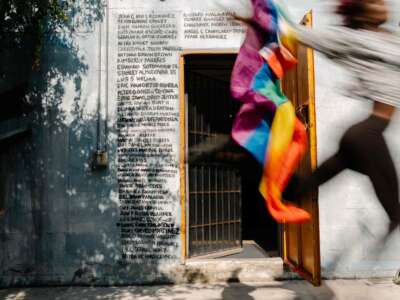
The first recorded instance of militant resistance to police harassment by queer people in the country turns 60 this month, but it isn’t widely known. Three years before the infamous Stonewall uprising, trans women and queer people responded directly to repeated bullying and targeting by police at Gene Compton’s Cafeteria in San Francisco’s Tenderloin neighborhood.

The Tenderloin has historically been a vital place for queer people, trans people, sex work, community, and organizing, according to leaders working in the neighborhood today.

“It’s been housing for people kind of living on the margins of society. And I think people on the margins of society are in a place to question the kind of status quo that’s rejected them,” said Katie Conry, executive director of the Tenderloin Museum, a cultural institution that produces a play commemorating the riot. “And I think that’s why you see a lot of early social justice movements have roots in organizing in the Tenderloin.”

In August 1966, queer people, trans people, and “queens” gathered at Gene Compton’s Cafeteria on the corner of Turk and Taylor Street, as they had so many nights before. At the time, trans people and queens could be arrested for charges including “female impersonation” and “obstructing the sidewalk.” When a police officer attempted to make an arrest, it was the final straw for those who had faced similar instances of harassment for decades. Instead of complying, a “street queen” launched a cup of coffee at the officer, beginning a violent and united display of resistance. Officers were hit with purses, sugar shakers — anything that queer and trans people in Compton’s could find. While the night at Compton’s ended with a burning newsstand, broken cop car windows, and lots of arrests, the resistance started the momentum necessary for an entire movement, according to historians.

(“Queens” or “street queens” were identifying terms used predominantly for feminine-presenting people who were assigned male at birth. While not all “queens” or “street queens” engaged in sex work, it was a common hustle in the Tenderloin at the time. The term “queen” has evolved to be most commonly associated with drag artists; however, not every reference to “queens” or “street queens” in the 1960s was to identify someone in drag.)

Related Story


10 Years After Pulse, Protecting Queer Spaces Is Critical for Liberation
LGBTQIA+ bars are places to dance and drink, but they are also sites for building our futures. By Nick Fulton , Truthout June 12, 2026


“Compton’s is extraordinarily relevant because at the heart of what that story is about is also what the contemporary story of trans people is about,” said Isaac Fellman, director of archives and special collections at the GLBT Historical Society. “I think like all of the other fights that trans people have had to take up, it comes down to: Are you going to acknowledge my dignity and therefore give me all of the other things that as a human being with dignity, I need and have a right to?”

Compton’s uprising predates Stonewall, and so many other notable milestones in LGBTQIA+ history, but it has received significantly less recognition. There remains no agreed-upon date for the riot. Until a historian found isolated news headlines referencing it, the uprising was basically buried.

“The reason I think why there has been so little contemporary documentation of the riot is that night, the cops got their asses handed to them on a plate,” said Dr. Susan Stryker, the historian who brought Compton’s into mainstream historical coverage.

After initially discovering sparse coverage of Compton’s from the 1960s, Stryker dug deeper. In recognizing the critical gaps in where the movement began, Stryker worked with partners to create a documentary of the riot, titled Screaming Queens: The Riot at Compton’s Cafeteria, which was released in 2016.

“The basic motivation for what happened that night was people just hit a limit, and they erupted,” said Stryker. “It is radical, direct, basic, and militant. Any treatment of the riot, historically or artistically, that does not capture how basic the act of resistance was and how powerful it was, is selling the story short. That kind of militancy of the resistance often gets lost in representations or discussions of Compton’s.”

Stryker’s record of the events inspired further celebration and acknowledgement of Compton’s, both in San Francisco and for the LGBTQIA+ community more broadly.

“Compton’s completely changes the narrative of the queer liberation movement starting at Stonewall,” said Conry. “It really gives San Francisco and specifically the Tenderloin back its rightful place in history as the vanguard and leader of the movement. And trans women back their rightful place in history as the vanguard of the movement as well.”

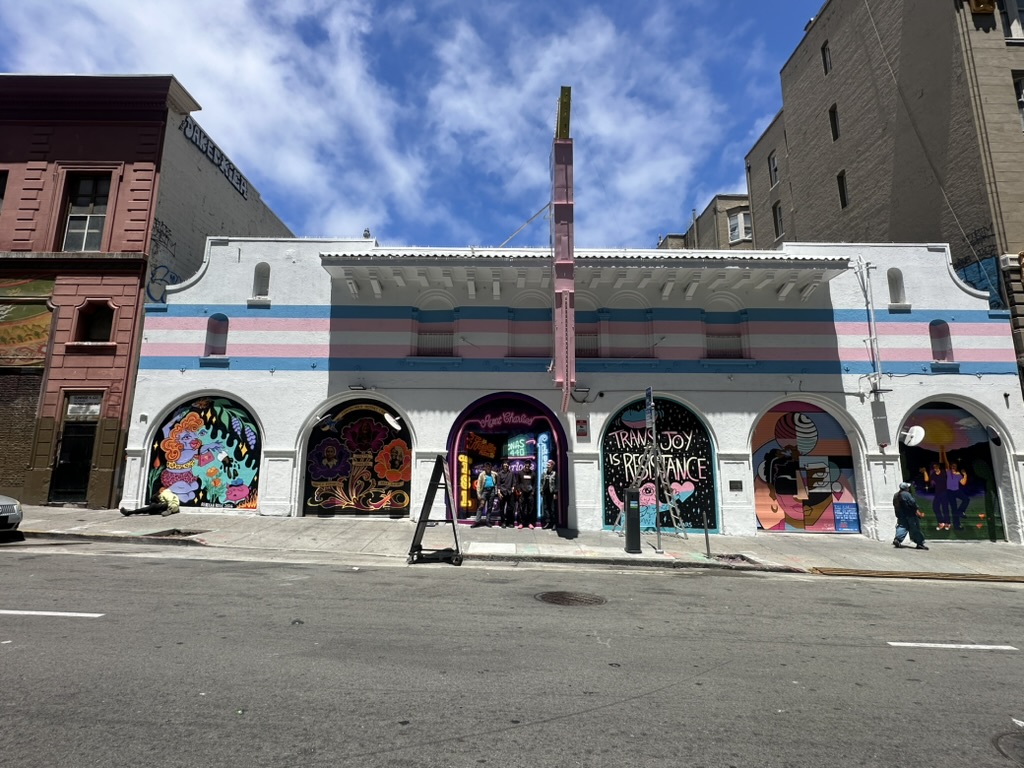
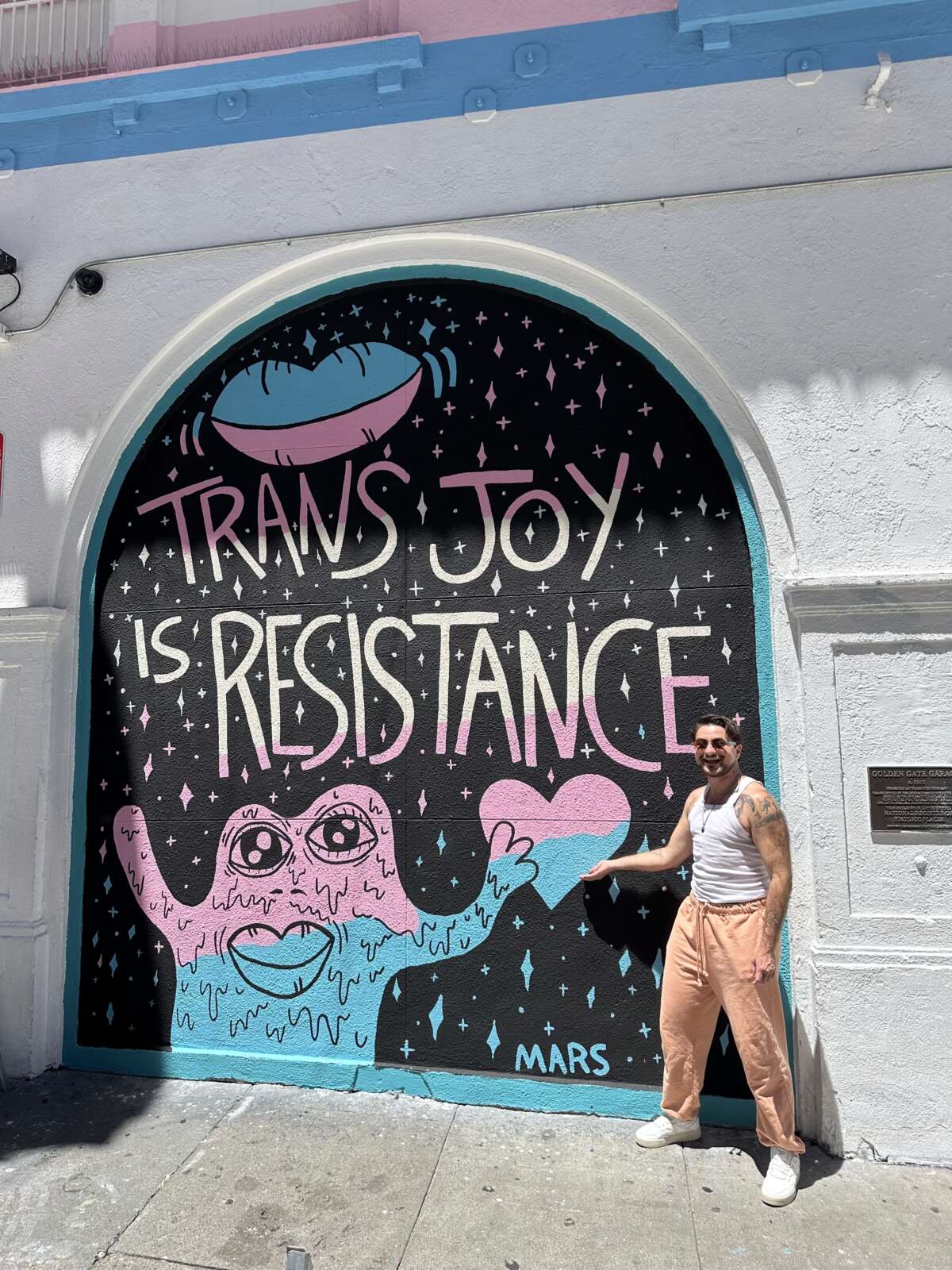
Murals located in the first legally recognized transgender district in the world, in San Francisco’s Tenderloin Neighborhood.The Transgender District

Compton’s and the history of the Tenderloin continue to inspire organizing and change today. In 2017, three Black trans women founded The Transgender District, six blocks of the Tenderloin legally recognized as a first-of-its-kind cultural hub for trans people. The Transgender District is not only acknowledged and celebrated by the community, but also receives recognition and funding from the mayor’s office — funding that San Francisco leadership recently proposed cutting by about $500,000.

“Because of the history of the Compton’s Cafeteria Riot, we have built our programs around the empowerment and uplifting of trans and non-binary people,” said Breonna McCree, co-executive director of the Transgender District.

Like Stonewall, Compton’s was led by trans women, which, according to McCree, is a part of the movement that can’t be overlooked.

“I think the history of the movement is just always built on the backs of Black and Brown trans people, and those are the people that are always often erased within the movement, but continue to fight to shift the foundation not just for trans and non-binary people, but for everyone,” said McCree.

That fight for liberation led by trans people is a consequence of the resilience of the community and the obstacles the community has historically been forced to overcome, according to historians.

“A lot of demographics of trans people are more vulnerable due to their visibility, and often because of that vulnerability, the extraordinary economic marginalization of trans people, they find that they have less to lose and more to fight for,” said Fellman. “I think it’s also not a coincidence that we’re talking about trans people, working-class sex workers, people of color, all of the various people who found it more difficult to disappear intentionally.”

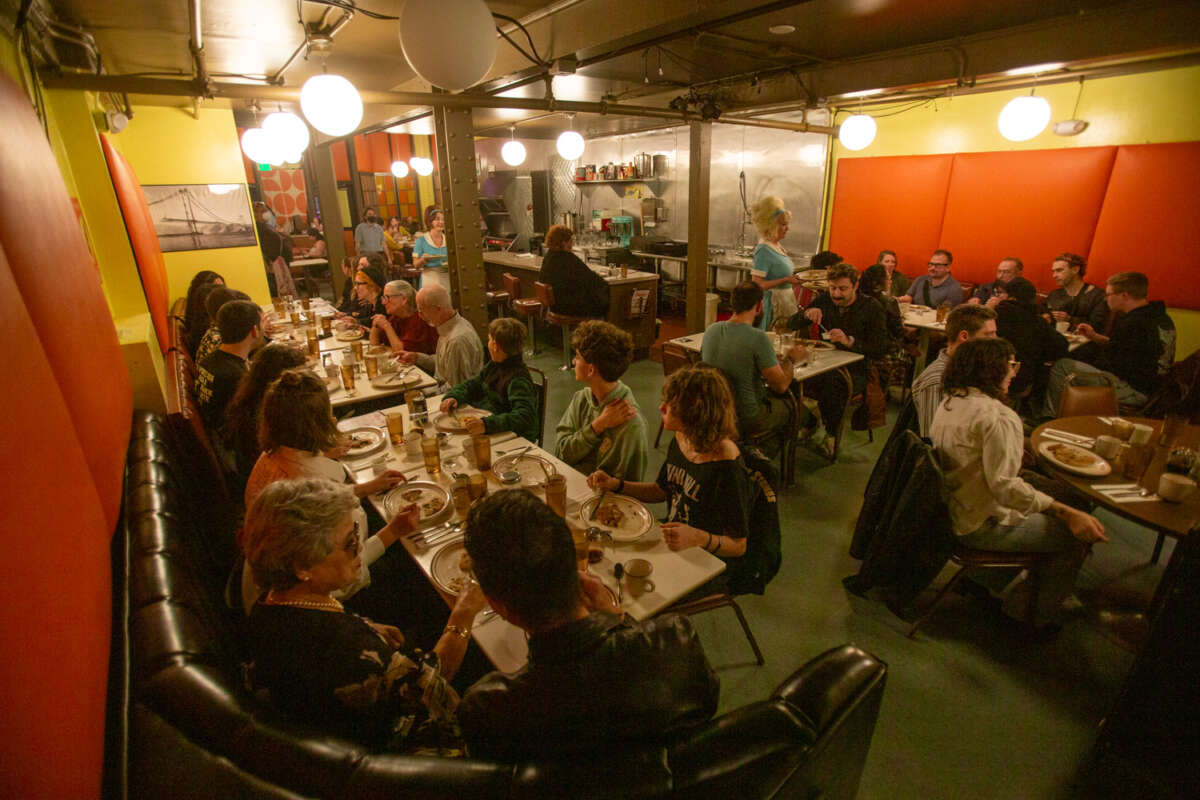
A production of The Compton’s Cafeteria Riot play produced by the Tenderloin Museum in San Francisco.The Tenderloin Museum

San Francisco specifically has been the backdrop for so much of the historical and modern movement for queer and trans liberation. It is where Harvey Milk was elected to the San Francisco Board of Supervisors in 1977 as the first openly gay person elected to public office in California. It is also the hometown of José Julio Sarria, the activist and performer who founded the International Court System, one of the oldest, largest grassroots LGBTQIA+ charitable organizations in the world. And now it is home to organizations like the Transgender Law Center, the National Center for LGBTQ Rights, and so many others. What makes San Francisco special is the movement history in the city.

“The foundation of San Francisco is kind of built on liberation movements,” said McCree. “San Francisco has a long history of grassroots organizing, and so I think that is why it continues to be at the forefront of the movement, and people are always looking to San Francisco as the leader.”

Still, 60 years later, San Francisco is not immune to the same police violence and discrimination that ignited the resistance at Compton’s.

The building that was formerly Gene Compton’s Cafeteria is now owned by the GEO Group, a private prison firm. The firm is currently using the building as a transitional reentry facility. The GEO Group also owns and operates facilities used by Immigration and Customs Enforcement (ICE), an agency known to target trans people and people of color with violent policing efforts. Most notably, the group operates Delaney Hall in New Jersey, a facility with a reputation for deadly and inhumane conditions — but also a place where migrants fought back through hunger strikes.

“Trans women rioted against the police at Compton’s at the corner of Turk and Taylor Street, and that building is now owned by a private prison company that is building detention facilities for ICE; you don’t have to get abstract to talk about the intersectional justice issues there,” said Stryker.

Local organizers are building a response to the GEO Group’s ownership of the historic space. Recently, Bay Resistance, a local movement organization, held a rally near the building objecting to the private prison operator’s ownership of the site and its role in enabling ICE violence, as well as protesting recent police violence in the city.

On June 26 at the annual Trans March, police arrested several trans and queer people just blocks from the corner of Turk and Taylor. According to videos captured by locals and posted to social media, officers escalated the situation and detained, pepper-sprayed, and pulled guns at trans and queer attendees.

While trans and queer liberation remains a priority for organizers in San Francisco, the legacy of progress made in the city should also impact the larger story of liberation, according to national organizers.


The Transgender District


“I think that we have a duty that when we are enjoying more peace, we need to show the rest of the world that it can happen,” said Cecilia Chung, senior adviser at the Transgender Law Center. “We cannot make every city the same as San Francisco. But we can show them that when there’s enough momentum and when there’s enough organizing, change happens.”

The resistance at Compton’s continues to inspire both the local and national movement for trans and queer liberation, and the hope that charges those movements.

“Hope comes in many different forms, but we know that hope is that light at the end of the tunnel, no matter how dark we’re experiencing right now,” said Chung. “We need to just keep driving forward because the community behind us is relying on us to do that.”


This article is licensed under Creative Commons (CC BY-NC-ND 4.0), and you are free to share and republish under the terms of the license.


Nick Fulton

Nick Fulton is a queer social movement journalist who has covered politics, protests, elections, and culture for over a dozen outlets, including Salon, Prism, Common Dreams, and Queerty. Nick is also the editor of The Fourth Estate, a publication covering the journalism industry’s fight for survival.


If Trump Has His Way, 20,000 Kids Could Face Immigration Court Without Lawyers

The federal government is withholding funding for legal representation and diverting it to dubious alternatives.
PublishedAugust 14, 2026
Children wait outside of an immigration court at the Jacob K. Javits Federal Building on July 31, 2026, in New York City.Michael M. Santiago / Getty Images

As part of its relentless project of mass deportation, the Trump administration has taken particularly brutal aim at the most vulnerable population of immigrants: children. If the federal government has its way, about 20,000 unaccompanied minors will soon face immigration court hearings without legal representation.

For decades, Congress has allocated funding for unaccompanied immigrant minors via the Office of Refugee Resettlement (ORR), as the result of the Flores Settlement, struck after a 1993 Supreme Court decision. That agreement — established in 1997 and still in effect — made it the federal government’s responsibility to ensure that unaccompanied children arriving in the U.S. are treated with a certain baseline of care.

The agreement was cemented under Republican President George W. Bush, who signed a 2008 bipartisan anti-trafficking bill into law and directed the federal government to ensure the care and safety of unaccompanied migrant children, including funding their legal representation.

During his first term, President Donald Trump aggressively targeted this and several other federal programs supporting unaccompanied migrant kids. When Trump took office for a second time in early 2025, he resumed those attacks by ending a contract with Acacia Center for Justice, a Washington, D.C.-based advocacy organization that subcontracts with hundreds of legal advocates to represent children in immigration courts.

“The Trump administration really, from day one, tried to terminate this contract and the ability of children to have their legal rights understood, evaluated, and honored,” said Shaina Aber, Acacia’s executive director, in an interview. She added, “We still don’t have confirmation on what is going to be the government’s plan [going forward] for ensuring that children have the ability to meaningfully participate in their process and have their rights vindicated.”

While the contract termination is being challenged in court, ORR last December refused to reimburse Acacia for services already rendered. This means the organization is more than six months in arrears, unable to pay its subcontractors. “They come up with novel excuses every week for why they are not paying us,” said Aber.

Then, in July 2026, ORR announced it would not pay Acacia until the organization turned over confidential and sensitive data about its clients. According to NBC news, “ORR said it offered Acacia the opportunity to extend the contract if Acacia provides data about its clients and bills ORR when it submits applications for immigration relief.” This undermines the most basic tenet of legal representation: attorney-client privilege, effectively ensuring no lawyer will touch a case unless they want to risk being disbarred.

The Trump administration has also moved to strip funding for local shelters where unaccompanied migrant children are housed, and instead increased funding for migrant jails — such as the notorious Dilley detention center in Texas, where hundreds of children are held in horrific conditions.

Six years ago, an attorney from Colorado who goes by JG*, having had a life-threatening experience with pregnancy, decided to grow her family through fostering. She was granted custody of two unaccompanied minors from Guatemala through Lutheran Family Services. At the time, the two girls were 16 years old and had experienced neglect and abuse. One was found to have been trafficked and the other had survived serious sexual abuse.

“Our girls didn’t speak any English,” explained JG. “They weren’t familiar with any ways of living or the laws in the U.S. They certainly didn’t understand how they could even get any sort of status.” Although JG is an attorney, her specialty is not immigration law and she admitted that the intricacies of immigration law are beyond her expertise. “Had they been in a courtroom all by themselves, speaking Spanish, not English, and having it translated, there’s no way they would’ve understood what was happening,” she said.

When the two girls underwent their immigration proceedings, they were appointed a lawyer through the Rocky Mountain Immigrant Advocacy Network, which is one of Acacia’s subcontractors. Given the abuse and neglect they had endured, both young women obtained approval for Special Immigrant Juvenile Status, which affords them legal residency in the U.S.

“They qualified immediately,” said JG. “We wouldn’t have had any idea what to look out for because we weren’t familiar [with the program], and we had to have a lawyer tell us what we needed to be looking for in order for there to be any sort of status.”

It’s precisely this sort of legal representation — and the outcomes it can offer — the Trump administration appears to be targeting in order to ensure swift deportation of children who would otherwise qualify for legal immigration status under U.S. laws.


“We’re seeing kids [being] told that they have to file an application for asylum within 15 days with no lawyer, and that it’s on them to get a lawyer.”

“We’re seeing them line up kids in a group of 40, push them forward to pleadings, and order them removed the same day,” said Aber of the current state of chaos in immigration courts. “We’re seeing kids [being] told that they have to file an application for asylum within 15 days with no lawyer, and that it’s on them to get a lawyer.”

Not only is the federal government withholding funding for legal representation that Congress allocated, it’s also diverting it into dubious alternatives. News broke in mid-August that ORR unexpectedly granted a Utah-based anti-trafficking nonprofit called Our Rescue more than $244 million in funding for a contract it never applied for to provide legal services for unaccompanied minors. The organization’s founder, who formerly worked at the Department of Homeland Security, had resigned from his position at the organization in 2023 after multiple women accused him of — ironically — trafficking and abuse.

Another $150 million in funding was granted — also reportedly without advance notice — to a small law firm in Texas whose founder served in the first Trump administration. The Houston-based Burke Law Group — which did not ask for the funding, and has only two lawyers of the 26 it employs with expertise in immigration law — has reportedly declined the government’s offer.

Meanwhile, hundreds of legal aid organizations with the expertise and capacity to represent unaccompanied minors have been stripped of funding. “Courtrooms are inhospitable to adults,” explained JG. “To put a child who has no idea of what a courtroom is, with a judge dressed in a robe and a bunch of lawyers speaking in a language that’s not adjusted for them is just cruel.”

She attributed the cruelty to racism. “The Trump administration is doing this as a result of our kids being Brown, and it’s easier to dehumanize a Brown kid than a white kid.” (Meanwhile, unsurprisingly, JG’s two foster daughters are still awaiting the legal residency they were approved for two years ago, and had to give up good jobs after their work permits expired.)

“What the government is trying to do right now is to deport as many kids as possible, even if they, under the law, should benefit from protection,” Aber said. She recommends people sign onto a petition demanding the restoration of funding.

“I’ve seen children who entered this country alone go on to become poets and teachers and doctors and cherished community members,” she said. “Every one of those kids had someone fighting in their corner. And that is what is at stake right now.”

* The name of the foster parent is being withheld to protect her identity and that of her foster children.


This article is licensed under Creative Commons (CC BY-NC-ND 4.0), and you are free to share and republish under the terms of the license.


Sonali Kolhatkar


Sonali Kolhatkar is a monthly contributor to Truthout. She is an award winning multimedia journalist and author. She is the host and executive producer of Rising Up With Sonali, a nationally syndicated weekly television and radio program airing on Pacifica stations and Free Speech TV. She was most recently Senior Editor at YES! Media covering race, economy, and democracy, and is currently Senior Correspondent for the Economy for All Project at the Independent Media Institute, and a monthly columnist for OtherWords, a project of the Institute for Policy Studies. Her writings have been published in LA Times, Salon, The Nation, In These Times, Truthdig, and more. Her books include Talking About Abolition: A Police-Free World is Possible (Seven Stories, 2025), Rising Up: The Power of Narrative in Pursuing Racial Justice (City Lights, 2023), and Bleeding Afghanistan: Washington, Warlords, and the Propaganda of Silence (Seven Stories, 2006). Her first novel, Queen of Aarohi will publish in 2027 by Red Hen Press. Her website is www.SonaliKolhatkar.com.
ROBERT REICH

Trump’s ultimate comeuppance lies in the blueprint for a massive surge


REUTERS/Nathan Howard

August 12, 2026 | 
ALTERNET


Today I’m seeking your guidance about the message progressive Democrats should lead with in a few weeks when the midterm elections begin.

Yes, I know: It’s a big tent and Democratic candidates will tailor their messages to voters in their own states or congressional districts, who may be swayed by slightly different ones.

But rarely before in American history has the choice been so stark and so clear. The current occupant of the Oval Office is a malignant sociopath who’s gotten America into a losing war in the Middle East, turned much of our country into a police state, caused prices to soar, and pocketed billions off his office. He’s backed by a bevy of billionaires who have bet the house on AI, and congressional Republicans have been spineless zombies.


This is, or should be, the progressives’ hour. (Also, remember that the Democratic message in the midterms can influence the message in 2028.)

So what, in your view, should progressive Dems lead with? What’s the core message you’d like to hear from them in coming weeks?


I’ve canvassed people I consider savvy political advisers and observers, and grouped their responses below. Please share your own view.

1. The economy is s-----. We will make it work for you.

Unemployment is rising, prices are soaring, and wage gains have slowed. The affordability crisis is real. We’ll raise your wages and lower the prices you pay. We’ll offer Medicare for all and affordable childcare, make housing more affordable, and make the economy work for you and your family.


2. Our democracy is on life support. We will reinvigorate it.

Trump and Republicans are close to turning America into a dictatorship. They’re trampling on the Constitution and the Bill of Rights and usurping the powers of Congress and the courts. We will strengthen American democracy and make this a government of, by, and for the people rather than Trump and his cronies.

3. Trump and his Republican enablers have disdained human rights in America and around the world. We will respect human rights.


We will not allow Trump’s ICE agents to cause mayhem and murder in our cities; his Homeland Security to arrest, detain, and deport immigrants; his air force to bomb defenseless fishermen; his military to abduct foreign leaders, start wars of choice that kill thousands, or enable Israel to engage in genocide. We will respect human rights.

4. Big corporations and the wealthy now run everything. We will take them on and restore integrity to American politics.

Giant corporations and a billionaire class are making out like bandits while you’re struggling. We’ll amplify workers’ voices, empower unions, bust up monopolies, regulate AI, and raise taxes on the wealthy and big corporations. We’ll restore the rule of law and turn our criminal justice system against the big corporations and white-collar hoodlums who are raiding your pockets.

Hence, today’s Office Hours question: What should be the core of the progressive Democrats’ message?


Robert Reich is a professor of public policy at Berkeley and former secretary of labor. His writings can be found at https://robertreich.substack.com/.
ROBERT REICH

Boomers are ruining America — and it has nothing to do with politics


Photo Illustration (Roxanne Cooper/MidJourney)

August 13, 2026
ALTERNET

I keep hearing that we Boomers are to blame for just about everything wrong with America — unaffordable housing (because we bought up most of the housing stock and now refuse to leave), the depletion of Social Security (because we’re collecting it now), the national debt (because so much of it is being spent on Social Security, Medicare, and other benefits for us), inequality (because apparently we have so much money), climate change (because we’ve been polluting longer than anyone else alive), and even Trump (because he’s one of us).

I don’t have standing to contest these claims because, well, I’ve also made them. They’re a theme of my latest book, Coming Up Short (out in paperback in a few weeks).

All of this seemed confirmed by a recent headline in The Economist: WHY PEOPLE OVER THE AGE OF 55 ARE THE NEW PROBLEM GENERATION.


But not for the reasons I supposed. According to The Economist, the real problem with us Boomers is we’re partying too hard. We were too wild, crazy, and irresponsible back in the day, and we’re still too wild, crazy, and irresponsible.

The Economist opines that compared to younger generations, we’re drinking more and using drugs more, and we’re going to wild retirement-community parties where sometimes we’re even — oh my goodness! — having sex.


The venerable British publication quotes Lynette, a resident of Latitude Margaritaville (an assisted-living community near Hilton Head Island in South Carolina) who burbles: “There was a toga party this past weekend. There was a live band, and it was a riot.” Barbie, another resident of the community, compares living there to “starting college all over again” with “drinks on the driveway, cocktails on the concrete.”

The Economist goes on to report that “today, older adults are more likely to participate in the hookup culture of casual encounters and condomless sex, which might be further encouraged by the availability of drugs for sexual dysfunction, the commonality of living in retirement communities, and the increased use of dating apps for seniors.”

I’ll be damned.


Since its founding in 1843 by Scottish businessman and banker James Wilson, The Economist has been staid if not prudish. If memory serves, it intensely disliked the 1960s and the Boomer culture that reveled in it. But it seems to have burst its britches over what’s become of us Boomers in the roaring 2020s.

The article concludes:
The generations now ageing disgracefully were disgraceful in youth, and in middle age. If they’re behaving badly now, there is really not much to be done about it. If they choose to frolic at toga parties, no one will stop them. Except, ultimately, time.


Which is The Economist’s understated British way of saying that the solution to the Boomer problem is for we Boomers to just go ahead and die already.

I think The Economist is a bit harsh. I do concede in my latest book that we Boomers have produced some awful things — not just Trump, but also Clarence Thomas and George W. Bush. (Trump is probably the best thing ever to happen to George W., because George W. is no longer the worst and stupidest president in American history.)

But I doubt Boomers are having too much fun. I’m suspicious of how The Economist identified its sample of wild and crazy Boomers because the Boomers I know are anything but.

The question my friends and I jokingly (and brutishly) asked one other in our wild youth — “getting much?”— now refers not to sex but to sleep.


I can’t even make it through the end of a movie. Hell, I can barely keep my eyes open through a single episode of “All Creatures Great and Small.”

The most camaraderie I’ve been enjoying are my “organ recitals” with Boomer friends in which we ask each other: How is the back? Heart? Knees? Prostate? Hemorrhoids?

And the wildest party I’ve been to this year was when I got together with friends to watch the World Cup final between Spain and Argentina, where Argentina failed to register a single shot on target during 120 minutes of a 1-to-zip extra-time defeat. (I didn’t see the end of that one, either.)

As for drugs, sex, and rock-and-roll, all I can say for certain is I don’t have the same need to make an ass of myself as I did in the 1960s.


Yet I still mist up when I hear “December 1963 (Oh What a Night)” by Frankie Valli & the Four Seasons. (I should note it was released in 1975, by which time I was practicing law and my memorable nights were long over.)

Robert Reich is a professor of public policy at Berkeley and former secretary of labor. His writings can be found at https://robertreich.substack.com/


'Are you better off?' Conservative assails Trump in thundering takedown


REUTERS/Ken Cedeno.

August 14, 2026 
ALTERNET


Conservative pundit S.E. Cupp questions the wisdom of setting President Donald Trump up with unfettered power for the second half of his term, especially considering the mess that his first two years have delivered.

“In October 1980, then-candidate Ronald Reagan asked voters a very important question: ‘Are you better off than you were four years ago?’ It was during the only televised debate he had against incumbent President Jimmy Carter, whose presidency had been marred by one crisis after another, from record-high inflation and rising unemployment, to soaring gas prices and the Iran hostage crisis,” Cupp said in a Chicago Sun Times column.

Reagan, of course, already knew the answer to his question for most Americans, but putting it to words helped propel him to a landslide victory, said Cupp. It also became a catch-all phrase for a political challenger to question an incumbent.


Trump himself has used Reagan’s argument against Biden and others, so Trump knows the cautionary tale of Carter’s presidency. She adds, however, that Carter ended his term with a 34 percent approval rating. Trump is now polling at an abysmal 32 percent, according to Quinnipiac.

“And likely for many of the same reasons Carter finished where he did, ironically — high inflation, rising gas prices and a foreign policy crisis in Iran,” said Cupp. “… [But] when you move beyond the economic numbers, which are bad enough, the picture of Trump’s America gets worse with every peek behind the MAGA curtain. In fact, it can feel at times like America has become a Third World country.”


The nation is on the verge of losing its official measles elimination status, thanks to the administration’s vaccine misinformation. We’re also facing at least 11 foodborne illness outbreaks, including cyclospora outbreaks, listeria, salmonella and E. coli since Trump “downsized oversight agencies, dropped food facility inspections and stripped back mandatory reporting requirements at the federal Foodborne Diseases Active Surveillance Network.”

Trump’s war in Iran has depleted American munitions up to 80 percent in some categories. There are reports of sailors at sea since November, jumping overboard to escape poor conditions and mental health concerns.

“This is America — the superpower?” demanded Cupp. “Where college grads can’t find work, where housing is unaffordable for 75 percent of the population, where families must choose between paying rent or paying doctors bills? Where you can be shot dead for peacefully protesting? Where your government is shuttering important health agencies while spewing junk science about autism and Tylenol? Where our allies are skeptical of us, and our enemies no longer seem to fear us?”


“And Republicans are asking for two more years of control of it all. Who could possibly want more of this?” Cupp asked. “… ‘Are you better off?’ Are you kidding?”
America's weakest in 50 years —with two more years of Trump to go: analysis

POTUS IS A 'BUSINESSMAN'


U.S. President Donald Trump speaks during a dinner with the leaders of the C5+1Central Asian countries in the East Room of the White House. (REUTERS)

August 14, 2026
ALTERNET

Conservative Dispatch writer Nick Catoogio can’t stop agonizing over the number of ways President Donald Trump has destroyed American strength — worse than a Democrat.

Trump’s latest wacky decision to revert the U.S. Navy to “steam catapults” is only the latest goofball decision that hit Trump’s ear during on of his more ‘lucid’ moments, said Catoggio.

“As it happens, the steam-catapult idiocy isn’t the only fiasco in the news this week that involves the world’s greatest military,” rages Catoggio. “The most sordid has to do with conditions aboard the USS Abraham Lincoln, where morale has allegedly deteriorated after nine months at sea.”


When U.S. infantry from Fort Hood held military exercises against a Ukrainian drone unit, the Americans were defeated “easily” despite the Pentagon having had many months to adapt its tactics accordingly. Our armored vehicles were spotted and “killed” so quickly that U.S. units had to “re-spawn” simply to keep the exercise going, according to the Wall Street Journal.

Burning through your billion-dollar missile stockpile in a war with an enemy using low-cost robot knives is another fiasco that should haunt the Trump administration and Republicans for years. And Catoggio said the Pentagon is already urging defense contractors to crank out weapons “significantly faster” at taxpayer expense.


All that, and America’s Gulf allies are having to accept the fact that Iran now owns the Strait of Hormuz, prepping to pay a “fee” to Shiite forces so tankers can safely travel through the strait.

But there’s a fourth fiasco in motion, Catoggio warned — something a president who has declared bankruptcy multiple times may not easily understand.

“Even before the president returned to office, the United States passed the grim milestone of spending more on debt servicing than it does on defense. But under Trump, the problem has worsened considerably: In an age of high interest rates, America nonetheless borrowed more in the first 10 months of this fiscal year than it did in all of fiscal year 2025. Last month’s budget deficit was the steepest since March 2021, putting us on track for an annual deficit of no less than $2 trillion.”


All that money going toward debt servicing is definitely not going to national defense.

“All in all, there’s a solid case to be made that this presidency will end with U.S. military power at its weakest point since the Carter years. And we’re still not even halfway through it,” said Catoggio. “ … Since Vietnam, Republicans have been the party of strength abroad. The Cold War, the Gulf War, the war on terror, now the war with Iran: The GOP is forever eager to throw roundhouses at foreign villains while the hippie Democratic base cries, ‘There has to be a better way!’ If you’re a hawk who believes in hard-power projection, choosing between blue and red has been a no-brainer since 1980.”

Will that still be true in 2028? Not likely, said Catoggio. And how many more of Trump’s military-related fiascos will be necessary before the longstanding Republican advantage on national security among voters “ends up as depleted as the Pentagon’s missile stockpile?”


“That’s a trick question, actually. According to some polls, that advantage is already gone,” he said.
'This is Trump's economy': Nobel winner butchers president's claims

"The Trump economy favors wealth over work.”


REUTERS Elizabeth Frantz

August 14, 2026
ALTERNET

Nobel Laureate Paul Krugman left no room for U.S. Secretary of the Treasury Scott Bessent to hide in a blistering Friday night fact check on MS NOW
.

Bessent recently promised that high inflation and rent prices would soon go down in a Newsmax in a Thursday interview, after first blaming immigrants for the price increases.

“The laws of supply and demand still work when you take illegals out of the workforce, working class wages go up. When you send them back home, rents go down,” Bessent said.

Oh, no, said Krugman.

“This is really Trump's economy,” Krugman quickly corrected. “There's never been in my lifetime a case of this dramatic — a set of, you know, blatantly irresponsible policies that are directly making life worse for the great majority of Americans.”


“It's amazing that these guys can be boasting about jobs,” Krugman added. “The reality is that in the last year of the Biden administration, America gained about 100,000 jobs a month. Under Trump, so far, it's a little over 30,000 a month. So we've had a real we've sort of fallen off a cliff in terms of job creation. So, this is not a great economy for anybody except, you know, a handful of people who are have bought the right stocks.”


“This is an economy that's been great for the oligarchs, for a handful of people. Really, it’s no longer the 1 percent. We're really talking about the 0.01 percent. A few hundred people are the ones who've done really well in this economy. And sure, they're the people that get to talk to Trump. So, he probably hears from them that ‘things are great.’ But what about the 99.9 percent who are not doing so good?”

He emphasized that unlike many presidents before him, Trump has no one to blame but himself and his policies for the mess now facing Americnas, and threatening Republicans in November.

“Oh, you know, there's an old truism among economists, which is that presidents get too much blame and too much credit because they don't have that much control over what happens to the economy,” said Krugman. “Now, Trump has broken that, if you're going to go and start a war that blocks one of the world's major shipping points for energy, if you're going to impose massive tariffs.”

“You know, in previous troubled times you couldn’t blame the presidents [catching the responsibility] for the economy. The economy of 2022 was not really Biden’s economy. That was global. It wasn't mostly things he did. And so on down the line. Even the Great Depression wasn't really Herbert Hoover’s fault, although his response was pretty bad. But this is Trump’s economy.”


'Trump hates you': Conservative launches national campaign against 'idiot'


REUTERS/Jonathan Ernst
August 14, 2026  
ALTERNET

Former Republican strategist Steve Schmidt has clearly had enough of President Donald Trump. Now he’s willing to get his organization’s money involved.

The final 80 days leading up to the 2026 mid-terms are a pivotal time for GOP majorities in the House and Senate. Under their current Republican management, the House is rubber-stamping many of Trump’s unpopular policies. The Senate, while only slightly more cautious about Trump’s orders, appears unwilling to enforce Congressional clout over the White House, and Senate Republican leaders are happy to approve Trump’s most controversial administrative appointments.

This must end, said Schmidt, who co-founded the hotly anti-Trump Lincoln Project in 2019.

“That is why The Save America Movement is launching the “Donald Trump Hates You” campaign, which is built on this simple truth. Beginning today, Americans will see a plane with this banner flying across the Florida panhandle,” Schmidt announced on his substack. “Next weekend, posters will go up in Washington, DC, timed to coincide with the Freedom 250 Grand Prix.

Trump, said Schmidt, is “filled with contempt for the American people, to whom he has lied — when it was being tracked in his first term by The Washington Post Fact Checker — more than 30,000 times, and from whom he has stolen billions of dollars.”


“He has unleashed state violence against the American people, smeared the reputations of murdered citizens, prosecuted innocent Americans, and lost a war under the weight of his fantastical incompetence,” Schmidt continued. “He has idiotized every institution he touches. He tried to overthrow the US Constitution when he lost a fair election in a deranged coup attempt that has weakened the republic more than any single act ever undertaken by any president across 250 years.”

Trump also “hates the US Constitution,” argued Schmidt, pointing out Trump’s December 2022 bogus claim of a stolen election, and his argument that “A Massive Fraud of this type and magnitude allows for the termination of all rules, regulations, and articles, even those found in the Constitution.”

Schmidt then ticked down a long list of other “hates” Trump has accumulated, using Trump’s own words to incriminate his grabby behavior toward women. His own quotes also suggest he hates Muslims, immigrants, and Black people.


He also hates his own “sycophants,” who Schmidt said Trump “abandoned on Air Force One as he escaped the menace of the Iranians on an Ankara tarmac at three mph in a catering truck with Natalie Harp, whom he apparently loves.”

But above all, Trump apparently hates his own supporters, said Schmidt. “There is no group he seems to despise more.”

“I mean it. He hates you,” he added. “Voting for someone who hates you never works out for anyone. The easiest way to tell if you are hated is to listen and watch. Hear the words and watch the actions. … Observe the disgustingness and hideousness of this man. Appreciate what he is and what he stands for. More than anything know this: Donald Trump hates you … and you get a vote in 81 days.”