Saturday, August 15, 2026

The Wrong Lever: Europe, Ukraine, and the Refugee Question

Thursday 13 August 2026, by Adam Novak


EU leaders are moving towards removal of asylum rights for Ukrainian men aged 23-60, to improve conscription and functioning of essential services in the fifth year of Ukraine’s fight against Russian imperialist aggression. The Zelenskiy government asked for this change. But that does not make the policy right.

On 26 June 2026, the European Commission proposed extending the EU’s Temporary Protection Directive (TPD) to March 2028, while excluding newly arriving Ukrainian men aged 23 to 60. [1] 

The TPD confers rights: immediate residence in any EU country, labour-market access, healthcare and schooling, without the backlogs, possible detention and restricted permits that characterise standard asylum processing. The proposal removes these rights for new male arrivals, redirecting them into the slow, uncertain, individually assessed procedures that govern everyone else who seeks asylum in the EU.

About 4.4 million people displaced from Ukraine have temporary protection status in the EU. Most are women and children: adult men account for 27%. The proposal targets only those who have crossed the border irregularly since the restrictions came into force — fewer than 1,000 persons a month according to Frontex.

This is not the only pressure being applied. Several member states have been systematically reducing the social support that makes temporary protection much better than asylum seeker status. Germany has moved new beneficiaries from the standard citizen’s benefit level down to the lower asylum-seeker payment rate. Ireland has cut weekly cash payments and capped state accommodation stays at 30 days. Norway has restricted payments to those in state dormitories. Poland has tied child payments to verified school attendance. Czechia removes benefits if Ukrainians don’t find work within 150 days. Not easy when most adult arrivals are women accompanied by children or vulnerable dependents.

Czech journalist Saša Uhlová has documented the effects of this erosion over four years of reporting. Lawyers and doctors working unqualified jobs; elderly and chronically ill beneficiaries excluded from public support; social workers burning out as state provision shrinks. And unregulated kandlords proposing accommodation in exchange for domestic and sexual services.

The Council of Europe Commissioner for Human Rights, Michael O’Flaherty, released an observations paper on the same day as the EC proposal warning that "policies promoting premature returns" and "reductions in social support" are undermining protection for displaced Ukrainians, noting that civilian casualties in 2025 reached their highest levels since 2022 and that "the current realities on the ground in Ukraine do not meet the conditions for a safe and dignified return."

Conscription is Ukraine’s decision; refugee law is not the instrument to enforce it

According to EU Migration Commissioner Magnus Brunner, "this is what Ukraine has asked us to do, and this is what we are doing."

Ukraine has the right to decide its own mobilisation policy. But using the TPD — a mechanism of international protection — to enforce Ukrainian conscription on those already outside the country is a different matter.

The class dimension of who actually evades conscription is documented by Sotsialnyi Rukh, the Ukrainian socialist organisation: a medical exemption costs $US 37,000; two Kyiv Oblast enlistment officers were detained in August 2024 having accumulated over $1.2 million in bribes. Those crossing the Carpathians on foot or wading across the Tisza into Romania are not, in the main, those who had $37,000 available. Ukraine’s oligarchs continue to move freely as they hide their cash and make their deals. For them, European doors are always open. 

Not all EU member states have agreed to the exclusion. Slovakia and Hungary — both with large Ukrainian migrant populations, and almost no refugees and asylum seekers from Africa or Asia — oppose it. France, whose National Court of Asylum has recognised conscientious objection as a possible ground for refugee status, is also opposed.

The Commission’s proposal requires a qualified majority of 15 of 27 states representing 65% of EU population; it is not yet adopted.

What deportation produces: the documented record on Russian asylum seekers

The human and political failure of EU asylum policy is most clearly visible not in the treatment of Ukrainian men but in the systematic rejection of Russian asylum seekers fleeing the war.

Germany has rejected 95% of applications from Russian men of military age since 2022. Germany’s Federal Migration Office cites Putin’s 2022 claim that mobilisation is "complete" — a claim that was false when applied and is false now: Russia’s Criminal Code amendments of late 2025 removed judicial discretion over suspended sentences for deserters who left the country, meaning returned failed asylum seekers face near-certain imprisonment. 

The Baltic states have adopted blanket restrictions. Finland now turns away asylum seekers, from any country, on its land border with Russia. Estonia refuses entry to anyone with prior Russian military service, regardless of desertion status.

The United States has provided a concrete demonstration of what deportation in these conditions produces. In December 2025, 64 Russian nationals were deported on a single flight to Moscow. All the men on board were handed military summonses on arrival; two were arrested at the airport — one anti-war activist charged with "justifying terrorism," one deserter charged with abandonment of his unit. The deportation lists had been submitted in advance to the Russian consulate. Near-monthly deportation flights have continued since.

Meanwhile, over 1,800 people are imprisoned in Russia on politically motivated charges, and more than 1,288 face criminal prosecution specifically for anti-war activities. OVD-Info, the organisation that monitors these cases, was designated "extremist" by Russian authorities on 4 June 2026, meaning anyone inside Russia who supports it now faces criminal prosecution. It continues to operate in exile, maintaining the monitoring database that forms the evidential basis for most asylum cases.

The organisations doing what governments will not

The European Network for Solidarity with Ukraine (ENSU) demands "the right to asylum for Russian and Belarusian refugees, and asylum seekers from other conflict zones"; and opposes "reductions in the social benefits for Ukrainians under temporary protection [while ensuring] a fair and equal system of social benefit."

Connection e.V. and Pro Asyl in Germany have built the legal framework for conscientious objector and deserter protection. Connection e.V. is currently seeking church sanctuary for Nikita Zvezdov, a 19-year-old Russian deserter at risk of deportation. 

Idite Lesom (Get Lost) operates through an anonymous Telegram bot to advise men inside Russia on avoiding conscription and to help deserters reach safety. Around 60% of those it helps remain inside Russia in hiding, unable to obtain the international passports needed to cross borders. 

A Farewell to Arms (Proshchai Oruzhie), based in France and founded by Russian deserters, supports those who have reached Europe. Russie-Libertés in Paris works with deserters stranded in Kazakhstan and Armenia who cannot obtain EU entry visas. 

The deserters.org network calls for recognition of desertion as an asylum ground across all EU member states, and for laissez-passer documents for those without passports — covering both Russian and Ukrainian deserters.

What the policy should be

Temporary protection status should be maintained for all beneficiaries from Ukraine. The benefit reductions that are compressing that protection into a degraded form should be reversed rather than extended. Maintaining temporary protection for Ukrainian men does not weaken Ukraine; it maintains a population of qualified workers, carers and professionals in host countries who contribute to those economies and whose connections to Ukraine will matter for reconstruction. 

The same collective, fast-track instrument should apply to Palestinians displaced by Israeli bombardment. There is, across European publics, significant sympathy for Palestinians and real anger at governments’ half-hearted reduction of cooperation with a regime whose conduct the International Court of Justice is examining for genocide. That political sentiment has not translated into policy. No EU government has activated the TPD for Palestinians, no mainstream politician is calling for it. 

Russian and Belarusian nationals fleeing the war — deserters, anti-war activists, conscientious objectors — should be granted asylum, based on the documented reality of what Russia does to those it gets back. 

Granting protection to Russian war refusers is directly damaging to Putin’s war machine. Making Europe a genuinely hostile environment for the Russian war effort means taking in those who refuse to be part of it.

28 June 2026

Source: ESSF

Footnotes

[1] The Temporary Protection Directive (TPD), activated in March 2022 under Council Directive 2001/55/EC, grants immediate collective protection to displaced persons without requiring individual asylum assessment. "Refugee" in international law refers specifically to a person granted protection under the 1951 Refugee Convention following individual determination; "asylum seeker" refers to a person whose claim is pending.

Spanish State Anticapitalistas on the Forest Fires of Summer 2026

Communiqué


Sunday 9 August 2026, by Anticapitalistas


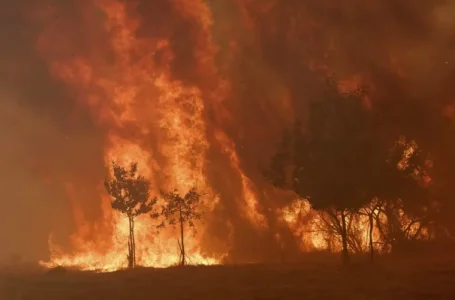
Once again, we face a summer plagued by fire. Tens of thousands of hectares, earlier than in any other year, have already burned, and a devastating season is expected in terms of forest loss, fertile soil destruction, and above all, loss of life.

In Madrid, the criminal government of Ayuso [1] and her cronies have tried to shift the crisis onto the central government by forcing the declaration of a Level 3 alert, which compels the Ministry of the Interior to take command. The objective of this manoeuvre is clear: to place the blame on the Sánchez government and immediately begin accusing them of a lack of resources.

As so often happens, Ayuso plays at taking the initiative, launching insults and forcing her political rivals to go on the defensive against the avalanche of media outlets that the right wing showers with public money and that are eager to point the finger at the supposedly progressive central government. However, we cannot be swayed by the escalating rhetoric of Madrid’s ruling class or by the contrived responses of Sánchez’s government, which continues to engage in climate posturing without taking real action. The best proof of the irrelevance of its transition policies is the disappearance of the minister and vice president of the government who should be in charge of these actions.

The powers to deal with this issue belong to the regional government, and this is not a matter of legal discussion, but of facts and means: it is the regional government that has the resources, the budget and the knowledge of the territory; Ayuso and her team are responsible for the fact that the Madrid region is burning.

This does not absolve the central government of guilt: its green progressivism is completely incapable of taking control of key sectors, including land use, and has turned the fight against climate change into a puppet show where the usual suspects win. Real estate and commercial interests are undeniably paramount, and the supposed policy of ecological transition is merely a veneer that blesses electric cars and rejects a rational and democratic use of land.

Let’s not fool ourselves: climate change has progressed too far, and wildfires are now a part of our reality. Some of them, like those ravaging the southwest of the region or the recent fire that consumed thousands of hectares, have reached levels that are beyond human control. The real resources, beyond the rhetoric of many, cannot contain the firepower that the flames have reached in a context of climate chaos and a constant rise in temperatures.

But things can still be done: actions can be taken on the land, a construction moratorium can be imposed and companies that profit from tourist housing can be expelled while demanding new constructions, soil and forest conservation can be intensified and private vehicle travel can be legally reduced. The working conditions of forest firefighters, who are under-resourced and subject to a seasonal system that makes them precarious instead of providing a stable and well-equipped workforce to combat the fires that are now a part of our lives, can be improved. Tragsa [2] and other similar companies can be removed; these are organisations with public capital that are dedicated to creating precarious work instead of hiring with guarantees and rights.

The climate emergency is permanent, but the response to the fires currently ravaging the region must be immediate and massive, utilising all available operational and management resources. The focus must shift in the opposite direction from current policies: socially and politically sanctioning those who trivialise climate change and prosecuting those responsible for ecocidal policies.

It is possible, of course, to expropriate unused land in private hands and give it a social use to avoid the abandonment that awaits only for speculative use and that, meanwhile, leaves the land as cannon fodder for fires. Control of economic activity, expropriation, and collective management are the recipes for a common policy that truly tackles the problem of the land and provides collective solutions to the imminent challenges of climate change. An active policy is needed that unites the popular and working classes to give substance and strength to an antagonistic political project that challenges the dominant common sense in favour of a common political project.

2 August 2026

Translated and annotated by David Fagan for International Viewpoint.

Footnotes

[1] Isabel Díaz Ayuso is the president of the Communist of Madrid as well as president of the conservative Partido Popular (Peoples’ Party or PP) of Madrid.

[2] Tragsa is made up of two state owned companies whose official remit is “Supplying basic services for rural development and the Environment”.

Spanish State

Ceuta: the boundary of the right to have rights


Friday 14 August 2026, by Miguel Urbán Crespo


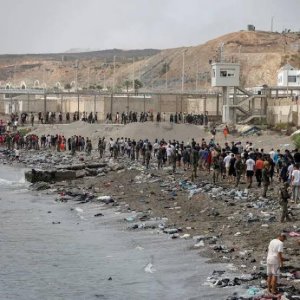
Last Friday [31 July], thousands of people swam across the border to reach the autonomous city of Ceuta. This enclave of some 83,000 people received, in a matter of 24 hours, just over 50,000 more people, exhausted from a migratory journey that has caused the deaths of at least 100 in the last two days. In summer, arrivals in Ceuta and Melilla by sea increase significantly, as sea fog hinders early detection on the coast by the Civil Guard. But no one in the government seemed to foresee a humanitarian crisis of this magnitude, with significant political repercussions that extend far beyond the usual media headlines.

In fact, it is important to remember that mass arrivals by sea to the autonomous cities are far from new. In February 2014, some three hundred people attempted to swim across from Castillejos to Ceuta via Tarajal beach and were repelled by the Civil Guard, who used riot gear against those who were in the water, resulting in the deaths of at least fourteen people. But this massacre has by no means deterred attempts to migrate by swimming. Every year, dozens of people die anonymously on these border beaches, swelling the numbers that make the Mediterranean the world’s largest mass grave. This time, at least, we know that around one hundred people have died in just under forty-eight hours: people, not data or numbers, as they are often treated in institutional and journalistic accounts.

People fleeing poverty – we cannot forget that we are facing one of the most unequal borders in the world. No one risks their life if they don’t understand that they have no future in their own country. These deaths are directly linked to a border regime that criminalises the freedom of movement of impoverished people, turning Europe into a veritable fortress. This dynamic, as Tomasz Konicz points out, is inherent to the crisis-ridden imperialism of the 21st century, which is no longer merely a phenomenon of resource plunder, but also strives to hermetically seal off the centres of superfluous humanity that the system produces in its death throes. Thus, protecting the remaining islands of prosperity constitutes a central element of imperialist strategies, reinforcing security and control measures that fuel a rising authoritarianism.

In this sense, we must contextualise the bellicose rhetoric of “barbaric invasions” that has been adopted by everyone from the right to certain sectors of progressivism, presenting the arrival of thousands of people as an “attack on territorial integrity” or even as an invasion. They thus avoid, at all times, acknowledging the social crisis that the situation reflects and instead call for a military, rather than a humanitarian, response. This situation is by no means new. A few years ago, the EU-NATO European Centre of Excellence for Countering Hybrid Threats did not hesitate to classify the migration flow from Belarus to Poland as part of a so-called hybrid warfare. A debate even arose within the Atlantic Alliance about whether Article 5 of the NATO treaty, which stipulates mutual defense, could be invoked in the face of such hybrid acts.

It is certainly paradigmatic of this bellicose rhetoric that, instead of ensuring safe passage for thousands of victims fleeing war, poverty, or climate change, European institutions and governments are responding by strengthening security policies and externalising borders. Because the first question in the face of this week’s massive influx of people into Ceuta is clear: if there were safe and regular ways to enter Europe, would anyone risk their life swimming to Ceuta?

Since the first barbed wire fence was built in Ceuta in October 1995, following attempts by groups of migrants to enter, walls, fences and concertina wire have continued to be erected, condemning the autonomous city to become a kind of open-air prison for migrants who seem forced to remain stranded in transit – lost in transition – without a home to return to and with a destination that closes its doors to them. But we would be mistaken to think that the ultimate goal of all the mechanisms of Fortress Europe is to prevent the arrival of migrants. Because Europe needs migrants.

Fortress Europe is, in reality, a strategy of exclusion from full citizenship that seeks to weaken a group—migrants—in order to further fragment the population as a whole. This is an operation inherent to the war among the poor, the class struggle of the second-to-last against the last, where competition between natives and foreigners for access to increasingly scarce resources—jobs and social welfare benefits and services—is paramount. The militarisation of migration routes, surveillance devices, the externalisation of borders, immigration detention centres, and the increasing curtailment of migration rights do not seek to prevent migrants from arriving, but rather to ensure that only those needed by the European production system arrive, but also that they are already broken, frightened, stripped of rights, aware of the fragility of their stay and the risks of not assuming their role in the secondary niches of European capitalism.

In fact, the humanitarian crisis that has unfolded in Ceuta in recent days has been exploited by the right wing, both domestically and internationally, with Meloni and Trump at the forefront, talking about a "pull factor" resulting from the regularisation of migrants in our country in recent months. Italy has even gone so far as to temporarily suspend the Schengen Area agreement with Spain regarding the free movement of people. A measure that, in practice, since we don’t share a land border, will only be applied through additional checks on passengers arriving in Italy from Spain. Pure political propaganda from the far right to undermine policies expanding rights. Because Fortress Europe is not only built with razor wire, but also through a deliberate, calculated, and deliberately racist institutional policy that undermines the legal and social protections of migrants. This process results in migrants losing not only a specific set of rights, but their very right to have rights.

Thus, the regularisation of migrants – by granting them certain citizenship rights – clashes with the legal degradation policies of Fortress Europe, which favour downward competition in the labour market. A widespread concept of "there is not enough for everyone" fosters exclusionary mechanisms that, as Habermas wrote, are characteristic of a "welfare chauvinism" and concentrate the latent tension between citizenship status and national identity, which the far-right Vox party has been appealing to lately.

Whilst some on the right and in progressive circles have pointed to the Moroccan monarchy and ruling class as the real culprit behind the images seen in Ceuta these days, by controlling migratory flows according to their own whims and interests, acting as the gendarme of the southern European border, everyone remembers May 2021, when the Moroccan government withdrew its border controls and allowed some 8,000 people to enter the city of Ceuta in just two days. On that occasion, it appears that the medical care provided to Brahim Ghali, leader of the Polisario Front, at a hospital in Logroño, Spain was the pretext that sparked Morocco’s anger and subsequent retaliation. Tensions only eased after the Prime Minister modified Spain’s historical position on Western Sahara and met the following year with King Mohammed VI of Morocco.

This time, the excuse for the Moroccan dictatorship’s reprisals could range from Pedro Sánchez’s trip to Algeria a few days ago to the negotiation of the new EU trade agreement, the processing of the Sahrawi nationality law in Congress, which grants Spanish nationality to Sahrawis — whose territory is curently claimed by Morocco— born when the African territory was still a Spanish colony or even Morocco’s interest in annexing the autonomous cities of Ceuta and Melilla with the support of Trump’s United States. While I don’t think we’ll ever truly know the Moroccan government’s motivations for neglecting its duties as the European border police during this period, what is beyond doubt is the immense power that Spain and the EU have granted to dictatorships like Morocco’s by outsourcing border control.

Alongside the militarisation of the borders of Ceuta and, later, Melilla, the cooperation agreement on border control between the Spanish State and Morocco was signed in 1992, the first formal step in the externalisation of the borders of an EU member state. From that moment on, the Alawi dynastic dictatorship was hired to reduce by all means – the murder of fifty people at the Melilla fence in 2022 is the most palpable example – the number of people crossing the borders of Ceuta, Melilla and the Strait of Gibraltar.

But this externalisation of borders was far from free. Between 1995 and 2006, Morocco received €1.64 billion from the EU’s Mediterranean-Europe programme (MEDA) for cooperation with third countries on the Mediterranean coast. In January 2007, the MEDA programme was replaced by the European Neighbourhood and Partnership Instrument (ENPI), without any reduction in funding: €722 million between that year and 2010. In addition to European funds, there were also substantial Spanish public funds and incentives allocated to this externalisation of borders in Morocco, often using development cooperation as a pretext for implementing projects or to hide budget items that actually served this other purpose.

Since it was decided to externalise European borders, Morocco has used and continues to use the migration issue as a pressure valve, tightening or relaxing the control of its borders depending on the funds it receives or the political benefits it can obtain at any given time. It is certainly curious that the most frequent criticism from both progressives and the right is that Morocco is not fulfilling its part of the agreement that makes it the enforcer of our borders, or even that they are outraged that the Moroccan monarchy is using its role as manager of migration flows geopolitically. But no one questions the criminal policy of externalising borders, which not only represses people who decide to migrate, but also makes us complicit with the dictatorship and its policy of occupation.

It is still repugnant that, once again, with more than one hundred deaths on the back of our migration policy, the people who were crowded together in Ceuta continue to be treated as inconvenient problems that should be expelled or eliminated as soon as possible: subjects without rights. Therefore, it is essential to understand the current migration situation not only as a humanitarian crisis, but also, and above all, as a human rights crisis and, consequently, a political crisis. A crisis that questions who has the right to have rights in Europe and that challenges us all.

2 August 2026

Translated by David Fagan for International Viewpoint from Viento Sur.

Iranian feminism, between war and the regime

First published in Spanish at Nueva Sociedad. Translation by International Research Group on Authoritarianism and Counter-Strategies.

The war in Iran has reshaped the political landscape that emerged from the 2022 uprising: it has strengthened the Islamic Republic, given new momentum to monarchist right-wing forces in the diaspora, and narrowed the space for an autonomous feminist politics. In this interview, Iranian scholar Firoozeh Farvardin examines how to oppose the regime without supporting foreign intervention, and how to sustain networks of care, resistance, and internationalism from below.

In September 2022, the killing of Mahsa Jina Amini — a 22-year-old Iranian Kurdish woman who had been detained in Tehran by the so-called “morality police” for allegedly violating mandatory hijab regulations — triggered one of the largest uprisings in Iran since the establishment of the Islamic Republic. Under the Kurdish slogan “Jin, Jiyan, Azadî” (“Woman, Life, Freedom”), protests against state control over women’s bodies quickly evolved into a broader challenge to the regime, its repressive apparatus, and the forms of social and political inequality that run through Iranian society.

Nearly four years later, the landscape has changed dramatically. State repression dismantled activist networks, imprisoned militants, and forced many activists into exile. At the same time, the military offensive carried out by Israel and the United States reshaped the political terrain: it enabled the Islamic Republic to present itself as a defender of national sovereignty, strengthen narratives of internal unity, and deepen the criminalization of those who oppose the regime. Meanwhile, monarchist and right-wing sectors, particularly active within the diaspora, gained visibility through a discourse that links regime change to foreign intervention and seeks to establish itself as the legitimate voice of the Iranian opposition.

In this interview, conducted by Carmín Rios Fukelman and Miranda Hochman, Firoozeh Farvardin — an Iranian feminist scholar currently affiliated with the University of Vienna and an associate researcher with the International Research Group on Authoritarianism and Counter-Strategies at the University of Potsdam, and affiliated with the Berlin Institute for Empirical Research on Integration and Migration (BIM) — reflects on the place of feminism in a context marked by internal repression, war, and struggles over who speaks for the Iranian opposition.

Much of the international coverage of the Iranian crisis is organized around a geopolitical lens: the United States, Israel, the Islamic Republic, Russia, China, regional powers. Within that framework, the voices of Iranian feminists are often pushed aside. What is lost when Iran is viewed only from that perspective? And how are the attacks by Israel and the United States interpreted by those struggling inside the country?

The narratives we encounter in the media and in much of public debate are almost always geopolitical. I am not suggesting that this dimension is unimportant. Of course it matters. But when people talk about this region, and Iran in particular, the conversation becomes almost entirely captured by that framework. The focus is on states, alliances, military balances, and strategic interests. What disappears is Iranian society itself.

I am interested in beginning from a different place: looking at what is happening inside Iran through the experiences of ordinary people. This means asking how domestic politics and external events relate to one another. They are not separate spheres.

For those living in Iran, the question is not only which international actor gains or loses power, but what possibilities remain for organizing, resisting, speaking out, and imagining a different life.

The first thing to understand is that war functions as a counterrevolutionary moment. Since 2016, Iran has experienced a cycle of revolutionary movements, reaching a peak in 2022 and another important moment in January 2026. Like many other Iranian feminists, I believe that war blocks the most progressive dimensions of that cycle. Whether the Islamic Republic wins or loses, war is a blessing for the regime because it allows it to suppress the opposition movement and gain legitimacy both inside and outside the country.

What is happening outside Iran is deeply concerning. In certain circles that see themselves as progressive or left-wing, the regime is beginning to be viewed almost automatically as a legitimate force simply because it confronts the United States and Israel. People forget that only a short time ago there was a massacre in which thousands were killed within a matter of days. Now the Supreme Leader and military commanders who were unlawfully assassinated are being praised, while it is overlooked that they themselves were also responsible for killings and repression.

Meanwhile, inside Iran, executions continue every day. Many people are arrested on accusations of espionage, opposing the war, or supporting the United States and Israel. To be clear, I believe the country was illegally invaded. Whether or not I agree with the regime is irrelevant. It was an illegal invasion. I cannot accept the assassination of a foreign country’s leader without consequences. But that is one problem. The other is that the regime uses that aggression as a pretext for even greater repression.

Nationalist sentiments are also growing. That does not mean everyone supports the Islamic Republic. However, many people begin to feel that in the face of an illegal war they should support the Iranian state as the protector of the nation. I do not agree with that position, but I understand how polarization pushes some people to believe that supporting the state is less harmful than supporting foreign intervention.

I say this not only as an academic living outside Iran, but as a feminist who remains closely connected to what is happening there and who continues, as much as possible, to work and conduct research with Iranians and on their experiences. The missing voice in the public sphere is that of those seeking a third path. That voice exists, both inside Iran and in the diaspora. It comes from people sustaining grassroots networks, practicing politics of care, and rejecting both the regime and the war. Yet these voices receive very little media attention. They are often the same people trying to rebuild or keep alive the networks that emerged during the 2022 uprising.

The Islamic Republic has been preparing for war for years. It has missiles, weapons, and a militarization program that kept running despite international sanctions. But it never prepared to protect its own population: it built no shelters, there is still no shelter for ordinary people, and there is no long-term plan for a war economy. The economic recession now under way is extremely severe. In that context, it is these same groups and circles that were politicized back in 2022 who provide concrete support at the level of everyday life. They keep trying to sustain daily life for ordinary people, for workers, and for political prisoners — to support them and to give people inside Iran a voice, despite everything.

A major problem now is that the internet has almost disappeared. It is extremely difficult to stay in contact. There is an internal, national internet, but the connection to the outside world has been cut off. A special, very expensive VPN exists, but only a small number of people — those who can afford it — are able to access it. This makes it very hard to know what is actually happening inside Iran. But from the news that comes out from time to time, through tweets or fragmented messages from comrades, it seems that people are still trying to keep these cells and communities alive and to work out what they can do next. It is, however, a mode of minimum survival. There is almost no political positioning happening right now.

In 2022, the opposition movement against the regime seemed to be marked by a strong feminist and emancipatory character. Now, however, monarchist, militarist, and openly pro-intervention discourses appear to be gaining ground. How has the landscape changed between the 2022 uprising and the more recent mobilizations, both inside and outside Iran?

When I say that the regime’s legitimacy has increased, even within Iran, I do not mean that it has become popular. There is still very strong opposition. Many ordinary people continue to protest against the Islamic Republic. There are even people who say they want war because living under the regime is worse than war. I do not want to judge them or deny their agency. But I also believe we need a concrete understanding of what war actually is. Now that war is taking place, fewer people openly say that they prefer war to the Islamic Republic. The situation is extremely polarized.

The new monarchist wave and support for war should be understood as a counterrevolutionary reaction. The monarchist far right already existed before. It was present during the 2022 uprising as well. As in any broad social movement, not all participating forces were progressive. But in 2022 monarchists did not possess political or discursive hegemony. Feminist voices, marginalized communities, and progressive positions had much greater capacity to shape public meaning.

By January 2026, however, monarchists had gained considerably more space. This is due, first of all, to repression. Many of the people who had been active in 2022 were either imprisoned or had left the country. But it is also explained by the support monarchist groups receive from Israel, the United States, and Saudi Arabia. It is visible through satellite television channels, social media, TikTok, and large-scale efforts aimed at promoting the idea that monarchical restoration is the only real alternative to the regime.

That position has become more popular. The language and rhetoric of the January 2026 protests were not the same as those of 2022, either inside or outside Iran.

At the same time, unlike other observers, I would not simply label that movement “fascist.” I do not see it that way. I believe there was continuity with the cycle of protest that began in 2022 after the killing of Mahsa Jina Amini. The evidence lies in those networks, in the participation of progressive forces in the streets, and in the forms of organization that persisted. Yet, especially outside Iran, the discourse that succeeded in organizing the political scene was the monarchist one.

This affects how the war is interpreted. From the outside, someone might conclude: “The Iranian people are mostly monarchist and therefore want war.” That interpretation helps justify an attack on Iran. Monarchists certainly exist and continue to have a presence. But after months of seeing that war does not bring regime change but rather the destruction of the country and the collapse of the state, I believe many people are beginning to understand something else. War is not directed solely against the Islamic Republic. It makes life inside Iran impossible. For that reason, I think that many people, both inside and outside the country, are becoming less supportive of this type of intervention.

One of the consequences of war, beyond destruction, trauma, and the impossibility of sustaining daily life, is that the Islamic Republic now possesses greater power. But it is also wounded. And that may make it even more dangerous. Tragically, ordinary people lose regardless of the regime’s fate. Before the invasion, thousands were killed through state repression. Now, with the invasion, there are also thousands of deaths and hundreds of children killed.

What I keep asking myself is why it has become so difficult to mourn all of these people. Politically, it has become almost impossible to say, “I oppose the killing of these people,” without someone responding, “Then you support the other side.” Perhaps the Iranian case is an extreme expression of something more general, but this is the condition of our world: a brutal polarization in which human lives matter less than the political camp one is expected to belong to. It is a very sad story.

In this context of extreme polarization, how do feminist movements intervene? What forms of organization and care survive when the regime represses, war blocks political action, and the loudest voices in the diaspora seem trapped within the binary opposition between the Islamic Republic and foreign intervention?

Describing what is happening inside Iran today necessarily involves a degree of speculation. Information is extremely limited. Everyone seems to be taking sides within this polarization. Yet those who are actually doing something inside Iran are civil society activists — many of them feminists — and networks devoted to sustaining everyday life that were already active in different cities. They amplify the voices of prisoners, people facing death sentences, and affected families. They help the wounded and the imprisoned, share information, and provide support.

That is where real politics is taking place. Not among those outside Iran calling for war, nor among those claiming to represent the Iranian people through diaspora media. It is being carried out by these activist groups, many of them feminist in practice even when they do not explicitly identify themselves as such.

At the moment, people are largely in survival mode. Some groups are raising money to support workers who lost their jobs because many factories were destroyed. Iran also has a huge number of platform workers. That work has disappeared as well. It is difficult to imagine how many people have become unemployed. And there is no state plan to address the situation. As a result, these groups are beginning to create small alternative economies, mutual-aid structures, and ways of producing and sustaining themselves collectively.

Another example is assistance for those wounded during the January 2026 uprising. Many could go to hospitals because they risked being arrested or even killed there. Some still have pellets or small bullets lodged in their bodies. The people helping them are members of groups formed during the Jina uprising, networks that still know one another, remain connected, and continue to mobilize when needed.

First, because internet access has been cut and they cannot communicate. Second, because outside Iran, the loudest voices belong either to circles close to the regime or to various monarchist currents.

Women's rights have often been used to justify foreign intervention in the Middle East: the notion that the West must “save” women from Islamic extremism. At the same time, the Islamic Republic attempts to appropriate certain feminist demands and use them for its own propaganda. How do these competing appropriations of women’s rights operate today?

Whenever war occurs, a particular form of hegemonic masculinity re-emerges: the heroic man who protects the nation. Many cisgender men, including some who identify as left-wing and have recently aligned themselves with the Islamic Republic, frame the war in exactly these terms. They say, “We are protecting our territory just as we protect our women.” That image is present in Iran, but also in many other places.

We know that wartime conditions tend to increase gender-based violence and domestic violence. I do not have direct statistics on what is currently happening in Iran, but reports and testimonies suggest that this increase in violence is indeed taking place.

The Islamic Republic also instrumentalizes the issue of the hijab. Through years of struggle and sacrifice, women won certain forms of autonomy over their bodies. Today the regime attempts to claim: “We do not have a problem with the hijab.” At some pro–Islamic Republic demonstrations, women without hijab can even be seen participating. But this is propaganda. It is aimed at international audiences and seeks to demonstrate that women support the Islamic Republic. In other words, the regime takes rights won through women’s struggles and uses them for its own purposes.

Something similar happens from the outside. We saw Israel writing “Woman, Life, Freedom” on missiles, attempting to appropriate that struggle. It is a battle of narratives. Both sides seek to appropriate not only women’s rights but also Indigenous, anti-colonial, and anti-racist struggles.

That saddens me deeply. In the Iranian context, people who oppressed the Iranian people, Iran’s Indigenous peoples, Kurds, Baluch communities, minorities, and women are now transformed into heroes of anti-colonial and anti-imperialist struggles outside Iran. The logic seems to be: the enemy of my enemy is my friend. Once again, the lives of people on the ground are forgotten.

The savior narrative exists on both sides. Yet I think it is used less than it was twenty years ago during the wars in Iraq and Afghanistan. After everything that happened, including the Taliban’s return to power, the United States seems to have partially abandoned the language of “exporting democracy” or “women’s rights” as a central justification. Today the rhetoric is much more openly about economic interests, oil, business, and preventing Iran from becoming too powerful. The idea of bringing democracy or liberating women still appears, but it no longer occupies the central place it once did.

In Latin America, we are also witnessing a resurgence of aggressive masculinities, often linked to the precarization of life. How do you understand the relationship between social powerlessness, reactionary masculinities, and the new right?

It is a reaction to powerlessness. All of us, in one way or another, feel that we lack agency. But the responses to that lack of agency differ. The far right, as well as some Iranian monarchist sectors, offer a very appealing promise: they tell people that they can regain power, become part of a winning project, that they are doing something meaningful. That promise is not real, but it produces very concrete effects.

Progressive sectors, by contrast, are losing the battle when it comes to offering a tangible promise about the future. Very often, the future appears as something overly abstract, as mere speculation. Some people might think we should abandon it altogether and focus only on the present. But in order to overcome fear and live a normal life, people need the promise of a normal life. We cannot ask people to sacrifice everything for an unknown future or for future generations. People need something concrete for the present and the near future.

We have greatly underestimated that need. We bear responsibility for not taking it more seriously. We need to think about how to make our projects more attractive to ordinary people, to people who simply want to live better, feel secure, and have some degree of control over their lives.

You recently moderated a conversation titled “Fascist Pleasures,” about the affective dimension of authoritarianism and the far right. In Latin America, this struggle also plays out in everyday life: in the face of precariousness, debt, and declining expectations, promises of individual autonomy proliferate — from entrepreneurship to financial speculation, cryptocurrencies, or simply the idea of “doing something” with one’s money. The right seems better able to understand the desire to regain control over one’s life. What should the left learn from this struggle over emotions and the sense of power?

I think this is a central issue. We are living through a very difficult moment for people in Iran, but we should not treat it as an exception. In recent years, we spoke about the genocide in Gaza as if it were something happening “over there,” in an exceptional place. Now something similar is happening with Iran. But this is the logic of the contemporary world: a regime of war and a process of fascization advancing on multiple fronts. We need to understand that this can reach all of us.

For that reason, we should not treat Iran as an exception, nor should we ask only how it is possible that part of the Iranian diaspora — or people inside the country — might support war or accept the destruction of their own territory. That tendency exists, but it is not uniquely Iranian. There is a destructive desire present across the world: people know that they too will be harmed by what they desire, and yet they desire it anyway. This is not disconnected from the rise of post-fascist and far-right movements. Nor is the extreme polarization of politics something unique to Iran.

I do not want to end on an overly pessimistic note. As I said, this entire movement of war and oppression is a counterrevolutionary attempt to prevent the waves that emerged in 2016 and 2017 from producing something genuinely new. But struggles for life continue. They experience interruptions, advances, and defeats, yet they continue. My hope is that something can emerge from them.

At the same time, I know that a purely national solution cannot succeed. All the authoritarian states in the region were frightened by what was happening in Rojava, in Kurdistan, in Iran since 2022, and during the second wave of the Arab uprisings. Despite their differences, those processes had much in common. And those states helped one another suppress the region’s progressive movements.

That forces us to rethink political strategy. Taking to the streets and mobilizing en masse no longer means the same thing it did ten years ago. It does not function in the same way, nor does it produce the same effects, because we are living through a different configuration of relations between states and societies. I am not saying we should abandon the streets, but street mobilizations alone are no longer enough.

Now, with war, everything is worse. The discourse of the most radical far right has become normalized. People can openly speak of the annihilation of entire civilizations without facing consequences. In that context, popular feminisms possess a more nuanced understanding and a broader repertoire of action than simple protest, because they connect everyday life with politics. But even feminism needs renewal. Feminist movements are also experiencing something of a recession. Not everywhere — Kenya, for example, still has a very powerful movement — but generally speaking, we are no longer in the same moment we were a decade ago, nor at the high point of the cycle that opened in Iran after the killing of Mahsa Jina Amini.

That is why I believe we all need to rethink the ways in which we practice politics. If we are to find solutions, they will not emerge at the national level. The question is how to build a new internationalism from below. Feminist movements can play a fundamental role in that process. As Verónica Gago has argued, they possess a unique capacity to connect very different struggles. That remains a light at the end of the tunnel.

War, technological transformations, precarity, and the growing power of capital are rapidly reshaping capitalism. At the same time, many institutions once considered progressive now seem captured by reactionary dynamics. Do you see any space within this crisis for new forms of socialism, internationalism, or emancipatory politics? And what would you like Latin American feminists to know about Iranian feminisms today? What kind of solidarity or conversation is needed at this moment?

I believe this is a profound crisis operating on multiple levels. Among other things, war reveals that the United States no longer possesses the hegemony and power it once had. There is no guarantee of a bright future, but that does not mean every door is closed.

That is why it is important to foster conversations across different regions. Power structures try to make us feel distant from one another: Argentina and Iran, Latin America and the Middle East, cultures and religions supposedly separated by insurmountable differences. But the similarities are greater than the differences. We are connected by precarity, gender-based violence, the rise of authoritarian right-wing movements, the sense that we can no longer live this way, and the need to imagine different futures.

I would like to see a real and honest conversation with Latin America. In some progressive and left-wing circles, I see very little empathy for the people of Iran. Because the Islamic Republic confronts the United States and Israel, they conclude that the regime must therefore stand with the people. They interpret the situation as an anti-imperialist struggle, but they fail to see what is happening at the grassroots level.

Among feminists, I would say this problem is less pronounced, although it is not entirely absent. There is a different sensitivity because, through the politics of everyday life, it is easier to understand what is happening, despite all the cultural differences. All of us experience gender-based violence, and that alone should be enough to understand what we mean when we say that the current state structure is harmful to feminized bodies.

We need a form of solidarity that does not force a choice between the regime and the war. A solidarity capable of listening to those who sustain life, care for others, and resist from below. Opposing imperialism cannot mean closing our eyes to the violence of the Islamic Republic. And opposing the Islamic Republic cannot mean supporting the destruction of the country. That is the conversation we need.