Sunday, August 02, 2026

Climate Change Demands National Governance Overhaul – Analysis


July 31, 2026
Anbound
By Zhou Chao


Key Takeaways:

Extreme climate is imposing structural costs on Gulf economies. Rising temperatures, droughts, and flash floods are driving up energy demand for cooling and desalination, straining water systems, and exposing highly urbanized infrastructure to compound risks.
Energy and water systems are being redefined as foundations of national security.

 Renewable energy, storage, smart grids, low-carbon desalination, and water recycling are shifting from emission-reduction tools to essential pillars of resilience and continuous urban operation.

Climate adaptation is becoming a source of new competitive advantage. Gulf states are leveraging capital, engineering capacity, and sovereign wealth funds to build green infrastructure, AI data centers, and climate-resilient industries, positioning themselves in the global adaptation market.

The military conflict between the United States and Iran, which had been temporarily eased previously, has heated up again. The Gulf region has re-emerged as the focus of attention for the international community. From shipping safety in the Strait of Hormuz and the stability of regional energy supplies to changes in the geopolitical landscape of the Middle East, global attention has been increasingly focused on the security risks that the conflict might bring. Meanwhile, another wave of extreme weather spanning multiple continents continues to shock global public opinion. Driven by the combined effects of the ongoing development of El Niño and global climate change, parts of coastal China have been repeatedly experiencing rainstorms and floods, while Europe has seen persistent heatwaves rarely seen in recent years, with multiple countries breaking historical temperature records for the same period. Extreme weather has once again become a major global issue of widespread concern.

As the shadows of war loom, a relatively overlooked fact in the Gulf region is gradually coming to light, that the Gulf countries are likewise not immune to this global climate change. Despite being geographically distant from the Pacific Ocean, the El Niño phenomenon and the atmospheric circulation changes it triggers continue to exert cross-regional transmission effects on Gulf countries through channels such as grain markets, energy demand, international trade, and capital flows. Concurrently, as global climate change intensifies, various extreme weather events such as extreme high temperatures, prolonged droughts, and sudden rainstorms, alongside incidents like flash floods and water scarcity, are showing more frequent and complex trends in the Gulf region. The State of the Climate in the Arab Region report, released by the World Meteorological Organization, notes that warming in the Arab region has been significantly faster than the global average, with heatwaves, droughts, and extreme precipitation events continuing to intensify. The frequency of regional extreme weather disasters has increased significantly compared to the end of the twentieth century, further exacerbating the problem of water scarcity. In other words, while El Niño is certainly the most watched climate event at present, it functions more as a concentrated manifestation of the continuous intensification of global extreme climate rather than the entirety of the challenges facing the Gulf countries.


Compared to agriculture-based countries that directly bear the shock of reduced yields, Gulf countries face a different kind of structural pressure. Their high dependence on international grain markets forces them to bear the fiscal costs brought about by global agricultural product price fluctuations. At the same time, their high dependence on seawater desalination for water supply causes extreme high temperatures to continuously drive up the energy consumption of cooling and water supply systems. Meanwhile, their highly urbanized development model makes critical infrastructure such as power grids, ports, logistics, and data centers increasingly vulnerable to extreme weather. As it stands, their high degree of economic globalization means that any fluctuations in international shipping, supply chains, and capital markets can rapidly impact their economic operations through cross-market transmission. This risk is no longer manifested as isolated high temperatures, droughts, or floods, but rather as compound risks formed by the combined effects of multiple extreme weather events, the operation of energy systems, the functioning of water resource systems, fiscal expenditure pressures, and global supply chain fluctuations. For Gulf countries possessing stronger fiscal strength, the main issue is the cost required to maintain their existing modernized development models is constantly rising, and the conventional development path relying on oil revenues and infrastructure expansion is causing new constraints.


It is precisely against this backdrop that the series of adjustments undertaken by Gulf countries in recent years on energy systems, water resource systems, and climate resilience are no longer merely components of environmental governance or green transition, but are increasingly part of an overall restructuring of their national development logic. The era of extreme climate is redefining national competitiveness. What will truly determine the long-term development potential of these countries is not merely how much oil and natural gas they possess, but whether they can take the lead in completing the upgrading of their national capability systems, allowing their advantages in energy, water resources, infrastructure, and capital to jointly constitute new development supports.

When it comes to the Gulf countries that have long relied on oil and gas resources for development, the energy system has historically served more to support economic growth and resource exports. As global extreme climates continue intensifying, their strategic positioning is undergoing profound changes. El Niño and global climate change have caused more frequent extreme high-temperature events, leading to a continuous climb in summer cooling demand and a simultaneous increase in electricity consumption for critical infrastructure such as seawater desalination, water supply, transportation, communications, and data centers. Therefore, the energy system is no longer merely related to economic development, but directly concerns urban operations and national security. The International Energy Agency projects that by 2035, cooling and seawater desalination will account for approximately 40% of new electricity demand in the Middle East and North Africa region, implying that the tasks undertaken by future energy systems have gradually shifted from guaranteeing supply to ensuring the sustained operation of the entire modern society.

This change is driving Gulf countries to have a new understanding of energy security. In the past, renewable energy was largely viewed as an important tool for achieving emission reduction targets. Today, the International Renewable Energy Agency (IRENA) increasingly emphasizes that renewable energy itself is also a key support for enhancing national climate resilience and infrastructure resilience. The development of solar energy, wind energy, energy storage, smart grids, and distributed energy not only reduces carbon emissions but also improves power supply continuity under extreme weather conditions, providing more stable energy security for critical facilities such as desalination plants, hospitals, ports, and communication networks. Consequently, the energy systems of these nations have begun to shift from the single pursuit of efficiency and scale toward balancing security, resilience, and adaptive capacity. All in all, the connotation of energy transition has expanded from industrial upgrading to national survival capability building.


The practices of Gulf countries have already reflected this trend. Data from IRENA shows that although the proportion of installed renewable energy capacity in Gulf Cooperation Council countries remains relatively limited for now, the United Arab Emirates has captured the majority share of regional renewable energy capacity and continues to expand investments in new energy. Meanwhile, Saudi Arabia, relying on “Vision 2030”, continues to advance large-scale photovoltaic, green hydrogen, grid upgrade, and energy storage project construction, hoping to reduce the proportion of traditional oil and gas power generation and improve the risk resistance of the energy system. This adjustment serves both economic diversification and responds to the new reality of extreme climate continuously raising the operating costs of energy systems. As heatwaves prolong and extreme weather becomes more frequent, the energy system is no longer merely a resource development system, but has become a foundational capability ensuring the stable operation of the nation and supporting the continuous functioning of modern cities, as well as an important link for Gulf countries to reconstruct their development logic.

In addition, there is the restructuring of national development capabilities, where water resources become a new foundation for development. If the energy system determines whether Gulf countries can operate stably, the water resource system increasingly determines the extent to which Gulf countries can develop. Gulf countries have long relied on seawater desalination to break through the constraints of natural endowments, achieving population growth, industrial agglomeration, and urban expansion. However, the continuous intensification of global extreme climate is constantly raising the operating costs of this model. Under the combined effects of El Niño and global climate change, high temperatures continue to increase the energy consumption of seawater desalination and water supply systems, long-term droughts compress natural freshwater resources, and localized rainstorms and flash floods continuously test drainage facilities and urban resilience, making water security gradually become a crucial variable affecting economic development and fiscal sustainability.


This challenge manifests differently within the Gulf countries. Kuwait, Qatar, and Bahrain depend almost entirely on seawater desalination for their drinking water, and the related infrastructure is highly sensitive to stable power supplies and energy prices. Although Saudi Arabia and the UAE also widely rely on desalinated water, they have in recent years continuously advanced water-saving technologies, reclaimed water utilization, smart irrigation, and renewable energy-driven seawater desalination, accumulating stronger buffering capacities in addressing climate risks. The “Water-Energy Nexus” theory proposed by the World Bank further points out that what Gulf countries truly need to restructure in the future is not a single water resource system, but the overall synergistic capacity among energy, water supply, wastewater treatment, fiscal subsidies, price mechanisms, and infrastructure operations. The reason for this is that a shock to any single link can amplify overall risks through system coupling.

Therefore, Gulf countries have continuously increased investments in recent years in fields such as low-carbon seawater desalination, digital water resource management, water recycling, and smart agriculture. The significance of this has transcended simply improving water supply conditions. Rather, it is about building a more stable foundation for development. For resource-based economies, oil still determines the scale of wealth, but water security increasingly determines the quality of development, industrial carrying capacity, and the sustained operational capability of modern cities. Whoever can take the lead in establishing a more efficient and resilient comprehensive water resource system is more likely to maintain long-term development advantages in the era of extreme climate.


Then, there is the restructuring of national competitive capabilities where climate adaptation might mean new international advantages. With the escalating pressure to restructure energy and water resource systems, the thinking of Gulf countries regarding climate change response is also undergoing new changes, namely gradually shifting from purely reducing risks to cultivating new competitive advantages. The United Nations Environment Programme estimates that the current global climate adaptation funding gap still remains as high as USD 194 billion to USD 366 billion annually, and resilient infrastructure, water resource management, flood control engineering, smart agriculture, and urban adaptive capacity building will maintain robust demand for a long time. For Gulf countries possessing fiscal strength, rich large-scale engineering experience, and mature infrastructure construction capabilities, climate adaptation implies not only new fiscal expenditures, but also new industrial directions and international markets.

In recent years, national strategies such as Saudi Arabia’s “Vision 2030” and “We the UAE 2031” have elevated energy transition, water security, green infrastructure, and sustainable development to the level of national long-term development. The UAE continues to expand investments in renewable energy and green infrastructure, while Saudi Arabia relies on the Public Investment Fund to deploy green hydrogen, smart cities, and large-scale infrastructure construction. Their goal is no longer merely to rid themselves of dependence on oil and gas revenues, but rather to translate capital strength, engineering capabilities, and governance experience into new advantages for participating in the global climate adaptation industry competition. The World Bank similarly believes that future global infrastructure construction will increasingly emphasize climate resilience, and countries capable of providing related technologies, capital, and governance solutions will occupy more favorable positions in international competition.

Equally worthy of attention is that in recent years, two representative new trends have also emerged regarding the capacity building of Gulf countries in the era of extreme climate, and their importance is continuously rising. On the one hand, the rapid development of artificial intelligence is driving data centers to gradually become a new type of strategic infrastructure. According to the “Energy and AI” report released by the International Energy Agency (IEA), global data center electricity consumption in 2024 was approximately 415 terawatt-hours (TWh), accounting for about 1.5% of global electricity consumption; this figure is projected to increase to approximately 945 terawatt-hours by 2030, with artificial intelligence applications becoming a major driving force behind the growth of data center electricity demand. Meanwhile, aside from the servers themselves, cooling systems are also a vital component of energy consumption for data centers. For Gulf countries that have long faced high-temperature environments, whether the UAE, Saudi Arabia, and other countries continue to advance the layout of their AI industries or build large-scale computing power centers and data centers in the future, it will further raise requirements for stable power supplies, cooling capacity, and energy system resilience. This means that the functions of the energy system are extending further from guaranteeing traditional industries and residential living to new infrastructure supporting the development of the digital economy and artificial intelligence, thereby continuously enhancing its strategic significance. On the other hand, the functional positioning of sovereign wealth funds in Gulf countries is also undergoing new changes. In recent years, institutions such as the Saudi Public Investment Fund (PIF) and Abu Dhabi’s Mubadala Investment Company have continuously increased their investment layouts in fields such as artificial intelligence, green energy, and digital infrastructure. Reuters cited public statements from the head of the PIF indicating that Saudi Arabia hopes to rely on its advantages in energy, capital, and policy to build an important artificial intelligence hub outside the U.S., and to take data centers as one of its key future development directions. From this, it can be seen that sovereign wealth funds are gradually moving away from traditional wealth management tools to further shoulder the important functions of cultivating future industries and shaping national competitive advantages. Although these new changes are still in the process of continuous advancement, they already reflect that Gulf countries are more closely combining their advantages in energy, capital, and industrial upgrading, continuously expanding the connotation of national capacity building, and further demonstrating that the restructuring of their development logic is continuing to evolve to deeper levels.


This change also provides new growth space for China-Gulf cooperation. China possesses complete industrial chains and scale advantages in fields such as photovoltaics, energy storage, power grid equipment, seawater desalination, digital infrastructure, and engineering construction, while Gulf countries possess capital, markets, and continuously growing green investment demand. Both sides exhibit strong complementarities in fields such as new energy, water resource management, smart agriculture, and resilient infrastructure. As global competition gradually extends from resource competition to climate adaptation capability competition, Gulf countries are striving to further transform the energy systems, water resource systems, and infrastructure advantages formed during the process of addressing extreme climates into new international competitiveness. In the future, the measurement criteria for a country’s competitiveness will not only be how many resources and capital it possesses, but also whether it can establish a development system that is safer, more resilient, and better adapted to the era of extreme climate. This is precisely the direction most worthy of attention in the restructuring of the development logic of Gulf countries.

The era of extreme climate is reshaping the rules of international competition. The standards for measuring a country’s competitiveness in the future will not only include resource endowments and capital scale, but will also encompass energy systems, water resource systems, infrastructure resilience, and comprehensive governance capabilities. Gulf countries are attempting to leverage this round of adjustments to transform their capabilities in coping with climate risks into new development advantages, thereby securing a more prominent position in the global green transition and climate adaptation industries.

Final analysis conclusion:

As extreme climates continue to intensify, natural climate phenomena have long been an important window for observing changes in the global economy, energy systems, and national development models. For Gulf countries, what truly needs to be restructured is not merely the energy structure or industrial layout, but the foundational logic of their entire national development. From enhancing the resilience of energy systems and reshaping water security to cultivating climate adaptation capabilities and new international competitive advantages, Gulf countries are likewise actively or passively responding to the long-term challenges brought by the era of extreme climate amid pressure. Whoever can take the lead in completing this restructuring of development logic will be more likely to maintain sustained competitiveness in the new environment where global climate change continues to deepen, and occupy a more favorable position in the evolution of the international economic landscaped.


Zhou Chao is a Research Fellow for Geopolitical Strategy programme at ANBOUND, an independent think tank.

About Anbound
Anbound Consulting (Anbound) is an independent Think Tank with the headquarter based in Beijing. Established in 1993, Anbound specializes in public policy research, and enjoys a professional reputation in the areas of strategic forecasting, policy solutions and risk analysis. Anbound's research findings are widely recognized and create a deep interest within public media, academics and experts who are also providing consulting service to the State Council of China.
View all posts by Anbound →
The Arctic Ocean Keeps Permafrost Carbon Firmly Locked


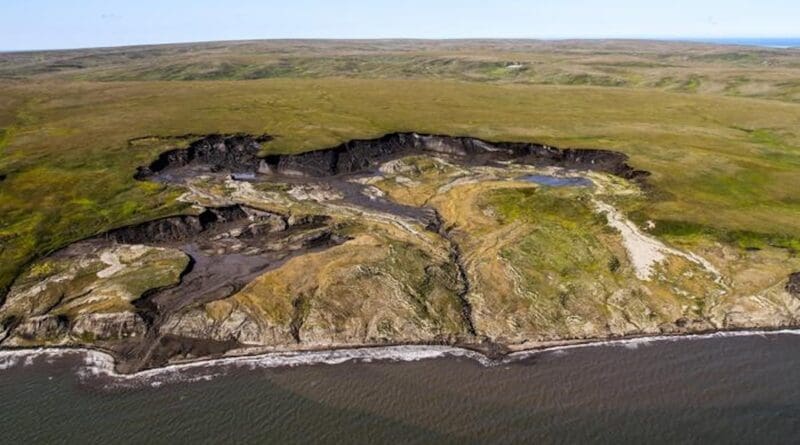
Permafrost in the Arctic stores large quantities of organic carbon. When the frozen ground thaws or coastal sections erode, this carbon can enter the sea, where microorganisms can break it down and convert it into climate-damaging greenhouse gases. 
CREDIT: Alfred-Wegener-Institut / Jaroslav Obu


August 1, 2026
 Eurasia Review

Key Takeaways:

Arctic permafrost stores vast amounts of organic carbon that is thawing rapidly due to warming, with up to 0.02 gigatonnes entering the ocean each year—an outflow projected to rise 70–150% by 2100.

Analysis of sediment cores off Herschel Island shows that only about 10% of this land-derived carbon is converted by microorganisms into greenhouse gases; the majority is stored in the seabed.

“Gourmet” bacteria prefer fresh algal carbon over older permafrost material, suggesting the climate impact of thawing permafrost may be smaller than feared, though further research is needed on pre-seabed breakdown and broader ecosystem effects.


Arctic terrestrial permafrost ecosystems store around 1,300 gigatonnes of carbon from organic sources, such as from the remains of plants. Sediments in oceans and river deltas contain a further 400 gigatonnes. Global warming, however, is taking its toll on this natural freezer: temperatures in the Arctic are rising faster than anywhere else on our planet, with the result that permafrost in the region is thawing rapidly. The carbon stored here can then enter the Arctic Ocean via rivers and eroding coastlines.

“Consequently, up to 0.02 gigatonnes are entering the sea each year, and according to forecasts, this outflow could rise by 70 to 150 per cent by the year 2100,” says Dr Manuel Ruben, lead author of the study from the Alfred Wegener Institute, Helmholtz Centre for Polar and Marine Research (AWI). “However, how much of this is released back into the atmosphere as a greenhouse gas and how much is stored in the seabed has, until now, been largely unknown.” Yet, this knowledge is essential for assessing the climate impact of thawing permafrost.

To get to the bottom of this unknown, the researchers retrieved and analysed sediment cores taken at various intervals off the coast of the Canadian island of Herschel Island. The cores contain deposits spanning around 50 years. Analysis of the sediments revealed something surprising: “Although the sea here carries away huge quantities of organic carbon from the coast, surprisingly little of it ends up in the ocean’s active carbon cycle,” says Manuel Ruben. “Microorganisms convert around ten per cent of the organic carbon from the sediments into gases, which rise into the water and can then enter our atmosphere.” The major share, however, is stored in the seabed.


In conducting their analysis, the researchers first examined the composition of the sediment cores in detail and also investigated how rapidly permafrost deposits accumulate on the seabed. To this end, they measured how much inorganic dissolved carbon accumulates in tiny cavities within the sediment layers – known as pore water. This provides an indication of how much CO₂ microorganisms have ‘exhaled’ after ‘digesting’ the organic carbon. The isotopic composition of the pore water provides insights into which organic material from which source has been broken down. ”Carbon isotopes represent our atomic indicators that can identify the food source of the microorganisms,” says Prof. Gesine Mollenhauer, a geochemist at the AWI and co-spokesperson for the ‘The Ocean Floor – Earth’s Unexplored Interface’ cluster of Excellence. “The 13C isotope, for example, tells us whether they have consumed carbon from land or from the sea. By way of the 14C isotope, we were able to determine whether the single-celled organisms preferred old organic carbon from permafrost or fresh organic carbon from algae remains.”

One explanation for this lies in the eating habits of these tiny organisms: “The sediment is home to ‘gourmet’ bacteria that apparently prefer fresh carbon stemming from, for example, more recent algal remains over the ‘old’ carbon from permafrost deposits,” explains Gesine Mollenhauer. This suggests that the organic carbon entering the sea from land contributes less to the amount of greenhouse gases in the atmosphere than originally feared. “However, we do need further research here. This is because some of the organic carbon from the permafrost may already have been broken down before it reaches the seabed.”


In addition to the impact of land-ocean carbon transport on atmospheric greenhouse gas levels, further effects are possible. For instance, this transport influences the biogeochemistry of coastal waters, which also play an important role in providing food for the local population. This is because the sediments alter the amount of sunlight available: on the one hand, the freshly broken-off fragments cloud the coastal ocean, while on the other hand, the organic carbon they contain discolours the water as it dissolves into it. Single-celled organisms such as algae, however, need light to convert this into biomass and oxygen. This primary production, in turn, forms the foundation for marine life such as fish, crustaceans and seals. The researchers aim to investigate these complex interrelationships, among other things, as part of the international ‘Arctic Pulse’ campaign planned for 2027. Through coordinated measurement campaigns aboard the Polarstern research icebreaker, using the AWI’s research aircraft and on land, they will investigate how rapid environmental change is altering ecosystems in the Arctic.

“Our study shows, more precisely than ever before, how much carbon is safely stored in the seabed – and just how much of the decomposed material actually originates from the old permafrost,” says Manuel Ruben. “This provides an important foundation for climate models that can predict the consequences of permafrost thawing for the global climate.”
SPACE/COSMOS

How The Sun Is Stripping Away Mars’ Atmosphere


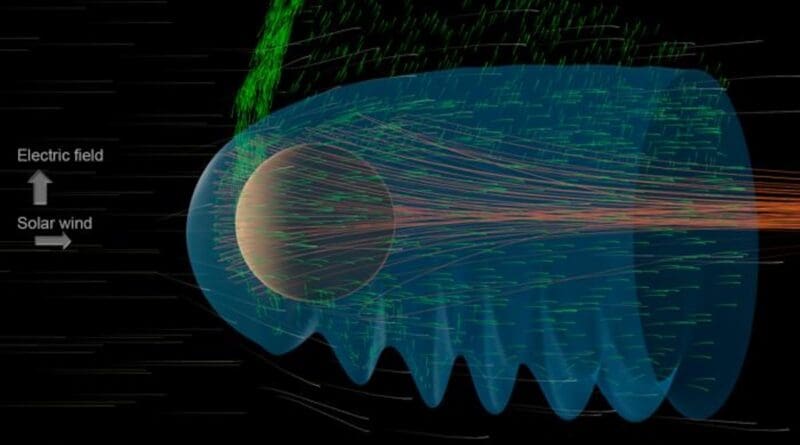
Depiction of Solar wind and electric field interacting.
CREDIT: Chi Zhang, Boston University

August 1, 2026

By Eurasia Review

Key Takeaways:

Without a strong global magnetic field, Mars’ upper atmosphere is directly exposed to the solar wind, which can strip atmospheric particles into space in a process resembling wind generating waves on water.

Dual observations from MAVEN and Tianwen-1 reveal that Kelvin–Helmholtz waves stir the edge of Mars’ atmosphere, creating large plasma clouds that drive bulk escape of ions—mainly on one side of the planet depending on the solar wind electric field.

This mechanism helps explain how Mars lost much of its once-thicker atmosphere, with future studies and missions like ESCAPADE aimed at quantifying how strongly these waves contribute to atmospheric loss on Mars and similar unmagnetized planets.


Our Sun constantly releases a stream of high-speed charged particles, known as the solar wind. Unlike Earth, Mars does not have a strong global magnetic field to shield its atmosphere from this flow. As a result, the solar wind can interact directly with the upper atmosphere of Mars and gradually strip atmospheric particles into space.

A new Boston University-led study published in Science Advances found that this removal process can occur in a way that is similar to wind blowing across the surface of water. On Earth, wind can generate rolling waves and vortices on the water surface. At Mars, the solar wind can similarly “stir” the edge of the planet’s upper atmosphere and generate large boundary waves, known as Kelvin–Helmholtz waves.

First author Chi Zhang, a research scientist at BU’s Center for Space Physics, a collaboration between BU’s College of Arts & Sciences and College of Engineering, and a team of researchers used observations from both the MAVEN and Tianwen-1 missions in the study. Tianwen-1 served as a solar wind monitor, while MAVEN observed atmospheric ions escaping near Mars, allowing the researchers to directly relate real-time upstream solar wind conditions to atmospheric ion escape at Mars.


Large clouds of plasma in Mars’ upper atmosphere facilitate “bulk escape” of atmospheric ions. Zhang explained that, although several mechanisms had previously been proposed to account for the formation of these clouds, their origin remained unclear because direct observational evidence was still lacking. A major challenge in connecting the solar wind to atmospheric escape at Mars was that a single spacecraft could not simultaneously measure both the undisturbed solar wind upstream and the escaping atmospheric ions near Mars. In an earlier study published in Nature Communications, Zhang and colleagues demonstrated that simultaneous observations from MAVEN and Tianwen-1 could directly link variations in the upstream solar wind to the Martian space environment. Building on those dual-spacecraft observations, the new Science Advances study identified Kelvin–Helmholtz waves as a key mechanism driving atmospheric ion escape.

Zhang and colleagues provided clear evidence that these plasma clouds are generated by the Kelvin–Helmholtz waves. They further showed that this process does not occur evenly around the planet. “Instead, it is mainly observed on one side of the planet, depending on the direction of the solar wind electric field,” said Zhang. These results establish a direct link between the Kelvin–Helmholtz waves and enhanced atmospheric ion escape from Mars.

“Future research will focus on identifying the conditions that favor the formation and growth of Kelvin–Helmholtz waves and determining how much they contribute to atmospheric escape from Mars,” Zhang noted. Further studies will require more spacecraft observations and advanced numerical simulations. With MAVEN transitioning to the closeout stage of its mission, “its rich scientific legacy will be complemented by NASA’s ESCAPADE mission, which has already launched and will provide an important new opportunity to investigate solar-wind-driven atmospheric loss at Mars,” said Zhang.


“We want to know when these waves are most likely to form, how they evolve, and how strongly they can drive atmospheric escape,” said Chuanfei Dong, a BU Center for Space Physics faculty member and a College of Arts & Sciences assistant professor of astronomy. “This process could also occur on other planets that lack a strong magnetic field, including some exoplanets.”

“Mars is thought to have once been potentially habitable, with a thicker atmosphere and surface liquid water. Understanding how it became the cold, dry planet we see today is important for understanding how planetary environments evolve over time,” said Zhang.

Scientists Use Moonquakes To Locate Lunar Ice


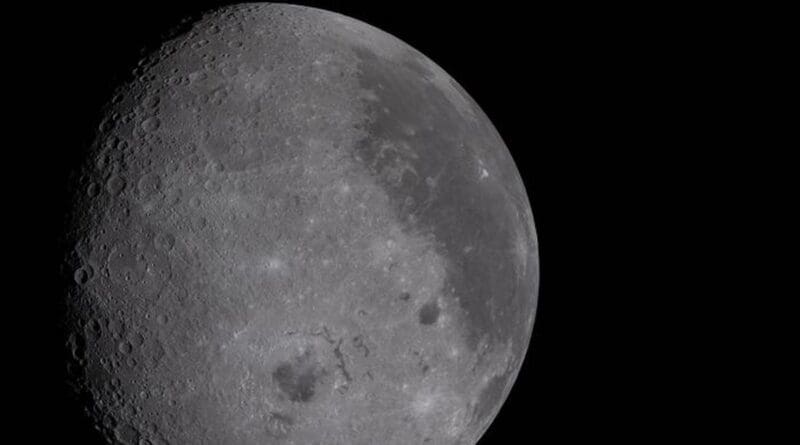
On the first shift during the lunar flyby observation period, the Artemis II crew captured more than two-thirds of the Moon showcasing the intricate features of the nearside. The 600-mile-wide impact crater, Orientale basin, lies along the transition between the near and far sides and is sometimes partly visible from Earth. The round black spot northeast of Orientale is Grimaldi crater, known for its exceptionally dark mare lava floor and heavily degraded rim. CREDIT: NASA


Seismic waves can detect and map buried water ice on the Moon because ice stiffens lunar soil, making vibrations travel two to three times faster and causing energy to bounce back.
Laboratory tests, temperature modeling of polar craters, and computer simulations of moonquakes all showed clear seismic signatures of ice, offering a practical way to locate resources for NASA’s Artemis missions and future outposts.

Upcoming landers, including China’s Chang’e-7 (late 2026) and NASA instruments planned for 2028, will be able to test these predictions and potentially reveal ice deposits that could supply drinking water, oxygen, and rocket fuel.

Finding water on the moon may only be a matter of detecting the right vibrations
.


A new study by geologists at the University of Maryland, Lawrence Berkeley National Laboratory and the University of Hawaii shows that seismic waves—the same kind of vibrations measured during earthquakes—could be used to locate and map ice buried beneath the lunar surface.

The team’s findings, published in the journal Science Advances on July 31, 2026, come at a pivotal moment. NASA’s Artemis program is targeting the moon’s south polar region for crewed landings in 2028, and water ice hidden in the deep, frozen shadows of polar craters is considered one of the most valuable resources an astronaut can find. Melted and purified, the ice can become drinking water. Split apart with electricity, the ice yields oxygen to breathe and hydrogen for rocket fuel, which means that locating a steady supply of lunar ice could dramatically reduce what future missions need to haul from Earth.


“It’s crucial to identify any materials on the moon that an astronaut can make use of while they’re up there,” said Nicholas Schmerr, an associate professor in UMD’s Department of Geological, Environmental, and Planetary Sciences and a co-author of the study. “Since they will be limited by the few resources they brought from Earth, anything they find on the moon will help them basically live off the land, especially for longer-term missions or outposts.”

Right now, no one knows exactly how much ice is on the moon or where it is. Satellites can scan the lunar surface from orbit, but they can only see the top layer of soil. Deposits of water ice may lie much deeper inside—and that’s where this new research comes in.

The idea behind the team’s work was straightforward: frozen soil and dry soil behave very differently when a seismic wave passes through them. Ice stiffens whatever it’s mixed into, making vibrations travel two to three times faster than they would through dry dirt. Ice-rich zones can also cause seismic energy to bounce back rather than pass through, much like how sounds can echo off a wall. Schmerr noted that a well-placed seismometer on the moon would be able to detect these effects.

“We can use seismic waves to not just see whether ice is present but also roughly how much of it there is,” he explained.


To test their theories, the researchers took three approaches. The study’s lead author, Harrison Lisabeth (Ph.D. ’16, geology), a rock physicist at Lawrence Berkeley National Laboratory and UMD alum, froze a volcanic rock from Arizona that when crushed, closely mimics moon dust. He then used X-rays to study how ice settles into tiny gaps between soil grains. Co-author Matthew Siegler from the University of Hawaii modeled detailed temperature maps of the moon’s south polar region, identifying which craters stayed cold enough to preserve ice for billions of years. At UMD, Schmerr ran computer simulations of small moonquakes rippling through and interacting with underground lunar ice. In every case, the ice left clear and measurable marks on the seismic data.

Beyond its practical value to astronauts, lunar ice also has scientific significance. The moon’s shadowed craters can freeze and trap volatiles like water ice, preserving them undisturbed over long timescales—and because the lunar rocks themselves date back some four billion years, studying that ice could reveal how water was delivered to the early solar system.

“The moon witnessed some of the most critical parts of the early solar system, including how water was delivered,” Schmerr said. “Studying the ice deposited there could reveal how water spread and ultimately how Earth’s oceans formed.”

The researchers won’t have to wait long to put their predictions to the test. China’s Chang’e-7 mission, which will carry a seismometer, is expected to land near Shackleton Crater in late 2026, and there are numerous suspected ice deposits in its vicinity. In 2028, NASA’s Artemis astronauts will potentially deploy the Lunar Environmental Monitoring Station, an instrument Schmerr helped develop for seismic exploration.

“Our findings are laying the groundwork for an observation we’ll get in the next couple of years,” Schmerr said. “No one has physically measured the ice on the moon.


Black Hole Feeding Frenzy Ends In Cosmic Indigestion


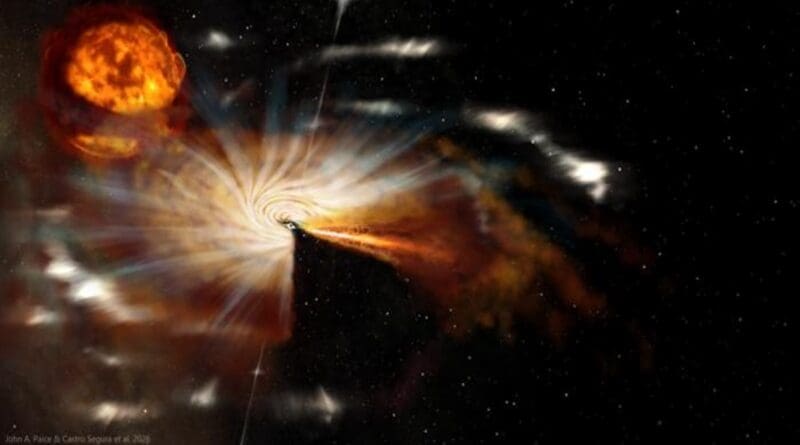
Artist impression of SwiftJ1727 with donor jet clouds. Credit: John A. Paice & Noel Castro Segura et al, ‘SwiftJ1727 - Final - No Overlay – DonorJetClouds’, (2026).

July 30, 2026
By Eurasia Review

Key Takeaways:

Black holes act more like cosmic digestive systems than bottomless pits. Observations of Swift J1727.8−1613 show that while the black hole consumes gas from a companion star, it simultaneously expels large amounts of material as jets and winds.

Powerful outflows continue even when the black hole is very faint. Dense gas was still being blown away after the system faded to just 1% of its peak activity, suggesting black holes remain inefficient eaters long after major outbursts.

The study provides one of the most detailed optical records of a black hole outburst. Using the VLT, researchers tracked the full cycle of feeding and expulsion in real time, revealing a strong link between inflowing disc material and outgoing jets/winds.


University of Warwick-led astronomers discover the cosmic digestive system of a black hole – showing that even when black holes appear faint, they’re not simply bottomless pits.

Black holes are often portrayed as cosmic gluttons that swallow everything that comes too close. But new observations of a dramatic black hole outburst – led by Warwick Postdoctoral Fellow Dr Noel Castro Segura – suggest the reality is much messier.

Using the European Southern Observatory’s Very Large Telescope (VLT), astronomers have followed the newly discovered black hole system, Swift J1727.8−1613, through a spectacular 2023 eruption.

Astronomers found that as the black hole consumed gas from a nearby star, it simultaneously launched some of that material back into space in the form of jets and winds. Critically, the massive outflows of material happen when black holes are very faint, when its activity is very low, much lower than previously thought – meaning black holes may behave less like bottomless pits and more like powerful cosmic digestive systems.

“People often imagine black holes simply swallowing everything around them,” said lead author Dr Noel Castro Segura, a Postdoctoral Fellow at the University of Warwick. “What we’re seeing is a much more complex process. Matter falls in, the system processes it, and a surprising amount is expelled again.”

The study provides one of the most detailed optical records yet of a black hole outburst, allowing researchers to watch how the system changed over time, rather than relying on a few observations. Rather than seeing a blackhole feeding from a star as a single photo, the evidence collected is throughout state changes.

Swift J1727.8−1613 was discovered when it suddenly flared into life in 2023, rapidly becoming one of the brightest X-ray sources in the sky. The system consists of a black hole pulling gas from a nearby star, creating a swirling disc of superheated material around it. During the outburst, astronomers had the opportunity to watch this feeding process unfold in real time as vents have rarely been observed in such quality.

One of the study’s most intriguing findings was that, as the black hole expelled a powerful jet, the disc feeding it also underwent significant changes. This offers a rare glimpse of the connection between matter falling towards a black hole and matter being expelled back into space.

Perhaps the most surprising result came after the black hole’s feeding frenzy had largely subsided. Even when Swift J1727 had faded to around one hundredth of its peak activity, the researchers found evidence that dense gas was still being blown away from the system.

The discovery suggests that black holes may continue driving powerful outflows long after their brightest activity has ended. In fact, the amount of material being expelled could rival the amount ultimately consumed by the black hole itself.


Reflecting on the digestive process of black holes, Dr Noel Castro Segura continued, “if black holes can continue shedding material even after their largest outbursts, it means they may be much less efficient eaters than we previously assumed. A significant fraction of the meal may never reach the black hole at all, changing our understanding of how binary stars in galaxies evolve.”

The observations add to growing evidence that black holes are not simply cosmic eaters. Instead, they appear to be dynamic systems that both consume and redistribute matter — taking material in, processing it and returning a substantial fraction to space through jets and winds.

Commenting on the research, Kyle Solomons, Doctoral Researcher at the University of Cape Town, said: “We usually gravitate towards the dramatic fireworks when a black hole outburst begins, but our observations show that the finale can be just as intense. Even as the system’s X-ray emission dropped to a fraction of its peak, it still had enough power to generate a massive expulsion of gas.”

For Swift J1727.8−1613, astronomers were able to watch that entire cycle unfold during a single outburst, providing one of the clearest views yet of how black holes feed, react, and influence their surroundings.


Reading Ancient Signals In A Modern World – Essay


August 1, 2026
By Irina Matuzava

Key Takeaways:

Long before writing, early humans carved deliberate patterns into shells and ocher, revealing an ancient drive to shape surfaces with care—an impulse that later carried into the invention of scripts and modern typefaces.

Fonts are not neutral: research shows they influence processing speed, emotional perception, persuasive power, and memory, often without readers’ awareness, because the brain treats letterforms as specialized visual signals.

From serif advantages in recall to typeface “personality” shaping brand choices and satire ratings, typography acts as a primary visual language that affects how we feel about, trust, and remember written content.


The desire to stylize a mark is older than writing itself, and the typefaces of today shape what we remember, feel, and trust whenever we read.

The oldest known engravings consist of zigzag patterns and parallel lines, carved into freshwater mussel shells at Trinil on the island of Java, Indonesia. These grooves, made by Homo erectus, date to roughly half a million years ago. By around 100,000 years ago, early Homo sapiens at Blombos Cave in South Africa were carving cross-hatched patterns into pieces of ocher. Long before anyone wrote down a word, our ancestors made marks with evident care. Neither the engravings at the Trinil site nor those at Blombos Cave can be considered writing, but they seem to represent a desire to deliberately shape a surface and give these marks specific forms.

Writing is a much more recent development, having evolved at least four times within the last 5,000 years: in Mesopotamia around 3400–3100 BCE; in Egypt around 3250 BCE; in China around 1250 BCE; and in Mesoamerica around 600–300 BCE, including the Maya script that developed independently at around 300–200 BCE. According to Discover magazine, “The oldest surviving texts come from very specific contexts, such as economic transactions in Mesopotamia and divination rituals in China. The first characters were mainly pictographic signs, depicting exactly what they referred to.”


In evolutionary terms, the invention of writing is considered extremely recent, as our genus Homo has existed for around 2.8 million years, and our species Homo sapiens for at least 300,000 years. For the overwhelming majority of human history, no one could read or write. However, the cultures that eventually invented writing carried their aesthetics and preferred methods of stylization in the scripts they created.

Today, our lives and communication methods are saturated with a vast array of fonts and typeface styles that go beyond simply conveying written information, raising the question of what effects fonts can have on people.

Partially, the answer lies in what came before writing and the first carved mark. Long before humans developed writing and spoken language reached its modern complexity, we were communicating through visual signals. Much of the emotional content of a face-to-face interaction is not conveyed through spoken words, but through nonverbal cues. Posture, gestures, facial expression, gaze, and tone of voice all contribute to the communication of the message and the manner in which it is received.

Fluency in visual signals did not originate with humans, as reflected in the abilities of primates to produce and interpret visual communication. In 1872, Charles Darwin argued in his book, The Expression of the Emotions in Man and Animals, that human facial expressions share a common heritage with those of other animals. Following advancements in ethological analysis of primate facial and gestural communication in the 1960s, Frans de Waal proposed that the growing evidence of group-specific signaling conventions among primates strongly resembles, or can be considered, a cultural variation. Studies of orangutans and gorillas show that these apes use signals intentionally to attract the attention of others. In addition, they modify their signal depending on whether the recipient is watching, demonstrating an awareness that the communication is being seen and understood.


Katja Liebal and Linda Oña’s 2018 review of primate communication found a pattern: gestures are used flexibly. Their meaning shifts according to the situational context, in contrast to vocal calls, which tend to be more fixed. Meanwhile, Uwe Jürgens helped explain this contrast in primate vocalization in “Vocal Communication in Primates”: a call’s form is largely determined by genetics, while its meaning is acquired through repetition and context. A reader or listener does not determine a particular gesture, vocal call, or letterform, but instead, its meaning is learned and context dependent.

When writing emerged, it did so within a species already equipped with sophisticated visual communication systems sensitive to form, color, and deliberate marks, with a few patterns that could be identified in the origins and development of ancient scripts. For instance, many script inventions evolved within preexisting iconographic or hieroglyphic systems. Even as early scripts became more abstract and moved away from their pictographic origins, the shapes retained visual properties that readers processed alongside meaning. With the later invention of the printing press in the 15th century, typography created consistent cues for readers as characters became identical throughout a document, setting them apart from most visual experiences.

Research reveals that letters are actually not processed visually in the same manner as shapes. This distinction, revealed in a series of experiments by Isabel Gauthier and her coauthors, has significant implications for the impact of fonts. Our visual system develops cortical specialization for letters. Certain areas in the left occipito-temporal cortex respond more strongly to letters than to other stimuli, such as generic shapes. Gauthier proposes that font tuning is the driver for this specialization: similar to how the brain develops specialized processing of faces, it can recognize letters more promptly through increased exposure to print. According to a 2011 study by Stanislas Dehaene and Laurent Cohen, this is known as neuronal recycling: the reading brain repurposes the visual machinery that long predates writing.


A 2018 article by researcher Peter Walker also investigated whether the visual system becomes selectively tuned to specific fonts, and whether this tuning affects perception and performance. Walker’s framework proposes that readers maintain “a set of font-specific translation rules” in their working memory, which is directed by their “implicit knowledge” of the structural identity of each letter and symbol.

Capital H, for example, is always represented as two vertical strokes connected by a horizontal mark, but each typeface will structure the shapes of these marks differently. Well-designed fonts, whether made by master calligraphers or standardized for print, share a common style across all their characters. After seeing the first few letters of a text, a reader can predict the letters that will follow.

The evidence by Walker supports the account that font processing is rule-based rather than image-based, as switching fonts causes considerable slowdowns in processing time. These lags occur even with familiar typefaces and increase with the degree of dissimilarity between two fonts. Font-specific rules are quickly forgotten from working memory. When the repetition of a particular font becomes more probable, readers will implicitly hold on to the rules for longer.


The effects of typography, however, go beyond processing speed and reading efficiency; fonts also shape how we feel about what we read.

Typography, as typographer and poet Robert Bringhurst observed, gives letterforms “tone, timbre, character, just as words and sentences do.” Eva R. Brumberger’s 2003 study published in Technical Communication found “that readers do consistently ascribe particular personality attributes to particular typefaces and text passages.” She concluded that “visual language is analogous to verbal language in carrying connotations,” and that typefaces are not neutral messengers. Some read as more elegant, others come across as more direct, while others are characterized as friendly. These attributions are consistent across readers and stable enough to be mapped.

Brumberger also found that text passages carry “personas” independent of the typeface, meaning that readers simultaneously process two messages in parallel: the content of the text or the verbal content, and its visual form and style. “[T]he persona readers ascribe to texts most probably is determined by the language of the text, the style in which it is written, the topic on which it focuses, and the purpose and audience for which it is intended,” the study found.

These two messages often interact, as demonstrated by Samuel Juni and Julie S. Gross in their 2008 study “Emotional and Persuasive Perception of Fonts.” Juni and Gross presented 102 university students with identical satirical excerpts from the New York Times but in different fonts; one version was written in Times New Roman (TNR), and the other in Arial. Results showed that readers rated the TNR version as angrier and funnier and therefore more satirical, as compared to the text in Arial. The font change did not necessarily add an emotional tone to the text, but interacted with the emotional qualities of the writing. Crucially, participants were unaware of the effects typefaces had on text interpretation, and no participant identified the typeface as the source of the difference.

This study further found that fonts carry emotional meaning and shape personality attribution. The same text in different fonts can be interpreted as friendlier, more playful, more serious, or more formal. These traits affect how a text’s message is perceived and interpreted, as well as its persuasive ability.


The size of fonts also matters. Researchers Mareike Bayer, Werner Sommer, and Annekathrin Schacht measured cortical responses to words presented in large and small font sizes. The selected words were categorized as emotional or neutral, and the study found that emotional words in larger font sizes elicited earlier and longer-lasting neural responses than those in smaller font sizes. Thus, independent of the words’ semantic content, the physical presentation of the text influenced the brain’s emotional processing. “The power of large font size to enhance emotion effects may, for instance, be one reason why headlines written in big letters are popular and evidently successful in the yellow press media,” stated the authors in their study published in PLOS One.

A 2021 study by Renata Germano Bianchi, Kamila Rios da Hora Rodrigues, and Vânia Paula de Almeida Neris about emotional responses to font types and sizes on website pages found that Arial was more closely associated with positive attributes than TNR, and that larger font sizes were more closely associated with pleasant and comforting experiences than smaller ones.

These findings establish that fonts help shape emotional perceptions and modulate readers’ attention. Since they do so without a reader’s awareness, they also have significant implications for marketing, advertising, and persuasive literature, with the potential to sway our decision-making, behavior, and memory. As humans, we often store a plethora of information, especially since the advent of the information age. Once information forms part of our memory, the typographic form with which it was conveyed influences how much of it is retained.

A 2005 study on information recall by Michael Gasser and other researcherstested this finding. More specifically, they tested the influence of two common characteristics of font types: serif or sans-serif markings and proportional font or monospaced font. College students were given a one-page office memorandum that discussed tuberculosis and were tested on their ability to recall its key points. The variations in font conditions depended on whether the typeface contained serifs and how the letters were spaced. “Serif fonts have small markings at the bottom of many of the letters that suggest they are resting on a straight line,” stated the study, while sans-serif fonts have no such markings. The space used by proportionally spaced fonts for each letter is proportional to the size/shape of that letter. For example, an “L” takes up less space in width than an “m.” In monospaced fonts, each letter takes up the same amount of space.

The researchers found that serif fonts, regardless of spacing, produced a slight but significant improvement in recall (9 percent) over sans-serif fonts. They suggested that serif fonts help us clearly distinguish one row of text from the next, resulting in more attention focused on the content itself.

Previous research on reading aligns with this sentiment: attention is a limited resource, and the effort required for the physical act of reading draws energy and capacity away from comprehending and remembering the content. In 1989, Ruth Kanfer and Phillip L. Ackerman developed an attentional resources theory according to which humans have limited attentional resources that they can devote to a task. In accordance with this theory, if less attention is given to the reading process, then more attention can be given to the message. When distractions are randomly included in text, marked disruptions in comprehension take place, as studied by researchers S. Lisa Connelly, Lynn Hasher, and Rose T. Zacks in 1991. They also found that older adults are less able to ignore irrelevant stimuli, such as words set in a different font randomly interspersed throughout the text. In 1992, John R. Surber established that when readers were given shorter passages, they spent more time per word, consistent with more effortful processing. These studies show that readability and comprehension are negatively affected when the reading process requires more attentional resources.


In 2019, Elizabeth Dressler tested whether a harder-to-read font improves memory. Her study aimed to better understand the effect of fonts on reading comprehension and information recall, noting that previous studies relied on short passages and unlimited time, which may have restricted their accuracy. In her study, students read long passages printed in either TNR (a serif, easy-to-read font) or a font called Haettenschweiler, which was selected specifically for its difficulty, under both fixed time limits and no time limit at all. Dressler’s results demonstrated that students who read the TNR text scored better than those who read the Haettenschweiler text. In addition, participants who were given unlimited time outperformed those with a time constraint. Originally, she had predicted that the more difficult font would improve recall by requiring more effort to process. Instead, students who read the easier text outperformed those who read the harder text.

Though the serif advantage is small and inconsistent across studies, serifs may be useful when the information is important, such as materials and manuals for worker health and occupational safety. In general, the effects of fonts have been shown to influence choices in website and software interfaces, packaging, legal documents, and more.

Jianlong Zhou and colleagues tested font choice in the context of digital news interfaces in 2022, making changes to the font style and color of keywords in news passages and measuring the readers’ perceived cognitive load before reading. They found that under low cognitive load, when the reader is not yet mentally taxed, keywords styled in italic or bold text, especially when paired with blue text, increased the burden on readers. Under high cognitive load, italic styling and red text significantly decreased it, since the words served as visual anchors when readability was already demanding. In other words, the value of emphasis depends on how taxed a reader already is.

The persuasive power of fonts shows up in branding as well. It has been established that different typefaces vary in “appropriateness,” or the “fit” between a product and a font due to its connotations: bold and simple fonts more often convey “economy” or “strength,” while scripted and ornate fonts are associated with words like “luxury” and “dignity.” A 2004 study by John R. Doyle and Paul A. Bottomley had participants choose between two versions of a brand nameacross 10 product categories. The versions were identical aside from their typeface; brands written in a font judged more “appropriate” for a product type were chosen twice as often compared to the same brand name in another font. A follow-up field study using real chocolate boxes found that people reached for the box with the appropriate font 75 percent of the time. Typefaces inherently carry personality attributions. Thus, a brand’s font selection serves as another sign of why a product may belong to a particular category.

Researcher Sandra Moriarty argued in 1994 that visual communication should be treated as a primary system of meaning, not as a secondary illustration of the verbal content it accompanies. While her point mainly applied to images, photographs, and other visual material, the argument also extends to font types. A font changes what a reader recalls, how satirical a passage reads, and what brand a shopper picks up, independent of the text and words themselves. In each of these cases, visual communication influences the reader without their knowledge.

The zigzag patterns from Trinil and crosshatching from Blombos Cave were made hundreds of thousands of years before any script existed. Yet the desire to deliberately shape a surface never disappeared. This impulse carried into the first writing systems and persists in the typefaces we read today. A font, then, carries meaning that words alone do not provide and influences how we remember, feel about, and trust written content.

Author Bio: Irina Matuzava is a writer and researcher. She is a contributor to the Human Bridges project.

Credit Line: This article was produced by Human Bridges.