Showing posts sorted by relevance for query GYPSY. Sort by date Show all posts

Saturday, June 29, 2024

Politicians forget we're voters, says Gypsy woman

By Kate Morgan, Communities correspondent, BBC Wales News 
• Sian Dafydd, BBC News

Leeanne Morgan
Leeanne Morgan says Gypsy and Traveller people want to not be "a second thought"

Gypsy, Roma and Traveller communities should be treated as voters and "not political footballs" during elections, campaigners have said.

The Traveller Movement added these communities faced "chronic democratic underrepresentation".


Leeanne Morgan, 48, part of the Gypsy community, said people like her just want to be treated "like everybody else".

The Electoral Commission is supporting a campaign to push more people from Gypsy, Roma and Traveller communities to vote, saying they were "less likely" to be registered.

The mother-of-two said there were many barriers which her community faced, with many left feeling like "second-class citizens".

"There's only so long that you can stand up, you can ask and fight for things that you want," she added.

Leeanne, who lives with her family on a site in south Pembrokeshire, said politicians did not visit sites while on the campaign trail.

"I think they forget that they are their constituents as well. I mean, historically, Gypsy and Traveller sites are out of the way and sort of push to the side.

"Unless you've lived within the community for a long, long time, you wouldn't know that they're there," she said.

There are about 3,630 Gypsy and Irish Traveller people living in Wales, with the highest proportions in Cardiff and Pembrokeshire.

According to the latest census in 2021, 73% live in a house or flat and 27% live in a caravan or mobile home.

Political rhetoric and language was also creating barriers, according to Leeanne.

She has worked with officials to advocate for her community, and said too much jargon was used by political leaders and campaigners.

"I think they need to take into consideration how they're speaking to the people, to the people that are going to be voting them into power, so that they know, and everything is explained properly," she said.

'Political footballs'

Grace Preston is one of those behind Operation Traveller Vote – a push to empower members of the Gypsy, Roma and Traveller communities to vote in the upcoming election.

"Members of the community don't feel like constituents, but rather political footballs dragged out for politicians' campaigns," the senior policy officer added.

The organisation behind the campaign, The Traveller Movement, said members of these communities' faced "chronic democratic underrepresentation and huge levels of discrimination".

Grace Preston
The Traveller Movement has been holding registration drives across the UK

"If you don't feel like an active constituent in a community, you disengage and don't get involved, our job is to show how you can use your vote and voice," she added.

Alongside the campaign, the Traveller Movement has produced its own manifesto with recommendations on how all political parties can prioritise the communities' needs in areas such as health and education.

The group has been visiting UK cities and knocking on doors at Traveller sites to help overcome any literacy or digital literacy issues.

"We have our own manifesto and questions that people should ask politicians... giving people that power to have a voice for themselves is super important," she said.

The campaign has been supported by The Electoral Commission, the independent body which oversees elections.

"Everyone should be able to participate in elections, but our research shows that some groups are less likely to be registered to vote and to own an accepted form of ID, including Gypsy, Roma and Traveller communities," a spokesperson added.

What do the parties say?

Plaid Cymru said: "Romani, [Gypsy], Roma and Irish Traveller communities are too often used as a political football."

"We are committed to combating Islamophobia, anti-Semitism, anti-migrant sentiment, anti-Gypsy and Roma Traveller sentiment, and all forms of racism and bigotry in politics and in wider society," a spokesperson added.

The party said politicians of all parties had a duty to engage with all communities in their areas, and encourage everyone to participate in elections.

Both Labour and the Conservatives have been asked to comment.

Monday, May 11, 2020

ANOTHER BIBLICAL PLAGUE
Giant Asian gypsy moth threatens trees in Washington


Voracious Asian giant gypsy moths, whose caterpillars can defoliate entire trees, have been discovered in Washington state, the governor announced. Photo courtesy of Washington State Department of Agriculture

DENVER, May 11 (UPI) -- After a warning about the bee-killing Asian giant hornet, Washington state is bracing for invasion of another supersize invasive insect. This one, the Hokkaido gypsy moth, can destroy trees.

Gov. Jay Inslee issued an emergency proclamation last week, warning that the moths have been discovered in parts of Snohomish County, which is northeast of Seattle.

"This imminent danger of infestation seriously endangers the agricultural and horticultural industries of the state of Washington and seriously threatens the economic well-being and quality of life of state residents," Inslee said in a statement.

Hokkaido gypsy moths never have been observed before in the United States. They are exotic pests that can do "widespread damage" when hundreds of voracious caterpillars hatch, Karla Salp, a spokeswoman for the Washington Department of Agriculture, told UPI.

"We see European gypsy moths every year, but these Asian moths are more dangerous because they can fly up to 20 miles and their caterpillars can eat a broader range of host plants," Salp said.

If the pest becomes established in the state, it would threaten forest ecosystems and could lead to quarantine restrictions on commercial lumber and horticulture, state experts fear.

The governor's proclamation allows state pest-control agencies to a spray special pesticide from airplanes on the insects.

Washington state pest agents will be treating moths with a soil bacteria called Bacillus thuringiensis var. kurstaki or Btk. The bacteria is harmless to humans, pets, birds, fish and bees, the agency said.

Female moths, up to 3 1/2 inches long, can lay up to 500 eggs that hatch into brightly colored, hairy caterpillars with maroon and gray dots.

The caterpillars sometimes are mistaken for webworms or tent caterpillars, both native to Washington, Salp said.

In 2017, European gypsy moth caterpillars defoliated one-third of the state of Massachusetts.

In 2018, the state lost about one-quarter of its hardwood trees, including three-quarters of its oak trees, due to gypsy moth infestations, the Massachusetts agriculture department said.

Friday, October 15, 2021

Hungary’s ‘last’ Roma fortuneteller preserves traditions


Zoltan Sztojka, traditional Gypsy fortune-teller is seen in his home in Soltvadkert, central Hungary on Oct. 10, 2021. Sztojka, by his own account Hungary’s last Roma fortuneteller, is working to preserve his culture's traditions that are slowly vanishing in the Central European country. 
(AP Photo/Bela Szandelszky)

By JUSTIN SPIKE

SOLTVADKERT, Hungary (AP) — Zoltan Sztojka, by his own account Hungary’s last Roma fortuneteller, lays 36 weathered tarot cards on a table at his home in the village of Soltvadkert, and peers at them from beneath the brim of his large felt hat.

As he turns the cards with his heavily ringed fingers, he presents his clients — whom he calls “patients” — details of their past, present and future, a skill of divination he says he inherited from an “unbroken family lineage” of fortunetellers dating back to 1601.

“They were fortunetellers and seers,” he says of generations of his ancestors, who were “chosen by God” to practice the gift of fortunetelling.

Sztojka, 47, whom friends and locals call simply “Zoli with the hat,” uses cards and palm reading to divine information about his clients, a trade he has been practicing for 25 years. His skills at seeing the unseeable, he says, were apparent from childhood.

“You’re either born with it or you inherit it, but to say you can learn it is humbug,” he said while seated in a room filled with burning candles and religious icons, a cigarette dangling from his mouth.

Sztojka is a member of Hungary’s large Roma minority, which some estimates place at as many as 1 million people in the Central European country — roughly 10% of its population. Present in virtually every country in Europe, many Roma face racism, segregation, social exclusion and poverty.

First migrating to Hungary in the 15th century, Roma were known historically for their skills as craftspeople and musicians. They long spoke their own language and maintained numerous dialects and customs related to their trades — metalworkers, horse grooms and traders, musicians and fortunetellers, among others.

But in the mid-18th century, Habsburg empress Maria Theresa ordered the forced assimilation of the Roma, outlawing their nomadic way of life and the use of their language, Romani.

Roma children were removed from their homes and placed with non-Roma families, while use of the Hungarian word for Roma — cigany — was also forbidden. They were dubbed “New Hungarians.”

This and other processes of marginalization means that most Roma in Hungary are no longer able to speak the Romani language, and many of their traditional trades — like fortunetelling — were lost, said Szilvia Szenasi, director of the Uccu Roma Informal Educational Foundation.

“Traditional occupations are very much on the wane,” Szenasi said. “It is important to preserve them for the next generation, because it is through them that the Roma people can live their own identity.”


Zoltan Sztojka, traditional Gypsy fortune-teller, is photographed in his home in Soltvadkert, central Hungary, Sunday, Oct. 10, 2021. Sztojka, by his own account Hungary’s last Roma fortuneteller, is working to preserve his culture's traditions that are slowly vanishing in the Central European country. (AP Photo/Bela Szandelszky)

For Sztojka, preserving Roma culture goes beyond keeping the centuries-old art of fortunetelling alive. He dresses each day in brilliantly colored vests and shirts adorned with floral folk patterns, and wears a traditional long, dark moustache.

A devout Catholic, he only removes his wide-brimmed hat — a trademark of the Gabor Roma clan of Transylvania — when eating or attending church.

“It’s terribly important to preserve our culture and traditions, because if we don’t have a culture, then the Gypsy community will cease to exist,” he said. “I try to pass them on to many people so they can really get to know us, because all they know is that there are Gypsies, but they don’t know anything about us.”

While in several cultures the word Gypsy is considered an offensive term, Sztojka prefers using it to Roma.

He and his family belong to the Lovari subgroup of Roma people, and speak the Lovari dialect of Romani — something he says is “on the verge of extinction.”

“People don’t really want to speak the Gypsy language. Everyone assimilates as if suddenly they wanted to be Hungarian,” he said.

Along with his clairvoyance, Sztojka inherited his 150-year-old tarot cards from his great-great-grandmother, who herself was a fortuneteller in a time when the tradition was a much greater part of Roma identity.

Beatrix Kolompar, one of Sztojka’s relatives, said that her people’s traditions “can distinguish us as Gypsies, as Roma.”

“Since we don’t have a country of our own, we carry on the world we live in, the Roma way of life, through our traditions,” she said. “The dancing girls, the colorful dresses, the fortunetelling and the fortuneteller, it’s proof of who we are.”

But Szenasi, the director of the Uccu Foundation, says that preserving such traditions “requires cultural recognition, which is very lacking in Hungary.”

Without “institutional culture” such as museums and other cultural institutions, she said, “the traditions that the Gypsy people are doing are slowly becoming lost, and these values will unfortunately disappear.”

Sztojka says he has lost around half of his business during the COVID-19 pandemic, but that many of his “patients” are return visitors who are convinced of his clairvoyance.

Sztojka makes his living from fortunetelling, charging 15,000 Hungarian forints ($50) per session, although he says he doesn’t turn poor people away. But he also considers it “a mission” that spiritually enriches both him and his customers.

“To read cards is a total blessing for me. It’s how I can help my fellow human beings,” he said.

Despite the vanishing of his culture’s centuries-old way of life, “Zoli with the hat” says he will never give up on carrying forward the mystical trade of his ancestors.

“My parents didn’t assimilate, my grandparents didn’t assimilate, and I won’t either. If you have no past, you have no future,” Sztojka said.

“I believe that I was born a Gypsy, and I will die a Gypsy.”

Monday, September 09, 2024

NIMBY

Council blocks plans for Gypsy and traveller homes

Hannah Brown
Local Democracy Reporting Service
Brian Farmer
BBC News, Cambridgeshire

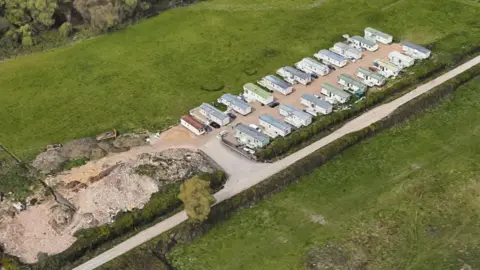
The council has blocked plans for Gypsy and traveller homes on the edge of Cambridge - at the Old Coal Yard, off Fen Road, near the Cambridge North railway station

A council has blocked a man's plans to site Gypsy and traveller caravans on the outskirts of a city.

Nelson O’Connor asked South Cambridgeshire District Council for permission to position 18 homes on the edge of Cambridge.

Council members recognised a need for more homes for Gypsy and traveller families in the Cambridge area.

THIS IS BULLSHIT RACISM, AS WE CAN SEE FROM THE PHOTO ABOVE THE TRAVELING HOMES ARE ON THE REMAINS OF THE TRAIN STATION

But they concluded that siting them on land off Chesterton Fen Road would "substantially" encroach into the green belt.


'Very limited'


Mr O’Connor's planning application was partially retrospective because some people had already moved in, councillors heard, reports the Local Democracy Reporting Service.

He argued there was a "shortfall" of places for Gypsy and traveller families and said the planned homes would meet an "urgent" need.

Mr O'Connor recognised that the development constituted “inappropriate development in the green belt” but argued that harm was “very limited”.

Councillors refused the application after studying a report by council planning officers, who said the development would be a "substantial encroachment" into the green belt.

They said it was “clear” there was a need for more homes for Gypsy and traveller families in the area, but that did not outweigh the harm that would be caused to the green belt in this case.

Tuesday, July 28, 2020

UK
The latest racist attack from The Times is truly chilling


Fréa Lockley
28th July 2020

On 27 July, the Times published a vile racist attack on UK minority groups who already face daily “pervasive prejudice and discrimination”. And this comes as the Conservative government is pushing forwards with draconian legislation that will have a devastating impact for members of the UK’s Gypsy, Roma, Traveller (GRT) communities, as well as protesters and activists.


Image


Many Travellers face difficulties accessing basic medical treatment. Meanwhile, tabloid papers perpetuate dangerous racist attacks on GRT groups. Now, a former Tory speechwriter has added further fuel to the fire.


“The last acceptable form of racism?”

In 2017, a report from the Traveller Movement identified GRT discrimination as “the last acceptable form of racism”. An article by David Cameron’s former speechwriter Clare Foges has highlighted just how disturbing and prevalent this is in the establishment media.


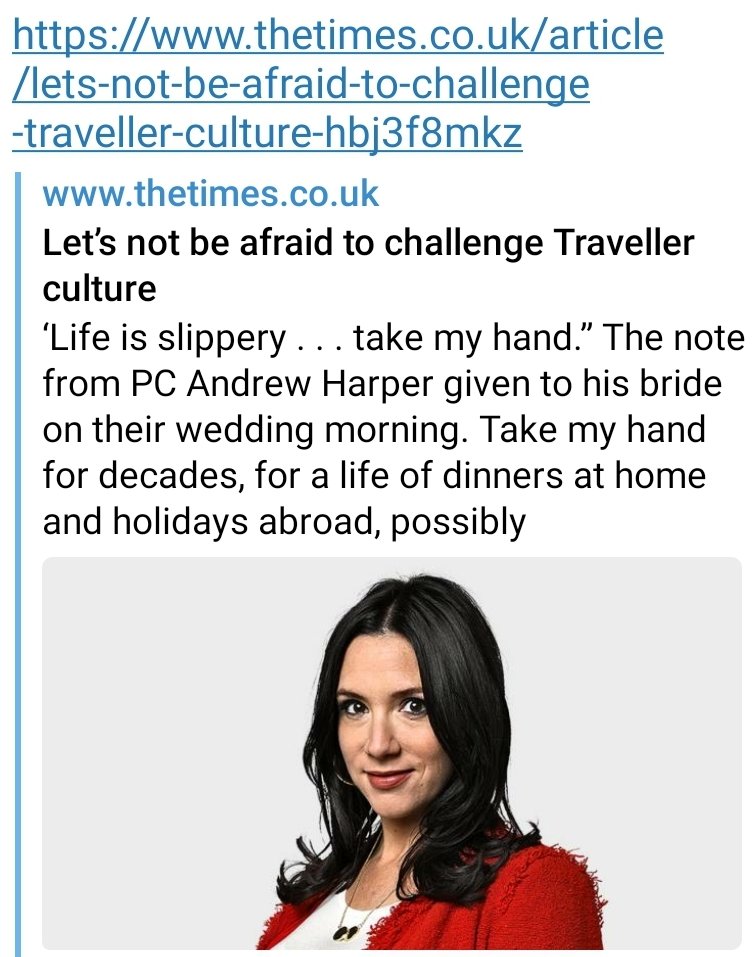
n 24 July, three teenagers were convicted of manslaughter for the abhorrent killing of PC Andrew Harper. Many, including Harper’s family, feel that the three should have been charged with murder. Subsequently, many media outlets drew attention to the killers’ Traveller status.

Foges’ Times column took this to the next level. According to Foges, it’s wrong “to completely ignore the cultural context of this crime”. She says the killers’ “education was in petty crime” and calls to “end the squeamishness that prevents open talk about Travellers”. She continues:


Since the Equality Act 2010 recognised Gypsy, Roma and Travellers as ethnic minorities, race has been used to shield this culture from due scrutiny. Sensible questions about why those within these groups are more likely to be in prison, more likely to be illiterate or more likely to suffer domestic violence prompt cries of racism.


People pointed out quite how racist this attack really is:


Some ‘high brow’ racism from @ClareFoges at the @thetimes

Apparently we are using the Equality Act to shield us from scrunity and not as a defence again systematic racism.

She is shamelessly using the tragic murder of PC Harper to be prejudice against the GRT community. https://t.co/9sNO02Gfxr
— Gypsy, Roma & Traveller Activist (@GRTactivist) July 27, 2020


Not least, because Foges has form on this topic:


This is just grand – didn’t realise the Times had its own Racism against Travellers correspondent https://t.co/uf082gCz44
— Fisun Guner (@FisunGuner) July 27, 2020


Twisted

What’s so disturbing about Foges’ column is the way she twists inequalities faced by GRT communities:

Travellers die about ten years earlier than the rest of us. They have higher rates of chronic illness. Their suicide rates are six times higher. …

As long as the culturally sensitive force-field exists around Travellers, [their] children are abandoned to a fate that should not be tolerated in 21st-century Britain.

This is part-based in tragic fact. But Foges uses this as evidence against people when it’s actually an indictment of the systemic racism and inequality GRT communities face.

Although Foges bemoans the convicted killers’ lack of formal education, people on social media also pointed out the huge inequalities and discrimination GRT children face. Conservative-led cuts have made this even more difficult:

In 2011 councils across the UK slashed their dedicated Traveller education teams in response to the Conservative Governments austerity policies. This may have some relevance 'to not being able to read or write': https://t.co/SjFf4ZyR8O
— Travellers' Times (@TravellersTimes) July 27, 2020


Minority groups

In the 2011 census, an estimated 63,000 people identified as GRT – although this figure is likely to to be an underestimation.

Gypsy, Traveller and Irish Traveller communities are recognised as ethnic minority groups. As such, they have – in principle – the same protections as other ethnic minorities in the UK under the Equality Act. But as a 2017 report found, GRT “experiences of prejudice are seemingly so common that they have almost become normalised”.

There is also another community of so-called “New Travellers”. This includes van, truck, and boat dwellers recognised as ‘cultural’ rather than ‘ethnic’ Travellers. All groups suffer from
racism and discrimination. As support group Friends Families and Travellers explains:

M
crimination on a daily basis as a result of negative stereotypes and deeply ingrained cultural prejudices.

The statistics are shocking. In 2017, 91% of GRT people reported facing “discrimination because of their ethnicity”. Meanwhile, 77% had “experienced hate speech or a hate crime”.

As people on embers of the Gypsy and Traveller communities can often face harassment and dissocial media pointed out, Foges’ article epitomises and perpetuates this prejudice:

Just today, the Times actually published this. Just imagine it being published about Jewish culture, or black culture, or any other. Gypsy Travellers say prejudice against them is the last acceptable racism… pic.twitter.com/6mAs3Mp1Ns
— The SKWAWKBOX (@skwawkbox) July 27, 2020

Prime example of how the media feeds anti Traveller hate and racism leading to our suicide rates being seven times higher than the settled community. Shame on you @ClareFoges https://t.co/2kGCFjm947
— Rosemarie Maughan (@Minceirbeoir) July 27, 2020

Persecution of GRT communities isn’t new. The Holocaust Memorial Day Trust (HMDT) estimates around 20,000 “Roma and Sinti men, women and children” were murdered at Auschwitz-Birkenau. According to HMDT:


[This persecution] has parallels with that of the Jewish people. Both populations were targeted on the grounds of their race and had previously suffered centuries of discrimination.

\
Travellers, Gypsies, & Roma experienced vicious & murderous persecution and genocide alongside Jews during the Shoah

As a Jewish person, I stand in solidarity with them against this vile bigotry – which is being increasingly mainstreamed in the media and in government policy pic.twitter.com/GiHvqjoqKr
— Nadine Batchelor-Hunt (@nadinebh_) July 27, 2020

Others, meanwhile, pointed out how dangerous and damaging these attacks are:

1/4 It's been a difficult day today seeing a number of articles, comments, and posts that openly attack Gypsy and Traveller communities and perpetuate racism and hate speech.
We know that seeing this kind of hatred can be painful to deal with.
— FFT (@GypsyTravellers) July 27, 2020

Individuals commit crimes, not communities. Stop blaming an entire race, ethnicity or religion for the actions of one person.
— mags (@magshutchinson_) July 27, 2020

Exactly this. People need to realise it's not a whole community who conspire to commit crime, it's a select few making their own choices. Justice has been served. RIP to PC Harper and I hope his family stay strong through this traumatic time. Our thoughts are with them 🙏🏻 https://t.co/EB5dRvwrqS
— TravellersAgainstRacism (@TravellerRacism) July 27, 2020


Establishment-backed racism

On 13 July, home secretary Priti Patel announced that the government will push forward legislation that discriminates against GRT communities even further.

The Travellers’ Times reported that lawyers are set to challenge these “new ‘hostile’ anti-Traveller laws”. It also noted:

the criminalisation of trespass and the other threatened laws could also criminalise homeless camps and protest camps and is an attack on the civil liberties of everyone – not just Gypsies and Travellers.

Awareness of racial inequality has reached new prominence through the Black Lives Matter (BLM) movement. Calls have gone out from GRT communities to show solidarity with BLM activists. The government has now been accused of “dragging its feet” on tackling racism. Attacks on GRT communities from Murdoch’s racist media empire and Patel’s intention to criminalise more people highlight the challenges we face. Wherever and whenever it rears its ugly head, racism can and must be challenged in all its forms.

Featured image via The Times (modified)

Thursday, February 03, 2022

'Let the light in': Romanian Roma actress smashes stigma with new play

Mihaela RODINA
Wed, 2 February 2022,

Serban says she has 'never been able to recognise' herself in Romanian stories (AFP/bogdan dinca)


Serban, the first in her family to graduate from high school, attended Bucharest's Academy of Theatre and Cinema (AFP/bogdan dinca)


Roma actress and playwright Alina Serban features crows in her show, a play on the pejorative word for 'gypsy' 
(AFP/bogdan dinca)


Serban's autobiographical show 'The Best Child in the World' opened to sold out audiences in January (AFP/bogdan dinca)
bogdan dinca


As a child, Roma actress and playwright Alina Serban didn't see herself represented on television, in movies or books, her stigmatised community shunned from the cultural mainstream.

She has dedicated her career to changing that, and last month became the first Roma to stage her work at Bucharest's National Theatre.

"I grew up in this country, but I've never been able to recognise myself in the stories," the 34-year-old told AFP.

"That's why it's important for me to crack open the door and let the light in. It's like I'm planting a flag," she adds, speaking between rehearsals.

Her show, called "Cel mai bun copil din lume" (The Best Child in the World) and based on her life, opened on January 21 to sold out audiences.

It is a moving and at times funny story about a girl who triumphs against all odds, but can't escape the stigma she faces as a Roma.

"This is the first time that a Roma story, written, staged and performed by a Roma artist has been welcomed on the national scene," she says.

- 'She's a gypsy' -


Romania, one of the poorest countries in the European Union, has the largest Roma minority in Europe, around two million strong, according to NGOs.

But many Roma are reluctant to identify themselves as such for fear of discrimination. Officially they are only 621,000 out of Romania's population of 19 million.

Serban says she started to realise her Roma identity at age nine when she and her parents, beset by financial difficulties, had to leave their apartment in a working-class Bucharest district.

They settled in a cob house without running water, alongside her aunts and uncles.

That's when she heard a remark at school that will haunt her forever: "She's not Romanian, she's a gypsy".

The pejorative word "gypsy" is often replaced by "crow" in Romanian.

It's a reference Serban uses in her play: she wears a black feather crow mask that she cannot shake off.

Tired of having to hide where she lived, she promised herself she would get out of the "slum".

She became the first in her family to graduate from high school and was then admitted to Bucharest's prestigious Academy of Theatre and Cinema.

She followed up with studies in New York and London financed by grants.

Serban won acclaim on the international stage, including for her roles in the 2019 movie "Gipsy Queen" about a struggling single mother who fights in the ring, and the 2018 Belgian film "Alone at My Wedding".

- Overcoming self-hate -


But "that was not enough", she says. She continued to be shaken by self-doubt.

"The problem with racism is that the hate that others project on you becomes self-hate. And you end up suffering from impostor syndrome," Serban says.

Among her many projects is a feature film on Roma slavery -- a dark page in Romania's history which Serban has already explored in a play "Marea rusine" (The Great Shame).

For centuries, the traditionally nomadic minority was reduced to slavery -- until that was abolished in 1856 -- and then subjected to forced assimilation under communism.

Even today, racism continues, and Roma access to employment and housing is difficult.

According to opinion polls published in 2018 and 2020, seven in 10 Romanians say they "do not trust the Roma".

- 'Change the world' -


Despite everything, the artist sees reasons for hope as Roma culture becomes "cool" among the younger generation.

More open to diversity, they are interested in Roma music and fashion, while school textbooks have started mentioning the enslavement of Roma, according to sociologist Adrian Furtuna.

"There is beginning to be an awareness" of what the Roma have endured, he told AFP.

Holding back tears, Serban says that by openly talking about her Roma identity she "endangered" her mother, who could have lost her job as a cleaner or been evicted.

"If I continue, it's because at the end of the films or plays in which I act, I see a gleam in the eyes of the spectators," Serban says.

"I am convinced that I can change the world with the stories I tell".

ii-mr/jza/jv

Monday, February 21, 2022

UK
How Priti Patel is using gay rights to push through ‘draconian’ Police Bill

The Tories are offering crumbs to some groups in order to ‘divide and conquer’, say campaigners


Nandini Archer
14 January 2022

Priti Patel has been accused of using ‘divide and conquer tactics’ to pass her policing bill |
PA Images / Alamy Stock Photo

“I find it very offensive. It’s window dressing. It's purely symbolic.”

Tyler Hatwell, the founder of LGBT Travellers Pride, is describing Priti Patel’s plans to wipe historic convictions for homosexual activity from people’s criminal records.

“I’m not saying that wrongs shouldn’t be righted,” Hatwell adds, “but it feels like an absurd thing to be focusing on that rather than some of the more existential issues facing LGBTQ people today.”

As it happens, several of those existential issues stem from the same law that seeks to overturn historic convictions: Priti Patel’s fiercely opposed Police, Crime, Sentencing and Courts Bill, set to go through the final day of its so-called “report stage” in the House of Lords on Monday.

Hatwell calls this a deliberate “divide and conquer” tactic. “The government wants to split off LGBTQ people from any movement against the draconian police bill,” he says.

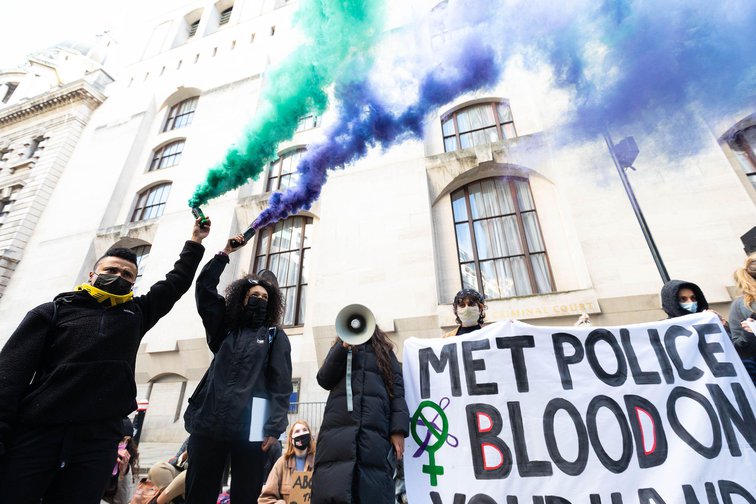
The bill has been met with fierce backlash since its inception in March 2020, which sparked #KilltheBill protests, riots, petitions and letters across the UK. It is a 300-page plan to increase surveillance and stop-and-search powers, put strict conditions on protests, and threaten Gypsy, Roma and Traveller (GRT) rights to roam. For people like Hatwell at the intersection of GRT and LGBTQ communities, as well as queer people of colour, the plans to erase historic convictions for homosexuality (which was legalised for some people in 1967) are worth little.

“The government is trying desperately to hide and rush through its many draconian proposals through the sheer size and breadth of the legislation,” Emmanuelle Andrews, policy and campaigns manager at the human rights organisation Liberty, tells openDemocracy.

Andrews believes the government has had countless opportunities to introduce historic pardons for homosexuality. “Throwing them in now alongside dangerous and oppressive new powers is a cynical ploy to confuse debate around the bill and to make it harder politically for MPs and peers to reject it wholesale,” they say.

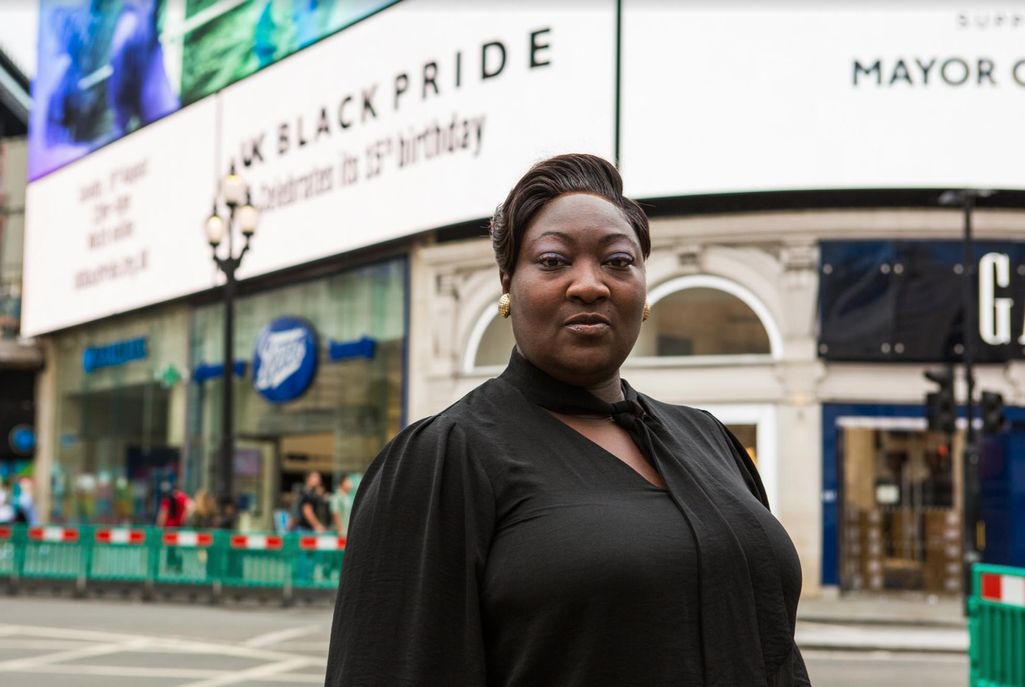
“What good does wiping records of homosexual activity do?” Lady Phyll, executive director of UK Black Pride, asks. “These records should not exist in the first place, and homophobia and homophobic violence are on the rise in the UK.”

Lady Phyll has long been outspoken on the government’s failure to truly support the rights of queer people. She turned down an MBE in 2016, pointing out that LGBTQ people continue to be persecuted and killed because of laws put in place by British colonists.

She says LGBTQ rights cannot be talked about without talking about the impact of racism in the UK and says the country has a “piecemeal understanding” about what LGBTQ rights are.

“LGBT Black people and people of colour continue to be excluded from data gathering about what life is like in the UK for LGBT people,” she says. “The government’s Sewell Report discarded evidence put forward by UK Black Pride and other organisations which offered data about the impact of racism on LGBT people.”

The “window dressing” of the police bill is a long-standing government tactic, Lady Phyll explains, citing marriage equality as an example.

“Marriage equality is great,” she says – yet more fundamental issues get sidelined, such as the vulnerability of LGBTQ people in particular to homelessness, racism, food poverty, violence, incarceration and unequal access to healthcare.

“We deserve a government that looks at and treats its LGBTQ citizens as the diverse and deserving citizens it’s elected to serve,” she says.

The government is ‘window dressing’ its ‘draconian’ policing bill, said Lady Phyll | Courtesy of Kaleidoscope Trust

Gypsy, Roma and Traveller rights

Critics say part four of the policing bill effectively criminalises the way of life of Gypsy, Roma and Traveller communities. The bill means that if neighbours of camps complain about any disturbances at all, police will be able to seize vehicles.

“It’s a curtain twitcher’s charter,” says Hatwell, “an extreme sledgehammer to crack a walnut.”

Hatwell says lawmakers are cynically using “antisocial behaviour” at a handful of camps as an excuse to push through this section of the bill. “But the trouble is, those things are already crimes,” he points out. “So all you're really doing is criminalising people who aren’t causing any difficulty.”

Hatwell describes himself as a showman. He puts on funfairs and tells openDemocracy he’s part of the Showman’s Guild – which was launched to combat a Victorian bill that tried to criminalise “movable gladdings”. He describes today’s police bill as similar but worse.

“The bill is basically one big land grab, where there’s no common space any more, and it’s all accounted for and everyone has to be in their place,” he explains.

Gypsy rights activist and journalist Jake Bowers calls the homosexuality pardons in the police bill a “fig leaf”, adding, “Patel herself is a fig leaf of diversity being used to drive through a deeply racist law.

“No one who believes in equality should fall for this. The Tories are deeply playing off different struggles in the hierarchy of inequalities against each other.”

LGBTQ rights and women’s rights have been secured by long and often bitterly contested campaigns of protest and non-violent direct action, he says, highlighting that part three of the bill will criminalise the modern equivalent of the suffragettes, such as the Extinction Rebellion and Black Lives Matter movements.

He says parts three and four of the bill must be thrown out: “These are linked struggles and no one is free until all are free.”

From domestic abuse to football

The government is also looking to buy support from other groups. One amendment to the police bill will treat domestic abuse and sexual offences “as seriously as knife crime” and extend the time limit for reporting domestic violence from six months to two years. Taking pictures of breastfeeding mothers in public will also be illegal.

Patel’s department also wants to impose a ban on online racist abusers from attending football matches for up to ten years.

The government announced last week that the bill would even crack down on ‘hare coursing’ – the niche practice of chasing hares with dogs.

But Lady Phyll tells me these are just examples of the government using progressive values to obscure the bill.

“What good does it do to ban a racist from a football match, if the police are empowered to beat, detain and harm Black people and people of colour without impunity? What good does [it] do when services that would uplift Black people and people of colour in this country, like mental health services, continue to be under- or defunded?”

On the issue of breastfeeding, she asks: “What of the Black women who die during childbirth in the UK at rates of four to one [compared] to white women? What of the physical violence women across the UK experience at the hands of the police?”

When the police cracked down violently on women gathering peacefully at a candlelit vigil for Sarah Everard, who was murdered by a police officer, activists started connecting police violence against women to the bill. This was the beginning of the #KilltheBill protests led by the feminist direct action group Sisters Uncut.

“Our feminism cannot be at the expense of other communities. They are chucking all this legislation into one bill precisely to make the oppressive, racist, unpopular parts palatable,” Sisters Uncut tweeted in response to the government’s plan to extend the time limit on domestic violence cases. “It's divide & rule, we can do better!”

And it’s this issue of unity that has run through the protests and movement. At one of the protests last year, a Sisters Uncut spokesperson said Patel was making the same mistake that Margaret Thatcher did with the poll tax, which was ultimately her downfall: “Don’t come for us all at once, you idiot.”

For Lady Phyll too, Patel’s attempt to appease footballers, breastfeeders, domestic violence survivors and some members of the LGBTQ community is simply not enough.

“None of these changes address the structures that allow and empower such disparities,” she said. “These changes do not address the structural racism, misogyny, sexism or homophobia that makes such racism, discrimination and violence the absolute norm in this country.”

Saturday, April 10, 2021

GERMANY
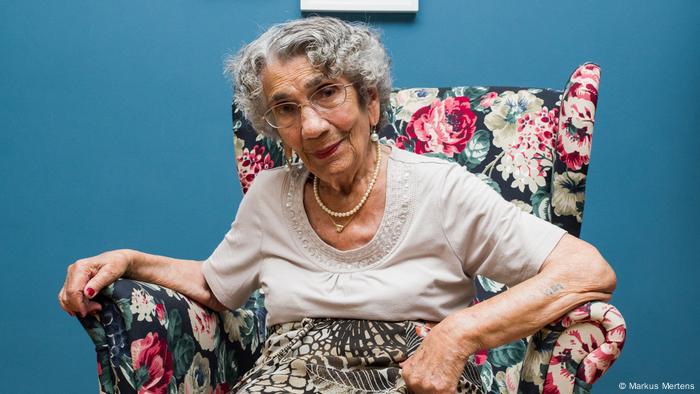
Auschwitz survivor Zilli Schmidt: Fearing new Nazis today


The 96-year-old Zilli Schmidt has made it her mission to tell the world what was done to the Romani people by the Nazi regime. She warns of contemporary parallels — and strikes a chord with many of her listeners.


Zilli Schmidt was awarded the Order of Merit by German President Frank-Walter Steinmeier this year.


In September, Schmidt walked into the Kulturhaus RomnoKher in the western German city of Mannheim to attend a reading of her book about her memories as a survivor of the Auschwitz death camp. "Your visit is a gift," said many of the people who had turned out to greet her.

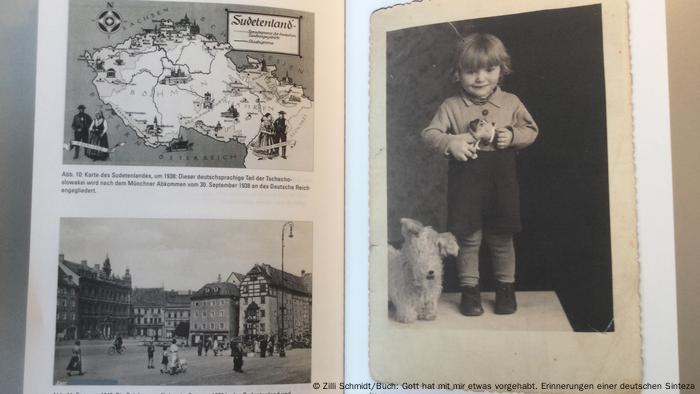
The book is titled God Had Plans for Me: To Keep Alive the Memory of the German Sinti. It recounts her happy childhood days — as well as her incarceration and hunger, the guards shooting at small children and mass murder.

Schmidt told DW that it is her mission to tell what the Nazis did to Sinti, a Roma population in Europe. "They were all gassed, my entire family, all my people," she said. She added that the murder of Roma is often left out of stories of the Holocaust: "The Jews were all sent to the gas chambers. And all the Sinti are still alive?" She pauses. "Nobody was still alive," she said.

The first time she spoke in public about her life was August 2, 2018, at a service for murdered Roma at the memorial in Berlin: "I spoke only for my own people." She was pleased to see so many young people there. "Young people were never told," she said. "It wasn't taught at school."


Watch video02:11 Berlin: Anxiety over memorial to murdered Sinti and Roma


'I dream that I am back in Auschwitz'

Remembering is not easy, Schmidt said: "I often have the urge to cry but I don't show it. I swallow my feelings." But the memories torment her. "When I dream," she said, "I dream that I am back in Auschwitz."

Schmidt's daughter, Gretel, would be 80 years old if she were alive today. She could have grandchildren and great-grandchildren. But Gretel, her little girl, "did not grow up." In the camp, the girl saw the chimneys of the crematorium: "Mama, they are burning people over there." Zilli told her daughter that this was not true: "No, they are just baking bread."

Zilli has only one foto of her daughter, Gretel, who was murdered at age 4


Gretel's life ended when she was four years and three months old. Murdered on August 2, 1944, in the gas chambers of Auschwitz-Birkenau, just like Zilli's parents, her sister Guki and her six children, when the Nazi SS paramilitaries decided to liquidate so-called gypsy families. On this night alone, the SS murdered about 4,300 screaming and crying people. It was one of the darkest episodes in the Romani genocide, known as the Porajmos.

Like other young concentration camp inmates deemed "fit to work," the 20-year-old was moved to a different camp before that night of murder. Her father wanted to protect Gretel and kept the girl close. When her young mother tried to run toward her family, SS doctor Josef Mengele slapped her and forced her back into the wagon. "He saved my life but did me no favor in the process." In the concentration camp at Ravensbrück, she was told what had been done to her family. She collapsed, sreaming.


'A happy family'

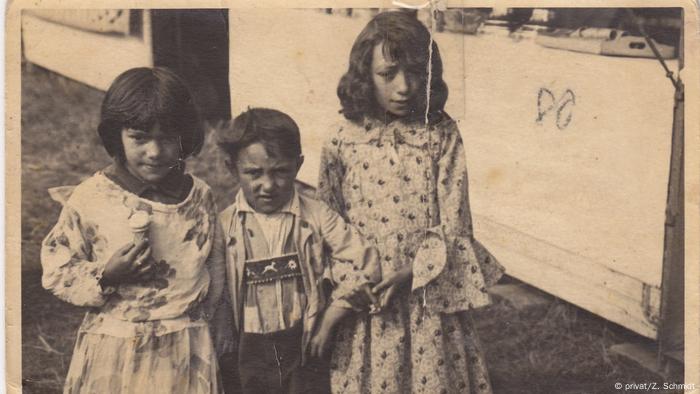
Schmidt was born Cäcilie Reichmann in 1924 in Thuringia, to a family of traveling performers who entertained people with their mobile cinema and music. "We were a happy family," she says in her book. The caravan that housed the Reichmanns on their summer tours was built by her father: "A real treasure," with the stove decorated with different images of birds and Meissen porcelain in the cupboard. Her brother bought and sold violins, while she and her mother went from door to door selling the finest lace.

She and her little brother Hesso went to school wherever they stopped along the way. In the winter, they went to the same school for months on end, in Thuringia or Bavaria. The teachers would send them to the back of the class. Sometimes fellow pupils would chase and taunt them. "Gypsies, gypsies," chants Schmidt 90 years later, as she recalls the jibes. As a child, she would defend herself with her fists.

Zilli (left) shared a happy childhood with with her cousins Willi and Bluma


When the National Socialists seized power in 1933, her father still felt safe: "They're only arresting criminals." He had done nothing wrong and believed he had nothing to fear. World War II began in 1939. Schmidt's big brother, Stifto, served in the Wehrmacht, in Russia and France. But the Nazi regime had no interest in just rewards. It was focused on its murderous and racist ideology.

With some relatives already deported to the Buchenwald concentration camp, the Reichmann family went on the road, traveling across Germany to France to stay one step ahead of the authorities. But they caught up with them: Zilli and her cousins were arrested in Strasbourg. "Crime: gypsy" read the police file.
'God helped me'

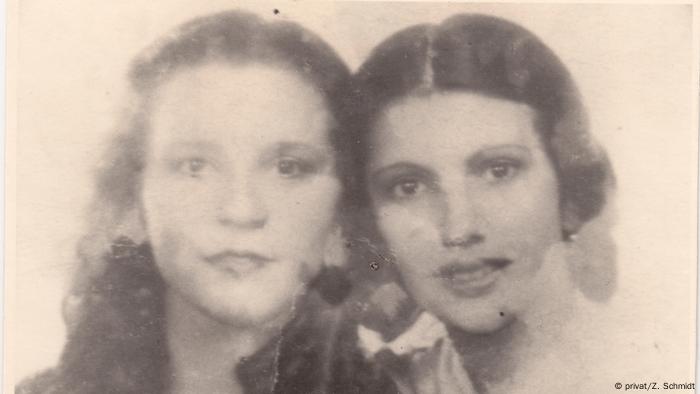
Schmidt was sent from jail to jail but managed to escape from the camp at Lety in the then German Protectorate of Bohemia and Moravia, in what is now the Czech Republic. But she was rearrested shortly afterward.

Schmidt (right) and her cousin Tilla were in Prague together in 1940

In March 1943, she was deported to Auschwitz, where an inmate tattooed the number Z1959 on her forearm. She was the first of the Reichmann family to end up in Auschwitz-Birkenau, in the "Gypsy family camp." Hunger, thirst, disease, violence and death were part of everyday life there. Schmidt said she stole to help keep the children and others alive — potatoes from the kitchen, boots from the clothing stores. Each time, she knew she was risking her life.

Twice, her name was on the list for the gas chamber. Yet twice, she escaped, she said. She survived three days of captivity in a cell with room only to stand. Three days with neither food nor water, nor a toilet. "While I was inside, I thought 'Screw you. When I get out, I'm going to keep stealing.'"

One time, she said, a sentry shot at her and only narrowly missed. Later, she and her cousin Tilla were able to escape again, from a satellite camp. She survived the war against all odds. "God helped me, I would never have managed alone," Schmidt said. "I'm still here for a reason." She is one of the last eyewitnesses.

REMEMBERING NAZI GENOCIDE OF SINTI AND ROMA
Serving the fatherland
Many German Sinti fought for Germany not only in the First World War but also in the Wehrmacht from 1939 on. In 1941 the German high command ordered all "Gypsies and Gypsy half-breeds" to be dismissed from active military service for "racial-political reasons." Alfons Lampert and his wife Elsa were then deported to Auschwitz, where they were killed.  PHOTOS 1234567891011

After the war, she suffered from depression. At first, her medication worked and she built a new life. Then came a sense of guilt for having survived when her loved ones were murdered. She and her husband Toni Schmidt, also a concentration camp survivor, applied in Munich for compensation for the time they were incarcerated in concentration camps.

After years fighting red tape and bureaucratic dead ends, Schmidt received a small amount of money: "But I was glad to get it. We were totally impoverished after the camps." It took until 1982 for the German government to acknowledge the racial persecution of Romani people.


Threat of Neo-Nazism

The Mannheim reading was attended by many young Romani women, who were visibly moved by Schmidt's story.


Lehmann, Gross and Schumacher, Romani women, were moved by Schmidt's story

Christina Schumacher was born in Siberia, Russia. She came to Germany with her parents. Verena Lehmann's grandmother was in Auschwitz. Verena herself spoke at the memorial in Berlin on August 2, 2020: "We children learned at an early age what a concentration camp is and what a Nazi is. I was especially terrified of Hitler." This was years after the war and the death of the dictator — the trauma of persecution will go from generation to generation, she says.

Many members of Romani communities hide their identity for fear of discrimination. Victoria Gross is a nursery school teacher. When an acquaintance took part in protests against the accommodation of a Sinti family in their building, she told her that she, too, belonged to the minority group. "That information is doing the rounds now," she said. Her daughter was no longer invited to birthday parties. "She was in tears." Her 10-year-old daughter asks: "Why did you tell them?"

Gross said hiding was not a solution. Her recipe is to promote networking in the minority community, encouraging mutual support and educating people. That, she said, is the reason why she does youth work.

Schmidt has lived through nearly a century of discrimination and alienation because she belongs to the ethnic minority of the German Sinti. "Dear children, you must stay strong," she urges. "The Hitlers are still agitating; they cannot be silenced."


The 96-year continued: "I want to be informed about what is going on in the world. I see it all on TV — that even the police have been infiltrated by Nazis." Schmidt still experiences fear. She fears the new breed of Nazi. "If they found out where I live," she said, "they would kill me."

This article was translated from German.

It was updated and republished.

Auschwitz survivor Zilli Schmidt: Fearing new Nazis today | Germany| News and in-depth reporting from Berlin and beyond | DW | 08.04.2021

Wednesday, January 12, 2022

ANTI-ROMA POGROM
The UK is heading towards authoritarianism: just look at this attack on a minority


The policing bill deliberately targets Roma, Gypsy and Traveller people, criminalising them if they move – and if they stop

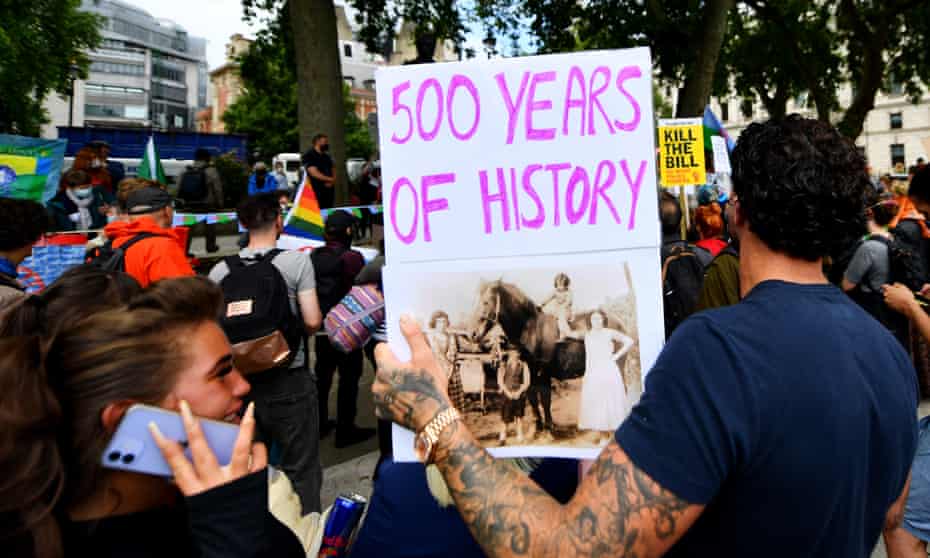
Gypsy, Roma and Travellers protest against the police, crime, sentencing and courts bill, London, 7 July 2021. Photograph: James Veysey/Rex/Shutterstock

George Monbiot
Wed 12 Jan 2022 

At last, we are waking up to the astonishingly oppressive measures in the police, crime, sentencing and courts bill, intended to criminalise effective protest. At last, there has been some coverage in the media, though still far too little. The Labour party is finally feeling some heat, and may find itself obliged to stop appeasing the Daily Mail and vote against the government’s brutal amendments in the House of Lords next week.

But as we focus on this threat, we’re in danger of forgetting something else buried in this monstrous bill. It’s the provision that turns trespass from a civil into a criminal offence, allowing the police to arrest people who are Gypsies, Roma and Travellers (GRT) and confiscate their homes, if they stop in places that have not been designated for them. Under the proposed law, any adult member of the group can be imprisoned for up to three months. Given that authorised sites and stopping places cannot accommodate the GRT people who need them, this is a deliberate attack on a vulnerable minority.

Put these elements together – the curtailment of protest and the persecution of a minority, alongside blatant corruption and barefaced lies, the bypassing of parliament and the new power in the nationality and borders bill enabling the government arbitrarily to remove people’s citizenship – and you see the makings of an authoritarian state. These measures look horribly familiar to anyone cognisant of 20th-century European history. But they also have deep roots in Britain’s peculiar brutalities.

The persecution of mobile people goes back to the 1349 Ordinance of Labourers, which ruled that those deemed to be “vagrants” could be whipped or branded with hot irons. Laws passed in the 16th century decreed that “rogues”, “vagabonds” and other “masterless men” could have their ears sliced in two or bored with a hot poker. If they still failed to return to their own parish (regardless of whether they had one), they could be hanged. A 1554 statute enabled anyone calling themselves “Aegyptians” (Gypsies) to be summarily killed.

Some of the brutal, pre-democratic legislation remains in force in England and Wales today. The 1824 Vagrancy Act is used by the police to arrest rough sleepers, still defined as “rogues and vagabonds”. In 2020, 573 people were prosecuted under this act. Some members of parliament sought to use the police bill to repeal this archaic law, but in November the government rejected their amendments.

Now homeless people find themselves in an even worse position. Certain councils, seeking to interpret confusing government rules, have decided that they will offer housing support only to verified rough sleepers. They have advised homeless people to start sleeping on the streets, so they can be picked up by outreach teams, who will then try to find accommodation for them. Of course, they might first be picked up by the police, whereupon they can be prosecuted under the Vagrancy Act. If they try to house themselves, by occupying empty buildings, they can be prosecuted for that as well, because David Cameron’s government turned squatting from a civil into a criminal offence.

Similarly, people who are Gypsies, Roma and Travellers have been deprived of places where they can lawfully stop, and then punished for the absence of provision. According to a study by the Community Architecture Group, between 1986 and 1993 roughly two-thirds of traditional Travellers’ sites, some of which had been used for thousands of years, were blocked and closed. Then, in 1994, John Major’s Criminal Justice Act granted the police new powers against GRT people stopping without authorisation. With a cruel and perverse twist, the same act repealed the duty of local government to provide authorised sites, and removed the grant aid funding these sites. Partly as a result, a recent study by the group Friends, Families and Travellers found that, of the 68 local authorities they surveyed, only eight had met their own identified need for Gypsy and Traveller pitches. Though there is a long waiting list of GRT households seeking authorised sites and stopping places, official pitches have declined by 8% in the past 10 years.

Now the new bill would enable the police to confiscate people’s vehicles (in other words their homes) on the mere suspicion of trespass. When their homes have been seized and their parents arrested, GRT children are likely to be taken into care. The police bill would deprive this minority of everything: homes, livelihoods, identity, culture, even their families.

And, like the homeless people trapped between the Vagrancy Act and the housing qualification, it would put people who are Gypsies, Roma and Travellers in an impossible position. To apply for an official pitch, you must demonstrate “proof of travelling”. But if you don’t have access to official pitches, travelling will put you outside the new law. In other words, it is not a particular behaviour that is being criminalised. It is the minority itself.

The new authoritarianism meshes with a very old one, that harks back to an imagined world in which the peasants could be neatly divided into villeins (good) and vagrants (bad), where everyone knew their place, geographically and socially. Of course, the demonisation of mobile people, whether Roma or asylum seekers, does not extend to the government ministers and newspaper editors who might shift between their pads in London and their second homes in Cornwall or Tuscany. It’s about the rich controlling the poor, as if democracy had never happened.


George Monbiot is a Guardian columnist

Saturday, June 20, 2020

Pause in fieldwork hurts scientists' plans for research, futures

By Anne Snabes JUNE 11, 2020 


U.S. NEWS

Sophia Horigan was supposed to study gypsy moths in a southwestern Michigan forest this spring and summer.

Instead, the University of Chicago PhD student is studying in her apartment, where she rotates between a wooden table and a grey armchair.

With her field research in Michigan shut down because of the pandemic, she has foregone conducting experiments on the gypsy moths and substituted using mathematical models to learn about diseases that kill the moths.

"It'll be helpful in the end, and I feel lucky that I am not at a total standstill, even though my fieldwork got canceled," she said.

Scientists in ecology, geochemistry and other fields often conduct field research in the spring or summer, but many of these research trips have been prohibited now due to the coronavirus pandemic. While the pause in field research has allowed scientists to spend more time on data analysis and reading academic papers, experts say that fieldwork is an important part of research in some fields, and the cancellation of this research could delay some students' completion of their PhD programs.

Diarmaid O'Foighil, chair of ecology and evolutionary biology at the University of Michigan, said a large part of his department's work takes place in the field.

"And it happens worldwide," he said. "So we have people working on ecosystems all over the planet. Every summer, there's a major exodus of faculty, postdocs, grad students and undergrads working in the field, and they can't do that."

In March, fieldwork at the University of Michigan was stopped, but starting May 8, researchers were allowed to return to the field in southeastern Michigan. On June 1, they could start conducting field research anywhere in the state.

But, O'Foighil said, only a small fraction of the department's workforce does field research in the state.

On Wednesday, the university allowed researchers to start doing fieldwork anywhere in the United States. They have to receive permission from their college to do so, though.

To fill their time away from the field, some scientists have turned to their computers. Horigan is learning the programming language in which her model is written and grasping how to run the model.

Horigan said the gypsy moth populations grow rapidly and crash once every nine or 10 years. A virus and a fungus both contribute to the demise of the insects. Mathematical models allow researchers to see how a parameter, like precipitation, affects another variable, like the number of moths. Horigan said the parameter she is studying is a moth's susceptibility to the fungus if it has already been infected by the virus. She uses her model to inform her field research.

"You can see what values of different parameters actually have an impact that is interesting, and then you can take those numbers and put them into your fieldwork," she said.

Greg Dwyer, Horigan's adviser, said that normally his graduate students collect data in the field and then incorporate it into a model. Now, his students are running their models before they gather data in the field, he said.

Allie Balter, a geochemistry PhD student at Columbia University, was supposed to go to Alaska for two weeks in July to participate in the Juneau Icefield Program.

Balter would have skied on the icefield, collecting rocks with undergraduate students. She said the rocks were once in or beneath glaciers, and scientists determine the age that the rocks became exposed to air so they can find out when the glacier left that area. She also would have taught classes to the students. She said she's "really bummed" that her field research trip was canceled.

"I feel like, for me, fieldwork is a big reason why I got into the field I got into, like I really love doing fieldwork," she said.

Balter added that she makes interpretations in the field. She observes the sequence of glacial retreat events when she's in the field, she said.

Instead of doing research on the icefield, she will take her qualifying exam, required for all PhD students, in early July, three months later than the original test date, which was postponed because of the coronavirus pandemic.

During the pandemic, she said she has been writing, analyzing data and reading papers. She said she skims abstracts of papers in her field or similar fields.

"I think it just gives me a better breadth of knowledge of both my field and like surrounding fields so that I can make connections and inferences from my data better," she said.

Balter added that it also allows her to have more in-depth conversations with scientists who do not study the same subject as hers.

Virginia Edgcomb, an associate scientist with tenure at Woods Hole Oceanographic Institution, also has spent time this spring writing papers and editing as well as writing grant applications.

Edgcomb's field research has "come to a complete stop for the time being." She planned to go on a field research trip on a boat in August, which will probably be pushed back to spring 2020. She said she also she studies denitrification -- a process that removes nitrogen -- in sediments beneath oyster aquaculture farms, but the town where the research takes place, Falmouth, Mass., canceled its aquaculture operations this summer.

"Every single project is set back," Edgcomb said.

The University of Michigan's O'Foighil said the halt in field research "impacts in particular graduate students who need to finish their work to finish their thesis projects" as well as post-doctoral students who are funded by grants.

Katie Dixon, an ecology and evolution PhD student at the University of Chicago, said she was supposed to go to Missoula, Mont., in the spring and summer to study a virus that infects Douglas-fir tussock moths. The third-year PhD student had been planning on conducting field research for two more summers. If she continues with that plan, she will have to stay in her PhD program for a sixth year.

"And that was not in my plan before," she said. "And then funding is always an issue. ... But I'm hoping people will be flexible, like this happened to a lot of people."

John Freudenstein, the chair of Ohio State University's Department of Evolution, Ecology and Organismal Biology, also said some PhD students in his department think they may need additional time to finish their PhDs.

The pause in field research also affects assistant professors, who are trying to earn tenure. To compensate, the University of Michigan's College of Literature, Science, and the Arts and other academic institutions have given these professors an additional year to earn tenure.

Not all field research was canceled this spring and summer, though. Douglas Buhler, Michigan State University's assistant vice president of research and innovation and the university's director of AgBioResearch, said some agricultural research at Michigan State has been allowed since the start of the pandemic.

Stephen Hsu, the university's senior vice president for research and innovation, sent a letter to faculty on March 23 saying that essential research activities could continue, including "seasonally dependent agricultural and environmental field research with critical implications for human and animal health, as well as food security."

Horigan said that field researchers are used to their plans changing.

"I think that ecologists and field researchers in particular are fairly used to the fact that nature is dynamic, and nothing will ever go to plan, really," she said. "So, hopefully, I think a lot of us are a lot more flexible and creative about what to do when that happens, and so I think it's kind of built some resilience for things like this."


Wednesday, July 10, 2024

Ethel Brooks: The first Roma professor in the US

Nadine Mena Michollek in Washington
DW
July 8, 2024

As a child, Ethel Brooks was told, "Gypsy, go to the back of the class," but despite the racism she experienced growing up, she became America's first Roma professor.


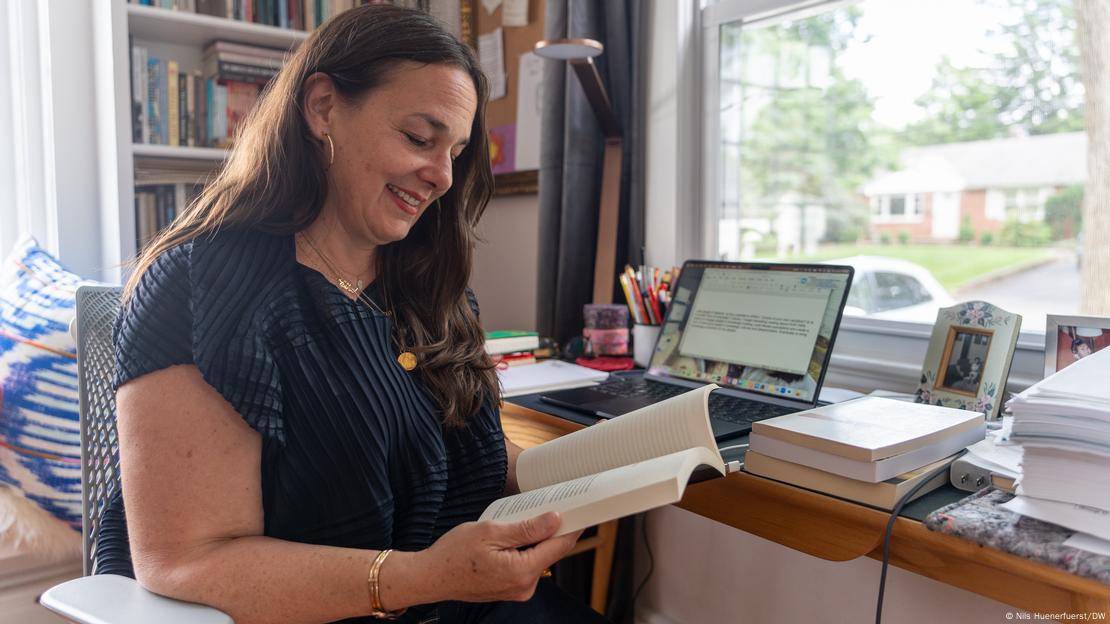
Ethel Brooks is a professor and chair of Women's, Gender and Sexuality Studies at Rutgers University, New Jersey
 Nils Huenerfuerst/DW

News about Ethel Brooks' success spread quickly within the Roma community in Europe: "Have you heard?" people would say, "We have a Roma professor in the US!"

There are perhaps a handful of Roma professors in the world, and one of them is Ethel Brooks, the first in the United States.

Any Roma person who makes it to the top is well known in the Roma community: Livia Jaroka, the first Romani woman in the European Parliament, for example, or Nizaqete Bislimi-Hoso, a successful lawyer in Germany or Esma Redzepova, who is often called the queen of Roma music.

Racism is a barrier


These Roma are well known within the community because racism against Roma often makes it impossible to rise through the ranks. Ethel experienced this racism herself firsthand.
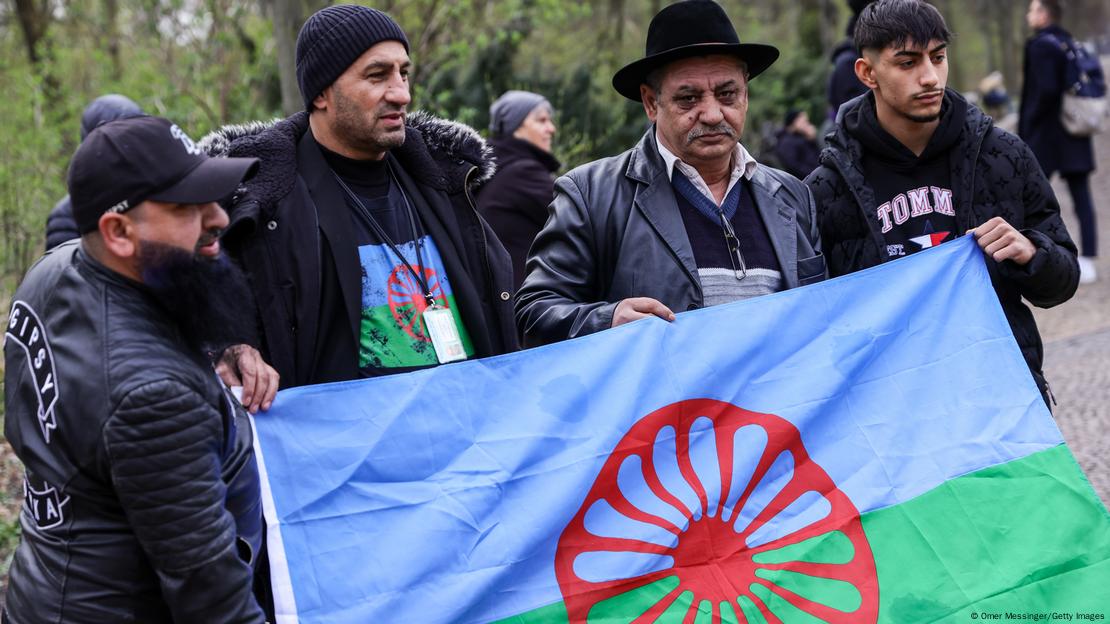
Roma often face discrimination on various levels — not only in the US, but throughout Europe, too
Omer Messinger/Getty Images

"There were many times my fellow schoolmates would say, 'oh, Gypsy, go to the back of the class,'" she says, adding that back then, although it made her feel angry and hurt inside, she never expressed these feelings out loud.

When Ethel speaks, there is no anger in her warm voice. Yet despite the warmth, the sadness is evident.


From trailer to one of the US's top universities


It's one of those hot, cloudy, humid summer days at Rutgers University in New Jersey, an old college campus that gives off Gilmore Girls, Yale and Ivy League vibes. The rain has just stopped. It's quiet. There are no students. The summer break has just begun.

Ethel Brooks has come a long way: The woman who grew up in a trailer is now standing smiling in front of an old black-and-red metal gate at the US university where she works.

Ethel's mother, aunts and uncles weren't even allowed to go to school. Back then, she says, the municipality said "those gypsy children" were not going to school anymore.
200 years in the US

Ethel's home office is flooded with light. There are large, colorfully patterned cushions on window seats. Her home is as picturesque as an Airbnb commercial or a house in an Instagram reel. Black and white pictures of tall, muscular horses hang on the walls.

'I want to create critical knowledge that not only supports us Romani people, but marginalized people everywhere,' says Ethel Brooks
Nils Huenerfuerst/DW

Ethel's family is from Massachusetts. They have been in the US for 200 years and used to trade horses between the US and Europe. Today, her family lives in Massachusetts and New Hampshire, where Ethel grew up.

Racism still present

There are an estimated one million Roma in the US. Many US Americans don't know much about Roma people. Some don't even know that Roma people actually exist and are a real community.

Nevertheless, many American sitcoms and movies reproduce Roma stereotypes, often in jokes, saying that Roma people steal, do fortune-telling and are witches.

Ethel says that there is racism, especially where larger communities live. "There's a whole kind of thing about 'don't get your car fixed by these guys because they're gypsies and they'll screw you over,'" she says.
From India to Europe

Racism against Roma has been around for hundreds of years. Experts say that Roma originally migrated from India — probably fleeing violence and for economic reasons — and arrived in Europe sometime around the year AD 1000. Linguists support this theory because the old Indian language Sanskrit is the basis of the Roma language "Romanes."

It is estimated that there are about 12 million Roma in Europe today.


The Roma community is diverse. Its members can be found all over the world, with different traditions and religions and speaking different dialects.

But despite these differences, Ethel feels that the global Roma community is united by one thing: "The ways in which we respect and care for our elders and the ways in which we adore our children," she tells DW.

She stresses that it is all about caring for each other, providing mutual support and, as she says, "really feeling like all of us are in this together, sometimes against the world, because we know what it means as Romani people to experience racism and discrimination and marginalization."

Support from her family

Ethel also got this kind of unconditional support from her family. She leafs through a pile of old documents that includes papers, photo albums full of black-and-white pictures and local newspaper articles from her high school years. Her parents collected all these things because they are a record of Ethel's achievements: spelling bees, competitions, speeches and prizes.

Her parents took her to the local library and wanted her to do well in school. As a university student, Ethel's father even went without medicine so the family would have money to buy her books. She didn't know this until after he died.

Ensuring accurate knowledge about Romani people


The walls of Ethel's office are lined with bookshelves. Here and there are small picture frames with old family photos of grandmothers, aunts and uncles.

Ethel Brooks is a professor and chair of Women's, Gender and Sexuality Studies at Rutgers. She researches on topics such as critical political economy, globalization, feminist theory, nationalism and post-colonialism.


She told DW that she got her PhD and became a professor to create a pool of accurate knowledge because when she started out as a university student, she couldn't find such information about the Roma community.

Books full of racism

"The first fall holiday, I brought home stacks of books about Roma to my family," she says. Ethel sat down with her aunt and mother, and they began to read together. "I said to them: We are doing it wrong. We don't know how to be Romani, because look, these books are saying you're supposed to do it this way."

Her aunt looked at her and said: "If I don't know how to be Romani, nobody does. These books are wrong." The books were full of racism and stereotypes.

As a professor, Ethel wants to change that. "I want to create critical knowledge that not only supports us Romani people, but marginalized people everywhere," she says.
Appointed by President Obama

Racism against Roma reached its peak during the Nazi genocide of World War II. Germany only recognized the genocide of the Sinti and Roma in the 1980s.

Former US President Barack Obama appointed Ethel to the United States Holocaust Memorial Council.

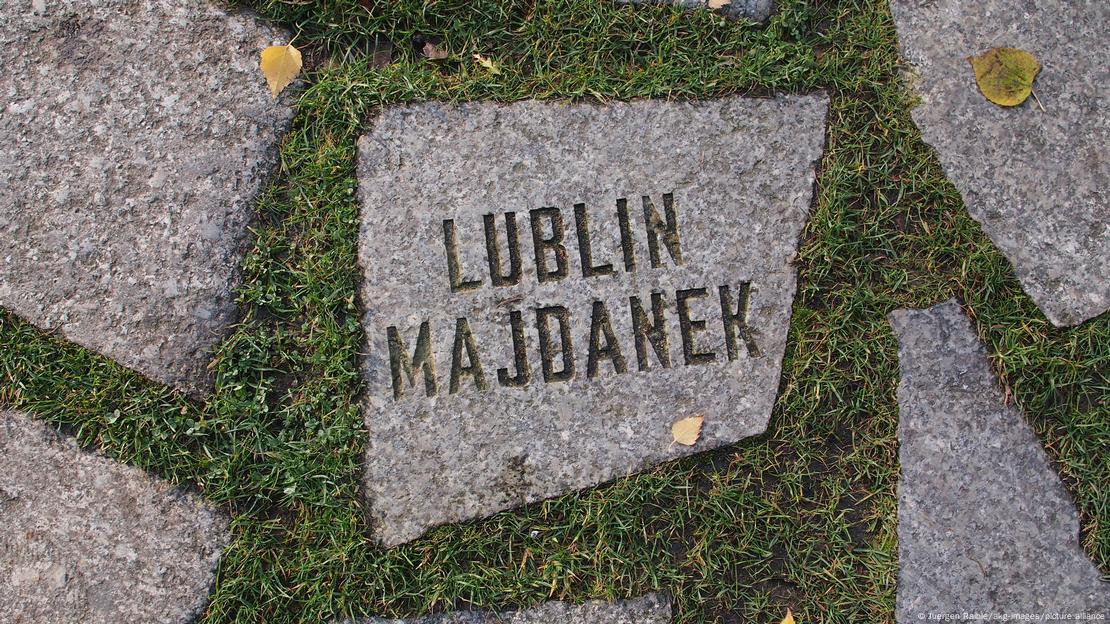
Stone at the Sinti and Roma Memorial in Berlin engraved with the words 'Lublin Majdanek' — a former concentration and death camp near Lublin in Poland, where many Roma and Sinti were killed
Juergen Raible/akg-images/picture alliance

Ethel says this was important not only for her, but for Romani people in the US and for Sinti and Roma worldwide. She says that this appointment was a way of saying: "Here we are, and we're finally able to recognize the kinds of losses that our people suffered under National Socialism, in the Holocaust, at the hands of the Nazis."

Ethel works at a university attended by many students from marginalized groups. She knows what that feels like and wants to empower these students to claim their place in the world.

"Understanding who we are, can make us so powerful," she says. "Survival for us is something that defies the logic of history, the trajectories that are understood by history. It's resistance. Resistance is something we can carry on, that we take from our ancestors and that we give to our children."

Edited by: Aingeal Flanagan