Day of the Seafarer: Labor Rights and Safety at Sea
(Article originally published in Mar/Apr 2026 edition.)
Every year, the maritime industry takes a pause to celebrate the essential work of 2.5 million seafarers, without whom world trade would not be possible. Men and women from every nation keep the 74,000 vessels of the merchant fleet moving, enabling the movement of 90 percent of all traded goods. Without their behind-the-scenes efforts, the smooth-running supply chains for food, energy, industrial supplies and consumer products would grind to a halt. It takes them away from home for up to 11 months at a time, and it exposes them to inherent risks that - even when appropriately managed - have always been a part of life at sea.
"To all seafarers: thank you. Your work is essential to the functioning of the global economy and the daily lives of people around the world. While it may not always seem visible, your safety, security and welfare remain our highest priority," said IMO Secretary-General Arsenio Dominguez.
Working through risk
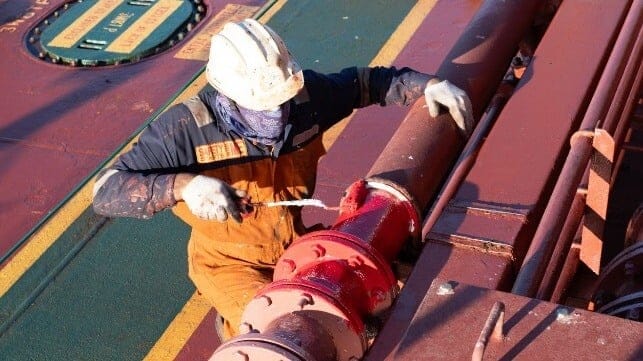
Seafaring is tough work, and though the data show that it has gotten much safer in recent years, seafarers take on an inherent level of risk when they step aboard - as illustrated by new numbers from Gard. The leading insurer took in about 850 claims for crew injuries in 2025, and the pattern shows that everyday tasks are responsible for a large share of the total. These are familiar occurrences: accidents during mooring, cargo movement and maintenance are among the most common. Simple slips and falls account for fully 29 percent of the total. Most incidents occur in the morning, at the start of the day-work shift, and most occur early in a seafarer's rotation, during the first few months on board. These risks do not go away with age and experience.
"Accidents causing injuries do not only happen to inexperienced crew or during unusual situations. They often occur during normal work when experienced crew carry out familiar tasks," said Gard chief claims officer Christen Guddal. "Ultimately, the data reminds us that this is less about human failure and more about the realities of human limitations in demanding operational environments."
The best operators in the industry make great efforts to manage those risks and ensure that the crew's well-being is taken care of; labor regulations help incentivize that effort. This year marks the 20th anniversary of the adoption of the Maritime Labour Convention 2006 (MLC), the comprehensive regulation for seafarer rights, and the International Chamber of Shipping is taking the opportunity to highlight the MLC's advantages - and the problems that arise when it is sidelined or ignored.
"Where the MLC, 2006 is fully implemented, shipping is safer, more predictable and more sustainable. Where it is weakened, not applied or applied inconsistently, both seafarers and fair competition become more vulnerable," ICS cautioned.
To strengthen the convention, ICS called for its full ratification by all IMO member states, and its full implementation in practice. The MLC offers seafarers a minimum wage floor, guarantees of a positive shipboard culture, freedom from abusive recruiting practices, and protection from abandonment - when enforced.
"We are against the backdrop of heightened geopolitical tension, climate transitions, and systematic pressure on global supply chains, which can have grave knock-on effects to our seafarers. They are vulnerable to decisions taken outside of the maritime sector, weakened or inconsistent applications of the MLC, and being placed in dangerous situations despite doing everything correct in their job," ICS said. "On this Day of the Seafarer, [ICS] calls on political leaders, policy makers, and senior public officials, including those outside traditional maritime portfolios, to recognize shipping and seafarers as essential to socio-economic global stability."
Given the internal and external risks, recruitment and retention can be an issue in shipping, particularly for well-trained officers. With the constant growth of the fleet, demand for STCW-trained officers has risen 23 percent in the last five years. According to ICS and BIMCO, the industry now faces a shortage of officers, and will need more than 100,000 more of them in the workforce by 2030 as the fleet continues to expand. To meet demand, the associations predict that shipping will need to add 23,000 officers and more than 8,000 ratings every year across the fleet.
"The recruitment, training and retention of the seafarer workforce will be crucial to ensuring that our industry is prepared for the future. We have a big collective task ahead of us in working with all stakeholders and the countries that are the biggest suppliers of the seafarers operating our ships," said BIMCO Secretary General & CEO David Loosley.
The opinions expressed herein are the author's and not necessarily those of The Maritime Executive.
Deepening Crisis as Global Shipping Grapples with Workforce Shortage
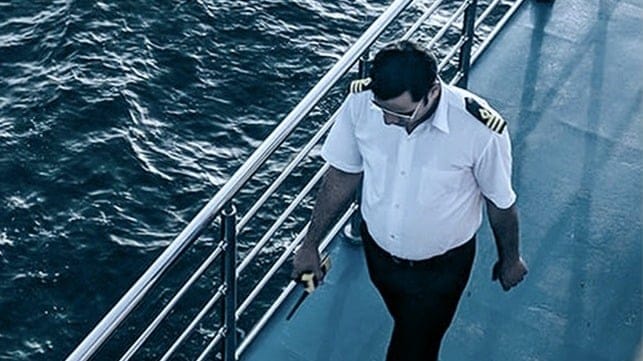
The global shipping industry is staring at a deepening workforce crisis over the coming years, owing to the fact that the recruitment of certified officers and seafarers has failed to keep up with the growth in fleet numbers. A new report warns that the problem is likely to grow more acute unless actions are taken.
The trade group BIMCO and the International Chamber of Shipping (ICS) released their five-year assessment on the state of the global shipping workforce. They are calling for continued investment in both recruitment and training, coupled with retention efforts, saying that the workforce gap risks growing at a time when the industry needs skilled seafarers more than ever.
The Seafarer Workforce Report 2026 paints a picture of an industry grappling with perennial workforce shortfalls, a trend that is bound to continue in the coming years, exacerbated by an unprecedented growth in fleet. Compared to 2021, when the report was last published, the workforce crisis seems to be worsening, with the 2026 report indicating that the global shipping industry will need an additional 113,735 officers by 2030 to operate the world merchant fleet. In 2021, the trade group and union had predicted the industry would be in need of 90,000 officers by 2026.
The latest report provides a comprehensive overview of the supply and demand imbalance for certified seafarers, showing that the global merchant fleet has not made progress in tackling workforce crises. It continues to grapple with persistent challenges like high turnover, an aging seafarers’ population, and a lack of gender diversity. The crisis for the industry is being heightened by geopolitical tensions, specifically the evolving situations in the Strait of Hormuz, where over 11,000 seafarers are stranded.
“As shipping continues to evolve, attracting more people to careers in maritime is essential. We must continue our long-standing efforts to engage with young people early and build a strong pipeline of future talent. At the same time, retaining and developing our existing workforce is equally important,” said Thomas A. Kazakos, ICS Secretary General.
According to the report, an estimated 2.57 million seafarers are currently serving the global fleet, operating 85,148 merchant ships. Of the total, slightly over a million are officers, while 1.51 million are ratings. Notably, while the number of officers and ratings has increased by 22 percent and 47 percent, respectively, a huge disparity continues to be noticeable in the industry. This emanates from the fact that this year, the industry will see a shortage of 39,100 officers and a surplus of 56,890 ratings.
Going by the rate at which the global merchant fleet is growing, the report estimates that an additional 22,747 officers and 8,475 ratings will need to join the workforce each year until 2030 to meet the future demand. This represents an average annual increase of two percent and 0.5 percent, respectively. The increase is, however, minimal compared to the past five years, in which demand for certified seafarers increased by 35 percent.
The report goes on to highlight that general cargo ships, bulk carriers, and cruise ships will be the main segments driving the demand for both officers and ratings.
“The recruitment, training, and retention of the seafarer workforce will be crucial to ensuring that our industry is prepared for the future,” said David Loosley, BIMCO Secretary General & CEO.
The report shows that in 2026, five countries, the Philippines, India, China, Russia, and Indonesia, were the biggest suppliers of the global seafarer workforce at 56.2 percent of the industry’s total. In terms of nationalities, the Philippines, Ukraine, India, Romania, and Poland account for the biggest workforce.
Age and diversity continue to be major issues in the industry. The report shows that compared to 2021, the average age of officers serving at the management level has decreased slightly, while the average age of operational level officers and support level ratings has coalesced around 31–40 years. In terms of diversity, the increase in supply of female seafarers is mainly concentrated among officer positions.

No comments:
Post a Comment