Showing posts sorted by date for query ERIC WILLIAMS SLAVERY AND CAPITALISM. Sort by relevance Show all posts

Wednesday, August 05, 2026

Archbishop Mullally ends Africa tour with calls for healing from church’s role in slavery
NAIROBI, Kenya (RNS) — The trip marked Mullally's first visit to Africa and highlighted the Church of England's controversial reparations fund to address its historic links to slavery.

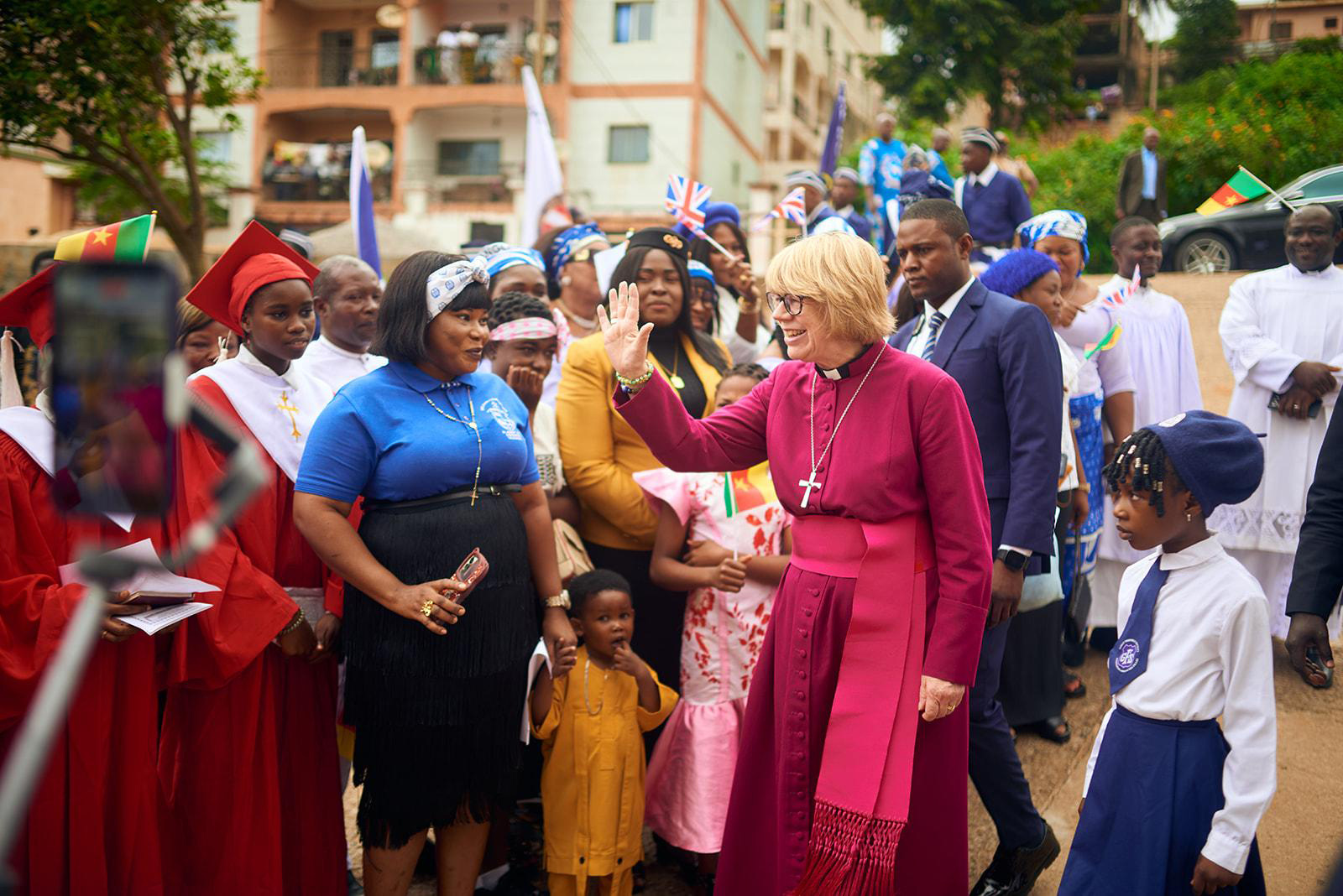
Archbishop of Canterbury Sarah Mullally arrives at a farewell service in Yaoundé, Cameroon. (Kini Wolfgang/Lambeth Palace)

NAIROBI, Kenya (RNS) — After renewing her commitment to a controversial £100 million Church of England fund apologizing for the church’s historical ties to the slave trade, Archbishop Sarah Mullally ended her 10-day Africa tour Tuesday (Aug. 4) calling for peace and healing.

“Our world cries out for healing. Millions of people live in fear. Millions are displaced. Hundreds of children do not have access to school,” said Mullally in a sermon on Aug. 4 from the Cameroonian capital of Yaounde. “I heard you speak of all these things, and I know the people of Cameroon have suffered far too long.”

The trip marked Mullally’s first visit to Africa since her March 25 installation, when she became the first woman to serve as archbishop of Canterbury. She is also the first in her role to visit Cameroon.

Mullally visited Ghana from July 26-31 and Cameroon from July 31-Aug. 4. While Ghana is regarded as one of West Africa’s more stable democracies, Cameroon is grappling with armed conflict between government forces and militant separatists identifying with the historically sidelined Anglophone community. 

The archbishop praised the peace-building partnerships between the Anglican Church, the Catholic Church and other denominations and faiths in Cameroon and emphasized that peace required genuine and inclusive dialogue with everyone at the table.

“That requires courage, it requires strength, and it requires commitment at every level of society, but particularly those in authority,” said the archbishop.

The peace message capped a trip that also focused on the Church of England’s efforts to address its historic links to the transatlantic slave trade. During the Ghana leg of her visit, Mullally defended the church’s £100 million reparations fund while visiting one of West Africa’s most significant slave forts, the Cape Coast Castle that came under British control in the 1660s.

“Part of the Christian belief in repentance is about action, so we are putting in place action to support those communities that feel the legacy of the slave trade,” Mullally said from the slave fort on July 30, according to the BBC

The church’s reparation fund, first announced in January 2023, followed an independent audit revealing that an 18th-century church endowment called Queen Anne’s Bounty had heavily invested and profited in a slave-trading company. The church’s missionaries also ran slave plantations in the Caribbean to fund their work; some clergy owned slaves; and the church pocketed large donations from slave traders. 


The archbishop toured the dungeons where enslaved Africans were kept and went through “the door of no return” traders forced the slaves through before shipping them to the Caribbean, Brazil and North America. Atop the dungeons sits an Anglican chapel. 

Mullally said that, in seeing the horrific conditions thousands of people were kept in, it was impossible not to feel the weight of the immense evil that drove the transatlantic slave trade. 

“I pray not only in lament for the Church’s involvement in the slave trade, but also for hope — hope that the God of healing can bring justice and reconciliation to all who are still impacted by its legacy,” she said after visiting the castle.

The archbishop also preached at an all-women-led clergy service in Accra on July 26, met Ghanaian President John Dramani Mahama on July 27 and visited the king of the Ashanti, Otumfuo Osei Tutu II, on July 29. 

The fund is meant to be distributed through 2032 for investment, research and aid programs supporting communities affected by the slave trade. But the church has not yet made details clear about who will receive what funds or how.

Retired Anglican Bishop Julius Kalu of Mombasa questioned how beneficiaries of the fund would be found, since people impacted by the slave trade died a long time ago.

“That is my concern. Who is going to benefit and how are they going to be identified?” he said.

Mullally’s recommitment to the fund has also ignited sharp criticisms in her home country, where some opponents have disputed the level of the church’s complicity, questioned ideological motivations behind the decision and raised legal concerns, arguing the fund is taking away money from parish churches. 

But in Africa, many welcome the effort and hope it will encourage other churches to work toward reparations for slavery and colonization.  

“This is a welcome and necessary acknowledgement, but history teaches us that recognition alone is not justice,”  said Jackie Makena, a young theologian from the Methodist Church in Kenya. “Genuine repentance requires repair.”

Makena said the legacies of slavery and colonialism were inseparable and were not confined to history.

“They persist in structural injustices like economic disparities and unequal global power relations that continue to shape inequality today,” she said, adding that reparation was not about assigning perpetual guilt. “It is about taking shared responsibility for healing the enduring consequences of historical injustice.”

Kalu also described the fund as a good effort. “It is also a way of saying: ‘Yes, we did it, accepting we did it, but we apologize for this and (accept) this was wrong,’” he said. “I saw the damage that the slave trade did in that region, and the scars are still there and can still be seen very clearly in Ghana, more than anywhere else.”

The African Union and other continental organizations have pushed for moral accountability, investment and return of stolen artifacts. The movement gained a boost in March, when the United Nations declared the transatlantic slave trade “the gravest crime against humanity.” 

According to Adebayo Anthony Kehinde, an evangelist in the Nigeria African Church, ministry leaders remained largely unconvinced that the £100 million commitment was sufficient.

“While many of them welcome and acknowledge the apology, they instead consider the amount grossly inadequate, considering the quantum of the Church of England’s involvement in transatlantic slavery,” Kehinde said.

The Church of England’s independent oversight group that conducted the audit had recommended £1 billion or more for reparations to reflect the moral gravity of slavery and the wealth of the church. 

Kehinde also urged European churches to reassess statues and plaques that commemorate individuals who gained substantial wealth from slavery.

“They should consider providing historical context or, when suitable, relocating or renaming these tributes to demonstrate their dedication to reparative justice,” he said.


LA REVUE GAUCHE - Left Comment: Search results for ERIC WILLIAMS SLAVERY AND CAPITALISM

Sunday, April 26, 2026

Reparations for Slavery: a Legitimate Struggle


 April 24, 2026

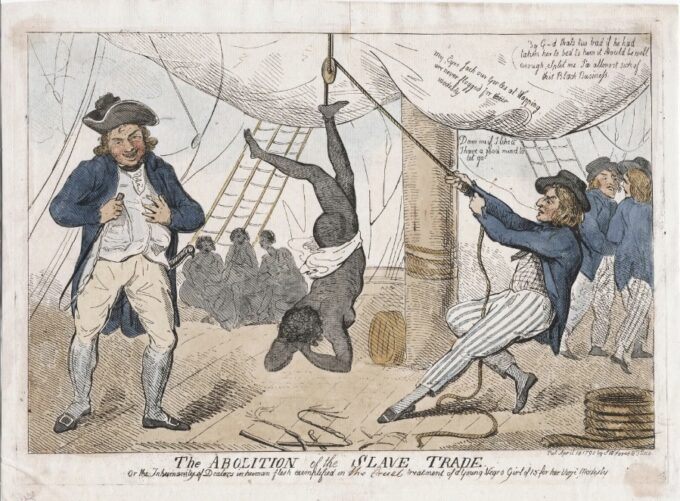
The abolition of the slave trade, or, The inhumanity of dealers in human flesh exemplified in the cruel treatment of a young negro girl of 15 for her virjen [sic] modesty. Illustration by Isaac Cruikshank, 1792. British Museum catalogue.

When one person hurts another, common sense dictates that the person should apologize and, preferably, make amends for the harm they may have caused. Apologize, make amends, and ensure it won’t happen again. These seem like basic rules of coexistence. Coexistence among people, but also among sectors of a society and among entire nations. History shows us that coexistence is not the norm. Colonialism and exploitation have been present, but the perpetrators of these crimes rarely acknowledge them.

The colonization of what is now called the Americas (beginning in 1492) is an example. Europeans invaded, appropriated lands that did not belong to them, murdered millions of its inhabitants, and subjected the rest to servitude. Almost immediately, the kidnapping of Africans began; they were forced into slave labor, which generated immense profits that produced the ‘primitive accumulation’ discussed by Karl Marx in Capital and paved the way for the development of capitalism.

Europe became the dominant power, and the standard of living it enjoys today is the product of wealth violently extracted from our lands, from Africa, and later from the rest of the world. A veritable plunder to which the U.S. later joined. They have, as the revolutionary Thomas Sankara said, a blood debt to the peoples of the world.

Recently, the United Nations General Assembly adopted Resolution A/80/L48, dated 25 March 2026, which ‘declares the trafficking of enslaved Africans and racialized chattel enslavement of Africans as the gravest crime against humanity.’ The resolution goes beyond the symbolic and highlights the nature of the crime in terms of the rupture it caused in world history, the magnitude and duration of the crime, its systemic character (institutional, normative, logistical), its brutality, and its lasting consequences expressed in ‘racialized regimes of labour, property, and capital.’

This resolution brings to the table a crucial issue such as reparative justice, by urging states that benefited from slavery to take concrete measures that include not only formal apologies but also financial compensation and the immediate return of cultural property, works of art, manuscripts, documents, artifacts, etc., without hindrance and at no cost to their countries of origin. The Resolution reaffirms that, due to its gravity, this crime is not subject to a statute of limitations.

The Resolution was approved by 123 votes in favor—primarily from Africa, Latin America, and the Caribbean—3 votes against from the U.S., Israel, plus the shameful vote of Argentina, and 52 abstentions, including the entire European Union, Canada, Australia, and Japan. As might be expected, the colonizers placed themselves on the dark side of history. Europe, in particular, argued that reparations could not be demanded for something that was not illegal at the time.

There can be no greater cynicism that of do not understand the concept and that, throughout history, have taken actions in favor of the perpetrator—what we might call ‘reverse justice.’ During the 19th century, for example, England provoked two wars in China known as the Opium Wars. Essentially, England sought to flood China with drugs to weaken its people and reap economic benefits. Even so, after the wars, England, the aggressor country, forced China to pay ‘reparations’ equivalent to $736 million today to cover the costs of the war. Part of the reparations was also intended to compensate for the opium destroyed by Chinese authorities and to indemnify the merchants—that is, the drug traffickers—for the losses they suffered.

Another case, equally outrageous, is the payment France forced Haiti to make to compensate for the damages caused to France by the loss of its colony. Haiti was paying a debt—clearly illegal—from 1825 to 1947. In 2003, then-President Jean Bertrand Aristide demanded that France return $21.7 billion to Haiti. The following year, he was deposed by a military coup supported by France and the U.S.

Resolution A/80/L48 acknowledges the crime, the victims, and the perpetrators, and urges the perpetrators to make reparations for the crime committed. It calls for achieving true restorative justice. This is not a new development, as the struggle for such recognition has been brewing for decades in various forums, including multilateral ones. Thus, in 1973, the United Nations (UN) proclaimed the Decade for the Elimination of Racial Discrimination, which was extended in 1983 and 1993. Little concrete progress was made during those decades, so in 2001, the UN organized the World Conference against Racism, Racial Discrimination, Xenophobia, and Related Intolerance in the city of Durban, South Africa. The Conference produced a Final Declaration and a Plan of Action that serve as a comprehensive framework for addressing racism and discrimination and include measures to combat them, ranging from calls to reform legislation, concrete actions to protect victims of racism and discrimination, education and health plans, measures to combat poverty, resources for victims, and more.

In 2013, given that the objectives set forth in the Plan of Action had not been achieved, the UN proclaimed, in its Resolution 68/237 of 23 December, the International Decade for People of African Descent, effective from 1 January 2015, to 31 December 2024, extended for an additional 10 years until 2034 (Resolution A/79/193).

Specifically regarding reparations, a notable development in 2013 was the creation of the CARICOM Reparations Commission, which produced a 10-Point Plan outlining concrete actions to demand reparations from European governments for the genocide perpetrated against the 15 million indigenous people of the Caribbean and for the multitude of ‘crimes against humanity,’ slavery and its legacies, which were committed against enslaved Black or African people.

In this same context, on 24 March 2018, the International Meeting on the Decade of Afro-Descendants was held in Caracas, during which the Venezuelan government signed the decree for the National Decade for Afro-Descendant Peoples, in order to implement actions in this regard. In May 2018, the First International Meeting on Reparations was organized, where Venezuela committed to promoting lines of research on the legal, multilateral, political, historical, and philosophical aspects of the issue. Following this, Venezuela has organized three International Seminars on Reparations, and the Ministry of People’s Power for Science and Technology has funded research projects addressing this issue.

The struggle for reparative justice is a legitimate struggle that unites the peoples of the Global South with a shared history of colonization and that unites the racialized and discriminated peoples of the world. Ghana promoted the adoption of the resolution declaring the transatlantic slave trade the most serious crime against humanity. CARICOM proposed a 10-point plan to implement reparations; Venezuela has made progress in creating institutions that fight for this right and has promoted research to inform public policies on the issue. Sharing these experiences is of vital importance. Demanding reparations—that is, recognition of the crime, compensation in whatever form, and guarantees of non-repetition—is a cause of the Global South and a cause worth fighting for.

This article was produced by Globetrotter.

Guillermo R Barreto is Venezuelan and holds a PhD in Science (Oxford University). He is a retired professor at Simón Bolívar University (Venezuela). He was Deputy Minister of Science and Technology, President of the National Fund for Science and Technology, and Minister of Ecosocialism and Water (Bolivarian Republic of Venezuela). He is currently a researcher at the Tricontinental Institute for Social Research and a visiting fellow at the Center for the Study of Social Transformations-IVIC.

LA REVUE GAUCHE - Left Comment: Search results for SLAVERY


Sunday, April 05, 2026

From Ghana to France, UN slavery resolution meets with mixed reactions

A UN resolution recognising the transatlantic slave trade as one of the gravest crimes 
against humanity has reignited debates on reparations, responsibility and historical memory. Reactions were mixed in Ghana, where the bill originated, while France's decision to abstain has sparked criticism from its own lawmakers.


Issued on: 05/04/2026 - RFI

A display at the Caribbean Centre of Expression and Memory of Slavery and the Slave Trade, in Point-a-Pitre, Guadeloupe, in May 2015. © Nicolas Derne / AFP

Despite opposition from the United States and widespread abstentions, the United Nations last week adopted a resolution recognising the transatlantic trade and enslavement of Africans as the "most serious crimes against humanity".

While some see the vote as a symbolic step towards justice, others question its tangible impact, both in West Africa and across the wider African diaspora.

The resolution singled out transatlantic slavery's duration and brutality – as well as present-day consequences including "the persistence of racial discrimination and neo-colonialism".

It did not mention other slave routes in Africa, including across the Sahara Desert or Indian Ocean.

The text did not explicitly demand reparations, though it "encourages member states to support initiatives aimed at reparatory justice".

The head of African Union, Mahamoud Ali Youssouf, said the resolution "marks an important step toward truth, justice, and healing, and reinforces the urgent need to address the enduring legacy of slavery".

Mixed reactions

West and central Africa were devastated by the transatlantic slave trade, which from the 16th to 19th century saw more than 15 million men, women and children shipped to the Americas to work in brutal – often deadly – conditions.

Ghanaian President John Mahama spearheaded the push for UN recognition. In the streets of Ghana's capital, Accra, the vote was met with a mixture of joy and scepticism.

"It's not just a historic moment for us as a country, but it also validates the suffering of our ancestors and opens the door for justice," student Abigail Selikem Teye told French news agency AFP.

Farmer Baba Amanba told RFI that he "doesn't feel very connected" with the debate. "I don’t think these reparations will have any positive impact on the lives of ordinary Africans."

Richard Kofi Boahen, a civil servant, called for other injustices to be addressed. "During the slave trade, we were looted — our artefacts, our symbols, everything that represented Africa," he said.

"Even today, some countries like Britain speak of ‘loaning’ what they took from us. That is unfair. These items should be returned."

French objections


Despite being non-binding, the vote at the UN's General Assembly headquarters in New York was contentious.

Supported by the African Union, it was adopted by 123 votes. The United States, Israel and Argentina opposed the measure, while 52 countries abstained.

Critics including France objected to the resolution's language, saying it appeared to rank crimes against humanity.

While acknowledging the wrongs of slavery, the resolution "risks pitting historical tragedies against each other that should not be compared, except at the expense of the memory of the victims", said French representative Sylvain Fournel.

For Ghanian journalism student Aduanaba Okyere, the choice to abstain is "surprising".

"You don’t know whether they support the motion or oppose it. But not voting at all – they owe their citizens an explanation," he said.


France’s abstention has drawn particular criticism from elected officials in its overseas territories, especially in the Caribbean, where the legacy of slavery remains deeply embedded.

Several lawmakers accused Paris of failing to fully acknowledge the historical weight of slavery and its lasting consequences.

France has sent "a deeply incomprehensible signal", Béatrice Bellay, a Socialist MP for Martinique, said in a statement, pointing out the contradiction in the fact that France was the first country to pass legislation recognising slavery as a crime against humanity in 2001.

'A step backward'

Christian Baptiste, a member of parliament affiliated with the Socialist Party in Guadeloupe, described the French position as a "step backward".

The text does not create a binding legal obligation but constitutes "a major political and memorial act" which will allow "an international dialogue on [the] lasting consequences" of slavery, he said.

In an open letter to French President Emmanuel Macron, Guadeloupean senator and former minister for overseas territories Victorin Lurel called France's abstention "a moral, historical, diplomatic and political failing". He argued it tarnished France's image and undermined efforts at reconciliation between Western countries and their former colonies.

MP Jean-Victor Castor from the Movement for Decolonisation and Social Emancipation of French Guiana also condemned the French position, adding that slavery's consequences "still shape current inequalities".

Some argue that Africa itself bears part of the responsibility for the slave trade, given the role played by certain African rulers and traders at the time.

President Mahama has pushed back against such arguments, emphasising the scale and brutality of the transatlantic slave trade and comparing it to other atrocities such as the Holocaust.

This report includes reporting by RFI's Christina Okello and correspondent Michael Sarpong Mfum in Ghana.


scispacehttps://scispace.com  › pdf  › eric-williams-and-capitalism-and-slavery-a-biographical-and-40wsaayoqj.pdf

Richard B. Sheridan Eric Williams and Capitalism and Slavery: A

Third Worlds. have reacted to Capitalism and Slavery. More atten- tion will be given to the reactions of...