Europe’s worst drought in decades is disrupting transport, energy and agriculture, with the Balkans increasingly feeling the impact of extreme heat and water shortages.
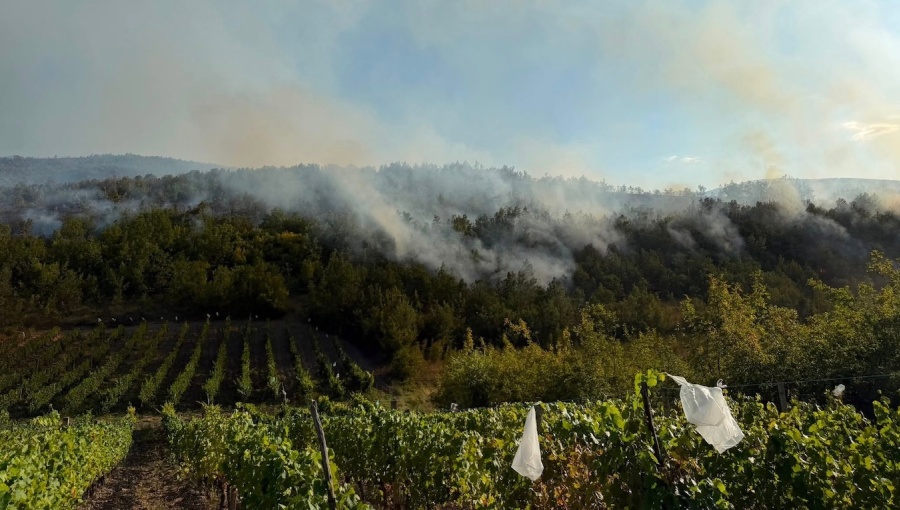
While several countries in the region are struggling with falling river levels and water supply challenges, North Macedonia is facing another major consequence of extreme heat and dry weather: a surge in wildfires.
Temperatures in Skopje reached 37°C on August 3 and 4, as the country remained under a heatwave expected to continue until the end of the week. The prolonged period of extreme heat, combined with dry vegetation and a lack of significant rainfall, has created ideal conditions for wildfires to spread.
According to the Crisis Management Center (CMC), 14 open-air fires were registered across North Macedonia by 6 pm CET on August 4. One fire remained active, four were under control, while nine had been extinguished.
The Kavadarci region was the hardest hit, after a large wildfire became one of the most difficult interventions among around 30 fires recorded across the country the previous day.
The fire near Kavadarci has been almost completely brought under control and is expected to be fully extinguished by the end of the day, according to Stojance Angelov, director of the Directorate for Protection and Rescue.
Two “air tractors”, as well as army and police helicopters, were deployed to fight the blaze on August 3, while three “air tractors” continued operations from the early morning hours on August 4. Firefighters on the ground played a key role in containing the flames.
Angelov said the intervention was particularly challenging because the fire spread across steep and inaccessible terrain covered with dense vegetation.
Kavadarci Mayor Mitko Jancev said the fire started in five separate locations located between 500 and 700 metres apart, raising suspicions that it may have been deliberately started.
Despite the scale of the fire, authorities said that high-stem forests were not affected and that nearby settlements and residents’ property were protected.
Water crisis adds to pressure
At the same time, parts of North Macedonia are dealing with another challenge: water safety.
In Gostivar, tap water remains unsuitable for drinking and cooking after tests confirmed continued contamination of the local water supply system. The pollution in Gostivar was caused by contaminated surface water entering the city’s drinking water system.
Prosecutors said that pumps installed in a polluted canal near an overflow chamber were still operating, with hoses allowing water containing coliform bacteria to flow into the chamber supplying drinking water, triggering a health crisis and an investigation into suspected environmental crimes.
The investigation comes after an epidemic was declared in Gostivar due to a surge in stomach-related illnesses, with local health authorities reporting around 250-300 new cases per day.
Following a meeting of the Main Crisis Headquarters on August 4, authorities said water from the city’s network can only be used for technical purposes until further notice.
Drinking water is being supplied to residents through canisters, Interior Minister Panche Toskovski said.
He added that chlorine levels had reached the maximum legally permitted level acceptable under the current crisis conditions and that chlorine had been detected at consumption points monitored by authorities.
However, the latest analyses confirmed that the bacteria Pseudomonas aeruginosa is still present in Gostivar’s water supply network, meaning restrictions remain in place.
The contamination has created additional pressure during an already difficult summer period marked by extreme heat and increased demand for water. Authorities have been carrying out repeated analyses, while the Main Crisis Headquarters has kept restrictive measures in place until the water is declared safe.
For the Balkans, where summer temperatures regularly exceed 35°C and water resources are already under pressure, the events in North Macedonia are another reminder that climate risks are becoming a recurring reality affecting daily life, agriculture, energy security and public safety.
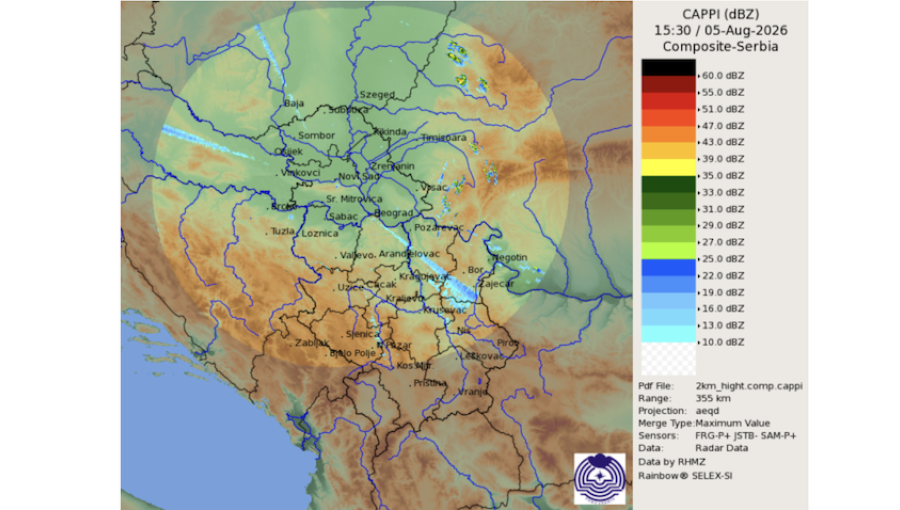
Serbia is facing growing pressure on its energy and agricultural sectors as record-low water levels on the Danube disrupt fuel imports and deepen concerns over the impact of a prolonged drought.
Mining and Energy Minister Dubravka Đedović Handanović said on August 5 that Serbia expects fuel supplies to remain stable in August despite difficulties with imports caused by record-low Danube water levels.
After meeting with Kiril Tjurdenjev, head of NIS, the minister said the government’s priority is to ensure regular supplies for all fuel stations and oil companies, while NIS is expected to maximize production to meet record-high August demand estimated at around 200,000 tonnes of diesel.
According to Đedović Handanović, supplies will remain stable while NIS’s OFAC licence is valid until August 28, with state reserves available if needed.
She warned that fuel imports remain challenging due to low Danube levels, which have disrupted river transport, increased costs and reduced planned deliveries. Imports were already minimized in July and a similar situation is expected in August, with NIS using its operational reserves to compensate, according to the ministry’s statement.
NIS said refinery processing is currently averaging 11,000 tonnes per day, or around 330,000 tonnes in August, with plans to increase output to 13,000 tonnes per day.
The company also confirmed that kerosene reserves are sufficient for about one and a half months, while gasoline supplies remain stable. NIS expects diesel and gasoline sales in August to reach their highest level in five years.
Danube reaches historic lows
Serbia’s fuel supply problems have been intensified by the dramatic fall in the Danube’s water level, which has reached the lowest point since measurements began.
Around 39,000 tonnes of diesel imports are planned for August, similar to July levels, but nearly 20,000 tonnes were expected to arrive by river transport. With navigation increasingly difficult due to shallow waters, these deliveries have become uncertain, RTS reported, citing Đedović Handanović.
Companies have been forced to rely more heavily on rail and tanker transport, which can deliver smaller volumes at significantly higher costs.
Despite the challenges, the government says it will prevent sudden fuel price increases and has sufficient reserves available if emergency measures become necessary.
Around 19,000 tonnes of Euro diesel have already been released from companies’ operational reserves to help stabilize the market in July. Serbia has also extended a ban on exports of oil and oil derivatives, including Euro diesel, until the end of August to keep available supplies inside the country.
The minister warned that global market conditions are adding further pressure, including problems with stock market prices, Russia’s export restrictions on oil derivatives and increased diesel purchases by Turkey, which has tightened supply in the Mediterranean market.
Farmers struggle as irrigation systems dry up
The drought is also threatening Serbia’s agricultural production, particularly in areas dependent on river-based irrigation.
In the village of Begaljica near Belgrade, strawberry producer Jovica Živanović says farmers are facing a serious crisis because irrigation systems connected to the Danube can no longer provide enough water, RTS reported on August 5.
“I currently have two hectares under strawberries that I irrigate from this closed system. We have no other way to water. If we don’t irrigate for 10 days, everything will dry up and go to waste,” Živanović said.
He estimates he has invested around €30,000 in production and fears losing both his investment and next year’s harvest.
Begaljica alone has around 30 hectares of strawberry plantations, while about 200 hectares in the area depend on irrigation systems.
Climate change increasing drought risks
Serbia’s Hydrometeorological Service (RHMZ) warned that the country is increasingly experiencing longer dry periods combined with uneven rainfall distribution, according to the article.
Although annual precipitation totals are not always significantly below long-term averages, rainfall is increasingly concentrated into fewer days, while longer dry periods and high temperatures increase evaporation and worsen drought conditions.
According to the RHMZ, summer precipitation is expected to decline by around 20% by mid-century under climate change scenarios.
The most severe moisture shortages are currently affecting Vojvodina, Pomoravlje, eastern and southeastern Serbia, as well as parts of central Serbia.
During July, some areas including northern Bačka and Banat and parts of Belgrade received less than 10 millimetres of rainfall. In contrast, southeastern and southwestern regions recorded higher precipitation levels.
With the Danube at record-low levels and drought conditions continuing, Serbia is now relying on emergency energy measures and limited water resources to protect both fuel security and agricultural production.

No comments:
Post a Comment