Sunday, December 26, 2021

US faces tough choices in 2022 on mines for electric vehicle metals
Reuters | December 22, 2021 
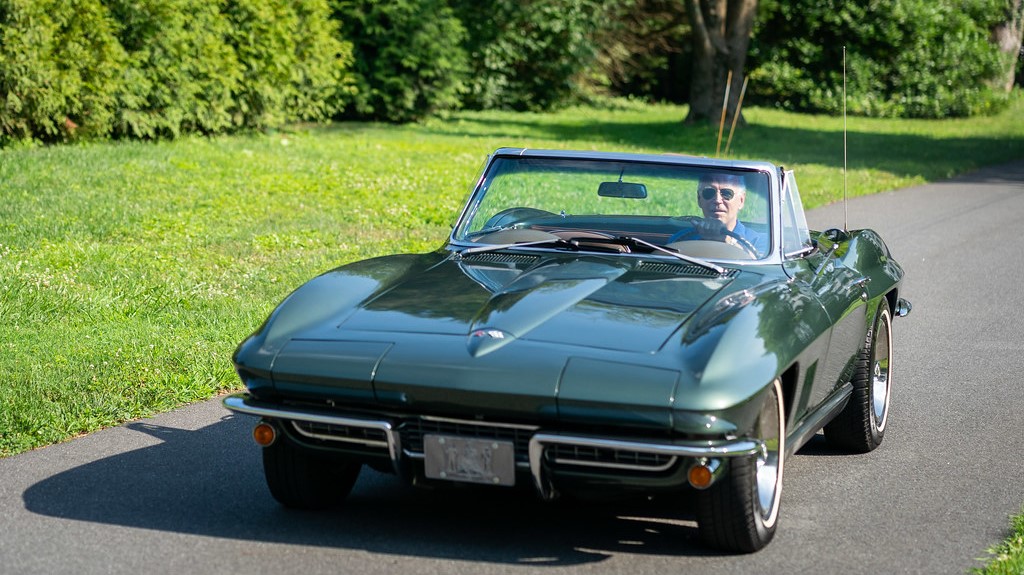
Joe Biden’s 1967 Corvette Stingray (Image – Flickr)

The United States has enough reserves of lithium, copper and other metals to build millions of its own electric vehicles (EVs), but rising opposition to new mines may force the country to rely on imports and delay efforts to electrify the nation’s automobiles.


The tension underscores the dilemma facing the United States going into 2022, a year in which US policymakers hope to see groundbreakings on a raft of EV manufacturing facilities from Ford Motor Co, General Motors Co and others.

President Joe Biden signaled earlier this year he prefers to rely on allies for EV metals, part of a strategy designed to placate environmentalists. That means US automakers will find themselves competing with international rivals for supply amid the global rush to electrification.

US metals imports, though, could boost greenhouse gas emissions by increasing shipping from overseas mines to processing facilities, most of which are in Asia, thus abrogating part of the rationale behind building more EVs.

A Reuters analysis found that proposed US mining projects could produce enough copper to build more than 6 million EVs, enough lithium to build more than 2 million EVs and enough nickel to build more than 60,000 EVs.

The estimates are based on the volume of minerals used to make a Tesla Inc Model 3, the world’s most popular EV, according to a study by Benchmark Mineral Intelligence. Other types of EV use different amounts, depending on design.

“If we don’t start getting some mining projects under construction this coming year, then we will not have the raw materials domestically to support EV manufacturing,” said James Calaway, executive chairman of ioneer Ltd.

Biden in August issued an executive order aimed at making half of all new vehicles sold in 2030 electric.

Washington so far has offered confusing guidance to its mining industry. For example, the US Fish and Wildlife Service is poised to label a rare flower found on a handful of acres at ioneer’s Nevada lithium mine site as endangered, a step that could impede permitting. At the same time, the US Department of Energy is deciding whether to lend the company more than $300 million to build the mine.
Opposition

Other proposed mines face opposition from indigenous groups, ranchers or environmentalists, underscoring the broader tension in the United States as resistance to living near a mine clashes with the potential of EVs to mitigate climate change.

In early 2022, federal judges are set to rule in two separate cases as to whether mine approvals granted by former President Donald Trump to Lithium Americas Corp and Rio Tinto Plc should be reversed.

In Minnesota, state regulators are weighing whether permits issued to PolyMet Mining Corp , which is controlled by mining giant Glencore Plc, should be revoked or reissued. PolyMet’s mine would become a major nickel producer just as the only US nickel mine is set to close by 2025.

In North Carolina, Piedmont Lithium Inc’s failure to keep local landowners abreast of its development plans may cost the company necessary local zoning approvals.

Biden himself took steps in October to block Antofagasta Plc’s Twin Metals copper and nickel mine project in Minnesota for 20 years. The proposed underground mine would have become a major US supplier of copper for EVs, which use twice as much of the red metal as vehicles with internal combustion engines.

Despite that step, the White House has been working to highlight its support for certain EV mining projects, including Lithium Americas’ proposed lithium mine – despite Native American opposition – and a California geothermal lithium project funded in part by GM.

The administration also touted a Tesla lithium supply deal with Piedmont, even though that arrangement was put permanently on hold earlier this year.

Many of the mining projects have strong support from labor unions, a constituency that the president has worked to cultivate and one sometimes at odds with environmental groups hoping to block new mines.

Biden’s EV goal “means good-paying union jobs for working people in responsible mining operations that will both supply battery minerals and protect the environment,” said Tom Conway, head of the United Steelworkers, a union that represents some U.S. miners.

(By Ernest Scheyder; Editing by Matthew Lewis)
ALROSA names diamond after folklore heroine to honor indigenous culture

MINING.com Editor | December 22, 2021 | Russia and Central Asia Diamond

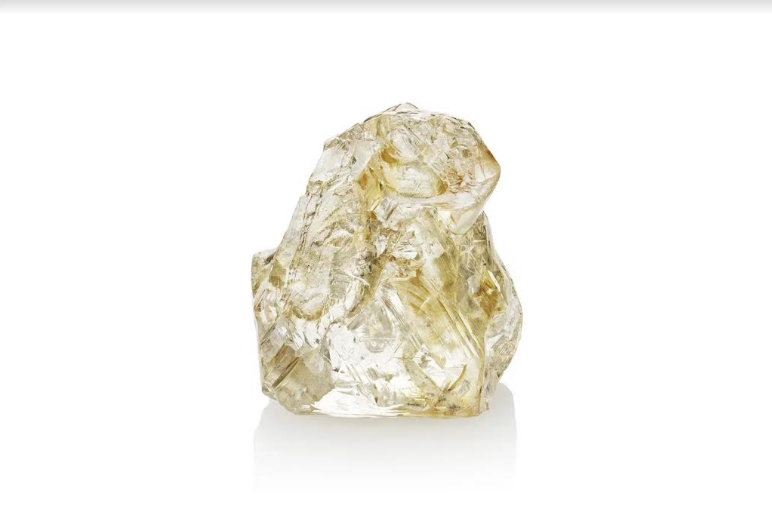
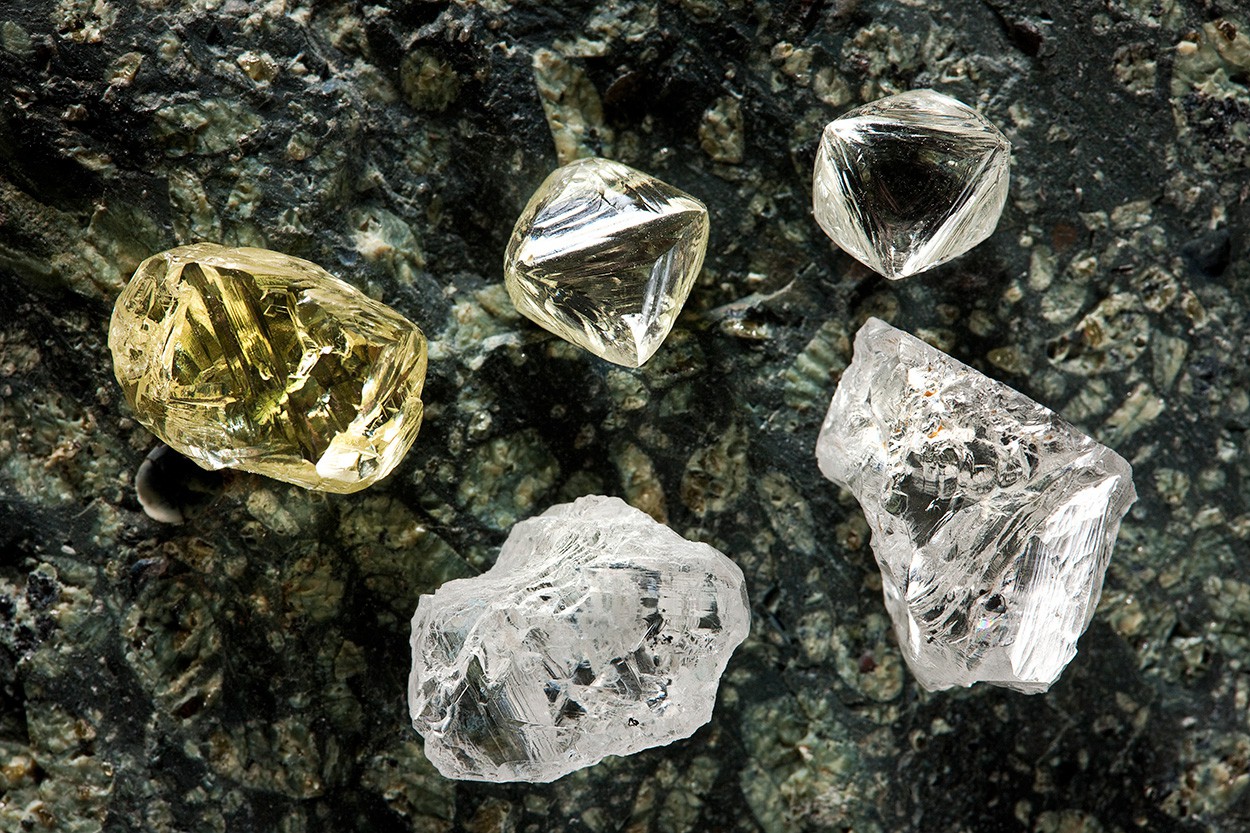
ALROSA announced Wednesday it has given a newly mined yellow-brown 91.86-carat diamond the name Kyndykan in honour of a folklore heroine.


Kyndykan was a young girl who was miraculously found alive 200 years ago by Yakut hunters near the Verkhoyansk Mountains in an ancestral settlement completely wiped out by smallpox, ALROSA said in a media release.

Kyndykan has become a symbol of the resilience, spiritual strength and unique values of the Indigenous peoples of the Far North. The story inspired the Russian diamond miner to create a project also named Kyndykan, which aims to draw attention globally to the problem of preserving the traditions and culture of the indigenous peoples.

The Kyndykan diamond has a yellow-brown colour and measures 25х16х22 mm. It was mined in 2021 at one of the alluvial diamond deposits at Diamonds of Anabar, a subsidiary of ALROSAwhich operates across the Arctic territory of Yakutia. The indigenous peoples of the North traditionally inhabited this region. The diamond was found in the Olenyok district, one of the coldest regions in the northern hemisphere.

ALROSA said this is latest step in the company’s efforts to preserve the historical values of the indigenous peoples of Yakutia.

“At ALROSA, we have a great tradition of giving names to newly mined diamonds. On this occasion, we decided to name a diamond mined in the Far North in honour of the little Even heroine Kyndykan and after a wonderful project, which is doing a lot to ensure that voices of Indigenous peoples of the North are heard,” deputy CEO Evgeny Agureev, said in the statement.

“ALROSA has always admired their resilience and strength of character, rich history and age-old traditions. Our common goal is to preserve all of this for future generations and to tell this story to the world.”

The Top 10 diamond stories of 2021

Alisha Hiyate - the Canadian Mining Journal | December 24, 2021 |

Image from Star Diamond Corp
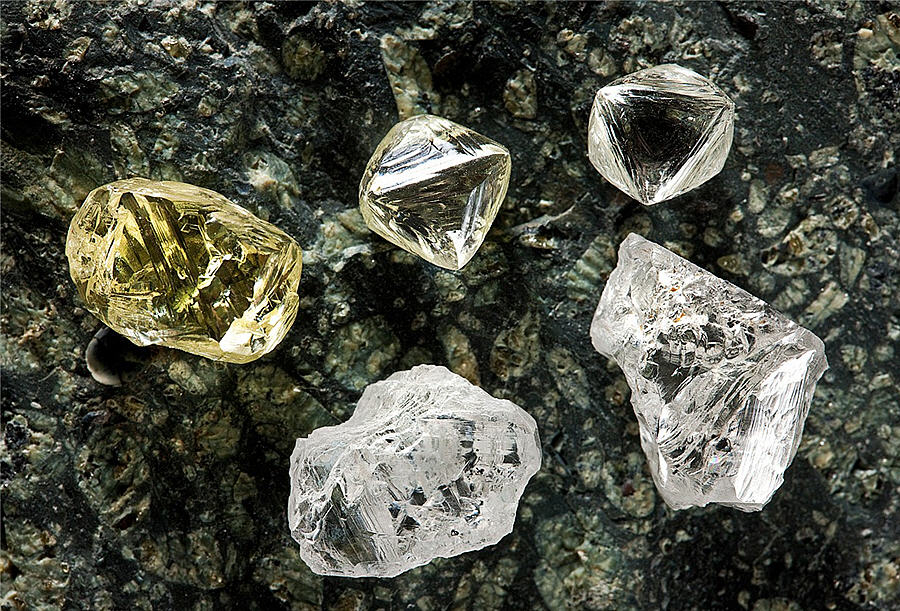
The diamond sector may be a volatile industry, as its dramatic ups and downs during the pandemic have demonstrated. But readers have remained interested in diamond news this year — especially when it involves large gem diamonds.


1) Over 3,000 diamonds recovered from Star-Orion South project in Saskatchewan

MINING.COM’s top diamond story of the year was actually published at the end of 2020. The story updated the findings of a bulk sample Rio Tinto (NYSE: RIO; ASX: RIO; LSE: RIO) completed in 2019 at Star Diamond’s (TSX: DIAM) Star-Orion project in Saskatchewan. At the time, the ninth of ten bulk cutter sample holes at the project had returned 3,534 diamonds weighing 210.68 carats. The haul included 10.13, 8.10 and 7.29-carat Type IIa diamonds, while 25 diamonds were greater than 1 carat. Processing from all holes has since been completed. Ownership of the Star-Orion project – called FalCon by Rio Tinto – is currently disputed, with Rio Tinto claiming a 40% stake and Star Diamond taking the major to court to argue that the terms of their 2017 earn-in agreement have not been met.

2) One of only four 1,000 carat-plus diamonds ever found dug up in Botswana

The Jwaneng open pit diamond mine in Botswana. Credit: Debswana

Second on our list is an item on an exceptional diamond — a 1.098-carat stone recovered at the Jwaneng open pit mine in Botswana. The mega-diamond is one of only four 1,000-plus carat diamonds ever unearthed. Jwaneng, the world’s richest mine by value, is owned by Debswana, a joint venture of De Beers and the Botswana government. The mine is in the middle of a $2-billion expansion to begin underground mining. The underground mine is expected to deliver as much as 9 million carats per year and extend Jwaneng’s mine life by 20 years.

3) Lucara kicks off 2021 with 341-carat white diamond find

The 341-carat diamond recovered from the Karowe mine. Credit: CNW Group/Lucara Diamond Corp.

The year’s third most read diamond story was about Canadian miner Lucara Diamond’s (TSX: LUC) first big diamond of the year. Lucara’s Karowe mine in Botswana is known for large, high-value gem diamonds, including the 341-carat unbroken white stone it recovered in January. The diamond was the 54th stone over 200 carats recovered at Karowe since it began commercial production in 2012. One analyst estimated the diamond could sell for more than $10 million.

4) Petra finds 39-carat blue diamond at Cullinan mine

The 39.34-carat blue diamond. Credit: Petra Diamonds

There’s something fascinating about coloured diamonds, which made this story about Petra Diamonds’ (LSE: PDL) discovery of a 39.34-carat blue diamond from its Cullinan mine one of MDC’s top diamond stories this year. The Type IIb gem was said to be of “exceptional quality” due to both its colour and clarity. Cullinan, located in South Africa, is known as the world’s most important source of blue diamonds.

Despite holding the unique asset, as well as two others in South Africa and one in Tanzania, Petra’s financial position is weak. The miner put itself up for sale last year and then reversed its decision in favour of a debt-to-equity restructuring. The company also faces human rights abuse allegations at its Williamson mine in Tanzania resulting from the actions of its security guards.

5) Lucara strikes again with 378 carat diamond at Karowe

The unbroken Type IIa 378 ct gem quality top white diamond was recently recovered from milling of ore sourced from the M/PK(S) unit of Karowe’s South Lobe. Credit: Lucara Diamond

No. 5 on the list detailed a second large diamond recovered from Lucara Diamond’s (TSX: LUC) Karowe mine in January. The miner reported it found a 378-carat, white unbroken gem-quality stone in the same unit – M/PK(S) — of the mine’s South Lobe where the earlier diamond was discovered. Both gems were recovered from the coarse X-ray transmission circuit that Lucara has credited with avoiding breakage of its large diamonds.

Lucara recently approved an underground expansion of Karowe that will extend the project’s mine life to at least 2040.

6) WATCH: Thousands rush to dig for diamonds in South Africa

New diamond discoveries are always exciting, and in June, word emerged of a diamond rush attracting thousands of people to an area near Ladysmith, about 360 km southeast of Johannesburg in South Africa. With videos on social media capturing crowds digging in the ground, the provincial KwaZulu-Natal government expressed concerns about crowds gathering during the pandemic and fears a stampede could occur.

Unfortunately, the find, in one of South Africa’s poorest regions that has been hard-struck by the Covid-19 pandemic, turned out to be not diamonds but quartz crystals.

7) Barrick’s Bristow to buy diamond miner

Barrick Gold (TSX: ABX; NYSE: GOLD) president and CEO Mark Bristow’s interest in troubled junior Rockwell Diamonds made this story the next most popular with readers. In January, Rockwell announced it had made a deal to delist and merge with a B.C. diamond company (Bristco) wholly owned by Bristow.

Bristow, the founder and owner of Randgold Resources (which was acquired by Barrick in 2018), acted as Rockwell’s CEO for six months to May 2011 and later joined the board. At the time of the news, he held about 2.4% of the JSE-listed diamond company.

Rockwell had been in liquidation since the end of 2016 and was awaiting final liquidation proceedings in 2021.

8) Lucapa kicks off 2021 with 113-carat diamond find at Lulo

113 carat gem-quality white Lulo diamond. Credit: Lucapa Diamond

At eighth place was another big diamond story, this time a 113-carat gem-quality diamond recovered from Lucapa Diamond’s (ASX: LOM) Lulo mine in Angola in January. Lucapa noted the diamond is the first found at Mining Block 46, downstream of the Canguige river. The stone is the seventeenth diamond over 100 carats found at Lulo, an alluvial diamond project held 40% by Lucapa. The rest is held by Angola’s national diamond company (Endiama) and Rosas & Petalas, a private entity. Lulo hosts the world’s highest dollar-per-carat alluvials diamonds.

9) Petra puts “exceptional” 39-carat blue diamond up for sale

Making a return appearance at Spot No. 9 is Petra Diamonds’ 39.34-carat blue diamond. The June 1 story noted that the diamond, recovered in January, would be sold in a special tender in July, with viewings beginning mid-June in Antwerp, Dubai, Hong Kong and New York.

The diamond, whose quality Petra described as “exceptional” in terms of both colour and clarity, was subsequently sold for $40.2 million.

10) Elite diamond-buying club shrinks as De Beers culls old clients

Bucking the trend of big diamond stories, the last story on our list was a Bloomberg news story reporting on a change in the way De Beers – the world’s largest diamond miner – does business. The item from January explained that some of the company’s buyers or sightholders have lost that status, while others have had their status downgraded. The Bloomberg piece said the changes were designed to “funnel more stones into fewer hands” and to the buyers that could add the most value to the rough diamonds.
Vale weighs bid for stake in Anglo’s Brazil iron mine
Bloomberg News | December 23, 2021

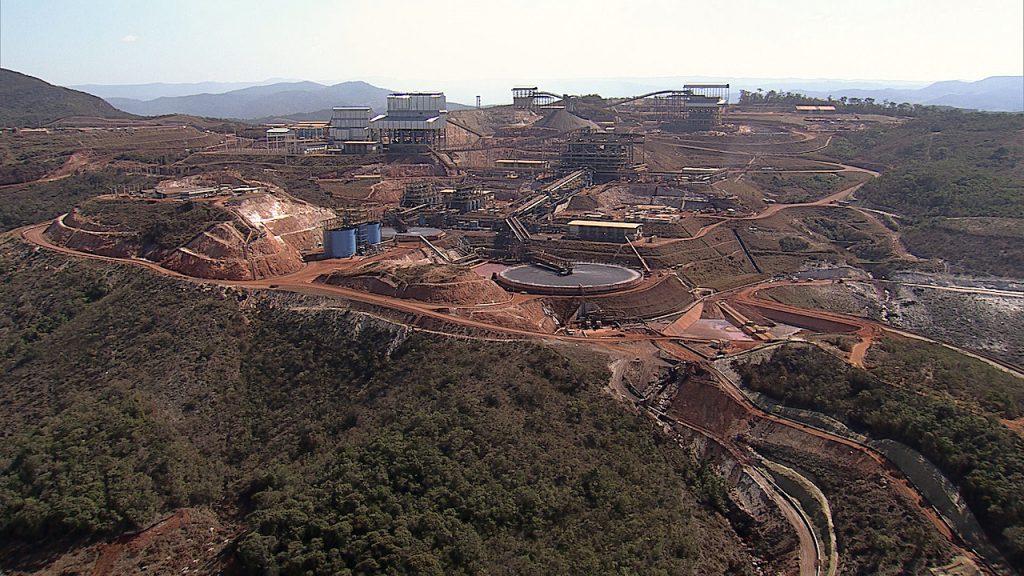
Minas Rios is expected to produce 26.5 million tonnes of iron ore a year. (Image courtesy of Anglo American.)

Vale SA, the world’s second-largest iron ore producer, is considering acquiring a stake in Anglo American Plc’s huge Minas-Rio project in Brazil, according to people familiar to the matter.


Preliminary talks that started last year so far haven’t advanced enough to be presented to the companies’ boards and may not result in a deal, the people said, asking not to be named because the talks are private. Vale is considering buying a 30% to 40% stake in the project, or even a controlling interest, one of the people said.

Anglo American and Vale declined to comment.

A deal would help Vale fulfill its goal of increasing annual production capacity to 400 million tons, enabling it to dilute costs and recover the title of world’s No. 1 iron-ore producer that it lost to Rio Tinto Group in the wake of the Brumadinho dam disaster in 2019.


The Rio de Janeiro-based company also wants to position itself as a top supplier of premium iron ore, a key ingredient for steelmakers to reduce their carbon footprint. Anglo’s Minas-Rio has a high-grade ore of about 67% iron content, higher than Vale’s average.

Minas-Rio is a fully integrated iron ore operation, with a mine in Minas Gerais State, a processing plant, a slurry pipeline, and a port in Rio de Janeiro. The project is expected to produce 26.5 million tons a year. Acquired from MMX Mineracao e Metalicos SA in 2008, Minas-Rio cost Anglo American about $14 billion to buy and build.

Thanks to a surge in metals prices in recent years, Minas-Rio has gone from a liability to a cash cow for Anglo American, leading the company to scrap plans to sell the mine.

Even with prices of its core product down from record highs in recent months, Vale continues to generate plenty of cash. Focused on capital discipline and returning value to shareholders, the miner has been divesting non-core assets to sharpen its efforts on iron ore and base metal deposits.

(By Mariana Durao, Cristiane Lucchesi and Mark Burton)
“Mining has brought nothing but poverty” – young environmentalists plan rewrite of Chile copper mining rules

Bloomberg News | December 22, 2021 

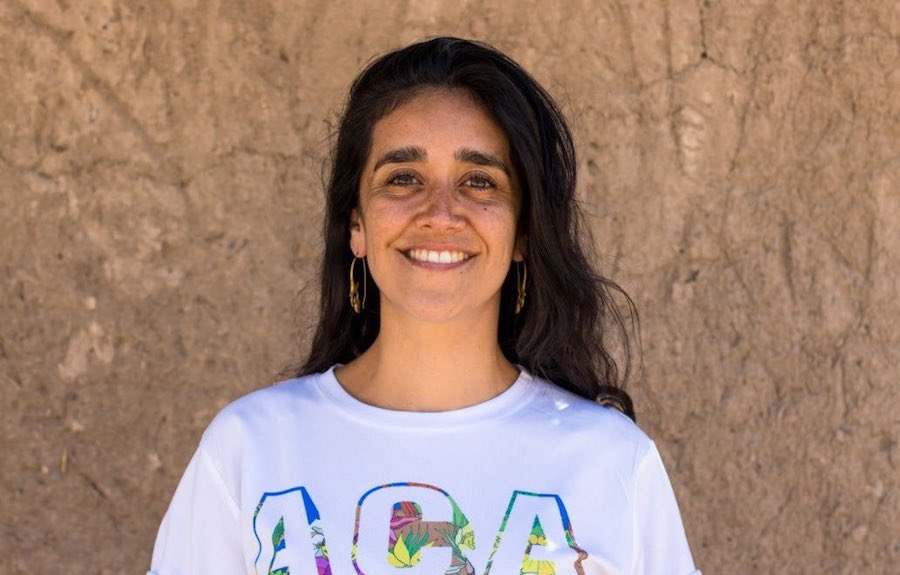
Constanza San Juan. (Image: Pamela Jiles | Twitter.)

Environmental activists like Constanza San Juan have been peripheral figures at best in Chile’s emergence as the dominant supplier of copper over the past few decades. Now, she and others like her are rewriting the rules, with tens of billions of dollars in investments riding on the outcome.


The 35 year old, who’s been fighting mining ever since Barrick Gold Corp. arrived to her region two decades ago, is on a committee that will decide how the environment and natural resources will figure in a new constitution to replace the one that dates back to the dictatorship of Augusto Pinochet.


“We need to completely change the extractivist model to one that is in harmony with nature,” San Juan said in an interview, vowing not to meet with lobbyists during the process. “Changes must be done in the spirit of what started this whole movement to transform Chile. Mining has brought nothing but poverty.”

Deliberations will begin in earnest early next year, with members likely to be emboldened by Sunday’s election of the most left-leaning president since Salvador Allende. Proposals range from setting time limits on concessions to banning mines altogether under some conditions. The copper industry is pushing hard to retain the indefinite concession model, which it says is critical for long-term planning that underpins investments.

There’s a lot at stake. Chile’s government lists a total of almost $70 billion in possible mining projects this decade. Some of that will depend on how the new constitution turns out and whether it’s ratified in a referendum. As such, the document will help determine how much of the world’s biggest copper and lithium reserves will be tapped in the coming years to meet rising global demand in the transition away from fossil fuels.

“Until this is clarified — the issue of legal security and any new rules — we’re not going to see large investments,” said Diego Hernandez, head of Chilean mining society Sonami.

Committee members

A quick look at the makeup of the committee — and that of the broader 155-person constitutional assembly — explains the industry’s fears. In a process born from street protests that erupted two years ago, about three quarters of the committee are left-wing or social and environmental activists of some kind. That means conservatives gunning for a continuation of investor-friendly rules are in a clear minority.

For example, there’s 26-year-old independent Juan Jose Martin, who co-founded a sustainability youth organization; Camila Zarate, 29, an environmental lawyer who advocates for water rights; and San Juan, who sees sustainable mining is a contradiction in terms and calls for a ban on all mines near water sources, including glaciers and salt flats that hold much of the world’s lithium reserves.


San Juan’s views were shaped by the aborted attempt by Barrick to develop a giant open pit at the top of her valley. Construction was halted in 2013 amid environmental breaches that led to fines and lawsuits. “Technology allows mining companies to go all the way up to the glaciers and we won’t allow that because that’s where 70% of the country’s water comes from,” she said.
Election results

Mining companies have more at risk from constitutional reform than from the presidential election, according to Hernandez. While companies probably would have fared better under conservative candidate Jose Antonio Kast than left-wing President-elect Gabriel Boric, an evenly split congress limits the likelihood of radical policies.

The copper industry, which accounted for more than half of Chile’s exports last year and 11% of GDP, is responding to mounting pressure to find cleaner ways to operate. Producers have also indicated a preparedness to pay more taxes for social spending, as well as adhere to stricter exploration rules. But the industry says sticking to the indefinite concession model is crucial for planning.

“No company estimates their cash flow looking four years ahead,” BTG Pactual analyst Cesar Perez-Novoa said. “Worst case scenario, it’s a 15-year horizon and best case, 30 to 50. The constitution is what’s important here, not the president.”

The industry is encouraged by the make-up of congress, not only because it’s set to moderate policy, but also because it suggests the electorate may not sign off on radical constitutional reform. Even activist San Juan, speaking before Sunday’s presidential election, indicated that the exuberance for change when the assembly was elected may have waned a little. Still, Boric’s landslide victory Sunday may help rekindle some of that momentum.

Hernandez, a former chief executive of Codelco and Antofagasta Plc., is also banking on people recognizing that mining will have to play a big role in keeping the economy going after the impact of pandemic stimulus peters out.

Still, major mining companies including Freeport-McMoRan Inc. and Lundin Mining Corp. have said they won’t be pulling the trigger on new investments in Chile until the political and regulatory environment becomes clearer.

(By James Attwood and Alvaro Ledgard)
Codelco requests second arbitration against Ecuador over copper project

Reuters | December 24, 2021 

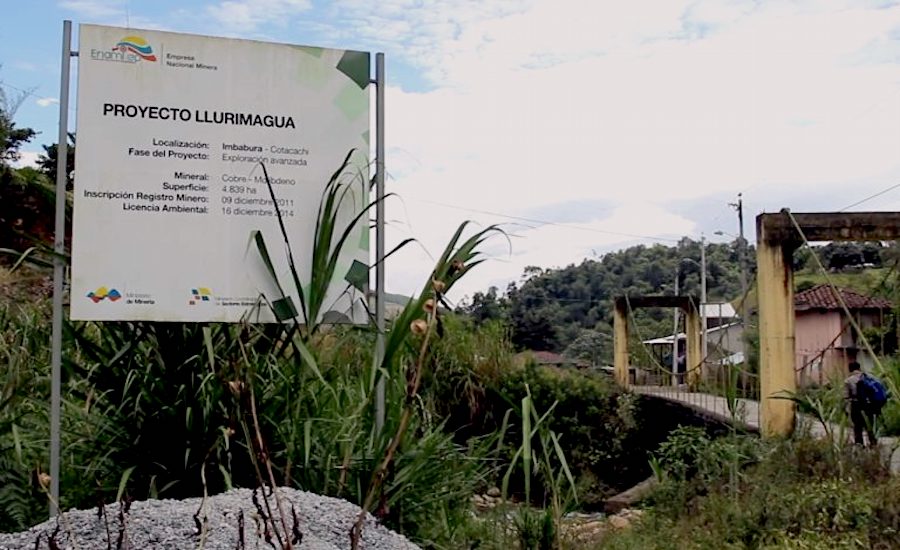
The Llurimagua copper deposit is located about 80 km northeast of Ecuador’s capital, Quito. (Image courtesy of Chilean copper engineers)

Chile’s state-controlled Codelco, the world’s top copper mining company, said on Friday it had requested a second international arbitration process with Ecuador and its National Mining Company (Enami EP) over the Llurimagua copper project.


The request was filed with the International Centre for Settlement of Investment Disputes (ICSID), the miner said. In April, Codelco had also requested an arbitration with the International Chamber of 


“The request came after over a year in which (Codelco) formally asked to begin a process of friendly and confidential conversations about its investments in the Llurimagua project,” the firm said in a statement.

The project has been the subject of commercial tensions since November 2020, when Codelco said its Ecuadorian counterpart had not fulfilled an agreement reached a year earlier to jointly develop the project, which at that point was in the exploration phase.

Llurimagua could become the first mine Codelco operates abroad following years of scattershot efforts to expand internationally. The project, about 50 miles (80 km) northeast of Ecuador’s capital of Quito, has faced resistance from a nearby community over environmental concerns.

(By Fabian Cambero; Editing by Sandra Maler)
BHP and Noront terminate support agreement

MINING.com Editor | December 24, 2021 | 

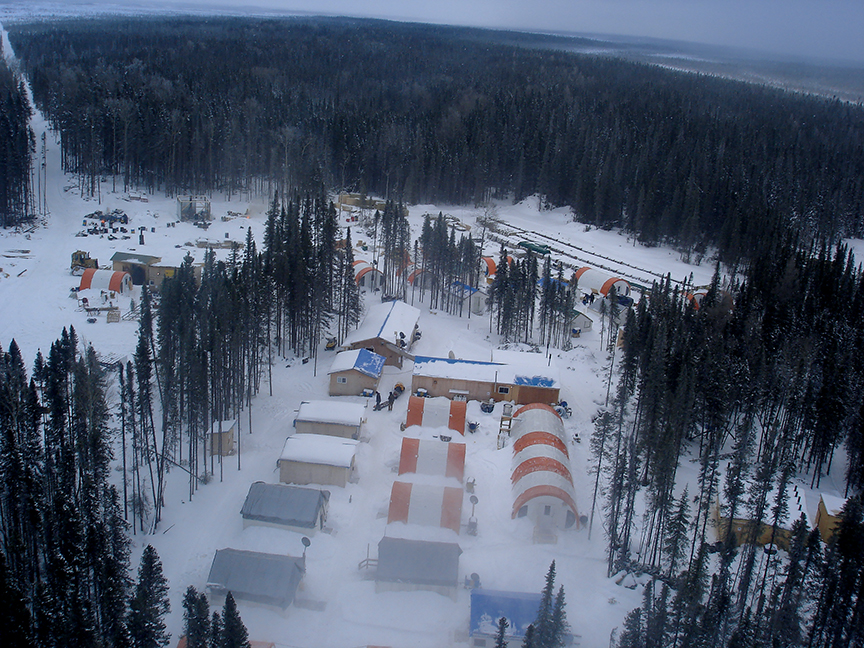
Noront Resources Esker Camp (Credit: Noront)

The world’s biggest miner, BHP (ASX, LON, NYSE: BHP), has announced the termination of the support agreement between BHP Lonsdale, its subsidiary BHP Western Mining Resources and Noront Resources (TSXV: NOT) relating to Noront’s support of BHP Lonsdale’s C$0.75 per share offer to acquire Noront, officially ending a long-dragged battle for the Canadian nickel miner.


In accordance with the terms of the Support Agreement, Noront has made a C$17.78 million ($13.8m) termination payment to BHP WMR.

Noront Resources said on Tuesday it has chosen to go with the latest bid put forward by Australian billionaire Andrew Forrest’s Wyloo Metals, giving BHP five business days to match the offer. BHP said later in the day it did not see “adequate long-term value” in raising its C$0.75 a share bid to match Wyloo’s.

The two Australian mining companies had been engaged in a tug of war with competing offers for Noront since July. At stake is the takeover target’s early-stage Eagle’s Nest nickel and copper deposit in the ‘Ring of Fire’ in northern Ontario.

The asset has been billed by Wyloo as the largest high-grade nickel discovery in Canada since the Voisey’s Bay nickel find in the eastern province of Newfoundland and Labrador.

Eagle’s Nest is expected to begin commercial production in 2026 with the mine running initially for 11 years.

The mine’s start date has repeatedly been pushed back by Noront due to successive federal and provincial governments’ inability to consult and reach a unanimous agreement with First Nations in the area.

Forrest, chairman and founder of iron ore producer Fortescue Metals Group (ASX: FMG), plans to lead a new board of directors at Noront.
US-China conflict ignites new 'Cold War' in supply chain

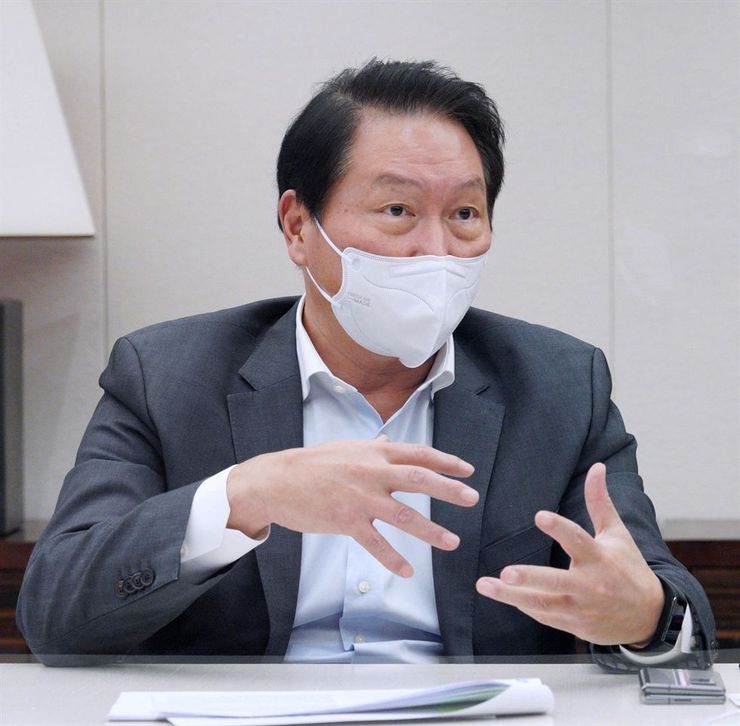
Korea Chamber of Commerce & Industry Chairman Chey Tae-won speaks to reporters on the latest issues surrounding Korean companies during an interview at KCCI's headquarters, Wednesday. Courtesy of KCCI

By Kim Hyun-bin
 2021-12-26 
\

Korea Chamber of Commerce & Industry (KCCI) Chairman Chey Tae-won says the ongoing trade conflict between Washington and Beijing has altered the global supply chain structure, resulting in a renewed "Cold War."

"Looking at the global supply chain, there is a change, especially in the context of the U.S.-China conflict. In the past, the entire global supply chain was shared, but now they are forced to split into factions," Chey said during a year-end meeting with reporters at the KCCI's headquarters, Wednesday. His remarks were embargoed until Sunday afternoon.

As semiconductor shortages have been impacting backbone industries in the United States ― from iPhones to new vehicles ― since the COVID-19 outbreak early last year, Washington has started to reorganize its global supply chain, focusing on the semiconductor and battery industries.

Washington is calling on the Korean government and businesses to back U.S. President Joe Biden's semiconductor initiatives. At the same time, Beijing has also asked the Korean government to explore ways to strengthen cooperation in the chip and battery supply chains.

Korea has been stuck in the middle of a tug-of-war between the U.S. and China, as Korean semiconductor companies require advanced technology from the U.S., while China is the largest market and core manufacturing base for Korean companies. According to the Korea International Trade Association (KITA), China accounted for 41.4 percent of Korea's semiconductor exports as of October of this year.

The KCCI chief also pointed out that the supply chain restructuring presents "both opportunities and risks," but is expected to benefit some industries more than others. KCCI is the country's most influential business lobby representing the interests of Korea's leading conglomerates.

"We believe that semiconductor demand will continue solidly, and we are also increasing the supply side, so there will be no problem with the supply of semiconductors," he said.

Specifically, the automotive industry has been hit hard by chip shortages leading to the temporary shutdowns of plants.

"I didn't know the chip shortages would have this much impact," Chey said.

Countries were hit by memory chip shortages in 2017 and 2018, which Chey says show the unpredictable nature of the industry and prove just how difficult it is to prepare ahead.

"No one could have predicted it," he told reporters.

Chey went on to say that Korea is not the only country to face semiconductor and battery shortages. He said that the problem should be viewed as a matter of national security that can be resolved through communication with other countries.

"Each country is approaching the issue in regards to security. It's not a matter of diplomacy or national defense, but rather, the issue is being seen as part of developing economic security. In Europe and the United States, this issue is also being addressed by their respective defense agencies. Aside from traditional thinking, they see economic security as a national defense issue, and come up with their own policies," Chey said. "Semiconductors and carbon issues are all connected. It is a global problem and our core industries are all interrelated. Korea must set a vision and direction and communicate with other countries."

Chey believes global warming is a "terrifying" issue that must not be ignored, citing a report by the Intergovernmental Panel on Climate Change estimating that a two-degree Celsius rise in global temperature will create more than 10 times the cost of carbon neutrality in terms of economic losses, and urging the public and private sector to cooperate to achieve the goal of net-zero carbon emissions.

"A policy that imposes fines and taxes on carbon emissions alone cannot achieve this goal. Also the government's policy focused on reducing carbon is not enough. I think there needs to be a public-private cooperation project," he added.
KOREA
Rights watchdog to recommend gov't collect statistics on sexual minorities

Posted : 2021-12-26 

LGBTQ activists hold a press conference at Seoul Plaza in front of City Hall in this March 27 photo, on the occasion of March 31 International Transgender Day of Visibility. Yonhap

By Bahk Eun-ji

The nation's human rights watchdog will recommend sexual minorities be included in the government's statistical and fact-finding surveys, concluding that Korea lacks any government-level efforts to learn about the demographics and current conditions of such people, it said, Sunday.

The recommendation follows a series of cases where sexual minorities, including transgender people, suffered discrimination in various sectors, such as the military and college admissions.

The National Human Rights Commission of Korea (NHRCK) said, Sunday, it decided on the recommendation recently to help the government set up policies to eliminate acts of hate and discrimination against LGBTQ people.


National Human Rights Commission of Korea headquarters / Korea Times file
Under the decision, the Prime Minister's Office will be recommended to prepare guidelines for statistics conducted by central government organizations to include sexual orientation and gender identity, so the statistics can be reflected in government policies.

The minister of the interior and safety, the minister of health and welfare, the minister of gender equality and family and Statistics Korea will be recommended to create new transgender-related categories in their statistical surveys.

Besides three surveys conducted earlier by the commission, there have been no government-level studies on the demographics of transgender people, and they have been omitted in the health ministry's annual survey on healthcare and medical service, the gender equality ministry's study on family and Statistics Korea's census.

Meanwhile, many other countries are moving to include additional gender options in their censuses, as well as questions about sexual orientation.

The commission said, in order to prevent discrimination against and acts of hate toward sexual minorities, sexual minorities need to be "visible," and for this, statistics and studies on their circumstances are a priority.

"The issue of the human rights of transgender people is underestimated compared to its importance, but the nation lacks reliable data on people's gender identity," the commission said.

It said, among all sexual minorities, transgender people are feared to be the most socio-economically vulnerable because of differences between their legal gender and appearance, limiting their candidacy for jobs and resulting in unfair treatment at work.

Earlier in March, former Staff Sergeant Byun Hee-soo committed suicide after being in a legal battle with the military authorities for being forcibly discharged after undergoing gender-reassignment surgery. In February, controversy arose over the admission of a transgender woman to Sookmyung Women's University. She finally gave up on entering the school.

According to the survey on 591 transgender people conducted by the commission in February, 65.3 percent said that they had experienced discrimination over the past year because of their gender identity.

Some 97 percent of the respondents said they had encountered anti- transgender hate speech through the internet including social media, 87.3 percent through broadcasting and mass media and 76.1 percent through dramas and movies, when multiple answers were allowed.

Glass ceiling cracks in financial sector

Shinhan hires female expert as chief digital officer

 2021-12-25 

Shinhan DS CEO nominee Cho Kyoung-sun, left, and Shinhan Financial Group Chief Digital Officer nominee Kim Myoung-hee / Courtesy of Shinhan Financial Group

By Park Jae-hyuk

More financial institutions have given key positions to women in their recent year-end executive reshuffles, indicating their intention to brace for global investors emphasizing gender equality, as well as the forthcoming regulation starting next year that will mandate gender balance on boards.

Shinhan Financial Group said Friday that former National Information Resources Service President Kim Myoung-hee, who had also worked for IBM Korea for 23 years, was hired as the group's new chief digital officer (CDO).

According to the group, Kim introduced artificial intelligence, big data and cloud computing technologies to the state-run institution, in order to enhance its operational efficiency and services.

"Strengthening our group's digital matrix and implementing prompt and consistent digital strategies with Kim, we will come up with easier, more convenient and newer digital finance services for our customers," a Shinhan official said.

Kim's nomination came a week after Shinhan Bank Vice President Cho Kyoung-sun was tapped as the first-ever female CEO of a Shinhan affiliate.

"She was recommended as the most qualified candidate to lead Shinhan DS, which has pushed ahead with global expansion and marketing campaigns for its own digital skills training platform, SCOOL," a Shinhan official said at that time.

Earlier this month, KB Financial Group allowed KB Securities co-CEO Park Jeong-rim ― the domestic securities industry's first female CEO ― to serve another one-year term.

NongHyup Financial Group appointed another female vice president of NongHyup Bank in its year-end reshuffle. As a result, NongHyup Bank became the only bank having two female vice presidents among the nation's five largest lenders.


Financial Supervisory Service Deputy Governor for Planning and Management Kim Mi-young / Korea Times file
The Financial Supervisory Service (FSS) promoted Kim Mi-young, director general of its Illegal Finance Monitoring Department, to deputy governor for planning and management, Wednesday.

She became the FSS' first female executive to have worked for the financial watchdog since it was established in 1999. Before her promotion, all female executives of the FSS came from external institutions, such as universities and private financial companies.

Industry officials expect Hana and Woori financial groups to appoint additional female executives in their upcoming executive reshuffles in line with the recent trend.

Korea Network of Women in Finance Chairperson Kim Sang-kyung, however, pointed out that there needs to be more women holding key positions in the financial industry.

"After Shinhan Financial Group gave the CEO seat of its affiliate to a female vice president of Shinhan Bank, her vacancy was not filled with another woman of the bank," she said. "The FSS should take the initiative in this issue, but it appears to be appointing female executives reluctantly, after witnessing private firms giving key positions to women."

PRIVATIZATION FAIL

UK 

Energy Groups Call For Government Intervention As Power Prices Skyrocket

  • Trade Association Energy UK has criticized chancellor Rishi Sunak for the lack of a clear plan to protect the industry.
  • Market regulator Ofgem announced it will provide £1.83bn to suppliers that took on customers from collapsed rivals through the supplier of last resort process.
  • The market regulator explained its “top priority” is protecting consumers and that it understands the challenges households and businesses are facing in light of the unprecedented increase in global gas prices.

Trade Association Energy UK – which represents over 100 members – has described record wholesale gas and power prices as a “market-wide crisis” and has criticized chancellor Rishi Sunak for the lack of a clear plan to protect the industry. Speaking to The Financial Times, chief executive Emma Pinchbeck said: “Other treasuries in Europe have already responded to the crisis, but in the UK, the energy sector is still asking if the chancellor knows that energy bills going up by over 50 percent in the new year is a problem for ordinary people, businesses, and the economy.”

Pinchbeck was not alone in her criticism this week, with EDF Energy – the fourth-biggest supplier in the UK – warning the situation was now “critical” as it urged the government to “act now to support energy customers.”

Meanwhile, Good Energy’s shares dropped four percent amid profit warnings, with the supplier downgrading its expected earnings by £3m due to soaring wholesale prices and sustained market volatility.

In a trading update to the London Stock Exchange, Nigel Pocklington, chief executive of the energy supplier described the situation as a “national crisis” and warned that “no one in the industry is immune.”

He said: “We urge the UK government to support the industry at large in navigating these short-term challenges to protect bill-payers and those that serve them

Pocklington attributed the “unparalleled” price hikes to post-lockdown demand, supply and storage shortages, cold winter weather, and escalating geopolitical tensions between Russia and Europe, with the Nord Stream 2 pipeline still waiting to be certified.

The energy firm outlined that power and gas prices on a day-ahead basis for December compared to November have been on average 36 percent and 35 percent more expensive respectively, at £256 per megawatt-hour and £2.71 per therm.

This is in line with Bulb Energy’s statements following its de-facto nationalization through the special administration process, which revealed it was costing them £4 per therm to supply energy to their 1.7m customers, while the current consumer price cap prevented them from charging customers more than 70p per therm.

So far, 25 UK energy firms have ceased trading in the past three months, affecting four million domestic consumers.

Ofgem announces new funds for suppliers as regulator seeks to reform energy industry

Market regulator Ofgem announced yesterday it will provide £1.83bn to suppliers that took on customers from collapsed rivals through the supplier of last resort process.

The funds will compensate suppliers hit by escalating onboarding costs, and to ensure households are not left in the lurch this winter if further suppliers collapse.

However, these costs will eventually be felt by consumers – and support Investec’s recent analysis that UK households will suffer a £3.2bn collective bill this winter when combining the onboarding costs with the sums required to prop up Bulb through the winter until a new buyer can be found.

When asked for comment, the market regulator said: “Ofgem’s safety net has protected more than four million customers through the unprecedented global gas prices this year, making sure they have an energy supplier and household credit balances are honored. This comes at a cost, which we always seek to minimize. As we announced last week, we’re also stabilizing the retail market with robust stress tests for all suppliers.”

Ofgem has also announced proposals for stringent financial stress tests to ensure energy firms hedge against market shocks in the future.

It is also currently engaged in an industry consultation on the consumer price cap after industry bosses including Scottish Power CEO Keith Anderson have called for the mechanism to be reformed – with findings expected early next year.

Chief executive Jonathan Brearley told BBC’s Today Programme that consumers should expect the price cap to rise again next April, following the 12 percent hike in October.

He argued it was reasonable for the cap to reflect current market conditions with surging gas prices.

Brearley said: “The price cap has done a good job for consumers…but where you have legitimate price increases, those costs have to be passed on to consumers.”

Pantheon forecasts the price cap could increase by as much as 40 percent next Spring, while Investec predicts prices could rise by over 50 percent and reach £2,000 per year for average use.

According to The Times, UK ministers are considering a number of potential options targeted at households to mitigate the impact of the huge jump in bills.

Related: Cities Around The World Are Trying To Cut Out Natural Gas

This includes finding ways of spreading the price rises over a longer period, possible cut in the five percent value-added tax rate on energy bills; and an expansion of the Warm Homes Discount scheme, which supports 2.7m vulnerable households.

Meanwhile, Ofgem has not escaped criticism with Citizens Advice earlier this month accusing them of a “catalogue of errors” and for failing to proactively manage the industry, allowing unfit suppliers to stay in the market.

In response to the criticism, Ofgem told City A.M. it accepted “the energy market needs reform and quickly” as the “current system was not designed for this sort of extreme market event”.

The market regulator explained its “top priority” is protecting consumers and that it understands the challenges households and businesses are facing in light of the unprecedented increase in global gas prices.

By City AM

China replaces Xinjiang Communist Party chief Chen
JUSTICE 
WITH CHINESE CHARACTERISTICS
Posted : 2021-12-26 

Uyghurs and other members of the faithful pray during services at the Id Kah Mosque in Kashgar in China's Xinjiang region, April 19. AP-Yonhap

China has replaced Chen Quanguo, who as Communist Party chief in the Xinjiang region oversaw a security crackdown targeting ethnic Uyghurs and other Muslims in the name of fighting religious extremism.

Chen, in his post since 2016, will move to another role and Ma Xingrui, governor of the coastal economic powerhouse Guangdong province since 2017, has replaced him, the official Xinhua News Agency said on Saturday. It gave no other details.

United Nations researchers and human rights activists estimate more than one million Muslims have been detained in camps in western China's Xinjiang region. China rejects accusations of abuse, describing the camps as vocational centers designed to combat extremism, and in late 2019 said all people in the camps had "graduated."

Chen, 66, is a member of China's politburo and is widely considered to be the senior official responsible for the security crackdown in Xinjiang. He was sanctioned last year by the United States.

On Thursday, U.S. President Joe Biden signed into law a ban on imports from Xinjiang over concerns about forced labor, provoking an angry Chinese condemnation.

Some foreign lawmakers and parliaments, as well as the U.S. secretaries of state in both the Biden and Trump administrations, have labelled the treatment of Uyghurs genocide. (Reuters)