Friday, May 15, 2026


India books phosphate fertilizer at 40% above pre-war prices

Phosphate fertilizers. Stock image.

India, the world’s top buyer of diammonium phosphate, has contracted larger-than-expected volumes of the crop nutrient, a sign of stockpiling as the conflict in the Middle East disrupts supplies and drives global benchmarks higher.

The country booked about 12% more than the 1.2 million tons sought in the tender that closed last week, according to people familiar with the matter. Indian Potash Ltd., which imports fertilizers for the government and other companies, will secure 705,000 tons for delivery on the country’s west coast at $930 per ton, said the people who asked not to be named discussing private information. Another 641,500 tons will be delivered on the east coast at $935 per ton, they said.

The offers are roughly 39% above rates, including freight costs, seen before the start of the Middle East conflict, according to Green Markets data. Indian spot prices were quoted at $667.50 a ton on Feb. 27, the data showed.

A spokesperson for the fertilizer ministry didn’t respond to an email. India’s government partly subsidizes sales of DAP fertilizers to farmers at below market rates.

Although the Middle East is a smaller supplier of phosphate fertilizers than nitrogen-based varieties, it accounts for nearly half of the global supply of sulfur, an essential feedstock, leaving the market exposed to disruptions in the Strait of Hormuz.

The development comes at a time when the conflict is affecting global supplies. Mosaic Co., the US’s biggest phosphate fertilizer maker, is temporarily taking nearly 2 million tons of production off the market. It cut output at two of its plants due to higher prices of sulfur.

India also procured 2.5 million tons of urea in a recent tender, paying nearly double the pre-war levels. The purchases are coming at a crucial period ahead of sowing for monsoon crops such as rice, corn and soybeans.

(By Pratik Parija)


India, Russia in advanced talks on critical minerals pact


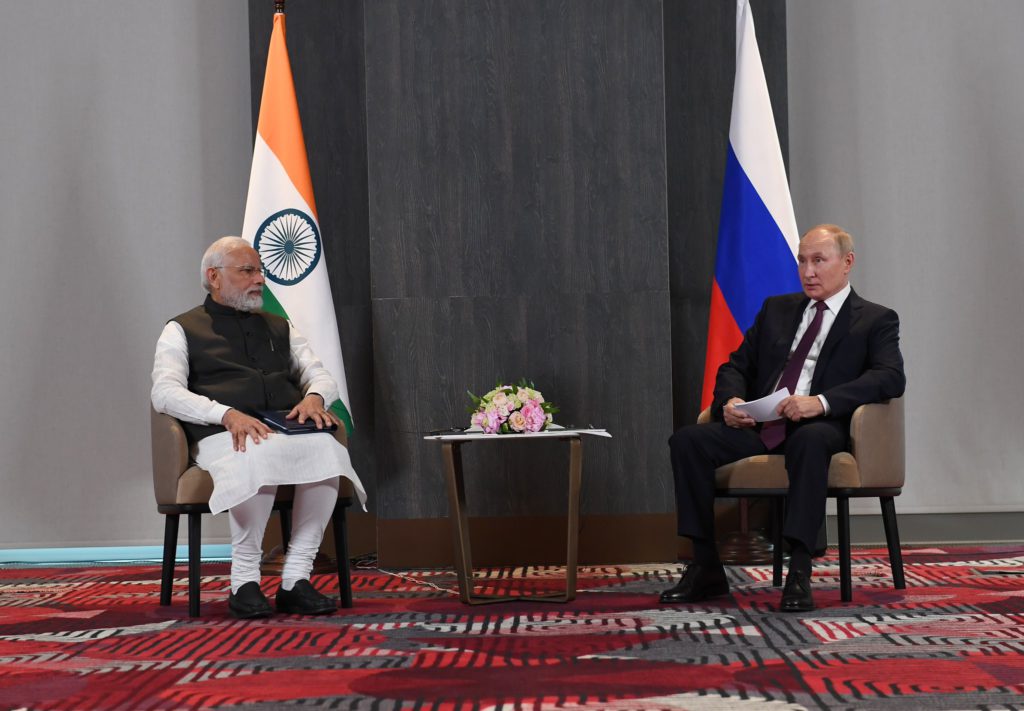
India Prime Minister Shri Narendra Modi and Russia President Vladimir Putin. Credit: MEAphotogallery | Flickr, under licence CC BY-NC-ND 2.0.

India and Russia are in advanced talks to sign a preliminary agreement on critical minerals covering exploration, processing and technological collaboration, two sources familiar with the matter said.

The deal is expected to focus on lithium and rare earths, with the two governments also set to facilitate corporate investments, the sources said, declining to be identified as the deliberations were not public.

The agreement could be signed within two months, they added.

“We have shared a draft of the proposed agreement with our Russian counterparts,” one of the sources said.

The Ministry of Mines, which is leading discussions with Russia, did not respond to a Reuters email seeking comment. Russia’s Ministry of Industry and Trade and the office of First Deputy Prime Minister Denis Manturov also did not respond to requests for comment.

India is keen to cut its dependence on China, which dominates global supplies of several key minerals and has advanced mining and processing technology, and secure new overseas supplies to support its energy transition and infrastructure development.

New Delhi has signed critical minerals agreements with Argentina, Australia and Japan, and is in talks with Peru and Chile on broader bilateral agreements that also include critical minerals.

However, India has had limited success in securing overseas critical minerals assets and has so far signed only a single lithium exploration and mining project agreement, covering five blocks in Argentina in 2024.

India could also revisit Russian state nuclear corporation Rosatom’s lithium exploration project in Mali if the political situation in the West African nation stabilized, one of the sources said.

Earlier this year, Reuters reported that India withdrew from the Mali lithium project because of security concerns.

New Delhi has signed a series of agreements this year with countries including Germany, Brazil and Canada to strengthen access to technology and partnerships.

In 2023, the government identified more than 20 minerals, including lithium, as critical for its energy transition and rising industrial and infrastructure demand.

(By Neha Arora and Anastasia Lyrchikova; Editing by Mayank Bhardwaj and Kate Mayberry)


India Condemns Attack on Small Merchant Ship Sunk off Oman

Indian wood dhow cargo ship
India is reported a commercial dhow was attacked and sunk off Oman (DGS)

Published May 14, 2026 1:13 PM by The Maritime Executive


Indian authorities are reporting the details of an attack on a small merchant sailing off the coast of Oman. The incident, which had gone unreported by the monitoring services, is said to have involved a wooden dhow and was the second such incident in a week’s time.

The Ministry of Foreign Affairs and the Ministry of Shipping reported the incident while saying they “deplore the fact that commercial shipping and civilian mariners continue to be targeted.” It called for avoiding attacks on innocent seafarers and shipping.

The cargo ship named Haji Ali was sailing from Somalia carrying a cargo of livestock. There were 12 seafarers aboard the vessel as it was making its way to the United Arab Emirates. 

Indian officials reported the ship was struck by an “unidentified explosive object.” Reports are speculating it was likely a drone or possibly a missile. The strike took place around 0330 local time on May 13, and the vessel is reported to have caught fire. The 12 crewmembers made their way to a lifeboat and were able to leave the ship as it began to sink.

The ship was near the Omani coast when it issued a distress signal. The Oman Coast Guard responded, rescued the crew, and took them to Dibba, Oman, a port near the Strait of Hormuz.

The reports said this latest incident continues to highlight the dangers in regional waters. The ministries called for safety at sea and freedom of navigation.


Indian magnate Adani agrees multi-million-dollar penalty in US court case


ByAFP
May 15, 2026


Chairperson of the Indian conglomerate Adani Group, Gautam Adani 
- Copyright AFP Punit PARANJPE

Indian billionaire industrialist Gautam Adani has agreed to pay a multi-million-dollar settlement in a US civil court case linked to corruption without admitting guilt, his company said Friday.

The November 2024 indictment in New York accused the industrialist and multiple subordinates of deliberately misleading international investors as part of a vast bribery scheme.

Adani was accused of having participated in an estimated $250 million scheme to bribe Indian officials for lucrative solar energy supply contracts.

Adani, along with his nephew Sagar Adani, agreed to the “payment of a civil penalty” totalling $18 million, while noting that it came “without admitting or denying the allegations made in the civil complaint”, a letter from Adani Green Energy to the Mumbai stock exchange read.

The penalty payment comes as US prosecutors are reported to be set to drop charges against Adani, The New York Times reported on Thursday.

The Adani letter, which noted that the final judgement of the US court is still awaited, stressed that the “company is not a party to this proceeding, and no charges have been brought against it”.

The New York Times said the move to abandon the charges, brought under US president Joe Biden’s administration, came after Adani hired a new legal team led by Robert Giuffra, one of President Donald Trump’s personal lawyers.

With a business empire spanning coal, airports, cement and media, the chairman of Adani Group has been rocked in recent years by corporate fraud allegations and a stock crash.

Adani, a close ally of Indian Prime Minister Narendra Modi, was born in Ahmedabad in Gujarat state to a middle-class family but dropped out of school at 16.

He moved to India’s financial capital, Mumbai, to find work in the city’s lucrative gem trade.

After a short stint in his brother’s plastics business, he launched the flagship family conglomerate that bears his name in 1988 by branching out into the export trade.

His big break came seven years later with a contract to build and operate a commercial shipping port in Gujarat.


India vows to crush terror ‘ecosystem’, a year after Pakistan conflict


ByAFP
May 7, 2026


Prime Minister Narendra Modi said India remains "steadfast as ever"
 - Copyright AFP/File Sajjad HUSSAIN

Prime Minister Narendra Modi said India remains “steadfast as ever” in its determination to defeat terrorism and its “enabling ecosystem”, marking one year since a deadly clash with arch-enemy Pakistan.

Relations between nuclear-armed neighbours plummeted last year after an April 22 attack in Pahalgam in Indian-administered Kashmir killed 26 men, mostly Hindu tourists, leading to their worst conflict in decades.

India blamed Pakistan for backing the attack — a charge Islamabad denied — triggering tit-for-tat diplomatic measures and a sharp military escalation.

The conflict escalated after India launched strikes on May 7, 2025 — on what it described as “terrorist camps” in Pakistan.

That prompted an immediate response from Islamabad, leading to airstrikes, drone swarms and heavy mortar fire between the two nuclear-armed neighbours.

“We remain as steadfast as ever in our resolve to defeat terrorism and destroy its enabling ecosystem,” Modi said on Thursday, a year on since the launch of what India dubbed “Operation Sindoor”.

Modi’s Hindu nationalist government used Sindoor, the Hindi word for the red powder which married Hindu women wear on their foreheads, as a sign that it was to avenge those widowed in the April 22 attack.

“They gave a fitting response to those who dared to attack innocent Indians at Pahalgam. The entire nation salutes our forces for their valour,” he said in a statement.

More than 70 people were killed on both sides.

Pakistan claims to have shot down five Indian fighter jets, including three advanced French Rafale aircraft, all of which were in Indian airspace at the time. India has not disclosed any losses.

On Thursday Pakistan said it would defend itself strongly against any attack in a statement marking the anniversary of a conflict Islamabad calls “Marka-e-Haq”, or “Battle of Truth”.

“We reaffirm that any threat to our homeland will be met with national unity, unshakeable resolve, and strength through all means available,” a foreign ministry statement said.

Without mentioning India by name, it added: “Last year, when aggression was imposed upon us, Pakistan… acted with calm resolve and moral clarity. Our response was measured, responsible, and precise; guided not by emotion, but by principle.”

The neighbours agreed to end the four-day conflict on May 10, a ceasefire first announced by US President Donald Trump.

Officials from Islamabad and New Delhi confirmed the ceasefire on May 10, minutes after Trump posted the announcement on his Truth Social network. India has repeatedly insisted that the truce was worked out directly with Islamabad.

India is also reported to be readying a test-fire of the latest model of the domestically developed ballistic Agni missile — meaning “fire” in Sanskrit — capable of carrying multiple nuclear warheads.

Modi’s Bharatiya Janata Party (BJP), in a post on social media, claimed the Agni-6 missile had a range of up to 10,000 kilometres (6,200 miles).

It claimed that it would place India in an elite club of nations with such long-distance missiles.

“This missile will make India’s security impenetrable and place us among the most powerful nations in the world,” it said, without giving further details of the launch.

However, Indian media report a Notice to Air Missions has been issued for a warning area over the Bay of Bengal, according to the Times of India newspaper.
New York governor orders US immigration agents to unmask


ByAFP
May 7, 2026


Officers of federal Immigration and Customs Enforcement (ICE) typically cover their faces on operations - Copyright AFP ANDREW CABALLERO-REYNOLDS

New York’s governor on Thursday ordered federal immigration agents operating in her state to not wear masks, a move likely to be challenged by President Donald Trump’s administration after courts overturned a similar effort in California.

Since the beginning of Trump’s controversial mass deportation campaign, agents from Immigration and Customs Enforcement (ICE) have typically covered their faces, officially to avoid being identified and potentially threatened outside of work.

“For ICE, wearing masks without good cause is nothing short of an intimidation tactic, a cowardly attempt to evade responsibility,” New York Governor Kathy Hochul, a leading Democrat opponent of Trump and his immigration policies, said Thursday.

Images of heavily armed, masked, plainclothes officers marauding around US cities including Minneapolis brutalizing citizens and non-citizens alike garnered international attention earlier this year, peaking when ICE officers shot dead two Americans in the Midwestern city.

As well as the restriction on face coverings, Hochul announced that ICE agents would no longer be permitted to enter schools, libraries, community centers, polling sites, and other sensitive locations without a judicial warrant.

She also forbade local police from cooperating with the agency in any operation conducted solely on immigration grounds.

“Our officers, paid for by local taxpayer dollars, were hired to protect their communities…they’re not there to do the federal government’s bidding,” the governor added.

Trump’s immigration pointman Tom Homan recently warned that “what’s going to happen with places like New York, and (if) people pass ridiculous legislation not to work with us, we’re going to flood the zone.”

A law passed by California’s legislature requiring federal agents to show their faces was blocked by a district court earlier this year, with an appellate court later also ruling against the measure.


US tariffs, cyberattack drive Jaguar Land Rover into loss


ByAFP
May 14, 2026


Jaguar Land Rover, like other automakers, suffered last year when the United States slapped tariffs on imports, which led the automaker to halt delivery of vehicles to the country in April - Copyright AFP/File RONALDO SCHEMIDT

US import tariffs and a debilitating cyberattack pushed Jaguar Land Rover into an annual loss, figures published Thursday showed, although the luxury British automaker’s performance improved in the last quarter.

The company, which is owned by India’s Tata Motors, recorded a net loss of £244 million ($328 million) in its fiscal year that ended on March 31, as revenues slumped almost 21 percent to £22.9 billion.

Jaguar Land Rover, like other automakers, suffered last year when the United States slapped tariffs on imports, which led the automaker to halt delivery of vehicles to the country in April.

Britain reached a trade deal with the US that brought the automaker some relief in July.

The respite was short lived however as a cyberattack forced Jaguar Land Rover to halt production for more than a month, leading to a hit of £196 million.

Jaguar Land Rover “faced a challenging year with revenue and profit impacted by multiple headwinds, including a pause in production following the cyber incident,” chief executive PB Balaji said in a statement.

The tough car market in China and the winding down of production of existing models ahead of the launch of new models also affected performance in the last fiscal year.

The company pointed to a recovery at the start of this year, however, and expressed confidence for the coming year.

“Looking ahead, (Jaguar Land Rover) remains resilient and well placed to address the geopolitical, inflationary and regulatory challenges the industry faces,” it said
Honda suspends plans for new electric vehicle plant in Canada


ByAFP
May 14, 2026


Honda had announced the plan to expand its Canada operations two years ago
 - Copyright AFP Kazuhiro NOGI

Japanese auto giant Honda said Thursday its plans to build a multi-billion-dollar electric vehicle plant in Canada have been “indefinitely suspended,” marking another blow to the country’s tariff-hit auto sector.

Canada had hoped to become a global EV production powerhouse, inking massive government-backed deals with leading automakers like Honda and Germany’s Volkswagen — but those ambitions are fraying.

Demand for EVs has proven softer than expected in some markets, and sales have been hurt by US President Donald Trump’s decision to scrap federal government tax breaks for electric vehicle sales.

Honda said in a statement its decision was driven by “evolving business conditions, a change in external resource strategy and shifting customer demand.”

The company had planned to expand its operations in Alliston, Ontario, about 90 kilometers north of Toronto, where it has been producing conventional vehicles for decades.

When the plan was announced two years ago, Canadian officials valued the project at roughly C$15 billion ($11 billion).

Canada has pitched itself as an ideal location for EV battery production, arguing it has huge reserves of the critical minerals needed for advanced battery technology and an abundance of skilled auto workers.

But multiple projects have been delayed or suspended as automakers have adjusted their plans to ramp up EV production.

Honda announced in March that it was cancelling the launch and development of certain EV models in the United States, blaming a “government policy shift” by the Trump administration.

Canada’s auto industry has also been hit uniquely hard by Trump’s tariffs, given the deep integration of the North American auto sector.


Ionic-led project demonstrates viable recycled rare earth supply chain for EV motors

Belfast-based commercial plant. ( Architect’s Impression courtesy of Ionic Rare Earths Limited.)

Ionic Rare Earths (ASX: IXR) says it has successfully led a European collaboration demonstrating the Western world’s first end-to-end recycled rare earth supply chain for electric vehicle motor magnets.

On Monday, the Australian firm said it has led a ground-breaking project that also involves Less Common Metals (LCM), GKN and Ford UK, designed to test the conversion of recycled rare earth metal into magnets used in Ford EVs.

The project was supported via the UK government’s CLIMATES initiative, which fostered 36 projects supporting circular rare earth elements (REE) initiatives. The Ionic-led circular automotive supply chain was considered a flagship project, providing a fully circular demonstration for high-specification magnets.

In late 2023, the company received UK government backing to build a commercial rare earth magnet recycling facility in Belfast, which will provide materials to LCM for alloy production. The alloy will then be converted into magnets to be used for Ford’s electric vehicle production facilities in the country.

Ionic currently produces rare earth oxides (REOs) of neodymium, dysprosium and terbium at target purities of above 99.5% via recycling of magnets and secondary materials from within the magnet supply chain.

As part of the collaboration, the recycled rare earth oxides are converted into metal and strip alloy to magnet specification by LCM, prior to GKN making the magnets to Ford specifications. The magnets are then tested at Ford’s R&D facility in Dunton, UK.

During the testing, the rotor produced with the recycled materials magnets passed a durability test cycle, with results equivalent to rotors manufactured with production magnets, Ionic said.

West’s first recycled REOs

“Utilizing made-in-Belfast technology, Ionic Technologies was the first producer of recycled, individually separated magnet REOs in the Western world, and this now proves that its long-loop recycling technology can supply Western supply chains for the most demanding applications,” Ionic’s managing director Tim Harrison said in a news release.

According to the company, this project provided evidence that rare earth oxides produced using Ionic’s proprietary technology are both appropriate for use in high-specification magnet supply chains, and also that the long-loop recycling method can enable a UK-orientated holistic supply chain that can deliver magnets equivalent to the existing supply chain.

Under the UK’s Critical Minerals Strategy announced in November 2025, the country is targeting producing 10% of its mineral needs domestically and 20% through recycling by 2035, compared to current domestic production, which accounts for just 6% of its critical minerals needs.

This is a significant breakthrough in achieving the UK government’s goal of reducing the nation’s overreliance on foreign imports of critical minerals, protecting the UK from shortages in global shocks and shoring up supply chains, Ionic said.


Turkey Defines Areas for First Offshore Wind Energy Auction

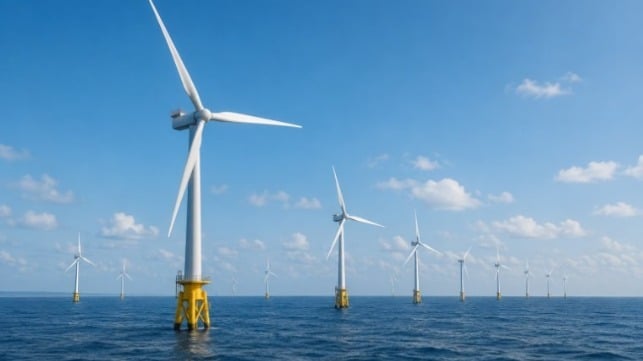
offshore wind farm
Turkey is preparing to offer four areas in its first offshore wind tender

Published May 14, 2026 7:51 PM by The Maritime Executive


The Turkish government is pushing forward with its efforts to launch its first offshore wind energy tender in 2026. They defined the first zones that will be offered as the country continues to expand its onshore use of wind energy as part of its overall renewable energy strategy.

The Ministry of Energy and Natural Resources posted the country’s first offshore wind Renewable Energy Resource Areas (YEKA) on its website. It reports that, as a result of studies it has conducted, a total of four areas in the Saros Bay, Gökçeada, Bozcaada, and off the coast of Edremit have been identified as candidate Renewable Energy Resource Areas (YEKA). Detailed studies have begun to declare these areas as YEKA based on offshore wind energy.  All four are located in the western parts of Turkey in the Aegean and near the border with Greece.

The minister told the audience at the Turkey Wind Energy Congress that they planned to offer tenders for 1.5 GW of capacity this year. Going forward, their goal will be for 2 GW of additional capacity each year. He said the government is committed to investing $30 billion by 2035 in its transmission infrastructure.

"We aim to reach a capacity of 5,000 megawatts in offshore wind energy by 2035," said Minister of Energy and Natural Resources Alparslan Bayraktar. “Our country has significant potential in this field,” he said, reporting that they were working to complete the permitting process.

The minister highlighted that Turkey's total installed power capacity exceeds 125 GW, while highlighting that more than 60 percent comes from renewable sources. Onshore Turkey, as of early 2026, exceeded 15 GW of wind energy capacity. Wind power already accounts for about 11 percent of the country’s energy production. 

By 2035, Turkey forecasts that it will have a capacity of 120 GW coming from wind and solar energy.