Friday, May 15, 2026


Basel vs. Hong Kong? Why the “Conflict” Narrative Misses the Point  
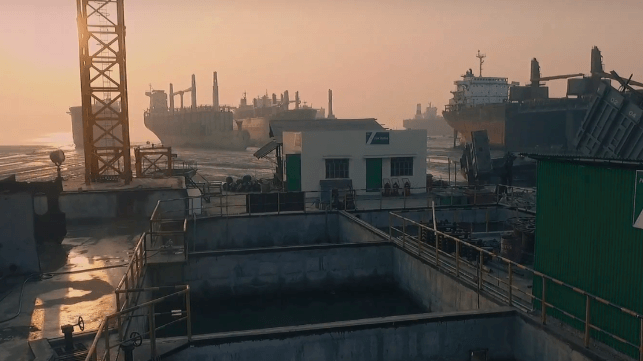
Courtesy PHP
Courtesy PHP

Published May 11, 2026 12:52 PM by Gudrun Janssens


The ongoing debate around ship recycling governance frequently centers on the relationship between the Basel Convention (BC) and the Hong Kong International Convention for the Safe and Environmentally Sound Recycling of Ships (HKC).

A recent article; “HKC Certification Can’t Substitute for the Basel Convention”, published by Prof. Dr. Ishtiaque Ahmed, raises some questions about the functioning of, and interaction between, these two UN conventions. In the article, one UN Convention is characterized as an instrument based on strict state-to-state oversight, requiring direct, formalized and accountable consent before any transboundary movement. By contrast, the other UN Convention is portrayed as an industry-oriented solution, introducing a consent procedure that does not constitute a negotiated or acknowledged agreement between states and with its certification process not functioning as an instrument of intergovernmental consent.

The article concludes that Bangladesh, India or Pakistan - or any other recycling state - cannot rely on the HKC’s International Ready for Recycling Certificate (IRRC) as a substitute for Basel’s “strict state-to-state” consent. Nor can it legitimately issue or facilitate such certification in a way that effectively replaces the role of the exporting state. To do so would, according to the author, seriously undermine the core safeguard mechanisms of the Basel regime.

While open discussion on this topic is welcome, the purpose, mechanisms, and intent of the HKC are too often misunderstood. This article will address three main points:

- The core safeguard mechanisms of the BC

- Governance under UN conventions

- The roles of flag states versus exporting states.

Core safeguard mechanisms undermined by introducing the IRRC

From the outset, the article states that the HKC IRRC procedure cannot substitute the BC Prior Informed Consent (PIC) procedure, warning that anyone who suggests otherwise undermines the core safeguards that the BC was deigned to uphold.

The suggestion that HKC compliance undermines Basel’s core safeguards is incorrect, as no party has sought to weaken the Basel PIC. More importantly, while Basel’s safeguard mechanisms work perfectly well for packaged hazardous waste streams, they have never operated effectively for ships and ship recycling in the first place. The PIC mechanism does not provide meaningful oversight of end-of-life ships, nor does it prevent unsafe or environmentally harmful recycling in practice. The legacy of past substandard ship recycling practices serves as evidence of this. The HKC therefore does not replace an effective system - rather, it was created because there was no functioning global regime for the recycling of ships. 

We believe that the procedures under the BC (and the EU Waste Shipment Regulation) have failed to positively impact the regulation of end-of-life ship recycling on a global scale. This raises the question of the mentioned “core safeguards” and the claims that they are at risk of being undermined. Portraying HKC implementation as an erosion of Basel protection risks rewriting history and obscuring why the HKC was needed in the first place.

Governance under UN conventions

Furthermore, the arguments in the article overlook the fact that that UN conventions are governed equally by states. It is not correct that the HKC IRRC is an agreement between a state and a private operator, as both the HKC’s IRRC and the BC’s PIC rely on approval and consent by the relevant states.

The distinction lies not in who governs them, but in what they govern: the BC addresses waste movement and treatment while the HKC regulates ships and their recycling. Neither convention is an industry or voluntary regime. In fact, both are intergovernmental UN treaties which are negotiated, adopted and ratified by states and implemented and enforced through national legislation and competent authorities.

Stating otherwise causes confusion. States—not the industry—regulate and enforce compliance. Whether designated as flag or exporting states, the obligations assigned by both conventions remain with the states.

Flag state vs. exporting state: legal and practical roles in ship recycling

Another point concerns the approach to the competence of the states involved. The article asserts that the flag state concept was never meant to replace territorial export control, suggesting it merely reflects jurisdiction over the vessel, not authority over its disposal. Furthermore, it claims that there is a widespread practice of treating the flag state as the de facto exporting state for Basel purposes.

In practice, however, there is no intention to make the flag state the exporting state; it is quite simply not possible because the BC does not acknowledge the existence of the flag state. Therefore, it is inaccurate to state that it is common practice to treat the flag state as the de facto exporting state for Basel purposes.

Nonetheless, it is evident that the flag state is the authority most closely connected to the ship throughout its life. The flag states oversee IHM surveys, certificates, and all matters related to safety of the ship, its crew and environmental regulations—including when the decision to recycle the ship is made—unlike the BC authority in the exporting state.

Lastly, a final point to address is the view that an exporting state can be meaningfully identified in the context of ship recycling. In reality, there is no factual link between an end-of-life ship and any exporting state as defined by the BC. The waste contained within a ship is not produced in or by an exporting state, nor is it stored or managed there. Instead, it develops gradually over decades of international trading, maintenance and operations across multiple jurisdictions, often far from the state and the port where the ship is located when recycling is considered. As a result, environmental authorities in the exporting state are generally less acquainted with the ship, including its operational, practical and legal compliance requirements, as well as with the processes necessary to uphold enforcement measures on it.

Conclusion

Both the BC and the HKC function within a comprehensive regulatory system. Each is a UN intergovernmental treaty—negotiated, adopted, and ratified by states and implemented and enforced through national legislation and designated authorities. While states oversee both conventions, each one of them approaches ship recycling from different perspectives.

Assertions that HKC compliance diminishes Basel’s “core safeguards” is a misconception. There has been no initiative to weaken the BC; rather, its safeguards have historically proven ineffective when applied to ships. In fact, the HKC was established precisely because no effective global framework for ships existed. It was the Conference of the Parties (COP) to the BC that asked the IMO to develop mandatory requirements to ensure the environmentally sound management of ship dismantling. Suggesting that implementation of the HKC erodes Basel’s protections misrepresents the facts and obscures the underlying rationale for the HKC’s creation.

The BC can positively impact the safe and environmentally sound management of waste streams generated during the ship recycling process, but it remains the prerogative of BC Parties to determine their engagement in this area. Should the parties choose to engage more actively, they may find that the shipping and ship recycling industries are prepared to collaborate constructively.

We face a pivotal decision: either continue discussing how to best reconcile two UN Conventions—one of which was never intended to regulate ships going for recycling—or fully support the robust implementation of the Hong Kong Convention globally, which elevates standards in the recycling states and supports tangible environmental and safety progress. At this critical juncture, workers and the environment would benefit substantially from global support for an effective, enforceable, multilateral, legally binding framework. BIMCO advocates for the latter approach, and the solution is already here.

There is no doubt that the face of ship recycling has already changed under the prospects of the HKC coming into force - first in India, then in Bangladesh and now in Pakistan. The progress can be witnessed first-hand by anyone visiting the yards.

The HKC embodies years of multilateral negotiation involving governments, industry representatives, NGOs and international organisations. Its value should not be diminished.

Gudrun Janssens is Head of EU Engagement and oversees BIMCO's EU-related marine environment, safety and technical affairs from the Brussels office.

The opinions expressed herein are the author's and not necessarily those of The Maritime Executive.

Selling factories to Chinese partners: risky road for European carmakers


ByAFP
May 8, 2026


The partnership between Leapmotor and Stellantis could deepen with Leapmotor taking over a Stellantis factory in Spain - Copyright AFP/File Ina FASSBENDER


Laurence BENHAMOU

Carmaker Stellantis announced Friday it is considering selling an underutilised factory in Spain to its Chinese joint venture Leapmotor, which could save jobs in the short term but risks further strengthening Chinese automakers.

This is a question all European carmakers are facing. The continent’s car market has never fully recovered from the Covid pandemic downturn and their factories are operating on average at only half capacity.

They also face an onslaught from Chinese carmakers, whose rapidly advancing technical prowess and low production costs pose major risks to global rivals.

And as weak demand makes the domestic Chinese market fiercely competitive, Chinese automakers are increasingly looking to Europe as an El Dorado.

Brands such as BYD, MG, Chery, Geely, Leapmotor, Jaecoo, and Xpeng, were virtually unknown three years ago in Europe.

Now they already account for nine percent of European sales overall and 14 percent of electric vehicle sales, according to the consulting firm Dataforce.

Tariffs and consumer incentives for which only European-assembled cars are eligible have posed a hurdle for Chinese automakers to gain market share in Europe.

So, they are increasingly looking to hop over these obstacles by manufacturing in Europe, either by building factories or, even more simply, by buying them.

Chery kicked off the trend in 2023 by buying a former Nissan plant in Barcelona, Spain, where it now plans to produce 200,000 vehicles a year.

It said last month it would open a research and design centre in Paris to work on developing a small electric car to manufacture in Europe for the local market.

Nissan is reportedly considering selling its British plant in Sunderland — its last in Europe — to Chery or the Chinese company Dongfeng.

– Closer collaboration –

This Friday, the Franco-Italian-American manufacturer Stellantis — whose brands include Peugeot, Fiat and Jeep — became the first European automaker to take the plunge.It announced it was considering partially selling its Villaverde site in Madrid to Leapmotor, in which it holds a 51-percent stake.

It already plans to open its Zaragoza plant so that Leapmotor can soon produce a model there under its own brand.

An electric SUV sold under the Opel brand could also be produced in Zaragoza in collaboration with Leapmotor.

And this is only the beginning: this German-Chinese car will serve as a template for other Stellantis vehicles.

Some European cars already incorporate a large number of Chinese components, such as Renault’s electric Twingo, which was also designed at a Renault facility in China.

The Stellantis announcement, however, is the first time a European automaker has so openly presented such collaboration on producing models with a Chinese partner.

According to Bloomberg, Stellantis will not stop there.

It is reportedly considering selling three plants — one each in France, German and Italy — to another longstanding Chinese partner: Dongfeng.

A Dongfeng delegation recently visited the factory in France, a union representative confirmed to AFP.

Ford also confirmed on Thursday that it was in talks with Chinese company Geely over the partial sale of a plant in Valencia, Spain.

Geely, which is also a co-owner of Renault plants in Brazil and South Korea, would produce a model for the European market.

German giant Volkswagen is also tempted.

Its chief executive Oliver Blume said recently that the company was examining whether “there are opportunities for our Chinese cars in Europe or for opening this for partnering maybe with our partners we do have in China”.

Other options included selling factories to defence manufacturers, he added.

“The worst one and most costly one is to close a plant,” Blume said.

That view is shared by the chief executive of OPmobility, a French auto-parts manufacturer.

Selling European car factories to Chinese manufacturers would be “a smart option, rather than adding to overcapacity”, said OPmobility chief executive Felicie Burelle.

– ‘Siren song’ –

But “we mustn’t give in to this siren song,” warned Bernard Jullien, an automotive industry specialist at the University of Bordeaux.

“For manufacturers, suppliers, employees and local officials, it is tempting to prefer selling to a Chinese player rather than disappearing,” he noted.

“But this amounts to giving a leg up to a formidable competitor right here in the heart of Europe by providing a powerful accelerator for its penetration of our markets,” Jullien wrote in an opinion piece on the website autoactu.com.

He sees such moves as taking the easy way out for a manufacturer like Stellantis, which has been losing ground in Europe.

With Chinese companies having taken the lead in developing electric vehicles, he did not exclude the company deciding to outsource electrification to its Chinese partners.

But this “every-man-for-himself” strategy will end up giving Chinese manufacturers a boost while “ruining European car manufacturing”, Jullien warned.

Only lawmakers can act to prevent European carmakers from succumbing to this temptation, he added.
China’s Weichai wins battle for Ferretti yacht maker


By AFP
May 14, 2026


Ferretti builds luxury yachts under a series of brands including Riva, Pershing, Wally and Itama at seven shipyards in northern Italy - Copyright GETTY IMAGES NORTH AMERICA/AFP/File JOE RAEDLE

Chinese group Weichai on Thursday took control of the world’s top yacht maker, Ferretti, after a takeover battle with a Czech shareholder that had appealed to the Italian government.

Ferretti builds luxury yachts under a series of brands including Riva, Pershing, Wally and Itama at seven shipyards in northern Italy.

Shareholders approved by 52.3 percent a new board put forward by Weichai, the biggest shareholder in Ferretti with a stake of 39.5 percent, the company said in a statement.

KKCG, the conglomerate of Czech billionaire Karel Komarek and a rival of Weichai, challenged the takeover and asked Italy’s government to block it.

In a statement, KKCG expressed “serious concerns” over the takeover and “potential failures to comply with disclosure obligations”.

KKCG appealed to Italian Prime Minister Giorgia Meloni to use the government’s so-called “golden power” provision, which applies to strategic assets, to stop the takeover.

Ferretti also produces patrol boats for law enforcement agencies.

KKCG earlier this year increased its stake in Ferretti from 14.5 percent to 23.23 percent for 115 million euros ($134 million).

On Thursday, KKCG was only allowed one seat on the new board of directors while Weichai appointed eight people.

Weichai, a state-owned group based in the Shandong region in northern China, is a major manufacturer of commercial vehicles, construction machinery and industrial engines, with 100,000 employees worldwide.

Weichai first helped prop up Ferretti in 2012, with a 178 million euro infusion of cash and bank loan guarantees of 196 million euros, at a time when the yacht maker was heavily indebted and hit hard by a drop in demand after the 2009 financial crisis.

Ferretti shares were down 5.2 percent on Thursday on the Milan Stock Exchange to 3.50 euros at 1529 GMT.

Milei approves incentives for lithium mine expansion with China ties


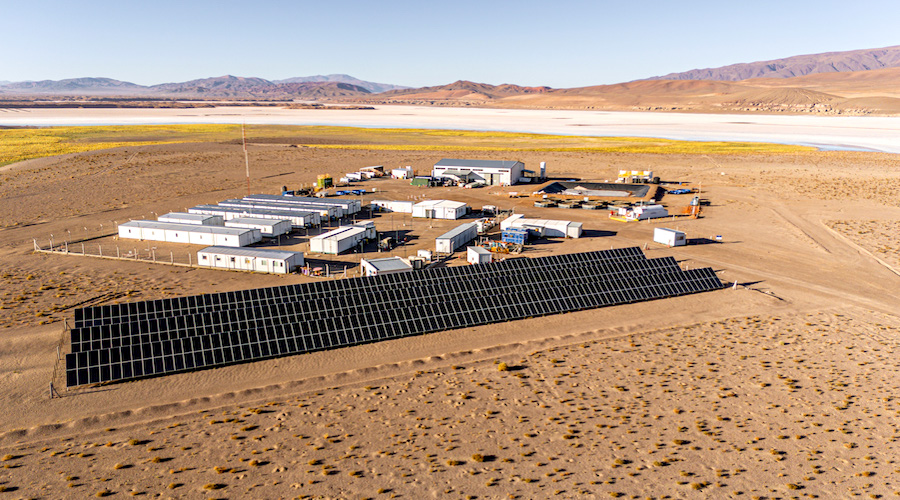
Pozuelos-Pastos Grandes (Image courtesy of Lithium Argentina.) Gangfeng holds a 67% stake.

Argentine President Javier Milei’s government approved a series of incentives on Thursday for the expansion of a lithium mine half-owned by a Chinese firm, a rare step for the libertarian who has prioritized ties to the Trump administration.

Milei’s government cleared a joint venture led by China’s Ganfeng Lithium Group to invest $1.24 billion in an expansion of its mine in the province of Jujuy along with partners Lithium Argentina AG, which has US-listed shares, and state-owned JEMSE.

Economy Minister Luis Caputo posted about the investment on X, but made no reference to the companies involved. The joint venture will receive legal guarantees and tax breaks as part of Milei’s sweeping program meant to attract large investments, known as RIGI.

Ganfeng is the largest shareholder of the project, owning 47% of the mine. It’s unusual progress for a Chinese firm in Argentina as Milei had blocked its state-run companies from other projects in a widely-perceived nod to his ties with President Donald Trump, who gave Milei a $20 billion financial lifeline last year.

The Argentine government also approved PSJ Cobre Mendocino, previously known as San Jorge, into the RIGI regime. It would be the first large metal mine in the winemaking province of Mendoza and cost about $891 million. Caputo added that the two projects combined would create 8,000 jobs directly and indirectly.

Milei’s administration is attempting to bullet proof investments for companies that had largely shunned Argentina after decades of state intervention. Beyond energy and infrastructure, he wants to position Argentina as a major supplier of minerals critical to the global shift toward clean energy, electrification and advanced technologies.

The approvals add to a pipeline of mining and energy projects seeking entry into RIGI, which offers legal stability for up to three decades, among a series of other financial incentives. Milei is also turning to mining to help reverse Argentina’s chronic shortage of hard currency, though some investors remain cautious given the country’s history of capital controls and policy swings.

Caputo said Argentina has approved 16 projects through RIGI that altogether have pledged almost $30 billion of investments, with another 20 proposals under evaluation.

(By James Attwood)


Argentina approves two mining projects via RIGI scheme worth $2.1 billion


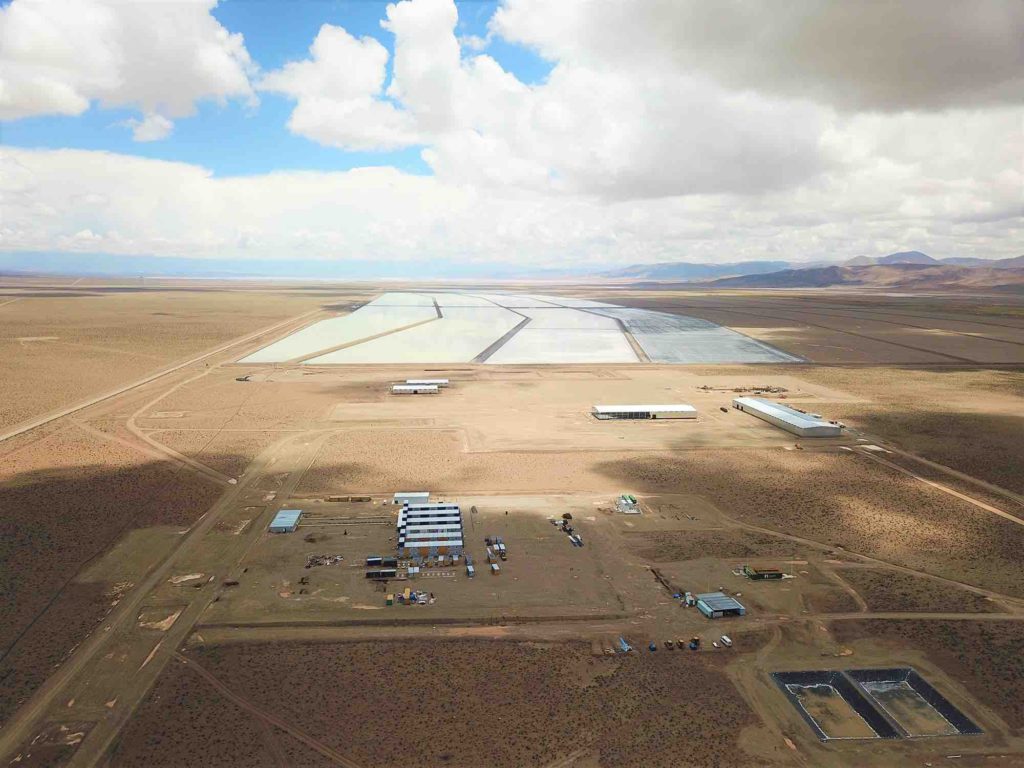
Construction at Caucharí-Olaroz lithium project in Argentina. (Image courtesy of Lithium Americas Corp.)

Argentina’s government on Thursday approved the participation of two new mining projects in the country’s RIGI investment scheme, the country’s Economy Minister, Luis Caputo, said in a post on social media.

The approved projects are the San Jorge copper project in Mendoza, with an investment of $891 million, and the expansion of the Cauchari Olaroz lithium project in Jujuy, with an investment of $1.2 billion, Caputo said, adding that the projects would generate over 8,000 new direct and indirect jobs.

(By Eliana Raszewski; Editing by Cassandra Garrison)


Rio Tinto considers raising stake in Argentina’s Los Azules copper project


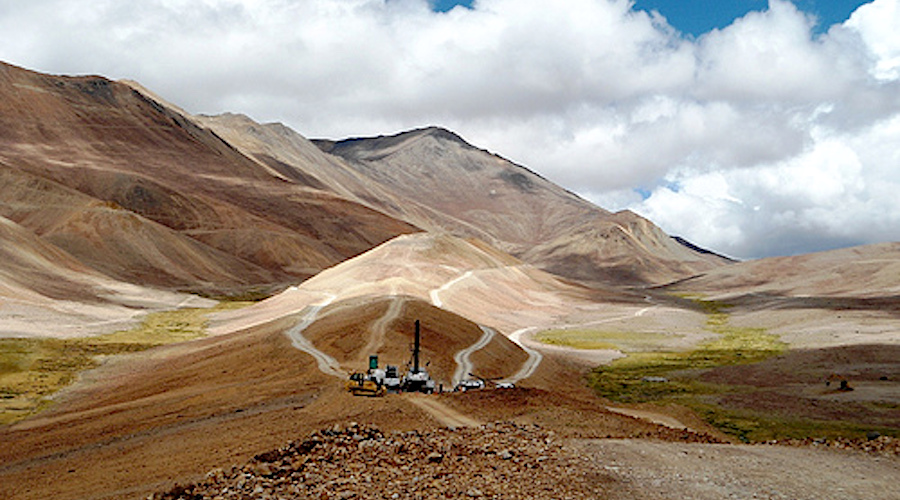
McEwen Copper’s Los Azules copper project in San Juan, Argentina. (Image courtesy of McEwen Mining.)

Rio Tinto is evaluating the economic potential of McEwen Copper’s giant Los Azules project in Argentina as the mining group considers ​increasing its 17.2% stake in the development, two industry sources said.

Los Azules ‌is among the world’s 10 largest undeveloped copper projects and the move highlights Rio Tinto’s push for large-scale copper assets as miners scramble to meet surging demand from data centres and the global clean ​energy transition.

Rio, which owns the stake in Los Azules through its copper technology ​venture Nuton LLC, is also focusing on boosting organic growth through ⁠its stakes in undeveloped deposits following the collapse of merger talks with Glencore.


Its technical team ​is evaluating the economic potential of Los Azules, while testing Nuton’s proprietary leaching technology at ​the site, the sources with knowledge of the matter said.

Rio Tinto declined to comment.

“We are obviously discussing with our existing partner Nuton because their technology makes so much sense,” Michael Meding, managing director at ​Canadian miner McEwen Copper, told Reuters on Thursday.

“Now that Rio Tinto is building their ​copper pipeline, they basically have a mandate to add copper for their production profile. So we are ‌having ⁠fruitful conversations.”

Securing a larger stake in Los Azules would bolster Rio’s copper pipeline at a time when new discoveries are scarce and competition for quality assets is fierce.

Nuton invested about $100 million for the stake in McEwen Copper, a subsidiary of McEwen Mining, according to McEwen’s ​investor presentation in February.

A ​feasibility study released in ⁠October 2025 estimates an after-tax net present value of $2.9 billion, with the project targeting first production by 2030. Average production over the ​first five years is projected at about 204,800 metric tons per ​year of ⁠copper cathode.

Aside from Nuton, automaker Stellantis holds an 18.3% stake in McEwen Copper, having invested around $275 million as part of its global push to secure raw materials for electric vehicle ⁠batteries.

McEwen Copper ​is seeking about $4 billion in initial capital to ​develop the mine. The company previously said it planned an initial public offering of about $300 million toward the end of ​this year.

(By Clara Denina and Divya Rajagopal; Editing by Veronica Brown and Emelia Sithole-Matarise)


China Names Largest Methanol Dual-Fuel Boxship Expanding Green Shipping

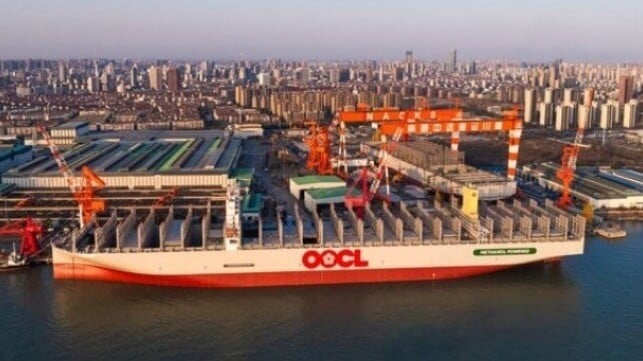
methanol-fueled containership at shipyard
OOCL Wisdom is the largest methanol-fueled containership and the first of a class of 12 for OOCL and COSCO (OOCL)

Published May 10, 2026 5:51 PM by The Maritime Executive


Chinese officials highlighted the naming ceremony for the new vessel, OOCL Wisdom. The ship is the largest capacity methanol-fueled containership, and as the first in a series of 12 ships, it further expands China’s push into green shipping.

Orient Overseas Container Line’s parent, COSCO Shipping, announced in 2022 its order for a dozen ultra-large methanol-fueled containerships. Seven of the vessels are being built by Nantong Cosco KHI Ship Engineering (NACKS) and are assigned to OOCL, while five are being built by Dalian Cosco KHI Ship Engineering (DACKS) for COSCO. It said the total order was valued at just under $2.9 billion, with the ships due for delivery into 2028.

The first of the ships was named OOCL Wisdom on May 8 in Nantong. At 399 meters (1,309 feet) in length, it builds on the company’s first class of conventionally fueled ultra-large vessels delivered over the last two years. OOCL Wisdom has a capacity of 24,168 TEU, which the company notes makes it the largest-capacity methanol-fueled containership yet built. It is 225,000 dwt and uses the largest methanol dual-fuel propulsion system. The main engine, auxiliary engine, and boilers are all equipped for dual-fuel operations. It will have a service speed of 22.7 knots.

The company also highlights a broad range of new technologies incorporated into the design. The ship is equipped with an advanced intelligent data platform and energy efficiency management system, which will permit it to achieve real-time ship-shore information exchange, automatic speed and trim optimization, and real-time prediction of hull structural fatigue damage. 

“The delivery of OOCL Wisdom not only expands OOCL's fleet and sets a new benchmark for our vessel technology, but also demonstrates our firm commitment to green and low-carbon development, digital intelligence, and sustainability,” said Tao Weidong, Chief Executive Officer of OOCL, during the naming ceremony.

It is the latest addition to COSCO’s fleet of methanol ships. Last year, the company launched its new line of 16,163 TEU containerships with the COSCO Shipping Yangpu. The ship measures 366 meters (1,200 feet), and the class was built with an 11,000 cubic meter ultra-large methanol storage tank. It allows the ships to complete a one-way trip entirely on methanol between the Far East and the U.S. East Coast without refueling. One of the challenges for methanol operations is that, as a fuel, it only has about a third of the energy density of conventional fuels, requiring large tanks for long-distance operations.

The 16,136 TEU class consists of four ships, with the last, COSCO Shipping Lily, delivered earlier this year. It followed COSCO Shipping Carnation and COSCO Shipping Panama. COSCO Shipping has also ordered the construction of 16 methanol-fueled containerships with a capacity of 12,000 TEU. It also completed the conversion of its first 20,000-TEU vessel, COSCO Shipping Libra, to dual-fuel methanol capabilities.

COSCO has emerged at the forefront of the sector for methanol-fueled ships, while others, including Maersk, have slowed their push into methanol, citing concerns about the fuel supply and infrastructure to support expansion. DNV calculates that there are currently 70 methanol dual-fueled containerships in service with orders for an additional 180 vessels. Containerships represent the largest portion of methanol-fueled ships.


Chinese firms warn Indonesia’s nickel quotas, tax hikes threaten investment


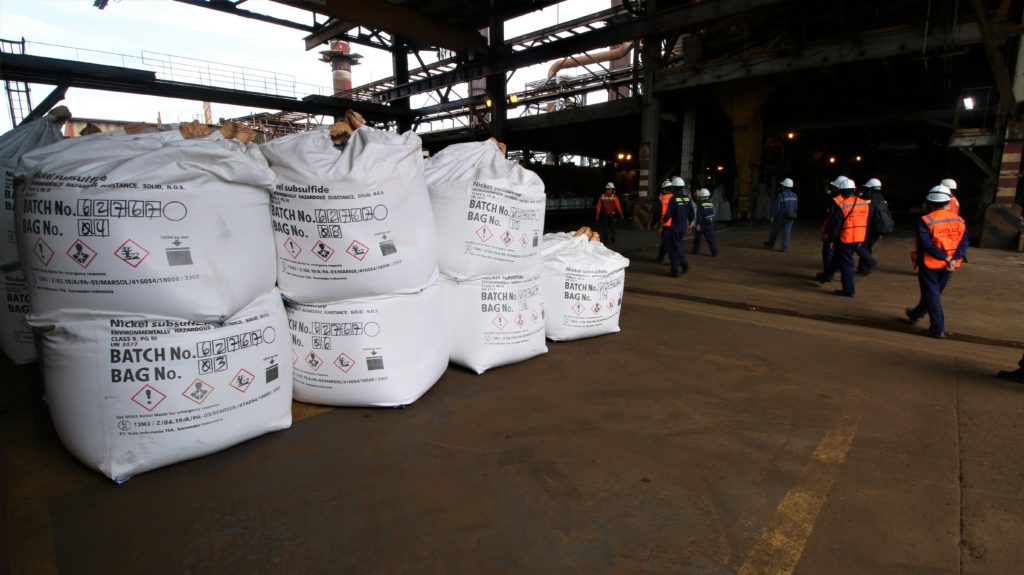
Image: Tsingshan Holding Group

Chinese companies operating in Indonesia are urging more business-friendly policies, warning tighter nickel ore quotas, higher taxes and a new pricing formula are driving up costs and threatening investment in the world’s biggest nickel producer.

In a letter to President Prabowo Subianto, copied to China’s embassy and seen by Reuters, the China Chamber of Commerce in Indonesia said Chinese firms faced “excessively stringent regulation, over-enforcement”, and alleged corruption and extortion by authorities.

Five sources with knowledge of the matter confirmed the letter, requesting anonymity because they were not authorized to speak publicly.

The complaint highlights tensions between Jakarta’s push to extract more value from its natural resources and the Chinese capital that has powered Indonesia’s rapid expansion in global nickel supply.

The letter cited higher taxes and royalties, planned foreign-exchange retention rules, stricter forestry enforcement, work-visa restrictions and suspensions of major projects.

Its strongest warning focused on nickel, where Chinese firms dominate downstream processing after years of investment in smelters, stainless steel plants and battery-material projects.

Nickel ore mining quotas have been sharply reduced this year, with cuts for large mines exceeding 70% and total reductions reaching 30 million metric tons, the chamber said.

It also criticized Indonesia’s revised nickel ore benchmark pricing formula, known as HPM, saying the changes had raised costs and could undermine existing projects and future investment.

The government has delayed planned increases in mineral royalties and export duties while it works on what officials have described as a fairer formula for the state and miners.

Speaking earlier on Wednesday, Prabowo said many foreign investors had complained Indonesia required too many permits and approvals took too long, and called for deregulation to support investment, without naming any country.

The chamber did not respond to an emailed request for comment. A spokesperson for Prabowo did not respond to a text message seeking comment.

Tsingshan Group, Zhejiang Huayou Cobalt and Brunp are chamber board members that operate nickel facilities in Indonesia.

(By Dylan Duan, Stanley Widianto, Gayatri Soroyo, Gibran Peshimam, Christina Bernadette and Tom Daly; Editing by Mark Potter)

Indonesia delays plan to impose higher royalties, export duties on minerals

Stock image.

Indonesia has delayed plans to extract more revenue from the mining sector until it can figure out an “ideal formulation” that benefits both the government and mining firms, the country’s mining minister said on Monday.

The government planned to impose higher royalties on some mining companies, as well as an export tax on shipments of certain minerals, including coal.

The ministry is collecting feedback from miners to make sure the government arrives at a policy that will not burden the sector, Energy and Mineral Resources Minister Bahlil Lahadalia told reporters.

“After hearing input from the public and businesses, I will put this on hold to develop a good, mutually beneficial formula,” Bahlil said.

Officials have previously said that the government aims to increase revenue from the mining sector.


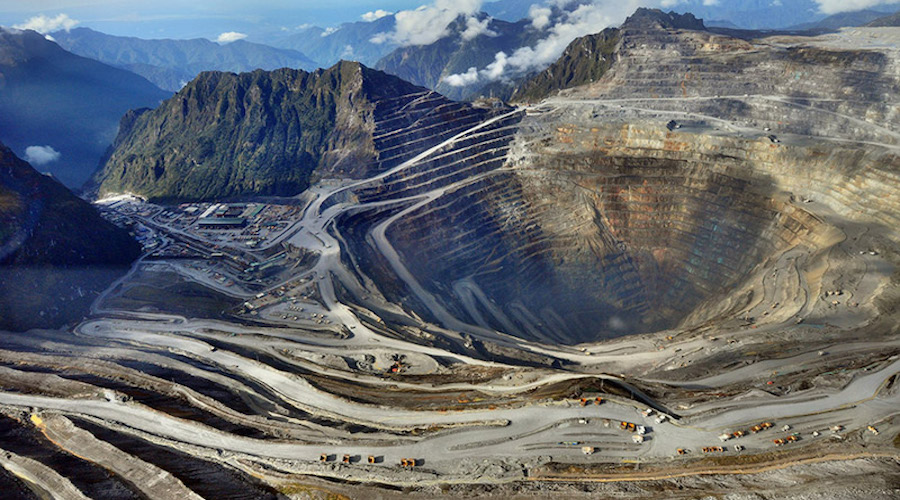
Freeport delays Grasberg full restart to early 2028


PT Freeport Indonesia has confirmed the delayed restart of full production at the Grasberg mine, as it continues to recover from a deadly accident last year that crippled the global copper supply chain.

In a statement on Thursday, the company said it now expects the giant complex in Central Papua province to return to full capacity by early 2028. Previously, it had targeted a full restart by end-2027.

A Freeport spokesperson told Reuters that this delay was due to “additional work on logistics and ore handling infrastructure” at the underground mine that was hit by a severe mudflow in September.

The incident, which occurred at Grasberg’s Block Cave underground mine portion, resulted in the death of seven workers, forcing Freeport to immediately halt mining activity and declare force majeure on shipments.

The suspension added further strain on the global copper market, as Grasberg accounted for about 3% of the world’s copper supply at the time, producing about 1.7 million lb. of the metal annually. It is also a major producer of gold, with annual production of 1.4 million oz.

Slowed ramp-up

As part of the recovery process, Freeport has laid out plans for a phased restart, beginning with areas that were unaffected by the mudslide. The Deep Mill Level Zone and Big Gossan underground mines had already resumed last year, while parts of GBC returned to operations last month.

Initially, the miner planned to ramp up to 85% capacity by the middle of this year, then 100% by end-2027. However, in its most recent earnings statement, the company said the trajectory to full production would slow materially, and now aims for 65% capacity in the second half of 2026, 80% by mid-2027, and near full capacity by the end of 2027.

Operations are currently in the recovery phase following the underground mine incident, “with production currently at around 40% to 50%,” Freeport Indonesia’s chief executive Tony Wenas stated in a press release on Thursday. “The company targets a return to full capacity by early 2028,” he added.

As a result of the delay, the company expects Grasberg’s copper production this year to be 700,000 lb., down from the 1-billion-lb. target it had forecasted in its fourth-quarter earnings report.

Earlier this year, the Freeport-McMoRan (NYSE: FCX) unit reached an agreement with the Indonesian government for a life-of-resource extension of operating rights.

China state firm discusses major new copper mine in Congo

Credit: Sicomines

A Chinese state-owned company is proposing to develop what could become one of the world’s biggest copper mines in the Democratic Republic of Congo.

A unit of China Railway Group Ltd., known as CREC, met with Congolese Mines Minister Louis Watum on Thursday to discuss the project that’s anticipated to produce between 200,000 and 500,000 tons of copper a year, according to statements published by the ministry.

Congo’s copper output has more than tripled over the last decade, cementing its status as the world’s second-largest supplier of the key metal, behind only Chile. While Chinese companies account for most of that production, the US is trying to increase its presence in the central African country’s booming mining sector.

The proposed mine is in the central Kasai-Oriental province rather than the Katanga region in southeast Congo, where all the currently operating copper mines are located. The potential project would be a joint venture between a CREC subsidiary and a state-owned diamond company known as MIBA, one of the statements said.

Kasai-Oriental is the heart of Congo’s diamond industry.

President Felix Tshisekedi is “keen to see the project’s realization as soon as possible,” the mines ministry said, without providing any details on the size of the investment or development timelines.

Congo’s largest copper operations are CMOC Group Ltd.’s Tenke Fungurume mine, which produced 519,000 tons of copper last year, and Kamoa-Kakula, a joint venture between Ivanhoe Mines Ltd. and Zijin Mining Group Ltd. that supplied 400,000 tons in 2025.

CREC is already a major shareholder in Sicomines, a project established nearly two decades ago as part of a multibillion-dollar minerals-for-infrastructure deal between Congo and China. That company produced almost 250,000 tons of copper last year. CREC also owns a stake in a smaller copper operation known as COMILU.

Tshisekedi’s government signed a minerals partnership with the US in December that grants American investors preferential access to some of Congo’s abundant reserves of metals, including copper, cobalt, lithium and tantalum. The country has assumed an important role in President Donald Trump’s ambitions to reduce US dependence on China for a range of mineral products.

China Fines MSC, CMA CGM, and Hapag, and Warns on Freight Rate Violations

Qingdao container terminal
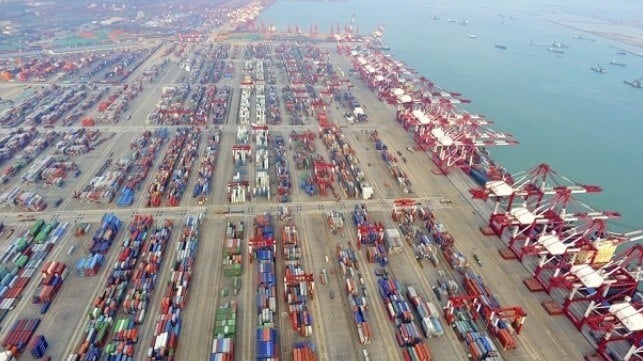
China says it found violations during inspections at three container ports (Qingdao file photo)

Published May 14, 2026 3:50 PM by The Maritime Executive


China’s Ministry of Transport announced it has issued fines against a total of nine international container shipping lines, as well as seven of its domestic non-vessel operation common carriers (NVOCC) for what it terms freight rate violations. The Ministry said carriers and NVOCCs should see this as a warning to improve their systems.

Among the carriers being targeted as industry leaders are MSC Mediterranean Shipping Company, CMA CGM Group, Hapag-Lloyd, Ocean Network Express, and Evergreen Karine. Also listed for the violations were smaller carriers, including Wan Hai Lines, SM Line, Emirates Shipping, and TS Lines, and the seven NVOCCs.

The Ministry reported that it conducted inspections at the ports of Guangzhou, Qingdao, and Ningbo in August, September, and November 2025. It reports it was focusing on the implementation of freight rate filings by the companies.

“It said the companies cited were found to "have violated regulations, including failing to complete freight rate filing procedures or having discrepancies between the actual freight rates and the filed prices.”

It reported that the companies were penalized. The Ministry conducted “serious talks” while imposing administrative penalties. 

The Ministry is also demanding that the companies “improve their freight rate filing systems, ensure accountability, and earnestly fulfill their freight rate filing obligations.”

Calling this a warning, the Ministry said it will intensify its inspections. It said it would be reviewing compliance with freight rate filing regulations and correcting any violations in accordance with the law.

This latest effort came after the Ministry in March reported it had summoned both Maserk and MSC Mediterranean Shipping Company to talks.  It was widely believed it was a dressing down of the companies after each agreed to have the terminal operators assume one of the port operations at the Panama Canal. The Financial Times reported that Chinese officials privately demanded that the companies relinquish the operations of the terminals that had been seized from CK Hutchison by Panama’s government. CK Hutchison had also said it would invoke an arbitration against Maersk’s APM Terminals.


India raises gold and silver tariffs to 15% to curb imports, support rupee


Stock image.

India has raised import tariffs on gold and silver to 15% from 6%, government orders said on Wednesday, as part of efforts to curb overseas purchases of the metals and ease pressure on the country’s foreign exchange reserves.

The higher duties could dampen demand in the world’s second-largest consumer of precious metals, although they may help narrow India’s trade deficit and support the rupee, one of Asia’s worst-performing currencies.

However, industry officials warned higher import taxes could revive smuggling, which had eased after India cut tariffs in mid-2024.

The government has imposed a 10% basic customs duty and a 5% Agriculture Infrastructure and Development Cess (AIDC) on gold and silver imports, taking the effective import tax to 15% from 6%.

“As expected, the government has raised duties to curb the current account deficit. However, this could affect demand, as gold and silver prices were already elevated,” said Surendra Mehta, national secretary at the India Bullion and Jewellers Association.

Prime Minister Narendra Modi on Sunday urged people to avoid gold purchases for a year to help protect foreign exchange reserves. India meets almost all of its gold consumption through imports.

Gold demand, particularly for investment purposes, has risen in India amid a recent rally in prices and negative returns from equities over the past year.

Inflows into India’s gold exchange-traded funds (ETFs) surged 186% year-on-year in the March quarter to a record 20 metric tons, the World Gold Council said last month.

India has been trying to curb gold imports in recent weeks and began levying a 3% integrated goods and services tax (IGST) on gold and silver imports, prompting banks to halt imports for more than a month.

As a result, April imports fell to a near 30-year low. Banks have since resumed imports after paying the 3% IGST, but imports are now likely to fall again following the increase in import duties, bullion dealers said.

“Grey markets are likely to become active, as the incentives to bring in gold illegally are high. At current price levels, smugglers could make significant profits,” said a Mumbai-based bullion dealer at a private bank, who declined to be named as he was not authorized to speak to media.

(By Rajendra Jadhav, Aditya Kalra and Mayank Bhardwaj; Editing by Mark Porter and Jamie Freed)

India’s top jeweler expects brief slowdown if gold buying curbed


Stock image.

Titan Co. Ltd., India’s largest jeweler, expects a temporary slowdown in demand if the government implements any measures to curb gold-buying, but is confident that domestic consumption will remain resilient in the long term.

Titan is trying to assess how demand for the precious metal in the world’s second-largest consumer will change after Prime Minister Narendra Modi urged Indians to forgo gold-buying to ease pressure on foreign reserves. The firm does not expect a disruption in supply for as long as four months, chief financial officer Ashok Sonthalia told Bloomberg TV.

“We are waiting for policy announcements,” he said. “A temporary, short-term slowdown may happen if the government decides to do something but we don’t expect demand to get destroyed in India.”

The comments reflect a broader sentiment gripping India’s gold industry in the wake of Modi’s unusual appeal this week, in which he also urged citizens to cut fuel use, limit foreign vacations and work remotely where possible, as rising energy prices due to the Middle East war risk inflating the country’s import bill. India imported more than 700 tons of gold last year.

Titan’s shares dropped as much as 2.2% on Tuesday, extending a 6% decline that was seen after the premier’s announcement.

The conflict has also impacted Titan’s operations in the Middle East, according to Sonthalia. The company has slowed down a planned expansion in the Gulf until the current situation improves. March and April were difficult in the regional market, but the medium- to long-term outlook remains positive, he said.

(By Satviki Sanjay and Preeti Soni)