It’s possible that I shall make an ass of myself. But in that case one can always get out of it with a little dialectic. I have, of course, so worded my proposition as to be right either way (K.Marx, Letter to F.Engels on the Indian Mutiny)
Friday, May 15, 2026
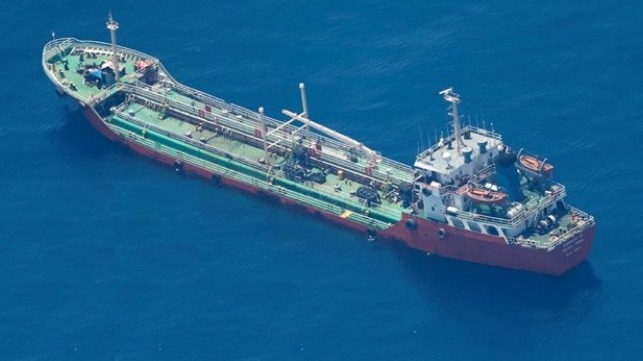
Somali Pirates Reportedly Demand $10M to Release Small Product Tanker
MT Honour 25 is one of the two product tankers being held off the coast of Somalia by pirates (EUNAVFOR ATALANTA)
Concern is rising among the families of the seafarers aboard the vessels seized by Somali pirates. In particular therer are reports of increasing demands from the pirates for the two laden product tankers they are holding.
The authorities report they are monitoring the vessels, but according to one of the family members, it is too dangerous to storm the vessel because they have flammable cargoes. With energy prices rising dramatically, the ships are likely seen as prize assets. Observers have speculated that the pirates were further emboldened by the potential value of the fuel tankers demonstrated by increased activity in recent weeks.
One of the tankers, Eureka (3,353 dwt), was seized off Yemen as it was transporting a cargo of 2,800 tonnes of diesel from the UAE. The pirates boarded the vessel on May 2 and directed it to the Somali coast. The ship is managed from the UAE and registered in Togo.
Family members are claiming the UAE-based managers of the vessel were slow to begin negotiations. The pirates reportedly increased their demands from $3.5 million to $10 million and continue to threaten the crewmembers.
Responding to the demands for action from the family members of the eight Egyptian crewmembers aboard the Eureka, Egypt’s Foreign Ministry said it was closely monitoring the situation. Foreign Minister Badr Abdelatty said he had instructed the embassy in Mogadishu to follow up and ensure the safety of the seafarers. The families said the Egyptians on the ship include engineers, mechanics, officers, and support staff. There are also four Pakistani crewmembers on the ship.
Family members said they are being permitted limited contact with the hostage crewmembers. During one call, they report the crew said they were being given limited food and water and being watched over by armed guards.
At the same time in Pakistan, the families of the crewmembers aboard the other seized tanker, the Honour 25 (3,089 dwt), also went public, calling for government support. They said their family members have been held for 23 days since the product tanker was seized on April 21, approximately 30 nautical miles off Somalia’s Puntland region. They report that 10 of the 17 crewmembers are from Pakistan.
A team from the Pakistani embassy in Djibouti is reported to have gone to Somalia from May 7 to 10. The reports said they were told the captives were safe. The families are calling for more action to free the crewmembers who they said are existing in horrible conditions and being forced to drink water from the tanks to survive.
The EU security operation of the region has reported three commercial ships were seized along with several dhows. They have warned shipping to remain at least 150 nautical miles from the coast and to increase security measures. However, even with the reports of increased regional security, there was a report that another group has seized a dhow and i likely on the prowl for a merchant ship target.
South Korean Investigation Shows Unidentified Projectiles Struck HMM Ship
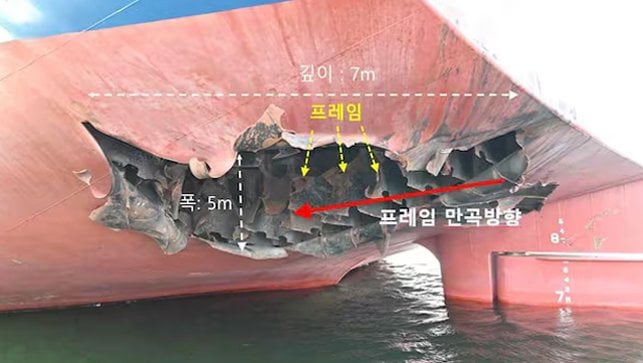
Daamge to the hull of the HMM cargo ship (Foreign Ministry released photos)
South Korea continues its investigation into the damage to an HMM general cargo ship on May 4 while in the Persian Gulf. To put an end to the various speculations, South Korea’s Ministry of Foreign Affairs held a briefing on May 10, saying two unidentified projectiles struck the ship, causing the fire that disabled the vessel.
The HMM Namu (38,314 dwt) was towed to Dubai and is now in the Drydocks World shipyard. Investigators from the Ministry of Oceans and Fisheries’ Marine Safety Tribunal, as well as forensic experts from the National Fire Agency, began their investigation of the vessel on May 8. They are collecting evidence from the engine room of the vessel, reviewing CCTV footage, and interviewing the captain.
Based on the CCTV footage and the captain’s accounts, the Ministry says it is certain the vessel was struck by two unidentified "aerial objects" at an interval of about one minute on the afternoon of May 4 while it was anchored off the UAE port of Umm Al Quwain. The vessel was stuck on its port side about 1 to 1.5 meters (approximately 3 to 5 feet) above sea level, hitting a ballast tank. The penetration is approximately 5 meters (16.5 feet) wide and entered approximately 7 meters (23 feet) into the ship and shows signs of explosive pressure on the exterior of the ship.
They believe the first explosion sparked the fire near the point of impact on the hull near the top of the tank. The second strike caused the fire to rapidly expand, and it ultimately consumed the engine room.
The second impact caused the fire to rapidly spread in the engineering spaces (Foreign Ministry)
The Ministry refused to identify the nature of the object that struck the ship, saying the CCTV was not clear enough to determine what type of object was involved. They are collecting evidence from the engine room for further investigation, saying it would likely reveal the specific nature of the attack, and they are also looking to identify the origins of the components.
The reports are speculating that it was most likely an anti-ship missile because of the surface-skimming nature of the attack. The reports are saying a cruise missile would have caused much more extensive damage to the vessel. It is hard for a drone to conduct such a low-level attack.
The Ministry also sought to put to rest the speculation that the ship struck a mine or that it was a machinery failure. They said there were no problems with the vessel’s engines, generators, or boilers. HMM Namu is a general cargo ship that was completed earlier this year and had only recently entered service for HMM. The 24 crewmembers, including six South Koreans, were uninjured.
While refusing to speculate on involvement in the attack, the Ministry, however, did summon the Iranian ambassador, Saeed Koozechi. The embassy had previously issued a statement denying Iranian involvement in the attack. Business Korea says the ambassador today described the incident to the media as an “accident.” Iran’s Press TV, shortly after the attack, highlighted the requirement for Iranian approval to transit the Strait of Hormuz and cited “violations of maritime regulations.”
Donald Trump had used the incident to demand that South Korea get involved in supporting the United States in reopening the Strait of Hormuz. He said Iran had “taken some shots” at a South Korean vessel.
The South Korean government is being criticized domestically for its slow and cautious response to the incident. It continues to say it will investigate the details and take an appropriate response.
Report: Vessel Captured off Fujairah is a Floating Armory
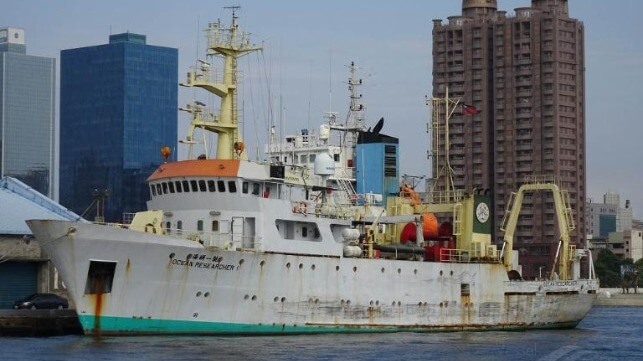
Hui Chuan in apparent layup at Kaohsiung, 2020 (Ya Ray Yang / VesselFinder)
The vessel off the port of Fujairah was a floating armory, according to maritime security consultancy Vanguard Tech.
The consultancy identified the vessel as the Honduran-flagged "fishing support vessel" Hui Chuan, which - per a report from the company security officer - had been operating as a floating armory in the Gulf of Oman. The vessel was boarded by unauthorized personnel while anchored about 38 nm to the northeast of Fujairah, towards the eastern entrance to the Strait of Hormuz, then diverted into Iranian territorial waters. Contact with the vessel has been lost, and its AIS signal has disappeared from tracking.
Floating armories are used by maritime security contractors as a practical solution for the storage of arms, ammunition and personnel in between embarked security missions; this avoids the need to stage weapons and people in nearby coastal states, a legally fraught proposition that occasionally ends in weapons confiscation, arrests and criminal charges. Local firearms laws do not always contain exceptions for security contractors or personnel in transit, and enforcement varies - but at sea, in international waters, the contractor can store and maintain their equipment without interference.
By the nature of their business, floating armory operations tend to be opaque, and the ownership and management of the Hui Chuan are not clear. The 1984-built vessel is flagged in Honduras and owned and operated by a letterbox company in the Marshall Islands. The holding company owns one other vessel, the 1993-built fishing vessel Sunny Ocean.
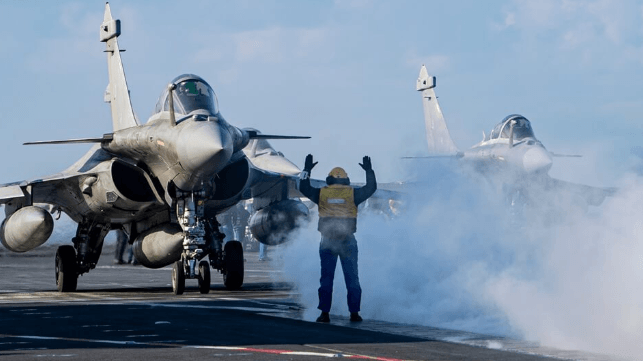
The French Navy FS Charles de Gaulle (R91) Carrier Strike Group (CSG) appears to have come safely through the Strait of Bab el Mandeb and is now at the French naval base in Djibouti.
The French Navy operates a tighter release of operational information than most other Western navies, creating a news vacuum which fake news generators seem keen to create confusion with. However, there was no disguising the FS Charles de Gaulle as it went through the Suez Canal on May 6, accompanied by a Jacques Chevallier-class replenishment oiler, probably FS Jacques Chevallier (A725), and an Aquitaine-class anti-submarine warfare destroyer. There is likely to be at least an additional air defense frigate and a nuclear submarine with the CSG. Pictures have subsequently shown the carrier anchored off Djibouti, with a Djibouti coastguard boat standing by.
The transit of the French CSG through the southern Red Sea and Bab el Mandeb appears to have attracted no comment in Houthi-controlled media, although the transit cannot have been missed by the Houthi coastal watch system.
This lack of adverse comment ties in with other indications that the Yemeni civil war is winding down. A drone was intercepted over Eilat on May 12, but unusually neither the Israelis nor the Houthis made any comment regarding the incident, leaving who might have been responsible for the intrusion in some doubt. The last acknowledged Houthi drone attack on Israel was on April 6, which brought to an end a series of six Houthi drone and missile attacks on Israel starting on March 30, none of which did any damage, and which did not attract Israeli reprisals.
Yemeni analyst Mohammed al Basha also notes that the Houthi leader AbdulMalik al Houthi has recently given up his weekly addresses to the nation, which had been used to fire up Houthi military resolve. Instead, the Yemeni press has been more concerned with a successful break-through in long-running negotiations, chaired by the UN in Amman, which has resulted in an agreement between the Houthis and the Internationally Recognized Government (IRG) for the exchange of 1,643 prisoners, scheduled for May 14.
Although skirmishes are still going on along the border between Houthi and IRG forces, an important element in the overall reduction in tension has been the re-ordering of political forces in southern Yemen, which has seen the IRG, backed by the Saudis, stepping up to exert more authority in the area of Yemen it controls and to impose unity, at the expense of the Southern Transition Council and its Emirati sponsors. This sets the scene for a better-based negotiation between the Houthis and the IRG over a final settlement of the civil war, which the Houthis are hoping will be bankrolled by the Saudis. There is no desire at the moment on either side to upset this steady progress.
In this improving security climate, Saudi exports of crude from the southern Red Sea port of Yanbu have risen steadily. In March, Kpler estimated that Yanbu crude loadings averaged ?3.3 million bpd, up from a pre-war 800,000 bpd in February, mostly headed south through the Strait of Bab el Mandeb. Notwithstanding damage done to the East-West pipeline by an Iranian drone attack on April 8, throughput over the whole of last month averaged 4 million bpd, and is on track to reach maximum export capacity of 5 million bpd by the end of this month. Saudi Aramco President and CEO Amin Nasser Al Muajjiz said on May 11 that there are plans to increase the pipeline capacity and to boost exports even further. About 20 million bpd of exports from Gulf countries were lost in April because of the closure of the Strait of Hormuz.
All jetties occupied and an orderly queue waiting off the Aramco oil export terminal at Yanbu, amongst 33 arrivals logged by VesselFinder on May 13 (Sentinel-2)
The situation remains volatile. But for marine traffic in the Red Sea, this seems to look like good news, with the chances of a resumption of Houthi attacks on shipping now somewhat diminished.
Shipping Companies Leverage Arabian Peninsula Truck Routes to Bypass Hormuz
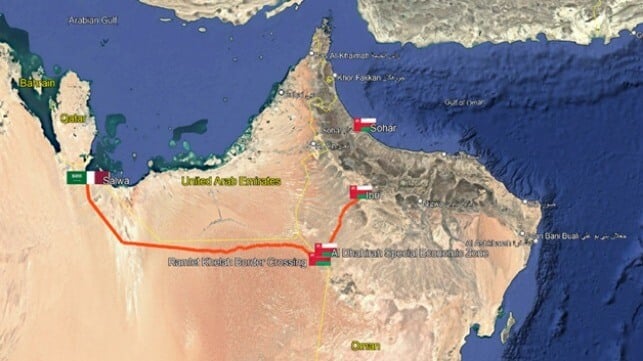
Route 95, from the Saudi-Qatar border to Ibri in Oman, and thence to Sohar, Duqm and Salalah (Google Earth/CJRC)
With the Strait of Hormuz remaining closed, logistics operators are working out how to get consignments to and from Gulf destinations previously served by ports that are now in effect blocked to external traffic. Without extensive state direction, entrepreneurs are opening up new routes and increasing capacity on existing routes.
One immediate beneficiary has been traffic flow on Route 95, which starts from the Saudi town of Alkwifiriah close to the Saudi-Qatari border crossing at Salwa. The route then crosses through the Shaybah oilfield and enters Oman at the Ramlet Khelah border crossing point, which was opened in January 2023. The route had been long in the planning, and its opening was delayed not by the COVID pandemic, but by the engineering difficulties of pushing a highway through the shifting sands of the “Empty Quarter.” The route has cut the travelling time between the start and end points by 16 hours, cutting out the old road across the sand or the necessity of diverting through the UAE with the inevitable delays at customs points.
According to the Oman Public Authority for Special Economic and Free Zones, the value of goods crossing the border almost tripled to $830 million in March, from $300 million in February. The main categories moving through the Ramlet Khelah border crossing point are fertilizers, construction materials, food, medicines, and machinery. One trucking company, Ramool Transportation, told AGBI that it had earned more in March 2026 than in the whole of 2025.
Back in 2021, Oman and Saudi Arabia agreed to set up a joint economic zone twelve miles into Oman to take advantage of the new route and border crossing point. The Special Economic Zone at Al Dhahirah (EZAD) opens for business next year, with a land port to be operated by the Omani integrated logistics company Asyad. But the focus for EZAD will be manufacturing units rather than logistics.
Saudi Arabia Railways is launching five new freight corridors linking West and East coasts (SPA)
Saudi Arabian Railways is developing five new logistics routes, based on a pre-war plan to get traffic off roads and onto the railway. Now it is placing a greater emphasis on improving access from rail hubs at Dammam, Jubail, Ras Al Khair, Al Kharj, and Hail through to Red Sea ports.
The Kingdom will also need to develop further the capacity of the heavily used Northern International Highway Route 85, which stretches from Dammam, through Riyadh, and then along the northern border following the course of the old Trans-Arabian Pipeline to Al Hadithah on the Jordanian border. With the civil war in Syria largely over, the route can now be used with much greater facility through to Tartus and Latakia on the Mediterranean. Considered historically to be something of a death-trap, the route is now a continuous dual highway engineered to modern standards.
Shipping companies are also looking to offer combined sea and land routes. MSC Mediterranean Shipping Company is launching a new service from Antwerp in May 2026, which will ship to Jeddah and King Abdullah Port on the Red Sea, container transfer to trucks to Dammam on the East coast, and then use of feeder services to move freight further forward to Jebel Ali, Khalifa Industrial Zone, and other ports within the Gulf. Hapag-Lloyd is also launching overland options via Saudi Arabia and Oman.
The main challenge to developing new logistic routes has been a shortage of trucks and drivers, a problem which no doubt will be solved quickly by the attractions of winning extra revenues for those already in the business. The other major issue is the throughput capacity of the ports now being brought into the new logistics networks. Both Khor Fakkan and Fujairah have limited capacity, with Khor Fakkan never having operated at more than three million TEUs in comparison to Jebel Ali’s 25 million TEUs. Both Sohar and Salalah are efficient port operations, with Salalah being ranked as the second most efficient container port in the world in 2023. But both ports are suffering capacity issues, which will take considerably longer to solve than the lack of trucks and drivers.
Oxford joins UK’s largest miscarriage research centre in major expansion
The University of Oxford has joined forces with other leading UK institutions to strengthen what is already Europe’s largest research centre dedicated to miscarriage. This marks a significant step forward in efforts to better understand and prevent pregnancy loss.
Tommy’s National Centre for Miscarriage Research, established in 2016, will now operate as a partnership between Oxford’s Nuffield Department of Women’s and Reproductive Health and existing members at the Universities of Birmingham, Warwick and Imperial College London.
This expansion intends to bring enhanced research capability, clinical reach and leadership to a field that remains one of the most common yet under-addressed complications in pregnancy.
Miscarriage affects around one in five women during their lifetime. Despite its prevalence, it has historically received limited research attention. The centre was founded to address this gap, bringing together academic and clinical expertise across multiple institutions and hospitals. Driving meta-analyses and policy reviews
Over the past decade, the centre has produced findings that have directly influenced clinical practice. Among its most notable achievements is the Progesterone in Spontaneous Miscarriage (PRISM) trial, which demonstrated that progesterone treatment for women experiencing early pregnancy bleeding with a history of miscarriage could prevent thousands of losses annually in the UK. The PRISM trial has also shown that while progesterone does not help all women with early pregnancy bleeding, it significantly improves outcomes in those with a history of miscarriage.
The results prompted the National Institute for Health and Care Excellence (NICE) to update its guidance, expanding access to the treatment.
Research from the centre has also shaped public and policy debate. Its Miscarriage Matters series, published in The Lancet in 2021, highlighted both the emotional toll of pregnancy loss and shortcomings in care, while setting out recommendations for improvement. Campaign efforts linked to this work attracted more than 250,000 signatures, underscoring growing public concern.
More recently, a pilot of a “graded model” of miscarriage care—designed to tailor support and intervention based on risk—has shown promise. Early findings suggest it could prevent over 10,000 miscarriages a year if implemented nationwide, with thousands of campaigners now urging government adoption.
The addition of Oxford is expected to accelerate progress. The university brings expertise in statistics, trial design, health economics and bioinformatics, alongside Oxford University Hospitals NHS Foundation Trust, which will serve as the lead clinical partner. New leadership appointments across partner institutions are also intended to strengthen coordination and delivery.
Professor Arri Coomarasamy, director of the centre, says the expansion would help translate research into tangible improvements for patients. “Every miscarriage represents not just a clinical event, but a deeply personal loss,” he said. “Our ambition is to turn evidence into better tests, treatments and care.”
Charity leaders argue that while progress has been made, significant unmet need remains. For many families, miscarriage continues to bring unanswered questions and repeated heartbreak. By broadening its partnerships and resources, the centre hopes to advance both scientific understanding and the quality of care available—ultimately reducing the incidence of miscarriage and its impact on families.
UK
RMT Union Members Conduct New Strikes at Royal Fleet Auxiliary Over Pay
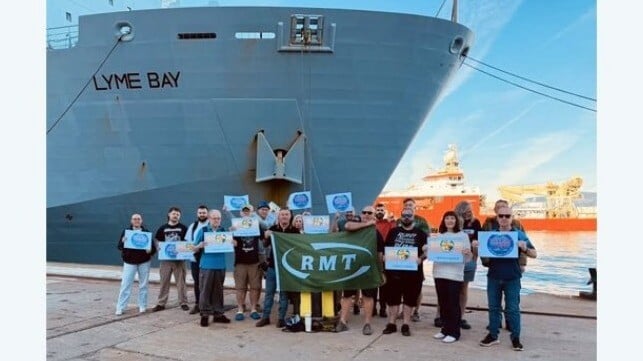
RFA seafarers staged two 24-hour job actions to call attention to their wage and compensation rules demands (RMT)
For the second time in two years, crews from the UK’s Royal Fleet Auxiliary are staging 24-hour strikes over pay. The National Union of Rail, Maritime and Transport Workers (RMT) says it has warned that years of below-average pay settlements, combined with poor transparency and growing dissatisfaction over conditions, are contributing to retention problems across the service.
Coordinated with efforts by the other powerful UK union, Nautilus, the RMT staged a series of strikes and work actions in late 2024, the first in the history of the service. Those strikes dragged on until they finally reached a wage agreement in early 2025.
Now, RMT reports talks are underway, and there has been some progress, but once again, it says no acceptable proposal has been offered to address concerns over wages as well as transparency of how wages are calculated. The union is also raising questions about whether the RFA is in compliance with the UK’s National Minimum Wage legislation.
RFA members are civilian employees who operate the supply and logistics ships for the Royal Navy. Formed in 1905, the fleet has been shrinking and is down to nine active vessels, including tankers and supply ships. There are approximately 1,750 individuals classed as civil servants in the RFA, according to the RMT.
“Our members in the Royal Fleet Auxiliary do not take strike action lightly, and this decision has only been reached after years of frustration over pay, conditions, and a lack of transparency around wages,” said General Secretary of the RMT Eddie Dempsey. “There remains no clear formula setting out how pay is calculated against the hours actually worked, and there are serious concerns that some members’ pay could effectively fall below the legal minimum once those hours are properly accounted for.”
Members staged the first 24-hour action on May 8 and a second one today, May 13. According to the posting by RMT, the actions spanned from the RFA Lyme Bay docked in Gibraltar to seafarers in Falmouth and Birkenhead. During the 24-hour strike action, the RMT said members would continue to ensure the safety of vessels is maintained at all times, including the management of moorings and gangways.
The union argues that RFA seafarers can routinely work up to 12 hours a day and more when operational duties demand, often spending months at sea, while there remains no clear or transparent formula explaining how pay is calculated against hours worked. As in 2024, it is calling for increases that address shortfalls in the past and the increased cost of living for members.
The union said without serious proposals from the Royal Fleet, its members would continue their industrial actions.
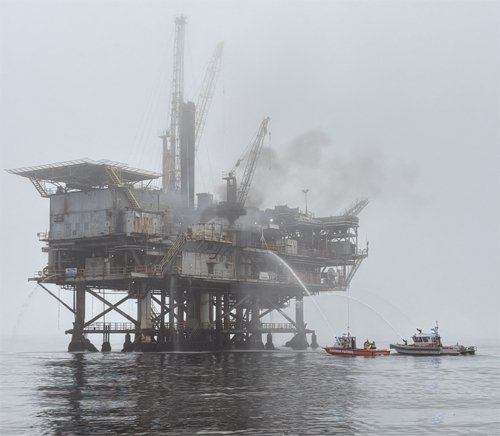
Photos: Fire on California Offshore Gas Platform Near Santa Barbara
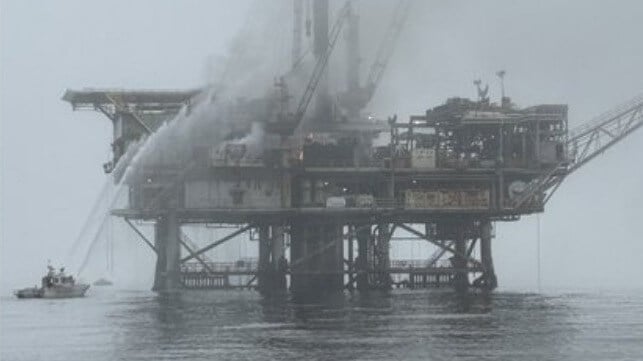
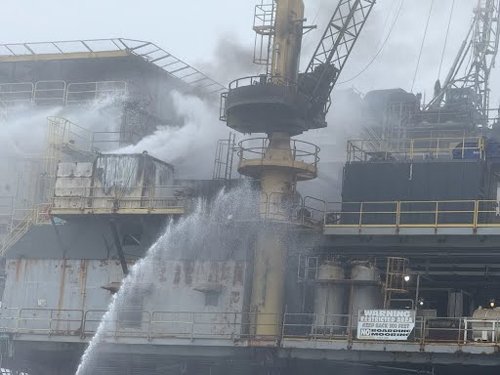
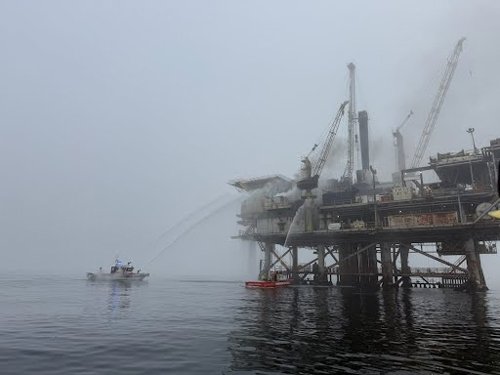
Platform near Santa Barbara has been evacuated while crew fight the fire (USCG photos)
The U.S. Coast Guard led a response to a fire that is burning aboard a non-operational offshore gas platform located off the coast of California. At least two fireboats were on the scene while the USCG maintained a 1,000-yard safety zone around the platform.
The operation known as Platform Habitat is reported to be approximately 7.5 miles offshore in the Santa Barbara Channel and near Carpinteria. It is owned by a company called DCOR, which has been operating offshore energy platforms since 2001.
According to the local reports, the crew of 26 aboard the platform was to conduct decommissioning when they discovered the fire shortly around 0700 local time on Monday, May 11. They were unable to douse the fire and placed the emergency call.
The U.S. Coast Guard reports the crew was evacuated. Two people suffered minor injuries.
Pictures supplied by the U.S. Coast Guard Southwest show large plumes of smoke. Two fireboats are pumping water onto the structure.
Local reports said there was heavy fog in the area this morning. It prevented the use of aircraft.
The platform was built in 1981 and had been in operation since 1983. It is located at a position with approximately a 290-foot water depth. The Los Angeles Times reports it mostly produces natural gas. Federal records show production of more than 232 million cubic feet of natural gas and a limited amount of crude oil.
There were no immediate reports of pollution at the site. Later on Monday, the USCG reported the fire onboard the platform was secured and that personnel were being transferred onboard the platform to conduct safety work. Responders and platform personnel reported that the fire was extinguished at 11:40 a.m. local time.
US Coast Guard and Air Force Team Up to Rescue Plane Crash Survivors
US Air Force pararescuemen prepare to hoist survivors from the plane crash while an HH-60W helicopter (unseen) hovers overhead (920th Rescue Wing)
The U.S. Coast Guard and its partner services often assist friendly nations with emergencies at sea, providing long-range search and rescue services that would not otherwise be available to mariners in distant regions. This week, the Coast Guard teamed up with the U.S. Air Force to rescue survivors of a plane crash in Bahamian waters.
On Tuesday morning, an emergency locator beacon from a twin-engine Beechcraft BE30 passenger plane went off, alerting Coast Guard Southeast District of a distress situation. The aircraft had been on a flight from Marsh Harbor, Bahamas to an airport at nearby Freeport, and appears to have suffered an engine failure.
The district's watchstanders dispatched a C-27 search plane out of Air Station Clearwater and requested the diversion of an Air Force HC-130J long range pararescue plane, which was already airborne on a training mission.
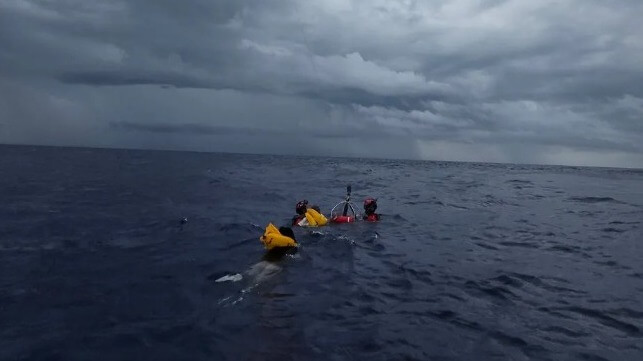
The survivors were spotted in a life raft, and an Air Force HH-60W rescue helicopter hoisted all 11 people safely aboard. There were more than initially reported, and the pararescue team worked fast to treat survivors and get them all on board. "We had five minutes left [of fuel reserve status] when we got the last person out of the water," said Capt. Rory Whipple (USAF).
The survivors were delivered safely to Orlando's airport for transfer to emergency medical services. All were in stable condition, according to the Coast Guard. Officials in the Bahamas will conduct a root cause investigation.
“The outstanding support from Patrick Space Force Base and the seamless coordination among all responding agencies directly contributed to the successful rescue of 11 survivors from the downed aircraft,” said Master Chief Petty Officer Omar Colon, a command duty officer, Southeast Coast Guard District. “Their rapid response, professionalism, and unwavering commitment to saving lives were instrumental in bringing everyone home safely.”
US Coast Guard Finds and Boards Yacht in High-Profile Missing Person Case
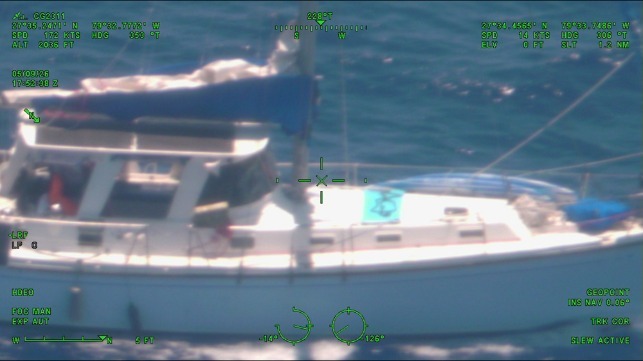
Soulmate, as seen from a U.S. Coast Guard search aircraft (USCG)
The U.S. Coast Guard received a challenging and unusual assignment last weekend: to seize, secure and search a sailboat off Florida in connection with a high profile missing-person case.
Last month, married couple Brian and Lynette Hooker were on a trip through the Bahamas aboard their sail cruising yacht, Soulmate. On the night of April 4, Lynette Hooker disappeared; Mr. Hooker arrived on shore and reported her absence in the early hours of April 5. No indications of Lynette Hooker's whereabouts have been detected since, and Bahamian authorities released Mr. Hooker after questioning. Amidst considerable media attention, the Coast Guard Investigative Service is leading its own parallel probe under U.S. jurisdiction.
The yacht Soulmate left Marsh Harbor in the Bahamas on Friday and got under way for U.S. shores. The Coast Guard Investigative Service intercepted the sailing vessel in international waters, about 40 nautical miles off the coast of Melbourne, Florida.
The USCG described the boarding as a "complex surveillance and interdiction operation" with multiple participating surface and airborne assets. After Coast Guard officers went aboard the vessel, its engine lost power, and it had to be taken in tow by a Fast Response Cutter, the USCGC Winslow Griesser. The yacht was taken into the harbor at Coast Guard Station Fort Pierce, Florida, arriving Monday. The seizure was first reported by local media and later confirmed by CGIS.
Mr. Hooker was not aboard at the time of the interdiction: he previously returned to the U.S. to attend to the needs of his mother, who is in ill health, his attorney told CBS
CGIS is soliciting information from any potential witnesses who would like to step forward, and has been conducting interviews.
Mr. Hooker - who has not been charged with any crime - maintains that he did nothing wrong, and says that his wife went overboard in a tragic accident. "I am heartbroken over the recent boat accident in unpredictable seas and high winds that caused my beloved Lynette to fall from our small dinghy near Elbow Cay in the Bahamas," he wrote in a Facebook post after her disappearance. "Despite desperate attempts to reach her, the winds and currents drove us further apart."
CRIME AGAINST HUMANITY
Libyan Coast Guard Opens Fire on Rescue Vessel and Threatens to Seize It
Libyan patrol boat seen from the bridge of the Sea-Watch 5 (Sea-Watch press handout)
A migrant rescue vessel in the Central Mediterranean has reported another violent encounter with the Libyan coast guard - this time, accompanied by the threat of vessel seizure in international waters.
Libya's militia-operated coast guard has a fraught relationship with the migrant rescue NGOs of the Central Mediterranean, which retrieve passengers from unseaworthy boats and deliver them to safety in Italy. The European-sponsored Libyan coast guard believes it has jurisdiction over rescues in international waters, and it has an active program to conduct "pullbacks" to bring maritime migrants back to Libyan holding centers, where a range of human rights abuses have been well documented. In the course of these operations, the militia-affiliated service has shown its willingness to use force to drive off NGO rescue vessels that approach too closely. The rules of engagement appear to have loosened considerably: on Monday, a Libyan coast guard patrol boat opened fire on the rescue vessel Sea-Watch 5, the operator reports - then threatened to board the ship and divert it to a Libyan port. If substantiated, it appears to be a first for the small Libyan coast guard, and a significant escalation.
On Monday morning, just after the crew of Sea-Watch 5 finished rescuing 90 people in distress at a position about 55 nautical miles north of Tripoli, a Libyan militia boat approached. The crew aboard the patrol boat fired about 10-15 shots at the rescue vessel, and conveyed their intent to board the ship and take it - along with all of the occupants - to Libya. The Sea-Watch 5's crew sent a mayday and contacted authorities in Italy and Germany; in the meanwhile, two Libyan patrol boats stayed in pursuit as Sea-Watch 5 headed north, away from Tripoli and towards safety. After a few hours, the boats turned around, allowing Sea-Watch 5 to proceed on her mission - resulting in the rescue of another 64 people.
Sea-Watch identified one of the militia vessels as a Corrubia-class patrol boat, donated to Libyan authorities by the Italian government.
Just one week before the encounter, Germany's interior ministry expanded its existing security alert zone for waters of the Central Mediterranean in order to include Libya's EEZ. The ministry assessed that migrant rescue vessels were at particular risk. In a statement, Sea-Watch said that the German government had adopted a contradictory policy: on the one hand, it is materially supporting the Libyan coast guard via EU-backed training opportunities and rescue coordination centers; and on the other, it is declaring a shipping security zone due to the risks posed by the same EU-backed Libyan coast guard. Sea-Watch called for Germany to resolve this tension by imposing diplomatic consequences in Libya's government.
"[Germany] acknowledges the real danger posed by the so-called Libyan coast guard while at the same time continuing to support it. The current governing coalition has even made it possible once again to train the so-called Libyan coast guard, instead of clearly opposing it," commented Sea-Watch spokesperson Marie Naab last week.
The NGO also took the European Commission to task for an allegedly permissive response to Libyan forces' pattern of violence. In a press conference Tuesday, an EC spokesperson described the Libyan coast guard's activities as a technical matter.
"Our engagement, as I said here many times, is really to support a comprehensive and rights-based migration management, including the protection of migrants," the EC spokesperson said. "We have been engaging in dialogue and providing training to improve the operating procedures and we'll continue to do so."
In addition to its challenged relationship with Libyan militia forces, Sea-Watch is unpopular with Italian authorities, who have repeatedly attempted to impound its vessels to prevent further rescue activities. In February, a court in Palermo, Sicily ordered the Italian government to pay the NGO a total of $89,000 in compensation for the detention of the group's earlier vessel, the Sea-Watch 3.
Corvus Energy & BYD Energy Storage to Advance Next?Gen Maritime Technology
Picture from the signing ceremony for the strategic cooperation agreement held at the CIBF exhibition in Shenzhen Marintec China.
Corvus Energy AS, the global leader in zero?emission maritime energy solutions, and BYD Energy Storage, a global leader in the energy storage sector, today signed a Strategic Cooperation Agreement (SCA) that marks a major milestone in the companies’ collaboration.
The new agreement builds on a Memorandum of Understanding (MoU) signed in December 2025, which created a long?term framework for cooperation on next?generation marine battery technologies. The SCA formalizes the next phase of this partnership and sets the foundation for the co?development of next generation marine battery solutions
Advancing Maritime Battery Technology with Next?Generation LFP
With BYD Energy Storage as one of the world’s largest battery cell manufacturers and Corvus Energy as the leading supplier of marine battery systems, the partnership brings together two global powerhouses to accelerate the maritime energy transition.
Under the SCA, Corvus Energy and BYD Energy Storage will combine Corvus’ deep expertise in marine system integration with BYD Energy Storage’s advanced cell technology to develop a low cost, safe and reliable battery system optimized for demanding marine environments.
Fredrik Witte, CEO of Corvus Energy, said: “This agreement accelerates our ability to deliver highly competitive LFP solutions at scale. By pairing Corvus’ deep maritime knowledge with BYD Energy Storage’s world?leading cell technology, we can reduce system cost significantly while maintaining the safety and performance standards this industry needs. No other marine battery supplier matches our safety record or our digital capabilities, which help customers maximize uptime, reduce maintenance, and improve return on investment.”
The two parties will work together in areas such as technological collaboration, resource sharing, and market expansion to jointly advance the R&D, certification, and large-scale deployment of high-rate lithium iron phosphate marine battery systems, and bring them to the global market.
The products and services herein described in this press release are not endorsed by The Maritime Executive.