Wednesday, June 03, 2026

‘Shaping Up to Be a Clean Sweep’: Sanders-Backed Candidates Prevail in Tuesday Primaries

Sanders has said his endorsements are about “building a movement for the future” capable of not just taking on the GOP, but also the Democratic Party establishment.
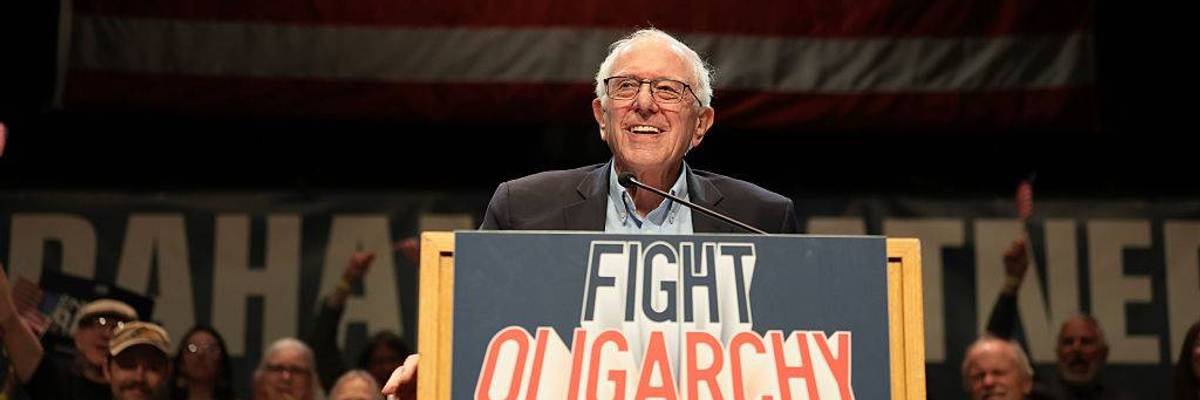


Sen. Bernie Sanders (I-Vt.) speaks during a “Fighting Oligarchy” tour stop at the Collins Center for the Arts on the University of Maine campus on May 24, 2026 in Orono, Maine.
(Photo by Joe Raedle/Getty Images)


Brad Reed
Jun 03, 2026
COMMON DREAMS


Progressive candidates endorsed by Sen. Bernie Sanders swept to victory on Tuesday in Democratic primaries across the US.

In New Jersey, surgeon Adam Hamawy prevailed in the Democratic primary in the state’s 12th Congressional District, while Rep. Analilia Mejia (D-NJ) easily defeated primary challengers in the state’s 11th Congressional District by garnering more than 80% of the vote. Sanders (I-Vt.) endorsed both candidates.
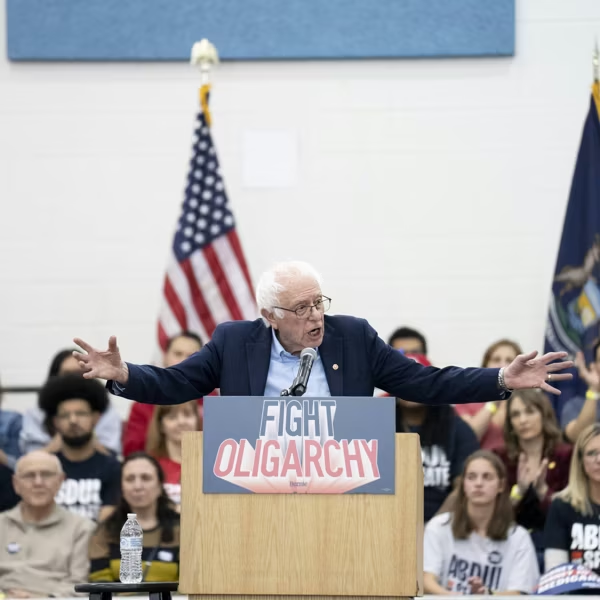

‘Building a Movement for the Future,’ Bernie Sanders Endorses 61 State and Local Progressives

Sanders-backed candidates in California also put in strong showings, with former San Francisco city supervisor Jane Kim advancing to the general election in the race to be the state’s next insurance commissioner.

Political scientist Randy Villegas, meanwhile, is currently edging out rival Jasmeet Bains in the jungle primary in California’s 22nd Congressional District, currently represented by Rep. David Valadao (R-Calif.).

And in Montana, former smokejumper and union leader Sam Forstag won the Democratic primary to represent the state’s 1st Congressional District, where he’ll face off against Republican Aaron Flint in the fall.

Sanders adviser Faiz Shakir on Wednesday took a victory lap in the wake of the results.

“Shaping up to be a clean sweep for Bernie’s endorsements last night,” Shakir wrote in a social media post.

In an interview with The New York Times last month, Sanders said that his goal with the endorsements is “building a movement for the future” capable of not just taking on President Donald Trump’s Republican Party, but also the Democratic Party establishment.

“Our effort is to lead a national movement against Trump’s authoritarianism and kleptocracy and unnecessary wars and his contempt for the Constitution,” Sanders told the Times. “But equally important, the American people need an alternative to the Democratic establishment, which is significantly dominated by big-money interests.”

Surgeon Who Treated Victims of US-Backed Israeli Genocide Wins House Primary in New Jersey

“I am going to Congress to fight for you—for healthcare, not bombs, to abolish ICE, and to unrig the economy once and for all,” Adam Hamawy told supporters.
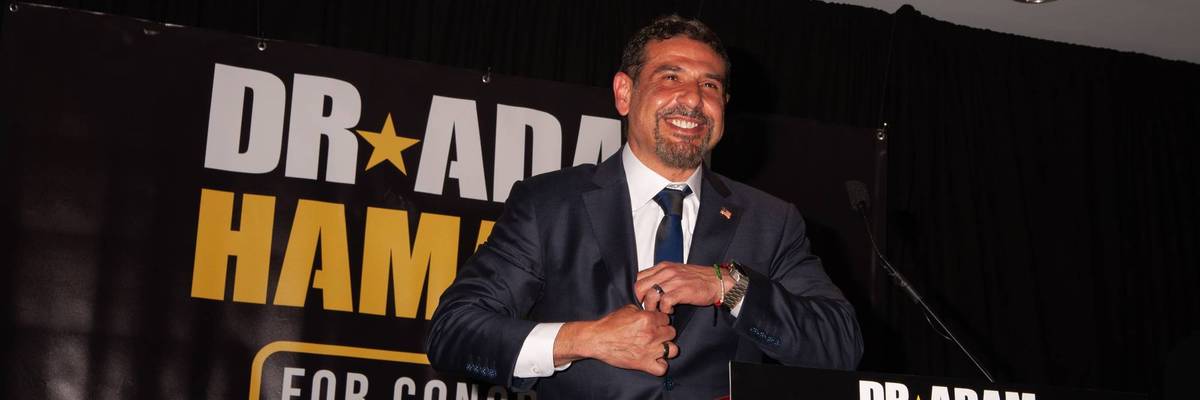

Dr. Adam Hamawy was pictured at an election night party on June 2, 2026 in Princeton, New Jersey.
(Photo: Adam Hamawy/X.com)


Jake Johnson
Jun 03, 2026
COMMON DREAMS


Dr. Adam Hamawy, a retired US Army combat surgeon who in 2024 volunteered at a Gaza hospital amid Israel’s genocidal assault, handily prevailed Tuesday in the Democratic primary race in New Jersey’s 12th Congressional District after running on a message of “healthcare, not bombs.”

“I am going to Congress to fight for you—for healthcare, not bombs, to abolish ICE, and to unrig the economy once and for all,” said Hamawy, the heavy favorite to win in November in the deep-blue district. “I will never take money from corporate PACs or AIPAC. I will always vote my conscience—I will be beholden to no one.”

‘How to Sell a Genocide’: Media Critic’s Book Details Biased Coverage of Israeli Assault on Gaza


Justice Democrats and IMEU Policy Project, progressive organizations that backed Hamawy with $200,000 in mail ads, celebrated his victory in the crowded primary, where the surgeon received nearly 10,000 more votes than the second-place candidate.

“Dr. Adam Hamawy’s heroism and commitment to human rights were at the heart of his campaign to end Washington’s bottomless budgets for war abroad and to invest in communities at home,” the groups said in a joint statement. “Voters were drawn to Dr. Hamawy’s candidacy because he knows firsthand the reality of Israel’s genocide in Gaza like few do—having worked to save the lives of Palestinian children under bombardment and unimaginable conditions.”

“His experience is necessary in Congress now more than ever, as too many of the people meant to represent us continue to look the other way while our tax dollars fund injustices here and abroad,” they added. “Dr. Hamawy will not look away from injustice, because he is unbought and committed to building on his lifetime of service to chart a new path in our politics away from cruelty, and toward compassion for all.”

Hamawy’s campaign was also backed by prominent progressive lawmakers, including US Sen. Bernie Sanders (I-Vt.), who celebrated his win in a social media post late Tuesday.

“Dr. Hamawy will be a strong progressive voice in the House and, as a physician, he understands our healthcare system is broken and we need Medicare for All,” Sanders wrote.

Hamawy, who is running to fill the seat of retiring Rep. Bonnie Watson Coleman, has spoken openly about his experience volunteering at the European Hospital in southern Gaza, from which he was evacuated in May 2024 after Israeli authorities trapped him and his team in the besieged enclave.

“I have never in my career witnessed the level of atrocities and targeting of my medical colleagues as I have in Gaza,” said Hamawy, who served in Iraq. US Sen. Tammy Duckworth (D-Ill.) credits Hamawy with saving her life after her helicopter was shot down in Iraq in 2004.

Speaking to supporters late Tuesday, Hamawy said that “for my whole life, I have tried to tackle the crises we face with my hands, treating patients.”

“But I am a surgeon. I don’t like putting Band-Aids on bullet wounds,” he continued. “It’s time for some preventative care. To get my patients—and all of us—the care they need, we are going to change the very system that’s hurting us.”


‘Super PACs Should Be Outlawed,’ Says Platner, as Pro-Collins Corporate Dark Money Pours Into Maine to Attack Him

“It’s fascinating that the more money that goes into our political system, the less we talk about actual politics.”
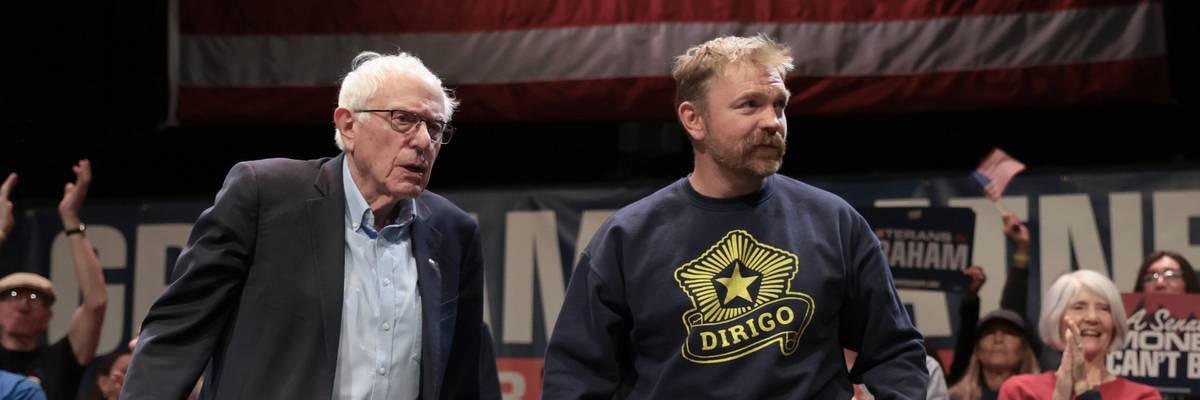


Sen. Bernie Sanders (I-Vt.) and Democratic US Senate candidate Graham Platner together during a “Fighting Oligarchy” tour stop at the Collins Center for the Arts on the University of Maine campus on May 24, 2026, in Orono, Maine.
(Photo by Joe Raedle/Getty Images)

Stephen Prager
Jun 02, 2026
COMMON DREAMS

The super PACs pouring money into the US Senate race in Maine are doing a great job of proving Graham Platner’s point.

As new reporting on Monday detailed the flood of dark money targeting his campaign, the Democratic hopeful in recent days has put a spotlight on the super PACs, which he says have created a political system dominated by corporations and wealthy donors who want to distract from the serious issues and struggles faced by everyday voters and working families.

“I think it’s very telling that a political system that has become controlled by money, controlled by the power of organized money, is also a political system that is trying to convince all of us down here that policy and discussions around what government can or cannot do is not what they want to talk about,” Platner said during a conversation with Sen. Bernie Sanders (I-Vt.), a longtime critic of super PACs, posted to social media.

“It’s fascinating that the more money that goes into our political system,” he continued, “the less we talk about actual politics.”


“I agree with Senator Sanders: Super PACs should be outlawed,” said Platner.

On Monday, Sludge reported that a pair of shadowy nonprofits “with no public presence and no disclosed staff” have dumped at least $750,000 into a super PAC supporting Platner’s opponent, the five-term incumbent Republican Sen. Susan Collins, according to Federal Election Commission (FEC) filings.
Condorcet Initiative Corp. has given $500,000 to Pine Tree Results PAC across two separate donations, including $250,000 on May 1 that was disclosed in a filing reported to the Federal Election Commission last week. Ardleigh Impact Corporation contributed an additional $250,000 in April.

The PAC has spent nearly $4 million on attack ads against Sen. Susan Collins’ Democratic challenger Graham Platner, according to FEC data.

The two nonprofits are both described as shell-like entities linked to the same address in Springfield, Virginia, belonging to Republican political consultant Staci Goede.

The groups are part of a much larger network and have poured a combined $9 million into GOP-aligned PACs since 2024, including in four competitive Senate races in this coming cycle.

Goede, meanwhile, is the treasurer or officer for at least nine different nonprofits “that span Republican Senate campaigns, pro-Israel donor pass-throughs, and issue advocacy groups,” according to the report.

The Campaign Legal Center has filed a complaint against Ardleigh, arguing that the nonprofit, which contributed an astonishing $2.575 million across six federal committees in its first three months of existence, was being used as a straw donor to conceal the identities of one or more rich benefactors.

The source of the $750,000 aimed at Platner remains unknown. But the Pine Tree Results PAC is already known to have a slate of wealthy backers from the commanding heights of finance and tech, including Blackstone CEO Stephen Schwarzman, hedge fund founder Paul Singer, and Palantir CEO Alex Karp. The fund has also taken in contributions from an affiliate of the tobacco giant Altria and from the far-right news company Newsmax.

According to a FEC data, it has raised more than $16 million to help Collins ward off a challenger in 2026, which will almost certainly be Platner.

While the potential use of straw donors may present legal issues, the use of super PACs by wealthy backers to dump unlimited sums behind their preferred candidates is unquestionably legal under federal campaign finance law.

As of March, super PACs funded by crypto, artificial intelligence, pro-Israel donors, and outside groups had already spent more than $225 million trying to influence the 2026 election cycle, according to the Washington Post.

Platner has argued on the campaign trail that the unchecked ability of the wealthy to influence elections is a genesis point for the growing wealth gap between the rich and poor.

“The inequality we’re experiencing, it didn’t happen organically,” he said at a recent campaign event. “We live in the outcome of policy written by establishment politicians who for 40 years have been doing the bidding of those who donate the most money to them.”


The Pine Tree Results PAC had already spent nearly $4 million on ads attacking Platner as of May 20, according to FEC data. As Sludge’s reporting notes, “Rather than engaging with policy, the ads are exclusively focused on personal attacks against Platner, digging up comments the candidate made online going back as far as 2013.”

So far, attempts to mire Platner in personal scandal have done little to blunt the momentum of his populist campaign. A poll from the University of New Hampshire in late May showed him leading the incumbent by a nine-point margin among likely voters and other polls show similar advantages.

It can be expected that the PACs attacking Platner will make a meal out of recent reports from The Wall Street Journal and The New York Times that probe into the private details of his marriage.

But noting the failure of past attempts to drown Platner in controversy, Lever News founder David Sirota questioned in a piece on Monday if these sorts of “character” attacks even work in an age of politics defined by rapacious corporate greed and corruption.

He noted how Sen. Chris Murphy (D-Ct.) and Rep. Ro Khanna (D-Calif.) responded to recent questions from news outlets about whether Platner’s controversies mean he’s failed to “pass the character test.” Murphy responded that “character involves standing up to people who are bankrupting and corrupting this country,” while Khanna lauded Platner for “having the character to stand up against the war in Iran, against genocide, and against an unfair and lopsided economy.”

This response, Sirota said, hinted that the country could be entering a new political paradigm—“a reality in which many voters are so economically pulverized and politically disillusioned that they now define ‘character’ in a politician solely as whether or not they are single-mindedly focused on destroying oligarchy and ending corruption.”

“It is, potentially, a new era in which voters who can’t afford anything and who feel totally ignored by their government have reimagined their entire definition of political ‘character’ on economic/anti-corruption terms—rather than on old definitions of personal moral rectitude,” he wrote. “In this potential new reality, the personal shortcomings of individual politicians—which often have little effect on voters’ actual lives—are less important and electorally salient than the policies those politicians support and oppose.”

“And such a shift,” he added, “would make sense in the current moment.”

It’s Time for a Progressive Policy to Protect Agricultural Supply Chains

Price floors and supply management programs seem common sense to policymakers when it comes to oil and minerals, but what about US farmers and our overall food system?


Glenn Morris, 83, harvests corn on October 11, 2021 in Princeton, Indiana.
(Photo by Scott Olson/Getty Images)
Laurel Levin
Jun 03, 2026
Common Dreams

The race to obtain critical minerals and the war in Iran have not only exposed a dangerous dependence on fossil fuels and mining, but they have also uncovered something more surprising—Republicans in Congress actually understand progressive agriculture policy. They just don’t want to admit it.

In February, Vice President JD Vance announced at the State Department that the administration must institute a price floor to protect the US critical mineral market. “This morning, the Trump administration is proposing a concrete mechanism to return the global critical minerals market to a healthier, more competitive state: a preferential trade zone for critical minerals protected from external disruptions through enforceable price floors,” Vance explained. Meanwhile, the US—and other countries around the world—are deploying oil reserves to buffer price shocks caused by the Israel-US attacks on Iran. Price floors and supply management programs seem common sense to these policymakers when it comes to oil and minerals, but what about US farmers and our overall food system?

Like oil and critical minerals, food and agriculture supply chains, such as corn, soy, and dairy, are vulnerable to global shocks, including extreme weather events, wars, and other supply disruptions. The public also needs to understand that without inflation-adjusted price floors, agricultural commodity prices may sink to disastrously low levels, leaving farmers no choice but to increase production with more chemicals and GMO seeds at the expense of our land and water. Congress and the US Department of Agriculture can avoid low prices by creating reserves accumulated during large harvests and, just like the federal petroleum reserve, bringing them back on the market to stabilize prices in times of shortage. We can all agree that food shortages would be disastrous, so guaranteeing its citizens food security should be imperative for any democratic government.

So while Republicans can recognize the importance of price floors and supply management during this administration, Democrats should look at history to understand how the same instruments were developed for agriculture during the Great Depression under the Democratic Party’s New Deal. The twin crises of farm bankruptcies and the Dust Bowl spurred militant farm organizations to demand a response from the federal government. The response was parity farm bills that stopped farm bankruptcies and stabilized the farm economy so that conservation measures and preservation of diversified farming could lead to food security and a balanced economy. Federal leadership in the White House and Congress recognized that price and supply management benefited both farmers and society as a whole. The policy was simple and transparent: The farm bill would ensure that during years of good harvests, public grain reserves would purchase the surplus at the parity rate (price floor adjusted for inflation) and store it to protect consumers in future times of shortage.

A productive agricultural economy that conserves our resources, challenges agricultural consolidation, and offers economic opportunity in rural communities should be a top priority for all our citizens.

However, both parties abandoned this common-sense approach to farm policy in the early 1950s, so that costs of farming have totally outpaced commodity prices. Subsequently, headlines warning of a farm crisis in 2026, like during the Great Depression and the 1980s, are not uncommon. The prices paid to farmers for commodities such as corn, soybeans, wheat, and dairy have dropped to record lows in real dollars. Over the years, this imbalance has led to the loss of family farms, the consolidation of agribusiness and food processing monopolies, along with their profits benefiting handsomely. Stabilizing the ratio of farm prices to farm costs (the correct goal of any Farm Bill) is the key to a sustainable agriculture that avoids soil loss, water pollution, and the decline of rural communities.

A supply management program would not only help revive family operations and rural economies but would also be essential to combat the expansion of confined animal feeding operations (CAFOs) and lower costs for taxpayers. As reported by Food & Water Watch, CAFOs are a disaster for our climate, air, and water, especially for nearby communities. CAFOs are among the most egregious features of today’s low-price, commodity-based industrial agriculture. Thousands of livestock (owned or vertically integrated with large food processors) are confined in small facilities without fresh air or sunlight and fed cheap corn and soy.

CAFOs have been replacing conscientious family farmers who are stewards of the soil and their animals. When family farmers are forced out of livestock production, they face the dilemma of “get big or get out” and often have no farming alternatives other than to tear up their pastures to grow corn and soybeans that will end up feeding animals in CAFOs.

The Trump administration is applying often-forgotten policy instruments to sustain our fossil fuel dependence and our high-tech future, rather than prioritizing a resilient, sustainable economy. Managing a price floor and creating federal food reserves in the agriculture sector are necessary to combat the adverse effects of food processor monopolization, farm consolidation, soil and water degradation, and external shocks, such as wars.

A productive agricultural economy that conserves our resources, challenges agricultural consolidation, and offers economic opportunity in rural communities should be a top priority for all our citizens. “We love farmers” and “We put America’s farmers first” are just political slogans to get votes with no substance behind them. These slogans lead to the usual sleight of hand to send taxpayer dollars to get some farmers through the next planting season. This policy leaves the disastrous cheap commodity regime in place—encouraging CAFO production and exporting commodities at a loss.

The administration’s discovery of the logical policy of price floors and reserves for oil and minerals must open new doors to applying these logical and transparent mechanisms to agriculture to restore the security of family farmers and conservation of our precious resources—after all, we can’t eat petroleum or precious minerals.

Our work is licensed under Creative Commons (CC BY-NC-ND 3.0). Feel free to republish and share widely.


George Naylor
George Naylor has been farming his family farm in west central Iowa for 50 years, the last 14 years as organic. He is a board member of Family Farm Defenders and Center for Food Safety, and past president of National Family Farm Coalition.
Full Bio >

Patti Naylor
Patti Naylor is an organic farmer in Iowa and president of Family Farm Defenders. She also participates as civil society in processes of the United Nations Committee on World Food Security.
Full Bio >

Laurel Levin
Laurel Levin is a research assistant with the Race, Climate, & Agrarian Justice Lab at American University and a junior fellow at Climate & Community Institute. In her work, she bridges her decade-long experience in the climate justice movement with her current work to help advance just food and farm policy.
Full Bio >

Billionaires Have Two Parties. Why Do the People of America’s Great Plains Have Only One?


Abandoned by the party they once considered their own, many Democrats across vast areas of the nation’s heartland turned to the Republicans to vent their anger at a system that was screwing them.


“Working-class voters and family farmers sensed that the party’s priorities were changing long before Chuck Schumer said the quiet part out loud,” writes Leopold.
(Photo by Shelley Pauls on Unsplash)

Les Leopold
Jun 03, 2026
Common Dreams

Not so long ago the Democrats wielded significant power in the Great Plains states. In 1990, 10 of the 18 Senators from Oklahoma, Kansas, Nebraska, Missouri, Iowa, South Dakota, North Dakota, Montana, and Idaho were Democrats. Today, none are.

In much of this area, the Democrats are no longer functioning as a competitive second party. They lose by 25 percent or more in 21 of the 30 congressional districts in these states. By my rough count, the Democrats did not even run candidates in about 40 percent of the region’s 1,400 state legislative races. Clearly, something has gone profoundly wrong.

What happened?

During the Reagan era (from his election in 1980 and up through the early 1990s) Great Plains Democrats resurrected the populist traditions of the late 19th-century People’s Party, the progressives of the early 20th century, and the Nonpartisan league a few years later. The core ideology of this tradition focused on protecting family farmers and workers from the rapaciousness of big corporations and banks. The political opponents of the Reagan Revolution followed in their path and enough of them were in Congress in 1983 to form the Congressional Populist Caucus.

“It is political malpractice to abdicate so much of America’s heartland.”

These 14 congresspersons adopted the populist moniker and fought against corporatized free trade deals, the high Federal Reserve interest rates, plant closings, anti-union legislation, and farm foreclosures. And they did so in alliance with, and in support of, dozens of community groups including abortion and gay rights organizations.

But in 1990, a powerful segment of the Democratic establishment created the centrist Democratic Leadership Council and made a firm decision to embrace corporations, agribusiness, free trade, and Wall Street deregulation, while moving away from labor unions and family farmers. In the 1992 presidential primaries, Bill Clinton was the Democratic Leadership Council’s representative, while Senator Tom Harkin of Iowa represented the progressive populists. As we know, Clinton won.

In When the Democrats Lost the Heartland Corey Haala shows that this turn to neoliberalism was not the inevitable result of technological advances, nor was it predetermined by the iron laws of capitalism. Rather, it was a victory by one interest group within the Democratic Party over another, and the consequences were felt immediately.

After the centrists won, they starved the Great Plains Democrats of funds and legislative victories, leaving them with little to offer their constituents—the populist-oriented farmers and workers struggling to survive against corporate power.

Working-class voters and family farmers sensed that the party’s priorities were changing long before Chuck Schumer said the quiet part out loud:

“For every blue-collar Democrat we lose in western Pennsylvania, we will pick up two moderate Republicans in the suburbs of Philadelphia, and you can repeat that in Ohio and Illinois and Wisconsin.”

The same logic could easily have been applied to the Great Plains.

Abandoned by the party they once considered their own, many Democrats turned to the Republicans to vent their anger at a system that was screwing them.

Rebuild the old or build something new?

Despite this fundamental ideological shift, it’s hard for progressives to move away from the Democratic Party, especially given the rise of MAGA. Don’t we have to do everything we can to support Democratic candidates in order to win back Congress and stop the fascist takeover of America?

Of course, defeating the MAGA Republicans is crucial. And the fortunes of the Democrats are a real concern in blue and marginal districts where new seats can be won and old seats can be held. Third-party candidates in those competitive districts would only serve as spoilers likely to help elect MAGA Republicans.

But that’s not the case in the ruby red states in which the Democrats have given up on 40 percent of the local races, and where they lose congressional seats by 25 percent or more.

In these areas there is nothing to spoil.

It is political malpractice to abdicate so much of America’s heartland. One strategy is for progressives to recapture the Democratic Party in the Great Plains and elsewhere, infuse it with new energy, change its neoliberal brand, and run new working-class candidates across the board.

But a new survey by the Center for Working Class Politics shows that many of those who have given up on Trump show little interest in voting for Democrats. And a recent New York Times/Siena survey reports 43 percent of registered voters nationally are dissatisfied with both parties. That’s a hell of a headwind to overcome, given how tarnished the Democratic Party brand has become.

Something new that isn’t blue?

Dan Osborn’s race for the US Senate in Nebraska points in another direction. This former local labor leader is running against both parties, what he calls “the two-party doom loop,” in an unabashed progressive populist campaign—the Nebraska Fairness Plan. As he says “It’s not a party’s platform or written by consultants. It’s written for the people who punch a clock and wonder why nobody in Washington is fighting for them.”

Osborn is appealing to independents, disaffected Democrats, and even disgruntled Republicans. So far, the race is a toss-up in a state where Republicans outnumber Democrats by nearly two to one. The Democratic nominee, Cindy Burbank, has said she will avoid playing the spoiler by dropping out before ballots are printed if she doesn’t see a path to victory.

Osborn’s effort (and the polling we report on in The Billionaires Have Two Parties, We Need a Party of Our Own) strongly suggests that the best path forward in the Great Plains districts largely abanoned by the Democrats is to create a new organization by and for working people to run independent candidates.

That requires a break from the Democrats. Osborn says he will not caucus with either major party, and attacks both billionaire parties that have left so many working people high and dry. Independent working-class candidates will need to take strong progressive populist positions that protect jobs, create new ones, and save what’s left of family farming—positions with strong support across the Great Plains.

Working people can build independent political power even in places where the Democratic Party has ceased to function as a competitive second party.

And progressive political activists will need to get comfortable with turning neoliberalism on its head—putting people instead of capital in the center of our economy. That means promoting real job creation, not public-private partnerships that enrich corporations and rarely produce new jobs.

We will need to promote strong policies like “the right to a job at a living wage, provided by the public sector if the private sector fails to do so.”

As radical as this policy seems, polling shows again and again that it is very popular. People want stable, secure jobs even if the government has to step in to provide them.

Rebuilding progressive populism in the Great Plains requires the kind of boldness that challenged corporate power from the 1880s onward. Those populists were able to grow their appeal nationally, and their efforts led to progressive reforms like the graduated income tax, anti-monopoly moves against the robber barons, the formation of public universities and colleges, and even a public bank in North Dakota, among other successes.

We must escape the corporatist framework that governs today’s Democratic Party, which appeals to wealthy donors, admires the billionaire class, and has given up on the working class it considers socially backward.

Can it be done? Not quickly. Not easily. But the Great Plains once produced some of the most powerful populist movements in American history that challenged concentrated wealth, built durable institutions, and won reforms that reshaped the country. We won’t know what is possible until we try again.

We need to leave our blue bubbles, talk face-to-face with alienated working people, and rebuild an independent politics rooted in work, community, and economic security.

And really, where better to spread populism than in America’s heartland, “where the wind comes sweeping down the plain.”

If we dare to act boldly, perhaps we can once again become the wind.

*****

The questions raised in this essay are explored in much greater depth in my new book, The Billionaires Have Two Parties, We Need One of Our Own: How Working People Can Build Independent Political Power.

The book examines why so many working people have abandoned the Democratic Party, why independents are now the largest political bloc in many states, what voters in the heartland actually want from politics, and whether a new working-class political organization can be built without acting as a spoiler.

Drawing on new polling and historical research, it argues that working people can build independent political power even in places where the Democratic Party has ceased to function as a competitive second party.

If these arguments resonate with you, I hope you’ll take a look at the book.

All book proceeds support our Reversing Runaway Inequality educational programs for working people.


Our work is licensed under Creative Commons (CC BY-NC-ND 3.0). Feel free to republish and share widely.


Les Leopold


Les Leopold is the executive director of the Labor Institute and author of the new book, “The Billionaires Have Two Parties, We Need a Party of Our Own” (2026). His previous books include: “Wall Street’s War on Workers: How Mass Layoffs and Greed Are Destroying the Working Class and What to Do About It" (2024); "Runaway Inequality: An Activist's Guide to Economic Justice" (2015); and “The Man Who Hated Work and Loved Labor: The Life and Times of Tony Mazzocchi” (2007). Read more of his work on his substack here.
Full Bio >
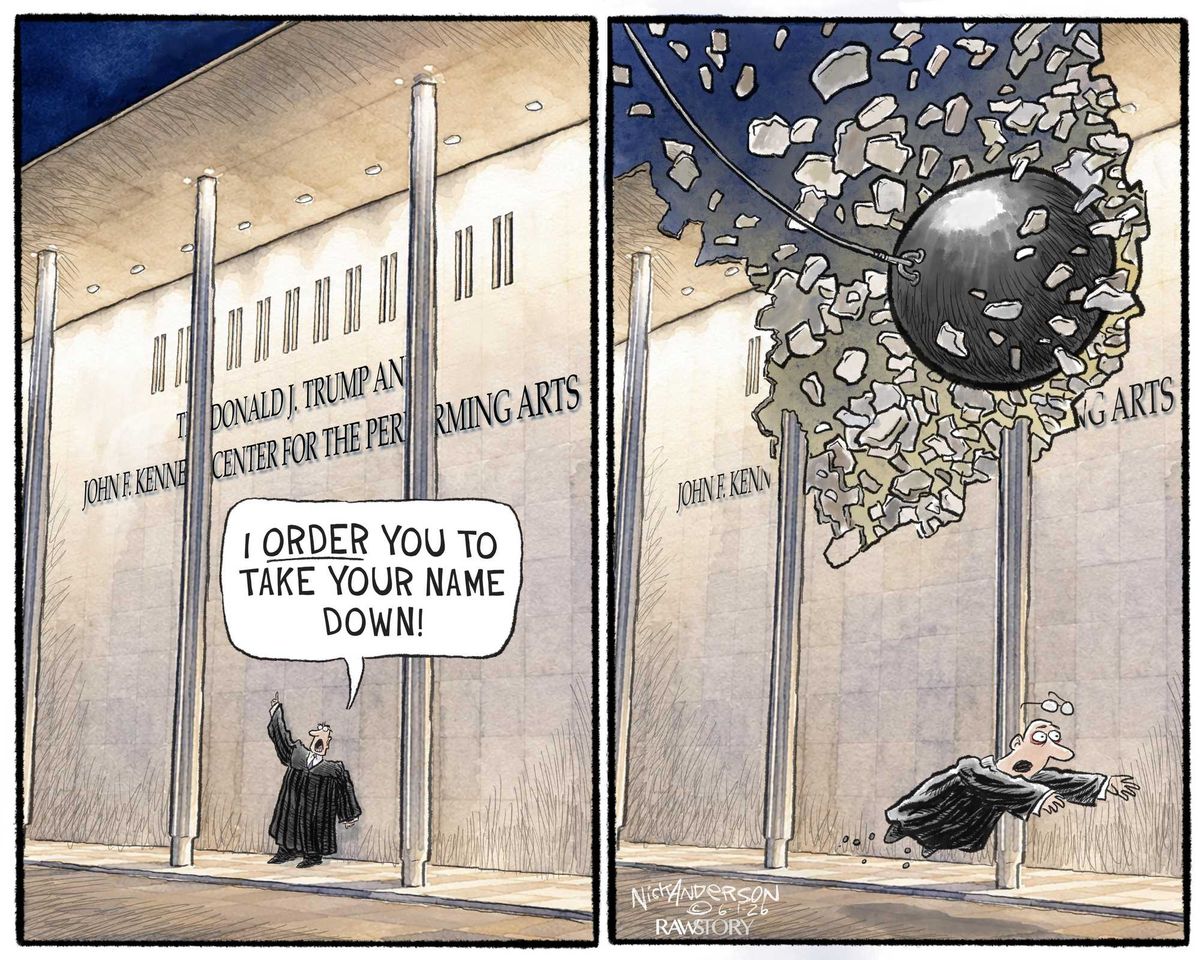
Trump finally removes his name from the Kennedy Center

Nick Anderson.
 Raw Story
June 2, 2026 


Nick Anderson/Raw Story

Nick Anderson is a Pulitzer Prize-winning editorial cartoonist.


PRIDE MONTH
MAGA lawmaker deletes extremist anti-gay post facing fury from conservatives

David Edwards
June 2, 2026
RAW STORY


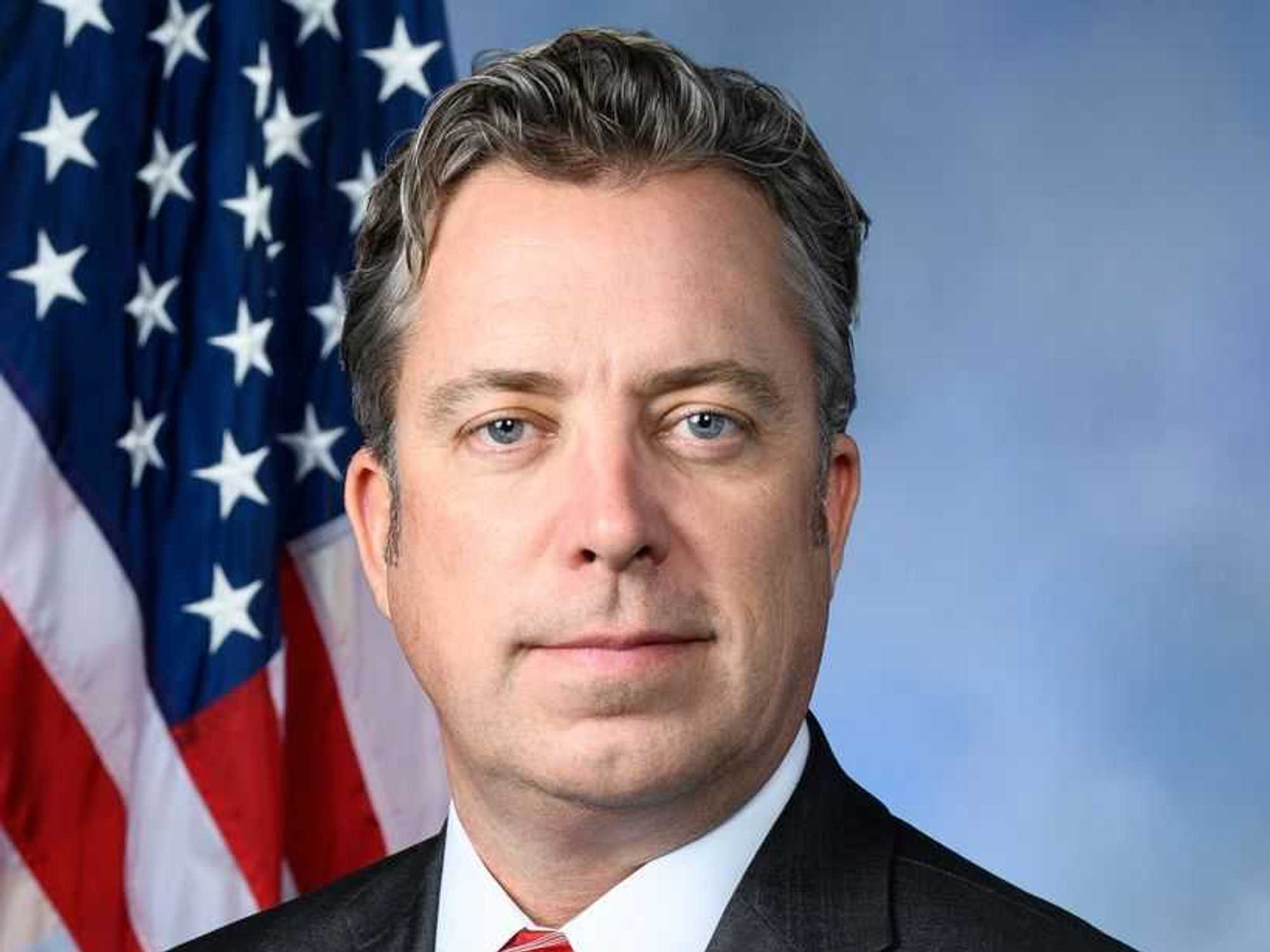
Rep. Andy Ogles (R-TN). Picture: Library of Congress/Wiki Commons.

Rep. Andy Ogles (R-TN) quietly deleted a post from X on Monday after it ignited a firestorm — including from members of his own party.

The since-deleted post, made on the second day of Pride Month, was blunt: "Homosexuality has no place in America. Happy Nuclear Family Month."

The blowback was swift. Rep. Mike Lawler (R-NY) fired back publicly — calling the statement "absolutely idiotic" — and then went further. Sources Say reporter Juliegrace Brufke reported that Lawler personally reached out to Ogles about the post.

"Homosexuality exists. In America," Lawler wrote. "In fact, Andy, you have family, friends, neighbors, colleagues, and constituents who are gay and lesbian. It doesn't make them less than or somehow unworthy of being an American."

The post also drew fire over its implicit shot at Treasury Secretary Scott Bessent, who is openly gay. Rep. Becca Balint (D-VT), the first openly gay person elected to Congress from Vermont, addressed Bessent directly: "That would be news to some gay officials in the Trump admin. Care to comment, @SecScottBessent?"

Gay conservative commentator Link Lauren, who describes himself as a frequent speaker at Republican events, pushed back from inside the tent: "Saying I have 'no place in America' is a mistake. It's certainly not what President Trump or this administration believes either."

Ogles, a Freedom Caucus member facing a 2026 Republican primary, had not responded to the criticism at the time of publication.


MAGA world revolts as Trump's ex-national security adviser exposed as agent for Putin ally

David McAfee
June 2, 2026 
RAW STORY


Michael Flynn addresses the Republican National Convention in 2016. (Shutterstock.com)

Some of Donald Trump's most loyal online supporters are pushing back against retired Lt. Gen. Michael Flynn, Trump's first national security adviser, after a report revealed he has registered as a foreign agent for a Bosnian Serb entity led by one of Vladimir Putin's closest European allies.

Scott McMahan, a conservative journalist who writes under the handle BiggerTruth and first reported the story roughly a month ago, confirmed Monday that Flynn has filed paperwork with the Justice Department's Foreign Agent Registration Act database on behalf of the Republic of Srpska, the Serb-dominated entity within Bosnia and Herzegovina. The entity is led by Milorad Dodik, a Bosnian Serb politician widely described as Putin's most vocal ally in the Balkans. According to McMahan's reporting, Flynn is being paid $100,000 per month.

Catturd, the anonymous conservative social media personality with millions of followers and one of the MAGA movement's most recognizable voices, reacted with two words: "$100,000 per month?"

Sebastian Gorka, the Hungarian-American who serves as Trump's Senior Director for Counterterrorism on the National Security Council, took a more pointed approach. "When I joined the first Trump Administration, I was asked to sign two documents," he wrote. "In one I promised to not work as a lobbyist for a decade. In the second, I promised to never work for another government. I was happy to sign both. I presume GEN Flynn also signed similar documents."

Brenden Dilley, a conservative media personality and MAGA influencer, said he needed independent confirmation and tagged far-right commentator Laura Loomer directly. "Wait wtf is this? Can you confirm this for me?" he wrote to Loomer.

The story grew more complicated when Ryan Mauro, a national security analyst and investigative journalist, reported that Glenn Diesen, a Norwegian political scientist described as a close associate of Alexander Dugin, the Russian ultranationalist philosopher sometimes called "Putin's brain," spoke at an event led by Flynn last week. Conservative commentator and former CBS journalist Lara Logan also participated in the event, Mauro reported.

Flynn, who pleaded guilty to lying to the FBI about his contacts with Russian officials before being pardoned by Trump, has not publicly responded to the FARA filing or the criticism from within MAGA world.


Elizabeth Warren corners Bessent on Trump's stock trading: 'He is enriching himself'

David Edwards
June 3, 2026 
RAW STORY


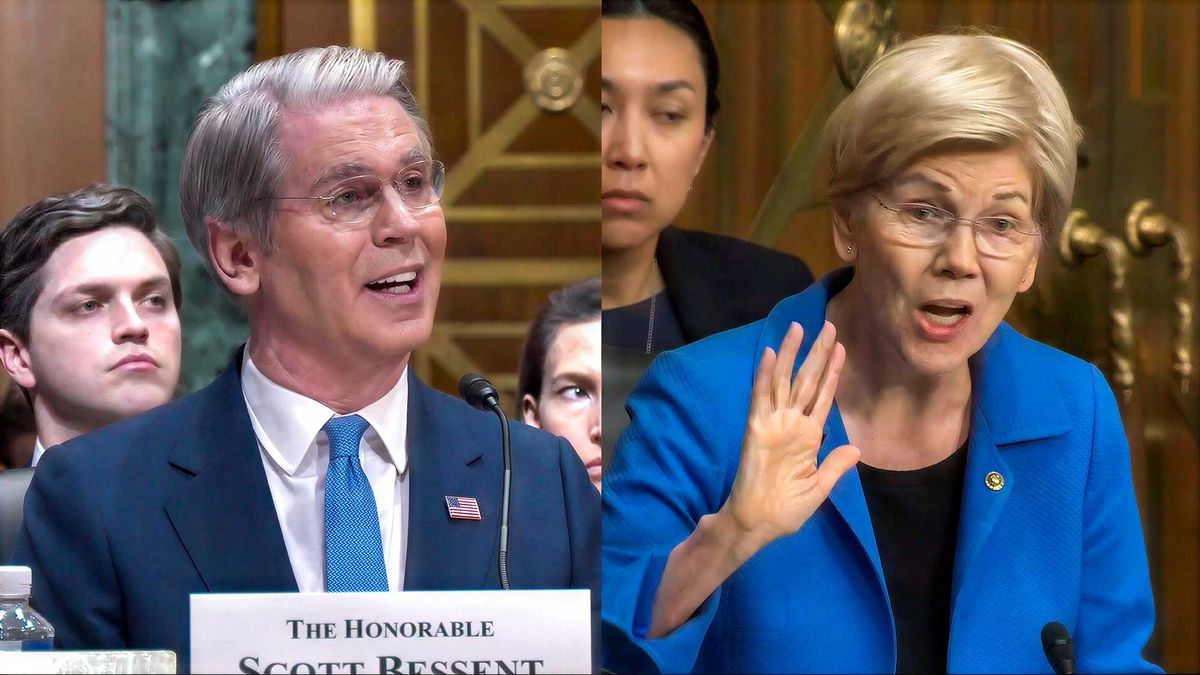
Senate Finance Committee/screen grab

Sen. Elizabeth Warren (D-MA) put Treasury Secretary Scott Bessent on the hot seat Wednesday over President Donald Trump's unprecedented stock trading, demanding to know whether the White House should face the same scrutiny Bessent himself once said Congress deserved.

The exchange, at a Senate Finance Committee hearing on Trump's FY2027 budget, turned combative fast.

Warren opened by turning Bessent's own words against him — reminding the former hedge fund manager that he had previously said congressional traders posted returns so strong that "every hedge fund would be jealous of them," and that "if any private citizen traded that way, the SEC would be knocking on their door."

Trump's financial disclosures show he made more than 3,400 stock trades worth more than a quarter of a billion dollars in just the first three months of 2026 — roughly half of what all 535 members of Congress traded last year combined, she said.

Bessent insisted Congress should clean up its own act first.

"I think it's incumbent upon both houses of Congress to get their house in order before you move to the administrative branch," he said.

Warren didn't budge. "How about we get the White House in order at the same time?"

When Warren pressed Bessent on whether Trump's January 6 purchase of up to $1 million in Nvidia stock — one week before his administration loosened export controls allowing Nvidia to sell chips to China — warranted an SEC investigation, Bessent dodged again. "Get your house in order, Senator."

Warren fired back: "I don't trade in individual stocks. I don't own any individual stocks. My house is in order."

She also flagged Trump's purchases of what she described as tens of thousands of dollars' worth of Robinhood and BNY stock before his Treasury Department named both companies as partners in the new Trump Accounts program. Both stocks rose after the announcement.

Bessent wouldn't engage on whether trades made on inside information would be illegal or worth investigating.

Warren closed with a broadside. "Instead of draining the swamp, what Donald Trump is doing is he is enriching himself by taking advantage of his position," she said. "That is not public service."


Citing Shady Stock Trades, Warren Asks Bessent If SEC Should ‘Be Knocking on President Trump’s Door’

“Instead of draining the swamp, what Donald Trump is doing is he is enriching himself by taking advantage of his position,” said Sen. Elizabeth Warren. “That is not public service.”


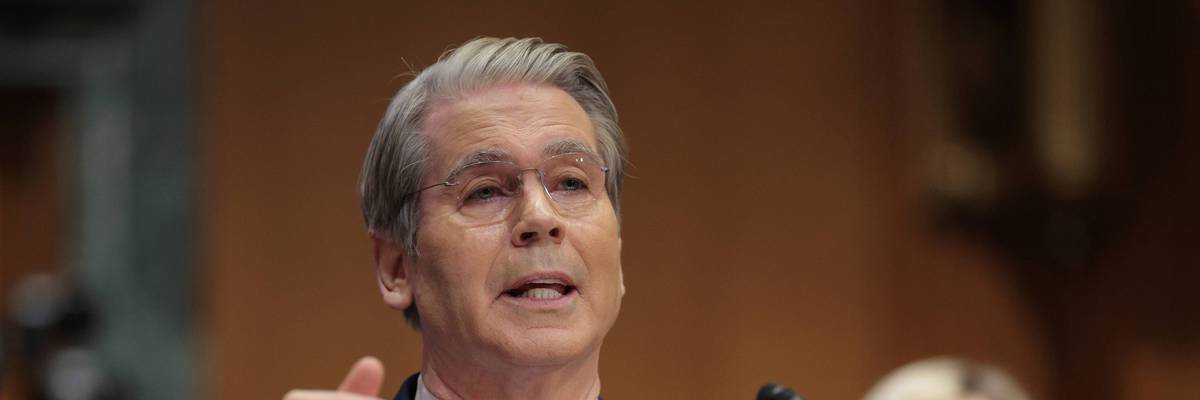
US Treasury Secretary Scott Bessent testifies during a Senate Finance Committee hearing on June 3, 2026 in Washington, DC.
(Photo by Chip Somodevilla/Getty Images)


Jake Johnson
Jun 03, 2026
COMMON DREAMS

US Sen. Elizabeth Warren on Wednesday pressed Treasury Secretary Scott Bessent on the suspiciously timed trading activity of President Donald Trump, pointing specifically to a large purchase of Nvidia stock just days before his administration approved a sale of the tech giant’s chips to China.

During a Senate Appropriations Committee hearing, Warren (D-Mass.) asked Bessent—who has criticized lawmakers for trading stocks—whether he would be willing to hold his boss to the same standard. Last year, Bessent said that if any private citizen traded like members of Congress, the Securities and Exchange Commission (SEC) “would be knocking on their door.”

“Should the SEC be knocking on President Trump’s door?” Warren asked Bessent, who responded that the Massachusetts Democrat and her congressional colleagues should “lead by example.”

“I would like to see the president of the United States lead by example,” replied Warren, who supports a ban on congressional stock trading and does not own or trade stocks in individual companies. “Instead of draining the swamp, what Donald Trump is doing is he is enriching himself by taking advantage of his position. That is not public service. He’s the one who should lead by example.”

Watch the exchange:


Financial disclosures released last month show Trump made more than 3,600 trades during the first three months of 2026, purchasing shares in some companies that his administration is tasked with regulating.

“Many of these trades coincided with favorable regulatory decisions,” NOTUS reported. “Trump purchased $1 million to $5 million worth of Nvidia stock on February 10, only a week before Nvidia announced a major computer processing power deal with AI and social media giant Meta. Trump previously purchased $500,000 to $1 million worth of Nvidia stock on January 6, a week before the Commerce Department officially approved the sale of some Nvidia chips to China.”

In a video response response to the disclosures, Warren asked: “Was this insider trading? And what else is Trump doing to boost his own stock?”

“The American people deserve to know,” said Warren. “What Trump is doing should be illegal. It’s long past time that we ban the president and every single lawmaker in this country from trading in stocks. We need to end this corruption now.”
Hollywood legend issues ominous warning: 'We’re living in the darkest moment'

Nicole Charky-Chami
June 3, 2026 
RAW STORY


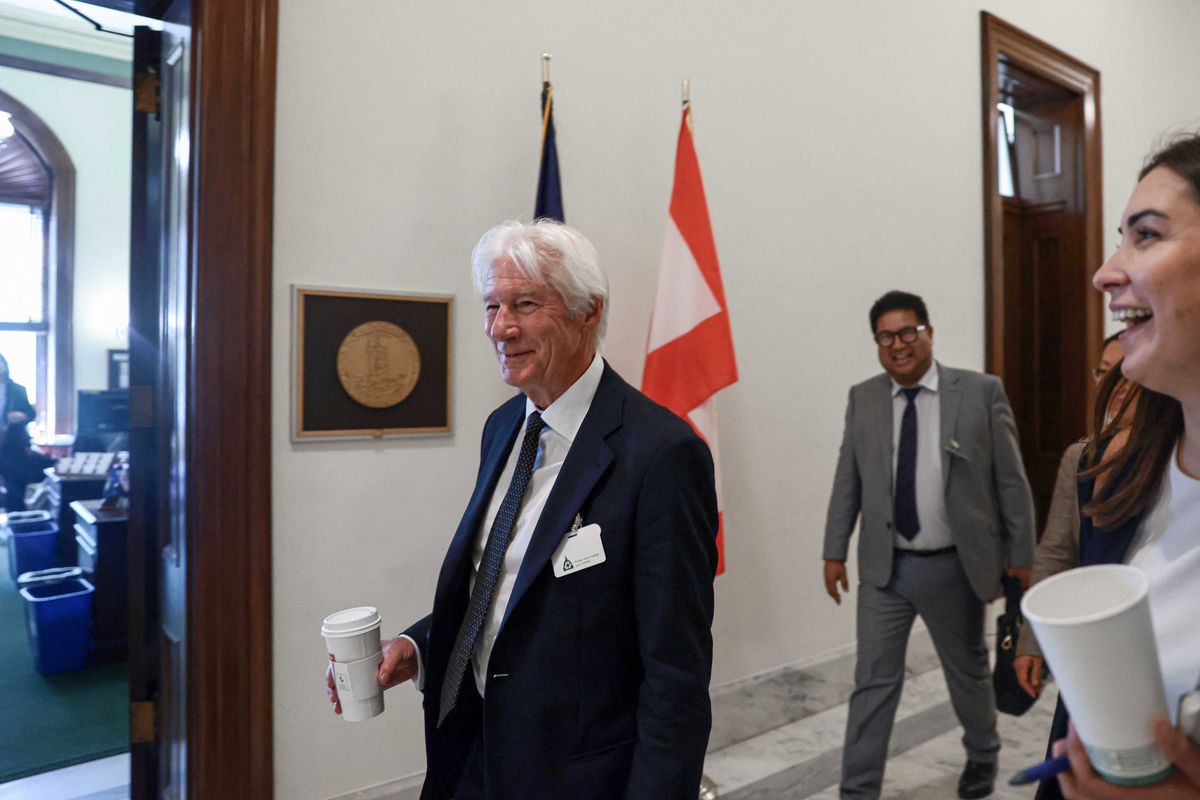
Actor Richard Gere walks down the hall in the Russell Senate Office building on Capitol Hill in Washington, D.C., U.S., in Washington, D.C., on May 19, 2026. REUTERS/Evelyn Hockstein


Actor Richard Gere described how America was facing a dark time in history and called President Donald Trump a "maniac," according to reports on Wednesday.

Gere was speaking at the Oslo Freedom Forum in Norway with Thor Halvorssen, a Venezuelan-Norwegian human rights activist, and discussed politics, history and freedom, The Daily Beast reported. The actor, who has criticized Trump in the past, revealed a dark parallel between the current United States and the past.

"We’re living in the darkest moment that I’ve experienced on this planet," Gere told the audience.


“How is this even possible? Because we went to sleep. We didn’t care. We didn’t vote. We didn’t really listen,” Gere said.

He believes he also "didn’t do enough work to skillfully convince people around me, close to me, not close to me, that this was insane to elect this person as president of the United States."


And in his comments, Gere described how on the "first day, this guy dismantled almost everything that was good about the U.S. government and the U.S. people."


He warned that people must act — before it's too late.

“We have to see the cues, this dictatorship of the monsters, how quickly it happens," Gere said. "We have to be vigilant."

He referenced a trip to Dachau, a Nazi concentration camp in Germany, and what he walked away thinking about after the visit and seeing an exhibit that showed "the transformation of German society and German government and how quickly it happened there."


"Good people turned into monsters," said the Golden Globe-winning performer.

"But you see how quickly our world can be taken from us if we fall asleep. And we have to see the cues," he added, saying that people must be aware of how fast "this dictatorship of the monsters" can happen.

"We can’t sit back and go, ‘Ah, life is good. I’m fine. You know, I’ve got food. I got money. Blah blah blah. I got my house. I got another car. I’m thinking about this. I’m OK. I know he’s a bad guy, but it’s OK,'" Gere explained.


"But it’s not OK. It’s not OK. It’s never OK," he said.


Fired Scott Pelley breaks silence with bombshell claim: CBS ordered him to put lies on air

David McAfee
June 3, 2026 
RAW STORY


60 Minutes' Scott Pelley. (Shutterstock)

Scott Pelley, the veteran CBS News correspondent fired this week after publicly accusing network leadership of "murdering" 60 Minutes, issued a formal statement Tuesday night detailing what he says drove him out — and the allegations are specific.

"New management has instructed me to inject falsehoods and bias into a politically sensitive story," Pelley wrote. "I've been told to include assertions that are unverified. To date, in every case, I have managed to ignore these instructions or refuse them."

Pelley said the demands didn't stop there. Politicians, he wrote, had been invited to select which correspondents would conduct their interviews — a practice he called incompatible with basic journalistic standards. And he revealed that mismanagement had nearly killed an episode outright: the broadcast came within 19 minutes of not getting on the air at all.

The statement named a culprit. The new owner of CBS, Pelley wrote, was dismantling the most successful program in television history "apparently to curry a moment of favor with the Trump administration."

As Raw Story reported Tuesday, Pelley was fired after confronting CBS News leadership in a staff meeting and accusing them of murdering the program. In his termination letter, CBS Executive Producer Nick Bilton said Pelley was dismissed "for cause" — a designation Pelley can challenge in court.

His new statement made clear he views the firing as part of a broader collapse. Senior leadership and two correspondents had already been cut before he was shown the door, he said, and "good people were silenced because they stood up for our audience."

None of it came during a ratings slump. 60 Minutes posted a 9 percent jump in viewers at the end of its 58th season — growth Pelley called "unheard-of."

"The collapse of values at the top has become untenable," he wrote. "The principles I hold dear are gone, and so I must leave as well."

He closed after 37 years at CBS with a prayer "for a day when sanity, competence, and courage return."


Fired Scott Pelley Says ‘60 Minutes’ Under Bari Weiss Wanted ‘Falsehoods and Bias’ Injected

“Incompetence and unprofessionalism in the new management have wreaked havoc,” said the veteran journalist as his 37-career with CBS News came to an end.


US journalist Scott Pelley attends a celebration of the announcement of CBS’s new Fall schedule at Paramount Studios in Hollywood, May 2, 2024.
(Photo by Michael Tran/AFP via Getty Images)


Jon Queally
Jun 03, 2026
COMMON DREAMS

Fired by the network where he had worked for nearly four decades on Tuesday night, veteran “60 Minutes” correspondent Scott Pelley said in a statement that he had been directed by the new management team at CBS News, led by editor-in-chief Bari Weiss, “to inject falsehoods and bias into a politically sensitive story” and also “told to include assertions that are unverified” in his reporting.

What looks like the collapse of “60 Minutes” has played out both behind closed doors at the network in recent months and publicly, with a series of high-profile firings of other longtime journalists and producers at the show. Details of internal meetings have been leaked, revealing serious tension between veteran members of the nation’s most-watched television news magazine and Weiss’ new management team.

‘She Was Brought in to Kill’ 60 Minutes: Scott​​ Pelley Unleashes on Bari Weiss at CBS Meeting

‘Let’s Call This What It Is: Censorship’: Fired ‘60 Minutes’ Journalists Speak Out

“The leadership of 60 Minutes is no longer recognizable,” Pelley said in his statement, released just hours after Nick Bilton, the show’s new executive producer appointed by Weiss last month, announced the firing. “The principles I hold dear are gone, and so I must leave as well.”


Bilton said in his statement that Pelley had been “terminated for cause effective immediately,” following a contentious staff meeting on Monday in which Pelley accused Weiss, who was not at the meeting, of being “brought in to kill” the program, not save it.

Despite “repeated attempts to have direct conversations with him over the weekend” and earlier on Tuesday, Bilton said, his efforts “to find common ground” with Pelley were not successful. “That was not the path Scott chose,” he said.


Pelley’s narrative of events was starkly different.

“Last month, 60 Minutes lost its DNA when our entire senior leadership and two of our best on-air correspondents were cruelly fired without cause,” Pelley said in a statement sent to several news outlets. “Good people were silenced because they stood up for our audience. They stood for fairness against the forces of political bias; they stood for professionalism against chaos.”

“For my part,” he continued, “new management has instructed me to inject falsehoods and bias into a politically sensitive story. I’ve been told to include assertions that are unverified. To date, in every case, I have managed to ignore these instructions or refuse them. Recently, politicians have been invited to choose correspondents for interviews on the broadcast. Giving politicians control over 60 Minutes interviews is not how this is done. Finally, incompetence and unprofessionalism in the new management have wreaked havoc. In a case involving one of my stories, the entire program came within 19 minutes of not getting on the air at all.”

Pelley concluded: “I depart after 37 years at CBS with one emotion—a heart brimming with gratitude for the men and women of CBS News who encouraged and enriched my work, very often at the risk of their own lives. I pray for a day when those people and their ideals are honored again—a day when sanity, competence, and courage return.”

Bari Weiss just set off an 'underwater earthquake' at CBS by firing Scott Pelley: expert

Robert Davis
June 2, 2026 
RAW STORY


CBS News head Bari Weiss at a conference in Idaho in July.
 (Brendan McDermid/Reuters)

A media expert warned CBS chief Bari Weiss on Tuesday night that she just set off an "underwater earthquake" at her network by showing veteran journalist Scott Pelley the door.

Brian Stelter, CNN's chief media analyst, told Kaitlan Collins on "The Source" that Pelley's firing likely won't go over well within the CBS newsroom and could lead to a costly legal battle. In the termination letter, CBS Executive Producer Nick Bilton said Pelley was dismissed "for cause," which he can challenge in court.

"This is like an underwater earthquake at CBS News. It's not going to be visible on TV right away, but this is bound to have many ripple effects and maybe a legal battle," Stelter said.

Pelley had been a journalist with CBS News for more than four decades before he was dismissed on Tuesday. His firing came just one day after Pelley confronted CBS News leadership in a staff meeting and accused them of "murdering" the flagship show, "60 Minutes."

"Yesterday’s performative display of hostility — enacted in front of the staff instead of in a civil, private conversation — demonstrated that you have no interest in contributing to the future success of the show, or approaching my new tenure with a mind open to collaboration and progress,” Bolton wrote in the letter.


CBS Firings Called ‘Straight From an Authoritarian Handbook’ and Preview of Paramount-Warner Bros. Merger

The pending Paramount-Warner Bros. Discovery merger “represents an existential threat to the free press, independent media, and free speech in this country and beyond,” warned several press freedom groups.


Free press advocates project messages opposing the Paramount-Warner Bros. merger on Jazz at Lincoln Center during the News and Documentary Emmy Awards on May 27, 2026 in New York City.
(Photo by Eugene Gologursky/Getty Images for Emmys Rapid Response Project)


Julia Conley
Jun 02, 2026
COMMON DREAMS

A coalition of nine press freedom groups on Tuesday warned that last week’s firings of top journalists at CBS News’ “60 Minutes” were a “grotesque effort taken straight from an authoritarian handbook”—but emphasized that the dismissal of reporters who had pushed back against the Trump administration signaled danger for journalists across the media, particularly as a pending merger would hand control of CNN to the same billionaire family that how runs CBS.

The Coalition for Women in Journalism, Common Cause, Freedom of the Press Foundation, and Reporters Without Borders were among the groups that released a statement saying the firing of “60 Minutes” correspondents Sharyn Alfonsi and Cecilia Vega—as well as two top executives—were meant to “appease a sitting president and dismantle one of the loudest voices in investigative journalism.”

But the groups emphasized that “this is only the beginning,” considering the fact that Warner Bros. Discovery recently voted in support of a $110 billion proposed merger with Paramount Skydance, owned by David Ellison, the son of President Donald Trump megadonor Larry Ellison. The deal could be finalized as soon as July.

Warner Bros. Discovery owns CNN, and media critics have warned the network could be headed for the same loss of editorial independence that CBS has faced since right-wing former opinion columnist took the helm of the latter network last year following the Paramount Skydance merger.

Since then, newly appointed editor-in-chief Bari Weiss has pulled from the air a “60 Minutes” segment that questioned the Trump administration’s explanation for the deportation of hundreds of immigrants to an El Salvador prison, personally booked guests for news programs, and called for programming that appeals to “centrist” viewers.

“Bari Weiss’ shameless actions fulfill the Ellisons’ commitment to President Trump to remake CBS to his liking,” said the groups on Tuesday. “Larry Ellison has reportedly promised to do the same at CNN if allowed to take control through the pending Paramount-Warner Bros. Discovery merger. Not because it makes any business sense, but because they seek to control the public discourse.”

“We have to make the story heard. It’s what ‘60 Minutes’ would have done; it’s what the Fourth Estate is tasked with doing; it’s what Trump and the Ellisons want to prevent. Don’t let them.”

The groups noted that the firings of Alfonsi, Vega, executive producer Tanya Simon, and executive editor Draggan Mihailovich came as more than 200 journalists and documentarians signed an open letter opposing the Paramount-Warner Bros. merger, citing concerns that the deal “would open the door to improper political meddling in journalists’ editorial decisions,” and noting that according to The Wall Street Journal, David Ellison has “promised President Donald Trump ‘sweeping changes’ at Warner-owned CNN—a frequent target of Trump’s ire.”

“Ellison will likely alter CNN’s editorial direction (not to mention meddle with HBO’s documentaries) to be more friendly to the administration, threatening press freedom,” said the signatories, including Wajahat Ali, Mehdi Hasan, and Alfonsi.

A separate letter organized by Democracy Defenders Fund has garnered signatures from over 1,000 actors, producers, directors, screenwriters, and other entertainment professionals.

“This transaction would further consolidate an already concentrated media landscape, reducing competition at a moment when our industries—and the audiences we serve—can least afford it,” reads the letter, which calls for state attorneys general to block the merger. “The result will be fewer opportunities for creators, fewer jobs across the production ecosystem, higher costs, and less choice for audiences in the United States and around the world. Alarmingly, this merger would reduce the number of major US film studios to just four.”

On Tuesday, the press freedom groups warned that the merger “represents an existential threat to the free press, independent media, and free speech in this country and beyond, and should not be allowed to move forward.”

“We cannot let this blow to the bedrock of our democracy be lost in the constant barrage of scandal, corruption, and abuse of power,” said the organizations. “We have to make the story heard. It’s what ‘60 Minutes’ would have done; it’s what the Fourth Estate is tasked with doing; it’s what Trump and the Ellisons want to prevent. Don’t let them.”


China Solar Makers Launch Space Energy Development Alliance

China’s solar manufacturing industry on Tuesday launched a so-called Space Energy Development Alliance as the Chinese solar sector looks to conquering new frontiers amid oversupply at home.

At this year’s SNEC PV+ conference in Shanghai, one of the biggest solar industry gatherings in the world, Chinese manufacturers launched the platform, but were stingy on details about projects or missions in the race to harness solar power in space.

GCL Technology Holdings Ltd, Trina Solar Co, and Shi Zhengrong, founder of Suntech Power Holdings Co, are part of the alliance which includes more than a dozen founding members and manufacturers.

Earlier this year, the China Photovoltaic Industry Association cooled excessive enthusiasm about space solar energy, with executive secretary general Liu Yiyang telling local media that “The enthusiasm for new technologies currently remains mostly confined to research reports and capital market activities.”

China is competing with the U.S. for breakthroughs in solar energy in space, but its solar manufacturing companies are also looking to tap a potential vast new market following years of overcapacity and oversupply at home that have depressed profit margins.

China’s solar exports have surged since the war in the Middle East crippled oil and gas supply and prompted governments and developers to accelerate – where possible – the rollout of solar and wind capacity additions.

At the same time, Chinese scientists last month boasted a breakthrough in space-based wireless power transmission. Researchers from the ‘Sun Chasing Project’ successfully tested a ground-based system capable of wirelessly transmitting power to multiple moving targets simultaneously, which could advance development of solar energy from space.

China plans to carry out low-Earth-orbit technology verification tests by 2030, Chinese media report. A megawatt-scale in-orbit test could be performed around 2030. The ultimate goal would be to build a commercial gigawatt-scale space solar power station by 2050 to beam clean energy directly to Earth.

By Tsvetana Paraskova for Oilprice.com