Bessent Shrugs Off Ugly Employment Numbers: ‘We Don’t Need to Produce as Many Jobs’ as Before
“No one expects Trump’s treasury secretary to know anything about the economy,” said one economist.

US Treasury Secretary Scott Bessent speaks at the 56th World Economic Forum (WEF) in Davos, Switzerland on January 20, 2026.
(Photo by Harun Ozalp/Anadolu via Getty Images)
Brad Reed
Aug 20, 2026
COMMON DREAMS
The American economy lost 23,000 jobs last month, according to federal data, but US Treasury Secretary Scott Bessent doesn’t see much cause for concern.
During a Thursday interview on CNBC, Bessent was asked about whether the most recent jobs report was a sign of the US labor market “cracking,” and he replied that the data at the moment are “quite noisy.”
Bessent then asserted that, thanks to Trump’s mass deportation policy, “the jobs that we’re seeing are going to Americans.”
“After the deportations we’ve seen during President Trump’s administration, and the closing of the border... we don’t need to produce as many jobs,” he said. “And what’s really important here is that we are seeing a manufacturing renaissance.”
In fact, there is no manufacturing jobs boom under Trump, as federal data shows the economy has lost an estimated 75,000 manufacturing jobs since the start of his second term.
Dean Baker, senior economist at the Center for Economic and Policy Research, noted in a social media post that Bessent’s claim about the Trump economy providing bountiful jobs to native-born US workers is also false.
“The employment rate for native-born people is down a percentage point from when Biden was in the White House,” Baker wrote, “but no one expects Trump’s treasury secretary to know anything about the economy.”
Economist Tony Yates observed that Bessent’s spin on the jobs report undermined one of the Trump administration’s rationales for carrying out mass deportations.
“I love how this contradicts with the argument for the deportations—that migrants were stealing jobs from everyone else,” Yates wrote. “Now the claim is that the jobs were created by migrants just as they are now gone with them.”
“No one expects Trump’s treasury secretary to know anything about the economy,” said one economist.
US Treasury Secretary Scott Bessent speaks at the 56th World Economic Forum (WEF) in Davos, Switzerland on January 20, 2026.
(Photo by Harun Ozalp/Anadolu via Getty Images)
Brad Reed
Aug 20, 2026
COMMON DREAMS
The American economy lost 23,000 jobs last month, according to federal data, but US Treasury Secretary Scott Bessent doesn’t see much cause for concern.
During a Thursday interview on CNBC, Bessent was asked about whether the most recent jobs report was a sign of the US labor market “cracking,” and he replied that the data at the moment are “quite noisy.”
‘Trump Is Tanking the US Economy’: Dismal Report Shows 23,000 Jobs Lost, Slowing Wage Growth
Bessent then asserted that, thanks to Trump’s mass deportation policy, “the jobs that we’re seeing are going to Americans.”
“After the deportations we’ve seen during President Trump’s administration, and the closing of the border... we don’t need to produce as many jobs,” he said. “And what’s really important here is that we are seeing a manufacturing renaissance.”
In fact, there is no manufacturing jobs boom under Trump, as federal data shows the economy has lost an estimated 75,000 manufacturing jobs since the start of his second term.
Dean Baker, senior economist at the Center for Economic and Policy Research, noted in a social media post that Bessent’s claim about the Trump economy providing bountiful jobs to native-born US workers is also false.
“The employment rate for native-born people is down a percentage point from when Biden was in the White House,” Baker wrote, “but no one expects Trump’s treasury secretary to know anything about the economy.”
Economist Tony Yates observed that Bessent’s spin on the jobs report undermined one of the Trump administration’s rationales for carrying out mass deportations.
“I love how this contradicts with the argument for the deportations—that migrants were stealing jobs from everyone else,” Yates wrote. “Now the claim is that the jobs were created by migrants just as they are now gone with them.”
Matthew Chapman
August 20, 2026
RAW STORY
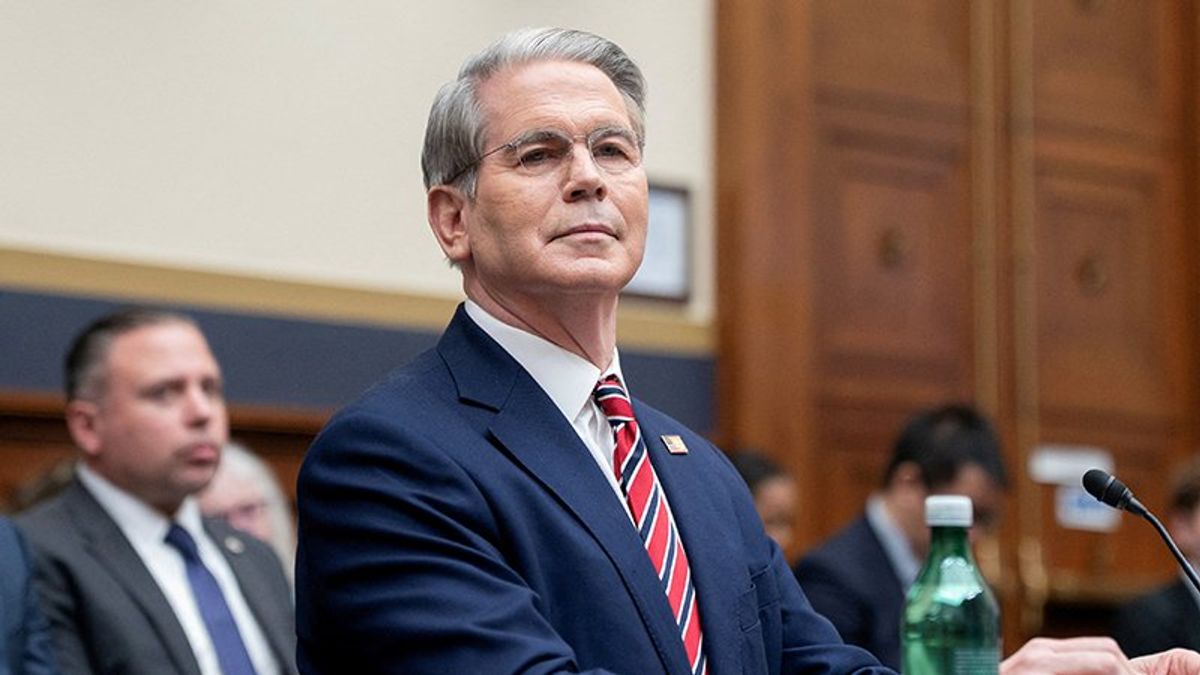
U.S. Treasury Secretary Scott Bessent testifies before a House Financial Services Committee hearing entitled "The Annual Testimony of the Secretary of the Treasury on the State of the International Financial System," on Capitol Hill in Washington, D.C., U.S., May 7, 2025. REUTERS/Nathan Howard
The Trump administration got a tongue-lashing on MS NOW's "Deadline: White House" Thursday, following Treasury Secretary Scott Bessent's boast that low job numbers are okay because immigrants are being deported to balance it out.
Not only is this not how the economy works, noted anchor Alicia Menendez to former GOP strategist Tim Miller, but it also reveals a glaring contradiction at the heart of MAGA ideology.
"I just want to make sure I follow the logic here, which is they told us that the immigrants they were deporting were the worst of the worst, who apparently had, like, great American jobs on the side of their criminality," said Menendez. "And they can't seem to decide which one it is," she added. These two things can't be true at once, she said. "They can't get their own messaging."
Miller agreed.
"It kind of goes back," he said, arguing that there was a similar contradiction underpinning Trump's tariff war, when he said parents could buy fewer dolls for their kids if tariffs make prices go up.
"I thought this was supposed to be the golden age where we were going to have this great economic boom in the country, we were going to bring manufacturing back to the country, we're going to have, you know, kind of a land of plenty," said Miller. But now Trump's policies are actually in place, he said, their message has changed to "we don't need to create that many jobs actually, because we've deported so many people."
Their only other messages, said Miller, are "maybe tighten your belt at Christmas this year" and "if you have to pay a little bit more at the gas pump, you know, four bucks a gallon, it's worth it because we changed one Ayatollah with another Ayatollah. You know, they don't have a lot to work with. And the messaging is pretty bad on top of that."
‘Bessent Is a Political Actor’: Treasury Move on Bond Market Seen as Midterm Damage Control
“Trump is going to pump billions of dollars into the bond market to push down interest rates through the election, then let everything fall apart again,” said one critic.
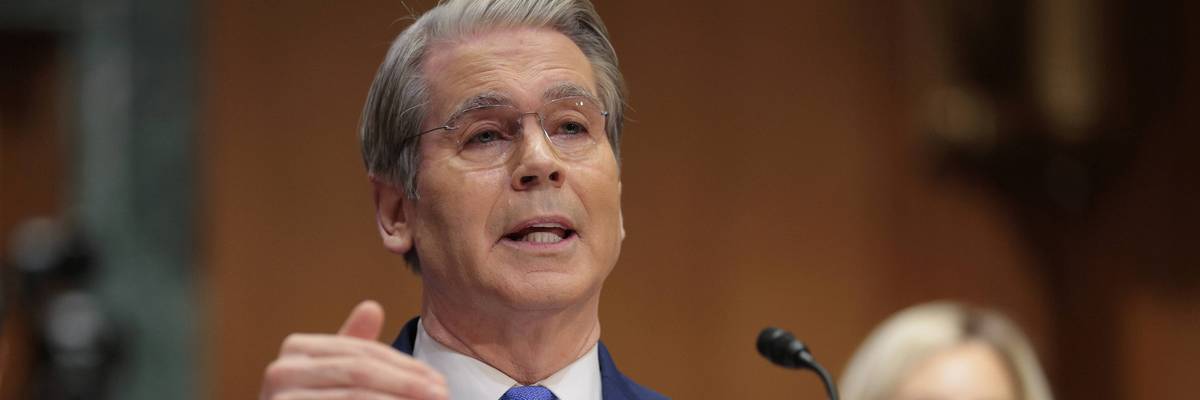
US Treasury Secretary Scott Bessent testifies during a Senate Committee on Finance hearing in the Dirksen Senate Office Building on Capitol Hill on June 3, 2026 in Washington, DC.
(Photo by Chip Somodevilla/Getty Images)
Brad Reed
Aug 19, 2026
COMMON DREAMS
The Trump administration on Wednesday unveiled a plan to ease upward pressure on the cost of US debt by doubling its bond buybacks through November.
In announcing that it will buy back “at least” $4 billion worth of bonds over a two-month period, the US Department of Treasury said it was seeking “to provide greater liquidity support in longer-dated nominal sectors where there is consistent strong sponsorship from market participants.”
While the announcement did result in interest rates for US treasuries dropping, economists and other political observers are warning that Treasury Secretary Scott Bessent’s scheme to stop spiking yields will prove ineffective over the long term.
In a Wednesday interview with NOTUS, Joseph Brusuelas, principal and chief economist for RSM US LLP, said that Bessent was making decisions based solely on the political fortunes of the Republican Party.
“Bessent is a political actor,” Brusuelas said. “His interest is purely short-term and is organized around the upcoming election and not a return to price stability. This is what fiscal dominance looks like as the fiscal authority leans on the central bank to subordinate its goal of price stability to the government’s borrowing and political needs.”
The economist’s analysis was echoed by Drop Site News reporter Ryan Grim, who argued in a social media post that President Donald Trump’s administration was scrambling to save its endangered GOP congressional majority.
“Trump is going to pump billions of dollars into the bond market to push down interest rates through the election, then let everything fall apart again,” Grim wrote. “Not sure I’ve seen a more nakedly electoral use of this amount of money before, for such a targeted amount of time.”
Krishna Guha, head of global policy and central bank strategy at Evercore ISI, argued in a Wednesday research note flagged by CNBC that the bond buyback scheme “changes almost nothing in terms of the fundamentals in particular the unchanged need to finance the tidal wave of hyperscaler debt in addition to very large government deficits.”
Adam Josephson, founder of Sakonnet Research, also expressed skepticism of the buyback plan’s effectiveness in a Wednesday interview with Politico.
“They’re trying everything possible to limit upward pressure on long-term yields,” Josephson said. “Nothing has worked. And why would this work? It’s too small to matter.”
Experts say that bond yields have been spiking to highs not seen since the start of the Great Recession due to investor anxiety over a number of factors, including inflation, the size of the US government’s debt, and Trump’s illegal war with Iran.
“Trump is going to pump billions of dollars into the bond market to push down interest rates through the election, then let everything fall apart again,” said one critic.
US Treasury Secretary Scott Bessent testifies during a Senate Committee on Finance hearing in the Dirksen Senate Office Building on Capitol Hill on June 3, 2026 in Washington, DC.
(Photo by Chip Somodevilla/Getty Images)
Brad Reed
Aug 19, 2026
COMMON DREAMS
The Trump administration on Wednesday unveiled a plan to ease upward pressure on the cost of US debt by doubling its bond buybacks through November.
In announcing that it will buy back “at least” $4 billion worth of bonds over a two-month period, the US Department of Treasury said it was seeking “to provide greater liquidity support in longer-dated nominal sectors where there is consistent strong sponsorship from market participants.”
While the announcement did result in interest rates for US treasuries dropping, economists and other political observers are warning that Treasury Secretary Scott Bessent’s scheme to stop spiking yields will prove ineffective over the long term.
In a Wednesday interview with NOTUS, Joseph Brusuelas, principal and chief economist for RSM US LLP, said that Bessent was making decisions based solely on the political fortunes of the Republican Party.
“Bessent is a political actor,” Brusuelas said. “His interest is purely short-term and is organized around the upcoming election and not a return to price stability. This is what fiscal dominance looks like as the fiscal authority leans on the central bank to subordinate its goal of price stability to the government’s borrowing and political needs.”
The economist’s analysis was echoed by Drop Site News reporter Ryan Grim, who argued in a social media post that President Donald Trump’s administration was scrambling to save its endangered GOP congressional majority.
“Trump is going to pump billions of dollars into the bond market to push down interest rates through the election, then let everything fall apart again,” Grim wrote. “Not sure I’ve seen a more nakedly electoral use of this amount of money before, for such a targeted amount of time.”
Krishna Guha, head of global policy and central bank strategy at Evercore ISI, argued in a Wednesday research note flagged by CNBC that the bond buyback scheme “changes almost nothing in terms of the fundamentals in particular the unchanged need to finance the tidal wave of hyperscaler debt in addition to very large government deficits.”
Adam Josephson, founder of Sakonnet Research, also expressed skepticism of the buyback plan’s effectiveness in a Wednesday interview with Politico.
“They’re trying everything possible to limit upward pressure on long-term yields,” Josephson said. “Nothing has worked. And why would this work? It’s too small to matter.”
Experts say that bond yields have been spiking to highs not seen since the start of the Great Recession due to investor anxiety over a number of factors, including inflation, the size of the US government’s debt, and Trump’s illegal war with Iran.

No comments:
Post a Comment