It’s possible that I shall make an ass of myself. But in that case one can always get out of it with a little dialectic. I have, of course, so worded my proposition as to be right either way (K.Marx, Letter to F.Engels on the Indian Mutiny)
Tuesday, August 04, 2026
Sanctioned Russian Cargo Ships Delivering Military Equipment to West Africa
IN XCHANGE FOR CRIMINAL GOLD
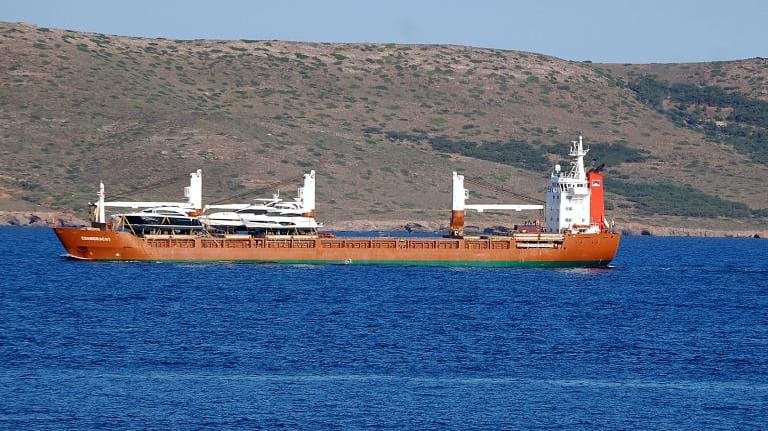
Russia acquired the vessel in 2021 and is using it to transport military equipment and material to the Arctic 2 LNG operation ( Nikos Palamaris Instagram: - Uploaded photos: 6384 Captured vessels: 3293 photo in 2020 - courtesy of Vlesse Finder)
Data put together by the BBC and multiple intelligence monitors on the Internet shows at least one and possibly two Russian cargo ships delivering military equipment to West Africa. The equipment appears to be part of an effort to reinforce the government of Mali in its fight against separatists in the north of the country.
Mali is one of several West African nations that are receiving support or trying to improve their relations with Russia. The mercenary Wagner Group was operating in West Africa and specifically in Mali in the ongoing civil war after France withdrew forces from the country in 2022. Russia’s operations in Mali are reported to have been transferred to the Africa Corps, which is controlled by Russia’s Defense Ministry.
Recent reports from Mali have cited large gains by the separatists in the north of the country. They have reportedly taken large land areas, pushing back government troops. The ruling junta in Mali now appears to be getting additional aid from Russia in the fight.
Trackers spotted trucks, armored personnel carriers, and light infantry vehicles being loaded on the Russian general cargo ship Mikhail Britnev (IMO: 9081370). Built in 1995, the vessel is 12,700 dwt. The United States has sanctioned the ship, linking it to the deliveries for the Arctic-2 LNG operations.
Analyzing tracking data, BBC reports the vessel departed the Russian port of Baltiysk on June 18. BBC reports the ship was escorted through the English Channel by a Russian warship and then went dark. It was next detected on July 9 as it was entering the port of Lome in Togo. Mali is landlocked, and shipments would have to be transported overland.
Analysts report the ship remained in Lome long enough to unload military equipment. According to its AIS transmissions, it departed Togo on July 13. Its AIS signal reports its next port as Arkhangelsk, although the vessel again went dark.
Mali TV reports the BBC writes showed images of military vehicles. It reports they were driven through Togo and across Burkina Faso to reach Mali.
BBC, in its analysis, says this is the latest in a series of Russian vessels tracked into West Africa. It reports that a bulk carrier named Sabetta (IMO: 9347061) was tracked to Conakry, Guinea, in February. Observers reported the ship was also carrying military vehicles. BBC says at least one Russian tanker was also believed to have been sent to West Africa.
Days after the Mikhail Britnev was observed leaving Togo, online analysts identified another Russian cargo ship, Baltic Leader (IMO 9220639), also sailing along the West Africa coast. Speculation was that it was also transporting military equipment to support the efforts in the region.
Experts speculate that the shipments are a demonstration of a Russian effort to strengthen support for the junta in Mali. Russia also appears to be taking further efforts to increase its influence over the region.
Top photo in 2020 by Nikos Palamaris - courtesy of Vessel Finder
Sweden Arrests Cargo Ship Captain on Charges of Causing Collision Death
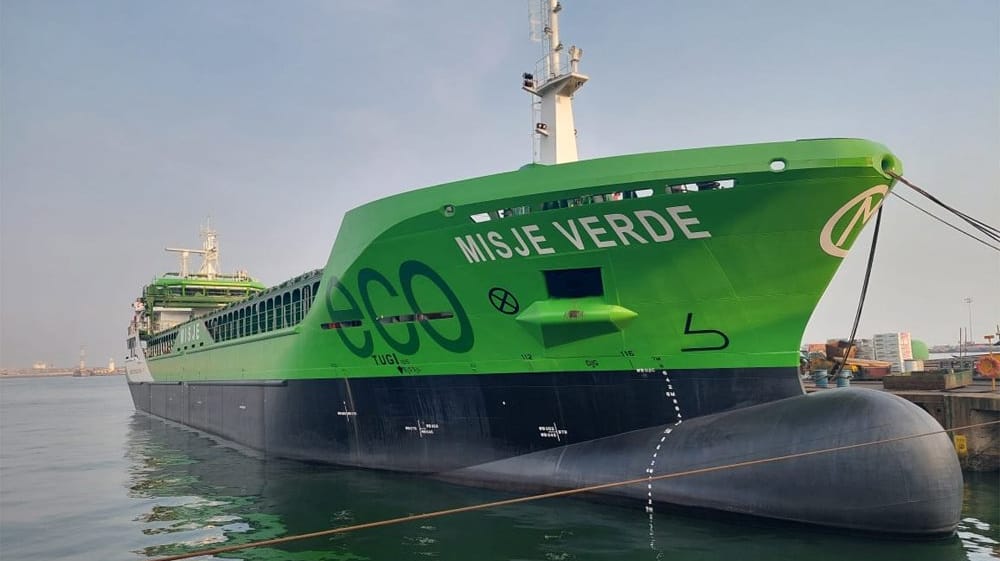
Misje cargo ship was overtaking the small pleasure boat when it hit at at the stern killing a mother and daughter (Misje file photo)
Swedish prosecutors confirmed over the weekend that they had requested that the captain of a Norwegian cargo ship be arrested and detained on charges of having caused a death when the ship, the Misje Verde, ran down a small pleasure boat. They said the master had been on the bridge with a pilot when the cargo ship was overtaking the small pleasure boat, ran down the boat, and killed a mother and her daughter.
The investigation is still in its early stages, said prosecutors, but they asked the court to detain the captain, who is a Russian citizen. They said in a statement that they were concerned that because the captain is not a resident of Sweden, the Nordic countries, or the EU, there was a flight risk. They said there was also a danger of undue influence on important witnesses, due to the early stage of the investigation. The captain was taken into custody on Thursday night.
In making the court filing, they provided additional details on the incident that happened on July 28 off the West Coast of Sweden. They reported that data showed the 5,300-dwt containership had been sailing in the same direction as the 7 to 8 meter (23 to 26 foot) motorboat in the area south and west of Hakefjord. Because the motorboat was significantly slower, it was being overtaken by the 90-meter (295-foot) cargo ship, which would hit it hard in the stern.
The motorboat was sucked under the cargo ship and filled with water. It sank at a depth of 20 meters (nearly 66 feet). The father and a young son were able to get into the water and were rescued by another boater who had anchored for the night in the area. The woman and her daughter were missing. One was found the following day still in the boat, and the other body was recovered nearby.
Prosecutors report they are looking at the division of duty between the captain and the pilot, as well as weather conditions at the time of the incident. They are looking at whether the rules of the road were being obeyed, including having a constant and careful lookout, a requirement in good weather for the overtaking vessel to give way to the smaller vessel, and, if the weather was bad, a reduction in speed. Also, the ship would have been required to make a sound signal, and they believed there was no signal being sounded. The suspicion of negligence in maritime traffic, however, was not sufficient for the arrest in this case.
Prosecutors have until August 14 to file the formal indictment against the captain.
France Awards $300M to Ports to Support Floating Offshore Wind Farms
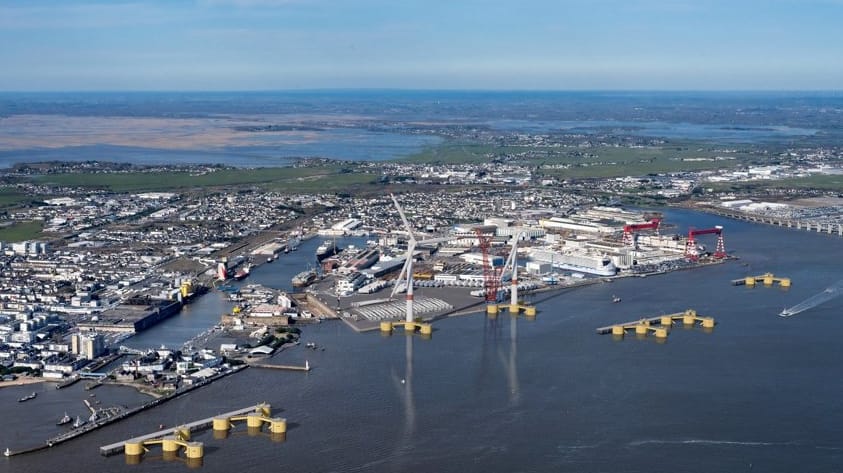
Nantes-Saint Nazaire looks to build on its support of France's first floating offshore wind projects (Nantes Saint-Nazaire Port)
The French government will provide nearly $300 million in funding to five of the country’s top ports to accelerate the development of infrastructure to support the development of floating offshore wind energy projects. Beyond supporting the development of France’s wind energy projects, the goal is to position France to become a leader in supporting floating wind farms in Europe, including the Mediterranean.
The government had launched a call for projects in 2024 as part of an initiative it calls France 2030. The government has recommitted to supporting the offshore wind energy sector. Domestically, France is targeting 6 GW of floating offshore wind energy capacity by 2040.
France currently has only approximately 2 GW of installed offshore wind energy capacity, but the government recently released the details for bidding for approximately 10 GW of projects it expects to award in early 2027. It currently has a pipeline of approximately 5 GW of projects, but to reach its goal of 15 GW by 2035 and 45 GW by 2050, France will require a strong contribution from floating offshore wind farms.
“Ports are a strategic link in the development of wind power, particularly offshore,” said Philippe Tabarot, Minister of Transport. “Thanks to their proximity to coastlines and their vast spaces adapted to these exceptional facilities, they play a key role in their assembly, installation, and maintenance. By contributing to job creation and added value in the sector in France, our ports strengthen our industrial and energy sovereignty.”
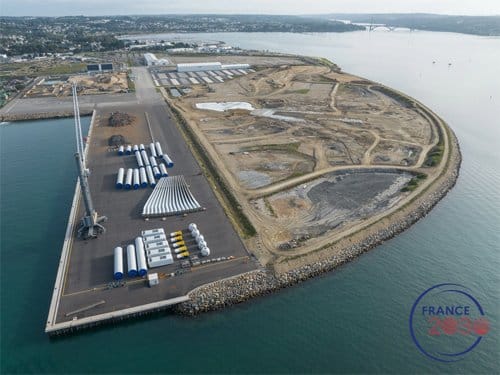
Brest will receive approximately $66 million to expand its wind port capabilities (Brest, France)
The projects selected focus on the construction or modification of berths, reclaiming land, and developing the spaces needed to support the manufacturing of wind energy components. The plans call for devoting space to the marshalling of equipment and the assembly of floating offshore wind turbines.
The awards totaling nearly 260 million euros are going to the ports of Cherbourg, Brest, Nantes-Saint Nazaire, Port-la-Nouvelle, and Marseille-Fos. The government expects it will unlock a total of nearly 1 billion euros in investments to allow for the deployment of floating wind power.
The largest project is nearly $100 million for Marseille-Fos. It includes the development of 30 hectares of dedicated land and the dredging of a 400-meter-long berth. Work will begin by 2028 and be completed between late 20029 and mid-2030.
The port on the Mediterranean is seen as a key competitor to support a broad range of projects in the Mediterranean. The French government has declared it will become a leader in the development of floating offshore wind internationally.
Dominion Energy Makes Progress on Offshore Wind but Delays Completion Date
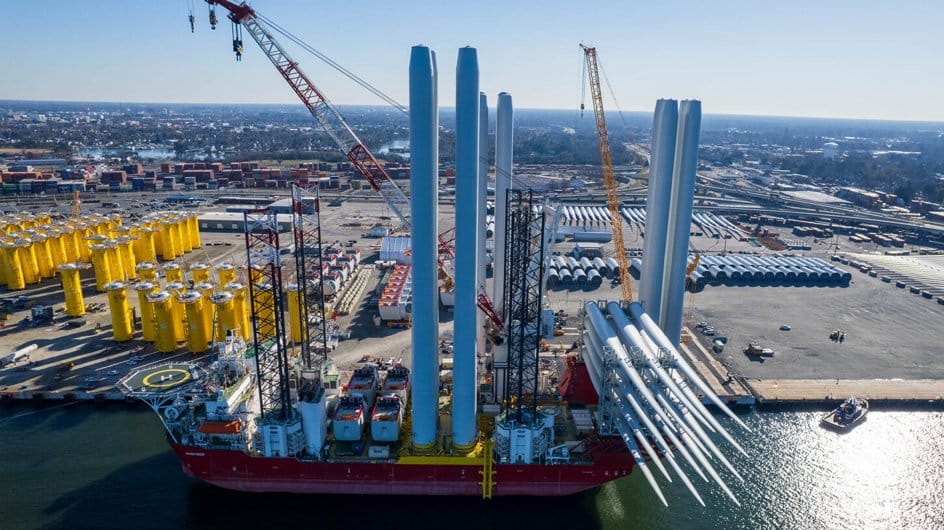
Dominion added time for the loadout to Charybdis and anticipated more time as the locations grow more challenging for the jackup installation (Dominion Energy)
The largest offshore wind energy project in the United States, Coastal Virginia Offshore Wind (CVOW), continues to make good progress with its construction and installation, Dominion Energy told investors during its quarterly update. The company reports the project has passed the 80 percent completion mark and is generating a significant amount of electricity, but it has extended the target completion date to the end of 2027 and added approximately two percent to the budget.
“The strategic value of CVOW hasn’t changed,” said Bob Blue, Chair, President, and CEO of Dominion Energy, in response to an analyst’s question. “It remains one of the fastest ways to bring a lot of power to our customers; it also remains one of the most affordable sources of energy for customers.”
Blue noted that the project now has 31 turbines installed, with work progressing on the installation of number 32. The project delivered its first power in March, and currently, Blue notes, with 31 turbines installed, it has a capacity of 450 MW, which he said rivals the magnitude of some of the company’s fossil plants. Further, he points out that the project will continue to increase power capacity as they proceed with the installation of the remaining 144 turbines (176 total when completed).
Dominion Energy ticks off a long list of accomplishments for the project. All the monopiles and transition pieces are installed along with two of the three offshore substations. In addition, all the nacelles, 99 percent of the towers, and 85 percent of the blades have been fabricated. The last of the towers is days away, and fabrication of the blades will be completed by October.
While the project is making good progress, Dominion Energy said it is pushing back the target date for the last turbine installation to the end of 2027, versus earlier projections of mid-2027. The company reports the jackup time has remained consistent at about two days, but it is adding in contingencies for incremental weather, vessel maintenance, and says it anticipates that additional time will be required for the load out of materials from the Portsmouth Marine Terminal.
Another factor is that they anticipate longer-duration jacking operations for certain locations for the remaining turbines. They reported that an analysis has been performed based on the sub-sea geotechnical analysis.
Costs of the project have already been increased due to the impact of tariffs imposed by the Trump administration and the costs for steel and aluminum, as well as the delays from the Trump administration’s stop-work order.
Currently, they report an investment of approximately $9.8 billion for the project. The total cost estimate was increased by a further two percent, or a targeted new total of $11.65 billion. Stonepeak, as the investor, is bearing 48 percent of the cost while Dominion estimates it has to fund approximately $1 billion in the last phase of the project.
Blue emphasized that, unlike a traditional shore power project where they have to wait for completion to “flip the switch,” Coastal Virginia Offshore Wind adds to its capacity as each turbine is commissioned. “In recent weeks, as we’ve set new demand peaks, we’ve done everything possible at the request of system operators to deliver the maximum possible amount of power from CVOW,” Blue told investors.
Unlike the monopile installations, which had to be paused during the winter, the nacelle installation is continuing with no time restrictions. Dominion projects the next key milestone as the commissioning of the third and final offshore substation expected by year-end 2027. At that point, they note it will signify that approximately 50 percent of the project investment, adjusted for network upgrade costs, has achieved in-service status.
MSC Sends a Message on Container Fire Safety By Suing a Customer
Cargo fires rank at the top of the list of hazards aboard a modern container ship, in part because the operator has limited control over the cargo. A container is a solid steel box, and a productive crane operator can move dozens of them on and off the ship every hour. In general, the ship sails with the cargo it's given - along with any risks hidden therein. In a lawsuit filed last week in New York, number-one ocean carrier MSC is sending a warning to cargo owners: it is seeking steep damages from one of its customers for allegedly setting up the conditions for a cargo fire.
In August 2023, the specialist auto auction and car transport firm CargoLoop provided to MSC a container filled with "used, previously-damaged battery-powered vehicles" for a long voyage from California to Lithuania. The age of the electric vehicles in the consignment was disclosed on the bill of lading, as was their IMDG code, and MSC accepted it for shipment. (Some other carriers, notably ACL and Matson, do not accept used EVs in any condition due to perceived fire risk.) CargoLoop packed the container, according to MSC, using a racking system made of wood to secure the vehicles. To fit more cars into the 40-foot high cube, at least one car was racked atop another.
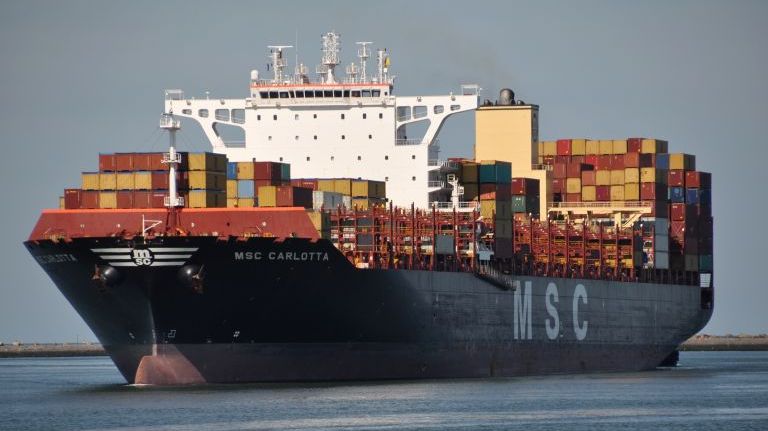
In the early hours of September 2, 2023, the ship (identified as MSC Carlotta on cargo documents) was navigating off Baja California when an explosion and fire occurred on board. MSC alleges that the blast came from CargoLoop's container, and that it caught fire to a second container nearby, also supplied by CargoLoop and filled with electric cars. Several other boxes were damaged by the fire, or by water leakage and flooding from firefighting.
The crew extinguished the blaze, and the ship had to call in Mexico to unload, inspect and restow the two damaged CargoLoop boxes. In the process, a hired-in fire investigation firm came to look at the affected containers. According to MSC, the investigators determined that the fire started somewhere near a 2018 Tesla Model S and a 2012 Ford Focus, which was packed underneath the Tesla. The wooden racking may have failed in transit, MSC alleged, allowing the Tesla to collapse on top of the Ford and possibly damage its battery. Similar racking failure was found in another CargoLoop container on the same voyage, MSC alleged.
Alternatively, MSC suggests that one or more vehicles' battery packs may have been damaged through forklift handling; or, alternately, the forwarder may not have taken the required precaution to disconnect the vehicles' batteries - as allegedly found on surviving vehicles packed by CargoLoop in the other container.
MSC is seeking a large payment from its former customer in compensation for its costs, including $60,000 for the fire survey, $60,000 for claim settlements from other cargo owners, $86,000 for extra handling and disposal, and $25,000 for container loss and damage - in all, about $230,000, plus attorneys' fees, interest, and $43,000 in pre-litigation mitigation.
A last-minute meeting on Tuesday, August 4, appears to be the final hope to head off a planned strike set for two days that would bring BHP’s iron exports to a halt and could further interrupt operations at Port Hedland, Australia. The Combined Ports Unions assert it has been negotiating for eight months and that it will begin to ramp up pressure on BHP after a brief strike on July 16.
The combined organization, which represents three unions, filed a notice at the end of last week after the latest negotiating session failed. It officially informed BHP and the authorities that the combined workforce would conduct a protected industrial action under Australian labour law. In the first phase, on August 8, it will impose a 24-hour ban on loading ships, and then on August 9, it will conduct a full work stoppage at Port Hedland Bulk Export Terminal. A separate electrical union said it would join the work stoppage on August 9.
BHP reportedly ships around 800,000 metric tons a day of iron ore from Port Hedland. The port is also used by both Forescue and Hancock Prospecting, although those companies are not part of the current contract negotiations.
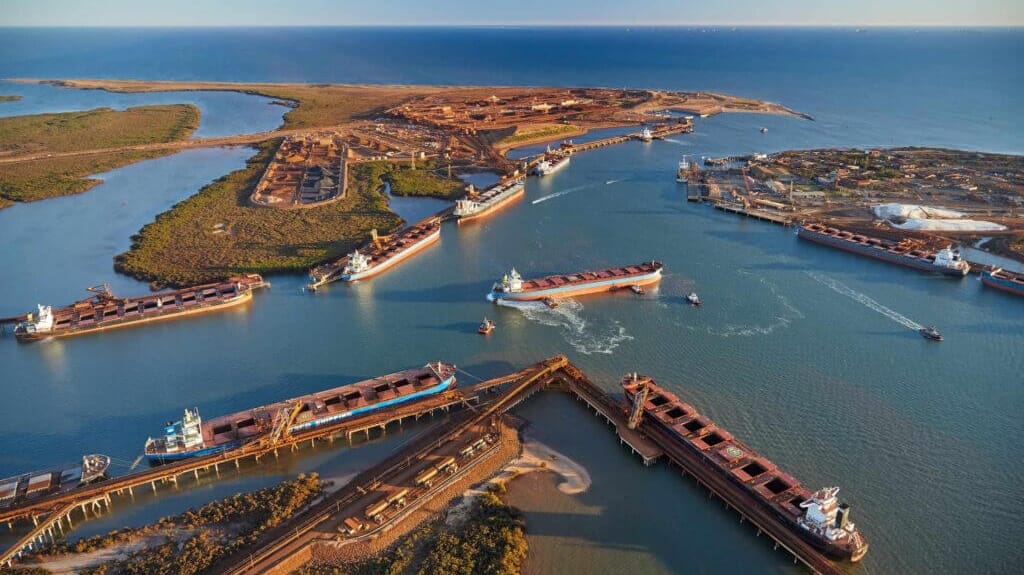
Port Hedland is one of the ports of the Pilbara, which combined, make up the largest bulk export port operation in the world. Last year, Pilbara Ports handled a record of just over 804 million tonnes of exports and imports, representing an export value of A$150 billion (US$104 billion). The Port of Port Hedland constitutes the bulk of the volume, having handled over 580 million tonnes of throughput in FY 2025-2026.
The strike would come as the port is already experiencing delays. At the end of June, Lloyd’s Intelligence reported waiting times of up to eight days for vessels.
During the last job action, the unions brought out "Scabby the Cat" to highlight the money BHP makes from the exports while not offering what it said is a fair contract (Western Mine Workers Alliance - WMWA)
BHP said that a stoppage would impact A$120 million (US$84 million) in daily revenue and cost the Western Australia government as much as A$6.85 million (US$4.8 million) in royalties. The company said it would likely be able to recoup the losses over the remainder of the year.
The company said it is frustrated by the lack of progress, telling Australian media it has offered a 16 percent pay raise. It reportedly has asked Australia’s Fair Work Commission to moderate Tuesday’s talks.
For its part, the leadership of the combined unions called the progress in the negotiations “glacial.” The unions represent about 450 operators and maintenance workers, and they are demanding a four-year collective agreement. They said there needs to be “enforceable wage and condition protections.”
About 100 members had walked off the job for eight hours on July 16. BHP said it resulted in minimal disruption as seven ships had continued to load.
Seafarer Happiness Under Pressure Due to Workload and Wages
Seafarer happiness has slipped over the past two quarters (Mission to Seafarers file photo)
The Seafarer Happiness Index continues to slip, reports The Mission to Seafarers, not only due to the shocks from the war in the Persian Gulf but also from persistent issues that are steadily eroding crew morale. After seeing an upward trend, the index has slipped over the past two quarters, with the organizers of the survey highlighting issues ranging from workload and lack of time ashore to the financial pressures coming from perceptions of stagnant real-wage buying power.
The overall Happinex Index fell to 6.87 (out of a scale of 10) during the second quarter. It was 7.18 in the first quarter and 7.26 in the fourth quarter of 2025.
The decline confirms that the hoped-for recovery after a challenging start to the year has failed to take hold, says the Mission to Seafarers. The report highlights that the industry is in a transition, which it calls “from acute shock to chronic strain.”
“Seafarers are extraordinarily resilient, but we must not mistake resilience for unlimited capacity; endurance is not the same as well-being. The fundamentals that crews are asking for are strikingly basic: enough rest to recover, connectivity to sustain family life, quality food, and pay that justifies the sacrifice,” says Ben Bailey, Director of Programme, The Mission to Seafarers.
Time ashore continues to be one of the most persistent issues. Shore leave scores fell this quarter to 5.72, the lowest by a significant margin, with time ashore increasingly sacrificed to intense schedules, short port stays, and restrictions on port and terminal access. Further, the report highlights that workload management scored 6.20, amid a relentless cycle of six-on, six-off watchkeeping, rapid turnarounds, heavy paperwork, and inspections, with rest hours, most alarmingly, recorded “just for authorities and filing.”
The report also frames a deepening recruitment and retention challenge, with pay increasingly judged against the total life package available ashore rather than historical maritime wages. The sponsors and The Mission to Seafarers warn of the dangers as the industry continues to face declining numbers and difficulties attracting new workers at all levels.
On the positive side, seafarers are giving high scores to crew interactions (7.49) and connectivity (7.46), showing, according to the report, that seafarers continue to draw strength from crew relationships and from staying connected with family. The report says that where companies get it right, the best operators respect sign-off dates, ensure timely reliefs, offer merit-based promotions, and maintain modern tonnage.
The Mission to Seafarers has been overseeing the surveys of seafarers for the index for the past 11 years and continues its collaboration with Idwal, the global provider of independent vessel inspections. The reports are published quarterly and are available online.
The Iran war already has a winner: The world’s largest shipbroker notching record earnings from the ‘exceptional volatility’ in the Strait of Hormuz
Disrupted traffic in the Strait of Hormuz has benefited firms such as Clarksons. · Fortune · Majid Saeedi—Getty Images
Sasha Rogelberg Mon, August 3, 2026
FORTUNE
As traffic in the Strait of Hormuz continues to be disrupted during the monthslong Iran war, one company is benefiting from the global trade chaos.
Clarksons, the world's largest shipbroker, reported its best-ever operating profit of £64.8 million ($87 million) for the six months ending June 30, a more than 55% increase from a year ago. The U.K.-based company founded in 1852 saw a nearly 40% increase in revenue to £413.5 million ($555.5 million).
CEO Andi Case attributed the jump to worldwide changes in supply chains as a result of the Iran war, increasing demand for companies like Clarksons. Shipbrokers are third-party firms that liaise between shipowners, such as Maersk, and cargo-holders, like retailers.
"Clarksons delivered a record first half performance, reflecting both the investment into our underlying business and the exceptional volatility caused by the disruption to global trade from global conflict including the situation in the Strait of Hormuz," Case wrote in a statement on Monday. "We expect the full year performance of the Group to be materially ahead of market expectations."
He added that the disruptions have "created a pronounced shock across global shipping markets" that have reshaped trade routes and caused a "period of operational dislocation" followed by an increase in both freight rates and hedging activity.
Since the onset of the war in February, traffic in the Strait of Hormuz has dwindled from its prewar rate of more than 100 ships per day passing through the chokepoint to about 33 today, according to maritime data tracker Kpler.
Despite President Donald Trump signaling the resumption of peace talks after canceling a renewed offensive against Iran, disruptions in the area look to continue, with Tehran expanding the war across the Gulf region.
That includes Yemen's Houthi movement blockading Saudi Arabian maritime traffic near the Bab el-Mandeb Strait. Ukraine's drone attacks on Russia have also suspended shipping to Black Sea ports and trade corridors key for grain exports.
These supply-chain upheavals have mounted pressures on certain industries like aviation, where jet fuel costs have soared, and agriculture, which has dealt with shortages of key chemicals used in fertilizers as a result of Strait of Hormuz closures. But as those sectors try to cope, companies like Clarksons thrive.
"In any market, any disruptions, obviously, create some kind of a zero-sum game," Jean-Paul Rodrigue, a professor of maritime business administration at Texas A&M University at Galveston, told Fortune. "That is, some actors are losing and the others are gaining the equivalent loss."
Why Clarksons is winning big in times of geopolitical chaos
According to Rodrigue, the shipbroker's record-breaking earnings are a matter of simple supply and demand: With fewer ships passing through the Strait of Hormuz, the need increases for third parties like Clarksons, which can help connect retailers to ships actually able to transport goods.
Like any broker, companies like Clarksons receive a share of the transactions between the two parties. So when the cost of shipping increases, a brokerage's share likewise increases.
"When you have geopolitical instability, of course, it disrupts the market," Rodrigue said. "It creates uncertainty. It creates a lack of knowledge because nobody knows what the hell is happening. Uncertainty, therefore, actually increases the importance of such firms because people are getting a bit more desperate."
But uncertainty doesn't always mean winning big. In March 2025, ahead of the Trump administration's steep tariffs and amid continued conflict between Ukraine and Russia, Clarksons said the trade tensions would have an adverse impact on revenues.
The Iran war, however, has had the opposite effect. Sea freight routed near the Strait of Hormuz nearly quadrupled in the first two months of the conflict, according to data from the International Rescue Committee, primarily as a result of steep insurance premiums associated with navigating the region. The higher demands and costs of doing business presented a strong opportunity for companies like Clarksons.
"They just behave rationally," Rodrigue said. "Market positions change…and when the market position changes, obviously supply and demand change, and those who are at the right end of the stick are going to benefit."
Its fortunes buoyed by conflict in the Mideast, world-leading shipbroking firm Clarksons is having a spectacular year, posting its best-ever results for the first half and predicting a better-than-expected finish to 2026.
War is usually good for shipping, within limits, and brokers are well-placed to benefit. For Clarksons, the disruption at Hormuz in the first six months of the year yielded a 38 percent jump in revenue and an underlying profit of $83 million, a company record for the first half.
In a brief statement, CEO Andi Case cited "exceptional volatility" in the markets caused by trade disruption, to include the on-and-off Hormuz shutdown. He predicted that the firm's full-year performance would be "materially ahead of market expectations."
The dynamics of the Hormuz shutdown "shock" were a primary driver of the firm's outsize success in the first half. The disruption drove up freight rates, forced operators to readjust routing and reposition vessels, and increased tonne-mile demand. For those with ships available in the right place and the right time, it was an excellent opportunity for earnings - and for broking as well. Demand for freight derivatives ran high, too, as charterers moved to hedge their exposure to changing rates.
"I am extremely proud of our colleagues across the group, whose exceptional hard work, commitment and client focus have made this performance possible," Case said. "We look forward with confidence."
Clarksons' strong results and optimism saw its share price jump by about six percent in morning trading to reach a new all-time high of about $67.75. Investors can also look forward to an interim dividend of 47 cents per share, up from 44 cents last year.
BP Earnings Surge to $5.7 Billion on Oil Price and Refining Boom
BP more than doubled its profit for the second quarter from a year earlier on the back of higher oil and gas prices and stronger refining margins driven by the shock supply disruption in the Middle East.
BP on Tuesday reported an underlying replacement cost (RC) profit, the closest metric to net profit closely watched by analysts, of $5.7 billion for the second quarter, up from $3.2 billion for the previous quarter, and more than doubled from the $2.35 billion for the same period of 2025.
The Q2 earnings beat the average analyst consensus of $5 billion.
The jump in oil and gas prices, combined with significantly higher refining margins and stronger oil and gas trading profits from a year earlier, boosted BP’s underlying earnings above analyst expectations.
The surge in the underlying result mainly reflected higher liquids and gas realizations, including the impact of price lags, stronger realized refining margins, and stronger customer results, partly offset by higher exploration write-offs, BP said.
Moreover, “The oil trading contribution for the second quarter and first half was significantly higher compared with the same periods in 2025,” BP said.
The UK-based supermajor, like its European peers Shell and TotalEnergies, benefited from the higher oil prices, the spike in refining margins, and the bumper trading profits from extreme market volatility.
Last week, Shell also reported more than doubled second-quarter earnings from a year earlier, as higher oil and gas prices, record refinery utilization, and strong trading boosted profits to above analyst expectations.
Other European majors, including Eni, TotalEnergies and Equinor, also saw their profits jump from a year earlier as oil and gas prices surged during the Middle East crisis and delivered windfall earnings to the biggest energy firms.
For BP, the earnings jump comes at a crucial moment for the company as CEO Meg O’Neill looks to simplify the business to focus on the most profitable assets in a bid to create shareholder value and show investors that BP’s stock can be attractive again.
“We need to take a clear look at ourselves: assessing what needs to change, stopping what holds us back and building strength where it matters. We have to get fit to grow,” O’Neill said in the earnings release.
By Tsvetana Paraskova for Oilprice.com
Saudi Aramco’s Adjusted Profit Jumps 33% as Oil Prices Surge
Saudi Aramco saw its adjusted net income jump by 33% for the second quarter from a year earlier as high oil prices and the oil giant’s ability to re-route most crude exports more than offset the constrained flows at the Strait of Hormuz.
The state giant Aramco on Tuesday reported an adjusted net income of $33.385 billion for the second quarter, up by 33% from the $25.19 billion for the same period of 2025 and beating an analyst consensus of about $31 billion.
Saudi Aramco’s average realized crude oil price jumped to $108.1 per barrel for April to June, the period in which Brent oil prices averaged $97 a barrel.
The oil giant’s average realized price compares with $76.9 per barrel realizations for the first quarter of the year and $66.7 a barrel for the second quarter of 2025.
Aramco kept its Q2 2026 base dividend of $21.9 billion, to be paid in the third quarter to shareholders, the majority of which is the Kingdom of Saudi Arabia.
Despite the major disruption to flows in the second quarter, Aramco benefited from its diverse asset base, including strategic infrastructure such as the East-West Pipeline, storage capacity, and export terminals, President and CEO Amin Nasser said.
“That enabled us to sustain production and exports while advancing key projects, despite the challenging regional environment,” the executive noted.
Ziad Al-Murshed, Aramco’s Executive Vice President and CFO, commented, “Our resilience stems from decades of long-term planning and our strategic domestic and international infrastructure that provide flexibility and optionality.”
Saudi Aramco has re-routed its crude oil exports to the Red Sea port of Yanbu to avoid the Strait of Hormuz constraints. But this new route was challenged two weeks ago when the Iran-aligned Houthis threatened to block Saudi-linked shipments in the Red Sea and the Bab el-Mandeb Strait, prompting dark transits through Bab el-Mandeb and new re-routing of oil exports northward to Egypt and the Suez Canal.
By Tsvetana Paraskova for Oilprice.com
Despite Houthi Threats, Saudi Tanker Terminal Carries On
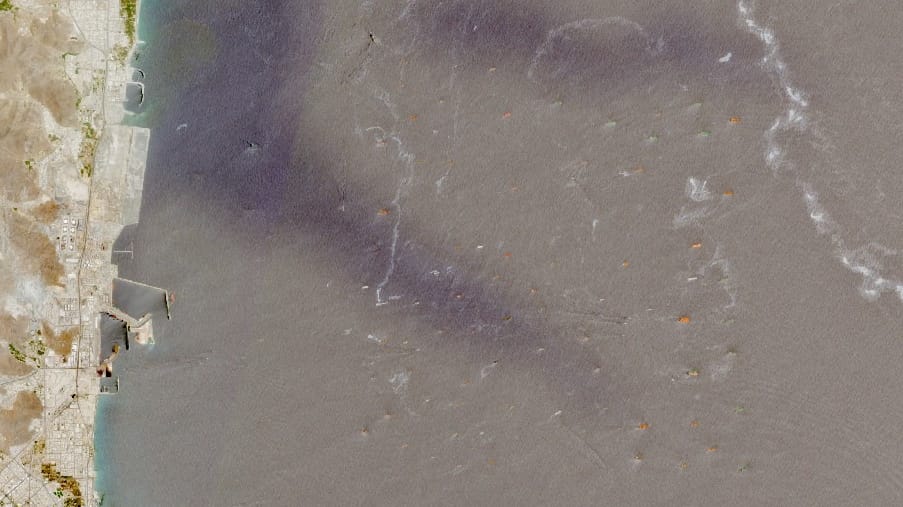
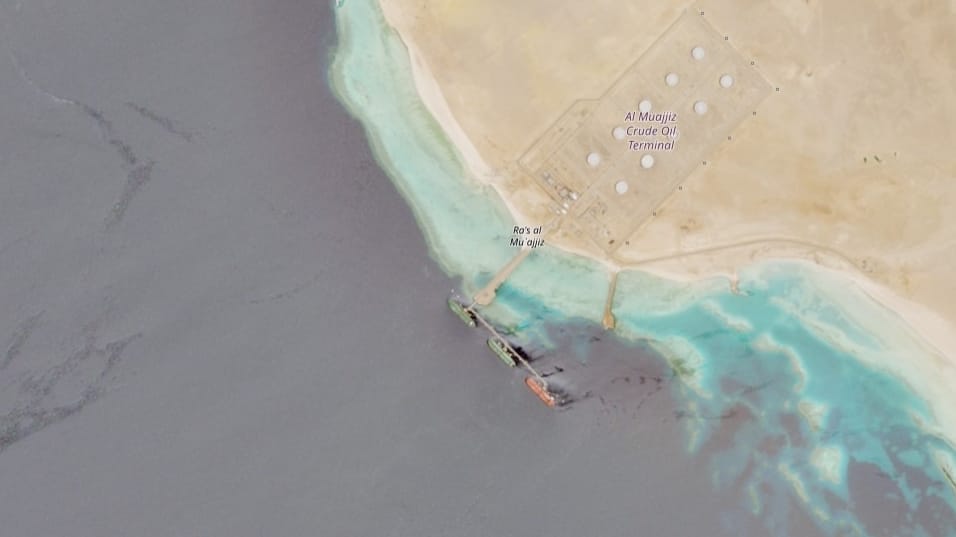
Full berths at Al Muajjiz, south of Yanbu, August 1 (Copernicus / Sentinel-2 / ESA)
The Houthi blockade on Saudi seaports produced visible results last month, cutting daily exports by as much as 40 percent, but shipping appears to be moving through and past the threat zone in recent days.
Iran-backed Houthi militants hit multiple tankers last month with antiship missiles, including NCC Masa, Encelia, Layla (unconfirmed) and NCC Ghazal - all Saudi-owned and Saudi-flagged. The militant group also hit the Saudi refinery at Jizan and the crude processing station at Abqaiq.
Most traffic has been unaffected: the Houthis have emphasized that they would only target vessels calling at Saudi ports, and that Bab el-Mandeb will remain free and open for all other passing traffic. The group has denied recent rumors that it would be setting up a fee structure for passage, as Iran has attempted to do at the Strait of Hormuz.
Despite last month's strikes and the Houthis' threats, the tanker traffic volume at the Saudi Red Sea loading terminal at Yanbu is strong, according to satellite imaging reviewed by Bloomberg, which revealed five tankers at the pier over the weekend - a tie with a previous record. Yanbu-related transits through Bab el-Mandeb proceed apace (though some without AIS transmissions, notably the Greek tanker Lesvos and the Indian-flagged supertanker Desh Vaibhav). Consistent with previous reporting about a Chinese agreement with Houthi leadership, Chinese vessels continue to transit through the waterway with AIS on, unbothered on their way to and from Yanbu.
Flag state is a hindrance for others: six vessels with a higher risk profile appear to be taking the long way around to use the opposite entrance to the Red Sea. A small flotilla of Saudi-flagged tankers has headed south around the Cape of Good Hope, avoiding the Gulf of Aden, according to Windward. The rerouting will add about one month to the transit to Yanbu in ballast.
Saudi leaders may be contemplating a renewed military intervention in Yemen if Houthi provocations continue, though analysts suggest that it will not likely be at the scale of the full-force Saudi invasion of 2015, given the poor outcome of that engagement for Saudi forces.
"Most plausibly it would be a Saudi-enabled Yemeni offensive, possibly supported by small numbers of Saudi personnel in command, intelligence, artillery, air-defense, engineering, and special-forces roles," suggested analyst Cyril Widdershoven to the Jerusalem Post. The push would likely come in the rugged, mountainous area of Al-Bayda, strategically located at the southeastern edge of Houthi territory.