Tuesday, August 04, 2026

'The damage is enormous': Ukraine grapples with record-breaking Russian strikes


DAVID BRENNAN
Mon, August 3, 2026
AP


'The damage is enormous': Ukraine grapples with record-breaking Russian strikes

Russia set new wartime records for the rate and scale of its missile strikes on Ukrainian cities in July, according to data published by the Ukrainian air force and analyzed by ABC News, as the Ukrainian government accelerated its efforts to patch well-publicized gaps in its aerial defensive umbrella.

Across July, Russia launched a total of 381 missiles of all types into Ukraine, the air force in Kyiv said, at a rate of just over 12 per day -- setting new wartime records for the overall number and rate of missiles launched into the country.

The data also indicated that missiles have become a more prominent element of Russia's nightly -- and sometimes also daytime -- combined strikes, which are largely comprised of drones. In July, though, the proportion of Russian missiles in the overall munition count increased to a record high of just over 7%, according to Ukrainian air force data analyzed by ABC News.

Ukrainian President Volodymyr Zelenskyy, his top officials and military commanders have been clear on Kyiv's struggle to intercept Russian missiles, particularly of the ballistic variety, which fly at speeds and attack at angles that make it more difficult to shoot them down.


Gleb Garanich/Reuters - PHOTO: An explosion is seen in Kyiv, Ukraine, during a Russian missile and drone strike, on July 19, 2026.


Ukrainian Air Force - PHOTO: Russian missiles launched into Ukraine by month

In July, the Ukrainian air force reported a Russian missile failure rate -- including munitions that were intercepted, suppressed or failed to reach their targets -- of around 58%. For ballistic missiles -- including Iskander-M and S-400 missiles, which the air force often groups together in its after action reports -- the failure rate was around 28%.

Ukraine's air force publishes daily tallies of Russian drone and missile strikes, including information as to how many munitions were intercepted and how many penetrated air defenses. The air force includes a wide range of missile types in its count, sometimes including the "Banderol" low-cost cruise missile.

Moscow publishes only the number of Ukrainian drones and other projectiles it claims to have intercepted.

ABC News cannot independently verify the data released by either Ukraine or Russia. It is possible that both Kyiv and Moscow may seek to exaggerate the effectiveness of their air defenses, or to amplify the attacks against them.

Neither side provides detailed data on the number of munitions used in their own attacks. Both Kyiv and Moscow routinely describe their targets as military, energy or industrial sites and both accuse the other of intentionally attacking civilian targets.


Anatolii Stepanov/Reuters - PHOTO: A firefighting helicopter drops water over the site of a Russian missile strike in Kyiv region, Ukraine, on July 19, 2026.

Ballistic cat and mouse

The U.S.-made Patriot surface-to-air missile system has become Ukraine's prime defense against such munitions, but a global shortage of interceptor missiles -- exacerbated by the ongoing U.S.-Israeli war with Iran -- and President Donald Trump's decision to wind down U.S. aid to Kyiv has put severe strain on Ukrainian defenses, officials said.

Kyiv is also working to produce its own homegrown interceptor missile -- the Freyja -- and collaborating with European partners to use it in a shared anti-ballistic missile shield. Kyiv is targeting early 2027 for a Freyja prototype, officials have said.

Two sit-downs with Trump this month initially produced good news for Kyiv. During warm bilateral meetings with Zelenskyy at the NATO summit in Ankara, Turkey, and later at the White House, Trump said he would give Ukraine permission to produce Patriot interceptors on Ukrainian soil.


Kacper Pempel/Reuters - PHOTO: This file photo shows a man looking at a Patriot Advanced Capability (PAC-3) Missile Segment Enhancement (MSE) model made by Lockheed Martin at an international military fair in Kielce, Poland, on Sept. 7, 2017.More

Ukraine scales up drone attacks in Moscow, across Russia to record highs, data shows

Zelenskyy described the decision as a "historic political agreement," but warned later that there could be no immediate fix.

After visiting the White House for talks in late July, Zelenskyy said Ukraine was seeking the delivery of another 300 Patriot interceptor missiles to bolster its defenses before next winter.

Trump declined to provide any new missiles and even walked back his commitment to providing Ukraine a Patriot production license. "We have not agreed to that. We're talking about it, but it's a hard thing to give away that kind of technology," the president said during a Cabinet meeting at Camp David last week.

The Patriot is Ukraine's most potent weapon in its ongoing cat-and-mouse game with Russia, analysts say, in which both sides are constantly adapting to gain an edge over the other.

Russian missiles have been seen employing defensive measures, like deploying flares just before impact to misdirect interceptor missiles, and Moscow routinely changes its directions and timings of attack, Olha Polishchuk of the ACLED conflict monitoring organization told ABC News.


Anadolu Agency via Getty Images - PHOTO: This file photo shows an Iskander-M missile launcher during the International Military-Technical Forum "Army 2022" at Kubinka military training ground in Moscow, Russia, on August 17, 2022.More

But Moscow is facing its own logistical pressures as it expands its long-range attacks, according to Ukrainian Air Force spokesperson Yuriy Ihnat. He said last month that some of Russia's ballistic missiles were launched into Ukraine just weeks after coming off the factory production line, perhaps indicating that Russia's stockpiles are dwindling.

In June, Ukraine's military intelligence said that Russian forces could launch up to 100 ballistic missiles each month without exhausting its stockpiles. In July, Ukraine's air force said Russia launched at least 126 such missiles, which may represent an unsustainable tempo if Kyiv's estimates prove correct.

Russia's use of a North Korean ballistic missile in strikes in late July might also indicate its production pressures, Ukrainian officials said.

"Now, Russia sees that it's effective, it exploits it as much as possible," Polishchuk said of Moscow's ballistic strikes. "But it will have to stop at some point to again accumulate those missiles, to then again launch similar attacks. Until Ukraine becomes effective in intercepting them, which will likely take a while."
'Every day people die'

Through Ukraine's hot summer, the human toll of Russia's long-range attacks is mounting.

Through July, Kyiv Mayor Vitali Klitschko said the Ukrainian capital was hit by 11 combined missile and drone attacks, killing at least 56 people and wounding another 220 people.


Genya Savilov/AFP via Getty Images - PHOTO: People examine a crater from Russian ballistic missile near children's clinic following strikes in the Ukrainian capital of Kyiv on August 1, 2026.

The last week of July saw Ukrainian cities suffer two major missile attacks, in which at least 17 people were killed. After a deadly attack on July 31, Zelenskyy wrote on X, "Only one ballistic missile was intercepted, simply because there are no interceptors for the Patriot systems."

When the missiles do come, Polishchuk said, air raid sirens and SMS alerts give residents only two to four minutes of warning, "Not enough time to get to a shelter," she said. Civilians have no indication of where the missile may land, she added, given that Russian missiles regularly strike residential buildings as well as infrastructure and military targets.

"There is very little incoming noise, and then 'boom,'" Ivan Stupak, a military analyst and a former officer in the Security Service of Ukraine, told ABC News from Kyiv. The short warning time causes "enormous stress," he added, recalling that the last missile attack on the capital came at 1:30 a.m. local time and "caught me off guard."

"Then you are trying to find your clothes and jump in the shelter," Stupak said.


Yuriy Dyachyshyn/AFP via Getty Images - PHOTO: First responders operate at a residential building partially destroyed as a result of Russian missile strikes in the western Ukrainian city of Lviv on July 30, 2026.More

Serhiy Kiral, the deputy mayor of Lviv, told ABC News that the damage wrought by a ballistic missile strike is "enormous." Last week's impact caused tens of millions of Ukrainian hryvnias in damages, Kiral said, saw dozens of people placed in temporary housing and prompted some 500 people to request aid from government support centers.

Even for those who escape death or injury, Kiral said, homes and businesses can be "erased" in seconds and the subsequent psychological trauma can prove a years-long challenge.

The United Nations' monitoring mission in Ukraine said last month that it was seeing a "disturbing escalation" in the nature of Russian attacks. June, it said, was the deadliest month for civilians in the country since the opening months of the war in early 2022, with at least 293 civilians killed and 1,990 others injured.


Sergey Bobok/AFP via Getty Images - PHOTO: Workers carry the body of a resident outside a damaged residential building following a Russian missile strike in Kharkiv, Ukraine, on July 8, 2026

The mission said that the increase was largely driven by long-range Russian attacks.

Residents of Kherson -- a southern Ukrainian city which sits along the Dnipro River, which since late 2022 has served as the front line in the southern theater -- are under constant fire, one humanitarian volunteer there told ABC News.

The city "is truly in hell," Natalia Sergienko, director of the Kherson Power of the South public organization, said, "The city is almost daily subjected to artillery shelling, guided bomb strikes and drone attacks." Drones pose a particular threat, Sergienko said, routinely attacking civilians, cars and humanitarian transport vehicles.

"Every day people die from enemy shells. It is impossible to live for years under constant shelling, hearing explosions, losing acquaintances, seeing human pain and remaining the same as before," she said.


State Emergency Service Of Ukraine via Reuters - PHOTO: Firefighters work at the site of a poultry farm which was hit by a Russian airstrike on in the town of Chornobaivka, in Ukraine's Kherson region, in this handout picture released on July 4, 2026


Russia Intensifies Attacks on Civilian Shipping in Ukrainian Ports

tugboat struck by done
Tugboat in Ukraine was set on fire by a Russian attack (Ministry of Reconstruction)

Published Aug 3, 2026 5:23 PM by The Maritime Executive


The Ministry of Reconstruction, Infrastructure, and Transport of Ukraine asserts that Russia is now trying to intimidate international shipowners and undermine confidence in the safety of civilian shipping. It emphasized that the intensity of the enemy attacks on Ukraine’s port infrastructure continues to increase while highlighting that the Russians are now attacking ships multiple times even if they have already been damaged.

The border guard reported on Monday, August 3, that a civilian tugboat was targeted. The vessel was struck by a Shahed drone, which resulted in a fire. The border guard and others rushed to the aid of the vessel. They released photos of the tug engulfed in flames, but did not say which port it was in.

Separately, the acting head of the Mykolaiv Regional Military Administration, Georgy Reshetilov, reported a series of attacks on the port and civilian vessels. Mykolaiv has been targeted recently, with reports of at least one vessel that has been stuck in the port since the start of the war being struck.

 

Tugboat on fire after being hit by a drone (Border Guard)


Reshetilov said on Sunday, August 2, the port was hit by two Shahed drones. Port infrastructure and two vessels were damaged. Then, on Monday, in a rare daylight attack, three more vessels were damaged in Mykolaiv. 

The Ministry emphasized that the attacks are now spanning from the Greater Odesa region to also include ports on the Danube. It said ten people were injured by the recent Russian shelling.

It highlighted that there have been five attacks already in August as evidence of the increasing intensity. It said three of the attacks targeted civilian ships in the ports, while two others struck ships in the sea corridor. 

It reported that the Russians are “systematically attacking civilian ships,” saying this is now including ships previously damaged and no longer carrying out cargo operations. It said these ships have been repeatedly hit at the dock or in the anchorages. It is said that the purpose is clearly to intimidate shipowners. 

During July, it reports there were a total of 67 attacks on seaport facilities. A total of 35 vessels were attacked in Ukrainian ports, and another 22 vessels were underway in the sea corridor.


 

Russia adapting hybrid tactics to slow EU enlargement, European Parliament report warns

Russia adapting hybrid tactics to slow EU enlargement, European Parliament report warns
A mural in North Mitrovica, Kosovo captioned "Kosovo is Serbia - Crimea is Russia". Kosovo's recognition is identified as an issue that continues to provide opportunities for political manipulation. / IntelliNewsFacebook
By bne IntelliNews August 4, 2026

Russia is refining its use of hybrid interference to undermine European Union enlargement countries by combining disinformation, covert political financing, cyberattacks, economic pressure and proxy actors in ways tailored to local vulnerabilities, while the EU's response remains uneven despite a growing arsenal of countermeasures, according to a report prepared for the European Parliament.

The study, requested by the Committee on Foreign Affairs (AFET), argues that Moscow's efforts have intensified as countries in the Western Balkans and Eastern Europe move closer to the EU, seeking to exploit political divisions, weak institutions and unresolved conflicts to slow or derail accession.

"Russia has been intensifying its efforts to prevent the Western Balkan countries and the Eastern Trio – Georgia, Moldova and Ukraine – from progressing on their paths towards EU integration," the report says. While Russia's historical relationship with the former Soviet republics differs from that with the Western Balkans, it says Moscow's current policy towards both regions follows "a common strategic logic of contesting Western political and security penetration into what it perceives as its wider sphere of influence".

The report examines Albania, Bosnia & Herzegovina, Georgia, Kosovo, Moldova, Montenegro, North Macedonia, Serbia and Ukraine, arguing that Russia increasingly relies on what it defines as "hybrid interference" rather than conventional military means to influence domestic politics.

It defines hybrid interference as "the coordinated use, under peacetime conditions, of at least two distinct instruments" deployed by a foreign state or its proxies "to reshape another state's domestic political order below the threshold of open armed conflict". According to the study, such campaigns target "elections, party systems, institutional rules and foreign-policy orientation" while exploiting "fear, dissatisfaction and nostalgia" to encourage political change favourable to Moscow.

The authors argue that existing debates frequently blur the distinction between hybrid warfare, influence operations and political leverage, making it harder for governments to develop effective countermeasures.

Across the nine enlargement countries, the report identifies seven recurring vulnerabilities that create openings for Russian interference, including political polarisation, unresolved ethnic and constitutional disputes, weak media environments, corruption, energy dependence, fragile critical infrastructure and weaknesses in electoral systems.

Rather than operating independently, these vulnerabilities reinforce one another, the report says, with weak rule of law amplifying the effects of economic dependence while fragile information environments make elections particularly vulnerable to manipulation.

Russia's toolkit consists of six principal instruments, according to the study: covert political financing, information operations, legal and constitutional obstruction through proxy elites, economic and energy leverage, cyber operations, and security-sector penetration backed by support for proxy violence.

The report cites Moldova as "the most sophisticated example" of covert political financing designed to influence elections, while saying information operations increasingly rely on local media outlets and social media networks to spread pro-Kremlin narratives.

Legal and constitutional obstruction is identified in Bosnia, Montenegro and particularly Georgia, where the report says "foreign-agent-style legislation has been imported from the Russian model". Energy and economic leverage remain particularly important in Serbia, Montenegro, Bosnia, Moldova, Georgia and Ukraine, while cyber operations have accompanied elections and political crises in Georgia, Moldova and Ukraine.

The report devotes particular attention to Moldova, Georgia and Serbia as three contrasting examples of how Russian influence is adapted to different political environments.

It describes Moldova as having become a "laboratory" for electoral interference, with "large-scale illicit financing, disinformation and cyberattacks concentrated around the 2024-2025 electoral cycles". However, it says a reform-oriented government has responded by adopting "'militant democracy' tools", strengthening oversight and making effective use of EU support to maintain the country's pro-European trajectory.

Georgia, by contrast, is presented as an example of domestic authorities embracing methods associated with Moscow. According to the report, the country has "progressively internalised the Russian authoritarian playbook", with foreign influence legislation, election manipulation and anti-Western narratives reducing the need for direct Russian intervention while increasing Moscow's strategic gains.

Serbia occupies a more ambiguous position. The report describes it as "a regional hub for Russian geoeconomic, information and intelligence influence", particularly through energy links, media platforms and longstanding security cooperation, while simultaneously attempting to preserve its EU membership ambitions and reduce some of its strategic dependencies.

The study argues that unresolved regional disputes remain central to Russia's strategy. It identifies the separatist republics of Transnistria and Gagauzia in Moldova and Abkhazia and South Ossetia in Georgia, as well as Kosovo together with the wider "Serb question" as conflicts that continue to provide opportunities for political manipulation.

While warning that Russian hybrid interference poses "a structured challenge", the report says the EU has significantly strengthened its own response since 2016.

According to the authors, Brussels has moved "from ad hoc reactions to a layered strategic framework", integrating resilience against hybrid threats into enlargement policy, security cooperation, political conditionality and financial assistance. It highlights the development of the EU's Foreign Information Manipulation and Interference (FIMI) toolbox, growing support for independent media and civil society, and the increasing inclusion of hybrid-threat assessments in enlargement reports.

However, the report concludes that implementation remains inconsistent. Although the EU has developed "a sophisticated toolbox", it says "implementation remains fragmented", with many instruments remaining non-binding and enforcement in politically sensitive areas such as illicit finance, media regulation and party funding still weak. The effectiveness of EU measures continues to depend heavily on domestic political commitment and the credibility of the enlargement process itself.

To strengthen resilience, the report recommends making resistance to hybrid interference an explicit benchmark in EU accession negotiations, increasing funding for independent media, cyber resilience and media literacy, creating a regional rapid-response network against disinformation, strengthening election monitoring, improving transparency around political advertising and embedding democratic resilience more firmly within the enlargement process.

"Only by hard-wiring counter-hybrid measures into the enlargement framework and by aligning strategic, legal, financial and societal instruments, can the EU safeguard both the integrity of its democratic order and the credibility of enlargement," the report concludes.


Mega Chinese IPO threatens South Korea chip dominance

Mega Chinese IPO threatens South Korea chip dominance
/ Miguel Á. PadriñánFacebook
By IntelliNews August 4, 2026

A major Chinese IPO in flash memory manufacturing has disrupted the global data storage market, challenging established East Asian tech giants. While the stock surge reflects strong investor confidence in local tech ecosystems, it raises fears among competitors of a global oversupply that could drive down commodity prices.

Chinese memory chip manufacturer ChangXin Memory Technologies (CXMT) (688825.SS) surged 465.8% on its Shanghai stock market debut, raising anxieties for South Korean semiconductor giants over a looming supply glut, market data showed on July 27, as Korea JoongAng Daily reported.

CXMT closed its first trading session at CNY49 ($7.25) per share on July 27. The Hefei-based semiconductor firm issued 6.688bn new shares at CNY8.66 each, raising a total of CNY57.92bn ($8.57bn) in its initial public offering (IPO). The transaction stands as the largest public offering in Asian equity markets this year. It is also the biggest ever by a Chinese semiconductor company, beating the previous record of CNY46.29bn set by SMIC in July 2020. Mainland Chinese exchanges have not seen a larger float since the Agricultural Bank of China raised CNY68.8bn in July 2010.

The blockbuster listing signals that Chinese memory manufacturers are mounting a full-scale entry into the global IT supply chain, backed by immense domestic capital. While the cash injection will accelerate CXMT’s capacity expansion, it threatens to trigger a legacy hardware price war that could severely dent the profit margins of South Korean market leaders during the next macroeconomic downturn.

The capital influx will fund mass production lines for computing wafers and upgrade dynamic random-access memory (DRAM) technology, the company said on July 27. CXMT currently commands a DRAM wafer capacity of 300,000 units per month. This production volume remains significantly below the manufacturing capacity of its South Korean rivals. Samsung Electronics (005930.KS) leads global production with 700,000 units per month, followed by SK hynix (000660.KS) at 550,000 units per month.

However, CXMT has successfully achieved commercial mass production of fifth-generation double data rate (DDR5) memory and its low-power variants, LPDDR5 and LPDDR5X. Profitability has climbed rapidly on the back of recent global memory price increases. Because DDR5 architectures serve as the primary memory standard across modern PCs, enterprise servers, and smartphones, CXMT’s graduation from older DDR4 formats places it in direct commodity competition with Samsung Electronics and SK hynix. These legacy segments still generate the bulk of corporate earnings for the South Korean giants.

Global demand for memory chips will also expand alongside the race to build more efficient artificial intelligence models, Peter Lee, managing director and head of Korea Research at Citigroup Global Markets Korea Securities, told Korea JoongAng Daily.

“Even as Chinese AI chips gain a larger share of the market, memory will still be required, which is expected to bode well for Korean memory makers,” Lee said. He added that the shift toward lower-cost service delivery will drive explosive growth for both high-performance and lower-specification, cost-effective memory components.

The ongoing AI boom will remain the primary growth driver for the Chinese chipmaker. Nomura Holdings projected that CXMT’s memory chip output will expand at 40% to 45% annually through 2030. This growth trajectory is expected to push CXMT’s global DRAM market share to 18% by end-2028.

“We expect CXMT’s market share gain to accelerate considering that the global supply of memory is unlikely to ease in the coming years,” analyst Donnie Teng wrote on July 27, issuing a buy rating and a target price of CNY116. Teng estimated that strong demand for agentic AI will drive a more than sevenfold increase in global memory usage by 2030.

Market shares and technological bottlenecks

Readings from global analytics firms show the legacy memory market continues to be dominated by the two South Korean incumbents. Samsung Electronics held the largest global market share at 38% in the first quarter of 2026, followed by SK hynix at 29%, according to data released by Counterpoint Research. CXMT captured 8% of the global market during the same period, though this marks a significant rise from the 3% range it occupied in the first quarter of 2025.

Closing the remaining market share gap will prove difficult for CXMT without extreme ultraviolet lithography (EUV) systems, Morningstar noted in an analyst report. US export controls currently block the Chinese firm from acquiring these advanced machines, which are required to etch smaller, highly precise semiconductor circuits.

“Multiples remain strictly under pure-play memory leaders in our coverage given CXMT’s lagging technological capabilities, translating into lower DRAM prices versus its peers,” Morningstar reports. The financial services firm set a conservative valuation of CNY14.90 per share for CXMT. “We do not expect this pricing gap – and the corresponding valuation discount – to narrow unless CXMT can overcome the EUV constraint while maintaining economic profitability.”

The massive scale of the Shanghai debut has also raised concerns among some regional analysts that the microchip market is becoming overheated, noting that historic mega-IPOs by sector competitors have frequently marked cyclical peaks.

“This AI-driven boom is likely to mark the point at which Chinese memory makers make a full-scale entry into the IT market, a shift that could become a serious burden for Korean players when the next down cycle arrives,” said Lee Min-hee, an analyst at BNK Securities.

Further market saturation looms as other domestic players line up to go public. NAND flash manufacturer Yangtze Memory Technologies and Kunlunxin, the semiconductor subsidiary of search giant Baidu, are preparing for initial public offerings. Market rumours also indicate that generative AI startups DeepSeek and Moonshot AI could move toward public listings before end-2026.

Domestic defensive measures in South Korea

Korea JoongAng Daily also reports that to protect their market dominance against rising Chinese supply, South Korean chipmakers have aggressively pivoted toward premium high-bandwidth memory (HBM), leveraging state-backed investment clusters. The South Korean semiconductor device industry reached a base market valuation of $33.86bn in 2025, with integrated circuits controlling 85.72% of the local semiconductor market share. To maintain this lead, the state is funding a $471bn public-private semiconductor megacluster program to scale total domestic wafer capacity to 7.70mn units per month by 2030. This structural shift was highlighted in March 2025 when advanced HBM variants captured 36% of the global DRAM marketplace, commanding selling prices three to four times higher than standard legacy storage units.


Tiny Crystals Reveal Historical Background of the Batavia Mutiny

Batavia
Wreck of the Batavia and a replica of her sandstone cargo (right), Shipwreck Galleries, Fremantle, WA (Vunz / CC BY SA 2.0)

Published Aug 2, 2026 6:12 PM by The Conversation


[By Anthony Clarke and Chris Kirkland]  


Few episodes occupy a darker place in maritime history than the wreck of the Batavia. Wrecked off the mid-west coast of Western Australia in June 1629, 159 years before the First Fleet entered Sydney Harbour, the disaster offers a stark alternative to romanticised tales of exploration.

Batavia’s story is instead one of greed, mutiny, heroic resistance and mass murder, exposing the violence and ambition that accompanied early European ventures into Australian waters.

The ship’s story is also one of a massive global supply chain – part of which has remained hidden until now. In our new study published in the Journal of Archaeological Science: Reports, we trace the origins of some of the Batavia’s most important cargo: massive sandstone blocks.

The tiny crystal preserved in these rocks help paint a detailed picture of lives, labor and global connections nearly 400 years ago.

An immensely valuable cargo

The Batavia was the flagship of the Dutch East India Company. On its maiden voyage from the Dutch Republic to Java, it carried 341 passengers and crew, together with an immensely valuable cargo.

Among it was what mariners called “paying ballast”. This was heavy material that served two purposes: stabilizing the ship and carrying commercial or practical value at its destination.

In the ship’s hold, this included thousands of bricks and large, carefully carved sandstone blocks intended for a monumental gateway or portico in the Dutch East India Company’s colonial capital, Batavia (known today as Jakarta).

During the voyage, junior officer Jeronimus Cornelisz plotted to seize the ship and its treasure. After Batavia struck Morning Reef, roughly 60km west of the modern-day town of Geraldton, Commander Francisco Pelsaert departed in an open boat to seek help.

In Pelsaert’s absence, Cornelisz seized control of the survivors scattered across the nearby islands. He sent Wiebbe Hayes and a group of fellow soldiers to a distant island, expecting thirst to kill them. Cornelisz’s mutineers then began systematically killing the remaining survivors. More than one hundred men, women and children were murdered.

But Hayes and his soldiers found water. Survivors who escaped Cornelisz reached Haye’s group on makeshift rafts and warned them of the killings. They fashioned weapons, built a stone fort, and repeatedly repelled the mutineers. The remains of their stone fort on West Wallabi Island are regarded as Australia’s oldest surviving European-built structure.

When Pelsaert’s rescue ship appeared on the horizon, Hayes raced to reach it before the mutineers. He boarded first and revealed what had happened. The mutiny was over.

Through it all, hundreds of sandstone blocks lay within Batavia’s wreck, silent witnesses to the bloodshed unfolding across the islands. The stones survived; most of the people who sailed with them did not.

Nearly 400 years later, those stones are revealing the extraordinary logistical networks that supplied the Dutch East India Company.

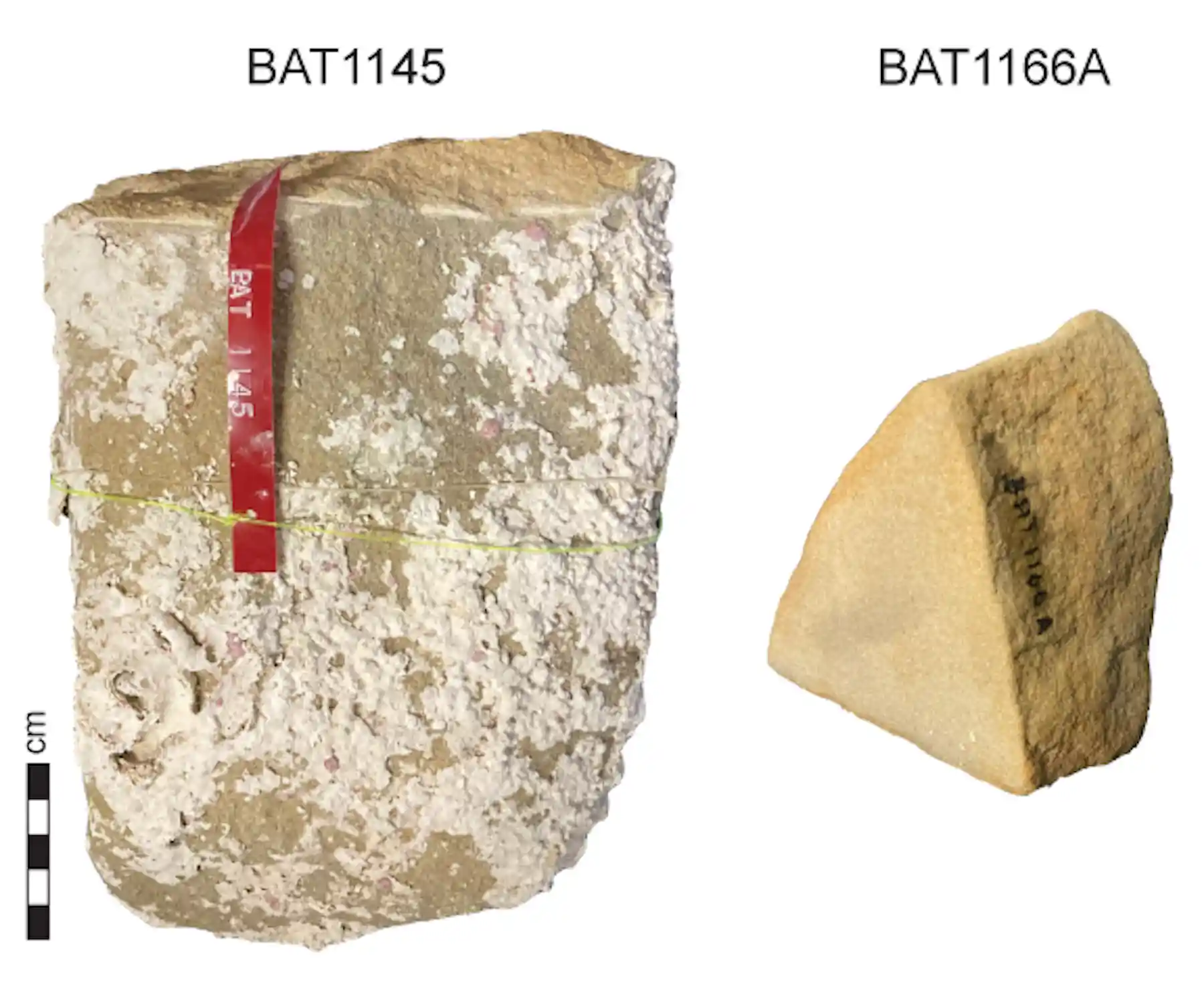
The sandstone blocks (BAT1145 and BAT1166A) from Batavia analysed in our study. Anthony Clarke, CC BY-NC

Gaps in the record

At the dawn of global capitalism, the Dutch East India Company created one of the richest corporate archives of the early modern world.

Yet even its meticulous records have gaps. We know the Batavia carried a prefabricated stone portico. But we don’t know precisely where the stone came from or how materials from different quarries were assembled into a single overseas shipment.

To investigate, we examined Batavia’s sandstone cargo, now held by the WA Shipwrecks Museum. The blocks looked remarkably similar to each other, and centuries beneath the waves changed more obvious clues to their origins, such as color, mineralogy, and the cement that holds the sand grains together.

To understand their source, we therefore turned to a more durable record hidden within the rocks. Sandstone carries tiny crystals known as zircon, often eroded from many older rocks.

Each grain contains a uranium–lead clock that records when the crystal grew. Together, their ages create a distinctive geological fingerprint of the ancient landscapes that supplied the sand.

Comparing geological fingerprints

We compared the geological fingerprints of the Batavia portico blocks with sandstone from German quarries known to have supplied building stone to the Netherlands during the 17th century. Some of these quarrying and trade networks had much deeper roots, extending back to Roman times.

The fingerprints revealed that similar-looking blocks came from different sources. One matched Bentheim sandstone; the other matched Obernkirchen sandstone.

Both zircon fingerprints were strikingly different.

Bentheim blocks contained abundant 3-billion-year-old zircons derived from ancient rocks in Scandinavia, whereas Obernkirchen blocks are richer in younger zircon, eroded from the 300-million-year-old Variscan mountain belt to the south, in what is now central Germany.

The quarries are about 140km apart and connect to different river systems. The stones traveled through separate inland transport networks before converging at a Dutch East India Company hub, most likely Amsterdam, where they were shaped and assembled into a single shipment for Batavia.

Numbers carved into the blocks acted as assembly marks, a 17th century precursor to flat-pack instructions.

No surviving document records this precise journey. But geology exposes a sophisticated and coordinated supply chain linking quarry workers, stone cutters, river transporters, merchants, and sailors across northwest Europe.

More than decorative cargo

Batavia’s portico blocks are a testament to the infrastructure of an empire: European stone gathered, standardized, and shipped across the world to build the Dutch East India Company’s colonial headquarters in Java.

Nearly four centuries later, the blocks show that stories can indeed be written in stone, recovering traces of networks of labor, trade and human connection.

Anthony Clarke is a Research Fellow, School of Earth and Planetary Sciences, Curtin University.

Chris Kirkland is Professor of Geochronology, Curtin University.

Top image: Vunz / CC BY SA 2.0

This article appears courtesy of The Conversation and may be found in its original form here

The Conversation

The opinions expressed herein are the author's and not necessarily those of The Maritime Executive.


Top Container Lines Lean Towards Ownership Over Chartering

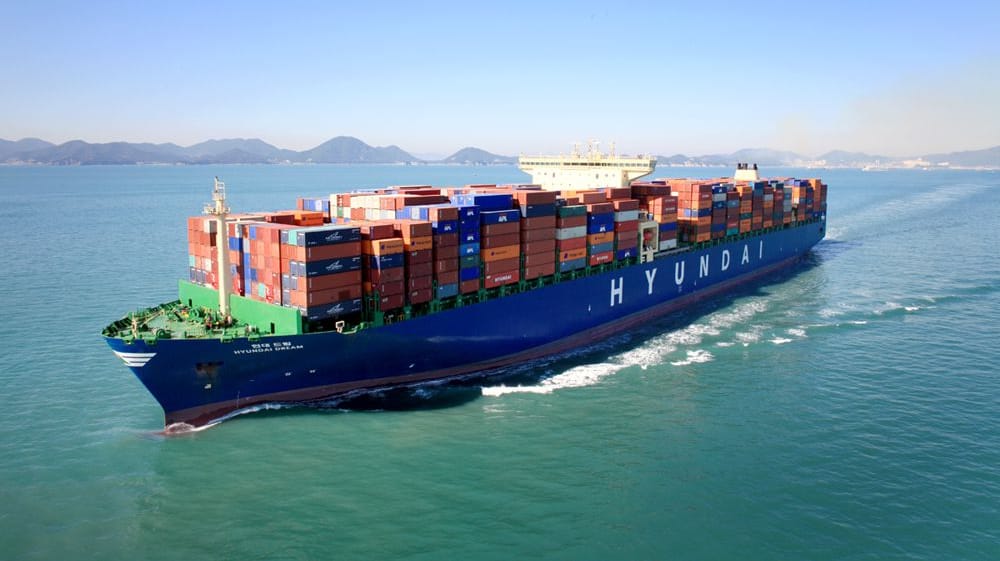
HMM is among the carriers most invested in owning its fleet (HMM file image)

Published Aug 3, 2026 8:29 PM by The Maritime Executive


At the outset of the pandemic, ocean carriers chartered-in the majority of their tonnage, giving them the flexibility to grow or shrink their fleets as needed to match demand. That capital-light structure has now reversed itself: on average, the 12 largest ocean carriers now own the majority of their operated capacity - about 63 percent of all slots in total, according to Sea-Intelligence.

The decision to build or charter-in varies by container carrier, and each has its own strategy. Israel's ZIM is well known for securing almost all of its tonnage on long-term charters rather than buying or building its own hulls: it only owns about 15 ships, and it charters-in the remaining 101 ships in its fleet. At the other end of the spectrum, Wan Hai has recently eliminated all chartered tonnage from its operations and now owns its entire 124-ship fleet. MSC, HMM and Evergreen are likewise heavy on the ownership side of the equation. 

MSC's post-pandemic buying spree is one explanation for the average number shifting in favor of ownership. During the early 2020s, MSC developed a reputation for buying used tonnage at healthy prices, and it has ordered newbuilds at a swift pace. It now dominates the field in both TEU capacity (7.3 million TEU afloat) and vessel count (more than 1,000 hulls). The number-one container carrier has purchased so many ships that its owned fleet alone is larger than the combined fleet of its next-largest competitor, Maersk Line, and it continues to grow. In June, it was linked to orders for another 20 vessels of 20,000 TEU each at Hengli Heavy Industries, bringing its orderbook to about 2.6 million TEU. 

Other big movers who have swung towards ownership include CMA CGM, PIL and Evergreen, all of which now own a majority of their fleets. 

The advantages that accrue to carriers with a high owned percentage of tonnage center around predictability and control, both operationally and on the balance sheet. Owned vessels are not exposed to fluctuations in the charter market, like the extreme price surges seen during the pandemic. Carriers with owned ships do not have to worry about a bidding war at the end of a charter term, nor do they have to ensure that they meet the shipowners' specifications for maintenance, trading area or any other operational factors. This leaves the carrier with more flexibility and more assurance when planning service strings, and greater ability to capture peak earnings when container rates begin to climb. When a boom market arrives, an owned vessel is an available vessel - even when the chartered vessels get snapped up by somebody else.  


Rolls-Royce Presents New Marine Propulsion Systems at SMM 2026

Rolls-Royce Power Systems introduces advanced marine propulsion solutions aimed at enhancing efficiency and sustainability.

Efficient and Sustainable: Rolls-Royce Presents New Marine Propulsion Systems and Service at SMM 2026

Published Aug 3, 2026 11:59 PM by The Maritime Executive

[By Rolls-Royce]


At SMM 2026, Rolls-Royce Power Systems will showcase new technologies for efficient and more sustainable shipping. The focus will be on propulsion systems, sustainable fuels, intelligent automation and comprehensive service offerings – all with the aim of making fleets fit for the future.

A highlight: the new mtu Series 2000 variable-speed generator sets. They offer industry-leading power density and can enable up to 15 per cent lower fuel consumption and CO? emissions compared to constant speed gensets. The variable speed adapts optimally to different load profiles – ideal also for electric and hybrid vessels that demand maximum efficiency, reliability and flexibility. Noise and vibration levels are also reduced, which significantly enhances on-board comfort. The product range comprises compact and powerful units from 8V to 16V variants, perfect for passenger ferries, SAR vessels, offshore support vessels, yachts and patrol boats.

This range is complemented by the new SCR exhaust after-treatment solution, which meets the strictest IMO Tier III emission standards and paves the way for sustainable shipping.

Rolls-Royce also sets the standard in the field of automation: with mtu NautIQ, bridge solutions and data analytics, ship operators are empowered to manage their fleets safely, efficiently and sustainably – whether for newbuilds or retrofits.

The service portfolio supports customers throughout the entire lifecycle of their vessels: extended maintenance intervals, in-situ maintenance and industry-leading warranties ensure maximum availability and cost-effectiveness.

Rolls-Royce Power Systems stands for technological openness, bespoke customer solutions and 100 years of maritime experience. “As a company within the Rolls-Royce Group, we actively evaluate, research and invest in future technologies to offer our customers the right propulsion technology for their fleets – both today and in the future – and support them with the expertise of our engineers and our service team throughout the entire service life of their vessels,” explained Dr Lukas Köhler, Senior Vice President Global Marine & Mining at Rolls-Royce Power Systems.

The products and services herein described in this press release are not endorsed by The Maritime Executive.


Autonomy Firm Accurate Unveils Workboat With Collision Avoidance Software

Accurate Industrial Control's new patrol boat features advanced collision avoidance technology certified by IRS.

Indian Marine Autonomy Specialist Accurate Unveils New Workboat with IRS Certified ‘Collision Avoidance Software’

Published Aug 3, 2026 11:56 PM by The Maritime Executive

[By Accurate]

India is taking a major step into the global marine autonomy market after the Indian Register of Shipping (IRS) certified Pune based automation specialist Accurate Industrial Control’s newly built patrol boat featuring collision avoidance software.

The IRS has awarded the certification to Accurate Industrial Controls for its ‘Intelligent Situational Awareness and Collision Avoidance’ (ISACA) tech stack following sea trials on board a new 13m workboat, built for Accurate at SHM Shipyard Limited in Mumbai. The sea trials took place in the Arabian Sea off Karwar, India.

Dharmesh Popatlal Gala Accurate’s director of AI and Robotics confirmed the ISACA system includes Multiple Situational Awareness Sensors including radar, GNSS, echo sounder, CCTV and a full collision avoidance stack. He said it achieved IRS AUTN 4-R(N) certification in line with the specific IMOs International Regulations for Preventing Collisions at Sea (COLREGs) rules.

Dharmesh said following the successful trials Accurate is now receiving orders and interest for both new build and retrofit versions of the ISACA equipped boat for commercial and naval markets.

“This is an exciting moment for Accurate,” he said. “We have worked for more than 30 years in automation across the steel, auto and aerospace industries. We saw an opportunity to expand into marine around five years ago when we were working with the Indian army. We now see massive growth potential for our collision avoidance software and autonomous navigation solutions to be supplied at scale into Europe, the Middle East, India and beyond. We are seeing queries from navies and coastguards as well as port, harbours and the offshore market.”

Dharmesh said key to Accurate’s offering is to draw on the expertise of a 1500 strong workforce.

“As India is showing in space with the orbiter sent to Mars, India can innovate tech at a fraction the cost of other countries,” he said. “For that reason, we believe we have one of the most advanced and competitive autonomous navigation solutions available in the world. With the ISACA system we are aiming to democratize the cost of autonomous navigation solutions without compromising safety or performance.”

Dharmesh said bringing affordable autonomy to the market releases massive pressure on traditional patrol boats which require continuous crewing and cannot maintain persistent awareness across large areas.

“Autonomous boats using the ISACA solutions can replace crews and provide 24/7 monitoring and persistent awareness at a fraction of the operational cost,” he said. “This matters more than ever in the naval arena where threats are changing and the nature of warfare evolving.

Dharmesh added Accurate has further built a smaller 5m autonomous ‘SAR Craft’ at the Sumit Shipyard, Kochi which it is also bringing to the patrol boat market with the full ISACA tech stack.

FEATURES

The ISACA platform is directly compatible with Mercury, Cox and any CAN/MODBUS based propulsion systems and can integrate also non-digital propulsion employing appropriate actuators, enabling autonomous control of steering and propulsion of wide class of vessels.

Key capabilities include:

- Persistent autonomous operations – 24/7 surveillance and mission execution without onboard crew.
- Advanced sensor fusion – Combines radar, electro-optical cameras, AIS and inertial navigation into a single real-time operational picture.
- Situation perception – Detects, classifies and tracks multiple vessels and objects simultaneously while assessing potential risks.
- 360° situational awareness – Provides continuous all-round monitoring and target tracking in complex maritime environments.
- Autonomous mission planning – Generates and continuously optimises routes, patrol patterns and mission plans as conditions change.
- COLREGS-compliant collision avoidance – Performs real-time collision risk analysis and executes safe manoeuvres in accordance with specific IMOs International Regulations for Preventing Collisions at Sea (COLREGs) rules.
- Precision vessel control – Converts navigation decisions into steering and throttle commands while compensating for wind, waves and currents via the integrated DTS/CAN/MODBUS propulsion interface.
- Remote command and control – Enables operators to monitor vessel status, sensor feeds and missions in real time, with manual override capability when required.

Applications include: port and harbour security, critical infrastructure protection, offshore energy, coastal surveillance, environmental monitoring, hydrographic survey, inspection missions, border security and maritime defence operations.

Further, the ISACA’s Collision Avoidance Software (DrishtipathaTM) without Autonomous Control but with Audio/Visual Alerts is available as Wheelhouse Co-Navigator.

The products and services herein described in this press release are not endorsed by The Maritime Executive.


Distressed Luxury Yacht Builder Italian Sea Group Plans Equity Raise

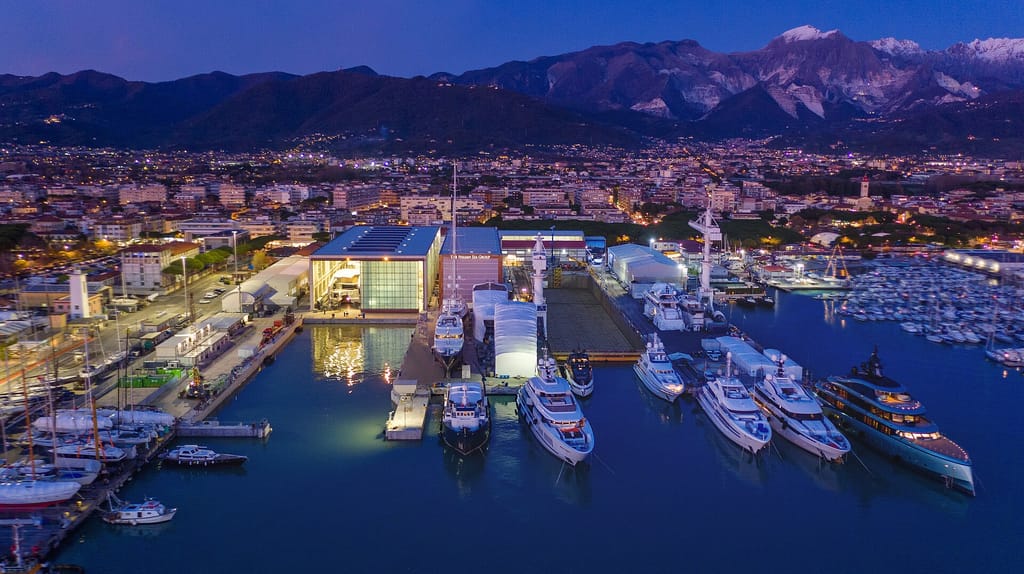
Courtesy TISG / CC BY SA 4.0

Published Aug 3, 2026 2:53 PM by The Maritime Executive

Luxury yacht builder The Italian Sea Group has posted a net loss for 2025, and despite a plan to issue shares to bring in more capital, its board of directors has flagged "significant uncertainties . . . regarding the company's ability to continue as a going concern."

TISG's financial standing has been deteriorating since 2025 due in part to a $70 million increase in costs, which its board of directors attributes to "operational inefficiencies" and "misconduct on the part of managers who have left the company." Revenue is also down by a quarter, from $460 million to $345 million. EBITDA swung hard to a loss for the year, down from $80 million in 2024 (a healthy 17 percent profit) to negative $115 million in 2025.

Given the losses, TISG's share capital has fallen below Italy's minimum legal limit for a joint stock company. Its shares are trading in the range of $1.15, with a market cap of about $70 million. To raise capital and stabilize the balance sheet, the board has drafted a shareholder resolution asking for permission to issue a combination of debt and equity equal to $175 million, either in cash or in kind. Options include debt-for-equity swaps for unpaid suppliers.

TISG's board said that it is reasonable to expect that the firm will continue as a going concern for 12 months, but noted that there were multiple factors outside of its control, and said that a final plan has yet to be formulated. For this reason, the company "does not have sufficient information to make precise and reasonably reliable forecasts regarding the medium-term performance of its operations" at this time, the board warned.