Friday, August 14, 2026


Snow cannons and reservoirs: How Swiss resorts' winter equipment could help put out wildfires
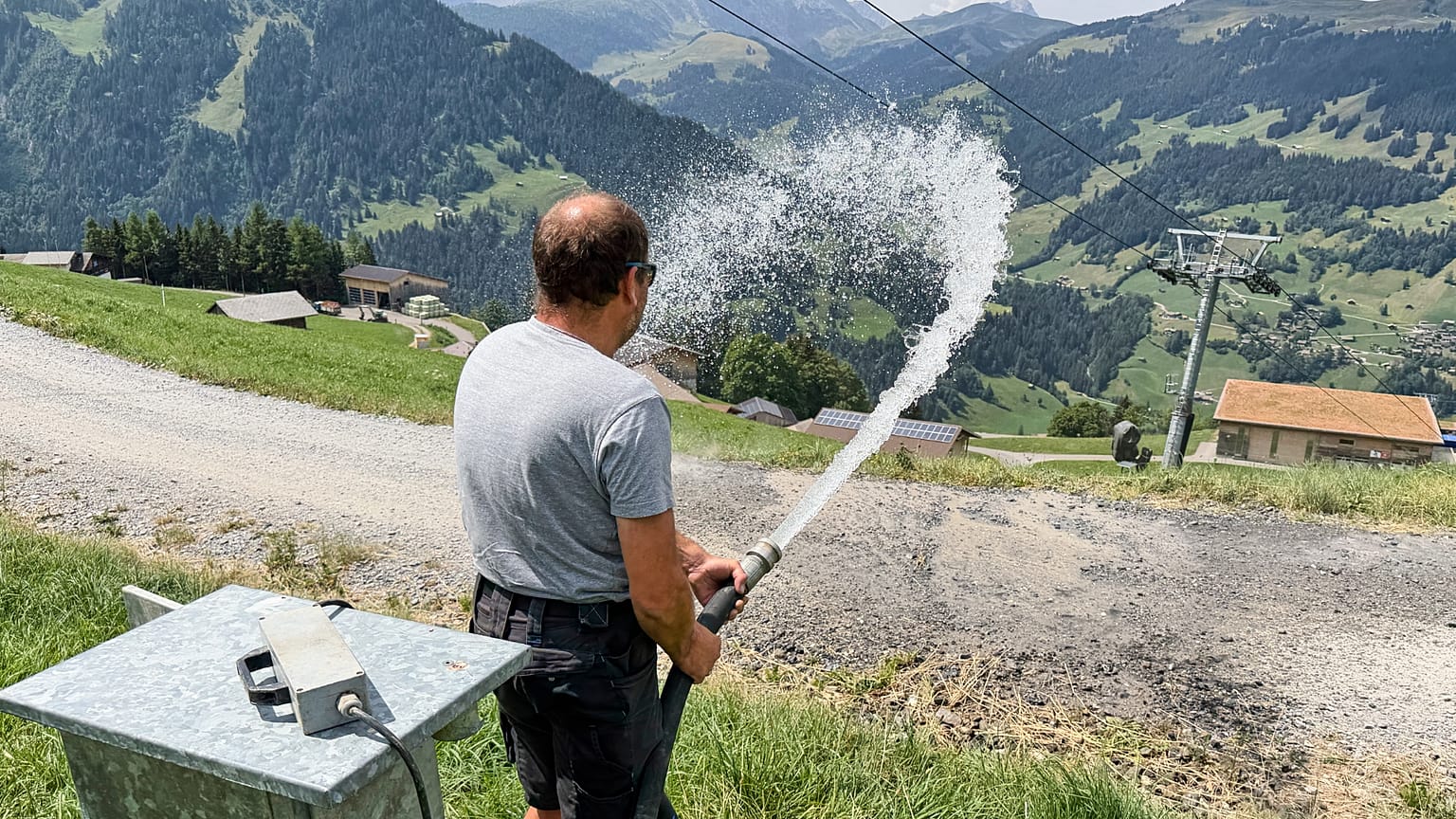
Juerg Klopfenstein, responsible for snowmaking operations at Adelboden-Lenk ski Resort, waters a road alongside ski slopes in Lenk valley, Switzerland, Aug. 3, 2026.
Copyright AP AP Photo/Hernan Munoz


By Angela Symons with AP
Published on

Kilometres of underground water pipes could prove useful beyond the winter months as the risk of wildfires grows even in places like Switzerland.

There's barely any snow in sight above Adelboden in the intense August sunshine, never mind skiers. But the Swiss resort may have a new way to put its snowmaking equipment to work as Europe bakes through hot summers: helping douse forest fires.

Glaciers in Switzerland and around the Alps have been retreating rapidly in recent years, among other changes attributed to the impact of climate change caused by human activity. Snowfall has become less frequent and reliable over recent decades.

That's a big issue for a mid-altitude ski resort like the Adelboden-Lenk area, whose roughly 200 kilometres of slopes span an altitude between 1,000 and 2,300 metres. These days, an estimated 70 per cent of the snow on its slopes is made artificially.

Snow cannons and lances are the visible part of the snowmaking network. But much of it is out of sight: dozens of kilometres of underground water pipes that could prove useful beyond the winter months as the risk of wildfires grows even in places such as Switzerland’s Adelboden-Lenk ski area.

Snow cannons are stored during the summer months at the Adelboden-Lenk ski resort facility in the Lenk valley, Switzerland, Monday, Aug. 3, 2026.
Snow cannons are stored during the summer months at the Adelboden-Lenk ski resort facility in the Lenk valley, Switzerland, Monday, Aug. 3, 2026. AP Photo/Hernan Munoz

How reservoirs of melted snow could be used to douse wildfires

“We can help firefighters with our infrastructure," says Jürg Klopfenstein, who is responsible for the resort's snowmaking operations. "Not primarily with our snow cannons, which can mainly be used to water the fields or aim them at surrounding infrastructure. But firefighters can use our infrastructure, and helicopters can refill their tanks using our water reservoirs.”

Those reservoirs collect rainfall and melting snow in the warmer months, and the water is used to produce snow during the ski season. The pipes and pumps connect 210 snow cannons and 50 snow lances in the Adelboden-Lenk area. In case of fire, the system could be used to create wet buffer areas, slowing the advance of flames and buying time until emergency services and air support arrive.

So far this year, Switzerland hasn’t experienced large-scale fires, unlike some of its neighbours. But the country is suffering from drought and the authorities assess the risk of wildfires as high across almost the entire nation, including the Bern region where Adelboden is located.
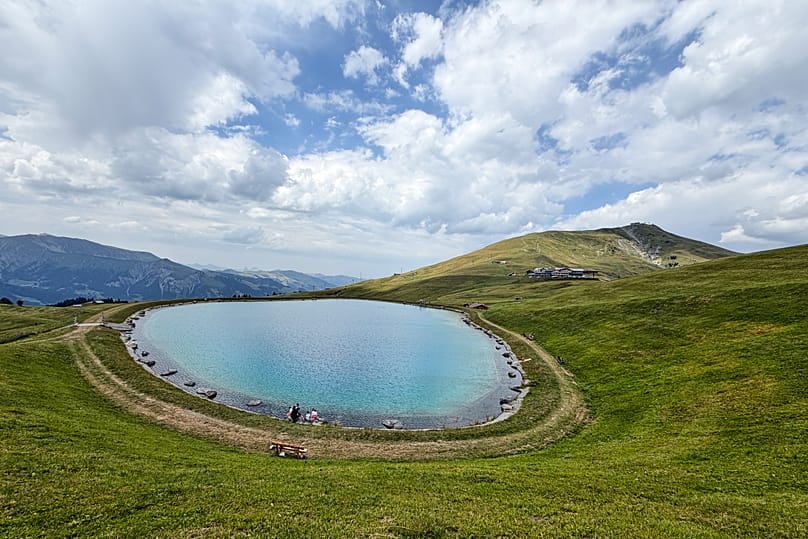
A water reservoirs for snowmaking photographed at the Lenk valley near Adelboden, Switzerland, Monday, Aug. 3, 2026.
A water reservoirs for snowmaking photographed at the Lenk valley near Adelboden, Switzerland, Monday, Aug. 3, 2026. AP Photo/Hernan Munoz

Lack of humidity is 'a real problem' – even in spring

Like many other mountain areas, the Bernese Oberland isn't just a winter destination but attracts many mountain bikers, hikers, runners and paragliders in summer.

Stefan Buchs, the operations manager at the Adelboden-Lenk resort, says that different types of vegetation and different levels of soil humidity mean the large and frequent forest fires seen in southern Europe can't be extrapolated directly into a similar risk in the Alps.

But even so, “widespread wildfires are a likely scenario," he says. “We discussed this with the firefighters, and they recognised it already. They see that humidity is a real problem. It gets really dry even in the spring. Not just in the summer.”

Adelboden Mayor Willy Schranz says that “we must be prepared, because I am sure it won’t be the last summer like this one.”

A climate change expert with environmental group Greenpeace, Nathan Solothurnmann, cautions against overestimating what putting a snowmaking system to work against wildfires can achieve in the long run and in a wider context.

“This watering system that they’re planning in Adelboden might for sure help for a while," he says. “But of course the changes we're facing [are] much worse. All those types of adaptations, they just help for a while.”

"In most parts of Switzerland, there are no pipes buried underground that we can use when a forest is burning,” he adds.

European drought shrivels crops despite farmers’ best efforts to adapt


The drought roasting much of Europe this summer is taking a heavy toll on crops across the continent, from potatoes in the Netherlands to corn in Bosnia. Triodos, a Dutch bank with a focus on sustainability, has warned that this could reduce gross domestic product across the EU by 1 percent for 2026 – or around €180 billion.


Issued on: 13/08/2026 - 
By: FRANCE 24
Video by: Stella ELGERSMA

Cover image: A farmer stands in his drought-affected potato field in Poortvliet, Netherlands. © Virginia Mayo, AP
01:14


A cloud of dust billows behind Maarten Janse’s tractor as he spreads a mixture of compost, straw and manure over a field to nourish the parched soil.

Janse's farm on the fertile land of the Netherlands' southwestern Zeeland Province is drying out despite his efforts to make it more drought resistant as accelerated human-caused global warming and a supersized El Nino batter fields across Europe.

The drought that is roasting much of Europe this summer is taking a heavy toll on crops across the continent, from potatoes in the Netherlands to corn in Bosnia and grapes in Italy. Even when farmers try to adapt, the extreme weather is hitting their crops and water supplies.

Triodos, a Dutch bank that has a focus on sustainability, published an analysis this week that estimated the heatwaves and drought could reduce gross domestic product across the European Union by 1 percent for 2026 or around €180 billion. Farmers are among the hardest hit, with their crops set to be badly affected by soaring temperatures and lack of water. In large parts of the Netherlands, farmers are no longer allowed to use water from streams and drainage channels to irrigate fields and orchards.

Another farmer in Zeeland, Hendrik Jan ten Cate, looks at a field full of withered potato plants that are almost all ready for harvest – a month early and with a significantly reduced crop. His potatoes are used to make French fries for companies including McDonald’s, but they’re likely going to be too small this year.

“People want long fries,” he says as he holds one of the potatoes. “That’s going to be tough this year.”

Ten Cate is one of the lucky farmers because he is allowed to irrigate his crops. But, even so, he estimates his harvest this year will be down by about one-third compared to average years.

“It's not just the drought that is the problem,” he says. “It is also the sun, the dry air and especially the hot days we have had this year. The potatoes just can't handle that combination very well.”

In Bosnia, where agriculture contributes roughly 5 percent of annual GDP and 10 percent of all employment, grain farmer Slavisa Lukic stood in one of his corn fields as stalks blew limply in the breeze. His crops have been hit by repeated heat waves and drought conditions. He said this year’s corn yield would be very poor, if he manages to harvest one at all.

Lukic remembers when he grew 6 to 7 tonnes per hectare on his farm. He expects this year’s corn yield will be around 1.5 to 2 tonnes per hectare.

Pointing to the drought-stricken land in northeastern Bosnia, Lukic said clover fields that once grew abundantly have all but disappeared. “Now they literally do not exist,” he said. “Nothing.”


The drought is even hitting one of the Czech Republic's most famous products: beer.

Plzensky Prazdroj, the country’s largest beer producer, expects to incur losses this year due to a stunted hops yield.

Jakub Zaoral, the brewer’s sustainability manager, said that changes in rainfall patterns – characterised by long periods of dryness with occasional heavy storms – mean that when rain does fall, it runs off the dry soil. That results in inconsistent yields and increasingly low groundwater levels.

“There’s no choice but to simply accept the fact that one year will be great and the next won’t be,” he said. “If it were to happen three times in a row, that could very well become an existential problem for hop growers.”

In Romania, some heat and drought-resistant crops like sunflowers have been less affected by the extreme conditions and yields have been plentiful. But the drought is still hitting home with record-low water levels on the Danube River disrupting grain transport, causing chronically congested terminals and an increasing pileup of crops with nowhere to go.

“In a short time, maximum 10 days, we will enter full blast in sunflower harvest, to be followed by corn,” Cezar Gheorghe, founder of grain consultancy firm Agricolumn, said. “Already farmers are in panic mode. They can’t find a place to store the corn and sunflower seeds.”

Cattle grazing plains in Hungary are turning to dust. No rain has fallen on Sandor Molnár's dairy farm since late May and he is having to buy expensive feed for his 130 cows.

“We’re trying to hang in there and hope for the best, hoping next year will be better,” he added. “To be honest, we’ve been saying that for a few years now, but maybe this time it will be.”

Elveden Estate, with more than 10,000 acres of farmland on the Suffolk-Norfolk border in eastern England, has built a reservoir that can hold enough water to fill about 200 Olympic-sized swimming pools.

Less than a year after opening, it's almost dry. Another reservoir is at about 20 percent capacity.

But the farm's water policy is paying off.

“The fact that we’ve invested significantly in reservoir storage and the infrastructure associated with pumping water has meant that we’ve been in a very strong position to continue to irrigate our crops through this growing season,” the farm's managing director, Andrew Blenkiron, said.

But every drop counts.

“We’re very concerned that we haven’t got enough water to see us through this season,” Blenkiron said. “We’ve got probably, if this weather stays as it is, six weeks of watering left to do.”

Janse uses no-till farming on his fields – not ploughing the soil, planting crops to cover the ground year-round and adding organic matter – to help cope with the whims of the weather as climate change triggers more extremes.

He has also diversified by running a popular campsite on his farm near the picturesque town of Veere. As he tends to his fields, guests walk by toward a lake where yachts and a river cruise ship sail past.

And as dry weather causes an increase in soil salinity in fields, Janse grows samphire, also known as sea asparagus, on a small patch of land. It's a crop that can thrive in salty conditions. But with no rainfall, even that is struggling this year.

“Samphire needs fresh water, and if there is only saltwater it doesn’t grow either,” he said.

(FRANCE 24 with AP)


'Wall of fire' forces sea evacuation in Greece as wildfires continue across Europe


By Simon Ormiston
Published on

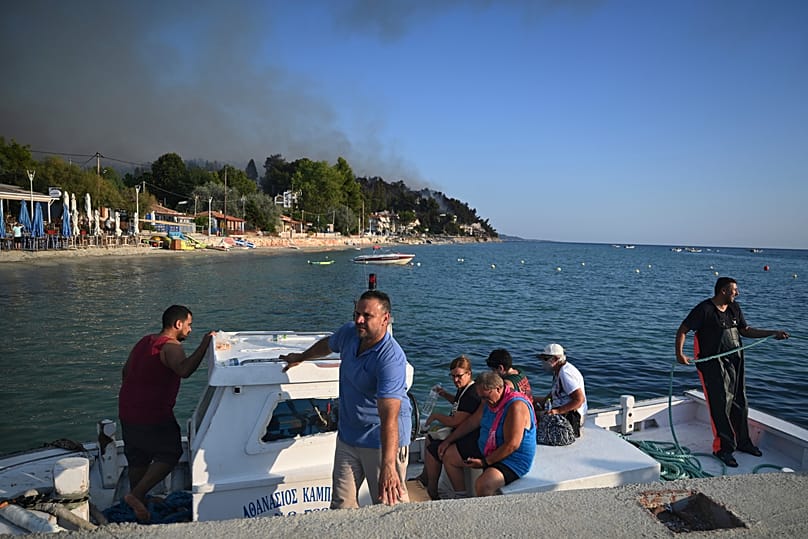
Fishing boats came to the rescue of tourists fleeing the fires in northern Greece. 13 August, 2026.
Fishing boats came to the rescue of tourists fleeing the fires in northern Greece. 13 August, 2026. AP Phot

As blazes strain fire services from the Mediterranean to the Midlands in the UK, questions are being asked about Europe's ability to deal with continued heatwaves.

A three-kilometre wall of flames up to 30 metres high forced hundreds of tourists into the sea off northern Greece, as wildfires also tore across, Croatia, France and the UK amid a punishing summer heatwave.

More than 200 firefighters, water-bombing planes and helicopters battled for hours to stop a blaze spreading across the Halkidiki peninsula, south of Thessaloniki, as it bore down on the resorts of Siviri and Fourka, packed with summer tourists.

Judging evacuation by road too dangerous, officials sent around 500 tourists into small boats, coast guard vessels and fire brigade craft, including roughly 200 taken to a ship waiting offshore, while cars trying to flee by road became gridlocked.

"We are on the beach and looking for a way to get away," one local homeowner, Sophia, told AFP, saying flames had already reached the town's houses.

Two firefighters were hospitalised, and authorities banned public access to the region's pine forests as forecasters warned of winds up to 100 km/h.

The fire was later brought under control, though crews stayed on alert for flare-ups.

Greece remains under its highest wildfire alert nationwide, still reeling from a blaze near Athens this month that killed two helicopter crew and burned 110 square kilometres of forest.

Coastal town evacuated

More than 150 firefighters battled a blaze that swept quickly from a pine forest into the tourist town of Lokva Rogoznica in Croatia, destroying homes and vehicles.

At least 1,000 displaced residents were sheltered in a sports hall in nearby Omis, and a coastal road was closed, causing long queues of traffic.

Croatia's fire chief, Slavko Tucakovic, warned of a "difficult night ahead" as reinforcements were called in, with four Canadair water-bombers grounded until dawn.

Officials said strong winds had driven the fire's spread and that some residents suffered burns. It followed a separate blaze on the island of Brac brought under control a day earlier, amid a heatwave setting record coastal temperatures.

Météo France placed four departments under its highest wildfire alert on Friday, warning that weather conditions make the risk of fires starting and spreading "very high compared with summer norms".

Overnight, firefighters brought the Aude blaze near Carcassonne under control after saving 73 homes, while the Pas-de-Calais fire near Mont-Frieux remained active into Friday morning.

With the heatwave persisting, authorities across France are urging continued vigilance heading into the weekend.

Teenager detained over fatal blaze

A 15-year-old has been placed under formal investigation and held in juvenile detention over a forest fire near Bordeaux airport that killed two firefighters trapped in their truck on 21 July.

The deaths, along with that of a volunteer firefighter in southeast France, have angered fire unions, whose representatives met Interior Minister Laurent Nunez this week but said his commitments fell short, threatening strike action in September over inadequate resources.

A wildfire with multiple points of origin tore through homes near Stourbridge in the UK on the region's hottest day of the year, damaging at least six properties and forcing evacuations.

Three firefighters and a child were hospitalised, while six others were treated for smoke inhalation.

West Midlands' Chief Fire Officer Simon Tuhill called it "one of the most significant incidents" the service had ever attended, blaming rapid spread on "tinder-dry" conditions.

Nearly three-quarters of England is in drought, and Prime Minister Andy Burnham has urged retailers to limit sales of disposable barbecues.


Hundreds of tourists rescued by boat as forest fire threatens northern Greek beaches

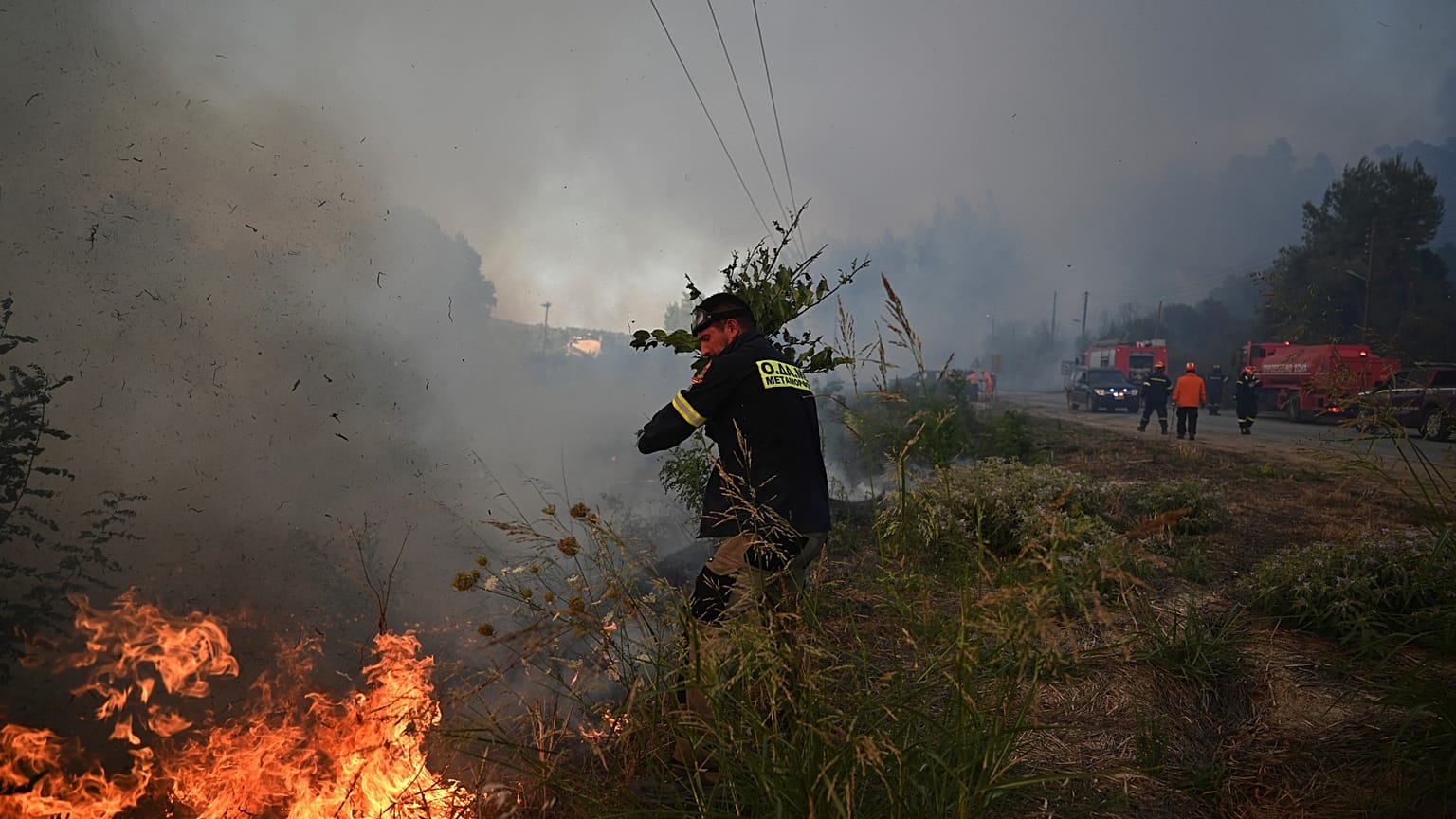
A volunteer firefighter uses a tree branch to extinguish flames during a wildfire in Siviri, 13 August, 2026
Copyright AP Photo

By Ioannis Karagiorgas & Gavin Blackburn
Published on

A fire service spokesman said the evacuation had to be by sea as the flames were getting close to the beaches.

A fleet of small boats evacuated hundreds of tourists from beaches in northern Greece as a forest fire bore down on two popular resorts.

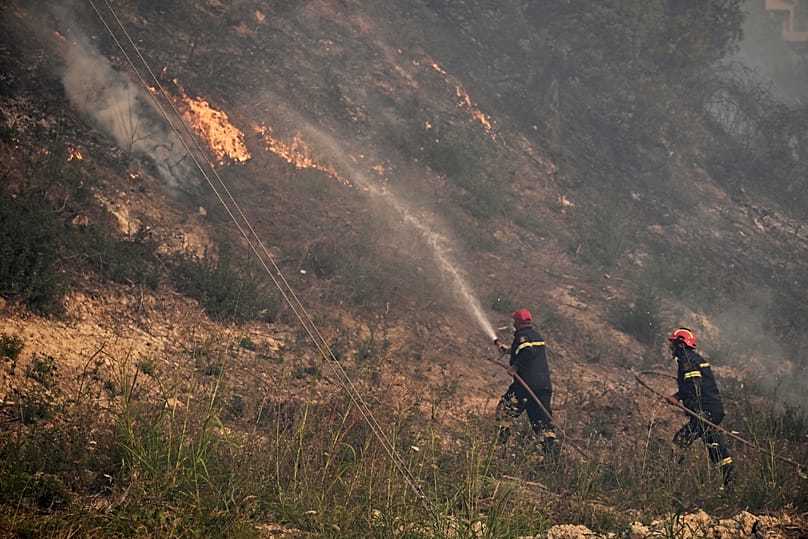
Water bombing planes and helicopters and almost 150 firefighters battled the flames spreading across the Halkidiki peninsula south of the city of Thessaloniki, the fire service said.

Two injured firefighters were taken to hospital, the service added.

Within hours of erupting, the fire bore down on homes around the popular resorts of Siviri and Fourka, which are packed with summer tourists. The region is dominated by flammable pine forests.

And more than 250 tourists in bathing costumes, many carrying children in their arms, were evacuated by sea in 15 small boats brought into service for the emergency, ERT public television reported.

A fire service spokesman said the evacuation had to be by sea as the flames were getting close to the beaches.

Dozens queued on a pontoon at Fourka waiting to flee as smoke blotted out the sky over the resorts, according to images broadcast by ERT.

There were also traffic jams of cars trying to leave Fourka and Siviri.

Wall of flames

ERT said a three-kilometre-long wall of flames up to 30 metres high was closing in on the resorts.

"We are on the beach and looking for a way to get away," Sophia, a home owner in the region who only gave her first name, told the AFP news agency by phone.

"From where we are, we can see that flames have reached the town and the houses."

Firefighters said strong winds made the battle difficult.

Greek authorities had issued a maximum five alert for fires for much of the Greek mainland.

Halkidiki authorities had banned the public from entering the region's pine forests.

Firefighters work to extinguish a wildfire in Siviri, 13 August, 2026 AP Photo


Weather forecasters have predicted winds of up to 100 kilometres (60 miles) an hour on Friday.

Greece is badly hit by wildfires every year and experts say the risk is growing because of human-fuelled climate change that has made droughts and other weather phenomena more extreme.

The authorities said that 40 forest fires were reported across Greece in 24 hours and that nine were still not controlled by late Thursday.

Already this month, two crew from a helicopter helping to battle a forest fire near Athens died when their aircraft collided with another helicopter in mid-air.

The fire destroyed 110 square kilometres of forest.


Aid Workers Battle Ebola, Fear, False Claims


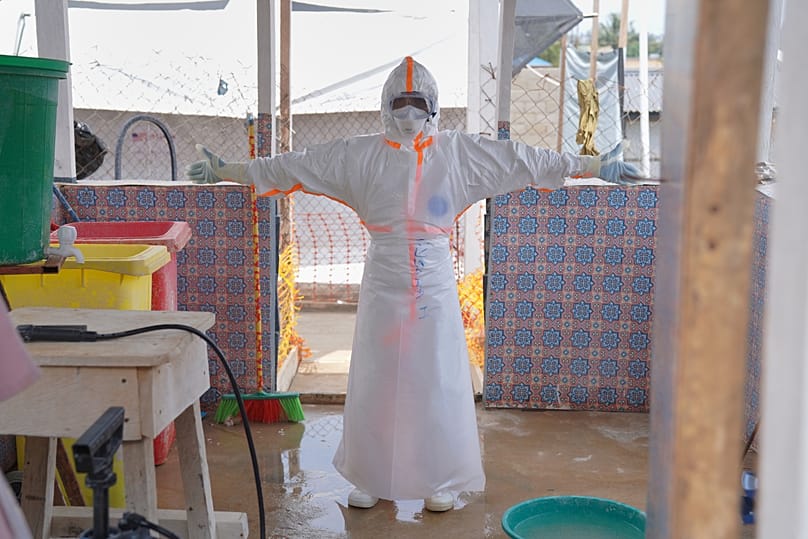
Health workers prepare for work at a newly-opened Ebola treatment centre in Bunia, DR Congo. Photo Credit: WHO

August 14, 2026

By Africa Defense Forum

Key Takeaways

Red Cross volunteers and other healthcare workers in eastern Democratic Republic of the Congo have faced violent attacks during the current Ebola outbreak, including a June assault in Bunia triggered by rumors that a coffin was empty and that aid workers were motivated by money.

The outbreak, declared in May 2026, has become the second-deadliest and fastest-growing in the country’s history, with more than 1,500 deaths by the end of July, while misinformation spread online and locally (including claims that Ebola is not real or that responders are deliberately infecting people) continues to hinder containment.

Aid organizations and African health officials stress that rebuilding community trust, engaging local leaders, ensuring safe burials and countering false information are essential to protecting responders and stopping the outbreak.


Daniel Uyirwoth Welo, dressed in full-body protective gear, can be seen in a recent viral video running for his life when a crowd in a cemetery turned violent during the burial of an Ebola victim. He was one of four Red Cross volunteers who were injured in the June assault in the Democratic Republic of the Congo city of Bunia. The attack was triggered by rumors that the coffin was empty.

“They grabbed me from behind and started punching me, hitting me with spades and machetes,” he told the BBC for a July 9 article, recalling how people in the crowd said, “Ebola doesn’t exist,” while others claimed that the aid workers were there “to get money.”

The attack was one of several incidents linked to false information since the DRC declared the outbreak on May 8. Fear and suspicion of outside organizations swirled through communities in the eastern provinces. Rioters set fire to a treatment center in May, one of at least a dozen facilities that have been attacked.


Healthcare workers and aid groups say false information spread locally and online hampers their efforts to contain the virus. Meanwhile, the deadly disease is raging. With more than 1,500 deaths through the end of July, the outbreak has become the second-deadliest in the DRC’s history and the fastest growing on record.

In a June 5 statement, the Red Cross expressed shock at the Bunia attack, in which two of the four injured volunteers were so severely wounded that they had to be airlifted to the capital, Kinshasa, for treatment.

“We recognise the fear, uncertainty and frustration felt by many people,” the Red Cross said. “Building trust and maintaining dialogue with communities through community engagement remain essential to bringing the outbreak under control. Attacks against volunteers not only endanger lives, they also undermine efforts to contain the outbreak and protect communities.”

On social media, false claims have circulated rapidly, including claims that Ebola isn’t real, that health workers are deliberately infecting people, or that the humanitarian response is a moneymaking scheme. Doctors reportedly have resorted to debunking claims on the WhatsApp platform, which hosts groups centered in eastern DRC, some of which have thousands of members.


“In this era of social media, information spreads rapidly,” Mohammed Saani Yakubu, ActionAid’s director in the DRC, told The Wall Street Journal for a July 16 article. “Within a very short time, these voice notes circulate around entire WhatsApp groups. They are very harmful.”

Red Cross spokesperson Alex Lock said the attacks disrupt containment efforts and put community members at greater risk.

“An immobilised colleague means a direct reduction in response capacity,” he told The Guardian for a July 10 article. “This hinders our operational effectiveness and benefits no one, neither the community in need nor those of us working tirelessly to support them in containing and eradicating the virus.”

In a July 30 media briefing, Africa Centres for Disease Control and Prevention Director-General Jean Kaseya said that community leaders should be enlisted to help prevent attacks against healthcare workers, ensure safe burials and encourage case contacts to come forward for monitoring.

“We need to rethink the way to work with the community if we really want to stop this outbreak,” he said. “There is no magical solution unless we really work with communities.”


Ebola spreads to sixth DR Congo province raising fears it could spread to South Sudan

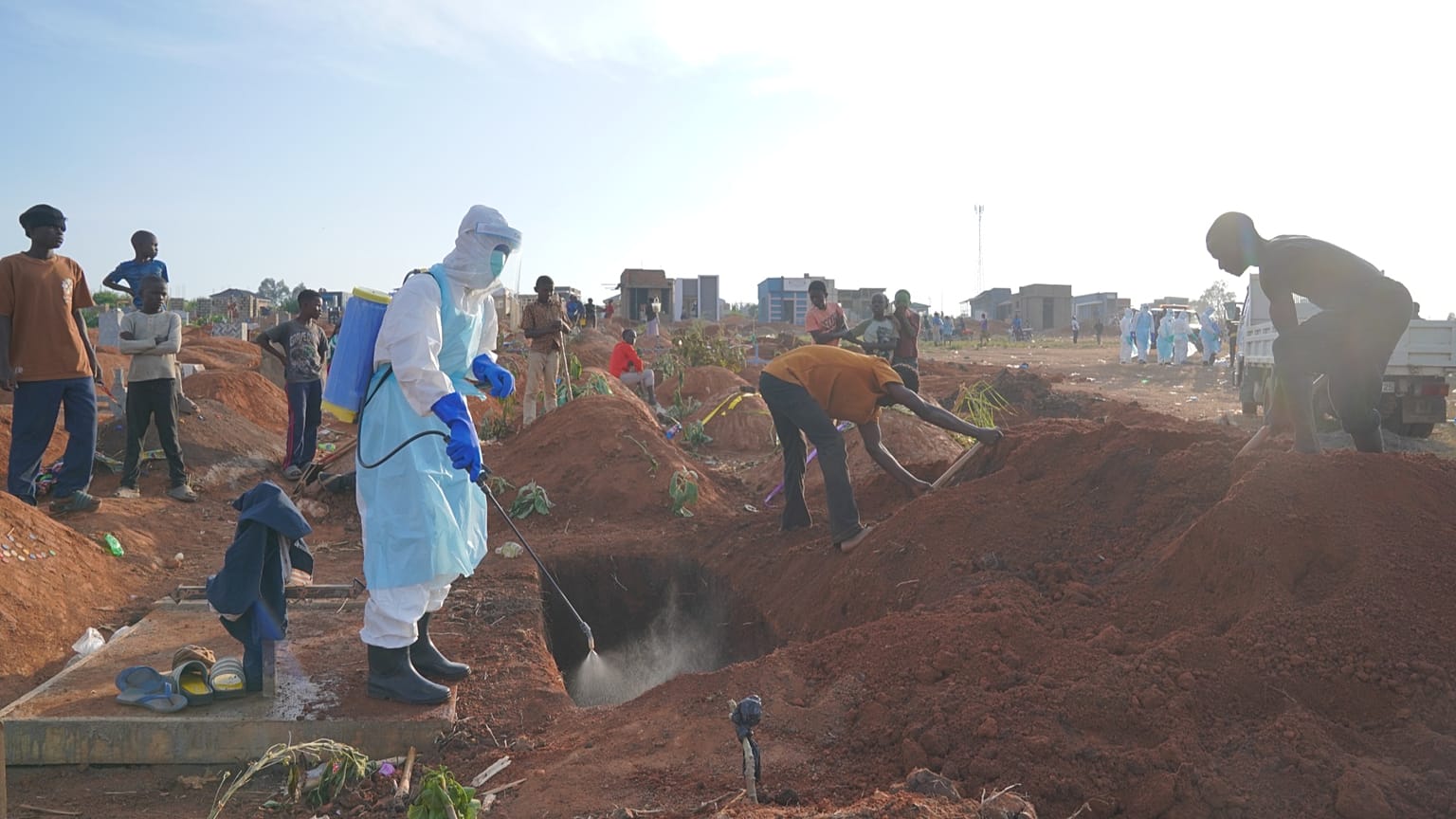
A health worker sprays disinfectant in a freshly dug grave in Bunia, 12 August, 2026
Copyright AP Photo

By Gavin Blackburn
Published on


The DRC's deadliest Ebola outbreak from 2018-2020 killed nearly 2,300 people out of 3,500 recorded cases.

An Ebola outbreak that is on track to become the deadliest in the Democratic Republic of Congo's history has spread to a sixth province, raising fears it could spill into South Sudan.

The outbreak, which began in the conflict-scarred northeastern province of Ituri, is already considered the largest ever in the vast central African country.

Declared on 15 May, it is thought to have already been spreading for several weeks and is the DRC's 17th Ebola outbreak.

The DRC's deadliest Ebola outbreak from 2018-2020 killed nearly 2,300 people out of 3,500 recorded cases.

So far, authorities say the current outbreak has killed more than 2,128 people, out of 4,566 confirmed cases.

Until now, five Congolese provinces had been affected: Ituri, which borders Uganda and South Sudan, North Kivu and South Kivu, Haut-Uele and Tshopo.

A health worker waits to be sprayed with disinfectant at the treatment centre in Bunia General Hospital in Ituri, 11 August, 2026 AP Photo

A person has now died from the virus in northern Bas-Uele province after travelling from neighbouring Haut-Uele, Jean Kaseya, the head of Africa Centres for Disease Control and Prevention (ACDC), told reporters on Thursday.

The outbreak is spreading at an unprecedented rate, Africa CDC added.

Three months after it was declared, seven times more cases and five times more deaths were recorded in the DRC than during the first three months of the largest Ebola outbreak in history, which hit west Africa in 2014, Africa CDC said.

However, the World Health Organisation on Wednesday said it hoped to reverse the spread of Ebola in the DRC within three months.

Mercy Corps NGO warned on Thursday about the risk of the virus spreading to South Sudan, which borders both Ituri and Haut-Uele.

"Confirmed cases now sit just 35 kilometres from the South Sudan border, along high-risk travel corridors," it said in a statement.

The response in the DRC is hampered by stretched health services, insufficient clean water and safe toilets, fragile trust and insecurity, it added.

Some of the provinces where Ebola is present are densely populated and have only a weak government presence and largely lacking health infrastructure.

North Kivu and South Kivu are also split by the front lines between the Congolese army and the anti-government armed group M23, backed by Rwanda, which has seized vast swathes of territory.

Ebola, which spreads through contact with bodily fluids and causes a haemorrhagic fever, has killed more than 15,000 people in Africa over the past 50 years.


Trump orders Navy to return to older system of launching jets off aircraft carriers

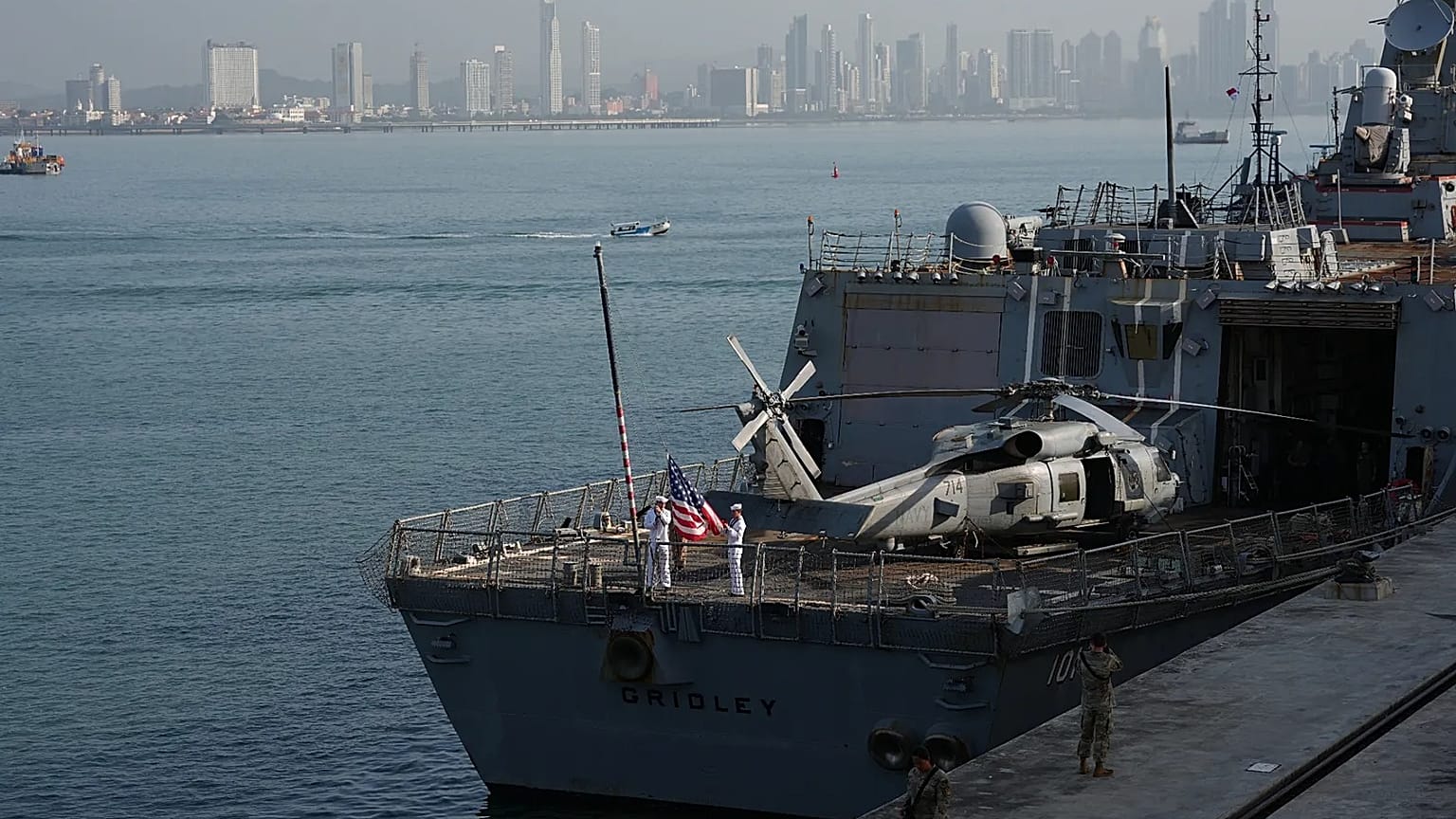
Sailors raise the flag aboard a U.S. Navy ship taking part in a multinational military exercise in Panama City, Thursday, Aug. 13, 2026. (AP Photo/Matias Delacroix)
Copyright AP Photo

By Jerry Fisayo-Bambi
Published on

According to a directive issued Thursday, the new mandate would likely cost billions of dollars and revert the Navy’s most advanced ships to a system that takes more sailors to operate and is more difficult to maintain.

US President Donald Trump has ordered the US Navy to remove the advanced system used to launch fighter jets from its newest type of aircraft carrier and return to using older steam catapults that he has long said he prefers.

The memo issued on Thursday directs the Pentagon and the Navy to present Trump with plans to remove the Electromagnetic Aircraft Launch System, also known as EMALS, within two months. It also says the Ford-class carrier’s electromagnetic weapons elevators should be replaced.

According to the directive, the new mandate would likely cost billions of dollars and revert the Navy’s most advanced ships to a system that takes more sailors to operate and is more difficult to maintain.

The move follows years of Trump's criticism of the new, magnetically driven catapult technology that launches fighter planes off the carriers' decks even as some tech experts believe some of the key advantages of the system are its ability to launch aircraft at faster speeds while being easier to maintain, requiring fewer sailors to operate and using less space aboard the ship.

It also comes at a time when the Navy is having difficulty staffing its ships with enough sailors and the US military is attempting to secure financing from Congress for more equipment.

Trump’s memo directs the fourth Ford-class carrier, the USS Doris Miller, to be the first ship to include the new changes. That will leave the USS Gerald R. Ford, as well as the forthcoming USS John F. Kennedy and USS Enterprise, untouched.

Trump's ire with the latest tech dates back to 2017

During his first term, Trump, in an interview with Time magazine, claimed the new system is “not good” and “doesn’t have the power” of the older steam systems.

“You’re going to goddamned steam,” Trump said at the time. The topic has frequently come up since then at rallies and other events.

While the US president is looking to roll back the latest technology, the newest Chinese aircraft carriers employ electromagnetic catapults, and France said it plans to use the system on its new carrier.

However, redesigning an already finalised ship for such a major system change will not be an easy task. EMALS aboard the USS Ford cut the number of sailors needed to operate the catapults from about a dozen to two earlier this year.

Trump’s memo that mandates the removal of the system also noted that one of the issues facing shipbuilding is the Navy’s constant design changes, “which have resulted in cost growth, delays, and cancellations.”

According to General Atomics, the company that makes EMALS, the decision not to proceed with the system on the USS Doris Miller “warrants careful reconsideration".

General Atomics said the work on Doris Miller’s catapults and arresting gear was already halfway complete and said, "Changing course now would introduce significant cost, schedule, and integration risks.”

The move comes as Congress will weigh the necessary budget and funding bills that the Trump administration has said they need to fund the Pentagon and the Iran war.

Defense Secretary Pete Hegseth estimated last month that the war’s cost grew to $37.5 billion (nearly €32.6 billion) as Republicans prepared a $95 billion package (€82.7 billion) to fund the military, along with other White House priorities.

Hegseth said the supplemental war funding is an “urgent, necessary” injection of money, and with Trump’s proposed $1.5 trillion (around €1.31 trillion) defense budget a generational investment in the military.

The House narrowly adopted both, but the Senate still must act when it returns in September.

US military pushes back on reports of mental health crisis aboard the USS Abraham Lincoln

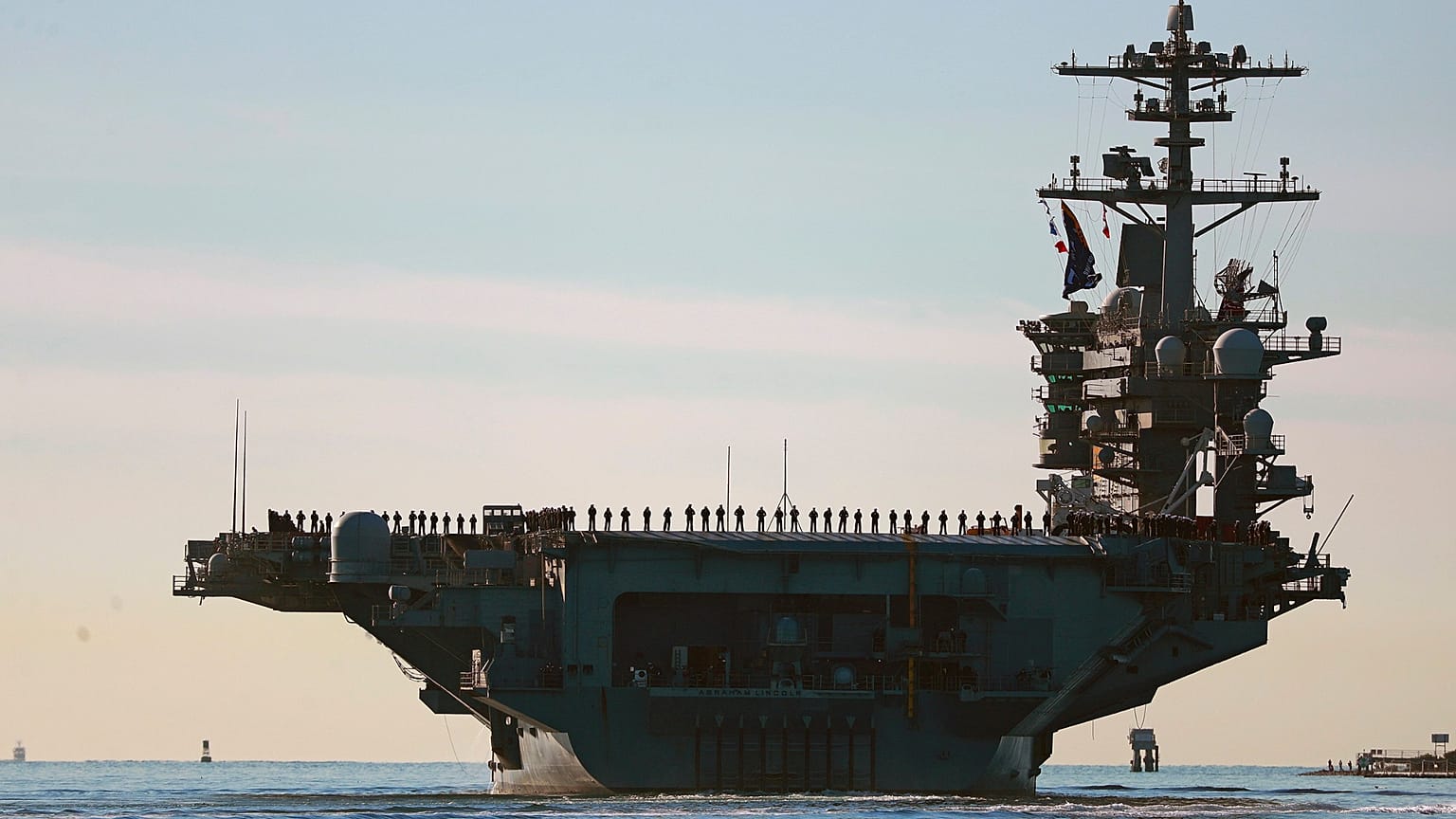
Sailors and Marines line the deck of aircraft carrier USS Abraham Lincoln (CVN-72) as it deploys from San Diego, Jan. 3, 2021.
Copyright 2022 The San Diego Union-Tribune

By Nathan Rennolds
Published on

The USS George Washington aircraft carrier is reportedly now set to take over from the Abraham Lincoln in the Middle East.

The US military is pushing back on reports of a mental health crisis among crewmembers on board the USS Abraham Lincoln aircraft carrier, which has been at sea for more than 260 days as it takes part in Washington's operations in the Middle East.

In a post on social media, US Central Command (CENTCOM) said there had been "several false claims" and "rampant misreporting" relating to the carrier's deployment and that the crew remained "resilient and resolved."

Concerns have been growing in recent days over the welfare of the crew and the conditions on the ship, the US's fifth Nimitz-class aircraft carrier and one of the largest warships in the world.

US Senator Richard Blumenthal, a Democrat, wrote to US Secretary of Defense Pete Hegseth and acting Secretary of the Navy Hung Cao on Wednesday listing the reported problems and demanding to know what action was being taken.

“There have been widespread reports of shortages of basic supplies, water contamination, plumbing issues, deteriorating mental health, deck safety concerns, and disruptions in the mail system, which have caused many care packages in route to the ship to be lost in transit for months,” Blumenthal wrote, adding that "recent carrier deployments have repeatedly stretched beyond their originally anticipated durations."

Speaking during a trip to Panama on Thursday, Hegseth said the conditions - many of which had been reported by the military outlets the Navy Times and Stars and Stripes - were "completely misrepresented."

"We make sure that every ship, every crew, every captain has everything we can provide them at every single moment," he said. "Some deployments are longer than others, and I have more respect and gratitude for those sailors than anybody.

CENTCOM has confirmed that one Sailor "fell overboard" on 3 August but said they were "quickly and safely recovered" from the water.

The USS George Washington aircraft carrier is reportedly now set to take over from the Abraham Lincoln in the Middle East.

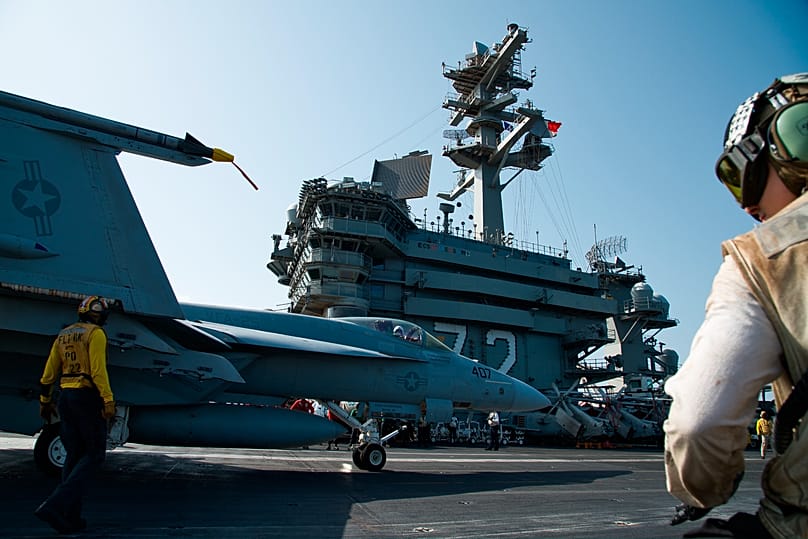
An F/A-18 fighter jet taxis on the deck of the USS Abraham Lincoln aircraft carrier in the Arabian Sea, Monday, June 3, 2019.
An F/A-18 fighter jet taxis on the deck of the USS Abraham Lincoln aircraft carrier in the Arabian Sea, Monday, June 3, 2019. Copyright 2019 The Associated Press. All rights reserved.

The US's Nimitz-class aircraft carriers are used to operate fighter aircraft and to help support ground troops overseas. They are also used for maritime security operations against terrorist threats or to protect merchant shipping.

The Abraham Lincoln has been taking part in Operation Epic Fury, US President Donald Trump's military campaign against Iran.

The operation began with a series of strikes in late February and aims to "dismantle the Iranian regime's security apparatus."