Wednesday, August 05, 2026

The US has acknowledged Bears Ears and Grand Staircase as sacred for over a century, but keeps stripping away protections
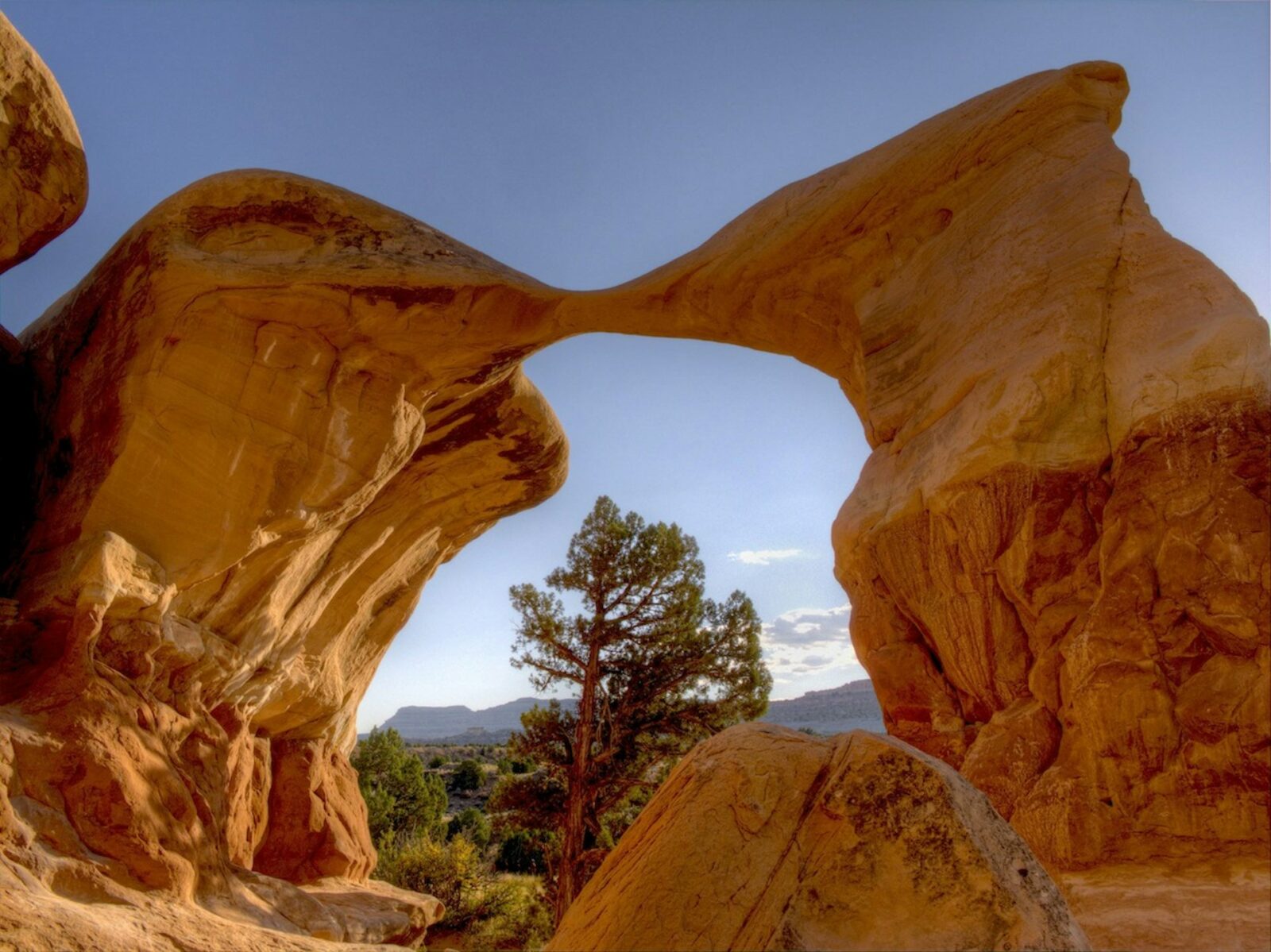
(The Conversation) — Native religions are tied to living landscapes, not points on a map. A scholar of Indigenous studies explains why reducing the protected area has profound religious and cultural consequences.

A view of the Grand Staircase-Escalante National Monument near Escalante, Utah. (John Fowler from Placitas, New Mexico, U.S. via Wikimedia Commons, CC BY)

(The Conversation) — President Donald Trump signed proclamations on July 13, 2026, cutting the size of Utah’s Bears Ears and Grand Staircase-Escalante national monuments by roughly 90% – meaning nearly 3 million acres will lose monument status and revert to ordinary public lands management in September. The Antiquities Act of 1906 requires presidents to use proclamations to establish or modify national monuments.

The cuts followed a long campaign by Utah’s Republican leadership to remove the designation and reopen the land for mining. Gov. Spencer Cox and members of the state’s congressional delegation stood with Trump at the signing, and Sen. Mike Lee said he had been working toward the reduction for roughly 18 months.

They argue that the original monuments were far larger than the Antiquities Act allows, since the law limits a monument to the “smallest area compatible” with protecting the objects inside it. Grand Staircase-Escalante was designated by Bill Clinton in 1996, and Bears Ears by Barack Obama in 2016. Cutting the monuments’ size opens the excluded land to mining. The Bears Ears proclamation points to the minerals underneath, including copper and uranium, as critical to national security.

The tribal nations that consider these lands sacred say they were not consulted. The Grand Staircase-Escalante Inter-Tribal Coalition condemned what it called a move to “virtually eliminate” the monuments.

As a scholar of Native American and Indigenous Studies I see this decision as part of a pattern that is more than a century old: the United States repeatedly acknowledges that these lands are sacred. Yet, that recognition never comes with lasting protections.

What makes these places sacred

Bears Ears takes its name from twin buttes that resemble the head and ears of a bear rising above the canyon country of southeastern Utah.
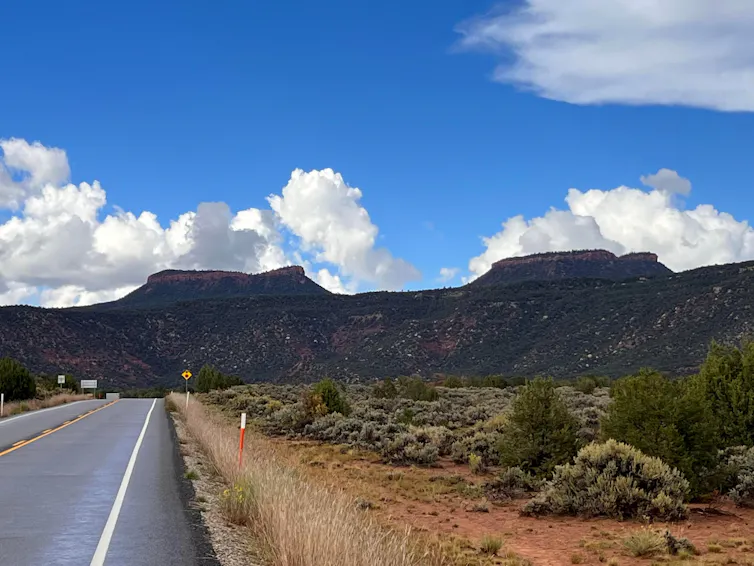
Twin rock formations reaching into a blue sky dotted with white clouds.

The Bears Ears buttes are seen at the junction of Utah State Routes 261 and 95.
Bigbear213 via Wikimedia Commons, CC BY-SA

The nations that hold the land sacred each know the name Bears Ears in their own languages: Hoon’Naqvut in Hopi, Shash Jaa’ in Navajo, Kwiyagatu Nukavachi in Ute, and Ansh An Lashokdiwe in Zuni.

For the Pueblo nations among them, the Hopi and Zuni, Bears Ears is inseparable from their own origin stories. The Zuni account of their origin holds that people came up into this world from beneath it, arriving in the Grand Canyon, and that the long migration afterward carried them across the plateau and into the Bears Ears country.

The Zuni built villages, shrines and altars in that country, and what they built stayed sacred. “Once those structures were built, they were consecrated,” Jim Enote, a Zuni tribal member and former director of the A:shiwi A:wan Museum, told National Geographic in 2018. “Once they’re consecrated they become sacred forever. We never consider them abandoned.” The Zuni still return, making pilgrimages to the region to affirm what their oral history tells them, reading petroglyphs – images carved into the rock by their ancestors – that match those at their present-day home of Zuni Pueblo in New Mexico.

Anthropologists working with the Kaibab Paiute tribe and the monument’s own staff reported that Southern Paiutes understand their traditional lands as a “holy land” where the Creator originally placed them, and that Grand Staircase is part of it. The bond, the tribe believes, was established at Creation and passes to every generation that follows. The federal government funded that research.

The practices continue across Bears Ears. Members of the five nations gather ceremonial plants, minerals and water, and cut herbs, firewood and cedar poles for ceremonies, as they have for generations. A 2021 study in the Proceedings of the National Academy of Sciences found that at least 31 culturally significant species, among them the Four Corners potato, grow abundantly at the ancient habitation sites and are rare elsewhere, evidence that the people who lived there planted them. Each summer, runners carry prayers more than 50 miles from the town of Bluff, Utah, to the high country below the buttes, and the White Mesa Ute community beside the monument holds its Bear Dance each year.

Southern Paiutes still travel to ancestral sites across Grand Staircase for ceremonies, prayer and gathering, and they understand the plants and water of the Holy Land as living beings, able to speak to people and willing to give life to them.

Not a point on a map

Both monuments also hold a history of refuge. In the 1860s, the U.S. Army forced the Diné, also known as the Navajo, from the Four Corners country where the borders of present-day Utah, Colorado, Arizona and New Mexico meet, marching thousands of people more than 300 miles (480 km) east to Bosque Redondo in what became known as the Long Walk.
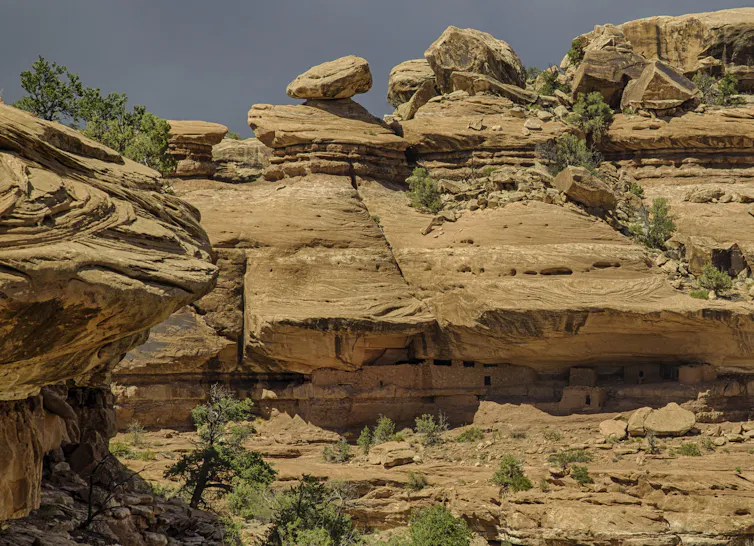
Steep rock formations with a handful of small trees growing on their ledges.

The cliffs and rocks of Bear Ears monument.
Bureau of Land Management/Flickr, CC BY

Families who evaded the removal hid in the Bears Ears canyons, where they found deer and roots for food and plants for medicine. The Paiute, whose sacred places include Grand Staircase, sheltered others fleeing the same soldiers. As Davina Smith-Idjesa, who represents the Navajo Nation on the Bears Ears Inter-Tribal Coalition, has recounted, when the government drove the Navajo from their homelands, “the Paiute Nation fed and clothed and sheltered us.”

These histories of origin, ceremony and refuge point to something U.S. law has never fully grasped: For these nations, the sacred is not a shrine that can be fenced off while the land around it is opened to mining. It is the whole living landscape. Enote puts the distinction plainly: “These are sacred places, not sacred sites. A site to me is a point on a map.”

A boundary can protect a point. It cannot protect a relationship that runs through an entire landscape, which is why lines drawn and redrawn on federal maps keep failing to hold what they are meant to protect.

A century of recognition

The government has recognized this land’s importance longer than almost any place it manages. As early as 1904, advocates told Congress that cultural sites across the Southwest were being destroyed and named Bears Ears one of seven areas needing immediate protection. That campaign helped spur passage of the Antiquities Act of 1906, which made it a federal crime to loot or destroy antiquities on public land.

But the government moved to protect the artifacts, not the living religion that made them meaningful. In those same years the same government was jailing traditional healers under the Religious Crimes Code of 1883, which outlawed Native ceremonies and dances, including the Sun Dance, and punished participants with imprisonment or the withholding of food rations. The ban held for over 50 years.

Congress appeared to correct course with the American Indian Religious Freedom Act of 1978, declaring it U.S. policy to protect Native peoples’ right to exercise their traditional religions, including access to sacred sites.

Ten years later, however, the U.S. Supreme Court set the national rule allowing a federal road through high country sacred to the Yurok, Karuk and Tolowa peoples of Northern California, even though a government study found that it would devastate religious use of the area. Blackfeet scholar Rosalyn LaPier argues that the tribes lost because the court viewed the 1978 act “as a policy and not a law with legal protections.” The land was recognized as sacred and could be destroyed anyway.

Bears Ears in 2016 looked like the moment that pattern might finally break. For the first time, the tribal nations most tied to a landscape did not just ask the government to respect it. They asked it to be protected as a national monument, with the force of law behind it. The five nations – the Hopi Tribe, Navajo Nation, Ute Mountain Ute Tribe, Ute Indian Tribe and the Pueblo of Zuni – petitioned for the monument together, the first ever created at tribal request.

But a monument is not a national park. Congress creates parks, and only Congress can undo them. Presidents create monuments by proclamation, which leaves them far more vulnerable to changes in administration.

Trump cut Bears Ears by 85% in 2017 and halved Grand Staircase. Biden restored both in 2021. Now, Trump has cut them again, far more deeply.

The Native communities’ ceremonies will continue after September, as they continued through the decades when such practices were criminalized. Zuni pilgrims will still read the petroglyphs. The runners will still set out from Bluff, Utah. Southern Paiutes will still hold Grand Staircase as the holy land where the Creator placed them.

For these tribal nations the sacredness of the land does not change. What changes in September is whether the law stands between the ground the tribes consider to be sacred and the mining that lifting these protections might enable.

(Kerri J. Malloy, Assistant Professor of Native American and Indigenous Studies, San José State University. The views expressed in this commentary do not necessarily reflect those of Religion News Service.)

The Conversation

The Conversation religion coverage receives support through the AP’s collaboration with The Conversation US, with funding from Lilly Endowment Inc. The Conversation is solely responsible for this content.


Connecticut legislation aims to expand Islam education in public schools

HARTFORD, Conn. (RNS) — As anti-Muslim bigotry rises, Connecticut's new provision to expand education on Arab and Islamic studies attempts to quell the tide.

(Photo by Jan Walter Luigi/Pexels/Creative Commons)


HARTFORD, Conn. (RNS) — For nearly 25 years, education on Islam in public schools has been met largely with fears of indoctrination. Now, the state of Connecticut is leaning into the debate.

A new state provision, passed as part of a larger education bill last month, directs the Connecticut State Department of Education to develop instructional resources on Arab and Islamic studies, offering public schools optional materials designed to expand how students learn about the history, culture and contributions of Arab and Islamic civilizations.

“As with previous legislative directives on Holocaust education, Native American studies, and Asian American and Pacific Islander studies, the Connecticut State Department of Education is convening a Curriculum Design Leadership Team of educators, curriculum leaders, higher education faculty, and other content experts,” a CSDE spokesperson said. The team will identify, review and curate instructional resources before making them available to school districts.

Casey Cobb, Neag endowed professor of educational policy at the University of Connecticut in Storrs, said it is hard to predict how widely the Islamic and Arab curriculum will be used, though he expects its implementation to align with local demographics.

“School administrators know their communities very well, and those who have substantial Arab American or Muslim populations are probably the ones that would want to represent those students in the curriculum,” he said. This leaves out rural districts that he said would likely benefit the most from this curriculum.

Implementation faces an uphill battle in districts where conservatives have made targeted runs for school board membership. They may see learning about Islam as at odds with their own beliefs, which are rooted in Christianity, Cobb said.

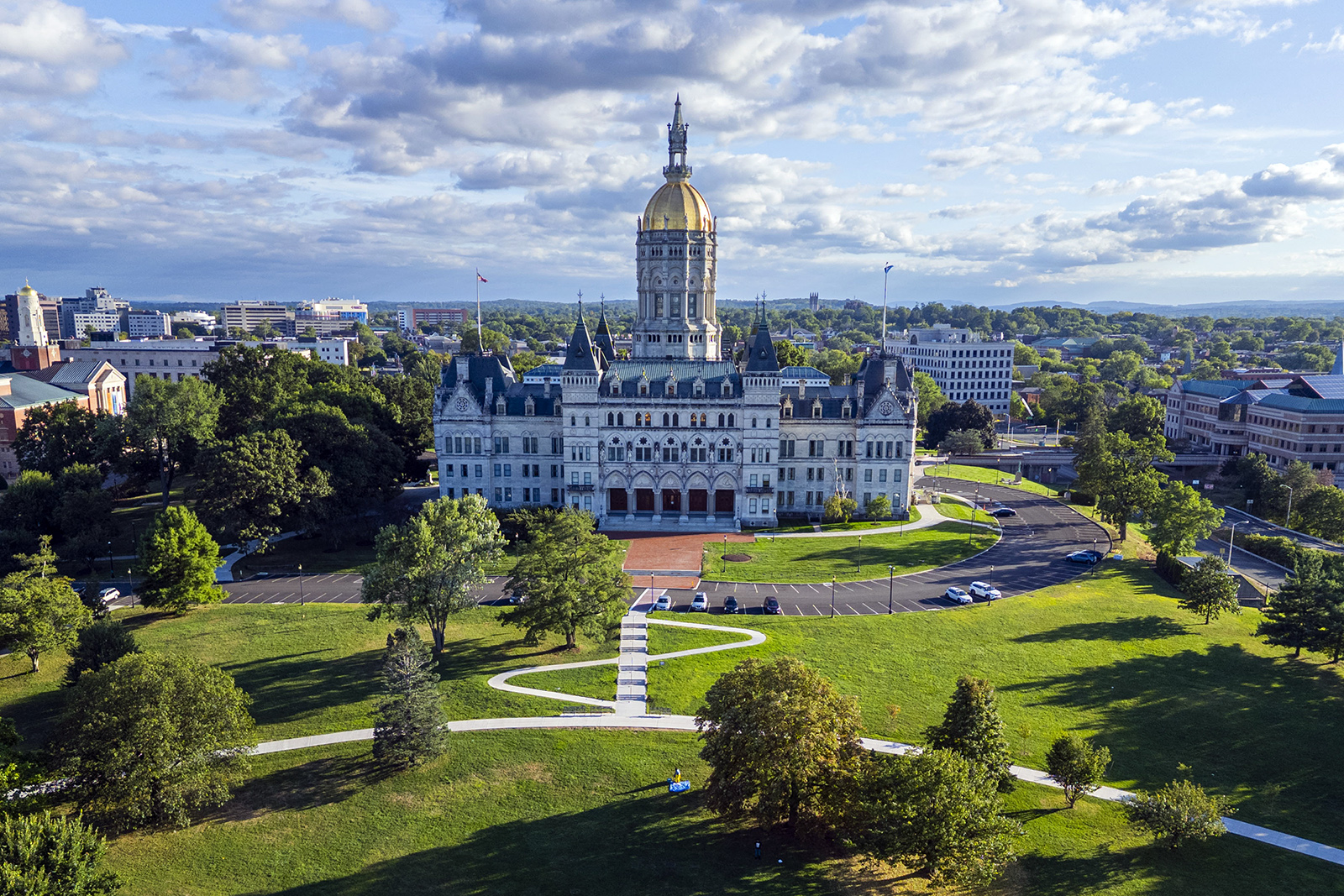
The Connecticut State Capitol in Hartford. (Photo by Decaseconds/Flickr/CC BY-NC 4.0)

Some also object to the curriculum over First Amendment concerns that it endorses one religion over others. In a Hartford Courant story, Chris Healy, executive director of the Connecticut Catholic Conference, said the curriculum violates the First Amendment by endorsing Islam. “This is so clearly unconstitutional. … It’s similar to the outrage people would have if the Ten Commandments were put on the wall,” he told the newspaper.

Farhan Memon, chairman of the Council on American-Islamic Relations Connecticut, a Muslim advocacy group, said the legislation is meant to broaden how students learn about Arab and Islamic history and civilization, rather than endorse Islam as a religion. “The law is not about religion per se,” Memon said.

The measure, for which CAIR advocated, is designed to help educators present a fuller understanding of Islamic and Arab civilizations while remaining within the constitutional boundaries of public education, he added. “Teaching students about a civilization or a faith tradition is not the same as teaching them a religion to adopt it,” he said. “Ignorance itself creates fertile ground for fear and prejudice, and so education helps replace these stereotypes and furthers understanding between people.”

Susan Douglass, an educational outreach coordinator at Georgetown University in Washington, D.C., who has spent decades training educators on teaching religion in public schools, said that distinction has guided public education for decades.

“You’re teaching about religion. You’re not teaching religion in a normative manner,” Douglass said, referring to longstanding First Amendment guidelines developed for public schools.

Earlier this year, two Muslim girls were assaulted at their Waterbury middle school in what authorities classified as a hate crime, prompting renewed concerns about anti-Muslim bias in Connecticut schools.

The investment into the new curriculum in the state also comes at a time when anti-Muslim bigotry and racism appears to be becoming increasingly acceptable in the public square on a national level. According to research by the Social Science Research Council and the Bridge Initiative, it especially flourishes during election cycles.

“There’s a whole cottage industry around Islamophobia,” said Douglass, alluding to a $57 million network that funds anti-Islam content identified by the Center for American Progress.

Attendees react during a vigil, the day after a shooting, outside of the Islamic Center of San Diego, Tuesday, May 19, 2026, in San Diego. (AP Photo/Jae C. Hong)

Anti-Muslim bigotry has become deadly in recent months. In May, three people were killed in a shooting at the Islamic Center of San Diego, and a Muslim man was hospitalized after a targeted anti-Muslim stabbing attack in Utah in July.

Since the 9/11 attacks in particular, school districts across the country have faced resistance from parents who discovered their children were learning about Islam in school and feared religious indoctrination. That fear spilled into state legislatures. After parental uproar over a lesson on Islam in a Maury County middle school, Tennessee passed a state law in 2016 that restricted the use of educational materials from promoting or establishing any religion or religious belief.

“I did not fight radical Islam in Iraq just to come home and find our children being indoctrinated,” Tennessee Republican State Rep. James Van Huss said at the time.

Today, the debate over the place of religion in the classroom is being renegotiated. In Texas, students will be required to read portions of the Bible as part of a newly approved state reading list taking effect in 2030. This comes after the state became the first in the nation to require every classroom to hang the Ten Commandments — a law being challenged in court.

Cobb said conservative lawmakers have been emboldened in recent months by a suite of favorable Supreme Court rulings to push the boundaries of the First Amendment in Christianity’s favor.

“I don’t think there’s going to be a reversal of that momentum … my prediction is that it’ll continue,” he told RNS. 

For Douglass, the significance of Connecticut’s law extends beyond a single curriculum.

“It’s vital to our continued coexistence as one of the most pluralistic countries in the world,” she said of supporting neutral, effective public education on all religions, including both Christianity and Islam. “If we’re going to continue to live together, we should be joining hands and not pointing fingers.”

Broken Arrow mosque leaders sue over alleged discrimination

(RNS) — 'They did not want Muslims here, so they made up a reason, and in doing so, they violated the law,' said Meghan Murphy, an attorney with CAIR's Legal Defense Fund.

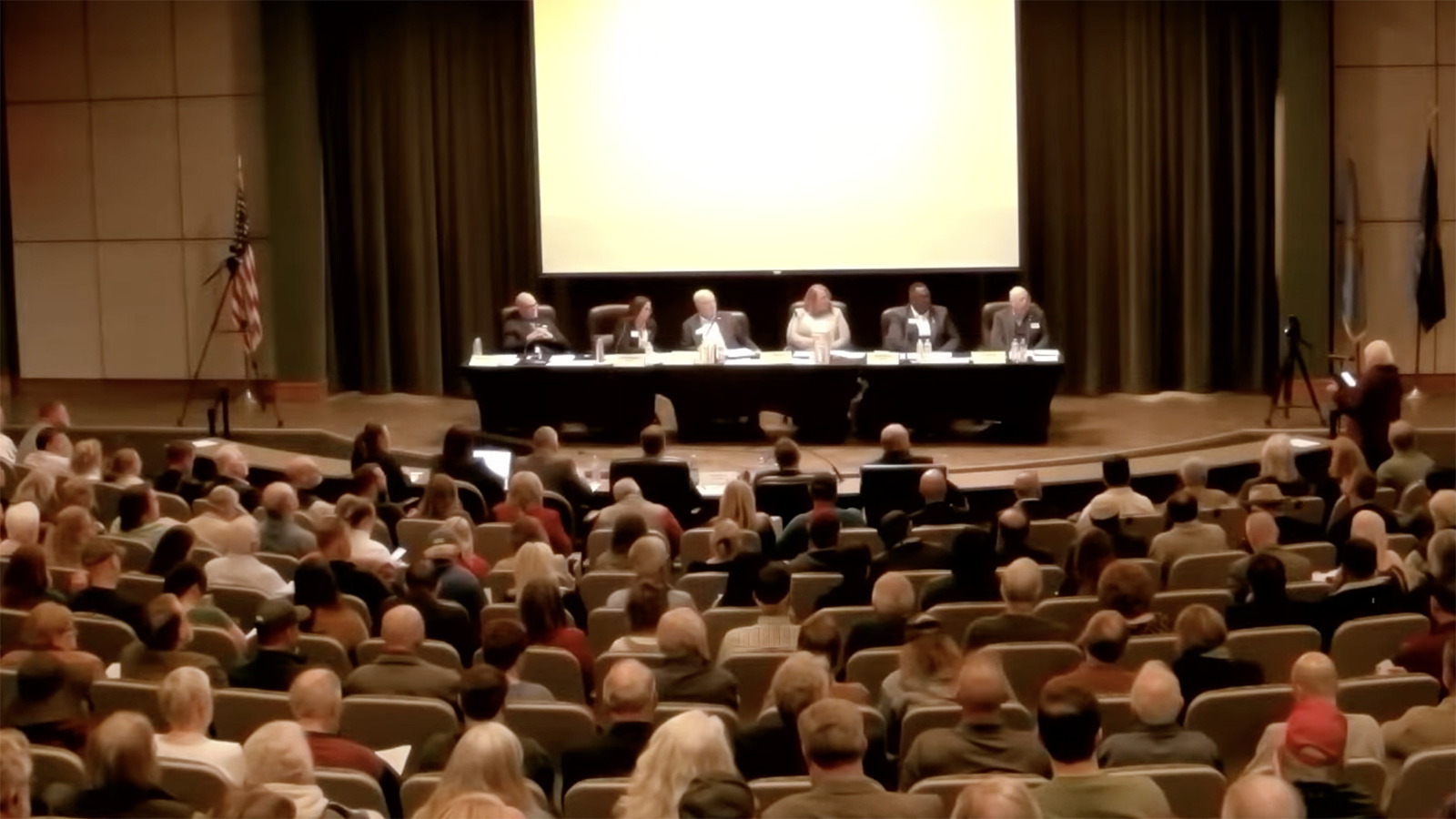
People attend a special Broken Arrow City Council meeting on Monday, Jan. 12, 2026, in Broken Arrow, Oklahoma. (Video screen grab)


(RNS) — Just before a crucial vote on a proposed mosque in Broken Arrow, Oklahoma, Mayor Debra Wimpee and other city officials were swamped by emails demanding that they reject the proposal, with many writing anti-Muslim comments.

“Every country in Europe, once Muslims reached over 2% of the population, they started acting violently,” claimed one email from a mosque opponent. “We are not discriminating against them as people, we just do not want them setting up shop in our neighborhood.”

“I have the very same concerns,” Wimpee replied.

Wimpee’s response and a similar email from a city council member, both first reported by the Tulsa Flyer, are cited in a lawsuit filed Monday (Aug. 3), alleging that Wimpee and other Broken Arrow leaders illegally rejected a rezoning request by the Islamic Society of Tulsa to build the first mosque in the city.

The complaint, filed on behalf of the Islamic Society of Tulsa in U.S. District Court for the Northern District of Oklahoma, names Wimpee, four members of the Broken Arrow City Council and the city itself in arguing a January vote against the proposed mosque violated federal land use and religious freedom laws.

“The City of Broken Arrow violated IST’s constitutional and statutory rights to use their land for worship and to not be treated differently simply because of their faith,” the complaint reads.

Leaders of the Islamic Society of Tulsa say the new mosque is needed to accommodate Muslim residents of Broken Arrow, who otherwise have to travel to a small mosque in Tulsa, about 15 miles away, for worship. The proposed project would be built on property owned by the Islamic society and currently zoned for agricultural use. 

Aslam Syed, who led construction for the Broken Arrow mosque project, said the lawsuit is meant to ensure city decisions are not guided by public pressure. 

“None of us wanted to be here announcing a lawsuit,” Syed said at a press conference Monday. “We wanted to build a place of worship for community members who already lived and contributed to the fabric of Broken Arrow.”


Both city staff and the Broken Arrow Zoning Commission had approved the rezoning request for the mosque before the council rejected it. The city council had previously approved zoning changes for a nearby apartment complex and new housing development, as well as two churches.

However, the complaint alleges, city leaders treated the mosque differently, citing traffic and infrastructure concerns in their denial, even though the other approved projects had similar concerns raised.

“The relevant departure was not merely that the council approved other applications but denied IST’s applications — it used unique and more stringent review standards,” according to the complaint. 

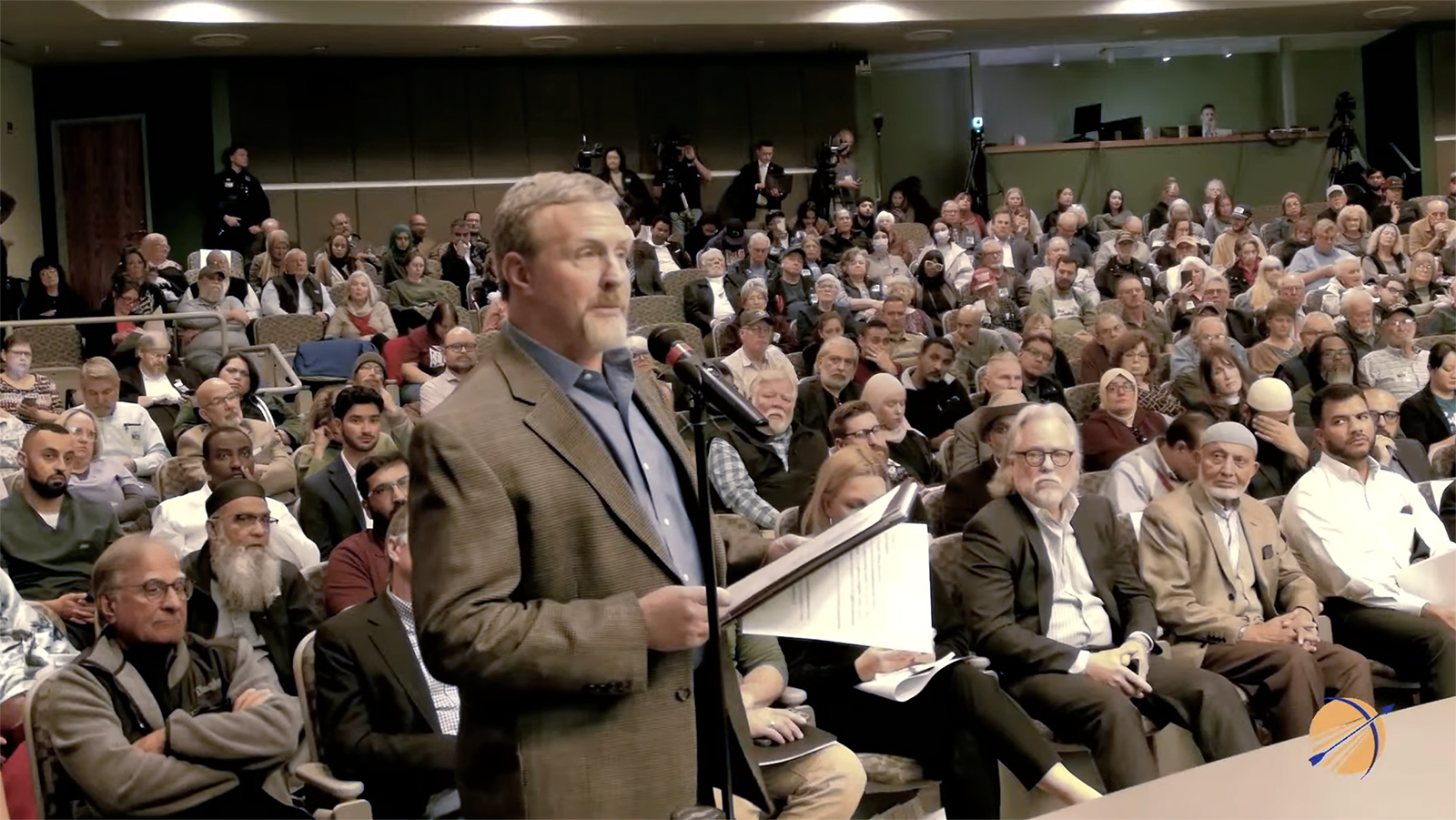
David Oldham speaks against a proposed mosque project during a special Broken Arrow City Council meeting on Monday, Jan. 12, 2026, in Broken Arrow, Okla. (Video screen grab)

The complaint argues that city officials violated the Religious Land Use and Institutionalized Persons Act, known as RLUPA, as well as the 1st and 14th Amendments and the Oklahoma Religious Freedom Act. 

Meghan Murphy, a staff attorney with CAIR’s Legal Defense Fund, which represents the Islamic Society, said Broken Arrow City Council succumbed to a “wave of bigoted anti-Muslim hysteria.” 

“They did not want Muslims here, so they made up a reason, and in doing so, they violated the law,” Murphy said at the press conference.

During the January city council meeting, dozens of residents testified against the mosque’s expansion while making anti-Muslim comments. Others raised concerns about water flow and congestion.

In the days leading up to the vote, a meeting organized by conservative nonprofit Constitutional Grounds used criticism of Islam as a reason to oppose the mosque.

RLUPA bars government officials from treating houses of worship differently in zoning matters than other groups. 

Last week, the U.S. Department of Justice said it was investigating how the City of Broken Arrow’s zoning laws treat religious land uses and the city’s denial of the mosque rezoning request. Oklahoma Attorney General Gentner Drummond has asked President Donald Trump to stop the DOJ inquiry, according to the Tulsa Flyer.

City officials plan to meet Monday to discuss the DOJ investigation. That meeting will be held in executive session and is not open to the public, according to a statement from the city. 

“The city council and administration are fully engaged with the DOJ in its investigation,” city leaders said in a public letter about the investigation. 

A spokesman for Broken Arrow said the city does not comment on potential litigation.

Leaders with CAIR and IST said Monday they hope the suit leads to the construction of the mosque.


Why Arbaeen – the Shiite Muslim pilgrimage of mourning – has a deep significance that brings millions to Iraq each year

(The Conversation) — Each year, millions of Shiite Muslims walk to Karbala to honor Husayn, the prophet’s grandson, whose death continues to shape their faith.
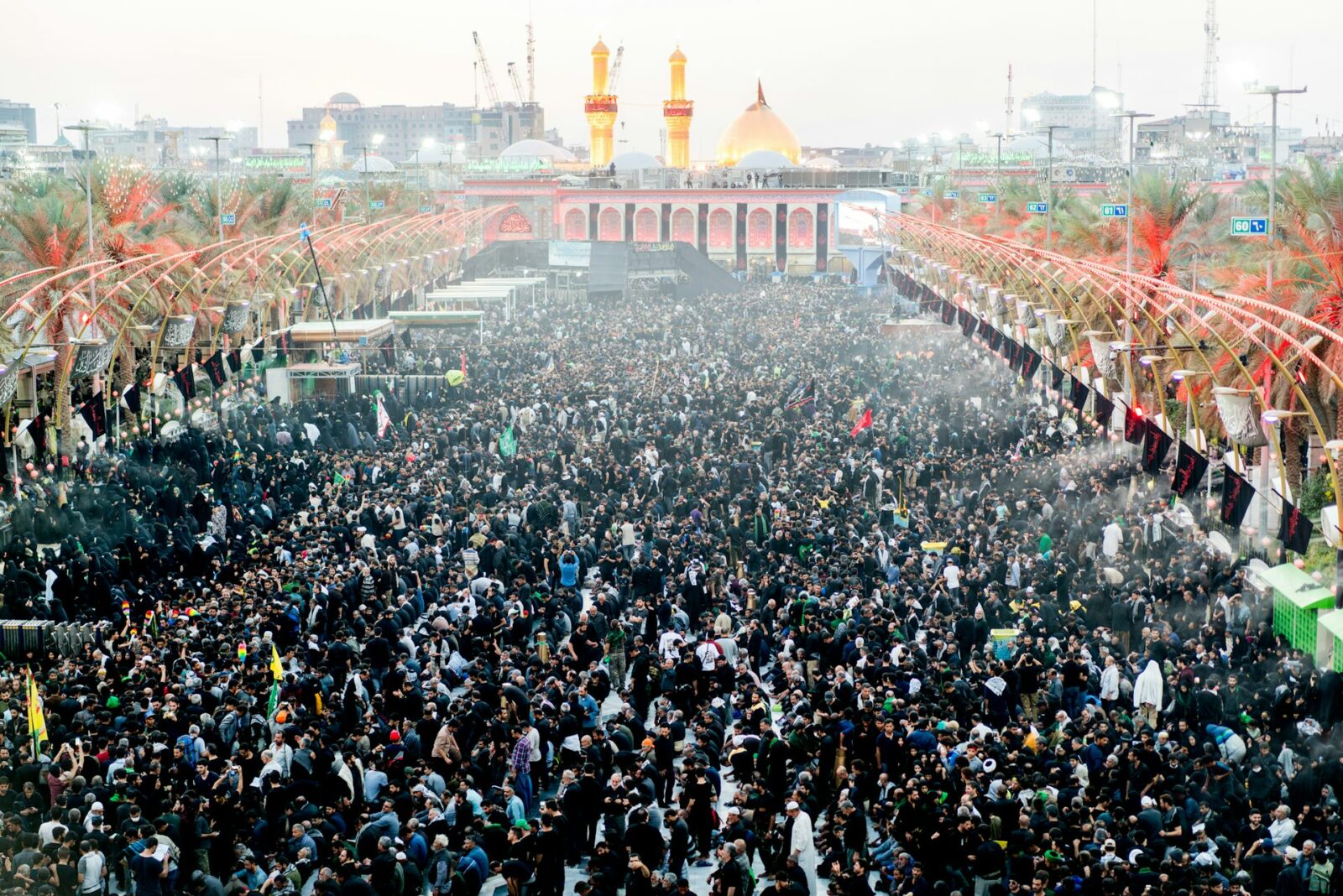
Pilgrims crowd the Imam Husayn shrine in Karbala, Iraq, during Arbaeen, one of the world's largest annual religious pilgrimages. (MASTER/Moment via Getty Images)


(The Conversation) — Every year, millions of pilgrims walk from the deserts of southern Iraq to the holy city of Karbala for Arbaeen, one of the largest annual pilgrimages in the world. In 2026, pilgrims will converge on Karbala on Aug. 5.

Arbaeen falls 40 days after Ashura, which commemorates the killing of Husayn ibn Ali, a grandson of the Prophet Muhammad, in 680 C.E. It marks the end of the mourning period that begins during the Islamic month of Muharram.

As a scholar of religion and politics who studies Shiite communities across the Indian Ocean world, I find that few rituals reveal as much about Shiite Islam as Arbaeen: its theology of sacrifice, its focus on injustice and the way in which it brings millions of people together.

A death that shaped a tradition

To understand Arbaeen, one has to return to the plains of Karbala in the year 680. After the death of Ali – Muhammad’s cousin and son-in-law – and then Ali’s elder son Hasan, the caliphate passed to the Umayyad ruler Yazid. The Umayyads were the first hereditary Muslim empire that ruled after the death of Muhammad in 632.

Husayn, the prophet’s grandson, refused to recognize Yazid’s legitimacy because he believed Yazid was not morally fit to lead the community of believers.

In 680, Husayn set out with a small band of family and followers and was surrounded by a far larger army near Karbala and killed alongside some 70 companions. The women and children of his household were taken captive and marched to the Umayyad capital in Damascus, in present-day Syria.

For Shiite Muslims, this was not merely a political defeat but a sacrifice to preserve the true faith. In confronting the army of the second Umayyad ruler of the dynasty, Husayn opposed a rule viewed as unjust and un-Islamic.

The remembrance of Husayn’s martyrdom reminds Shiites about the teachings of the prophet and his family. To them, it symbolizes the enduring struggle between good and evil and serves as a reminder to uphold a moral code despite what the powerful say and do.

Following the battle of Karbala, the survivors, who had been held captive in Damascus, stopped at Husayn’s grave. They were joined by a disciple of the prophet, Jabir ibn Abdullah al-Ansari, believed to be the first pilgrim to visit the grave.

Arbaeen commemorates that visit and marks the end of the period of mourning. Symbolically, the death of Husayn represents the shattering of the world, and Arbaeen restores it.

The walk of Karbala

Today, the best-known route runs some 48 miles — about 78 kilometers — from Najaf, where Ali is buried, to Husayn’s shrine in Karbala, a walk of roughly three days. The road is lined with “mawakib”: tents and stations where volunteers offer pilgrims free food, tea, medical care and a place to sleep.

Several volunteers hand bananas from boxes to people reaching out to receive them. A Turkish flag with a white crescent and star is displayed on the side.

Food and beverage are offered to Arbaeen pilgrims.
Murtadha Al-Sudani/Anadolu via Getty Images

I have visited Karbala during this sacred time. I found it remarkable that a country that has been through decades of conflict and instability could host millions of people with free food and drink for a week. It showed me how the story of Husayn’s sacrifice continues to inspire extraordinary hospitality in the direst of circumstances.

Recent years have drawn crowds estimated at more than 20 million, making Arbaeen, by many accounts, the largest annual gathering on the planet.

It was not always so visible. Under Saddam Hussein, public Shiite mourning was tightly restricted, and the Arbaeen walk was effectively banned during the years of his rule (1979-2003). Saddam, a Sunni Muslim, suppressed many minority religious and ethnic communities. Only after the U.S.-led invasion of Iraq in 2003 could the pilgrimage resume openly, and it quickly grew to attract millions of pilgrims from around the world.

More than mourning

For most Shiites, Husayn’s martyrdom is more than a historical tragedy.

Husayn’s sacrifice has shaped not just religious devotion, but politics as well. Scholar Syed Akbar Hyder argues that it provides a model for resisting oppression, known as the Karbala paradigm. A concrete example of its political use came during the Iranian Revolution of 1979. Ayatollah Khomeini portrayed the shah as the tyrannical Yazid and himself as a Husayn-like figure returning from exile to save the Iranian people from injustice.

Husayn’s death has inspired Shiite communities around the world to create poetry, plays and rituals in local languages to meet different spiritual needs.

One of the best-known examples is “The Battle of Karbala,” a 19th-century Urdu epic written by Indian Shiite poet Mir Anees. He describes a scene in which Sakina, Husayn’s 4-year-old daughter, searches for her father and asks her uncle where Husayn is, unaware that her father has been killed in the battle. Shiites experience the grief as deeply personal and in the present.

Then little Sakina drew near, and softly cried:
“My uncle — where is he? Why does the throng press so?
Let me lay my blessing where his brow is dyed
with light; may God keep every harm below.
He lifts the standard high — let his renown be mine,
for he is Ali’s splendour, Ali’s living sign.”

For the millions who reach Karbala each Arbaeen, the meaning is at once ancient and immediate: to stand at the grave of a man killed 14 centuries ago, and to affirm that his refusal to submit to injustice still matters today.

(Iqbal Akhtar, Associate Professor of Religious Studies, Florida International University. The views expressed in this commentary do not necessarily reflect those of Religion News Service.)