Friday, August 14, 2026

The Flock uprising is just the beginning


Amanda Marcotte
SALON
Fri, August 14, 2026


Flock Safety cameras have many Americans seeing red. Illustration by Salon / Getty Images / The Washington Post / SOPA Images

Key takeaways

Flock Safety cameras are sparking a national rebellion due to concerns over privacy and civil liberties.


In era when so much about the news is just plain depressing, what stands out about the burgeoning public rebellion against Flock security cameras is just how fun it all is. The artificial intelligence-powered surveillance cameras, which are sold by Flock Safety as mere "license plate readers" to local governments, have spurred a national cat-and-mouse game between vandals and cops that is being merrily followed on social media, mostly by people rooting for the vandals. City council meetings in which citizens swarm to protest paying for the cameras are the new must-see TV.

In Huntington, West Virginia, a small city in the heart of Appalachia, one man became an internet folk hero when he stood up at a city council meeting and said, "I'm not gonna waste your time; I'm kinda hungry. But one last thing: Every single Flock camera has about 2-3 pounds of copper and about 1-2 grams of gold. Do with that information what you will." He then walked off in triumph.

As with opposition to AI-fueling data centers, the revolt against Flock cameras is drawing support from across the political spectrum, uniting Republicans and Democrats in red and blue America. Their frustration isn't just rooted in annoyance at having surprise speeding tickets show up in the mail. Flock cameras have become a symbol of growing anger over the efforts by technology oligarchs to impose their dystopian fantasies on the country, replacing liberal democracy with a surveillance state. As Jill Lepore recently noted in Wired, it's as if tech leaders read George Orwell's "1984," Aldous Huxley's "Brave New World" and other sci-fi classics "as instruction manuals" rather than "cautionary tales." By targeting Flock cameras, activists are building momentum for a larger rebellion against the tech industry — and against political leaders who are complicit in their assault on our freedoms.


Flock Safety embodies the dishonesty that has been the prevailing theme of tech corporate communications and marketing for at least the past decade. While the cameras are sold to the public as a banal traffic safety measure, they have prompted an outpouring of stories about how they're being used to violate civil liberties and undermine democracy.


"Flock from the first has been quite deliberate in sequestering decision making processes — where these things are placed, what they gather and for whom — and the data gathered through them from the general public," Adrian Daub told me. A comparative literature professor at Stanford University, his forthcoming book, "What Tech Calls Governing," examines the increasingly authoritarian politics of Silicon Valley.

"The intersection with state actors is particularly worrisome," Daub said. "Governments can outsource the dodgier aspects of data collection and use, while the private sector gets to disavow the obvious political implications of this kind of massive surveillance."

According to an exhaustive 10-month analysis by Electronic Foundation Frontier, a nonprofit dedicated to defending civil liberties in our digital age, local police were using the cameras to track protesters, such as those at No Kings rallies, who were then put in a national database to be used across all jurisdictions. Despite claims that the cameras only record license plates, the technology-focused outlet 404 Media found that the database is also being used to collect information on individual people whom cops can then search for using descriptions of clothing, race, gender and body type. In Johnson County, Texas, police officers fixated on a woman suspected of having an abortion, and used the database to track her movements in an effort to prove it — even though state law is supposed to exempt the patient from criminal prosecution. Police have been outed for using the cameras to stalk people for personal reasons, such as having a conflict — or even a sexual obsession — with them.


Flock has claimed the company will reform its policies to address these issues, but history suggests it would be unwise to trust them. One former Flock employee, Jonathan Paz, has accused the company of lying about its intentions to gain government contracts, which are then abused by law enforcement to harm the public. Paz told 404 Media that company management had assured him they weren't feeding information to agencies like Immigration and Customs Enforcement, a falsehood he passed on to city governments in his sales pitch. After finding out about a secret pilot program to help track down and detain immigrants, Paz left the company.

Want more Amanda Marcotte on politics? Sign up for her free newsletter, Standing Room Only, now also on YouTube or wherever you get your podcasts.

Flock's behavior represents a microcosm of a larger trend in tech that should alarm freedom-loving Americans, regardless of political affiliation. Silicon Valley enriched itself with promises that the cyber revolution would mean more freedom and democracy by enabling the flow of information and communication. But in recent years, there has been a dramatic about-face as the C-suite class has become increasingly authoritarian. Algorithms and AI are used to choke off people's access to information and make intra-human communication more difficult. Journalism is faltering as an industry, even as social media and search engines are being programmed to dissuade users from reading or watching real news sources. Surveillance is starting to feel ubiquitous, between online bots tracking our every move to cameras everywhere, including the faces of other people wearing AI glasses. Billionaires like New York Knicks owner James L. Dolan reportedly use spying tech to harass people who criticize them.

"Citizens will be on their best behavior, because we're constantly recording and reporting everything that is going on," Oracle CEO Larry Ellison, a major donor to pro-Trump groups, observed at a recent meeting of financial analysts about the future of AI.


"There is a link between technology (whether it 'works' or not) and repressive state apparatuses," Daub explained. For example, while Flock cameras expand the ability of the government to crack down on people, they also allow officials "to claim it's not their fault when some poor sucker gets snared" unjustly by blaming poor technology. "It's not an accident that their politics have tacked more openly to the right in recent years," he said of the tech CEO class.


This can all feel overwhelming at times, which is very much by design. Silicon Valley's hype machine portrays an AI-controlled future as inevitable, even equating the technology to a god that will overpower us humans, rendering democracy a quaint artifact of the past. AI was swiftly embedded in innumberable computer programs, often not even allowing a user to opt out. The goal of this isn't mysterious. Tech CEOs, mimicking the villains of sci-fi, are telling the public that resistance is futile.

The Flock uprising, though, is the stirrings of public understanding that none of this inevitable — and we have the right to fight back. The public has some leverage points. Despite their elaborate efforts at secrecy and unaccountability, Flock works through government contracts. Citizens can petition leaders to avoid or drop contracts, a tactic that has been working across the country. There are still transparency laws that apply to Flock databases, which is how 404 Media and other media outlets have discovered abuses of the technology. Activists have been building maps alerting people where the cameras are.

The maps intersect with what has been the most controversial part of the Flock uprising: the vandalism. Although it appears the vandals aren't organized in any meaningful way, they are being egged on by social media users who cheer from afar as people shoot, steal or otherwise disable the cameras. It's understandable that the vandalism is the most compelling front of the rebellion, and not just because petty, victimless crime is a cheap thrill. Vandalizing the cameras is a sharp rebuttal to Silicon Valley talk about how technology will liberate us from the limitations of the physical world.


The reality is that bodies and physical space are still of paramount importance, which is why tracking and controlling people's movement is a priority for tech-obsessed authoritarians. But while they'd like to pretend they are gods on an invisible mountain, bending us to their wills, the reality is that they need old-fashioned metal — copper and gold, even! — to get it done. Destroying a camera sends a strong and unmistakable message: They are finite, physical entities, just like us.

Our Summer sale is on!

Support Salon's bold journalism. Annual members save 58%

Like it or not, the vandalism sends an emboldening signal to the public that tech oligarchs are not omnipotent. If you toss a brick at their expensive cameras, they squawk. It's crass and illegal, and yes, the cameras are insured and immediately get replaced. But the boost to human self-esteem and the reminder that our squishy bodies still matter more than all the data in the cloud? It's hard to argue against it

There are still plenty of pitfalls. MAGA leaders like Tucker Carlson are clocking the anti-Flock movement and trying to hijack it. Using conspiracy theories, he and others can redirect attention away from real enemies — tech oligarchs and compliant politicians — and toward blaming phantasms like the "deep state," falsely insinuating that the tech spies are left-wingers doing some poorly defined socialism. This has the twin benefits of ginning up outrage at innocent people, while also shielding the very right-wing forces that are actually the source of the problem.

Still, it's promising sign that people are rebelling against Flock cameras. Along with protests against data centers, it's a sign that the public is desperate for a way to fight back against not just AI, but also the anti-democratic forces fueling this latest tech wave.

The post The Flock uprising is just the beginning appeared first on Salon.com.


Boeing to divest tech ventures for stake in air-taxi startup

AFP
August 10, 2026
Archer is seeking final US certification of an air taxi that would shuttle travelers from downtown New York to airports in less than 15 minutes – Copyright AFP/File CHARLY TRIBALLEAU

Boeing announced an agreement Monday to divest its air taxi and two other technology ventures to Archer Aviation for a stake in the startup.

The transaction shifts to Archer Boeing’s Wisk autonomous aircraft venture and SkyGrid and Insitu businesses for the equity and warrants for additional potential stock purchases in California-based Archer.

Shares of Archer surged on the announcement, which caps Boeing’s potential stake at just under 20 percent.

Archer aspires to build a fleet of air taxis that could potentially jet New York City travelers to airports in 15 minutes or less, avoiding traffic jams.

Archer is also targeting the 2028 Los Angeles Olympics as a showcase opportunity for the technology, announcing in November 2025 the $126 million purchase of Hawthorne Airport as a hub in the city.

Combining the companies’ technologies will allow Archer to bring new products to market more quickly, the companies said in a joint statement.

“This is a watershed moment for Archer and the future of physical AI in aerospace and defense,” said Archer Chief Executive Adam Goldstein.

“This is the next big step forward in becoming a diversified platform, rapidly growing our revenue base and bringing scale to our business.”

The transaction includes a “collaboration and technology-sharing agreement” that retains Boeing’s access to Wisk technology for current and next-generation commercial and defense aircraft, the press release said.

In its May earnings release, Archer said it had completed the “phase three” of the Federal Aviation Administration’s four-phase certification process for its Midnight air taxi vehicle. The company is slated to report results later Monday.

Shares of Archer surged 12.6 percent in midday trading, while Boeing rose 0.5 percent.
How Britain’s mapmakers track climate change

AFP
August 12, 2026

Climate change is changing Britain’s topography, such as through coastal erosion, the country’s official mapmakers say – Copyright AFP Brook MITCHELL

Once used to defend Britain’s shores against Napoleonic France, the Ordnance Survey’s detailed maps are now essential for tracking and adapting to climate change.

“I would argue there is no clearer way to see the impact of climate change than looking at a traditional map,” Tom Gray, a utilities and transport expert for Britain’s national mapping agency, told AFP.

He was sitting in front of an aerial photograph of dry land projected onto a big screen at the OS headquarters in the port city of Southampton, southern England.

Here, hundreds of people work to collect location data and maintain the National Geographic Database, which includes more than 600 million features, monitoring “almost anything you can think of” and updated 30,000 times a day, Gray said.

The OS first started mapping Britain 230 years ago and has since documented the changes in the country’s topography.

“There’s a noticeable change in habitats, mainly because of human intervention … but also the direct impacts of climate change, especially around waterways,” said Gray.

On the screen behind him, he cycled through OS maps of the country, highlighting where climate-related subsidence is likely to happen, which homes bordering rural areas are at the highest risk of wildfire, and which parts of the country face flooding — the biggest climate threat to Britain, according to him.

“Twelve percent of all of the UK’s strategic road network is in the highest risk zone for flooding, and 20 percent of the rail network is,” Gray said.

“When an emergency service worker needs to attend a flood, they can use our data to determine exactly where the hotspots are for flooding, where it’s most likely to happen, and how they can access that property,” he explained.


– Climate emergencies –


Many services rely on OS data to react to climate emergencies.

“There was some coastal erosion across on the Isle of Wight (off the coast of southern England) that needed to be updated quickly,” Helen Jones recalled.

She is one of 21 drone pilots for the OS, in charge of collecting footage to track changes on the ground.

“We flew the site with the drone to update the mapping, which allowed other agencies like emergency services and councils to look at that particular area and predict where they might have to cut off gas and water, and potentially evacuate people.”

She talked to AFP from Winchester, near Southampton, where she was filming a new housing development.

“If that rural land has any issues in terms of fires or flooding, if the estate isn’t mapped, (emergency services) won’t know that people will be in trouble or that there needs to be a certain response,” she said.

The footage she was collecting will be sent to the OS’s headquarters, where specialists add it to maps, capturing all the changes on the ground within one centimetre (0.4 inches) and including everything from buildings to bins and lampposts.

The process of turning her drone footage into maps is so detailed that a single block can take several hours, said specialist Sean Kennedy, armed with 3D glasses to better identify objects.

Such detail is important so authorities can see where access points to the housing estate are, useful when planning for climate emergencies such as wildfires.

“It’s quite good when we come out on site because people come and ask what you’re doing and we’re able to explain that actually, because the emergency services use our data, it’s really important that we get their house on the map,” Jones said.

She has been a surveyor for seven years and said she is seeing the impact of this year’s drought, as England and Wales experienced their driest July on record, according to the Met Office weather agency.

“I think everyone’s going to have to start taking (climate change) seriously,” Jones added.

“I’ve not had a summer where we haven’t had any kind of rain. And we can’t fly in rain so it’s been good in terms of drone footage, but it’s not good for anything else.”

'It's a crisis': The fight in the US over book bans

14.08.2026  DPA

Photo: Beowulf Sheehan/dpa

The number of books banned from American libraries has skyrocketed since Donald Trump's first term. A Florida bookshop run by acclaimed author Lauren Groff puts the spotlight on the most targeted works.

By Christina Horsten, dpa

In Lauren Groff’s bookshop, banned books take centre stage.

Anyone who walks through the front door of The Lynx sees the large dark-green shelf straight ahead with "Banned Books" written above it in big white letters.

On it are titles such as Anthony Burgess’s dystopian novel "A Clockwork Orange," Stephen Chbosky’s epistolary novel "The Perks of Being a Wallflower" or Stephenie Meyer’s "Twilight" vampire series. According to the authors’ association Pen America, all of these are among the books most frequently targeted.

Groff is herself a bestselling author and has celebrated success with works such as "Fates and Furies" and "The Vaster Wilds." There have also been efforts to ban her books.

Florida, where the 48-year-old lives with her family, is one of the US states with the most book bans, according to Pen America. In response, Groff opened The Lynx in 2024, named after the local lynx, also known as the Florida Bobcat, which is native to the Sunshine State.

"Watch us Bite Back" is written in big black letters above a mural on the outside wall of the shop in the city of Gainesville in northern Florida.

"This store would probably still be a pipe dream if the book bans hadn't happened," Groff told The New York Times at the opening. "I want this for me too. I don't want to live in a place where we stifle free expression."

Groff not only sells books that are being targeted elsewhere, she also organizes regular reading clubs about them and distributes them free of charge to schools.

Book bans are nothing new in the United States. They've been documented since the country was founded.

In principle, anyone and any organization can file a substantiated complaint about a book in a library, whether it be a school or public library.

The complaint must then be reviewed by professionally trained library staff, among other criteria, to decide whether the book stays where it is, or whether it should be moved to another section or removed from the collection altogether.

Complaints about books sharply higher

In recent years, particularly since US President Donald Trump’s first term in office, the number of complaints and the number of books that were actually removed from library shelves has changed dramatically, Pen America says.

"It's a crisis," information scientist Emily Knox from the University of Illinois says of the situation. The culture warriors have come to the libraries, schools and sometimes the bookshops, she says.

The numbers have never been like this, but the reasons for the complaints have stayed the same, she notes.

According to the latest figures from Pen America, a total of 3,743 books were banned from school libraries alone in the US in the 2024/2025 school year. Many of these books dealt in different ways with topics such as violence, sexuality, identity, death, grief, self-confidence or abuse.

"The freedom to read and learn, and the right to access information, ideas and knowledge, is among the most fundamental building blocks of a democratic society," Pen America says. Banning books from school libraries undermines that and violates human rights, according to the association.

Those filing complaints usually cite the protection of children and young people, saying the books contain content that is not appropriate or could even be dangerous for children.

Another argument is that the books are not actually banned but still available, for example in other libraries or in bookshops. They are being removed from children’s and young people’s direct reach for their protection, supporters say. That too is censorship, Pen America and others counter.

Complaints about books have always existed and everyone has the right to file them, wrote librarian Amanda Jones from the southern US state of Louisiana in her bestseller "That Librarian."

What is new, however, is that it is not individual people filing isolated complaints but that they are joining together into organizations, filing complaints in bulk and across wide areas, according to Jones.

Those responsible in libraries are then publicly intimidated and pressured via social media to ensure the books really are removed from the shelves. That also happened to Jones, who ended up defending herself in court.

Public intimidation of library staff

That is the culture war, Jones wrote, involving people and organizations such as the conservative activist association Moms for America who, often in step with Trump’s policies, want to restrict the rights of people from the queer community and use book bans to do so.

Moms for America did not want to comment on the issue when asked. Organizations have also formed on the other side, such as the Florida Freedom to Read Project, a group that wants to prevent any form of book banning.

One thing this culture war shows is very clear, information scientist Knox says: You wouldn't try to ban books if you didn't think reading was important.


Ai Weiwei says he wishes he could return to China

12.08.2026, DPA

Photo: Matthias Balk/dpa

Chinese artist Ai Weiwei has said he misses his home country and would like to return to China.

Ai told German public broadcaster ARD in an interview on Tuesday that he wished he had already returned to China and that he had gone far too long without the opportunity to speak his native language.

The artist also spoke about the difficulties of expressing himself in a foreign language, saying he could convey only a small part of what he was thinking when speaking in a language other than his own.

Ai said he missed China despite having been treated badly there.

The artist has lived in Europe since 2015, spending many years in Germany and more recently living in countries including the United Kingdom and Portugal.

Ai has said he left China because he was politically persecuted there. He is known as a critic of the Chinese Communist Party and the government in Beijing.

Stolen Renoir, Cézanne and Matisse paintings recovered in Italy

14.08.2026, DPA

Photo: Comando Carabinieri Tutela Patri/Comando Carabinieri Tutela Patrimonio Culturale/dpa

Three paintings by Pierre-Auguste Renoir, Paul Cézanne and Henri Matisse stolen from a museum in Italy have been recovered after several months, the Carabinieri police force said on Friday.

Carabinieri officers secured the valuable works during searches following extensive investigations, according to a statement. They initially gave no further details on the suspected thieves or their whereabouts.

The works are Renoir's "The Fish," Cézanne's "Cup and plate with cherries" and Matisse's "Odalisque on the Terrace." Their total value is estimated at €9 million ($10.4 million).

The artworks were stolen in late March from the Fondazione Magnani-Rocca museum near Parma. The perpetrators broke in during the night and stole the paintings within just a few minutes. 

After the alarm was triggered, they fled through the museum's gardens. A museum spokesman said at the time it was a planned, structured and organized break-in.

The theft was used to spread disinformation. A fake BBC report reportedly spread via a Kremlin-linked network claimed the stolen Cézanne painting was hanging in the office of Ukrainian President Volodymyr Zelensky and had come from the mafia.

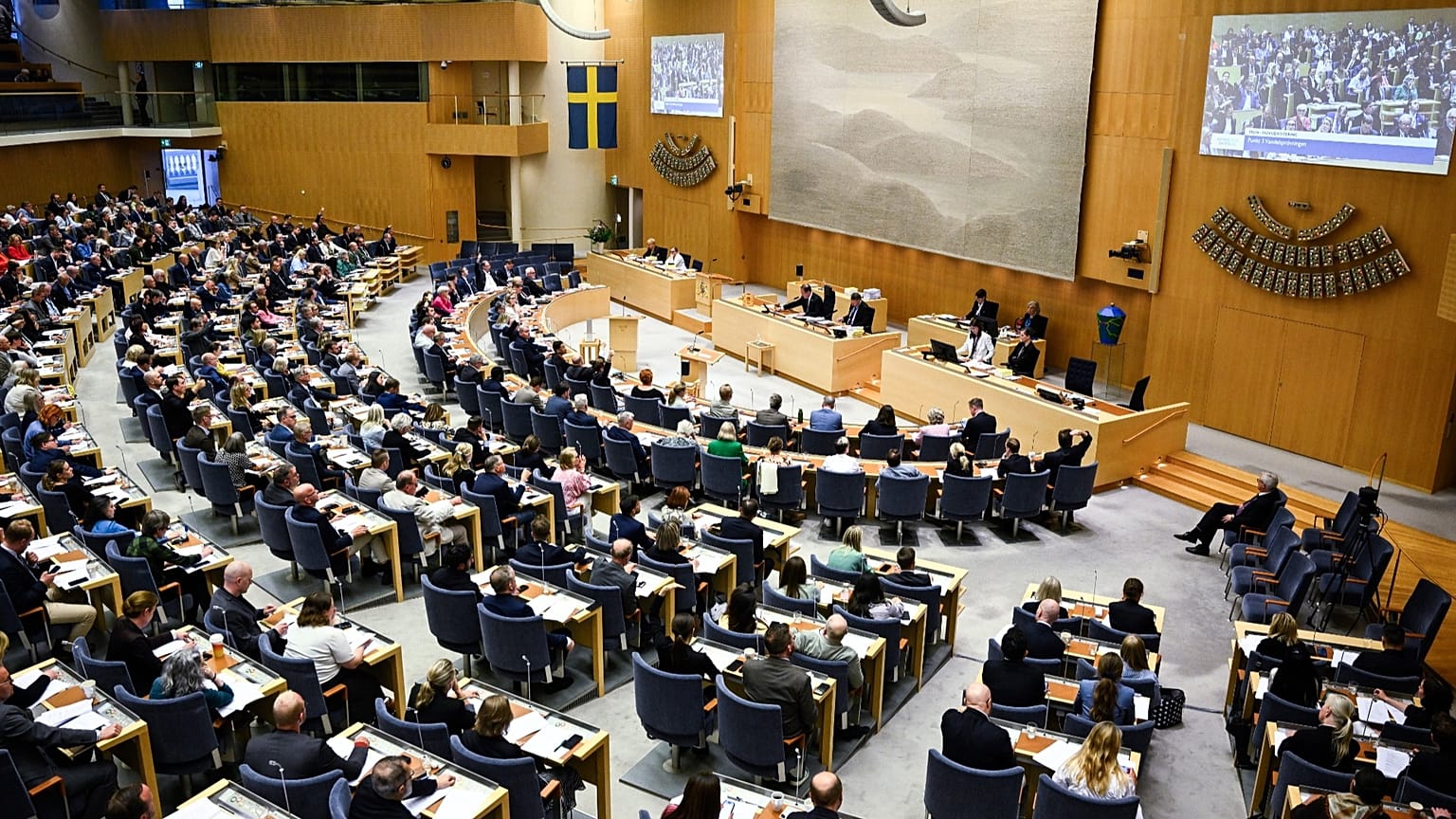
Swedish lawmakers cut age of criminal responsibility to 14 ahead of general election

The Swedish parliament in session in Stockholm, 15 June, 2026
Copyright AP Photo

By Gavin Blackburn
Published on

The Scandinavian country has been rocked by gang battles for more than a decade, particularly for control of the drug market.

The Swedish parliament voted to lower the age of criminal responsibility from 15 to 14 on Thursday as the right-wing government heads toward a national election, vowing to clamp down on crime.

The government had wanted to lower the age at which children could be sent to prison to 13, but it had to withdraw the proposal in June because it could not secure a majority in parliament.

Some 281 lawmakers voted in favour of lowering the age to 14, including the opposition Social Democrats, with 66 voting against.

The Scandinavian country has been rocked by gang battles for more than a decade, particularly for control of the drug market.


Sweden's Prime Minister Ulf Kristersson speaks as he arrives for the NATO summit in Ankara, 8 July, 2026 AP Photo

The minority conservative government, led by Prime Minister Ulf Kristersson, survives with the backing of the far-right Sweden Democrats party.

It had made the battle against crime a centrepiece of its policy platform after taking office in 2022.

A government-appointed commissioner had recommended lowering the age of criminal responsibility to 14.

The government decided to propose 13, but most of the 126 groups consulted on the proposal, including the police and prison service, opposed such a low age.

Parliament also voted to cut the reduction in prison terms for young people. Youths aged under 18 can now be jailed for up to 18 years.

Police on the street in central Uppsala, 29 April, 2025 AP Photo


The law will come into force on 10 September, three days before the country holds a general election.

A Demoskop poll for the Svenska Dagbladet newspaper put the centre-left opposition ahead of the right-wing parties but with the gap narrowing.

The poll said the governing parties and far right would get 47% of the vote and the opposition parties 51%.


18-year-olds spend more and more time online, especially on social media

An ICAD study shows that the relationship between the internet and 18-year-olds is increasing.
Copyright Copyright 2026 The Associated Press. All rights reserved

By Ana Filipa Palma & Euronews
Published on

Internet use was the focus of a study by the Institute for Addictive Behaviours and Dependencies (ICAD) carried out among young people on National Defence Day 2025.

A study by Portugal's Institute for Addictive Behaviours and Dependencies (ICAD) has found that 18-year-olds are spending more time on the internet, especially on social media.

The findings are based on a survey of young people taking part in the 2025 National Defence Day.

Most young people (60%) use the internet for an average of four or more hours a day, with intensive use (five hours or more) on the rise compared with previous years.

"In itself, this indicator is not necessarily a sign of problems, but rather of a life lived both physically and virtually, often intertwined, with new ways of behaving, acting and being," the study concludes.

Social networks are the platforms most used by young people, who prefer to access them via their mobile phone. But most of those surveyed, almost 45%, say they spend around two to three hours on platforms such as TikTok, Facebook and Instagram. Thirteen percent of young people said they spend around six or more hours on social media.

Besides social media, online searches - for reading or studying - gaming (including betting) and watching films, videos and tutorials are other reasons contributing to the increase in the time young people spend on the internet.

It was also striking that in 2025, 99% of young respondents said they had started using the internet before the age of 16 and 39% said they started before the age of 10.

This is a particularly important figure, as this proportion has been increasing, showing that the internet is entering people's lives at an ever earlier age. The study stresses that this rise is slightly more marked among young women than among young men.

Young women seem to spend more time on social media or searching online, while young men appear to spend more time gaming.

In the case of online gambling, the level of use among young people also seems striking: 17% of 18-year-olds (30% of young men and 5% of young women) place bets online.

Problems linked to internet use

Excessive internet use is associated with a range of problems, especially among adolescents. ICAD's study therefore set out to find out whether its sample had already experienced any of these, such as poor performance at school or work; health problems requiring medical care; behavioural problems at home; financial difficulties; incidents of violence or disorderly conduct; unprotected sex; and episodes of emotional distress.

Overall, 35% of young people said they had experienced at least one of these seven problems in the 12 months prior to the survey.

The most frequently mentioned problem (20%) was emotional distress (lack of motivation, sadness, dissatisfaction, loneliness, anxiety), followed by poorer performance at school or work (17%).

This study ties in with one of the big issues being debated in EU policymaking on young people's and children's use of social media.

A World Health Organization (WHO) report published at the start of last year identified the dominance of the digital world in young people's lives as one of the main drivers of loneliness worldwide.

Excessive screen time has been linked to lower levels of physical activity and poorer sleep, as well as anxiety, depression, stress and social isolation.

The United Kingdom's plans to ban teenagers from accessing social media have reignited a debate that is playing out across Europe. Countries such as France, Spain, Austria, Greece and Denmark are discussing measures to restrict minors' access, amid concerns ranging from cyberbullying and the addictive design of platforms to tragedies such as suicide and self-harm.

France's Constitutional Council strikes down child social media ban

14.08.2026, DPA

Photo: Alicia Windzio/dpa

France's Constitutional Council on Friday struck down the government's effort to ban under-15s from using social media, dealing a significant blow to President Emmanuel Macron.

The council - the highest constitutional authority in the country - said the bill constitutes a disproportionate interference with freedom of expression and communication. 

The bill passed in the French parliament in July with a large majority and represented one of Macron's final legislative accomplishments before his second term ends next year. The ban was due to take effect in September.

But the council ruled that the regulation was too broad and could also cover services where risks to minors have not been proven. 

Furthermore, the law does not sufficiently protect users' privacy in relation to necessary age verification checks, the body said.

Macron nevertheless intends to press ahead with the legislation. He has tasked Prime Minister Sébastien Lecornu with drafting a legally sound revised version. 

The reform is to be implemented by spring 2027 if possible, taking into account the Constitutional Council's decision and European law, according to a statement from the Élysée Palace.

Israeli settlers seize Palestinian water source in occupied West Bank to create recreational pool


Israeli settlers have taken control of a freshwater spring that Palestinian farmers in the occupied West Bank have relied on for generations, diverting its water to create a pool at an archaeological site advertised as a tourist attraction and leaving crops to wither. It is estimated that Israeli settlers have now seized control of 95 percent of the northern Jordan Valley's springs, pushing Palestinian communities off their land.


Issued on: 14/08/2026
By: FRANCE 24


A drone view shows Israelis visiting an ancient water reservoir in the Jordan Valley in the Israeli-occupied West Bank. © Ilan Rosenberg, Reuters


On a searing summer day, Israeli settlers splashed in a West Bank pool created ​by siphoning off water that had irrigated Palestinian crops, one of many seizures of water resources across the occupied territory.

The spring served as a lifeline for the nearby village of Fasayil in the fertile Jordan Valley, where Palestinians have relied on it for generations for food, employment and to supplement irregular Israeli supplies to their domestic taps.

“Our water supply remains cut off to this day, depriving us of the water we depend on for our homes, our livelihoods, ​and our agricultural land,” said Saad ‌Nemer, who farms the land.

Saad Nemer, a Palestinian landowner who says that Israeli settlers diverted water from his land making it impossible to plant crops, visits his arid farm in Fasayil, a village in the Israeli-occupied West Bank. © Mohamad Torokman, Reuters

Israeli settlers seized his irrigation pipeline in June, channeling the water to an ancient pool in an archaeological site. Soon after, settlers advertised it as ⁠an Israeli tourist attraction and Israel’s far-right finance minister pledged financial support.

“They are now in the process of developing a recreational park around the pool,” Nemer said.
Settlers stop Palestinian villagers approaching

The seizure of the spring at Fasayil is part of a pattern that Palestinians say is designed to make their lives in the West Bank ‌untenable. Israeli settlers have attacked at least 160 water and sanitation sites across the Palestinian territory this year, United Nations data shows.

Nemer’s greenhouses and fields would normally be full ⁠of eggplant, zucchini and watermelons, but without water he has not been able to plant in the scorched land.

“The settlers cutting off our water has caused us losses and has meant that many families will lose their work and their livelihoods,” he said.

Nemer said that an employee had been beaten up by settlers and he himself had faced threats for attempting to approach the spring as far ​back as two years ago.

Yishai Shreiber, 21, an Israeli settler who had come to swim in the pool near Fasayil on an August afternoon, said Palestinians would not now ‌dare approach.

“Now that they see this entire mass of people, all these large groups of Jews coming here to bathe, they are afraid to come here,” said Shreiber.

Israelis visit an ancient water reservoir in the Jordan Valley in the Israeli-occupied West Bank. © Ronen Zvulun, Reuters

Shreiber said the West Bank belonged to the Jewish people, and that if Palestinians don’t want to accept Jewish authority, they should leave.

Nemer showed Reuters a 2025 land ownership document from COGAT, the Israeli military agency which enforces civilian policy in the occupied territories. He also presented a map drawn for the pre-occupation 1957 registration of his ‌title deeds showing that his land included both the spring and the pool.

COGAT and Finance Minister Bezalel Smotrich did not respond to requests for comment.
'Water war' is part of Israeli West Bank takeover, Palestinians say

Israel’s far-right coalition government has overseen massive settlement construction that Smotrich says is aimed at burying the idea of a Palestinian ​state, which has been recognised by more than 150 of 193 UN member states as encompassing the Gaza Strip and West Bank, including East Jerusalem.

The United Nations and most governments consider the settlements to be illegal under international law related to military occupation. Israel seized the West Bank in the 1967 war, but argues the territory is disputed rather than occupied.

Water flows from a hose in the Palestinian village Fasayil, where residents say that Israeli settlers diverted water from its natural spring causing crops to die. © Mohamad Torokman, Reuters

Palestinians have experienced a sharp rise in settler violence, and Palestinian field researcher ​Fares Foqahaa estimated that settlers had now seized control of 95 percent of the springs in the northern Jordan Valley, displacing communities

In another West Bank village, Qusra, settlers still besieging three homes on Thursday had also cut off their water and ​electricity.

Adel Yassin, an official with the Palestinian Authority’s water authority, said that settlers target water resources as part of a systematic campaign to force Palestinians off ​their land.

“I see this as a water war. It is the silent bullet that kills Palestinians without a sound,” he said, referring to the process of making their livelihoods unsustainable.

Israeli archaeologist says settlers are damaging the site

In early June, Eliav Libi, a settler leader targeted with sanctions by Canada and other countries, posted a video ​showing the pool beginning to fill with water.

He and other settlers say the pool belonged to the biblical-era Jewish king Herod. Alon Arad, an archaeologist with the Israeli rights group Emek Shaveh, said the pool’s provenance is unclear.

“We see in many cases the use of archaeology ... to create this feeling that the West Bank is exclusively Jewish,” Arad said, adding that the settlers were damaging an archaeological site by filling it with water.

A drone view of Israelis visiting an ancient water reservoir in the Jordan Valley, in the Israeli-occupied West Bank. © Ilan Rosenberg, Reuters

Outside the pool, a billboard advertised a 3 million shekel ($1 million) investment from Smotrich, an architect of settler expansion, who said in a Telegram post the money was for the restoration and development of “Herod’s Pools”.

The pool and the nearby spring were packed with Israeli families swimming and wading in ⁠the water. No Palestinians were present.

One of the few natural springs still available to Palestinians is near the city of Nablus at Wadi al-Badhan. In July, families sat at plastic tables placed in shallow streams picnicking with their feet in the running water.

The springs are located close ⁠to Nablus’s urban centre and had until this ​year rarely faced incursions from settlers.

Palestinian children play in a natural spring in Wadi al-Badhan, near Nablus, in the Israeli-occupied West Bank. © Ammar Awad, Reuters

Hundreds of settlers descended into the springs earlier this summer, sitting at the plastic tables and walking through the pools, five Palestinians said.

Nizam Fares, the owner of a natural spring park in al-Badhan, said people could no longer enjoy visiting the area.

“People have become scared and jumpy. They come and ask if the settlers are coming or not,” he said.

(FRANCE 24 with Reuters)


Israeli troops fail to oust settlers blockading Palestinian homes in the West Bank


The Israeli military failed to evict settlers blockading Palestinian homes in the occupied West Bank on Wednesday in a ⁠rare confrontation between settlers and the military. The settlers have been blocking essential supplies from entering the Palestinian village of Qusra since the weekend.


Issued on 13/08/2026 
By: FRANCE 24

Israeli settler violence against Palestinians in the West Bank is soaring. © Zain Jaafar, AFP


The Israeli military failed in an attempt on Wednesday to remove occupied West Bank settlers who for days have blockaded Palestinian homes, an eyewitness and an AFP photographer reported.

The siege began on Sunday, when a group of settlers set up a makeshift tent near houses in the Palestinian village of Qusra, just south of Nablus, blocking essential supplies from entering.


"We have received no food and no medicine," Qusai Abu Rida, a Palestinian trapped inside one of the houses, told AFP by telephone, adding that he had only managed to secure electricity thanks to solar panels.

The Israeli military condemned the settlers' actions and declared the area a "closed military zone", before on Wednesday morning removing the tent where the settlers had been staying.

Security forces "are working to evacuate the civilians who were staying there", the military said in a statement.

By mid-afternoon, an AFP photographer at the scene said the military had left and the tent had been removed, but that the settlers were still at the site.

Abu Rida confirmed the situation remained unchanged, with the settlers still in possession of chairs and blankets.

West Bank: Settler violence hits 'all-time high'
Cover image: © France 24
01:26


"The army has withdrawn, and so far we are still besieged, with the settlers at our doorstep," he told AFP.

Violence by Israeli settlers towards Palestinians in the West Bank has persisted for years, often with little or no legal consequence, but recent months have seen a surge in attacks.

Israel has occupied the West Bank since 1967.

More than 500,000 Israelis live in settlements in the Palestinian territory, which are illegal under international law, among some 3 million Palestinians.

The Israeli military said Tuesday it had received several reports of settlers entering and taking control of Palestinian homes and land in the area.

"This is illegal, reprehensible and unacceptable activity that harms the residents of the areas and disrupts their daily lives," it said.

It also said that disciplinary action would be taken against security personnel who had been filmed at the site days earlier.

According to an AFP tally based on data from the Palestinian health ministry, Israeli soldiers or settlers have killed at least 1,097 Palestinians, including both militants and civilians, since the start of the Gaza war in October 2023.

Israeli figures show at least 48 Israelis, including civilians and security personnel, have been killed in Palestinian attacks or during Israeli military operations during the same period.

(FRANCE 24 with AFP)


US ambassador to Israel slams settler siege of West Bank Palestinians as ‘terror’


US Ambassador to Israel Mike Huckabee on Thursday denounced a siege by Israeli settlers against Palestinians in the West Bank village of Qusra as a "horrific act of terror". Huckabee, an evangelical Christian pastor who in the past has embraced Israeli settlements in the occupied West Bank, said the Israeli army intervened on Wednesday after a US request, but the soldiers failed to remove the settlers.


Issued on: 13/08/2026 
By:  FRANCE 24
Video by:  Noga TARNOPOLSKY

Cover image: Israeli settlers gather in front of Palestinian houses in the village of Qusra, south of Nablus, in the West Bank, August 12, 2026. © Zain Jaafar, AFP
05:05


The US ambassador to Israel, a staunch supporter of West Bank settlements, on Thursday denounced as "terror" a siege by settlers against Palestinians that drew an unsuccessful intervention by the army.

Settlers near Nablus since Sunday have blockaded Palestinian homes, including one owned by a US citizen, with residents saying they have been cut off from food and other supplies.

"Actions by those who carried out this horrific act of terror meant to intimidate and harass this family are disgusting," Mike Huckabee, the US ambassador in Jerusalem, wrote on X in response to criticism of the US response.

"No excuse for such thuggish behaviour," he wrote.

Huckabee said Israel had intervened at the request of the United States, its crucial ally.


The remarks are especially striking from Huckabee, an evangelical Christian pastor who in the past has embraced Jewish settlement in the West Bank, which Israel has occupied since 1967, and rejected the idea of a Palestinian state.

The Israeli military on Wednesday sent in forces who took away a tent, but witnesses said settlers defiantly remained at the site with blankets.

READ MOREIsraeli troops fail to remove settlers besieging Palestinian homes in West Bank village

The army announced later Wednesday that it would send a new battalion to try to impose order.

Violence against Palestinians by Israeli settlers in the West Bank has increased dramatically since the October 7, 2023 attack on Israel by Hamas from the Gaza Strip.


Cover image: © France 24
02:30


More than 500,000 Israelis live in settlements in the West Bank, which are illegal under international law, among some three million Palestinians in the territory.

(FRANCE 24 with AFP)

Palestinians still trapped as Israeli settlers besiege West Bank homes

14.08.2026, DPA

Photo: Salman Mohsen Alkhatib/JNA via ZUMA Press Wire/dpa

Radical Israeli settlers continued to besiege Palestinian homes in the northern West Bank village of Qusra on Friday, despite the presence of Israeli soldiers, village head Abdul Asim al-Wadi told dpa.

According to the Palestinian news agency WAFA, some 15 Palestinians, including two children aged 4 and 10, remain trapped inside their homes.

Israeli soldiers were deployed to the village on Thursday "to protect the residents and maintain security," the military said. The settlers have been besieging the Palestinian homes since Sunday.

Israeli media reported that the settlers returned to the area on Friday morning.

The Israeli army did not immediately respond to a request for comment, confirming only that soldiers had been deployed in the area since Thursday to maintain security.  

The Times of Israel reported on Thursday that the soldiers intended to persuade the settlers to leave the area.

Al-Wadi and several media outlets said Israeli and international activists arrived in the area with food and drink for the Palestinians but were prevented by Israeli security forces from reaching the besieged homes. 

Asked about the reports, the military said all Israeli citizens were prohibited from entering Qusra. It also released a video showing a Palestinian resident collecting some of the supplies left in the area.

On Thursday, Palestinian sources said Israeli soldiers had forced the residents to evacuate. The military later issued a statement saying the Palestinian residents should remain in their homes. 

Citing residents, Israeli and Palestinian media reported that the soldiers had meanwhile damaged the houses and taken money from people living there. When asked about the allegations, the Israeli army said it was looking into the matter.