Saturday, August 22, 2026

Casar Demands Shutdown of Texas Detention Center After ICE Abducts 5-Year-Old on Way to Soccer Match

“Liam should be starting kindergarten this week,” said Rep. Greg Casar. “Instead, he’s sitting in a trailer prison right now in Dilley, Texas.”


Liam Tadeo is seen in a family photo that his aunt posted on a GoFundMe fundraiser after he and his father were detained by US Immigration and Customs Enforcement on August 16, 2026, and taken to South Texas Family Residential Center in Dilley, Texas.

(Photo: Patricia Resendiz/GoFundMe)

Julia Conley
Aug 21, 2026
COMMON DREAMS


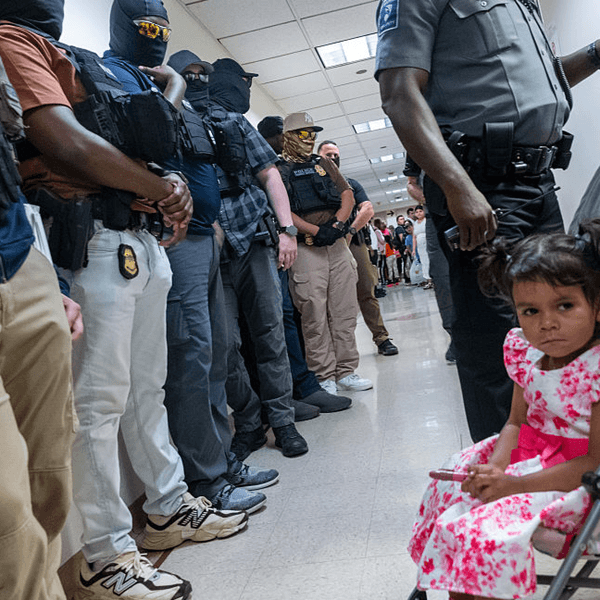
US Congressman Greg Casar on Thursday repeated his call for the Trump administration to close the immigration detention center in southern Texas where it’s held thousands of children over the past 18 months—children, the progressive Democrat said, who “should be playing soccer, going to school, living their lives, not being arrested on the streets,” as one of the center’s newest detainees, 5-year-old Liam Tadeo, was earlier this week.

Casar demanded the release of at least 112 children who are being held at South Texas Family Residential Center in Dilley, Texas, outside San Antonio, days after Tadeo was abducted along with his father by US Immigration and Customs Enforcement (ICE) agents during a traffic stop in Austin.
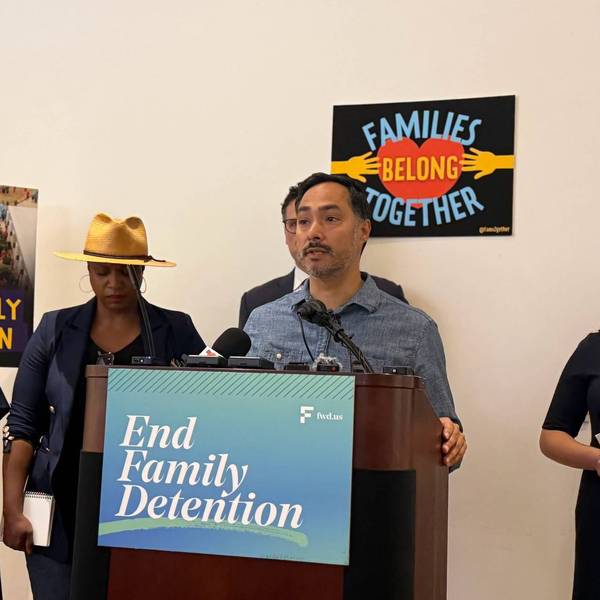


Condemning ‘Commodification of Child Imprisonment,’ Castro Leads Call to Shut Down Dilley ICE Center


‘Five-Alarm Fire’: Thousands of Immigrant Kids Set to Lose to Lawyers Thanks to Trump

Tadeo and his father were on their way to the child’s soccer game, days before he was set to start kindergarten, when they were arrested and taken to the detention center, said Casar. The facility, which is commonly known simply as Dilley, is a for-profit center run by CoreCivic that has come under scrutiny over reports of medical neglect and poor conditions for the dozens of families detained there.

“Liam should be starting kindergarten this week,” said Casar, chair of the Congressional Progressive Caucus. “Instead, he’s sitting in a trailer prison right now in Dilley, Texas.”


Lidia Terrazas of Univision posted a video on social media showing Tadeo crying during the arrest.

“Liam has been living in the United States for most of his life,” said Terrazas. “I just want you to see him. I want you to look at his face. I can’t even imagine what he was feeling in this moment... He’s crying, he looks at his dad while surrounded by immigration officers.”


Terrazas and Casar both noted that Tadeo has the same name as another 5-year-old boy, Liam Conejo Ramos, who was abducted by ICE on January 20 in Minnesota, as he was returning home from preschool with his father. Images of the boy wearing a blue bunny hat and a Spider-Man backpack were circulated widely online as the public expressed outrage over his detention, which happened around the same time that two US citizens were fatally shot on the streets of Minneapolis by federal immigration agents.

A federal judge ordered the release of Conejo Ramos and his father in February, but they are now fighting a ruling to deport them.

Patricia Resendiz, Tadeo’s aunt, posted a fundraiser on GoFundMe, asking the community “for help to secure the release of my nephew.”

“The detention of Liam and my brother-in-law was cruel; they are not criminals—they were simply on their way to a soccer match,” wrote Resendiz. “Liam is a beautiful, intelligent, and big-hearted little boy. My sister is devastated, and so are we. Liam was detained right in front of my son, his cousin. My son told me that the ICE agents said to Liam, ‘You can’t escape.’ We appreciate any help you can provide.”

The Department of Homeland Security (DHS) and ICE have not responded to questions from the press, including Newsweek and Univision, about Tadeo’s detention.

But DHS recently told FOX 7 Austin that it would continue ramping up deportation operations in the Texas capital, with the agency asserting that “being in detention is a choice” and imploring undocumented immigrants to “self-deport.”

“The United States is offering illegal aliens $2,600 and a free flight to self-deport now. We encourage every person here illegally to take advantage of this offer and reserve the chance to come back to the US the right legal way to live the American dream. If not, you will be arrested and deported without a chance to return,” said DHS. “Under President [Donald] Trump and Secretary [Markwayne] Mullin, ICE is targeting the worst of the worst.”

Despite the administration’s persistent claims that undocumented immigrants should “self-deport,” AL.com reported on Thursday on a Venezuelan family who attempted to return to their home country, went to an ICE check-in appointment as part of the process, and were detained and taken to Dilley, where they’ve been held for more than a month.

The family’s 7-year-old daughter has appealed to Sen. Katie Britt (R-Ala.), the chair of a Senate subcommittee on homeland security appropriations who spoke out against Conejo Ramos’ detention earlier the year, asking her to help secure the family’s release.


Tadeo was detained a day before Judge Dolly M. Gee of the US District Court in Los Angeles ordered a new oversight effort at Dilley and other detention facilities in Texas and California where children are being held. The judge found that children at Dilley have likely been forced to live in unsafe temperatures with inadequate sleeping quarters and without basic hygiene products like soap.

The court also found that the government may be keeping inaccurate records regarding the length of children’s detention. Under the Flores settlement, children cannot be held in immigration detention for longer than 20 days. Over the past year, said attorneys for minors who have been detained at Dilley, about 1,560 children have been held at the facility for more than 20 days.



TRUMP'S OTHER WAR 

‘Lethal and Illegal Economic Aggression’: Trump, Rubio Rebuked for New Sanctions on Cuba

One Cuban diplomat accused the Trump administration of waging “economic warfare that actually kills people without bombs.”


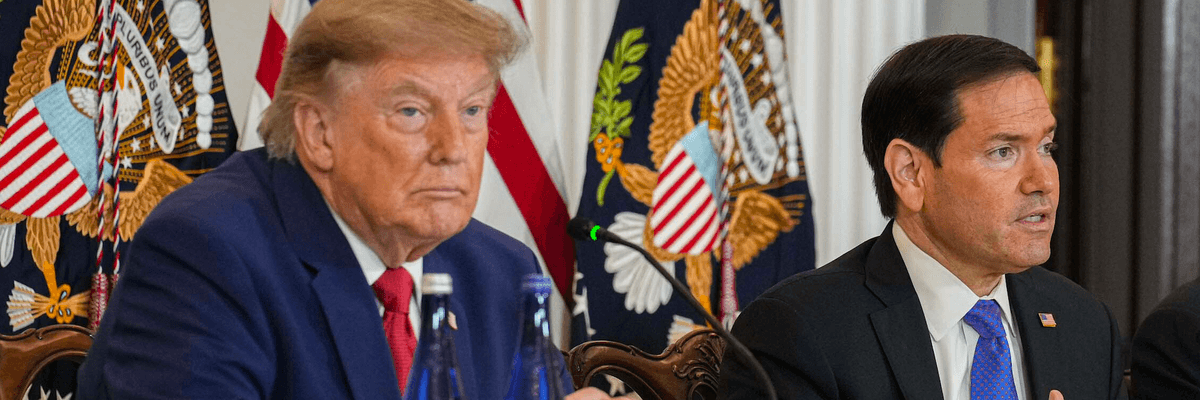
US President Donald Trump and Secretary of State Marco Rubio attend the president’s roundtable on mining at the US Department of State in Washington, DC on August 7, 2026.
(Photo by Freddie Everett/US Department of State)


Brett Wilkins
Aug 21, 2026
COMMON DREAMS
The Trump administration on Thursday intensified its campaign of economic pressure against Cuba, imposing sanctions on nine state-owned companies and three officials—a move critics condemned as an escalation of a decadeslong embargo amid a worsening humanitarian crisis.

“The Cuban regime has long sponsored a vast subversive network in the United States aimed at identifying, cultivating, and radicalizing subversives, largely operating under the pretext of educational or cultural exchange,” US Secretary of State Marco Rubio dubiously claimed. Citing an executive order issued by President Donald Trump in May, he announced new sanctions against entities including the Cuban Ministry of Construction and the mining group GEOMINSAL.

Also sanctioned were three leaders of the Cuban Institute of Friendship with the Peoples, an international solidarity group, including ICAP president Fernando González Llort, a member of the so-called Cuban Five who served 15 years behind bars in the US after being convicted—critics say unfairly—of espionage in 2001 for infiltrating exile groups plotting terrorist attacks targeting Cuba’s socialist government.

“The Trump administration will not stand by while a hostile foreign power seeks to exploit our freedoms—none of which are afforded to its people—by misleading and corrupting American citizens with lies, spy tradecraft, and other malfeasance as part of the regime’s raison d’être of exporting Marxism, racial resentment, and communist violence across the world,” Rubio said.


Rubio—who has falsely claimed that his parents fled communism in Cuba when they actually emigrated during an earlier US-backed dictatorship—added that the new sanctions “make clear that the Trump administration will not tolerate the Cuban regime’s efforts to fund its repression or continue its decadeslong campaign of subversive anti-American activities.”

Responding to the fresh sanctions, Cuban Foreign Minister Bruno Rodríguez accused Rubio of having a “failed obsession against Cuba” and seeking to “punish Cuban companies with the deliberate purpose of harming our economy and preventing the government of Cuba from guaranteeing basic services to the population, which are already in a critical situation as a result of the blockade.”

Cuban Ambassador to the United Nations Ernesto Soberón asked on social media: “What is [Rubio] afraid of? If he’s so convinced that the Cuban government is incompetent, why does he need to impose new sanctions that collectively punish the Cuban people and also attempt to prevent Cuba’s trade relations with third parties?”

The Center for Economic and Policy Research (CEPR), a Washington, DC-based think tank, accused the US administration of “escalating its lethal and illegal economic aggression against Cuba.”

CEPR research associate Pedro Labayen Herrera said in a statement that “these sanctions are the latest move in a more than 60-year US economic siege on Cuba, which has intensified since January’s naval blockade, an overt and illegal act of war.”

“By targeting the island’s mining, metals, construction, and trade sectors, the administration will further restrict the Cuban government’s ability to manage a deliberately designed crisis that UN experts recently warned could become a ‘silent Gaza,’” he added.


The United Nations General Assembly has overwhelmingly condemned the broader US economic blockade of Cuba 33 times.

The new US measures follow months of escalating aggression against Cuba by the Trump administration, including threats and reported preparations to attack, an oil blockade that critics say is causing the deaths of infants and sick people, and a Department of Justice (DOJ) indictment of former President Raúl Castro for his alleged role in the 1996 shoot-down of planes operated by a hostile US-based counterrevolutionary group following repeated warnings that they had violated Cuban airspace.

The oil blockade has hit especially hard given the January US invasion of Venezuela—which supplied between one-third and half of Cuba’s energy needs—and abduction of President Nicolás Maduro and his wife.

The Trump administration also reinstated Cuba on the US State Sponsors of Terrorism list, from which former President Joe Biden removed the country before leaving office in 2021. Cuba was initially added to the list during the Reagan administration amid a decadeslong campaign of US-backed Cuban exile terrorism, failed assassination attempts, economic warfare, and covert operations large and small in a futile effort to overthrow the government of longtime revolutionary leader Fidel Castro.

The fresh sanctions follow last month’s State Department report baselessly claiming that Cuba aims to “conquer” the United States and is backing “left-wing terrorism on American soil” while using dozens of US civil society groups, activists, journalists, and elected officials to further Havana’s supposedly nefarious goals.

“Rather than publishing unfounded, far-fetched claims of a Cuban-led campaign to subvert the United States as a pretext for military action against Havana, Washington should recognize that over half a century of strangulation has failed to bring about regime change,” Herrera said on Thursday. “Instead, US policy has crippled the country’s economy and healthcare system, depriving its people of a dignified life and contributing to significant levels of out-migration.”

“The Trump administration must lift all sanctions, respect Cuban sovereignty, and engage diplomatically,” he added, “or risk further immiserating the Cuban people and widening a crisis that will reverberate throughout the hemisphere.”


Corrupt ‘Cash-for-Clemency’ Trump Pardons Have Cost Crime Victims $1.7 Billion in Damages

“Wealthy white-collar criminals and drug traffickers hire Trump insiders, pour money into his political operation... and suddenly the doors of the White House swing open for a pardon.”


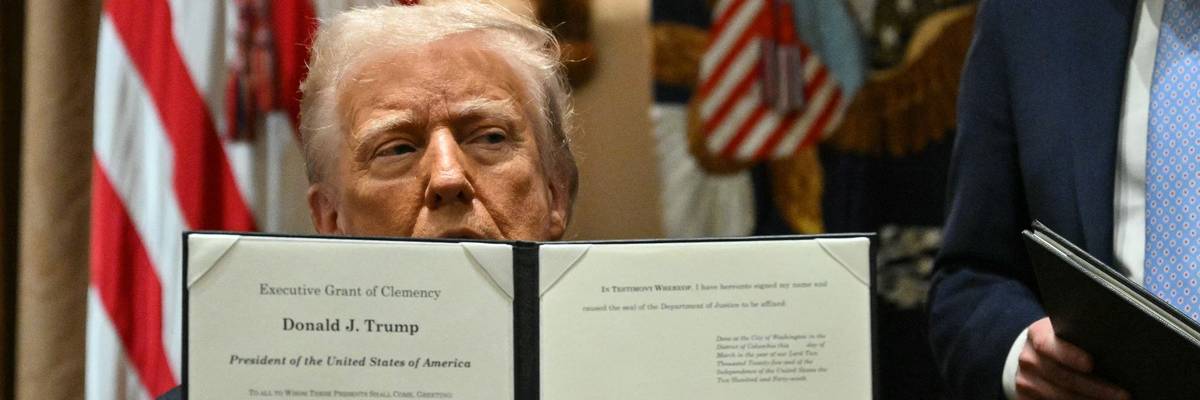
US President Donald Trump speaks after signing a pardon for US businessman Devon Archer, a former business partner of Hunter Biden, during a meeting with US ambassadors in the Cabinet Room of the White House in Washington, DC, on March 25, 2025.
(Photo by Mandel Ngan/AFP via Getty Images)

Stephen Prager
Aug 21, 2026
COMMON DREAMS

President Donald Trump’s pardons for rich criminals have robbed their victims of $1.7 billion in compensation, according to a report out Friday from the top Democrat on the House Judiciary Committee.

The analysis, released by the committee’s ranking member, Rep. Jamie Raskin (D-Md.), examines how Trump has turned the traditional pardon process into a “cash-for-clemency” system that has allowed influencers and fixers close to the president to make millions by selling access to his pardon power.

Donald Trump has taken one of the most solemn constitutional powers of the presidency and turned it into a bustling marketplace for insider political influence and unjust personal enrichment,” Raskin said in a statement on Friday.

“Wealthy white-collar criminals and drug traffickers hire Trump insiders, pour money into his political operation or cultivate his family’s financial interests, and suddenly the doors of the White House swing open for a pardon, commutation, and forgiveness of all fines and financial restitution owed,” he continued.

Drawing on Reuters’ reporting from June, the report examines how Trump has sidelined the traditional Department of Justice guidelines for offering pardons, which long involved career civil servants evaluating petitions for clemency based on the seriousness of the offense, the individual’s rehabilitation, and restitution to victims.

In its place, Trump has consolidated control of the pardon power within the White House, where the determining factor has often been a person’s connections to Trump’s inner circle. This has allowed the clique of people with access to the president to act as gatekeepers and reap the rewards.

According to Reuters:
Reuters identified 290 advocates, or influencers, who publicly or privately helped secure clemency for 197 recipients. Because some of the advocates worked on behalf of multiple candidates, their efforts at times overlapped, representing 624 different acts of influence. Among the influencers, 73 helped secure more than one pardon or sentence commutation. Brett Tolman, a former US attorney now in private practice in Utah, has been involved in at least 12 pardons or commutations. Roger Stone, a veteran political consultant and longtime Trump confidant, had a hand in at least five.

Trump’s use of the pardon system to reward friends and donors is widely reported. But Raskin’s report sheds new light on the other side of the equation: the victims who were denied compensation after Trump waved away the sentences of those who scammed and stole from them.

Trevor Milton, an auto company executive who was convicted in 2022 of defrauding investors after pretending that one of his company’s vehicles had autonomous capabilities, was potentially on the hook for nearly $700 million.

But after he and his wife donated a combined $1.8 million to committees supporting Trump and soon-to-be Health and Human Services Secretary Robert F. Kennedy Jr. in 2024, Milton received a pardon from the president that wiped out his obligation to pay.

Afterward, Trump called Milton personally and told him to “call Bobby [Kennedy] and thank him” for the pardon, according to Reuters.

Paul Walczak, a healthcare executive who funded a lavish lifestyle by stealing millions in payroll taxes from his low-wage employees, got a pardon from Trump weeks after his mother, a top GOP fundraiser, attended a $1-million-a-plate event at Mar-a-Lago. As a result, he got out of paying back $4.5 million in stolen payroll taxes, which go to fund programs like Medicare and Social Security.

Jason Galanis, who was convicted of stealing millions from the Oglala Sioux Nation and defrauding pension funds for union workers in New York State, avoided paying over $84 million in restitution after Trump pardoned him in early 2025.

A longtime associate of former President Joe Biden’s son Hunter, Galanis gained favor with Trump after he appeared as a star witness for Republicans during their impeachment effort over the Democratic president’s alleged “influence peddling.”

Other fraudsters relied directly on the network of pardon lobbyists, like nursing home owner Joseph Schwartz, who also stole payroll taxes from his employees and had separately lost several wrongful death lawsuits for neglecting elderly patients.

While in prison on a three-year sentence, Schwartz spent more than $1.1 million on lobbyists to advocate for his release. This included access to the powerful pro-Trump influencer Laura Loomer, White House “pardon czar” Alice Marie Johnson, and White House Counsel David Warrington.

The report said this got him out of paying $33 million he still owes in federal taxes, and the report also notes his apparent attempts to avoid paying out wrongful death judgments.

The report also details Trump’s pardon of former Honduran President Juan Orlando Hernández, who’d been convicted of helping the Sinaloa Cartel import hundreds of tons of drugs into the United States.

He was convicted in 2024 after prosecutors spent more than 15 years building a case against him. But his role in helping rich, MAGA-allied tech moguls, including Peter Thiel and Marc Andreessen, with a project called Próspera—a libertarian “charter city” for cryptocurrency investors—made his case a cause célèbre among Trump’s inner circle.

Roger Stone, who claimed that pardoning Hernández would “save the Próspera experiment,” joined former Rep. Matt Gaetz (R-Fla.) and others at Mar-a-Lago to push for the ex-Honduran leader’s freedom, and within hours it was granted.

As the report details, “the Bureau of Prisons paid a tactical team overtime to drive Mr. Hernández from his maximum-security prison in West Virginia to the Waldorf Astoria in New York City, where he was treated to a luxury stay at taxpayer expense in one of New York’s finest hotels.”

Some of the criminality pardoned by Trump verges on cartoonish. A former Las Vegas City Council member, Michele Fiore, nicknamed “Lady Trump,” stole $70,000 from a memorial for police officers killed on duty and used it to pay for rent, cosmetic surgery, and her daughter’s wedding. To this day, she refuses to pay the money back.

Adriana and Andres Camberos, meanwhile, escaped having to pay their victims over $50 million and forfeit an additional $30 million in illegal proceeds from an elaborate grocery store fraud scheme that allowed them to pay for luxury sports cars, beachfront properties, investments, and cryptocurrency.

Adriana, who’d previously been convicted for selling counterfeit 5-Hour Energy drinks filled with fake liquid, had already had her sentence commuted at the end of Trump’s first term after her brother donated to his 2020 campaign and got the ear of two attorneys close to the president, defense attorney Adam Katz and White House Counsel Stefan Passantino. After she and her brother were convicted of grocery fraud, they went back to Katz and Passantino, who helped secure a pardon for both of them last year.

“In recent months, often to justify immigration crackdowns or cuts to healthcare and food assistance programs, House Republicans have, hilariously, made ‘fighting fraud’ one of their central talking points,” the report concluded. “But convicted fraudster Donald Trump and the MAGA pardon industrial complex are all about committing fraud, protecting fraudulent schemes, and pardoning convicted fraudsters.”


'Blustering' Trump's credibility called into question by conservative WSJ

Matthew Chapman
August 21, 2026 
RAW STORY


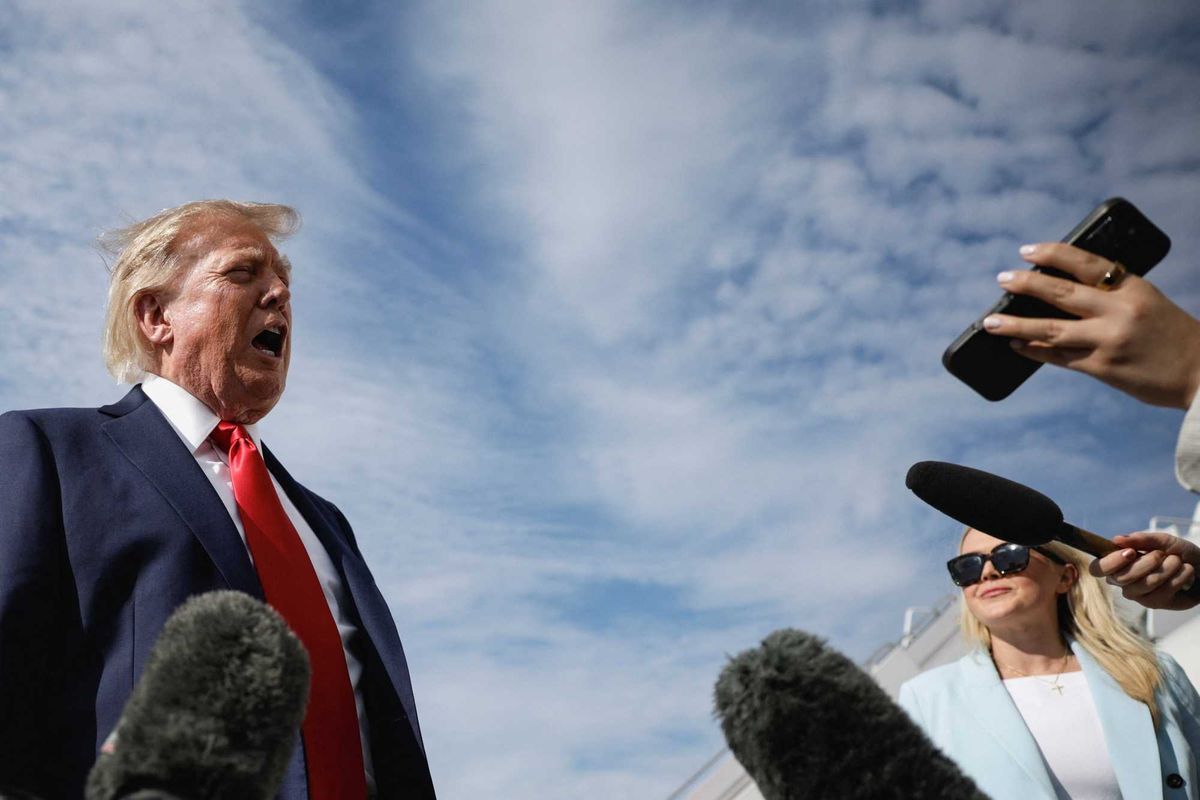
U.S. President Donald Trump speaks to the media before boarding Air Force One at Joint Base Andrews in Maryland, U.S., en route to Myrtle Beach, South Carolina, August 21, 2026. REUTERS/Evan Vucci

The conservative Wall Street Journal editorial board does not trust President Donald Trump's new vows to inflict economic devastation on Iran, as his war continues to flounder.

The president's "blustering threats, alternating with claims of imminent peace and victory, are doubted by friends and foe," wrote the board, which has been a frequent critic of Trump's strategy in Iran, if not his ultimate goal of dismantling the regime.

The Trump administration has vowed that all international trade into Iran will be shut down in retaliation for the global chaos caused by instability in the Strait of Hormuz — a claim that, the board wrote, they can't easily make good on.

"The question is whether all of this is a headline or a policy," wrote the board. "Only the latter, which Treasury Secretary Scott Bessent says he’ll soon lay out, would give Tehran reason to fear." Iran has admitted the U.S. blockade is crushing their oil exports, the board noted, and yet "Dubai-Iran trade never leaves the Persian Gulf. The U.S. Navy doesn’t touch it."

The problem, the board continued, is that "It is no small ask of the Emiratis to cut off their dangerous and much-larger neighbor, especially when the U.S. hasn’t been able to protect them fully from Iran or restore free passage in the Strait of Hormuz. The U.A.E., America’s best Gulf ally during the war, may also fear that a financial crackdown could spark capital flight from Russia and others."

Bessent can continue to make promises, the board said, but for now, they look pretty empty with no game plan to get there.

A full-bore economic war against Iran "can make survival more difficult for the regime, but it will take more resolve and consistency than Mr. Trump has shown in the past six months," the board concluded.
Trump ally cashing in on vape firm accused of targeting kids and a brutal junta

Kathleen Culliton
August 20, 2026 
RAW STORY


U.S. President Donald Trump holds a hat after signing an executive order in the Oval Office, at the White House in Washington, D.C., U.S. February 25, 2025. REUTERS/Evelyn Hockstein TPX IMAGES OF THE DAY

A vape distributor accused of illegally peddling nicotine products to kids has found a champion in Washington, D.C., a former ally of President Donald Trump's who is raking in millions as a lobbyist.

His name is Roger Stone.

Mother Jones reported Thursday that Stone has earned more than $4 million as a lobbyist for firms such as vape-distributor Ecto World under the new administration.

"Trump’s return to the White House has been a tremendous boon to Stone, who not long ago was claiming he had been nearly bankrupted by legal fees," Mother Jones reported.

The report describes him as a "conspiracy theorist and political provocateur who was convicted of lying to Congress and witness tampering in the Trump–Russia investigation, sentenced to 40 months in prison, and subsequently pardoned by Trump."

Stone’s lobbying firm Drake Ventures has signed up a slew of clients that include the cryptocurrency investor “Bitcoin Jesus,” indicted last year on federal fraud charges, and the military junta in Myanmar, reportedly paying Stone $50,000 a month.

Crimes against humanity have spiked in the Junta since the military takeover in 2021, the report notes.

As for Ecto World, it stands accused in New York of trying to get people hooked on nicotine.

"New York State Attorney General Letitia James sued Ecto World and other vape companies for illegally distributing, marketing, and selling addictive candy- and fruit-flavored disposable nicotine products," the report states, "many produced in China, targeting sales to children and fueling the youth vaping epidemic."
Tiny snail derails Trump's other massive ballroom ambition

Tom Boggioni
August 20, 2026 
RAW STORY


Trump International Golf Links entrance (Credit: REUTERS/Damien Storan)

Donald Trump's ballroom ambitions are running into trouble on two continents — and in Ireland, the obstacle is a snail.

According to The Washington Post, Trump and his family have promised to build "the nicest ballroom in Ireland" at the Trump International Golf Links & Hotel in Doonbeg, a 12,000-square-foot hall seating 320 guests.

However, unlike the fight in Washington, the roughly 300 residents of Doonbeg largely support the project. But the endangered Vertigo angustior snail, which lives in the resort's dunes, has long complicated development there. In February, planners approved the ballroom on the condition the Trumps submit a snail restoration plan.

Days later, Liam Madden — a self-described "serial objector" known for derailing developments across Ireland, and who once helped kill a Trump seawall proposal at the same resort in 2020 — stepped into the breach and filed an appeal alongside Friends of the Irish Environment, which has disrupted the massive build-out.

"If there is a God in heaven," Madden said in July, "I will win the planning appeals and capitalize on it for notoriety."

According to the Post, "He returned to the snail — this time focused on helicopters. The Trump Organization, a promotional video indicated, allows guests to be ferried in and out by helicopter. In materials published online, an aviation company, Executive Helicopters, said it has two 'heli landings' at the resort, one by the hotel and one on the golf course. To Madden, this was a 'fatal error': The Trump Organization neither mentioned the helicopters nor sought to measure their ecological impact. The ballroom proposal thus was 'tainted at law and beyond remedy,' he wrote."

Geraint Ellis, an Irish planning law expert who reviewed Madden's appeal for the Post, agreed and said the activist "seems to have found some issues that are worthy of further scrutiny."

Ireland's national appellate board is expected to rule by year's end, the Post is reporting.

Meanwhile in Washington, the $900 million White House ballroom — complete with gold-colored presidential seals — is already under construction despite a D.C. Circuit Court of Appeals ruling this month calling the project "utterly lawless" for bypassing legally required reviews.

‘Perfect Storm’ of Trump’s War and Super El Niño to Drive Food Prices Even Higher

“The world is in for one hell of a ride,” said one climate expert.


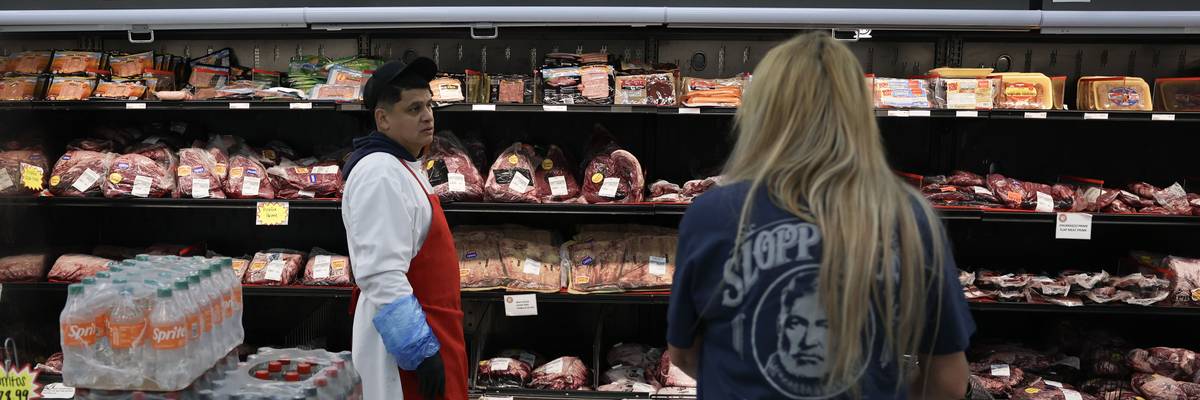
A worker assists a customer in the meat aisle in a grocery store in Miami, Florida.
(Photo by Joe Raedle/Getty Images)

Brad Reed
Aug 21, 2026
COMMON DREAMS


Experts are warning that a combination of a super El Niño climate pattern and two separate wars are threatening to put further upward pressure on food prices over the next several months.

A study released by Oxford Economics on Wednesday projects that global food prices will rise by 12% in 2026 and by 5% in 2027 due in large part to the fertilizer shortage caused by the closure in the Strait of Hormuz and increased grain prices caused by Russia’s war with Ukraine.

The strait’s closure, which began after President Donald Trump launched an illegal war with Iran in February, cut off a major shipping lane for fertilizer, whose price Oxford Economics projects will surge by 22% this year.

The four-year conflict between Russia and Ukraine, meanwhile, is putting a strain on grain supplies, as the two countries combined account for 30% of global wheat exports.

And the two wars might not be the biggest driver of higher food prices.

The Independent on Friday reported that the Met Office, the UK’s official weather forecasting service, is projecting this year’s El Niño will be “the largest since the 19th century,” with sea temperatures projected to reach 3ºC above their long-term average in the coming months.

Professor Adam Scaife, head of long range forecasting at the Met Office, told The Independent that he has “never seen an El Niño signal this intense in our forecasts,” describing the projected increase in ocean temperatures as “an unprecedented event.”

Bill McGuire, professor emeritus of geophysical hazards at University College London, told The Independent that the Met Office’s forecasts “suggest that the world is in for one hell of a ride.”

“The astonishing and unprecedented amount of heat building across the eastern Pacific Ocean,” McGuire said, “is all but certain to make this the most powerful El Niño in living memory possibly even the biggest in several centuries.”

McGuire said that this heat would manifest itself in several destructive ways over the next year, such as “bringing drought and wildfire conditions to the Amazon and parts of Australia, torrential rainfall and floods to California, and a reduced South Asian monsoon.”

In an interview with CNBC published Friday, trade and agriculture analyst Noel Fryer noted that North America and Europe have experienced very hot summers that has “decimated” some crops and has hurt grazing prospects by reducing the available supply of grass and hay.

And all this occurred, Fryer added, before the full impact of El Niño has arrived.

“It’s just a huge mix of different issues and we don’t know how they’re going to end,” said Fryer. “It’s a perfect storm.”
The ‘Most Impossible Job in the World’: Will a Woman Become the UN’s Next Chief?

In its 81 years, the UN has never had a woman as its secretary-general; as it selects its new leader, there is considerable pressure to appoint a woman. It shouldn’t be difficult since four impressive women are in the running.


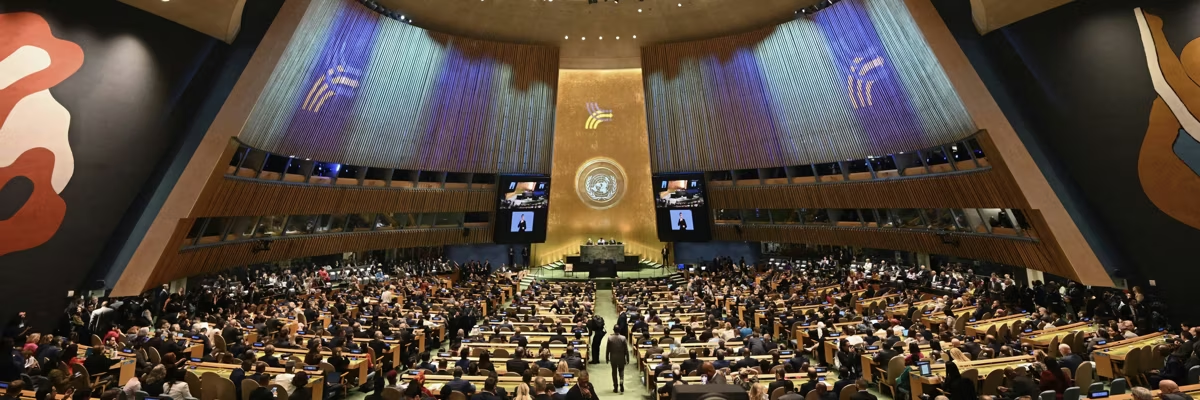
A view of the General Assembly Hall is shown at the opening of the “Summit of the Future” on the sidelines of the United Nations General Assembly at the UN Headquarters in New York, on September 22, 2024.
(Photo by Angela Weiss / AFP via Getty Images)

Connie Peck
Aug 21, 2026
Common Dreams

With the second term of the current United Nations Secretary-General, Antònio Guterres, expiring on December 31, 2026, the organization is in the process of selecting its 10th secretary-general. The UN’s first-ever Secretary-General, Trygve Lie, famously described it as “the most impossible job in the world.“ That was at a time when there were 60 UN member states and the world’s population was 2.6 billion; now there are 193 members and the world’s population is 8.3 billion. It is also, arguably, the most important job in the world.

As the current President of the General Assembly, Annalena Baerbock (1 of only 5 women ever elected to this post in 81 years; the other 76 were men), explains, “Our choice will send a powerful message about who we are, and whether we truly serve all 8 billion people of the world in all their diversity.”

The overall selection process is prescribed by Article 97 of the UN Charter: “The Secretary-General shall be appointed by the General Assembly upon the recommendation of the Security Council.” But the charter offers little other guidance, so various informal procedures and practices have evolved over time. One is the rule of regional rotation, with it currently being Latin America and the Caribbean’s “turn,“ although candidates from other regions can also be nominated, as they have been in this round. Seven candidates have been nominated to date—five from Latin America and the Caribbean (four women and one man) and two from Africa (both men). Although women have only been nominated as candidates since 1991, no woman has ever been appointed, in spite of campaigns to see a woman selected in 2006 and 2016.

It is generally accepted that candidates should come from small or mid-sized countries but not from the five permanent members (P5) of the Security Council. To be considered, a candidate must be nominated by one or more of the 193 member states, although the nomination does not have to come from the country of a candidate’s nationality.

This momentous decision will most likely occur in early October. How the process is carried out and how its outcome is perceived will have significant implications for the restoration of confidence in the UN’s ability to fulfill its mandate in an increasingly turbulent world.

For many years, the selection process was not transparent, but that has recently improved. The current round of nominations was initiated on November 25, 2025 by a joint letter from the presidents of the General Assembly and the Security Council addressed to all member states, inviting nominations and explicitly encouraging countries “to strongly consider nominating women as candidates.” The letter requested that nominations be accompanied by a nomination letter, a vision statement, a curriculum vitae, and a statement of campaign financing disclosures. As nominations were received, the two presidents jointly informed all member states and the information was posted on a UN website.

In response to General Assembly resolution 79/327 of 5 September 2025 on the revitalization of the work of the General Assembly, the president organized interactive webcast dialogues with all candidates (each lasting three hours), where candidates responded to questions posed by representatives of member states and civil society. As anyone who has ever interviewed applicants for a job knows (and as I learned from watching the webcasts), this is a useful means for identifying the best candidates.

In addition, on July 23, a UN Town Hall was organized in the General Assembly Hall by the president of the GA and broadcast live on Bloomberg, with two Bloomberg moderators presiding. All six candidates at the time (a seventh was subsequently nominated) appeared together on the stage and answered questions from the moderators, as well as the audience, who were again representatives of member states and civil society. The Security Council also organized confidential closed-door sessions with each of the candidates.

Subsequently, on July 30, the Security Council held its first confidential “straw poll,“ an iterative process repeated over a number of weeks to decide which candidate has the most support. In each, the 15 members of the council, i.e., the P5—the US, Russia, China, France and the UK and its 10 elected members (E10) who serve two-year terms (currently, Bahrain, Colombia, Congo, Denmark, Greece, Latvia, Liberia, Pakistan, Panama, and Somalia) indicate which candidates they are willing to support by voting ”encourage“ (in favor), ”discourage“ (against), or ”no opinion“ (abstain).

During the first rounds, the ballots are all identical. However, after a few rounds (the number is not specified), the council introduces color-coded ballots: “red” for the P5 and “white” for the E10. From that point onward, votes carry different political weights, since a “discourage” vote from a P5 member is equivalent to a veto. At least nine “encourage” votes with no “discourage” votes from the P5 are required for a candidate to be selected. Candidates with a poor showing may withdraw from the process, although there are no rules requiring this. Votes are intended to be confidential, but results usually leak. The leaked results of the July 30 straw poll are shown here.

Once a determination has been made, the Security Council holds a formal vote on the outcome. The council then makes a formal recommendation to the GA, which can be accepted by acclimation or by a formal vote of the 193 member states. In theory, the GA can send the council’s recommendation back for reconsideration, although this has never happened.

In 2026, there are four impressive women candidates. Readers are encouraged to examine their curricula vitae, vision statements and to view at least a portion of the webcasts. Given that the appointment of a woman in this post is long overdue, there is reason to be hopeful that this will be the outcome.

But for this to happen, it will require that none of the P5 veto her candidature. As noted by a report of Women in International Security, “All things considered, the chances of women in the running will depend heavily on the veto power of the United States or Russia who could block their appointment.” The UK, France, and China have all indicated that they are positive about the appointment of a woman, but Russia has shown resistance to framing UN leadership selection around gender, and the US, under the Trump administration, has been averse to “diversity, equity, and inclusion.”

In a report which discusses the possibility of a “discourage” vote from the P5, Rebeca Grynspan is generally “viewed as the candidate with the lowest ideological controversy,” and Carolyn Rodrigues Birkett “carries the lowest visible P5 friction,” although as Guyana’s permanent representative on the Security Council, she abstained on a 2024 US-sponsored Gaza ceasefire resolution which might annoy the US. Maria Fernanda Espinosa’s prior support for Julian Assange when she was Ecuador’s UN representative and then foreign minister could “unsettle the UK which spent years pursuing his extradition.” Finally, it is suggested that China could “pose a challenge for Michelle Bachelet” since, at the end of her tenure as UN High Commissioner for Human Rights, she authorized publication of a UN report (despite China lobbying against it) stating that abuses against Uyghurs and other Muslim minorities constitute crimes against humanity.

Although the P5 have veto power, the E10 also have power since, if seven members agree on a single candidate and refuse to change their vote, the P5 would not be able to advance a candidate, even if they all agreed—because nine votes are required. With seven E10 members voting “discourage” on a P5 candidate, there would be only eight voting “encourage” and the vote would be blocked. This has even been called the “sixth veto power.”

While support from the E10 is necessary, it is not enough. A single “discourage” vote from the P5 would end a candidate’s prospects, however, early momentum within the E10 would make it harder for a P5 member to block a candidate with sufficient E10 support without paying a reputational price.

Of course, as a Stimson report comments: “A female Secretary-General will not solve every institutional or geopolitical challenge, but electing a strong woman signals that the UN could lead by example… A female SG would reflect half the world’s population, introduce fresh perspectives into global problem-solving, and navigate institutional hurdles with skill, authority, and resilience. After 80 years, the question is no longer whether the world is ready for a woman Secretary-General, it is whether the UN is.”

This momentous decision will most likely occur in early October. How the process is carried out and how its outcome is perceived will have significant implications for the restoration of confidence in the UN’s ability to fulfill its mandate in an increasingly turbulent world. Let us fervently hope that the Security Council will make a wise decision.


Our work is licensed under Creative Commons (CC BY-NC-ND 3.0). Feel free to republish and share widely.


Connie Peck
Dr. Connie Peck is the founder of the United Nations Institute for Training and Research Programme in Peacemaking and Conflict Prevention—the first training program in negotiation and mediation for senior UN staff and diplomats (now in its 33rd year). She is the author of a number of books and numerous articles and book chapters on conflict resolution and the nuclear threat.
Full Bio >
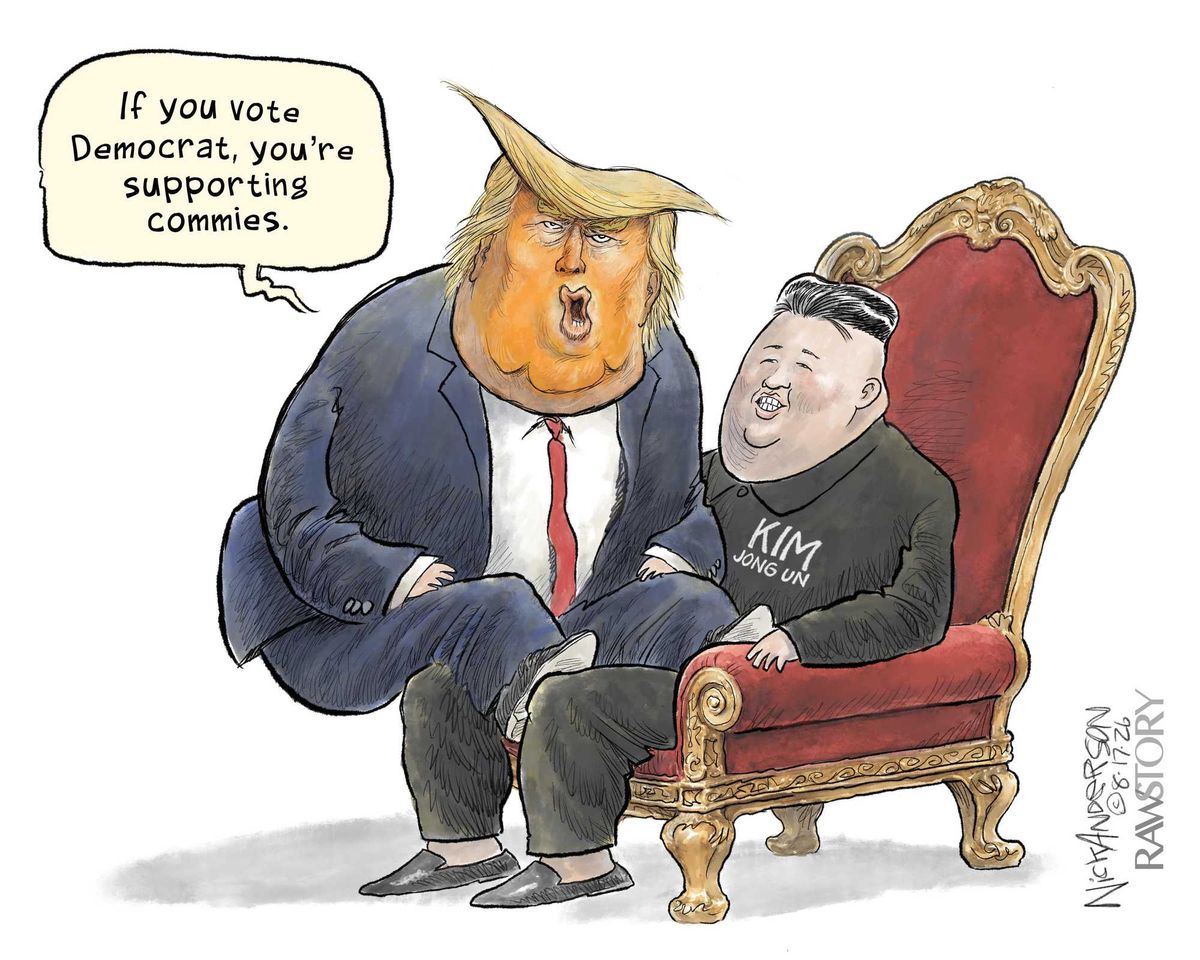
Trump cuddles up to his bestie while railing against those pesky Dem commies

Nick Anderson.
 Raw Story
August 17, 2026 

Nick Anderson/Raw Story
The latest from Raw Story's Nick Anderson, a Pulitzer Prize-winning editorial cartoonist.

Friday, August 21, 2026

RIGHT TO LIFE

With three prisoners scheduled for execution, southern churches toll their bells

(RNS) — Faith-based anti-death penalty activists have used the bell-tolling tactic throughout the country in various waves.
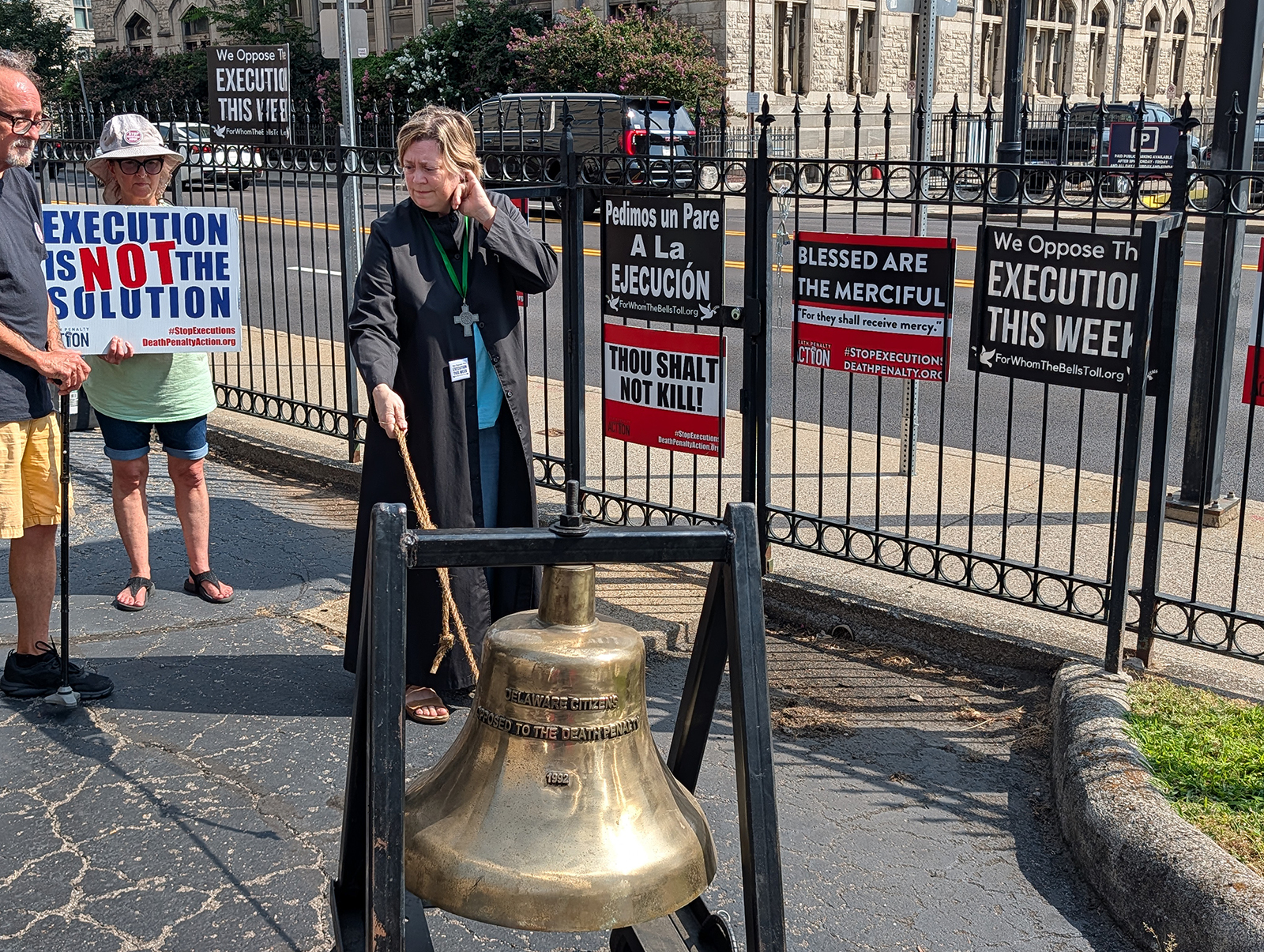
Kristen Hansen, minister of music, rings a bell in opposition to the death penalty outside First Evangelical Lutheran Church, Thursday, Aug. 13, 2026, in downtown Nashville.        (Photo courtesy of Death Penalty Action)

“ We have to be together in our opposition to executions and in our statement that this is not in alignment with the teachings of our faiths,” Abraham Bonowitz, the executive director of Death Penalty Action and co-founder of L’chaim! Jews Against the Death Penalty, told RNS. “ There should never be an execution without protest.”

On Thursday morning (Aug. 13), Tennessee executed Anthony Darrell Hines and Oklahoma executed Carlos Cuesta-Rodriguez. Alabama is scheduled to execute Jeremy Williams Thursday evening. All three were convicted of murder.

Last year saw a surge in executions, with 47 people put to death, more than any year since 2009.

The faith-based effort to toll church bells is a revival of a campaign originally inspired by Filipino Cardinal Jaime Sin’s 1983 order that Catholic churches ring their bells to call for an investigation into the assassination of opposition leader Benigno Aquino Jr., which opposition leaders claimed was ordered by President Ferdinand Marcos.

In 1999, Catholic Bishop Walter Sullivan of Richmond, Virginia, asked churches in his diocese to toll bells on the evening of an execution.

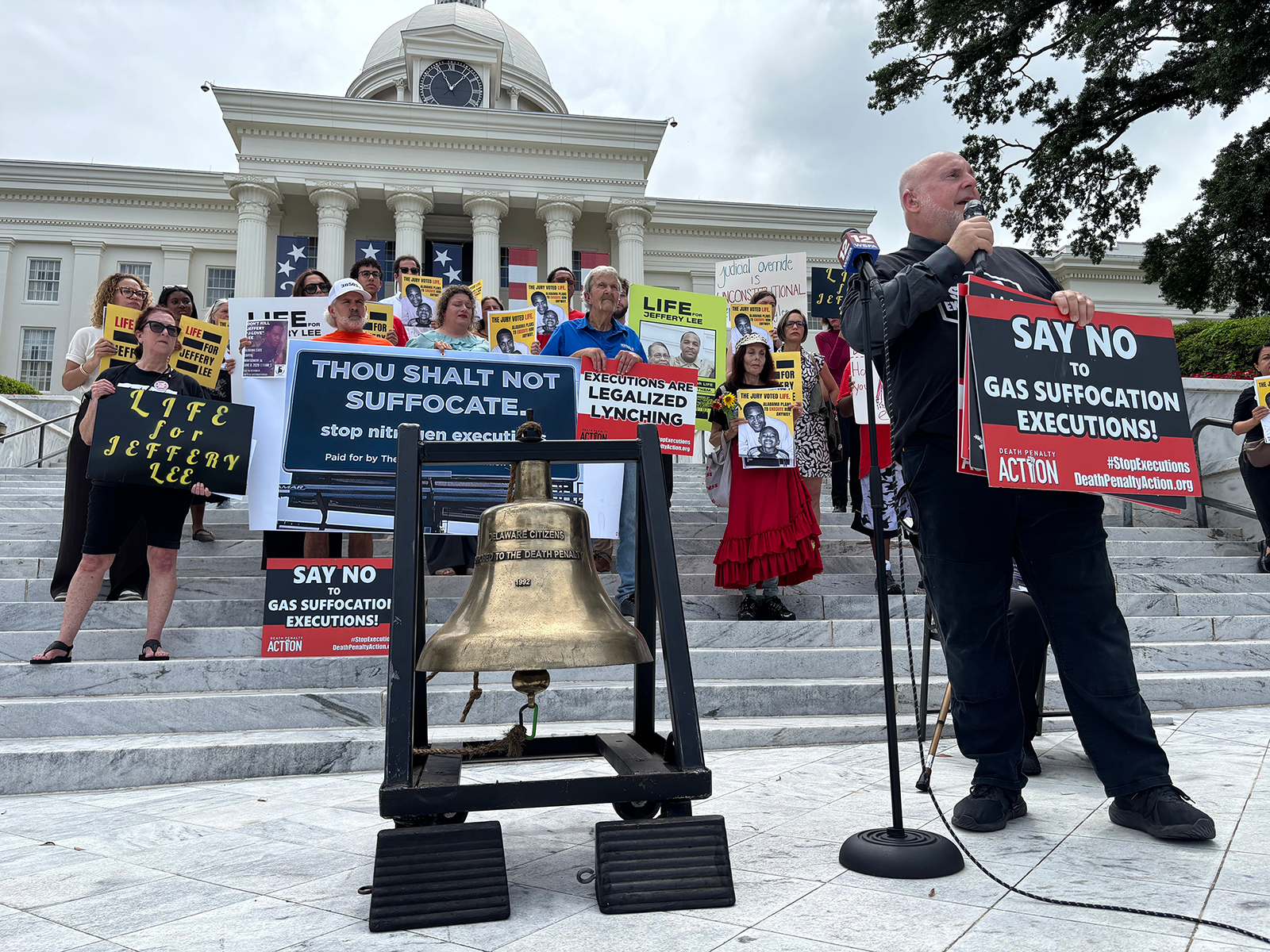
Abraham Bonowitz, of the group Death Penalty Action, leads a demonstration outside the Capitol in Montgomery, Ala., on Monday, June 8, 2026, to oppose an upcoming execution in Alabama. (AP Photo/Kim Chandler)

Faith-based anti-death penalty activists have since used the tactic throughout the country in various waves, but today is the first widespread bell tolling since Death Penalty Action took up the campaign, Bonowitz said.

In the 50 years since a Supreme Court decision reignited the modern era of the death penalty in the United States, faith-based opposition has been a cornerstone of successful abolition and commutation campaigns — even as religious Americans as a whole tend to support the death penalty, data suggests. 


In addition to the bell-ringing campaign, called For Whom the Bells Toll, Death Penalty Action hosted a virtual vigil, which included recordings of “El Malei Rachamim,” a Jewish prayer for the dead, and Psalm 23 by Cantor Michael Zoosman, an anti-death penalty activist.

Last weekend, activists with Death Penalty Action marched from Riverbend Maximum Security Institution, where Tennessee’s men’s death row is housed, to the state Capitol to call for the abolition of the death penalty.

In downtown Nashville on Thursday, First Evangelical Lutheran Church rang a bell provided by Death Penalty Action because the church does not have its own bell. That bell, created by Delaware Citizens Opposed to the Death Penalty, tolled outside as Delaware prisoners were executed in the 1990s and 2000s, until the state ended executions. Since then, it has been rung in opposition to the death penalty in more than a dozen states, according to Death Penalty Action.

Demonstrators stand in the area reserved for people opposed to the death penalty as guards on horseback are positioned nearby outside Riverbend Maximum Security Institution before the planned execution of Anthony Darrell Hines, Thursday, Aug. 13, 2026, in Nashville, Tenn. (AP Photo/Mark Humphrey)

The Rev. Travis Meier, the church’s pastor, told RNS the decision to toll the bell was inspired by 1 Corinthians  15:26,  ”The last enemy to be destroyed is death.” Meier said the death penalty is another way “ we have mechanized death as a society.”

Meier entrusted his music director to ring the bell as he went to Riverbend Maximum Security Institution to attend a prayer vigil that local activists hold outside executions.

On Wednesday, Dan Mann, a Christian who regularly visits a man on death row there, told RNS that he planned to be present for that vigil. Mann said that he regularly talks to other men in the visitation room and that he met Hines once.

Of the men he sees more often, he said, “ We tell them about our life and what we have going on. They tell us about theirs. And in all of that, we’ve become very close,” Mann said.

Inspired by Matthew 25, Mann and his wife, Bethany, have been visiting death row since 2010. In years when there are many executions, the prisoners become especially “somber” and reflective about their childhoods, he said. 

Growing up a fundamentalist Christian, Mann said he was taught that “ if you killed somebody, you deserved to die.” But he now believes that people on death row “are not the people that were put in there 40 years ago,” leading him to conclude that “there is nobody out of the reach of God’s mercy.”

Now, Mann attends Christ Church Cathedral, an Episcopal church that joined other downtown Nashville churches in asking Gov. Bill Lee to stay Hines’ execution. The governor declined to intervene earlier this week. 

Christ Church Cathedral also committed to toll its bells. The five pastors who signed a letter about it wrote, “The bells will toll for mercy, remembering the words of Scripture: ‘Mercy triumphs over judgment.’”


At the vigil outside the prison, after an opening prayer and reading scripture together, the group of a couple dozen waited for news that Hines had been executed, Meier said.

During that time, “ I pray, and I walk because I can’t sit still,” Meier said. His prayers are for Hines, his victim and her family, the prison staff and for a change of heart among legislators.

On Thursday, Meier said, the somber gathering also grappled with “frustration” over Tennessee’s most recent botched execution attempt, during which a doctor spent over an hour trying to insert an IV line to execute Tony Carruthers. Witnesses say the attempt created excruciating pain for Carruthers, who has now been spared execution for a year.

Unlike that last vigil, this time, faith leaders received news that Hines had been successfully executed. The faith leaders sang “Amazing Grace” and prayed the Commendation of the Dying, Meier said.

Meier lamented “the system of death” in the U.S. “ That three executions can happen in the same day, and a majority of the population have no clue that it’s happening — it’s just so commonplace that nobody bats an eye,” he said.