Showing posts sorted by relevance for query BRONZE AGE. Sort by date Show all posts

Thursday, June 05, 2025


A turning point in the Bronze Age: the diet was changed and the society was transformed


Around 1500 BC, radical changes occurred in people’s lives: they ate and lived differently, and the social system was also reorganized


THE BRONZE AGE WAS THE AGE OF CHANGE (FIRE)


Eötvös Loránd University

Tiszafüred Majoroshalom B54. grave 

image: 

Tiszafüred Majoroshalom B54. sír (MNMKK MNM AD HaGy Kovács Tibor hagyatéka). A hivatkozás hozzá: Kovács 1995, Abb. 1/A, 2-3 és Dani János et al. 2025
Kovács, T (1995) Auf Mitteleuropa weisende Beziehungen einiger Waffenfunde aus dem östlichen Karpatenbecken. In Hänsel, B (Hrsg.), Handel, Tausch und Verker im bronze- und früheisenzeitlichen Südosteuropa. Prähistorische Archäologie in Südosteuropa 11. Südosteuropa-Gesellschaft, München-Berlin, 173–185. és Dani J, Horváth A, Gémes A, Fülöp K, Szeniczey T, Tarbay JG, et al. New radiocarbon dates from the Bronze Age Tiszafüred-Majoroshalom site (Eastern Hungary). Radiocarbon. 2025;67(2):428–40. doi:10.1017/RDC.2024.123

view more 

Credit: Kovács 1995, Abb. 1/A, 2-3 és Dani János et al. 2025


The bioarchaeological investigation of the Bronze Age cemetery of Tiszafüred-Majoroshalom has shed new light on an important period in Central European history. An international research team – led by Tamás Hajdu, associate professor at the Department of Anthropology at ELTE and Claudio Cavazzuti, senior assistant professor at the University of Bologna, has shown that around 1500 BC, radical changes occurred in people’s lives: they ate and lived differently, and the social system was also reorganized.

The multidisciplinary research was based on the Bronze Age cemetery excavated at Tiszafüred-Majoroshalom, which was used both in the Middle Bronze Age (Füzesabony culture) and in the Late Bronze Age (Tumulus culture). These finds allowed the researchers to compare the subsistence strategies before and after the change of era.

The research team, led by Tamás Hajdu and supported by the Hungarian National Research, Development and Innovation Office, sought to answer whether the spread of the Tumulus culture meant the arrival of new groups, or whether the autochtonous people continued their lives, and only the material culture changed. In addition, they also examined whether the archaeologically observed settlement changes around 1500 BC indicate a change in lifestyle: whether people began to follow a lifestyle involving mainly animal husbandry and frequent migration instead of settled farming.

The most important results of the research:

Diet changed: According to nitrogen stable isotope studies, people's food consumption was much more diverse during the Middle Bronze Age, and differences within society were also more evident in their diet - especially in access to animal proteins. This difference decreased in the Late Bronze Age, and the diet became more uniform but poorer.

Broomcorn millet was introduced: According to carbon isotope analyses, the consumption of millet, a plant that can be grown quickly and has a high energy content, began at the beginning of the Late Bronze Age. The data from the Tiszafüred Bronze Age cemetery indicate the earliest known consumption of millet in Europe.

Mobility decreased: According to the results of strontium isotope investigations, the populations of the Middle and Late Bronze Age Tiszafüred had different mobility patterns. In the Late Bronze Age, fewer immigrants were identified and they arrived from different migration source than before. While in the Middle Bronze Age, beside the locals, several immigrants were observed among the people living in Tiszafüred, and they most likely did not come from too far away (e.g. the Upper Tisza region, the northern part of the Carpathians), while in the Late Bronze Age, the settlers may have come from other geographical regions (e.g. Transdanubia or the Southern Carpathians). Based on radiocarbon dating, immigration began as early as the 1500s BC, which supports that the communities living further west had indeed reached the Great Hungarian Plain at the time of the appearance of the Tumulus culture.

Social relations changed: At the beginning of the Late Bronze Age, the long time-used tell-settlements were abandoned and people lived in less centralized settlement networks. This change created a looser, less structured social system – which is also reflected in dietary habits. According to microremains found in dental calculi and the aforementioned isotopic analyses, significantly less animal protein was consumed during this period than before, which contradicts the previous idea that people belonging to the Tumulus culture were mainly engaged in animal husbandry.

The study, published in the journal Scientific Reports, clearly refutes the previous idea that Tumulus culture people were mostly pastoralists. The research results show that the changes associated with the emergence of the Tumulus culture (around 1500 BC) – such as the observed differences in people's lifestyles, burial customs and settlements – can only be truly understood if traditional archaeological and anthropological studies are combined with modern bioarchaeological analyses.

Wednesday, April 20, 2022

New Ancient DNA Study Reveals 5,000-Year Population History of Xinjiang, China

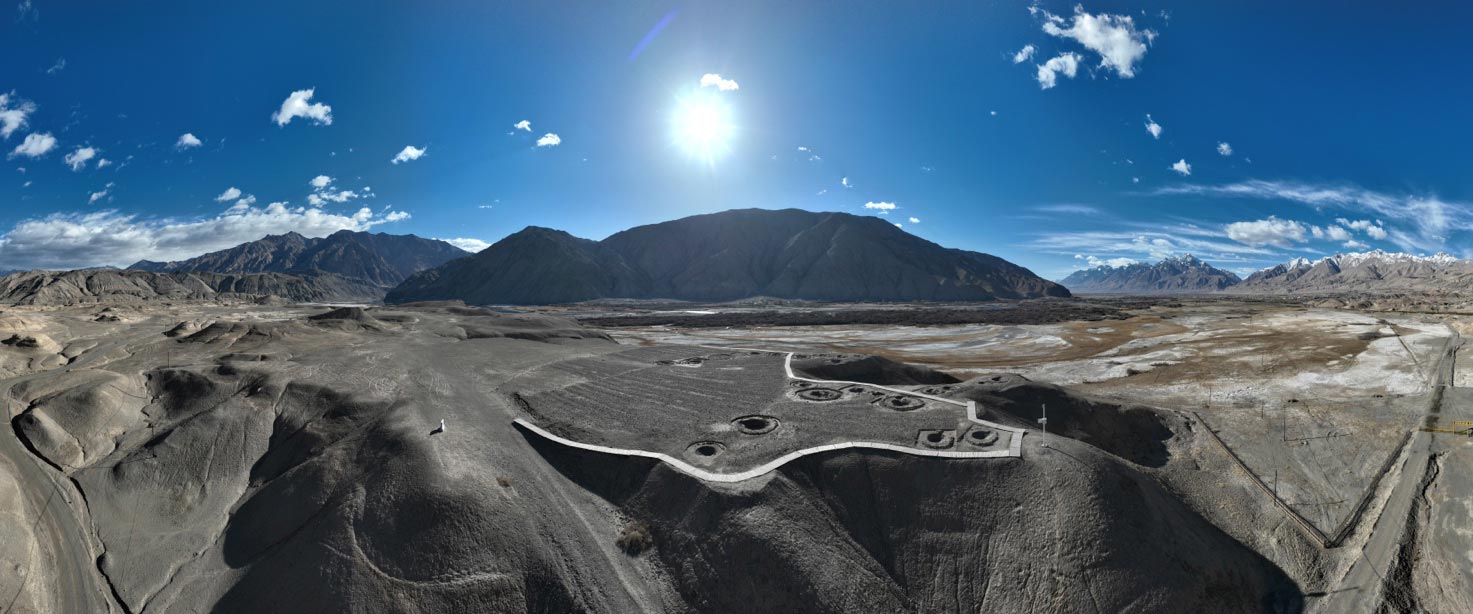
Overlook of Tombs in High Altitudes Tashikuergan Kashi

Overlook of Tombs in high altitudes. Excavated from Jierzankale site in Tashikuergan, Kashi region. Credit: YAN Xuguang, Kashi Daily

Xinjiang, in northwest China, lays at an important junction between east and west Eurasia and has played a historically important role in the exchange of goods and technologies between these two regions along the Silk Road. It is a complex mix of cultures and populations.

However, the interflow and blending of these diverse populations in Xinjiang can be traced further back. Bronze Age mummies discovered in Tarim Basin were purported to have western features and textiles, and the discovery of 5th century C.E. texts of an extinct Indo-European language group, Tocharian, has spurred great interest in archeologists, linguists, and anthropologists.

Now, a research team led by Prof. FU Qiaomei from the Institute of Vertebrate Paleontology and Paleoanthropology (IVPP) of the Chinese Academy of Sciences has unravel the past population history of Xinjiang, China, based on information from 201 ancient genomes from 39 archeological sites.

Their findings were published in the journal Science on March 31, 2020.

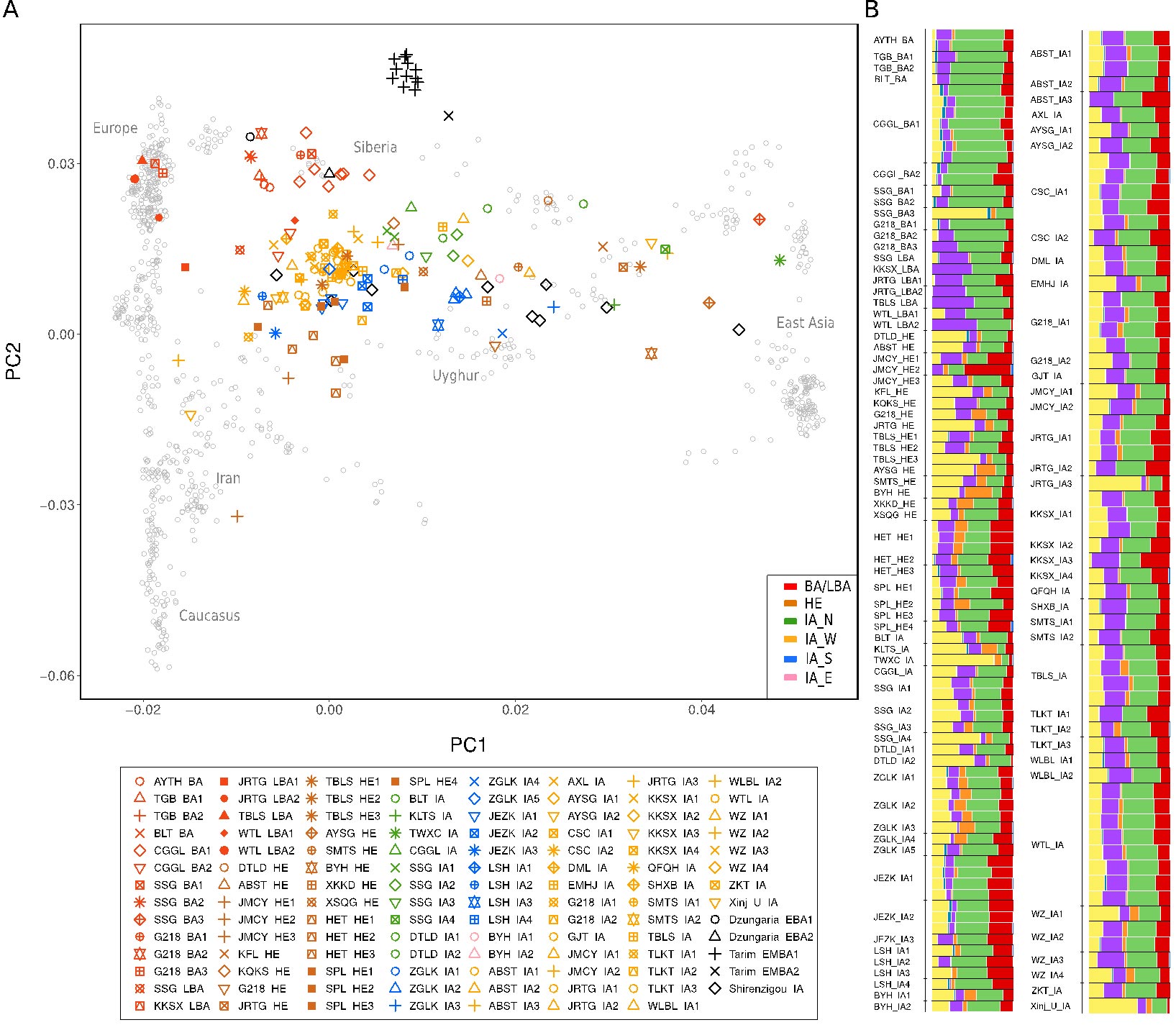
Principal Component and Admixture Analysis of Xinjiang Populations

Principal Component (PCA) (A) and ADMIXTURE (B) analysis of Xinjiang populations. Credit: Kumar et al. 2022, Science

A mix of local northern Asian and western Steppe ancestry in Bronze Age

The peopling of Bronze Age Xinjiang is key to understand the later population dynamics of the region. It had been proposed that the Bronze Age settling of the Tarim Basin was originally by people related to either western Steppe Cultures (“Steppe hypothesis”) or Central Asian populations related to the Bactria Margiana Complex (BMAC) (“Bactrian oasis hypothesis”).

FU and her team discovered the earliest inhabitants of Xinjiang showed genomic similarities with both of these groups, but broadly mixed with a unique ancestry found in the local Tarim Basin mummies, who were recently shown to be linked to a population found 25,000 years ago in southern Siberia known as the Ancient North Eurasians (ANE).

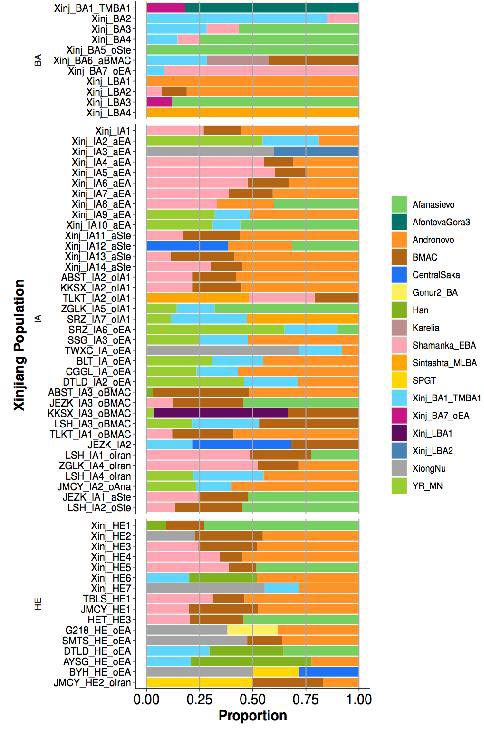
“In all, Bronze Age Xinjiang populations were found to contain ancestral components of the ‘local’ Tarim Basin population mixed to varying degrees with those of three groups from the surrounding regions: the Afanasievo, an Indo-European-associated Steppe culture, a group called the Chemurchek, who contained BMAC ancestry from Central Asia, and ancestry from a Northeast Asian population called the Shamanka,” said Prof. FU, the last corresponding author of this paper.

The appearance of an individual with almost exclusive Northeast Asian ancestry in northern Xinjiang at this time indicated these early populations may have been already highly mobile. This evidence fits a scenario where incoming Steppe, Chemurchek and Northeast Asian populations entered the region and mixing with the existing inhabitants, who are closest to the oldest Tarim Basin mummies.

In the later part of the Bronze Age, they found the existing genomic profiles shifted to include an influx of a newer western Steppe group linked to the Steppe Middle-Late Bronze Age (MLBA) Andronovo culture, as well as an increasing influx of ancestry from East Asia found in southern Siberia. Furthermore, an expansion of ancestry related to Central Asia (BMAC) at this time indicated an increase in interactions with Central Asia across the Inner Asian Mountain Corridor.

qpAdm Admixture Proportions for All Xinjiang Populations

The qpAdm admixture proportions for all Xinjiang populations. Each bar represents admixture proportion of the listed subgroups for BA, LBA, IA and HE populations. Credit: Kumar et al. 2022, Science

Early entry of Indo-European speakers in Bronze Age Xinjiang

Interestingly, they also found ancestry of several Early Bronze Age individuals identified as unmixed Afanasievo ancestry. This finding corroborates an early entry of these Indo-Europeans, who may have played a role in introducing Tocharian languages to Xinjiang, the easternmost Indo-European languages recorded. This early date would make the appearance of Indo-European languages in Xinjiang roughly contemporary with their entrance into Western Europe, clarifying the origin and spread of the language family with the largest number of speakers today.

Iron Age influx of East and Central Asians established the ancestry still present today

Compared to the Bronze Age, Iron Age populations showed an increased influx of people from East and Central Asia, with the presence of the East Asian component following a West-to-East gradient of increasing East Asian ancestry. Unlike the Northeast Asian ancestry present during the Bronze Age, the East Asian ancestry entering during the Iron Age showed more diverse origins including mainland East Asia.

These Iron Age populations could be linked to populations such as the Xiongnu and Han, which coincided with a historically documented westward expansion of Xiongnu in ~2200 BP after the defeat of Yuezhi in Gansu region. Additional Iron Age movements of people from Central Asia or the Indus periphery region into Xinjiang supported early activity along routes such as the Inner Asian Mountain Corridor.

The Iron Age appearance of ancestry linked to the Sakas, a nomadic confederation derived from the Iranian peoples, helps to date the entrance of Indo-Iranian languages like Khotanese, known to be spoken by the Sakas, into Xinjiang. This Iron Age genetic profile of the region, linking Steppe, East Asian, and Central Asian people, was found to have been maintained into the Historical Era (HE). Despite the cultural shifts of the past millennia, similar ancestries to those established in the Iron Age are still observed in present-day Xinjiang populations.

Phenotypic analysis of several remains, the first reported for ancient Xinjiang, gave depth to the genetic results. The majority of individuals investigated had dark brown to black hair and brown eye color throughout Bronze Age, Iron Age, and HE. Corresponded with the appearance of Andronovo Steppe ancestry, a small proportion of the Iron Age individuals are marked blond hair, blue eyes and lighter skin tone in the west and north of Xinjiang. Two Early Bronze Age Tarim Basin mummies in east Xinjiang were found likely to have had dark brown to black hair and darker skin, despite their archeologically-identified “western” features, and a more recent third mummy from the Late Bronze Age was likely to have had a more intermediate skin tone.

“With the widespread population movements documented in the study, it is intriguing to see the degree of genetic continuity that has been maintained in Xinjiang over the past 5000 years,” said Associate Prof. Vikas KUMAR from IVPP, the first author of this study.

“What is striking about these results is that the demographic history of a cross-roads region as Xinjiang has been marked not by population replacements, but by the genetic incorporation of diverse incoming cultural groups into the existing population, making Xinjiang a true ‘melting-pot’,” said Prof. FU.

This detailed aspect had not been so clear looking only at archeological and cultural evidence. These findings suggest the importance of combining genetic and archaeological evidence to provide a more comprehensive insight into population history.

The current ancient DNA analysis highlights a holistic approach to unraveling the complex history of locations like Xinjiang, where the many interactions between different groups and cultures in the past make detailed demographic studies difficult. Future studies in this area could reveal more about the finer points of Xinjiang’s history.

Reference: “Bronze and Iron Age population movements underlie Xinjiang population history” by Vikas Kumar, Wenjun Wang, Jie Zhang, Yongqiang Wang, Qiurong Ruan, Jianjun Yu, Xiaohong Wu, Xingjun Hu, Xinhua Wu, Wu Guo, Bo Wang, Alipujiang Niyazi, Enguo Lv, Zihua Tang, Peng Cao, Feng Liu, Qingyan Dai, Ruowei Yang, Xiaotian Feng, Wanjing Ping, Lizhao Zhang, Ming Zhang, Weihong Hou, Yichen Liu, E. Andrew Bennett and Qiaomei Fu, 31 March 2022, Science.
DOI: 10.1126/science.abk1534

Wednesday, May 05, 2021

Ancient DNA reveals origin of first Bronze Age civilizations in Europe

Finding shed light on role of migration in Neolithic to Bronze Age transition and emergence of Indo-European languages

CENTER FOR GENOMIC REGULATION

Research News

IMAGE

IMAGE: SKELETON OF ONE OF THE TWO INDIVIDUALS WHO LIVED IN THE MIDDLE OF THE BRONZE AGE AND WHOSE COMPLETE GENOME WAS RECONSTRUCTED AND SEQUENCED BY THE LAUSANNE TEAM. IT COMES... view more 

CREDIT: EPHORATE OF ANTIQUITIES OF KOZANI, HELLENIC MINISTRY OF CULTURE, GREECE. COURTESY OF DR GEORGIA KARAMITROU-MENTESSIDI.

The first civilisations to build monumental palaces and urban centres in Europe are more genetically homogenous than expected, according to the first study to sequence whole genomes gathered from ancient archaeological sites around the Aegean Sea. The study has been published in the journal Cell.

Despite marked differences in burial customs, architecture, and art, the Minoan civilization in Crete, the Helladic civilization in mainland Greece and the Cycladic civilization in the Cycladic islands in the middle of the Aegean Sea, were genetically similar during the Early Bronze age (5000 years ago).

The findings are important because it suggests that critical innovations such as the development of urban centres, metal use and intensive trade made during the transition from the Neolithic to the Bronze Age were not just due to mass immigration from east of the Aegean as previously thought, but also from the cultural continuity of local Neolithic groups.

The study also finds that by the Middle Bronze Age (4000-4,600 years ago), individuals from the northern Aegean were considerably different compared to those in the Early Bronze Age. These individuals shared half their ancestry with people from the Pontic-Caspian steppe, a large geographic region stretching between the Danube and the Ural rivers and north of the Black Sea, and were highly similar to present-day Greeks.

The findings suggest that migration waves from herders from the Pontic-Caspian steppe, or populations north of the Aegean that bear Pontic-Caspian Steppe like ancestry, shaped present-day Greece. These potential migration waves all predate the appearance of the earliest documented form of Greek, supporting theories explaining the emergence of Proto-Greek and the evolution of Indo-European languages in either Anatolia or the Pontic-Caspian Steppe region.

The team took samples from well-preserved skeletal remains at archaeological sites. They sequenced six whole genomes, four from all three cultures during the Early Bronze Age and two from a Helladic culture during the Middle Bronze Age.

The researchers also sequenced the mitochondrial genomes from eleven other individuals from the Early Bronze Age. Sequencing whole genomes provided the researchers with enough data to perform demographic and statistical analyses on population histories.

Sequencing ancient genomes is a huge challenge, particularly due to the degradation of the biological material and human contamination. A research team at the CNAG-CRG, played an important role in overcoming this challenge through using machine learning.

According to Oscar Lao, Head of the Population Genomics Group at the CNAG-CRG, "Taking an advantage that the number of samples and DNA quality we found is huge for this type of study, we have developed sophisticated machine learning tools to overcome challenges such as low depth of coverage, damage, and modern human contamination, opening the door for the application of artificial intelligence to palaeogenomics data."

"Implementation of deep learning in demographic inference based on ancient samples allowed us to reconstruct ancestral relationships between ancient populations and reliably infer the amount and timing of massive migration events that marked the cultural transition from Neolithic to Bronze Age in Aegean," says Olga Dolgova, postdoctoral researcher in the Population Genomics Group at the CNAG-CRG.

The Bronze Age in Eurasia was marked by pivotal changes on the social, political, and economic levels, visible in the appearance of the first large urban centres and monumental palaces. The increasing economic and cultural exchange that developed during this time laid the groundwork for modern economic systems--including capitalism, long-distance political treaties, and a world trade economy.

Despite their importance for understanding the rise of European civilisations and the spread of Indo-European languages, the genetic origins of the peoples behind the Neolithic to Bronze Age transition and their contribution to the present-day Greek population remain controversial.

Future studies could investigate whole genomes between the Mesolithic and Bronze Age in the Armenian and Caucasus to help further pinpoint the origins of migration into the Aegean, and to better integrate the genomic data with the existing archaeological and linguistic evidence.

###

Sunday, June 16, 2024

Europe's oldest Bronze Age mining tools discovered in Cornwall to be displayed

Kate Lockett
Fri, 14 June 2024 

Royal Cornwall Museum has revealed the existence of the oldest Bronze Age mining tools ever found in Europe 
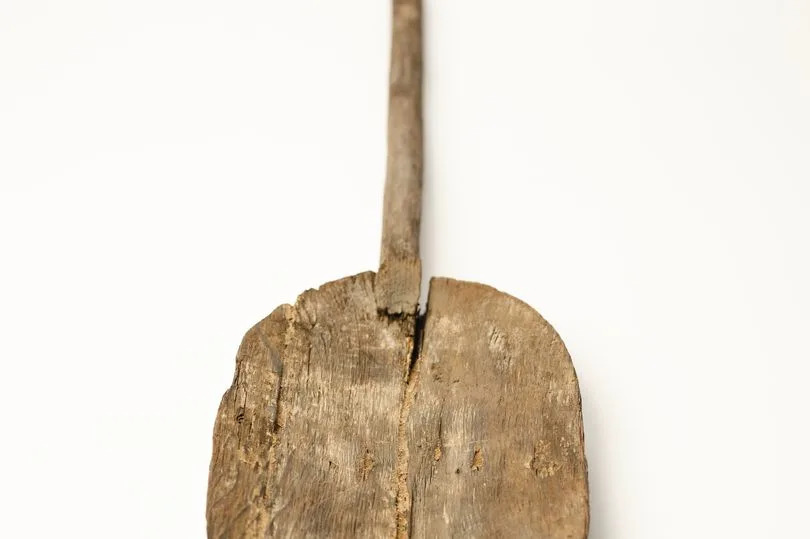
The oak wooden shovel is said to be around 3,200 years old (Image: Royal Cornwall Museum)

In an exciting discovery, the Royal Cornwall Museum has revealed the existence of the oldest Bronze Age mining tools ever found in Europe.

The findings which date back more than 3,600 years ago, have been revealed ahead of the museum’s redesigned Mineral Gallery set to open in July 2024. The gallery will show the current understanding of prehistoric mining practices and highlight how Cornwall played a significant role in the early stages of European metalworking.

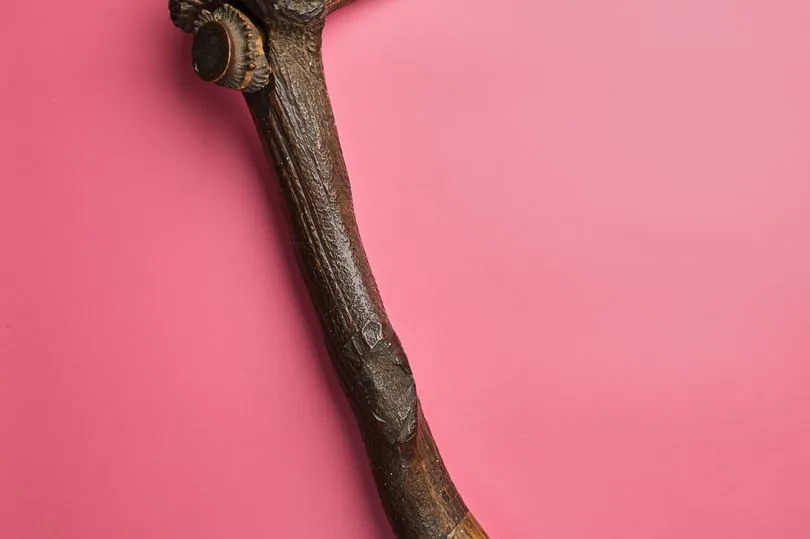
Recent carbon dating research on an Oak Shovel along with evidence from examination of an Antler Pick has signified that these two items within the museum’s archive are the first Bronze Age tin mining tools to be found in Europe.

The tools were discovered in the Carnon Valley, mid-Cornwall during the 19th century when alluvial tin stream works were being reworked in the 19th century. Alluvial time stream works is a shallow mining operation following streams with naturally occurring deposits of tin. The radiocarbon dating indicated that they were from the British Bronze Age (2400-800BC).

Led by Dr Alan Williams from the Department of Archaeology at Durham University, the Royal Cornwall Museum’s oak wooden shovel has most recently been radiocarbon dated at around 3,200 years old by the Project Ancient Tin Team, with a grant from the Royal Archaeological Institute.

Understood to be found in the Caron Valley in 1815, this design is formed from one piece of wood, unlike Medieval wooden shovels that are in two pieces.


The Oak Shovel is set to go on display at the Royal Cornwall Museum -Credit:Royal Cornwall Museum


The Royal Cornwall Museum has unveiled the Antler Pick -Credit:Royal Cornwall Museum


The antler pick, measuring 48cm in length is estimated to be around 3,600 years old, or Early Bronze Age is the first evidence for the extraction of tin and/ or alluvial gold in the British Isles. Following examination of the tool by Dr Simon Timberlake from the Early Mines Research Group it was revealed that tally marks had been carved into the antler pick suggesting a system of recording work by prehistoric miners.

These discoveries provide crucial evidence of Bronze Age tin workings in Cornwall, demonstrating the mining techniques at this early stage. They also support the growing theory that Cornwall was a primary source of tin for the European Bronze Age.

Adding further weight to this theory, small amounts of gold found in the Carnon Valley have been chemically linked to the gold used in the famous Nebra Sky Disk, an artefact thought to be the world’s oldest map of the stars. The presence of Cornish gold and tin in this artefact discovered in Germany, suggests that Cornish prehistoric mining and trading practices may have pioneered the European Bronze Age.

The new Mineral Gallery will be a chance to celebrate the past and future of Cornish mining (Image: Royal Cornwall Museum)

Bryony Robins, artistic director for the Royal Cornwall Museum said: “Cornwall and mining are already intertwined, but this important discovery demonstrates just how long mining has been taking place in Cornwall, and how well developed some of the tools of the trade were, even at that time.

“The Mineral Gallery will share with our visitors the heritage of mining in Cornwall and present the world-renowned collection of rocks and minerals in a more accessible way. And, of course, the role that mining is continuing to play in Cornwall.”

Reopening in early July 2024, the new Mineral Gallery will be a chance to celebrate the past and future of Cornish mining, with the unveiling of this first phase of the museum’s transformation which continues into 2025.

This is just the start of an exciting new era for this 200-year-old institution - a centre of exploration, learning, and custodian of Cornish heritage - home to over one million artefacts.

 ‘The significance of the boom and bust of Bronze Age mining in Wales for Scandinavia, England and Atlantic Europe’

14 June 2024


The University of Wales Centre for Advanced Welsh and Celtic Studies (CAWCS) held an international conference on 3–6 June 2024 that looked at Bronze Age mining and metals and the long-distance contacts between Scandinavia, Wales and beyond. 

Group photo of delegates at the University of Wales Centre for Advanced Welsh and Celtic Studies (CAWCS) international conference held between 3–6 June 2024

The conference also helped build new frameworks for exploring implications of Bronze Age trade for maritime transport, migration, social change, and contact between prehistoric languages.

Recent chemical and isotopic analysis in Nordic Bronze Age tools and weapons indicates that important sources of their metal were ancient copper mines near Aberystwyth in mid Wales from 2100–1700 BC and Great Orme in north Wales from 1700–1400 BC. 

Two days of talks and panel discussions were held at CAWCS and the adjacent National Library of Wales. Speakers included experts from Wales, England, Spain, Brittany, Scandinavia, and America. A day-long site visit took participants to Beaker Period and Early Bronze Age (2200–1700 BC) copper mines in Cwmystwyth with the leading expert on the sites (Dr Simon Timberlake, Cambridge). The mining tools found at these sites included many stone hammers worked from large sea-rounded pebbles, brought up the valley from the coast, where Aberystwyth now sits at a natural harbour, below the prehistoric hillfort of Pendinas, with its long views along the coast and up the Ystwyth valley towards the mines. A second day-long site visit took participants to the Middle Bronze Age (1700–1400 BC) mine at Great Orme with the leading expert on the site (Dr Alan Williams, Liverpool and Durham).

Johan Ling, Lene Melheim (Oslo) and Alan Williams on mountain discussing Early Bronze Age finds at Cwmystwyth ancient mine site 6/6/24)
Johan Ling, Lene Melheim (Oslo) and Alan Williams discussing Early Bronze Age finds at Cwmystwyth ancient mine site 6/6/24

The conference set up specific networks and initiatives to investigate implications of the ‘boom and bust’ of Wales’s Bronze Age copper mines and looked at the place of mining, metals and long-distance exchange in greater Bronze Age processes—cultures, populations, and languages.

Conference organiser, Professor John T. Koch  from CAWCS, said: ‘There is such a wide awareness in Wales of the importance of mining for modern social, economic, and political history. It has affected so many people, in their family background and in shaping the places they live in a wide variety of ways. When you explain that mining in, and mining exports from, Wales go back 4,000 years, that’s startling news. It sparks an immediate interest beyond the usual audience for specialist research’. 

Professor Elin Haf Gruffydd Jones, Director of CAWCS, said: ‘We’re delighted that the conference is being hosted here in Wales, at the University of Wales Centre for Advanced Welsh and Celtic Studies, at the National Library of Wales and at the site-specific locations that are of such significance to the research field. I’d like to congratulate the project lead Professor Johan Ling at Gothenburg University and Professor John T. Koch on the curation of the conference and also thank Sweden’s central bank for their support of the research project on ‘Maritime Encounters’.’

The conference builds on a wider 6-year multidisciplinary research programme called ‘Maritime Encounters: a counterpoint to the dominant terrestrial narrative of European prehistory’. The project includes 17 specialists from archaeology, historical linguistics, genetics, oceanography, and anthropology based in 8 countries. The project aims to create a more detailed and nuanced story of how prehistoric societies realised major and minor sea crossings, organised long-distance exchange, and ways of life by the sea in prehistory. For more information see: https://www.gu.se/en/research/maritime-encounters 

Notes for Editors 

Contact: Dr Angharad Elias (Admin Officer) a.elias@wales.ac.uk 

1. The Centre for Advanced Welsh and Celtic Studies (CAWCS) was established by the University of Wales in 1985 as a dedicated research centre conducting team-based projects on the languages, literatures, culture and history of Wales and the other Celtic countries. It is located in Aberystwyth, adjacent to the National Library of Wales, which is an internationally renowned copyright library with excellent research facilities. 

2. CAWCS offers unique opportunities for postgraduate students to work alongside specialists in a dynamic and supportive environment. We welcome enquiries about MPhil/PhD topics in any of our research areas. For more information about research opportunities, or for an informal chat about possible topics, contact our Head of Graduate Studies, Dr Elizabeth Edwards: e.edwards@wales.ac.uk 

3. CAWCS is the home of the Dictionary of the Welsh Language, which celebrated its centenary in 2021: https://www.welsh-dictionary.ac.uk/  

Project Ancient Tin - A short introduction.

PDF Available

Authors: