Carney, Trump heard talking Chinese EVs on hot mic at the G7 summit
Updated:
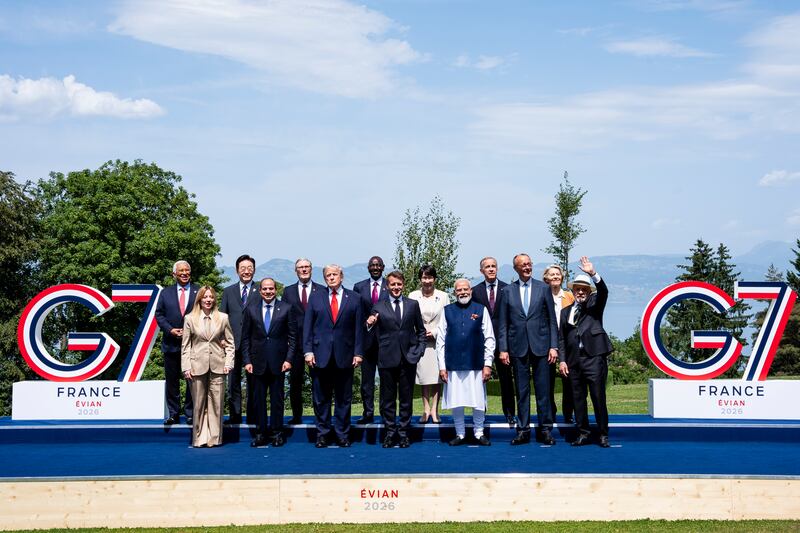
As G7 leaders milled around the table ahead of a working lunch at their annual summit on Tuesday, cameras caught Prime Minister Mark Carney in a conversation about trade with U.S. President Donald Trump. Carney is seen leaning over the seated president, talking about Canada’s deal with China to allow a limited number of Chinese electric vehicles into the country.
Microphones caught part of the conversation in which the two leaders appear to be talking about the cap Canada has in place to allow up to 49,000 Chinese-made cars into Canada per year.
“Less than three per cent of our market, 49,000 cars,” Carney can be heard telling Trump, before the camera pans to another section of the leaders’ table.
“A cap,” Carney can then be heard saying, when he’s once again on camera, while making a hand gesture indicating a ceiling.
As the U.S. president nods intently, Carney adds: “I thought you’d actually like that.”
Trump then responds: “That’s good, I like it.”
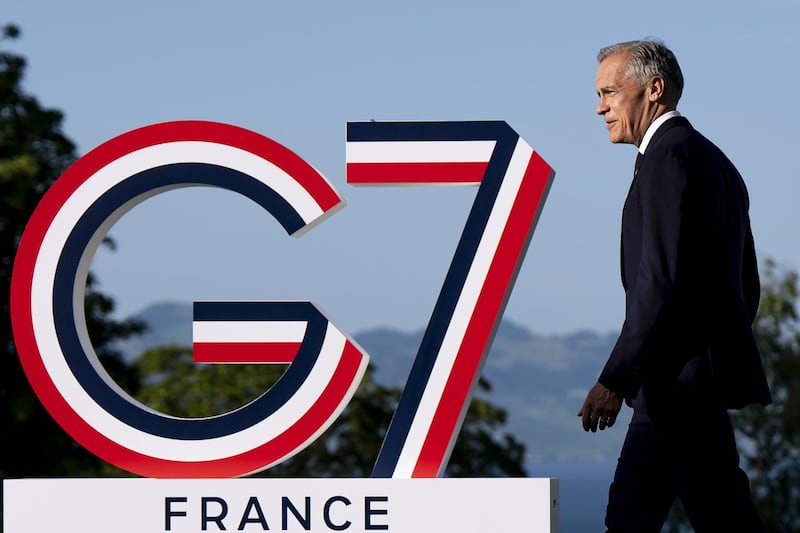
On a visit to China in January, Carney announced a deal that would see Canada reduce its tariff rate from 100 per cent to 6.1 per cent on Chinese EVs and allow a certain number of those vehicles into the Canadian market.
In exchange, China has agreed to lower tariffs on key agricultural and seafood exports — most notably slashing the levies on Canadian canola seed.
The U.S. continues to apply hefty taxes on Chinese EVs, and Canada’s original ban on the vehicles under former prime minister Justin Trudeau was imposed in lockstep with the American administration.
But, despite years of tension, Carney has moved in the last year to reset Chinese relations with the goal of boosting trade, a move that has faced criticism from some.
- Read more: Former top soldier warns against pivot to China amid tensions with the U.S.
- Read more: O’Toole says China not a replacement for U.S., disagrees with PM Carney on EV deal
- Read more: ‘Not feasible’ for any new government to ‘reset relations’ with China: Kovrig
In an interview with Bloomberg in Davos, Switzerland, in January — shortly after Carney inked his EV deal with China — U.S. Commerce Secretary Howard Lutnick said Canada is “playing with a set of rules that they haven’t really thought through” by moving to reset relations with the superpower.
Lutnick also implied negotiations around the Canada-U.S.-Mexico Agreement (CUSMA) could be at risk if Canada continues to increase its engagement with China.
According to Carney, trade talk between himself and Trump on the margins of the G7 summit was not the original plan.
Speaking to reporters in Ireland on Sunday, Carney was asked if he would raise trade issues with the U.S. president.
“I think the principal discussions on trade are going to be held between (Canada-U.S. Trade) Minister (Dominic) LeBlanc, our chief negotiator, Janet Charette, and their counterparts, (U.S. Trade Representative) Jamieson Greer, (U.S. Treasury) Secretary (Scott) Bessant,” Carney said.
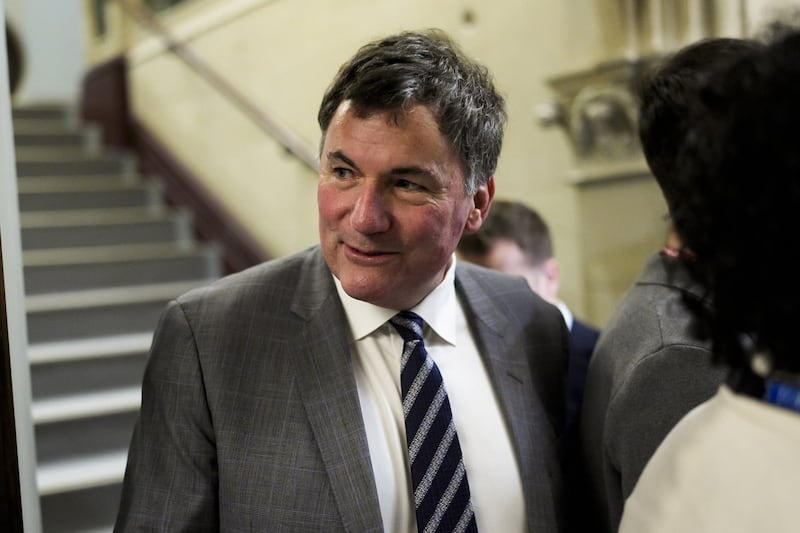
LeBlanc says EV deal ‘nothing new’
LeBlanc and Charette later met with Greer in Evian, France, where the summit is taking place, on Tuesday.
“We took stock of the progress over the last two weeks since that conversation with him in Washington,” LeBlanc told reporters in a scrum after the meeting, pointing to his and Charette’s trip to D.C. earlier this month. “And we talked about a number of other issues that the United States raises with us.”
Referencing the prime minister’s hot mic moment with Trump — specifically the subject matter of Chinese EVs — LeBlanc said it was “one of a number of issues” Carney discussed with the president on Tuesday.
“There’s nothing new in what the prime minister said to President Trump,” he said, calling it “an opportunity for (Carney) to remind President Trump” about the specifics of the deal with China and the relief it provided for Canadian industry.
“This shouldn’t surprise anybody that the prime minister took this opportunity to discuss what is a well-known circumstance for a number of months,” LeBlanc also said.
Asked what other issues Carney and Trump discussed, the minister wouldn’t say, but he pointed to an upcoming media availability set to take place Wednesday morning.
“You’ll have a chance with Prime Minister Carney to ask that question,” LeBlanc said.
Mike Le Couteur
Senior Political Correspondent, CTV National News
Spencer Van Dyk
Opens in new windowWriter & Producer, Ottawa News Bureau, CTV News
LeBlanc says it's not a 'one-way conversation' after G7 meeting with U.S. trade rep
Updated:
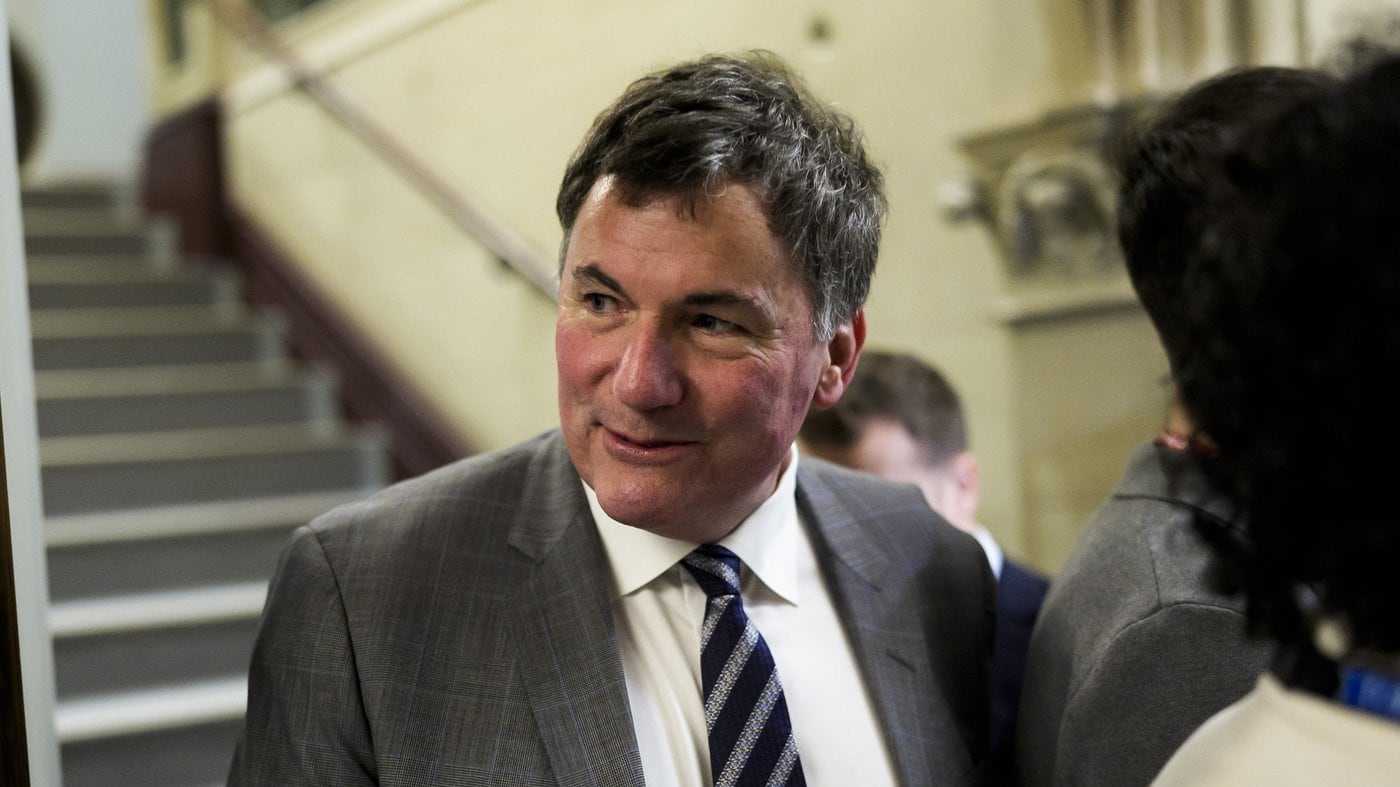
ÉVIAN-LES-BAINS — Canada-U.S. Trade Minister Dominic LeBlanc said talks with his American counterpart on a critical continental trade pact are not a “one-way conversation” as the United States continues to signal it will not rubber-stamp an extension.
LeBlanc and Chief Trade Negotiator Janice Charette met with United States Trade Representative Jamieson Greer on the sidelines of the G7 in France on Tuesday.
“We talked about a number of other issues that the United States raises with us,” LeBlanc told reporters. “But we also talked about issues that are important to Canadian workers and the Canadian economy.”
LeBlanc and Greer met in Washington earlier this month after Ottawa and Mexico City sent letters to Washington saying they want a 16-year extension of the Canada-U.S.-Mexico Agreement on trade, better known as CUSMA.
The trade pact sets up a three-way choice for each country to make on July 1. They can renew the deal for another 16 years, withdraw from it or start an annual rolling review process that can last for up to a decade.
The United States has not publicly stated its intensions but Greer has said repeatedly that negotiations will continue beyond the July 1 date. If the United States blows past the deadline, the agreement does stay in place as talks continue.
Trump has threatened the future of CUSMA, calling it “irrelevant.” Greer has said both that he’d be open to two separate bilateral agreements and that there are “pillars” of the continental trade pact that work well.
LeBlanc did not give details about Tuesday’s talks with Greer but said they “took stock ” of the work done since the Washington meeting and agreed to get in contact again soon.
“We made progress in resolving with Jamieson a number of issues that the United States Trade Representative has raised over a number months with Canada,” LeBlanc said.
The Office of the United States Trade Representative released its annual document outlining trade irritants with different nations in March. It flagged provincial rules on alcohol sales, delays in aircraft validation and the federal government’s “Buy Canadian” procurement policy, as well as long-standing complaints about Canada’s supply management system and lumber industry.
The vast majority of Canadian exports to the United States have been shielded from Trump’s blanket tariffs because they’re in compliance with CUSMA. Canada is being slammed by Trump’s separate tariffs on industries like steel, aluminum, automobiles and cabinetry.
Greer has said that Canada has been difficult to deal with on trade and that trade talks with Ottawa are lagging behind those with Mexico City.
Official negotiations between Mexico and the United States have launched but Ottawa and Washington have not started talks yet.
Trade talks between Washington and Ottawa were frozen last October after Trump was angered by an Ontario-funded ad quoting former U.S. president Ronald Reagan criticizing tariffs.
The relationship thawed in March and Greer and LeBlanc have been in regular contact since.
This report by The Canadian Press was first published June 16, 2026.
-Written by Kelly Geraldine Malone in Washington, D.C., with files from Catherine Morrison in France.
The Canadian Press

No comments:
Post a Comment