Showing posts sorted by date for query Comprador. Sort by relevance Show all posts

Friday, August 21, 2026


NATO and the North Atlantic left: A road to nowhere
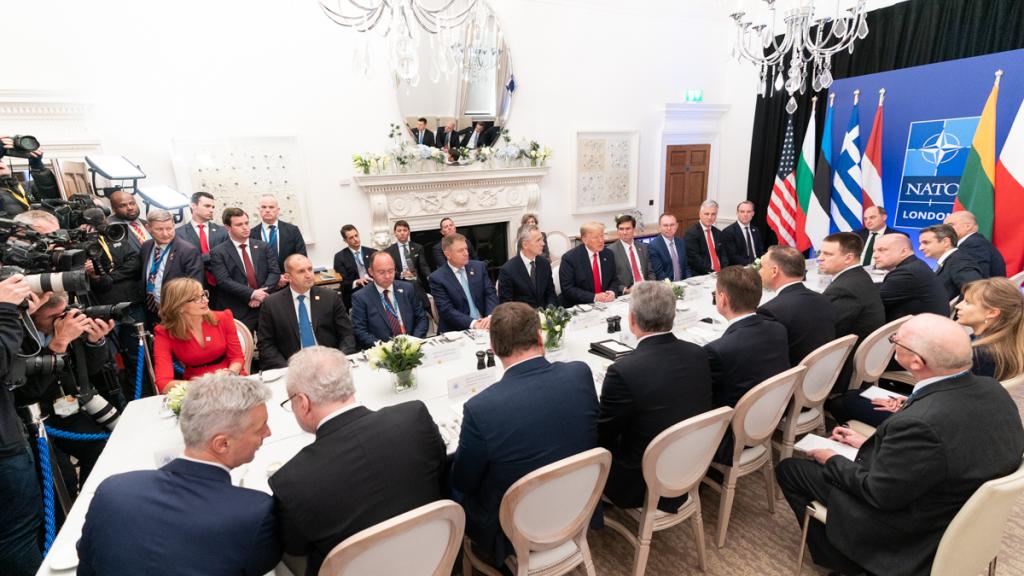
Trump at NATO. Photograph by Shealah Craighead.

First published at Socialist Forum.

Any analysis of the North Atlantic Treaty Organization (NATO) and its current geopolitical role has to begin with a puzzle: Why did the institution outlive the enemy it was created to deter? Why is it still so beloved by Western liberals and neo-conservatives alike, despite the on-again, off-again grumbles by Trump and other neo-isolationists that it has become a burden for the coffers of the US Treasury? And what alternatives can socialists on both sides of the Atlantic propose in order to truly promote geopolitical stability in the face of a social, economic, political and environmental polycrisis (understood to be a situation in which “crises in multiple global systems become causally entangled in ways that significantly degrade humanity’s prospects”) engulfing the planet? In this article, we postulate that the North Atlantic left must advocate for a full decoupling from NATO and the social, political, and financial costs that sustaining the organization entails, and instead advocate for a vision of geopolitical security based on environmental sustainability, social equality, and democratic and inclusive multilateral frameworks that are not hegemonized by the US or any other individual neo-imperialist power.

For most of the North Atlantic liberal-left, NATO has long been part of the furniture of the international order: an institution whose particular wars might be criticized, but whose existence and indefinite expansion are taken for granted as the guarantee of a “rules-based order” or, at most, regarded with an ambivalence that never matures into opposition. The reflex is bipartisan and transatlantic. When thirty members of the US Congressional Progressive Caucus signed a letter in October 2022 gently urging the Biden administration to pair military support for Ukraine with diplomatic effort, they withdrew it within twenty-four hours under a hail of accusations of appeasement, a measure of how narrow the permissible spectrum of transatlantic debate has become. Socialists do not share that ambivalence, and cannot afford its silences. Our argument is that an European decoupling from NATO, in the military, digital, and environmental sense, looking for real independence and sovereignty is not one demand among many, but the precondition for social and ecological progress on either shore of the Atlantic.

The NATO puzzle has acquired a further layer of irony in the second Trump era. The President who muses about leaving “delinquent” allies to their fate, who has refused to rule out economic or even military coercion to annex Greenland (which is an autonomous territory of Denmark, a founding NATO member) and who dispatched his Vice President to scold European allies from an American base on Greenlandic soil, has nonetheless declined to junk the organization. This article will address the reasons behind his strategy in the context of the current configurations of late-stage capitalism.

NATO’s original purpose

NATO, the West’s quintessential Cold War security alliance founded in 1949, which aimed to shelter key European allies from the “Soviet threat” by including them under the US’ “ nuclear umbrella,” was not discarded and deactivated as its counterpart Warsaw Pact was in 1991 (Miles 2023/2024). Instead, the Golden Years of the so-called Pax Americana that followed the disbandment of the Soviet Bloc in the 1990s led to a surprisingly small decrease in military expenditure by the United States, which registered a mere –21% decline in its military budget during the period 1986–1994, as compared to a –49.5% drop in military spending in the non-NATO world (including the former Soviet Union) during the same period. During the Clinton years, NATO did not shrink or disappear, instead it expanded eastward and began a series of military interventions outside of its core area of influence: former Yugoslavia in 1999 without UN Security Council authorization, Afghanistan at the height of the post-9/11 “anti-terrorism frenzy” from 2001-2014, and Libya in 2011 far beyond its mandate, just to name a few.

Despite NATO outliving its original purpose, it began to repurpose its existence, while simultaneously revealing the purpose that it served all along, in accordance with the argument made by Panitch & Gindin in The Making of Global Capitalism (2012). According to these authors, NATO continues to be an essential part of the machinery through which the US State supervises global capitalism, with Western Europe’s ruling classes as junior partners in an imperial alliance. In this way, post-Cold War NATO has stopped acting as a guarantee of security and peace for the Western world, because it was never designed to principally function as a mutual security pact. From its founding, indeed, the alliance’s internal enemies mattered as much as its external one. NATO’s first decades were dedicated as much to insulating Western European states from their own Communist-friendly working classes (from Marshall-conditioned aid to the stay-behind networks later exposed as Operation Gladio) as about deterring the Red Army. An offensive imperial instrument can never be reformed into a defensive one, even under deeply transformed political, social, and military conjunctures.

From burden sharing to protection racket

The need for maintaining a robust NATO in the post-Cold War, increasingly multipolar world began to be seriously questioned during the first Trump administration. Trump’s insistence on economic “burden sharing” came to the forefront of NATO’s agenda by 2018, when he pushed hard for European members of the organization to pledge 4% of their annual GDP for defense expenditure (up from a 2% commitment made by the Europeans in 2014). Shocked by Trump’s abandonment of Western mutual defense grand strategy, liberal foreign policy analysts began to wring their hands at the notion of an unmoored and underfunded NATO without the capacity to defend Fortress Europe from the evils of Vladimir Putin, cast as the new post-Cold War “boogie man” (despite or perhaps because of his similarities with the former Cold War “boogie men”) by Washington establishment elites.

The complaint itself was hardly new. American elites have grumbled about European free-riding since Eisenhower complained privately that the allies were making a “sucker” of the United States. Senate majority leader Mike Mansfield spent the early 1970s introducing amendments to halve US troop levels in Europe; and Robert Gates devoted his 2011 farewell address as defense secretary to warning of a “dim if not dismal” future for an alliance in which Americans paid and Europeans merely philosophized. This grumbling is a signal of imperial decay. A hegemon that has full confidence in its powers subsidizes its allies, as post-WWII Washington did, because protection purchased markets, dollar seigniorage, and political obedience at a discount. A hegemon in relative decline, however, begins to monetize its protection directly.

As part of its intentions to restore US standing in the world through rejoining global alliances and reprioritizing multilateral commitments, the incoming Biden administration “bent the stick” in the opposite direction when it came to foreign relations with Western European powers. Under Biden, the US simultaneously returned to non-contentious relations with its traditional Western European allies and reinforced claims of the “indispensableness” of NATO (not only as a military shield but also as an instrument for democracy promotion), through actively encouraging the expansion of the geographic scope of the organization. While that expansion undoubtedly was a motive behind Putin’s February 2022 invasion of Ukraine, its logic went unquestioned and even celebrated by Biden who was eager to unleash both the “hard” and “soft” versions of US imperial power on the European continent. As Biden stated at a 2024 summit celebrating NATO’s 75-year anniversary, “for those who thought NATO’s time had passed, they got a rude awakening when Putin invaded Ukraine. […] Some of the oldest, deepest fears in Europe roared back to life because once again a murderous madman was on the march. But this time, no one cowered in appeasement, especially the United States.”

Now, under the second Trump administration, the Russia-Ukraine conflict continues to drag on, tragically transformed into yet another forever war that is being underwritten on both sides of the Atlantic by capitalist interests linked to the military-industrial complex. It is important to say that the motivations for Trump “staying the course” in Ukraine are quite different from that of the former Biden administration. For Western liberals, Ukraine is the legitimating war — the conflict that redeemed NATO after Iraq, Afghanistan, and Libya. It restored the moral vocabulary of the “defense of democracy,” and made alliance politics electorally viable again. Trump’s coalition has no need of that legitimation, as it organizes consent through civilizational nationalism at home, not liberal internationalism abroad, and the fractions of capital closest to it have different balance sheets. Fossil-fuel capital eyes sanctions relief and Arctic hydrocarbons; the venture-backed tech-defense complex of Palantir, Anduril, and SpaceX profits from Pacific-facing rearmament regardless of what happens in the Donbas; and the MAGA strategic imagination treats Russia as a potential junior partner in a world of great-power spheres, with China as the only rival that counts. Ukraine, in this scheme, is a European liability to be offloaded, profitably, since the offloading takes the form of European purchases of American weapons. As US foreign policy towards Europe becomes more and more unilateral and erratic the NATO burden sharing debate is now back front and center, in a context underlain by mistrust on the part of European partners and inflated imperialist bravado exhibited by Trump.

An alliance of equals?

At the June 2025 Hague summit, European NATO members adopted a target of 5 percent of GDP for defense and security spending by 2035; Spain, the only country to refuse, was answered not with coherent arguments but with Trump’s unilateral threat to make it “pay twice as much” through trade. When Madrid in March 2026 would not allow US aircraft to use the Rota and Morón bases for strikes on Iran launched outside the UN Charter, Trump ordered a full cut-off of trade with Spain. Alliances of equals do not behave this way; metropoles disciplining peripheries do. The discipline has a business model. Rosa Luxemburg called militarism a province of accumulation in The Accumulation of Capital (1913), and the description has aged well: according to figures cited in the Draghi report, 63 percent of EU defense procurement between mid-2022 and mid-2023 went to US suppliers. Rearmament on NATO’s terms is a historic transfer of European public money to American arms capital. The 5 percent target is less a strategy than a tribute schedule with a procurement funnel attached.

The Spanish alternative

The case of Spain matters analytically because it shows how resistance is possible, what this strategy depends on, and why it is domestically and internationally important. The how is documented: at The Hague, as the Spanish government secured the alliance’s only exemption, arguing NATO’s own capability targets could be met at roughly 2.1 percent of GDP. It has since dropped the F-35 in favor of European aircraft (a substitution of suppliers rather than a reduction in lethality, a distinction whose importance will become clear below) and in March it conditioned any use of Spanish territory on conformity with principles enshrined in the UN Charter.

The why is material as much as political. Politically, the governing coalition depends on left and peripheral-nationalist parties for whom rearmament carries a price — above all on Sumar, the ecosocialist coalition led by Yolanda Díaz, which formally rejected the government’s rearmament plan. Sumar instead supports a different political project, based on strategic autonomy, European independence and real sovereignty, without subordination to the United States, and security as protection of people’s social and ecological conditions of life, not weapons procurement, as the EU already outspends Russia threefold in this budget line item. Materially, Spain has doubled its wind and solar capacity since 2019. Due to this, by early 2026 gas became the minority source of energy domestically, equalling only 9 percent of total megawatt hours. When the war on Iran sent European gas prices surging, Spanish wholesale power averaged €42 per megawatt-hour against €143 in Italy, while heavily gas-dependent Germany absorbed the full shock. Andreas Malm’s Fossil Capital (2016) traces how fossil energy systems embed class power and imperial hierarchy; the Spanish case shows the inverse. Every gigawatt of domestically owned renewables removes a lever of external coercion.

The Spanish exception should not be idealized, however. As Ekaitz Cancela has argued, the same Sánchez government that refused access by the US to the Rota and Morón bases has presided over the largest defense budget in Spanish history, mutating from the “pandemic Keynesianism” of the post-COVID recovery period to military neoliberalism. In December 2025, the Defense Ministry adjudicated €15.8 billion to private contractors to comply with NATO targets, while the State’s digital backbone was quietly handed over to Silicon Valley: SpaceX satellites for military communications, Palantir software inside the armed forces’ intelligence systems (under NATO eyes), and Microsoft software licenses for federal administrative employees. What is marketed to European electorates as “military Keynesianism”, specifically, jobs and growth through rearmament, operates in practice as military neoliberalism: public spending to prop up the private military-industrial complex. A decoupling from Washington of this type would merely Europeanize the suppliers of militarism while leaving a NATO-focused political economy intact. That is why Sumar’s position within the coalition against the rearmament plan as a whole, and not just a veto of American vendors, marks the actual dividing line regarding defense policy in the Sanchez administration.

Two sovereignties

Here conceptual precision matters: the idea of “European sovereignty” is now being invoked to support two diametrically opposed projects. What the European Commission calls strategic autonomy — the €800 billion ReArm Europe program, hastily rebranded Readiness 2030suspends neoliberal deficit rules for weapons purchases while leaving Europe’s deeper dependencies untouched, for example, US firms hold 85 percent of the European cloud market.

The EU spending rules are notorious for their harshness. Since the ratification of the Maastricht treaty in 1991, EU member states have been bound to keep budget deficits below 3 percent of GDP and public debt below 60 percent. After the 2008 global financial crisis, these restrictions were the building blocks of the austerity architecture that gutted Southern Europe’s health care, education, and social protection systems. In March 2025, the Commission moved to activate “national escape clauses” exempting increases in military spending of up to 1.5 percent of GDP from precisely those ceilings, laying bare the real priorities of “social” Europe. These policies undermine any attempt at popular sovereignty, which would allow for budget priorities to be set on the national level in consonance with the real needs of each country’s working classes.

That is not an exit from imperialism but an application for promotion within it — and the application will not be granted. Poulantzas explained why in Classes in Contemporary Capitalism (1975): postwar American capital did not confront Europe from outside, as a rival across a frontier, but was replicated within European social formations themselves. In this way, a Western European capitalist class was created, that was neither a national bourgeoisie capable of an autonomous project nor a typical comprador class. Instead it was (and still is) a bourgeoisie with its own domestic base of accumulation but whose conditions of reproduction and valorization nonetheless depend on American technology, finance, and military prowess. The procurement and cloud figures are not deficiencies to be corrected by better industrial policy; they are the shape of the relation. An anti-imperialist Europe is therefore a project impossible to reproduce without dramatically transforming the inherently US-dependent nature of the modern Western European capitalist class. Sovereignty can only be reclaimed by another historical subject — the working class.

A socialist concept of sovereignty starts from a radically different focus on the well-being of peoples, not States. Popular sovereignty is inextricably linked to the concept of what Marxist feminists call social reproduction (Bhattacharya 2017) — the everyday systems of energy, food, housing, care, tech and knowledge through which a society maintains its vitality. Whoever controls those systems governs, no matter what national Constitutions say; that is why popular sovereignty is built in grids and cloud infrastructure as much as in armaments and military readiness.

National and regional defense follows the same materialist logic. What principally matters is not how much is spent, but what is defended. NATO’s rearmament defends the circuits of accumulation — sub-Arctic shipping lanes, mineral extraction frontiers, capital’s investments far beyond Europe. On the other hand, a socialist concept of defense protects and uplifts the well-being of all peoples, and is therefore defined by its self-imposed limits by what it refuses to do as much as by what it protects. Where NATO doctrine is organized around the unlimited projection of “hard power,” a socialist doctrine of defense, independence and sovereignty is bounded: by the UN Charter’s absolute prohibition of wars of aggression; by the consistent application of human rights principles within and beyond Western borders, without the exemptions Washington and Brussels grant themselves; and by solidarity as an organizing principle (as expressed by energy interconnections, technology transfers, and robust protections for refugees and migrants) rather than protection rackets between States.

Using a consistent socialist logic, we should also reaffirm that Russia’s war on Ukraine is also a form of imperialist aggression, and a left that answers NATO’s imperialism by excusing Moscow’s will never find emancipatory solutions to the existential challenges faced by the working class posed by competing fractions of global capital. Those fractions can be named. On one side stands the Northern Atlantic military-industrial-fossil fuel bloc, now enhanced by a venture-backed tech-defense complex. These fractions of Western capital need permanent rearmament and therefore a permanent enemy, in order to guarantee increased profit margins. In competition with Western capital is the Russian extractive-military oligarchy, for which war has become a dual strategy to ensure capital accumulation and political survival. Who gets left behind on both sides of this transnational duel for the spoils of extraction and exploitation is the global working class, including the Ukrainian and Russian workers currently being used as cannon fodder on both sides of the battlefront. As formulated by Bah, this war is an expression of the modern “banality of oppression” suffered by the global working classes, which serves to brutally reinforce ingrained economic, social and racial injustices.

The ecological question

The ecological question is not a superfluous issue here; it provides a material base for any effective anti-war strategizing. The war economy and the fossil fuel economy are structurally fused not because the working class family heating its home with natural gas is complicit in war, but because both economies run on the same infrastructure, the same fiscal circuits, and the same premise of limitless extraction. It is undeniable that fossil fuel energy is still needed for material survival — people still cook, heat, and move with it. But this fossil fuel dependency was not inevitable. According to Malm (2016), it was engineered as a function of the current neoliberal capitalist order, and has created a form of thermodynamic and geopolitical path dependency. The US Fifth Fleet patrols the Gulf because the Carter Doctrine pledged military force in defense of hydrocarbon flows. The fiscal circuits overlap one another, petroStates recycle profits into weapons, and weapons then secure additional profits for these same States and for their imperial allies. Likewise, the world’s militaries are the fossil economy’s most voracious institutional consumers (Crawford 2022) — accounting for an estimated 5.5 percent of global emissions, a larger footprint than even Russia’s.

An ecosocialist transition starts from the opposite premise: the planet has biophysical limits, and production must be democratically planned within them. This means scaling down what is destructive for human existence, namely military and fossil fuel infrastructure first, in order to then expand what sustains life. That is the rift Marx saw opening between capital’s compulsion to grow and the natural cycles it exhausts — the ecology Saito (2023) has reconstructed from Marx’s late notebooks as degrowth communism. That transition cannot be financed from inside an arms race; a continent mobilizing €800 billion for weapons has already chosen which limits it respects. Decoupling from NATO across military, energy, and digital dimensions is therefore not a gesture but a precondition. This precondition, though, is not yet a binding program. We can perfectly imagine a unilateral exit from NATO by the Trump administration which would still keep the fossil fuel-military coupling intact under new national management. A real geopolitical transformation would transcend the issue of NATO per se, and point towards a national and transnational realignment of political values and economic priorities away from death and extraction and towards ecological sustainability and egalitarian social reproduction.

A Transatlantic horizon

The logic for an ecosocialist transition is equally applicable in Europe and in the US. As growing US defense and security expenditures are increasingly used to wage war both abroad and at home, with a hyper-militarized ICE terrorizing immigrant communities, and an emboldened CIA and Special Forces illegally kidnapping sovereign heads of state in America’s “backyard,” socialists must lead the fight against the devaluing and precarization of life on both the domestic and international fronts. DSA was right in including the abolition of NATO as a plank in its political platform approved at the 2021 Convention. And, on the other shore of the Atlantic, Sumar was right to say no to more spending in defense and to begin a process of decoupling from NATO grounded on energy sovereignty, technology and internationally-recognized human rights.

Now, as we gain organizational strength and greater political representation in both the institutional and extra-institutional spheres, DSA must take its “No to NATO” position to its next logical step, by working to build a new kind of peoples’ transnational mutual defense, based on the preservation and expansion of the global commons outside of any profit- or war-seeking logic, in conjunction with our foreign partners in networks such as the Foro de Sao Paulo (the standing conference of Latin American and Caribbean left parties and movements first convened in 1990 and of which DSA is an associate member), and Progressive International, the global coordinating body of left parties, unions, and social movements launched in 2020 of which DSA is a full member. We have a world to win, or to lose, depending on our willingness and capacity to promote popular, anti-capitalist and anti-imperialist human security, in the weeks, months and years to come.

Jana Silverman is a Co-Chair of the DSA International Committee. 

Jaime Caro is a Member of the DSA International Committee and Political Advisor for Sumar (Spain).

References

Miles, Simon. 2023/2024. “We All Fall Down: The Dismantling of the Warsaw Pact and the End of the Cold War in Eastern Europe,” International Security. 48(3): 51-85.

Bhattacharya, Tithi. 2017. Social Reproduction Theory: Remapping Class, Recentering Oppression. Pluto Press.

Cancela, Ekaitz. 2026. “Pedro Sánchez contra el trumpismo.” Revista Anfibia, 5 March. Extended Spanish version of “ Sanchismo’s Last Stand,” The Ideas Letter, 2026.

Crawford, Neta C. 2022. The Pentagon, Climate Change, and War: Charting the Rise and Fall of U.S. Military Emissions. MIT Press.

Lenin, V.I. 1917. Imperialism, the Highest Stage of Capitalism. International Publishers.

Lundestad, Geir. 1986. “Empire by Invitation? The United States and Western Europe, 1945–1952.” Journal of Peace Research 23(3): 263–277.

Luxemburg, Rosa. 1913. The Accumulation of Capital. Routledge.

Malm, Andreas. 2016. Fossil Capital: The Rise of Steam Power and the Roots of Global Warming. Verso.

Panitch, Leo, and Sam Gindin. 2012. The Making of Global Capitalism: The Political Economy of American Empire. Verso.

Saito, Kohei. 2023. Marx in the Anthropocene: Towards the Idea of Degrowth Communism. Cambridge University Press.

Sunday, August 02, 2026

Graham Sanctions Bill Has Bite, Trump Will Use It To Terrorize India – OpEd


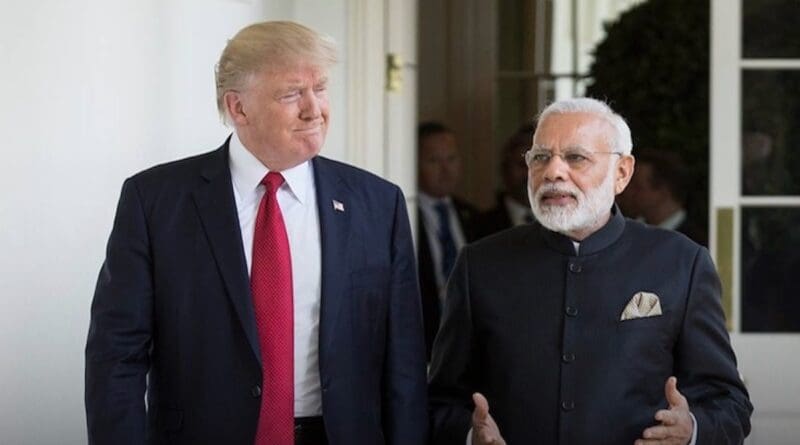
US President Donald Trump with India's Prime Minister Narendra Modi. Photo Credit: POTUS, X

July 31, 2026
By M.K. Bhadrakumar

Key Takeaways:

A US Senate bill advancing secondary sanctions threatens 100% tariffs on major buyers of Russian oil, including India. The Lindsey O. Graham Sanctioning Russia and Iran Act of 2026 has strong bipartisan support and could soon reach Trump’s desk for discretionary enforcement.

India already faces competitive disadvantages under existing US tariffs. New Section 301 duties and the lack of textile quota exemptions leave Indian apparel and other exports more expensive than those from Bangladesh, Mexico, and some ASEAN competitors.

The measure is seen as pressure on India’s strategic autonomy. Critics argue the bill aims to force Delhi to cut Russian energy imports and that evasive official responses risk subordinating national interest to US demands.


The Commerce and Industry Minister Piyush Goyal’s characterisation of the reports suggesting the US could impose a 100 percent tariff on countries such as India that import Russian oil as speculative cannot be taken as a statement of fact. “We don’t comment on speculation,” he told the media. On closer look, it is an evasive remark.

What is absolutely certain is that the US Congress will pass the bill. In the amended form, the bill, named The Lindsey O. Graham Sanctioning Russia and Iran Act of 2026, tightens US sanctions against Russia and Iran. It passed its second procedural vote in the US Senate on Wednesday. Eighty-four senators voted to launch debates on it, while 12 were against.

The final voting can even be expected by the end of the week. The bill envisages restrictions on Russia and Iran’s political and military leaders and state-owned companies as well as secondary sanctions against the two countries’ trade partners. Senators also proposed a 100% tariff for the five main buyers of Russian oil.


Earlier on Wednesday, President Donald Trump actually supported the bill and remarked that he saw no need for the House of Representatives to interrupt the parliamentary recess in August to review the bill. The bill is a veritable reality now. It is upto Trump’s discretion entirely to decide on the implementation of the sanctions.

Equally, it remains a pious hope still that the first tranche of India’s trade agreement with the US, announced by Trump and Prime Minister Narendra Modi on February 3, will materialise soon.

The catch is, Delhi is pinning hopes that Trump accedes to our wish to be granted a comparative advantage over our competitors, namely, countries in our neighbourhood, the ASEAN region “and other nations with whom we compete,” as Goyal remarked yesterday.

Meanwhile, although the US’ temporary 150-day 10% global tariff expired on July 24, Washington immediately replaced it with permanent Section 301 forced-labor duties of 10% to 12.5% targeting over 60 trading partners, including India.

Unlike competitors such as Bangladesh, Indonesia, and Malaysia, India did not receive a textile and apparel tariff-rate quota (TRQ) exemption for using US-origin cotton, putting Indian apparel exports at a relative price disadvantage. Also, products already governed by Section 232 such as steel, aluminium, and copper continue to face separate existing structural tariffs ranging from 25% to 50%.


Curiously, under the new Section 301 rules effective July 24, India actually faces severe competitiveness disadvantages in its key export sectors when compared to Mexico and Bangladesh. While all three nations technically occupy the baseline 10% tariff tier, specific country exemptions for the other two countries leave India uniquely exposed.

Bangladesh has secured a specialised Textile TRQ Mechanism, whereby a specific volume of Bangladeshi apparel is allowed to enter the US free of tariff, provided they use US-sourced raw cotton and fibre. Whereas, India did not receive a textile mechanism or quota exception. Consequently, Indian ready-made garments face an additional 10% duty stacked on top of regular MFN rates, making Indian textiles significantly more expensive than Bangladeshi exports in the US market. So much for our insistence on preferential tariffs vis-a-vis competitors!

The most controversial element of the Russia sanctions bill in the Congress is the possibility of Washington imposing duties on countries purchasing Russian energy resources (so-called secondary duties). Indeed, Trump has already used secondary tariffs against Indian the past. On August 6, 2025, he signed an executive order “Countering Threats to the United States by the Government of the Russian Federation.” An additional punitive tariff of 25% was imposed on India, effectively increasing the then-current tariff rate on India to 50%. Therefore, in effect, the Graham bill effectively restores Trump’s ability to impose tariffs above 15%.

Ivan Timofeev, Director General of the Russian International Affairs Council (an affiliate of Russian foreign ministry) has compared the bill to a gun that Trump could keep on the table and brandish to extract concessions from the other side. Timofeev emphasised: ”Trump’s support for the law is unlikely to have any impact on Russian policy. Perhaps it will add a psychological effect. Even from a purely pragmatic perspective, what’s the point of seriously considering this factor in political calculations if it doesn’t change anything de facto?”


Arguably, the bill is supposed to be another way to pressure Russia to extract further concessions in the Ukrainian conflict. However, the ground reality is that Russian policy has hardened lately and is now focusing on a military solution that ensures there won’t be another war. Trump cannot but be aware of it too.

Addressing a meeting of naval officers in St. Petersburg recently, Putin hinted at what Eurasia’s map would look like in a conceivable future: “I am confident that sooner or later Ukraine will lose these western territories [west of Dnieper River], lands that once belonged to Poland, Hungary and Romania. It may not happen tomorrow or the day after tomorrow. It may take one year, two years, 10 years or 15 years, but history will ultimately put everything back in its place.

“There was only one guarantor of Ukraine’s territorial integrity. It was Russia. But they decided it was necessary, possible and beneficial for them to declare Russia their enemy,” Putin sardonically noted.

It is plain to see that the bill’s real objective is to derail India’s strategic partnership with Russia and force Delhi to cut back its oil imports from Russia. Lindsey Graham never really cared to hide this unpleasant truth. Make no mistake, this is a bipartisan legislation which has had strong backing from members in both parties for over a year. And it advanced on an 86-12 vote in the 100-member senate.

Sen. Richard Blumenthal (D-Conn.), the co-author of the bill, said the measure is intended to punish China and India for financing Russia’s war with their purchases of Russian energy. As he put it, “To be really blunt, China and India are the main culprits here. They purchase the vast majority of oil and gas. They are fuelling Russia’s war machine and they are doing us no favours anywhere else in the world.”

China should have been a ‘natural ally’ for India in countering the US pressure going forward. On the contrary, the government threw its weight with gusto behind the recent US-led statement by a clutch of western countries to reaffirm the 2016 ruling against China’s South China Sea claims. What was the urgency? Beijing has reacted sharply.

Goyal’s evasive remark is shocking. A comprador mindset is tantamount to betraying national interest. India’s continued import of Russian oil once again becomes the litmus test of the country’s strategic autonomy and independent foreign policy.


About M.K. Bhadrakumar
M.K. Bhadrakumar is a former Indian diplomat.
View all posts by M.K. Bhadrakumar →

Saturday, July 04, 2026

Let a Thousand Flowers Bloom or None at All: the Comprador Politics of Fear in Bosnia

Source: Originally published by Z. Feel free to share widely.

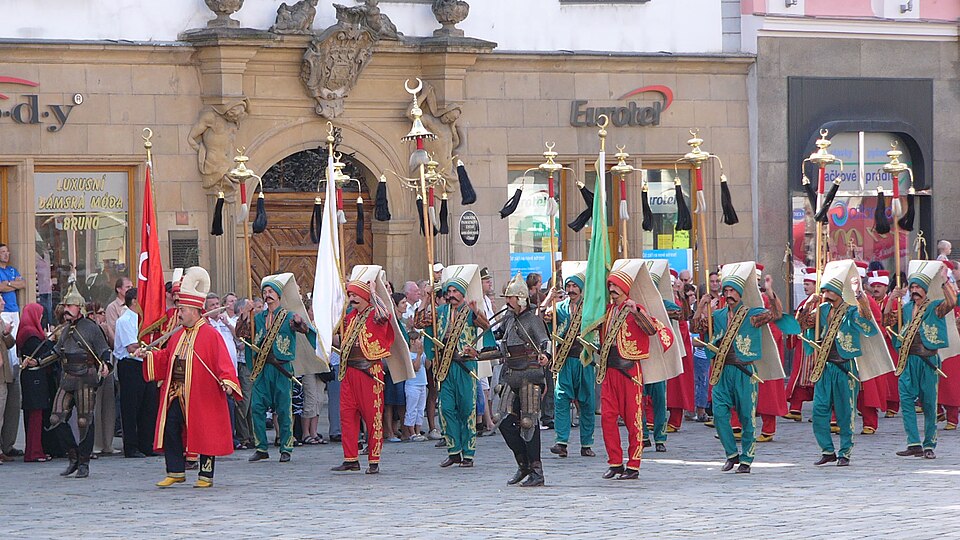
The news that Mehter, a Turkish military band, paraded through Baščaršija — Sarajevo’s old Ottoman-era bazaar and historic city center – and performed in the Bosnian capital should not be met with hysteria or panic about “the Turks,” a reaction that largely comes from Serbian and Croatian circles, but also from secular Bosniak ones. The very description of the event already says enough: this is a military band of Ottoman provenance, associated with the ceremonial traditions of the Janissaries and the sultans – in other words, not exactly a children’s choir called “Little Butterfly” brought in to cheer up the gathered tourists.

Still, it is not entirely incomprehensible that part of the public sees a symbolic problem here. There are memorials to şehids – Muslim martyrs – connected to the Ottoman conquest of Jajce in 1463, a fortified royal town in central Bosnia and the last seat of the medieval Bosnian kingdom. There are also narratives that link those şehids to the army of Mehmed II, known as Mehmed the Conqueror, the Ottoman sultan whose campaign brought an end to the medieval Bosnian state. And there are even preschool institutions such as the “Sultan Fatih Kindergarten” in Novi Travnik, a town in central Bosnia, which appears on official lists of preschool institutions. None of this, however, means that one should launch a moral panic complete with a warning siren for the “return of the Janissaries.”

Intellectual honesty requires us to acknowledge that the culture of a former conqueror or occupier does not have to remain forever what is often superficially – and frequently with disastrous consequences – classified as “occupying culture.” It is indeed that at the moment of military domination, political subjugation, and institutional coercion. Over centuries of local life, however, through family memory, language, architecture, music, religious practice, and everyday customs, it can become part of domestic culture. The postcolonial theorist Homi K. Bhabha would say that culture is not transmitted as a dead package from the imperial center to a passive periphery; rather, it emerges in the in-between spaces, through repetition, translation, mimicry, hybridization, and local reworking.

In other words, once an imperial form is adopted by the native population, it is no longer necessarily a pure marker of foreign rule. It becomes something “almost the same, but not quite” – a new cultural fabric that simultaneously remembers its origin and changes its meaning. The Serbian appropriation of the cross with the so-called ocila – the four fire-steels arranged around a cross in Serbian heraldry – and of the Byzantine double-headed eagle illustrates precisely this process. Imperial symbols, once adopted and recoded dynastically, heraldically, and nationally, cease to be mere remnants of Byzantine rule or cultural influence. They become authentic signs of Serbian statehood, ecclesiastical identity, and collective self-understanding.

In the same way as in the Serbian case of appropriating Byzantine Christian symbolism, the Ottoman legacy of Bosnian Muslims is not, as is often offensively suggested, the political sediment of a failed empire. Rather, it is deeply connected to Islam as a universal religion, one that cannot be reduced exclusively to the Ottoman state, to the policies of this or that sultan, or to the beat of a Janissary drum. The Islam of Bosnian Muslims is not simply the extended arm of a former empire, but a living faith, a local experience, and a cultural world that took shape in Bosnia over centuries.

Here one should also recall the almost laboratory-pure hysteria that erupted in Sarajevo and Serbia when, during the student protests in Serbia, a young man wearing a šajkača  – a traditional Serbian military-style cap, widely associated with Serbian national symbolism – embraced a young woman wearing a hijab. Religious fanatics, party heralds, and factory-calibrated bots on both sides of the Drina River – the river that forms much of the border between Bosnia and Herzegovina and Serbia – immediately recognized in this most ordinary warm human gesture proof of the end of the world. For one side, she instantly became a “Turk”; for the other, he became a “Chetnik,” as if people did not wear clothes, symbols, religious and cultural signs, but historical criminal indictments on their heads. In that small scene one could see how deeply the public sphere shaped by rigid nationalists in Bosnia and Herzegovina and Serbia remains imprisoned in the most primitive Goebbelsian grammar: take a single sign, tear it out of life, history, family, faith, homeland, and personal experience, and turn it into a wanted poster.

At the same time, however, it is understandable that a certain unease remains among non-Muslims, among Muslims who do not feel any particular closeness to the Ottomans, and among secular people of various backgrounds, when precisely the military-conquest symbols of that tradition are presented as entirely neutral folklore.

Historical memories in Bosnia, in the absence of a shared cultural policy in a decentralized country, are not exactly neatly arranged in a museum display case so that the masses may understand them and place them where they belong. Instead, they wander around like exceptionally honorable village hosts with unresolved property disputes over a boundary line between two fields.

If we accept that the Ottoman-Islamic legacy is not an “occupying remnant” – and it is not – but also part of the identity of one people, why is it still almost unthinkable to have a serious conversation in Sarajevo, a city that aspires to function as the capital of all Bosnia and Herzegovina, about, for example, a Vidovdan procession? Vidovdan, or St. Vitus Day, is one of the central dates in Serbian historical and religious memory, especially because of its association with the Battle of Kosovo of 1389. Or why is it so difficult to discuss restoring street names dedicated to Vuk Karadžić, the nineteenth-century reformer of the Serbian language; Petar II Petrović Njegoš, the Montenegrin prince-bishop and poet; Hajduk Veljko, a Serbian rebel commander from the First Serbian Uprising against the Ottomans; or Miloš Obilić, the legendary hero of the Kosovo cycle?

We are speaking of figures without whom – regardless of the natural controversies attached to them, controversies that exist in every plural society – it is difficult to explain the language, literature, political imagination, and cultural memory of the Serbian people. If Mehter is also part of the cultural heritage of Bosnian Muslims, and there is no reason why it should not be, then Vuk Karadžić cannot be treated as the fourth horseman of the apocalypse with a Cyrillic primer tucked under his arm.

Naturally, in that case Mehter, understood as an exceptionally interesting historical, folkloric, and performance tradition rather than as a desire for “the return of the Turks,” would also have to be welcome in Banja Luka – the largest city in Republika Srpska, Bosnia and Herzegovina’s Serb-majority entity – and in the western, predominantly Croat part of Mostar, the divided Herzegovinian city whose eastern and western halves still carry heavy postwar symbolic meanings.

That, of course, is how things would have to be in a society that truly belongs to itself. But it is not so in a colonized country where comprador elites build their power on the production of apocalyptic scenarios and on reducing culture to a tribal alarm system. Since they are not meaningfully asked about the economy, sovereignty, or real social development, all that remains for them is to perform the role of historical guards at a village checkpoint: they, allegedly, get to decide which cap, which street, and which long-dead poet will receive permission to pass through their miniature customs office of fear.

In other words, if we want Bosnia and Herzegovina truly to be a shared society, and not a collection of shattered fragments held together by international diktat, ever-scarcer grants, and the occasional ambassadorial bandage, then the same principle must apply to everyone. This is especially true because Bosnia and Herzegovina is, statistically, one of the societies with the lowest number of ethnically and confessionally motivated incidents in the world. Either we will agree that all historical cultures in Bosnia and Herzegovina have the right to public space throughout its entire territory – without triumphalism, humiliation, vulgarity, or the symbolic trampling of others – or we will finally admit that everyone is in fact demanding pluralism only within the limits of their own self-satisfaction. In that case, there is no Bosnia and Herzegovina as a shared society, but only three parallel memorial zones – Bosniak, Serb, and Croat – connected not even by a common electric utility.

That is why the rule would have to be simple: either let a thousand flowers bloom, or let nothing bloom at all. But not in such a way that some get a botanical garden, others a herbarium, and the third are granted permission to exist only if they remain buried deep beneath uncut grass, neither smelling nor blooming, as if they had not grown from that very soil in the first place.

P.S. This text is being written in the middle of the hot summer of an election campaign, at a moment when the hooligan service of Sarajevo and East Sarajevo – East Sarajevo being the Serb-majority city administratively adjacent to Sarajevo, in Republika Srpska – is, according to a duly stamped purchase order from campaign headquarters, burning Serbian tricolors, snatching flags with lilies – the golden fleur-de-lis associated with the medieval Bosnian Kotromanić dynasty and later with the wartime flag of the Republic of Bosnia and Herzegovina – drawing crosses with the Serbian ocila on them, and then bragging about this epic achievement on social media. The intellectual level is roughly that of sixth grade, during school recess, among children in urgent need of supervision.

And all of this is happening in two cities where people live, work, shop, fall in love, quarrel, seek medical treatment, and move back and forth every day in the tens of thousands without any apocalypse whatsoever, while the electoral shamans on the sidelines desperately try to explain to them that, for campaign purposes, it would be desirable if they could hate one another just a little more.Email

Vuk Bačanović is a Sarajevo-based historian and a long-time journalist and editor. He is the author of numerous scholarly and journalistic articles. He generally advocates a historical-anthropological approach to the study of the past, particularly the phenomenon of ethnic identities. He is currently a doctoral candidate at the Faculty of Philosophy, University of Belgrade, and serves as an editor of the Podgorica-based political portal Žurnal.me.

Saturday, June 27, 2026

Rebranding French Imperialism

Source: Africa As A Country

More than seven decades after the Fifth Pan-African Congress demanded the complete liberation of Africa from colonial domination, the continent still finds itself trapped in the structures of dependency. The resolutions of the historic 1945 Congress in Manchester were clear: African nations deserved full political and economic independence, the removal of foreign domination, and the right of the African people to determine their own future. Yet in 2026, many African leaders continue opening the gates of the continent to the same imperial powers that colonized, exploited, and brutalized our people.

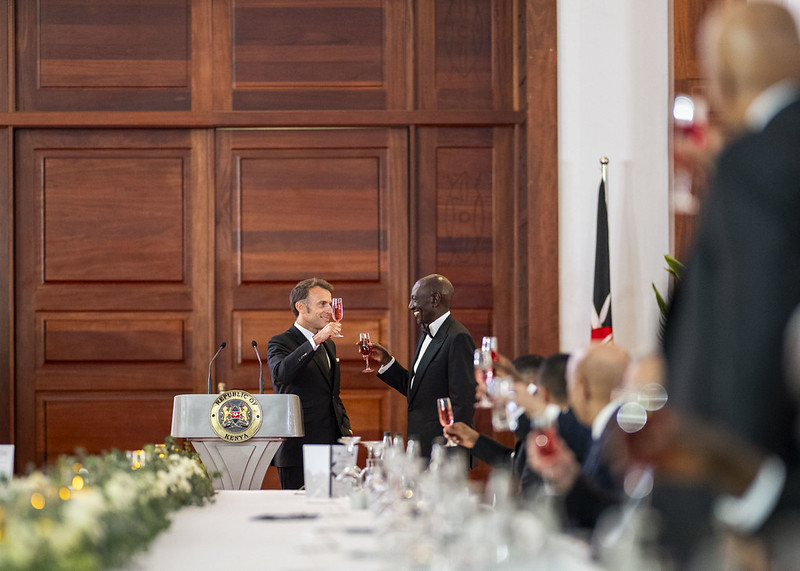
The recently concluded Africa Forward Summit in Nairobi, co-hosted by Kenyan President William Ruto and French President Emmanuel Macron, became a symbol of this contradiction. Presented as a partnership of equals, the summit sought to rebrand France’s relationship with Africa at a time when Paris is rapidly losing influence across the continent.

The summit brought together over 30 African leaders and resulted in announcements of approximately €23 billion in investment pledges, targeting sectors such as energy, agriculture, and artificial intelligence. But beneath the language of co-investment, mutual respect, and win-win lies the enduring reality of imperialism.

France did not arrive in Nairobi merely out of friendship for Africa. The summit came at a moment when French influence has sharply declined in West Africa. Mali, Burkina Faso, and Niger have expelled French troops and challenged decades of French military and economic control. And France has been forced to withdraw military forces from several former colonies amid growing anti-French sentiment and popular uprisings.

This explains why the Nairobi summit was politically significant for France: it was the first major France-Africa summit hosted in an Anglophone African country. Kenya became the bridge through which France hopes to regain strategic influence in East and Central Africa, after facing resistance in the Sahel.

The question remains: why was President Ruto willing to host such a summit at this particular moment? The answer lies in the class character of the Kenyan state. The current administration has consistently aligned itself with Western powers, presenting Kenya as a reliable regional partner for foreign capital, military cooperation, and geopolitical interests. By hosting Macron, Ruto positioned Kenya as a strategic gateway for France’s renewed engagement with Africa while simultaneously strengthening his government’s standing among Western allies. Far from representing an independent African development agenda, the summit reflected the tendency of comprador elites to seek legitimacy and support from imperial centers of power, rather than from the citizens of their own countries.

Kenyan authorities framed the summit as an opportunity for economic growth and foreign investment. Yet the deeper question is: growth for whom, and under whose control?

Macron described the initiative as a partnership of equals. But equality cannot exist between economies structured in fundamentally unequal ways. The relationship between France and Africa has historically been shaped not by equality but by extraction. According to France’s Ministry for Europe and Foreign Affairs, over 1,000 French subsidiaries operate in Africa and over 140 in Kenya alone. Major corporations such as TotalEnergies, Orange, Carrefour, CMA CGM, and Bolloré maintain extensive commercial interests in energy, telecommunications, logistics, retail, and infrastructure. While this is presented as development and partnership, the profits extracted from African labor and resources overwhelmingly benefit foreign capital.

French influence in Africa has never been exercised solely through military and economic means. Cultural diplomacy has long formed part of France’s strategy for maintaining influence abroad. Through language institutions, educational exchanges, media partnerships, cultural centers, and development programs, France projects what is often described as “soft power.” Critics argue that such initiatives also serve broader political and economic objectives by cultivating favorable elites, shaping public discourse, and reinforcing France’s long-term strategic interests. The Africa Forward concert, Macron’s cooking with influencers, and other PR activities during his visit to Kenya all evidence this.

This is why Macron’s attempt to present himself as a “Pan-Africanist” during the summit was met with skepticism among activists and progressive forces. Pan-Africanism is not a branding exercise. It is a revolutionary struggle for African unity, sovereignty, and liberation from imperial domination.

Even the summit declaration itself reflected the language of dependency politics. Discussions focused heavily on debt restructuring, private investment, credit reform, and security cooperation—issues that often operate within financial systems dominated by institutions such as the IMF and the World Bank.

The security dimension of the summit also raised concern among activists. Kenya and France have strengthened military cooperation in recent years, with critics arguing that the recently signed military pact increasingly compromises national sovereignty. Social movements have drawn parallels between new defense arrangements and earlier military agreements involving British troops at the British Army Training Unit in Kenya (BATUK). Particularly controversial are the defense cooperation arrangements that grant significant legal protections to foreign military personnel operating in Kenya—limiting the ability of Kenyan institutions to hold foreign troops fully accountable under local law.

At the same time, France continues presenting itself as a “stabilizing force” in Africa, despite widespread criticism of its military role in the Sahel. Many people across West Africa increasingly associate foreign military interventions with instability rather than liberation.

These contradictions became more visible during protests organized by activists and members of social justice movements in Nairobi during the summit. Protesters denounced French imperialism, foreign domination, debt dependency, and military expansion. Reports from activists indicated that demonstrators were met with police violence, including tear gas, arrests, and arbitrary detention.

The summit therefore exposed two Africas existing side by side. One Africa sits inside conference halls discussing investment frameworks with multinational corporations and foreign powers. The other Africa exists in the streets, among unemployed youth, struggling workers, peasants, students, and communities facing rising costs of living.

Only a week after the summit, Kenya witnessed protests linked to the high cost of living and fuel prices. Across major towns and cities, sections of the population expressed frustration with worsening economic conditions. These demonstrations reflected deeper class contradictions inside Kenya’s capitalist economy.

Recent developments in the Alliance of Sahel States demonstrate that sections of Africa are once again questioning foreign military domination and asserting greater sovereignty. While contradictions and challenges remain within those states, their rejection of permanent foreign military influence has inspired anti-imperialist discussions across the continent.

Ultimately, the task before progressive African forces is not simply to criticize summits such as Africa Forward. The deeper challenge is building organized political alternatives rooted in workers, youth, peasants, women, and oppressed communities. Africa’s liberation will not emerge from elite conferences hosted in luxury halls or from dependency disguised as partnership. It will come through revolutionary political organization, Pan-African solidarity, and the collective struggle of African people against imperialism, capitalism, and comprador elites who profit from foreign domination.

The future of the continent cannot be determined in Paris, Washington, London, or the boardrooms of multinational corporations. It must be determined by the organized masses of Africa themselves. The task of this generation is clear: to learn from the failures of false independence, reject dependency, and continue the unfinished struggle for a united and sovereign continent.


This article was originally published by Africa As A Country; please consider supporting the original publication, and read the original version at the link above.