Alexander Willis
August 22, 2026
RAW STORY
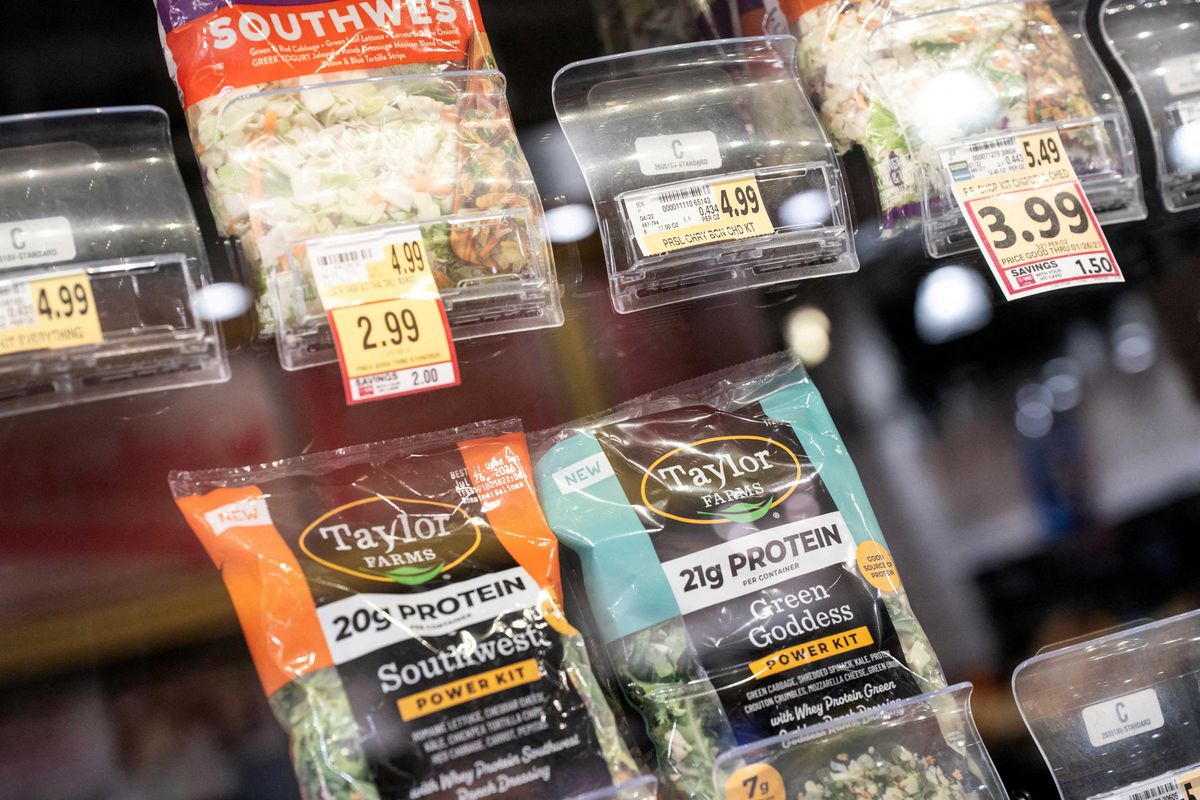
Taylor Farms products are displayed for sale, amid reports of slumping consumer confidence in lettuce and other fresh produce during the current cyclosporiasis outbreak that has sickened thousands across the U.S., at a grocery store in Washington, D.C., U.S., July 24, 2026. REUTERS/Nathan Howard/File Photo
Legal expert and former U.S. attorney Joyce Vance issued a bleak warning Saturday that the recent uptick in foodborne illness in the United States – a trend she blamed directly on the Trump administration – was only the beginning.
“In March 2025, shortly after his return to power, Donald Trump’s administration postponed the compliance deadline for the FDA’s Food Traceability Rule by 30 months,” Vance wrote in an analysis published Saturday night on her Substack. “That moved it back from January 20, 2026, to July 20, 2028. We are now paying the price.”
A multistate Salmonella outbreak linked to jalapeños has sickened 345 people across 27 states, and a separate outbreak tied to sprouts has sickened 55, per the Centers for Disease Control and Prevention. A cyclospora outbreak tied to lettuce produced by Taylor Farms has proven deadlier – Michigan officials confirmed two deaths in early August, the first U.S. deaths linked to the outbreak, PBS reported.
The recent outbreaks, Vance argued, were easy to trace directly to policies and decisions instituted by the Trump administration.
“Taylor Farms (the parent company of Taylor Fresh Foods) donated $1 million to MAGA Inc., a pro-Trump super PAC, on March 26, 2025, just days after the Traceability Rule extension. It’s not hard to follow the money,” Vance wrote. “Even though the company is a serial offender, it took the FDA a month after it developed the link to travel to inspect the farm in Mexico believed to be responsible.”
As a legal expert, Vance noted how the Justice Department had a near-infinite number of tools at its disposal to compel compliance from U.S. food producers, but appeared to be “asleep at the wheel.” As such, she warned, future foodborne illness outbreaks were almost certain to occur.
Taylor Farms products are displayed for sale, amid reports of slumping consumer confidence in lettuce and other fresh produce during the current cyclosporiasis outbreak that has sickened thousands across the U.S., at a grocery store in Washington, D.C., U.S., July 24, 2026. REUTERS/Nathan Howard/File Photo
Legal expert and former U.S. attorney Joyce Vance issued a bleak warning Saturday that the recent uptick in foodborne illness in the United States – a trend she blamed directly on the Trump administration – was only the beginning.
“In March 2025, shortly after his return to power, Donald Trump’s administration postponed the compliance deadline for the FDA’s Food Traceability Rule by 30 months,” Vance wrote in an analysis published Saturday night on her Substack. “That moved it back from January 20, 2026, to July 20, 2028. We are now paying the price.”
A multistate Salmonella outbreak linked to jalapeños has sickened 345 people across 27 states, and a separate outbreak tied to sprouts has sickened 55, per the Centers for Disease Control and Prevention. A cyclospora outbreak tied to lettuce produced by Taylor Farms has proven deadlier – Michigan officials confirmed two deaths in early August, the first U.S. deaths linked to the outbreak, PBS reported.
The recent outbreaks, Vance argued, were easy to trace directly to policies and decisions instituted by the Trump administration.
“Taylor Farms (the parent company of Taylor Fresh Foods) donated $1 million to MAGA Inc., a pro-Trump super PAC, on March 26, 2025, just days after the Traceability Rule extension. It’s not hard to follow the money,” Vance wrote. “Even though the company is a serial offender, it took the FDA a month after it developed the link to travel to inspect the farm in Mexico believed to be responsible.”
As a legal expert, Vance noted how the Justice Department had a near-infinite number of tools at its disposal to compel compliance from U.S. food producers, but appeared to be “asleep at the wheel.” As such, she warned, future foodborne illness outbreaks were almost certain to occur.
“Taylor Farms’ repeated connection to major outbreaks and recalls warrants a closer look at whether these are unrelated incidents or signs of recurring weaknesses.”
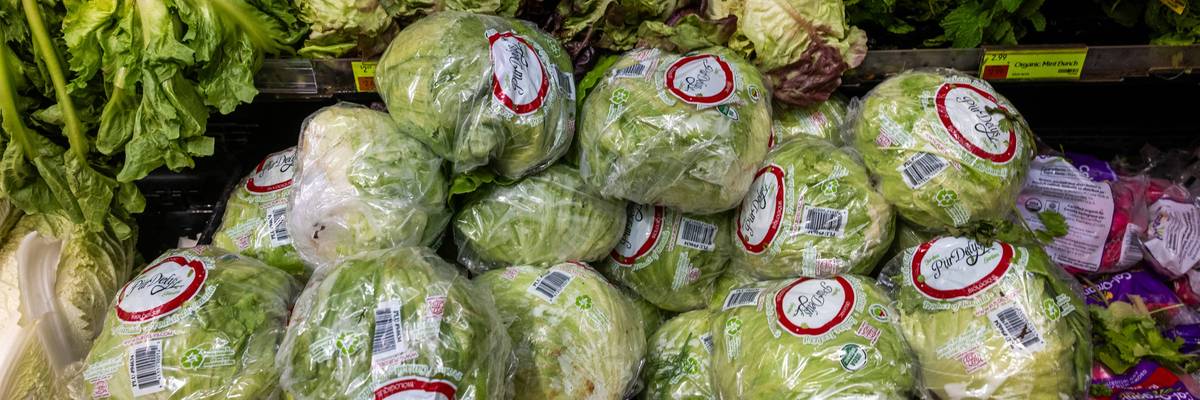
Lettuce are displayed on the shelf of a Manhattan grocery store on August 13, 2026,
in New York City.
(Photo by Spencer Platt/Getty Images)
Brad Reed
Aug 18, 2026
COMMON DREAMS
An agricultural industry watchdog on Tuesday released a report examining how corporate consolidation enabled this summer’s widespread outbreak of Cyclosporiasis, a foodborne illness that causes explosive diarrhea.
The report, published by Farm Action, argues that the wide reach of produce giant Taylor Farms, which is the source of the outbreak, spread food contaminated by the Cyclospora parasite far and wide before an issue was detected.
One problem with Taylor Farms’ reach, the report states, is that it is often hidden, leaving people unaware of the source of certain products.
“Taylor Farms produces 40% of the salad kits sold in the country and grows about one-quarter of its own vegetables, sourcing the rest through partner farms,” the report says. “That makes it a major link between farms and some of the nation’s largest food buyers.”
The company’s produce is used at popular fast-food chains such as Taco Bell, McDonald’s, and Chipotle, and is sold at big-name grocery stories including Whole Foods, Target, Safeway, and Costco.
Beyond that, its produce is bought by foodservice distribution giants Sysco and US Foods, who send it to assorted schools, hospitals, and hotels.
The report says that the consolidation of the produce production industry was itself enabled by the industry consolidation of grocery stores, restaurant chains, and foodservice distributors, which found it more efficient to buy from conglomerates such as Taylor Farms, which the report categorizes as “grower-shipper-packers (GSPs).”
“Like other large GSPs, Taylor Farms sources produce through regional and international networks rather than relying primarily on nearby farms,” writes Farm Action. “That helps explain why investigators traced lettuce implicated in the 2026 Cyclospora outbreak to Mexico, even in the middle of summer when much of the US is capable of growing lettuce.”
Because Taylor distributes its produce to so many places under so many different brands, the report continues, consumers have a hard time avoiding them even if they are actively trying.
What’s more, the 2026 Cyclospora outbreak isn’t the first time Taylor has been linked to a food safety event, as Farm Action found that it was connected to “the 2026 Salmonella outbreak linked to jalapeño products, previous Cyclospora outbreaks, the 2024 E. coli outbreak linked to McDonald’s onions, the 2021 E. coli cluster involving romaine lettuce, and numerous recalls for allergens, labeling errors, contamination risks, and processing defects.”
“These incidents do not by themselves prove a pattern of systemic problems,” the report adds. “But Taylor Farms’ repeated connection to major outbreaks and recalls warrants a closer look at whether these are unrelated incidents or signs of recurring weaknesses.”
The report concludes by recommending stronger enforcement of US antitrust laws to break up big distributors, as well as stronger food safety and traceability policies.
Sarah Carden, senior director of research and policy at Farm Action, said the report on Taylor Farms should be a wakeup call to food safety regulators about the dangers of corporate centralization.
“Taylor Farms has extraordinary reach across the produce supply chain, a history of connections to major food safety events, significant political spending and access, and a workplace record that raises serious questions,” said Carden. “Its growth also shows how consolidation has left farmers with fewer buyers and made our food supply increasingly dependent on a small number of powerful companies.”
(Photo by Spencer Platt/Getty Images)
Brad Reed
Aug 18, 2026
COMMON DREAMS
An agricultural industry watchdog on Tuesday released a report examining how corporate consolidation enabled this summer’s widespread outbreak of Cyclosporiasis, a foodborne illness that causes explosive diarrhea.
The report, published by Farm Action, argues that the wide reach of produce giant Taylor Farms, which is the source of the outbreak, spread food contaminated by the Cyclospora parasite far and wide before an issue was detected.
One problem with Taylor Farms’ reach, the report states, is that it is often hidden, leaving people unaware of the source of certain products.
“Taylor Farms produces 40% of the salad kits sold in the country and grows about one-quarter of its own vegetables, sourcing the rest through partner farms,” the report says. “That makes it a major link between farms and some of the nation’s largest food buyers.”
The company’s produce is used at popular fast-food chains such as Taco Bell, McDonald’s, and Chipotle, and is sold at big-name grocery stories including Whole Foods, Target, Safeway, and Costco.
Beyond that, its produce is bought by foodservice distribution giants Sysco and US Foods, who send it to assorted schools, hospitals, and hotels.
The report says that the consolidation of the produce production industry was itself enabled by the industry consolidation of grocery stores, restaurant chains, and foodservice distributors, which found it more efficient to buy from conglomerates such as Taylor Farms, which the report categorizes as “grower-shipper-packers (GSPs).”
“Like other large GSPs, Taylor Farms sources produce through regional and international networks rather than relying primarily on nearby farms,” writes Farm Action. “That helps explain why investigators traced lettuce implicated in the 2026 Cyclospora outbreak to Mexico, even in the middle of summer when much of the US is capable of growing lettuce.”
Because Taylor distributes its produce to so many places under so many different brands, the report continues, consumers have a hard time avoiding them even if they are actively trying.
What’s more, the 2026 Cyclospora outbreak isn’t the first time Taylor has been linked to a food safety event, as Farm Action found that it was connected to “the 2026 Salmonella outbreak linked to jalapeño products, previous Cyclospora outbreaks, the 2024 E. coli outbreak linked to McDonald’s onions, the 2021 E. coli cluster involving romaine lettuce, and numerous recalls for allergens, labeling errors, contamination risks, and processing defects.”
“These incidents do not by themselves prove a pattern of systemic problems,” the report adds. “But Taylor Farms’ repeated connection to major outbreaks and recalls warrants a closer look at whether these are unrelated incidents or signs of recurring weaknesses.”
The report concludes by recommending stronger enforcement of US antitrust laws to break up big distributors, as well as stronger food safety and traceability policies.
Sarah Carden, senior director of research and policy at Farm Action, said the report on Taylor Farms should be a wakeup call to food safety regulators about the dangers of corporate centralization.
“Taylor Farms has extraordinary reach across the produce supply chain, a history of connections to major food safety events, significant political spending and access, and a workplace record that raises serious questions,” said Carden. “Its growth also shows how consolidation has left farmers with fewer buyers and made our food supply increasingly dependent on a small number of powerful companies.”
Critics link Trump to glass in fruit bars
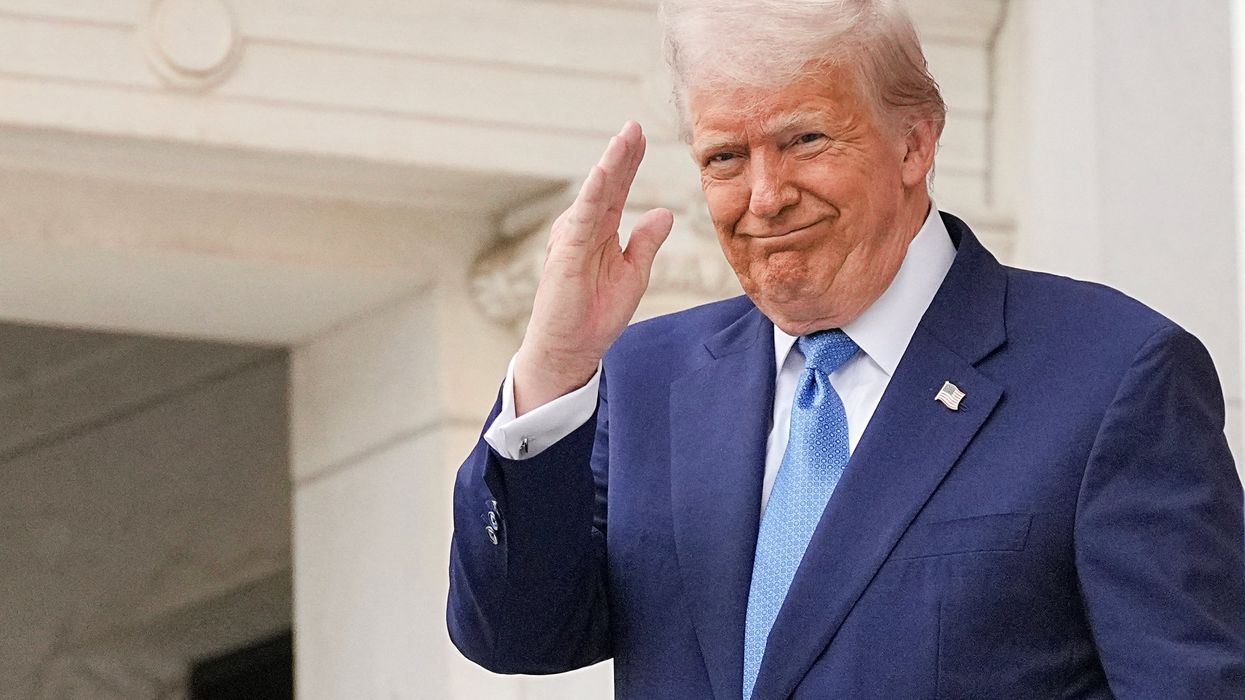
U.S. President Donald Trump salutes, during the annual National Memorial Day Observance in the Memorial Amphitheater, at Arlington National Cemetery in Arlington, Virginia, U.S., May 26, 2025. REUTERS/Ken Cedeno
U.S. President Donald Trump salutes, during the annual National Memorial Day Observance in the Memorial Amphitheater, at Arlington National Cemetery in Arlington, Virginia, U.S., May 26, 2025. REUTERS/Ken Cedeno
August 18, 2026
ALTERNET
President Donald J. Trump's massive government spending cuts have been linked to a number of public health crises, from an ebola outbreak in Africa to a measles outbreak in the United States. Particular attention has been paid to his cuts to the FDA, however, as the Food and Drug Administration's main purpose is to protect Americans from dangers in the products they consume.
Now those FDA cuts are being attacked by a group of Trump's fellow Republicans, who allege a link between the financial cuts and potentially literal cuts Americans could get from eating fruit bars... which have glass in them.
"' Trump has dismantled all oversight and accountability and your families are less safe because of it," The Lincoln Project, a group of anti-Trump Republicans, wrote on X on Tuesday.
"Five flavors of Outshine Fruit Bars have been recalled because they may contain glass, according to parent company Dreyer's Grand Ice Cream," reported CBS News' Aimee Picchi on Tuesday. "The recalled products, which were sold nationwide, are the 2.5-ounce strawberry, watermelon, grape, tangerine and black cherry flavors, packaged in six-count boxes, according to the Aug. 16 statement from the company."
In July, the Trump administration was similarly blamed for an outbreak of explosive diarrhea linked to contaminated lettuce from a company that did not receive adequate inspections on its produce after Trump's FDA cuts.
“The FDA believes that the biggest outbreak this season, the one affecting nine states so far, came to us aboard contaminated iceberg lettuce from Mexico,” CBS News' David Pogue reported at the time. “That lettuce was shipped nationwide by Taylor Farms, a huge distributor that supplies thousands of groceries and restaurants.”
Experts said that it was an unprecedented outbreak, both in terms of its scale and the fact that it would have been easily prevented with sufficient inspections.
Public health advocates argue these back-to-back contamination events are the predictable result of hollowed-out regulatory agencies. Without robust funding for routine factory walkthroughs and border import testing, the frontline defenses protecting the American dinner table have effectively collapsed. While the administration maintains that corporate responsibility should dictate consumer safety, critics point out that self-regulation has failed to keep dangerous foreign materials and toxic parasites out of supply chains. As anger mounts among both Democrats and a fracturing Republican coalition, demands are growing for an immediate independent congressional investigation into the full operational impact of the executive budget cuts.
President Donald J. Trump's massive government spending cuts have been linked to a number of public health crises, from an ebola outbreak in Africa to a measles outbreak in the United States. Particular attention has been paid to his cuts to the FDA, however, as the Food and Drug Administration's main purpose is to protect Americans from dangers in the products they consume.
Now those FDA cuts are being attacked by a group of Trump's fellow Republicans, who allege a link between the financial cuts and potentially literal cuts Americans could get from eating fruit bars... which have glass in them.
"' Trump has dismantled all oversight and accountability and your families are less safe because of it," The Lincoln Project, a group of anti-Trump Republicans, wrote on X on Tuesday.
"Five flavors of Outshine Fruit Bars have been recalled because they may contain glass, according to parent company Dreyer's Grand Ice Cream," reported CBS News' Aimee Picchi on Tuesday. "The recalled products, which were sold nationwide, are the 2.5-ounce strawberry, watermelon, grape, tangerine and black cherry flavors, packaged in six-count boxes, according to the Aug. 16 statement from the company."
In July, the Trump administration was similarly blamed for an outbreak of explosive diarrhea linked to contaminated lettuce from a company that did not receive adequate inspections on its produce after Trump's FDA cuts.
“The FDA believes that the biggest outbreak this season, the one affecting nine states so far, came to us aboard contaminated iceberg lettuce from Mexico,” CBS News' David Pogue reported at the time. “That lettuce was shipped nationwide by Taylor Farms, a huge distributor that supplies thousands of groceries and restaurants.”
Experts said that it was an unprecedented outbreak, both in terms of its scale and the fact that it would have been easily prevented with sufficient inspections.
Public health advocates argue these back-to-back contamination events are the predictable result of hollowed-out regulatory agencies. Without robust funding for routine factory walkthroughs and border import testing, the frontline defenses protecting the American dinner table have effectively collapsed. While the administration maintains that corporate responsibility should dictate consumer safety, critics point out that self-regulation has failed to keep dangerous foreign materials and toxic parasites out of supply chains. As anger mounts among both Democrats and a fracturing Republican coalition, demands are growing for an immediate independent congressional investigation into the full operational impact of the executive budget cuts.

No comments:
Post a Comment