Wednesday, August 10, 2022

Cuba fuel depot blaze 'under control'

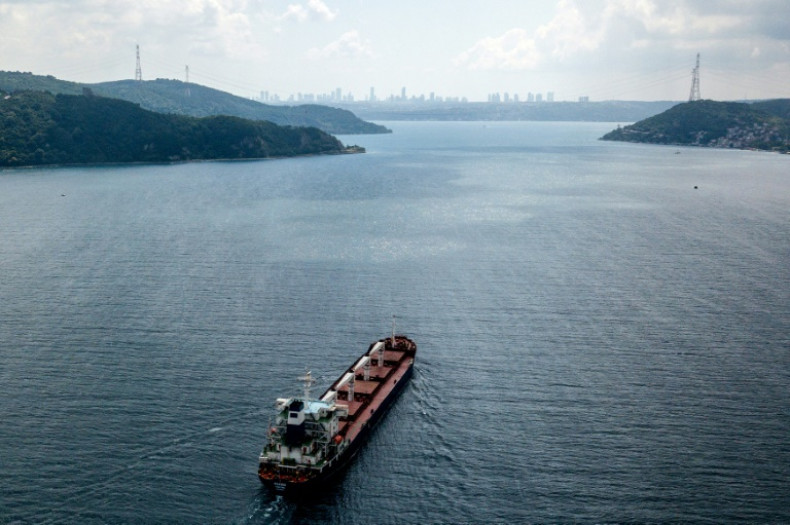
A Mexican firefighting vessel, the "Bourbon Artabaze", and helicopters battle to contain the days-old fire, on Aug 10, 2022. PHOTO: AFP

MATANZAS, CUBA (AFP) - Firefighters on Wednesday (Aug 10) declared that a days-old blaze engulfing a fuel depot has finally been brought under control, although not yet extinguished.

The fire, which started on Friday after lightning struck one of the tanks at the depot outside the western city of Matanzas, left a 60-year-old firefighter dead and 14 colleagues missing, feared dead, according to authorities.

"We can now say that the fire is under control," said deputy fire chief Alexander Avalos Jorge.

Four of the eight tanks at the site - each with the capacity to hold 50 million litres of fuel - collapsed during the blaze that injured more than 100 people, with 22 still receiving hospital treatment.

"Today we feel more calm," said Avalos, although he revealed there were still some fires burning and that they will not be put out on Wednesday.

Cuba has received support from Venezuela and Mexico, who both sent firefighters, fuel fire experts, equipment and materials.


Earlier on Wednesday, the crew of a Mexican helicopter battling the blaze had said it was beginning to be controlled.

Images supplied by the helicopter crew showed less smoke coming from one of the burning tanks than on previous days, while the crew said the flames engulfing another tank had practically gone out.

From the city of Matanzas, some 4km from the depot, less smoke and flames were visible than on previous days, AFP reporters noted.
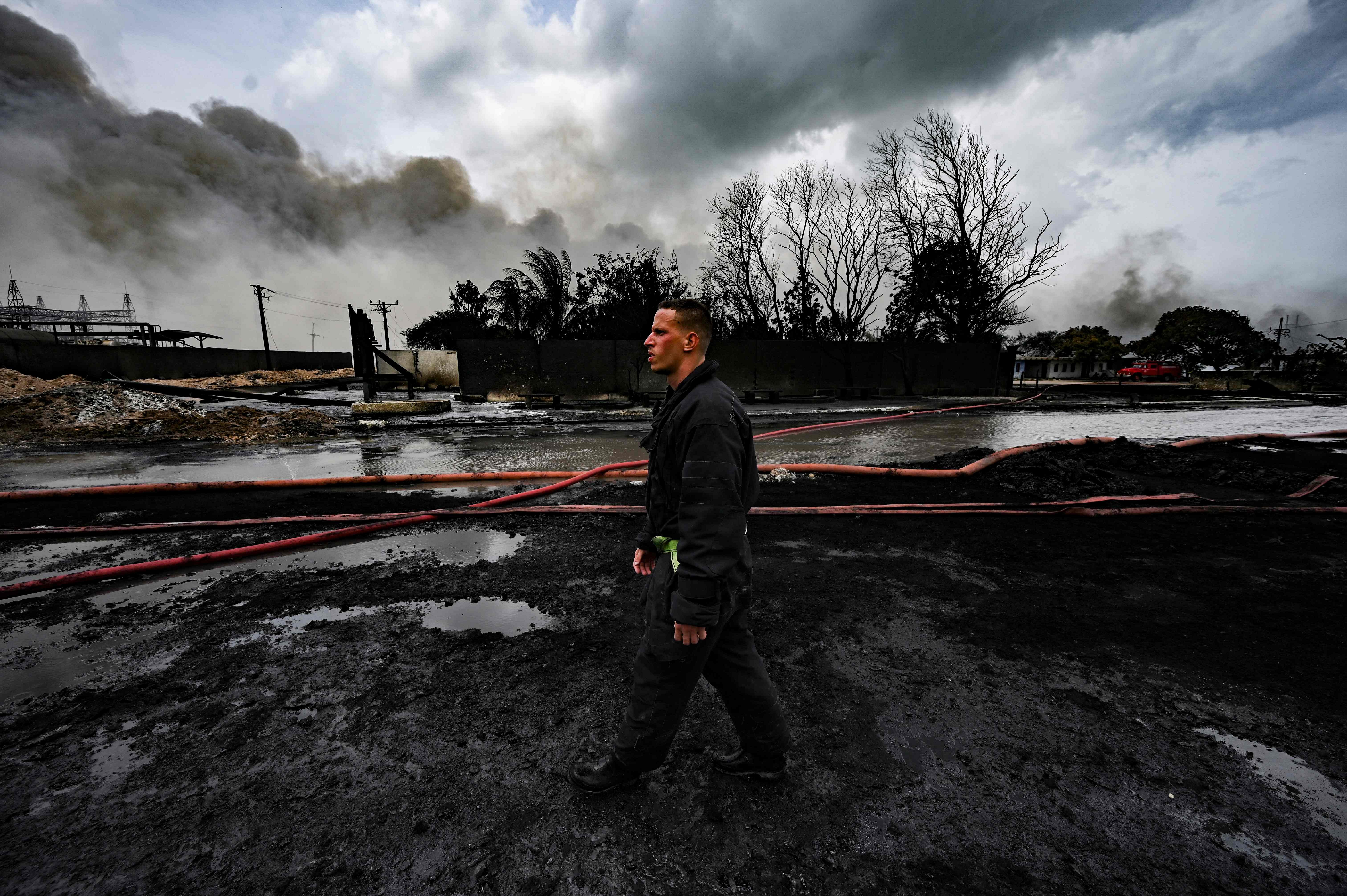
The fire left a 60-year-old firefighter dead and 14 of his colleagues missing, feared dead. 
PHOTO: AFP

On Tuesday, Cuban President Miguel Diaz-Canel told reporters that once the flames have been extinguished and the temperature has dropped "we will be able to go in and recover the victims," in reference to the missing firefighters.

"It will be a very tough moment. We will have to be prepared to support these families."

The Matanzas depot, built in the 1980s and modernised several times, supplies the Antonio Guiteras thermoelectric plant, the largest in the communist nation.

The plant resumed activities on Wednesday after a two-day shutdown due to contaminated water caused by the depot fire.

The disaster comes at a time when Cuba - with an outdated energy network and persistent fuel shortages - has faced mounting difficulties in meeting energy demands.

Worst blaze in Cuba’s history finally under control at oil depot


Fire destroyed 40% of island’s main fuel storage facility over five days and caused blackouts
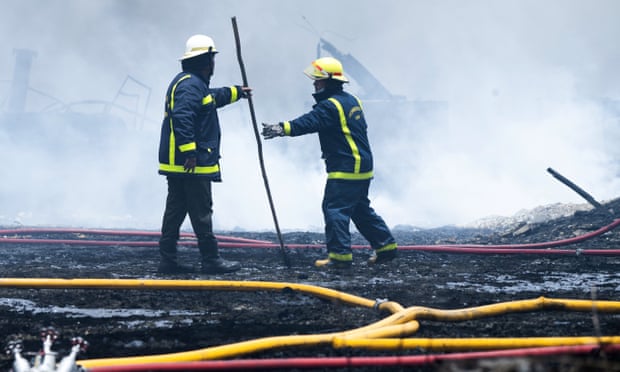
Firefighters work to put out a deadly firein Matanzas, Cuba, on 9 August.
 Photograph: Yamil Lage/AP


Reuters in MatanzasTue 9 Aug 2022

Firefighters have finally overcome what officials described as the worst blaze in Cuba’s history that over five days destroyed 40% of the Caribbean island’s main fuel storage facility and caused blackouts.

Raging flames that ravaged a four-tank segment of the Matanzas super tanker port had died down on Tuesday and the towering plumes of thick black smoke streaming from the area were diminished and now mostly gray.

Matanzas is Cuba’s largest port for receiving crude oil and fuel imports. Cuban heavy crude, as well as fuel oil and diesel stored in Matanzas in 10 huge tanks, are mainly used to generate electricity on the island.

Lightning struck one fuel storage tank on Friday evening. The fire spread to a second by Sunday and engulfed the four-tank area on Monday, accompanied by huge explosions and despite efforts by local firefighters supported by more than 100 Mexican and Venezuelan reinforcements.

Firefighter Rafael Pérez Garriga told Reuters on the steaming outskirts of the disaster that he worries the fire would impact the power situation in the country.

“The situation is going to be more difficult. If the thermoelectric plants are supplied with that oil, we are going to have the whole world affected, it is electricity and it affects everything,” he said.

The communist-run country, under heavy US sanctions, is all but bankrupt. Frequent blackouts and shortages of gasoline and other commodities already had created a tense situation with scattered local protests following last summer’s historic unrest in July.

On Tuesday, more helicopters joined the effort to put out the fire, along with two fireboats sent by Mexico along with heavy firefighting equipment.

“We have not yet been able to access the impact area due to the conditions. There is combustion and so we cannot risk our lives for now,” Pérez said around noon.

Later in the day firefighters for the first time were entering the area and spraying foam and water on the still smoldering remains.

“Today we have managed to control the fire,” Rolando Vecino, head of transport for the ministry of the interior, said on state-run television from the scene.

Officials have not said how much fuel has been lost in the fire which destroyed all four tanks. Authorities stated that no oil had contaminated the nearby Matanzas Bay. Still they warned residents as far away as Havana to wear face masks and avoid acid rain due to the massive plume of smoke the fire generated.

One firefighter died and 14 went missing on Saturday when the second tank blew up, authorities said on Tuesday, correcting an earlier figure of 16 missing. Five others remain in critical condition.

Mario Sabines, governor of the Matanzas province, about 60 miles (130km) from Havana, quipped the flames spread like an “Olympic torch” from one tank to the next, turning each into a “caldron”.

RIP

Beluga whale lost in French river euthanized during rescue

A beluga whale that became a French celebrity after a wrong turn took it up the Seine River had to be euthanized Wednesday after experiencing health complications during an urgent rescue operation, authorities said. The sparkling white marine mammal appeared deep inside France last week, having accidentally veered off the normal ocean migration route that takes belugas to and from Arctic waters.


Mexico says rescuers close to entering mine where workers trapped

Rescuers hope to enter a flooded coal mine in northern Mexico soon to search for 10 workers who have been trapped for a week, authorities said Wednesday.

"We are very close to being able to enter," civil defense national coordinator Laura Velazquez said.

"All rescuers have the necessary equipment to be able to enter at any time, hopefully today," she told reporters in Mexico City by video link.

Hundreds of soldiers and other rescuers using 25 pumps and two underwater drones are taking part in the operation in Agujita in the northern state of Coahuila.

The focus so far has been on pumping out water from the 60-meter (200-feet) deep mine, where desperate relatives have gathered waiting for news.

The water in the shafts has fallen significantly, from more than 30 meters initially, but needs to be reduced by several more meters before it is safe to enter, Velazquez said.

According to authorities, the miners were carrying out excavation work when they hit an adjoining area full of water.

Five workers managed to escape from the crudely constructed mine in the initial aftermath of the accident on August 3, but there has been no contact with the others.

Coahuila, Mexico's main coal-producing region, has seen a series of fatal mining incidents over the years.

The worst accident was an explosion that claimed 65 lives at the Pasta de Conchos mine in 2006.

Last year, seven miners died when they were trapped in the region.

yug-dr/sw

UK
Nearly half of patients with ‘red flag’ cancer symptoms don’t contact GP for six months


Lizzie Roberts
Tue, August 9, 2022 

A consultant studying a mammogram

Half of people with possible cancer symptoms do not contact their GPs for six months, according to a survey.


The Cancer Research UK survey found 50 per cent of people who experienced a possible cancer symptom, and 45 per cent with a “red flag” sign, did not contact their doctor within half a year.


Red flag cancer symptoms include, but are not limited to, coughing up blood, unexplained weight loss, or a new or unusual lump.


Picking up symptoms early can mean patients need less treatment and improve their survival rates.

For example, nine in 10 bowel cancer diagnoses picked up at stage one will survive five years or more, compared with one in 10 picked up at stage four.

GPs can refer patients with suspected cancer symptoms for diagnostic tests and treatment. Under current guidelines, they should be seen within two weeks of a referral.

In the survey of 2,500 people, 48 per cent who were experiencing red flag symptoms said they did contact their GP within half a year, compared with the 45 per cent who did not.

However, of the 48 per cent, nearly a quarter - 24 per cent - only made an appointment after contacting their practice more than once. A fifth - 19 per cent - tried to contact their practice but could not get through or could not get an appointment.

The research also found differences by socioeconomic status, with those from higher backgrounds more likely to be successful in making an appointment (81 per cent), compared with those from a lower socioeconomic group (74 per cent).

Those from a lower socioeconomic background were also less likely to return to their GP if the symptom persisted (48 per cent), compared to three-fifths (60 per cent) of those from higher backgrounds.

‘Worrying to see’

Michelle Mitchell, chief executive of Cancer Research UK, said: “Spotting cancer early is vital if more people are to survive, and the first step in that process is getting help for a possible cancer symptom. It’s really worrying to see such a large gap in accessing services between the UK’s most and least deprived groups.

“Earlier this year, the Government announced among its top priorities were improving early diagnosis of cancer and tackling health disparities.

“Cancer must remain a top priority and with the upcoming Health Disparities White Paper and 10 Year Plan for England, the new Health and Social Care Secretary has a huge opportunity to transform cancer survival with a clear and strong plan that works for all.”

Separately, an Oxford University study reported that remote consultations could hinder doctors’ abilities to pick up signs of cancer.

The study, published in the British Journal of General Practice, said doctors could miss “subtle clues that could point to serious illness like cancer”.

The authors added: “Not having the patient in front of them could prevent the GP from seeing the full picture of their condition or make the use of clinical intuition difficult.”
Pope concerned for Amazon and indigenous peoples, says its first cardinal


Pope Francis leads Angelus prayer

Tue, August 9, 2022 
By Bruno Kelly

MANAUS, Brazil (Reuters) - Pope Francis will install the first cardinal of Brazil's Amazon region this month in a sign of his concern for the rainforest and its indigenous inhabitants, the man whom he picked for the role said.

Dom Leonardo Steiner, archbishop of the Brazilian city of Manaus, said in an interview that Francis, the first pope from Latin America, is worried about deforestation, threats to indigenous cultures and pollution of rivers with mercury used by gold miners in the Amazon.

"The naming of a cardinal of the Amazon shows the pope's desire to bring the Church closer to the Amazon," Steiner said last week.

Steiner will be among 21 new cardinals that Pope Francis will appoint on Aug. 27 in a ceremony known as a consistory.

Illegal logging and mining in the Amazon has surged under Brazil's far-right President Jair Bolsonaro. His government has also opened the door to more evangelical missionaries in the region.

Steiner said indigenous communities complain that the evangelical missionaries often undermine traditional rituals, songs and even their languages.


"That often results in the uprooting the culture of indigenous peoples and their different way of looking at the world," Steiner said.


The Catholic Church was guilty of this in the past but now defends the preservation of indigenous cultures, he said.

Steiner highlighted the pope's public apologies in Canada last week for sexual abuse at now-closed schools for indigenous children run by Catholic orders.

"We must ensure the indigenous people don't lose their roots and always drink from their own fountains," he said.


Francis held a synod, a session of consultation and dialogue, on the Amazon in 2019. In June, he met at the Vatican with the bishops of Brazil's Amazon states along with priests, nuns and lay people from the region.

The pope encouraged them to engage with local communities, Steiner said, including original inhabitants of the forest and tribes that have had little contact with the rest of Brazil.

Factbox-

The vast nuclear plant in the eye of the war in Ukraine

Zaporizhzhia Nuclear Power Plant near Enerhodar 

LONDON (Reuters) - The Zaporizhzhia nuclear power plant in southern Ukraine has been shelled in recent days, opening up the possibility of a grave accident just 500 km (around 300 miles) from the site of the world's worst nuclear accident, the 1986 Chernobyl disaster.

WHAT IS IT?

The Zaporizhzhia nuclear power plant has six Soviet-designed VVER-1000 V-320 water-cooled and water-moderated reactors containing Uranium 235, which has a half life of more than 700 million years.

It is Europe's biggest nuclear power plant and one of the biggest in the world. Construction began in 1980 and its sixth reactor was connected to the grid in 1995.

Pressurised water is used to transfer heat away from the reactor and to slow down neutrons to enable the Uranium 235 to continue its chain reaction.

If the water was cut, and auxiliary systems such as diesel generators failed to keep the reactor cool due to an attack, then the nuclear reaction would slow though the reactor would heat up very swiftly.

At such high temperatures, hydrogen could be released from the zirconium cladding and the reactor could start to melt down.

At least two reactors are still working at the plant.

WHAT ABOUT THE SPENT FUEL?

Besides the reactors, there is also a dry spent fuel storage facility at the site for used nuclear fuel assemblies, and spent fuel pools at each reactor site which are used to cool down the used nuclear fuel.

"The basins of spent fuel are just big pools with uranium fuel rods in them - they are really hot depending on how long they have been there," said Kate Brown, an environmental historian at the Massachusetts Institute of Technology whose book "Manual for Survival" documents the full scale of the Chernobyl disaster.

"If fresh water is not put in then the water will evaporate. Once the water evaporates then the zirconium cladding will heat up and it can catch on fire and then we have a bad situation - a fire of irradiated uranium which is very like the Chernobyl situation releasing a whole complex of radioactive isotopes."

An emission of hydrogen from a spent fuel pool caused an explosion at reactor 4 in the Fukushima nuclear disaster in 2011.

According to a 2017 Ukrainian submission to the IAEA, there were 3,354 spent fuel assemblies at the dry spent fuel facility and around 1,984 spent fuel assemblies in the pools.

That is a total of more than 2,200 tonnes of nuclear material excluding the reactors, according to the document https://www.iaea.org/sites/default/files/national_report_of_ukraine_for_the_6th_review_meeting_-_english.pdf.

WHO CONTROLS IT?

After invading Ukraine on Feb. 24, Russian forces took control of the plant in early March.

Ukrainian staff continue to operate it, but special Russian military units guard the facility and Russian nuclear specialists give advice.

If there was a nuclear accident, it is unclear who would deal with it during a war, said Brown.

"We don't know what happens in a wartime situation when we have a nuclear emergency," Brown said. "In 1986 everything was running as well as it ran in the Soviet Union so they could mobilise tens of thousands of people and equipment and emergency vehicles to the site."

"Who would be taking charge of that operation right now?"

WHAT HAS HAPPENED SO FAR?

The plant was struck in March but there was no radiation leak and the reactors were intact. Both Russia and Ukraine blamed each other for that strike.

In July, Russia said Ukraine had repeatedly struck the territory of the plant with drones and missiles. Pro-Ukrainian social media said "kamikaze drones" had struck Russian forces near the plant.

Reuters was unable to immediately verify battlefield accounts of either side.

- Aug. 5: The plant was shelled twice. Power lines were damaged. An area near the reactors was hit.

Russia said that Ukraine's 45th Artillery Brigade also struck the territory of the plant with 152-mm shells from the opposite side of the Dnipro river. Ukraine's state nuclear power company, Energoatom, said Russia fired at the plant with rocket-propelled grenades.

- Aug. 6: shelled again, possibly twice. An area next to the dry spent nuclear fuel storage facility was hit.

Energoatom said Russia fired rockets at the plant. The Russian forces said Ukraine struck it with a 220-mm Uragan rocket launcher.

- Aug. 7: shelled again

Russia said Ukraine's 44th Artillery Brigade struck the plant, damaging a high-voltage line. Russia's defence ministry said power at reactors 5 and 6 was reduced to 500 megawatts.

(Reporting by Guy Faulconbridge; Editing by Andrew Heavens)

EXPLAINER: Fighting in Ukraine endangers big nuclear plant


 Ukrainian President Volodymyr Zelenskyy speaks at a news conference in Kyiv, Ukraine, on July 28, 2022. Ukrainian officials countered by accusing Russian forces of planting explosives at the Zaporizhzhia nuclear plant in preparation for an expected Ukrainian counteroffensive in the region. They also have accused Russia of launching attacks from the plant using Ukrainian workers there as human shields and shelling the place themselves. Ukrainian President Volodymyr Zelenskyy said that the Russian shelling and mining of the plant amount to "nuclear blackmail."
 AP Photo/Efrem Lukatsky, 

The Associated Press
Wed, August 10, 2022 

Russia and Ukraine have accused each other of shelling Europe's largest nuclear power plant, stoking international fears of a catastrophe on the continent. A look at the plant and the situation around it:

EUROPE'S BIGGEST NUCLEAR PLANT

The Zaporizhzhia plant is in southern Ukraine, near the town of Enerhodar on the banks of the Dnieper River. It is one of the 10 biggest nuclear plants in the world.

Built during the Soviet era, it has six reactors with a total capacity of 5,700 megawatts. Three of the reactors are in operation.

Before the war, the plant accounted for about half of the electricity generated by nuclear power in Ukraine. The country has 15 reactors at four active plants, and also is home to the decommissioned Chernobyl plant, the site of the 1986 nuclear disaster.


RUSSIANS TAKE CONTROL

Russian troops overran the plant shortly after invading Ukraine on Feb. 24.

During the fighting in early March, Russian and Ukrainian forces exchanged fire near the plant. The skirmishes resulted in a fire at its training complex.

The Russians have left the Ukrainian staff in place to keep the plant operating, and it has continued to supply electricity to government-controlled parts of Ukraine.

The fighting around the plant has fueled fears of a disaster like the one at Chernobyl, where a reactor exploded and spewed deadly radiation, contaminating a vast area in the world's worst nuclear accident.

Russian forces occupied the heavily contaminated Chernobyl site soon after the invasion but handed control back to the Ukrainians after withdrawing from the area at the end of March.

RUSSIA AND UKRAINE TRADE ACCUSATIONS

Ukraine has accused Russia of storing troops and weapons at the plant and using its grounds to launch strikes against Ukrainian-controlled territory across the Dnieper. Ukrainian officials and military analysts say Moscow's forces have cynically employed the plant as a shield, knowing that the Ukrainians would be hesitant to fire back.

Russia has denied the accusations and, in turn, accused Ukrainian forces of repeatedly shelling the plant.

A series of attacks on the plant over the past few days has damaged some of its auxiliary equipment but not its reactors, and there has been no threat of a radiation leak, according to Russian authorities.

The Russian Defense Ministry said Ukrainian shelling of the plant on Sunday caused a power surge and smoke, triggering an emergency shutdown and forcing the staff to lower output from two of the reactors.

Kremlin spokesman Dmitry Peskov warned that the Ukrainian shelling of the plant is "fraught with catastrophic consequences for vast territories, for the entire Europe,” while the Russian Foreign Ministry has accused Ukraine of “taking the entire Europe hostage.”

Ukrainian officials countered by accusing Russian forces of planting explosives at the plant in preparation for an expected Ukrainian counteroffensive in the region. They also have accused Russia of launching attacks from the plant using Ukrainian workers there as human shields and shelling the place themselves.

Ukrainian President Volodymyr Zelenskyy said that the Russian shelling and mining of the plant amount to “nuclear blackmail.”

Zaporizhzhia Gov. Oleksandr Starukh said that while the reactors are well protected by their thick concrete containment domes, it is impossible to guarantee their safe operation because of the Russian troops' presence. He noted, too, that the storage sites at the plant for spent nuclear fuel are not as well protected as the reactors.

Mark Wenman, a nuclear expert at London’s Imperial College, said the plant’s reactors are designed “to protect against natural disasters and or man-made incidents such as aircraft crashes or reactor accidents.”

“I do not believe there would be a high probability of a breach of the containment building even if it was accidentally struck by an explosive shell, and even less likely the reactor itself could be damaged by such,” he said. He added that the spent fuel is also stored in "very robust steel and concrete containers that are designed to withstand very high-energy impacts.”

CALLS FOR INTERNATIONAL MONITORING

Rafael Mariano Grossi, director-general of the United Nations' nuclear watchdog, the International Atomic Energy Agency, told The Associated Press last week that the situation surrounding the Zaporizhzhia plant “is completely out of control,” and he issued an urgent plea to Russia and Ukraine to allow experts to visit the complex to stabilize matters and avoid a nuclear accident.

“Every principle of nuclear safety has been violated” at the plant, Grossi said. “What is at stake is extremely serious and extremely grave and dangerous.”

Grossi said the supply chain of equipment and spare parts has been interrupted, “so we are not sure the plant is getting all it needs.” He noted that the IAEA also needs to perform highly important inspections to ensure that nuclear material is being safeguarded.

Grossi added that there have been instances of friction and reports of violence between the Russians and the Ukrainian staff.

“When you put this together, you have a catalog of things that should never be happening in any nuclear facility,” Grossi said.

RUSSIA AND UKRAINE CLASH OVER IAEA VISIT

The IAEA has sought in vain to send an inspection team to the plant for months.

Moscow has said it welcomes a visit to the plant by the IAEA, but it is unclear whether it is ready to actually help arrange such a trip.

Ukraine previously opposed Grossi's visit to the site for as long as it remains under Moscow's control, demanding the Russian military withdraw.

This week, however, Ukrainian officials appeared to warm up to such a trip, with Ukraine’s ombudsman, Dmytro Lubinets, urging the U.N. and IAEA to send a delegation to help “completely demilitarize the territory” and provide security guarantees to plant employees.


How many farms can Arizona and California lose before we feel it at the grocery store?


Joanna Allhands, Arizona Republic
Mon, August 8, 2022 

Danny Mark, an irrigation foreman at Ramona Farms, closes off a canal gate after flood irrigating an alfalfa crop with water from the Casa Grande Canal at Ramona Farms in Sacaton in the Gila River Indian Community on February 9, 2022.

Western farmers are going to have to shrink their footprint.

They’re going to have to find ways to use to less water, and they’re going to have to farm fewer acres.

It’s unavoidable, given the water challenges we are now facing.

Agriculture uses 72% of water in Arizona and roughly that along the Colorado River basin. We’ll never fill the gaping chasm between supply and demand if farmers and ranchers aren’t involved.

But how much can we shrink the size of agriculture – particularly in Arizona and California, which produce nearly two-thirds of the nation’s fruits and vegetables – without wreaking havoc at the supermarket?

That’s a harder question to answer.

Thousands of acres have already been fallowed

Multiple factors are contributing to the higher prices and intermittent product shortages we see in stores now, including the war in Ukraine and higher transportation and fertilizer costs. It’s hard to isolate the impact of water scarcity, given the static in market.

But it’s likely playing a role, given how many fields have already come out of production and how many more could soon join them.

An estimated 690,000 acres – at least 7% of statewide production – have been fallowed this year in California. That’s up from roughly 395,000 acres fallowed in 2021, mostly in the Central Valley, where a prolonged drought has dried up in-state surface water supplies, leaving farmers with little to none of the water on which they typically rely.

Disappearing fields: The plan to save what's left of Phoenix farmland

Consequently, low-dollar crops like alfalfa and corn got the ax, but so did higher-value crops like rice and canning tomatoes, to protect high-dollar crops like nuts that require year-round irrigation to survive.

Mike Wade, who heads the California Farm Water Coalition, expects the dearth of canning tomatoes to be more noticeable in stores this fall, since California produces more than any other state and they are used in everything from pizzas to ketchup.
Colorado River cuts could fallow even more land


Dry dirt is seen near a fallowed field at the Colorado River Indian Tribes Farms in Parker on Dec. 10, 2021.


Meanwhile in Arizona, farmers in two of Pinal County’s major irrigation districts have already fallowed about 57,000 acres this year – an estimated 30% to 40% of their acreage – and are bracing to leave about half of their fields empty next year as Colorado River cuts play out, according to Paul Orme, an attorney for the districts.

The area grows mostly cotton and alfalfa for nearby dairies, a key source of milk for Arizona. Farmers say the lack of affordable, local feed will strain many of these dairies, which could lead to intermittent shortages and further increase prices statewide on milk, cheese and the products that rely on them.

It’s unclear how much additional land could be fallowed – either temporarily or permanently – to pencil out 2 to 4 million acre-feet of cuts in 2023 along the Colorado River.

Some farmers have said that instead of fallowing, they’d like to be paid to continue farming on less water. They have floated a proposal to use an acre-foot less water on 925,000 acres – about 20% of farmland in production basinwide – but so far, no states have signed onto the plan.

There's a reason production is centered here


Migrant farmworkers pick celery in Yuma. The area provides 90% of the nation's leafy green vegetables in winter.


Whether they are paid to farm or fallow, or their water supplies simply cut, many experts expect Yuma farmers will move away from alfalfa, much like those in California’s Central Valley have done, to protect the higher-value winter vegetables they grow.

But that could further strain Pinal County dairies, which would have to look even farther afield for the feed they need.

Granted, some say this is exactly what should be happening. They argue that farming has no place in areas where water is under stress, and that we all should pay more for foods that tax the environment.

But it’s not as simple as asking farmers elsewhere to grow more fruits and vegetables. Few other places have the climate that Arizona or California does to support farming in the winter, much less year-round. And even if we could grow some crops in other areas, farm groups say it likely would require putting more acres in production there to match the yields we get on fewer acres here.

Then again, farmers across the Colorado River basin could become more efficient and still use more water as it gets hotter and drier, because plants will require more of it to survive.

The West must rethink farming to save it


That means we’re going to have to rethink how we farm if we want to maintain even a scaled-back presence in the West. And, no, there will be no silver bullet for how we do that.

Part of the answer might lie in canal lining and converting more acres to drip irrigation. Or in planting some crops under solar panels, which early University of Arizona tests suggest may improve panel performance and, thanks to the shade, require less water for plants.

Maybe we can grow more with less by investing in robotic, indoor farming, or by experimenting with water-saving crops, like guayule, and new varieties of crops like alfalfa and cotton that are engineered to use markedly less water.

At least there are now millions of dollars in conservation funds available from the state and billions from the federal government to prove and scale up efforts like these – though it remains to be seen how quickly this cash could help change things.

Beyond incentives, solving this problem hinges on the “try anything” spirit of farmers like Arnott Duncan, who grows organic baby greens in Arizona and Oregon. He uses technology to irrigate. He has reached out to researchers. Yet he acknowledges how much there is to learn.

“We have to be better,” he told me, “or otherwise we’re not going to be.”

Reach Allhands at joanna.allhands@arizonarepublic.com. On Twitter: @joannaallhands.

Where are the high-paying ‘green’ jobs? Often in the states fighting against them.


Published: Aug. 9, 2022
By Rachel Koning Beals

Solar and wind jobs pay roughly 21% above the U.S. median salary, and they tend to be created where fossil fuels have dominated local economies, new research shows


A specialist technician and an engineer check the solar panels on a factory rooftop. 
New research suggests the renewable energy boom will create high-paying job opportunities. 


Energy-state lawmakers tend to grouse about high-paying jobs in the oil and gas industry being lost to solar and wind power. But new research shows that most alternative-energy jobs, which have tripled U.S.-wide in just two decades, are concentrated in the states where the traditional energy sector long employed residents and juiced the broader local economy.

With additional training, and a willingness to shift roles, the renewable energy job market appears healthy enough to scoop up workers who may feel displaced by what many are calling the new, green Industrial Revolution.

What’s more, wind and solar jobs tend to offer higher pay than many industries, and these jobs — like those drilling and processing oil and gas, or maintaining rigs — pay competitively without necessarily requiring a college degree.

The research making these claims was issued Monday by E. Mark Curtis, an economics professor at Wake Forest University, and Ioana Marinescu, who teaches at the University of Pennsylvania’s School of Social Policy & Practice. Their report was shared by the National Bureau of Economic Research.

“Overall, our results suggest that the renewable energy boom will create high-paying job opportunities, especially for low-skilled workers and workers who live in areas with a high share of employment in the oil CL00, 1.54% and gas NG00, 4.86% industry,” Curtis and Marinescu wrote.

Green jobs tend to be created in occupations that pay about 21% more than the average U.S. salary, the researchers said.

As of 2019, the last year for a robust count, nearly 1.7 million people worked in fossil fuel industries, which include extraction activities such as mining, electricity generation, utility construction, pipelines, and other related manufacturing, according to the Bureau of Labor Statistics. Automation and efficiencies, not just “green” replacements, have also reduced traditional energy jobs held by humans.

The work by Curtis and Marinescu shows that between 2013 and 2019, the number of wind job vacancies increased roughly three-fold to 13,438, while the number of solar job vacancies increased roughly five-fold to 52,474. The data collection predates what has been a tightening broader U.S. job market post-COVID, including an unemployment rate that currently stands at 3.5%, matching the lowest level since the 1960s, according to the latest monthly employment report.

U.S. Sen. Ted Cruz, a Republican of Texas, might take a bit more convincing. Cruz in 2021 wrote an op-ed for the Forth Worth Star-Telegram suggesting that “big business” was discriminating against the Texas oil and gas industry when those companies intentionally diverted investments outside of fossil-fuel industries. He supported the state’s right to ban or punish “climate change” investments, he wrote, and he backed the Texas legislature’s “fight to protect energy jobs against the woke mob.”

And Sen. Joe Manchin, a West Virginia Democrat who tends to back the fossil-fuel industries that operate in his state and have supported his campaigns, has been the subject of criticism from newspaper editorial boards who argue he’s mortgaging the future to protect dwindling coal jobs in his state.

Manchin, who got his fellow Democrats to swing back around in support of a fossil-fuel pipeline, did fall into line with the party this week. He backed the just-passed Inflation Reduction Act after earlier standing up against it. The climate- and healthcare-focused spending bill, which was passed out of the Senate over the weekend, now goes to the House for approval. No Senate Republicans voted for the measure.


‘The renewable energy boom will create high paying job opportunities, especially for low-skilled workers and workers who live in areas with a high share of employment in the oil and gas industry.’— E. Mark Curtis and Ioana Marinescu

Researchers at the Brookings Institution have their own findings on the community impacts of a switch from fossil fuels to renewable energy.

“While the national Republican Party has not generally been proactive in addressing the climate crisis, many Republican-leaning states and counties stand to benefit the most from our transition to a cleaner energy future,” they wrote.

That’s in part because oil majors BP, 0.73% XOM, 0.71% have already diversified some of their own holdings to include wind, solar, hydrogen and more. For other states, the weather is conducive to wind and solar as a ready alternative.

“For Republicans representing counties and states that have cost competitive renewable-generation potential, a clean energy economy could make their district more economically competitive and help its existing and prospective workers,” the Brookings team wrote.

Solar jobs are mostly (33%) in sales occupations, and in the utilities industry (16%). Wind jobs are most represented among installation and maintenance occupations (37%), and in the manufacturing industry (29%), the research posted on NBER shows

This growth is in line with the expansion of solar and wind electricity: in particular, the growth of new solar electric capacity follows very closely the growth of solar jobs, the researchers said. Meanwhile, manufacturing is the most common industry for wind jobs, representing over 20% of all wind jobs.


‘ This data shows clean energy jobs are not red state jobs or blue state jobs — they’re red, white and blue jobs.’— Bob Keefe, E2’s executive director

In a separate report this week, nonprofit advocacy organization — and as it claims, nonpartisan — E2 ( Environmental Entrepreneurs) said it finds that “clean energy” jobs are increasingly in all job markets.

From roof-top solar installers to the technicians upgrading your home HVAC and green-minded urban planners, more than 3.2 million Americans now work in “clean energy” as of the start of 2022, E2’s report said. And while California remains a leader, hiring has spanned red and blue political states from all regions.

It’s a job total that’s up 5% from a year earlier and would have been stronger if not for the slow progress in Congress on the spending bill.

The E2 site allows viewers to search by ZIP code to gauge how strong clean energy jobs are in their area.

“This data shows clean energy jobs are not red state jobs or blue state jobs — they’re red, white and blue jobs,” said Bob Keefe, E2’s executive director.

Read the full story: ‘Clean energy’ hiring in solar, wind and EVs expands in red and blue states. Enter your zip code to see where the jobs are.

SEE, THEY CAN AGREE
Russia, Ukraine agree to protect Ukraine grain shipping channel


Turkish-flagged cargo ship Polarnet, carrying Ukrainian grain, approaches its final destination in Kocaeli province


Mon, August 8, 2022 
By Jonathan Saul and Michelle Nichols

LONDON/NEW YORK (Reuters) -Ships exporting Ukraine grain through the Black Sea will be protected by a 10 nautical mile buffer zone, according to long-awaited procedures agreed by Russia, Ukraine, Turkey and the United Nations on Monday and seen by Reuters.

The United Nations and Turkey brokered a deal last month after Russia's Feb. 24 invasion of Ukraine halted grain exports, stoking a global food crisis that the United Nations says has pushed tens of millions more people into hunger.

Since then Russia, Ukraine, Turkey and the United Nations have been working to hammer out written procedures in the hope that it will assure shipping and insurance companies enough to resume grain and fertilizer shipments from the Ukrainian ports of Odesa, Chornomorsk and Yuzhny.


"We very much hope it will increase the traffic under this initiative," said U.N. Secretary-General Antonio Guterres' spokesman Stephane Dujarric after the procedures were agreed.

The initiative has been operating in a trial phase for the past two weeks. Ten ships - stuck in Ukraine since the war started - have departed with corn, soybeans and sunflower oil and meal. Two empty vessels have traveled to Ukraine to collect shipments.

The biggest ship yet, the Ocean Lion, is due to leave the port of Chornomorsk on Tuesday to deliver 64,720 metric tons of corn to South Korea, said the Joint Coordination Centre (JCC) on Monday. The JCC in Istanbul oversees the deal and is made up of Turkish, Russian, Ukrainian and U.N. officials.

COMMERCIAL OPERATION

Ukraine, along with Russia, is a major global supplier of wheat and other foodstuffs. However, the first ship to depart Ukraine under the U.N. deal last week is now looking for another port to unload after the initial Lebanese buyer refused delivery, citing a more than five-month delay.

The United Nations has stressed that the export deal is a commercial - not humanitarian - operation that will be driven by the market. All ships are required to be inspected to allay Russian concerns they could be smuggling weapons in to Ukraine.

Neil Roberts, head of marine and aviation at Lloyd's Market Association - which represents the interests of all underwriting businesses in the Lloyd's of London insurance market - told Reuters that the industry could now "play its part."

"The successful exit of multiple vessels was beyond the imagining of most people only a few weeks ago and to have come this far is extraordinary," said Roberts. "To actually achieve the goals of the U.N.'s initiative would be something for historians to reflect on."

PROTECTION ZONE

The shipping and insurance industry wanted assurances of a secure journey with no threat of sea mines or attacks to their ships and crews. These are typically covered in standard operating procedures, which is what was agreed on Monday.

"The parties will not undertake any attacks against merchant vessels or other civilian vessels and port facilities engaged in this initiative," according to the 'procedures for merchant vessels' document.

One insurance industry source said the procedures "read as a reassuring set of rules. But will all sides stick to it?".

Under the agreed procedures, the JCC will provide information on the planned movement of ships through the maritime humanitarian corridor, which will be shared with Russia, Ukraine and Turkey's military to prevent incidents.

Then as the vessel moves through the maritime humanitarian corridor it will be protected by a 10 nautical mile circle buffer zone around it.

"No military vessel, aircraft or UAVs (drones) will close to within 10 nautical miles of a merchant vessel transiting the Maritime Humanitarian Corridor, excluding territorial seas of Ukraine," according to the document.

Ukraine's President Volodymyr Zelenskiy said there was "every chance" the pace of exports could be maintained.

"The key is how in the days to come our partners will prove able to prevent any attempts by Russia to disrupt exports and again further provoke a world food crisis," Zelenskiy said in a video address on Monday.

Russia has blamed Ukraine for stalling shipments by mining its port waters and rejects accusations Moscow is responsible for fueling the food crisis.

(Reporting by Jonathan Saul and Michelle Nichols; additional reporting by Ronald Popeski; Editing by David Evans and Grant McCool)

Explainer: Obstacles to overcome before Ukraine grain deal eases global food crisis

The bulk carrier Ocean Lion leaves the sea port in Chornomorsk

By Nigel Hunt and Jonathan Saul

LONDON (Reuters) - Two more grain-carrying ships left Ukraine's Chornomorsk port on Tuesday as part of a deal brokered by the United Nations and Turkey to unblock the country's ports.

The agreement, which has created a protected corridor, was designed to alleviate global food shortages, with Ukraine's customers including some of the world's poorest countries, such as Eritrea in Africa.

So far, however, the bulk of exports has been corn, which is generally used for animal feed or to produce biofuel ethanol.

Here are some of the issues:

WHAT HAS BEEN EXPORTED?

The pact created a safe shipping channel for exports from three ports in Ukraine and the early focus has been paving the way for ships that had been trapped in the war torn country since Russia's invasion in February to leave.

So far, about 370,000 tonnes of agricultural products have been shipped, predominately corn, but also small volumes of soybeans, sunflower oil and sunflower meal. There have not yet been any shipments of wheat.

This partly reflects the timing of Russia's invasion as much of last year's wheat crop had already been exported in February, as it is harvested several months before corn and so tends to be shipped earlier.

There is an estimated three million tonnes of grain in ports that needs to be moved first, which will probably take until around mid-September to clear.

WILL IT ALLEVIATE THE FOOD CRISIS?

Much larger volumes will need to be shipped to have a substantial impact on global supplies.

Ukraine has around 20 million tonnes of grain left over from last year's crop piled up across the country, as well as this year's wheat harvest, which is estimated at about a further 20 million tonnes.

The three ports involved in the deal - Odesa, Chornomorsk and Pivdennyi - have the combined capacity to ship around three million tonnes a month and some expect this level of exports could potentially be achieved in October.

It will, however, need a huge number of ships to transport such a large volume of grain and some shipowners may be wary to enter a war zone, particularly with the threat posed by mines and the high cost of insurance.

WHAT ABOUT THE SEA MINES?

Russia and Ukraine accuse each other of planting the many naval mines that now float around the Black Sea. These pose a significant threat and were cited by one crew member on the first ship, the Sierra Leone-flagged Razoni, on Monday as the one thing he feared.

The mines have drifted far from Ukraine's shores, with Romanian, Bulgarian and Turkish military diving teams defusing those that have ended up in their waters.

It could take months to clear them and there was not enough time to do so before the grains pact came into effect.

WHAT ABOUT INSURANCE?

The Istanbul based Joint Coordination Centre, which oversees the deal and is made up of Turkish, Russian, Ukrainian and U.N. officials, on Monday published long-awaited procedures on the shipping channel, which aims to alleviate concerns that insurers and shipowners have.

Insurers had previously said they were willing to provide cover if there were arrangements for international navy escorts and a clear strategy to deal with sea mines.

In one of the first steps following the July 22 agreement, Lloyd's of London insurer Ascot and broker Marsh set up a marine cargo and war insurance for grain and food products moving out of Ukrainian Black Sea ports with $50 million cover for every voyage.

The cost of overall insurance for ships - which includes separate segments of cover - sailing into Ukrainian ports, however, is likely to remain steep.

WHAT ABOUT CREWS?

Finding enough seafarers willing to sail ships stuck inside Ukraine's ports and also crew vessels calling at Ukrainian ports is set to pose another challenge.

At the start of the conflict there were around 2,000 seafarers from all over the world stranded in Ukrainian ports and that number is now below 450.

WHAT'S AT STAKE?

U.N. Secretary-General Antonio Guterres said the deal would bring relief to developing countries "on the edge of bankruptcy and the most vulnerable people on the edge of famine".

Ukraine can move up to two million tonnes of grain a month by truck and rail, around half the four million tonnes it shipped through its sea ports before the conflict.

The sharp decline in shipments from Ukraine played a role in driving up global food prices at a time when world hunger is on the rise. The COVID-19 pandemic and climate shocks have also contributed to food price inflation.

HOW MIGHT THE DEAL SLOW GLOBAL FOOD INFLATION?

Russia's invasion of Ukraine has spurred food price inflation by driving up prices of both grains and energy. Russia has slowed its natural gas exports to Europe, blaming Western sanctions on pipeline equipment. Western leaders have accused Moscow of blackmail. More expensive fuel drives up the cost of farming, transporting, processing and packaging food.

If the grain export plan succeeds, a decline in global prices of grains and oilseeds is widely anticipated. Supplies are still tight, though, and Ukraine's harvest this year will be lower than last because the conflict has disrupted farming.

The World Food Programme has warned food prices will remain elevated even if the deal holds.

(Reporting by Nigel Hunt and Jonathan Saul; Editing by Veronica Brown and Mark Potter)

First Ukraine Grain Ship Docks In Turkey After Being Turned Away


By AFP News
08/10/22 

The Sierra Leone-flagged ship Razoni became the first grain ship to sail from Ukraine under a landmark new deal

The first grain ship to leave Ukraine under a UN-backed deal last week docked in Turkey on Wednesday, marine traffic sites showed, following a report that it has finally found a buyer for its maize.

The Sierra Leone-flagged vessel Razoni left the Ukrainian port of Odessa on August 1 carrying 26,000 tonnes of corn and had been expected to dock in the Lebanese port of Tripoli last weekend.

But Ukrainian officials said the shipment's five-month delay caused by Russia's invasion prompted the Lebanese buyer to cancel the deal once the ship was already at sea.

Marine traffic sites showed the Razoni docked in Turkey's Mediterranean Sea port of Mersin after spending several days anchored just off the coast.

The Middle East Eye news site cites a shipping agent as saying that a Turkish buyer has been found for the maize.

The "cargo sold.... It will (unload) at Mersin," Ahmed al-Fares of the Ashram Maritime Agency told the news site.

An agreement signed by the warring parties with UN and Turkish officials in Istanbul last month lifted a Russian blockade of Ukraine's ports and established safe corridors through the mines laid by Kyiv to ward off any amphibious assault by Moscow.

The top UN official overseeing the deal said on Wednesday that the first 12 ships to leave Ukrainian ports under the deal were mostly carrying corn instead of wheat because that was the harvest stored in silos at the time of Russia's invasion.

"We're actually transitioning to wheat," Frederick Kenney told reporters.

"We have cleared the first ship inbound" to Ukraine through the Bosphorus Strait to pick up the wheat, he said. "That should occur some time next week."

The first Ukraine grain cargo refused by buyer -Ukrainian embassy in Lebanon

ISTANBUL, Aug 8 (Reuters) - The Razoni, the first ship to depart Ukraine under an U.N.-brokered deal, is looking for another port to unload its grain cargo as the initial Lebanese buyer refused delivery citing a more than five-month delay, Embassy of Ukraine in Lebanon said on Monday.

"According to the information provided by the shipper of the Ukrainian grain aboard the Razoni, the buyer in Lebanon refused to accept the cargo due to delays in delivery terms," the embassy said in a Facebook post.

"So the shipper is now looking for another consignee to offload his cargo either in Lebanon/Tripoli or any other country/port."

The Razoni left Odesa last week carrying 26,527 tonnes of corn. The ship was scheduled to arrive in Lebanon on Sunday but it changed its destination to Turkey's Mersin port and is currently at anchor off Turkey's southern coast, according to Refinitiv ship tracker data.

The United Nations and Turkey brokered the agreement last month after warnings the halt in Ukrainian grain shipments caused by Russia's invasion of Ukraine could lead to severe food shortages and even outbreaks of famine in parts of the world.

So far, around 243,000 tonnes of corn has been exported from Ukraine on seven ships since the first departure on Aug. 1, according to a Reuters tally of data from Turkey's defence ministry. (Reporting by Natalia Zinets Writing by Ezgi Erkoyun; Editing by Aurora Ellis)