Global Warming: A Summer of Mass Deaths in Germany 2026
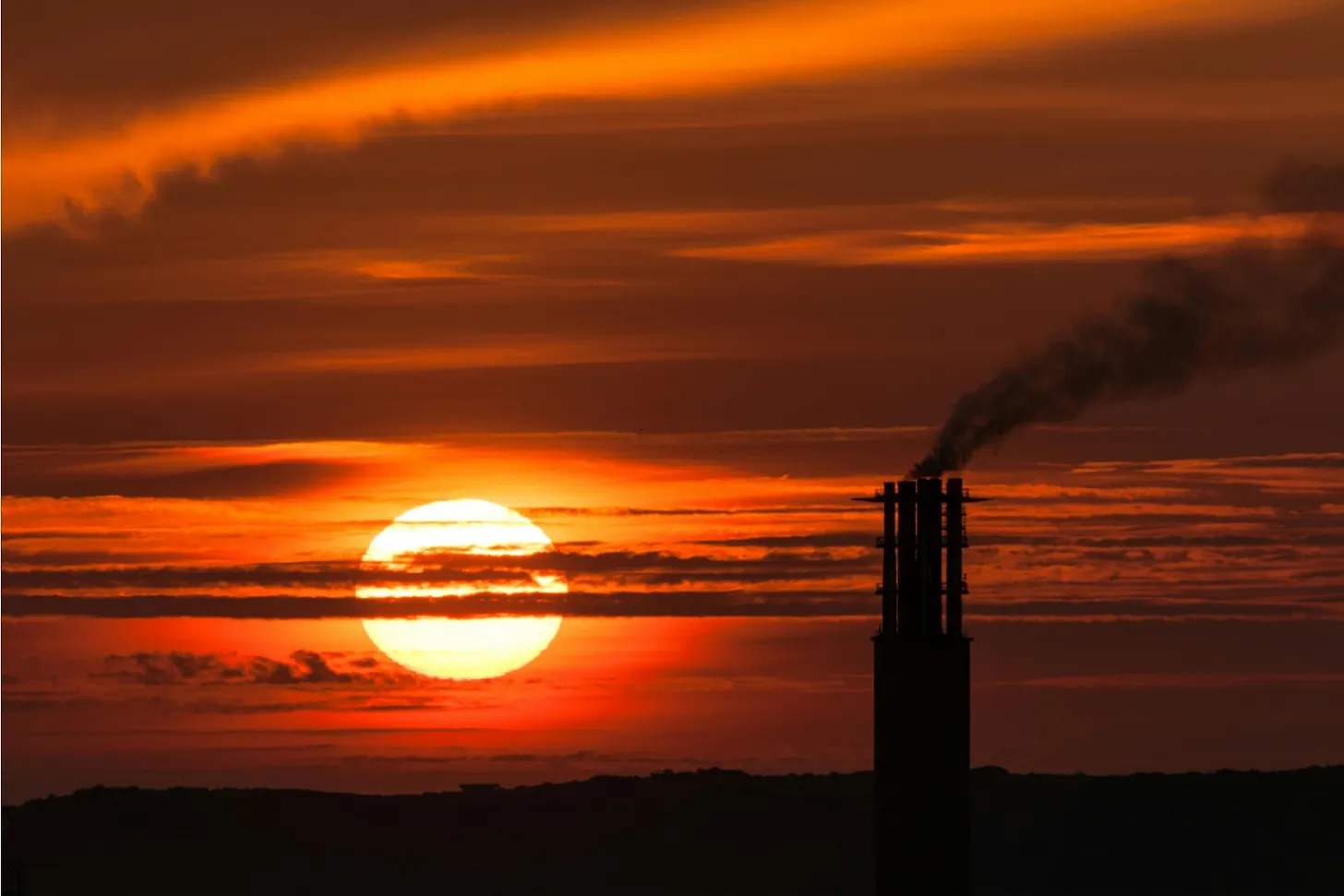
A recent analysis of the impact of global warming in Germany this summer, which is not over yet, saw not only a long and persistent drought, accompanied by heat waves, but also around 14,000 heat-related deaths, record-low water levels in the River Rhine that runs by my house, and heat-related losses of productivity and production amounting to €10.8 billion ($12.8 billion) — €10,800,000,000.
Beyond the staggering sum of €10,800,000,000 caused by global warming — for perspective, the average house price in Germany is €400,000. In other words, without global warming, 27,000 people could have been given a house for free. More importantly, if the 14,000 deaths had been caused by terrorism, Germany’s army would patrol the streets while Germany’s neo-fascist AfD party would demand the mass shooting of non-Germans.
Meanwhile, the heat caused by global warming was not only 41.7°C on 28 June 2026 in East Germany’s Neißemünde-Coschen (Brandenburg); the heat also caused damage to German forests and livestock.
With an ever-increasing level of future devastation, the 2026 heatwaves alone placed a substantial burden on Germany’s economy (€3.4 billion), while reduced learning capacities in Germany’s education system led to a loss of €3.2 billion.
Low water levels impaired shipping, costing €3.4 to €4.5 billion, while damage to public transport infrastructure amounted to €1.8 to €3.7 billion. At the same time, pressures on Germany’s healthcare system amounted to €1.54 billion.
These calculations are by no means the upper limit. What can be added is the turmoil in the European energy system caused by a lack of cooling water. Even atomic power stations were forced to shut down — not an easy process, as the chain reaction cannot simply be switched off and on like a kettle.
Then there are the negative health consequences of unbearable heat and the environmental damage caused by forest fires, which kill most people through smoke rather than the actual fire. Beyond that, global warming and forest fires result in a loss of biodiversity and drinking water — not only for deer and wild pigs but also for people, as towns were supplied by water tankers while water restrictions were put in place.
The damage to forests manifests itself over the coming years, while the low-water situation was already dire when it was created by the heat and long periods without rain.
Beyond all the numbers, there are aspects that cannot be quantified and are not included in such calculations, such as the damage done to European energy systems, long-term health effects caused by fine-dust pollution from forest fires in the wake of global warming, and the long-range ecological damage caused by forest fires.
Overall, the summer of 2026 — always called “historical” while avoiding the words “global warming” by Germany’s conservative and commercial media — had an early start, as these extreme weather events are occurring ever earlier. Germany’s climate is shifting.
At the same time, it looks like Germany’s conservative chancellor, Friedrich Merz (CDU), sticks to denial, announcing that “no action is required”. To add shame and stupidity to his denial, he framed climate change, which caused 14,000 deaths, as a “change in the weather”. Global warming is not a change in the weather. It is a change in the Earth’s climate.
This shows his ignorance of the enormous damage and costs of the extreme summer caused by global warming.
It should also be noted that, in determining the monetary impact, quantification comes to fruition. Unmeasured are the countless instances of suffering that the heat has caused. Worse, in terms of Gross Domestic Product (GDP), houses burned down are actually good for “the” economy because they need to be rebuilt, creating economic activity that is good for “the” economy and increasing GDP.
The same goes for cars. Driving your car into a wall is actually good for GDP. It might be madness, but that is how capitalism is sold to us.
In reality, GDP fails to measure well-being, economic sustainability, and non-market activities because it “only” tracks the total monetary value of goods and services produced within a country over a specific period. Apart from the fact that GDP says nothing about the rich-poor divide, it sends misleading signals.
The beloved GDP says nothing about unpaid labour, including housework, childcare, and volunteer services. Yet it counts military spending. To crank up the madness, GDP measures harms as progress: the more dead, the more is spent on funerals, flowers, and coffins — all good for GDP.
Worse, money spent on, for example, cleaning up an oil spill, rebuilding burned-down houses after a forest fire, or even treating cancer increases GDP — the more cancer, the better. The French philosopher Michel Foucault described such pathological behaviour in Madness and Civilization.
Meanwhile, it is not some “greeny” institution, but the highly respected RKI that concluded that there have so far been approximately 14,000 heat-related deaths. It also calculated that these deaths are equivalent to the loss of 35,000 years not lived.
In the world of work, heat-related absenteeism was at an all-time high, while the loss in productivity was substantial. A single day in Germany with a daily maximum temperature of 30°C results in “direct” economic costs of about €431 million — no strike by any trade union in Germany could ever match that. It may well be the case that global warming is — and will be — more damaging to capitalism than Germany’s still-powerful trade unions, the communist party, or any anarchist lingering in Germany.
Meanwhile, around 97% of global-warming-related costs are productivity losses, with €13 million attributed to accidents at work and absenteeism, as a single day with serious heat results in 76,500 absent workers. In one case, a construction worker ended up in hospital at 11 a.m. suffering from heatstroke.
Besides heat-related costs to Germany’s health system and the costs of heat to schools and training institutions, there is also the fact that there is “lower learning productivity” during higher temperatures. The damage done to Germany’s Autobahn, the motorway, resulted in melted bitumen across about 13,000 kilometres. Germany’s farmers’ federation calculated that the extreme weather led to a decline in the yield of all cereals of 9% per hectare.
Yet there are also unmeasurable impacts. The hot summer of 2026 showed the simultaneous occurrence of Europe-wide heatwaves and low water-flow levels affecting the availability of cooling water for atomic power stations. Low water levels dried up rivers such as the Rhine, the Danube, and other European rivers. More worryingly, they drastically reduced water reserves in the Alpine region.
This led to systemic problems for nuclear power plants in France and Switzerland, which had to throttle their performance because of the heat. Some had to be taken off the grid — so much for the supposedly safe energy source.
The most serious system malfunctions occurred in the south-east of Europe’s ENTSO-E interconnection network. The dependence of Hungary on the Paks nuclear power plant — supplying about 45% of Hungary’s nuclear power — and Romania’s Cernavodă nuclear power plant was “revealed” even to the apostles of atomic power.
Thanks to an overreliance on atomic power, both countries were forced into an “energy emergency”, with very serious economic problems as electricity prices spiked because of the supposedly “cheap” atomic power.
Overall, the extreme summer exposed the limitations of non-renewable and unsustainable power plants with high cooling-water requirements. The energy-related Über-costs during this global-warming-generated, very hot summer in Europe amounted to double-digit billions of euros.
It gets worse. Global-warming-related heatwaves significantly worsen air quality. High temperatures, intense sunlight, and stagnant air stratification accelerate the creation of dangerous ozone gas. Simultaneously, they inhibit the removal of damaging pollutants. As a result, constant emissions generate significantly higher pollution levels.
Increased ozone concentrations in 2025, for example, occurred precisely during the heatwaves of June and August. In addition, global warming creates an unhealthy feedback loop when forest fires are added to the mix. Record fires in Portugal and Spain not only caused damaging “fine dust” but also exceeded previous levels across the board.
The health consequences of this feedback loop of pollutants are significant. There were around 69,865 deaths in Germany in 2022 caused by fine dust, 28,464 because of nitrogen dioxide, and 22,924 attributable to ozone pollution. This is only a precursor of what is going to come under global warming.
Because of heat- and forest-fire-related air pollutants, especially at-risk groups are affected by an above-average increase in deaths. The effect of mortality due to prolonged heat is severe and will become more severe.
Worse, costs are not specifically quantified because a significant part of the costs of mortality is not measured. German death certificates do not mention “heat” or “global warming” — yet. Nevertheless, these health burdens do exist. These costs — even with regard to long-term effects — should be taken into account as the human and economic costs of global warming and relentless heat are set to increase.


No comments:
Post a Comment