Thursday, July 06, 2023

CLIMATE CRISIS ON EARTH ONE

Earth's average temperature matches record high set a day earlier

Record for Earth's average temp falls for 3rd straight day

Earth’s average temperature remained at a record high Wednesday, touching 62.9 degrees Fahrenheit after two days in which the planet reached unofficial records.

Hottest day in 'several hundred years' 


Hottest Day Globally
The entire planet sweltered for the two unofficial hottest days in human recordkeeping Monday and Tuesday, according to University of Maine scientists at the Climate Reanalyzer project. The unofficial heat records come after months of unusually hot conditions due to climate change and a strong El Nino event. (AP Photo/Andy Wong)


SETH BORENSTEIN and MELINA WALLING
Wed, July 5, 2023 

Earth’s average temperature on Wednesday remained at an unofficial record high set the day before, the latest grim milestone in a week that has seen series of climate-change-driven extremes.

The average global temperature was 17.18 Celsius (62.9 degrees Fahrenheit), according to the University of Maine’s Climate Reanalyzer, a tool that uses satellite data and computer simulations to measure the world’s condition. That matched a record set Tuesday, and came after a previous record of 17.01 Celsius (62.6 degrees Fahrenheit) was set Monday.

While the figures are not an official government record, “this is showing us an indication of where we are right now,” said National Oceanic and Atmospheric Administration chief scientist Sarah Kapnick. And NOAA indicated it will take the figures into consideration for its official record calculations.

Scientists generally use much longer measurements — months, years, decades — to track the Earth’s warming, but the daily highs are an indication that climate change is reaching uncharted territory.- 

While some countries had colder weather than usual, high-temperature records were surpassed this week in Quebec and Peru.

In North Grenville, Ontario, the city turned ice hockey rinks into cooling centers as temperatures Wednesday hit 32 degrees Celsius (90 degrees Fahrenheit), with humidity making it making it feel like 38 degrees (100 degrees Fahrenheit).

“I feel like we live in a tropical country right now,” city spokeswoman Jill Sturdy said. “It just kind of hits you. The air is so thick.”

Beijing reported nine straight days last week when the temperature exceeded 35 degrees Celsius (95 degrees Fahrenheit), and ordered a stop to all outdoor work Wednesday, as the temperature reached 41 degrees Celsius (106 degrees Fahrenheit).

On Wednesday, 38 million Americans were under some kind of heat alert, Kapnick said.

Scientists have warned for months that 2023 could see record heat as human-caused climate change, driven largely by the burning of fossil fuels like coal, natural gas and oil, warmed the atmosphere. They also noted that La Nina, the natural cooling of the ocean that had acted as a counter, was giving way to El Nino, the reverse phenomenon marked by warming oceans.

“A record like this is another piece of evidence for the now massively supported proposition that global warming is pushing us into a hotter future,” said Stanford University climate scientist Chris Field, who was not part of the calculations.

One of the largest contributors to this week's records is an exceptionally mild winter in the Antarctic, according to data from the Climate Reanalyzer. Parts of the continent and nearby ocean were 10-20 degrees Celsius (18-36 degrees Fahrenheit) warmer than averages from 1979-2000.

“Temperatures have been unusual over the ocean and especially around the Antarctic this week, because wind fronts over the Southern Ocean are strong pushing warm air deeper south,” said Raghu Murtugudde, professor of atmospheric, oceanic and earth system science at the University of Maryland and visiting faculty at the Indian Institute of Technology, Bombay.

Chari Vijayaraghavan, a polar explorer and educator who has visited the Arctic and Antarctic regularly for the past ten years says global warming is obvious at both poles, and threatens the region's wildlife as well as driving ice melt that raises sea levels.

“Warming climates might lead to increasing risks of diseases such as the avian flu spreading in the Antarctic that will have devastating consequences for penguins and other fauna in the region," Vijayaraghavan said.

University of Maine climate scientist Sean Birkle, creator of the Climate Reanalyzer, said the daily figures are unofficial but a useful snapshot of what’s happening in a warming world.

Even though the dataset used for the unofficial record goes back only to 1979, Kapnick said that given other data, the world is likely seeing the hottest days in “several hundred years that we’ve experienced.”

More frequent, and more intense heat waves disrupted life around the world and caused life-threatening temperatures.

Dr. Hans Henri P. Kluge, regional director for Europe at the World Health Organization, said climate change was attacking the continent “in a big way” which had the potential to wind back 50 years of progress in public health.

Large parts of India and Pakistan faced a days-long heat wave in June that killed over 100 people across the two countries. Temperatures subsided in the last week as the monsoon rains began.

___

Associated Press reporter Sibi Arasu in Bengaluru, India, contributed to this report.

___

Associated Press climate and environmental coverage receives support from several private foundations. See more about AP’s climate initiative here. The AP is solely responsible for all content.
Will.i.am hails AI technology as ‘new renaissance’ in music

Charlotte McLaughlin, PA Senior Entertainment Reporter
Mon, 3 July 2023

Will.i.am has hailed artificial intelligence (AI) as a “new renaissance” in music.

The 48-year-old musician and member of the Black Eyed Peas expressed an optimistic view of new music software, which can be used to produce and create songs.

He told ITV’s Good Morning Britain: “People have to decide what types of songs they want to write because, although I wrote songs like Boom Boom Pow and I Gotta Feeling and Where Is the Love?, the machine is going to write amazing versions or original Boom Boom Pows.”


He added that people “desire” songs which can be a “social commentary” on the news, something AI is “going to be able to do”.

“It’s a very, very, very unique world that we’re entering into. It’s a new renaissance.”

He said new technology does not just “mimic” what he does but creates something new.

“It was a brand new song and it wrote it the way I would have written it.”


Black Eyed Peas on stage – (L to R) Taboo, Will.i.am and Apl.de.ap (Matt Crossick/PA)

He went on: “The concern is what we do as people and the regulation and guidelines that we put on folks that are building the models.

“The fact that AI mimics, but at the same time we haven’t put in clauses for where people own their likeness in their essence… well, that’s one thing. AI’s not deciding that, people are.”

However, other famous faces such as Dolly Parton and Charlie Brooker have raised concerns about AI.

Black Mirror creator Brooker told Empire Magazine that using the ChatGPT tool had produced something which read plausibly “at first glance” but did not contain “any real original thought”.

Charlie Brooker said AI could be used in a ‘frankly terrifying way’ (Isabel Infantes/PA)

He also told the PA news agency that the AI advances explored in the latest episode of the Netflix series could be used in a “frankly terrifying way”.

Brooker was referring to an episode of the dystopian anthology show in which a woman finds her life replicated by streaming platform Streamberry.

Parton was asked at a press event last week about living on in an artificial form in the future.

She said: “I think I’ve left a great body of work behind.

“I have to decide how much of that high-tech stuff I want to be involved because I don’t want to leave my soul here on this Earth.”
Schools ‘should teach children how to spot conspiracy theories’

Catherine Lough
Sun, 2 July 2023 

Deepfakes and ChatGPT capabilities could amplify the spread of disinformation, the professor warned
- Dino Tandir/Alamy Stock Photo

Students should be taught how to counter conspiracy theories on the school curriculum, a University of Cambridge scholar has said.

Prof Sander van der Linden, an expert on social psychology, said that one of the solutions to conspiracist thinking could be to “implement this stuff in national education curriculums”.

Speaking about his new book, Foolproof, at the Chalke Valley History Festival in Wiltshire, he added that Finland scored highly on the ability to spot misinformation and that this was “because they are preparing kids, you know teenagers, on how to spot propaganda”.

“I mean, historically, they’ve shared a border with Russia for a long time – so they’re keenly aware of the dangers of propaganda,” he added.

“And I think we would probably be well served by making sure again – not telling our kids and our students what they need to believe, but preparing them to spot the techniques of manipulation from as early on as possible and that will maybe help.”

In 2019, the OECD’s programme for international student assessment study found that teenagers in east Asia were more adept at distinguishing between fact and fiction than their British counterparts.


Prof Sander van der Linden spoke of the importance of children spotting misinformation - Oliver Mayhall

Overall, the study found that fewer than one in 10 students globally could determine between fact and fiction.

The Finnish government introduced an anti-fake news initiative in its schools from 2014. The country also tops the Media Literacy Index, an index of 41 countries across Europe which measures their vulnerability to fake news.

Prof Van der Linden said that the human brain processed repeated information more quickly than new information, which allowed them to be manipulated into believing fake news.

He said: “If you’ve heard something before, the brain is literally faster at processing that new information and it uses that as a signal for veracity.

“So that works well in a number of ways. But people spreading misinformation can take advantage of that. And that’s true for everyone.”

He said that key elements of conspiracist thinking involved being incoherent or contradictory, that they involved suspicion of others, and the belief that the schemes or conspiracies had “nefarious intent” and would usually involve someone as a “persecuted victim”.

He added that it was important to almost inoculate society against conspiracy theories as one would with a virus, and that the growth of deepfakes and ChatGPT capabilities could amplify the spread of disinformation.

‘Magical thinking a gateway to conspiracy theories’

Prof Van der Linden said that spiritual belief, or “magical thinking”, could serve as a gateway to a conspiracist mindset.

“Other forms of magical thinking are superstition. Things you see on TikTok now with younger people is ‘manifesting’, so the idea that if you think positive thoughts, you’re going to concretely shift things – so maybe I don’t want this person to break up with me,” he said.

“So if I say it a hundred times on TikTok, it’s not going to happen. And you see thousands of kids doing this, and I think partly it’s because the world is in not such a nice place.

“People need a way to feel positive and that’s great. But this kind of magical thinking is a gateway to conspiracy theories.”

SEE


East Lancashire Freemasons make £62k donation to help youngsters


Harriet Heywood
Sun, 2 July 2023 

Robert Frankl meeting service providers from the Railway Children (Image: Public)

A £62,000 grant has been given to help vulnerable children at risk thanks to the East Lancashire Freemasons.

More than 400 vulnerable children found at risk across the railways in the North West could be helped after a large grant was given to a charity, the Railway Children.

Robert Frankl from the East Lancashire Freemasons said: “I’m very pleased we’ve been able to help Railway Children with their hugely important project to support vulnerable children at risk across the region’s railways.

“By stepping in to help children and their families at the earliest possible stage, the charity offers the best chance of a successful outcome.”

Railway Children and British Transport Police partner to help children at risk across Northwest rail stations.

The charity provides one-to-one sessions with a project worker, sometimes working alongside schools and social workers, as well as providing information and advice for their families.

UK programme director at Railway Children, Jacqui Highfield, said: “We’re very grateful to East Lancashire Freemasons for their generous grant which will allow us to help hundreds of children and young people who are vulnerable and alone across the UK rail network.

“Feedback from young people, parents and carers is that the regularity of contact and the time spent building relationships are crucial factors in helping young people find solutions to their problems and look forward to a brighter future.”

Last year, working with British Transport Police, Railway Children supported 587 vulnerable young people and their families.

Interventions ranged from providing essential information to ensuring long-term one-to-one support for as long as a young person needed.

As a result, 86 per cent of children reported improved wellbeing, 77 per cent experienced improved personal safety and 86 per cent benefitted from better family relationships.

Mysterious giant 300,000-year-old hand axes were found at an Ice Age site in England. Scientists can't work out why they are so big.


Marianne Guenot
Thu, 6 July 2023 

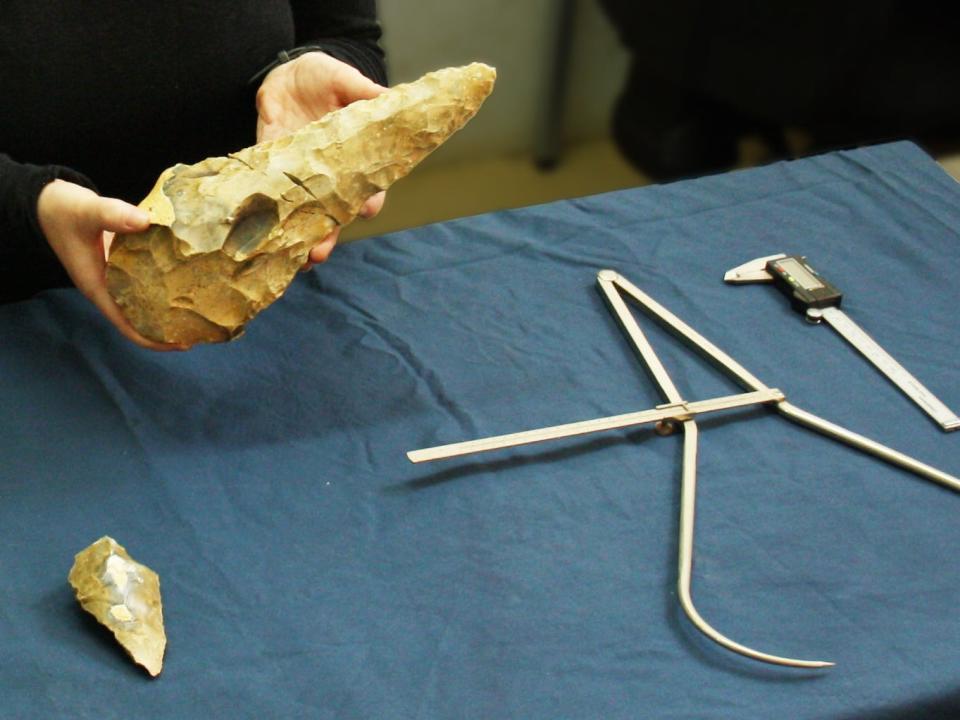
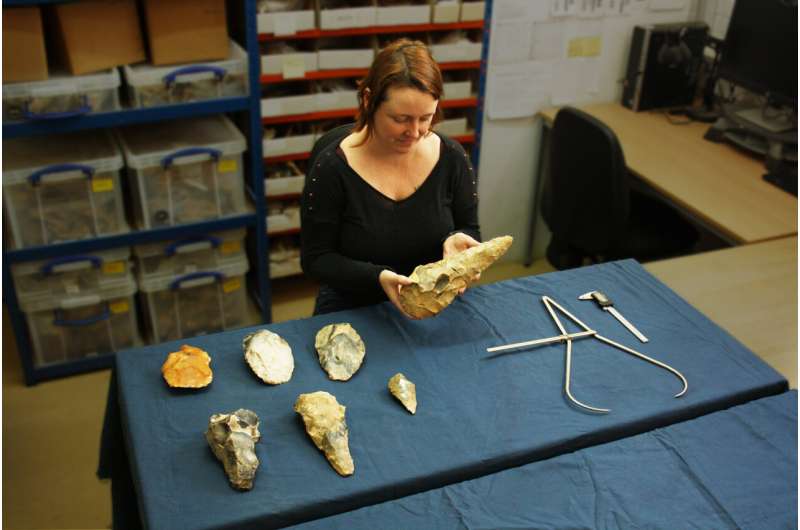
An archeologist measures the biggest of two "giant" prehistoric hand axes uncovered in the south of England.
Archaeology South-East/ UCL

Two giant hand axes have been uncovered in prehistoric sediment in England.


The tools, which are more than 300,000-year-old, are so big they are difficult to handle.


Archaeologists think they may have been used as part of demonstrations of strength and skil
l.

Two giant prehistoric hand axes, one of which is about a foot long, have been uncovered in deep Ice Age sediments in the south of England.

The 300,000-year-old tools, slabs of flint chipped on both sides to create jagged edges, were found among than 800 artifacts buried on a hillside above the Medway Valley in Kent.

"We describe these tools as 'giants' when they are over 22cm long and we have two in this size range," senior archaeologist Letty Ingrey of the UCL Institute of Archeology said in a press release.


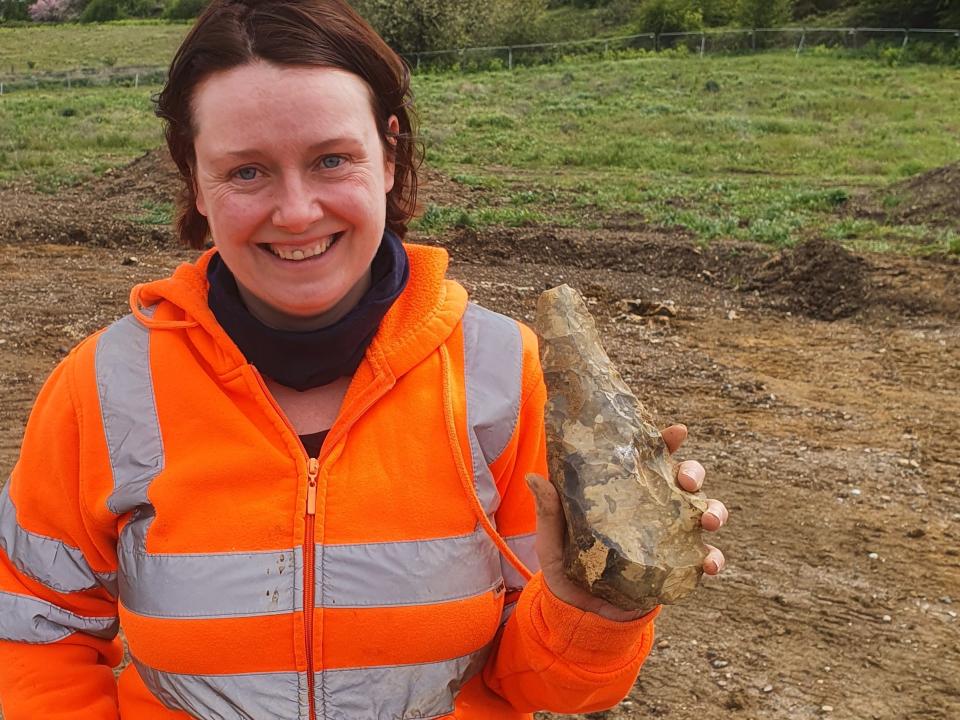
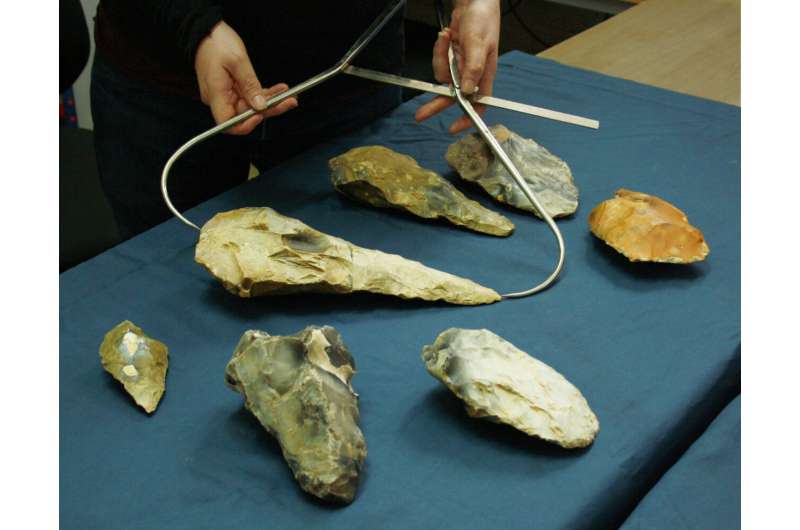
The largest of the two hand axes, which is about 12 inches long, is "one of the longest ever found in Britain," said Ingrey, who participated in the excavation.

Archaeologist Letty Ingrey inspects the largest of two "giant" prehistoric hand axes.Archaeology South-East/ UCL

Archaeologists think these types of tools were typically used to butcher or skin animals.

But these particular hand axes "are so big it's difficult to imagine how they could have been easily held and used," Ingrey said.

"Perhaps they fulfilled a less practical or more symbolic function than other tools, a clear demonstration of strength and skill," she said.


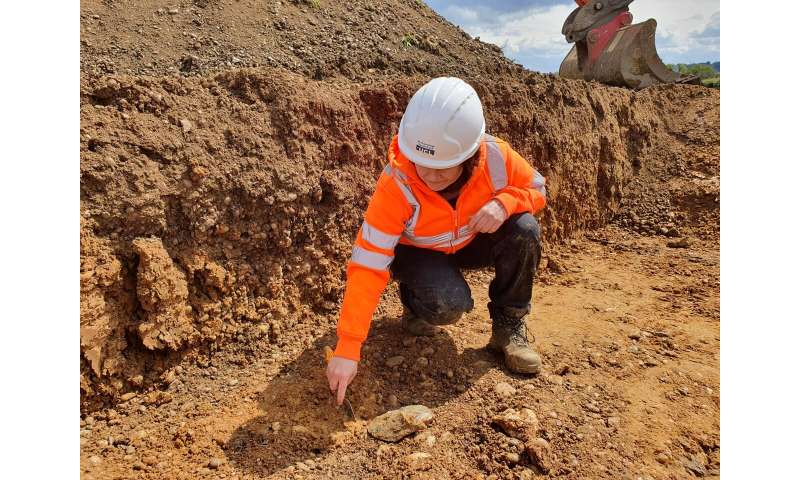
Archaeologist Letty Ingrey holds up the smallest of the two "giant" prehistoric hand axes, shortly after uncovering it on site.Archaeology South-East/ UCL

At the time, the Medway Valley site would have been a prime hunting ground roamed by deer, horses, as well as now-extinct straight-tusked elephants and lions that lived in the area, per the press release.

Early humans would have shared the landscape with Neanderthals whose peoples and cultures were just beginning to emerge in the area, per the press release.

"Right now, we aren't sure why such large tools were being made or which species of early human were making them," said Ingrey.

"This site offers a chance to answer these exciting questions," she added.


Giant stone artifacts found on rare Ice Age site in Kent

by University College London
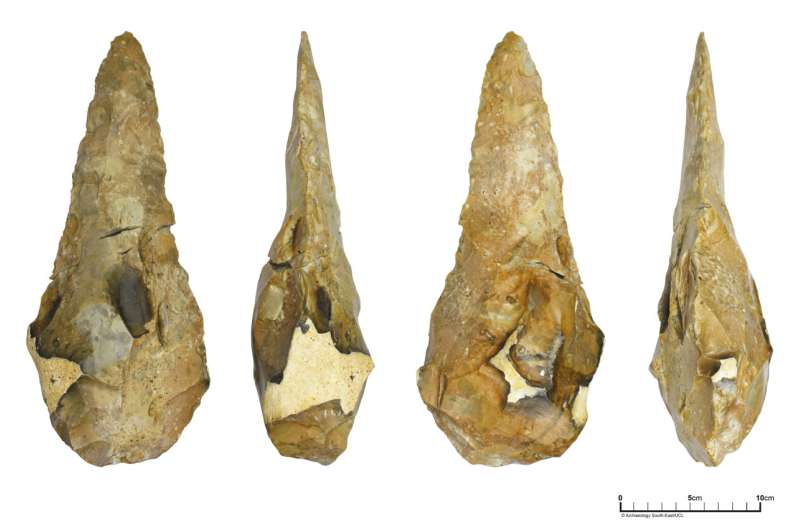
The largest giant handaxe. Credit: Archaeology South-East/ UCL

Researchers at the UCL Institute of Archaeology have discovered some of the largest early prehistoric stone tools in Britain.

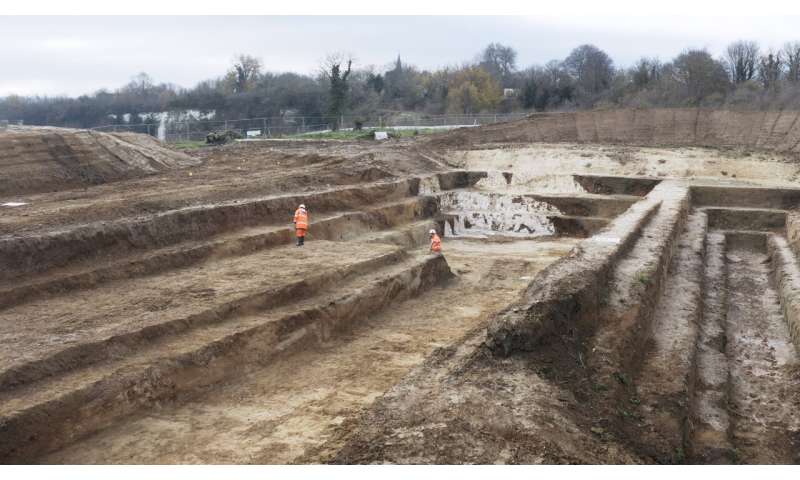
The excavations, which took place in Kent and were commissioned in advance of development of the Maritime Academy School in Frindsbury, revealed prehistoric artifacts in deep Ice Age sediments preserved on a hillside above the Medway Valley.

The researchers, from UCL Archaeology South-East, discovered 800 stone artifacts thought to be over 300,000 years old, buried in sediments which filled a sinkhole and ancient river channel, outlined in their research, published in Internet Archaeology.

Among the unearthed artifacts were two extremely large flint knives described as "giant handaxes". Handaxes are stone artifacts which have been chipped, or "knapped," on both sides to produce a symmetrical shape with a long cutting edge. Researchers believe this type of tool was usually held in the hand and may have been used for butchering animals and cutting meat. The two largest handaxes found at the Maritime site have a distinctive shape with a long and finely worked pointed tip, and a much thicker base.

Senior Archaeologist Letty Ingrey (UCL Institute of Archaeology), said, "We describe these tools as 'giants' when they are over 22cm long and we have two in this size range. The biggest, a colossal 29.5cm in length, is one of the longest ever found in Britain. 'Giant handaxes' like this are usually found in the Thames and Medway regions and date from over 300,000 years ago."
ASE Senior Archaeologist Letty Ingrey measures the largest giant handaxe. 
Credit: Archaeology South-East/ UCL

"These handaxes are so big it's difficult to imagine how they could have been easily held and used. Perhaps they fulfilled a less practical or more symbolic function than other tools, a clear demonstration of strength and skill. While right now, we aren't sure why such large tools were being made, or which species of early human were making them, this site offers a chance to answer these exciting questions."

The site is thought to date to a period in the early prehistory of Britain when Neanderthal people and their cultures were beginning to emerge and may even have shared the landscape with other early human species. The Medway Valley at this time would have been a wild landscape of wooded hills and river valleys, inhabited by red deer and horses, as well as less familiar mammals such as the now-extinct straight-tusked elephant and lion.


While archaeological finds of this age, including another spectacular 'giant' handaxe, have been found in the Medway Valley before, this is the first time they have been found as part of large-scale excavation, offering the opportunity to glean more insights into the lives of their makers.

ASE Senior Archaeologist Letty Ingrey inspects the largest handaxe. 
Credit: Archaeology South-East/ UCL

Dr. Matt Pope (UCL Institute of Archaeology), said, "The excavations at the Maritime Academy have given us an incredibly valuable opportunity to study how an entire Ice Age landscape developed over a quarter of a million years ago. A program of scientific analysis, involving specialists from UCL and other UK institutions, will now help us to understand why the site was important to ancient people and how the stone artifacts, including the 'giant handaxes' helped them adapt to the challenges of Ice Age environments."

The research team is now working on identifying and studying the recovered artifacts to better understand who created them and what they were used for.

Senior Archaeologist Giles Dawkes (UCL Institute of Archaeology) is leading work on a second significant find from the site—a Roman cemetery, dating to at least a quarter of a million years later than the Ice Age activity. The people buried here between the first and fourth centuries AD could have been the inhabitants of a suspected nearby villa that may have lain around 850 meters to the south.
Archaeologists excavating at the Maritime Academy School site in Frinsdbury. 
Credit: Archaeology South-East/ UCL

One of the handaxes at the point of discovery on site. 
Credit: Archaeology South-East/ UCL

The team found the remains of 25 individuals, 13 of which were cremated. Nine of the buried individuals were found with goods or personal items including bracelets, and four were interred in wooden coffins. Collections of pottery and animal bones found nearby likely relate to feasting rituals at the time of burial.

Though Roman buildings and structures have been extensively excavated, cemeteries have historically been less of a focus for archaeologists and the discovery of this site offers potentially new insights into the burial customs and traditions of both the Romans who lived at the villa, and those in the nearby town of Rochester.

Jody Murphy, Director of Education at the Thinking Schools Academy Trust said, "We, at Maritime Academy and the Thinking Schools Academy Trust, feel very lucky to be a part of this phenomenal discovery. We take great pride in our connection to our local community and region, with much of our school identity linked to the history of Medway. We look forward to taking advantage of this unique opportunity to teach our young people about these finds, creating a lasting legacy for those who came before us."


More information: Letty Ingrey et al, A New Palaeolithic Giant Handaxe from Britain: Initial Results from Excavations at Maritime Academy, Medway, Kent, Internet Archaeology (2023). DOI: 10.11141/ia.61.6

The DOI for the data is https://doi.org/10.5522/04/c.6673061.


Provided by University College London


Explore furtherCanterbury suburbs were home to some of Britain's earliest humans, 600,000-year-old finds reveal
Discovery of up to 25 Mesolithic pits in Bedfordshire astounds archaeologists

Dalya Alberge
Mon, 3 July 2023 


A prehistoric site with as many as 25 monumental pits has been discovered in Bedfordshire to the astonishment of archaeologists.

Found in Linmere, they date from the Mesolithic period, 12,000 to 6,000 years ago, a time from which few clues into the lives of our hunter-gatherer ancestors survive.

The pits could offer extraordinary new insights. They are in alignments and clustered around former stream channels, suggesting a spiritual significance.

Such is the scale of this site that it has more such pits in a single area than anywhere else in England and Wales, including Stonehenge. Radiocarbon dating revealed they are from 7,700 to 8,500 years ago.

Archaeologists from the Museum of London Archaeology (Mola), who are conducting the research, said: “This date makes the site incredibly significant because there are very few Mesolithic sites in the UK that are this substantial. Evidence from this period is often slim, only consisting of flint tools and occasional butchered animal remains.”

Prof Joshua Pollard, an expert from Southampton University who has worked on big projects in the Stonehenge and Avebury landscapes, described the discovery as very exciting.

He said: “While we know of other large and enigmatic pits dug by hunter-gatherers from elsewhere in Britain, including at Stonehenge, the Linmere pits are striking because of their number and the wide area they cover.”

Digging such vast pits would have been an extraordinary feat. Measuring up to 5 metres (16.4ft) wide and 1.85 metres deep, each one is round with steep sides, some flaring out into a wider base.

The site has been explored as part of two separate development projects. Albion Archaeology worked on one area and Mola excavated another. Inside some of the pits, the archaeologists found animal bones, a “crucial source of evidence”. The remains of aurochs, a wild species of cattle, are among them, with evidence that people had feasted on them.

Yvonne Wolframm-Murray, a project officer at Mola, said the discovery was completely unexpected: “We knew there was archaeology, but didn’t initially know we had Mesolithic pits until the radiocarbon dates came back. It’s very exciting … There’s only a handful of known other sites with pits that are comparable, certainly quantity-wise.”

The archaeologists have wondered whether the pits were used in hunting or storing food, but they believe their shape and size make such theories unlikely. They are struck by the way the pits were laid out in a number of straight lines, up to 500 metres long. While there are other Mesolithic pits dug in alignments in Britain, the Linmere alignments seem to be linked to former stream channels.

The archaeologists suggest the effort required to construct these pits, their alignments, and their location next to water have some spiritual or special significance. For example, they could mark an important place in the landscape. Archaeologists are exploring whether the pits are aligned on any major celestial events such as the solstice.

Wolframm-Murray said: “During the Mesolithic period, ice sheets covering much of the country retreated and sea levels rose, cutting off Britain from mainland Europe. This was a crucial time of transformation in the UK’s past, and studying a site where people made such a mark on the landscape could have far-reaching impacts on how archaeologists understand these ancient communities.”

There may be further pits yet to be found in the area. Archaeologists are analysing the finds and evidence in the lab. They hope to discover whether the pits were all dug and used at the same time, and understand more about the plants growing nearby. They have already identified evidence of oak, hazel and pine, and are studying pollen that has survived from the Mesolithic period.

Wolframm-Murray said: “This work will reveal the environment these people lived in, and hopefully answer the question ‘what were these pits for?’”

UK
Majority back NHS strikes despite disruption, polls show


Rachel Hall
Sun, 2 July 2023

Photograph: Antonio Olmos/The Observer

Most Britons support healthcare workers in their wave of strikes over pay and conditions this year despite the worsening disruption, polling shows.

About two-thirds of the public said they supported striking nurses, ambulance workers and junior doctors, despite growing numbers of appointments and operations having to be cancelled, according to Ipsos polling carried out between January and June.

The figures have roughly held steady since the beginning of the year, though they dipped slightly in early spring when doctors, ambulance workers and nurses all held strikes.


Ipsos’s director of politics, Keiran Pedley, said the polling showed that “NHS staff are consistently the most supported by the public” out of all the striking workers.

He said: “Levels of support have been sustained over time despite any disruption caused. Support for NHS workers likely reflects strong public concern about the current state of the NHS and an inclination to blame the government, rather than the NHS or its staff, for problems that exist.”

Support for junior doctors has grown from 47% in January to 56% in June, while the figure for nurses has increased from 61% to 62% and support for ambulance workers has grown from 58% to 62%. In June, just 24% of the more than 1,000 respondents said they opposed the junior doctors’ strike, and 21% for ambulance workers and nurses.

Healthcare workers are striking in an effort to reverse the deep cuts to their salaries that have resulted from a decade of pay rises that have not kept up with inflation. Doctors, nurses and some other healthcare professionals have voted against the government’s offer of 5% plus a non-consolidated payment.

Junior doctors, who can have up to eight years of experience as a hospital doctor or three years in general practice, voted this month to strike from 7am on 13 July until 7am on 18 July, the longest such strike in NHS history. It is expected to result in thousands of appointments being rescheduled or cancelled.

On Tuesday it was announced that senior doctors had voted to join them for the first time in this pay dispute, with their first two-day strike in more than 50 years scheduled from 20 July. On the same day, it emerged that nursing union members had failed to vote in sufficient numbers for further strike action.

Related: End to nurses’ strike leaves tensions between Pat Cullen and RCN members

There are no available figures yet on public support for senior doctors. Ipsos polling from February found that 21% of people thought consultants were overpaid, a figure that rose to 47% when respondents were informed that senior doctors receive average salaries of £128,000.

Ipsos polling also showed that nearly half (48%) of the public said they supported teachers in their strikes in June, up from 41% in June 2022.

However, they were less supportive of some other professions. In June, just over a third (36%) supported airline workers, railway workers and border force staff taking action, while 35% supported university lecturers, 34% civil servants and 28% driving instructors.

The proportion of the public opposed to rail strikes has fallen since reaching a high of 45% in March, when RMT members went on strike after rejecting a pay deal, and now stands at 37%. Opposition to civil service workers’ strikes has fallen from 41% in June 2022 to 35% this month.

Strikes cause 650,000 NHS cancellations – with more on the way

Junior doctors to walk out for five days in July


Ella Pickover, PA Health Correspondent
Mon, 3 July 2023 

Almost 650,000 appointments and operations have been postponed due to the wave of strikes which have hit the NHS in England in the run up to its 75th anniversary.

The unprecedented strikes have caused widespread disruption across the NHS since December 2022.

The first mass walkout of nurses in history took place in mid December – with ambulance workers, physiotherapists and other health workers following suit in subsequent weeks.

In March this year, junior doctors began the first in a wave of strikes, heaping further disruption on the health service.

Some 648,000 appointments, procedures and operations have been postponed as a result of the strikes in England since December (Jordan Pettitt/PA)

Some 648,000 appointments, procedures and operations have been postponed as a result of the strikes in England.

And as the NHS braces itself for the largest doctors’ strike in its history, just days after its 75th anniversary, further cancellations are inevitable.

Later this month, junior doctors are planning to stage the largest walkout in the history of the NHS – a five-day strike from July 13-18.

And consultants – the most senior doctors in the NHS – are planning to stage industrial action on July 20-21, where they will only provide scaled-back “Christmas day cover”.

The British Medical Association has urged the Government to enter talks using the conciliation service Acas, saying that a precondition to not get round the table when strikes are planned is a “completely artificial red line”.

Health Secretary Steve Barclay insisted that his door is still open for negotiations, but said that there needs to be “movement on both sides”.

Some unions have settled the matter with ministers after the NHS Staff Council voted to accept the Government’s revised pay offer for staff of the Agenda for Change contract – including paramedics, nurses and physiotherapists.

This means that staff on the contract – which includes more than a million NHS workers – saw a bump in their pay packet at the end of June.

The new offer represented a 5% pay rise this year and a cash sum for last year for the majority of staff on the contract – which includes all NHS workers apart from doctors, dentists and very senior managers.

But the Royal College of Nursing (RCN) and Unite rejected the offer, though a ballot of RCN recently revealed that nurses did not wish to continue with strikes.

The Society of Radiographers has reached the mandate to strike and said that it is likely walkouts will take place later this month at 43 trusts around England.
UK
Seven in 10 people believe charges for NHS care are on the way

Denis Campbell and Rowena Mason
THE GUARDIAN
Sun, 2 July 2023 

Photograph: Tayfun Salcı/EPA

Seven in 10 people in the UK believe charges for NHS care will creep in over the next decade, ending the health service’s record of being free at the point of use, polling has found.

One of the NHS’s key founding principles from 1948 is in peril, 71% of the public believe, according to the survey carried out for the Health Foundation ahead of the service’s 75th birthday this week.

Despite almost three in four people saying the NHS in its current free form is “crucial”, 51% say they expect to pay for some services within the next decade, while 13% think most services will need to be paid for upfront and 7% anticipate charges for all services.
- ADVERTISEMENT -


Tim Gardner, an assistant director of policy at the Health Foundation, said the thinktank interpreted the findings as an “expression of concern that what the public values the most about the NHS – affordable care provided free at point of use – may be under threat”.

Related: Patients to ‘pay price’ for ministers and unions failing to stop strikes, says NHS chief

He said: “The durability of the principle that the health service would provide care based on need not ability to pay has been regularly questioned throughout its history, especially at times when the service is under great pressure.”

There had been growing calls for radical changes, such as charging for GP appointments and A&E visits, added Gardner.

Politicians such as Rishi Sunak, the prime minister, Liz Truss, his predecessor in No 10, and the former chancellor and health secretary Sajid Javid have all backed one or both of those ideas as potential ways of raising more money for the NHS and reducing demand. Critics dismissed them as “zombie” ideas that were impractical and would not help.

The Health Foundation survey of 2,540 over-16s, conducted by Ipsos, was carried out at a time of huge pressure on the NHS owing to the backlog in waiting lists and staff shortages, and as junior doctor and consultant strikes loom this month.

On Sunday Amanda Pritchard, the chief executive of NHS England, urged the government and health unions to settle their dispute as soon as possible, saying patients would “pay the price” for the unprecedented scale of the action. She said strikes must not become “business as usual” for the NHS.

While there is currently a standoff, the British Medical Association (BMA) wrote to Sunak on Sunday asking the government to enter mediated talks to break the deadlock in the junior doctors’ strike and reach a settlement. Steve Barclay, the health secretary, had on Sunday accused junior doctors of “suddenly” walking out of talks.

But Prof Philip Banfield, the new chair of the BMA council, will give a speech on Monday saying it is the government that is refusing to go to Acas or acknowledge that “devastation [on the NHS] has been wrought by successive UK governments”.


Separate polling from Ipsos shows that most Britons support healthcare workers in their wave of strikes over pay and conditions this year despite the worsening disruption, with backing for junior doctors at about 56% in June.

With five days of junior doctors’ strikes followed by two days of consultants’ strikes scheduled for the middle of the month, data shows industrial action has already led to more than 648,000 cancelled appointments, procedures and operations, exacerbating backlogs.

Wes Streeting, the shadow health secretary, said there was “no doubt that having run down the NHS over 13 years, many Conservatives will now use their failure to argue that its founding principles must be abandoned” by making the case for charging. He said Labour would “never let this happen”.

“The future of the NHS will be on the ballot at the next election,” he said. “It was Labour who created the NHS and made sure it was there for us when we need it, delivering the shortest waiting times and highest patient satisfaction in history.

“It will fall to the next Labour government to rescue the NHS from the biggest crisis in its history, and breathe new life into the service so it is still there for us in the next 75 years.”

Daisy Cooper, the deputy Liberal Democrat leader and party health spokesperson, said the Lib Dems would “set out our plans to ensure that we have an NHS fit for the 21st century that remains free at the point of use” before the next election.

“Waiting lists, staff sick days and social care demand are all soaring and only getting worse under this out-of-touch Conservative government,” she said.

The Tory peer James Bethell, who was a health minister at the height of the Covid pandemic, said the situation with waiting lists was already so bad that it constituted “rationing”, but he said he did not think charging for services was a good idea.

He said: “People might be thinking the pressures in the NHS makes charging inevitable but that doesn’t mean it’s either a good idea or that it’s popular. I haven’t seen any evidence that charging will improve outcomes.”

He argued for “a new contract between the government and the public that is not just a one-way promise for free access but is more of a partnership around healthy living”.

“That requires leadership from government to create an environment where ordinary people can make realistic healthy choices and are supported to fight disease,” he said.

“Instead too many of us are constantly battling against junk food, mouldy homes, dirty air, toxic workplaces and addictive algorithms that drive us to porn, casinos and depression, and losing the battle with huge costs in health, care, benefits and productivity.”

With the NHS struggling, the Health Foundation survey shows people appear to have little faith in politicians’ promises to keep the NHS free, even though they would overwhelmingly like to see its current model continue.

According to the survey, the NHS ranks highest as people’s first choice when asked what makes them most proud to be British – compared with democracy, culture and history – at 54% of those surveyed.

The data also revealed the public are pessimistic about the NHS’s ability to meet key future challenges, with 77% believing the NHS is not ready for the increasing health demands of an ageing population.

It found some degree of split along political lines, with 66% of people intending to vote Conservative more likely to expect user charges for some services compared with 51% of Labour voters.

A senior Tory source said: “The NHS is our most treasured national institution and we are fully committed to its founding principle of healthcare for all, free at the point of delivery.

“As we celebrate its 75th anniversary this week, we have backed the NHS’s long-term workforce plan with an extra £2.4bn of investment to cut waiting lists and put the service on a secure footing long into the future.

“For the NHS to carry on caring for us all for the next 75 years and beyond, we need a strong economy, and the biggest threat to that is Labour’s plan for a £28bn annual spending splurge fuelled by uncontrolled borrowing.”

About 80% of those surveyed think the NHS needs an increase in funding, compared with 17% who think it should operate within its current budget, with some degree of support for a dedicated NHS tax (31%), an increase in national insurance (22%) or an increase in income tax (21%).

The NHS in England is due to receive only a 1.2% increase to its budget this year – a third of its historical average of 3.6% – despite long waiting times, growing patient dissatisfaction and increasing alarm that it is “broken” and unable to provide urgent care quickly.
SCOTLAND
Yousaf: We will offer junior doctors ‘biggest ever pay uplift’ to avoid strikes


Rebecca McCurdy and Craig Paton, PA Scotland Political Staff
Mon, 3 July 2023 

Junior doctors in Scotland will be offered the “biggest ever pay uplift” in an effort to avert strikes later this month, the First Minister has said.

It comes as the Scottish Government confirmed senior NHS staff will be given a 6% pay increase following negotiations with the Doctors and Dentists Pay Review Body.

The uplift is being hailed by Humza Yousaf as the biggest since devolution as he promised an offer for junior staff that could amount to “thousands of pounds”.


The British Medical Association (BMA) announced junior doctors would walk out between July 12 and 15 after rejecting a 14.5% increase over two years.

The offer was initially described as the “best and final” deal from the Scottish Government, but as he marked the 75th anniversary of the NHS during a visit to Forth Valley Hospital in Larbert, near Falkirk, the First Minister said he planned to meet with the BMA on Tuesday to discuss a new offer.

He said: “I’m prepared to offer junior doctors the biggest ever uplift seen in the history of devolution, and if accepted, it would put thousands of pounds into the pockets of our junior doctors and they will be worth every single penny.”

Mr Yousaf said the plans would only be discussed with junior doctors but said methods could include going above and beyond a one-year pay rise, or reforming contracts and working conditions.

He added: “There isn’t, I’m afraid, money down the back of the sofa, I think people know that given the difficult financial constraints that the Government is operating under.”


First Minister Humza Yousaf meets patient Paul MacIntosh during a visit to NHS Forth Valley Royal Hospital in Larbert (Lesley Martin/PA)

It comes after Mr Yousaf chaired a resilience meeting with senior ministers and health bosses to plan contingencies in the event of the expected strikes.

Mr Yousaf told journalists the walkouts could be “hugely significant”, resulting in “potentially tens of thousands of patients being affected and having their procedures cancelled”.

And asked by the PA news agency if he was confident that junior doctors would accept an improved offer, he said: “I think it’s 50/50 if I’m being honest.

“I don’t think it’s a done deal by any stretch of the imagination. I think it’s going to be a challenging negotiation given where we know the BMA are and what we’re able to afford.


“But I do believe the BMA, absolutely, when they say they want to do everything they can to avoid industrial action.”

Following the resilience meeting, Dr Chris Smith, chair of the BMA’s Scottish junior doctors committee, said: “Junior doctors in Scotland have consistently and strongly made clear that the pay offers made so far by the Scottish Government are not yet sufficient to demonstrate a commitment to reverse the years of pay erosion we have suffered, which has seen pay reduced by 28.5% since 2008.

“No-one can seriously argue a junior doctor today is worth that much less than a counterpart 15 years ago. Indeed, our members rejected the Scottish Government’s latest offer decisively.

“Unless we act now and invest in the future of the workforce, we will go on losing doctors to places they are valued properly, compromising the care we can provide to the people of Scotland now and in the future.”

Humza Yousaf speaks to staff during his visit to NHS Forth Valley Royal Hospital (Lesley Martin/PA)

Scottish Conservative health spokesperson Dr Sandesh Gulhane said: “Scotland’s health service is already at breaking point due to years of SNP mismanagement, so patients will be alarmed at the thought of these damaging strikes going ahead.

“Humza Yousaf must do everything in his power to halt them by reaching a deal with shattered junior doctors – who are paying for the SNP’s dire workforce. It must address not just pay, but the poor working conditions junior doctors face every day.”

The pay deal for senior NHS staff, which will be backdated to April 1 2023, will see a consultant at the bottom of the pay scale see a rise of £5,488 and £7,292 for those at the top.

It builds on the 4.5% pay uplift awarded in 2022, taking the total increase to 10.5% in two years.

Steve Barclay says he is willing to offer bigger pay rise to doctors in England


Tom Ambrose
Sun, 2 July 2023 


Doctors in England could be offered a bigger pay rise after the health secretary admitted there needed to be “movement on both sides” in the long-running dispute, but refused to restart talks while strikes were planned.

Steve Barclay said that although he considered demands of a 35% salary increase to be unreasonable, a larger rise would be offered if negotiations were to resume.

“I don’t think a 35% pay demand, which they refuse to move away from, is reasonable given the headwinds we face from inflation,” he told the Times, adding: “I think there needs to be movement on both sides.”

Junior doctors in England want a 35% pay rise to make up for what they estimate to be a 26% cut in their real-terms’ income since 2008-09, plus inflation.

They have staged two stoppages so far in pursuit of their goal of “full pay restoration”, forcing hospitals to postpone several hundred thousand outpatient appointments and operations.

But latest polling shows about two-thirds of the public support striking nurses, ambulance workers and junior doctors, despite growing numbers of appointments and operations having to be cancelled.

The figures have roughly held steady since the beginning of the year, though they dipped slightly in March after doctors, ambulance workers and nurses all held strikes.

Healthcare workers are striking in an effort to reverse the deep cuts to their salaries that have resulted from a decade of pay rises that have not kept up with inflation.

Doctors, nurses and some other healthcare professionals have voted against the government’s offer of 5% plus a non-consolidated payment.

Junior doctors, who can have up to eight years of experience as a hospital doctor or three years in general practice, voted this month to strike from 7am on 13 July until 7am on 18 July, the longest such strike in NHS history.

On Tuesday it was announced that senior doctors had voted to join them for the first time in this pay dispute, with the first two-day strike for consultants in more than 50 years scheduled from 20 July.

Meanwhile, the NHS England chief executive, Amanda Pritchard, told the BBC’s Sunday with Laura Kuenssberg programme: “The hard truth is it is patients that are paying the price for the fact all sides have not managed to reach a resolution.

“There has been a significant amount of disruption and that is only going to get more significant as we hit the next round of strikes.”
‘Boil in the bag’ environmentally friendly funerals arrive in the UK

Robert Booth Social affairs correspondent
THE GUARDIAN
Sun, 2 July 2023 

Photograph: Gallo Images/Getty Images

For anyone uneasy at the thought of their body being consumed by flames or interred in an insect-teeming grave, a new funeral choice is about to become available: water cremation.

The process of dissolving a body in a bag in 160C water treated with an alkali will become available in the UK later this year and is the first new legal method of disposing of cadavers since the Cremation Act of 1902. It has been described as a “boil in the bag” funeral.

The practice is legal in the majority of US states, Canada and South Africa, where it was chosen for Archbishop Desmond Tutu, who died last year. It is also legal in the UK, but has only been used only in limited trials aimed at testing if the resulting solution was safe to release into the drainage system.

With a carbon footprint that is claimed to be about half of that of gas-fired cremation, the process leaves only bones, which are then powdered and returned to the family in the same way as cremated ash.

Advocates describe it as “gentler on the body and kinder on the environment” and Co-op Funeralcare, the UK’s largest undertaker, is likely to start offering it in the north-east of England, where a former coffin maker, Julian Atkinson, has set up the required equipment.

Northumbrian Water has granted approval for the resulting water to be sent back into the drainage network as “trade effluent”, the same permit used by launderettes.

Polling found 29% of Britons said they would choose the practice – known as resomation – for their own funeral if it was available. 
Photograph: RobertHoetink/Getty Images

“We are satisfied the disposal will have no impact on our wastewater treatment processes,” the water company said.

Polling has found that almost no one among the British public has heard of the practice, but once explained to them, just under a third (29%) said they would choose the method – also known as resomation, aquamation, or alkaline hydrolysis – for their own funeral if it was available.

“By starting to make resomation available in the UK, Co-op will be providing people with another option for how they leave this world because this natural process uses water, not fire, making it gentler on the body and kinder on the environment,” said Atkinson. “We are encouraged to see that many members of the public are conscious of reducing the carbon footprint, even after death.”

A typical cremation releases 245kg of carbon, creating a UK annual impact of 115,150 tonnes, according to the CDS group, a crematorium consultancy. That is equivalent to electricity to power 65,000 households.

Funerals would take place as normal with the body in a coffin but for the water cremation it would be wrapped in a woollen shroud and placed in a “bio pouch” made from cornstarch. This would then be placed in a sealed chamber with 95% water and the remainder potassium hydroxide and heated to about 160C. After four hours everything but the skeleton would be dissolved.

After testing in 2020, Yorkshire Water granted consent for the solution to be discharged into the usual drainage system after analysis found there was no risk and no DNA was found in samples. The solution is modified to balance its PH before it is discharged “in time returning to the natural water cycle”, the Co-op said.

“The UK has a history of innovation when it comes to compassionately, practically and hygienically managing the disposal of bodies after death,” said Prof Douglas Davies at the department of theology and religion at Durham University. “Cremation grew in popularity throughout the 20th century and overtook burial in the 1960s as the preferred method of disposal for people.”

The new practice cropped up in the 2019 Russell T Davies BBC TV miniseries Years and Years, which featured a scene in an ”aquatorium”.


“Boil in the bag. Like sous-vide,” explains one mourner to another. “You get flushed. Down the drain. Out to sea. The end.”

'Water cremations' to be offered in UK to reduce funeral sector's environmental impact

Sky News
Sun, 2 July 2023 


Co-op Funeralcare has announced plans to offer a new form of burial as a sustainable alternative to traditional burials or cremation.

The UK's largest funeral provider has announced that it will introduce the practice, called resomation - also known as water cremation or alkaline hydrolysis - later this year.

The practice consists of the deceased being enclosed in a biodegradable pouch then placed in a container filled with pressurised water and a small amount of potassium hydroxide.

This rapidly converts tissue and cells into a watery solution, with one cycle taking approximately four hours.

Soft bones remain and these are dried then reduced to a white powder, which can be returned to relatives in an urn.

Research suggests that resomation is a more sustainable option as it does not release toxic gases, air pollutants or polluting fluids.

Cremating a body leads to the release of carbon dioxide and potentially toxic gases while burials can lead to the risk of groundwater contamination.

Read more:
What is a water cremation? And why they might not catch on

The Co-op, which arranges more than 93,000 funerals a year, said it will be working with sustainability experts and academia to further validate existing research during its initial regional pilot.

It said pilot locations to be announced later this year with the intention to expand the service to all Co-op clients.

It has also updated the government on its plans to make the process available in the UK and said that questions on new burial methods were raised at the Synod of Church of England earlier this year.

The practice is growing in popularity in the US, Canada and South Africa, but burials or gas cremations remain the two options for UK families.

Anti-apartheid campaigner Archbishop Desmond Tutu, who died in 2021, is the most high-profile figure to choose resomation for his own funeral.

Its introduction in the UK will mark the first time in more than 120 years that a new alternative to burial or cremation will be widely available for funerals since the introduction of the Cremation Act in 1902.

It is understood that resomation is not illegal but will be subject to compliance with relevant health, safety and environment regulations.

Meanwhile, the Law Commission is currently reviewing existing laws to see how they can accommodate new burial methods.

A YouGov poll commissioned by Co-op Funeralcare found that 89% of UK adults had not heard of resomation but once explained, almost a third said they would choose it for their own funeral if available.

Furthermore, nearly a fifth of adults who have arranged a funeral in the last five years said they would have considered resomation for their loved one's funeral had it been an option at the time.

Gill Stewart, managing director of Co-op Funeralcare, said introducing "innovative and sustainable options" for clients is "an absolute priority".

"Up until now choice has been limited to burial or cremation," she said.

"We've seen from the rapid uptake of newer funeral options such as direct cremation, that when choice in the funeral market is broadened, this is only a positive thing both for the bereaved and for those planning ahead for their own farewell."