Sunday, November 12, 2023

Officials in Russia-annexed Crimea say private clinics have stopped providing abortions

DASHA LITVINOVA
Thu, November 9, 2023




 Two pregnant women undergo an examination in a family planning center in Yekaterinburg, Russia, on July 23, 2003. Over three decades, Russia went from having some of the world's least-restrictive abortion laws to being what officials call a bulwark of “traditional values,” with the health minister condemning women for prioritizing careers over childbearing. 
(Ural Press Photo via AP, File)

TALLINN, Estonia (AP) — Russian-installed health officials in Crimea said Thursday that private clinics on the Moscow-annexed peninsula have “voluntarily” stopped providing abortions, which means that the procedure is now only available there in state-run medical facilities.

The move comes amid a wider effort in Russia to restrict abortion, still legal and widely available, as the country takes an increasingly conservative turn under President Vladimir Putin.

Over his more than two decades in power, Putin has forged a powerful alliance with the Russian Orthodox Church and has put “traditional family values,” as well as boosting the country's declining population, at the cornerstone of his policies.


As part of the effort, authorities in several Russian regions in recent months sought to convince private clinics to stop terminating pregnancies. In Tatarstan in central Russia, officials said about a third have agreed to stop offering abortions; in the Chelyabinsk region in the Ural mountains, several clinics did as well. In the westernmost region of Kaliningrad, local legislators said they were mulling a ban for private clinics.

A nationwide ban is also something lawmakers and Russia's Health Ministry are contemplating, alleging that private clinics frequently violate existing regulations restricting access to abortion.

State statistics show that private clinics in Russia, where free, state-funded health care is available to all citizens, accounted for about 20% of all abortions in recent years. Some women who shared their experiences in pro-abortion online communities said they preferred private clinics where they could get an appointment faster, conditions were better and doctors did not pressure them to continue the pregnancy.

Crimea's Russian-installed health minister, Konstantin Skorupsky, said in an online statement that private clinics on the peninsula some time ago "offered to contribute to improving the demographic situation by giving up providing abortions,” and as of Thursday, all of them had done so.

His statement did not mention the city of Sevastopol, which is administered separately, and it was unclear if private clinics there were still providing abortions.

Two chains of private clinics in Crimea contacted by The Associated Press on Thursday by phone confirmed they no longer provide abortions, citing orders from the management or the authorities. One said it's been about a month since they stopped offering the procedure to women.

Moscow annexed Crimea from Ukraine in 2014 in a move that was not globally recognized. Ukraine has vowed to take back the peninsula.

Putin said last week that “the problem abortion is acute” in Russia, but there “is a question” on how to solve it: by imposing restrictions or introducing more support measures for families with children. The latter is something abortion opponents in Russia want to see, along with further restrictions like a ban for private clinics.

Women in Russia can terminate a pregnancy up until 12 weeks without any conditions, until 22 weeks in case of rape, and indefinitely if there are medical reasons to do it.

However, they must wait 48 hours or a week, depending on the stage of pregnancy, between their first appointment and the procedure itself, in case they reconsider.

They also are offered psychological consults designed to discourage them from terminating their pregnancy, and told to fill out an online “motivational questionnaire” outlining state support if women continue the pregnancy.

In Crimea, Skorupsky said about 21% of women seeking abortions between January and September 2023 changed their mind after having psychological consults.

New regulations adopted in recent weeks also restrict the sales of abortion pills used to terminate pregnancies in the first trimester and many emergency contraceptives, which are taken within days of unprotected sex to prevent pregnancy.

In addition, at least two Russian regions have outlawed “encouraging” abortions, and another is pondering such a ban.


No more abortions at private clinics in occupied Crimea, Russian proxies say

Abbey Fenbert
Fri, November 10, 2023



Russian-installed authorities in occupied Crimea said that private clinics throughout the peninsula have stopped providing abortions, the Associated Press (AP) reported Nov. 9.

The officials claimed that the clinics had "voluntarily" stopped offering the procedure, meaning abortions can only be accessed at government health centers.

The AP contacted two chains of private clinics in occupied Crimea who confirmed that they are no longer offering abortions. The clinics said the orders to stop the procedure came from management or officials.

One clinic said it has been a month since abortion services were provided at their site.

Konstantyn Skorupskyi, Russia's proxy in charge of the health ministry in Crimea, said in an online statement that the clinics had “offered to contribute to improving the demographic situation by giving up providing abortions."

Russia has been pushing for greater restrictions to abortion access under the leadership of dictator Vladimir Putin, who has cultivated an alliance with the Russian Orthodox Church. Anti-abortion messaging stresses traditional "family values" and the need to reverse the decline in Russia's population.

Officials in Russia's Kursk Oblast also reported on Nov. 9 that private clinics in the region had stopped providing abortions. Authorities in Tatarstan and Chelyabinsk previously announced that local private clinics had stopped offering abortions.

Pregnant patients in Russia who seek abortions are offered psychological consults that pressure them not to terminate.

Skorupskyi claimed that around 21% of women in Crimea who sought abortions between January and September 2023 reversed their decision after undergoing the consults.

Read also: Russia’s annexation of Crimea


CANADA
Unifor auto talks: a quiet end to one of the year's biggest labour clashes


The Canadian Press
Fri, November 10, 2023 


TORONTO — One of Canada's most highly anticipated set of labour talks in years wrapped up this week, but there’s no victory parade planned.

Unifor’s marathon three months of high profile contact talks with the Detroit Three automakers — where gains and losses often set the tone for other industries — instead ended with a tepid 60 per cent vote of support from Stellantis production workers Monday, before the union quickly moved on to other labour fights in a year that’s been full of them.

“It seems like every week we have another strike deadline that we're facing. This has been a very big bargaining year for us,” said Lana Payne, national president of Unifor in an interview.

But while the union has seen some 85,000 members at the bargaining table this year, expectations were especially high for the nearly 20,000 who work at Stellantis, Ford Motor Co. and General Motors.

After decades of concessions to the automakers, the combination of high frustration about the rising cost of labour and the record profits of the companies had combined to create what looked like a generational opportunity to claw back past losses.

“We told the automakers that the expectations were high, and nothing short of a historic collective agreement was going to get ratified in these moments,” said Payne.

The result was a deal that secured base wage gains for production workers of nearly 20 per cent, along with a long list of other improvements including to pensions, job security, a faster path to seniority, bonus pay and more vacation days.

The low approval rate at Stellantis, along with the 54 per cent vote in favour rate at Ford in late September, show just how high those expectations were among workers.

“The most fascinating part of this round of bargaining was the contrast between the relative strength of the pattern agreement, and the relative weakness of the ratification,” said Brock University Labour Studies professor Larry Savage.

“Workers aren't content to tread water in the context of a cost-of-living crisis; they expect their unions to deliver more at the bargaining table.”

GM workers, heavily weighted toward recent hires at the Oshawa plant who will benefit the most from the faster route to senior pay, voted 84 per cent in favour. But older workers at other plants, some whom have lived through decade of belt-tightening and job losses, clearly wanted to make up more ground.

“I don't think it's that older generation of workers got a bad deal. It's just that they remember what things used to be like,” said Savage.

The wage picture shows just how much things have changed. The starting rate for workers will go from the current $24.26 an hour $31.16 by the end of the contract for a notable 28 per cent jump.

But the starting rate in 2007 was $28.82, which is almost $41 in today’s dollars, said Tony Leah, a labour activist and retiree at the Oshawa local.

“They're getting big increases only because of how badly they've been treated over the last 10 or 15 years,” said Leah.

The voting results also don’t reflect the voices of the thousands of union retirees like Leah, who made some of the biggest concessions in past bargaining rounds.

In 2007, for example, workers agreed to pensions that weren’t linked to inflation, and so haven’t seen a penny increase since.

This year, Unifor secured $800 a year in a ‘health-care allowance’ for those workers, but it’s not guaranteed long-term, and amounts to little more than a coffee a day, said Leah.

“There was a lot of anger from retirees because we had been told that pensions were the No. 1 demand.”

Payne said the union made improvements on pensions across the board this year, including a shift back to defined benefit plans. She said the boost for retirees, the last concession they were able to squeeze out of Ford, is something they can build on, but that it’s also the area where companies are most resistant.

“When you go to bargaining table, the last thing, and the hardest thing to do, is to bargain improvements in pension plans.”

Given how far autoworkers wages and benefits had slipped, it was never going to be regained in one contract, said Peggy Nash, a past labour negotiator with the Canadian Auto Workers, Unifor’s predecessor.

“You can't redress changes that have taken place over many, many years, all in one contract. Collective bargaining is always incremental” said Nash, who now heads the advisory committee at Toronto Metropolitan University’s Centre for Labour Management Relations.

There’s always the potential to push for more concessions, but negotiations are based on relationships, and at some point negotiators need to decide they’ve met their key demands.

“You just make a judgment call at a given point in time that you have bargained as much as you're going to be able to get, without a significant amount of pain on both sides.”

Unifor did go on strike at GM and Stellantis after the companies resisted matching the terms agreed to at Ford, but they only lasted about as long as a shift before the union secured tentative agreements. It was a sharp contrast with the aggressive stance of the UAW which spent six weeks in escalating strikes.

The Canadian union faces the extra complication of making sure the American companies stay committed to Canada.

“It reflects the fact that the union in Canada wanted to walk tight rope between making significant gains at the bargaining table, without scaring the (Detroit Three) into pulling investments out of Canada,” said Savage.

Payne said the question of investments, especially as auto companies undergo the massive transformation to the electric vehicle future, is always close at hand.

“Every conversation I have with the CEOs of these companies is why they should be investing more in Canada.”

She said the union has set a template for other sectors, while also putting autoworkers back on the road to prosperity.

“We've achieved a lot here,” said Payne. “People will look back on this moment as kind of a turning point in terms of building the sector up, and having these jobs once again be the premium jobs in manufacturing in Canada.”

This report by The Canadian Press was first published Nov. 10, 2023.

Ian Bickis, The Canadian Press
‘Unique’ creature found living on volcano in Kenya is a new species. ‘Mind-blowing’

Brendan Rascius
Fri, November 10, 2023 

A colossal volcano in Kenya is home to a small, previously unknown species of toad, researchers discovered, challenging their understanding of amphibians in East Africa.

Not only does the toad belong to a new species, but it’s a member of an entirely new genus, according to a study published on Nov. 7 in the Zoological Journal of the Linnean Society.

Researchers trapped a male specimen in 2015 along the craggy slopes of Mount Kenya, an extinct volcano and the second tallest peak in Africa.

“We were really surprised to see this animal – it didn’t look like anything we had seen before,” co-authors Patrick Malonza and Victor Wasonga said in a Natural History Museum news release


A new species of toad was discovered living atop a volcano in Kenya, researchers said.

The amphibian, given the name Kenyaphrynoides vulcani, is distinguished by brown and green markings and large fingertips — indicating it may be a skilled climber.

It’s also armed with spikes on its thumbs called nuptial spines, which allow males to latch onto females to breed, researchers said.

This discovery puzzled scientists because it throws a wrench into the concept of the “Kenyan Interval,” which describes the striking dearth in amphibian biodiversity in Kenya as compared to neighboring countries.

While Tanzania and Ethiopia are teeming with various kinds of amphibians, Kenya — as a consequence of its recurring tectonic activity — is believed to be more forbidding for frogs and other amphibians.

“Many of Kenya’s mountains are volcanic or geologically comparatively new, so to find an ancient lineage that has persisted for millions of years is mind-blowing,” Simon Loader, a vertebrate curator at the museum, said in the release. “It’s a real conundrum to figure out how it got here.”

In order to explain this quandary, researchers tentatively put forward a hypothesis.

“It seems like it might once have had a wider distribution and as the climate changed over the past (tens) of millions of years, it tracked the tropical forest as it moved, with the toad’s final destination being the top of Mount Kenya,” Loader said.

In order to better understand the “enigmatic species,” further studies will be required, researchers said.

CRYPTOZOOLOGY
Rare Species of Mammal Believed to Have Been Extinct Spotted for First Time in Decades

Stacey Ritzen
Fri, November 10, 2023

Getty Images


Oxford University researchers on an expedition to Indonesia were stunned to have come across video evidence of an extremely rare species of echidna that had been considered critically endangered on the IUCN Red List of Threatened Species for decades, and possibly even extinct.

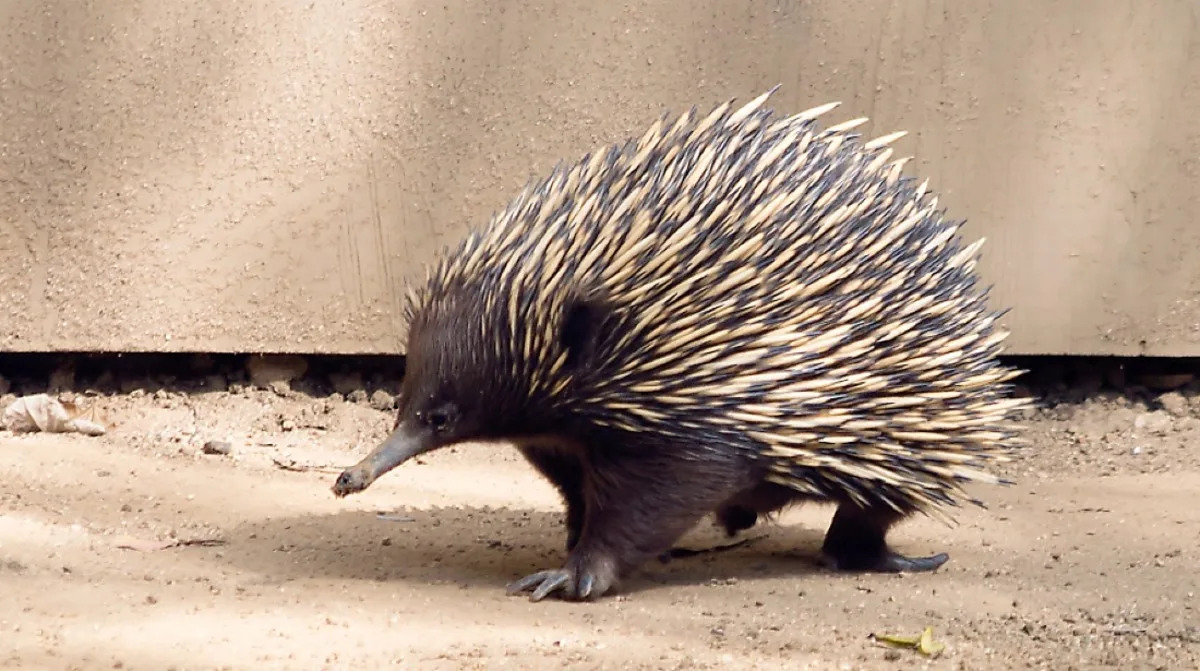
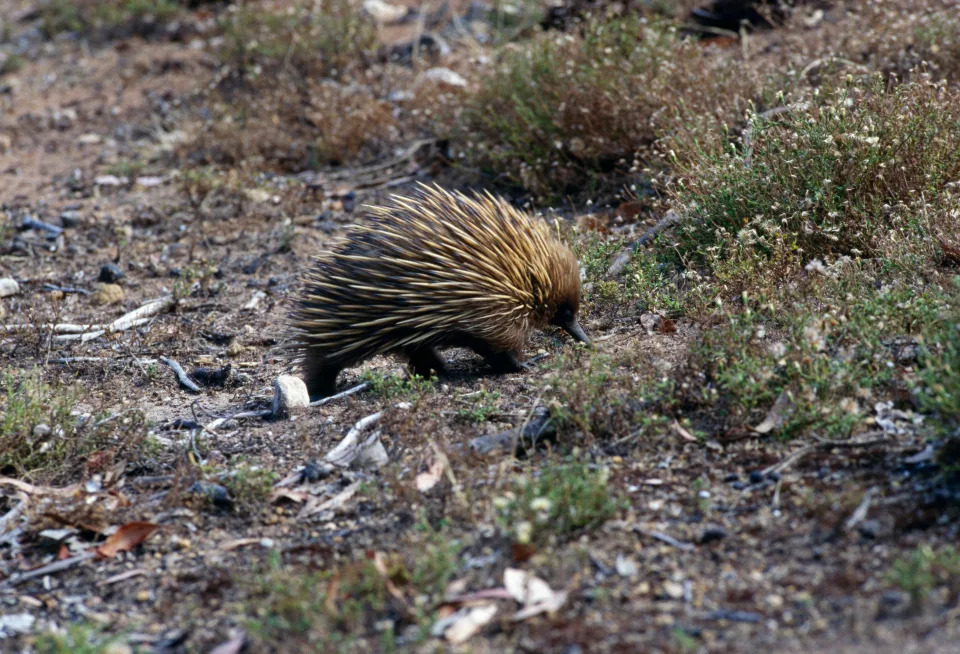
The Attenborough echidna, named for natural historian and biologist Sir David Attenborough, is one of three species of the Zaglossus genus of echidna that lives only in the Cyclops Mountains on the island of New Guinea. Echidna most closely resemble hedgehogs or porcupines in appearance, in that they're covered in coarse hair that resembles spines. There also are one of only two egg-laying mammals; the other being the duck-billed platypus.

The creatures are often referred to as "living fossils" as they are believed to have first appeared on Earth around 200 million years ago when dinosaurs still roamed. While the ancestor of the species was aquatic, echidnas eventually adapted to life on land.

As nocturnal creatures who live in burrows and tend to be very shy, echidnas are rarely seen, making the discovery that much more groundbreaking.

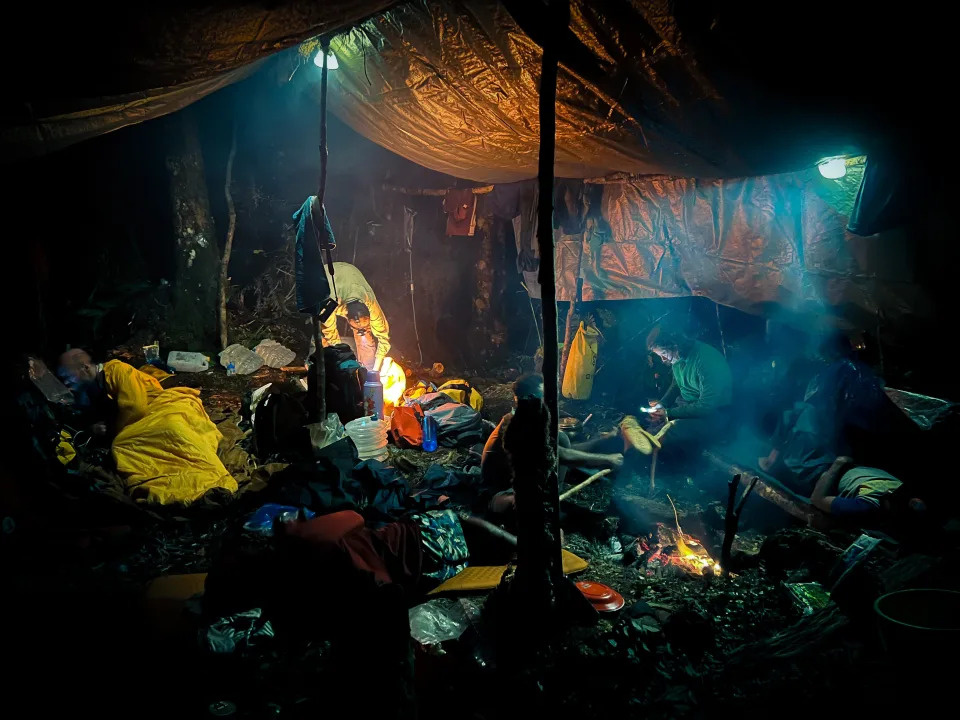
Researchers recorded four three-second clips of Attenborough's long-beaked echidna during a month-long expedition to treacherous, previously unexplored stretches of the rainforest habitat. The mountains are steep and dangerous, filled with deadly venomous snakes and leeches that drop from trees to feed on blood.


Dr, James Kempton, an Oxford University biologist who led the multi-national Expedition Cyclops, told BBC News that he and the entire team were "euphoric" at the discovery of the creature, which they identified in camera trap footage.

"I'm not joking when I say it came down to the very last SD card that we looked at, from the very last camera that we collected, on the very last day of our expedition," Kempton explained. He added that he had already alerted Attenborough to the rediscovery via letter correspondence, who was "absolutely delighted."

Before the video footage was captured, the only evidence of the Zaglossus attenboroughi that existed was a deceased specimen that had been collected near the top of Mount Rara in the Cyclops Mountains in 1961. It wasn't until 1998 that X-rays revealed that the specimen was not a juvenile of another echidna species, and was subsequently named after Attenborough.

The "lost echidna" was one of many discoveries the team made during the expedition. In addition to "several dozen" new species of insects and frogs, they also found a new species of tree-dwelling shrimp and a previously unknown cave system.

"The top of the Cyclops are really unique," said Gison Morib, a local conservationist who partnered with Oxford University on the expedition. "We have to protect these sacred mountains. There are so many endemic species we don't know."

First-ever images prove 'lost echidna' not extinct

Jonah Fisher and Charlie Northcott - BBC News
Fri, November 10, 2023

Scientists have filmed an ancient egg-laying mammal named after Sir David Attenborough for the first time, proving it isn't extinct as was feared.

An expedition to Indonesia led by Oxford University researchers recorded four three-second clips of Attenborough's long-beaked echidna.

Spiky, furry and with a beak, echidnas have been called "living fossils".

They are thought to have emerged about 200 million years ago, when dinosaurs roamed the Earth.

Until now, the only evidence that this particular species Zaglossus attenboroughi existed was a decades-old museum specimen of a dead animal.

"I was euphoric, the whole team was euphoric," Dr James Kempton told BBC News of the moment he spotted the Attenborough echidna in camera trap footage.

"I'm not joking when I say it came down to the very last SD card that we looked at, from the very last camera that we collected, on the very last day of our expedition."


Dr Kempton said he had been in letter correspondence with Sir David about the rediscovery and that he was "absolutely delighted".

Dr Kempton, a biologist from Oxford University, headed a multi-national team on the month-long expedition traversing previously unexplored stretches of the Cyclops Mountains, a rugged rainforest habitat 2,000m (6,561ft) above sea level.

In addition to finding Attenborough's "lost echidna" the expedition discovered new species of insects and frogs, and observed healthy populations of tree kangaroo and birds of paradise.

Echidnas and other animals named after Sir David Attenborough

Aside from the duck-billed platypus, the echidna is the only mammal that lays eggs. Of the four echidna species three have long beaks, with the Attenborough echidna, and the western echidna considered critically endangered.


Factbox on echidna

Previous expeditions to the Cyclops Mountains had uncovered signs, such as 'nose pokes' in the ground, that the Attenborough echidna was still living there.

But they were unable to access the remotest reaches of the mountains and provide definitive proof of their existence.

That has meant that for the last 62 years the only evidence that Attenborough echidna ever existed has been a specimen kept under high security in the Treasure Room of Naturalis, the natural history museum of the Netherlands.

"It's rather flat," Pepijn Kamminga, the collection manager at Naturalis, says as he holds it for us to see.

To an untrained eye it's not dissimilar to a squashed hedgehog because when it was first gathered by Dutch botanist Pieter van Royen it wasn't stuffed.

The importance of the specimen only became clear in 1998 when X-rays revealed it was not a juvenile of another echidna species but in fact fully grown and distinct. It was then that the species was named after Sir David Attenborough.

"When that was discovered, people thought, well, maybe it's extinct already because it's the only one," Mr Kamminga explains. "So this [the rediscovery] is incredible news."

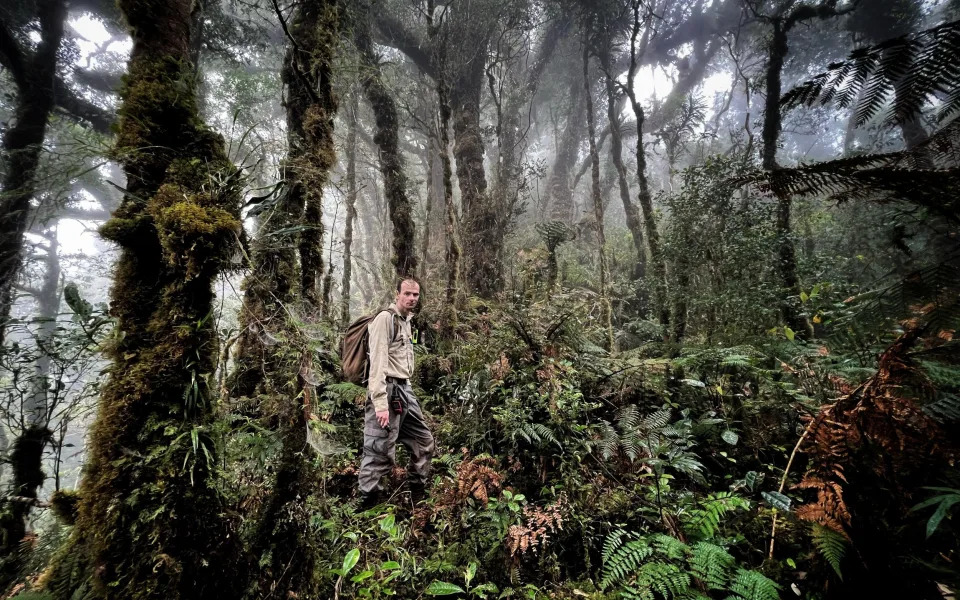
Dr James Kempton led the expedition to the Cyclops Mountains

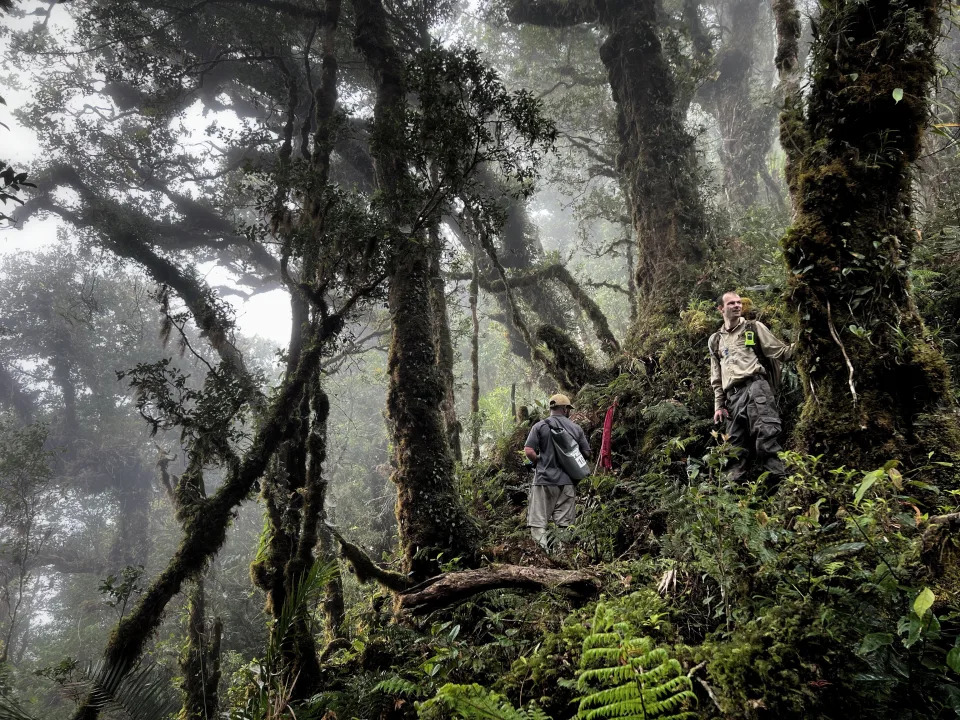
The Cyclops Mountains are precipitously steep and dangerous to explore. To reach the highest elevations, where the echidna are found, the scientists had to climb narrow ridges of moss and tree roots - often under rainy conditions - with sheer cliffs on either side. Twice during their ascent the mountains were hit by earthquakes.

"You're slipping all over the place. You're being scratched and cut. There are venomous animals around you, deadly snakes like the death adder," Dr Kempton explains.

"There are leeches literally everywhere. The leeches are not only on the floor, but these leeches climb trees, they hang off the trees and then drop on you to suck your blood."


Dr Leonidas-Romanos Davranoglou says they have found several dozen new species

Once the scientists reached the higher parts of the Cyclops it became clear the mountains were full of species that were new to science.

"My colleagues and I were chuckling all the time," Dr Leonidas-Romanos Davranoglou, a Greek insect specialist, said.

"We were so excited because we were always saying, 'this is new, nobody has seen this' or 'Oh my God, I can't believe that I'm seeing this.' It was a truly monumental expedition."

Dr Davranoglou broke his arm in the first week of the expedition but remained in the mountains collecting samples. He says they have already confirmed "several dozen" new insect species and are expecting there to be many more. They also found an entirely new type of tree-dwelling shrimp and a previously unknown cave system.

Gison Morib, a conservationist with Yappenda, a local non-profit that partnered with Oxford University on the expedition, said: "The top of the Cyclops are really unique. I want to see them protected.

"We have to protect these sacred mountains. There are so many endemic species we don't know."

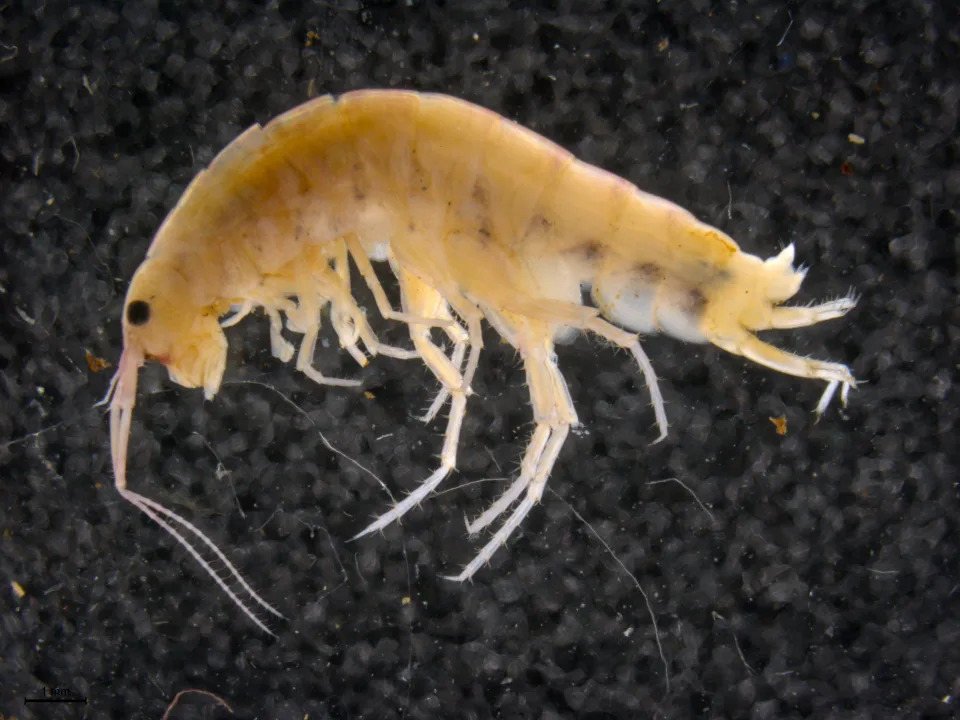
A new species of terrestrial shrimp, found in the soil and the trees of the Cyclops Mountains

Sacred mountains

Previous expeditions had struggled to reach the parts of the Cyclops Mountains where the echidnas live because of the belief of local Papuans that they are sacred.

"The mountains are referred to as the landlady," Madeleine Foote from Oxford University says. "And you do not want to upset the landlady by not taking good care of her property."

This team worked closely with local villages and on a practical level that meant accepting that there were some places they couldn't go to, and others where they passed through silently.

The Attenborough echidna's elusiveness has, according to local tradition, played a part in conflict resolution.

When disputes between two community members arose one was instructed to find an echidna and the other a marlin (a fish).

"That can sometimes take decades," Ms Foote explains. "Meaning it closes the conflict for the community and symbolises peace."

The expedition team spent four weeks living in the damp forest

Dr Kempton says he hopes that rediscovery of the echidna and the other new species will help build the case for conservation in the Cyclops Mountains. Despite being critically endangered, Attenborough's long-beaked echidna is not currently a protected species in Indonesia. The scientists don't know how big the population is, or if it is sustainable.

"Given so much of that rainforest hasn't been explored, what else is out there that we haven't yet discovered? The Attenborough long-beaked echidna is a symbol of what we need to protect - to ensure we can discover it."


Map showing Cyclops Mountains


Rare egg-laying mammal named after Attenborough caught on film for first time
Nina Massey, PA Science Correspondent
Fri, November 10, 2023 


A rare egg-laying mammal named after Sir David Attenborough – which had been lost for more than 60 years – has been captured on video for the first time.

An expedition team has rediscovered Attenborough’s long-beaked echidna, an animal that had previously only been recorded once by science in 1961.

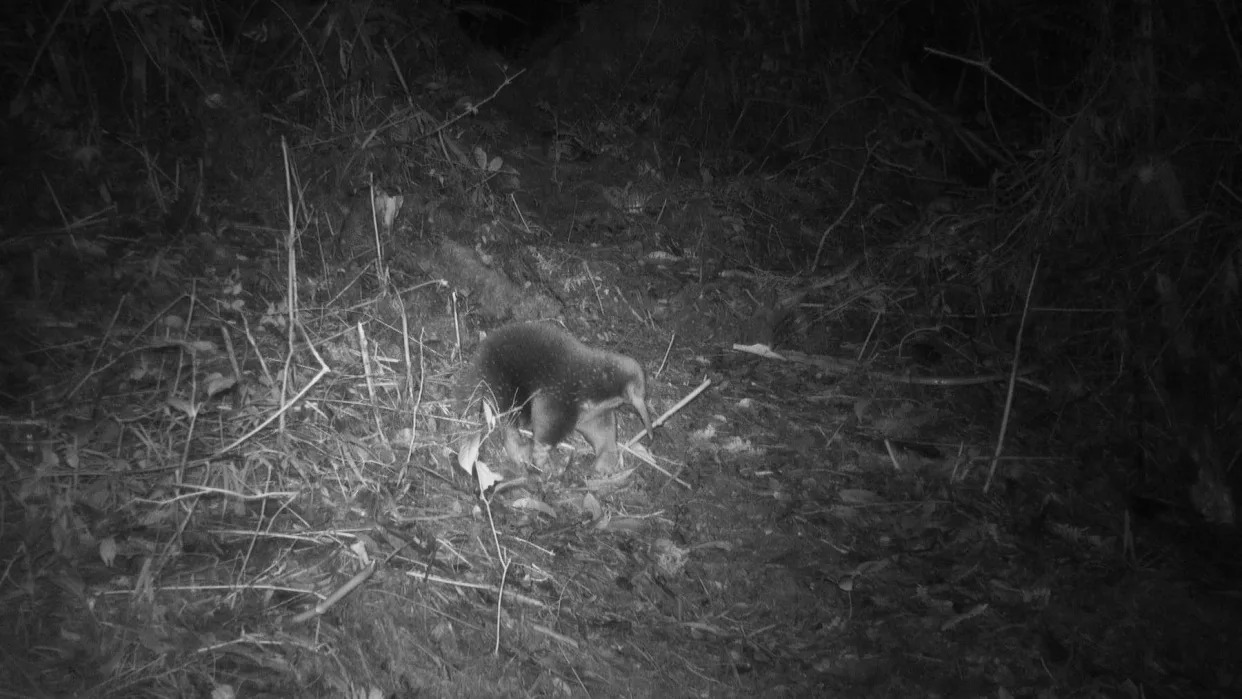
It was captured for the first time in photos and video footage using remote trail cameras set up in the Cyclops Mountains of Indonesia’s Papua Province.

The elusive animal has the spines of a hedgehog, the snout of an anteater, and the feet of a mole.

Because of its hybrid appearance, it shares its name with a creature of Greek mythology that is half human, half serpent.

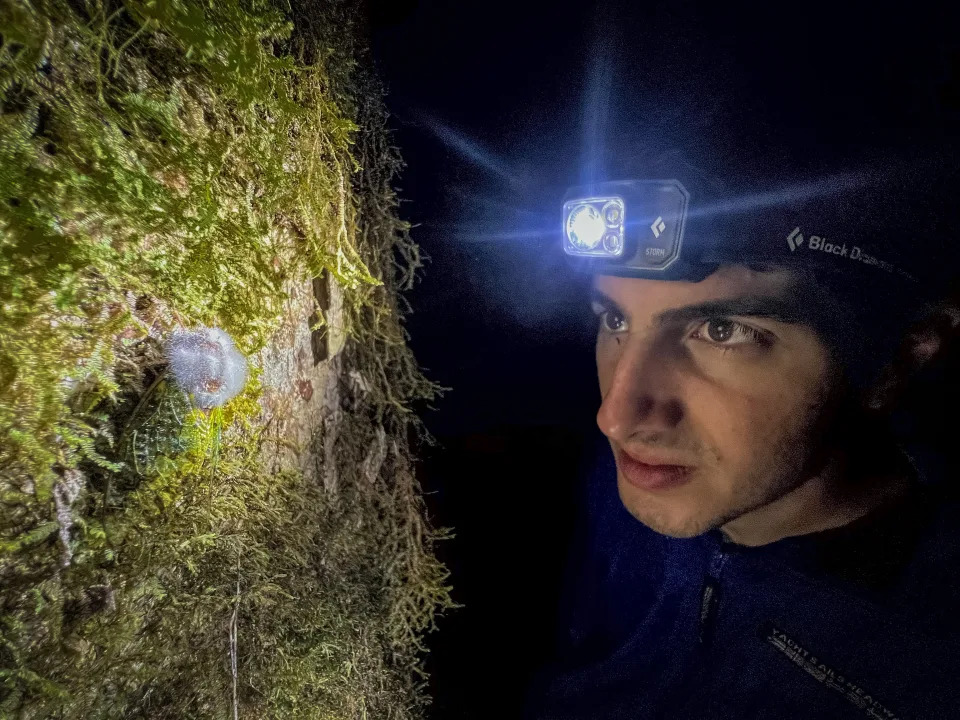
The creatures are nocturnal, and so are notoriously difficult to spot.

Additionally, Attenborough’s echidna is currently classified as Critically Endangered on the IUCN Red List of Threatened Species.

However, after four weeks, on the last day of Expedition Cyclops, with the last images on the final memory card, the team obtained their shots of the elusive mammal – the first-ever photographs of Attenborough’s echidna.

Dr James Kempton, department of Biology at University of Oxford, told BBC Radio 4’s Today programme: “When we discovered it, there was initially just this great sense of relief.

“Because this expedition was three and a half years of planning and we’d seen signs of the echidna or in the field, the holes that it makes when it forages, but no pictures until that very final day.”

He added: “Initially it’s this intense relief but instantaneously afterwards a great sense of euphoria.

“I was the the last scientist who had remained, I’d already come down from the mountains and I was looking through the images for the echidna and just burst out beaming and ran out into the living room of the base house where we were, and said to my Papuan colleagues, who are still with me, ‘we found it, we found it’.”

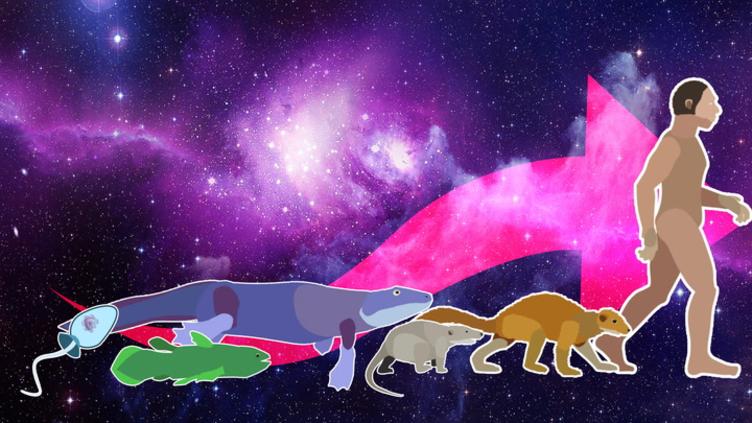
Attenborough’s long-beaked echidna is a monotreme – an egg-laying group that separated from the rest of the mammal tree of life about 200 million years ago.

The echidna species is so special because it is one of only five remaining species of monotremes.

To give themselves the best chance of finding the animal, the team deployed more than 80 trail cameras, making multiple ascents of the mountains, and climbing more than 11,000 meters (more than the height of Mount Everest) in the process.

For almost the entire four weeks that the team spent in the forest, the cameras recorded no sign of the echidna.

As well as searching for the echidna, the expedition carried out the first comprehensive assessment of invertebrate, reptile, amphibian and mammal life in the Cyclops Mountains.

By combining scientific techniques with the Papuan team members’ experience and knowledge of the forest, the team made a number of new discoveries, including several dozens of insect species completely new to science.

They also rediscovered Mayr’s honeyeater (Ptiloprora mayri), a bird lost to science since 2008 and named after famed evolutionary biologist Ernst Mayr.

The researchers were surprised to find an entirely new genus of ground and tree-dwelling shrimp.

Dr Leonidas-Romanos Davranoglou, a Leverhulme Trust Postdoctoral Fellow at the Oxford University Museum of Natural History, was the lead entomologist for the expedition.

He said: “We were quite shocked to discover this shrimp in the heart of the forest because it is a remarkable departure from the typical seaside habitat for these animals.

“We believe that the high level of rainfall in the Cyclops Mountains means the humidity is great enough for these creatures to live entirely on land.”

The expedition was a partnership between the University of Oxford, Indonesian NGO Yayasan Pelayanan Papua Nenda (YAPPENDA), Cenderawasih University (UNCEN), Papua BBKSDA, and the National Research and Innovation Agency of Indonesia (BRIN), Re:Wild.

Scientists took the first-ever photos of an adorable echidna, named after David Attenborough, that hasn't been seen for over 60 years

Sonam Sheth,Maiya Focht
Fri, November 10, 2023 


Scientists captured images of an elusive echidna named after David Attenborough for the first time in over 60 years.

Attenborough's long-beaked echidna was last recorded in 1961.

Researchers dispatched 80 camera traps that finally spotted this adorable creature.


Scientists captured images of an elusive echidna named after the British biologist Sir David Attenborough for the first time in over 60 years.

Attenborough's long-beaked echidna was last recorded in 1961, according to a news release from the University of Oxford.

A team of researchers dispatched 80 camera traps to capture the first-ever video and photos of the animal.

The photos were taken at night, so it might be easy to mistake the animal's spines for fur in the photo. "Attenborough's long-beaked echidna has the spines of a hedgehog, the snout of an anteater, and the feet of a mole," James Kempton, a biologist from the University of Oxford who led the exploration, said in the release.

The echidna — also known as Sir David's long-beaked echidna or the Cyclops long-beaked echidna — inhabits New Guinea and lives in the Cyclops Mountains in Indonesia.

"The discovery is the result of a lot of hard work and over three and a half years of planning," Kempton said in the release.
What is the echidna?

The short-beaked Echidna species is found in Australia, and is closely related to the species re-discovered in this study.DeAgostini/Getty Images

Echidnas are part of a group of animals called monotremes, which is the only group of mammals that lay eggs instead of giving birth to live young.

Echidnas are one of only five remaining monotreme species in the world. This group also includes the platypus.

The spiny critters are notoriously difficult to find since they're nocturnal and tend to be shy. They also roll up into a ball when they feel threatened and usually only come out to mate once a year, in the summer.

Since there hadn't been a sighting in decades, scientists feared that the animal had gone extinct, The New York Times reported.
The mountainous jungle echidna's call home

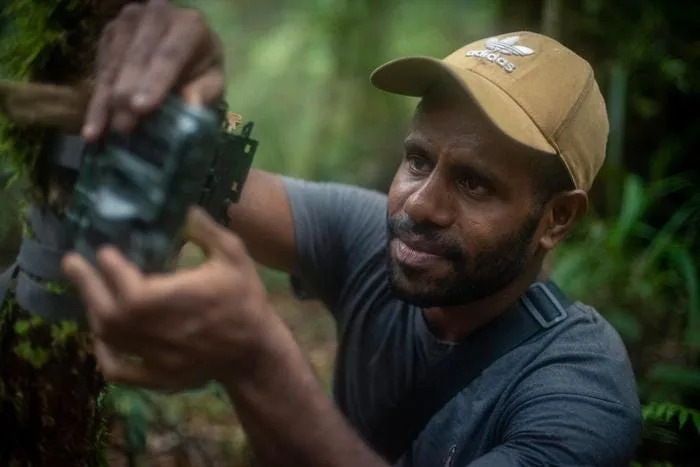
Gison Morib setting up one of the 80 camera traps which were placed in the Cyclops Mountains.Expedition Cyclops

Another complicating factor is that Sir David's echidna lives in a mountainous jungle region that's difficult for researchers to explore. The researchers were only able to conduct their research with help from local organizations, according to the news release.

During the course of the study, one researcher contracted malaria, another broke his arm in two places, and a third had a leech latch onto his eye for a day and a half, per the news release.

"I think the landscape is magical, at once enchanting and dangerous, like something out of a Tolkien book," Kempton said. The expedition also uncovered lots of other intriguing animals, like a never-before-seen species of shrimp that lives in trees and on the ground.

A catalyst for conservation

The long-beaked echidna is listed as Critically Endangered on the IUCN Red List of Threatened Species, according to the news release.

Part of the reason may be because the tropical forests surrounding the Cyclops Mountains are under threat from logging and mining, per the Times.

"I really hope and believe this will become a catalyst for strong conservation of the Cyclops Mountain Range," Iain Kobak, a co-founder of Yappenda that organized and trained people for the expedition, told the Times.


Attenborough’s long-lost echidna rediscovered in New Guinea jungle

Nick Squires
Fri, November 10, 2023 

A long-lost species of egg-laying mammal named after Sir David Attenborough has been rediscovered by a British-led expedition in the dense jungles of New Guinea more than 60 years after it was last spotted.

A living specimen of Sir David’s long-beaked echidna, which resembles a large hedgehog with a long snout, was last documented in 1961.

Scientists had no idea whether it had become extinct or not. But it has now been filmed by a University of Oxford expedition in the Cyclops Mountains of Papua, the Indonesian half of the island of New Guinea.

It is the first video footage ever recorded of the species.

A multinational team of scientists braved earthquakes, sheer cliffs, deadly snakes, malaria and blood-sucking leeches as they scoured the rainforest for the elusive creature.

The long-beaked echidna was captured on a trail camera on the very last day of a month-long expedition. Images of the creature were found on the last memory card retrieved from more than 80 cameras that had been set up in the rainforest by the scientists.

Dr James Kempton and his team spotted the species in the jungles of the Cyclops mountains of Indonesia's Papua Province - Expedition Cyclops

“I’m not joking when I say it came down to the very last SD card that we looked at, from the very last camera that we collected, on the very last day of our expedition,” biologist Dr James Kempton told the BBC.

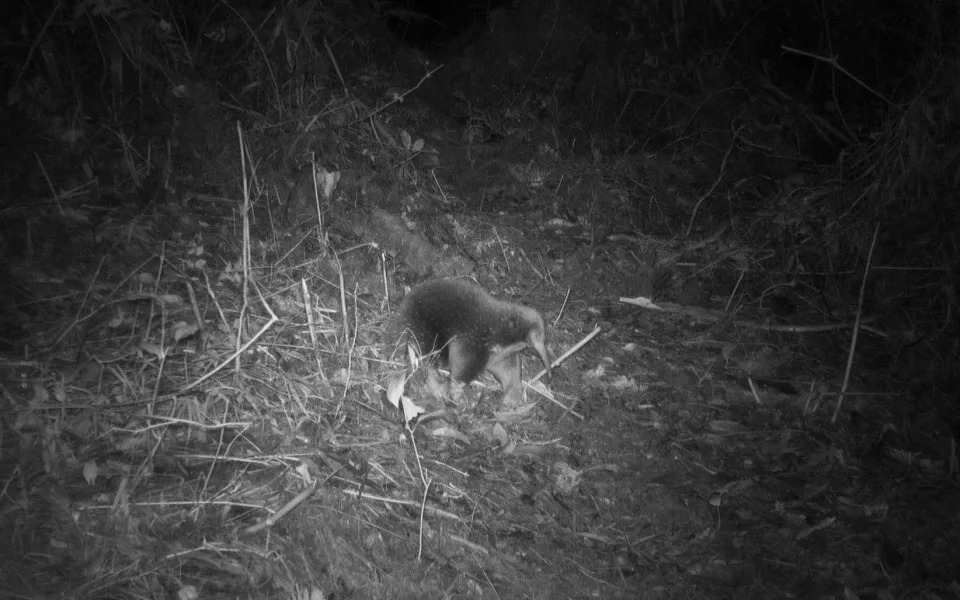
The camera trap footage shows the animal waddling across the forest floor with a distinctive loping gait.

“(The reason) it appears so unlike other mammals is because it is a member of the monotremes – an egg-laying group that separated from the rest of the mammal tree-of-life about 200 million years ago,” Dr Kempton said in a statement.

He said the animal has “the spines of a hedgehog, the snout of an anteater and the feet of a mole”.

The last time the species was recorded scientifically was by a Dutch botanist in 1961. The only evidence that the species existed, until now, was a specimen held by a museum in the Netherlands.

Attenborough’s long-beaked echidna echidna walks amid vegetation in the Cyclops Mountains, Papua, Indonesia

The importance of the specimen was revealed in 1998, when x-rays showed it wasn’t a juvenile of another echidna species, but in fact fully grown and distinct. The species was named after Sir David following the discovery.

One of the many unusual features of echidnas is the fact that they are equipped with a four-pronged penis. It has four separate heads, or glans, although only two of them are used during each erection.

Sir David’s long-beaked echidna, also known as Attenborough’s long-beaked echidna, plays an important part in local culture, with a tradition saying that if a conflict breaks out between villagers, one party should be sent into the jungle to look for one of the animals while another should travel to the coast of New Guinea to find a marlin.

Both creatures are so rare that finding them could take years or decades, by which time the reasons for the conflict would be forgotten.

The scientifically named Zaglossus attenboroughi is classified as critically endangered because of habitat loss and hunting for its meat. The only living relative of the echidnas is the duck-billed platypus of Australia.

Aside from rediscovering the lost echidna, the expedition also found two new species of frog and a new species of terrestrial shrimp as they explored the Cyclops Mountains. The scientists are calling for the region to be given much better protection.

“With 83 per cent of Indonesian New Guinea’s old-growth forest still intact, we are at a critical moment to ensure the preservation of the world’s most biodiverse island,” said Dr Kempton.


Endangered egg-laying mammal seen for the first time in over 60 years

Natalie Kainz
Fri, November 10, 2023 

An expedition through an unpredictable, perilous mountain range in Indonesia’s province of Papua led to the rediscovery of a critically endangered egg-laying mammal that hasn’t been seen for more than 60 years.

For the researchers of Expedition Cyclops, Attenborough’s long-beaked echidna — a bizarre-looking, quill-covered creature with powerful digging feet — is a symbol of the biodiversity that can be rediscovered in Indonesia’s Cyclops Mountains.

On a nine-week expedition, a 25-person crew battled malaria and earthquakes, and one student researcher even had a leech stuck in their eye for 33 hours.

“Climbing those mountains I like to think of as climbing a ladder whose rungs are made of rotting wood, with rails cladded in spikes and thorns, and a frame shrouded by sunken vines and falling rocks,” said team leader James Kempton of Oxford.

The less than 90-square-mile mountain range has been subject to illegal hunting for years. It’s the only habitat for Attenborough’s long-beaked echidna, which is considered critically endangered and is on the International Union for the Conservation of Nature’s Red List of Threatened Species.

Kempton’s team deployed over 30 camera traps to look for the echidna, suspecting it was around because of holes in the ground the animal uses to forage for worms. In the last images on the last SD card on the final day of the expedition, they finally found it.

“The first feeling was one of great relief, because we had tried so hard and thought they were there, but we needed concrete evidence for the scientific proof,” said Kempton. “That was followed by extreme euphoria.”

Kempton said the echidna’s critically endangered status is unlikely to change for a long time and is not protected under Indonesian law.

The effort to change that is among the reasons why Expedition Cyclops included more than six local partners in its research project, said Kempton. These include Indigenous groups, students and organizations of the Indonesian government.

Kempton hopes the findings will help local partners raise funds to research and protect the Cyclops Mountains.

The Attenborough’s long-beaked echidna is also one of five guardians of a highly unique and fragile evolutionary history that dates back over 200 million years, said Kempton.

Echidnas are monotremes, which means they are part of the only group of living mammals that lays eggs instead of bearing live young, he explained. There are only five existing species of monotremes: the platypus and four species of echidna.

“To a biologist, the idea that that branch could go extinct would be a great tragedy,” Kempton said. “It’s evolutionary history that can never be gained back.”

Rediscovering Attenborough’s long-beaked echidna was only one of the goals of Expedition Cyclops. Researchers also set out to investigate the origins of the biodiversity of the Cyclops Mountains. They came back with hundreds of new insect species, at least two new species of frogs, and a new species of shrimp that lives on land and in trees.

Kempton said the Cyclops Mountains’ unique geologic origins are a huge driving force behind the region’s biodiversity. The mountain range used to be islands in the middle of the Pacific Ocean. As the Earth’s continents gradually drifted together, they collided with the mainland of New Guinea to form mountains.

Expedition Cyclops also rediscovered Mayr’s honeyeater, a species of bird not seen for 15 years.

This article was originally published on NBCNews.com
GAIA LIVES
New island that emerged from the ocean off Japan is now visible from space

Hannah Osborne
Fri, November 10, 2023

The new island that emerged after an underwater volcanic eruption off Japan's Iwo Jima seen from space

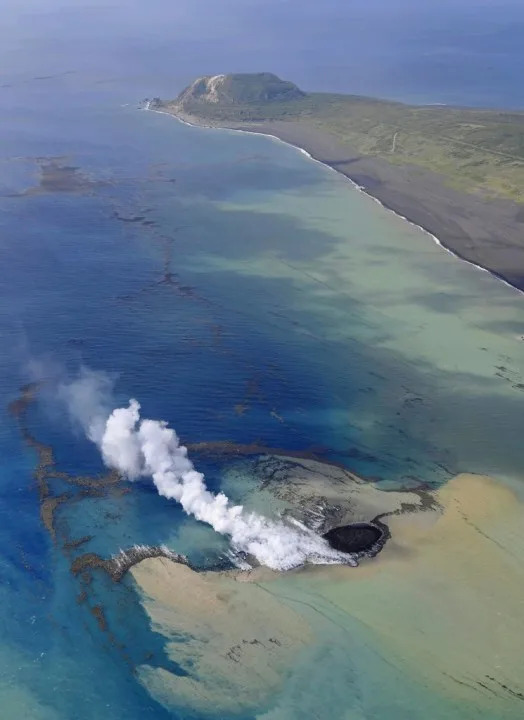
A newborn island that recently emerged from the Pacific Ocean after an underwater volcanic eruption is now visible from space, images from the European Space Agency (ESA) reveal. The satellite images show the new landmass sitting around 0.6 mile (1 kilometer) off the coast off Japan's Iwo Jima island.

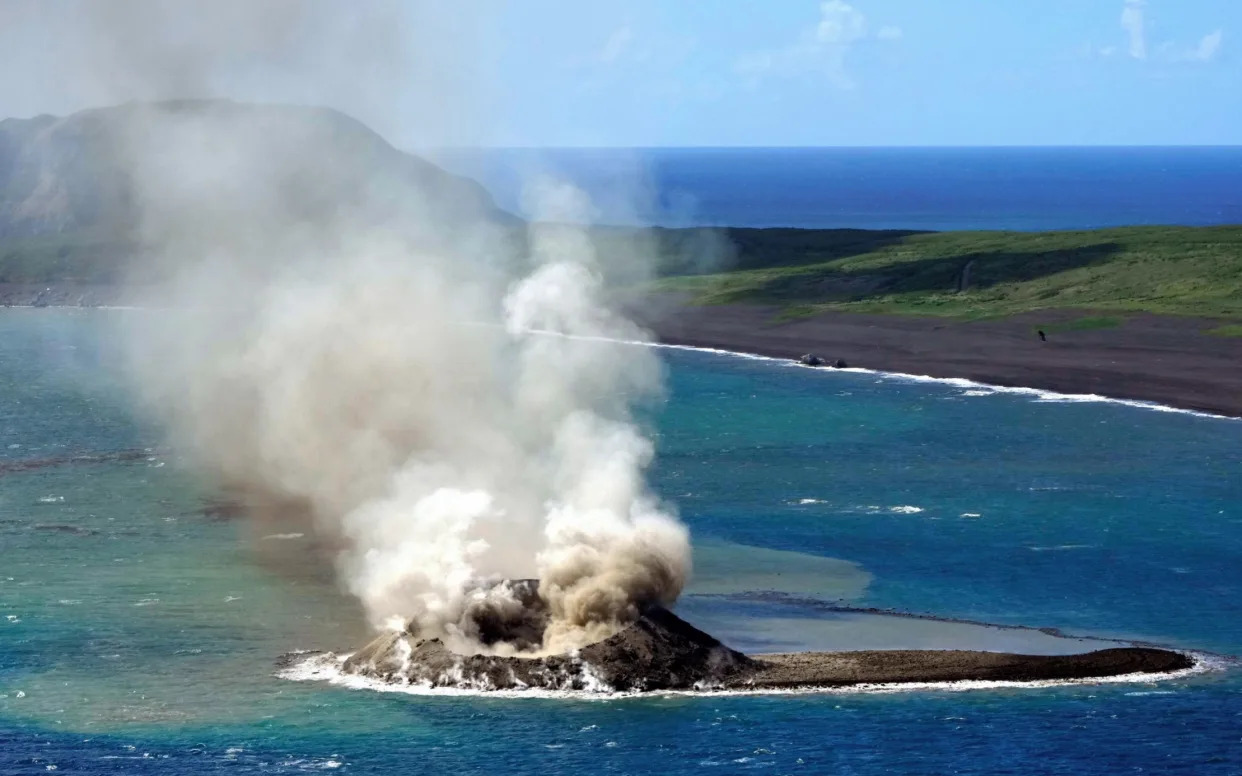
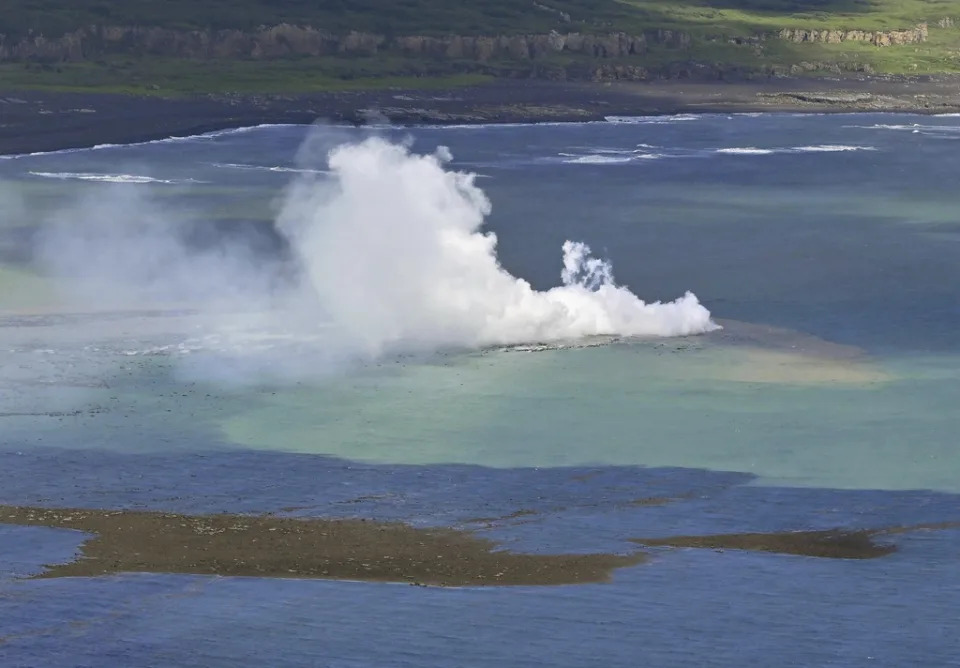
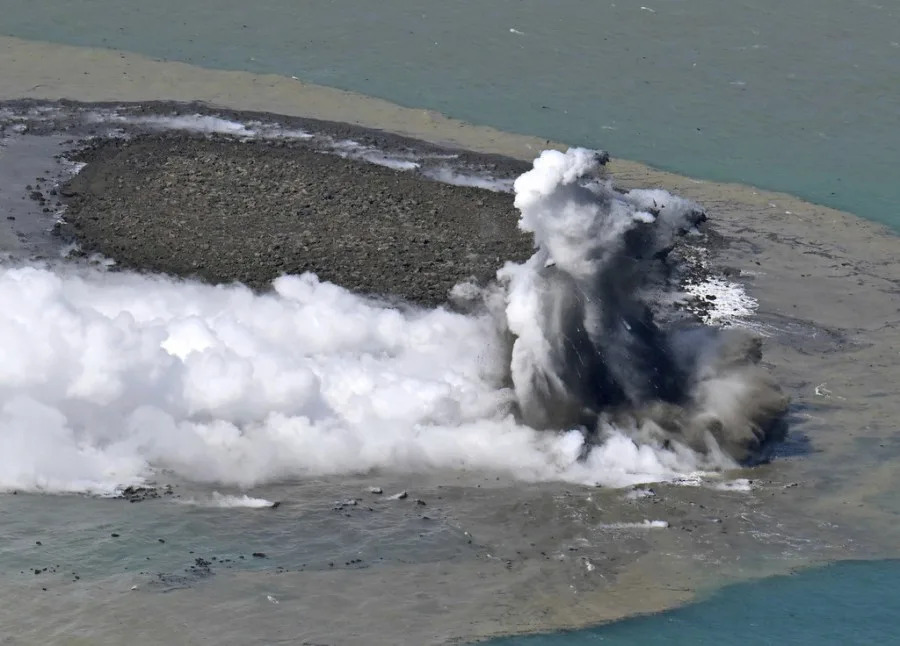
The submerged volcano began erupting on Oct. 21, with activity ramping up over the next 10 days. By Oct. 30, explosions were taking place every few minutes, according to a translated statement. The eruption threw large lumps of rock into the air, and shot a jet of gas and ash over 160 feet (50 meters) almost vertically above the water's surface.

Related: Scientists discover ancient, underwater volcano is still active — and covered in up to a million giant eggs

Since the volcano started erupting, "volcanic ash and rocks have piled up to form the new island, which is now also visible from space," a statement from the ESA said. The latest image was captured with the Landsat 9 satellite on Nov. 3. It shows Iwo Jima — which sits around 750 miles (1,200 km) south of Tokyo — before and after the latest eruption.


A close up of the new island that formed after a volcanic eruption.

Along with the new island, the volcano also produced a sea of floating pumice — an extremely porous type of rock that forms during explosive eruptions. New analysis of this pumice found its chemical composition differed from that of ejecta from other volcanoes in this chain, according to a different translated statement. The pumice likely came from an eruption along the back-arc rift zone — the area behind a volcanic arc, the statement noted.

RELATED STORIES

Earth's newest 'baby' volcano is painting Iceland's Fagradalsfjall region with incandescent lava

Perilous expedition to uninhabited island in South Atlantic confirms existence of world's 8th lava lake

California's supervolcano has a massive lid that causes swarms of earthquakes — and that's a good thing, scientists say

The latest eruption is in almost the exact same spot as one that took place in July 2022, suggesting magma activity is resuming at Iwo Jima. The eruption has now subsided, Yuji Usui, an analyst with the Japan Meteorological Agency, told the AP.

The new island was approximately 330 feet (100 m) wide and up to 66 feet (20 m) high, but it appears to be shrinking as the waves erode the "crumbly" rock, Usui said. Whether the new island will survive is unclear and depends on what it is made of: If it is lava, it could remain for longer. "We just have to see the development," he told the AP.

A volcanic eruption gave birth to a new island, and a NASA satellite saw it from space (photo)

Robert Lea
Fri, November 10, 2023 

A split-screen image of an island formed from a volcano eruption.

A NASA satellite has spotted a newly formed island off the coast of Japan that experienced a fiery birth at the end of October.

The joint NASA/U.S. Geological Survey satellite Landsat-9 saw the island rise from the sea off the coast of Iwo Jima island, part of the Volcano Islands archipelago in south Japan, on Nov. 3.

The island was born 750 miles (1,200 kilometers) south of Tokyo between 12:20 and 12:35 local time on Oct. 30 when blisteringly hot magma fell into the ocean and exploded, creating chunks of rock several feet long more than 160 feet (50 meters) into the air, according to the University of Tokyo.

"According to the Japan Meteorological Agency, the eruption appears to have started on October 21, 2023," University of Tokyo researchers wrote. "The location of this eruption is almost the same as the 2022 eruption location and is thought to indicate the resumption of magma activity on Iwo Jima."

The underwater eruptions broke the ocean's surface at two locations in the form of explosions at the southern tip of Iwo Jima, and rocks gathered to the north of these explosions. This growing rubble pile eventually formed a 330-foot (100-meter) wide island, around half a mile (1 kilometer) from Iwo Jima, sat in discolored water littered with very porous rock called pumice.

An extremely light rock, pumice is created when lava with a very high content of water and gases is discharged from a volcano. As gas bubbles escape this lava, it becomes "frothy," cooling and hardening into a bubble-filled rock.

Landsat-9 saw the island from its position 438 miles (705 kilometers) above Earth on Nov. 3, and this image was compared to observations of the region collected by the same satellite on Oct. 18 in which the island was not present.

The birth of the island was witnessed by a craft much closer to home when an aircraft owned by Mainichi Shimbun, a Japanese newspaper, was the initial stages of an underwater eruption in the southern part of the Izu-Ogasawara arc — an oceanic trench in the western Pacific Ocean.

The site of the new island has been a hotbed of underwater eruptions of steam and lava over recent years, University of Toyko researchers said, adding that this is one of the fastest-rising caldera volcanoes — a large depression formed when a volcano erupts and collapses — in the world.


Watch: New island appears off Japan coast – but it might not last long

Danielle Demetriou
Fri, November 10, 2023 

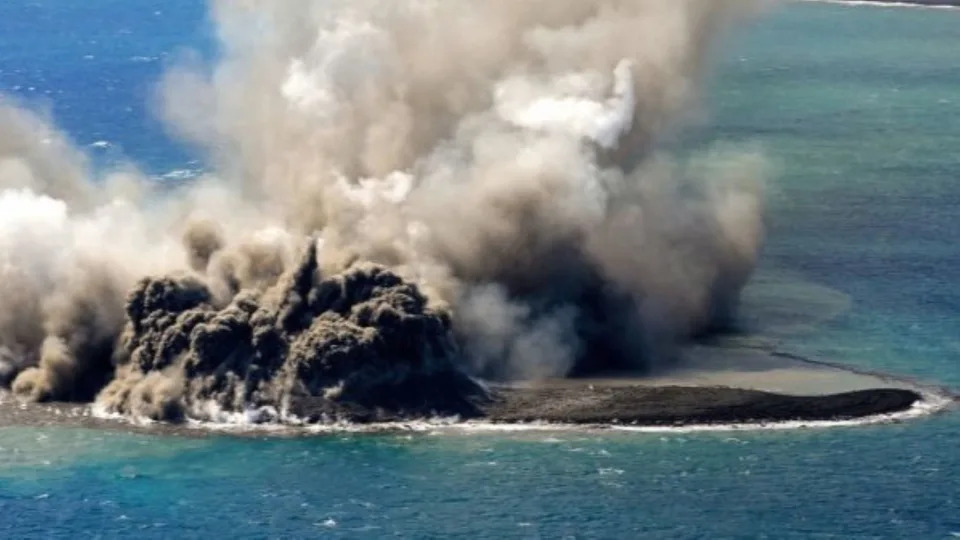
Earth and sand are sent into the air above a new islet off the coast of Iwoto island in Ogasawara, Tokyo, Japan - The Asahi Shimbun/Getty Images


A small new island has appeared unexpectedly off the coast of Japan following the eruption of an undersea volcano, although experts warn it may be washed away before long.

The land mass emerged from the Pacific Ocean after the volcano began a series of underwater eruptions late last month near the Ogasawara island chain.

It sits around 745 miles south of Tokyo and half a mile off Iwo Jima.

Eruptions led to volcanic ash and rocks accumulating on a shallow seabed and within 10 days, the tip of the unnamed island eventually emerged above the water.

The newly formed land mass then continued to grow, expanding to dimensions of around 330 feet in diameter, with a highest point of some 66 feet above sea level, by early November.

But volcanic activity at the site has since subsided and the island has now begun to shrink because its “crumbly” formation is easily washed away by waves, according to Yuji Usui, an analyst in the Japan Meteorological Agency’s volcanic division.

“We just have to see the development,” he said. “But the island may not last very long.”

The new landmass has risen from waters about half a mile off the coast of Iwoto – a volcanic island previously known as Iwo Jima, which was the scene of intense fighting during the Second World War.

In this aerial photo, plume billows out from the water off the Ioto island, following an eruption in Ogasawara, southern Tokyo, Japan - Kyodo News via AP

Fukashi Maeno, an associate professor at the University of Tokyo’s Earthquake Research Institute, discussed the creation of the island after flying over the site late last month.

Magma and seawater reportedly interacted to cause plumes of smoke to rise as high as 160 feet into the air every few minutes during eruptions, with large rocks also spewed from the waters, Mr Maeno told local media.

The intensity of the eruptions also caused the seawater to change colour, while pumice stones were spotted floating around the new island, he added.

The emergence of a new island is the latest in a long history of intense volcanic activity for Japan, one of the most seismically sensitive countries in the world, with more than 100 active volcanoes.

Undersea volcanoes and seismic activities have formed new islands in the past.

In 2013, an eruption at Nishinoshima in the Pacific Ocean south of Tokyo led to the formation of a new island, which kept growing during a decade long eruption of the volcano.

Located in the Pacific Ring of Fire, the Japanese archipelago spans the convergence of several major tectonic plates, resulting in centuries of frequent earthquakes and volcanic eruptions.

Experts are currently monitoring the region surrounding the new island to determine whether it will become a permanent fixture on Japan’s map or disappear.

The new island could survive longer if it is made of lava, or something more durable than volcanic rocks such as pumice.

An official at the Japan Meteorological Agency told local media: “If only a cinder eruption, as it is now, it will be eroded by waves and is unlikely to remain for a long time, but if it turns into an eruption with lava, it may remain for quite a while.”

New island forms in Japan after undersea volcano erupts but experts warn it may not last long

Joanna Adhem
Fri, November 10, 2023

In a remarkable event that unfolded three weeks ago, the eruption of an undersea volcano off the southern coast of Iwo Jima has created a new island.

Despite the awe-inspiring nature of this phenomenon, experts caution that the newfound landmass may not last long.

The unnamed undersea volcano, located roughly 1 kilometre off the coast of Iwo Jima - known as Ioto in Japan - and 1,200 kilometres south of Tokyo, erupted on October 21.

In just 10 days, volcanic ash and rocks built up on the shallow seabed, forming an island that emerged from below the water's surface.

By early November it was approximately 100 meters in diameter and had reached a height of 20 meters above sea level, according to Yuji Usui from the Japan Meteorological Agency's volcanic division.

This supervolcano in Italy last erupted in 1538. Is it about to blow again?
How long do experts think the island will last?

Two similar undersea eruptions have been documented in recent years, but the emergence of a distinct landmass is a rare occurrence.

The fragile nature of its composition, described as "crumbly" by Usui, makes it susceptible to erosion by ocean waves. Ongoing analysis by experts includes an examination of the deposits to determine exactly what it is made of.

It is still possible that the island could survive for a more extended period if it is composed of more durable materials such as lava, as opposed to the easily weathered volcanic rocks like pumice.

Japan has 111 of the roughly 1,500 active volcanoes in the world, according to the Japan Meteorological Agency. It sits on the so-called Pacific “Ring of Fire” - a 40,000-kilometre-long chain of volcanos and seismically active sites which is home to much of the world’s volcanic and earthquake activity.

Watch the video above to learn more about Japan's newest volcanic island.

Volcano creates a new island off Japan, but it may not last

The Associated Press
Fri, November 10, 2023 


TOKYO (AP) — An undersea volcano erupted off Japan three weeks ago, providing a rare view of the birth of a tiny new island, but experts say it may not last very long.

The unnamed undersea volcano, located about 1 kilometer (half a mile) off the southern coast of Iwo Jima, which Japan calls Ioto, started its latest series of eruptions on Oct. 21.

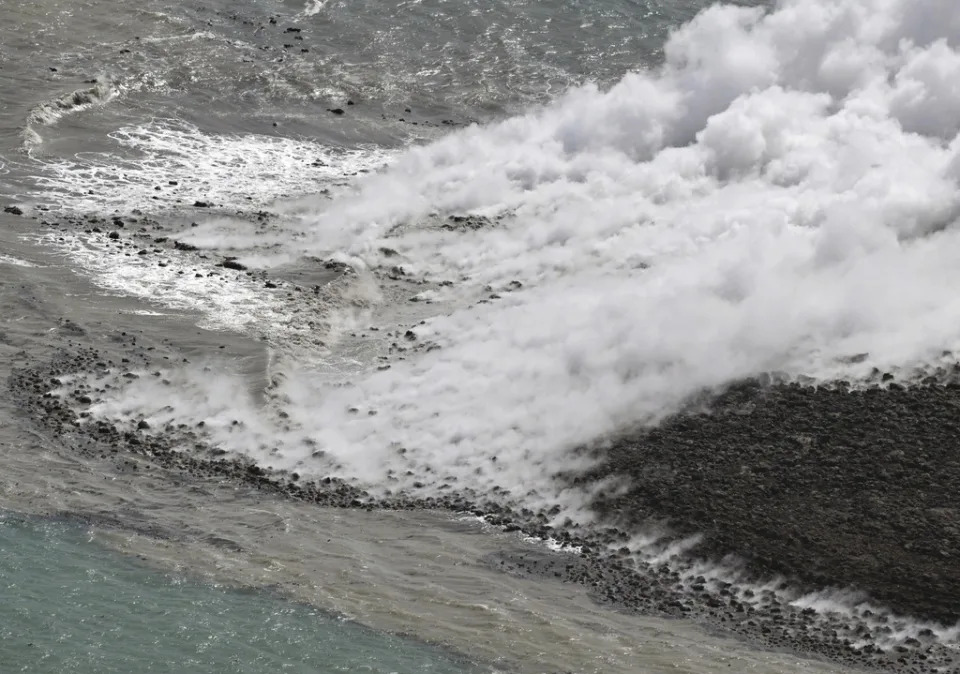
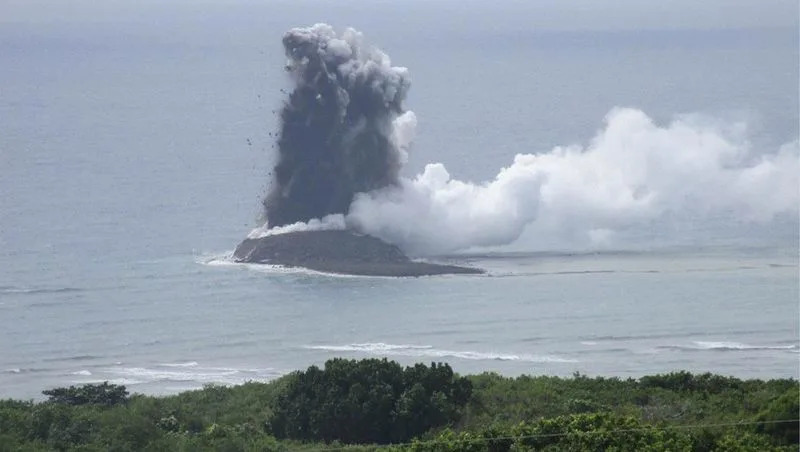
Within 10 days, volcanic ash and rocks piled up on the shallow seabed, its tip rising above the sea surface. By early November, it became a new island about 100 meters (328 feet) in diameter and as high as 20 meters (66 feet) above the sea, according to Yuji Usui, an analyst in the Japan Meteorological Agency’s volcanic division.

This aerial photo shows steam billowing from the waters off Iwoto Island, Ogasawara town in the Pacific Ocean, southern Tokyo, on Oct. 30, 2023. A new island, 100 meters in diameter, formed by erupted rock, is seen near the steam, according to Kyodo News. (Kyodo News via AP)More


In this photo provided by the Japan Maritime Self-Defense Force, steam billows from the waters off Ioto island, Ogasawara town in the Pacific Ocean, southern Tokyo, on Nov. 1, 2023. An unnamed undersea volcano, located about 1 kilometer (half a mile) off the southern coast of Iwo Jima, which Japan calls Ioto, started its latest series of eruptions on Oct. 21. (Japan Maritime Self-Defense Force via AP)More


In this aerial photo, plume billows from the water off the Ioto island, following an eruption in Ogasawara, southern Tokyo, Japan, on Oct. 30, 2023. An unnamed undersea volcano, located about 1 kilometer (half a mile) off the southern coast of Iwo Jima, which Japan calls Ioto, started its latest series of eruptions on Oct. 21. (Kyodo News via AP)More


In this aerial photo, plume billows out from the water off the Ioto island, following an eruption in Ogasawara, southern Tokyo, Japan, on Oct. 30, 2023. An unnamed undersea volcano, located about 1 kilometer (half a mile) off the southern coast of Iwo Jima, which Japan calls Ioto, started its latest series of eruptions on Oct. 21. (Kyodo News via AP)More


In this aerial photo, plume billows from the water off the Ioto island, seen rear, following an eruption in Ogasawara, southern Tokyo, Japan, on Oct. 30, 2023. An unnamed undersea volcano, located about 1 kilometer (half a mile) off the southern coast of Iwo Jima, which Japan calls Ioto, started its latest series of eruptions on Oct. 21. (Kyodo News via AP)More


This aerial photo shows steam billowing from the waters off Iwoto Island, Ogasawara town in the Pacific Ocean, southern Tokyo, on Oct. 30, 2023. A new island, 100 meters in diameter, formed by erupted rock, is seen near the steam, according to Kyodo News. (Kyodo News via AP)More


This aerial photo shows steam billowing from the waters off Iwoto Island, Ogasawara town in the Pacific Ocean, southern Tokyo, on Oct. 30, 2023. A new island, 100 meters in diameter, formed by erupted rock, is seen near the steam, according to Kyodo News. (Kyodo News via AP)More


In this aerial photo, smoke billows from the water off the Ioto island, following an eruption in Ogasawara, southern Tokyo, Japan on Oct. 30, 2023. An unnamed undersea volcano, located about 1 kilometer (half a mile) off the southern coast of Iwo Jima, which Japan calls Ioto, started its latest series of eruptions on Oct. 21. (Kyodo News via AP)More


In this aerial photo, plume billows from the water off the Ioto island, following an eruption in Ogasawara, southern Tokyo, Japan, on Oct. 30, 2023. An unnamed undersea volcano, located about 1 kilometer (half a mile) off the southern coast of Iwo Jima, which Japan calls Ioto, started its latest series of eruptions on Oct. 21. (Kyodo News via AP)More

Volcanic activity has increased near Iwo Jima and similar undersea eruptions have occurred in recent years, but the formation of a new island is a significant development, Usui said.

Volcanic activity at the site has since subsided, and the newly formed island has somewhat shrunk because its “crumbly” formation is easily washed away by waves, Usui said.

He said experts are still analyzing the development, including details of the deposits. The new island could survive longer if it is made of lava or something more durable than volcanic rocks such as pumice.

“We just have to see the development,” he said. “But the island may not last very long.”

Undersea volcanoes and seismic activities have formed new islands in the past.

In 2013, an eruption at Nishinoshima in the Pacific Ocean south of Tokyo led to the formation of a new island, which kept growing during a decadelong eruption of the volcano.

Also in 2013, a small island surfaced from the seabed after a massive 7.7-magnitude earthquake in Pakistan. In 2015, a new island was formed as a result of a monthlong eruption of a submarine volcano off the coast of Tonga.

Of about 1,500 active volcanoes in the world, 111 are in Japan, which sits on the so-called Pacific “Ring of Fire,” according to the Japan Meteorological Agency.

Iwo Jima was the site of some of the fiercest fighting of World War II, and the photograph taken by AP photographer Joe Rosenthal of a flag-raising atop the island’s Mount Suribachi on Feb. 23, 1945, came to symbolize the Pacific War and the valor of the U.S. Marines.

World’s newest island forms off the coast of Japan thanks to undersea volcano

Rebecca Olds
Fri, November 10, 2023

In this photo provided by the Japan Maritime Self-Defense Force, steam billows from the waters off Ioto island, Ogasawara town in the Pacific Ocean, southern Tokyo, on Nov. 1, 2023. An unnamed undersea volcano, located about half a mile off the southern coast of Iwo Jima, which Japan calls Ioto, started its latest series of eruptions on Oct. 21. 
| Japan Maritime Self-Defense Force 


A new island formed a week ago off the coast of the Japanese island Iwo Jima thanks to the work of an undersea volcano.

The unnamed volcano first began erupting on Oct. 21 and has spewed enough volcanic ash and rocks to start the formation of a new island, reported The Associated Press. The island is about 328 feet across and 66 feet above sea level.

One expert, Yuji Usui from the Japan Meteorological Agency’s volcanic division, told the AP that the island’s “crumbly” formation could be washed away by waves.

“We just have to see the development,” Usui said. “But the island may not last very long.”

For now, the volcano continues to eject a mixture of large gray particles and magma. No injuries have been reported from the event, reported The New York Times.
How can islands be created?

Islands can be created in a variety of ways, but the new island off the coast of Japan is attributed to the build-up of enough material from the underwater volcano that the pile has reached the surface, per The Associated Press.
Did Japan find 7,000 new islands?

The new island adds to the thousands discovered earlier this year in the region.

The Guardian reported that it was previously thought that the Japanese archipelago had around 6,000 smaller islands with four main ones. Then, digital mapping discovered that there were actually more than twice that many.

More than 7,000 new islands were discovered in early 2023.

Japan recounts its number of islands, discovering more than 7,000

How many islands make up Japan in 2023?

With the discovery earlier this year, Japanese geographers believe there are a total of 14,152 islands in the region.

And it’s possible that more, smaller islands will continue to pop up since the area is part of the “Ring of Fire” region, known for volcanoes, per The Associated Press. Currently, 111 out of the world’s 1,500 active volcanos are in Japan.
What type of volcano is found on the islands of Japan?

The main type of volcano found in Japan is the stratovolcano, or composite volcano, per the National Parks of Japan. These volcanoes are created by layer after layer of ash and rock, especially pumice. There are also cinder cones and lava dome volcanoes in the country.
Are there any active volcanoes in Japan?

Most of the volcanos in Japan are considered “active” because they’ve erupted in the past 10,000 years, including the most famous Mount Fuji volcano, which hasn’t erupted since 1707, per the National Parks of Japan.

Sakurajima is considered the most active in the country because it experiences small eruptions almost daily, per the travel website Japan Guide.

Related
What’s going on with Italy’s supervolcano?
‘Be prepared for all outcomes’: Inside the saga of a supervolcano that’s waking up

Barbie Nadeau, CNN
Fri, November 10, 2023 

Sign up for CNN’s Wonder Theory science newsletter. Explore the universe with news on fascinating discoveries, scientific advancements and more.

Forget Italy’s most famous active volcano, Mt. Vesuvius, which destroyed Pompei in 79 AD.

The most dangerous volcanic threat in Italy right now is one you’ve probably never heard of: Campi Flegrei, or the Phlegraean Fields.

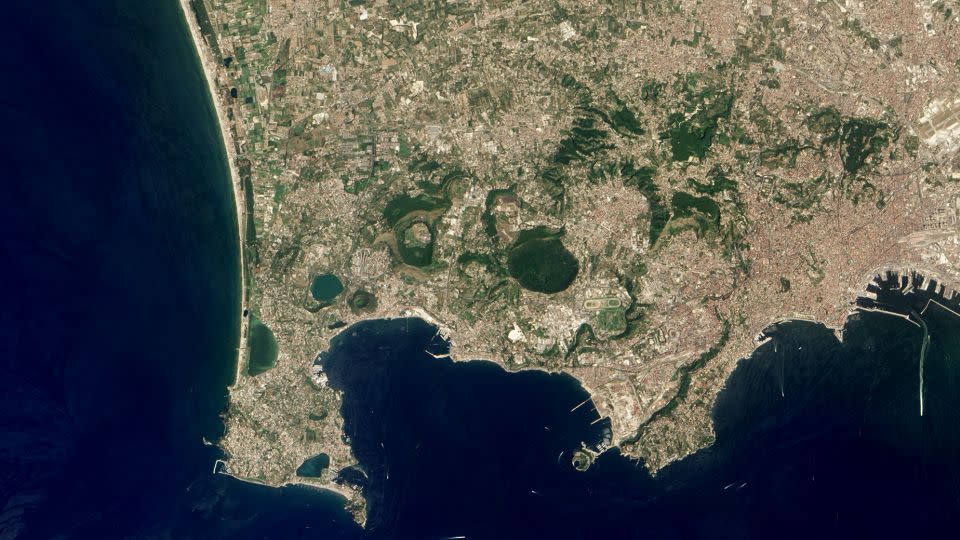
This unassuming plain, which stretches 200 kilometers (125 miles) under the bay of Naples and the islands of Capri and Ischia to the outskirts of the city of Naples, is a giant caldera, or depression, left by a supervolcano some 2 million years ago.

Campi Flegrei, a large dormant volcano near Naples, has a history of eruptions, and the last one was in 1538. Recently, increased seismic activity and rising land levels have raised concerns among local residents. 
- Jesse Allen/Robert Simmon/NASA

It is now the site of multiple volcanoes that have been active for 39,000 years, many of which lie underwater. It’s also populated with villas, small villages and shopping malls and home to 800,000 people and a hospital under construction. More than 500,000 of the locals live in what Italy’s civil protection agency has deemed a “red zone,” an area encompassing 18 towns that’s at highest risk in the event of an eruption. An additional 3 million residents of Naples live immediately outside the eastern edge of the caldera, according to the civil protection agency.

The last major eruption of Campi Flegrei was in 1538, and it created a new mountain in the bay. Seismic activity in the area has been intensifying since December of 2022, according to Italy’s National Institute of Geophysics and Volcanology (INGV), and experts fear that the volcano could be reawakening after generations at rest.

The densely populated region, which is less than 50 kilometers (31 miles) from Vesuvius, is prone to a seismic phenomenon known as bradyseism, defined by cycles of uplift and gradual lowering of the ground. The last time the region saw such activity was 1984, when the ground rose 3.5 meters (11.5 feet) before it began a slow descent accompanied by seismic activity similar to what is happening in the area now.

Currently in a state of positive bradyseism, when the ground moves upward, the entire volcanic zone is also experiencing a surge in earthquakes that has rattled nerves and sent residents seeking safety out into the streets. In September, the strongest earthquake in 40 years struck the region, and that 4.2 magnitude quake was followed by one of a similar strength just days later.

So far in 2023 Campi Flegrei has recorded more than 3,450 earthquakes, 1,118 of which occurred in August alone. This is more than triple the previous year’s total, according to INGV’s data. More than 500 earthquakes occurred in October, the strongest of which hit 4.0 magnitude, followed by a dozen aftershocks.

Until the beginning of May, the quakes were almost all under 3.0 magnitude, according to INGV.

Many experts think the local population should be better prepared to cope with the seismic activity and the possibility of an eruption. On October 5, the country’s civil protection agency laid out an updated evacuation plan, which calls for the movement of half a million people over a 72-hour period of time on roads many locals fear won’t accommodate such intense traffic. The last time a such a plan had been studied was in 2019, and the findings showed the evacuation plan was lacking.

Carlo Doglioni, head of the INGV, gave testimony on the potential outcomes of the seismic activity before the Italian government’s Environmental Commission’s lower chamber on September 28.

“There are two possible scenarios relating to the evolution of the situation in the Campi Flegrei: the best is that the ongoing bradyseism crisis ends as happened in 1983 to 84; the worst is an eruption similar to that of 1538,” he said.

“It is an evolution that we do not know and that we are monitoring,” Doglioni said.
What’s behind the increase in activity

Dr. Giuseppe De Natale, a research director at the INGV in Naples, said the current cycle of uplift is associated with pressure below the surface of the caldera. “We don’t know exactly the depth of the increase of pressure, it could be between zero and 3.5 kilometers,” he said.

There are two hypotheses as to what could be causing the current increase in seismic activity at Campi Flegrei, according to De Natale.

The first — and potentially most dangerous — possibility is that it could be an “intrusion of magma coming from the magma chamber located about 8 kilometers deep,” De Natale said.

The second, which he said is more likely, is that there is a large “degassing” of gases created by the magma coming from the deep magma chamber. The degassing at the same depth as the magma chamber is what he believes has caused the ground to rumble.

“The problem is the rocks,” De Natale said. “The shallow rocks cannot hold high levels of pressure, so if the pressure increases too much, there could happen complete fracturing of the rocks, which is generally the cause of the eruption of a volcano.”


Fumaroles, or vents, emit volcanic gases in the Pisciarelli area of Campi Flegrei on October 23, 2023. - Ivan Romano/Getty Images

Dr. Benedetto De Vivo, a retired professor of geochemistry at the University of Naples and an expert on bradyseism, agrees that the crater is degassing, and doesn’t think that the rising land is due to magma alone. These gases, he believes, are caused by the magma below the caldera receding, not rising. But he said it is impossible to know exactly what is happening.

“We can use statistics to create models, but we cannot predict the natural process because we do not know all of the variables in play,” De Vivo said.

In spite of objections by the local residents that drilling could trigger more seismic activity, De Natale won approval in 2009 to lead a team of volcano experts from 18 countries in 2012 on a mission to drill a pilot hole 501 meters (1,644 feet) deep into the caldera in an attempt to see exactly what was going on. However, Rosa Russo Iervolino, who was mayor of Naples at the time, halted the drilling project before it began, citing concerns for the population. In 2012, after she left office, the project was briefly reinstated by the new mayor, Luigi di Magistris, but by then funding had dried up and only the borehole was drilled.

De Natale said there is no plan to resume drilling and the current city government told CNN that there are areas “of greater concern” from a budgetary standpoint when it comes to city projects, including developing better evacuation plans for both Mt. Vesuvius and the Campi Flegrei area.

Planning around a natural enigma

Supervolcanoes are among the most perplexing and least understood natural threats in the world.

What distinguishes a supervolcano from an ordinary volcano is the amount of volcanic material it has ejected during past eruptions — a reflection of the volcano’s explosive power.

A supervolcano is one that has ejected more than 240 cubic miles of material and reached a level 8 — the highest threat — on the Volcano Explosivity Index or VEI, according to the US Geological Survey. The VEI index measures how much debris is ejected, at what height, and for how long the eruption lasts. Yellowstone, which erupted 2.1 million years ago, was one of the largest ever known eruptions. The most recent eruptions of other notable supervolcanoes, including Long Valley in California, Toba in Indonesia, and Campi Flegrei, were all around the same size.

Scientists have a 2,000-year record of activity on Campi Flegrei. Pillars at the Roman Temple of Serapis in the city of Pozzuoli in the middle of the caldera, which were excavated in the 18th century, show evidence of holes made by molluscs, revealing the pillars were once underwater. The base of the temple is connected to the sea by a series of underground tunnels, and the rising and falling of the ground caused by bradyseism has resulted in the water flooding and then draining out of the structure, making it possible to observe the seismic phenomenon over time.

In 2016, the regional government designated the Campi Flegrei area “yellow” under its warning system, the second of four levels that move from green to red to indicate the danger to the population from the movement of the ground.

Italy’s civil protection agency said in October it would be moving some parts of the area to next level, orange, given the intensity of the recent activity. The INGV now has to sign off on the level change, which it is expected to do since it originally petitioned the civil protection agency for the move. Upping the level to orange will allow civil protection agencies to evacuate the area most vulnerable to the effects of bradyseism and the continuing earthquakes more easily and keep the most vulnerable populations safe, officials say.

During a meeting with the civil protection agency and government on November 7, the INGV also determined that 15,000 buildings, including 125 schools and other academic structures, are in the high-risk area. A directive will be released November 27 outlining a new protocol for evacuations, drills and potentially moving some institutions from the area temporarily until the current cycle of bradyseism subsides.
The likelihood of an eruption

Parts of the volcano could be weakening due to the effects of bradyseism, according to a paper published in the scientific journal Communications Earth & Environment in June. But the situation remains unpredictable, experts say.

“What we expect depends on whether the ground keeps rising. If it carries on moving at its current rate, we expect the number of small earthquakes per day will fluctuate over weeks from just a handful to the swarms of a few hundred events, as felt in mid-August and late September,” said study coauthor Christopher Kilburn, a professor of volcanology at University College London.

“Any larger magnitude earthquakes are most likely to occur during the swarms. These are the classic signals of crust being stretched to breaking point.”

However, this does not mean an eruption is inevitable.

“It’s the same for all volcanoes that have been quiet for generations,” said study coauthor Stefano Carlino, a volcanologist from the Vesuvius Observatory, in news release accompanying the paper.

“Campi Flegrei may settle into a new routine of gently rising and subsiding, as seen at similar volcanoes around the world, or simply return to rest,” Carlino said. “We can’t yet say for sure what will happen. The important point is to be prepared for all outcomes.”

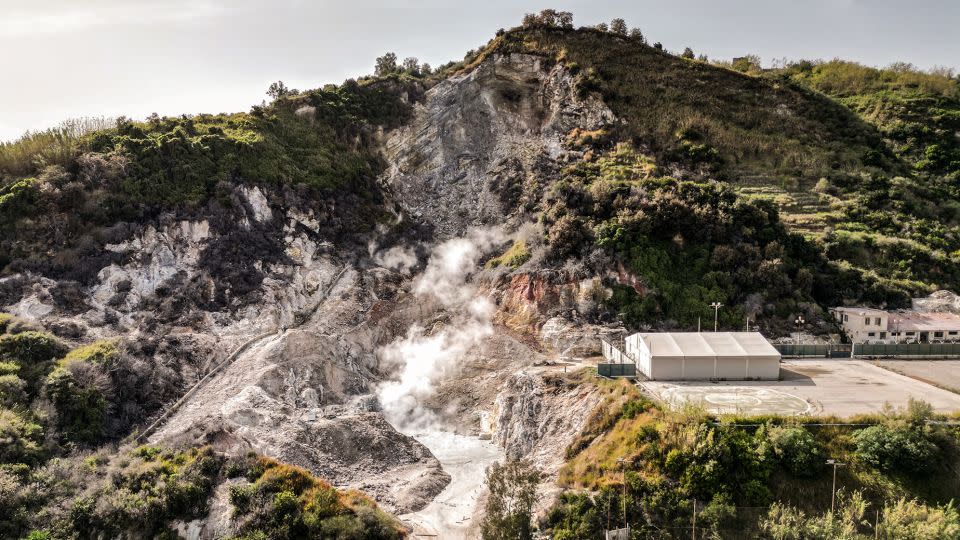
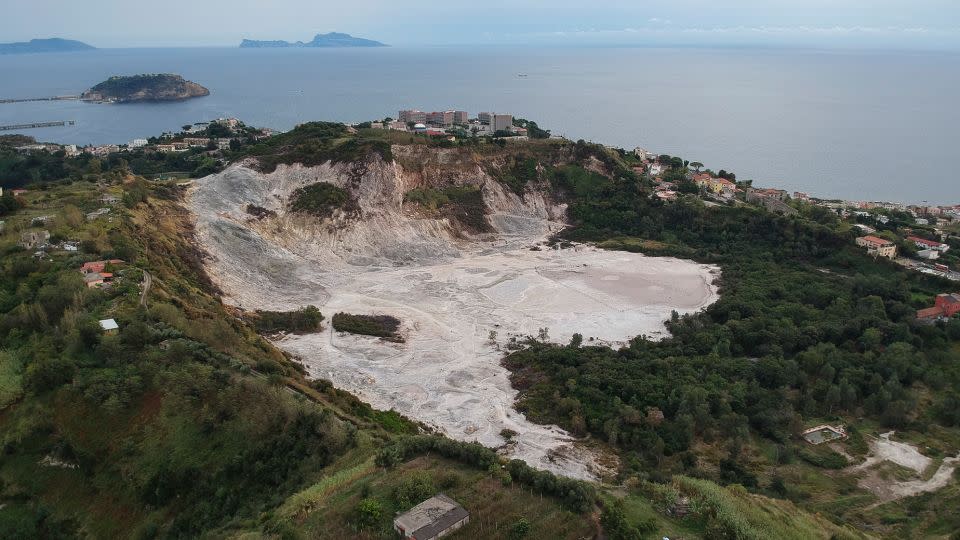
The Solfatara crater, pictured here, is part of Campi Flegrei, which is a densely populated area. 
- Salvatore Laporta/KONTROLAB/LightRocket/Getty Images

A first step toward preparing should be avoiding population increase by prohibiting more construction in Campi Flegrei, which is one of the most developed areas in Italy, said Dr. Benedetto De Vivo, a retired professor of geochemistry at the University of Naples.

He also said there should be a better evacuation route with wider roads so that people who live in the densely populated area could evacuate within 24 hours. “We cannot construct even one more home in the area,” he said.

Italy’s volcano experts are wary about making specific predictions about volcanic eruptions for fear of being held accountable if they are wrong, according to the INGV.

Seven scientists were convicted of manslaughter for telling residents of L’Aquila in central Italy not to worry about an increase in seismic activity in 2009. An earthquake that struck a few days after one scientist had appeared to say it was OK to relax and have a glass of wine killed more than 300 people. The scientists were eventually acquitted on appeal, but the experience left the scientific community in Italy shaken.

One of the largest kinds of volcanic eruptions, called an “ignimbritic eruption” — such as the one that occurred in the Campi Flegrei area around 39,000 years ago — is not what Natale believes could happen any time soon.

“It is difficult to study these potential huge eruptions, very rare but very catastrophic, and this is one of the most important but also the most challenging areas of vulcanology,” Natale said.

He said the next Campi Flegrei eruption — if one were to occur in the near future — would most likely be more in line with the last significant activity in 1538, which created the 133-meter-tall (463-foot-tall) Monte Nuovo cone visible in the sea. However, due to population growth, the impacts of a similar event could look very different in present day.

“That (1538) was a very small eruption, that, if it would happen today, in a densely urbanized area, would be very destructive anyway,” Natale said.

Katie Hunt contributed to this story.