Ukraine anti-corruption probes close in on Volodymyr Zelenskyy's inner circle
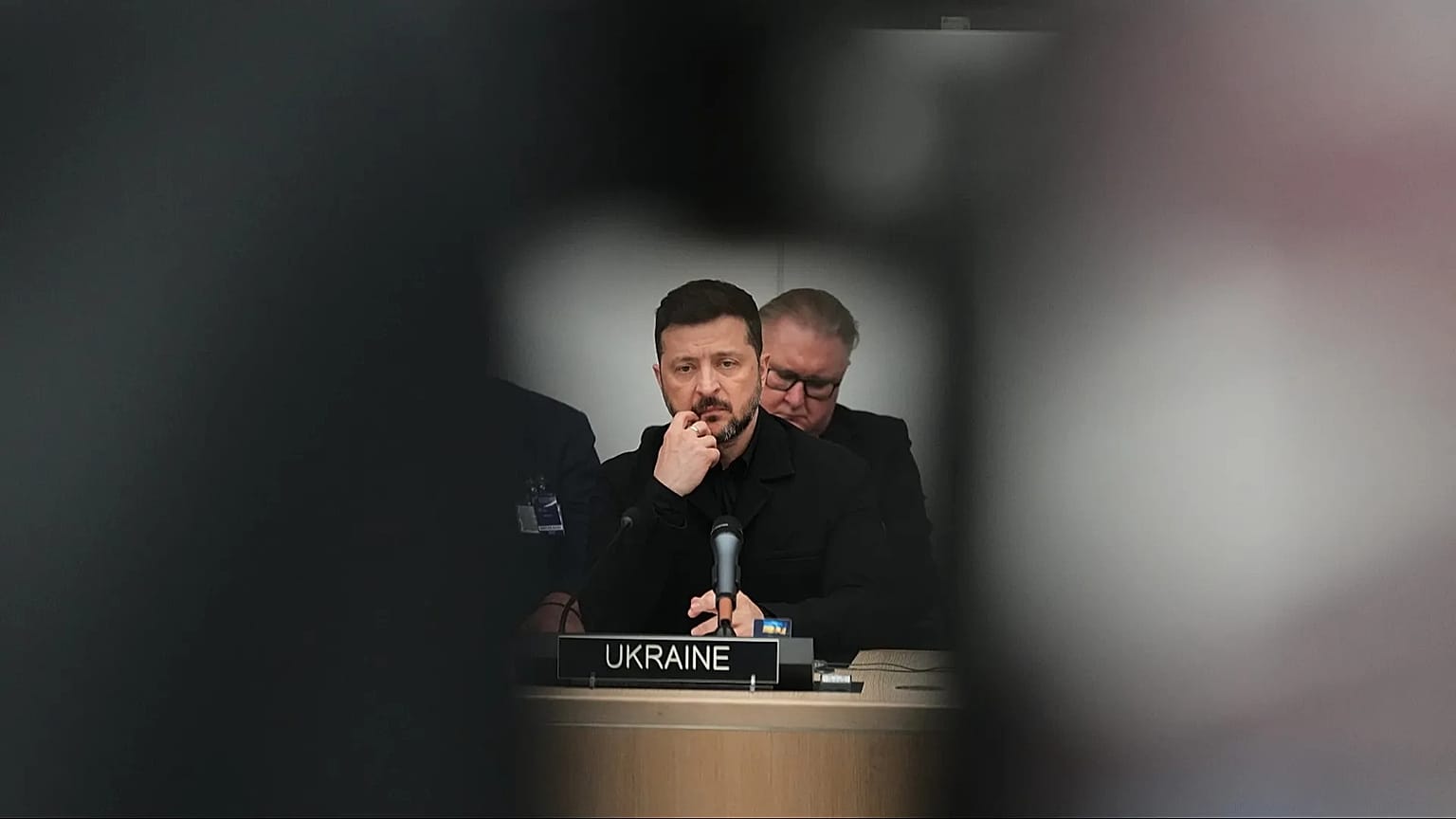
Zelenskyy himself has not been a suspect in any of the probes launched so far, but the growing list of people close to him under investigation is quickly becoming a political liability.
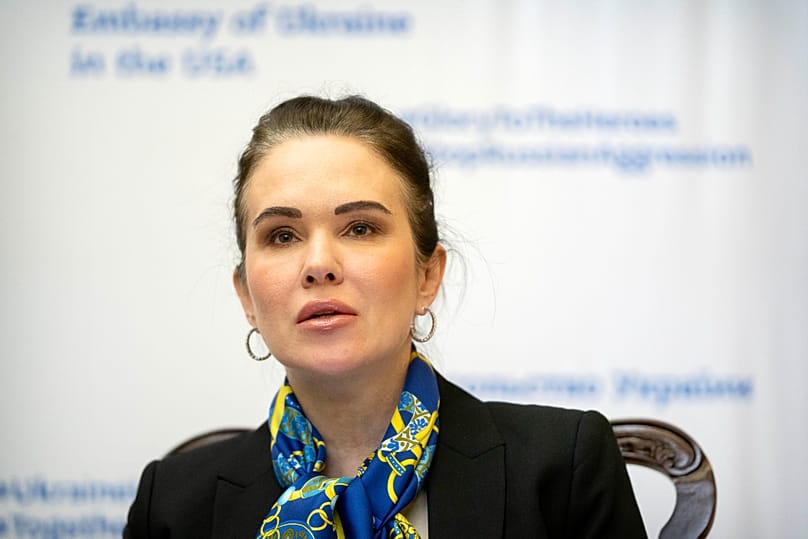
Ukraine's President Volodymyr Zelenskyy fired deputy chief of staff Iryna Mudra on Wednesday, as anti-corruption investigators launched a major probe targeting an alleged criminal organisation involving senior officials linked to the president's office.
Apart from Mudra, the suspects include a current member of parliament, a former lawmaker and the chief executive and head of supervisory board of a state-owned bank, according to the National Anti-Corruption Bureau (NABU). The description of the bank officials appears to refer to Sense Bank.
Investigators allege that the group helped launder around €3 million (150 million Ukrainian hryvnia) that had been posted as bail for a suspect in a corruption investigation.
That is operation Midas, a probe into alleged corruption at Energoatom, Ukraine's state nuclear power company, which has become the biggest corruption investigation of Zelenskyy's presidency.
The latest case is therefore not an isolated one. Rather it appears to have grown directly out of an investigation that has already implicated former senior government officials and people with longstanding personal and political ties to Zelenskyy.
From ‘Midas’ to ‘Forest Gump’
NABU and the Specialised Anti-Corruption Prosecutor's Office (SAPO) unveiled operation Midas in November 2025 after an investigation lasting more than a year.
They allege that members of a criminal organisation exerted influence over Energoatom despite holding no formal positions at the company, extracting kickbacks worth 10-15% of contracts from suppliers in exchange for allowing payments to go through.
NABU says around €85 million was laundered through the alleged scheme.
Former Justice and Energy Minister Herman Halushchenko was accused of money laundering and participation in a criminal organisation.
NABU said in February that more than $7.4 million, €2.4 million and 1.3 million in Swiss francs connected to the alleged scheme had been transferred or provided to his family.
The €3 million at the centre of the latest investigation, dubbed operation Forest Gump, was allegedly posted as bail for Halushchenko.
According to search warrants leaked by Ukrainian lawmakers, Sense Bank was allegedly used to transfer part of the bail funds.
NABU also released audio recordings in which Mudra could be heard discussing Sense Bank and alleged attempts to influence decisions concerning it.
In one conversation recorded in June, Mudra said she had been told that the bank's chief executive and supervisory board head would visit her.
She also referred to a person named “David” and the head of a parliamentary committee as seeking to provide political cover for the bank. It is unclear whether “David” was a reference to David Arakhamia, the head of Zelenskyy's Servant of the People faction in parliament.
“They will not crack down on Sense Bank and Sense Bank must pay them,” Mudra said on the recording.
In another conversation, Mudra said that “Timur”, whom she described as “an Israeli refugee,” had called her and asked her to take over responsibility for Sense Bank.
The description appears to refer to Timur Mindich, Zelenskyy's long-time friend and former business partner, and an alleged ringleader of the $100 million (€85 million) Midas corruption scheme.
From long-time friend to former chief of staff
Mindich was part of Zelenskyy's circle well before he entered politics and is a co-owner of Kvartal 95, the production company co-founded by the president.
A suspect in Operation Midas, Mindich left Ukraine for Israel in November 2025. He has also surfaced in the Dynasty investigation, in which NABU and SAPO allege that more than €8.8 million was laundered through a luxury residential development outside Kyiv using funds partly originating from corruption schemes, including at Energoatom.
But the most prominent name implicated in Dynasty is Andriy Yermak, Zelenskyy's former chief of staff and for years one of the most powerful figures in Ukraine.
Yermak headed the President's Office from 2020 until his departure in 2025, becoming Zelenskyy's closest political confidant and playing a central role in domestic politics, diplomacy and wartime decision-making.
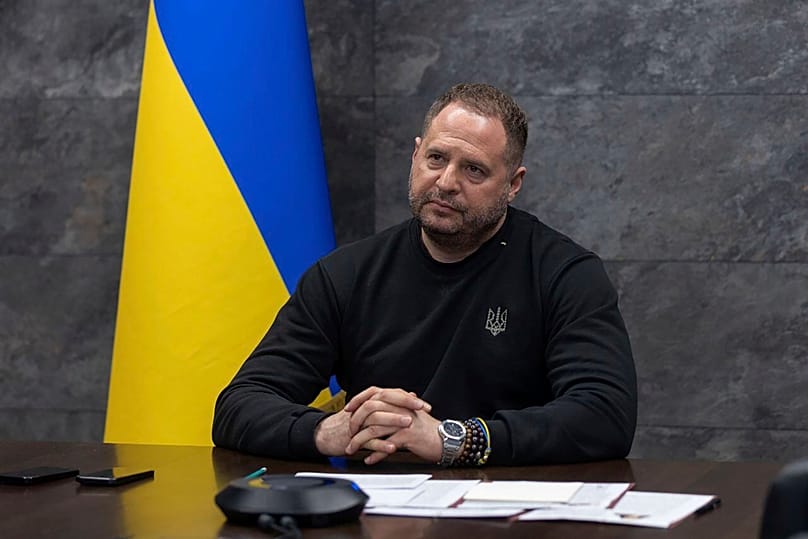
In May 2026, NABU and SAPO named Yermak a suspect in the Dynasty money-laundering case. A court ordered him held with the option of €2.7 million bail, which was subsequently paid. Yermak has denied the allegations.
The same investigation also implicated former deputy prime minister Oleksiy Chernyshov, who held several senior government posts under Zelenskyy and has been described as a longtime friend of the president's family.
Other investigations have reached former members of the President's Office. Rostyslav Shurma, a former deputy head responsible for economic policy, was named a suspect in January in a separate case involving alleged abuses of Ukraine's renewable-energy subsidy system.
NABU and SAPO suspect Shurma, his brother Oleh and others of embezzling around €2.7 million. The brothers were placed on a wanted list in February, and a court ordered their detention in absentia in April.
Shurma, who is currently abroad, has denied wrongdoing.
Too close for comfort
The investigations come at a particularly sensitive time for Ukraine's EU aspirations.
Kyiv and Brussels opened the Fundamentals cluster of Ukraine's accession negotiations in June, covering areas including the rule of law, judiciary, public procurement and financial control. A second cluster, covering external relations, followed in July.
The EU has stressed that progress on the Fundamentals cluster will determine the overall pace of Ukraine's accession negotiations, putting the independence and effectiveness of the country's anti-corruption institutions under particular scrutiny.
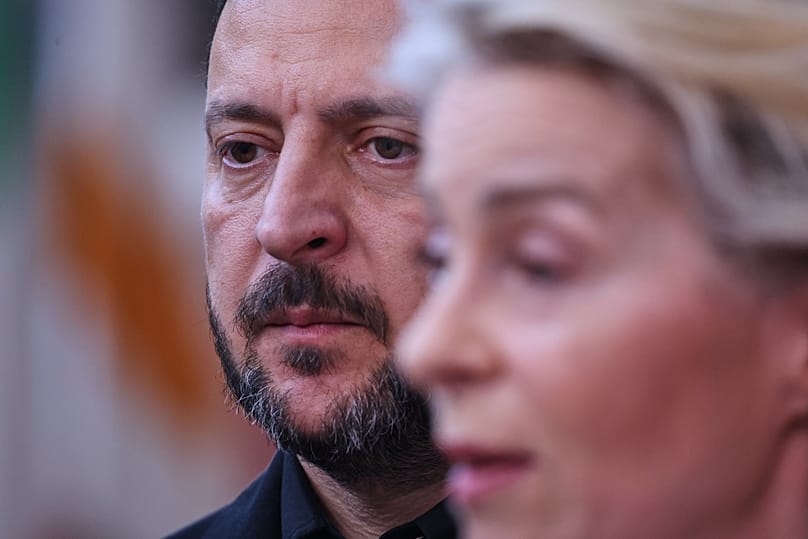
The series of probes presents an increasingly difficult political picture for Zelenskyy.
His former chief of staff has been named a suspect. So have former deputy chiefs of staff. His long-time friend and former business partner is implicated in multiple major investigations. Former ministers and other senior officials from his administration have also become suspects.
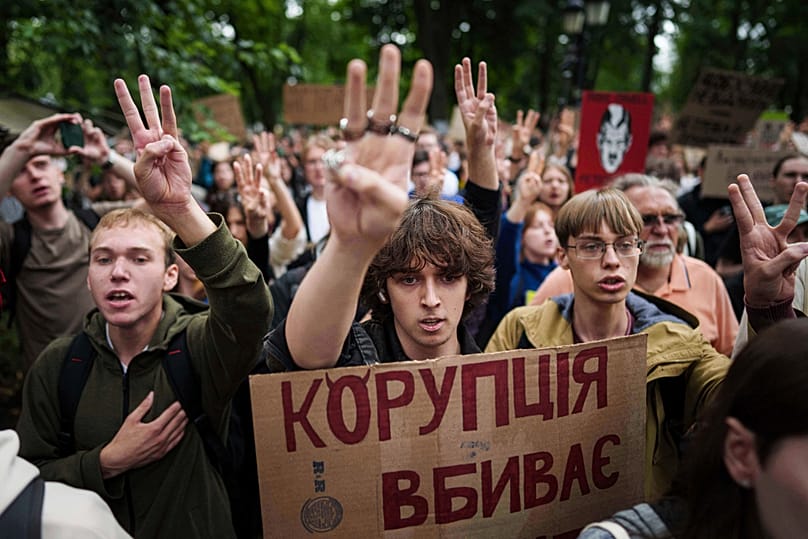
Each of the NABU and SAPO investigations also carry significant public feeling.
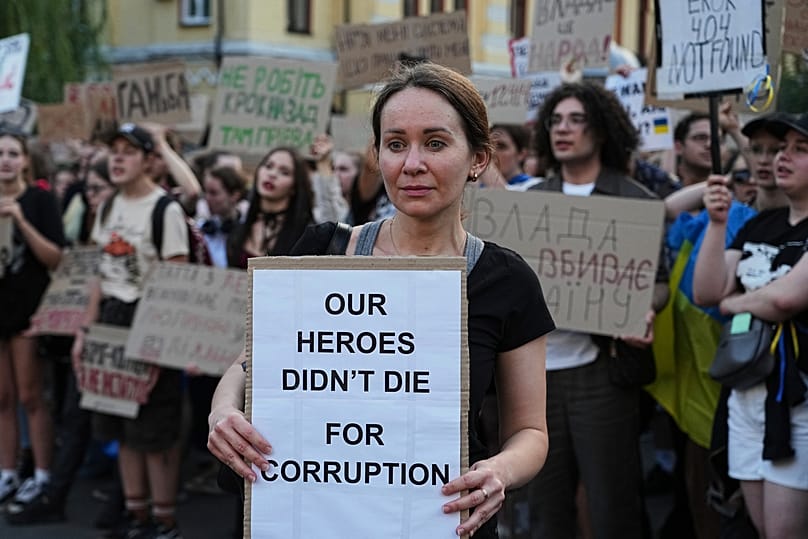
Tens of thousands of Ukrainians took to the streets in 2025 to defend the independence of NABU and SAPO after parliament moved to curb the powers of the anti-corruption watchdogs.
Civil society groups also pushed for further investigations into alleged corruption at the highest levels of government.
Zelenskyy himself has not been named as a suspect in any of the investigations.
For a president who came to power in 2019 promising to break with Ukraine's corrupt political establishment, the proximity of so many investigations to those around him carries an increasingly heavy political cost.
After weeks of rallying behind Fedorov, protesters reject his call for wartime elections in Ukraine
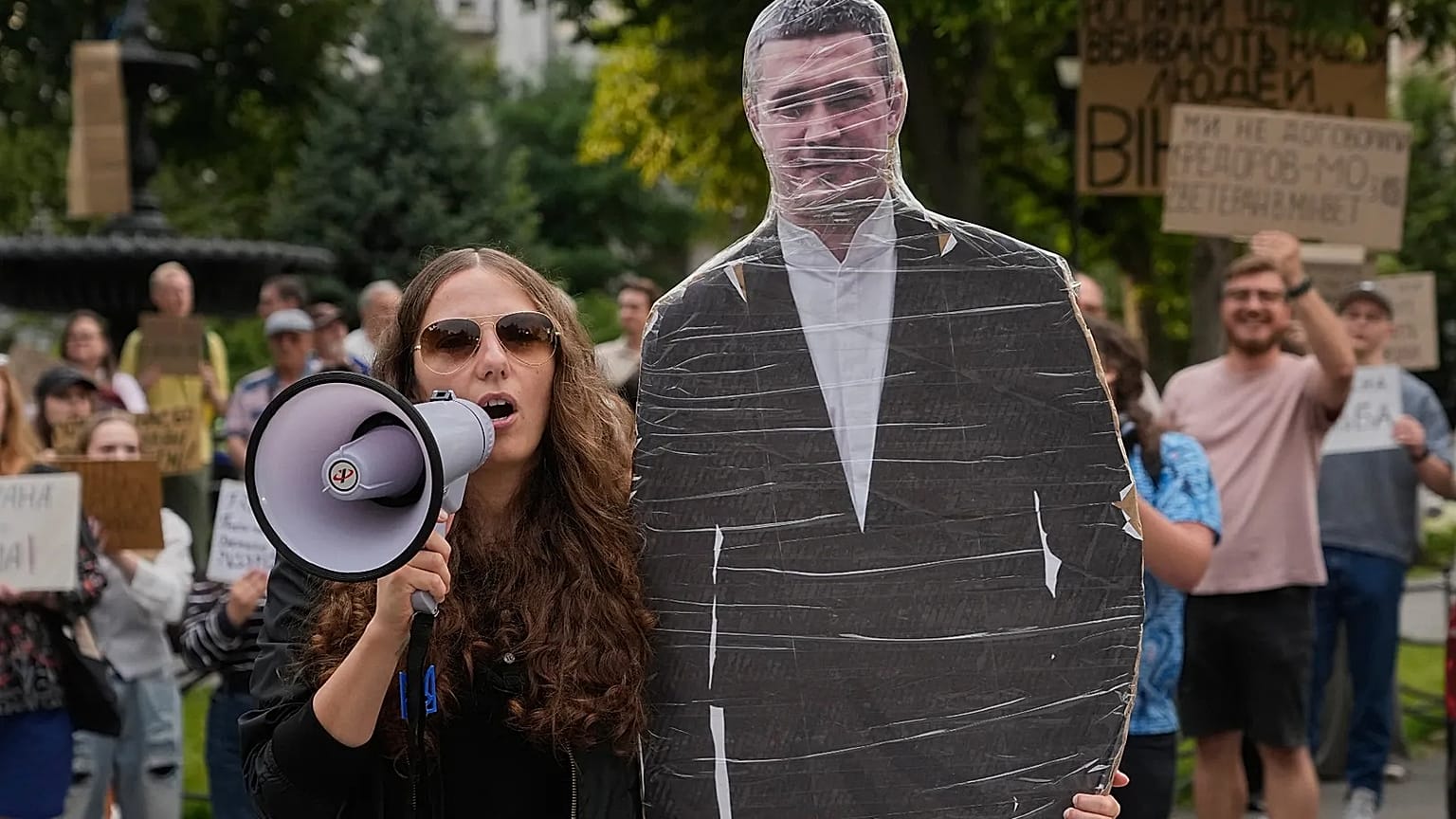
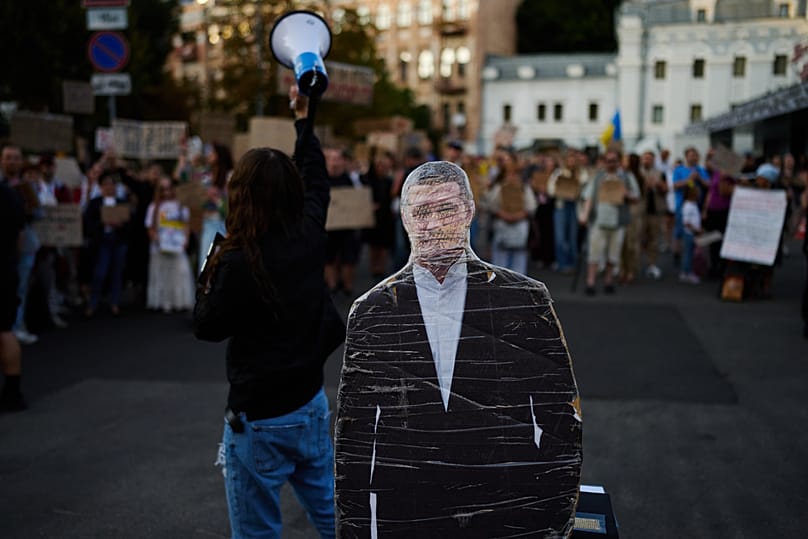
A month of nationwide demonstrations demanding Mykhailo Fedorov’s return as defence minister appears to be ending after protest organisers rejected and criticised his call for elections during wartime.
Mykhailo Fedorov’s call for wartime elections has been rejected by protesters who spent the past month campaigning for his return as defence minister.
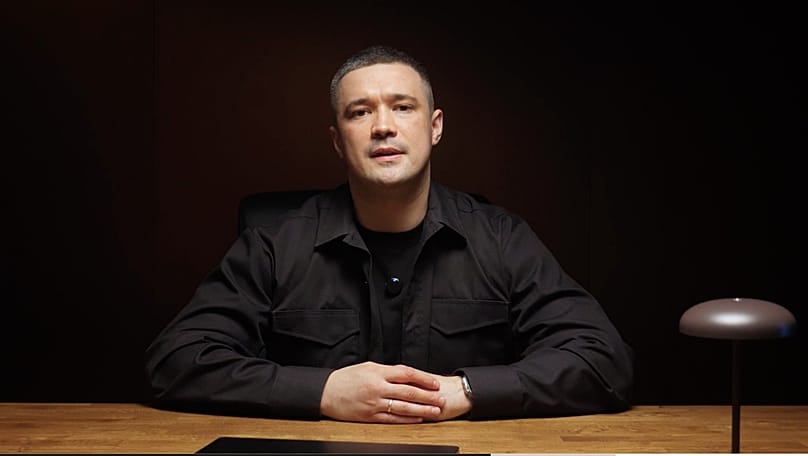
The former minister’s video address on Tuesday evening marked an unexpected turn for a movement that had rallied behind him since Volodymyr Zelenskyy dismissed him in a wartime government reshuffle.
But leading organisers have opposed the idea of holding elections during the war and signalled an end to the daily demonstrations.
Dmytro Koziatynskyi, a Ukrainian war veteran and one of the protest organisers, said on Wednesday evening that he opposed holding elections while the war continued.
“I view elections during wartime negatively,” he wrote on X, adding that he could not “imagine how to technically enable thousands of soldiers currently on the front lines to vote and run for office”.
Four and a half years into Russia’s full-scale invasion, Koziatynskyi argued, Ukraine could not afford the divisions that an election campaign might create.
“In any case, street protests are definitely not the place for electoral discourse,” he said.
His statement appeared to draw a line under a month of daily demonstrations across Ukraine that began after Zelenskyy dismissed Fedorov from leading the defence ministry in mid-July.
Koziatynskyi stressed that the protests had been about the direction of Ukraine’s defence policy rather than Fedorov’s personal political future.
“These protests were specifically about dialogue and reforms, not about personalities,” he said.
He also offered his support to Yevhen Khmara, whom Zelenskyy formally nominated this week to replace Fedorov permanently.
“I want to wish Mr Khmara success in his new position and sincerely hope that he will continue the course on reforms and the fight against corruption in defence,” Koziatynskyi said.
Thanking those who had joined the demonstrations, he argued that the movement had nevertheless achieved tangible results, pointing to the dismissal of Oleksandr Syrskyi and the appointment of Mykhailo Drapatyi.
“I believe it was all worth it,” he said. “At the very least, we managed to secure the dismissal of Syrskyi and the appointment of Drapatyi, which hardly anyone could have expected just a month ago.”
'I did not go out for your political ambitions'
Fedorov’s address also prompted thousands of responses on social media, many questioning both the timing of his intervention and his motives for calling for elections only after his hopes of returning to the defence ministry had ended.
“Do you think this is a good time for an election campaign video?” one demonstrator wrote on Threads. Another commented telling Fedorov: “There is a feeling that you have taken too much upon yourself.”
Others questioned why Fedorov, after seven years in Zelenskyy’s team, had chosen to raise concerns about the political system only after the door closed on his possible return.
“So if you had been reinstated, you wouldn’t criticise the system and wouldn’t call for elections?” one user asked.
Some of those who said they had joined the demonstrations sought to distance the protest movement from any broader political ambitions Fedorov might harbour.
“I did not go out for your political ambitions, but for you to stay at the defence ministry,” one wrote.
“You shouldn’t have done it. This is populism,” another said.
Members of the Ukrainian military also questioned how elections could realistically be conducted while hundreds of thousands of troops are fighting off Russia's invasion.
One serviceman asked Fedorov whether soldiers should cast their ballots in “Kostyantynivka or Pokrovsk” - cities close to some of the heaviest fighting in eastern Ukraine.
The response from Zelenskyy’s administration was brief. Dmytro Lytvyn, a presidential adviser, told reporters in a WhatsApp group chat that Russia’s continuing attacks made the government’s position clear on any possible elections.
“The daily strikes by Russian drones and missiles provide a comprehensive answer.”

No comments:
Post a Comment