Tuesday, July 14, 2026

 MORE ANTI CUBA DISINFORMATION


'We will deal with it,' Trump says as US probes reports of Iranian drones in Cuba


By Cristian Caraballo
Published on

The US president said his administration is checking whether Tehran stores drones and missiles on the island and warned Washington will act if confirmed, but he offered no proof or details about the alleged weapons.

The United States is investigating whether Iran has drones stored in Cuba, President Donald Trump confirmed from the Oval Office on Monday.

Asked by reporters about a purported intelligence report pointing to the possibility, the president replied bluntly: "If they have them, and it's very possible that they do, we'll take care of it."

Trump went further, suggesting the island might also be storing Iranian missiles, something that, he said, his administration "is looking into right now."

Trump did not provide any photographs, intelligence documents or details on the number, model or location of the alleged equipment. The question that triggered his comments came from a journalist working for a media outlet aligned with conservative positions, who referred to a report that had not previously been made public.

The president also mentioned that Secretary of State Marco Rubio was in an adjoining room as he answered, implying that the issue was already on the State Department's agenda.

For now, the only thing confirmed is that Washington has opened a review of the matter, not that the weaponry exists or that it poses an imminent threat. Cuba has not yet commented on the US president's claims.

People catch the cool air from the street at their home's window during a blackout in Havana, 10 July, 2026 AP Photo

In February 1962, Washington enacted a financial and trade embargo against Cuba, which is still in force, in response to the Soviet Union's courting of Fidel Castro.

In October 1962, the United States identified facilities for Soviet nuclear missiles on Cuba.

For two weeks, the world was gripped by fears of nuclear war between the superpowers until negotiations brought an end to the Cuban Missile Crisis.

More sanctions on an island already being choked

Trump's words come at a time of growing pressure on Havana. The State Department announced that it was designating 10 entities linked to the Cuban government as part of what it described as an initiative to curb "the malign activities of the Cuban regime," among them Enetec S.A. and Coreydan S.A., which trade in fuels, and the business groups Gecomex and Gemar.

In June, the sanctions had already reached the Cuban president, Miguel Díaz-Canel, several members of his family and Colonel Alejandro Castro Espín, son of former president Raúl Castro, who also faces a Justice Department indictment over the 1996 downing of two small planes flown by Cuban exiles, in which four people were killed.

On top of more than six decades of embargo, the administration has, since the start of the year, added an energy blockade that the Cuban authorities link to the nationwide power cuts suffered this year, the most recent of them last Friday.

An Axios analysis cited by several media outlets maintains that the Cuban regime has incorporated more than 300 military drones of Russian and Iranian origin since 2023, and that the Revolutionary Armed Forces are studying a possible use of these systems against US targets such as the Guantánamo naval base or facilities in Key West.

The report itself warns that portraying armed drones as defensive assets is more a distortion of language than standard military doctrine, and stresses that the deployment of these systems was the result of several years of planning, not an improvised response to the recent tensions with Washington.


First Bundibugyo Ebola vaccine to start human trials in the UK


Copyright AP Photo/Dirole Lotsima Dieudonne

By Marta Iraola Iribarren
Published on 14/07/2026 

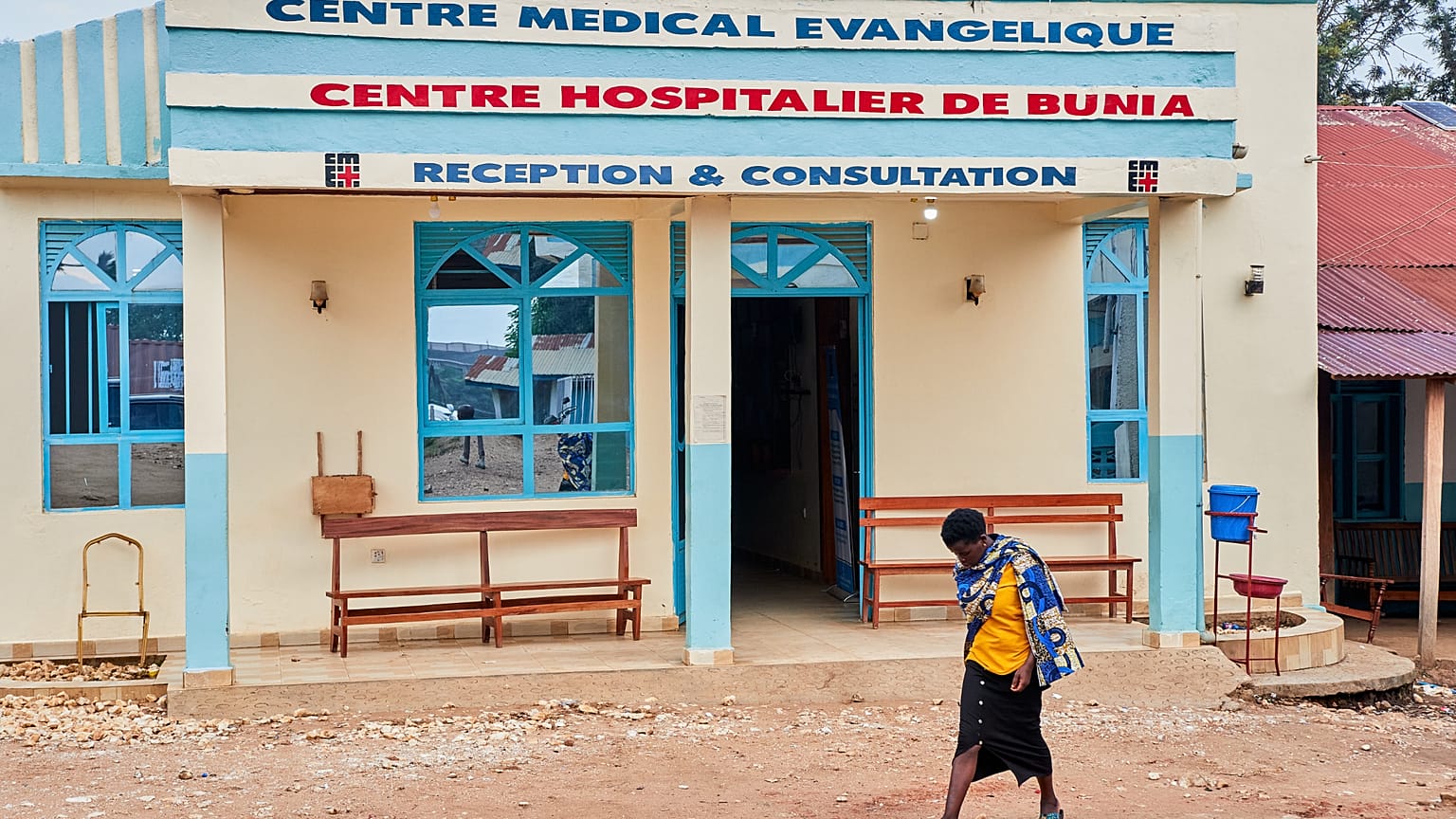
Scientists in Oxford will start to test the world's first vaccine against Bundibugyo Ebola, as an outbreak of the rare virus strain continues to spread across Congo and Uganda.

The University of Oxford’s Vaccine Group has launched the world’s first human clinical trial of a vaccine against Bundibugyo Ebolavirus amid the ongoing outbreak in the Democratic Republic of the Congo and Uganda.

The Phase I clinical trial will take place in Oxford and will assess the safety and immune response of the vaccine in 50 healthy adults aged between 18 and 55.

“Every step that brings a safe and effective vaccine closer helps strengthen our ability to protect vulnerable communities, save lives and bring this outbreak under control,” said Nicole Lurie from the Coalition for Epidemic Preparedness Innovations (CEPI), adding that the University of Oxford’s work is a “pivotal milestone in the response effort”.

The Oxford team is now recruiting volunteers for the study. In the coming weeks, following regulatory review for trial commencement, participants will be vaccinated and attend follow-up visits, the Oxford Vaccine Group announced in a press release.

Further clinical studies are also being prepared in Uganda, pending regulatory approval, at the Medical Research Council/Uganda Virus Research Institute and the London School of Hygiene and Tropical Medicine's Uganda Research Unit.

“As affected countries continue to respond to this outbreak, Africa CDC welcomes rapid scientific progress that is conducted with the highest standards of safety, regulatory oversight and partnership,” said Jean Kaseya, the chief of the Africa Centres for Disease Control and Prevention.

He added that while early-stage clinical trials are not an immediate solution for communities facing the outbreak today, they are a critical part of building the tools needed for responding to current and future outbreaks.

The Bundibugyo epidemic affecting Congo and Uganda is among the largest ever recorded and infection numbers are still rising.

As of 11 July, Congo’s health ministry had confirmed 1,926 cases and 702 deaths across five provinces. On 12 July, Uganda confirmed 20 cases, including two deaths.

Ten provinces are currently considered high-risk, including Kinshasa, according to Congo's Ministry of Health.


Fact check: FIFA boss Infantino probe called for by MEPs, not whole parliament


By Tamsin Paternoster
Published on

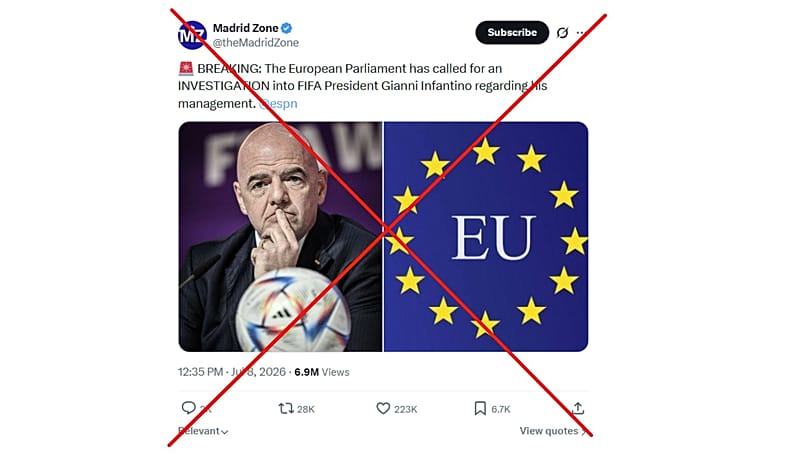
Viral posts falsely claim that the European Parliament called for an investigation into FIFA's President Gianni Infantino.

"The European Parliament has called for an investigation into FIFA President Gianni Infantino," reads a post on X that has been viewed more than 6 million times.

However, this claim is misleading. While 72 members of the European Parliament (MEPs) have signed a letter calling for FIFA's Ethics Committee to investigate Infantino, the European Parliament itself has not officially adopted that position.

What happened?

The controversy stems from FIFA's decision to suspend an automatic one-match suspension for the US football team’s striker, Folarin Balogun, after he was sent off during the US's round of 32 victory over Bosnia and Herzegovina.

Post claims that the 'European Parliament has called for an investigation into FIFA President Gianni Infantino regarding his management.'
Post claims that the 'European Parliament has called for an investigation into FIFA President Gianni Infantino regarding his management.' @theMadridZone

US President Donald Trump publicly acknowledged asking FIFA to review the case, telling reporters, "All I did was ask for a review because I didn't think it was a foul."

The decision prompted uproar from Belgian fans as well as football coaches, with the Belgian Football Association calling it "astonishing" and requesting an explanation from FIFA.

What does the letter say?

The letter, dated 8 July and signed by 72 MEPs, is addressed to the presidents of the 27 national football associations in EU member states.

Rather than asking the European Parliament to investigate, it urges the football associations to ask FIFA's independent Ethics Committee to examine whether political pressure influenced the disciplinary process and whether Infantino complied with FIFA's rules on political neutrality.

The lawmakers, in a letter seen by Euronews, argue that FIFA's own statutes and Code of Ethics require political neutrality and that member associations have a responsibility to ensure senior FIFA officials are held accountable if those rules are breached.

The lawmakers stress that their concerns are not about Balogun himself, writing that they are "not motivated by any desire to see any individual football player sanctioned" but instead want to "ensure that rules are applied in a way to protect the integrity of the game."

Ultimately, and unlike what the viral claim suggests, the letter is not the official position of the European Parliament, but an initiative by individual MEPs.

It does not represent the official stance of the European Parliament itself, which has not adopted a resolution calling for an investigation, nor has it voted to endorse the letter.

FIFA's response

Neither FIFA nor Infantino have publicly responded to the letter.

Both previously rejected suggestions that Balogun's case was influenced by political considerations, with FIFA saying the decision to lift the suspension was made by its independent disciplinary committee.

Infantino confirmed that the call with Trump took place, but said he explained to the US president that there was an ongoing legal process involving FIFA's judicial bodies and that the "case would be decided in due course by the competent bodies," which he argued were independent.

€2.8bn battle on the pitch: France and Spain face off in World Cup's priciest semi-final

Copyright AP Photo/Julio Cortez

By Quirino Mealha
Published on 14/07/2026
EURONEWS


Tuesday's clash between France and Spain in Texas is not just a footballing spectacle, it is also, by market value, the costliest semi-final the World Cup has staged, with the two squads worth a combined $3.2 billion (€2.8bn).

When Kylian Mbappé and Lamine Yamal lead their sides out at AT&T Stadium in Arlington, Texas, on Tuesday evening, they will be doing more than chasing a place in Sunday's final, they will be fronting the priciest collection of talent ever assembled for a men's World Cup semi-final.

Transfermarkt's latest figures value France's squad at roughly $1.78 billion (€1.56bn) and Spain's at $1.43 billion (€1.25bn), a combined total of around $3.2 billion (€2.8bn), which outstrips any previous last-four meeting in the tournament's history.

Much of that financial weight is concentrated in a handful of individuals.

Barcelona's Yamal, who turned 19 the day before kick-off, is the most expensive player left in the competition at around $234 million (€205m), with Mbappé close behind at roughly $211 million (€185m).

Michael Olise and Pedri follow, both valued at around $176 million (€154m).

Between them, the quartet accounts for four of the five costliest footballers in the world, with the fifth being Norway's Erling Haaland, whose side did not reach this stage after losing to England

France's edge is starkest in attack, where forwards including Ousmane Dembélé and Désiré Doué push the unit's combined worth to roughly $878 million (€770m), well ahead of Spain's $489 million (€428m) attacking line, even with Yamal in its ranks.

France also lead in defence, valued at $473 million (€414m) to Spain's $337 million (€295m), while Spain have the edge in goal, their goalkeepers are worth a combined $113 million (€99m), against France's $67 million (€58m).
Market value has not dictated ticket demand

Market value seemingly has not dictated demand for tickets at World Cup matches.

Resale prices for Wednesday's second semi-final between England and Argentina in Atlanta have been running around $1,000 higher on average than for Tuesday's tie, even though that fixture's combined squad value, at roughly $2.5 billion (€2.2bn), trails France and Spain's total.

Demand there is being driven largely by Lionel Messi's possible farewell World Cup appearance.

As for the match itself, recent history offers Spain some reassurance against what the figures suggest.

La Roja have won six of the last 10 meetings between the sides, including victories at Euro 2024 and in last year's Nations League, both by narrow margins.

Kick-off is at 2pm local time, 8pm in the UK and 9pm in Paris and Madrid, with the match falling, fittingly for the French camp, on Bastille Day.
3,000-year-old Egyptian tomb with vivid afterlife paintings uncovered near Luxor


Copyright Credit: Egyptian Ministry of Tourism and Antiquities

By Theo Farrant
Published on 14/07/2026 
EURONEWS

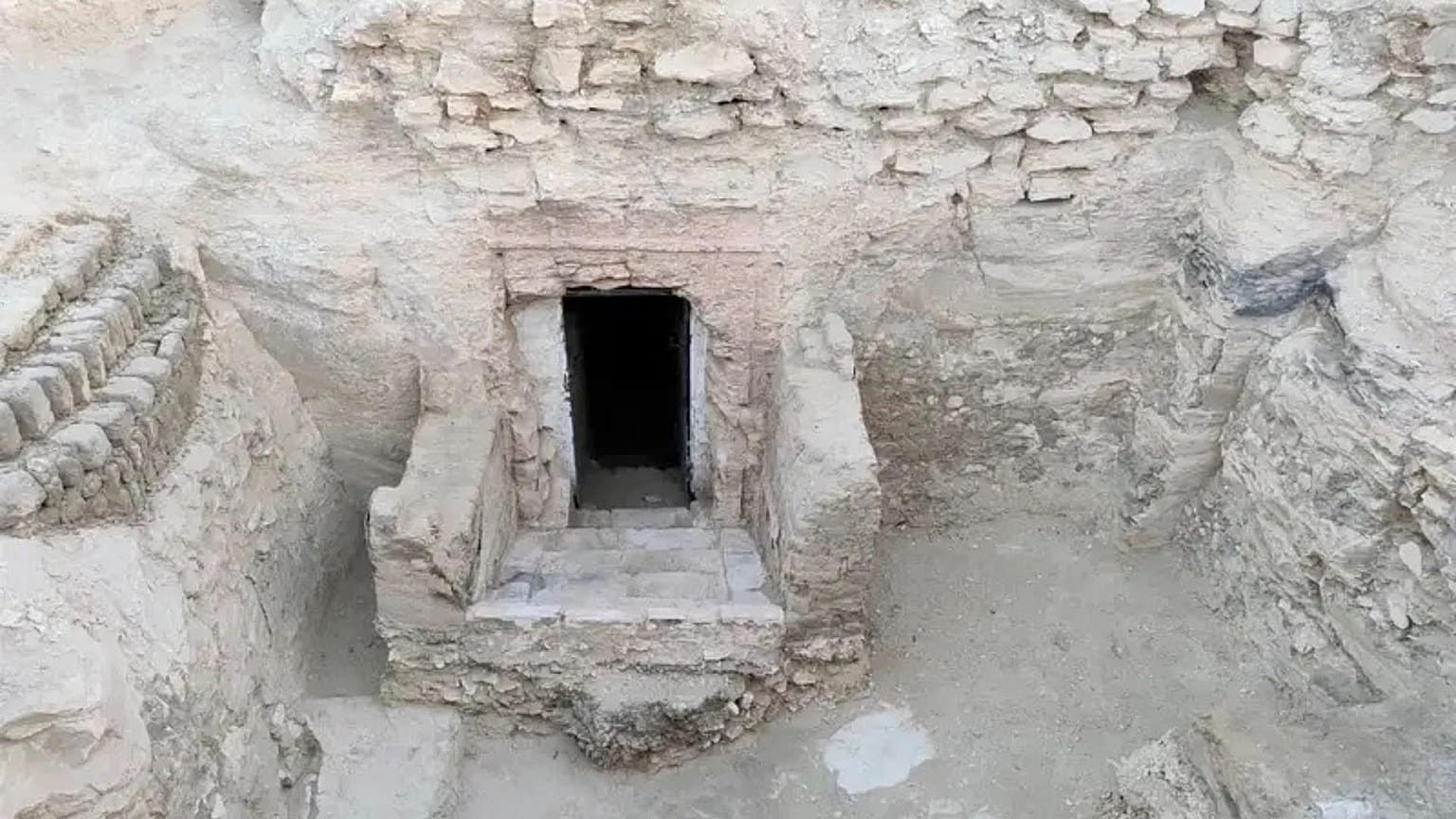
Dating back to Egypt’s Ramesside period - the era of powerful pharaohs such as Ramesses II - the tomb features scenes of religious rituals and the journey into the afterlife.

Dutch archaeologists have uncovered a previously unknown 3,000-year-old tomb near Luxor, Egypt, revealing vivid wall paintings and inscriptions that identify its owner as a man named Paser.

Announced recently by Egypt's Supreme Council of Antiquities (SCA), the discovery was made in the Sheikh Abd El-Qurna necropolis on Luxor's West Bank, part of the UNESCO-listed Theban Necropolis, one of ancient Egypt's most important burial grounds for priests and high-ranking officials.

The team behind the excavation believe the tomb dates to the Ramesside period (circa 1292–1069 BCE), based on the style of its decoration.
RelatedArchaeology: 18 ancient tombs in Egypt yield 'golden tongue' amulets
Homer and the mummy: Rare copy of the Iliad poem found inside ancient Egyptian tomb

It was uncovered by a Dutch archaeological mission from Leiden University, led by Carina van den Hoven, who has been excavating the site with the SCA since 2018.

The tomb has the classic layout of an elite New Kingdom burial, with an open courtyard leading to a rock-cut chapel and underground burial chambers. Archaeologists also found a mudbrick bench designed to hold a funerary stela and a staircase descending to the entrance.

Inside, surviving painted scenes depict Paser worshipping Egyptian gods and sitting beside his wife at an offering table, images intended to provide the deceased with an eternal supply of food and drink in the afterlife.

More of the painted decoration is expected to emerge as conservators remove a thin layer of dirt covering parts of the walls.

"The team will continue documenting and studying the tomb to identify those buried within it and reconstruct their identities," said Hisham Al-Leithy, secretary-general of the SCA.


Google gives Swiss Android users fewer search options than their EU counterparts, regulator says

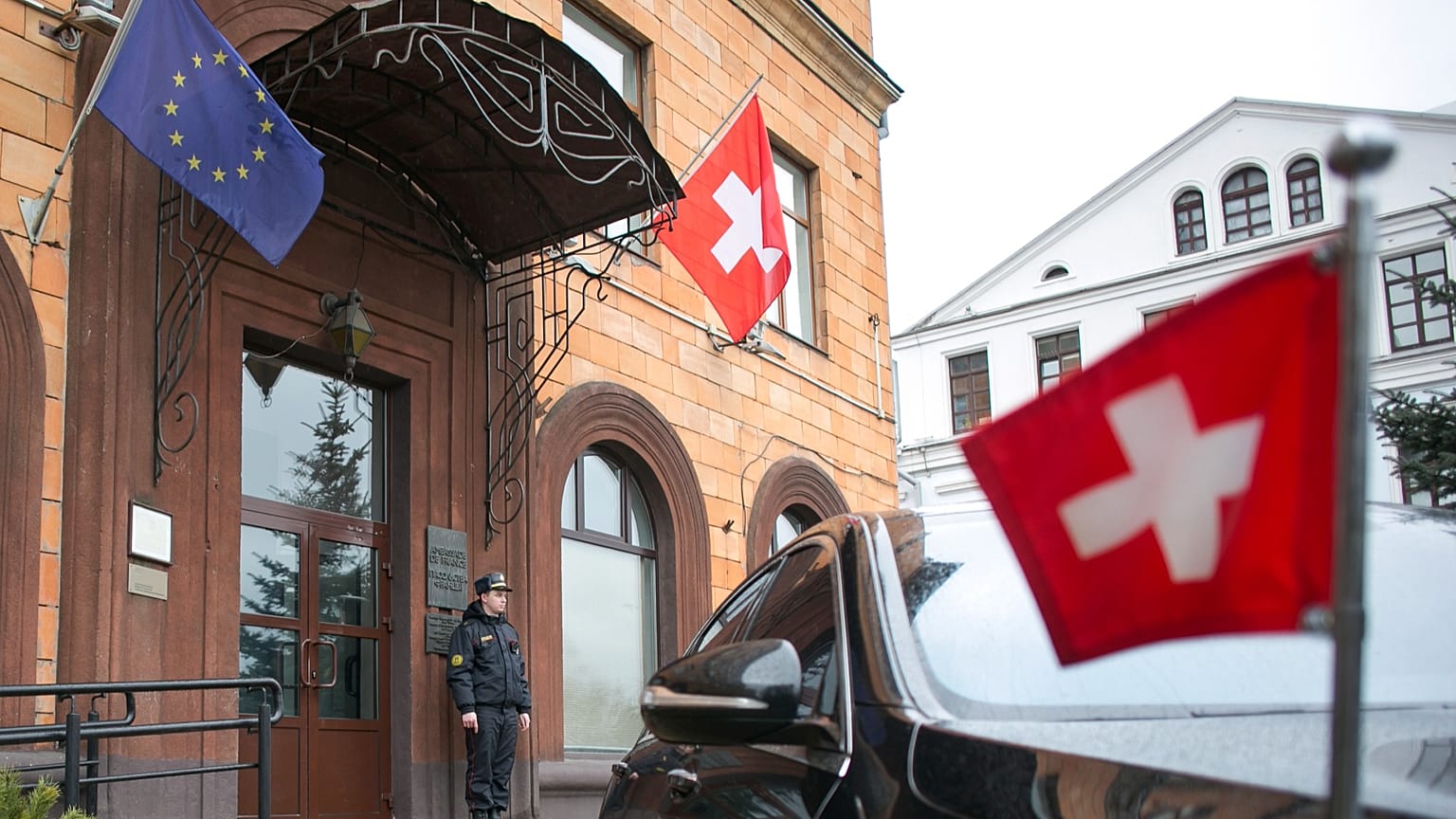
FILE - Swiss and EU flags at an entrance of the new Switzerland Embassy in Minsk, Belarus, Thursday, Feb. 13, 2020. (AP Photo)
Copyright AP Photo

By Una Hajdari
Published on

Swiss Android users no longer get to choose their default search engine when setting up a new phone. Their EU neighbours still do.

Switzerland's competition watchdog has opened a preliminary investigation into Google after the tech giant removed a feature allowing users to choose their default search engine when setting up Android devices in the country.

The Competition Commission, known in Switzerland by its acronym (WEKO), said on Tuesday its secretariat had launched the probe to examine whether the removal of the so-called "Choice Screen" constitutes an unlawful restriction of competition under Swiss cartel law.

"Default settings play a crucial role in digital markets... eliminating this feature could restrict the visibility of search engines that compete with Google during device setup, thereby increasing barriers to market entry," WEKO said in a press release.

The Choice Screen, which appears during the initial setup of a new Android device and prompts users to select a default search engine, was discontinued by Google in Switzerland while remaining available across the European Economic Area.

Why are the rules different in Switzerland?

Switzerland is neither an EU nor an EEA member, and the Digital Markets Act does not apply on Swiss territory.

The search choice screen originated as a remedy in the EU's Android antitrust case: in March 2020, the European Commission and Google agreed it would appear on all new Android devices shipped to the EEA and the UK.

It was later reinforced by the DMA, which requires gatekeepers to show users choice screens and to let them easily change a default they do not want. Google was designated a gatekeeper in September 2023 and expanded its choice screens in March 2024 to comply.

No equivalent Swiss obligation exists and Swiss officials had expected they would not need one.

A 2023 assessment by the government's Interdepartmental Coordination Group on EU Digital Policy concluded that large foreign gatekeepers would apply EU rules in Switzerland anyway, on the grounds that treating the two markets differently would not be financially worthwhile and that Swiss users were therefore likely to benefit from the DMA in practice.

Google's removal of the choice screen tests that assumption directly.

Switzerland does have a platform law in the pipeline. The Federal Council opened a consultation in October 2025 on a Federal Act on Communication Platforms and Search Engines, which closed in February.

But it would not cover this case, since the bill is modelled on the EU's Digital Services Act rather than the DMA and deals with content moderation and transparency rather than default settings. The bill is not expected to reach parliament before late 2026 or early 2027.

The preliminary investigation will seek to determine whether there are grounds to pursue a formal competition case.


EU says threats against ICC 'unacceptable' as US launches campaign to 'dismantle' court


By Emma De Ruiter & Gavin Blackburn
Published on

The Trump administration said it would pressure other countries to withdraw from the court, marking a sharp escalation in the US effort to isolate the Hague-based institution.

The European Union slammed threats against the International Criminal Court (ICC) on Tuesday, after Washington vowed a sweeping campaign against the tribunal.

"We are strongly committed to international criminal justice and the fight against impunity. Attacks or threats against the court-elected officials, personnel or those cooperating with the court, are simply not acceptable," EU spokesperson Anouar El Anouni said.

Those comments come after US Secretary of State Marco Rubio launched a sweeping campaign to undermine the ICC that could include further sanctions and other measures.

In a video posted on X and a lengthy op-ed in the Wall Street Journal, Rubio vowed to "dismantle" the court, claiming it posed "an intolerable threat to US sovereignty."

"The ICC and its friends are waging a war against our country, not with bullets or missiles, but with statutes, compacts and the force of so-called international law," Rubio said in the video.


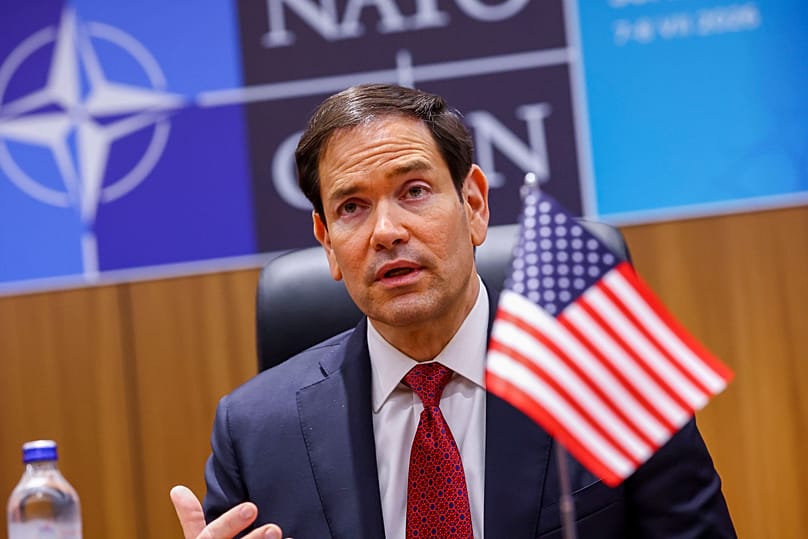
US Secretary of State Marco Rubio on the sidelines of the NATO leaders' summit in Ankara, 7 July, 2026 AP Photo

Rubio added that the ICC "threatens every aspect of our political and legal system," and that it has moved from being a "narrow backstop" charged with prosecuting "only the gravest offenses...when a nation's courts were unable."

The State Department said in a statement that the campaign will "systematically disable the ICC's ability to operate, target American servicemen or officials, or otherwise threaten American sovereignty."

It said the court "claims the authority to prosecute and even imprison American servicemen and officials operating on behalf of America's national interest."

"Americans never signed up for this, and all American presidents since the ICC's ratification have maintained that the ICC does not have jurisdiction over Americans," the department's statement said.

'No diplomatic option off-limits'

It marks a sharp escalation in ongoing US efforts to isolate the Hague-based institution, on which the Trump administration had already imposed sanctions.

The US has previously targeted individual court officials it deems a threat to US interests, but the new "whole of government" campaign will pressure other nations "to withdraw from the ICC and cut off any financial support to the court," according to a State Department official who spoke on condition of anonymity.

"No diplomatic option will be off-limits in the campaign to dismantle the threat posed by the ICC to Americans," the State Department wrote in its statement.

Among the actions the US government plans to take is "increased scrutiny of nations that refuse to reject the ICC’s false authority while relying on US assistance", according to the statement.

It also calls upon "nations that partner with American law enforcement and the US military" to "reject the ICC’s purported authority to prosecute American officials and servicemen".

The announcement immediately drew condemnation from international legal experts. Kenneth Roth, the former executive director of Human Rights Watch wrote on X that the Trump administration wants to "to be able to commit war crimes with impunity even on the territory of governments that have joined the International Criminal Court".

"Rubio is dressing up his quest for impunity for American war crimes abroad under the label of national sovereignty, which ignores the sovereign right of other nations to invoke the ICC for crimes committed on their territory," Roth said.

"He makes it sound like the ICC acts out of the blue anywhere it wants when in fact it acts only against crimes committed on the territory of states that have invited it," he added.

The ICC only has jurisdiction to investigate crimes committed in states that are party to the Rome statute, the 2002 treaty that established the court. The court has never opened investigations into crimes committed on American soil, and the United States has not ratified the treaty.


The Governance Gap Hiding In Plain Sight Across Eight Industries – Analysis

July 14, 2026 
By Burak Oktenli


Key Takeaways:

Governance gap in autonomous AI agents across sectors: Eight industries (water utilities, aviation, road transport, maritime, critical infrastructure, finance, defense, etc.) face the same core problem: systems acting faster than humans can review or reverse, creating an accountability and irreversibility issue.

Existing responses inadequate: Regulating models (e.g., export controls) or relying on internal safeguards fails to address the temporal gap; the fix needs to sit outside the system at the point of action.

Proposed solution: shared governance layer: Implement permission evaluation by independent components, tiered human confirmation based on stakes, and tamper-evident audit records — a common standard that can be adopted across sectors and borders using existing frameworks like NIST and EU rules.

When cybersecurity agencies from the United States and its four closest allies issued their first joint warning about autonomous AI agents in May, the detail that should have unsettled policymakers was not any single risk. It was the pattern. The same failure recurred across every setting the agencies examined: systems that can now take consequential action faster than any human can review, permit, or reverse what they do. The guidance called this an accountability gap and an irreversibility problem. It is more useful to name it directly: a governance gap, hiding in plain sight across at least eight industries at once.

Consider the range of settings across which it appears. In April, security researchers documented what appears to be the first confirmed case of an AI agent autonomously navigating the network boundaries of a municipal water utility to reach live industrial control systems. In aviation and space, single-event upsets from cosmic radiation continue to flip bits in flight-critical processors, a hazard that grows as more decisions are delegated to onboard autonomy. In road transport, driver-assistance and self-driving systems make control decisions in milliseconds that no human passenger can meaningfully authorize. The same structure appears in maritime autonomy, in counter-drone systems, in critical infrastructure, in agentic software that can execute code and move money, and in the swarming systems now under development for defense. Eight different sectors, eight different technologies, one identical hole.

The hole is not that machines are becoming too clever. That is the fear that dominates public debate, and it points attention in the wrong direction. The nearer and more concrete danger is temporal. Autonomous systems have crossed the threshold where they act faster than the humans nominally in charge can keep up. When a system can complete an irreversible action in the time it takes a person to read a single alert, the traditional safeguard, a human reviewing and approving each consequential step, quietly stops functioning. The human is still in the diagram. The human is no longer in the loop.

Two responses dominate current policy, and neither closes the gap. The first is to regulate the models themselves, restricting what the most capable systems are allowed to be. The United States has moved in this direction with export controls on frontier models. This is a blunt setting for a precise problem: it governs how capable a system may be, not what a fielded system is permitted to do now it acts. The second response is to trust the model’s own internal safeguards, the guardrails built in by developers. But the same allied guidance warns that these systems should be treated as untrusted components until proven otherwise, precisely because their behavior cannot be fully predicted and their reasoning cannot be fully inspected. A safeguard that lives inside the system it is meant to constrain is not a safeguard a regulator can rely on.

What the eight-sector pattern reveals is that the missing layer is the same everywhere, which means the fix can be common too. Governance should attach not to the model but to the moment of action, and it should sit outside the system rather than inside it, and three properties make this work in practice. Permission to act on a grave decision should be evaluated by a component the autonomous system cannot itself overrule, so that the check cannot be reasoned away by the thing being checked. Actions above a defined threshold of consequence should pause for human confirmation, with the level of human involvement rising as the stakes rise, so that reversible low-stakes decisions stay fast while irreversible high-stakes ones slow down by design. And every such decision should be written to a tamper-evident record, so that when something goes wrong, and eventually something will, investigators can reconstruct what was permitted and why. None of this is exotic. These are the same three ideas the allied guidance reaches for when it calls for enforced human control points, cryptographically anchored identity, and auditable action.

The encouraging part is that the scaffolding for this already exists in embryonic form and does not need to be invented from scratch. The US National Institute of Standards and Technology has built a widely used risk-management framework for AI. The European Union’s high-risk obligations for autonomous systems take effect in August, and they apply directly to agents operating in high-stakes settings. The Five Eyes guidance, for all its caution, is in substance a description of the same missing layer seen from the security side. What is absent is not the raw material but the recognition that these are one problem, not eight, and that a shared governance layer at the point of action would serve road safety, maritime operations, infrastructure protection, and defense alike.


That recognition matters because the alternative is to keep solving the same problem eight times, badly, one sector at a time, each industry discovering the governance gap only after its own first serious failure. The water-utility intrusion, the flight-control upset, the near-miss on the road: each is treated as a domestic incident in a single field, when together they are early readings of one structural condition. No single state can close this gap alone, because the systems and their supply chains cross borders, and no single regulator owns all eight sectors. But the commonality is also the opportunity. A governance layer defined once, now of action and outside the model, and adopted through the frameworks that already exist, would let allied states convert a scattered set of warnings into a single, enforceable standard before the pattern completes itself in the one sector where a first failure is not survivable.

The debate about artificial intelligence keeps asking how smart these systems will become. The more urgent question, visible now across eight industries at once, is simpler and more answerable: who is permitted to let them act, and can anyone still say no in time.


About Burak Oktenli
Burak Oktenli holds an MBA and a Master of Professional Studies in Applied Intelligence from Georgetown University. His research addresses the governance of authority in autonomous and AI-enabled systems, and his writing has appeared at the Modern War Institute at West Point, RUSI, RealClearDefense, RealClearMarkets, and Geopolitical Monitor.
View all posts by Burak Oktenli →
Veneer Of Normality Developing In Syria’s Homs – OpEd


July 13, 2026 
By Arab News
By Chris Doyle


Key Takeaways:

Homs exemplifies Syria’s complex post-Assad recovery: Once the revolution’s epicenter, the city shows physical destruction (especially Khalidiya’s skeletal buildings), demographic shifts (displacements and resettlement from Idlib), and lingering communal distrust, yet surface-level normalcy is slowly returning.

Tentative signs of improvement: Electricity and fuel availability have markedly increased, the Homs refinery is operational, agriculture is reviving due to decent rains, and social life (weddings, cafes, World Cup viewings) is re-emerging with some expatriate returns.

Persistent deep challenges: High unemployment, cash-only economy, security operations in Alawi areas, unresolved trauma from mass killings and sieges, and fragile foundations mean recovery remains slow and vulnerable despite cautious optimism.


Syria has rarely featured in the news of late. Perhaps that is a relief. Syrians joke that, during the US-Israeli war on Iran, Syria was once again one of the safer areas in the Middle East. Visitors to Damascus have increased, including President Emmanuel Macron of France. Yet the warnings are there, as two small bombs in the heart of the capital showed.

Yet to understand the ebb and flow, the highs and lows of Syria in 2026, more must head out of Damascus. Capital bias is a frequent factor in postwar situations but it does warp a proper understanding of the situation. The center of Damascus escaped the worst of the war and has benefited from a mild revival since 2024. Diplomats and journalists, however, are travel shy. They should not be.

Syria’s third city, Homs, offers a compelling tutorial in post-Assad dynamics. At a personal level, it is the home city of my wife’s family, which has provided me with privileged insights for a non-Syrian.

Homs was, in the early years of the revolution against the Assad regime, the epicenter of opposition, the capital of the revolution. It paid a heavy price for this, as a visit to the expanded Muslim cemetery to the north of the city reveals.

As in Damascus, the center of the city wears a fake normality. Motorbikes zoom around you like a swarm of angry hornets but, for the most part, life seems superficially normal. The iconic clock tower is at the core. Everyone remembers the protests there and the infamous clock tower massacre. Only minutes after passing this sight, I was chatting with a Syrian woman who lost three male members of her family in that atrocity. “Everyone here has had family members killed, arrested or disappeared. None of us were untouched,” she said.

But cross into Khalidiya, just north of the old city, and destruction on a ferocious scale hits you. Skeletal corpses of buildings have you questioning your assumptions about gravity. How do they still stand? A row of shops at ground level conduct normal trade, yet all the floors above them are mangled steel and concrete. At what point will it all come tumbling down?

Most of Homs can see the Gardenia Towers or, as they have come to be known in the city, “the death towers.” These were unfinished building sites in 2011 but, for the regime’s forces, they had a macabre function. From there, they could lob shells down into the city and snipe passers-by at will. What happened to these soldiers? How can they live with themselves?

On the main road out west, a series of homes have just been demolished. It was Hezbollah that built these without permits. They will now make way for a redevelopment of the area of Al-Waer. The Lebanese group did so much to destroy Al-Waer, which endured one of the most inhuman sieges in the war years.

Yet, as much as the city has been physically reshaped, it has also been reshaped demographically. Having travelled there since 1990, I had known it as a peaceful city, one where different communities coexisted. The largest Christmas tree in the Middle East decorated its center. Muslims would celebrate Christian feast days and vice versa.

This has been upended. Many fled the city, typically to Lebanon. Some have returned but many are not prepared to do so yet. In their place, I hear that many have come from Idlib in the northwest and are looking to stay. Where once everyone knew and trusted their neighbors, a miasma of distrust now pervades the city.

Homs has two Alawi areas. They have faced struggles even after the departure of the Assad regime. These areas are surrounded by security checkpoints and frequent security operations. Suspicion remains on all sides.

It is a mixed picture. The green shoots of recovery are slowly emerging but it is a long and challenging road ahead. Electricity is not yet plentiful but there has been a massive improvement on the one to two hours a day of a few years ago. Fuel is available most days. The major refinery at Homs is again belching out fumes, with long queues of tankers at the ready. Some of that fuel is again coming from Syria’s oil fields to the east. Expatriate Syrians are slowly coming back to visit families this summer, no doubt bringing a small injection of funds.

Yet it remains a cash economy. Syrians have to carry thick wads of cash to pay for necessities. Credit cards are forbidden, at least until US sanctions are fully lifted. Unemployment remains high, though several sectors of the economy are picking up. The rains this year have been decent, so many are returning to work in the agricultural sector, which, in the years of civil strife, had been largely abandoned.

Many want to be positive. We saw wedding parties. At one point, nobody celebrated anything. Crowds hover around giant screens to watch the World Cup. Cafes buzz. A veneer of normality is a start, even if it has shaky and vulnerable foundations.


Chris Doyle is director of the Council for Arab-British Understanding in London. X: @Doylech

About Arab News
Arab News is Saudi Arabia's first English-language newspaper. It was founded in 1975 by Hisham and Mohammed Ali Hafiz. Today, it is one of 29 publications produced by Saudi Research & Publishing Company (SRPC), a subsidiary of Saudi Research & Marketing Group (SRMG).
View all posts by Arab News →
BNP’s First 100 Days Raise Troubling Questions For Bangladesh – Analysis


Bangladesh Nationalist Party (BNP) Chairman Tarique Rahman. Photo Credit: Press Information Department of Bangladesh, Wikimedia Commons.

July 14, 2026 
 360info
By Abul Hasnat Milton


Key Takeaways:

BNP government’s first 100 days raise serious concerns: Despite promises of stability and reform, the administration is criticized for political exclusion of opponents, rising crime, economic stagnation, and diplomatic drift.

Economic and governance shortfalls: Foreign investment remains low, inflation persists, and public confidence is declining; critics say the government relies on rhetoric rather than measurable progress.

Foreign policy shift sparks debate: A perceived warmer stance toward Pakistan and more confrontational approach toward India is seen as risky, undermining Bangladesh’s traditional balanced diplomacy and long-term national interests.

The first one hundred days of any government rarely determine its ultimate legacy. They do, however, reveal its priorities, governing style and ability to inspire public confidence. As the Bangladesh Nationalist Party (BNP) government completed its first 100 days in office on 17 May 2026, many Bangladeshis expected stability, economic recovery, democratic renewal, and stronger international engagement.

Instead, the country appears to be moving through a period of uncertainty, fear, declining confidence and diplomatic drift. The BNP came to power after months of political upheaval and after an interim period under Chief Adviser Muhammad Yunus that, in the view of many critics, weakened institutional continuity and deepened political confrontation.


The BNP promised order, accountability, and a fresh start. Yet its first hundred days have raised serious questions about whether it has the capacity, willingness or vision to govern inclusively.

One of the gravest concerns has been the treatment of political dissent. Awami League activities remain banned, and a large number of Awami League leaders, activists, and supporters are reportedly in prison or facing cases. Many families allege harassment, intimidation and politically motivated legal actions.

If one of the country’s largest political parties remains effectively excluded from political activity, it becomes difficult to claim that Bangladesh has returned to genuine democratic pluralism. Democracy cannot be restored by silencing political opponents; it can only survive when all citizens, regardless of political identity, enjoy equal protection under the law.

Law and order has also become a major public concern. Reports of violent crime, deaths, extortion, mob violence, and attacks on political opponents have created anxiety across the country. Reports of rape and violence against women have further intensified fears about public safety. While crime statistics require careful analysis, the government cannot dismiss the widespread public perception that security has deteriorated.

Economic downturn

The economy offers little comfort. Inflation continues to hurt ordinary families, businesses remain cautious, and investor confidence appears weak. The recent UNCTAD report should be a wake-up call. Bangladesh attracted only US$1.8 billion in foreign direct investment in 2025, while Uganda attracted US$3.4 billion, and Ghana and the Democratic Republic of the Congo attracted US$1.9 billion each. For a country of Bangladesh’s size, population, strategic location, and manufacturing capacity, attracting less foreign investment than Uganda is not merely disappointing; it is deeply alarming.

Foreign investors look for stability, predictability, rule of law, and policy confidence. The current environment offers the opposite: political uncertainty, institutional weakness, legal insecurity, and inconsistent messaging. Rather than reassuring investors, the government has often relied on slogans and blame-shifting. Economic diplomacy appears weak, and there is little evidence that Bangladesh is being effectively promoted as a stable and attractive investment destination.

The government’s communication strategy has also failed to inspire confidence. Instead of presenting measurable achievements, ministers and supporters have too often focused on political rhetoric. A serious government must explain what it is doing, why it is doing so and how progress will be measured. The first hundred days have produced more excuses than results.

The contrast with the recent past is striking. Under the leadership of Sheikh Hasina, Bangladesh experienced sustained economic growth, major infrastructure development, expanding electrification, rising manufacturing exports, and increasing international visibility.

Whatever criticisms were levelled against her government, Bangladesh was widely recognised as one of the world’s fastest-growing economies and an emerging development success story. Hasina’s leadership earned international recognition through numerous global forums and partnerships, and Bangladesh projected increasing confidence on the world stage.

In the opinion of many observers, the more recent political leadership—including both the Yunus-led interim administration and the BNP government under Tarique Rahman—has so far failed to preserve that momentum.


Foreign policy concerns

Foreign policy has been another area of growing concern. Since taking office, the BNP government has, in the view of many observers, projected a noticeably warmer relationship with Pakistan while appearing more distant towards India.

This shift raises important strategic questions. Bangladesh’s foreign policy has traditionally been guided by Sheikh Mujibur Rahman’s principle of “friendship to all, malice toward none”, maintaining balanced relations with competing regional and global powers. A visible tilt towards any single bloc risks undermining that carefully cultivated balance.

Bangladesh’s relationship with Pakistan is inevitably “shaped by the legacy” of the 1971 Liberation War, during which Pakistan’s military committed widespread atrocities against the people of Bangladesh. While diplomatic engagement with Pakistan is both legitimate and necessary, allowing that relationship to overshadow ties with other key partners would represent a significant departure from Bangladesh’s long-standing foreign policy tradition.

Equally concerning is the perception that the government has adopted a more confrontational posture towards India while simultaneously strengthening political engagement with Pakistan and Turkey. Whatever ideological preferences may exist, geography cannot be changed. India remains Bangladesh’s largest neighbour, an important trading partner, and a key stakeholder in regional security, energy, water resources and connectivity.

Pakistan, by contrast, continues to face profound political instability, severe economic challenges, and persistent security concerns. Bangladesh has little to gain from aligning itself too closely with a country confronting such internal difficulties.

Bangladesh’s long-term national interest lies not in choosing geopolitical camps but in pursuing a pragmatic, balanced foreign policy that maintains strong relations with India, China, the United States, Japan, the European Union, ASEAN, the Middle East, and all partners willing to contribute to Bangladesh’s peace, prosperity, and sovereignty.

The BNP government inherited many problems, but it also inherited responsibility. It cannot continue to blame the past while failing to govern the present. Nor can it hide behind the failures of the Yunus-led interim regime. In fact, critics may argue that the BNP government has continued many of the same patterns: political exclusion, institutional uncertainty, weak economic direction, and declining international confidence.

One hundred days may be a short period, but it is long enough to reveal direction. So far, that direction is troubling. Bangladesh needs rule of law, political inclusion, public safety, economic confidence and mature diplomacy.

Instead, the country is witnessing fear among opposition supporters, anxiety among citizens, hesitation among investors and uncertainty among international partners.

Ultimately, governments are judged not by promises but by performance. The BNP government’s first hundred days did not deliver the stability and confidence Bangladesh urgently needs. Unless it changes course by restoring political rights, protecting all citizens equally, strengthening law and order, rebuilding investor confidence, and pursuing a balanced foreign policy, these first hundred days may be remembered not as the beginning of national renewal, but as the continuation of instability under a new political banner.


About the author and editor:
Abul Hasnat Milton is a political analyst, author and Professor of Public Health, Northern University Bangladesh, Dhaka.

Chandan Nandy, Commissioning Editor, 360info

Source: This article was published by 360info

About 360info
360info provides an independent public information service that helps better explain the world, its challenges, and suggests practical solutions. Their content is sourced entirely from the international university and research community and then edited and curated by professional editors to ensure maximum readability. Editors are responsible for ensuring authors have a current affiliation with a university and are writing in their area of expertise.
View all posts by 360info →