_Cropped.jpg)
As the 17th UN-Convention to Combat Desertification Conference of the Parties (COP17) closed in Ulaanbaatar, Mongolia, this week, Linda Krueger, The Nature Conservancy’s director of biodiversity and infrastructure policy, released a closing statement. In that statement, republished below, she argues that the question is no longer whether the challenges will affect people and nature but how we collectively choose to respond.
More than three billion people are already living with the consequences of land degradation, yet the world still faces a $278bn annual funding gap to restore lands and strengthen drought resilience. At UNCCD COP17 in Ulaanbaatar, Mongolia, one message was clear: land degradation and drought are not only environmental challenges; they are also economic, social, food and water security threats affecting communities worldwide.
As El Nino and other climate change-driven disruptions continue to alter global weather patterns we used to take for granted, regions that once considered drought a distant threat are increasingly experiencing water stress, extreme heat, crop losses and degraded landscapes. Communities that never had to worry about drought are now finding themselves on the front line.
While negotiations here delivered mixed results and a pace of progress that failed to mirror the rate of environmental change around us, COP17 still generated important momentum via new investments, partnerships and initiatives designed to accelerate action.
Key outcomes included:
- Mongolia’s COP Presidency helped drive the transition from ambition to implementation with the launch of the Steppe Action Agenda, including the Rangelands Flagship Initiative. These efforts highlight the critical role of land restoration, nature-based solutions to climate risks, sustainable rangeland management and the land-water nexus in building more resilient communities and economies.
- COP17 underscored that restoring land is not a financial burden, but a smart investment in resilience, livelihoods and prosperity. The launch of the Drought Resilience Investment Facility (DRIF) marked a major milestone. As the world’s first global finance instrument dedicated to drought resilience, DRIF aims to mobilize investment and help countries move from responding to drought crises, to preparing for them. While additional governments, development banks, investment funds and companies announced approximately $1.3bn in new and pipeline financing for land restoration and drought resilience across 23 countries.
- Brazil pledged to protect or rescue and restore a total of 3.67mn km2 covering 43.1% of the country’s territory by 2030 in its voluntary Land Degradation Neutrality (LDN) Target, which the country presented to the UNCCD. The target includes initiatives that include actions in protected areas, Indigenous Territories such as the Cerrado and Caatinga territories.
- One of the most encouraging themes was that local leadership drives lasting results. Indigenous Peoples, local communities and pastoralists played a central role throughout COP17, reflecting the fact that community knowledge and stewardship are essential to restoring landscapes and strengthening resilience.
The Decisions adopted in Ulaanbaatar help strengthen the foundation for future action, particularly on drought resilience and the development of a post-2030 vision for the Convention.
At the same time, negotiations showed the challenges of achieving consensus on some of the most pressing issues facing people and ecosystems. Discussions revealed continued differences among Parties, and progress did not always match the urgency facing people and ecosystems. As Parties as well as stakeholders leave COP17, attention must now turn to implementation and to building the ambition needed to safeguard land, water and livelihoods in an increasingly drought-prone world.
As the first of the three Rio Convention COPs in 2026, CCD-COP17 sets the stage for upcoming biodiversity and climate negotiations. The discussions in Ulaanbaatar reinforced that drought, land degradation, biodiversity loss and climate change are interconnected crises that require integrated solutions.
Weather systems that societies have long relied upon are becoming increasingly unpredictable, exposing new regions to drought risk and economic disruption. The question is no longer whether these challenges will affect us, but how prepared we are to respond.
World leaders must match the scale of the challenge with the scale of action. Stronger cooperation, broader inclusion and sustained, coordinated investment will be essential to protect vulnerable communities, strengthen resilience and secure a more sustainable future for people and nature.
The Nature Conservancy is a global conservation organisation dedicated to conserving the lands and waters on which all life depends. It engages local communities, governments, the private sector and other partners. You can visit The Nature Conservancy’s newsroom or follow the group’s work on LinkedIn.
COP17 in Mongolia wraps up with 1.3 billion dollars of Green Investment Pledge
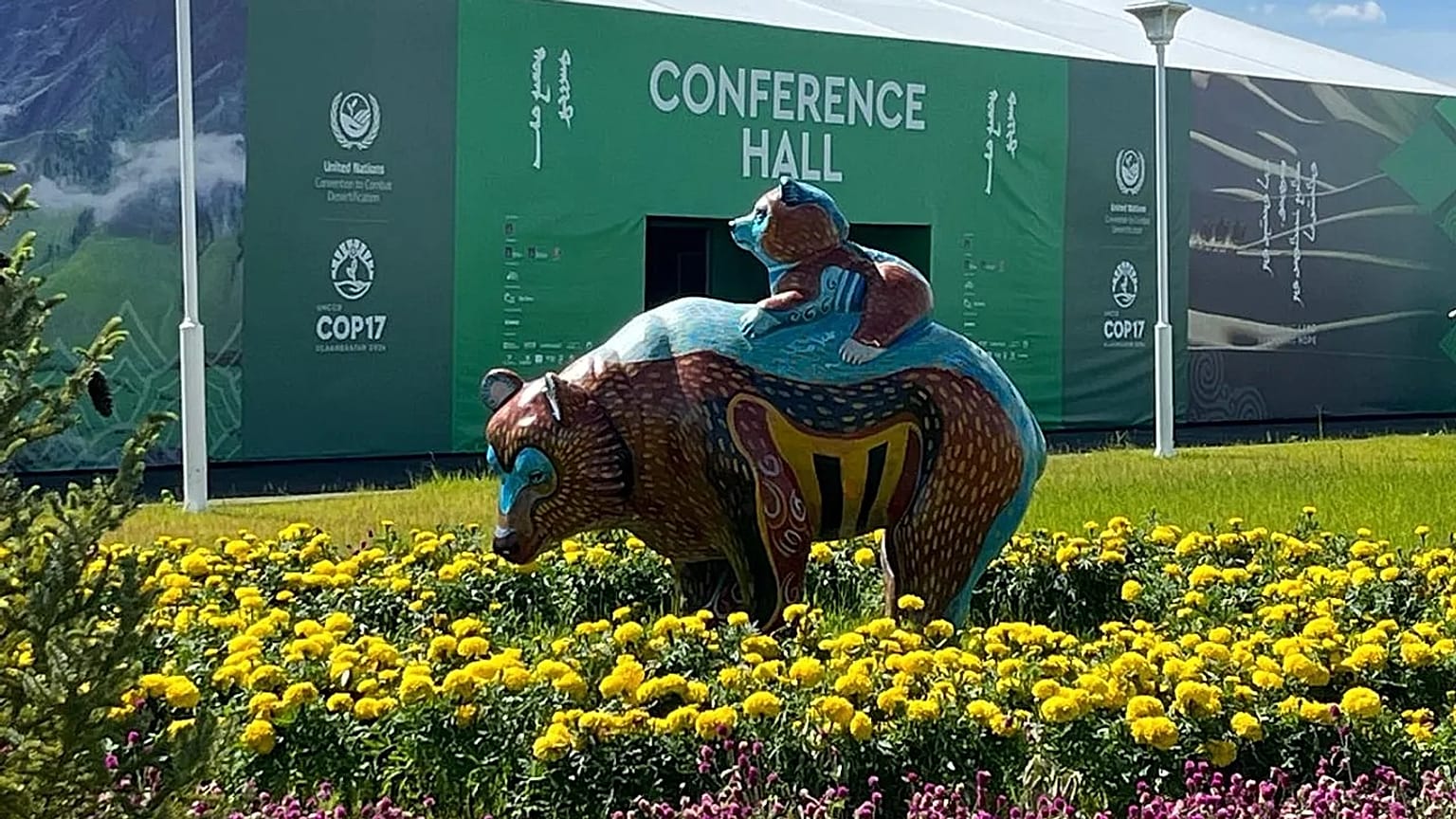
Countries signatories of the UN Convention to Combat Desertification agree with banks and private investors on financing scores of projects in 23 countries across 5 continents.
After 12 days of debates and negotiations in the Mongolian capital, Ulaanbaatar, delegates of 197 parties (196 countries + the EU) who signed the United Nations Convention for Combating Desertification wrapped up the soConference of Parties (COP17) with note-worthy results.
Like in all previous COPs it proved difficult to achieve unanimity over a legally binding all-encompassing documents, especially at the time when the big powers question the mere principle of multilateralism.
But, the Convention is a process and from the beginning of COP17 the host country Mongolia and the UN have appealed for it to try to produce tangible results.
“Today, the time has come for us to ask ourselves a bold and candid question – we have spoken at length and made many declarations, but have we been able to turn our words into action?
The previous events all brought meaningful outcomes. But, the truth is that the world has never lacked goals and commitments.
What we need more urgently are the resources, financing, technology and institutional environment to turn those commitments into tangible results,” said Mongolian Prime Minister Nyam-Osoryn Uchral.
So, did the COP17 produce tangible results?
 \
\Raising awareness
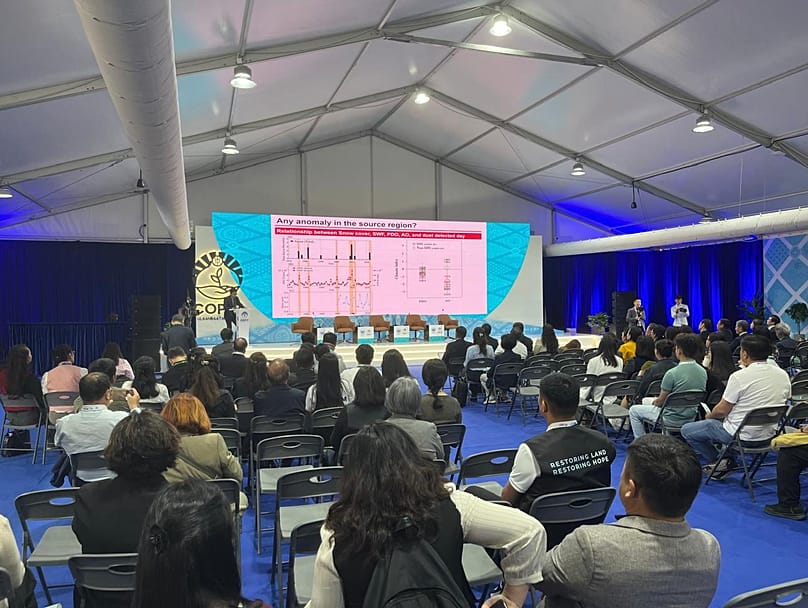
40% of usable, arable land on the planet is affected by land degradation. That is, it is slowly turning into a barren desert. The problem already affects 3.2 billion people in the world. From the very opening of COP17 its officials and delegates from different countries warned that the world often fails to see that the more obvious issues such as migration, wild fires and draughts are often consequences of the land not being able to sustain vegetation and human habitation.
“Desertification can simply be a food crisis because once your land is degraded you will not be able to plant and you will have both food and water security problem and migration and displacement.
Here, the people are not being given a choice whether they will leave their land, yes or no, but they have nothing to sustain their livelihood and give them resilience. Add to that the impact of draught, the climate change and the loss of biodiversity and it all adds to the problem of desertification,” says Yasmine Fouadh, Executive Secretary of the UNCCD.
“We will not be able to resolve any of our issues without working on the land. 90% of our food comes from the land, 99.8% of our calories come from the land, our cities and on land, our villages and farms are on land, rivers, lakes, all the freshwater lie on the land. And that land also stores three times more carbon dioxide than there is in the atmosphere,” warned dr Osama Faqeeha, advisor to COP16 in Riyadh.
Raising funds
During COP16 in Riyadh in Saudi Arabia, mechanisms were initiated to gather financial institutions, bank and private equity to invest in projects that protest land from degradation. It is possible because those projects can be profitable, especially if they tackle water utilization and sustainable agriculture.
The Convention estimates that inaction on land costs the world almost 900 billion dollars a year while investment in healthy land could generate up to 1.8 trillion through food production, water provision and carbon storing. Yet, the investment so far remains modest.
“If you look at how much money goes into artificial intelligence, it is the same amount of money that goes into climate financing – 2 trillion dollars a year.
But, when you double-click on climate financing, less than 3% goes into land and water. It is way under-invested.
And the white-paper we published puts forward reasons why businesses can actually invest into land and water. It can bring returns, every dollar you put into land brings 8 to 30 dollars in exchange,” says Gim Huay Neo, Managing Director World Economic Forum.
This is why the governments, development banks and private investors were able to announce one of the biggest successes of COP17 - the $1.3 billion in new and pipeline financing for land restoration and drought resilience across 23 countries on five continents.
Of the $1.3 billion announced, $644.5 million has been identified as new finance, while $216.4 million has already been confirmed and is moving towards implementation, the UNCCD noted.
The announcement came against the backdrop of perceived huge financing gaps for meeting global land restoration commitments.
“There is a huge gap in the funding for land preservation. Annualy, about 355 billion dollars is needed but we have only about 70 billion, so we miss around 280 billion,” says deputy Prime Minister of Mongolia Togmid Dorjkhand who chaired the ministerial session on finance.
“The governments have raised over a billion dollars for projects and in the afternoon session we got the private sector involved and another 1.3 billion were discussed so all in all about 2.1 billion dollars are on the bale. COP17 has been a success in that financial part,” explains Dorjkhand.
A lot of fundraising was done in direct talks between the financial institutions and governments. Mongolia as used the opportunity to offer favourable conditions for opening data centres across its vast territory.
The advantages it presented are the low cost of energy, 40% of savings on cooling owing to Mongolias harsh winters and the fact that 98% of land in Mongolia is state-owned which simplifies construction.
“But this is not the only thing that Mongolia offers, there are also legal advantages. We have just proposed a so-called data law which guarantees data sovereignty. It basically turns data centre into a data embassy in which both data and connectivity, networking guarantee safety and security.
So, we hope that this will be attractive to those who want to build data centres to serve the largest market, China, but still keep their data outside China,” explains Mongolian Minister of Digital Development Chinbat Nomin.
Networking, planning and making commitments
COP17 saw hundreds of events and many countries had their pavilions on the its grounds. Big projects were presented, like the Chinese “Green Wall of China” a mega project of planting billions of trees over several decades to stop the spreading of deserts.
Countries most affected by desertification had the biggest presence. Among them the host country, Mongolia, where 77% of land is already degraded and where Gobi desert “swallows” thousands of hectares every year.

“There are many problems that countries share and we all learn from each other here,” says Bakhtiyor Pulatov, Rector of the Central Asian University of Environmental and Climate Change Studies. “Uzbekistan has established scientific approach to solving the problem of the land degradation because it is serious in our country, more than 70% of the territory is already a desert or turning into one.
So, we established many systems like early warning system for sand and dust storms. There is also the initiative of our president Shavkat Mirziyoyev to plant a billion saksaul trees in deserts that works well.
We also opened the only university that studies the environmental issues, because we believe I science and we are ready to share, out pavilion here is open to their countries that have similar problems,” says Pulatov.
The Mayor of Ulaanbaatar hosted the first Mayor’s Forum during COP17. It gathered participants from 30 countries, including around 30 mayors, governors and other local and regional leaders.
They signed a joint declaration, exchanged experience and agreed that they would be involved in the negotiations by their national governments in the future because they will be the ones implementing the solutions to combat desertification.
Also, within 90 days they will create a network of cities in dryland and extreme climate areas.
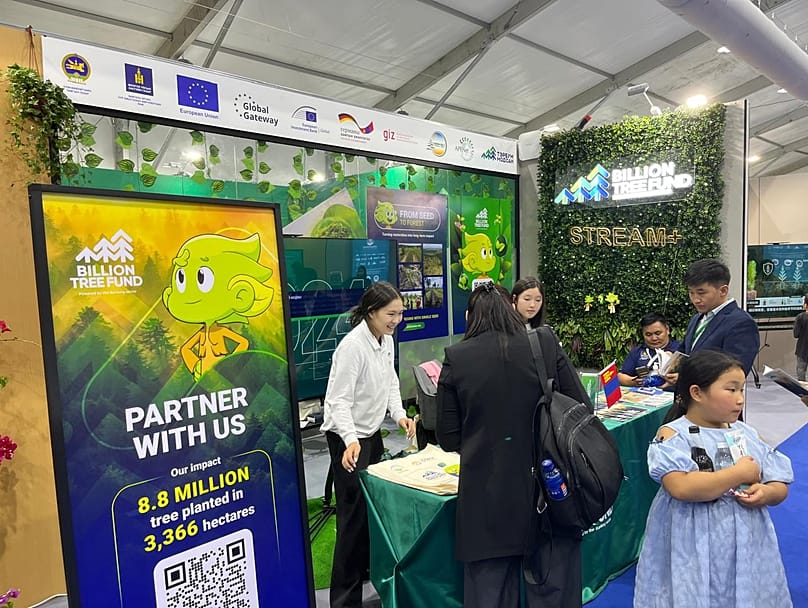
All the countries of UNCCD have made national agendas. More of them than ever came to Ulaanbaatar with their own initiatives.
In Riyadh we had 35 initiatives and real national agendas and we continued after that in 2025 and 2026 and we came here to Mongolia and we have 200, or to be exact 198 initiatives under the Riad action agenda, says dr Osama Faqeeha, advisor to COP16 in Riyadh.
During 12 days in Ulaanbaatar alliances were forged, like the one between China and the League of Arab States who made a joint 5-year plan of cooperation to restore land. Countries shared experience in fighting desertification.
Where politics meets life
Summits of this kind can often feel distant from real life of the people whose problems are being discussed. Negotiations are mostly behind closed doors and end in documents whose bureaucratic and expert language is difficult to understand.
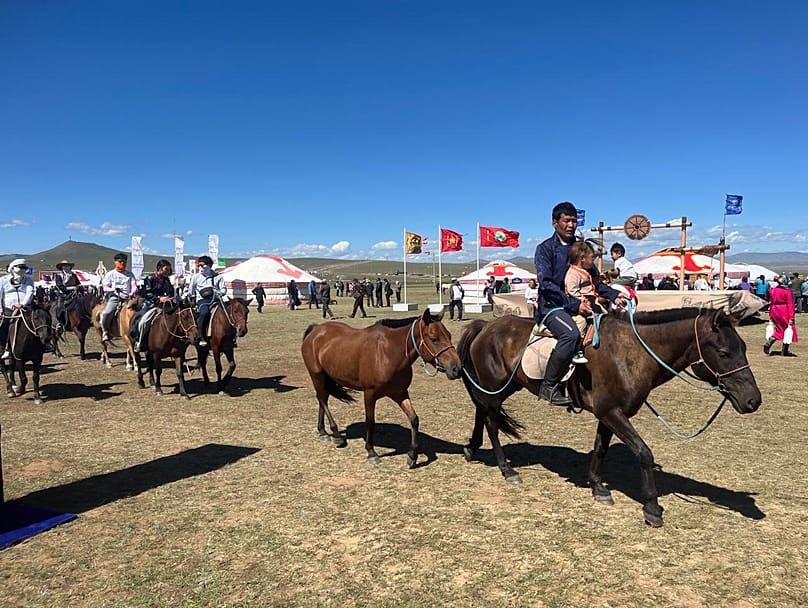
A day into the conference, it opened the so-called Green Zone, part of the event open to the general public. More than 400 events were held in its halls, stages and meeting points. It was visited by thousands of people who could see exhibitions of around 60 different organisations.
This is where visitors met representatives of businesses, civil society, scientists, young people, entrepreneurs and government agencies and see their projects, solutions, screenings, workshops and cultural performances.

No comments:
Post a Comment