Tuesday, September 01, 2026

Ice up to 1 kilometre thick: Swiss meteorite sheds new light on the Ice Age
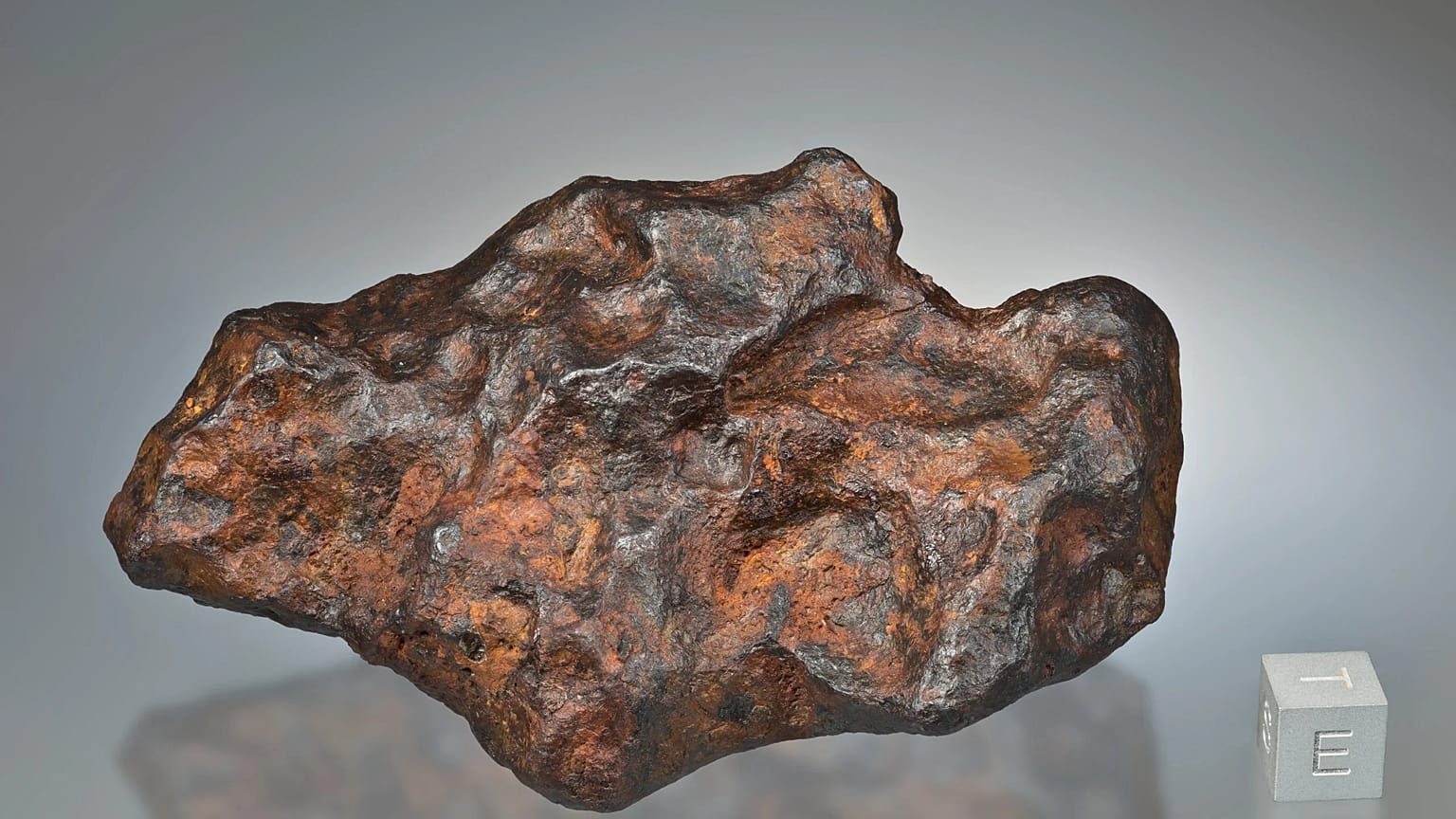
The Twannberg meteorite
Copyright NMBE Thomas Schüpbach

By Nela Heidner
Published on


More and more fragments of the Twannberg meteorite are being found in the Bernese Jura. Over 2,200 pieces are now known, and the remains of this rare iron meteorite are highly prized by researchers for several reasons.

In the canton of Bern, above Lake Biel, on the Twannberg and Mont Sujet, lies one of Europe's most important meteorite strewn fields. Fragments of an extraordinary celestial body have been repeatedly discovered there for decades.

The number of known finds has now risen to more than 2,200. This means the scale of the meteorite fall is significantly greater than initially assumed.

The Twannberg meteorite did not hit Earth as a single large block, but exploded on entering the atmosphere. Its debris was scattered over an area of around six kilometres in what is now the Bernese Jura.

Scientists estimate that the celestial body struck Earth around 175,000 years ago. Originally, it is thought to have measured between four and 20 metres and weighed at least 250 tonnes.

First discovery in 1984

The story of the meteorite discovery began on 9 May 1984. At the time, a Swiss farmer found an unusual block weighing around 15 kilograms in a field. At first it was unclear what it was. Subsequent analyses showed that the find consisted of iron and did indeed come from outer space.

In the decades that followed, further fragments were found. Above all, systematic searches with metal detectors led to a sharp increase in the number of known pieces.
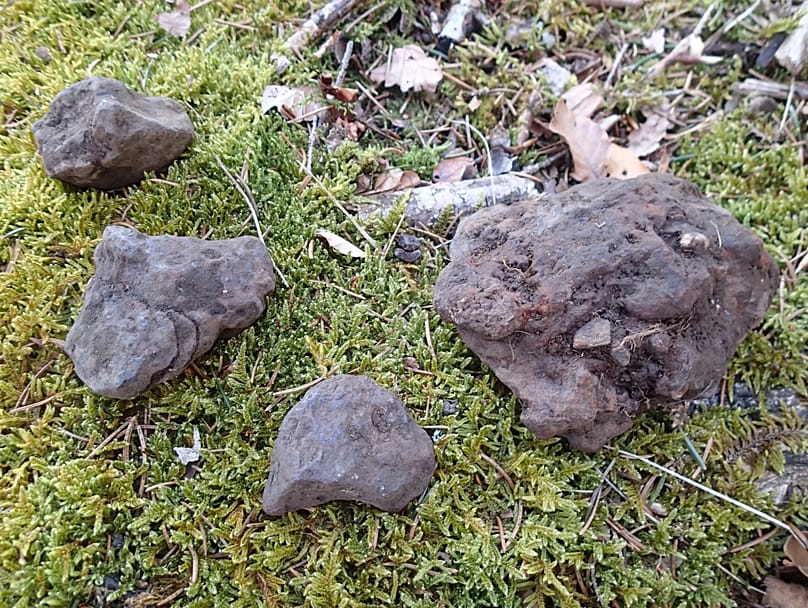
New finds in 2026: decades after the first discovery, fragments of the meteorite are still being recovered.
New finds in 2026: decades after the first discovery, fragments of the meteorite are still being recovered. ZVG/NMBE

"Ten years ago we had 400 fragments, now there are more than 2,200," explained geologist Beda Hofmann from the Natural History Museum in Bern to Swiss public broadcaster SRF.

Extremely rare meteorite

The Twannberg meteorite belongs to the group of iron meteorites and has been classified as part of the extremely rare IIG group. It is so far the only known IIG iron meteorite in Europe. Meteorites of this type are characterised, among other things, by an unusually low nickel content and a high proportion of phosphorus. Only a handful of specimens of this class are known worldwide.

For scientists the fragments are particularly valuable: they can provide clues to the composition and evolution of celestial bodies and offer a glimpse into the early history of our solar system.

Glaciers helped spread the debris

The finds are also of interest for research into the history of the Swiss landscape.

According to experts, some of the newly discovered fragments were transported by glaciers. Around 175,000 years ago, massive glaciers covered large parts of the Swiss Plateau – in places the ice sheet was more than a kilometre thick. Because the new finds have been discovered at higher altitudes than previous fragments, they can offer fresh insights into the vast masses of ice during the penultimate Ice Age.

This makes the finds, in a sense, double witnesses of time: they originally came from outer space but later became part of Earth's history and were shaped by the glacial landscape processes.

The search continues

The search on the Twannberg and Mont Sujet is far from over; researchers and meteorite hunters continue to use metal detectors to look for new remains.

However, this is more difficult than it sounds, because the soil also contains pieces of metal that have nothing to do with the meteorite, such as aluminium foil or nails. And anyone wishing to carry out a search needs a permit from the competent archaeological service.

The discoveries show the potential that the Swiss meteorite field still holds: with each additional fragment, researchers learn more about the original celestial body and the story of its impact.

Solar outpaces coal for the first time in China: How does Europe compare?

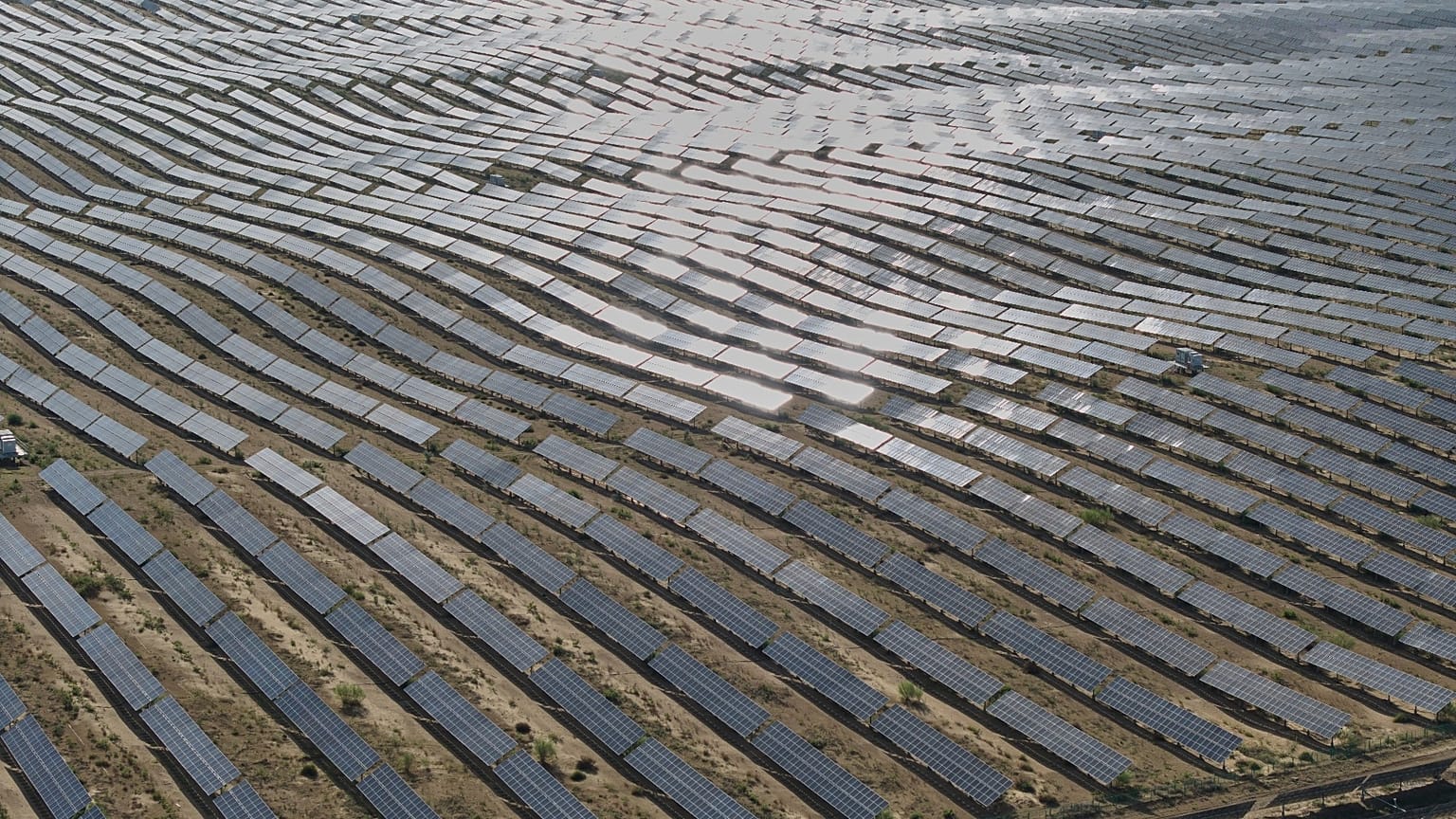
Solar panels operate at Dalad Banner Photovoltaic Top Runner Base in northern China's Inner Mongolia province, 12 June, 2026
Copyright AP Photo

By Gavin Blackburn
Published on

China has seen an explosive growth in its renewable installation, with coal's share in its energy mix edging down in recent years.

China's solar energy capacity has surpassed that of coal-fired power for the first time ever.

"As of the end of July this year, China's installed solar power capacity reached 1.286 billion kilowatts," China's National Energy Administration (NEA) said.

"For the first time, photovoltaic installed capacity surpassed coal-fired power, becoming the largest power source category in China," it added.

The country's coal-fired power installed capacity, the energy body said, stood at 1.285 billion kilowatts.

Solar generation rose 15.5 per cent in the first seven months of 2026 compared to the same period last year to 802.4 billion kilowatt-hours, about one-eighth of the country's total, the NEA said in another statement.

China, the world's largest emitter of greenhouse gases that drive climate change, has pledged to peak carbon emissions by 2030 and achieve carbon neutrality by 2060.

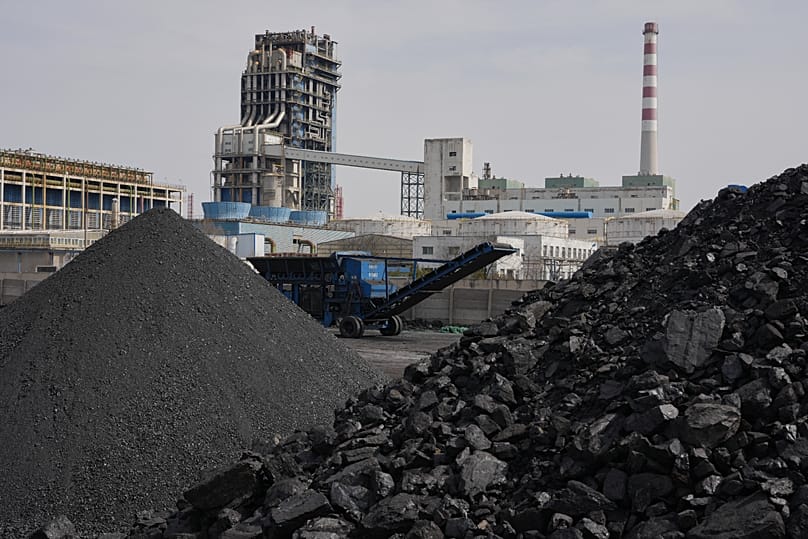
Piles of coal sit near a chemical plant in Datong, 14 March, 2026
Piles of coal sit near a chemical plant in Datong, 14 March, 2026 AP Photo

It did not detail in these statements what the total generation of coal-powered energy was for the first seven months of this year.

The NEA said China's installed solar power capacity and power generation "have maintained a steady trend of rapid growth," with it playing an "increasingly prominent role" in guaranteeing electricity supply and driving the energy transition.

Coal has been China's key power generation source for decades and a key driver of planet-warming emissions.

But the country's coal-fired power generation fell by nearly two per cent in 2025, despite rising energy demand in the world's largest emitter, data reviewed by the AFP news agency showed in February.

It marked the first decline in six years, with some analysts saying it was the first time on record that coal generation dropped at the same time as power demand rose.

China has seen an explosive growth in its renewable installation, with coal's share in its energy mix edging down in recent years.

The country installed a record 315 gigawatts of solar power and 119 gigawatts of wind power capacity last year, over 80 per cent of total newly installed power generation capacity, according to the China Electricity Council.

How does Europe compare to China on energy generation?

EU countries are trailing behind China when it comes to renewables, partly because China started their transition to clean energy much sooner. As an example, in 2023 China installed between 180 and 230 gigawatts of solar, compared to 58 gigawatts in all European countries combined.

China's ownership of clean technology parts and patents makes a big difference to how quickly and cheaply they can install, as well as cheaper labour.

China's energy grid is also more efficient at handling energy from multiple sources, where as Europe's grid has been called "outdated". Hybridisation has been recommended as a solution.

THE REAL AXIS OF EVIL

US-North Korea summit appears to be 'possible at any time,' Seoul spy agency says

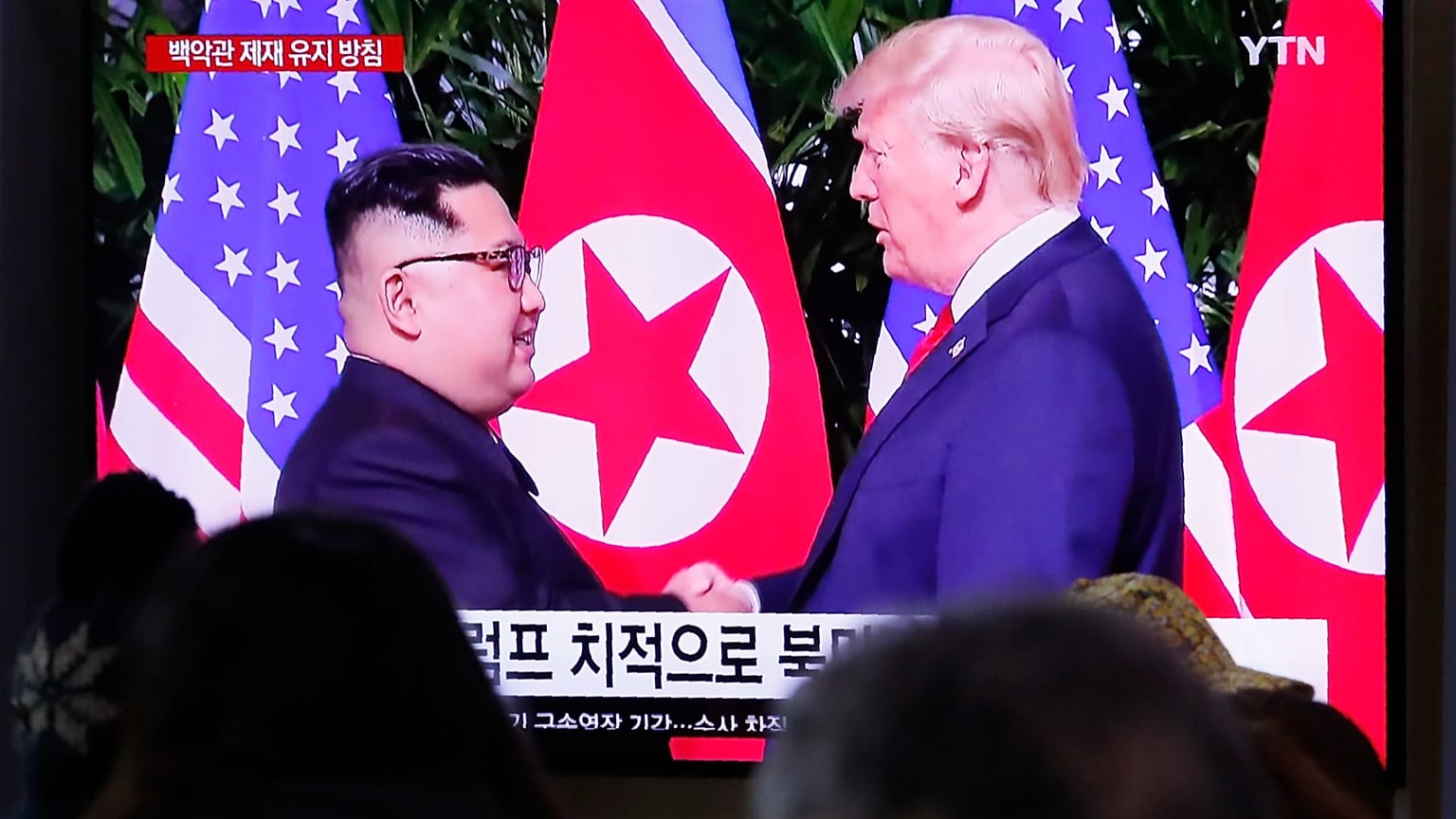
People watch a TV screen showing a file image of North Korean leader Kim Jong-un and US President Donald Trump at Seoul Railway Station, 1 January, 2020
Copyright AP Photo

By Gavin Blackburn
Published on

Trump met Kim three times during his first term, once declaring they were "in love," in high-profile summits aimed at securing a denuclearisation deal, but no tangible progress was made.

A summit between the United States and North Korea appears possible "at any time" as signs have emerged of dialogue between the two sides, a lawmaker citing South Korea's spy agency said on Tuesday.

US President Donald Trump said last month he plans to again meet with North Korean leader Kim Jong-un, but the public response from Pyongyang has been mostly muted and analysts were sceptical of imminent talks.

"Regarding the North Korea-US summit, there was an analysis that it should be viewed as possible at any time," South Korean lawmaker Youn Kun-young told reporters, citing a briefing by the National Intelligence Service.

"It was stated that while no facts regarding concrete contact between the two sides have been presented, there are signs of dialogue," he added.

Trump, eyeing a revived bond he claims to have with Kim, also said in August it was important to "get along" with the North Korean leader, adding that Pyongyang now had 57 "very powerful" nuclear weapons.

The North has since said Kim had "good memories and feelings" about Trump and that the relationship between the two leaders remains "excellent" but did not clearly respond to the US president's overtures.

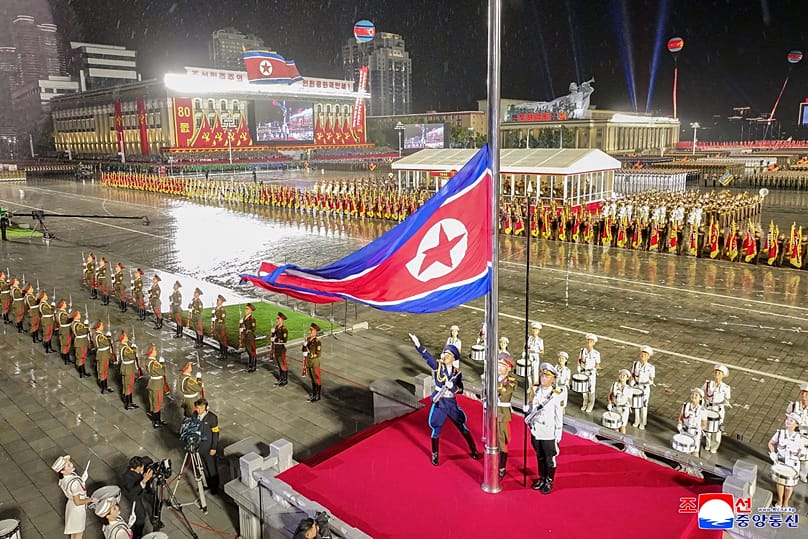
A North Korean flag is raised during a military parade marking the 80th anniversary of the founding of the ruling Worker's Party in Pyongyang, 10 October, 2025
A North Korean flag is raised during a military parade marking the 80th anniversary of the founding of the ruling Worker's Party in Pyongyang, 10 October, 2025 AP Photo

Trump's comments floating a new meeting were accompanied by Washington scaling back joint US-South Korean military drills in August.

That move alarmed Washington's Asian allies, while sparking speculation that he was seeking a foreign policy win as the Iran war stalls.

Ballistic missiles

Hours after Trump's August remarks that it was important to get along with Kim, North Korea fired more than 10 short-range ballistic missiles from the Pyongyang area.

Then Kim Yo-jong, the powerful sister of the North Korean leader, said Trump's decision to scale back the drills with South Korea was Seoul's "comeuppance."

Separate maritime exercises set to begin on 7 September between the United States and allies South Korea and Japan have also drawn an angry response from Pyongyang.

Yang Moo-jin, former president of the University of North Korean Studies, noted Moscow-backed Pyongyang appears to have little motivation to seek US talks.

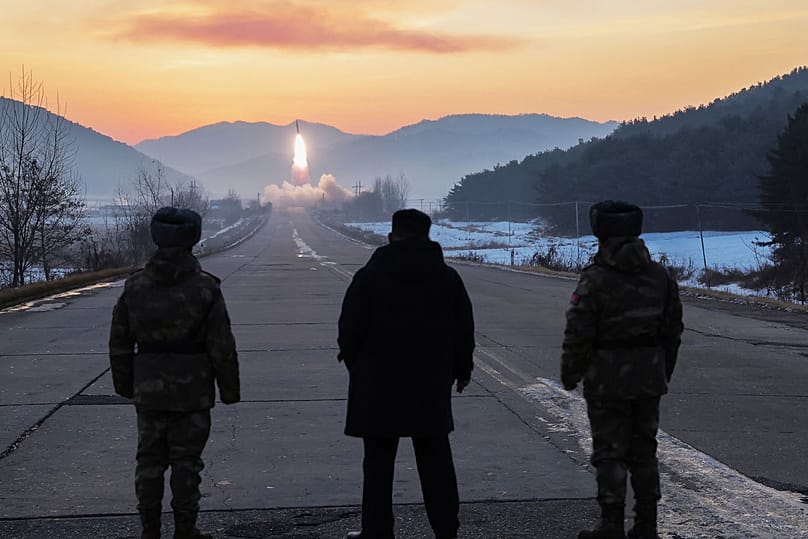
North Korean leader Kim Jong-un inspects test-flights of hypersonic missiles in Pyongyang, 4 January, 2026
North Korean leader Kim Jong-un inspects test-flights of hypersonic missiles in Pyongyang, 4 January, 2026 AP Photo

"From North Korea's perspective, as one of the biggest beneficiaries of the Russia-Ukraine war and the deepening confrontation with South Korea, the US and Japan on one side and North Korea, China and Russia on the other, there appears to be little incentive for dialogue," he added.

Trump met Kim three times during his first term, once declaring they were "in love," in high-profile summits aimed at securing a denuclearisation deal, but no tangible progress was made.

The US president even bucked decades of US policy by stating North Korea was "sort of a nuclear power" in October 2025.

But Trump's comment at the time, that he was "100 percent" open to meeting Kim again, have gone unanswered.

China, Washington's chief geopolitical rival, has also been a major North Korean trading partner and a key source of diplomatic and economic support for the country, hit by multiple international sanctions.

South Korea's dovish President Lee Jae-myung has pursued engagement with the North since taking office in June 2025, in contrast to his hardline predecessor Yoon Suk-yeol.

But Pyongyang has rejected his overtures, labelling Seoul its "most hostile" enemy and declaring itself an "irreversible" nuclear state.


Turkish universities charge $1,500 in annual fees to foreign students as Turks pay $20,000

Turkish universities charge $1,500 in annual fees to foreign students as Turks pay $20,000
The volume-driven market sees university enrolment increasingly marketed as a gateway to legal residency and work permissions. / studyinturkiye.gov.trFacebook
By Akin Nazli September 1, 2026

Private universities in Istanbul are undercutting local tuition fees by up to 90% for international recruits, raising questions over state subsidies, visa loopholes and cross-subsidisation, local daily Birgun reported on August 28.

For a Turkish family navigating the university admissions cycle, sending a child to a local private foundation university has, meanwhile, become an exorbitant affair. With tuition fees for medicine and dentistry reaching several million Turkish lira, often exceeding $20,000 to $30,000 per year before room and board, higher education is stretching middle-class household budgets to breaking point.

Yet across social media, overseas education brokers are advertising a radically different reality for foreign applicants. Full degree programmes in Turkey start at just $1,500 per year.

Service exports

The stark disparity lies at the heart of an investigation published by the daily, which details how Turkey has given rise to a volume-driven market where university enrolment is increasingly marketed as a gateway to legal residency and work permissions.

Over the past decade, Turkey has aggressively expanded its international student footprint, growing its foreign student population to roughly 378,000. Under official policy, higher education is tracked within service exports, offering private foundation universities that are legally structured as nonprofits.

The number of international students studying in Turkey was only around 5,000 in 2002 and 31,170 in 2012. By the 2024-2025 academic year, the number stood at 337,119.

While direct state contributions from the Council of Higher Education (YOK) for foreign student enrolments were abolished in 2020, government policy continues to support the recruitment pipeline.

Turkey’s trade ministry reimburses up to 50% of the commissions paid to international recruitment agencies capped at Turkish lira (TRY) 6mn ($124,300) annually per institution while providing up to TRY 25mn in matching grants for overseas advertising and marketing campaigns.

"Residency permit assistance"

Meanwhile, marketing campaigns targeting prospective students in the Middle East, Central Asia and Africa rarely highlight academic rigour, laboratory infrastructure or faculty credentials. Instead, social media advertisements pitch low-cost tuition bundled with "residency permit assistance," "health insurance included" and "address registration support."

According to the analysis, the economic rationale for universities rests on a high-volume and low-margin-cost strategy. Once a university has invested in fixed infrastructure, including buildings, academic staff and core lectures, the marginal cost of adding extra foreign students to underfilled classrooms is negligible.

Even after accounting for estimated recruiter commissions of up to 20%, enrolling 1,000 international students at $1,500 a head generates $1.2mn in net revenue. Scaling that to 5,000 students yields $6mn in high-margin cash flow.

Tuition bill effectively a work permit ‘fee’

The focus on residency and paperwork over academic credentials in agency marketing, meanwhile, suggests that, for a segment of applicants, a $1,300 to $1,500 annual tuition bill functions effectively as an administrative fee for legal status and working privileges in Turkey.

Neither YOK nor the Directorate General of Migration Management publishes breakdown data tracking classroom attendance rates, credit completion or visa cancellation rates among international student visa holders.


Foreign workers fill labour gaps as North Macedonia grapples with unemployment

Foreign workers fill labour gaps as North Macedonia grapples with unemployment
North Macedonia's unemployment rate stood at 11.3% in the second quarter of 2026. / IntelliNewsFacebook
By Valentina Dimitrievska in Skopje September 1, 2026

North Macedonia is increasingly turning to foreign workers to fill jobs that employers say they cannot fill locally. But one question is becoming harder to ignore: if the country has nearly 90,000 registered unemployed people, why are companies looking abroad for workers?

The latest figures from the Employment Agency show the growing demand for foreign labour. Between January 1 and August 19, 2026, the agency issued 1,837 opinions in employment procedures involving Bangladeshi citizens. There were also more than 1,200 procedures involving Turkish workers, 787 involving workers from Nepal, 323 from India and 46 from Pakistan, Nezavisen Pecat reported on August 27.

These “opinions” are part of the process of bringing foreign workers into North Macedonia. The Employment Agency checks whether legal requirements are met, including the applicable quota and the situation on the domestic labour market, before sending its opinion to the Ministry of Interior.

The interior ministry then makes the final decision on temporary residence based on employment once all other legal requirements have been fulfilled.

The government has set a quota of 10,000 permits for foreign workers in 2026, although this does not mean that all of them will be issued to newly arriving workers.

Where are the foreign workers needed?

Wholesale and retail trade, manufacturing, accommodation and food services, and construction are among the sectors reporting the strongest demand for workers. According to the Employment Agency, some of the most in-demand jobs include call centre operators, salespeople, general workers, cleaners, waiters, cashiers, truck drivers, cooks and construction workers.

For an employer struggling to keep a business running, hiring a worker from Nepal or Bangladesh can be a practical solution. But the wider labour-market picture is more complicated. The Employment Agency website currently lists around 8,000 vacancies, while the number of registered unemployed people is more than ten times higher.

That raises a basic question: are North Macedonia’s workers unwilling to take these jobs, or are wages, working conditions and the skills required making them difficult to fill?

According to the latest state statistical office data, North Macedonia had 88,541 unemployed people at the end of June, while another 41,281 were not actively seeking employment.

The unemployment rate stood at 11.3% in the second quarter of 2026, unchanged from the previous quarter, according to data released by the statistical office on August 26. While the rate has fallen sharply from the record high 39% in 2005, it remains relatively high.

Trade union leader Slobodan Trendafilov says the country also has more than 100,000 informal workers, many of them in sectors such as agriculture and construction where employers report shortages, according to Nezavisen.

Trendafilov argues that the reasons for the labour shortage should be addressed before the country relies increasingly on foreign workers — particularly wages, working conditions, respect for workers’ rights and job security.

“Before talking about importing workers, the state and employers must answer one key question: why are these jobs not being filled with domestic workers?” he said.

He also pointed out that some foreign workers may see North Macedonia as a temporary destination before moving to Western Europe, where wages and working conditions are better.

“If we want a strong economy, we need well-paid workers. If we want young people to stay, we need to give them a reason to stay. And if we want people to live with dignity, we must ensure they receive a decent salary,” said Ivan Pesevski, vice president of the Federation of Trade Unions of Macedonia (SSM), according to a recent Facebook post.

The other side of the problem

The shortage of workers cannot be separated from another long-term trend — emigration.

Many Macedonian workers, particularly younger people, continue to look abroad for higher salaries and better career opportunities. This means that the country is losing part of the workforce that businesses need, while simultaneously trying to attract workers from other countries.

The demographic impact is already visible in schools. Education Minister Vesna Janevska said last week that around 14,500 first-graders had been enrolled so far this year, more than 4,000 fewer than a year ago. The decline in the number of children has already resulted in around 200 fewer primary-school classes and 100 fewer secondary-school classes.

The government also expects 26 rural schools to close during the school year because they have no first-graders enrolled. Some of these schools have only five to eight pupils.

The falling number of children is more than a demographic statistic. It points to the size of the future workforce North Macedonia can expect — and makes the question of how those young people are educated even more important.

Education needs to match the labour market

North Macedonia therefore, faces two related challenges: not enough workers in some sectors today, and potentially an even smaller workforce tomorrow. This makes education reform an important part of the solution.

If young people are leaving because they cannot find well-paid jobs that match their skills, simply importing workers will not solve the underlying problem. At the same time, if employers cannot find people with the skills they need, the education system has to do more to prepare students for those jobs.

Janevska has said North Macedonia needs to follow European and global education trends, warning that otherwise young people entering the labour market could have weaker competitiveness abroad.

A stronger link between schools, vocational education, universities and employers could help address some of the mismatch. More practical training, better vocational programmes and skills aligned with sectors facing shortages could give young people a better chance of finding work at home. This could also help employers fill vacancies without relying as heavily on imported labour.

Foreign workers can help businesses deal with immediate shortages. But in the longer term, North Macedonia will need to address the reasons people leave, improve wages and working conditions, and make education more closely match the skills employers need.

Otherwise, the country risks facing the same problem on an even larger scale: fewer people available to work, more vacancies that are difficult to fill, and an economy increasingly dependent on workers from abroad.

Monoskop.org

https://monoskop.org/images/9/95/Hardt_Michael_Negri_Antonio_Empire.pdf

4.3 The Multitude against Empire. 393. Notes. 415. Index. 473. Page 11. PREFACE. Empire is materializing before our very eyes. Over the past several decades, as ...

Rebels-library.org

http://rebels-library.org/files/multitude.pdf

Page 1. MULTITUDE. WAR AND DEMOCRACY. IN THE AGE OF EMPIRE. MICHAEL HARDT ... Empire calls on war for its legitimation, the multitude calls on democracy as its ...


Newleftreview.org

https://newleftreview.org/issues/ii120/articles/empire-twenty-years-on.pdf

Just as today's. Empire was formed in response to the insurgencies of the multitudes from below, so too, potentially, it could fall to them, as long as those.


As war fears grow in Europe, Sweden plans mass burials for part of its people

Sweden conducted military drills in May.
Copyright AP Photo

By Simon Ormiston
Published on


Real body bags, a priest reciting last rites to fictional soldiers, and cold-storage stress tests reveal just how far Sweden is willing to go to prepare its defence.

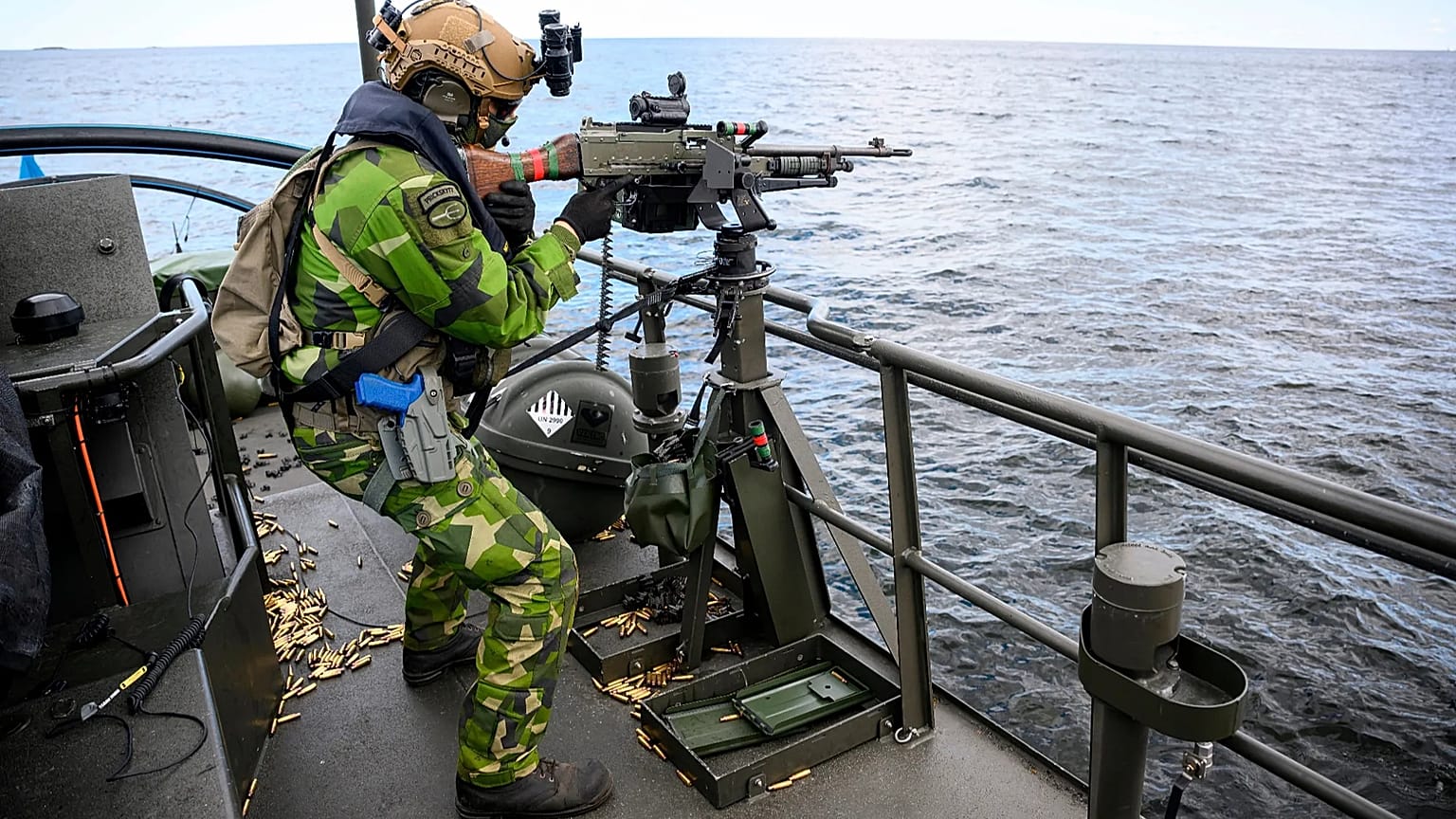
Sweden's armed forces have carried out a full-scale exercise in the logistics of burying fallen soldiers, part of a broader shift by the once-neutral Nordic country toward "total defence" planning since joining NATO in 2024.

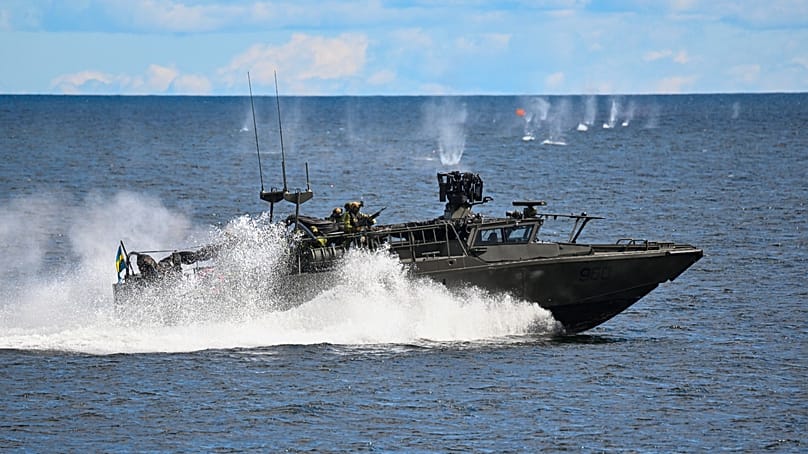
The mortuary drill formed part of Aurora 26, Sweden's largest national military exercise since the 1990s, which ran from late April to mid-May 2026 and involved roughly 18,000 troops from 13 nations, according to the Swedish Armed Forces.

A peer-reviewed account published in the journal Frontiers in Psychiatry describes a mortuary affairs component using more than 500 mannequins and body bags representing fallen service members - a scale of drill not attempted in Sweden since the early 1950s.

More than 300 military personnel took part, alongside the Church of Sweden, the Swedish Tax Agency and the country's conscription agency.

The exercise tested the full chain of handling war dead: recovery, identification, notification of allied embassies and the International Committee of the Red Cross, and burial with military honours.

The commanding officer told researchers: "I am proud to have been part of this. The last time this was practiced was, I believe, in 1952, so I am proud to have contributed."

A military chaplain reflected on the visual impact, saying it made the abstract reality of war casualties suddenly concrete after seeing dozens of body bags lined up.

Aurora 26 brought together around 18,000 troops from 13 nations as Sweden rehearses its "total defence" plans.
Aurora 26 brought together around 18,000 troops from 13 nations as Sweden rehearses its "total defence" plans. AP Photo

Defence trade outlet Defence24 reported it was the first time the process had been rehearsed jointly by every relevant institution.

Officials framed the planning as a matter of morale and institutional readiness rather than a prediction of casualties.

A military physician noted that after the exercise, personnel would need "a major adjustment" in how medical teams are resourced for mass-casualty scenarios, while another soldier told researchers the exercise gave them "a clearer understanding of the consequences of war."

Planning for the worst scenario

Separately from the exercise itself, the Church of Sweden, which remains the country's statutory burial authority, has long been instructed to plan for burial capacity equivalent to 5% of the national population, or roughly 500,000 people.

That figure is a Cold War-era civil defence benchmark covering both military and civilian deaths nationwide, not a forecast tied to Aurora 26 or any specific casualty estimate.

Asked about the planning, Jan-Olof Olsson of Sweden's civil defence agency told Le Monde it does not mean authorities expect that many victims, but that "to plan, we need an estimate."

The drill sits within a wider pattern of Baltic states and NATO's northern flank rehearsing worst-case scenarios as tensions with Russia persist. Aurora 26 also featured Ukrainian drone specialists training NATO troops in counter-drone tactics, and forces from the US, Netherlands, France, Poland and other allies operating across southern Sweden, Gotland and the Baltic Sea.

For a country that remained neutral through both World Wars and the Cold War and last deployed its military in 1814, the shift marks a significant psychological and institutional adjustment - one that mirrors similar measures in other countries in the region, including cross-border evacuation agreements signed by ten countries and Lithuania's mass-casualty hospital drills.