Tuesday, August 18, 2026

Automation Could Start Eating Into U.S. Diesel Demand

  • AI and autonomous freight could reduce U.S. fuel demand by improving efficiency and cutting fuel consumption per shipment.

  • Driverless trucking is already scaling, with Aurora and Gatik expanding commercial operations across major U.S. freight routes.

  • Diesel supplies about 22% of U.S. transportation energy, making freight automation potentially meaningful for petroleum demand.

The rise of automation, AI, and electric trucks can fundamentally change the freight transportation industry in the United States, leading to a revolution in transport fuel demand.

Various vehicle and technology companies and U.S. cities and states have launched in recent years automation trucking pilot programs. In barge transportation on the Mississippi River, AI-assisted co-pilot projects are already being used to make transportation more efficient.

The increase in efficiency, via technological, autonomous, or AI-enabled systems, could optimize freight efficiency, including by reducing fuel per-unit use and inefficiencies in supply chains, Reuters columnist Gavin Maguire argues.

Vehicle automation is a promising fuel-reducing strategy. Moreover, truck platooning, the linking of trucks in a convoy to travel closer together by using connectivity technology and automated driving support systems, is a “likely contender to reduce energy requirements for the heavy-duty vehicle sector,” says the transport and mobility research team at the National Laboratory of the Rockies.

Platooning allows multiple vehicles to travel closer together, accelerate or brake simultaneously, and reduce aerodynamic drag to create significant energy or fuel savings, NLR notes.

Self-driving trucks in Texas and AI-assisted navigation on the Mississippi River are making inroads in boosting the efficiency of freight transportation in the United States.

Aurora Innovation, a self-driving freight developer, last year launched a commercial self-driving trucking service in Texas, starting regular driverless customer deliveries between Dallas and Houston.

This year, Aurora Innovation and its manufacturing partner Roush launched their second-generation driverless trucks. Aurora plans to deploy the new fleet across its commercial network, which currently encompasses 10 driverless routes throughout the U.S. Sun Belt, to serve additional customers.

“By working with a world-class manufacturing partner like Roush, we can meet our customer demand and continue to make the movement of goods safer and more efficient across the country,” said Chris Urmson, CEO and co-founder of Aurora Innovation.

Also this year, PepsiCo and Gatik announced a multi-year strategic partnership to bring autonomous freight into PepsiCo’s North America food and beverage supply chain. This is the largest commercial autonomous freight deployment to date, PepsiCo said. Today, Gatik is already operating for PepsiCo across Texas, Arizona, and Arkansas.

Gatik’s autonomous trucks help PepsiCo’s regional transportation networks, where products move daily from site to site.

“Autonomous trucking has reached commercial scale when it operates inside one of the most demanding supply chains on the planet,” Gautam Narang, CEO and Co-Founder of Gatik, said in June.

“That is what Gatik is doing with PepsiCo. Our autonomous trucks are already moving products every day across Texas, Arizona, and Arkansas, and this partnership is proof that Gatik is becoming central to how the world’s largest companies move goods.”

Jim Farrell, Senior Vice President of Supply Chain, PepsiCo, said, “Gatik is already operating inside our networks and brings the autonomous freight technology, commercial experience, and scale we need to strengthen service, add capacity, and move products more consistently for our customers.”

On the Mississippi, maritime autonomy and situational awareness systems developer Mythos AI last year installed its Advanced Pilot Assist Systems (APAS) on a Southern Devall tow vessel, the first deployment of this type of technology on the Mississippi River.

Technology and automation could soon transform American inland shipping, too.

All these advances in freight transportation technologies suggest that U.S. fuel demand could fundamentally change in the coming years thanks to fuel savings and electrification.

In 2025, transportation accounted for about 29% of total U.S. energy consumption. Petroleum products accounted for about 89% of the total energy use of the U.S. transportation sector, according to data from the U.S. Energy Information Administration (EIA).

In 2025, the annual use of diesel, the backbone of the freight sector and a driver of any economy, in the transportation sector accounted for about 75% of total U.S. distillate consumption and about 14% of total U.S. petroleum consumption. On an energy content basis, diesel fuel accounted for about 22% of total energy consumption in the U.S. transportation sector and for about 6% of U.S. total primary energy consumption, per EIA data.

Automation and other technology breakthroughs could soon reshape energy use in the transportation sector.

By Tsvetana Paraskova for Oilprice.com

BHP says Port Hedland strike will not hit performance

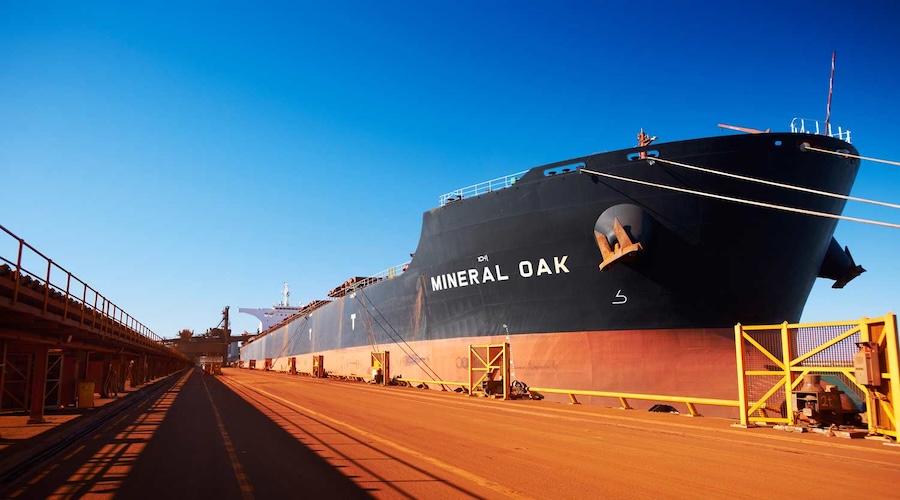
Port Hedland, Australia’s biggest iron-ore export hub. (Image courtesy of BHP.)

 BHP (ASX: BHP) CEO Brandon Craig said on Tuesday the company did not expect the industrial action at Port Hedland in Western Australia, the world’s largest iron ore export hub, to impact its performance.

Some BHP workers at Port Hedland downed tools earlier this month in a second planned stoppage, marking the first major industrial action at the site in a quarter-century. BHP is due to meet union officials later on Tuesday.

The miner reported better-than-expected full-year earnings earlier in the day, helped by record copper prices that cemented the red metal’s position ahead of iron ore as BHP’s biggest earnings driver.

(Reporting by Melanie Burton in Melbourne and Renju Jose in Sydney; Editing by Tom Hogue)

BHP profit tops estimates as copper powers growth, highest dividend in 4 years

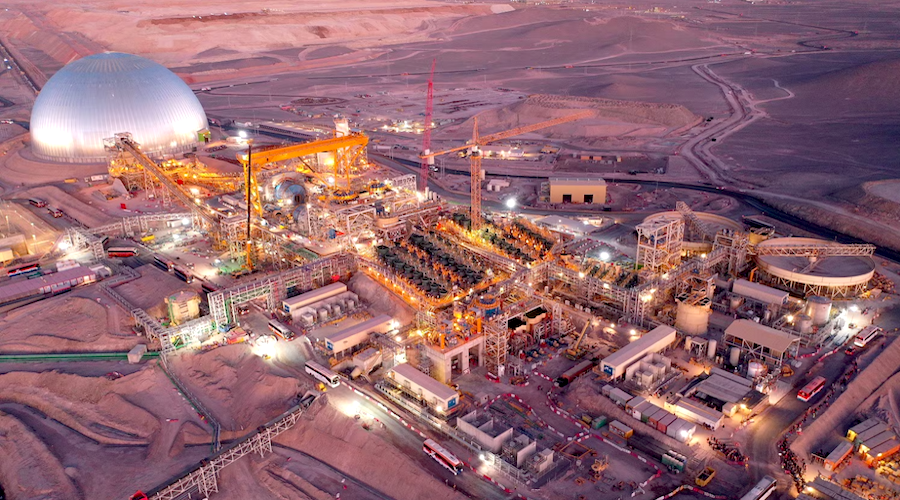
Spence’s newest copper concentrator plant. (Image courtesy of BHP.)

BHP Group (ASX: BHP) reported better-than-expected full-year earnings and declared its highest annual dividend in four years, boosted by record copper prices that cemented the red metal’s lead over iron ore as the miner’s biggest earnings driver.

Copper prices have climbed to record highs above $14,000 a tonne this year, triggered by the rapid pace of energy-hungry AI data centre buildout and the global shift toward cleaner power, intensifying miners’ race to secure high-grade copper assets.

The red metal, including byproducts such as gold and uranium, generated $18.19 billion in operating earnings in the year, surpassing iron ore’s $14.53 billion as BHP’s top earnings driver.

The world’s top copper producer on Tuesday reported a full-year underlying attributable profit of $13.20 billion for the year ended June 30, above the Visible Alpha consensus of $12.66 billion and last year’s $10.16 billion.

It announced a final dividend of 99 cents per share, bringing the full-year distribution to $1.72 apiece, the highest in four years, the miner said.

CEO Brandon Craig, who took the top job last month, underlined BHP’s solid copper outlook for the next decade.

BHP is well placed to produce as much as 40% more copper by 2035, or 2 million tonnes a year, while copper demand is expected to grow to more than 50 million tons per year by 2050 from 34 million tonnes this year.

BHP’s flagship Western Australia Iron Ore (WAIO) operations generated $14.67 billion in operating earnings in the year, up 2% from last year and in line with Visible Alpha consensus of $14.75 billion.

The miner said it could unlock up to an additional $3.5 billion in value from its WAIO assets through active capital portfolio and asset management.

Most recently, Global Infrastructure Partners (GIP) invested $2 billion in the project’s inland power network for a minority stake.

The miner’s net debt at the end of 2026 financial year fell to $8.69 billion, below both the target range of $10 billion to $12 billion and the Visible Alpha consensus estimate of $9.10 billion.

(Reporting by Sameer Manekar and Shivangi Lahiri in Bengaluru, Melanie Burton in Melbourne; Editing by Shinjini Ganguli)


BHP Profit Jumps as Copper Drives Record Earnings

BHP delivered sharply higher full-year earnings as rising copper prices and improved operational performance boosted margins, while the mining giant outlined plans to direct billions of dollars toward expanding its copper business over the coming decade.

Underlying EBITDA rose 27% to $32.9 billion for the year ended June 30, from $26.0 billion a year earlier, while underlying attributable profit climbed 30% to $13.2 billion. Net operating cash flow increased 17% to $21.8 billion.

The company declared $8.7 billion of dividends for the year, equivalent to 172 U.S. cents per share, including a final dividend of 99 cents per share. Net debt ended the period at $8.7 billion.

Higher commodity prices were the largest driver of the earnings increase. BHP said external factors added $5.6 billion to EBITDA, including a $7.3-billion benefit from higher prices that was partially offset by currency movements and inflation. Operational and controllable factors added another $1.3 billion.

Copper has now become the center of gravity of BHP's portfolio. The segment accounted for 54% of group EBITDA in fiscal 2026 and delivered an EBITDA margin of 70%, compared with 61% for iron ore. BHP produced 1.95 million metric tons of copper during the year, marking its second consecutive year at roughly 2 million tons.

BHP expects copper demand to rise from around 34 million tons per year currently to more than 50 million tons by 2050, with electrification, power-grid investment, artificial intelligence and data centers providing new sources of consumption. The miner sees the potential for a copper supply deficit of as much as roughly 10 million tons annually during the next decade.

That outlook is driving a substantial expansion program. BHP expects its copper-equivalent production to grow by 3%-4% annually through fiscal 2035, with copper segment production growing around 5% annually.

The company approved about $500 million of pre-commitment funding for a new concentrator at Chile's Escondida mine. BHP estimates the project will require $5.4 billion to $6.3 billion of capital and could produce 230,000-270,000 tons of copper annually. A final investment decision is targeted for 2027-2028, with first production expected in 2031-2032.

BHP is also advancing Copper South Australia, including expansions around Olympic Dam and Carrapateena, and the Vicuña copper-gold-silver development along the Argentina-Chile border. Together, its project pipeline could lift attributable copper production by around 40% between fiscal 2027 and fiscal 2035.

Importantly for investors, BHP says that growth can largely finance itself. At consensus commodity prices, the miner expects its copper operations to remain free-cash-flow positive every year while funding the investments required to reach roughly 2 million tons per year of attributable copper production by the mid-2030s.

Iron ore nevertheless remains one of BHP's largest cash generators. Western Australia Iron Ore achieved record production, and the company plans to develop the Ministers North mine to help sustain output above 305 million tons annually. BHP said WAIO remained the lowest-cost major Pilbara producer for a seventh consecutive year.

Beyond copper and iron ore, construction of BHP's Jansen potash project in Canada is 84% complete, with first production from Stage 1 expected in mid-2027. The combined first two stages are ultimately expected to produce around 8.5 million tons annually.

BHP plans to spend roughly $11 billion annually on capital projects over the medium term, including about $4 billion per year on growth. More than 55% of growth spending is expected to target copper, increasing to 66% when investments in non-operated joint ventures are included.

The results underline a significant shift in BHP's earnings mix. Iron ore remains its core cash-generating franchise, but copper has moved decisively into the leading position as the company prepares for what it expects will be a prolonged tightening of global copper markets.

By Charles Kennedy for Oilprice.com


 BANGLADESH

Nine Killed in Toxic Gas Accident at HKC-Certified Shipbreaking Yard

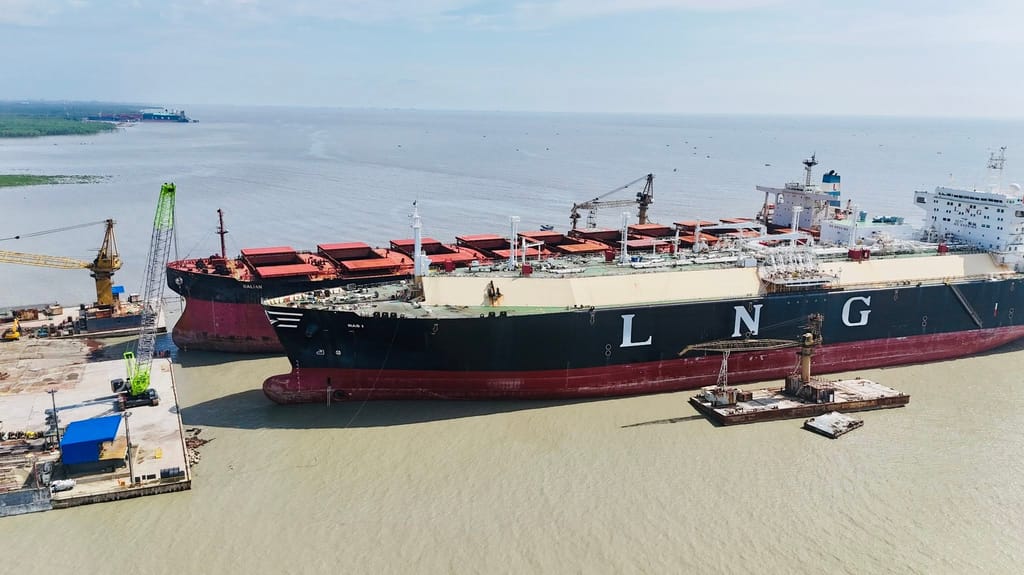
Rasi (foreground) at the time of her arrival at Chattogram (Ferdous Steel)

Published Aug 16, 2026 9:11 PM by The Maritime Executive


On Friday, nine shipbreaking workers were killed and six more injured by exposure to hydrogen sulfide gas at the Ferdous Steel shipbreaking yard in Chattogram, raising questions in Bangladesh about safety at "green"-certified ship recyclers. It was the largest fatal shipbreaking accident in recent memory, approaching in scale the dramatic explosion at Gadani, Pakistan in 2016, which killed an estimated 27 people and injured 58 more.

The casualty occurred aboard the LNG carrier Rasi (formerly Ras Laffan, IMO 9176008). Ferdous Steel reported the ship as beached at Chattogram in July 2025, indicating that it has been undergoing demolition at the yard for more than a year. 

At 0830 hours on Friday, workers were cutting a hole into a ballast tank aboard the Rasi when a large volume of H2S gas leaked out of the ballast tank and into the enclosed compartment they occupied. First responders found high concentrations of ammonia and methane as well, according to Bangladeshi paper TBS. H2S concentrations inside the ship remained dangerously high three days after the casualty.

Hydrogen sulfide gas is formed by anaerobic bacteria during the decomposition of organic matter, and is best known as the compound that gives pipeline natural gas its distinctive rotten-egg odor. It is considered unhealthy at concentrations above 50 ppm, dangerous at concentrations above 100 ppm, and has an immediately deadly "knockdown" effect above 700-1000 ppm.  

The ballast tank implicated in the casualty appears anomalous: three other ballast tanks had already been cut up without incident. The ship had been certified gas-free before work began last year, according to union representatives of the Shipbreaking Workers Trade Union Forum, which has accused the yard of safety problems and violations of health & safety regulations. Ferdous Steel had previously been cited by the Department of Inspection for Factories and Establishments for alleged safety lapses and nonpayment of wages. 

A local government committee has been formed to look into the matter at the district level, but union leaders called for a higher-level investigation, according to the Business Times. 

For now, Ferdous Steel has been ordered to suspend operations. 

Though unusual in its scale, the occurrence of a deadly casualty was not in itself rare, according to a tally by the Daily Star. The paper counted 84 accidents at Bangladeshi yards since the HKC entered into force in June 2025. 15 workers died and 81 were injured over this period. A third of the accidents occurred at one facility, KR Steel Yard, according to the Daily Star's tally. 

The Bangladesh Environmental Lawyers' Association drew a connection between Friday's fatal accident and the relative merits of the Hong Kong Convention (HKC). BELA (and others) have long argued that the HKC does not provide the same degree of protection as the Basel Convention, which the shipping industry views as an unfavorable alternative for regulation of shipbreaking. 

"We continue to see how compliance with the weaker Hong Kong Convention has done little to improve the occupational health and safety of workers who continue to face death in the industry," BELA said in a statement. 

HKC certification has strong uptake among Bangladeshi breakers: 23 out of 31 shipyards in Bangladesh are now HKC-certified, Ferdous among them, and all remaining as-yet-uncertified yards are nearing completion of the review process, according to the Bangladesh Ship Breakers and Recyclers Association. 

The deceased have been named as Sani Das, Palash Das, Mansur Ahmed, Md Nasir Uddin, Rana Mia, Habibur Rahman, Khokon Mia, Abdul Alim Sujon and Matiur Rahman Sazzad. Each victim's family will receive compensation of about $8,000, per TBS. 


BAN DEEP SEA MINING

US proposes seabed mining auction off Northern Mariana Islands


Northern Mariana Islands. Stock image.

 The U.S. Interior Department on Monday proposed a sale this year of deep-sea mining leases in U.S. waters surrounding the Northern Mariana Islands, the latest step in President Donald Trump’s push to expand domestic supplies of critical minerals.

The Marine Minerals Administration proposed an offshore minerals auction covering about 67 million acres of seabed east and west of the U.S. Pacific territory.

The sale would be held on Dec. 16, 2026, in California, with leases awarded through a competitive bidding process.

The leases would allow companies to explore for and potentially develop deposits of critical minerals used in batteries, electronics and defense technologies.

Acting MMA Director Matt Giacona said in a statement the proposal is intended to support U.S. access to minerals needed for supply chains, manufacturing and national security.

Officials will first consider comments from the governor of the Northern Mariana Islands before deciding whether to move forward, the MMA said in a notice proposing the sale.

A spokesperson for Governor David Apatang was not immediately available for comment. In comments submitted to the administration in January, Apatang said he neither supported nor opposed seabed mining, citing the need for additional information on its environmental impacts.

Last month, the Trump administration proposed leasing more than 31 million acres of seabed off American Samoa for deep-sea mining as part of a broader effort to reduce U.S. reliance on foreign sources of critical minerals.

Environmental groups have opposed deep-sea mining, arguing that more research is needed on its effects on marine ecosystems. Supporters say mining could provide a new source of minerals used in electric vehicles, electronics and military equipment.

(Reporting by Nichola Groom; Editing by David Gregorio)


Op-Ed: What’s all the fuss over Simandou?  


Stock image by Quang Vinh.

Over the last few months, social media has been inundated with posts about Simandou, a sentiment that is mirrored across professional networks. So, what’s the big deal?  

In early 2026, the first bulk carrier loaded with high-grade iron ore from West Africa’s Simandou mountain range docked at a port in East China. To the uninitiated, it looked like standard industrial news, just another ship delivering raw dirt. But to anyone tracking the global energy transition, that cargo represented the birth of an entirely new global supply chain, and the exact moment Western climate strategy defaulted to Chinese dominance. 

Understanding why means recognising the changes in our demand for iron ore. For decades, the global steel industry has depended on lower-grade iron ore, mostly banded iron formation, averaging 30% to 35% iron content. But transforming that material into structural beams or sheet steel requires burning massive amounts of metallurgical coal in traditional blast furnaces, making steelmaking responsible for roughly 8% of global carbon emissions. 

To fix this, Western automakers and construction giants have promised a transition to “Green Steel” using Hydrogen Direct Reduced Iron (H-DRI) and Electric Arc Furnaces. But H-DRI technology has a major catch: it cannot simply run on whatever iron ore happens to be available on the global market. It needs rare, ultra-clean iron ore (typically above 67% Fe) with minimal silica and alumina. 

This one catch effectively eliminates a whopping 96% of the current global iron ore production without further, costly beneficiation. Without this expensive processing, lower-grade ores choke these new furnaces with slag, multiplying energy consumption and defeating the entire purpose of this “clean” technology. 

This is where Simandou enters the picture. Tucked away in a 110-kilometre ridge in eastern Guinea, Simandou is a once-in-a-generation geological anomaly that the West ignored for decades. Over hundreds of millions of years, tropical weathering and tectonic forces stripped away the surrounding silica, leaving behind billions of tonnes of near-pure hematite at +65% Fe. Nature did 90% of the refining work in advance.

The Simandou mining corridor, connecting the KĂ©rouanĂ© and Beyla mining areas with MorĂ©baya Port on Guinea’s Atlantic coast. Source: Author. 

Without deposits capable of producing large volumes of high-grade iron ore, the economics of green steel become considerably more difficult. The West can build hydrogen plants, subsidise electric arc furnaces and pour billions into decarbonising steelmaking, but none of it changes the underlying geology of the ore going into those plants. 

Yet for over a quarter of a century, Simandou remained trapped in a remote mountain range 1,600 metres high. Unlocking it required more than $20 billion in upfront capital, including a 600-kilometre multi-use trans-Guinean heavy-haul railway cutting through dense jungle, the construction of deep-water port infrastructure at MorĂ©baya, and the navigation of complex regional politics.  

This is where the story gets particularly juicy. While Western institutional capital has historically struggled with the scale, complexity and political risk associated with projects of this kind, Chinese state-backed consortia (including Baowu and Chinalco) stepped in alongside miners like Rio Tinto to help finance and develop the infrastructure required to unlock the resource. 

The result is more than a new iron ore mine, it’s a lesson in geopolitical strategy. The trans-Guinean infrastructure serves as a direct conduit from West Africa to Chinese industrial centres, while also serving a dual purpose as a domestic passenger railway, further reinforcing the project’s regional importance and mutual benefits. 

By providing the state-backed financing needed to build 600 kilometres of heavy rail through the West African rainforest, China has achieved three major strategic objectives. First, it has created a new source of high-grade iron ore that could reduce its long-standing dependence on the Australian and Brazilian seaborne iron ore supply chain. 

Second, it has secured a decisive stake in one of the biggest emerging bottlenecks for green steel manufacturing. Third, and far more critically for the West, it has embedded itself in the infrastructure connecting Guinea’s mineral heartland to the Atlantic, securing a long-term foothold in the railway and port through which this resource-rich region will reach global markets.

And this exposes the fundamental flaw in current Western climate policy. Western governments have spent years offering subsidies and incentives to build domestic hydrogen networks, electric arc furnaces and low-carbon industrial capacity. Yet they have almost entirely ignored the raw materials required to feed them. Policymakers have operated under the comfortable assumption that critical minerals and premium ores will simply materialise on the seaborne market whenever Western factories are ready.  

Under non-competitive (and unrealistic) circumstances, perhaps they would have, but Simandou is a reminder that the energy transition is not a software upgrade. You cannot simply write a cheque, install the technology and expect the physical supply chain to appear underneath it. It requires mines, railways, ports, processing plants, energy infrastructure, water, land, capital and, above all, geology. In many respects, the energy transition may prove to be one of the most infrastructure-intensive industrial transformations in human history. 

If Western governments want to build resilient supply chains for tomorrow’s clean technology, they cannot limit their focus to high-tech manufacturing at home. They must re-engage with heavy civil engineering and mineral extraction abroad. That means offering real alternatives for infrastructure financing in the Global South, streamlining joint ventures, and treating upstream raw material logistics with the same strategic priority as downstream factories. 

So, to address the title directly, Simandou is a big deal because it represents more than a mine, more than a project, and it goes well beyond climate ambitions. It is a strategic move that uses “green steel” as a convenient, fundable mechanism for finally establishing the long-awaited nervous system of West African mining. A nervous system that China now operates. 

Nicholas Vafeas is the founder and director of BluMelt Mineral Consulting Limited, an independent consultancy specialising in geological assurance, critical minerals and investment de-risking. 


Australia Improves its Surveillance Capability Over the South China Sea

Royal Australian Air Force’s MC-55A Peregrine
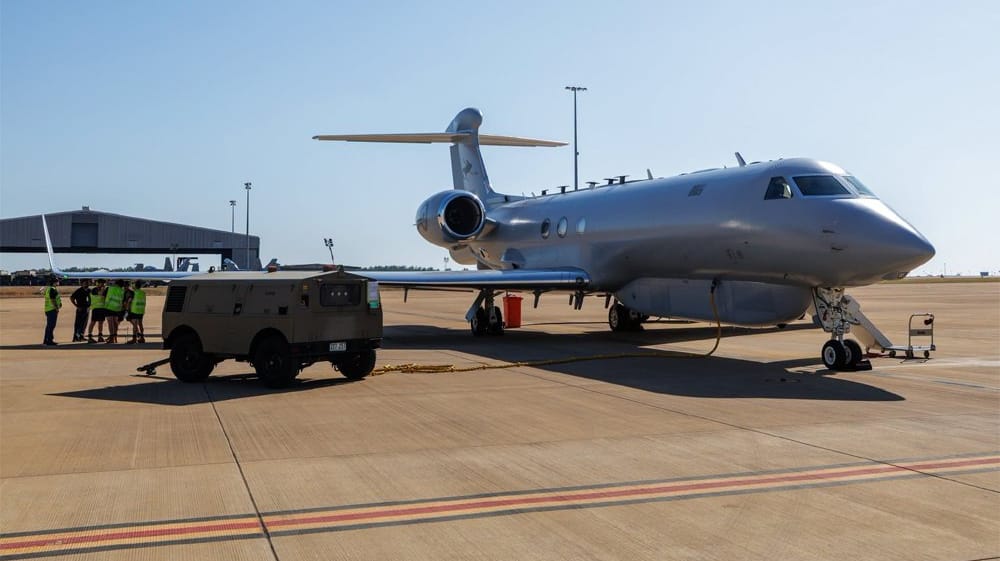
A  Royal Australian Air Force’s MC-55A Peregrine intelligence collector (RAF)

Published Aug 17, 2026 1:42 PM by The Maritime Executive


The Royal Australian Air Force’s 10 Squadron has commenced its first operational intelligence collection flights over the South China Sea, marking a significant improvement in its collection capability over the area.

The RAAF is taking delivery of four MC-55A Peregrine aircraft, a new platform replacing and supplementing a collection capability that used to be filled by the same squadron since 1968 using two Lockheed AP-3C (EW) Orion aircraft, both of which were retired some time ago.

While the RAAF’s AP-3C (EW) Orions had been regularly upgraded, the four new aircraft will both expand the number of platforms available and have state-of-the-art collection and analysis capability. They will also have greater range and a higher operating ceiling. The evolution of technical intelligence collection capability tends to be rapid, so a new base platform will speed the upgrade process in the future.

It appears that the new Peregrine aircraft will be able to use an AESA radar in an active role, but will also be able to carry out passive collection missions as well.

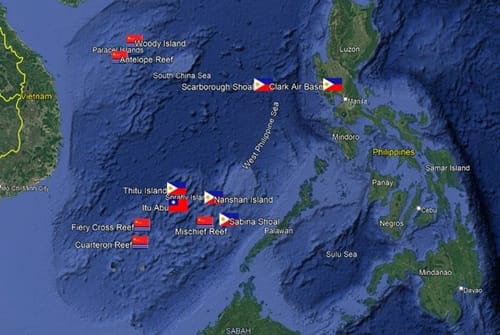
A Peregrine was noted active over the South China Sea on July 31, on one of a number of missions being flown by a 10 Squadron RAAF Peregrine forward-based at Clark Air Base north of Manila. Clark Air Base is handily located to the east of the Scarborough Shoal, which is the most active area of constant confrontation between the Philippines and Chinese forces seeking to challenge Filipino sovereignty in the South China Sea. Filipino sovereignty over the Spratly Islands and the other islands it holds was upheld by the 2016 ruling of the Permanent Court of Arbitration under the terms of the United Nations Convention on the Law of the Sea, but the Philippine Armed Forces have had to rely on willpower to maintain the footholds they retain in the area, lacking intelligence collection capability and the modern equipment that the Chinese People’s Liberation Army (Navy) in strength has been able to deploy.


Disputed Islands in the South China Sea (Google Earth/CJRC)


Under the Horizon 2 modernization program approved by Philippine President Rodrigo Duterte in June 2018, the Philippine Navy has commissioned two Miguel Malvar Class frigates, BRP Miguel Malvar (FFG-6) and BRP Diego Silang (FFG07), and is seeking two more. It will receive six offshore patrol vessels being built by Hyundai. Two 124-meter landing dock platforms being constructed by Indonesian shipbuilder PT PA will be particularly useful in defending the offshore islands that the Philippine Marines are clinging onto. 


Wreck of British Warship Cut in Two by Cruiser Found 118 Years Later

Destroyer
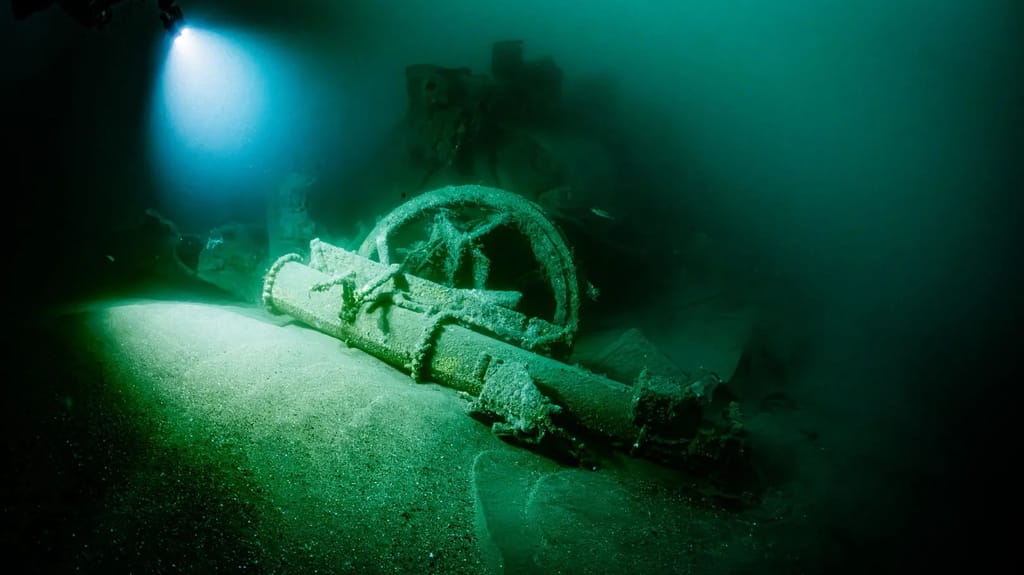
Single Whitehead torpedo tube on Tiger's bow section (Dr Steffen G Scholz)

Published Aug 16, 2026 8:22 PM by The Maritime Executive


The wreck of a Royal Navy destroyer that sank after being cut in two by another warship during an exercise, killing 35 men, has been discovered some 118 years after the collision.

HMS Tiger sank in the English Channel in 1908, and her wreck has now been found at a depth of 60 meters, not far from the Isle of Wight.

Divers with ProjectXplore spent five years working through archival material in search of Tiger, the last missing British 30-knot torpedo boat destroyer. Having first identified the wreck site in 2025, the team was able to confirm it as the British warship in July after surveying it with sidescan sonar.

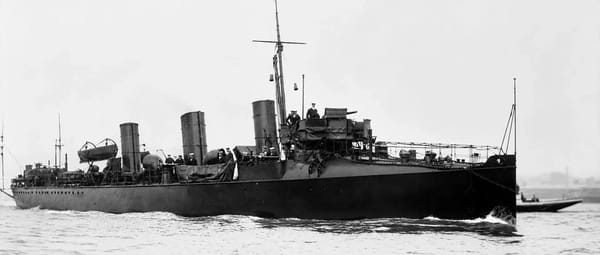
Tiger was a three-funnel, 30-knot torpedo boat destroyer (TBD) built at the Clydebank yard of J & G Thomson in 1901. The British built a fleet of TBDs to counter small, fast torpedo boats, which posed a serious threat. At 220 feet in length and 400 tonnes full load displacement, the TBDs were light by modern "destroyer" standards, but they served a similar escort mission for the fleet.

HMS Tiger (Royal Navy)

Through her years in service, Tiger endured repeated collisions and mechanical failures, returning to service each time. On the day of her loss, 12 destroyers including Tiger left Portsmouth Harbor to take part in exercises in the English Channel, south of the Isle of Wight. The destroyers were to practice night attacks against six battleships and cruisers.

During the evening, the destroyers were in position south of St. Catherine’s Point, proceeding without lights and attempting to close on the battleships and cruisers without being seen. The objective was to maneuver within striking distance for their attacks after dark.

A few minutes past eight, on a dark night with no moon, Tiger strayed into the path of the cruiser HMS Berwick while steaming at 20 to 21 knots. Though Berwick's captain gave orders to try to avoid a collision, there was no time for either ship to take evasive action. The 10,000-tonne cruiser struck the 400-tonne destroyer amidships, slicing her in two. The bow sank almost immediately, taking the captain and much of the crew with it; the stern stayed afloat only a few minutes longer. Of Tiger's 57-strong crew, only 22 survived.

“It has been the privilege of a lifetime to research, discover and document the wreck of HMS Tiger. We sincerely hope that our work will ensure that HMS Tiger, her story and the memory of those connected with her endure for future generations,” said Leo Fielding and Dan McMullen, co-organizers of ProjectXplore.

The find is significant because Tiger was the last missing 30-knot TBD sunk in the English Channel. The three others — Flirt, Myrmidon, and Bittern — had previously been located.

The discovery also comes as the UK government moves to strengthen protections for shipwrecks. The Armed Forces Bill, now before Parliament, would give newly found military wrecks “protected place” status from the moment of discovery, making it an offense to disturb or remove items from the site without permission. Current law does not provide such protection for ships lost before World Wr I.

“Protecting military wrecks helps to ensure they are preserved for future generations. This is beneficial for our rich maritime heritage and the diving community who keep the stories of our lost shipwrecks alive,” said Lieutenant Commander Jen Smith, the Royal Navy’s Deputy Fleet Wreck Officer.


South Australia Sinks Historic Grab Dredger as Artificial Reef

SA
Courtesy SA Department of Infrastructure & Transport

Published Aug 16, 2026 11:35 PM by The Maritime Executive


A 64-year-old vessel that supported artificial reef installations in Australian waters is preparing to be sunk to become an artificial reef and a recreational dive site, part of a program to restore biodiversity.

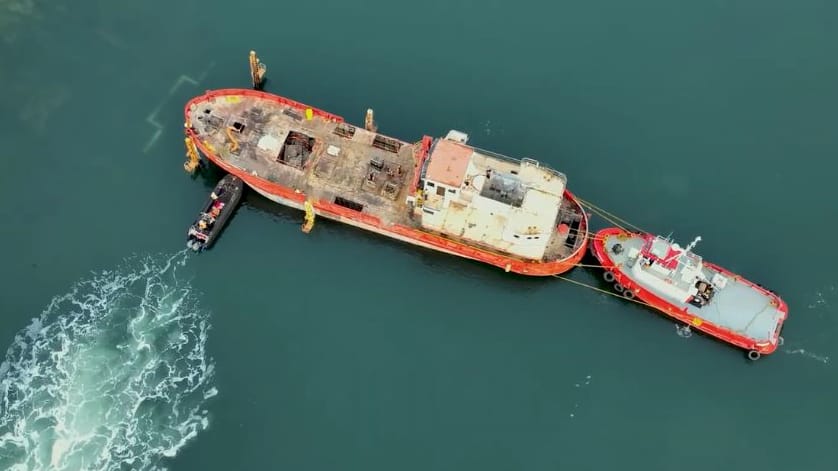
The MV Andrew Wilson, a 40-meter grab hopper dredger built in 1962, is set to be turned into an artificial reef in shallow water about six kilometers off the coast of Brighton in Gulf St Vincent. She will be the first vessel scuttled in South Australian waters in more than two decades.

For over six decades, the vessel, owned by the Australian company Maritime Constructions, was a workhorse in South Australian waters and was engaged in dredging, salvage operations, dive support, pile installation, navigation aids, and reef construction. At one point she was converted to a specialized commercial fishing vessel operating from Port Lincoln.

The Andrew Wilson is also remembered for playing a pivotal role in the salvage mission following the Whyalla Airlines tragedy in May 2000. The plane suffered a dual-engine failure and crashed into Spencer Gulf off the coast of South Australia, killing all eight people on board.

Currently docked at Port Adelaide, the vessel is preparing to make her final voyage as part of an US$116.5 million biodiversity restoration initiative.

Work is under way to strip hazardous materials from the vessel, including cutting access holes into the hull to allow safe entry for scuba divers. Once that is complete, the ship will be towed to the designated scuttling site, where she will be sunk upright on the seafloor. The vessel’s crane will remain in place to serve as an underwater landmark.


The Andrew Wilson becomes the first ship purposely sunk in South Australia since the decommissioned Royal Australian Navy guided-missile destroyer HMAS Hobart in 2002. The 134-meter warship was scuttled in Yankalilla Bay, South Australia, using controlled explosions to become a protected artificial reef and dive site.

“The MV Andrew Wilson has served the state for decades, and this next chapter will see it transform into a thriving artificial reef, supporting both the marine ecosystem and tourism industry,” said Joe Szakacs, South Australia’s Minister for Infrastructure and Transport.


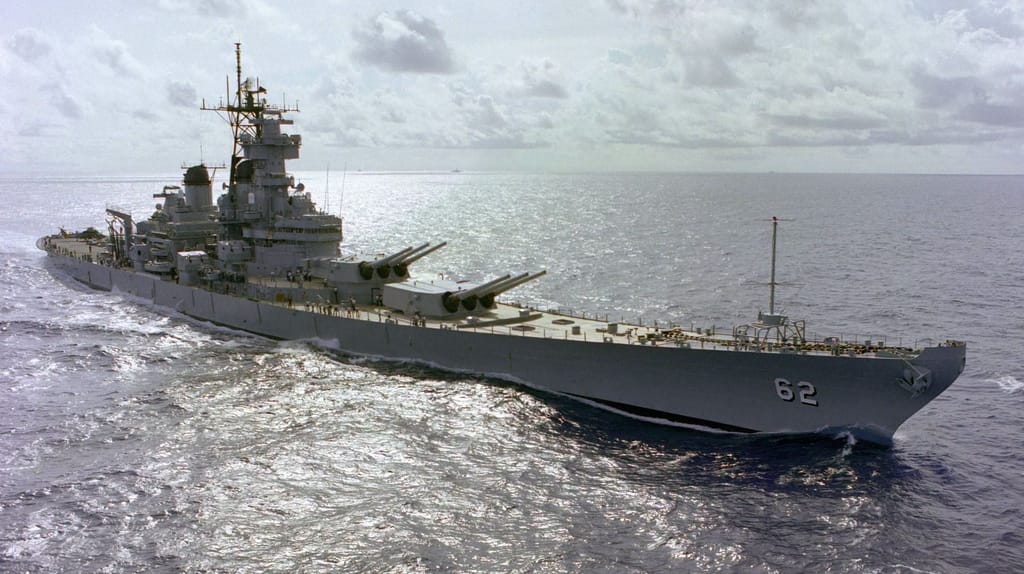
Famous Museum Ship USS New Jersey Gets $24M in Upgrades

USS New Jersey
USS New Jersey under way, 1983 (USN)

Published Aug 16, 2026 10:48 PM by The Maritime Executive


More than 80,000 people visit the battleship USS New Jersey each year, and her namesake state is investing $24 million in a  redevelopment project designed to make that experience better.

The Iowa-class New Jersey is one of the most decorated battleships in U.S. Navy history, having earned distinctions in World War II, the Korean War, the Vietnam War, the Cold War, and conflicts in the Middle East. She was launched on the first anniversary of Pearl Harbor and went on to steam more miles, fight in more battles, and fire more shells in combat than any other battleship in history. In and out of commissioned service over the years, the ship was decommissioned (for the fourth time) in February 1991 and has since served as a living museum and memorial in Camden.

Two years ago, the warship went into drydock for major maintenance, repair, and repainting at a cost of $10 million. A new project has now been unveiled to preserve the battleship’s legacy and strengthen its standing among the most treasured historic destinations in New Jersey, where it has served as a cultural landmark and educational destination since 2001. The redevelopment is designed to transform the visitor experience, address critical infrastructure aboard the ship, and strengthen its role as an anchor of the Camden waterfront.

The New Jersey Economic Development Authority is funding the project with a $24 million investment, backed by up to $20 million in tax credits. The largest share, $9.5 million, will go toward the building of a new three-floor visitor center adjacent to the battleship. Some $6 million has been allocated for improvements aboard the battleship, while $5.5 million will go toward a parking structure. Work is slated to begin in the middle of next year and will take about two years to complete.

“This project will fundamentally change how visitors arrive, how they experience the ship, and how we sustain this national treasure over the long term. It is the culmination of years of planning and partnership, and it gives us the opportunity to match the greatness of the ship with the visitor experience she deserves,” said Marshall Spevak, CEO of the Battleship New Jersey Museum & Memorial.

“As a Navy veteran, I know Battleship New Jersey stands as an enduring testament to the service and sacrifice of generations of Americans,” said New Jersey Governor Mikie Sherrill. “This investment will preserve that legacy and strengthen one of New Jersey’s most treasured historic destinations.”