BHP says Port Hedland strike will not hit performance
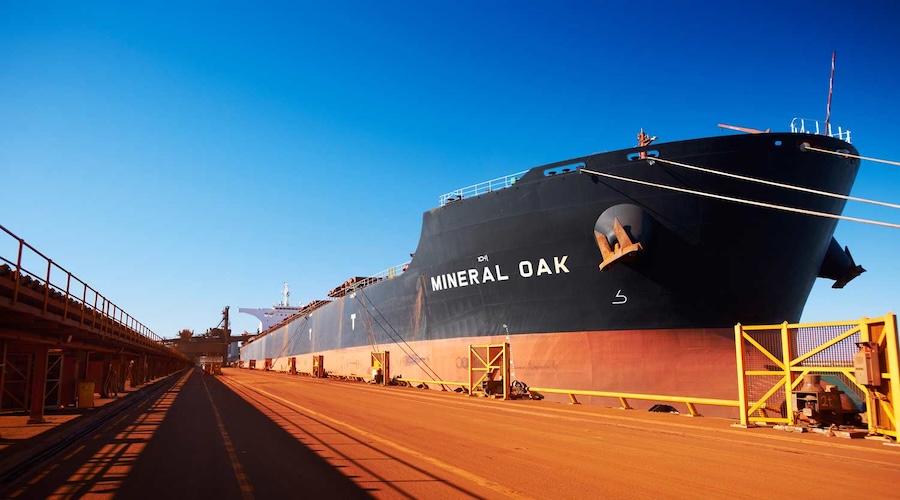
BHP (ASX: BHP) CEO Brandon Craig said on Tuesday the company did not expect the industrial action at Port Hedland in Western Australia, the world’s largest iron ore export hub, to impact its performance.

Some BHP workers at Port Hedland downed tools earlier this month in a second planned stoppage, marking the first major industrial action at the site in a quarter-century. BHP is due to meet union officials later on Tuesday.
The miner reported better-than-expected full-year earnings earlier in the day, helped by record copper prices that cemented the red metal’s position ahead of iron ore as BHP’s biggest earnings driver.
(Reporting by Melanie Burton in Melbourne and Renju Jose in Sydney; Editing by Tom Hogue)
BHP profit tops estimates as copper powers growth, highest dividend in 4 years
BHP Group (ASX: BHP) reported better-than-expected full-year earnings and declared its highest annual dividend in four years, boosted by record copper prices that cemented the red metal’s lead over iron ore as the miner’s biggest earnings driver.
Copper prices have climbed to record highs above $14,000 a tonne this year, triggered by the rapid pace of energy-hungry AI data centre buildout and the global shift toward cleaner power, intensifying miners’ race to secure high-grade copper assets.
The red metal, including byproducts such as gold and uranium, generated $18.19 billion in operating earnings in the year, surpassing iron ore’s $14.53 billion as BHP’s top earnings driver.
The world’s top copper producer on Tuesday reported a full-year underlying attributable profit of $13.20 billion for the year ended June 30, above the Visible Alpha consensus of $12.66 billion and last year’s $10.16 billion.
It announced a final dividend of 99 cents per share, bringing the full-year distribution to $1.72 apiece, the highest in four years, the miner said.
CEO Brandon Craig, who took the top job last month, underlined BHP’s solid copper outlook for the next decade.
BHP is well placed to produce as much as 40% more copper by 2035, or 2 million tonnes a year, while copper demand is expected to grow to more than 50 million tons per year by 2050 from 34 million tonnes this year.
BHP’s flagship Western Australia Iron Ore (WAIO) operations generated $14.67 billion in operating earnings in the year, up 2% from last year and in line with Visible Alpha consensus of $14.75 billion.
The miner said it could unlock up to an additional $3.5 billion in value from its WAIO assets through active capital portfolio and asset management.
Most recently, Global Infrastructure Partners (GIP) invested $2 billion in the project’s inland power network for a minority stake.
The miner’s net debt at the end of 2026 financial year fell to $8.69 billion, below both the target range of $10 billion to $12 billion and the Visible Alpha consensus estimate of $9.10 billion.
(Reporting by Sameer Manekar and Shivangi Lahiri in Bengaluru, Melanie Burton in Melbourne; Editing by Shinjini Ganguli)
BHP Profit Jumps as Copper Drives Record Earnings
BHP delivered sharply higher full-year earnings as rising copper prices and improved operational performance boosted margins, while the mining giant outlined plans to direct billions of dollars toward expanding its copper business over the coming decade.
Underlying EBITDA rose 27% to $32.9 billion for the year ended June 30, from $26.0 billion a year earlier, while underlying attributable profit climbed 30% to $13.2 billion. Net operating cash flow increased 17% to $21.8 billion.
The company declared $8.7 billion of dividends for the year, equivalent to 172 U.S. cents per share, including a final dividend of 99 cents per share. Net debt ended the period at $8.7 billion.
Higher commodity prices were the largest driver of the earnings increase. BHP said external factors added $5.6 billion to EBITDA, including a $7.3-billion benefit from higher prices that was partially offset by currency movements and inflation. Operational and controllable factors added another $1.3 billion.
Copper has now become the center of gravity of BHP's portfolio. The segment accounted for 54% of group EBITDA in fiscal 2026 and delivered an EBITDA margin of 70%, compared with 61% for iron ore. BHP produced 1.95 million metric tons of copper during the year, marking its second consecutive year at roughly 2 million tons.
BHP expects copper demand to rise from around 34 million tons per year currently to more than 50 million tons by 2050, with electrification, power-grid investment, artificial intelligence and data centers providing new sources of consumption. The miner sees the potential for a copper supply deficit of as much as roughly 10 million tons annually during the next decade.
That outlook is driving a substantial expansion program. BHP expects its copper-equivalent production to grow by 3%-4% annually through fiscal 2035, with copper segment production growing around 5% annually.
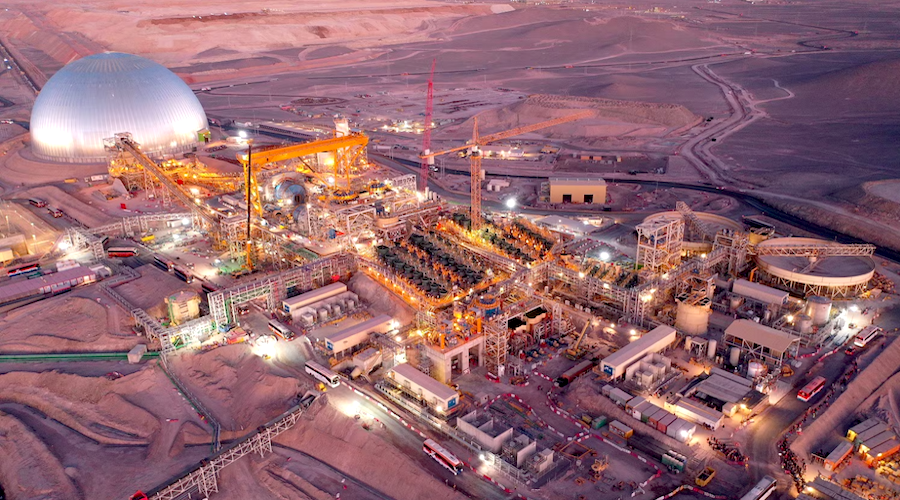
The company approved about $500 million of pre-commitment funding for a new concentrator at Chile's Escondida mine. BHP estimates the project will require $5.4 billion to $6.3 billion of capital and could produce 230,000-270,000 tons of copper annually. A final investment decision is targeted for 2027-2028, with first production expected in 2031-2032.
BHP is also advancing Copper South Australia, including expansions around Olympic Dam and Carrapateena, and the Vicuña copper-gold-silver development along the Argentina-Chile border. Together, its project pipeline could lift attributable copper production by around 40% between fiscal 2027 and fiscal 2035.
Importantly for investors, BHP says that growth can largely finance itself. At consensus commodity prices, the miner expects its copper operations to remain free-cash-flow positive every year while funding the investments required to reach roughly 2 million tons per year of attributable copper production by the mid-2030s.
Iron ore nevertheless remains one of BHP's largest cash generators. Western Australia Iron Ore achieved record production, and the company plans to develop the Ministers North mine to help sustain output above 305 million tons annually. BHP said WAIO remained the lowest-cost major Pilbara producer for a seventh consecutive year.
Beyond copper and iron ore, construction of BHP's Jansen potash project in Canada is 84% complete, with first production from Stage 1 expected in mid-2027. The combined first two stages are ultimately expected to produce around 8.5 million tons annually.
BHP plans to spend roughly $11 billion annually on capital projects over the medium term, including about $4 billion per year on growth. More than 55% of growth spending is expected to target copper, increasing to 66% when investments in non-operated joint ventures are included.
The results underline a significant shift in BHP's earnings mix. Iron ore remains its core cash-generating franchise, but copper has moved decisively into the leading position as the company prepares for what it expects will be a prolonged tightening of global copper markets.
By Charles Kennedy for Oilprice.com

No comments:
Post a Comment