Tuesday, August 18, 2026


Implantable device may help restore function after spinal cord injury


Ultra thin, flexible interface locates alternative signal pathways to bypass affected area


Houston Methodist


Researchers from Houston Methodist and the University of Cambridge have developed a flexible device that wraps around the spinal cord and can simultaneously interpret multiple signals related to movement, sensation and internal body functions. The research demonstrates that a single device may be capable of restoring lost functions after spinal cord injury. 

More than 2.5 million people worldwide live with spinal cord injuries. However, therapies to date have largely focused on restoring a single function, such as movement, sensation or autonomic control – until now. 

Published in Nature Communications, the study was co-led by Damiano Barone, M.D., Ph.D., assistant professor of Neurosurgery in the Department of Neurosurgery at Houston Methodist and George Malliaras, Ph.D., the Prince Professor of Technology in the Department of Engineering at the University of Cambridge. 

“Most current technologies try to improve whatever function remains after a spinal cord injury,” Barone said. “Our goal is different. Rather than fixing the injury itself, we want to bypass it completely and create an alternative route for signals to travel.” 

In preclinical studies, researchers showed the device could accurately detect signals related to intended movement and classify multiple types of sensory information. The technology also distinguished signals originating from internal organs. Additional testing  demonstrated that the approach can work in larger anatomy, an important step toward future clinical translation. 

“This could represent a paradigm change in how we think about spinal cord injuries,” Malliaras said. “Instead of starting from the idea that what is lost is gone forever, this approach asks whether we can restore function by carrying the signal around the injury.” 

Future work will focus on restoring function in lab models with chronic spinal cord injuries before advancing the technology toward human clinical trials. 

Researchers believe the technology could serve as the foundation for next-generation neuroprosthetics—devices that connect directly to the nervous system to bypass or replace lost sensory, motor or cognitive functions.  

Other collaborators on the study included Salim Hadwe, Ruben Serrano, George Psaltakis, Margaux Forner, Chaeyeon Lee, Sydney Swedick, Moleca Ghnnam, Tawfique Hasan and Alejandro Carnicer-Lombarte from the University of Cambridge; and Anton Banta and Xueer Zhang from Houston Methodist. 

The study was supported by grants from the National Institutes of Health, Houston Methodist Katz Investigator Award, Helaers Research Award and the Engineering and Physical Sciences Research Council grant. 


Building real-time control for engineered biological systems


Dr. Chelsea Hu is developing new tools that combine real-time feedback, device engineering and mathematical modeling to help scientists better understand and control engineered biological systems


Texas A&M University


Scientists can engineer living cells to perform useful tasks, from producing medicines and sustainable chemicals to detecting disease. Unlike traditional engineered systems, living cells are constantly changing as they grow, making their behavior difficult to predict and control.

Dr. Chelsea Hu, assistant professor in the Artie McFerrin Department of Chemical Engineering at Texas A&M University, is developing new tools that help researchers better understand and control these dynamic biological systems.

When engineered cells — cells that have gone through gene editing — grow and divide, they naturally change how they function. Because of these changes, the same external signal can produce different biological responses over time, making it difficult for scientists to consistently direct cell behavior or optimize biological production processes.

Hu’s research combines device engineering, real-time feedback control and mathematical modeling to address this challenge, giving researchers practical tools to study how engineered cells behave and design more reliable biological systems.

The approach applies optogenetics, a technique that uses light to control specific activities inside living cells. While researchers have developed optogenetic systems that allow cells to respond to light, continuously measuring those responses and automatically adjusting the light in real time — a strategy known as closed-loop control — has remained technically challenging and often requires specialized equipment.

In a recent study, Hu and her team developed LED-Embedded Microplate for Optogenetic Studies (LEMOS), a laboratory platform that makes real-time optogenetic feedback control more accessible to synthetic biology researchers. 

The system combines programmable LED lights with continuous measurements of cell growth and gene expression — the process by which cells use genetic information to produce proteins and carry out biological functions.

Rather than applying a fixed light pattern throughout an experiment, LEMOS continuously measures how cells respond and automatically adjusts the light in real time, allowing researchers to maintain more consistent control as cells grow.

“We can use light to regulate gene expression inside living cells,” Hu said. “This could eventually help improve production yield, reduce stress on the cells and make biological manufacturing more reliable.”

Hu’s team also developed Gene Expression Across Growth Stages (GEAGS), a mathematical modeling framework that explains how changes in cell growth influence gene expression and, ultimately, the performance of feedback control systems.

“As cells grow, they naturally change how they express genes,” Hu said. “That means the same light input can produce different cellular responses at different stages of growth. To design effective feedback control systems, we needed a model that accounts for those changes.”

LEMOS and GEAGS provide complementary tools for studying engineered cells in dynamic environments. By combining real-time feedback with mathematical models that account for how cells change as they grow, the research addresses one of synthetic biology’s central challenges: Living systems are constantly changing, so effective control strategies must adapt with them.

The work could improve the reliability and efficiency of biological manufacturing, where engineered cells are used to produce products such as medicines, fuels and specialty chemicals. The same control principles could also help researchers design therapeutic cells that respond dynamically to changes inside the human body.

By Raven Wuebker, Artie McFerrin Department of Chemical Engineering, Texas A&M University

###


Texas A&M Engineering leads work on rapid screwworm treatment


A multidisciplinary team is developing three novel wound treatments that quickly kill larvae while reducing chemical residues, offering ranchers and veterinarians a rapid response tool that current eradication methods cannot provide.


Texas A&M University


The Texas A&M Engineering Experiment Station (TEES) is developing fast‑acting, low‑residue wound treatments to deploy immediately when New World screwworm infestations are detected in livestock. Dr. Mustafa E. S. Akbulut leads the $1.86 million project.

“This project reflects the core of our mission as a land‑grant engineering college,” said Dr. Robert H. Bishop, vice chancellor and dean of Texas A&M Engineering. “We are bringing scientific innovation directly to a national biosecurity threat, delivering solutions that protect producers, safeguard the food supply and strengthen the resilience of U.S. agriculture.”

The New World screwworm, a parasite that feeds on living tissue, is surging across Central America and Mexico, with more than 150,000 animal cases reported. Recently, cases have been reported in Texas and New Mexico, with federal models estimating that a large outbreak in Texas alone could cause more than $1.8 billion in livestock losses. This devastating pest can cause gruesome death to livestock, companion animals and wildlife if left untreated. 

While the Sterile Insect Technique remains the backbone of regional suppression, it cannot treat an already‑infested animal, leaving ranchers and veterinarians without a rapid, on‑animal solution.

“Releasing sterile flies is how you beat screwworm across a whole region, but it works over months. It does nothing for the infested calf standing in the chute today. We are building that missing piece: a fast, single-application wound treatment that vets and ranchers can pull off a shelf the moment an animal is found,” said Akbulut, associate professor in the Artie McFerrin Department of Chemical Engineering. 

Additional contributors to the project include Dr. Phillip Kaufman, professor and head of the Texas A&M Department of Entomology (co‑PI); Dr. Jordan Salomon, assistant research scientist in entomology (co‑PI); Dr. Matthew Taylor (co-PI), professor of food microbiology in the Texas A&M Department of Animal Science; Dr. Emily Sundman, associate professor of veterinary pharmacology at Texas Tech University; and Dr. Laszlo Hunyadi, professor of large animal medicine at Texas Tech.

The TEES‑led team is developing three field‑ready formulations that combine reduced doses of synthetic macrocyclic lactones with botanical synergists such as neem and eugenol. The formulations include a wound‑conforming foam for high‑retention coverage, a bio‑adhesive spray for rapid application and an immersion wash for high‑throughput treatment. 

Together, these prototypes aim to deliver rapid death of larvae and destruction of their life cycle while minimizing chemical residues in milk, meat and the environment.

“The emergency drugs we have can kill screwworm larvae, but they dose the whole animal to treat a single wound,” Akbulut said. “We are designing a foam and a spray that stick to the wound and use a much smaller dose of the drug.”

Researchers will test how well the product kills young parasites and check how long it potentially stays in cattle so ranchers can make more informed decisions around the health and safety of their animals. These data will support a future regulatory pathway for national deployment. The project will also produce stockpile‑ready operating procedures, quality‑control specifications and a cost‑benefit framework to support USDA planning and emergency response.

By Alyson Chapman, College of Engineering, Texas A&M University

###


China Tests New 83-Mile Inland Canal to Expand Southeast Asian Trade

China inland canal
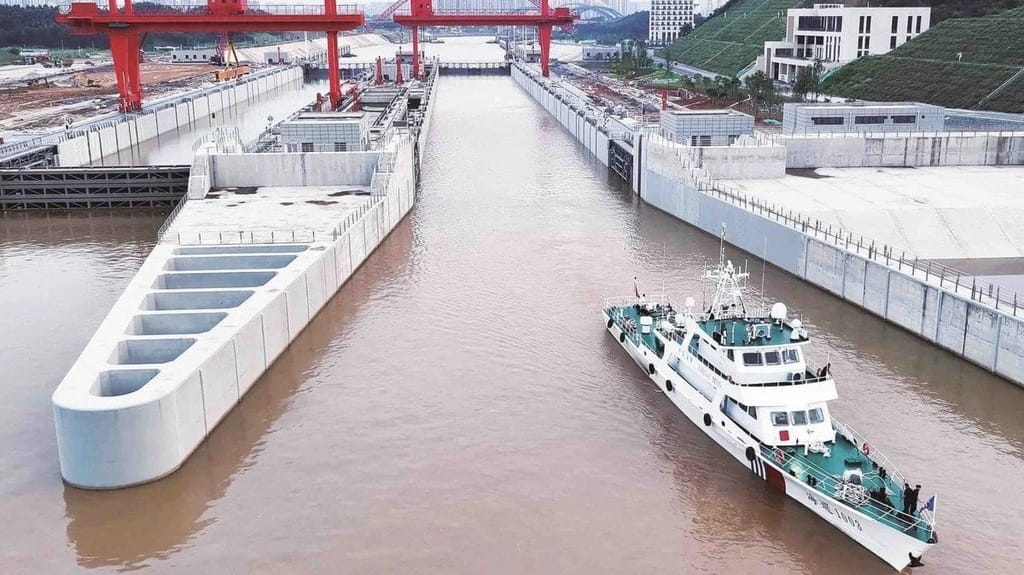
A Chinese patrol boat made the first full transit of the new canal ahead of an anticipated opening next month (Chinese state media)

Published Aug 17, 2026 8:24 PM by The Maritime Executive


China is nearing the official opening of a new 83.4-mile inland canal designed to improve access to the trade markets of Southeast Asia. The first trial navigation of the full canal was completed by a Chinese patrol boat ahead of a planned September opening of the Pinglu Canal.

The state project, which is costing an estimated $10.3 billion, runs from the Ping River estuary in Hengzhou and follows the Qingjian River to the Beibu Gulf. Previously, goods manufactured in the region had to detour through the Pearl River Delta to reach the Guangzhou Port.

It is China’s first major river-to-sea canal project planned and executed at the national level since 1949 and the founding of the People’s Republic. It is seen as a major component of the Belt and Road Initiative.

Organizers highlight that the canal will shorten inland waterway transport by about 560 kilometers (nearly 350 miles). They promote that it will help relieve volume and congestion on the Yangtze River while also lowering transportation costs. They estimate the canal could reduce transport costs by about $735 million annually while also providing increased access to Southeast Asia. China is placing a high priority on trade with Southeast Asia as a new market to help offset anticipated declines in U.S. imports.

The Chinese patrol boat Haixun 1003 (approximately 10,000 tons displacement) sailed through the Qingnian lock on August 7. The vessel, which is 46 meters (151 feet) long, completed the first full transit of the canal both as a test and for inspections. 


Construction of the canal took four years, becoming the first of its kind built by the Communist government 


Construction of the canal began in 2022 and required moving 315 million cubic meters of material. The design had to overcome a 65-meter (213-foot) elevation difference between the river estuary and sea level. Chinese engineers built three key hubs along the route with locking stations. Reports are calling the middle hub at Madao the “world’s largest inland water-saving ship lock.” The chambers measure about 984 feet with a width of 112 feet and a depth of 26 feet.  They are saying the locks can handle up to a dozen 5,000-tonne ships at one time.

The locks are also reported to have several key firsts. They report that the 70-tonne operating values at the Madao and Qishi hubs set a world record for operating speed. The massive values require just one minute to open and can be closed in 30 seconds. They report this is two to four times faster than conventional ship locks and will reduce waiting times for ships on the Pinglu Canal.

Chinese officials are also emphasizing the environmental considerations of the project. A 240-meter long wildlife overpass with soil was created so that native animals can continue to move around freely in their habitats. They also relocated over 9,500 mature mangrove trees in the creation of the canal’s estuary and replanted saplings elsewhere. They also created a 480-meter-long dual-channel fishway for migrating fish.

The plan calls for the canal to start commercial operations in September as China pushes to expand trade with Southeast Asia. However, it will require further port development at the terminus of the canal for cargo handling and transshipment to Asia.


Austal USA Launches Navy Dry Dock - Largest Vessel Launched to Date

Austal USA successfully launches the largest Navy Auxiliary Floating Dry Dock in over 40 years.

Austal USA Launches Navy Dry Dock - Largest Vessel Launched to Date

Published Aug 17, 2026 11:03 AM by The Maritime Executive


[By Austal]

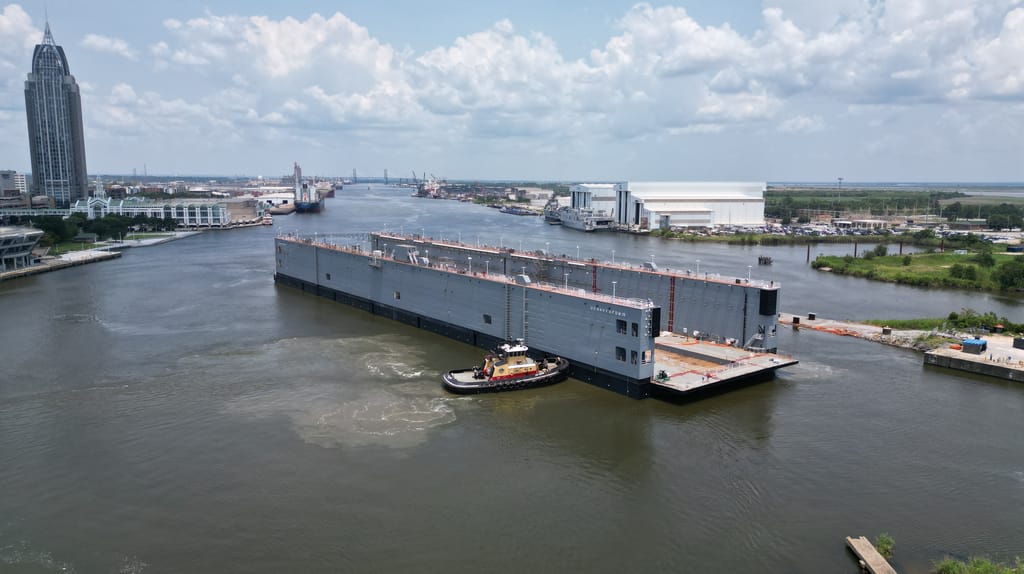
Mobile, Ala. – Austal USA launched the Navy’s Auxiliary Floating Dry Dock Medium (AFDM) 15 on July 28. This is the first AFDM built in over 40 years and the largest vessel launched into the Mobile Channel to date. At 12,000 tons, 694 feet long and with a deck working area of 90,800 square feet, AFDM is the largest vessel launch Austal USA’s test and activation team has coordinated and executed in the company’s 26-year history.

The launch process involved transferring AFDM 15 from where it was assembled in Alabama Shipyard (ASY) to their dry dock on Saturday, July 25, then flooding the dry dock and towing or launching AFDM 15 into the river the following Tuesday, July 28. The successful achievement of this milestone was the result of careful coordination between Austal USA’s test and activation, crane and rigging, engineering, and AFDM program teams. Austal USA would also like to recognize the important role our Navy, Alabama Port Authority Harbor Pilots, ASY, Berard Transportation, EN Bisso and Son Towing, and Crescent Towing partners held in this project.

"The successful launch of AFDM 15 is a proud moment for everyone at Austal USA and a remarkable achievement for our entire team,” Austal USA President Gene Miller stated. “Building the Navy's first Auxiliary Floating Dry Dock Medium in over 40 years is no small feat, and to see it launched into the Mobile River is a testament to the skill, dedication, and expertise of our workforce. This launch reflects the incredible capability we have right here on the Gulf Coast. We are grateful for the strong partnerships with the Navy and our industry partners that made this milestone possible, and we look forward to delivering a world-class asset that will serve the fleet for decades to come."

The AFDM is a “Rennie”-type floating dry dock which means it has continuous wing walls and several sectional pontoons to provide the stability and displacement required to lift and submerge vessels from the water using buoyancy. It has an 18,000 LT lifting capacity and a clear deck working area of 90,800 square feet, designed to accommodate Navy Destroyers and Cruisers. The craft has an overall length of 694 feet, overall pontoon breadth of 157 feet, and a height of 65 feet from baseline to wing deck. The vessel design incorporates features to improve operability and maintainability based on Austal USA’s experience and lessons learned from owning, operating and maintaining a similar dry dock at its Mobile, Alabama, ship repair facility.

The products and services herein described in this press release are not endorsed by The Maritime Executive.


New Orleans Gets Federal Approval for Construction of Container Terminal

Port of New Orleans new container terminal rendering
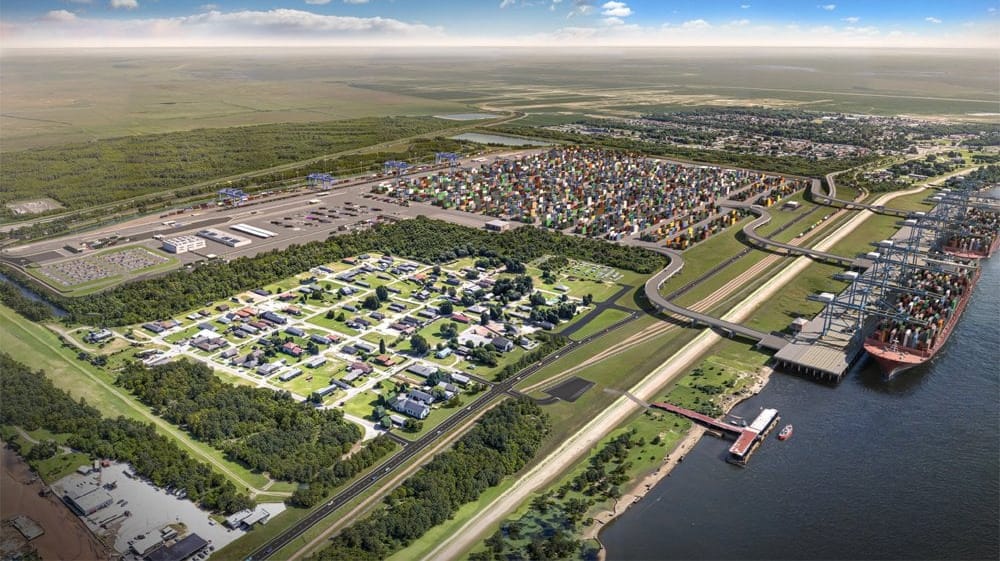
Rendering of the new terminal which will be below the city on the Mississippi to remove the current air draft and other restrictions which limit vessel size (Port of New Orleans)

Published Aug 17, 2026 7:42 PM by The Maritime Executive


The U.S. Army Corps of Engineers has granted the federal permit authorizing construction of the Louisiana International Terminal, which is seen as a pivotal project for regional growth. The project, which is being developed in partnership with MSC’s Terminal Investment Limited (TiL) and Ports America, is billed as the first new container terminal for the Gulf Coast in nearly 20 years and the only new greenfield container port currently under development.

Located on the Lower Mississippi River with direct access to the Gulf, the project is designed to handle two ultra-large container vessels at one time. Port officials point out that modern containerships have outgrown much of America's existing port infrastructure, with vessels now regularly exceeding 16,000 TEU at the largest U.S. ports. The industry’s largest vessels, which are now exceeding 24,000 TEU, so far, have been limited mostly to the routes between Asia and Northern Europe.

Air draft at the Crescent City Connection Bridge, opened in 1958, spanning the Mississippi River in New Orleans, Louisiana, has become a major limiting factor for the port. It has a maximum clearance of 170 feet (less than 52 meters). Port officials highlight that New Orleans cannot accommodate Panamax and Post-Panamax vessels, meaning that routes go to other competing gateways, such as Houston, Texas. The new terminal will also accommodate a 50-foot draft.

The project is projected to cost $1.8 billion, according to media reports, and the target is for the first vessel to be handled possibly in 2028, with the facility growing from there. The current terminal is reported to have a capacity of approximately 1 million TEU annually, but the largest vessels it handles are in the range of 6,400 to 9,400 TEU. In the first half of 2025, it handled 263,961 TEU (full-year numbers are not available for 2025), but the port projects the new terminal will grow to handle 1.2 million containers over the next 25 years.

Critically, they also highlight the selected location in St. Bernard Parish will connect LIT to more than 30 states and to global markets. It will have direct access to every major Class I railroad and the interstate highway system. It can also be serviced by barges moving along the Mississippi River and inland waterways.

"Today's permit turns years of engineering, environmental review, and partnership into forward motion," said Beth Branch, President and CEO of the Port of New Orleans. "This is not simply a regional port expansion — it is nationally significant infrastructure that will expand American export capacity and position Louisiana to lead the next generation of maritime commerce. We are ready to build."

The port promotes that the new terminal is "positioned to redefine Gulf Coast trade capacity, strengthen the U.S. supply chain, and accelerate American manufacturing and commerce." Economics studies said the port currently supports more than $101 billion in total economic value nationwide and more than 342,000 jobs, and they expect it will continue to grow.

Backed by a public-private partnership among Port NOLA, the project advanced through federal review with strong support from Louisiana's bipartisan congressional delegation, the State of Louisiana, and regional economic development leaders. It had to overcome local opposition but was successful in its environmental reviews. The permit application was filed with the Army Corps of Engineers in December 2021. With the USACE permits granted, construction can begin.


AD Ports Received Buyout Proposal from the Abu Dhabi Government

AD Ports
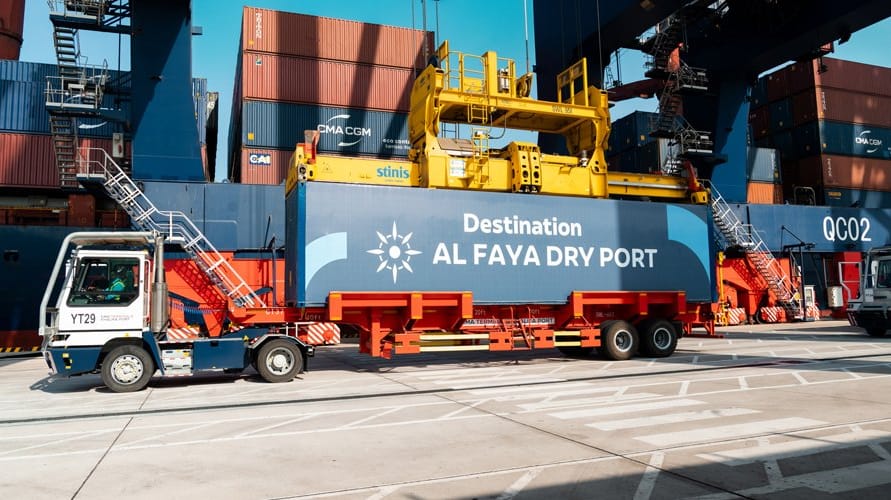
AD Ports has expanded to operate ports, logistics, and free trade zones (AD Ports)

Published Aug 17, 2026 6:03 PM by The Maritime Executive


AD Ports Group, which has grown rapidly into one of the largest ports, logistics, and shipping groups, has received an offer from one of the government’s sovereign wealth funds to buy the remaining shares of the company. L’IMAD Holdings, through Abu Dhabi Developmental Holding Company (ADQ), will make a voluntary cash offer to take the company fully private at a valuation of approximately $8.6 billion, according to Reuters’ calculations.

ADQ, which already owns just over 75 percent of the outstanding shares, said the transaction would enable the company to continue to pursue its growth strategy. It said AD Ports would be able “to pursue its long-term strategic objectives more effectively” through the transaction.

AD Ports, formerly Abu Dhabi Ports, is a remarkable growth story powered by the financial strength of Abu Dhabi. The company was established just 20 years ago in 2006 to operate the Khalifa Port & Industrial Zone. The first ship arrived in the new port in 2010, and two years later the company officially inaugurated the port, which grew into one of the largest in the Middle East. 

The company went public in 2022, and according to today’s statement, ADQ plans to offer a 95 percent premium to the original offering price in February 2022. It will offer approximately $1.70 per share for the remaining 25 percent of the company it does not own. That represents a premium of between 23 and 31 percent over the recent trading price.

At the end of last week, AD Ports reported its strongest quarterly results on record for the second quarter of 2026. Revenues were up 47 percent while EBITDA rose 49 percent. Management cited the strong performance of its Maritime & Shipping, Economic Cities & Free Zones, and Logistics clusters. They said the results demonstrated the resilience of its diversified and integrated platform.

The start of the war in the Middle East presented strong challenges as it had to ramp up alternative multimodal trade routes and operations across the United Arab Emirates. It points to the efforts at reinforcing its regional feeder shipping service, as well as establishing alternative overland trade corridors from the group’s Fujairah Terminal at other capacity at Khor Fakkan port to Khalifa Port, Jebel Ali Port, and Sharjah. It points to increased rail service and the addition of 400 trucks in the second quarter.

The company has been aggressive in its acquisitions and organized the company into clusters in maritime and shipping, ports, and free trade zones. It reports that in 2025 it handled 7.7 million TEU and 59.5 million tonnes of general cargo.

AD Ports has emerged as a major operator of feeders. RoRo, offshore, and dry bulk through its acquisition of shipping interests and vessels. It recently announced the largest acquisition for the group, a Brazilian agri-bulk port terminal operator.

L’IMAD, Reuters highlights, is one of several Abu Dhabi wealth funds. It reports assets of $300 billion under management.


Canada’s Largest Icebreaker Reaches North Pole on 2026 Scientific Mission

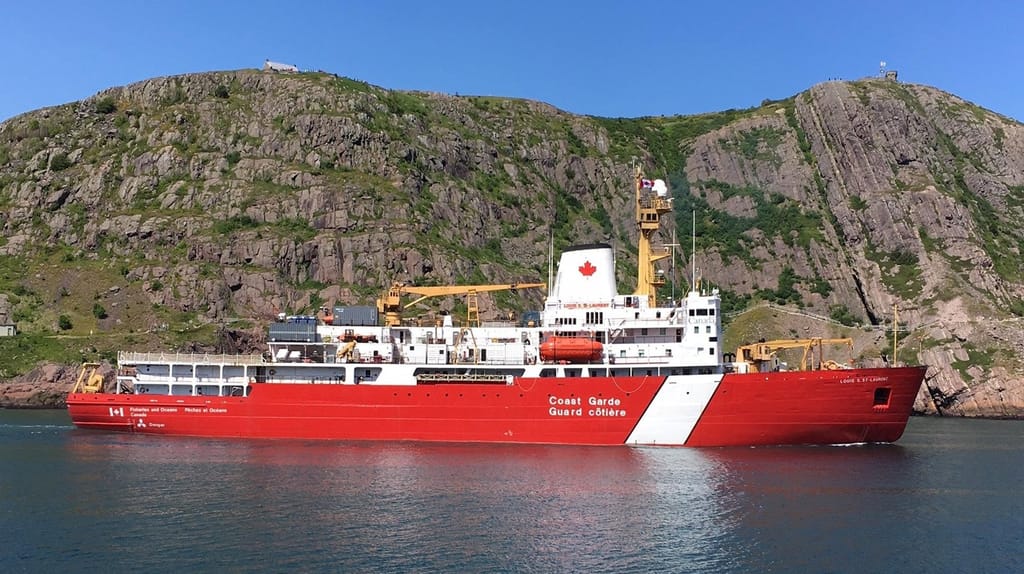
Canadian Coast Guard icebreaker Louis S. St-Laurent
CCGS Louis S. St-Laurent is the largest and most powerful icebreaker in Canada's fleet (Canadian Coast Guard)

Published Aug 17, 2026 7:14 PM by The Maritime Executive


The Canadian Coast Guard Ship Louis S. St-Laurent, Canada’s largest, and most powerful icebreaker, reached the North Pole on August 16 as part of its 2026 Arctic deployment. The vessel is supporting the United Nations Convention of the Law of the Sea, helping to map Canada’s extended continental shelf in the High Arctic, before moving into the Beaufort Sea to support the Joint Ocean Ice Study and concluding Canada’s Arctic season in late November.

The transit supports Canada’s work to define the country’s continental shelf and map its outer limits under the United Nations Convention on Law of the Sea. As part of the ongoing 2024-2027 missions in support of Natural Resources Canada and Fisheries and Oceans Canada, CCGS Louis S. St-Laurent is collecting high-resolution geoscience and hydrographic data in the Arctic. 

“The arrival of CCGS Louis S. St-Laurent at the North Pole is an important milestone that reflects Canada’s enduring commitment to the Arctic,” said David J. McGuinty, Minister of National Defence. “Supported by the expertise of Canadian Coast Guard personnel, this mission advances scientific knowledge, strengthens our presence in the North, and reinforces Canada’s sovereignty and security.”

The icebreaker departed from St. John’s in early July. She was scheduled to make stops in Iceland and Norway before proceeding to North Pole. She will then proceed west, including into Cambridge Bay, and then move south to be available to support icebreaking in the High and Low Arctic areas.

CCGS Louis S. St-Laurent (15,300 tons displacement) was originally commissioned in 1969. She is a Polar 4 Class heavy icebreaker, with three fixed-pitch props and 27,000 Shaft Horsepower. 

In 2022, the government awarded a C$14.36 million contract to Chantier Davie of Lévis, Quebec for vessel life extension (VLE) work. Work on the vessel was expected to include inspections, auxiliary equipment renewals, propeller renewal, exhaust lagging renewal, piping renewal, and hull and superstructure painting. Additional VLE work was planned over the next few years, so that the CCGS Louis S. St-Laurent could continue to deliver critical icebreaking services and serve Canada throughout the next decade. Canada has commissioned the construction of new heavy icebreakers, expecting them to be commissioned by the early 2030s.

The Canadian Coast Guard’s summer operational season runs annually from June to November to support Northern communities, carry out services, and support Government of Canada Arctic missions. This season, Canada will be active with nine CCG icebreakers deployed and operating in the Arctic from June to November 2026 to support Northern communities, carry out services, and support Government of Canada Arctic missions. The Coast Guard says its icebreaking services are crucial to Northern community resupply, enabling the safe delivery of essential goods and materials across the Arctic. 

The ships deployed this season will also include CCGS Jean Goodwill, which will support Operation Pacer Goose – the annual resupply of U.S. Pituffik Space Base in Greenland; CCGS Des Groseilliers; CCGS Vincent Massey; CCGS Amundsen; CCGS Sir Wilfrid Laurier; CCGS Pierre Radisson; CCGS Henry Larsen; and CCGS Captain Molly Kool. They will participate in various scientific efforts as well as support icebreaking, navigation, and search and rescue operations.


USCG, Canadians, International Partners Conclude Operation North Pacific

USCG Pacific patrol

Published Aug 17, 2026 10:09 PM by The Maritime Executive


[By U.S. Coast Guard]

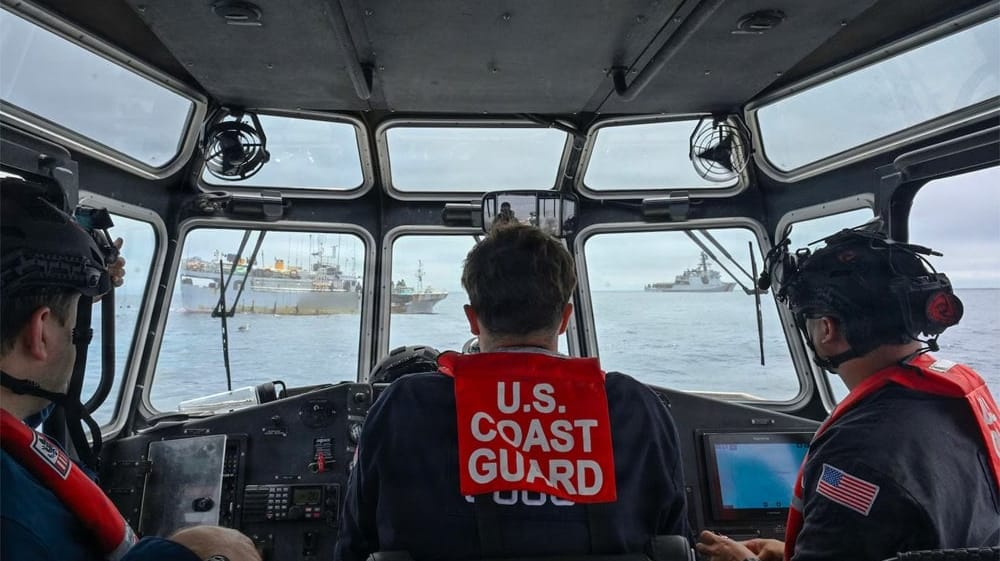
The U.S. Coast Guard, Canadian forces, and international partners concluded a joint patrol countering Illegal, Unreported, and Unregulated (IUU) fishing as part of Operation North Pacific Guard (NPG) 2026. 

Operation NPG is a multinational counter-IUU fishing operation which represents the very best of interoperability between the U.S. and international partners to detect, deter, and combat IUU fishing.  

The joint mission included U.S. Coast Guard Cutter Midgett (WMSL 757), U.S. Coast Guard Pacific Area Maritime Information Fusion Center, U.S. Coast Guard Pacific Area Tactical Law Enforcement Team, U.S. Coast Guard Arctic District, and the U.S. National Oceanic and Atmospheric Administration Office of Law Enforcement. The operation was conducted in coordination with international partners; including the Fisheries and Oceans Canada, Canadian Coast Guard, Japan Coast Guard, Fisheries Agency of Japan, Korea Coast Guard, and Ministry of Oceans and Fisheries of the Republic of Korea.  

During the 25-day patrol in the North Pacific, the crew of the Midgett conducted eight high-seas boardings and inspections, detecting three potential violations of conservation and management measures established by Regional Fisheries Management Organizations. Additionally, joint crews identified several potential violations, including illegal shark fin harvesting, through coordinated high-seas patrols, aerial surveillance, and electronic monitoring. Potential violations were submitted to the fishing vessel’s flag state for adjudication. 

“For over 30 years, NPG has combated IUU fishing on the high seas, which has a direct positive impact on U.S. fish stocks and our U.S. seafood economy,” said Capt. Brian Whisler, commanding officer of the USCGC Midgett. “I am proud of our work to uphold good governance on the high seas through tactical-level coordination with trusted international partners, and this Operation continues to provide a huge return on investment each year. The U.S. Coast Guard collaborates with our allies and partners to secure the seas against illegal fishing, trafficking, and external destabilizing influences.”   

Countering IUU fishing is by statute a homeland security mission. Salmon species depart the U.S. Exclusive Economic Zone (EEZ) and depending on the species, can spend over five years on the high seas of the North Pacific before returning to U.S. waters. During this time, they are vulnerable to illegal foreign harvesting, which directly undermines lawful U.S. fishermen and national protein security, and the cultural significance of these species. In addition, highly migratory species such as tuna, marlin, and shark swim between the U.S. EEZ and the high seas and are likewise susceptible to IUU fishing outside of the U.S. EEZ. 

NPG began in the early 1990s to enforce the United Nations General Assembly's moratorium on high-seas drift nets, and the intel-driven operation has now evolved to counter all IUU fishing threats in the North Pacific Ocean. IUU fishing remains a global threat. Every year between 11 and 26 million metric tons of fish are caught through IUU fishing around the world, threatening national security, international relations, and global economies. 

The products and services herein described in this press release are not endorsed by The Maritime Executive.

Glencore backed Radiant World with warrants deal in late 2025


Glencore is one of the world’s leading copper producers and marketers. (Image courtesy of Glencore.)

Glencore Plc last year acquired warrants that would have given it a minority ownership stake in Radiant World, the iron ore trader under pressure amid concerns it provided falsified documents to banks, according to people familiar with the matter.

The deal late last year came only a few months before Glencore moved to cut ties with Radiant World, the people said, asking not to be identified as the matter isn’t public. The London-listed commodity giant said earlier this month that it was doing no new business with Radiant World and was working to exit its remaining exposure. Bloomberg previously reported that several commodity traders had seen invoices or other documents that Radiant World had provided to its banks that were not valid.

Glencore holds warrants in Radiant World that it has the right to convert into less than 5% of the iron ore trader’s shares, one of the people said. That structure means that Glencore is not formally a shareholder because the warrants have not been exercised. However, Radiant World has told counterparties and lenders doing due diligence on it this year that Glencore had a small minority stake, several separate people familiar with the conversations said, asking not to be identified because the information is not public.

The move by Glencore underscores the unusually close relationship that the London-listed commodity giant has had with a little-known but fast-growing metals trader.

A spokesperson for Glencore declined to comment. A spokesperson for Radiant World had no comment. 

The US Justice Department and Commodity Futures Trading Commission have been investigating Radiant World’s deals, Bloomberg reported last week. Radiant World said at the time it hadn’t been contacted by the agencies nor had it been made aware of any investigation. The company has denied wrongdoing and said it “conducts its business to the highest commercial and legal standards.”

Glencore has been a major backer of Radiant World for a number of years and its support has helped the smaller company to secure credit lines from banks as it grew to become one of the world’s largest iron ore traders, according to people familiar with the two companies. 

It was not clear whether Glencore had paid any money for the warrants or whether it was given them in exchange for a reduction in debt owed by Radiant World to Glencore. Bloomberg reported last year that Glencore routinely held a large financial exposure to Radiant World in the hundreds of millions of dollars. 

Glencore Chief Executive Officer Gary Nagle said earlier this month that Glencore had taken a provision on its exposure to Radiant World. It was not clear whether Glencore had ascribed a value to the warrants, and whether the provision Nagle announced included an impairment of the value of the warrants.

Speaking after the company reported half-year results, Nagle refused to say when and why Glencore had decided to stop doing new business with the company. He would only say that Glencore’s exposure was not material, which the company later clarified meant that it was “well below” $500 million.

The exposure is in the low hundreds of millions of dollars, some of the people said.