Wednesday, August 26, 2026

‘Settle It’: Trump Personally Intervened to Force DOJ Deal With Reviled Concert Ticket Monopoly

“The president stopped by to check on the negotiations. How is this not settled yet? asked Trump,” The Wall Street Journal reported. “By the end of the meeting, it was.”
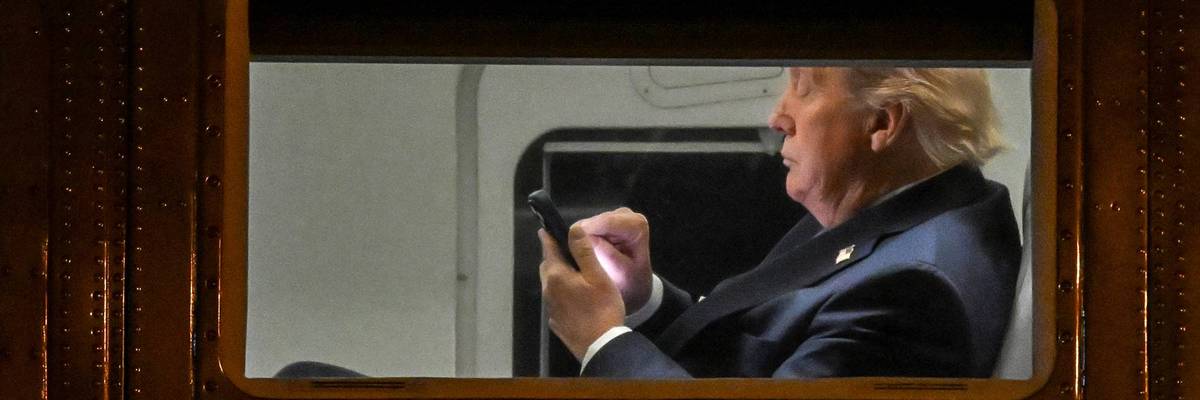

US President Donald Trump uses a cellphone aboard Marine One before it departs Leesburg Executive Airport in Leesburg, Virginia on April 24, 2025.
(Photo by Alex Wroblewski/AFP via Getty Images)

Jake Johnson
Aug 24, 2026
COMMON DREAMS

Reporting published over the weekend revealed that US President Donald Trump personally intervened to force a Justice Department settlement with Ticketmaster owner Live Nation, which faced a high-profile antitrust trial for abusing its market power and illegally crushing competition.

The Wall Street Journal reported Sunday that the Justice Department, which sued Live Nation in 2024 during former President Joe Biden’s administration, was “preparing to wage a legal battle more than a decade in the making against the world’s largest concert promoter. Then President Trump called.” A senior DOJ official relayed to associates that the president told them to “settle it.”

Trump’s intervention reportedly came just days before the March 2 trial began in the antitrust case, the product of a yearslong investigation into the ticketing and concert behemoth. The Justice Department formally announced the settlement on March 9; the DOJ antitrust division’s counsel in the case appeared to be unaware of the deal until he appeared in court for trial.

According to the Journal, Trump’s instruction to the DOJ to settle the Live Nation case came shortly after the president met with the company’s CEO, Michael Rapino, in the Oval Office in late February.

“Trump had called the meeting to discuss how to improve bookings at the Kennedy Center for the Performing Arts, according to people familiar with the conversation,” the Journal reported. “He also wanted to know why the company hadn’t reached a deal over its lawsuit.”

“On March 5, Rapino was back at the White House, meeting White House Counsel David Warrington and then-Attorney General Pam Bondi to put the finishing touches on a deal. He was accompanied by Sullivan & Cromwell’s James McDonald, who had little antitrust experience but had been representing Trump in two New York appeals,” the newspaper added. “The president stopped by to check on the negotiations. How is this not settled yet? asked Trump... By the end of the meeting, it was.”

Since the start of Trump’s second White House term, the Justice Department has repeatedly settled cases against corporations accused of violating the nation’s antitrust laws. MS NOW reported last month that “DOJ staff have privately complained that the Trump administration is essentially deciding not to enforce antitrust laws that are critical to keeping companies from becoming single-source providers and being able to charge enormous sums for their product or service.”

The Biden Justice Department’s 2024 antitrust suit against Live Nation accused the company of depriving music fans in the US of “ticketing innovation” and forcing them to “use outdated technology while paying more for tickets than fans in other countries.”

The Journal reported Sunday that most of the states that joined the antitrust action against Live Nation, “including those controlled by Republicans, viewed the settlement as so favorable to the company that they refused to join it and continued to trial.”

“In April, a jury found Live Nation illegally monopolized the ticketing market for major concerts in the US,” the Journal noted. “The plaintiff states have asked the judge to break up the company.”
GRIFT

Trump Raked In Up to $15.5 Million From Fossil Fuel Stocks as His War Pushed Up Gas Prices

“President Trump continues to get richer from an illegal war that he started and refuses to resolve, while Americans pay the price for his actions,” said US Sen. Maggie Hassan.


US President Donald Trump waves the green flag to start the race during the Freedom 250 Grand Prix Race on the streets of Washington, DC, on August 23, 2026.
(Photo by Doug Mills/Pool/AFP via Getty Images)

Brad Reed
Aug 24, 2026
COMMON DREAMS

A report released Monday by Democrats on the US Congressional Joint Economic Committee estimates that President Donald Trump has made millions of dollars from his own illegal war with Iran.

According to the report, Trump’s wealth has increased by as much as $15.5 million since January thanks to his investments in oil and gas stocks, which have surged since the president unlawfully attacked Iran without congressional approval earlier this year.

In examining the fossil fuels stocks owned by the president—including shares in Exxon Mobil, Chevron, and Occidental Petroleum—the report finds that their value has increased by an average of 39% since the start of the year.

JEC’s analysis also notes that Trump bought an additional $3.6 million in oil and gas stocks in the first quarter of 2026, allowing him to further cash in on the war he started.

While the war has driven up the values of fossil fuel companies, it has also hit US consumers directly in their wallets by raising the price of oil, diesel fuel, and gasoline.

In total, the report estimates that “Americans have now spent an additional $71.5 billion on gas since the start of Trump’s Iran War, an average of $604 in added costs per family.”

Sen. Maggie Hassan (D-NH), ranking member of the JEC, contrasted the president getting $15 million richer from his own war with Americans struggling to make ends meet.

“President Trump continues to get richer from an illegal war that he started and refuses to resolve, while Americans pay the price for his actions,” Hassan said. “On the campaign trail, Trump promised giveaways for Big Oil and relief for working families, but he can’t deliver both. Since launching his war with Iran, Trump has made clear that he puts his own financial interests—and those of his biggest bankrollers—ahead of Americans who are burdened with higher costs for gas and everyday essentials under this administration.”

During the 2024 presidential election, Trump repeatedly claimed that he would bring down costs for US consumers starting on the very first day of his presidency.

Prices have only continued to rise during his term, however, and the president has since dismissed concerns about affordability as a “hoax” concocted by the Democratic Party.
Nearly 100 Groups Urge Congress to Reject GOP-Led Attacks on Clean Air Protections

If lawmakers pass four Congressional Review Act resolutions, the coalition warns, “families will experience consequences,” from further strained household budgets to breathing toxic air.


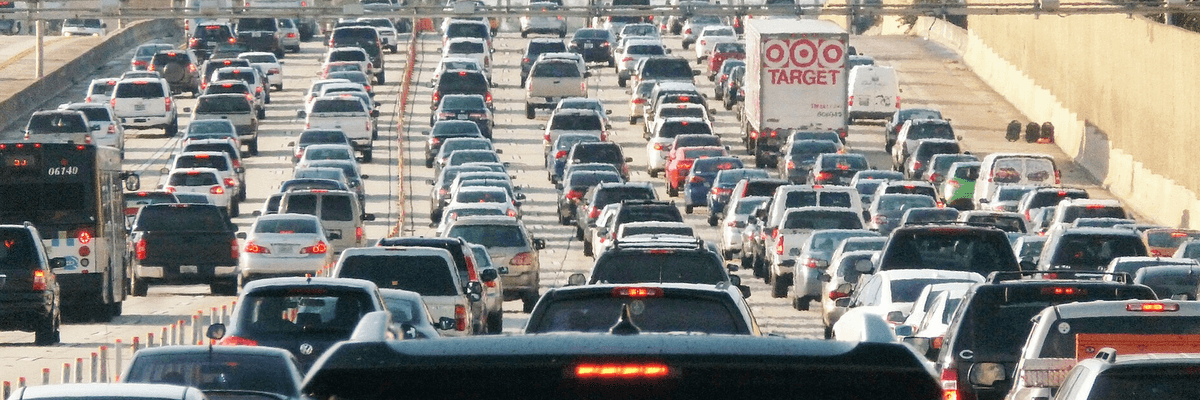
A traffic jam occurs on Interstate 95 in Miami, Florida.
(Photo by Wikimedia Commons)

Jessica Corbett
Aug 24, 2026
COMMON DREAMS

Dozens of organizations focused on consumer advocacy, the environment, health, science, and more came together on Monday for a letter urging the Republican-controlled US Congress to vote down four resolutions attacking clean air protections.

Signed by 95 groups, including the Center for Biological Diversity, Earthjustice Action, Physicians for Social Responsibility, Progressives for Democracy in America, Public Citizen, and Sierra Club, the letter takes aim at four resolutions recently introduced by Republicans under the Congressional Review Act (CRA).

The CRA allows lawmakers to overturn rules and regulations issued by federal agencies—and has already been used by Big Oil-backed President Donald Trump and his allies in Congress to roll back policies aimed at limiting pollution.

After Trump returned to power last year, the US Environmental Protection Agency (EPA) transmitted to Congress three emission waivers that the Biden administration granted to California, which led to CRA resolutions that lawmakers passed and the president signed—measures condemned at the time as his “latest betrayal of democracy” and a gift to polluters.

This past June, the Trump EPA announced that it was submitting four more to Congress, resulting in new resolutions that, as the letter notes, “seek to overturn four long-standing Clean Air Act preemption waivers that states rely on to protect the health and safety of their residents (HJRes. 202/SJRes 206, HJRes. 205/SJRes. 207, HJRes. 211/SJRes. 208, HJRes. 214/SJRes. 205).”

As the letter details, these resolutions target waivers for:Greenhouse gas (GHG) emission standards for passenger cars, light-duty trucks, and medium-duty vehicles that the auto industry has already been complying with since 2009;
Smog-forming pollutant and GHG emissions limits for light-duty vehicles that the auto industry has already been complying with since 2015 (Advanced Clean Cars I (ACC I) program);
The 2022 reinstatement of the 2013 ACC I waiver (after the EPA unlawfully purported to withdraw it in 2019); and
The Small Off-Road Engine (SORE) amendments, which set exhaust standards for garden equipment and other polluting small engines in California (and cannot be adopted by other states).

These waivers “are essential for saving families money and protecting air quality,” and “given the affordability crisis facing millions of people today, it would be a disastrous waste of time and resources to attempt to nullify” them, the letter argues. “Vehicles and off-road engines currently in use already meet the standards that Congress is attacking—and these standards mean that our cars, trucks, and off-road engines cost less at the gas pump and that our air is cleaner. There’s nothing to fix.”

While votes for the resolutions are not yet planned, the coalition warned that “if Congress attempts to improperly block the implementation of these long-established state standards, families will experience consequences,” from breathing toxic air to further straining household budgets as “gas prices are skyrocketing” thanks to Trump’s illegal war on Iran.

Already, “more than 152 million people live in counties with unhealthy levels of ozone or particulate pollution,” the groups noted, citing the American Lung Association (ALA). “Smogforming pollution from combustion cars, trucks, lawn mowers, and leaf blowers can worsen asthma, decrease lung function, and lead to premature death, particularly in children and the elderly.”

“Fine particulate matter (PM2.5) from transportation is singlehandedly responsible for up to 20,000 premature deaths each year,” they continued. “All of these burdens disproportionately affect communities of color and low-income communities who are more likely to live near major trucking routes and transportation hubs.”

Pointing to the ALA’s 2025 and 2026 reports that “document a stark reversal forcing more people to live in counties graded ‘F’ for ozone pollution,” the letter stresses that “the waivers are more essential than ever. These improper CRA resolutions threaten the ability of states to take action to protect their residents from harmful air pollution and its negative public health impacts.”
Trump Envoy Tom Barrack in Hot Seat for Admitting Israeli Occupation of Golan Heights

Barrack’s comments—since retracted amid Republican calls for his resignation—directly contradicted the president’s recognition of Israel’s illegal occupation of Syrian territory conquered in 1967.


US Special Envoy Tom Barrack (left) speaks with Syrian Foreign Minister Assad al-Shaibani in Ankara, Türkiye on April 9, 2026.
(Photo by Tom Barrack/X)


Brett Wilkins
Aug 24, 2026
COMMON DREAMS

Tom Barrack, the US ambassador to Türkiye and special presidential envoy for Syria and Iraq, on Sunday retracted his acknowledgment of Israel’s illegal occupation of Syria’s Golan Heights amid mounting Republican calls for his resignation.

Directly contradicting Trump’s formal recognition of Israel’s unlawful 1981 annexation of the Golan Heights, Barrack said during a Friday interview with podcaster Mario Nawfal that Israel would face difficulties if it moved to unlawfully annex parts of southern Lebanon it invaded and currently occupies.
nate Dem Says Huckabee Must Step Down for Groveling to Israeli Government

“In the Golan with Syria, they still occupy the Golan against the [United Nations] resolutions, against all of the international order, which has said the Golan is Syria’s,” Barrack noted. He also floated the possibility that last week’s Israeli strike on an air base in northwestern Syria may have been an attempt at “baiting” Türkiye.

Israel invaded and captured the strategically important Golan Heights during the Six-Day War in 1967, ethnically cleansing more than 100,000 Syrians and eventually annexing the conquered territory, a move unanimously rejected by the United Nations Security Council in Resolution 497. Since then, tens of thousands of Israeli settlers have unlawfully colonized the Syrian territory.

UN Security Council Resolution 242 demands that Israel withdraw from the Golan Heights and all occupied Palestinian territories as well.

No country recognized Israel’s occupation of the Golan Heights until US President Donald Trump did so during his first term. Israeli Prime Minister Benjamin Netanyahu showed his appreciation for the move by naming one of the dozens of illegal Jewish settlements in the territory Trump Heights.

Barrack subsequently reversed himself, telling The Associated Press on Sunday that “United States policy on the Golan was set by President Trump in 2019 and is unchanged.”

This, as Israeli leaders denounced Barrack’s remarks and Republican politicians and pundits called for his firing or resignation.

Israeli Foreign Minister Gideon Sa’ar said the ambassador’s comments were “full of inaccuracies” and “contradict the position of Trump himself regarding the Golan Heights.”

US Sen. Rick Scott (R-Fla.) said on X: “The Senate confirmed [Barrack] to enact the PRESIDENT’S AGENDA, which millions of Americans voted for. It seems the ambassador forgot that or failed to do his research, so here’s a refresher for him… President Trump has been CLEAR about Israel’s sovereignty over the Golan Heights for years!”

Far-right provocateur and Trump confidant Laura Loomer called Barrack “absolutely brain dead.”

“Tom Barrack is hands down the most retarded ambassador nominated by President Trump,” she contended. “He should resign for his lack of understanding of US foreign policy.”

Meanwhile, some experts positively noted Barrack’s short-lived acknowledgment of what the international community has long maintained.


“[Barrack] said the Golan is occupied Syrian land under UN resolutions. That is simply what the UN says. It has said it since 1967. Most of the world agrees,” political analyst Michael Arizanti said on X.

“Israel’s foreign minister said his remarks were full of inaccuracies,” he continued. “Professional lunatic Laura Loomer demanded he resign and claimed he was compromised by Arab money, with no evidence at all! Sen. Rick Scott told him to do his research. And because Barrack had criticized Israel’s strike on a Syrian air base the week before, he was accused of siding with the bad guys.”

“Four attacks,” Arizanti added. “Not one about the actual policy!”
Legendary TV Comedy Writer Explains ‘Existential’ Threat of Paramount-Warner Bros. Merger

“We know what this merger will mean—one less buyer for our work, less demand for writing services, less leverage to negotiate deal terms that recognize our value, less creative latitude.”


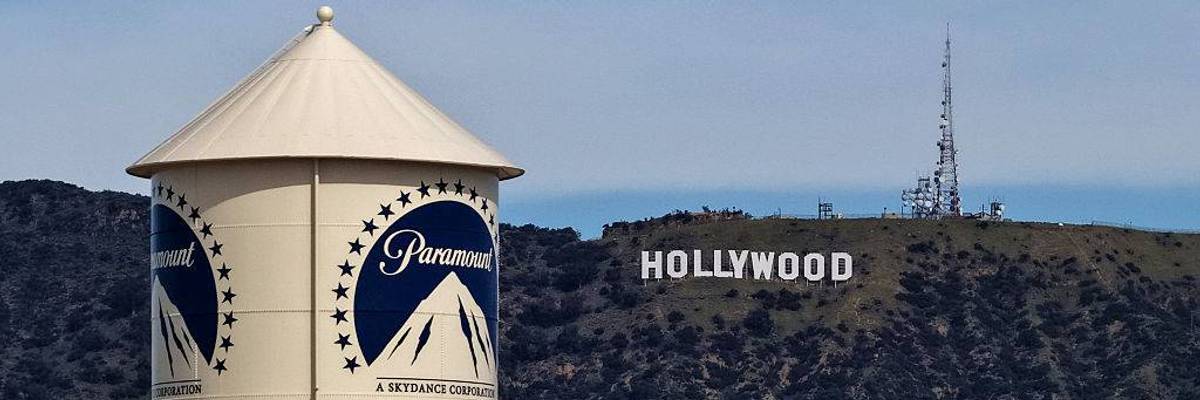
An aerial view of the Paramount logo on the water tower at Paramount Studios on February 23, 2026 in Los Angeles, California.
(Photo by Justin Sullivan/Getty Images)


Brad Reed
Aug 24, 2026
COMMON DREAMS


Top TV comedy writer Michael Schur, co-creator of hit shows such as Parks and Rec and The Good Place, is sounding the alarm about the “existential” dangers of allowing the proposed $110 billion megamerger between Paramount and Warner Bros. Discovery to go through.

In an op-ed published Monday in The Hollywood Reporter, Schur outlined the downsides of megamergers between major Hollywood studios, which he described as “bad for everyone except those at the very top” and “another potential broadsword blow to an already wounded industry, one that’s been gouged and squeezed and strangled by high-level corporate greed.”

Focusing on the challenges faced by writers, Schur wrote that people in his profession “felt the walls closing in” when they first heard news of Paramount’s proposed purchase of Warner Bros.

“We know what this merger will mean,” wrote Schur, “one less buyer for our work, less demand for writing services, less leverage to negotiate deal terms that recognize our value, less creative latitude... The impact will be concrete, measurable, and serious.”

Schur explained that writers and other workers in the entertainment industry personally understand how corporate consolidation affects their livelihoods.

“We don’t have to theorize any of these outcomes,” Schur wrote. “Disney’s acquisition of 21st Century Fox in 2019 put them all on full display. After the merger, Fox’s television development operation was folded into Disney’s. Their studio’s priorities continued, Fox’s did not. Writers who had built relationships at Fox found themselves adrift... More than 4,000 Fox employees lost their jobs.”

Schur concluded by encouraging opponents to the merger to “fight tooth and nail to sustain what is left of our struggling—but still breathing—creative industry” before it gets fully monopolized.

The combination of Paramount and Warner Bros. has long been controversial because it would put control of CBS, CNN, HBO, TikTok, and other major media properties all under the control of David Ellison, the son of billionaire Larry Ellison, a major donor to President Donald Trump.

The merger has been placed on hold amid multiple lawsuits seeking to block it, including one filed by 12 Democratic state attorneys general.

The New York Times reported on Monday that California Attorney General Rob Bonta, whose office has been leading the state AGs’ antitrust complaint against the deal, called off a meeting that had been scheduled with Paramount executives to discuss a potential settlement.

In a statement, Bonta accused Paramount of leaking misleading information about settlement discussions between the parties, which he said demonstrated “a lack of good faith.”

“As soon as Paramount stops playing games and engages sincerely,” Bonta said, “my office is happy to meet again.”
Trump's trade threats spiral out of control as Canada slaps down 100 pages of tariffs

David Edwards
August 25, 2026 
RAW STORY


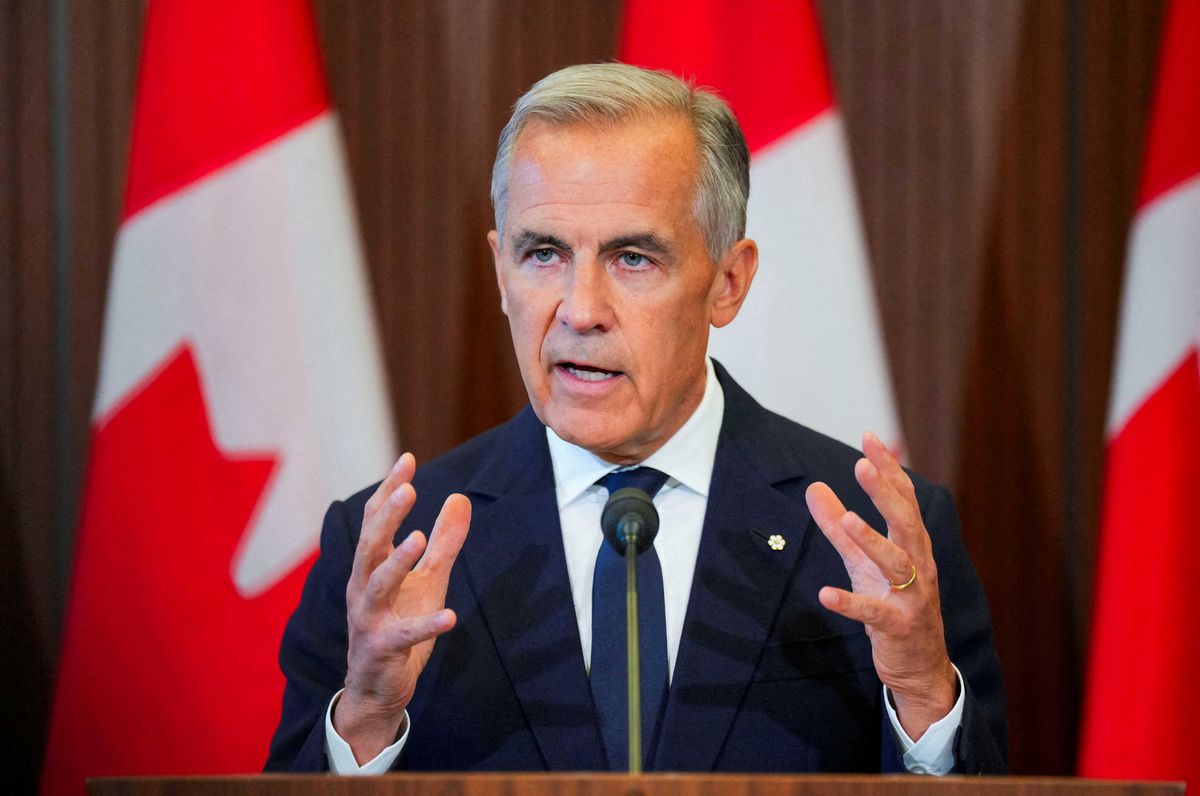
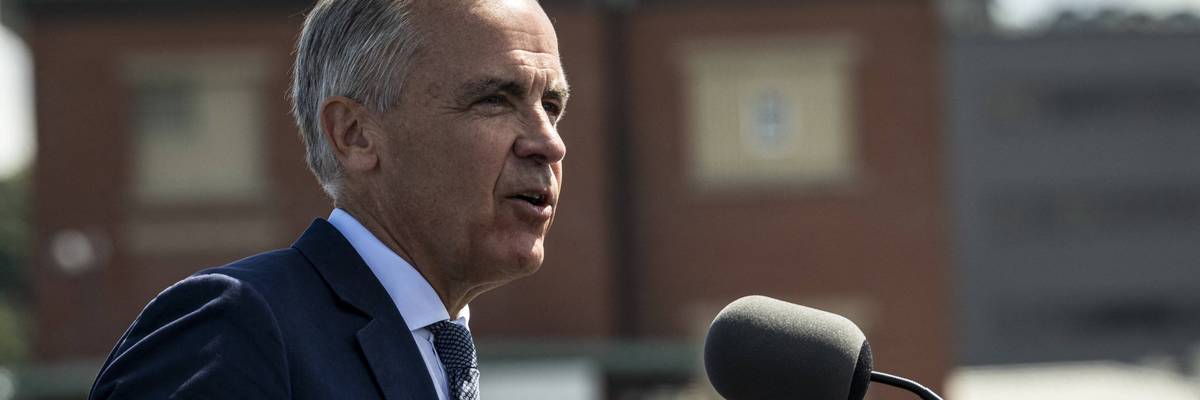
FILE PHOTO: Canada’s Prime Minister Mark Carney speaks with the news media after he suspended trade negotiations with the United States, in Ottawa, Ontario, Canada August 22, 2026. REUTERS/Chris Tanouye/File Photo

President Donald Trump spent Tuesday morning threatening Canada online while Ottawa put a nearly 100-page tariff schedule on the calendar he cannot stop.

Four Canadian cabinet ministers announced the retaliatory tariffs in Ottawa on Tuesday, according to the New York Times. The duties cover about 700 American products and take effect Sept. 8.

The rates range from 15 to 50 percent, matching the level Washington set for each product, according to CNBC. Prime Minister Mark Carney had promised a "dollar for dollar" response after talks collapsed Friday night, the Times reported.

The schedule runs nearly 100 pages, Global News senior journalist Mackenzie Gray reported on X. It taxes fish, stoves, carpets, men's suits and fishing rods.

"Our preference was to find a deal that benefits both countries," Canadian trade minister Dominic LeBlanc told CNBC's "Squawk Box" on Tuesday. "We still believe that's possible. But in the meantime, we're not waiting by the phone."

Trump answered on Truth Social, where he suggested halting business with Ontario and repeatedly floated renaming Lake Ontario to "Lake America," CNBC reported.

"I deal with many countries, and Canada is easily the most difficult and unreasonable," Trump wrote in one post.

Trump warned Monday that he would double tariffs on Canadian cars and auto parts to 50 percent, but not until Jan. 1, 2027, Global News reported. Canada's deadline is two weeks away.

Canada doubled its own tariffs on American steel and aluminum to 50 percent, the Times reported. Ottawa added $7.5 billion for businesses and workers harmed by the trade war, according to CNBC.

Senior Canadian officials said the list was not built to punish particular American businesses or states, but to help Canadian industry, Gray reported.

Trump has also complained that the United States runs a trade deficit with Canada. That gap exists largely because Americans buy Canadian crude oil, CNBC reported.

His tariffs have excluded oil, natural gas, potash and many minerals, according to the Times.

Polls taken before the tariffs took effect Saturday showed broad Canadian support for retaliation, the Times noted. Ontario Premier Doug Ford has pressed for it, while Alberta Premier Danielle Smith has urged restraint.

Canada's economy is about one-twelfth the size of the American economy, according to the Times, and economists say the resulting price increases will hurt Canadian companies, too.


‘Canada Must Respond’: Ottawa Slaps Retaliatory Tariffs on US Goods After Trump Trade War Escalation

Canadian Prime Minister Mark Carney said his nation is not “going to accept” an “attitude at the negotiation table that Canada is a subsidiary of the United States.”


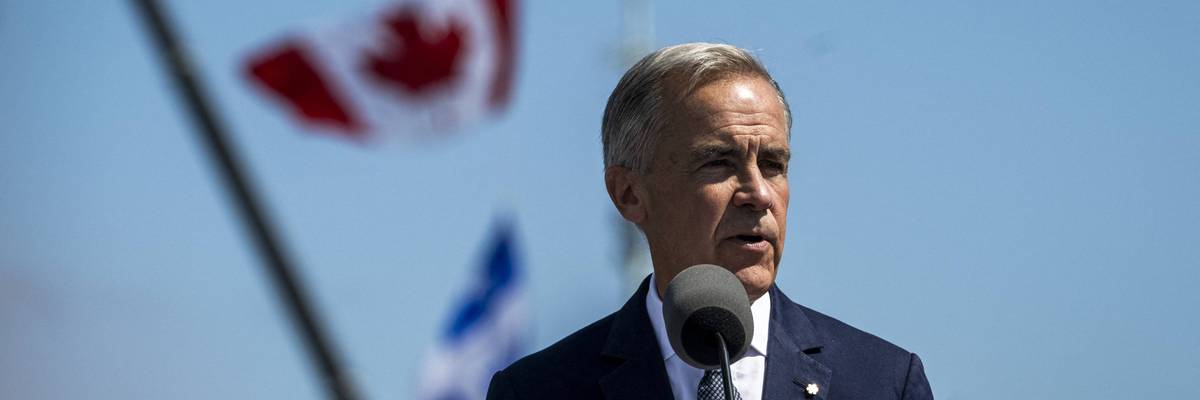
Canadian Prime Minister Mark Carney speaks about the trade dispute with the United States at the Davie Shipyard in Levis, Quebec, Canada on August 24, 2026.
(Photo by Andrej Ivanov/AFP via Getty Images)

Brett Wilkins
Aug 25, 2026
COMMON DREAMS


Canada announced Tuesday that it will impose roughly $20 billion in retaliatory tariffs on American imports in response to President Donald Trump’s 50% tariff on many of its goods after bilateral negotiations collapsed amid what Ottawa said were last-minute concessions that damaged the Canadian economy and intruded on its sovereignty.

The government of center-left Canadian Prime Minister Mark Carney said its countermeasures will cover roughly C$27.6 billion ($20 billion) worth of American products, with tariffs ranging from 15% to 50% on hundreds of categories including steel, aluminum, appliances, clothing, seafood, electronics, furniture, and dairy. The measures are scheduled to take effect September 8. Ottawa also unveiled billions of dollars in assistance for workers and businesses expected to be hurt by the conflict.


‘It’s War’: Trump’s 50% Tariffs Take Hold After US-Canada Trade Talks Collapse


“Canada must respond, and today we are, in a proportionate, targeted, and strategic way,” Canadian Finance Minister François-Philippe Champagne said during a press conference in Ottawa. “Today I’m announcing that Canada will match the United States tariffs dollar for dollar, rate for rate.”

“Canada’s counter-tariffs are designed primarily to provide protection for Canadian industry impacted by US tariffs and allow them to compete against US products in the Canadian market,” he added. “It’s all about fairness, it’s all about a level playing field, it’s all about supporting Canadian workers and Canadian businesses.”

It’s also apparently about political calculation ahead of November’s midterm elections, in which the congressional balance of power—and therefore Trump’s ability to pursue his agenda—is at stake.

The administration’s trade war with Canada is hitting industries concentrated in states where Republicans are fighting to defend vulnerable US Senate seats, including Maine’s lobster industry and Michigan’s auto sector, while Ohio and other Midwestern states face exposure via cross-border manufacturing and supply chains.


On Monday, Trump told Canadian leaders to “fall in line” or face “far WORSE” consequences than the new tariffs.

Carney retorted that Canadians are not “going to accept” an “attitude at the negotiation table that Canada is a subsidiary of the United States.”

Canadian anger toward Trump has surged as the US president has repeatedly threatened Canada’s sovereignty, including his frequent talk of making Canada the “51st state.” Canadian political leaders and labor organizations have largely rallied behind a tougher response, while a growing grassroots boycott of US products has become a symbol of national resistance.

“Canadians understand that maintaining our sovereignty and independence will entail consequences and sacrifices,” Calgary-based commentator Jen Gerson wrote Tuesday in The Guardian. “We did not bring this trade war on ourselves; we have merely refused to comply in advance to the unreasonable demands of a bad-faith actor. We will be punished for it. We have accepted this.”

“If nothing else, let the [United States’] retaliation be a warning to the rest of the Western alliance,” Gerson added. “Run, run. Protect yourselves. Move faster.”

Trump—the self-proclaimed “peace president” who has attacked more countries than any other US leader in modern history—has menaced a string of allies. He’s threatened to retake the Panama Canal, launch armed attacks on Colombia and Mexico, “bomb the shit” out of Oman, and take over Greenland.

Longtime US allies have taken notice—and action. Just as Russia’s invasion of Ukraine spooked Sweden and Finland into the North Atlantic Treaty Organization, Trump’s erratic aggression has pushed other countries in directions once thought highly unlikely. European Union membership for Iceland, long a politically moribund proposition, is now politically plausible amid developments including Trump’s Arctic saber-rattling. US tariff pressure on India is even incentivizing India to seek closer economic ties with China, a traditional adversary.

Trump’s increasingly aggressive and condescending rhetoric has left many Canadians feeling like their relationship with their southern neighbor has irreparably changed.

“America has changed, and... we will not return to our old relationship,” Carney said after Trump announced the 50% tariffs over the weekend.

“You’re at war when you get attacked,” the prime minister also said. “We got attacked.”

Such rhetoric was once the realm of comedy, like the 1995 satirical film Canadian Bacon, directed by Michael Moore and starring John Candy and Dan Aykroyd, about a struggling US president who manufactures a shooting war with Canada, invasion and all, in hopes of rallying Americans around a foreign enemy.

The premise was absurd because the notion of Washington deliberately provoking its peaceful northern neighbor into war seemed preposterous. Many critics have noted that under Trump, absurdity has become the new normal.

On Tuesday, Trump said he’s considering changing the name of Lake Ontario to “Lake America,” because, as one Bluesky account noted, “Trump likes to slap the name of America on everything.”


“Gulf of Mexico? Gulf of America. Strait of Hormuz? Strait of America. Lake Ontario? Lake America,” the account quipped, adding one more suggestion: “Epstein Island? America Island.”


Trump roasted as 'greatest idiot' in a lifetime after Lake Ontario threat: 'Out of ideas'

Alexander Willis
August 25, 2026 
RAW STORY

President Donald Trump floated the idea of changing the name of Lake Ontario to “Lake America” on Tuesday amid his ongoing trade feud with Canada, a pitch that was met with collective sighs by critics who spoke to their exhaustion with the chaotic Trump administration.

In a post on his social media platform Truth Social, Trump claimed that his administration was “giving serious consideration” to the name change as he did not “expect to [be] doing much business with Ontario any longer.” The idea is similar to his executive order issued in early 2025 to rename the Gulf of Mexico to the “Gulf of America,” a move that received intense scrutiny at the time.

Regarding Trump’s latest name-change idea — one that came amid Trump imposing 50% tariffs on some Canadian goods, and Canadian Prime Minister Mark Carney vowing to match said tariffs “dollar for dollar” — critics were quick to condemn it.

The Bulwark's Sam Stein quipped on X, "He's out of ideas."

Stephen Hayes, editor and CEO at The Dispatch, mocked, "It's still astonishing - ten years into the Trump era - that our president so often behaves like a 10 year-old. And that so much of our national policymaking is based on the juvenile emoting of an adult who functions like a preteen."

“We are living in the stupidest f------ times,” wrote Jason Willan, a prominent fantasy sports analyst, in a social media post on X.

Roland Ley, a former contributor for Euromaidan Press, called Trump the “greatest idiot” he had witnessed in his “lifetime.”

“Just as internationally 'Gulf of America' isn't recognised, this won't be either,” Ley wrote in a social media post on X. “Not even passed by the US Senate anyway.”

In response to Trump’s announcement, Canadian horse-racing photographer Julie Wright quipped, “Lunatic says what,” and prominent online influencer Mario Nawfal argued that Trump’s trade war was “getting silly” in a post on X to his more than 3.8 million followers.

“It would require a lot more than a President’s bad mood to change the name of a gulf or great lake!” Nawfal wrote. “Maybe a vote or something a bit more thought out.”


'Sounds like me': Trump confesses to CNN that he torpedoed trade talks with Canada

Robert Davis
August 25, 2026 
RAW STORY


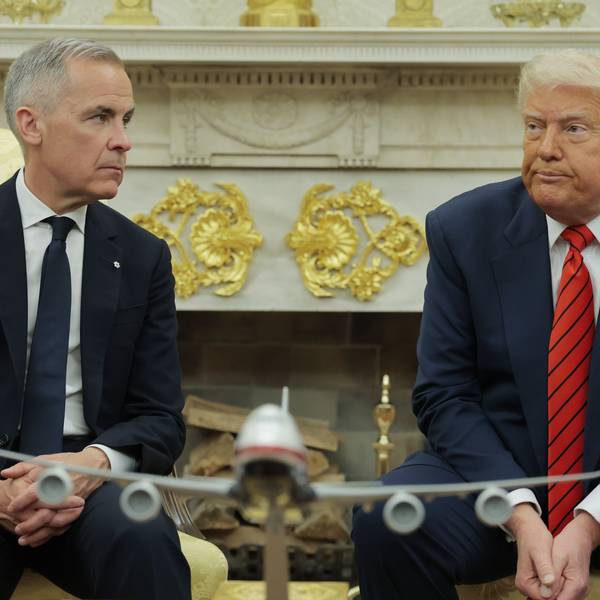
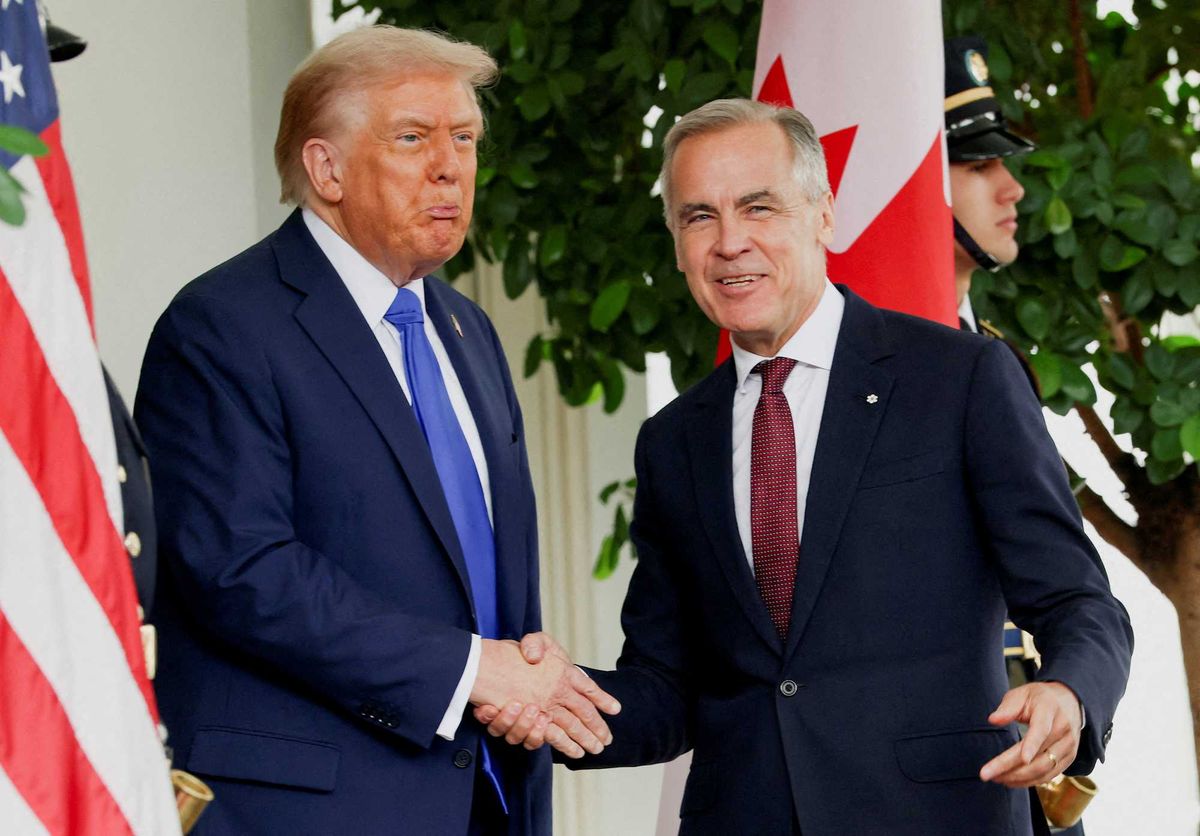
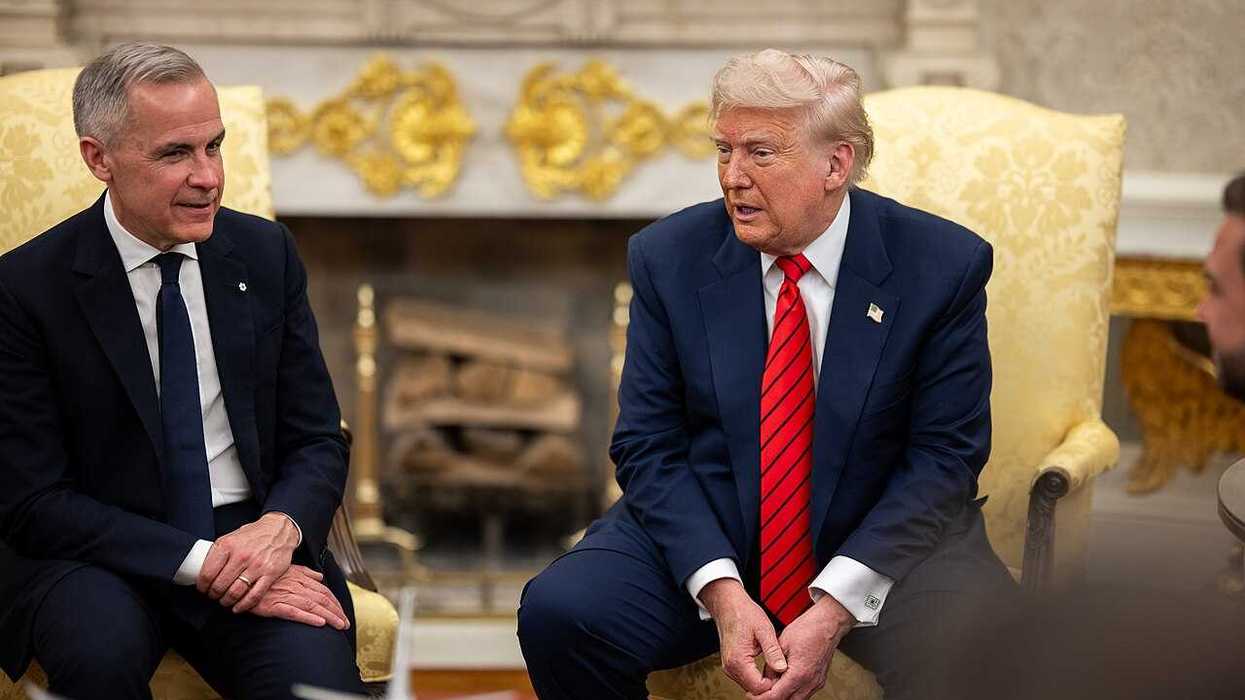
U.S. President Donald Trump welcomes Canada's Prime Minister Mark Carney at the White House in Washington, D.C., U.S., October 7, 2025. REUTERS/Evelyn Hockstein/File Photo

President Donald Trump admitted on Tuesday that he caused the intensifying trade war between the U.S. and Canada after he added conditions to the talks at the 11th hour.

Trump spoke briefly with CNN's Jim Sciutto after Canada announced retaliatory tariffs on a bevy of U.S. goods. During the call, Sciutto asked about Canadian officials' assertion that late-stage demands were inserted into the negotiations, and the president's response was eerily surprising.

Sciutto shared a snippet of the conversation on X.

“That sounds like me,” Trump told the reporter.

“So you don't deny it?” Sciutto responded.

The president replied, “No, no, I don't deny anything. So no, they have to pay a fair amount. And if they don't pay a fair amount, we won't make a deal. That's fine.“

The exchange stunned some of the president's critics.

"At least he admitted it. LOL. Clown show operation," Dean Blundell, a Canadian comedian, posted on X.

"How Donald Trump is sending America's manufacturing economy to the brink of the abyss," Grant Stern, executive editor for Occupy Democrats, posted on X.


CNN's Daniel Dale smacks Trump with a stinging fact-check after latest Canada flop

Erik De La Garza
August 25, 2026
RAW STORY


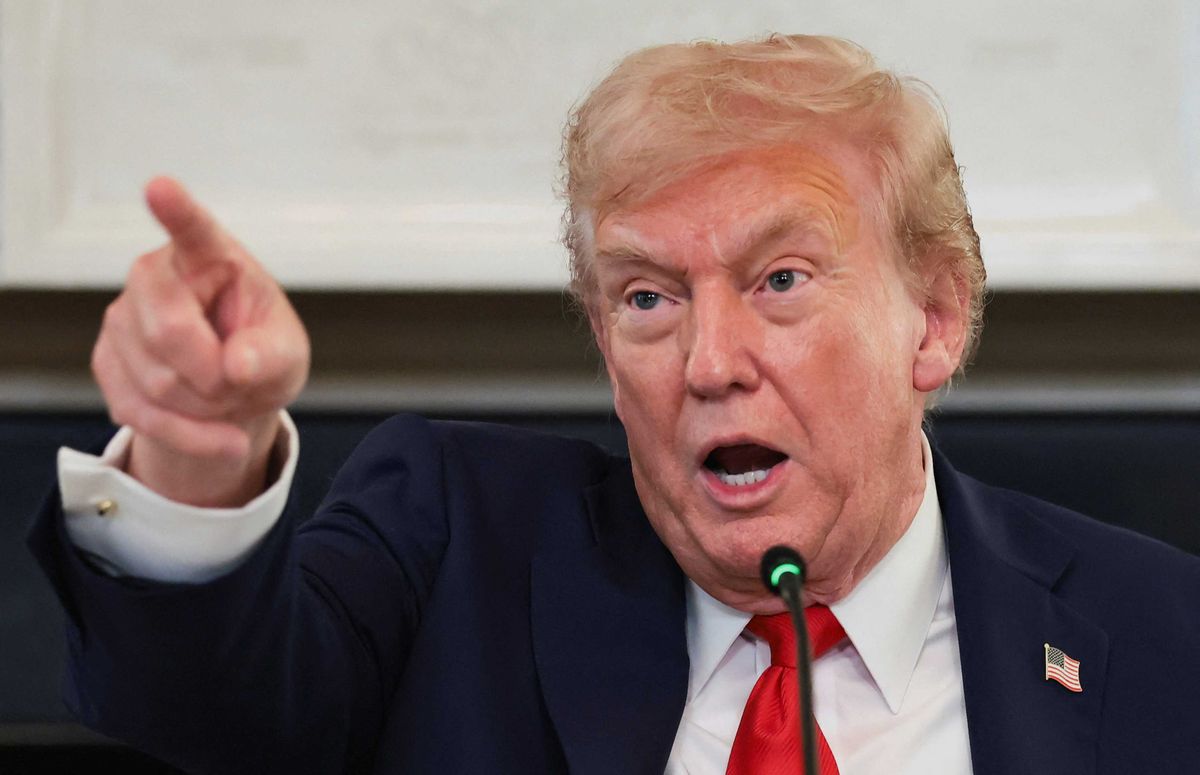
U.S. President Donald Trump points a finger as he speaks during a roundtable on antifa, an anti-fascist movement he designated a domestic "terrorist organization" via executive order on September 22, at the White House in Washington, D.C., U.S., October 8, 2025. REUTERS/Evelyn Hockstein

President Donald Trump repeated another series of false claims about Canada as his escalating trade war with the United States’ northern neighbor erupted again this week, according to a brutal CNN fact-check.

CNN’s Daniel Dale examined two social media posts Trump published Monday, beginning with the president’s claim that “Canada’s Unemployment Rate is now at 10%, and rapidly rising.”

“This is wrong on both counts,” Dale wrote Tuesday.

“Canada’s unemployment rate declined to 6.4% in July. That was the third consecutive month it had gone down,” Dale told readers. “It was also a two-year low.”

The rate would be approximately one percentage point lower if Canada calculated unemployment using the same methodology as the United States, Dale noted. The U.S. unemployment rate was 4.1% in July.

Trump’s claim that Canada conducts “95% of their business with the U.S” also came under the microscope.

“There’s no doubt that the Canadian economy is heavily reliant on the US, but there’s no apparent basis for Trump’s '95%' figure,” Dale found. According to his report, approximately 72% of Canadian merchandise exports went to the United States in 2025, down from roughly 76% the previous year and the lowest percentage since the early 1980s.

“And the figure fell below 70% in the first half of 2026,” Dale added.

While Dale acknowledged that the United States is less dependent on Canada than Canada is on the U.S., he stressed that Canada remains a critical trading partner, particularly for northern border states.

Trump just made toilet paper a lot more expensive


President Donald Trump meets with Canadian Prime Minister Mark Carney, Tuesday, May 6, 2025, in the Oval Office. (Official White House Photo by Daniel Torok/Flickr)

August 26, 2026 
ALTERNET

After U.S. President Donald Trump threatened Canada with new 50 percent tariffs, Canada responded with retaliatory tariffs of their own on Tuesday. Tariffs on some Canadian goods imported into the United States, the Associated Press (AP) reports, could be as high as 50 percent. And according to The Guardian, Americans could face higher prices for paper products like toilet paper, facial tissues and paper towels as a result.

"Using the bathroom or having a cry is about to become more expensive for North Americans as the U.S. and Canada enter a full-fledged trade war that threatens to flush away decades of peaceful trading between the two nations," journalist Lauren Aratani reports in The Guardian. "After trade negotiations broke down between the two countries last weekend, Mark Carney, the Canadian prime minister, vowed to match U.S. tariffs 'dollar for dollar' and unveiled a list of nearly 900 American goods that will face 25 percent to 50 percent tariffs starting on 8 September."

Many economists, both liberal and conservative, have been warning that a trade war with Canada could cost U.S. homeowners a fortune — as many building and construction materials are imported into the U.S. from Canada. And according to a Canadian government website, "Canada's counter tariffs will apply to products covering $27.6 billion in imports from the U.S. and will focus on sectors such as steel, dairy, appliances, agricultural equipment, pulp and paper, and electronics, that are most impacted by U.S. tariffs."

Aratani emphasizes that "paper products are among the hardest-hit sectors, with Canada threatening to put tariffs of between 25 percent and 50 percent on 'toilet paper or face tissue stock' from 8 September in retaliation for a 50 percent hike from Washington DC."

"Though American toilet paper and tissues are often made domestically," Aratani explains, "they heavily rely on lumber-rich Canada for raw materials. Procter & Gamble, the owner of Charmin toilet paper, said last year that it would have to increase prices amid tariffs that were in place at the time. The U.S. imported $328m worth of toilet paper from Canada in 2024, according to the World Bank, making it by far the largest exporter of the product to the U.S. Retailers including Costco source much of their paper products from the country."

The Guardian reporter continues, "The U.S. accounts for more than 20 percent of global tissue consumption despite having only 4 percent of the world's population. The average American uses 141 rolls of toilet paper per year, making them No. 1 for No. 2s globally, just ahead of Germans, each using an average of 134 rolls annually."


‘The Red States, We’re Going to Hit Hard’: Canadian Politicians Vow to Make MAGA Pay for Trump’s Trade War

“We can put massive pain on the US,” said Ontario Premier Doug Ford.


Canadian Prime Minister Mark Carney speaks about the trade dispute with the United States at the Davie Shipyard in Levis, Quebec, Canada on August 24, 2026.
(Photo by Andrej Ivanov/AFP via Getty Images)

Brad Reed
Aug 24, 2026
COMMON DREAMS

Politicians from Canada’s two biggest political parties vowed on Monday to hit back hard against US President Donald Trump’s trade war against their country.

Trade negotiations between the two countries collapsed last week after Trump reportedly sought to restrict Canada from striking trade deals with other nations, while also pressuring the country to scrap requirements aimed at preserving the use of the French language.

Speaking to reporters on Monday, Canadian Prime Minister Mark Carney warned that Trump’s aggression would come back to hurt US workers.

“It’s not a surprise that the US would take some form of reprisal to our response to their unjustified tariffs,” said Carney, a member of the center-left Liberal Party. “But what message does that send to the workers in Michigan and Ohio and Kentucky and Alabama who rely on Canadian demand? We’re their largest customer for automobiles, more than the European Union, Japan, Korea.”


Carney also said there was an “attitude at the negotiating table” from US officials that “Canada is a subsidiary of the United States,” which is “not something we’re going to accept.”

Ontario Premier Doug Ford, a member of the rival center-right Progressive Conservative Party, delivered a more strident rebuke to Trump, vowing that Canada’s response would deliver a hit to the president’s voters.

“The red states, we’re going to hit hard,” said Ford.

The Ontario premier then outlined all the ways his country can make life more painful for US consumers so long as Trump keeps trying to undermine Canadian sovereignty.

“If it gets really, really bad, I say everything’s on the table,” Ford said. “We need everyone to be on Team Canada and throw everything and the kitchen sink at them, no matter if it’s electricity, if it’s fuel, again, if it’s potash, if it’s uranium. We need to have everything on the table... we can put massive pain on the US. President Trump underestimates us. And that’s the biggest mistake.”


Trump lashed out at both Carney and Ford in a Monday morning Truth Social post.

“The USA will always be far bigger, richer, and stronger than Canada,” Trump wrote. “Without the United States, Canada couldn’t survive—it’s where they get all of their money and, because of their current bad leadership, primarily Governor Carney, and his Flunky, Ford, they will not be allowed to keep taking advantage of the United States—their key to survival.”

Trump EPA Urged to Withdraw Rule to Let Data Centers Obtain Pollution Permits in Secret

“The result will be some of the dirtiest power sources rushed into neighborhoods without giving communities any opportunity to weigh in,” said one critic.


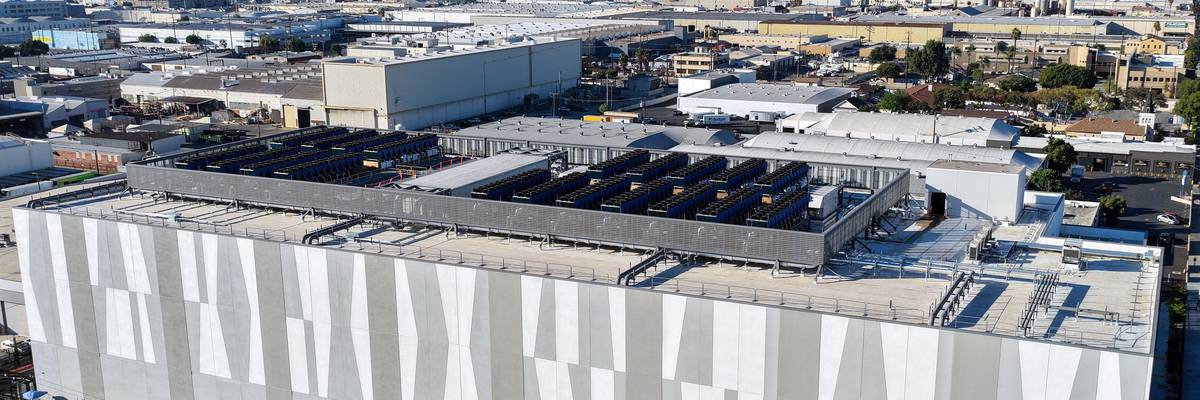
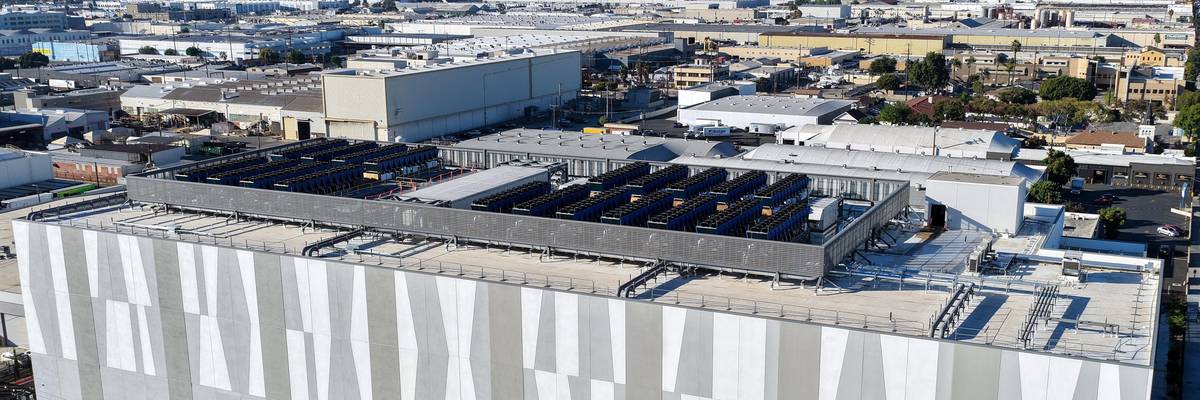
An aerial view of a 33 megawatt data center with closed-loop cooling system on October 20, 2025 in Vernon, California.
(Photo by Mario Tama/Getty Images)

Brad Reed
Aug 25, 2026
COMMON DREAMS

Critics are warning that President Donald Trump’s Environmental Protection Agency is pushing through a rule that would let artificial intelligence data center builders off the hook for making public disclosures ahead of construction.

The rule, which first came to light during an EPA meeting last month, would delegate power to states over public participation in the permitting process for specific sources of air pollution, such as diesel generators that are frequently used by data centers.

According to a July report in Mother Jones, the proposed rule “could have major consequences for how ordinary people are given notice about new or expanded polluting facilities coming into their neighborhoods.”

Late last week, a coalition of more than 200 environmental groups filed objections to the rule change, which they warned would make public notice for certain polluting projects entirely optional, depending on the whims of state and local governments.

Dori Jaffe, managing attorney at Sierra Club, said on Monday that the rule change would “help data center developers evade more health standards and do so secretly.”

“We demand that the EPA rescind this attempt to further cut the public out of decisions made in their own backyards,” said Jaffe. “We deserve to have a say about developments in our community that would impact our air quality and the health of our families.”

Sheena Patel, attorney for the Natural Resources Defense Council, noted that the administration was attempting to limit public input into polluting projects at a time when opposition to AI data center construction has hit a record high among US voters.

If the rule change goes through, Patel added, “the result will be some of the dirtiest power sources rushed into neighborhoods without giving communities any opportunity to weigh in.”

Brandon Jones-Cobb, senior attorney at the Center for Biological Diversity, said it was “beyond cruel” that the EPA seems determined to “silence front-line communities who bear the brunt of unhealthy air” generated by polluting industries.

“The agency has already turned its back on science, cut enforcement against industrial polluters and eliminated life-saving air pollution measures,” said Jones-Cobb. “Now it wants to shut the public out of decisions to build or expand facilities that expose communities to dangerous air pollution, including data centers. This EPA is so out of touch with Americans and only focuses on making polluters happy.”

In an interview with The Guardian published Tuesday, Joe Goffman, former assistant administrator for the EPA’s office of air and radiation, said the rule change would dismantle what he described as an “ironclad promise” made in the 1963 Clean Air Act to give ordinary citizens voices in where, how, and whether potential centers of air pollution are built.

“The administration is basically saying: ‘You all may have thought this was an ironclad promise, but it no longer is,’” Goffman emphasized.


Trump Regulators Issue Key Permit for Proposed $100 Million Underwater Data Center Off Maine Coast

“No one really wants it here,” said one local resident who helped gather signatures in support of blocking the data center.


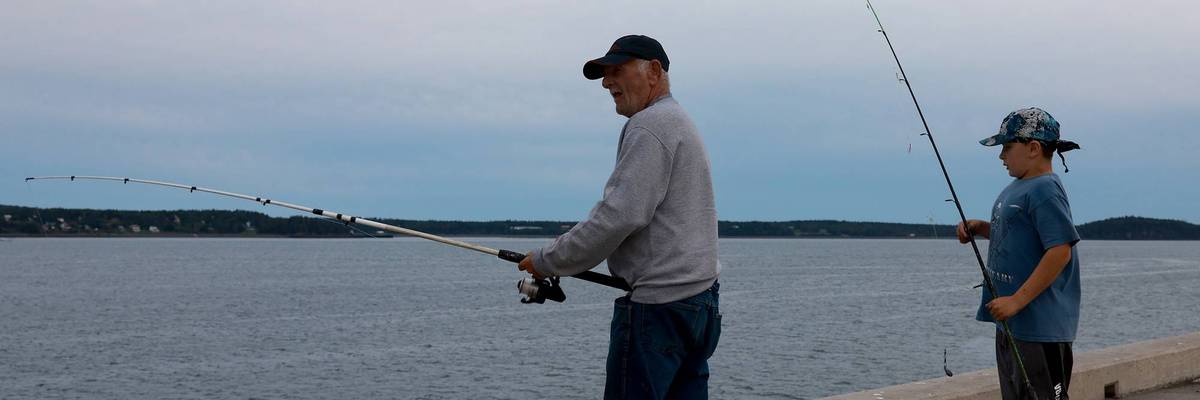
Skip Johnson and his grandson, Parker Jarrett, fish for mackerel on September 15, 2023 in Eastport, Maine, which is being considered as the site of an underwater data center—alarming locals and the fishing industry.
(Photo by Joe Raedle/Getty Images)


Julia Conley
Aug 24, 2026
COMMON DREAMS

Residents of Eastport, Maine are set to attend a public hearing Monday evening on two proposed ordinances to halt the construction of large artificial intelligence data centers, with proponents of the proposals hoping the coastal city’s planning board will be able to prevent the build-out of a 27-acre, $100 million facility that a Massachusetts-based developer aims to build underwater—right near Eastport’s working waterfront.

The public hearing is being held days after President Donald Trump’s Federal Energy Regulatory Commission (FERC) accepted a preliminary permit for DeepGreen Holdings, LLC, the firm managed by luxury real estate development Louis Wolfson, which aims to build the facility that would be powered by tidal energy.

The 48-month permit does not allow DeepGreen to start construction, but gives approval for engineering and environmental studies needed to secure funding and officially begin the project.

DeepGreen would use ocean water to cool the heat created by the facility’s massive computer servers. The company has also proposed using ocean tides to power turbines that would generate up to 5 megawatts of electricity.

The approval came weeks after FERC asked DeepGreen to amend its application, lowering its energy output from 51 megawatts to 15 megawatts and creating scalable project phases.

The community has mobilized against the proposed data center since DeepGreen applied for the permit in February, with the Eastport City Council voting unanimously earlier this month in support of a 180-day moratorium halting all progress on the center.

The local policymakers said the moratorium would give the city time to consult with the planning board about the two citizen-led initiatives to pass new ordinances—one that would permanently ban data centers in Eastport, which the city’s legal counsel has said could be put to voters with a minor formatting change to the question, and another that would require voter approval for any new industrial or commercial development larger than 10,000 square feet in the ocean or 25,000 square feet on land.

The second ordinance was found by the legal counsel to be “unenforceable and unlawful,” as the town is not permitted to regulate elections via ordinance.

But residents, officials with the Sipayik Passamaquoddy community, and local groups like Eastport Coalition for Healthy Oceans are all pushing to stop DeepGreen and the development it incorporated a month before applying for the permit, DeepGreen Western Passage SPV, or special purpose vehicle.

DeepGreen has also applied for a permit to build an underwater data center in Cook Inlet, Alaska.

Opponents say thermal pollution from the project would be destructive to the habitat of lobsters off the coast of Eastport, which are crucial to the city’s fishing economy and working waterfront. They have also raised concerns that a data center off the coast would harm tourism as well as whales and other marine wildlife.

One local opponent, commercial fisherman and renewable energy developer Nathan Curtis, said DeepGreen carries “unmitigated risks of thermal pollution.”

The proposed data center would “require continuous ocean cooling, converting Western Passage into an unmetered industrial heat sink,” wrote Curtis in a letter to FERC before the commission issued the permit. “Continuous thermal discharge into the water column threatens local water temperatures, localized current dynamics, and critical benthic habitats that support Eastport’s commercial fisheries and working waterfront.”

Wolfson denied that the data center, which was approved for an energy output up to 15 megawatts, would harm the coastal region of Eastport.

“As a property manager and developer who has operated within coastal dynamics for 40 years, I have too much respect for working waterfronts to introduce a project that threatens them,” said Wolfson in a letter to Monitor Local.

But Eastport resident Suellen Hendrix, who was part of a local effort to gather signatures in support for the proposed ordinances, told Maine Public that locals appear unconvinced by any assurances from the data center developer.

“Everyone was behind ‘we don’t want this data center,’” Hendrix told Maine Public. “Nobody was questioning, ‘Well, we need the jobs.’ Nobody was questioning why it should be here because no one really wants it here.”


As Common Dreams reported last week, as the Trump administration and AI executives have aggressively pushed for the expansion of data centers, public support has collapsed, with 75% of respondents to a poll by Embold Research saying they would not support a data center near where they live.

“This has happened nationwide, folks, it’s nothing new,” Dwayne Tomah, a historian with the Sipayik Passamaquoddy community adjacent to Eastport, told a crowd of data center opponents at a recent rally on the town’s waterfront. “We’ve got to resist.”


If Big Tech Needs a New Power Plant, It Should Pay for the Whole Damn Thing

Pennsylvania’s new data-center rules get one principle exactly right: Innovation doesn’t include sending your infrastructure bill to everyone else.


An aerial view of a 33 megawatt data center with a closed-loop cooling system is shown on October 20, 2025 in Vernon, California.
(Photo by Mario Tama/Getty Images)


Joshua W.J. Brown
Aug 25, 2026
Common Dreams

There is a remarkably simple test for whether the AI boom is actually as economically transformative as its boosters say it is: Make the companies building it pay their own damn electricity bill.

Not just the meter at the server warehouse. The whole bill.

If a hyperscale data center requires a new power plant, transmission line, substation, distribution upgrade, water system, or grid-reliability backstop, put that cost on the project that caused it. If the economics still work, excellent. Build it. If they don’t, then the public has just learned something extremely important about the business model.

Pennsylvania moved sharply in that direction on August 18. Gov. Josh Shapiro’s new executive order requires data-center developers seeking state permits to meet Responsible Infrastructure Development standards. Among them: Developers must cover the cost of new generation, transmission, distribution, and related infrastructure needed for their projects without shifting those costs to households and businesses.

If the AI boom is real, it can survive a full-cost test.

The order also requires local approval, ends the use of nondisclosure agreements for data-center projects, demands energy and water reporting, and ties state tax benefits to compliance. Pennsylvania’s special counsel for energy affordability is also supposed to work with utility regulators so data centers, rather than ordinary customers, absorb the cost of reliability measures created by their demand.

This shouldn’t be treated as an anti-AI policy. It’s a pro-accounting policy.

The AI industry has been allowed to narrate electricity as though it were weather: Demand is “surging,” capacity is “tight,” the grid is “strained,” and somehow billions of dollars of wires, turbines, transformers, and land just need to appear around the technology.

But demand isn’t weather. Somebody made a decision.

And there is another reason to force the accounting now: A lot of the supposed demand isn’t load yet. It’s proposals. Pennsylvania says more than 100 data-center projects have approached the state, while the governor says only a handful currently look viable enough to have the necessary permits. Across the country, regulators have worried about speculative projects showing up in multiple interconnection queues and inflating forecasts before anybody has proved the customer, financing, or power plan is real.

That matters because utilities build decades-long assets against forecasts. If a speculative 500-megawatt project gets counted as inevitable, everybody can end up paying for infrastructure long after the spreadsheet that justified it has disappeared.

So add another rule: Prove you’re real before the public builds around you. Put down financial security. Identify the end user. Show the power source. Accept a minimum bill that covers infrastructure reserved for you. And if you walk away, you don’t get to leave a transformer-shaped hole in everybody else’s rates.

The International Energy Agency (IEA) reported in April that electricity consumption by data centers jumped 17% in 2025, while electricity use at AI-focused facilities rose even faster. Its 2026 outlook still sees total data-center consumption roughly doubling by 2030 and AI-focused consumption tripling.

In the United States, data centers accounted for roughly half of total electricity-demand growth in 2025, according to the IEA. The Department of Energy had already estimated that data centers consumed about 4.4% of US electricity in 2023 and could reach 6.7-12% by 2028.

There is nothing inherently illegitimate about using that much power. Aluminum smelters use enormous amounts of electricity. Steel mills use enormous amounts of electricity. Electrifying transportation and heating will use enormous amounts of electricity too. A serious industrial society needs to know how to build power.

The illegitimate part begins when one customer’s expansion becomes everyone else’s compulsory investment.

That risk isn’t theoretical. In Virginia, the world’s largest data-center market, Reuters reported this month that Dominion’s fuel costs have risen nearly 90% in five years as data-center growth leaves the utility more exposed to expensive wholesale electricity. Across PJM, which serves 67 million people, the grid operator is now proposing rules that would put some new data centers first in line for curtailment during shortages unless they bring adequate power with them.

Good.

If an AI company wants the upside of scale, it can own the downside of scale too.

That means at least five things.

Make large-load customers pay for the incremental grid infrastructure they cause. Require financial security so households aren’t stuck with stranded assets if a project disappears. Make large-load forecasts public enough to detect speculative projects being counted multiple times. Give communities access to energy, water, and ownership information before approvals. And establish emergency curtailment rules before the emergency arrives.

This is what mature industrial policy looks like. It doesn’t worship growth, and it doesn’t panic about growth. It prices the actual machine.

The alternative is a familiar political trick: Call the upside private innovation and the downside public infrastructure.

No.

If the AI boom is real, it can survive a full-cost test.

If a company needs a new power plant, let it pay for the whole damn thing.


Our work is licensed under Creative Commons (CC BY-NC-ND 3.0). Feel free to republish and share widely.


Joshua W.J. Brown
Joshua W.J. Brown is a Canadian writer, filmmaker, and systems builder whose work examines infrastructure, AI, political economy, and culture.
Full Bio >
WAIT, WHAT?!

Bessent Suggests Economic Warfare Against Iran Could ‘Blow Up the Global Financial System’

“Operation Economic Outcast will not only fail,” warned one expert, “but the economic noose that actually tightens may end up being the one wrapped around our neck.”


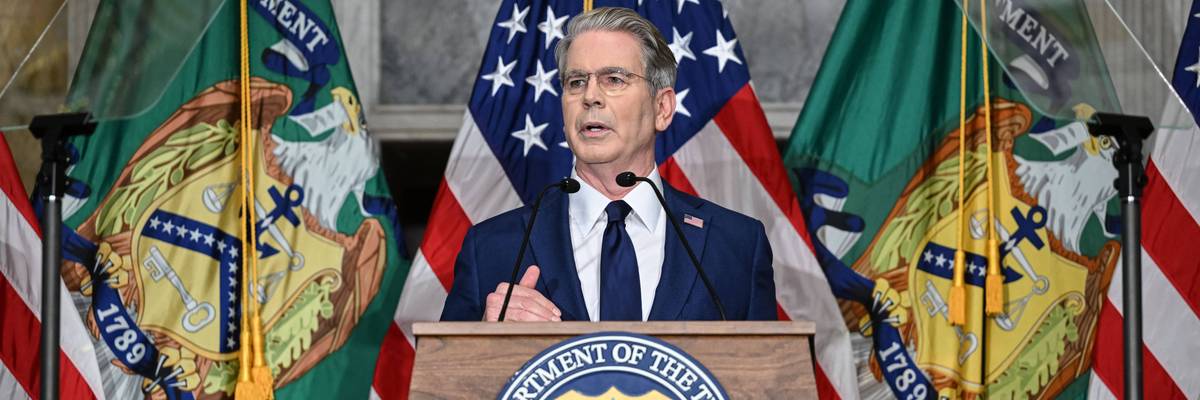
US Treasury Secretary Scott Bessent speaks during a press conference at the Cash Room of the Treasury Department in Washington, DC on August 24, 2026, as he announces a new set of sanctions against Iran.
(Photo by Mehmet Eser/Anadolu via Getty Images)


Brett Wilkins
Aug 24, 2026
COMMON DREAMS

With the United States unable to militarily defeat Iran in President Donald Trump’s illegal US-Israeli war of choice, Treasury Secretary Scott Bessent on Monday escalated the administration’s economic attacks on Tehran, warning countries and companies around the world that continuing to do business with the nation could expose them to punitive sanctions.

“Let there be no ambiguity as to the position of the United States,” Bessent said during a news conference unveiling what the Trump administration is calling Operation Economic Outcast. “An economic engagement of any kind with this murderous regime will expose those responsible to the full reach of American power.”

The “economic D-Day” campaign targets five sectors—technology, gold, aviation, shipping, and digital assets—and is intended to choke off virtually every remaining source of hard currency for Iran.

Bessent warned that it is “no longer acceptable to operate in the gray spaces” of US policy. The secretary said he anticipates the announcement of sanctions against a major financial institution as soon as next week.


Asked if Chinese banks that do business with Iran would be sanctioned, Bessent replied that “no one is above the reach of US sanctions.”

While Bessent did not say which countries would likely be targeted, China, Türkiye, and the United Arab Emirates are Iran’s biggest trading partners.

The secretary was also asked why sanctions aren’t being imposed immediately.

“Well, we are giving everyone the opportunity to remedy bad behavior,” he replied. “Why would I want to blow up the global financial system?”

“We believe that it is important to level set and give people a cure period, but they should know that that will move very quickly and that we are serious,” Bessent added. “So we believe that a warning shot and a level set of expectations is appropriate, and if people do not want to meet our expectations, then we expect—and they should expect—that they will leave the dollar system.”

Iranian officials largely scoffed at Bessent’s “economic D-Day” threat. Deputy Iranian Foreign Minister Kazem Gharibabadi asked on social media, “Is this a victory or an admission of America’s failure!?”

“You say Iran’s military capability has been ‘dismantled,’ 100% of its military factories ‘destroyed,’ and its nuclear program ‘buried’; but for this very Iran, the ‘largest financial assault in history’ and the mobilization of ‘all US institutions and authorities’ have been necessary!” he mocked.

While Trump has said the war is “over” or nearly over dozens of times, Iran currently appears to have the upper hand, as shipping has overwhelmingly avoided the US-supported route through the Strait of Hormuz, with most vessels using a course set by Tehran or avoiding the waterway altogether.

Trump’s war on Iran is proving costly not only in Iranian lives and US taxpayer dollars, but in the increasingly strained budgets of American families. Disruptions to oil shipments through the Strait of Hormuz have pushed gasoline prices above $4 a gallon nationally—roughly a dollar more than a year ago. Trump has dismissed Americans’ concerns about high fuel prices, saying $4 is “not very high” and vowing to “never apologize” for the economic pain his actions are inflicting.

That pain doesn’t stop at the pump. More expensive gasoline and diesel ripple through the economy, raising the cost of transporting food and other goods while keeping inflation elevated.

The pain is far worse for the people of Iran. Trump administration’s escalation comes as Iran’s currency, the rial, has plunged to record lows amid an economic crisis largely caused by the war and years of preceding US-led sanctions.

However, the administration’s effort to force every country to choose between trading with Iran and maintaining access to the US-dominated financial system could have consequences far beyond Tehran.

At a Monday press conference in Beijing, Chinese Foreign Ministry spokesperson Lin Jian said that sanctions “lead to escalation” that “serves no one’s interests.”

“China calls on parties to act rationally and with restraint and avoid taking any measures that may further escalate tensions or deal a blow to global economic growth and financial stability,” he continued.

The Chinese government “will closely watch relevant developments and do what is necessary to protect our legitimate rights and interests,” Lin added.

Operation Economic Outcast drew worldwide derision.

“President Trump, the ultimate gambler in geopolitics, is poised to double down on a bad hand on Iran yet again,” National Iranian American Council policy director Ryan Costello said in a statement.

“We’ve been down the maximum pressure road with Iran many times,” he noted. “What we’ve learned is that President Trump can impose extensive economic pain on Iran, but ordinary Iranians overwhelmingly bear the cost. The ruling elite in Iran remains largely insulated, while Tehran has repeatedly refused to capitulate to Washington’s demands.”

“Trump’s gamble is that this time, amid the destruction of war, and with the reinforcement of a blockade, time is on his side and ultimately Iran will be forced to concede defeat,” Costello added. “President Trump has proven unable and unwilling to stop his gambling on Iran that risks further undermining US and regional security and the global economy.”

Sina Toossi, a senior nonresident fellow at the Center for International Policy, said on social media that Operation Economic Outcast “is as much psychological warfare as economic warfare: Project Iran’s isolation as inevitable, convince markets Hormuz is being overcome, and amplify economic anxiety inside Iran.”

“But the bravado masks a basic problem,” he asserted. “The military option failed to compel Tehran, Iran still possesses substantial escalation dominance over the Arab Persian Gulf states, and ‘severing every economic lifeline’ requires countries like China to enforce a US strategy they openly reject.”

Washington “is effectively betting it can achieve through intensified economic strangulation what six months of war could not,” Toossi added. “And it is demanding unprecedented international compliance at a moment when US relations with much of the world are becoming much more coercive and transactional. The capacity to hurt Iran is clear. The path from pain to capitulation or collapse is not.”

Alan Eyre, a former State Department Iran specialist and current Middle East Institute distinguished fellow, argued that “the problem with Operation Economic Outcast is it continues the trend of making the US an economic outcast.”

Stockbroker and financial commentator Peter Schiff said on X that “because Trump failed to achieve his objective in Iran using military force, he has pivoted to using economic sanctions instead.”

“However, Operation Economic Outcast will not only fail,” he added, “but the economic noose that actually tightens may end up being the one wrapped around our neck.”