Wednesday, August 26, 2026

A Jewish scholar of Jesus makes history as president of the Catholic Biblical Association

(RNS) — The New Testament scholar has had a lifelong fascination with all things Catholic and has devoted her life's work to understanding Jesus as a first-century Jew.
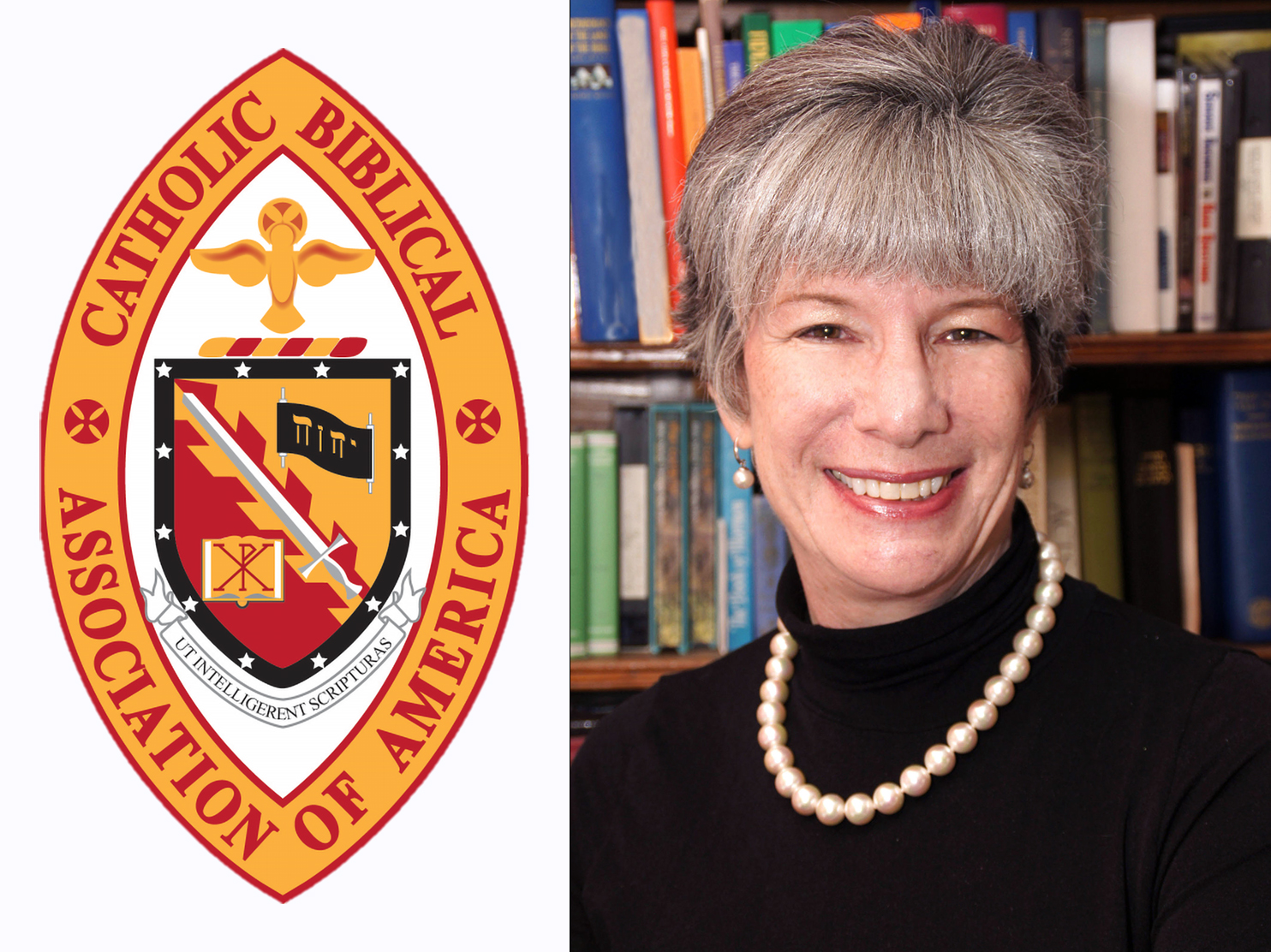
The Catholic Biblical Association of America logo and Amy-Jill Levine. (Courtesy photo)

(RNS) — When she was six years old and watching the funeral of Pope John XXIII on TV, Amy-Jill Levine learned from her mother that the pope was “a friend to the Jews.”

Levine told her mother she wanted to be pope. That wasn’t to be. But last month, she received a unique honor, and perhaps the next best thing: Levine was named president of the Catholic Biblical Association of America, the first Jewish scholar to hold the title.

The 90-year-old association, which promotes the scholarly study of the Bible and provides exchanges between scholars, allows non-Catholics as members. Levine, a distinguished New Testament scholar, joined as a member soon after she earned her Ph.D. from Duke University 42 years ago. Over the years, she has served on the editorial board of the association’s quarterly journal, as a consulter to its executive committee and as an editor of the journal’s New Testament book reviews.

In announcing her election to the one-year post, the association’s statement said Levine was “recognized and deeply appreciated for her work in Jewish-Christian relations.”

It also mentioned that she was the first Jewish scholar to teach New Testament at the Pontifical Biblical Institute in Rome in 2019, and that she had three audiences with Pope Francis.


Levine is a professor of New Testament and Jewish studies at Hartford International University for Religion and Peace in Hartford, Connecticut. She spent the better part of her career at Vanderbilt Divinity School in Nashville. This fall she will teach a course at the Institute for Jewish-Christian Research at the University of Lucerne, Switzerland.

Her scholarship has focused on understanding Jesus as a first-century Galilean Jew and on how his first followers, all Jews, would have understood him.

“Much of what I do is in reciprocation for the Church’s willingness to change its teaching,” Levine wrote in an email to RNS.

Levine was referring to the landmark 1965 church declaration known as Nostra Aetate that Jews should not be held responsible at all times and places for the death of Jesus, and that the church “decries hatred, persecutions, displays of anti-Semitism, directed against Jews at any time and by anyone.”

Levine, 70, grew up in North Dartmouth, Massachusetts, in a mostly Catholic neighborhood. As a child, she said, “I was fascinated by nuns in habits, including the singing nun and the flying nun, Christmas trees and Easter bunnies, stained glass windows.”

She watched the funeral of Pope (now Saint) John XXIII on TV alongside her mother and learned from her mother that the pope was from Italy. To her meant “spaghetti,” “a great hat” and “cheering crowds,” she said. 

Levine is the author of 20 books, including “The Misunderstood Jew: The Church and the Scandal of the Jewish Jesus.” She co-authored “The Bible With and Without Jesus: How Jews and Christians Read the Same Stories Differently” with Marc Zvi Brettler and co-edited “The Jewish Annotated New Testament” with him as well.

In her email, Levine wrote that she sees herself as a “guest in the CBA household” and hopes to be a good representative for its work. She said she would like to provide guidelines to the United States Conference of Catholic Bishops on biblical interpretation in parochial school textbooks and catechesis and, if possible, offer recommendations on a revised lectionary.

She mentioned she would love to meet Pope Leo XIV but acknowledged, “My loyalty to the Red Sox does conflict with his preferences.” (The pope is a White Sox fan.)

How a trans activist and a priest are creating inclusion in India's Catholic Church

CHENNAI, India (RNS) — Earlier this year, the archbishop of the Archdiocese of Madras-Mylapore launched the first sustained initiative by India’s Catholic Church to minister to and engage with transgender people.
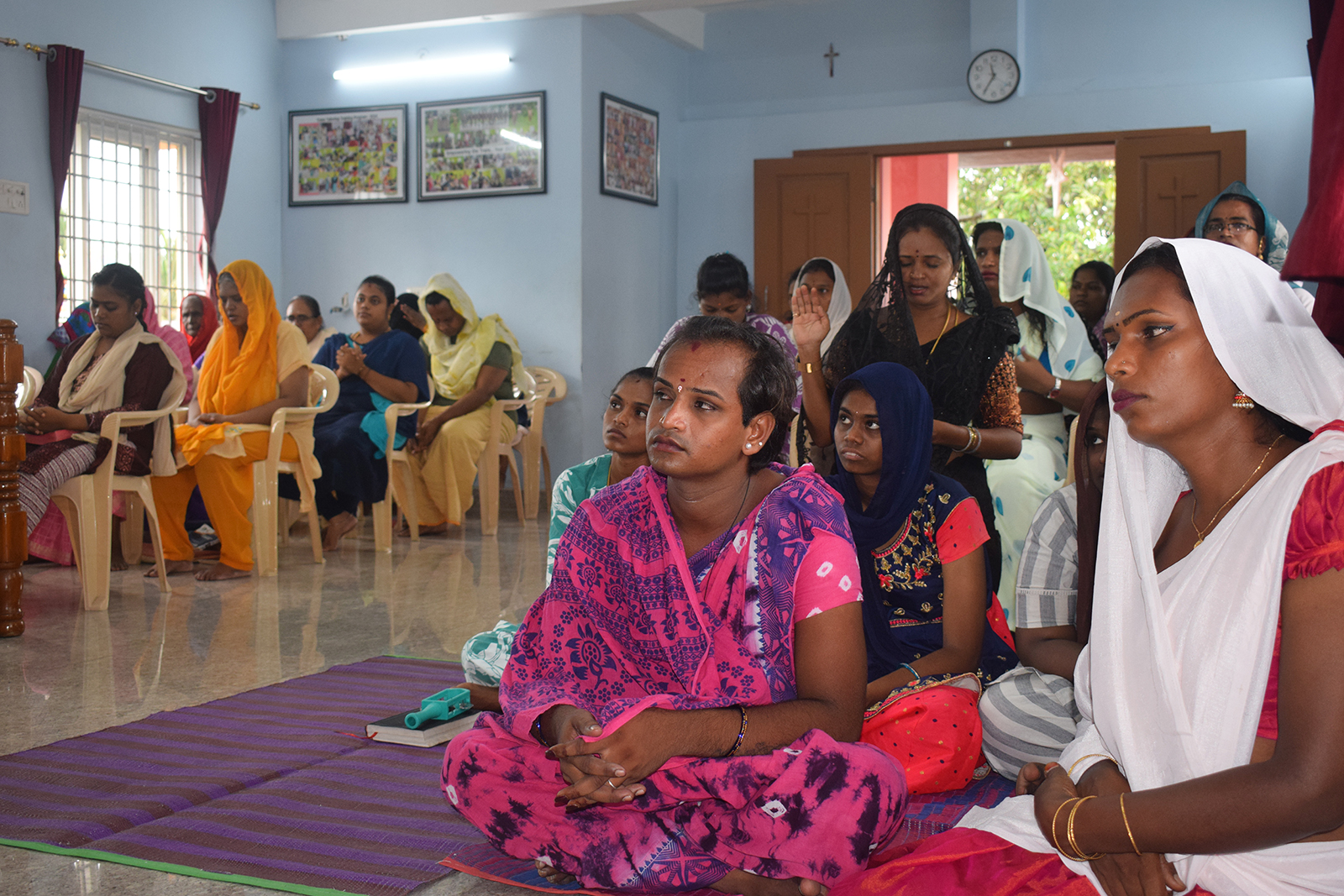
Members of the transgender community take part in a prayer service at a trans chapel in the suburbs of Chennai, India, June 12, 2026. (Photo by Priyadarshini Sen)

CHENNAI, India (RNS) — Twenty years ago, Inba Ignatius felt she didn’t belong in her Catholic church in suburban South India.

Ignatius, who is now 48 and a transgender activist, recalled that during a Christmas midnight Mass, a priest at her asbestos-covered church refused to administer Communion to her and three of her transgender friends until they “repented.”

But more than a decade later, Ignatius, a fiery and outspoken advocate who has for years been helping trans people find shelter and jobs in Chennai, feels the first stirrings of a new home in Catholicism. That’s in part because, in February, the archbishop of the Archdiocese of Madras-Mylapore, the Rev. George Antonysamy, launched the first sustained initiative by India’s Catholic Church to minister to and engage with transgender people.

Known as the pastoral care desk, the program is spearheaded by parish priest Father Leo Joseph, along with Ignatius. The group meets monthly, and its stakeholders are Joseph, three nuns from the diocese, four other priests, four members of the transgender community and Ignatius, the coordinator.

The group meets for prayers, yet the primary role of the ministry is pastoral. It aims to provide educational and employment support, health care access, security and pastoral accompaniment, and more broadly, to help transgender people live with dignity and hope. And, its leaders say they want their model to be replicated in other dioceses, helping to end societal and religious institutions’ misconceptions about trans people.


“We now have a way to connect directly with the church and the parish community,” Ignatius told RNS.

Inba Ignatius, center, a transgender community leader, laughs with Father Leo Joseph and Sister Sagayam at the trans shelter home in the suburbs of Chennai, India, June 12, 2026. (Photo by Priyadarshini Sen)

Transgender people in India continue to face significant social stigma, often involving rejection from their families. They also experience high levels of unemployment, poverty and violence. Systemic challenges drive many into sex work and begging on the streets. Legal rulings have affirmed their rights, but a recently passed bill rolled back some of those rights.

Ignatius said she felt shunned by mainstream society since she was 8 years old. Living in a remote village in Southern Tamil Nadu, a few hours from Chennai, she started thinking she was different from others. She was also sexually abused by her neighbor at that age, she said.

When she started working, she faced workplace harassment and said her family took her to hospitals and psychiatrists for treatment. When she was 23, a doctor told her family she was trans, and her brother urged her parents not to force her to get married.

“I don’t want others to face what I’ve endured since my childhood,” she said. “The pain of feeling you don’t belong anywhere is unparalleled.”

She left her family home to rebuild her life in the Chennai suburbs in 2007. “I didn’t want my parents and siblings to face humiliation because of me,” she said.
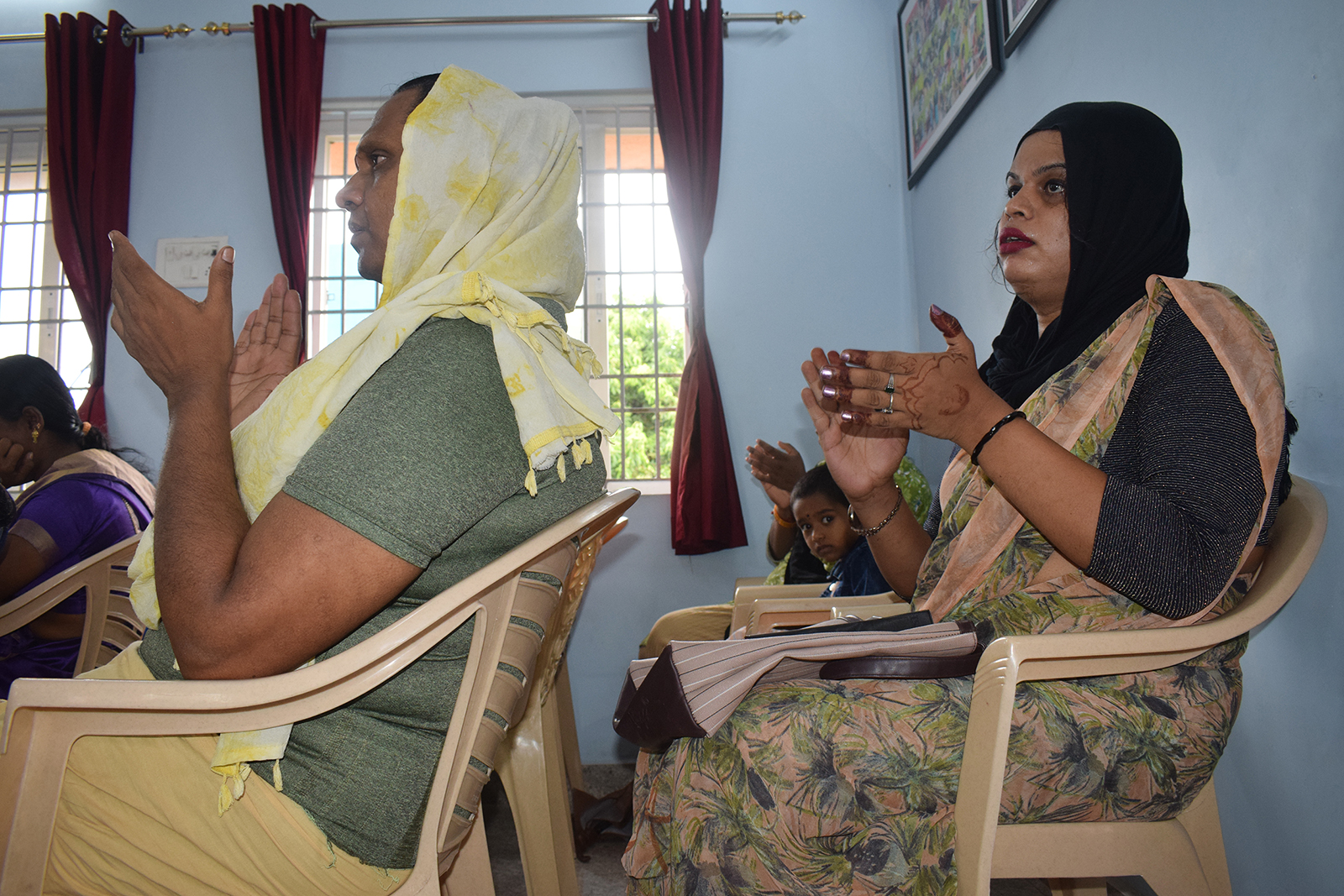
Members of the transgender community participate in a prayer service at a trans chapel in the suburbs of Chennai, India, June 12, 2026. (Photo by Priyadarshini Sen)

Her family helped her build a small house in a neighborhood populated by daily wage earners and migrant workers whose homes were pressed into dense and narrow lanes. A relatively large population of transgender people also live in the area, though exact numbers are hard to pin down, as they often move to flee persecution or conceal their identities. Despite Hindus, Muslims and Christians living together there in relative harmony, transphobia was rampant, and Ignatius wanted to confront it head-on.

In 2015, she started inviting 40 to 50 trans people to her home to pray with one another and for emotional and social support. She then expanded her house into a shelter and safe space for trans and HIV-positive people. 

“(Ignatius) is a pillar of support for us,” said Kaushika, a transgender woman from the nearby city of Vellore, who asked to be identified by her first name only for her safety. “She’s been sensitizing people about our community through flash plays, cultural programs and worship rituals.”  

Eventually, Ignatius opened a small chapel on the second floor for people of different faiths to pray together.

Isaac Raja, a pastor from a nearby Pentecostal church, has been leading Friday afternoon services at Ignatius’ chapel for more than five years.
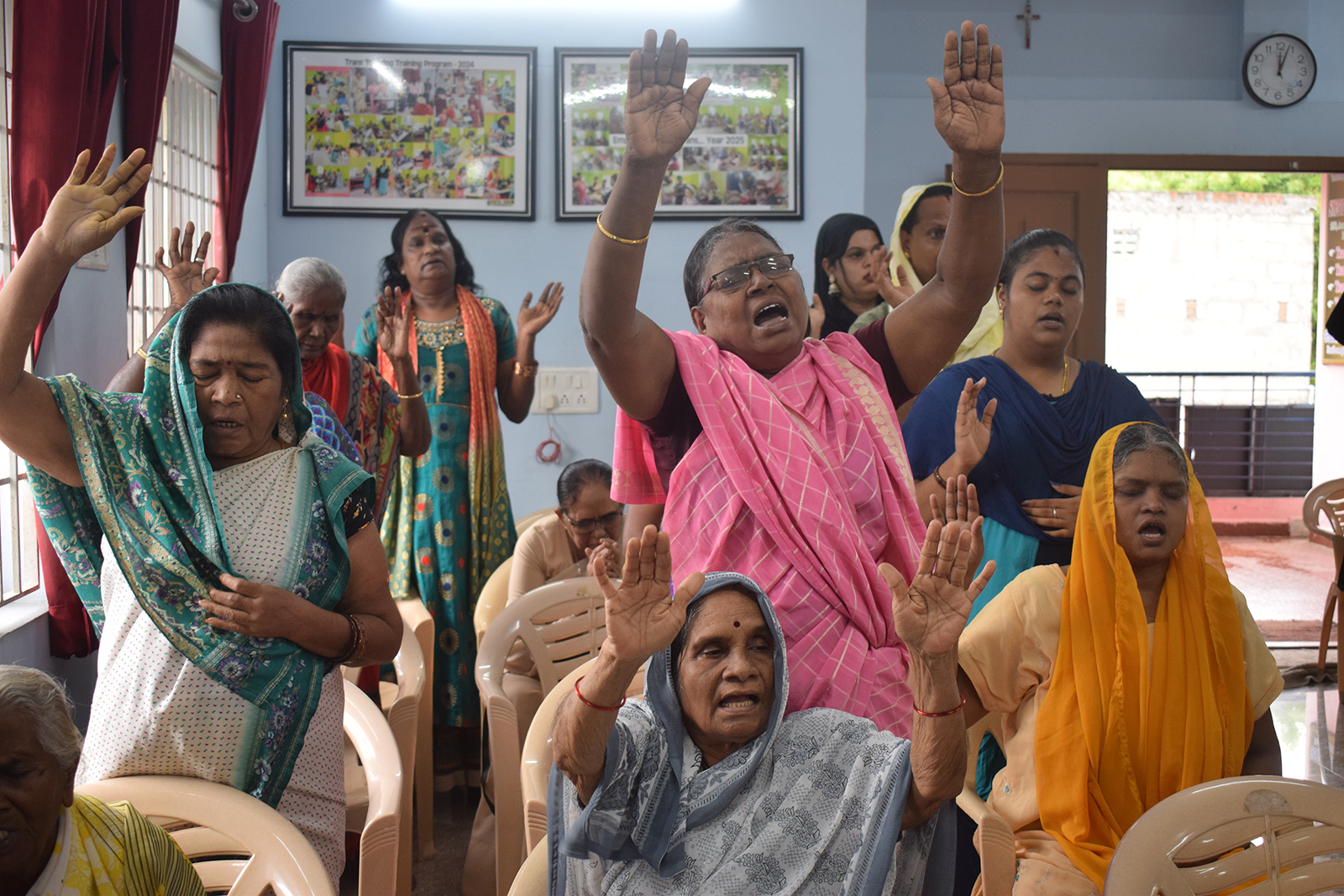
Members of the transgender community participate in a prayer service at a trans chapel in the suburbs of Chennai, India, June 12, 2026. (Photo by Priyadarshini Sen)

“Our work is to soothe their inner brokenness and offer spiritual support regardless of their faith background,” he said. 

During Friday prayers, Raja said members of the community sing devotional songs in the local Tamil language, read from religious texts and share their personal faith stories.

“This isn’t just a church for us,” said Akshaya Shajagan, a Muslim transgender woman who lives in the neighborhood. “It’s a safe space where we share our joys, sorrows and pain.”

Also in 2015, Ignatius met Joseph, a Catholic priest who was assigned to lead the Catholic church in her neighborhood.

“I had all these stereotypes about transgender people,” Joseph said. “But Inba started sowing seeds of love in my heart from the day I met her.”

A priest with a “subaltern consciousness,” he said, Joseph felt a strong urge to minister to those on the fringes of society — a path he thought would bring him closer to his spiritual purpose. He wanted his work to touch more lives and spark collective commitment.

Around 23 million Catholics live in India, according to the Vatican, making up roughly 1.6% of the population. Catholicism is the largest Christian denomination in India.

As his church was renovated from a tin shed covered by thin asbestos sheets into a sparkling white edifice, Joseph began pivoting his focus to transgender people. And in 2016, he began inviting transgender women to lead Scripture readings on Sundays. During retreats with children and youth groups, they were asked to impart lessons on gender diversity. 


On Maundy Thursday in 2022, a Holy Week feast that commemorates the Last Supper of Jesus with his Apostles, the priest initiated a new ritual: He washed the feet of seven transgender women to emphasize his care and love for them. 

Their work got another boost when Ignatius and a few of her friends met with Antonysamy at St. Thomas Cathedral Basilica in Chennai two years ago. “Father Joseph opened the doors of the Catholic Church to us,” Ignatius said. “Starting with the archbishop, we started getting to know other priests, nuns and religious leaders.”
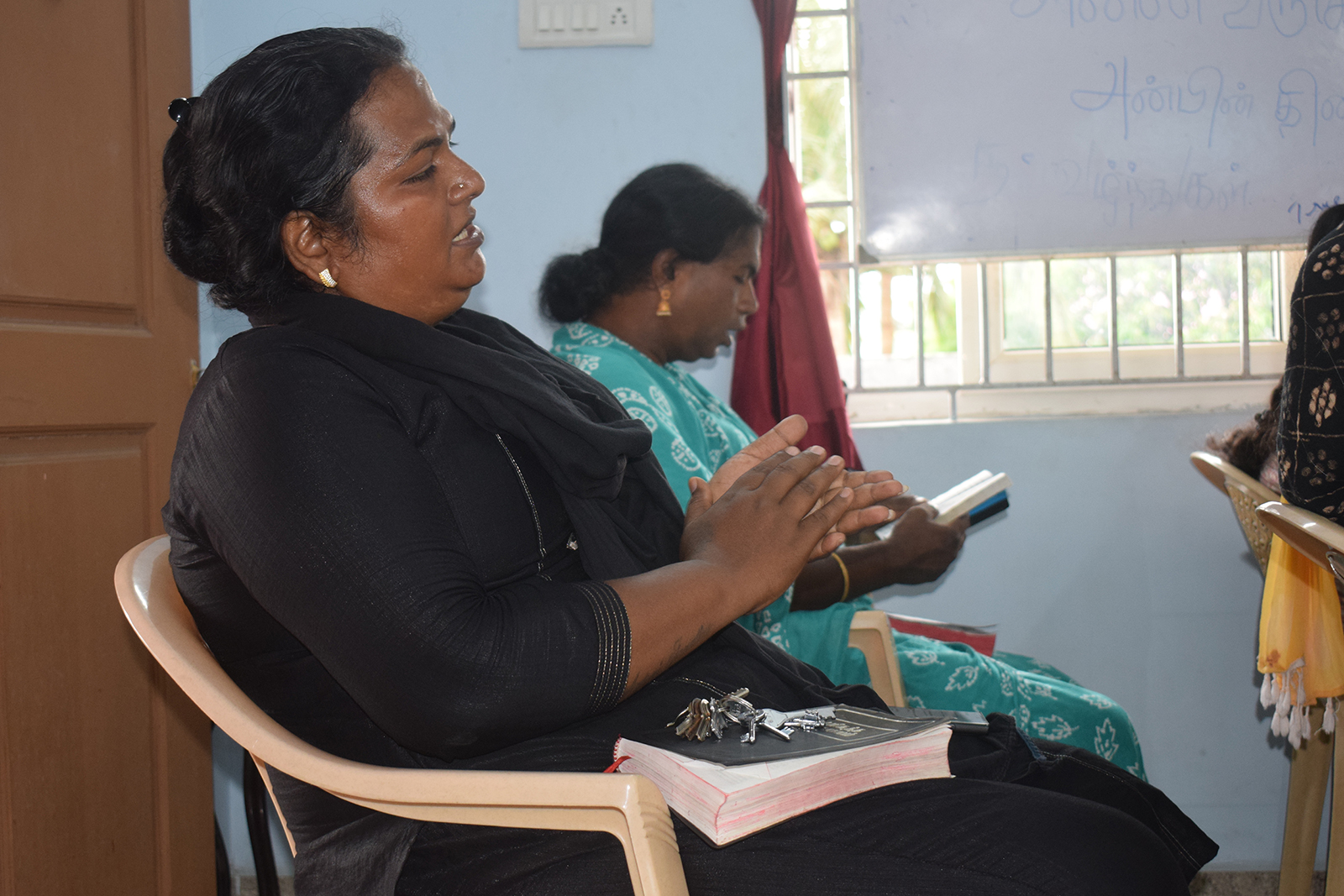
Inba Ignatius attends a service at the trans chapel she helped start for members of the community in the suburbs of Chennai, India, June 12, 2026. (Photo by Priyadarshini Sen)

Joseph said his inspiration for helping create better inclusion for trans people was Pope Francis. During World Youth Day in Lisbon 2023, the pope asserted the Catholic Church was a place for everyone by repeating the phrase “todos, todos, todos” (everyone). In October 2024, Antonysamy attended the last major Vatican synod gathering of bishops with Pope Francis.

“Pope Francis was a big catalyst for our work,” said Antonysamy, who stood by Joseph as he made plans for holistic care and social integration of trans people. “Most important is to eradicate social stigmas, and we’ll deal with pushbacks as they come.”

The long-term plan, the archbishop said, is to involve more parish priests, bishops and religious congregations in uplifting the transgender community and to elevate the pastoral desk to a functioning commission. But for now, its strategy revolves around economic empowerment and building inclusive faith communities that provide care, acceptance and support.

“Despite pushbacks from some Orthodox people,” Joseph said, “my work has helped in my own formation as a person and has doubled my commitment to those on the peripheries.”  

This story was produced with funding from the Templeton Religion Trust.
Pope Leo: War fuels a ‘vicious cycle’ of environmental destruction


VATICAN CITY (RNS) — The pope linked war, environmental destruction and inequality to the same crisis of the human heart, calling for a spiritual and ecological transformation.
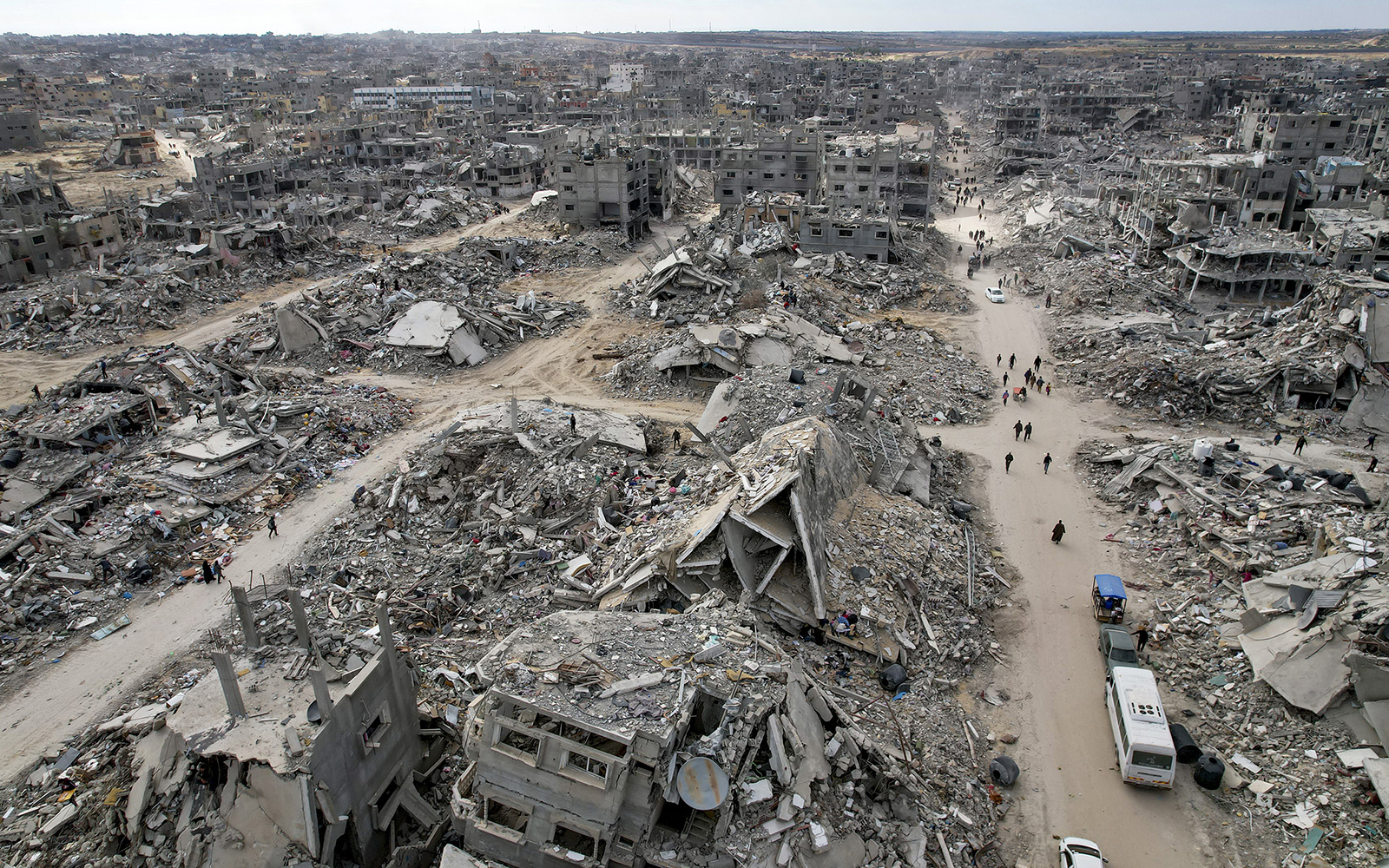
Displaced Palestinians return to Rafah, Gaza Strip, Jan. 20, 2025, a day after a ceasefire deal between Israel and Hamas went into effect. (AP Photo/Jehad Alshrafi, File)

VATICAN CITY (RNS) — Pope Leo XIV connected the exploitation of the environment to the proliferation of war, calling for a spiritual and ecological transformation in a message for the World Day of Prayer for the Care of Creation released Thursday (Aug. 20).

“Today, we are witnessing many crises and much human suffering,” the pope wrote, while “at the same time, it seems that the disruption to the harmonious balance of creation is accelerating.”

“These phenomena are not unrelated; they are a single plea for healing and peace arising from a wounded world,” he wrote.

World Day of Prayer for the Care of Creation, celebrated Sept. 1, is supported by the World Council of Churches and invites all Christians to pray and enact measures for the protection of the Earth.

Leo’s message was inspired by the prophet Isaiah (2:4), who imagined a day when resources would be used for agriculture and sustaining life instead of war. “But today, we too often witness the very opposite, as efforts continue to be directed toward violence and war,” he wrote.

The pope has made peace a central aspect of his papacy, repeatedly making appeals for reconciliation and dialogue among nations. In his most recent public appeal, he called for an end of violence in the West Bank as Israeli settler violence surges.

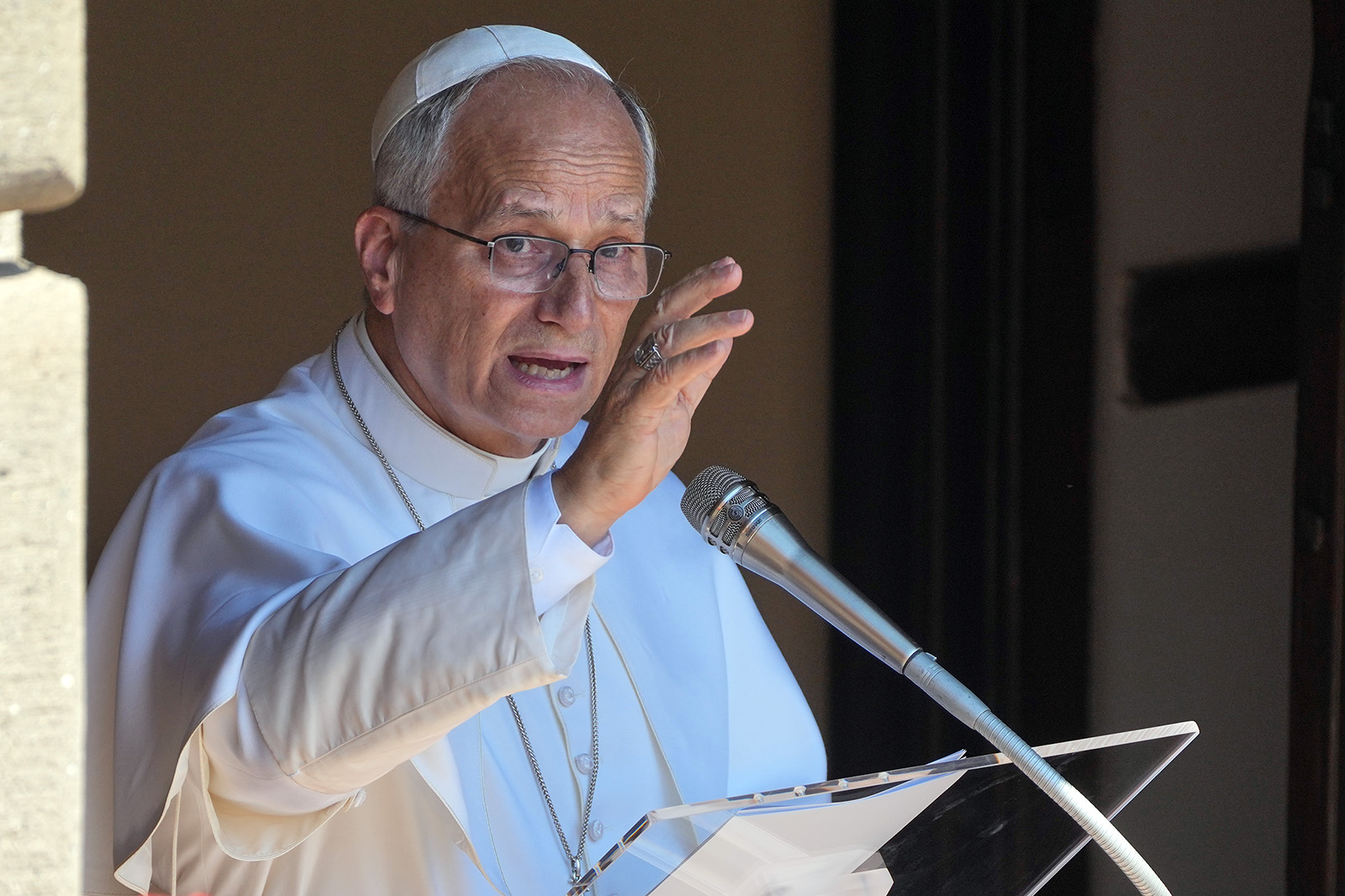
Pope Leo XIV delivers the Angelus noon prayer in Castel Gandolfo, Italy, Sunday, Aug. 16, 2026. (AP Photo/Gregorio Borgia)


On Thursday, the pope met with Joseph Aoun, the president of Lebanon, which is currently under attack by Israeli forces combating Hezbollah in the south. The pope expressed “deep concerns” about the challenges of applying the countries’ delicate agreement toward peace, mediated by the United States and signed in June.

“War leaves wounds that extend far beyond the battlefield,” the pope said. “War also leaves behind social and ecological destruction that endures for generations,” adding that this creates a “vicious cycle” that destroys ecosystems and essential resources, creating new forms of inequality and social tensions that ultimately lead to new conflicts.

“This is not only a political failure, but also a moral and spiritual one,” he wrote.

The pope also pointed toward how individuals can address discord and division within themselves.

“The wounds of war and the degradation of the Earth, then, are profoundly linked to the condition of the human heart,” he wrote. “What is broken around is also broken within us.”

People fill water containers at a distribution point due to war-related water outages in Khartoum, Sudan, Friday, Jan. 30, 2026. (AP Photo/Marwan Ali)

Leo called not only for a renewal in political structures but also within people’s hearts. Conflict and exploitation of the environment “stem from an ethical and cultural crisis,” which includes a desire for domination and profit, no sense of limits and not recognizing the dignity of every human being, he said. 

“Peace, then, begins in the heart and flows outward to our relationships, communities and the broader world,” he wrote.

He concluded his message by imagining a world where resources used to invest in war were directed toward supporting people in harmony with the environment, combating poverty and bringing peace.

Myanmar military strike kills 14 people at a Buddhist monastery, opposition group says

BANGKOK (AP) — The attack is the latest in a series of frequent and deadly aerial strikes targeting armed pro-democracy forces and ethnic armed groups in the country. The strikes often cause civilian casualties.

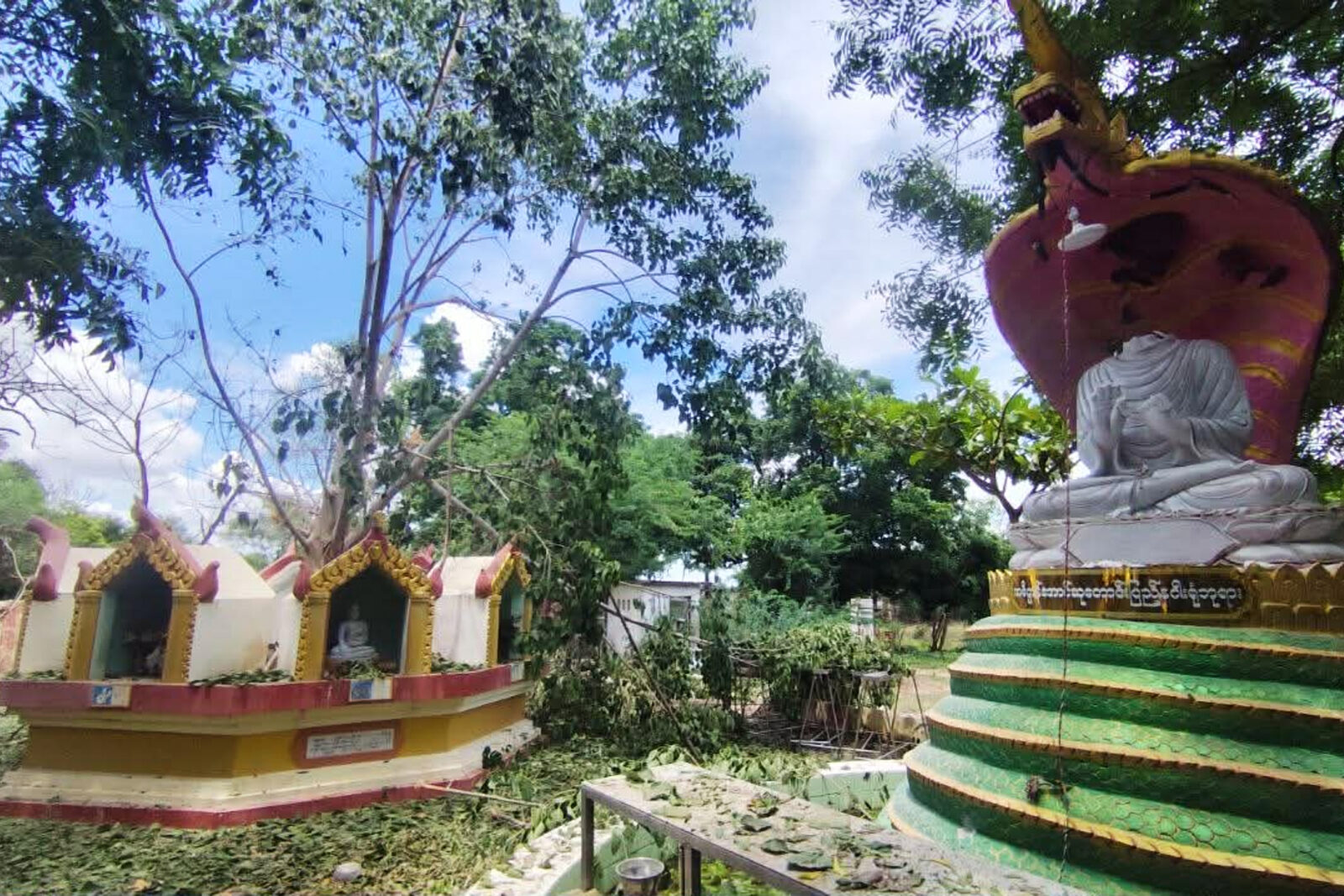
BANGKOK (AP) — An airstrike on Friday by Myanmar’s military on a Buddhist monastery in Myanmar ’s central Sagaing region killed 14 people who were taking part in a weeklong meditation retreat, an opposition group and a resident said.

The attack is the latest in a series of frequent and deadly aerial strikes targeting armed pro-democracy forces and ethnic armed groups in the country. The strikes often cause civilian casualties.

The attack occurred in Swel Le Oh village in Myaung township, about 75 kilometers (45 miles) west of Mandalay, the country’s second-largest city, according to Nway Oo, a spokesperson for the Civil Defense and Security Organization of Myaung Township, or CDSOM.

Nway Oo said that 14 people, including three women, were killed and 20 others were wounded when a fighter jet dropped a bomb in the compound of the village’s monastery.

A villager who spoke on condition of anonymity, because he feared for his safety, also confirmed the death toll to The Associated Press. The villager said that the fighter jet dropped two bombs 15 minutes apart, with the second bomb damaging a house near the monastery where more than 100 people were on a weeklong retreat during Buddhist Lent.

The villager, whose mother-in-law was killed in the airstrike, said that people fled to a nearby community after cremating bodies of the victims.

BBC’s Burmese-Language service and Myanmar’s media outlets, including Myanmar Now, reported the death toll at between 10 and 14. They also posted photos and videos showing what they said was the aftermath of the strike, with images of bodies.

The military didn’t immediately comment. In the past, the army has said that it only attacks legitimate targets of war, accusing the resistance forces of being terrorists.

Myanmar has been in turmoil since the army seized power from the elected government of Aung San Suu Kyi in February 2021, triggering a civil war. After peaceful demonstrations were put down with lethal force, many opponents of military rule took up arms, and large parts of the country are embroiled in conflict.

The military has increasingly used airstrikes to counter opposition forces, including the armed People’s Defense Forces in Sagaing region, a stronghold of armed resistance. The resistance has no effective defense against air attacks.

The monastery attack comes a week after the U.N.-established Independent Investigative Mechanism for Myanmar, or IIMM, said that it observed a notable escalation in aerial attacks by the military in the months preceding the elections held in December and January, and that they have continued unabated afterward.

Myanmar’s foreign ministry rejected the IIMM report on Sunday, saying that limited airstrikes and counterterrorism operations solely aim at military targets and were carried out in response to insurgents and terrorist groups in accordance with the rules of engagement, and that the security forces exercise maximum restraint to avoid civilian harm.

Once shaped by court rituals, China’s imperial cuisine lives on today

BEIJING (AP) — Imperial cuisine encompasses the meals emperors ate daily and the feasts their courts held throughout the year.

The same treat was served to her at breakfast the following morning. Delighted, she summoned her chef and rewarded him with a silver ingot.

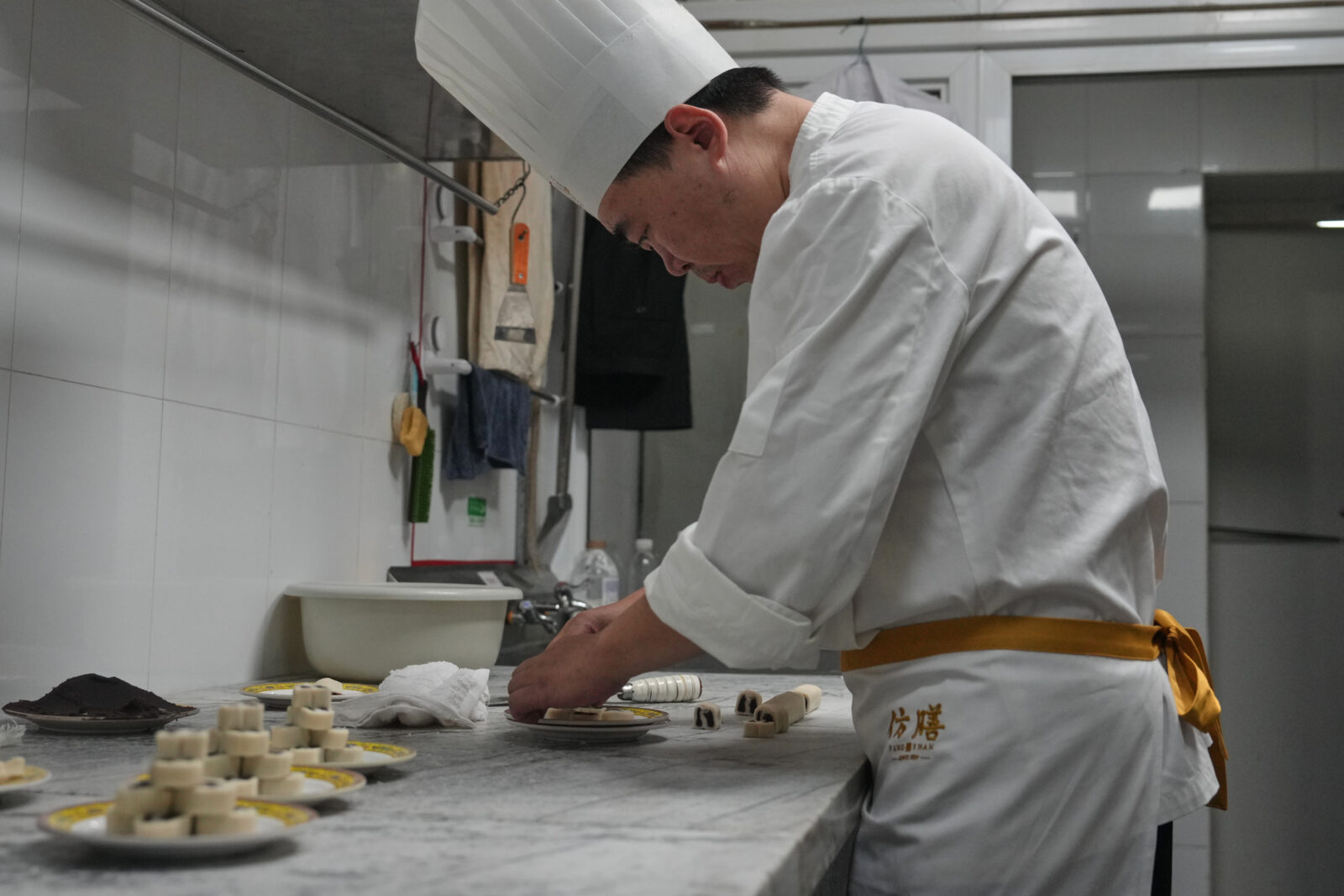
“It was originally called ‘minced pork pancake,’ but because it had fulfilled her dream, it later became known as ‘dream pastry,’” said Zhou Tong, a chef at Fangshan Restaurant in Beijing.

Fangshan specializes in imperial cuisine, preserving dishes like the one associated with Cixi and other culinary traditions from China’s imperial court. The restaurant was founded in 1925 by former chefs from the Qing Dynasty at Beihai Park, a garden where royals from several dynasties rested, handled government affairs and performed ritual sacrifices.

“The name Fangshan literally means ‘imitating the imperial cuisine,’” said assistant general manager Di Xin.

A handful of other Beijing restaurants also serve versions of imperial cuisine, while the Palace Museum preserves Qing-dynasty objects tied to court dining, including pastry molds.

Every meal comes with its own rules

Imperial cuisine encompasses the meals emperors ate daily and the feasts their courts held throughout the year.

Each had its own rituals. Drinking milk tea, for instance, was an important first step at Qing-dynasty banquets, said Teng Deyong, a researcher at China’s Palace Museum.

During the banquet, the emperor bestowed wine or food on princes and officials. Recipients performed rites and paid their respects to him before they ate or drank.

Aside from banquets, sacrificial rituals were held. They followed a separate system and could involve meat offerings.

“At the Palace of Earthly Tranquillity, there was the eating of sacrificial pork, which we know was one of the most important rituals of the Qing imperial court,” Teng said.

In that ritual, fatty pork was boiled without salt. After the ceremony, it was distributed among guests, and receiving the sacrificial meat was considered a great honor.

Unseasoned food also appears in earlier Chinese ritual traditions. Wandi Wang, a professor of Chinese at Lehigh University in Pennsylvania, said the “Book of Rites,” a classical work on rites and ceremonies, describes a meat broth known as “grand stew” that was served without seasoning during sacrificial ceremonies.

“The absence of added flavoring was itself meaningful: the unseasoned dish evoked an earlier and simpler way of cooking and thus expressed a ritual ideal of honoring antiquity and remembering cultural origins,” Wang said.

Traditional techniques keep imperial pastry-making alive

Pastries were key to imperial cuisine, and the court had an institution specialized in making them.

Sweets made at Fangshan by Zhou include Cixi’s dream pastry and a small steamed corn bun. Their recipes are rooted in the imperial court.

“When customers visit, our servers often tell them the stories behind these dishes,” Zhou said. “People enjoy them even more because they carry such meaningful history.”

He learned his pastry-making technique from a master who had also learned from a mentor. It’s a craft that has been passed from one generation to the next.

Traditional imperial methods mean cooking must be done by hand — no blenders or food processors are allowed. Ingredients like beans are pulverized using sieves and certain flours are handled in custom-made copper pots.

“A machine may be more convenient, but the texture is completely different,” Zhou said. “You lose the delicate graininess and sandy mouthfeel that handcrafted pastries are supposed to have.”

Among Fangshan’s bestselling delicacies are the pea flour cake and the red bean roll. During the busy season, customers order more than 200 of the cakes per day.

Balancing ancient cooking methods with a changing world

When he joined Fangshan as a kitchen apprentice, now-executive chef Fan Liangliang had to relearn everything he was taught at culinary school. Rather than employing techniques that allowed him to work quickly, he embraced slower processes he had never heard of.

One of them is “Nizihuo,” which Fan said involves mincing ingredients such as fish, shrimp or chicken into a smooth paste. It is then reshaped into decorative forms such as frogs, birds and flowers.

“This is one of the hallmarks of imperial cuisine,” Fan said. “Every dish had to be innovative, visually beautiful, nutritious and worthy of presentation on the imperial dining table.”

Rare ingredients such as bear paws are no longer served. Fan said adaptations are made to retain the spirit of each dish.

Chinese cuisine has long reflected cultural values, politics and ideals

A celebrated Chinese poet once wrote about cold noodles made with pagoda-tree leaves.

“The poem is not simply a description of a dish,” Wang said. “Du Fu turns the verdant, fresh, yet modest dish into an expression of his political loyalty and thwarted ambition to serve the emperor.”

She added that Chinese cuisine has historically carried meaning beyond food, reflecting broader ideas about politics, culture and aesthetics that have evolved as circumstances changed.

“Preserving a culinary tradition begins with taking its history seriously,” Wang said. “Culinary heritage tells us not only how people ate in the past, but also how people in the present choose to remember and give meaning to that past.”

Chef Fan said that at the heart of Fangshan’s imperial cuisine is a fusion of Manchu and Han culinary traditions, bringing together the culture of the Qing rulers and that of China’s majority population.

“It’s not simply a collection of dishes from the two cultures,” he said. “It represents the blending of their different approaches to food into a unified cuisine.”

Some inherited techniques such as stir-frying, braising and stewing have survived. And while some ingredients have been substituted both for availability reasons and to suit modern tastes, Fan said his team’s commitment to Chinese heritage remains strong.

“When people dine at Fangshan Restaurant, I hope they experience more than just a meal,” Fan said. “They experience the weight of history.”

___

AP video journalist Wu Jia contributed to this report.

___

Associated Press religion coverage receives support through the AP’s collaboration with The Conversation US, with funding from Lilly Endowment Inc. The AP is solely responsible for this content.