Wednesday, August 26, 2026

Dolly Parton Remembered as ‘Advocate for Inclusion, Women’s Rights, Children’s Literacy, and More’

“She was not only a talented musician and songwriter, but a lifelong philanthropist and advocate for literacy, education, LGBTQ+ rights, healthcare, and disaster relief. Her music and humanity touched millions.”
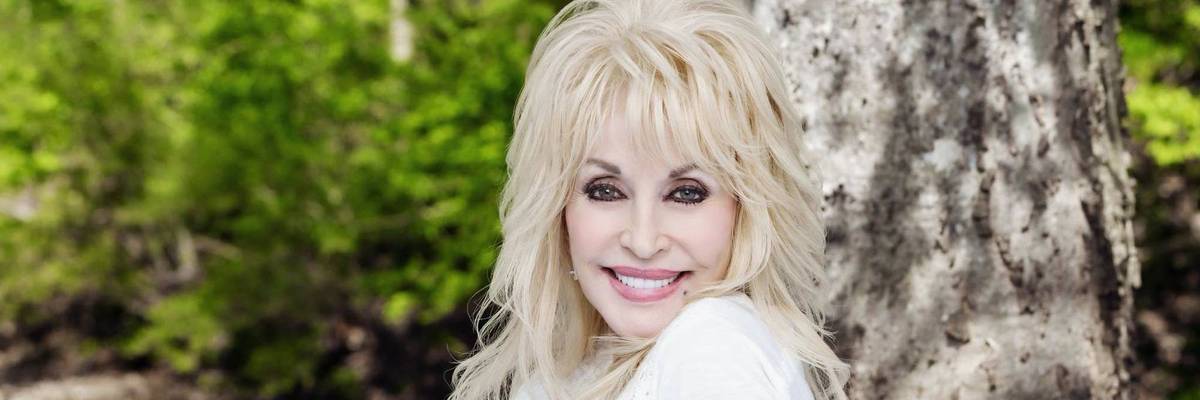


Dolly Parton died August 25, 2026 at the age of 80.
(Photo by Dolly Parton/Facebook)

Jessica Corbett
Aug 25, 2026
COMMON DREAMS


Dolly Parton died Tuesday in Nashville, Tennessee at the age of 80, and was fondly remembered by people around the world for not only her decades in the entertainment industry but also her philanthropy and promotion of the belief that “everybody should be treated with respect.”

Parton’s nephew and head of security, Bryan Seaver, confirmed the country music icon’s passing in a video message shared on her social media accounts. As Rolling Stone reported, she “was born January 19, 1946, the fourth of Robert Lee and Avie Lee Owens Parton’s 12 children, in a one-room cabin on the banks of the Little Pigeon River,” and “grew up in rural poverty,” lacking plumbing and electricity.

The obituary shared on Parton’s platforms notes that she was preceded in death by her parents, as well as “her beloved husband of 59 years, Carl Thomas Dean,” who died last year, and that “the family asks for donations to be made to Dolly Parton’s Imagination Library,” which was inspired by her father’s inability to read and write, and has gifted more than 300 million books to children over the past three decades.

“Dolly Parton could have retired long ago having achieved greatness,” Congressman Ro Khanna (D-Calif.) said of the singer and actress who won multiple Grammy and Emmy awards, among numerous others, and whose songs include “Coat of Many Colors,” “I Will Always Love You,” and “Jolene.”

Rather than retiring from the spotlight, Khanna noted, “she chose to continue her life pursuing the arts, and pushing boundaries to advocate for inclusion, women’s rights, children’s literacy, and more. Dolly touched countless hearts and will forever be remembered.”

US Sen. Bernie Sanders (I-Vt.) wrote on social media that “Dolly Parton was one of the great entertainers of our era. She was not only a talented musician and songwriter, but a lifelong philanthropist and advocate for literacy, education, LGBTQ+ rights, healthcare, and disaster relief. Her music and humanity touched millions. She will be sorely missed.”


Sen. Elizabeth Warren (D-Mass.) said that “Dolly Parton gifted the world with her talent and heart. From supporting children, donating to science, investing in Tennessee, and giving us songs to sing our hearts out to (looking at you, ‘9 to 5’), she made the world a better place. Thank you, Dolly, for leading with love.”


Democratic North Carolina Gov. Josh Stein said that “Dolly Parton was so special, so universally loved. The first word that came to my mind just now was ‘authentic,’ which is funny since she is well known for her big wigs and extravagant gowns. But she was always herself. Her music was powerful and moving... But her impact on the world was much greater—from providing kids free books to funding vaccine research and promoting tolerance. America lost one of our best today.”


Similarly saying that “Dolly Parton represented the very best in America,” former Labor Secretary Robert Reich wrote at his blog that “I think what I admired most was her empathy (the sentiment disparaged by Elon Musk. In fact, to my mind she was the human that embodied the exact opposite of Musk.) She felt the pain of those in poverty. She felt for women subordinated to patriarchy... She felt for working women.”


Other key Democrats who posted remembrances included Kentucky Gov. Andy Beshear, Senate Minority Leader Chuck Schumer (NY), and former House Speaker Nancy Pelosi (Calif.), who called Parton “a singular American icon whose extraordinary voice, joyful spirit, and generous heart brought light to millions and made America kinder and more hopeful.”


Parton took stances on topics that have become divisive in US politics—such as supporting LGBTQ+ rights and vaccine research—but she openly avoided wading into political races, and was also honored on Tuesday by various right-wing politicians and other figures, from Cabinet members, federal lawmakers, and governors to Republican President Donald Trump, who announced on Truth Social that “I am lowering the American flag throughout the United States for a one week period.”

Meanwhile, as elected Republicans ban books and cut programs for the working class while giving more tax breaks to the ultrarich, Melanie D’Arrigo, executive director of the Campaign for New York Health, said that “Dolly Parton spent her life helping kids, marginalized communities, and people in need, while entertaining millions. She never had to, she chose to. In a world full of wannabe Donald Trumps, choose to be a Dolly Parton.”

'I am a person of faith': How Christianity shaped Dolly Parton's music and spirit
(RNS) — Country music icon Dolly Parton, who died Tuesday, credited her faith for her career, which crossed religions, races and politics — and the philanthropy that followed.
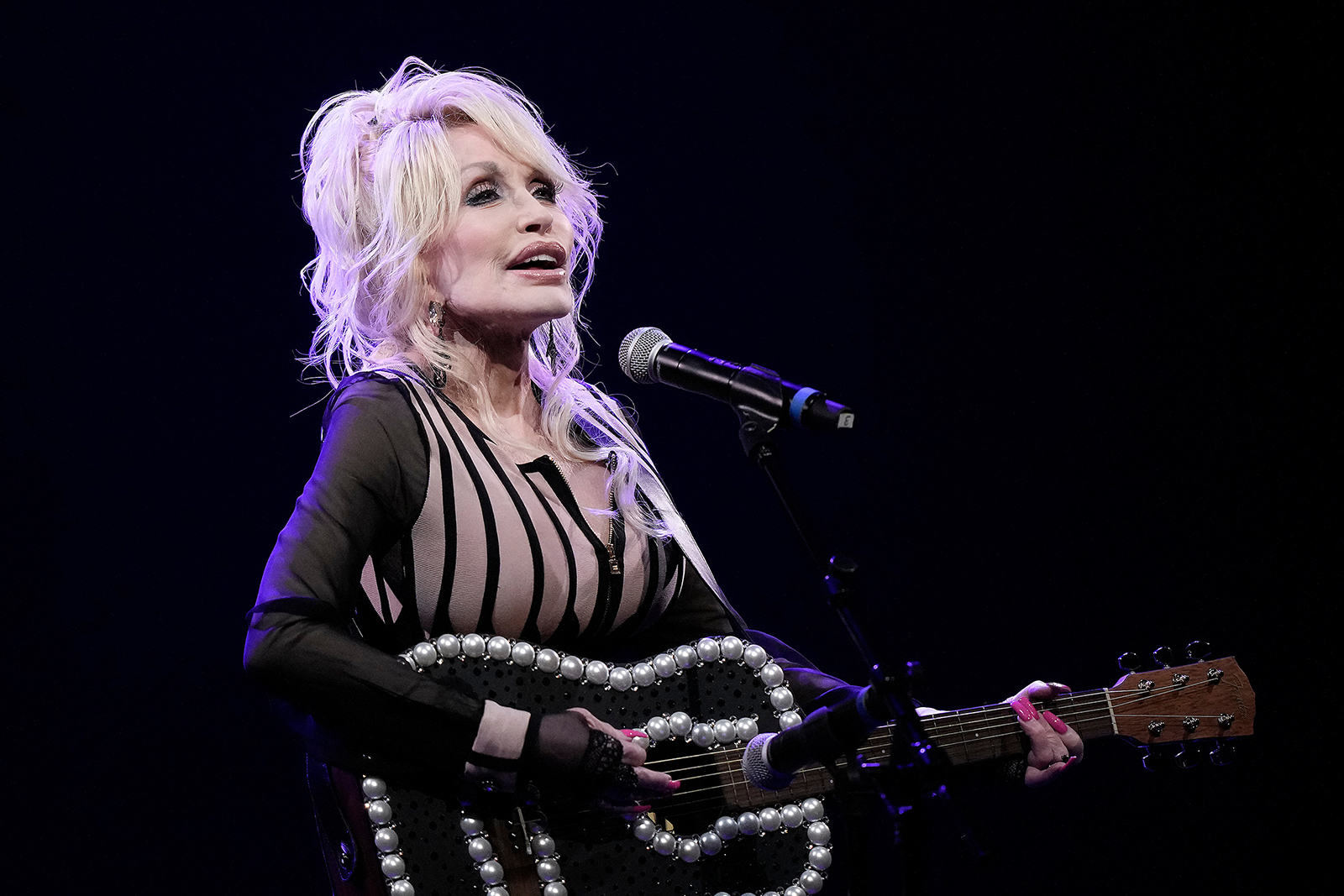
Dolly Parton performs in Overland Park, Kan., on Aug. 14, 2023. (AP Photo/Charlie Riedel, File)

(RNS) — Dolly Parton, the country music icon who sang and spoke frequently of her Christian faith, died at age 80 on Tuesday (Aug. 25), her family announced.

“Sadness lies with us, not with Dolly,” said Bryan Seaver, Parton’s nephew and head of security, in a video released by the family.

“Dolly has lived in the light and is in the arms of Jesus, surely met by Carl (her husband), her parents and countless others who have watched her and longed for her to meet them in the heavens.”

The winner of 11 Grammy Awards, Parton was one of those unusual performers with broad, enduring appeal, crossing religions, races and political parties, over seven decades, and she spoke of how faith grounded her and her family. 

“We all believe in God, and we’re very close,” she told KCRA, a Sacramento station. “We have a good communication with God, and I think that’s a positive attitude. That’s one of the reasons that we stay sane, and a lot of people in the business seem to be crazy.”


RELATED: Chicago church preaches ‘The Gospel according to Dolly Parton’ 


Born in the Smoky Mountains of Tennessee, she was one of 12 children. Her grandfather was a Pentecostal preacher, and Parton sang from a young age with her family. She wrote her first song at age 5 and by 13 had made her debut at the Grand Ole Opry, introduced by another country icon, Johnny Cash.   
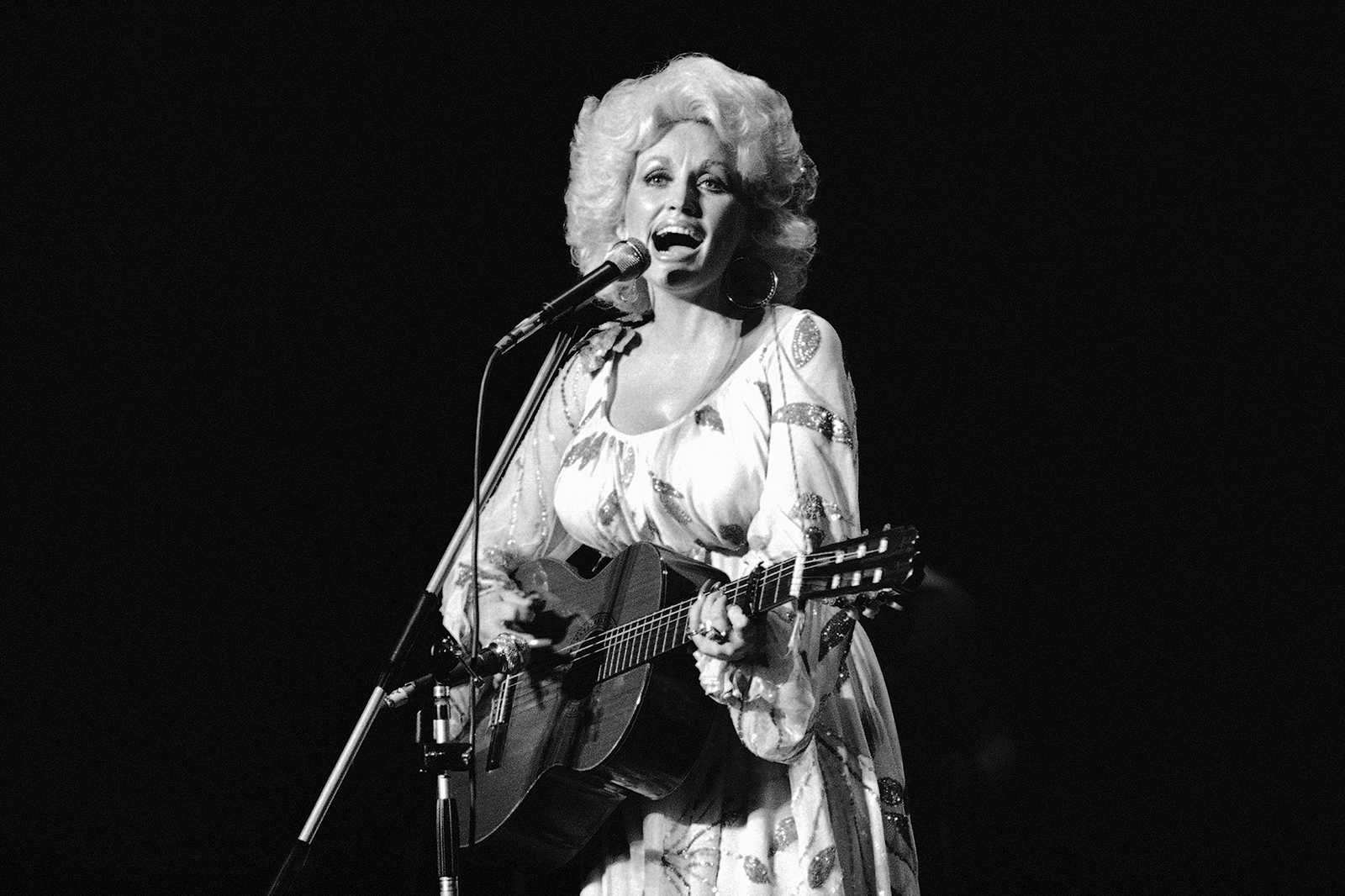
Dolly Parton performs in concert in Tokyo, July 30, 1979. (AP Photo/Tsugufumi Matsumoto, File)

She became a recording artist in the 1960s. Her song “I Will Always Love You” — written as she ended her singing partnership with Porter Wagoner — reached No. 1 on the country charts in 1974 and 1982 before becoming a global hit when Whitney Houston’s version of the ballad was released in 1992 on “The Bodyguard” soundtrack.

After global tours in the 1970s, Parton became a movie star, acting in “9 to 5” with Jane Fonda and Lily Tomlin — a film whose theme song became an anthem for working women. In the 1980s, she recorded “Islands in the Stream” with Kenny Rogers and opened Dollywood, a theme park in Pigeon Forge, Tennessee.

Even amid her mainstream hits, Parton kept gospel music in rotation, with her 1971 gospel album “The Golden Streets of Glory” and the 2019 song “God Only Knows” with Christian musical duo For King & Country, and a hand-clapping medley on her 2022 NBC special, “Dolly Parton’s Mountain Magic Christmas.”

Parton was inducted into the Country Music Hall of Fame in 1999, the Gospel Music Association’s Gospel Hall of Fame in 2009, and the Rock & Roll Hall of Fame in 2022.

She also was a famous philanthropist. In the 1990s, Parton created a program to give free books to children as a tribute to her father, who was unable to read or write. Her Imagination Library has donated more than 300 million books across the globe. In a 2018 interview, she also cited the Bible as inspiration for this program. “In the Bible, where it talks about honor your father and mother, … I think means to bring honor to their name.” In more recent years, she gave a $1 million donation for COVID-19 research that was partly used to fund the Moderna vaccine and announced a similar donation to help victims of Hurricane Helene, which affected Tennessee, her home state, and six others in 2024, People magazine reported.
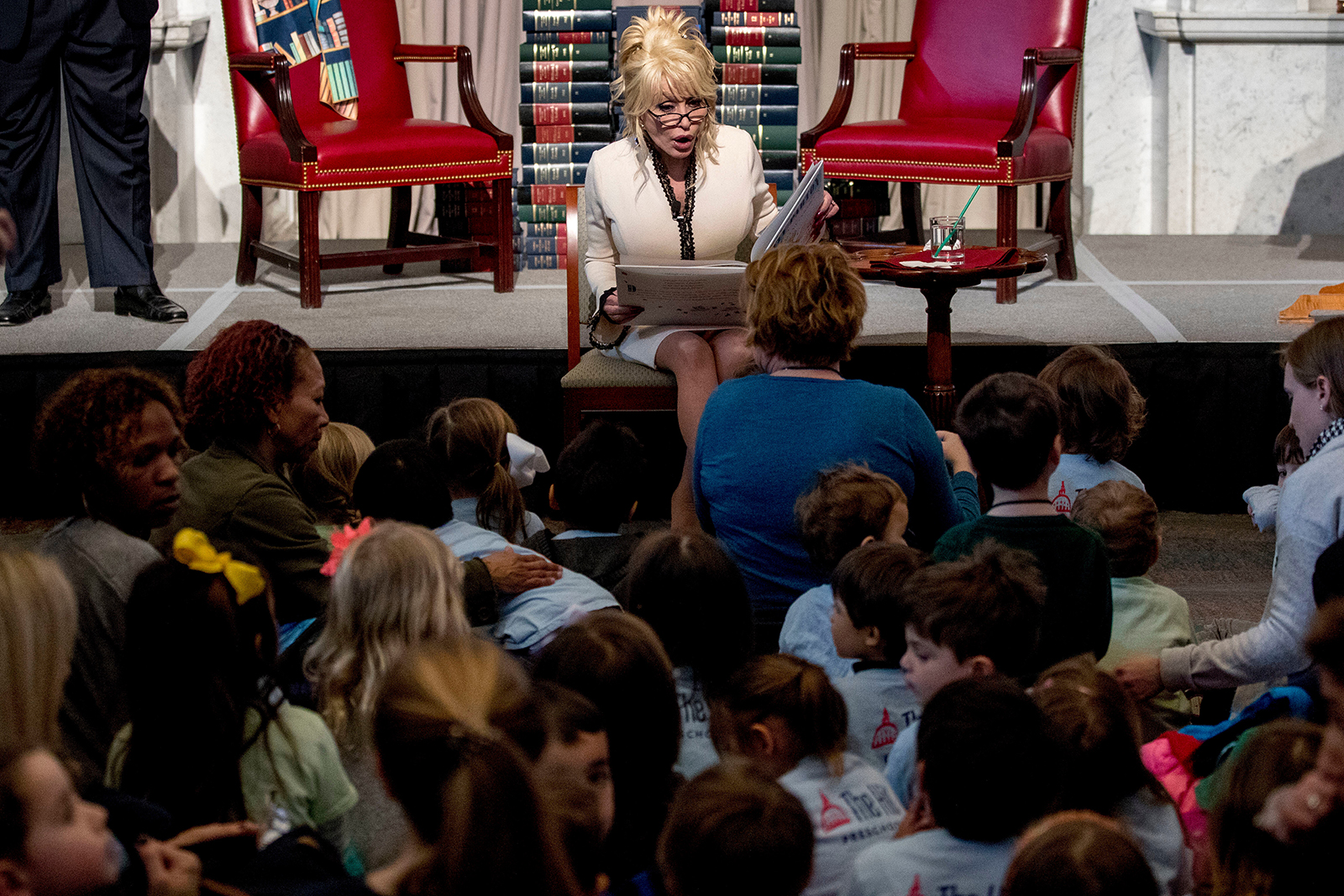
Dolly Parton reads her book “Coat of Many Colors,” at the Library of Congress in Washington on Feb. 27, 2018. (AP Photo/Andrew Harnik, File)

Her fans included clergy. The Church of the Three Crosses in Chicago made Parton the subject of a five-part sermon series in 2022, Religion News Service reported. “We’ve been using Dolly as a way to talk about story and our larger story of faith and that all of our stories matter and that God’s story is continuing on in us,” the Rev. Britt Cox told the congregation at the time as she concluded the series titled, “The Gospel According to Dolly.”

The sermon series featured Parton’s songs, including “Jolene,” “My Tennessee Mountain Home” and “I Will Always Love You.”

Parton, who performed in sold-out concerts even in the last years of her life, drew a firm line between admiration and worship. “I don’t want to be worshiped, because there’s a scripture in my Bible that talks about idol worship,” she told People in 2021. “And I see that happening all the time with movie stars and these celebrities. People literally worship them more than they worship God. And I just — I cringe at it sometimes.”

After the death of her husband of more than 60 years, Carl Dean, last year, Parton spoke to The Associated Press about how her faith was a comfort.

“I am a person of faith, and I truly believe that I’m going to see him again someday,” she said in the May 2025 interview. “And I see him every day in my memories and in my heart, and in all the things that we used to do and all the things that we’ve built together.”

After the announcement of her death, a wide array of politicians and religious leaders lauded Parton for her accomplishments. President Trump announced that he would order the lowering of the American flag in Parton’s honor for a week. “Very sad to report that Dolly Parton, one of the greatest Country singers, and far beyond, EVER, has just passed away,” he added. “This is a true loss for millions of people. There has never been anyone like her, and never will.”

In a post on X, U.S. Sen. Bernie Sanders, the Vermont Independent, called Parton “one of the great entertainers of our era. She was not only a talented musician & songwriter, but a lifelong philanthropist and advocate for literacy, education, LGBTQ+ rights, healthcare and disaster relief. Her music and humanity touched millions. She will be sorely missed.”

On Bluesky, New York Mayor Zohran Mamdani praised Parton as an “irreplaceable champion of the working class.”  

“Dolly invited us all — poets and historians and tired moms alike — to a ‘glammed up’ life of song,” wrote theologian Diana Butler Bass in her newsletter.

“Thank you, Dolly Parton. For the high heels and the music. For dressing up our days. And for your smarts and courage and honesty and generosity of spirit. We will always love you.”

The Rev. Bernice King, CEO of the Martin Luther King Jr. Center for Nonviolent Social Change, posted on X: “I am deeply saddened by the passing of Dolly Parton. Her extraordinary voice entertained and brought joy to generations, and she used her influence beyond music to affirm human dignity, inclusion, and the importance of treating people with love and respect.”

Aleja Hertzler-McCain contributed to this report.

 Opinion

New book ‘A Nation Wrestles With God’ traces religious dialogue through our history

(RNS) — Wrestling — with the divine, with morality — might well be America’s most sustained pastime.
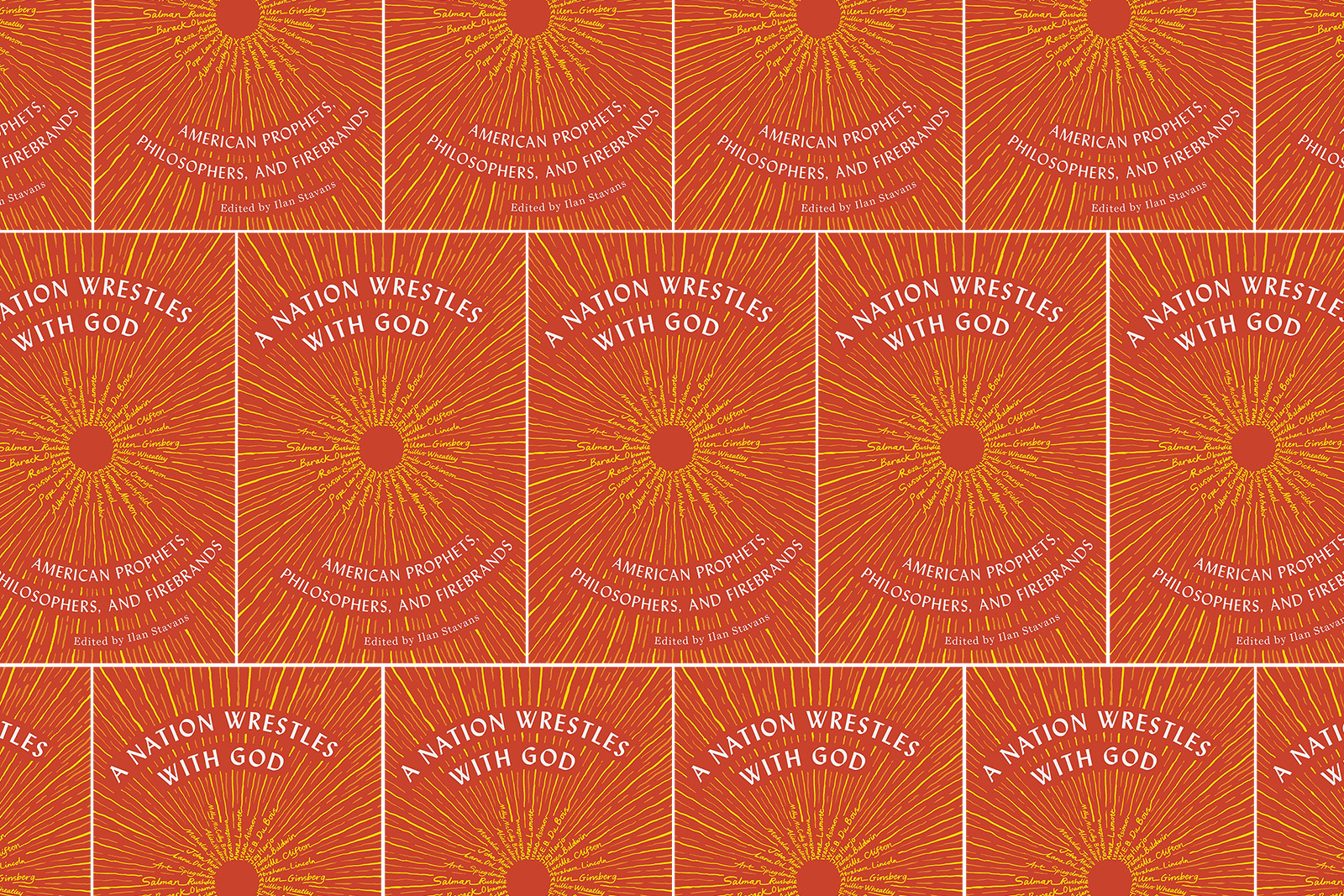
"A Nation Wrestles with God: American Prophets, Philosophers, and Firebrands" edited by Ilan Stavans. (Courtesy image)


(RNS) — The following is an excerpt from the book ‘A Nation Wrestles with God: American Prophets, Philosophers, and Firebrands’, a 528-page anthology edited by Ilan Stavans and published by Restless Books on June 30, 2026. The collection of essays spans over 400 years of American spiritual thought — from pre-colonial texts to the present day, from Anne Bradstreet and Joseph Smith to James Baldwin, Christopher Hitchens and more — about the country’s unique relationship to religion. The text below is adapted from its introduction. 

***

“I was a-trembling, because I’d got to decide, forever, betwixt
two things, and I knowed it. I studied a minute, sort of holding
my breath, and then says to myself:
 ‘All right, then, I’ll go to hell.’”
 - Mark Twain,
“Adventures of Huckleberry Finn” (1884)

Huck Finn, the rambunctious, free-spirited, 13- or 14-year-old boy sailing down the Mississippi River in the pre-Civil War South, son of a drunkard, with a rough upbringing and without a formal education, is arguably the most famous fictional character in the United States.

“All modern American literature comes from one book,” Ernest Hemingway said — Mark Twain’s novel “Huckleberry Finn.”

As the epigraph above attests, Huck’s journey is not only geographical but moral: Faced with what the slave-owning society he lives in sees as right, he doesn’t hesitate in choosing wrong, which in his eyes, of course, is right. Huck isn’t religious, not in the traditional sense. And he doesn’t believe in God, or at least he doesn’t talk about it. Still, he has been exposed to Christianity through figures like his caregiver, Miss Watson, and he finds its teachings contradictory and ineffective in his own life. While he doesn’t embrace organized religion, his odyssey leads him to question societal norms. This allows him to develop his own moral compass to the point of rejecting the idea of hell to help his friend Jim, a runaway slave.

Huck is proof that even atheists wrestle with God, indirectly or otherwise. And if not God, at least with an ethical — or, rather, unethical — universe. That wrestling — with the divine, with morality — might well be America’s most sustained pastime. It was present before the republic came into being, remains vigorous to this day and is unlikely to diminish as time continues its inexorable march. Since 1956, “In God We Trust” has been the nation’s official motto, when Congress formally adopted it (as a replacement of “e pluribus unum”). It is still printed on our currency, having first appeared on U.S. coins during the Civil War. Since 1954, when President Dwight Eisenhower signed it into law, the phrase “under God” has been an integral part of the U.S. Pledge of Allegiance. And although the “invocatio dei” isn’t written into the nation’s Constitution (God, Jesus Christ and Christianity aren’t mentioned in it), it does contain — twice — the word “religion”: in Article 6, which exempts government officeholders from a religious test, and in the First Amendment (“Congress shall make no law respecting an establishment of religion, or prohibiting the free exercise thereof”).

Obviously, if God is on our money and in our pledge, then God is in our hearts. Indeed, in the long and torturous history of the making of nations, there has never been a shortage of using God as a motivator. The need to justify foundational strokes — why a nation is created, its mission, what distinguishes it from others, its connection to the land and its neighbors — by invoking supernatural intervention is essential. The United States, while persuading itself, even deluding itself, as exceptional, is no exception.

Any dialogue with the divine, at its core, unfolds in a variety of ways: as an antagonism between credo and “episteme,” between the Bible and Aristotle, between creationism and evolution. Yet, at its most basic, religion is about language: the use of words to alleviate, or else exacerbate, the anxiety of loneliness, to map out a path through the chaos that is the universe. The Bible, the Quran, and other religious books are nothing if not a collection of words and sentences built in response to our wonder.


Semantically, the word God comes from Old English, which itself stems from the Proto-Germanic “guđán.” It might be traced to the Proto-Indo-European “ghu-tó-m,” likely meaning “that which is invoked” or “that which is poured out.” Merriam-Webster defines God as “the supreme or ultimate reality.” It states that in the Abrahamic religions (Judaism, Christianity and Islam), God is understood to be “the being perfect in power, wisdom, and goodness who is worshipped as creator and ruler of the universe.” The act of conceiving that so-called perfect being isn’t the only challenge; sustaining a relationship with God is a more challenging quest. “To wrestle” means to engage in deep thought, consideration or debate. In other words, to wrestle with God involves two or more participants; it is never one-sided.

Our relationship with God has its ups and downs, its moments of light and darkness, its closeness and distancing, its rewards and disappointments. But it hasn’t always been understood in those terms. In ancient times and up to the Middle Ages, observance was seen as mostly passive from the human perspective: One accepted the will of God, or there would be consequences. This changed from the Renaissance onward into a more balanced equation: As theologian Abraham Joshua Heschel put it, communing with God entails humans searching for God and, in equal measure, God searching for a human counterpart. Thus, the title of this anthology begets its own double: Just as America wrestles with God, God wrestles with America.

(Ilan Stavans is the publisher of Restless Books and the Lewis-Sebring Professor of Humanities and Latin American and Latino Culture at Amherst College in Amherst, Massachusetts. He is the recipient of numerous honors, including a Guggenheim Fellowship, Chile’s Presidential Medal, the International Latino Book Award and the Jewish Book Award. The views expressed in this commentary do not necessarily reflect those of Religion News Service.)

A Jewish scholar of Jesus makes history as president of the Catholic Biblical Association

(RNS) — The New Testament scholar has had a lifelong fascination with all things Catholic and has devoted her life's work to understanding Jesus as a first-century Jew.
The Catholic Biblical Association of America logo and Amy-Jill Levine. (Courtesy photo)

(RNS) — When she was six years old and watching the funeral of Pope John XXIII on TV, Amy-Jill Levine learned from her mother that the pope was “a friend to the Jews.”

Levine told her mother she wanted to be pope. That wasn’t to be. But last month, she received a unique honor, and perhaps the next best thing: Levine was named president of the Catholic Biblical Association of America, the first Jewish scholar to hold the title.

The 90-year-old association, which promotes the scholarly study of the Bible and provides exchanges between scholars, allows non-Catholics as members. Levine, a distinguished New Testament scholar, joined as a member soon after she earned her Ph.D. from Duke University 42 years ago. Over the years, she has served on the editorial board of the association’s quarterly journal, as a consulter to its executive committee and as an editor of the journal’s New Testament book reviews.

In announcing her election to the one-year post, the association’s statement said Levine was “recognized and deeply appreciated for her work in Jewish-Christian relations.”

It also mentioned that she was the first Jewish scholar to teach New Testament at the Pontifical Biblical Institute in Rome in 2019, and that she had three audiences with Pope Francis.


Levine is a professor of New Testament and Jewish studies at Hartford International University for Religion and Peace in Hartford, Connecticut. She spent the better part of her career at Vanderbilt Divinity School in Nashville. This fall she will teach a course at the Institute for Jewish-Christian Research at the University of Lucerne, Switzerland.

Her scholarship has focused on understanding Jesus as a first-century Galilean Jew and on how his first followers, all Jews, would have understood him.

“Much of what I do is in reciprocation for the Church’s willingness to change its teaching,” Levine wrote in an email to RNS.

Levine was referring to the landmark 1965 church declaration known as Nostra Aetate that Jews should not be held responsible at all times and places for the death of Jesus, and that the church “decries hatred, persecutions, displays of anti-Semitism, directed against Jews at any time and by anyone.”

Levine, 70, grew up in North Dartmouth, Massachusetts, in a mostly Catholic neighborhood. As a child, she said, “I was fascinated by nuns in habits, including the singing nun and the flying nun, Christmas trees and Easter bunnies, stained glass windows.”

She watched the funeral of Pope (now Saint) John XXIII on TV alongside her mother and learned from her mother that the pope was from Italy. To her meant “spaghetti,” “a great hat” and “cheering crowds,” she said. 

Levine is the author of 20 books, including “The Misunderstood Jew: The Church and the Scandal of the Jewish Jesus.” She co-authored “The Bible With and Without Jesus: How Jews and Christians Read the Same Stories Differently” with Marc Zvi Brettler and co-edited “The Jewish Annotated New Testament” with him as well.

In her email, Levine wrote that she sees herself as a “guest in the CBA household” and hopes to be a good representative for its work. She said she would like to provide guidelines to the United States Conference of Catholic Bishops on biblical interpretation in parochial school textbooks and catechesis and, if possible, offer recommendations on a revised lectionary.

She mentioned she would love to meet Pope Leo XIV but acknowledged, “My loyalty to the Red Sox does conflict with his preferences.” (The pope is a White Sox fan.)

How a trans activist and a priest are creating inclusion in India's Catholic Church

CHENNAI, India (RNS) — Earlier this year, the archbishop of the Archdiocese of Madras-Mylapore launched the first sustained initiative by India’s Catholic Church to minister to and engage with transgender people.
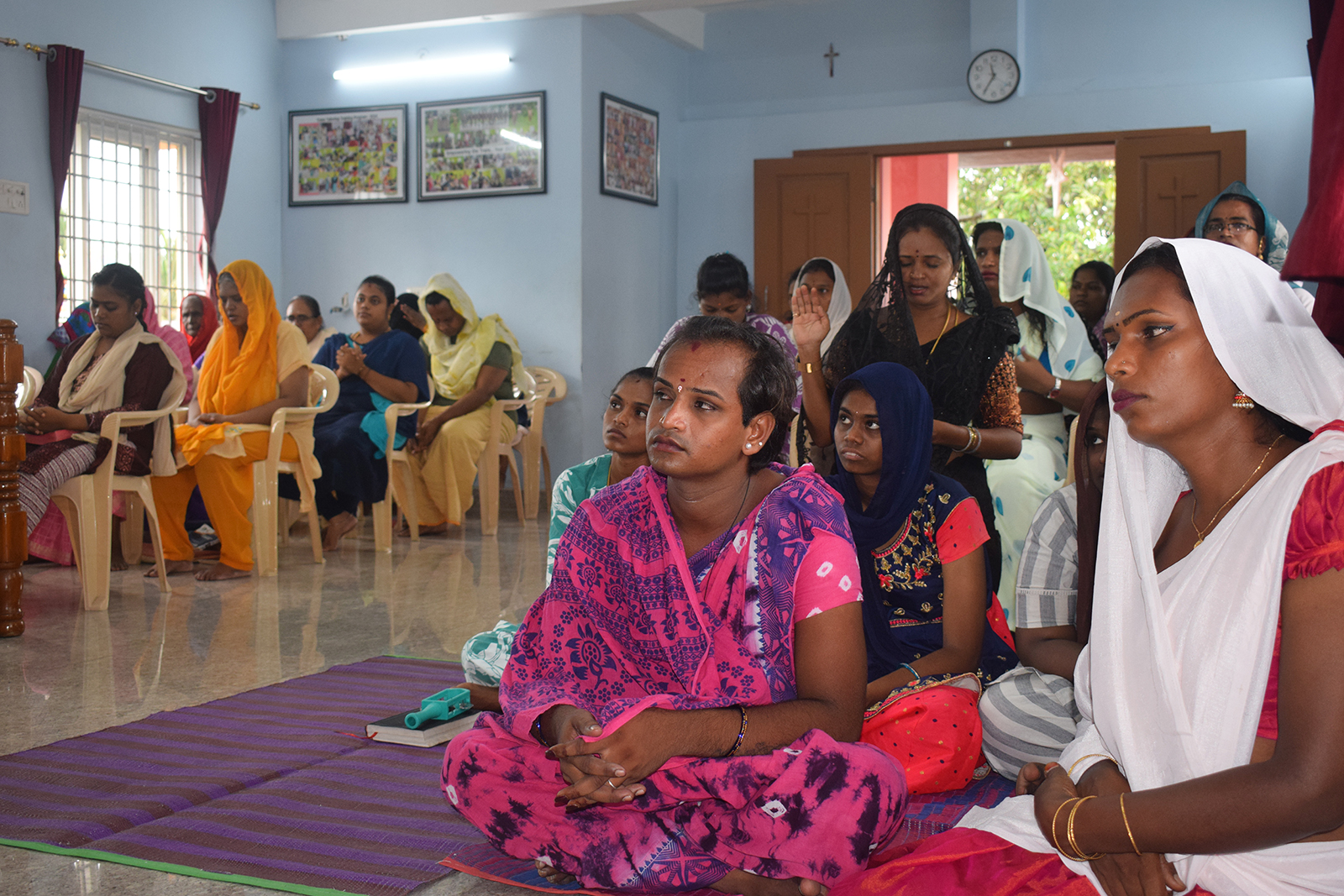
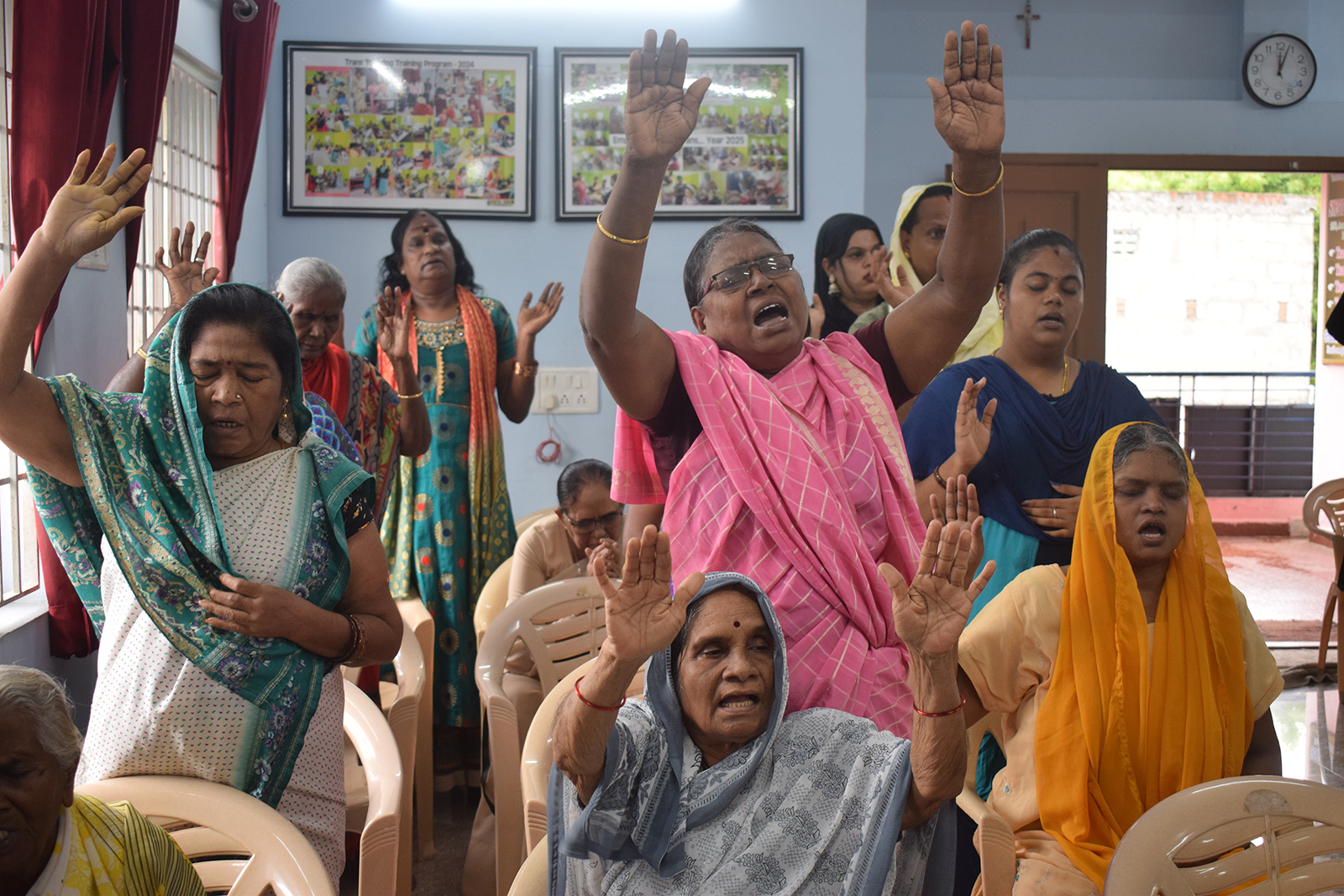
Members of the transgender community take part in a prayer service at a trans chapel in the suburbs of Chennai, India, June 12, 2026. (Photo by Priyadarshini Sen)

CHENNAI, India (RNS) — Twenty years ago, Inba Ignatius felt she didn’t belong in her Catholic church in suburban South India.

Ignatius, who is now 48 and a transgender activist, recalled that during a Christmas midnight Mass, a priest at her asbestos-covered church refused to administer Communion to her and three of her transgender friends until they “repented.”

But more than a decade later, Ignatius, a fiery and outspoken advocate who has for years been helping trans people find shelter and jobs in Chennai, feels the first stirrings of a new home in Catholicism. That’s in part because, in February, the archbishop of the Archdiocese of Madras-Mylapore, the Rev. George Antonysamy, launched the first sustained initiative by India’s Catholic Church to minister to and engage with transgender people.

Known as the pastoral care desk, the program is spearheaded by parish priest Father Leo Joseph, along with Ignatius. The group meets monthly, and its stakeholders are Joseph, three nuns from the diocese, four other priests, four members of the transgender community and Ignatius, the coordinator.

The group meets for prayers, yet the primary role of the ministry is pastoral. It aims to provide educational and employment support, health care access, security and pastoral accompaniment, and more broadly, to help transgender people live with dignity and hope. And, its leaders say they want their model to be replicated in other dioceses, helping to end societal and religious institutions’ misconceptions about trans people.


“We now have a way to connect directly with the church and the parish community,” Ignatius told RNS.

Inba Ignatius, center, a transgender community leader, laughs with Father Leo Joseph and Sister Sagayam at the trans shelter home in the suburbs of Chennai, India, June 12, 2026. (Photo by Priyadarshini Sen)

Transgender people in India continue to face significant social stigma, often involving rejection from their families. They also experience high levels of unemployment, poverty and violence. Systemic challenges drive many into sex work and begging on the streets. Legal rulings have affirmed their rights, but a recently passed bill rolled back some of those rights.

Ignatius said she felt shunned by mainstream society since she was 8 years old. Living in a remote village in Southern Tamil Nadu, a few hours from Chennai, she started thinking she was different from others. She was also sexually abused by her neighbor at that age, she said.

When she started working, she faced workplace harassment and said her family took her to hospitals and psychiatrists for treatment. When she was 23, a doctor told her family she was trans, and her brother urged her parents not to force her to get married.

“I don’t want others to face what I’ve endured since my childhood,” she said. “The pain of feeling you don’t belong anywhere is unparalleled.”

She left her family home to rebuild her life in the Chennai suburbs in 2007. “I didn’t want my parents and siblings to face humiliation because of me,” she said.

Members of the transgender community participate in a prayer service at a trans chapel in the suburbs of Chennai, India, June 12, 2026. (Photo by Priyadarshini Sen)

Her family helped her build a small house in a neighborhood populated by daily wage earners and migrant workers whose homes were pressed into dense and narrow lanes. A relatively large population of transgender people also live in the area, though exact numbers are hard to pin down, as they often move to flee persecution or conceal their identities. Despite Hindus, Muslims and Christians living together there in relative harmony, transphobia was rampant, and Ignatius wanted to confront it head-on.

In 2015, she started inviting 40 to 50 trans people to her home to pray with one another and for emotional and social support. She then expanded her house into a shelter and safe space for trans and HIV-positive people. 

“(Ignatius) is a pillar of support for us,” said Kaushika, a transgender woman from the nearby city of Vellore, who asked to be identified by her first name only for her safety. “She’s been sensitizing people about our community through flash plays, cultural programs and worship rituals.”  

Eventually, Ignatius opened a small chapel on the second floor for people of different faiths to pray together.

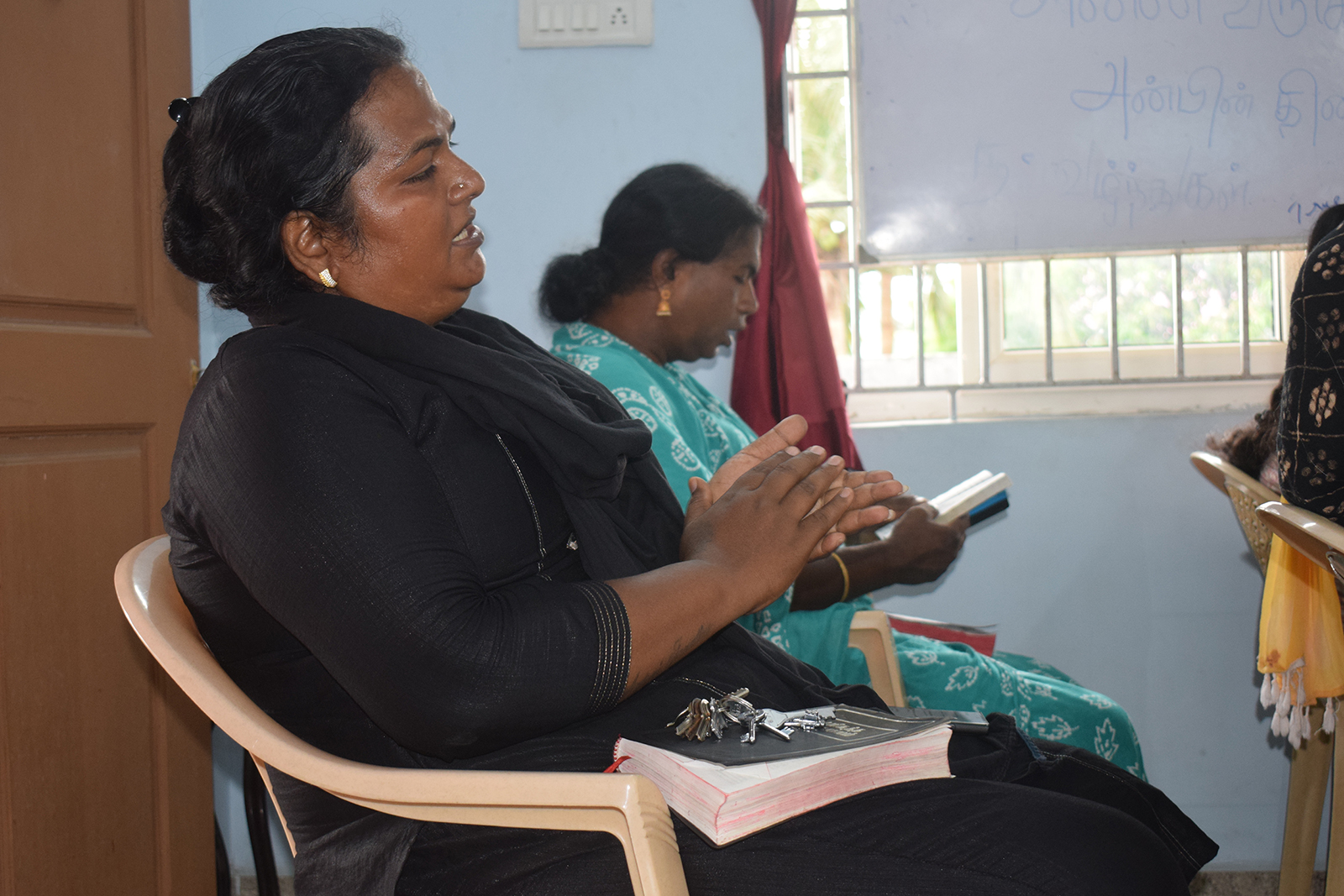
Isaac Raja, a pastor from a nearby Pentecostal church, has been leading Friday afternoon services at Ignatius’ chapel for more than five years.

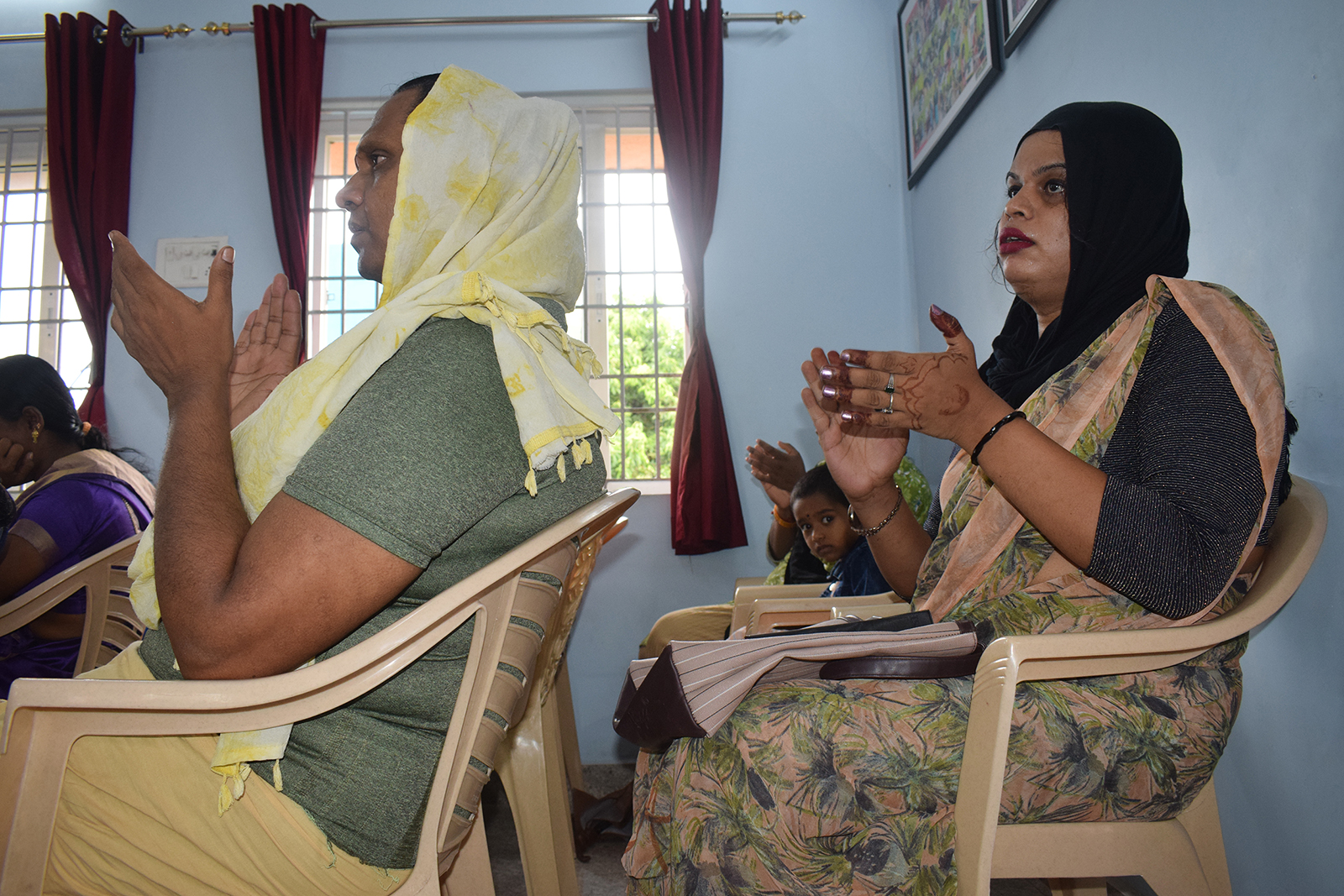
Members of the transgender community participate in a prayer service at a trans chapel in the suburbs of Chennai, India, June 12, 2026. (Photo by Priyadarshini Sen)

“Our work is to soothe their inner brokenness and offer spiritual support regardless of their faith background,” he said. 

During Friday prayers, Raja said members of the community sing devotional songs in the local Tamil language, read from religious texts and share their personal faith stories.

“This isn’t just a church for us,” said Akshaya Shajagan, a Muslim transgender woman who lives in the neighborhood. “It’s a safe space where we share our joys, sorrows and pain.”

Also in 2015, Ignatius met Joseph, a Catholic priest who was assigned to lead the Catholic church in her neighborhood.

“I had all these stereotypes about transgender people,” Joseph said. “But Inba started sowing seeds of love in my heart from the day I met her.”

A priest with a “subaltern consciousness,” he said, Joseph felt a strong urge to minister to those on the fringes of society — a path he thought would bring him closer to his spiritual purpose. He wanted his work to touch more lives and spark collective commitment.

Around 23 million Catholics live in India, according to the Vatican, making up roughly 1.6% of the population. Catholicism is the largest Christian denomination in India.

As his church was renovated from a tin shed covered by thin asbestos sheets into a sparkling white edifice, Joseph began pivoting his focus to transgender people. And in 2016, he began inviting transgender women to lead Scripture readings on Sundays. During retreats with children and youth groups, they were asked to impart lessons on gender diversity. 


On Maundy Thursday in 2022, a Holy Week feast that commemorates the Last Supper of Jesus with his Apostles, the priest initiated a new ritual: He washed the feet of seven transgender women to emphasize his care and love for them. 

Their work got another boost when Ignatius and a few of her friends met with Antonysamy at St. Thomas Cathedral Basilica in Chennai two years ago. “Father Joseph opened the doors of the Catholic Church to us,” Ignatius said. “Starting with the archbishop, we started getting to know other priests, nuns and religious leaders.”

Inba Ignatius attends a service at the trans chapel she helped start for members of the community in the suburbs of Chennai, India, June 12, 2026. (Photo by Priyadarshini Sen)

Joseph said his inspiration for helping create better inclusion for trans people was Pope Francis. During World Youth Day in Lisbon 2023, the pope asserted the Catholic Church was a place for everyone by repeating the phrase “todos, todos, todos” (everyone). In October 2024, Antonysamy attended the last major Vatican synod gathering of bishops with Pope Francis.

“Pope Francis was a big catalyst for our work,” said Antonysamy, who stood by Joseph as he made plans for holistic care and social integration of trans people. “Most important is to eradicate social stigmas, and we’ll deal with pushbacks as they come.”

The long-term plan, the archbishop said, is to involve more parish priests, bishops and religious congregations in uplifting the transgender community and to elevate the pastoral desk to a functioning commission. But for now, its strategy revolves around economic empowerment and building inclusive faith communities that provide care, acceptance and support.

“Despite pushbacks from some Orthodox people,” Joseph said, “my work has helped in my own formation as a person and has doubled my commitment to those on the peripheries.”  

This story was produced with funding from the Templeton Religion Trust.