Wednesday, August 26, 2026

Billionaire-Backed Groups Launch Ad Blitz Against California 5% Wealth Tax

Google co-founder Sergey Brin and venture capitalist Peter Thiel are among the billionaires bankrolling ads against a proposed one-time tax on the wealthiest Californians.



Attendees cheer during an event supporting the California Billionaire Tax Act in Los Angeles on February 18, 2026.
(Photo by Patrick T. Fallon/AFP via Getty Images)

Jake Johnson
Aug 25, 2026
COMMON  DREAMS

Organizations backed by mega-billionaires, including Google co-founder Sergey Brin and notorious venture capitalist Peter Thiel, have launched an advertising blitz aimed at convincing California voters to oppose a one-time, 5% wealth tax targeting the very richest people in the state.

The two most prominent groups fighting the tax, which will appear on California’s November ballot as Proposition 40, are Building a Better California and Californians Against Wasteful Spending and Higher Taxes. The former group, funded in large part by Brin, debuted its first television ad on Tuesday, just the start of what’s expected to be a massive propaganda push against the proposed tax.

The New York Times reported that the first ad from Building a Better California “emphasizes that unions representing teachers and firefighters oppose the tax, along with the state’s top politicians, including Gov. Gavin Newsom, a Democrat.”

“The ad makes no mention of the billionaires who vigorously oppose the tax,” the Times added.

The coalition spearheading the wealth tax campaign is led by Service Employees International Union-United Healthcare Workers West (SEIU-UHW). The tax proposal has won endorsements from the California Federation of Labor Unions, the California Nurses Association, and the California Democratic Party, along with high-profile progressive lawmakers including Rep. Ro Khanna (D-Calif.) and Sen. Bernie Sanders (I-Vt.).

Dave Regan, president of SEIU-UHW, told the Times that supporters of the tax are “not going to try to compete at all with the billionaires on broadcast television.” Brin’s group is reportedly set to spend more than $90 million on ballot initiatives this year.

Instead, the Times reported, “the union plans to spread its message through text messages, social media, door-knocking and slate mailers, making the most of the powerful endorsements it recently won from the California Democratic Party and the California Federation of Labor Unions.”

Last week, the Thiel-backed group Californians Against Wasteful Spending and Higher Taxes launched an online ad that falsely characterized the proposed billionaire levy as “an everyone tax” and a “Trojan horse.”

The ad features a menacing, AI-generated caricature of Sanders and other supporters of the tax, who are shown forcibly seizing residents’ property, including a boat, a kid’s scooter, and an elderly woman’s television set.


Journalist Judd Legum, author of the Popular Information newsletter, noted that the “fundamental premise of the ad is false.”

“It claims that the initiative’s drafters included a provision that allows them to ‘turn the tax on you,’” Legum wrote. “The initiative says that the tax can only be amended by the Legislature through a two-thirds vote of both houses. Even then, any changes must be ‘consistent with and further... the purposes of the 2026 Billionaire Tax Act.’”

“The ad claims that ‘every Californian will have to report all their assets to the state tax board,’” Legum observed. “Under the initiative, Californians just have to certify that they do not have $1 billion or more in assets by checking a box. This will be an easy calculation for nearly all Californians.”







Slovenian-led Veeda AI raises $90mn to build virtual worlds for robots

Slovenian-led Veeda AI raises $90mn to build virtual worlds for robots
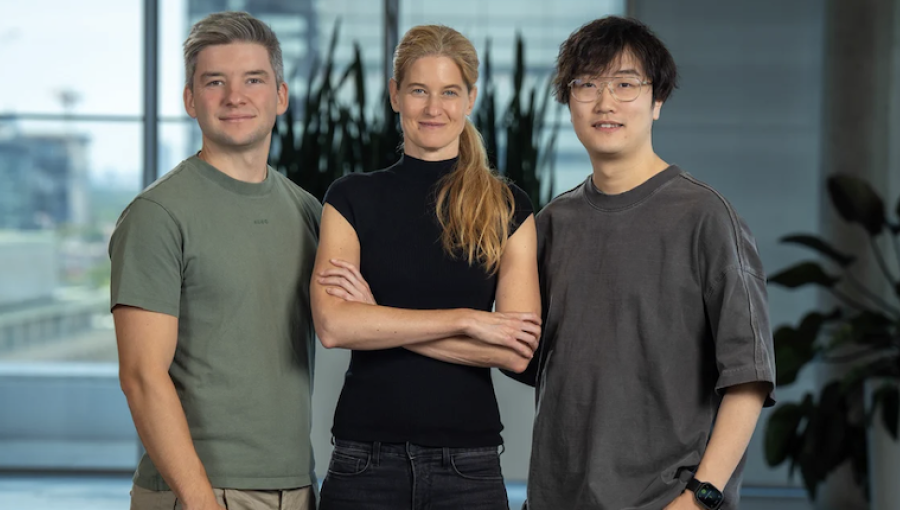
Veeda co-founders Sanja Fidler, Zan Gojcic and Huan Ling. / Sanja Fidler via XFacebookTwitterLinkedIn
By bne IntelliNews August 25, 2026

A team of AI researchers led by two Slovenians has left Nvidia to launch Veeda AI, a Toronto-based startup developing virtual environments where robots can learn and practise tasks before operating in the real world, startup news media outlet The Recursive reported on August 24.

Veeda AI has raised more than $90mn (€84mn) in seed financing, in one of Canada's largest seed rounds. The funding was co-led by Radical Ventures and Silicon Valley-based Khosla Ventures.

"We started Veeda because we believe robotics will reshape the world—changing how we move people and goods, how we manufacture and build, and how we operate in the physical world. We also firmly believe that the scaling moment for Physical AI will come from robots learning through interaction with the world," the company CEO’s Sanja Fidler said on LinkedIn.

The startup aims to address a major challenge in physical AI: the lack of large datasets showing how robots should interact with the physical world. While language models can train on vast quantities of online text, there is no equivalent database covering tasks such as opening doors, handling objects or navigating cluttered spaces.

Veeda plans to create scalable virtual worlds where robots can repeatedly learn, fail and improve through simulation before attempting tasks in reality.

CEO Sanja Fidler, who grew up in Slovenia and holds a doctorate from the University of Ljubljana, previously served as Nvidia's vice-president of AI research and headed its Toronto-based Spatial Intelligence Lab.

She co-founded Veeda with Slovenian researcher Zan Gojcic, who serves as chief technology officer, and Huan Ling, the company's chief scientist. All three previously worked at Nvidia.

Blanche bends to Trump obsession with bold TV vow: 'Ballroom is being built'

David Edwards
August 26, 2026 
RAW STORY


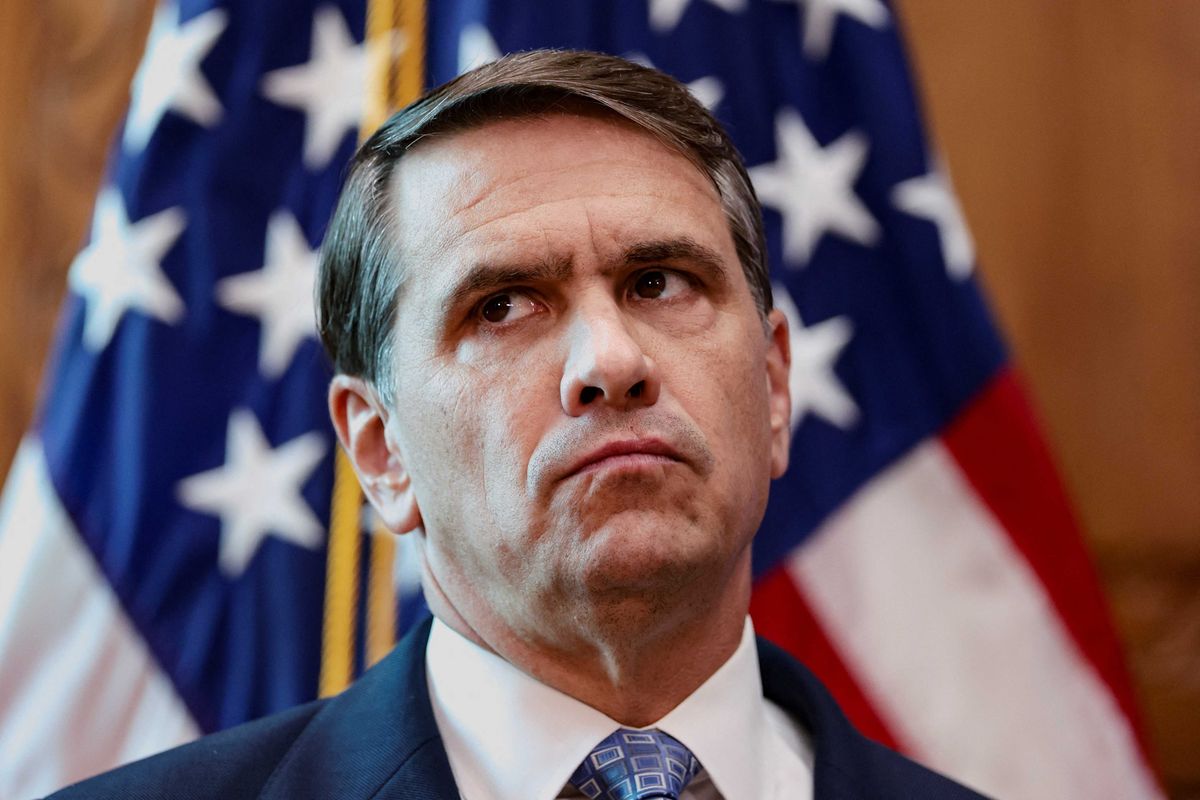
U.S. Attorney General Todd Blanche attends a press conference to announce actions regarding a Chinese national marriage fraud scheme, at the Justice Department (DOJ) in Washington, D.C., U.S., August 12, 2026. REUTERS/Evelyn Hockstein

Deputy Attorney General Todd Blanche vowed on Fox News to keep building President Donald Trump's $400 million White House ballroom, insisting it "is being built" despite two rulings against it.

Blanche spoke Wednesday on Fox News, where host Dana Perino asked when the legal fight would be resolved so the ballroom could be finished. The attorney general served as Trump's personal defense attorney before taking the Justice Department's second-highest job, and he now oversees the lawyers defending the project.

"But yes, we're gonna continue to build the ballroom," Blanche told Fox News.

"President Trump has promised that to the American people, and we're gonna continue to back him up in court to make sure that it can get built," he said. "The ballroom is being built. It's not stopped, and the Supreme Court issued the stay, which allows us to continue to do the work."

Chief Justice John Roberts issued a stay on Aug. 21 that temporarily froze a lower court decision halting above-ground work. CBS News

The order set no deadline and settled nothing about whether the project is lawful.

U.S. District Judge Richard Leon ruled in March that construction "must stop until Congress authorizes its completion.""The President of the United States is the steward of the White House for future generations of First Families. He is not, however, the owner!"

A federal appeals court upheld that order on Aug. 7, with two of three judges finding Trump lacked authority to build without congressional approval.

The National Trust for Historic Preservation told the justices the administration was racing to finish before the courts could stop it, and the government put the complex at "65% complete in its entirety."

"Well, the ballroom is being built, and it's disgusting that a district attorney in Philadelphia, who by the way has a city with its own problems, is so focused on what the president is doing at the White House," Blanche said.

Philadelphia District Attorney Larry Krasner said Tuesday he expected to keep a souvenir, telling a crowd it would be "a piece of the ballroom after we blow it up."

"It's also a national security issue, which we've been talking about now for months and months and months," Blanche added.

Leon's order never blocked the security work, according to NPR, and he allowed construction on the underground bunker beneath the White House to continue.


Tanking economy spurs stunning conclusion from analyst: Trump's doing it 'deliberately'


Travis Gettys
August 26, 2026 
RAW STORY


President Donald Trump's economic record has been so bad that one analyst concluded he must have wrecked it on purpose.

Rather than resulting from external shocks, the 80-year-old president's economic struggles stem largely from his own administration's decisions, MS NOW's James Downie argued Wednesday.

The column opens with Treasury Secretary Scott Bessent's exasperated response Monday, while announcing new sanctions on Iran, to the suggestion he might have deliberately damaged the economy: "Why would I want to blow up the global financial system?"

Downie argues he might have unwittingly made a reasonable point.

"Bessent may think that’s still a self-evidently ridiculous question," Downie wrote. "George W. Bush didn’t want a Great Financial Crisis, nor did Herbert Hoover seek to start a Great Depression. Surely no White House would deliberately hurt the global economy."

"Yet for the first time ever, that’s not the case," he added. "At home and abroad, the past few days have laid bare the extent to which President Trump’s troubles on the economy are self-inflicted."

The 30-year Treasury bond yield hit a 19-year high last week, prompting Bessent to expand government debt buybacks. Yields dipped only briefly before returning to prior levels, which the columnist attributes to investor concern over the $40 trillion national debt — a debt load it says traces substantially to the Bush-era and Trump-era tax cuts, citing an analysis from the Center for American Progress' Bobby Kogan.

The columnist also points to Trump's decision to allow 300,000 tons of tariff-reduced beef imports just before the midterms, framing his stated goal of lowering ground beef prices as a tacit admission that American consumers, not foreign exporters, have been absorbing tariff costs.

On the Iran conflict, Downie notes continued closure of the Strait of Hormuz, sustained high oil prices, and reports that companies are raising prices on goods including beer, french fries, paint and packaging to offset rising costs.

The piece further highlights renewed U.S.-Canada trade tensions, with both countries announcing new tariffs. It quotes economist Paul Krugman's observation that the U.S. economy relies on Canadian goods more than commonly recognized, citing Canadian oil exports to the upper Midwest and electricity supplying roughly two million homes in Maine.

It comes as no surprise then, he argued, that July data shows retail sales fell for the first time in nine months and job losses in the broader economy.

"Presidents usually get far too much credit or blame for the state of the economy," Downie wrote. "But in Trump’s case, the causation is much clearer. And it means a key part of his political image is backfiring."
'Absolute disaster' at U.S. Army as $500M goes up in smoke and robots catch fire

THE PENTAGON HAS NEVER BEEN AUDITED!!!


ProPublica
August 26, 2026 


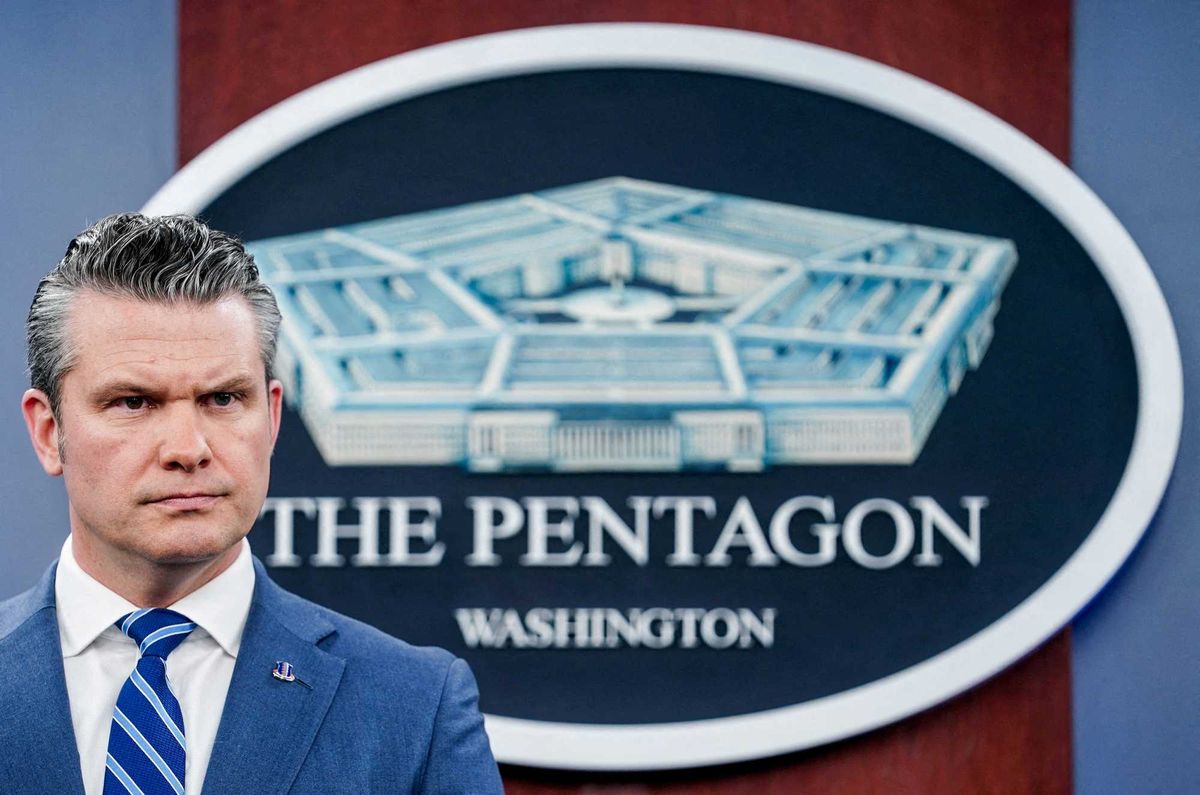
U.S. Secretary of Defense Pete Hegseth looks on during a briefing on the Iran war, at the Pentagon in Washington, D.C., U.S., April 16, 2026. REUTERS/Nathan Howard

The U.S. Army paid General Dynamics $533 million for an artillery factory that failed to produce a single usable shell.

Instead of efficient, state-of-the-art production lines, half a billion dollars in taxpayer funding paid for machines that kept failing in bizarre ways, former workers told ProPublica’s Jesse Coburn. Giant robot arms would catch fire. The Texas factory’s signature device often cracked the steel meant for the shells. And workers regularly had to take a sledgehammer to certain machines to try to make them function properly. But the machines still botched nearly every shell.

The boondoggle, which included a real-life dumpster fire, was described as an “absolute disaster,” by one former official who worked in an Army office overseeing the project. The official, like others interviewed for the story, spoke on the condition of anonymity

In a detailed statement, the Army told ProPublica it exercises “rigorous oversight” and that, “where vendors fail to meet contract specifications” — as at the General Dynamics artillery factory — ”we are evaluating contract performance, seeking recoupment of funds, and pivoting resources.”

General Dynamics declined an interview request, but the company has said it “met or exceeded requirements,” according to a Department of Defense inspector general report. In a statement, a company spokesperson told ProPublica its reporting “fundamentally mischaracterizes the circumstances,” but did not respond to a request to specify our reporting’s alleged errors.

To chronicle what went wrong, Coburn interviewed 36 people who’ve worked for the Army, the Pentagon, General Dynamics and the White House, and he reviewed internal company documents as well as photos and video from inside the factory. Here are the lapses in planning and execution Coburn’s reporting uncovered — and some of the consequences of those mistakes.

The Red Flags

The Army awarded the project to General Dynamics in a rushed process despite significant unknowns.

When Russia invaded Ukraine in 2022, the Biden administration rushed to boost production of artillery shells to support Ukraine’s war effort. General Dynamics was the only company producing the 155 mm metal shell bodies in the U.S. at that time, mainly in a century-old facility in Pennsylvania.

The company could have simply replicated the facility’s traditional manufacturing method, which dated back to the time of the Korean War, to ramp up production. But General Dynamics proposed using a state-of-the-art production line from Repkon, a Turkish company virtually unknown in American defense.

Repkon said other countries were already using its machinery to build an older, simpler model of the artillery shells. But it wasn’t clear the Turkish equipment could work with the particular steel used to make the Army’s newer model of 155 mm shells. And Repkon said the Army and General Dynamics could not inspect full artillery production lines in action, citing customer privacy.

Repkon did not respond to requests for comment.

The Department of Defense did not competitively bid the project.


The Army could’ve insisted that General Dynamics more fully demonstrate that Repkon’s machines could perform the desired work. But that would’ve taken time, and — as a former Army official told Coburn — “there was incredible pressure to go fast.”

In November 2022, the Army gave General Dynamics the first in a series of contract awards for the artillery factory. Then, Congress granted the Department of Defense the power to award money for Ukraine-related causes without some of the usual contracting safeguards meant to ensure taxpayer money doesn’t go to waste. That meant the Army could give General Dynamics no-bid awards and the company could start work on the project before finalizing the contract terms with the government.

The U.S. ended up ordering three Repkon production lines — instead of just one — without knowing for certain whether they could make shells that met the Army’s specifications. (The Army said it selected General Dynamics because of the company’s unique artillery production experience).

The Army did not thoroughly vet the proposal before approving it.

Both the Army and General Dynamics sent staffers to Turkey to inspect the Repkon machines. But they never inspected a full production line in action, and they didn’t send enough experts who could identify potential defects in Repkon’s equipment, four former General Dynamics and Army officials told ProPublica.

The Army also didn’t require General Dynamics to demonstrate it could use Repkon’s equipment to complete the entire production process and make shells that met the service’s specifications. (The Army said that “formal testing could not occur prior to full machinery installation.”)

In 2024, leaders from the Army and General Dynamics gathered in Texas to celebrate the factory’s opening. But the machines were barely functioning.

Here’s how the rushed planning from the Army and General Dynamics played out in the factory.

The Consequences

In Texas, robotic arms caught fire and smashed into equipment.

Twelve former factory workers told Coburn that problems quickly piled up inside the factory. Machines meant to begin giving the shells perfectly smooth noses would, instead, mangle them into swirls that looked like soft-serve ice cream.

The robotic arms had a tendency to swing out of control, smashing into things around the factory. Workers talked about the arms going “rogue.” Sometimes, a machine in the factory would be seen moving on its own, controlled remotely by someone in Turkey, spooking workers in the Texas factory.

Workers said smoke hung in the air inside the factory, and it’d reach desert-like temperatures when the furnaces or forging presses were on. Making matters worse, walls cracked, water flooded in when it rained and employees said the foundation of the buildings appeared to be shifting or sinking beneath them.

As progress at the artillery plant continued to stall, paranoia grew and rumors swirled among the American workers that the Turkish employees from Repkon might be purposefully sabotaging the machinery.

“It was astonishing how little progress we would make, month after month, year after year,” one former worker told ProPublica. “People started speculating, ‘I wonder if they’re spying on us.’” (The Army said it has no evidence of sabotage or spying.)

General Dynamics failed to meet a number of milestones at the facility, including failing to perform scheduled first article tests, which would’ve demonstrated the factory could produce shells that met the Army’s requirements.

The Army hasn’t required General Dynamics to pay the money back.

General Dynamics, one of the world’s largest defense contractors, and Repkon haven’t been held publicly accountable for the taxpayer-funded failure. The Army also hasn’t made General Dynamics pay back the money. (The service said it will recover funding from the project by getting unspecified discounts from General Dynamics on production orders.)

In August 2025, the Army halted work on two of the three production lines at the factory. But the Army didn’t unilaterally terminate the contract awards. In December 2025, the government paid the company $26.3 million in “progress payments” for two production lines — although the lines had never made a usable shell.

The Army says it won’t spend any more money on the artillery plant. But since the Army partially halted work at the factory last summer, the same unit of General Dynamics responsible for the struggling facility has won contract awards worth $2.5 billion, according to the Army. (The service said this was for “distinct production lines and critical national defense requirements” unrelated to the Texas factory.)

Having experienced the failure of a little-proven technology in its factory, General Dynamics has announced it will team up with yet another unheard-of partner promising technological innovation. The new solution? Artificial intelligence.

Read our full investigation here.
'Unbelievable!' Rage erupts on MS NOW over Meta's 'peanuts' court settlement

Tom Boggioni
August 26, 2026 
RAW STORY


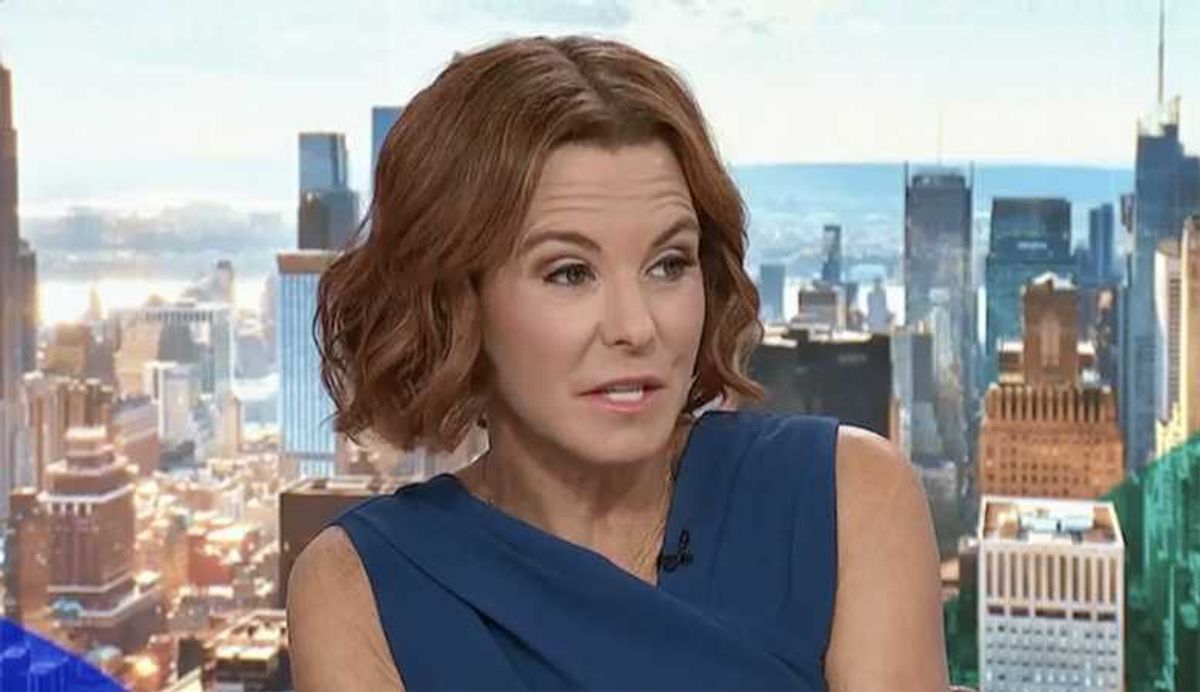
MS NOW host Stephnie Ruhle (screenshot


Outrage erupted on MS NOW host Wednesday morning as news broke that social media giant Meta had been awarded a slap-on-the-wrist settlement agreement in its highly watched court case.

Meta and a coalition of state attorneys general have settled a major federal trial centering on allegations that the social media giant misrepresented the extent of child-related mental health harms caused by apps like Facebook and Instagram,” CNBC reported early Wednesday morning.

In a case where experts agreed it could result in hundreds of billions being awarded, Meta is walking away with an agreement to pay a maximum $16.68 billion.


That led MS NOW’s Stephanie Ruhle to lose her cool and rail against the attorney generals she argued failed to do their jobs.

“If the company lost, Meta could have faced hundreds and hundreds of billions of dollars in damages,” she said.

“I get that on its face people are going to be like, wow, it could be $16 billion,” she explained. “$16 billion is not much. We thought it was going to be hundreds of billions."


Yale School of Management Dean Jeffrey Sonnenfeld was also appalled.

“It's unbelievable,” he blurted. “ This was, you know, a $1.4 trillion lawsuit that here you have 29 states, red states and blue states combined that — and it's being tried in Oakland, California, by a very good attorney general…somehow they've dropped the ball on this, because this was this was a home-court advantage for Rob Bonta, the attorney general, a Democrat, and, of course, California, a blue state.”

“This was a very favorable setting, and everybody was anticipating this is going to be billions of tens of billions of dollars, not this near 16 billion,” he continued. “It is a mere 16 — that's two weeks of revenues."

“That’s just peanuts!” Ruhle interjected.


Dolly Parton Remembered as ‘Advocate for Inclusion, Women’s Rights, Children’s Literacy, and More’

“She was not only a talented musician and songwriter, but a lifelong philanthropist and advocate for literacy, education, LGBTQ+ rights, healthcare, and disaster relief. Her music and humanity touched millions.”


Dolly Parton died August 25, 2026 at the age of 80.
(Photo by Dolly Parton/Facebook)

Jessica Corbett
Aug 25, 2026
COMMON DREAMS


Dolly Parton died Tuesday in Nashville, Tennessee at the age of 80, and was fondly remembered by people around the world for not only her decades in the entertainment industry but also her philanthropy and promotion of the belief that “everybody should be treated with respect.”

Parton’s nephew and head of security, Bryan Seaver, confirmed the country music icon’s passing in a video message shared on her social media accounts. As Rolling Stone reported, she “was born January 19, 1946, the fourth of Robert Lee and Avie Lee Owens Parton’s 12 children, in a one-room cabin on the banks of the Little Pigeon River,” and “grew up in rural poverty,” lacking plumbing and electricity.

The obituary shared on Parton’s platforms notes that she was preceded in death by her parents, as well as “her beloved husband of 59 years, Carl Thomas Dean,” who died last year, and that “the family asks for donations to be made to Dolly Parton’s Imagination Library,” which was inspired by her father’s inability to read and write, and has gifted more than 300 million books to children over the past three decades.

“Dolly Parton could have retired long ago having achieved greatness,” Congressman Ro Khanna (D-Calif.) said of the singer and actress who won multiple Grammy and Emmy awards, among numerous others, and whose songs include “Coat of Many Colors,” “I Will Always Love You,” and “Jolene.”

Rather than retiring from the spotlight, Khanna noted, “she chose to continue her life pursuing the arts, and pushing boundaries to advocate for inclusion, women’s rights, children’s literacy, and more. Dolly touched countless hearts and will forever be remembered.”

US Sen. Bernie Sanders (I-Vt.) wrote on social media that “Dolly Parton was one of the great entertainers of our era. She was not only a talented musician and songwriter, but a lifelong philanthropist and advocate for literacy, education, LGBTQ+ rights, healthcare, and disaster relief. Her music and humanity touched millions. She will be sorely missed.”


Sen. Elizabeth Warren (D-Mass.) said that “Dolly Parton gifted the world with her talent and heart. From supporting children, donating to science, investing in Tennessee, and giving us songs to sing our hearts out to (looking at you, ‘9 to 5’), she made the world a better place. Thank you, Dolly, for leading with love.”


Democratic North Carolina Gov. Josh Stein said that “Dolly Parton was so special, so universally loved. The first word that came to my mind just now was ‘authentic,’ which is funny since she is well known for her big wigs and extravagant gowns. But she was always herself. Her music was powerful and moving... But her impact on the world was much greater—from providing kids free books to funding vaccine research and promoting tolerance. America lost one of our best today.”


Similarly saying that “Dolly Parton represented the very best in America,” former Labor Secretary Robert Reich wrote at his blog that “I think what I admired most was her empathy (the sentiment disparaged by Elon Musk. In fact, to my mind she was the human that embodied the exact opposite of Musk.) She felt the pain of those in poverty. She felt for women subordinated to patriarchy... She felt for working women.”


Other key Democrats who posted remembrances included Kentucky Gov. Andy Beshear, Senate Minority Leader Chuck Schumer (NY), and former House Speaker Nancy Pelosi (Calif.), who called Parton “a singular American icon whose extraordinary voice, joyful spirit, and generous heart brought light to millions and made America kinder and more hopeful.”


Parton took stances on topics that have become divisive in US politics—such as supporting LGBTQ+ rights and vaccine research—but she openly avoided wading into political races, and was also honored on Tuesday by various right-wing politicians and other figures, from Cabinet members, federal lawmakers, and governors to Republican President Donald Trump, who announced on Truth Social that “I am lowering the American flag throughout the United States for a one week period.”

Meanwhile, as elected Republicans ban books and cut programs for the working class while giving more tax breaks to the ultrarich, Melanie D’Arrigo, executive director of the Campaign for New York Health, said that “Dolly Parton spent her life helping kids, marginalized communities, and people in need, while entertaining millions. She never had to, she chose to. In a world full of wannabe Donald Trumps, choose to be a Dolly Parton.”

'I am a person of faith': How Christianity shaped Dolly Parton's music and spirit

(RNS) — Country music icon Dolly Parton, who died Tuesday, credited her faith for her career, which crossed religions, races and politics — and the philanthropy that followed.
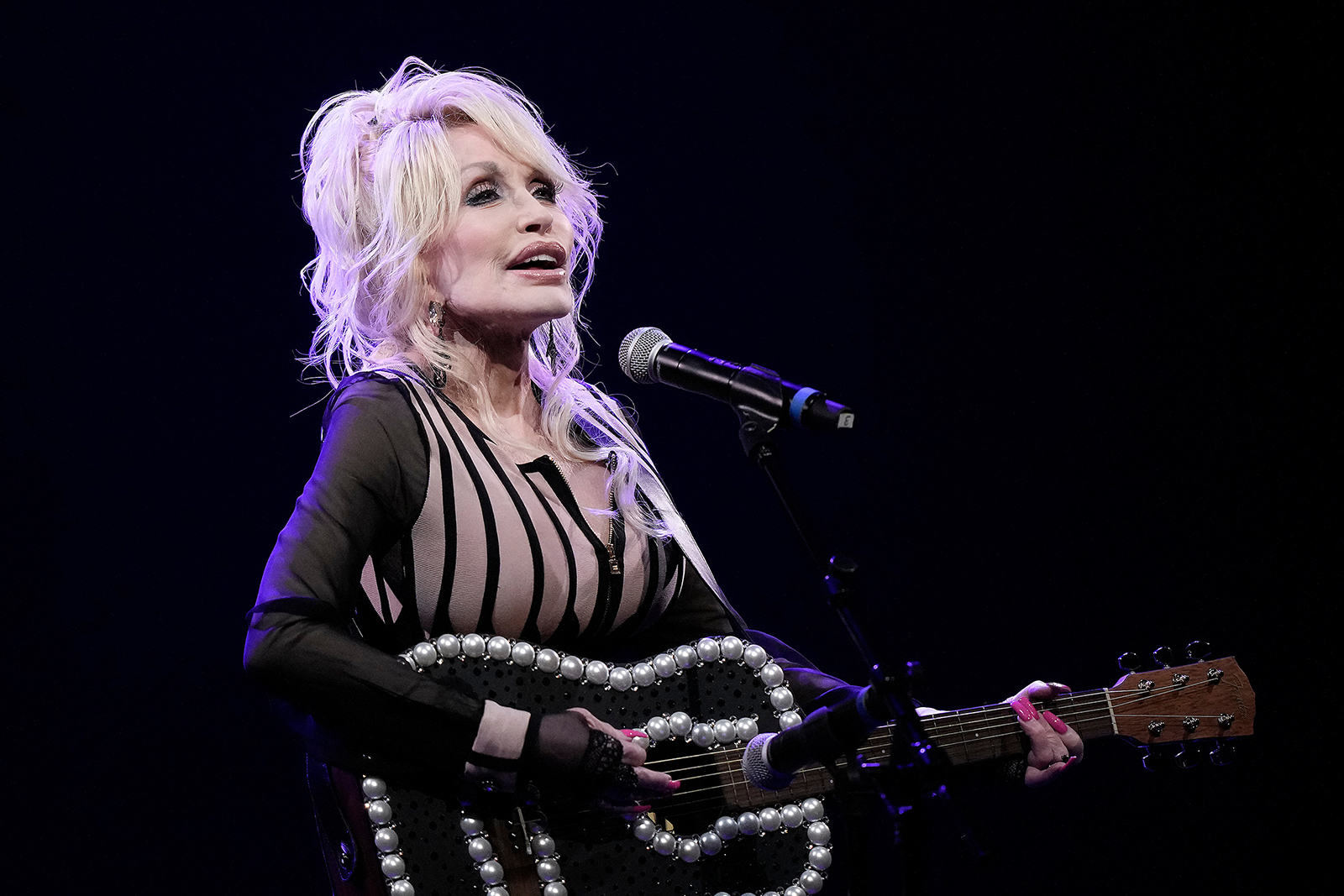
Dolly Parton performs in Overland Park, Kan., on Aug. 14, 2023. (AP Photo/Charlie Riedel, File)

(RNS) — Dolly Parton, the country music icon who sang and spoke frequently of her Christian faith, died at age 80 on Tuesday (Aug. 25), her family announced.

“Sadness lies with us, not with Dolly,” said Bryan Seaver, Parton’s nephew and head of security, in a video released by the family.

“Dolly has lived in the light and is in the arms of Jesus, surely met by Carl (her husband), her parents and countless others who have watched her and longed for her to meet them in the heavens.”

The winner of 11 Grammy Awards, Parton was one of those unusual performers with broad, enduring appeal, crossing religions, races and political parties, over seven decades, and she spoke of how faith grounded her and her family. 

“We all believe in God, and we’re very close,” she told KCRA, a Sacramento station. “We have a good communication with God, and I think that’s a positive attitude. That’s one of the reasons that we stay sane, and a lot of people in the business seem to be crazy.”


RELATED: Chicago church preaches ‘The Gospel according to Dolly Parton’ 


Born in the Smoky Mountains of Tennessee, she was one of 12 children. Her grandfather was a Pentecostal preacher, and Parton sang from a young age with her family. She wrote her first song at age 5 and by 13 had made her debut at the Grand Ole Opry, introduced by another country icon, Johnny Cash.   

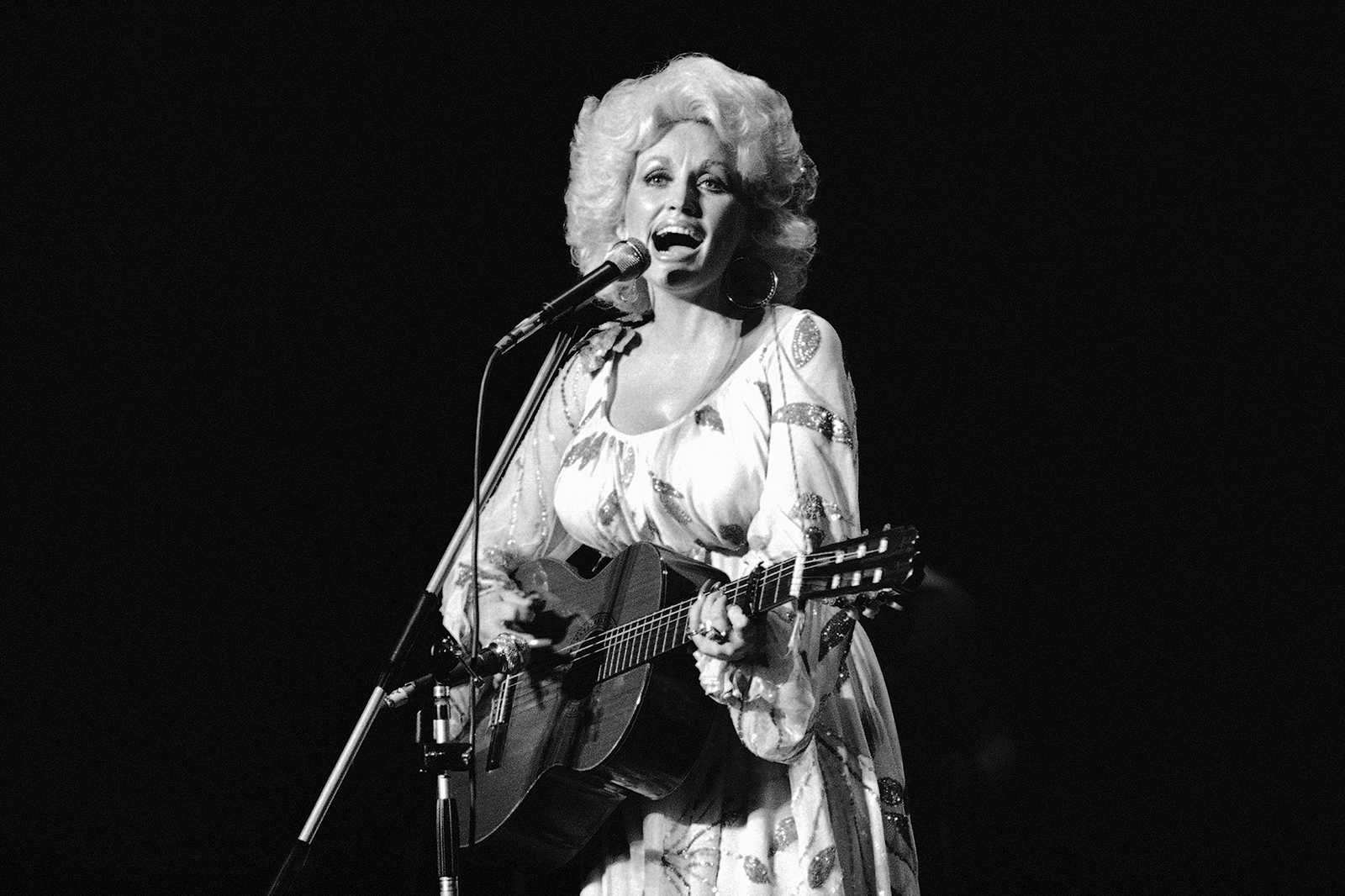
Dolly Parton performs in concert in Tokyo, July 30, 1979. (AP Photo/Tsugufumi Matsumoto, File)

She became a recording artist in the 1960s. Her song “I Will Always Love You” — written as she ended her singing partnership with Porter Wagoner — reached No. 1 on the country charts in 1974 and 1982 before becoming a global hit when Whitney Houston’s version of the ballad was released in 1992 on “The Bodyguard” soundtrack.

After global tours in the 1970s, Parton became a movie star, acting in “9 to 5” with Jane Fonda and Lily Tomlin — a film whose theme song became an anthem for working women. In the 1980s, she recorded “Islands in the Stream” with Kenny Rogers and opened Dollywood, a theme park in Pigeon Forge, Tennessee.

Even amid her mainstream hits, Parton kept gospel music in rotation, with her 1971 gospel album “The Golden Streets of Glory” and the 2019 song “God Only Knows” with Christian musical duo For King & Country, and a hand-clapping medley on her 2022 NBC special, “Dolly Parton’s Mountain Magic Christmas.”

Parton was inducted into the Country Music Hall of Fame in 1999, the Gospel Music Association’s Gospel Hall of Fame in 2009, and the Rock & Roll Hall of Fame in 2022.

She also was a famous philanthropist. In the 1990s, Parton created a program to give free books to children as a tribute to her father, who was unable to read or write. Her Imagination Library has donated more than 300 million books across the globe. In a 2018 interview, she also cited the Bible as inspiration for this program. “In the Bible, where it talks about honor your father and mother, … I think means to bring honor to their name.” In more recent years, she gave a $1 million donation for COVID-19 research that was partly used to fund the Moderna vaccine and announced a similar donation to help victims of Hurricane Helene, which affected Tennessee, her home state, and six others in 2024, People magazine reported.

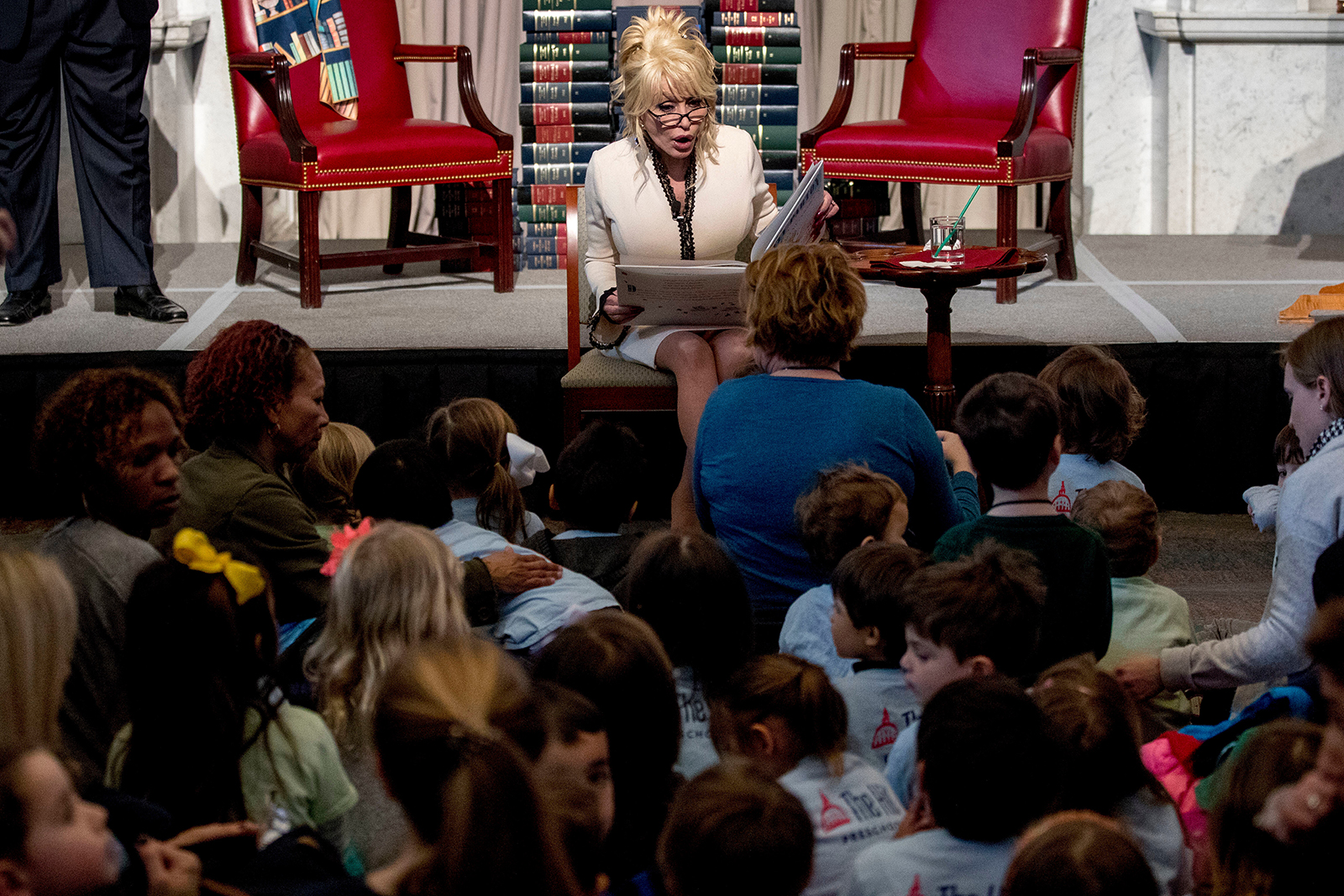
Dolly Parton reads her book “Coat of Many Colors,” at the Library of Congress in Washington on Feb. 27, 2018. (AP Photo/Andrew Harnik, File)

Her fans included clergy. The Church of the Three Crosses in Chicago made Parton the subject of a five-part sermon series in 2022, Religion News Service reported. “We’ve been using Dolly as a way to talk about story and our larger story of faith and that all of our stories matter and that God’s story is continuing on in us,” the Rev. Britt Cox told the congregation at the time as she concluded the series titled, “The Gospel According to Dolly.”

The sermon series featured Parton’s songs, including “Jolene,” “My Tennessee Mountain Home” and “I Will Always Love You.”

Parton, who performed in sold-out concerts even in the last years of her life, drew a firm line between admiration and worship. “I don’t want to be worshiped, because there’s a scripture in my Bible that talks about idol worship,” she told People in 2021. “And I see that happening all the time with movie stars and these celebrities. People literally worship them more than they worship God. And I just — I cringe at it sometimes.”

After the death of her husband of more than 60 years, Carl Dean, last year, Parton spoke to The Associated Press about how her faith was a comfort.

“I am a person of faith, and I truly believe that I’m going to see him again someday,” she said in the May 2025 interview. “And I see him every day in my memories and in my heart, and in all the things that we used to do and all the things that we’ve built together.”

After the announcement of her death, a wide array of politicians and religious leaders lauded Parton for her accomplishments. President Trump announced that he would order the lowering of the American flag in Parton’s honor for a week. “Very sad to report that Dolly Parton, one of the greatest Country singers, and far beyond, EVER, has just passed away,” he added. “This is a true loss for millions of people. There has never been anyone like her, and never will.”

In a post on X, U.S. Sen. Bernie Sanders, the Vermont Independent, called Parton “one of the great entertainers of our era. She was not only a talented musician & songwriter, but a lifelong philanthropist and advocate for literacy, education, LGBTQ+ rights, healthcare and disaster relief. Her music and humanity touched millions. She will be sorely missed.”

On Bluesky, New York Mayor Zohran Mamdani praised Parton as an “irreplaceable champion of the working class.”  

“Dolly invited us all — poets and historians and tired moms alike — to a ‘glammed up’ life of song,” wrote theologian Diana Butler Bass in her newsletter.

“Thank you, Dolly Parton. For the high heels and the music. For dressing up our days. And for your smarts and courage and honesty and generosity of spirit. We will always love you.”

The Rev. Bernice King, CEO of the Martin Luther King Jr. Center for Nonviolent Social Change, posted on X: “I am deeply saddened by the passing of Dolly Parton. Her extraordinary voice entertained and brought joy to generations, and she used her influence beyond music to affirm human dignity, inclusion, and the importance of treating people with love and respect.”

Aleja Hertzler-McCain contributed to this report.

 Opinion

New book ‘A Nation Wrestles With God’ traces religious dialogue through our history

(RNS) — Wrestling — with the divine, with morality — might well be America’s most sustained pastime.
"A Nation Wrestles with God: American Prophets, Philosophers, and Firebrands" edited by Ilan Stavans. (Courtesy image)


(RNS) — The following is an excerpt from the book ‘A Nation Wrestles with God: American Prophets, Philosophers, and Firebrands’, a 528-page anthology edited by Ilan Stavans and published by Restless Books on June 30, 2026. The collection of essays spans over 400 years of American spiritual thought — from pre-colonial texts to the present day, from Anne Bradstreet and Joseph Smith to James Baldwin, Christopher Hitchens and more — about the country’s unique relationship to religion. The text below is adapted from its introduction. 

***

“I was a-trembling, because I’d got to decide, forever, betwixt
two things, and I knowed it. I studied a minute, sort of holding
my breath, and then says to myself:
 ‘All right, then, I’ll go to hell.’”
 - Mark Twain,
“Adventures of Huckleberry Finn” (1884)

Huck Finn, the rambunctious, free-spirited, 13- or 14-year-old boy sailing down the Mississippi River in the pre-Civil War South, son of a drunkard, with a rough upbringing and without a formal education, is arguably the most famous fictional character in the United States.

“All modern American literature comes from one book,” Ernest Hemingway said — Mark Twain’s novel “Huckleberry Finn.”

As the epigraph above attests, Huck’s journey is not only geographical but moral: Faced with what the slave-owning society he lives in sees as right, he doesn’t hesitate in choosing wrong, which in his eyes, of course, is right. Huck isn’t religious, not in the traditional sense. And he doesn’t believe in God, or at least he doesn’t talk about it. Still, he has been exposed to Christianity through figures like his caregiver, Miss Watson, and he finds its teachings contradictory and ineffective in his own life. While he doesn’t embrace organized religion, his odyssey leads him to question societal norms. This allows him to develop his own moral compass to the point of rejecting the idea of hell to help his friend Jim, a runaway slave.

Huck is proof that even atheists wrestle with God, indirectly or otherwise. And if not God, at least with an ethical — or, rather, unethical — universe. That wrestling — with the divine, with morality — might well be America’s most sustained pastime. It was present before the republic came into being, remains vigorous to this day and is unlikely to diminish as time continues its inexorable march. Since 1956, “In God We Trust” has been the nation’s official motto, when Congress formally adopted it (as a replacement of “e pluribus unum”). It is still printed on our currency, having first appeared on U.S. coins during the Civil War. Since 1954, when President Dwight Eisenhower signed it into law, the phrase “under God” has been an integral part of the U.S. Pledge of Allegiance. And although the “invocatio dei” isn’t written into the nation’s Constitution (God, Jesus Christ and Christianity aren’t mentioned in it), it does contain — twice — the word “religion”: in Article 6, which exempts government officeholders from a religious test, and in the First Amendment (“Congress shall make no law respecting an establishment of religion, or prohibiting the free exercise thereof”).

Obviously, if God is on our money and in our pledge, then God is in our hearts. Indeed, in the long and torturous history of the making of nations, there has never been a shortage of using God as a motivator. The need to justify foundational strokes — why a nation is created, its mission, what distinguishes it from others, its connection to the land and its neighbors — by invoking supernatural intervention is essential. The United States, while persuading itself, even deluding itself, as exceptional, is no exception.

Any dialogue with the divine, at its core, unfolds in a variety of ways: as an antagonism between credo and “episteme,” between the Bible and Aristotle, between creationism and evolution. Yet, at its most basic, religion is about language: the use of words to alleviate, or else exacerbate, the anxiety of loneliness, to map out a path through the chaos that is the universe. The Bible, the Quran, and other religious books are nothing if not a collection of words and sentences built in response to our wonder.


Semantically, the word God comes from Old English, which itself stems from the Proto-Germanic “guđán.” It might be traced to the Proto-Indo-European “ghu-tó-m,” likely meaning “that which is invoked” or “that which is poured out.” Merriam-Webster defines God as “the supreme or ultimate reality.” It states that in the Abrahamic religions (Judaism, Christianity and Islam), God is understood to be “the being perfect in power, wisdom, and goodness who is worshipped as creator and ruler of the universe.” The act of conceiving that so-called perfect being isn’t the only challenge; sustaining a relationship with God is a more challenging quest. “To wrestle” means to engage in deep thought, consideration or debate. In other words, to wrestle with God involves two or more participants; it is never one-sided.

Our relationship with God has its ups and downs, its moments of light and darkness, its closeness and distancing, its rewards and disappointments. But it hasn’t always been understood in those terms. In ancient times and up to the Middle Ages, observance was seen as mostly passive from the human perspective: One accepted the will of God, or there would be consequences. This changed from the Renaissance onward into a more balanced equation: As theologian Abraham Joshua Heschel put it, communing with God entails humans searching for God and, in equal measure, God searching for a human counterpart. Thus, the title of this anthology begets its own double: Just as America wrestles with God, God wrestles with America.

(Ilan Stavans is the publisher of Restless Books and the Lewis-Sebring Professor of Humanities and Latin American and Latino Culture at Amherst College in Amherst, Massachusetts. He is the recipient of numerous honors, including a Guggenheim Fellowship, Chile’s Presidential Medal, the International Latino Book Award and the Jewish Book Award. The views expressed in this commentary do not necessarily reflect those of Religion News Service.)