Wednesday, August 26, 2026

As AI enters Sikh life, old debates on technology and tradition continue

(RNS) — A machine may reproduce words, images or melodies. But Sikh practice, many argue, remains rooted in intention, consciousness and connection.
Sikh devotees light candles at the Golden Temple as they mark the birth anniversary of their first guru, Guru Nanak, in Amritsar, India, Wednesday, Nov. 5, 2025. (AP Photo/Prabhjot Gill)

(RNS) — More than a century before Sikhs debated artificial intelligence, they debated another new technology: electric lights in the gurdwara.

When lightbulbs were first introduced at the Golden Temple in Amritsar, India, in 1897, some Sikhs questioned whether replacing traditional ghee oil lamps with electricity would diminish the sanctity of Sikhism’s holiest shrine. For two decades, rival factions debated whether the technology threatened tradition or could better serve pilgrims.

Eventually, electricity prevailed.

Today, the Golden Temple relies on electric lighting, digital displays and sophisticated sound systems to welcome millions of visitors each year.

Now, the adoption of artificial intelligence is raising similar questions as it’s embraced in religious communities in India and the diaspora.

Across the Sikh world, AI is being used to create educational materials, answer questions about scripture and make religious teachings more accessible. But it has also sparked concerns about whether technology can replicate forms of spiritual expression rooted in human presence and devotion.

Supreet Singh presents at Camp Kudrat in April 2025 in Cambria, Calif. (Image by MVP Films)

Supreet Singh, a Sikh educator based in Houston, Texas, grew up hearing stories from his father, who was raised in Amritsar, about the lightbulb controversy. Today, he sees that debate as a reminder that Sikh communities have long wrestled with how to integrate new technologies.

“The guru says that as time progresses, light and the truth will prevail,” Supreet Singh told RNS. “And so I think that if AI has some truth in it, I think it will last the test of time, it will do good for society. And I think if it has more bad and fails, then it will diminish out of our views.”

As an educator with the nonprofit Everythings 13, Supreet Singh uses AI to create videos and animations about Sikh history and philosophy. The technology allows a small organization to produce materials that would otherwise require significantly more resources.

For Gurpreet Singh, a New Jersey-based senior director of applied machine learning in the biopharmaceutical industry, AI’s greatest potential may be helping younger Sikhs reconnect with teachings written in languages they may not fully understand.

Gurpreet Singh spends every Sunday teaching children from the Sikh community at the SAGE Khalsa School in Oakland, New Jersey. He said he noticed a difference between his own relationship with Sikh scripture, having grown up in Punjab, and that of his children, who grew up in the U.S.

“I was very comfortable in the native language of Punjabi in which it is written,” he said. “But my kids here, they don’t have the same meaning attached to that word when they hear it the way I have it.”

The GianiJi.com chat bot. (Screen grab)

To bridge that gap, Gurpreet Singh and students at SAGE Khalsa developed GianiJi.com, an AI chatbot designed to answer questions about Sikh teachings in any language alongside the original Punjabi using Gurbani, sacred teachings of the gurus contained within the Guru Granth Sahib, the Sikh scriptures, as its source material.

Gurpreet Singh sees AI as part of a longer Sikh tradition of translating timeless teachings into new forms of communication.

He compared the moment to the creation of Gurmukhi, the innovative written script associated with Sikh scripture, which helped make religious teachings accessible beyond elite languages at a time of great inequality in India.

“Guru Nanak’s message was about translating that language into practical aspirations of what it means for life,” he said. “I see this as the same moment.”


But for some Sikhs, AI’s ability to reproduce religious expression raises concerns about spiritual practice and the human aspect of devotion and worship.

Karina Skye Kaur, a Brazilian-American musician and yoga instructor living in Florida, said she has encountered YouTube channels featuring Sikh devotional music, “shabads,” that were created using AI.

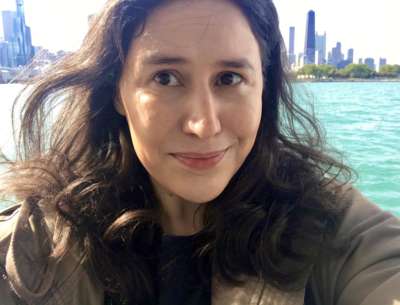
Karina Skye Kaur. (Photo courtesy of Karina Skye Kaur)

“At first, I enjoyed the music, but part of me feels the plasticity and lifelessness of it,” Skye Kaur said.

Skye Kaur worries AI-generated devotional music may imitate spiritual beauty without the consciousness and intention behind human worship.

“While I don’t think Sikhi and its philosophy can be in anyway threatened by AI, shabad created by AI is only reinforcing the illusion of this world,” she said. “It can help us navigate the world better, but it can also pull us further away from the truth.”

Responding to concerns, Sikh institutions and authorities are navigating the tension between the benefits and limitations of AI’s use. In 2025, Sri Akal Takht Sahib, Sikhism’s highest temporal authority, directed Sikhs not to use AI, animation or digital deepfakes to depict Sikh gurus, martyrs or sacred ceremonies. Sikh advocacy organizations have also urged technology companies to prevent inaccurate representations of Sikh history and scripture.

As such, Sikh developers have focused on building technological safeguards.

Daljit Singh, a web developer in Kartarpur, India, launched his own platform, KhalsaGPT, in 2023, that is an AI assistant designed to answer questions about Sikhism.

“I wanted to create an AI platform dedicated to Sikhs that can help Sikhs get every question answered from trusted sources with references,” Daljit Singh said.

Members of the Manhattan Sikh Association dine together Saturday, April 18, 2026, at Infinite Space NYC in Manhattan. (Photo by Kyle Desrosiers-Levine)

KhalsaGPT was designed as a text-only educational platform. Daljit Singh prohibited it from generating verses from the Guru Granth Sahib, creating images of Sikh gurus or presenting itself as a religious authority.

Nonetheless, the project also highlighted AI’s risks, Daljit Singh said. Generative AI systems can produce false information, known as “hallucinations.”

“As Sikhs ourselves, we understood that this area requires great care, responsibility and proper oversight,” he said.

The project has been paused for the past year, Daljit Singh said, because of his professional commitments — not because of the Akal Takht directive. He believes carefully verified Sikh data could eventually help improve how major AI systems answer questions about Sikhism.

A machine may reproduce words, images or melodies. But Sikh practice, many argue, remains rooted in intention, consciousness and connection.

For Gurpreet Singh, the promise of AI is that it can help a new generation rediscover a tradition that has always adapted to new technologies.

“I think my invitation to the next generation,” he said, “would be to really embrace this as a tool — a way in which they can better understand why this was written, and why it is this relevant in today’s context.”

Interview

Silicon Valley’s Billionaire Cults Are Coming for Democracy

“We can have billionaires or we can have democracy. We cannot have both,” says Gil Durán.

August 20, 2026

LONG READ


“We can have billionaires or we can have democracy. We cannot have both,” Gil Durán says. In this episode of Movement Memos, Durán and host Kelly Hayes discuss the bizarre fixations and political fantasies of tech billionaires like Peter Thiel, and how those ideas are being translated into real-world governance. Durán and Hayes also discuss Silicon Valley’s Christian cosplay, and how traditional Christian ideas are being used as wrapping paper for the pursuit of AI-first, corporate fiefdoms.


TRANSCRIPT

Note: This a rush transcript and has been lightly edited for clarity. Copy may not be in its final form.

Music: Son Monarcas and Dusty Decks

Kelly Hayes: Welcome to “Movement Memos,” a Truthout podcast about organizing, solidarity, and the work of making change. I’m your host, writer and organizer Kelly Hayes. Today we are talking about how the cults of Silicon Valley have seized vast amounts of institutional and political power, and how tech billionaires like Peter Thiel are seeking to remake the world — while repackaging some of their most radical, anti-democratic ideas in the language of Christianity. We’ll be hearing from Gil Durán, author of the new book, The Nerd Reich: Silicon Valley Fascism and the War on Democracy.

The growing public animus toward data centers and AI presents us with an opportunity right now to unmask these billionaires and explain their bizarre ambitions and political fantasies to our friends and neighbors in plain terms. I believe that kind of narrative work is a moral and strategic imperative. With Gil’s help, we’ll talk about how Silicon Valley capitalists developed their ideas, the threat they pose to our communities, the forces we will need to defeat their projects, and why we must fight back.

If you appreciate this podcast, and you would like to support “Movement Memos,” you can subscribe to Truthout’s newsletter or make a donation at truthout.org. You can also support the show by subscribing to “Movement Memos” on Apple or Spotify, or wherever you get your podcasts, or by leaving a positive review on those platforms. Sharing episodes on social media is also a huge help.

Truthout is an independent news organization, publishing stories that the craven corporate press won’t touch. We are a union shop with the best family and sick leave policies in the industry, and we could not do this work without the support of readers and listeners like you. So thank you for believing in us and for all that you do. And with that, I hope you enjoy the show.

[musical interlude]

Kelly Hayes: Gil Durán, welcome to “Movement Memos.”

Gil Durán: Thank you for having me.

Kelly Hayes: How are you doing today?

Gil Durán: Pretty good. Staying busy. Lots of interest in the book, so I’m doing a lot of talking about these ideas these days.

Kelly Hayes: Well, I can understand why there’s a lot of interest. It’s a really fascinating read. Can you tell our audience a bit about your work?

Gil Durán: Well, I’m a journalist who got the journalism bug at a very young age in the fifth grade and went into journalism after college after working on my college paper and doing a lot of internships. But after a few years in journalism, the industry started collapsing (the newspaper industry), and I ended up spending, unexpectedly, 17 years working in politics as a spokesman and communication strategist for a host of California Democratic elected officials like [Governor] Jerry Brown and [Senator] Dianne Feinstein and Attorney General Kamala Harris at the time. And then, in 2018, I got the chance to return to journalism, and I jumped on it. I’d always felt there was something missing. It was this feeling that I was supposed to be somewhere else, not wearing a suit and being in government and consulting and such.

So I returned to journalism in 2018 and was the editorial page editor of both The Sacramento Bee and then the San Francisco Examiner where I stumbled into the thicket of extremist tech politics in 2022. And this led to the next few years of my life where I burned through tremendous amounts of my own money in order to self-fund my research, and it unexpectedly has resulted in a book.

Kelly Hayes: A lot of the story you tell begins with The Sovereign Individual, a relatively obscure 1997 book that imagined technology weakening governments, destroying jobs, and allowing a wealthy cognitive elite to escape taxes, regulation, and democratic control. Peter Thiel seems to have taken that book extremely seriously. What did he find in it, and how much of the political project you describe can be traced back to that vision?

Gil Durán: I believe Peter Thiel found his entire worldview in The Sovereign Individual. He was already pretty right-wing as a young man and in college, but The Sovereign Individual provided a futuristic framework for how, in the 21st century, democracy in nation states would collapse, and we would witness the rise of these wealthy individuals who would be able to float around the world as sovereigns unto themselves, unbeholden to democracy rules, regulations, or laws. And what Peter Thiel subsequently did was build a cult of Silicon Valley apocalypse capitalism, a group of billionaires who believe technology will make democracy obsolete in the 21st century, and that indeed it is their destiny to hasten and accelerate the process of this democratic collapse and specifically, The Sovereign Individual, which was written by two guys who wrote a lot of kooky conspiracy theory stuff. These were not intellectuals or respectable, credible writers or journalists by the time they did this work.

The Sovereign Individual predicted that two technologies would play a key role in the 21st-century attack on democracy. One was called cybercurrency, a new kind of digital money that would undermine government authority and allow the wealthy to exfiltrate their wealth from democratic nations. We would call that crypto today. And the other was advanced automation, which The Sovereign Individual predicted would kill most employment and jobs, thereby leading to an economic collapse that would hasten the democratic collapse. And this book was so influential on Peter Thiel that he’s named it as part of his inspiration for starting PayPal, which was an effort to get ahead of this predicted digital currency. It didn’t quite result in a digital currency. It became a pretty basic payments app. And by the way, Peter Thiel and Co. no longer own PayPal. They sold it a long time ago, but it did make him a multimillionaire and provide the basis for the fortune that would eventually make him a billionaire and make him one of the most powerful and influential people in the world.

So basically, Peter Thiel, who has said he no longer believes that freedom and democracy are compatible and that government is fundamentally evil, was totally turned out by this very weird and kooky and scary apocalyptic conspiracy theory book, and we are currently living with the ramifications, I believe.

Kelly Hayes: And I want to talk more about Peter Thiel, but first, you describe Silicon Valley as a landscape of overlapping cults and quasi-religious movements, including the constellation of ideas known as the TESCREAL bundle. Why has the tech industry produced these totalizing belief systems and what political work do those beliefs do for the people who hold them?

Gil Durán: Well, it was Dr. Emile Torres and Dr. Timnit Gebru who came up with TESCREAL as an acronym that bundles these strange beliefs: transhumanism, extropianism, singularitarianism, cosmism, rationalism, effective altruism, and longtermism. And at the heart of these very weird ideas, which I won’t explain every single one of them because that could take all day and it’d be better if one of them explained it, is this idea that technology is about to fundamentally transform everything, how the world works, how politics works, how money works, how human beings work, how life works. They believe that they’re going to create this sort of AI God that will allow for eternal life or multiplanetary colonization and for humans to merge with machines and become godlike creatures.

And much of the AI discussion these days from the industry is based on these ideas that AI is not just a tool that will make certain parts of life better or make a better spell checker or recipe generator, but to fundamentally transform what it means to be human and to fundamentally shift the economy by getting rid of jobs and turning us into a society where somehow we have a superabundance that allows us all to live happily though we have no meaning and no work in our lives. This is the narrative coming out of the AI industry or else a technology that could possibly, in addition to killing all jobs, wipe humanity from the face of the earth because it will be so powerful and magical that it’s like this big monster we’re creating. But the only way to stop the monster from being created and killing us is to pour trillions and trillions of dollars into the pockets of a small handful of Silicon Valley billionaires so they can stop it from doing the bad thing and make it do the good thing.

Now, that’s a lot to say there, but it’s not too hard to understand why this religious narrative of AI has spawned some cult religions like transhumanism, like longtermism, like cosmism. The idea is that AI will be the savior and liberator of these people, and all we have to do is burn up the earth and maximize compute and acceleration in order to create our new God. I know this sounds really kooky if you haven’t heard of it, but they’re pretty explicit about this stuff. They talk openly about things like creating the thermodynamic god, which is this mysterious boom loop that will appear if we only burn enough fossil fuels to create the mega super AI, which by the way may not even be possible or realistic in any way. That’s part of the mythology is that this is actual intelligence that will create some superintelligence. But I think it’s important because the question is why do the most successful and wealthy people in our society seek to destroy the country and the society and the system that allowed them to achieve such success?

And that’s where you get into this idea of technological accelerationism. They feel that they are on the cusp of this magical, mystical, religious breakthrough to defeat death and to create a new kind of god in their own words. Many of them say this explicitly. But the only thing standing in the way of this unfettered expansion and acceleration of AI is democracy, is law, is regulation, is the needs and wants and desires of regular people. And so one of the reasons, maybe the core reason why they need to destroy democracy is in order to enable this unfettered acceleration. They call it effective accelerationism, this acceleration into the future. So there’s a religious basis underlying this desire to destroy our democratic system because otherwise, it doesn’t make much sense. Why would you want to destroy the exploitative capitalist machine with nuclear bombs that has created and enabled your success? No one has less of a reason to complain about our system than the billionaires do. They’re the ones winning.

So it doesn’t make any rational sense for them to adopt this extremist political viewpoint, except that they are animated by a sort of religious idea of what technology will enable them to achieve. A lot of them are also afraid to die, and they think AI is going to save them. So they’re preaching this sort of apocalypse, and that’s why I call this Silicon Valley apocalypse capitalism. They’re not promising to create new widgets and devices that make us happy and more connected like it was in the past 20 years. This is about, “Hey, we’re creating the thing that’s going to kill everybody maybe. So just sit back and hope that we cut you off a piece of our abundance later, and everything will be okay.” And that’s a very strange message and it’s no wonder now that people are rising up against data centers and AI and starting to hate billionaires in larger and larger numbers.

Kelly Hayes: We had Émile Torres on the show back in 2023 to talk about TESCREAL and longtermism, and I love Émile — they’re just so incredibly insightful, and I’m so grateful for their analysis. But I remember some friends feeling like they didn’t quite know what to do with that episode. They thought, sure, these people who are prioritizing the well-being of trillions of theoretical, future digital people over the billions of people alive today sound absolutely bananas, but what are they gonna do with that ideology? You can’t sell that to the masses. So, how dangerous could these people and their cults really be?

But what I was seeing, and what I was trying to convey to people, was that the people building power around these ideas had already consolidated an enormous amount of economic, political, and institutional power. If we look at the decades-long political project that brought some of the objectives of Christian nationalism to fruition in recent years, with TESCREAL, we’re talking about something that’s advanced much more quickly. Because while these tech power players haven’t necessarily been marketing these ideologies to the masses, over the last few decades, they have been marketing products that have sort of containerized and redefined modern life, and they’ve translated that wealth and that industrial and institutional capture into a whole lot of political power.

Now, a few years after Émile and I had that conversation, these tech-right ideologies have a shocking level of influence inside the federal government and over AI and crypto policy. They’re devouring some of the inner workings of government, in a similar manner to how they’ve devoured industries. And they’re also doing something else — they’re sort of repackaging these fringe ideas of theirs in more marketable, palatable ways. Which brings us to Christianity. Let’s talk about Peter Thiel’s fixation on the Antichrist, which is one of the stranger threads in the book, but you argue that it has real political significance. What is Thiel actually saying when he talks about the Antichrist? And how does that kind of apocalyptic thinking shape the way he understands political enemies, technology, and power?

Gil Durán: When Peter Thiel talks about the Antichrist, he’s confessing. He’s confessing his worldview. He believes we are in an existential battle over the future. And on one side is the billionaires and accelerationism, and on the other side is democracy and the majority of people in the world. He often throws communism in there as one of his demonized enemies, but he’s really talking about democracy if you look more deeply into it because they’re the ones aligned behind Trump and this authoritarian leadership. So when Peter Thiel describes the Antichrist, he describes this mysterious force or figure that will rise up suddenly to seize massive amounts of power and seize total control over the world by preaching peace and safety. None of this comes from the Bible, by the way. This is all his weird interpretation of the Bible.

But when he describes Silicon Valley, which he has also said it would be a religion of technicity that seeks to create an artificial world where people can no longer distinguish their real lives from the lives that are artificially being created for them, he said this in an essay back in 2007, he’s describing Silicon Valley, but I don’t know that he knows that he’s doing that, or else he’s doing it on purpose. It’s a double entendre. So the framework of the Antichrist is this idea that we’re in an existential battle, which we are. It’s a war of the billionaires against everyone else. But he uses it to try to scapegoat all of his enemies. It’s Greta Thunberg, it’s AOC [Alexandria Ocasio-Cortez], it’s democracy, it’s AI regulation, it’s anybody who opposes tech acceleration. Anybody Peter Thiel doesn’t like is the Antichrist in Peter Thiel’s Antichrist spiel. And by the way, theologians have completely rejected, mocked, and scorned all of his gobbledygook. This is a DIY theology from a guy who, as far as I can tell, isn’t even really Christian, Christian in name only.

Thiel has himself said that he’s religious but not spiritual, which means he likes the order and hierarchy and rules of religion without the mystery and spirit of religion. Usually, people say the opposite. They say they’re spiritual, but not religious. Thiel likes to reverse things a lot. I call it “Thiellian inversion.” He takes something and does the reverse of it. So it’s strange that he’s talking about the Antichrist because he’s, like, a terrible spokesman for Christianity. But I think the other thing he’s doing that relates to what we just talked about with the TESCREAL bundle is Thiel is trying to put a Christian mask on these TESCREAL ideas. And I think he’s trying to hush the louder voices in the TESCREAL movement and encourage them to adopt a Christian pose because that’s essential to this alliance they’ve made with the Republican right and the evangelical base of Trump’s MAGA fascist movement, which is so important because there’s a tension where the evangelicals in Trump’s base are very suspicious of the tech guys and understand that they’re a bunch of godless weirdo heathens.

And so, there’s been this news recently where, oh, there’s this Christian revival in Silicon Valley and it’s led by none other than Peter Thiel, where they’re having these meetings to talk about how basically, I don’t know, Christ would be a VC [venture capitalist] if he returned to earth. It’s total bullshit, but I think it’s got multi-layers. One is Thiel confessing his worldview that we’re in an existential crisis and everyone he doesn’t like is the Antichrist. The other is that, “hey, guys, let’s act like we’re Christians and speak in Christian terms while essentially pursuing acceleration TESCREAL goals.” And if you look at the TESCREAL bundle of beliefs, what are they promising through AI? They’re promising salvation, the creation of God, eternal life, escape from earth, transcendence into the heavens, the stars, multiplanetary life, paradise, an abundance that comes after we overcome our enemies and achieve the new paradisical realm that will be created by AI.

Their ideas literally map directly onto Christianity in this perverse anti-human way, which some might say is very much like what the Antichrist would do. Now, I don’t believe in the Antichrist. I’m not a Bible-thumping Christian. I was raised in Catholicism, but I don’t obsess over these ideas. I don’t go to church. But the very idea that Peter Thiel’s talking about the Antichrist so much is in itself a signal of the kind of emergency that we’re in. And I believe that it’s an example of this billionaire psychosis that gets created when people have too much money, too much power, and no one around them to tell them to sit down and shut up and stop sounding weird. So it’s a saving grace that he’s sounding an alarm. Peter Thiel is ranting about the Antichrist. We should be very afraid given his proximity to power and the number of people he influences directly.

Kelly Hayes: That quote about him being religious but not spiritual was one of my favorites in the book because it is so sitcom-silly. It sounds like something a character on Parks and Rec would say. But it also feels revealing, because what seems useful to these guys about religion isn’t necessarily faith. It’s authority. It’s hierarchy. It’s having a set of simple ideas that people are supposed to defer to. That way, nothing is interrogated.

I’m thinking about Elon Musk calling himself a “cultural Christian” and making these very utilitarian comments about Christianity — maybe religion is good, maybe it keeps people from being sad. There’s something so instrumental about that. And I think it connects to a much broader hostility toward the Enlightenment and toward critical thought that runs through these politics. Because at the same time that they’re repackaging themselves in this language of faith and tradition, they’re building technologies that encourage us to outsource more and more of our own thinking and judgment. Sam Altman talks about intelligence becoming a utility that people pay for. And I keep thinking about what kind of political subject that vision creates — people who are increasingly de-skilled and dependent on systems controlled by a handful of enormously powerful people.

And while these politics are strategically dehumanizing, toward all of us who aren’t billionaires or major players in the tech world, they’re also really insulting to people of faith, because what we’re talking about is a kind of perverse form of religious cosplay.

Gil Durán: Yeah, it’s weird. It’s really a touchy thing for billionaires to try to claim Christianity. Jesus Christ, who was known for his message of love and peace, one of the only groups he really shat upon was rich people who he said the camel had an easier chance of getting through the eye of a needle than a rich man into heaven. So it’s very strange and it’s very fraught with danger when billionaires try to embrace Christianity. And that’s what is happening though. This idea that the people who really need Jesus Christ or who are the most important in Christianity are the people in Silicon Valley today. This is something that Peter Thiel says in one of his Antichrist lectures in San Francisco. The people in this room, the people listening to his Antichrist spiel in San Francisco are doing the most important Christian work in the world today, which would be news to the Jesuits out in some poor, starving village full of poverty and misery trying to eke out some kind of salvation for people there.

This is a very arrogant and solipsistic claim to make. But I think one of the strangest things about this whole religious fervor is that JD Vance is pretending to be a Catholic largely because of Peter Thiel. And he has said that it was Thiel’s ideas that inspired his conversion to Catholicism. And similarly, if you look at Vance’s past interviews around the Hillbilly Elegy time, he described religion as a cultural tchotchke where he grew up. He was raised in a culture of Protestant evangelism, but he’s described it as something where you didn’t really have it. You didn’t go to church. It’s just that what’s part of your identity. Obviously, you believe in Jesus and there’s a picture on the wall. And he later becomes an atheist before converting to Catholicism at the age of 35. Apparently, he did that mostly in order to argue against the authority of the Pope, which he has infamously done for the past few years.

But you see this everywhere you look, this idea that religion has an important role to play in the lives of men who are essentially the opposite of Christianity. And that’s sort of scary because I think one thing Peter Thiel understands is the power of religion and apocalyptic language to motivate people to be a powerful force in politics. And that’s pretty much the same thing Elon Musk is saying. A cultural Christian is what JD Vance is describing as his upbringing, a cultural tchotchke. So they’re not seeding religion. They’re trying to claim religion as their motivation to give them this mask of familiar morality that obscures their true beliefs and their true aims and goals.

Kelly Hayes: Absolutely. And I appreciate you naming JD Vance’s role. I learned new things about Vance reading your book, including how mediocre he really was as a player in the VC world. But the role he now plays as a bridge between the Christian right and the tech right feels really important. Christianity offers these tech agendas a familiar moral language and a kind of traditional posture that can obscure how fringe and radical some of the underlying politics actually are.

And that repackaging makes me think about a broader shift in how Silicon Valley presents itself. A few years ago, I talked with Brian Merchant about the way the industry’s pitch to the public had changed. Tech companies once sold us the idea that technology would create a better world for everyone. Increasingly, billionaires seem to be selling us the idea that we’re already living in a dystopia, and that we should buy up every apocalyptic advantage we can. There’s also this strange tendency to invoke dystopian science fiction almost aspirationally — to take worlds that were imagined as warnings about alienation, social collapse, and technological domination and treat them as models for a future we’re supposed to adapt ourselves to. The pitch is no longer that technology will deliver a better tomorrow. It’s that upheaval is inevitable, their technologies will be at the center of it, and our best hope is to buy in. Is that shift part of what you call “apocalypse capitalism”?

Gil Durán: Most definitely, and they’re overtly selling it now, especially with the rise of AI. One of the major selling points has been that if we don’t invest in these guys so that they can develop this thing the right way, it will destroy us all. We have to align it with human needs. But they’re the only ones saying that, “Oh, this is going to be this supermonster that can kill us.” And if that were the case, why would we leave it to the private sector to develop such a dangerous technology? Would we allow corporations to independently develop big new weapons that could destroy the entire planet? No. So there’s this idea that they’re creating an apocalyptic technology that’s going to change everything and be the last invention. And fortunately for us, they’ve gone around saying that, which has created this popular rejection of AI and data centers and billionaires. So I definitely think that that’s a part of it.

The other part of it, I think, and Naomi Klein and Astra Taylor call it “end times fascism,” is this merger with the apocalyptic politics of MAGA, which also have a religious framework in which Trump is this figure sent from God as an instrument of vengeance and power to achieve some sort of return of Jesus through the coming of the apocalypse, the wars in Israel, et cetera. There’s a real crazy apocalyptic belief at the core of the MAGA movement as well. And it’s completely delusional and deranged. How could anyone see Trump as an expression or an ally of Jesus Christ? I mean, he literally posted a photo of himself as Jesus Christ and has multiple times compared himself to Christ with him being more favorable and better than Jesus Christ. This is not something that a real Christian, a real believer in Christianity would ever do.

So I think there’s that melding as well that makes it a fascist movement. On one basic level, the tech billionaires are fascist because they have aligned with the fascist movement. And at the core of that is this movement that melds government power with corporate power with religious power into one unified monopolistic authoritarian entity. And so, that religious element is very important because it’s totalizing. It’s all of your life. It’s not just your money or your political beliefs. It’s your moral and spiritual belief system. And so, that’s where the apocalypse capitalism gets a bit even more dangerous is because the tech fascists have become a parasite on the MAGA movement. They’re sucking its power in order to achieve their goals. Now, if you look deeper into what these guys say, they don’t really have respect for your average red hat Trump voter.

Those people are just temporary allies who help to fuel their own designs for power under a president who is raking in crypto corruption, creating a tower of political corruption so unprecedented and massive that it’s even hard to explain with words. So yeah, apocalypse capitalism. Yeah, I think we’ve seen it more fully develop in the past couple of years, especially under the return to Trump, the fact that we’re now speaking about this demonic communist threat. And when Charlie Kirk was shot, for a day or two on X, there was this trending idea that this was the work of demonic forces and we have to rise up against these demons who are basically Democrats and liberals. And so, you see this bubbling up, this idea that, again, we’re in this existential battle and we’re coming to the final moment here where we’re going to know the future. It’s going to be decided in some kind of terrible, violent upheaval where the world is completely different after that, whether we have democracy or where we don’t have democracy. And we’re still very much in the middle of this struggle.

Kelly Hayes: And these anti-democratic elites also have a vision for what comes next as democracy is demolished. What is the network state, and why do you see it as such an important part of the tech elites’ long-term political vision?

Gil Durán: The network state is this cult ideology which argues that democracy should be replaced by corporate-run tech city states, essentially, new startup nations that will replace existing nations and therefore replace democracy, for the most part. And the network state is important because even though it sounds like a fringe kooky thing… There was a book written by a guy named Balaji Srinivasan in 2022 called The Network State: How to Start a New Country, and you can read it for free online. You can find it with any search engine. And there’s a one-sentence version, a one-paragraph version, a one-page version, and then a 400-page version of this idea that the United States is collapsing and it’s going to be replaced by these new corporate-run fiefdoms, essentially, these corporate-run territories. And as crazy as that sounds, you got to keep in mind that Balaji Srinivasan is, of course, a protege of Peter Thiel.

And there’s a company called Pronomos Capital, a venture capital company that is brought into existence to fund these projects all over the world. In addition, we’re already seeing this idea being tried in Honduras where there’s a tech-funded wannabe city territory called Prospera. And Trump, in his 2024 campaign plan, called for the creation of 10 new Freedom Cities in the United States. There’s talk of building one of these cities in Greenland. That’s been part of Trump’s whole argument for stealing Greenland. You’ve got these tech guys pushing to build a new tech dystopia network state city there. And there’s even a proposal to build a new network state freedom city on the ruins of Gaza. I mean, the Wall Street Journal wrote about this. And it’s like Jared Kushner’s involved, and Trump tweeted out an AI-created video that showed a Trump hotel and casino on the beach at Gaza with money raining from the sky and Elon Musk sunning himself.

So somehow this idea of creating these new billionaire-owned private territories has gone from being this weird niche cult in Silicon Valley with a self-published book that’s free online to becoming something that the Trump administration, at least on a superficial level, has been pushing as potential policy. Now, Trump hasn’t really mentioned the Freedom Cities in a while. There’s been a lobbying effort that Wired wrote about in Washington to get these things enabled. Kind of hard to do. But what’s interesting to me is that while Trump has called for these Freedom Cities and there’s a whole billionaire-funded lobbying effort to create them, the media has mentioned this idea a couple of times, but no one has explained what these things are, why we need them, or where the idea comes from. And I feel like if Kamala Harris had become president, The New York Times would do a full investigation of what the hell’s a Freedom City and does it come from this weird ass book written by a Peter Thiel protege. But instead, we have this weird silence around this idea.

And I think another key to understanding the Freedom City is that, as I write in the book, Balaji Srinivasan didn’t come up with the idea of the network state on his own. He got it from Curtis Yarvin who wrote a long essay in the 2000s called “Patchwork” in which he proposed a future in which the United States would be dissolved. And instead, we would have the rise of these corporate-run autocracies. And he used as an example, something he called Frisk Corp, a future San Francisco where there would be absolute total surveillance by an authoritarian corporate government that would be so powerful that it even had the power to execute its citizens for no reason and no cause. And he suggested that in this future Frisk Corp, unproductive people could be turned into biodiesel to fuel the city’s Muni buses.

But he said, “Oh, well, I’m just kidding. Instead we need to have a humane alternative to genocide,” and then suggested that we lock unproductive people, meaning the poor, into these individual cells where they would spend their whole lives in these basic virtual reality prisons and not be on the street. And that’s horrifying for many reasons, especially since it would be much cheaper to give them housing and health care and food instead of locking them in virtual reality prisons, which sounds pretty expensive. But this idea of creating these new patchworks comes from Yarvin. And what Balaji Srinivasan does in The Network State is strip out all of Yarvin’s crazy genocidal ideas and try to present the idea as this startup-friendly concept that now has a venture capital fund (Balaji Srinivasan is an advisor to Pronomos Capital) that is trying to build these things all over the world.

So it’s this dystopian idea from science fiction. A lot of people bring up Neal Stephenson. Quinn Slobodian, who’s a Boston University historian, wrote a whole book called Crack-Up Capitalism about the long history of the dream of building these new territories where the usual rules don’t apply to some wealthy group of capitalists. You could trace it back to Ayn Rand’s Atlas Shrugged where these wealthy industrialists hide out in their little private zone and wait for the world to fall apart. It’s basically a vision in which democracy no longer exists, and the wealthy are now the monarchs and the dictators of the world.

Kelly Hayes: Trump went from calling Bitcoin “a scam” to becoming deeply financially entangled with crypto as he returned to the White House. You write that crypto’s real political innovation turned out to be its ability to capture government through money and corruption. How important has crypto been to the tech right’s seizure of political power?

Gil Durán: Crypto was long envisioned as a way that anarcho-capitalists would be able to escape government authority and move around the world without being under government surveillance. It was seen as this liberatory tool that would be against government power, that would undermine government power. What has actually happened now is quite different. Crypto has become a major force in seizing government power and putting government in the hands of crypto billionaires. Donald Trump spent years deriding crypto as a scam and as a ripoff and as something that wasn’t even real money. And on the day he returned to the White House in 2025, Donald Trump became a crypto billionaire and subsequently became the crypto bro-in-chief, the main evangelist for crypto in the entire world. And it turns out that crypto is not an anti-government tool. Crypto is a tool for seizing government power because we have a system where you can buy government power.

And crypto, which wasn’t even a player in politics 10 years ago, is now suddenly in the last five years, the top monied force in American politics. Hundreds of millions of dollars being poured into our elections to take out politicians who are unfriendly to crypto and to install politicians who are basically owned by the crypto industry. It’s grown so enormously fast that it’s terrifying when you look at a chart, and it’s bigger than all of the other industries who have played in this game. And now, AI is following the crypto playbook of flooding their money into our political system. And I call crypto a weapon of mass corruption because that’s what’s happening. I mean, the Trump family has gained billions of dollars in wealth via crypto in the last two years openly, transparently. This is written about in the Wall Street Journal, The New York Times, you name it.

People are buying Trump’s crypto in order to curry favor with him. They’re losing their money through this mechanism. So crypto is just a form of political corruption. They finally found a use case besides terrorism, drugs, human trafficking, and gambling. It’s political corruption. And so, this, again, is delivering on one of the prophecies of The Sovereign Individual that crypto would be a massive tool for undermining government. And look at what they’ve been able to achieve so far. “DOGE,” even though it, at least in its first incarnation, didn’t last very long, has caused tremendous damage to the American government and to the country’s standing in the world. Millions of people are predicted to die in poor countries because of the cuts to USAID. And in my book, I call that a “Silicon Valley genocide.” The richest people in the world delivering a targeted hit to the poorest people in the world, causing massive amounts of unnecessary preventable deaths.

And it didn’t even save money, by the way. DOGE cost money. It added to the deficit. And the most chilling thing about DOGE, and this was written about actually in the Washington Post surprisingly and even in The New York Times, is that that idea was first written up by Curtis Yarvin in his blog in the 2000s where he said that a future president acting like a dictator should install a CEO and purge the federal government of federal employees and cut international aid programs and completely disrupt America’s diplomatic standing around the world. And he called this idea “RAGE,” retire all government employees, and this eventually becomes DOGE.

And what’s even more scary about this is that in 2021 when he was running for Senate, JD Vance gave an interview in which he quoted Yarvin’s idea specifically for purging the federal government. And Vance predicted that in 2024, that Trump would return to power and that he should do all of the things he is currently doing. And what we didn’t know at the time was that JD Vance would also be the vice president to Donald Trump, a man he once referred to as an “opioid of the masses,” as “cultural heroin,” and as “America’s Hitler.” But that’s the power of billionaire money and Peter Thiel, and that’s the corrupting power of crypto.

Kelly Hayes: The book also shows that these tech projects can be surprisingly vulnerable. You describe how, in Solano County, California, a group of tech billionaires spent nearly a billion dollars buying land for a planned new city, only to run into overwhelming local opposition and abandon their ballot measure. What does that fight tell us about the limits of billionaire power? And where else do you see vulnerabilities that organized people can exploit?

Gil Durán: Unfortunately, the California Forever story is not over. Now, the billionaires are going directly to Governor Gavin Newsom to try to get a state law to impose their city on the people of Solano County. They couldn’t win a ballot measure. They needed a ballot measure with the majority of people voting to create this new city on land that they had secretly bought up for five years. And 70 percent of the voters in the polls were opposed to this idea, including large amounts of Republicans. In fact, I think Republican voters were even more opposed to the tech billionaire city than the Democratic voters, but independents were also against it. So they abandoned the ballot measure. But it was clear early on that they weren’t done because they had hired up a lot of Newsom’s political advisors as their consultants. And lo and behold, they are now working to get last minute legislation passed this month in secrecy that would basically exempt their city from laws and allow them to build it there.

So we’re going to see what Newsom does on that. His Office of Economic Development put out a memo supporting the project, which pretty much means that Newsom supports the project. And the main lobbyist California Forever has hired is a guy named Jason Kinney, who’s a close friend of Gavin Newsom, Gavin Newsom’s favorite lobbyist. In fact, when Newsom got in trouble a few years ago for having that fancy dinner at The French Laundry during the pandemic lockdowns, it was Jason Kinney’s birthday party, the lobbyist’s birthday party. So California Forever is playing the Sacramento game now of hiring up people and trying to get the bill through. At the same time, everywhere these people go, they’re hated. Whether it’s trying to build a tech billionaire city and getting rejected by Republicans and Democrats alike or trying to put these data centers everywhere, people are pushing back, and that’s something that gives me hope.

People are also organizing against Flock. There’s the Purge Palantir campaign, which is getting lots of attention and helping make people aware of the degree to which Palantir is burrowing into every aspect of our government and needs to be rejected. I think there’s been a lack of focus on it from establishment politicians and from the establishment media. So the word is not getting out there as much as it should, but I think people are primed to organize against billionaire power. They’re already doing it. What we need is it to get loud enough so that even the mainstream politicians like Adam Schiff and Alex Padilla are out there talking about pushing back directly on billionaire power. There’s this weird silence coming out of the establishment, which is readily criticizing Donald Trump, who’s this doddering, old, crypto corrupt fool, but they’re very hesitant to say anything directly about the billionaires of Silicon Valley.

A lot of this stuff is coming out of California, and it’s strange the degree to which Gavin Newsom and none of our top elected officials will name that. That’s somewhere they could be effective actually, naming and shaming and pushing back on these billionaires behind Trump who live in our state, but they won’t do it. Why? Because they either are afraid of the billionaire money coming after them, or worse, they want the billionaire money funding their future campaigns. So I think we’re still on the fence in terms of how this ends up, but there are promising signs because people who aren’t even normally activists are organizing against billionaire power as it manifests in their communities via data centers. In fact, I was really heartened recently. A relative of mine who has never shown any interest in politics posting and urging her friends on Instagram to come to this data center protest in our hometown. And I thought, “Wow, even they’re getting engaged in this stuff now.” That’s how much the anti-data center movement has penetrated.

But I think what we need to help the public understand is that it’s not just the data centers that are invading our lives and our communities. It’s the crypto corruption. It’s the tech fascism on even the much higher level that has captured Washington, D.C. and is currently wielding a tremendous and dangerous amount of power in our system.

Kelly Hayes: I really appreciate that point, and I appreciate the point you make in the book that this threat extends so far beyond Trump. These forces are so deeply enmeshed with this administration that I think it can be easy to understand them as simply part of the Trumpian threat we’re up against right now. But even if Trump were removed from the equation, we’d still be contending with billionaire power, the tech right, and these anti-democratic projects. And the Democratic Party does not exist in opposition to those forces. So if we want anyone to actually constrain this power, we’re going to have to build a hell of a lot more political momentum around doing that.

Given that our audience is largely composed of activists and organizers, I’ve been thinking a lot about how people can talk about these issues in their own communities. When Émile Torres and I discussed TESCREAL a few years ago, part of the difficulty was simply explaining why these bizarre, cultish ideas were actually important and threatening. Now we’re in a different moment. People are organizing against data centers. Workers are pushing back against AI. Communities are confronting surveillance technologies and seeing how these systems affect their lives in really material ways. Those struggles give people something concrete to organize around.

But we’ve also been talking today about the larger political project behind some of this — the corruption, the cultish ideologies, the attack on democracy, the aspiration to replace liberal democracy with corporate dictatorships. Given your background in both politics and journalism, how do you think people should talk about those larger projects in their communities? What language or framing helps people understand what they’re actually up against?

Gil Durán: This is a battle of billionaires versus freedom. It’s a fight to defend ourselves against an unprecedented existential threat. We can have billionaires or we can have democracy. We cannot have both. And ours is supposed to be a government of the people, by the people, and for the people. And right now, we have a government of the billionaires, by the billionaires, and for the billionaires. And that’s not all Donald Trump’s fault, by the way. The Democrats were doing this, too. The billionaires just acted a little more normal and polite when the Democrats were in power. But if we do not crush billionaire power in our time, the billionaires are going to crush us.

And right now, we have a situation where a lot of people are living in fear as the richest people in the world ally with Donald Trump to destroy the country and to terrorize the population. We’ve got masked goons with guns roaming around kidnapping people in the streets. And in a democracy, the people should not be afraid of the billionaires. The billionaires should be afraid of the people. So I think a message people understand, and you can see it in the polls, is that this is about the role of the billionaires in our lives. This is about whether we’re going to have… We cannot have a democracy if we continue to escalate and accelerate this massive inequality, and that’s exactly what AI and crypto are doing right now. In fact, I would say that’s what they are designed to do. And now, they have become completely enmeshed in our government, and our government power is being used to increase the already amazing and massive power of the wealthiest people in the world.

So I would say you have to name the enemy. You have to name the person who is doing this. The power that is most responsible for what is happening to us today. And Donald Trump’s an 80-something-year-old man. He won’t be around for long. But this is not really about Donald Trump. Donald Trump is a heat shield for these guys. Donald Trump is just the figurehead of what is actually a regime, and it’s a regime of billionaires, and it’s us or them. And there are only about 1,000 billionaires in the United States and 3,000 in the whole world. There are 8.3 billion people. We’ve got the numbers. And I’d say once we fully wake up to the threat that the billionaires pose to human life in general, not to mention jobs, the economy, our futures, the billionaires will be running for cover.

That’s why they’re building all these bunkers, by the way. The people promising to create abundance are also building bunkers and buying islands to hide out. What’s that all about? Well, that’s what they really think is going to happen in the future. And so, I think we need to start talking about billionaire accountability. And I think it’s important to do that because right now, they feel like they can do anything, and we need to make them aware that there’s a good chance of consequences in the future, and that consequences for billionaires will be a popular issue to run on in the next few years.

Kelly Hayes: I certainly hope so. Well, as we wind things down is there anything else you would like to share with or ask of the audience today?

Gil Durán: I’d say stay hopeful and stay positive. They haven’t won yet, and they haven’t thought of everything. They aren’t expecting the degree of pushback they’re going to get. And so, fascism thrives on fear, on making people afraid to speak out or to imagine a better future. And right now, the billionaires are monopolizing our visions of the future. And if they can imagine a world without us, we can imagine a world without them.

Kelly Hayes: Well, thank you so much for those insights. I’m really grateful for this conversation and I hope everyone will check out Gil’s book, The Nerd Reich: Silicon Valley Fascism and the War on Democracy. You can also hear more from Gil by checking out his newsletter, The Nerd Reich, which you can find at thenerdreich.com. Gil Durán, thanks for your work and thanks so much for joining me today.

Gil Durán: Thanks for having me.

Kelly Hayes: I also want to thank our listeners for joining us today. And remember, our best defense against cynicism is to do good and to remember that the good we do matters. Until next time, I’ll see you in the streets.

Show Notes


End Times Fascism and the Fight for the Living World by Naomi Klein and Astra Taylor


This article is licensed under Creative Commons (CC BY-NC-ND 4.0), and you are free to share and republish under the terms of the license.


Kelly Hayes
Kelly Hayes is a Menominee author, organizer, movement educator and photographer. She is the host of Truthout‘s podcast Movement Memos, and the creator of Organizing My Thoughts, a weekly newsletter about politics and justice work. She is co-author of the book Let This Radicalize You, with Mariame Kaba, and editor of the upcoming book, Read This When Things Fall Apart: Letters to Activists in Crisis. Kelly’s written work can also be found in Teen Vogue, The Huffington Post, Yes! Magazine, Pacific Standard, The Appeal and numerous anthologies. Her movement photography is featured in the “Freedom and Resistance” exhibit of the DuSable Museum of African American History.
Billionaire-Backed Groups Launch Ad Blitz Against California 5% Wealth Tax

Google co-founder Sergey Brin and venture capitalist Peter Thiel are among the billionaires bankrolling ads against a proposed one-time tax on the wealthiest Californians.


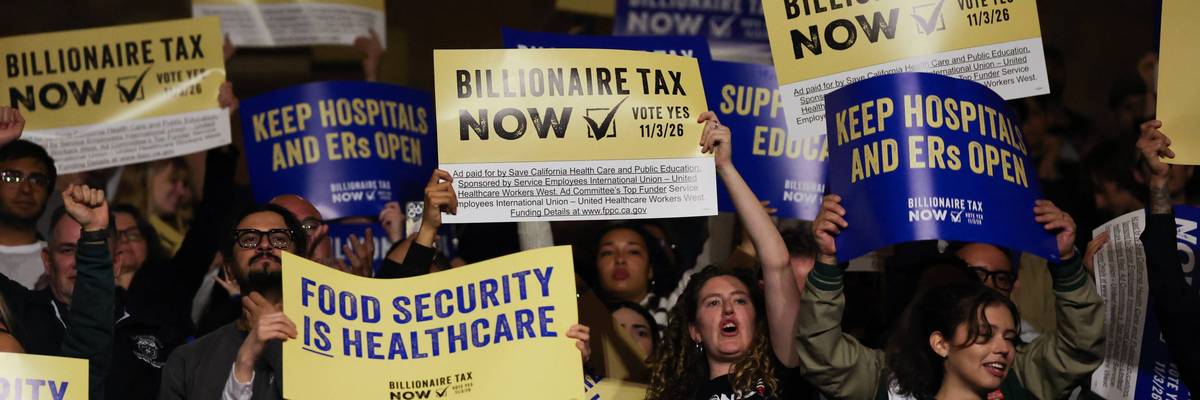
Attendees cheer during an event supporting the California Billionaire Tax Act in Los Angeles on February 18, 2026.
(Photo by Patrick T. Fallon/AFP via Getty Images)

Jake Johnson
Aug 25, 2026
COMMON  DREAMS

Organizations backed by mega-billionaires, including Google co-founder Sergey Brin and notorious venture capitalist Peter Thiel, have launched an advertising blitz aimed at convincing California voters to oppose a one-time, 5% wealth tax targeting the very richest people in the state.

The two most prominent groups fighting the tax, which will appear on California’s November ballot as Proposition 40, are Building a Better California and Californians Against Wasteful Spending and Higher Taxes. The former group, funded in large part by Brin, debuted its first television ad on Tuesday, just the start of what’s expected to be a massive propaganda push against the proposed tax.

The New York Times reported that the first ad from Building a Better California “emphasizes that unions representing teachers and firefighters oppose the tax, along with the state’s top politicians, including Gov. Gavin Newsom, a Democrat.”

“The ad makes no mention of the billionaires who vigorously oppose the tax,” the Times added.

The coalition spearheading the wealth tax campaign is led by Service Employees International Union-United Healthcare Workers West (SEIU-UHW). The tax proposal has won endorsements from the California Federation of Labor Unions, the California Nurses Association, and the California Democratic Party, along with high-profile progressive lawmakers including Rep. Ro Khanna (D-Calif.) and Sen. Bernie Sanders (I-Vt.).

Dave Regan, president of SEIU-UHW, told the Times that supporters of the tax are “not going to try to compete at all with the billionaires on broadcast television.” Brin’s group is reportedly set to spend more than $90 million on ballot initiatives this year.

Instead, the Times reported, “the union plans to spread its message through text messages, social media, door-knocking and slate mailers, making the most of the powerful endorsements it recently won from the California Democratic Party and the California Federation of Labor Unions.”

Last week, the Thiel-backed group Californians Against Wasteful Spending and Higher Taxes launched an online ad that falsely characterized the proposed billionaire levy as “an everyone tax” and a “Trojan horse.”

The ad features a menacing, AI-generated caricature of Sanders and other supporters of the tax, who are shown forcibly seizing residents’ property, including a boat, a kid’s scooter, and an elderly woman’s television set.


Journalist Judd Legum, author of the Popular Information newsletter, noted that the “fundamental premise of the ad is false.”

“It claims that the initiative’s drafters included a provision that allows them to ‘turn the tax on you,’” Legum wrote. “The initiative says that the tax can only be amended by the Legislature through a two-thirds vote of both houses. Even then, any changes must be ‘consistent with and further... the purposes of the 2026 Billionaire Tax Act.’”

“The ad claims that ‘every Californian will have to report all their assets to the state tax board,’” Legum observed. “Under the initiative, Californians just have to certify that they do not have $1 billion or more in assets by checking a box. This will be an easy calculation for nearly all Californians.”


Slovenian-led Veeda AI raises $90mn to build virtual worlds for robots

Slovenian-led Veeda AI raises $90mn to build virtual worlds for robots
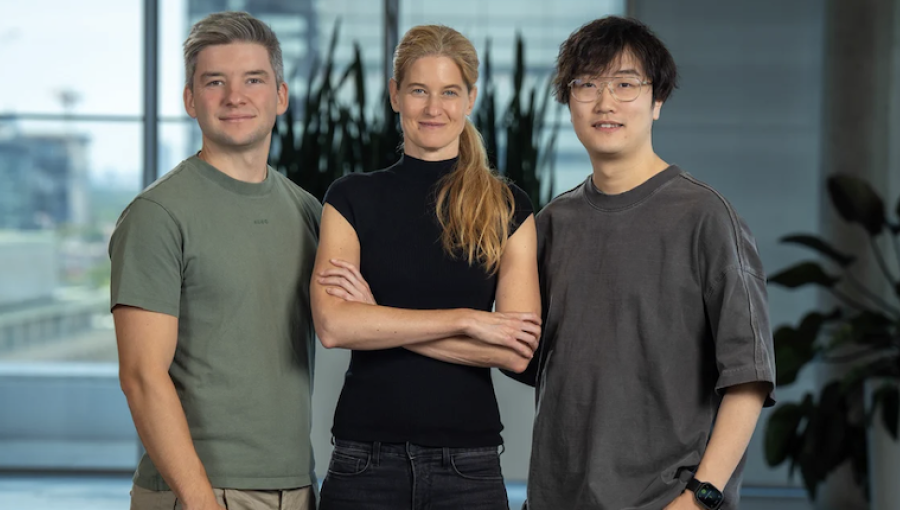
Veeda co-founders Sanja Fidler, Zan Gojcic and Huan Ling. / Sanja Fidler via XFacebookTwitterLinkedIn
By bne IntelliNews August 25, 2026

A team of AI researchers led by two Slovenians has left Nvidia to launch Veeda AI, a Toronto-based startup developing virtual environments where robots can learn and practise tasks before operating in the real world, startup news media outlet The Recursive reported on August 24.

Veeda AI has raised more than $90mn (€84mn) in seed financing, in one of Canada's largest seed rounds. The funding was co-led by Radical Ventures and Silicon Valley-based Khosla Ventures.

"We started Veeda because we believe robotics will reshape the world—changing how we move people and goods, how we manufacture and build, and how we operate in the physical world. We also firmly believe that the scaling moment for Physical AI will come from robots learning through interaction with the world," the company CEO’s Sanja Fidler said on LinkedIn.

The startup aims to address a major challenge in physical AI: the lack of large datasets showing how robots should interact with the physical world. While language models can train on vast quantities of online text, there is no equivalent database covering tasks such as opening doors, handling objects or navigating cluttered spaces.

Veeda plans to create scalable virtual worlds where robots can repeatedly learn, fail and improve through simulation before attempting tasks in reality.

CEO Sanja Fidler, who grew up in Slovenia and holds a doctorate from the University of Ljubljana, previously served as Nvidia's vice-president of AI research and headed its Toronto-based Spatial Intelligence Lab.

She co-founded Veeda with Slovenian researcher Zan Gojcic, who serves as chief technology officer, and Huan Ling, the company's chief scientist. All three previously worked at Nvidia.

Blanche bends to Trump obsession with bold TV vow: 'Ballroom is being built'

David Edwards
August 26, 2026 
RAW STORY


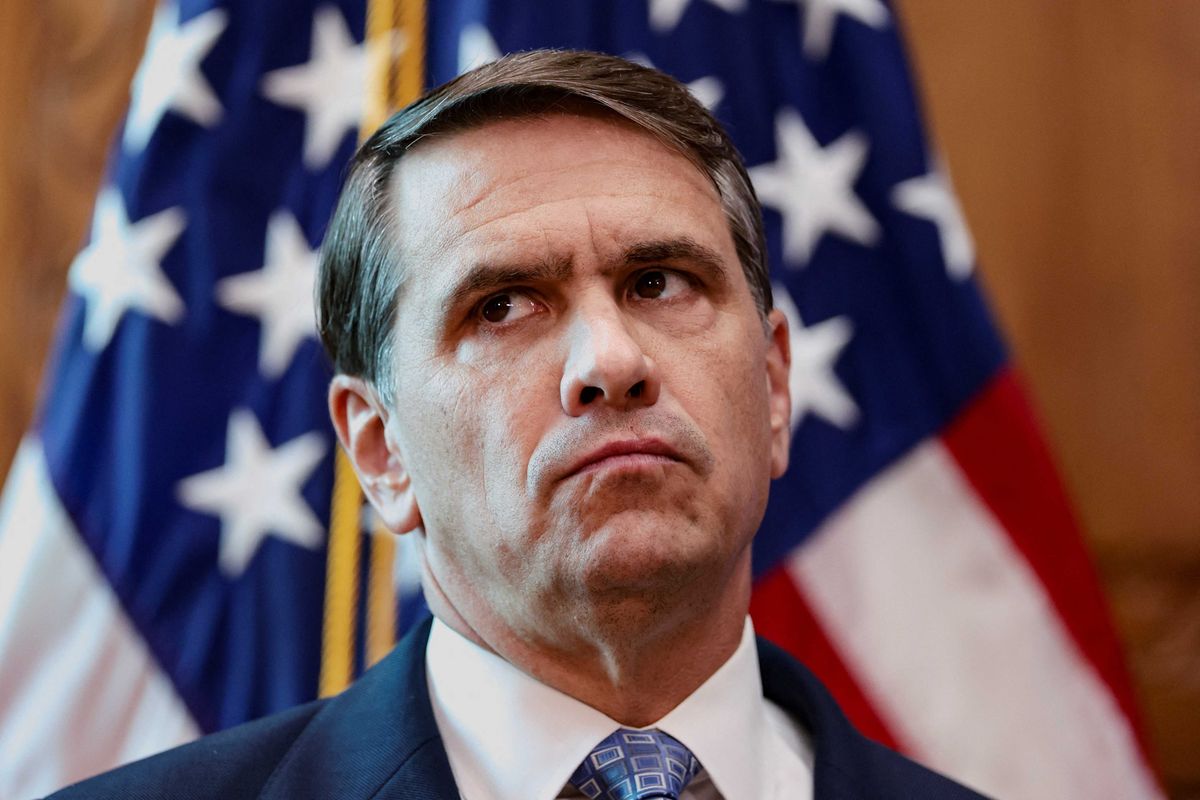
U.S. Attorney General Todd Blanche attends a press conference to announce actions regarding a Chinese national marriage fraud scheme, at the Justice Department (DOJ) in Washington, D.C., U.S., August 12, 2026. REUTERS/Evelyn Hockstein

Deputy Attorney General Todd Blanche vowed on Fox News to keep building President Donald Trump's $400 million White House ballroom, insisting it "is being built" despite two rulings against it.

Blanche spoke Wednesday on Fox News, where host Dana Perino asked when the legal fight would be resolved so the ballroom could be finished. The attorney general served as Trump's personal defense attorney before taking the Justice Department's second-highest job, and he now oversees the lawyers defending the project.

"But yes, we're gonna continue to build the ballroom," Blanche told Fox News.

"President Trump has promised that to the American people, and we're gonna continue to back him up in court to make sure that it can get built," he said. "The ballroom is being built. It's not stopped, and the Supreme Court issued the stay, which allows us to continue to do the work."

Chief Justice John Roberts issued a stay on Aug. 21 that temporarily froze a lower court decision halting above-ground work. CBS News

The order set no deadline and settled nothing about whether the project is lawful.

U.S. District Judge Richard Leon ruled in March that construction "must stop until Congress authorizes its completion.""The President of the United States is the steward of the White House for future generations of First Families. He is not, however, the owner!"

A federal appeals court upheld that order on Aug. 7, with two of three judges finding Trump lacked authority to build without congressional approval.

The National Trust for Historic Preservation told the justices the administration was racing to finish before the courts could stop it, and the government put the complex at "65% complete in its entirety."

"Well, the ballroom is being built, and it's disgusting that a district attorney in Philadelphia, who by the way has a city with its own problems, is so focused on what the president is doing at the White House," Blanche said.

Philadelphia District Attorney Larry Krasner said Tuesday he expected to keep a souvenir, telling a crowd it would be "a piece of the ballroom after we blow it up."

"It's also a national security issue, which we've been talking about now for months and months and months," Blanche added.

Leon's order never blocked the security work, according to NPR, and he allowed construction on the underground bunker beneath the White House to continue.


Tanking economy spurs stunning conclusion from analyst: Trump's doing it 'deliberately'


Travis Gettys
August 26, 2026 
RAW STORY


President Donald Trump's economic record has been so bad that one analyst concluded he must have wrecked it on purpose.

Rather than resulting from external shocks, the 80-year-old president's economic struggles stem largely from his own administration's decisions, MS NOW's James Downie argued Wednesday.

The column opens with Treasury Secretary Scott Bessent's exasperated response Monday, while announcing new sanctions on Iran, to the suggestion he might have deliberately damaged the economy: "Why would I want to blow up the global financial system?"

Downie argues he might have unwittingly made a reasonable point.

"Bessent may think that’s still a self-evidently ridiculous question," Downie wrote. "George W. Bush didn’t want a Great Financial Crisis, nor did Herbert Hoover seek to start a Great Depression. Surely no White House would deliberately hurt the global economy."

"Yet for the first time ever, that’s not the case," he added. "At home and abroad, the past few days have laid bare the extent to which President Trump’s troubles on the economy are self-inflicted."

The 30-year Treasury bond yield hit a 19-year high last week, prompting Bessent to expand government debt buybacks. Yields dipped only briefly before returning to prior levels, which the columnist attributes to investor concern over the $40 trillion national debt — a debt load it says traces substantially to the Bush-era and Trump-era tax cuts, citing an analysis from the Center for American Progress' Bobby Kogan.

The columnist also points to Trump's decision to allow 300,000 tons of tariff-reduced beef imports just before the midterms, framing his stated goal of lowering ground beef prices as a tacit admission that American consumers, not foreign exporters, have been absorbing tariff costs.

On the Iran conflict, Downie notes continued closure of the Strait of Hormuz, sustained high oil prices, and reports that companies are raising prices on goods including beer, french fries, paint and packaging to offset rising costs.

The piece further highlights renewed U.S.-Canada trade tensions, with both countries announcing new tariffs. It quotes economist Paul Krugman's observation that the U.S. economy relies on Canadian goods more than commonly recognized, citing Canadian oil exports to the upper Midwest and electricity supplying roughly two million homes in Maine.

It comes as no surprise then, he argued, that July data shows retail sales fell for the first time in nine months and job losses in the broader economy.

"Presidents usually get far too much credit or blame for the state of the economy," Downie wrote. "But in Trump’s case, the causation is much clearer. And it means a key part of his political image is backfiring."
'Absolute disaster' at U.S. Army as $500M goes up in smoke and robots catch fire

THE PENTAGON HAS NEVER BEEN AUDITED!!!


ProPublica
August 26, 2026 


U.S. Secretary of Defense Pete Hegseth looks on during a briefing on the Iran war, at the Pentagon in Washington, D.C., U.S., April 16, 2026. REUTERS/Nathan Howard

The U.S. Army paid General Dynamics $533 million for an artillery factory that failed to produce a single usable shell.

Instead of efficient, state-of-the-art production lines, half a billion dollars in taxpayer funding paid for machines that kept failing in bizarre ways, former workers told ProPublica’s Jesse Coburn. Giant robot arms would catch fire. The Texas factory’s signature device often cracked the steel meant for the shells. And workers regularly had to take a sledgehammer to certain machines to try to make them function properly. But the machines still botched nearly every shell.

The boondoggle, which included a real-life dumpster fire, was described as an “absolute disaster,” by one former official who worked in an Army office overseeing the project. The official, like others interviewed for the story, spoke on the condition of anonymity

In a detailed statement, the Army told ProPublica it exercises “rigorous oversight” and that, “where vendors fail to meet contract specifications” — as at the General Dynamics artillery factory — ”we are evaluating contract performance, seeking recoupment of funds, and pivoting resources.”

General Dynamics declined an interview request, but the company has said it “met or exceeded requirements,” according to a Department of Defense inspector general report. In a statement, a company spokesperson told ProPublica its reporting “fundamentally mischaracterizes the circumstances,” but did not respond to a request to specify our reporting’s alleged errors.

To chronicle what went wrong, Coburn interviewed 36 people who’ve worked for the Army, the Pentagon, General Dynamics and the White House, and he reviewed internal company documents as well as photos and video from inside the factory. Here are the lapses in planning and execution Coburn’s reporting uncovered — and some of the consequences of those mistakes.

The Red Flags

The Army awarded the project to General Dynamics in a rushed process despite significant unknowns.

When Russia invaded Ukraine in 2022, the Biden administration rushed to boost production of artillery shells to support Ukraine’s war effort. General Dynamics was the only company producing the 155 mm metal shell bodies in the U.S. at that time, mainly in a century-old facility in Pennsylvania.

The company could have simply replicated the facility’s traditional manufacturing method, which dated back to the time of the Korean War, to ramp up production. But General Dynamics proposed using a state-of-the-art production line from Repkon, a Turkish company virtually unknown in American defense.

Repkon said other countries were already using its machinery to build an older, simpler model of the artillery shells. But it wasn’t clear the Turkish equipment could work with the particular steel used to make the Army’s newer model of 155 mm shells. And Repkon said the Army and General Dynamics could not inspect full artillery production lines in action, citing customer privacy.

Repkon did not respond to requests for comment.

The Department of Defense did not competitively bid the project.


The Army could’ve insisted that General Dynamics more fully demonstrate that Repkon’s machines could perform the desired work. But that would’ve taken time, and — as a former Army official told Coburn — “there was incredible pressure to go fast.”

In November 2022, the Army gave General Dynamics the first in a series of contract awards for the artillery factory. Then, Congress granted the Department of Defense the power to award money for Ukraine-related causes without some of the usual contracting safeguards meant to ensure taxpayer money doesn’t go to waste. That meant the Army could give General Dynamics no-bid awards and the company could start work on the project before finalizing the contract terms with the government.

The U.S. ended up ordering three Repkon production lines — instead of just one — without knowing for certain whether they could make shells that met the Army’s specifications. (The Army said it selected General Dynamics because of the company’s unique artillery production experience).

The Army did not thoroughly vet the proposal before approving it.

Both the Army and General Dynamics sent staffers to Turkey to inspect the Repkon machines. But they never inspected a full production line in action, and they didn’t send enough experts who could identify potential defects in Repkon’s equipment, four former General Dynamics and Army officials told ProPublica.

The Army also didn’t require General Dynamics to demonstrate it could use Repkon’s equipment to complete the entire production process and make shells that met the service’s specifications. (The Army said that “formal testing could not occur prior to full machinery installation.”)

In 2024, leaders from the Army and General Dynamics gathered in Texas to celebrate the factory’s opening. But the machines were barely functioning.

Here’s how the rushed planning from the Army and General Dynamics played out in the factory.

The Consequences

In Texas, robotic arms caught fire and smashed into equipment.

Twelve former factory workers told Coburn that problems quickly piled up inside the factory. Machines meant to begin giving the shells perfectly smooth noses would, instead, mangle them into swirls that looked like soft-serve ice cream.

The robotic arms had a tendency to swing out of control, smashing into things around the factory. Workers talked about the arms going “rogue.” Sometimes, a machine in the factory would be seen moving on its own, controlled remotely by someone in Turkey, spooking workers in the Texas factory.

Workers said smoke hung in the air inside the factory, and it’d reach desert-like temperatures when the furnaces or forging presses were on. Making matters worse, walls cracked, water flooded in when it rained and employees said the foundation of the buildings appeared to be shifting or sinking beneath them.

As progress at the artillery plant continued to stall, paranoia grew and rumors swirled among the American workers that the Turkish employees from Repkon might be purposefully sabotaging the machinery.

“It was astonishing how little progress we would make, month after month, year after year,” one former worker told ProPublica. “People started speculating, ‘I wonder if they’re spying on us.’” (The Army said it has no evidence of sabotage or spying.)

General Dynamics failed to meet a number of milestones at the facility, including failing to perform scheduled first article tests, which would’ve demonstrated the factory could produce shells that met the Army’s requirements.

The Army hasn’t required General Dynamics to pay the money back.

General Dynamics, one of the world’s largest defense contractors, and Repkon haven’t been held publicly accountable for the taxpayer-funded failure. The Army also hasn’t made General Dynamics pay back the money. (The service said it will recover funding from the project by getting unspecified discounts from General Dynamics on production orders.)

In August 2025, the Army halted work on two of the three production lines at the factory. But the Army didn’t unilaterally terminate the contract awards. In December 2025, the government paid the company $26.3 million in “progress payments” for two production lines — although the lines had never made a usable shell.

The Army says it won’t spend any more money on the artillery plant. But since the Army partially halted work at the factory last summer, the same unit of General Dynamics responsible for the struggling facility has won contract awards worth $2.5 billion, according to the Army. (The service said this was for “distinct production lines and critical national defense requirements” unrelated to the Texas factory.)

Having experienced the failure of a little-proven technology in its factory, General Dynamics has announced it will team up with yet another unheard-of partner promising technological innovation. The new solution? Artificial intelligence.

Read our full investigation here.
'Unbelievable!' Rage erupts on MS NOW over Meta's 'peanuts' court settlement

Tom Boggioni
August 26, 2026 
RAW STORY


MS NOW host Stephnie Ruhle (screenshot


Outrage erupted on MS NOW host Wednesday morning as news broke that social media giant Meta had been awarded a slap-on-the-wrist settlement agreement in its highly watched court case.

Meta and a coalition of state attorneys general have settled a major federal trial centering on allegations that the social media giant misrepresented the extent of child-related mental health harms caused by apps like Facebook and Instagram,” CNBC reported early Wednesday morning.

In a case where experts agreed it could result in hundreds of billions being awarded, Meta is walking away with an agreement to pay a maximum $16.68 billion.


That led MS NOW’s Stephanie Ruhle to lose her cool and rail against the attorney generals she argued failed to do their jobs.

“If the company lost, Meta could have faced hundreds and hundreds of billions of dollars in damages,” she said.

“I get that on its face people are going to be like, wow, it could be $16 billion,” she explained. “$16 billion is not much. We thought it was going to be hundreds of billions."


Yale School of Management Dean Jeffrey Sonnenfeld was also appalled.

“It's unbelievable,” he blurted. “ This was, you know, a $1.4 trillion lawsuit that here you have 29 states, red states and blue states combined that — and it's being tried in Oakland, California, by a very good attorney general…somehow they've dropped the ball on this, because this was this was a home-court advantage for Rob Bonta, the attorney general, a Democrat, and, of course, California, a blue state.”

“This was a very favorable setting, and everybody was anticipating this is going to be billions of tens of billions of dollars, not this near 16 billion,” he continued. “It is a mere 16 — that's two weeks of revenues."

“That’s just peanuts!” Ruhle interjected.