Wednesday, August 26, 2026


Skywell EVs catch fire across Turkey, Chinese engineers arrive to investigate

Skywell EVs catch fire across Turkey, Chinese engineers arrive to investigate
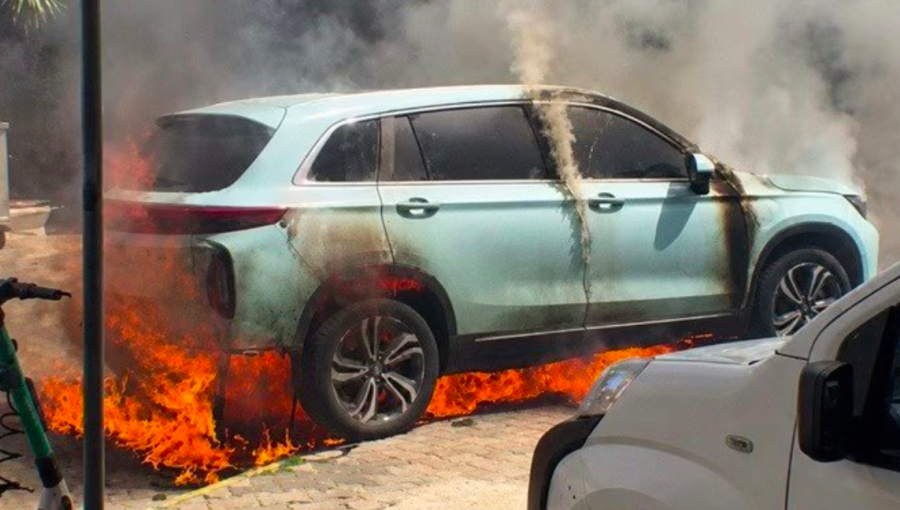
A Skywell ET5 goes up in flames. Engineers from Nanjing have arrived as part of a bid to quickly dissolve consumer anxiety. / @PiyasaTturkiyeFacebook
By Akin Nazli in Belgrade August 24, 2026

A specialist technical delegation from Chinese electric vehicle (EV) manufacturer Skywell has arrived in Turkey to investigate a rash of thermal incidents involving the company's flagship ET5 model, local daily Hurriyet has reported.

Eight documented vehicle fires over the past six months have heightened consumer anxiety and sparked fierce public debate over post-sale support. The arrival of engineers from Nanjing comes as regional distributor Ulu Motor faces an intense backlash from domestic drivers.

Owners reporting vehicle blazes claim that they were issued steep diagnostic and inspection bills prior to any technical review by the visiting Chinese team. In official correspondence delivered to affected vehicle owners, the local distributor demanded upfront fees totalling Turkish lira (TRY) 90,000 ($2,700) plus VAT for technical assessments, citing lapsed service schedules and invalidated warranty coverage.

Distributor notices further requested reimbursement for TRY 5,000 in third-party towing expenses incurred from moving damaged chassis into storage facilities.

Warranty disputes and cost demands

Ulu Motor has contested owner characterisations of the charges, clarifying in a formal response that the TRY 90,000 billing statement represents an estimated repair quotation rather than an inspection fee. However, the requirement for pre-inspection payments has caused sharp friction among buyers who contend that their vehicles were maintained strictly in accordance with manufacturer guidelines.

Distributor representatives previously attributed potential fire causes to external factors, including underbody battery housing impacts, the usage of non-standard coolant solutions, weakened 12-volt auxiliary batteries caused by deferred maintenance and unauthorised third-party software modifications designed to artificially extend the driving range.

Multiple affected owners strongly reject these claims, asserting that their cars underwent routine servicing at authorised centres and harboured no aftermarket software tweaks. Drivers have also levied broader criticisms against the distributor’s Turkish network, citing delayed maintenance turnarounds, inadequate technician training and unusually compressed service intervals compared to industry standards.

Coolant fluid under scrutiny

The debate has increasingly centred on the specific chemical composition of the thermal management fluids utilised by the Turkish distributor during routine maintenance. Industry specialists and consumer advocates are pressing for independent laboratory testing of the coolant fluid used in local workshops to determine whether standard thermal safety tolerances were compromised.

The scrutiny comes at a sensitive juncture for Chinese automotive brands expanding across emerging European and Mediterranean markets as Beijing-backed EV makers seek to capture market share through aggressive pricing.

SDF dissolves, fully integrates into Syrian state institutions


By bna Cairo bureau August 26, 2026

The Syrian Democratic Forces (SDF) announced on August 25 that it would end its role as an independent military force and integrate its military and security institutions into the Syrian state under an agreement with the government in Damascus, SANA reported.

SDF commander Mazloum Abdi made the announcement in Arabic and Kurdish during a speech to reporters at the presidential palace in Damascus.

“We announce today the end of the mission of the Syrian Democratic Forces and, with full responsibility, declare its dissolution as an independent military force,” Abdi said.

He said SDF fighters had taken on “a major responsibility during one of the most difficult stages Syria has gone through”, adding that they had “liberated many Syrian cities and towns, first from Baath rule and later from ISIS terrorism.”

“The circumstances have changed today and the country has entered a new phase whose title is peace and participation in building the new Syria,” Abdi said.

He added that the decision came after an agreement with Syrian President Ahmed al-Sharaa and the completion of the process to integrate SDF forces into Syrian army brigades.

Syrian state television reported that the announcement also covered the dissolution of the Kurdish-led autonomous administration and all military and civilian formations affiliated with it, with their full integration into state institutions.

The announcement followed a meeting between Abdi and al-Sharaa at the presidential palace, attended by senior Kurdish official Ilham Ahmed and prominent Kurdish military commander Siban Hemo, who serves as deputy defence minister for the eastern region.

Abdi said on August 20 that the integration of the SDF’s military, security and administrative institutions into state structures had been completed, opening the way for a political phase focused on securing Kurdish rights in Syria’s constitution.

Saudi Arabia welcomed the SDF’s integration into Syria’s military institutions, saying the move would contribute to security and stability. The Saudi Foreign Ministry said Riyadh supported steps taken by the Syrian government to meet the aspirations of the Syrian people and advance unity and development.

Jordan also welcomed the announcement, describing the integration of the SDF into Syrian state institutions as an important step towards strengthening Syria’s unity, security and stability.

Turkish garment giant LC Waikiki launches first production plant in Syria

Turkish garment giant LC Waikiki launches first production plant in Syria
Syrian workers at LC Waikiki’s Aleppo plant. / Screenshot, @PiyasaTturkiyeFacebookTwitterLinkedIn
By Akin Nazli in Belgrade August 26, 2026

LC Waikiki, the largest fast-fashion retailer in Turkey, in June quietly launched production at a 150-worker facility in northern Syria, Turkish daily Ekonomi reported on August 25.

The plant was built on the outskirts of Aleppo, inside the newly reactivated Al-Rai Industrial City. The company plans to expand the workforce at the plant to 1,000 within three years. It will cater not only to domestic consumers in Damascus and Homs, but will also dispatch shipments to the EU and the UAE.

In May, LC Waikiki opened its first post-war store in Syria at Damascino Mall in Damascus. Outlets in Aleppo, Homs and Latakia are slated to follow.

Video: A video story about LC Waikiki’s Aleppo plant released by Syria’s industry ministry.

Global player

At end-2025, LC Waikiki had more than 1,300 stores across the globe. It posted a turnover of $6bn last year while its export revenues amounted to $1.2bn. The company has been the market leader in Turkey since 2004.

LC Waikiki was launched in France in 1988. Six percent of the company still belongs to the family of George Amouyal, one of the founders. In 1997, Turkish company Taha Tekstil, owned by Sefik Yilmaz Dizdar and Mustafa Kucuk, acquired 93% of LC Waikiki.The Kucuk family currently controls a 47% stake in the company while the Dizdar family holds 35%.

The company opened its first retail store in Sisli district of Istanbul. In 2009, LC Waikiki opened its first store abroad, in Romania.

The worth of LC Waikiki promoted Kucuk and Dizdar to the Forbes’ billionaires list in 2016.

More investments on the way

Syrian authorities in 1H received 234 investment applications related to the textile and readywear industries. Isparko, another Turkish apparel maker, is conducting feasibility studies for joint-venture factories with Syrian investors.

Istanbul-based Mikrotx is, meanwhile, spearheading machinery and equipment partnerships to establish new yarn spinning mills in Syria. Also, Turkish suppliers Mersan and Tumkalip are negotiating technical assistance deals to retrofit battered production lines.

In July, the NASTEX trade fair drew more than 300 prospective equipment suppliers and financiers to Syria.


Will Trump call persuade Turkey’s Erdogan to halt gas imports from Iran?

Will Trump call persuade Turkey’s Erdogan to halt gas imports from Iran?
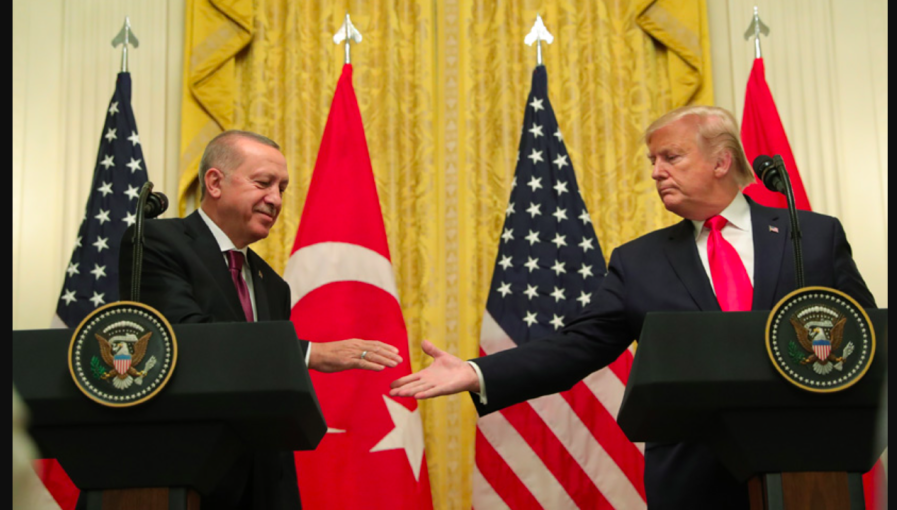
If Erdogan were to agree to fully swing behind the Trump plan to make Turkey's neighbour Iran an "economic outcast", he would risk causing significant damage to the fragile Turkish economy. / White HouseFacebook
By bne IntelliNews August 25, 2026

Analysts are weighing up whether Turkey’s president Recep Tayyip Erdogan will halt imports of gas from Iran and cancel other trade with the Islamic Republic in order to satisfy US President Donald Trump’s demand that countries cease doing business with the Iranians.

Turkey is Iran’s third-largest trading partner and last year sourced around 13% of its natural gas imports from its neighbour, with the shipments equivalent to 7.7bn cubic metres. Bilateral trade stood at around $3.1bn in the first half of this year, down 3% from 1H25.

“Erdogan would not do anything to upset Trump and jeopardise improving ties with Washington in the run-up to elections in less than two years,” Nihat Ali Ozcan, a strategist with Ankara-based think tank TEPAV, was quoted as saying by Bloomberg on August 25, adding: “Ankara would clearly side with Washington, even if it is forced to secure more expensive energy supplies elsewhere before winter.”

The US is seeking to economically isolate Iran in an attempt at forcing Tehran to capitulate in the conflict reignited by Trump and Israeli PM Benjamin Netanyahu at the end of February with a bombing blitz. Washington has been unable to achieve victory militarily.

Trump officials refer to the new move against Iran as “Operation economic outcast” and talk of "the single greatest financial offensive ever".

US Treasury Secretary Scott Bessent said on August 24 that any country that chooses a continuation of business with Iran after a certain time period, which he did not specify, can anticipate economic punishment from the Trump administration.

Trump said he would get on the phone to world leaders to communicate his specific expectations. A call from the Oval Office to Erdogan can be expected.

The US leader has frequently praised Erdogan as a good ally with whom he can work effectively.

If forced to end its gas relationship with Iran, which is based on a cross-border pipeline, Turkey could replace imports by buying in more shipments of liquefied natural gas, or LNG. The US is a key LNG supplier.

Data from the International Trade Centre show how difficult it would be for Turkey, the only Nato member to share a border with Iran, to cease all commerce with the Iranians without significantly damaging its economy.

The figures list Turkey’s top imports from Iran in 2025 as:

  • Aluminium and articles thereof – $525mn
  • Copper and articles thereof – $406mn
  • Edible fruit and nuts – $329mn
  • Plastics and articles thereof – $273mn
  • Zinc and articles thereof – $235mn


Low Danube levels pose risks to Bulgaria's transport, agriculture and energy

Low Danube levels pose risks to Bulgaria's transport, agriculture and energy
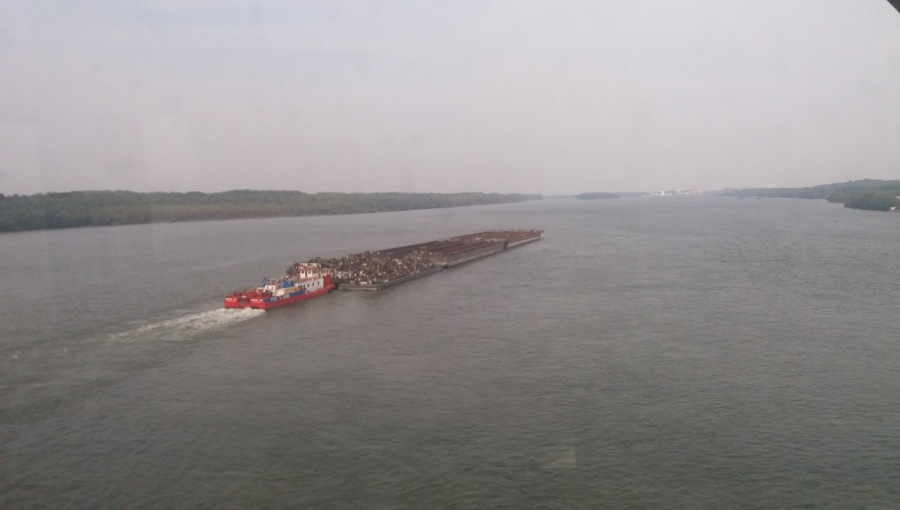
At normal levels (pictured) the Danube is an important transport route for Bulgaria and other Central and Southeast European countries. / bne IntelliNewsFacebook
By bne IntelliNews August 26, 2026

Persistently low water levels on the Danube could weigh on Bulgaria's transport, agriculture and energy sectors, although the impact on economic growth would be limited if conditions improve by autumn, insurer Coface said in a report cited by Bulgarian news agency BTA on August 25.

As IntelliNews reported, exceptionally low water levels on the Danube are disrupting shipping and putting pressure on power generation across Southeast Europe after a summer of extreme heat and drought.

"If the low levels persist only until the fall of 2026, the effect on Bulgarian GDP will likely be limited, but tangible in transport, agriculture and energy," Plamen Dimitrov, manager of Coface Bulgaria, said in a report cited by BTA.

The Danube is at critically low levels along Bulgaria's section of the river, with restrictions on the draft of vessels introduced along its entire course, Coface said.

Ships are waiting to pass through critical sections around Belene and Batin, reducing the carrying capacity of vessels and disrupting imports and exports through the Danube ports of Ruse, Lom, Vidin and Svishtov.

Agriculture, particularly grain and fertiliser transport, as well as construction and metallurgy, are among the Bulgarian sectors most reliant on low-cost river transport, Coface said.

Low water levels are also creating risks for regional power supplies, with restrictions affecting Hungary's Paks and Romania's Cernavoda nuclear plants. This is forcing the region to rely more on expensive power sources and imports, putting upward pressure on electricity prices in neighbouring markets, including Bulgaria.

Bulgaria's Kozloduy nuclear plant continues to operate because of a specially built cooling-water channel, but regional electricity prices are rising and Bulgaria is expected to increase power exports to help cover the shortfall elsewhere in the region, Coface said.

The insurer said water levels on the Danube and Rhine were unlikely to rise significantly in the short term, while longer-term climate trends could make periods of low water more frequent and severe.

"If similar conditions are repeated annually, the Danube could turn from a competitive advantage into a structural economic and trade risk for Northern Bulgaria and the entire national economy," Dimitrov said.

UKRAINE SOLD OUT

Trump's CIA chief secretly jets to Moscow — as Kremlin denies US talks underway

Matthew Chapman
August 25, 2026 
RAW STORY


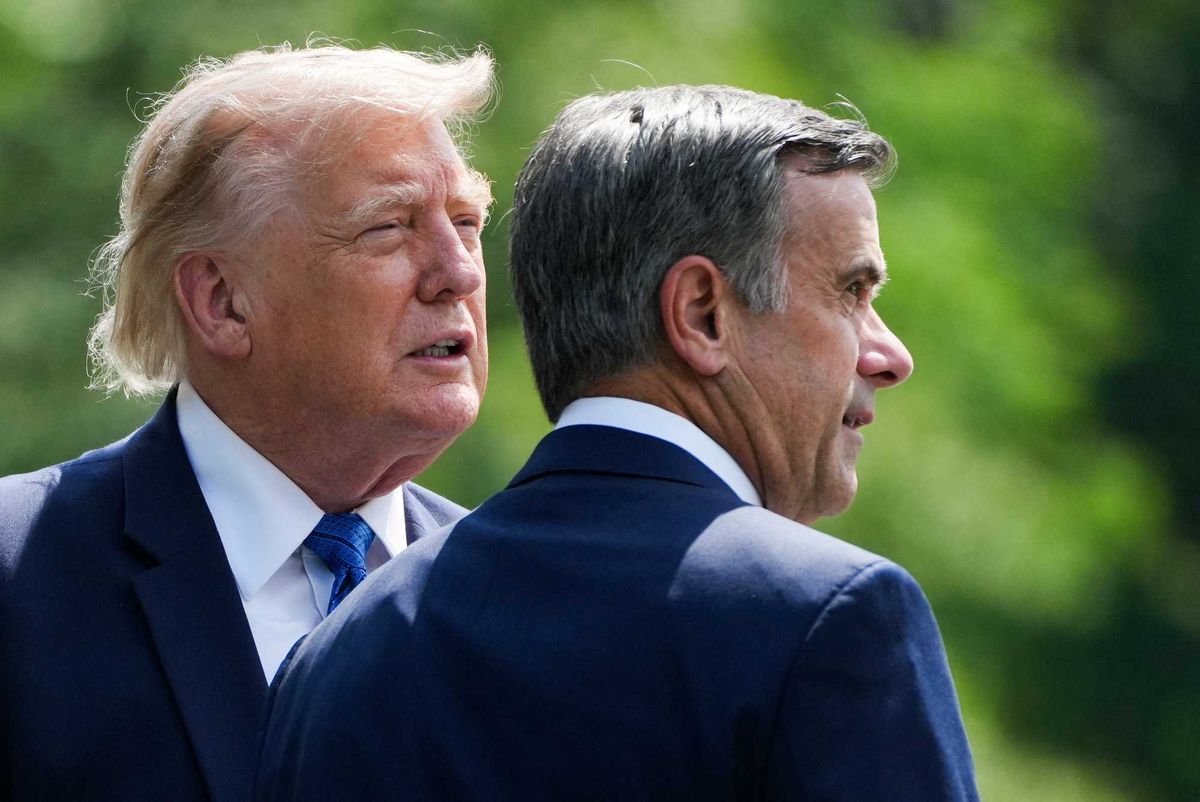
U.S. President Donald Trump and John Ratcliffe, Director of the Central Intelligence Agency (CIA), speak as they depart after a Cabinet meeting at Camp David in Thurmont, Maryland, U.S., July 31, 2026. REUTERS/Nathan Howard/Pool

CIA Director John Ratcliffe reportedly slipped into Moscow on a secret trip Tuesday, marking the highest-level visit by a Trump administration official to Russia since January — even as the Kremlin insists no such meeting is happening at all.

CBS News and Axios both reported Ratcliffe's presence in the Russian capital, citing sources familiar with the situation, though neither outlet identified who he was meeting or what was discussed. Meanwhile, according to Al Jazeera, flight-tracking data showed a U.S. military C-17 departing Riga, Latvia early Tuesday morning and landing in Moscow roughly 74 minutes later, before departing again later in the day.

Kremlin spokesman Dmitry Peskov flatly denied anything was underway, saying, "No, there are no such plans." When pressed specifically about reports of the U.S. military plane landing in Moscow, Peskov claimed he had "no such information."

But Axios reported that Washington gave Ukraine advance notice of the senior delegation's trip and asked Kyiv to hold off on strikes until the group left Russian territory.

The visit comes as U.S.-brokered talks to end Russia's invasion of Ukraine remain stalled, though Moscow did free a former U.S. Marine detained since 2022 earlier this month, reportedly over health concerns.

Ratcliffe has quietly played a central role in several high-profile prisoner swaps between Washington and Moscow since President Trump returned to office in January 2025, including the release of dual national Ksenia Karelina last year. If confirmed, his reported Moscow trip would be the first by a sitting CIA director since William Burns traveled there in 2021.

The CIA declined to comment on the reports

CIA chief flies into Moscow as Ukraine holds drones fire for three days

Washington asked Kyiv to stop hitting Moscow and St Petersburg from August 24 to 26 because it did not trust Russian air defences to protect one American aircraft. Kyiv agreed.


CIA chief flies into Moscow as Ukraine holds drones fire for three days / bne IntelliNews
By Ben Aris in Berlin August 26, 2026

CIA director John Ratcliffe made an unannounced visit to Moscow on August 25 spending seven hours in Moscow in talks with the Kremlin before flying out again the same day, sparking a torrent of speculation on the subject matter of the meeting.

The US admitted that it had asked Ukraine to hold off on attacking the Russian capital for three days ahead of the meeting so that his plane could land – a requestion Kyiv reported adhered to.

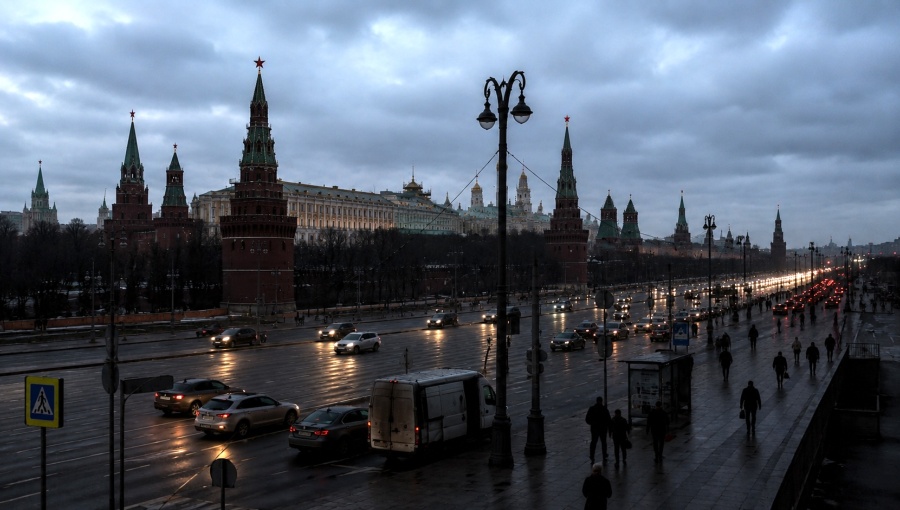
A US Air Force C-17 Globemaster that had left Joint Base Andrews and stopped at Riga on August 23 touched down at Vnukovo airport at about 10:00 local time and was gone by half past five. In between, video circulated on Telegram of a motorcade carrying US diplomatic plates moving along Novy Arbat towards the Kremlin. Little else is known about who Ratcliffe met and what was said, but this is not the first time a CIA chief has flown into Moscow in the midst of a military crisis and had top level talks in search of either a deal, or to deliver a stern warning.

Ratcliffe was confirmed to be aboard the C-17, Axios and CBS News reported, citing people familiar with the trip. It is his first known visit to Russia as director and the first by a senior American official since special envoys Steve Witkoff and Jared Kushner met Vladimir Putin in January as part of the Ukraine ceasefire talks.

Neither government announced the trip ahead of time and neither has explained it. Kremlin spokesman Dmitry Peskov told journalists he had no information about the aircraft and that no meetings with the US administration were planned that week. He later told the Washington Post the trip was for "contacts between security services” and declined to say more.

Three days of quiet over Moscow

Washington asked Kyiv last week to hold off striking Moscow, St Petersburg and Russia's northern regions between Monday and Wednesday, because of the “visit of a senior American official.” Radcliff was not mentioned by name and Bankova, Ukraine’s presidential administration, says it is still waiting for a debrief from the White House.

"They don't believe in the strength of Putin's air defences," a source told the Kyiv Independent. The pause ran from August 24 to 26 and Kyiv agreed to it.

Ukrainian drones have been reaching Moscow this summer, which is why the request was necessary and why granting it was a concession.

Why he went

No insider account of the purpose emerged before August 25 evening and the press is awash with speculation the next day as to the purpose and content of the meeting. Four theories are in circulation:

A prisoner release or exchange. While the official's identity was still unknown, socialite newscaster Ksenia Sobchak wrote, without citing a source, that the aircraft had come for Charles Zimmerman, a former US sailor sentenced to five years in a penal colony in 2026 for smuggling a rifle he failed to declare at Sochi. Sobchak, citing a source, says Zimmerman petitioned for a pardon over the summer, and the outlet Important Stories noted that Putin signed two classified decrees on August 25 - standard practice for pardons tied to swaps. Ratcliffe personally negotiated the April 2025 release of Ksenia Karelina. Against this theory is that no US official travelled to Moscow to help negotiate a historic prisoner swap completed last August for US journalists Evan Gershkovich or jailed basketball player Brittney Griner, and Zimmerman is a far more obscure prisoner;

A warning delivered to the Kremlin. Russian media pushed this all day, citing the Wall Street Journal. The paper claimed that the US knows that Russia is preparing to test Nato defences with an attack on a Nato member and sent Radcliff to warn the Kremlin off. The Wall Street Journal that the two sides may have discussed a truce over Iran and also drew a parallel with CIA director William Burns, who was in Moscow shortly before the outbreak of the Ukraine war in 2021 carrying a warning from Joe Biden in 2021; and the paper's own earlier reporting that US intelligence fears Russia may test Nato with a limited operation against a member state. It also claims that Moscow has rehearsed mobilisation procedures in Kaliningrad;

Iran deal. Trump has discussed the war with Putin repeatedly, Washington has just announced economic “D-DAY” sanctions designed to strangle the Iranian economy, and Moscow is one of Tehran's principal military and political partners, if not a large trading one;

A fresh round of Ukraine talks. The least likely of the four. Witkoff and Kushner were meant to go to Kyiv and did not, a TASS source said on Monday the trip had been postponed, Putin had restated on Sunday in the starkest terms that he intends to fight to a victory, and Ratcliffe's reputation as a hawk makes him an odd choice of mediator.

The last time

A CIA director last visited Russia in November 2021, when Burns met Nikolai Patrushev, then secretary of the Security Council, over two days at Biden's request. Russia was massing troops on Ukraine's border for the first time and Burns had come to say Washington knew what was being planned and was preparing a response.

Putin was in Sochi. Burns was received at the Kremlin and allowed to speak to him by phone. Putin did not deny the plans; he set out Russia's grievances against the West and Ukraine instead. Burns left convinced the preparations were real. The invasion came three months later, after an eight-point list of demands from the Russian foreign ministry - no Nato for Ukraine among them - was argued over through January and February 2022 and rejected.

Washington's most pro-Ukraine spy chief

Ratcliffe is not Burns. He has none of the career-diplomat's history with Putin, and Burns had spent three years as ambassador in Moscow in the mid-2000s. What he does have is a reputation as one of the more pro-Ukraine figures in Trump's national security team.

Where Pentagon chief Pete Hegseth began sidelining generals who argued for supporting Kyiv, Ratcliffe pressed for resources to be committed to it, the New York Times has reported. When intelligence sharing was suspended in spring 2025 after the Trump-Zelenskiy falling out, Hegseth cut every link and Ratcliffe insisted on keeping CIA contacts with Ukrainian intelligence open. Agency support helped Kyiv organise the first wave of strikes on Russian refineries in the summer of 2025. And in spring 2026, according to a recent account in The Atlantic, it was Ratcliffe who convinced Trump that Ukraine was winning and therefore worth backing.

The trip that didn't happen

Witkoff and Kushner agreed at the July 28 Oval Office meeting between Trump and Volodymyr Zelenskiy to make their first visit to Kyiv, intended to restart the diplomacy. Ukraine correspondent Christopher Miller reported the agreement for the Financial Times on July 29; Zelenskiy said he expected the envoys within a fortnight and RFE/RL put it in the second half of August. They have yet to announce a date.

The pair have been to Russia repeatedly and Vedomosti reported in early July that a return was imminent. On August 14 Sergei Lavrov said publicly that Putin "is ready to receive them once again - the question is what they will come with", a line deputy foreign minister Sergei Ryabkov repeated a week later. By August 20 the Kremlin said it still had no information on any visit.

The Kyiv trip was cancelled on the morning of August 24, Ukraine's 35th Independence Day, the day the envoys should have been there. No serving senior US official attended the commemorations; only former vice-president Mike Pence. Britain's new prime minister Andy Burnham, Emmanuel Macron and a $9.2bn Norwegian aid pledge filled the space instead making the landing of Radcliff’s C-17 at Vnukovo the following morning poignant.

Backchannels open

The visit is the visible part of backchannel talks between Russia and the US that are ongoing all year. Ratcliffe has kept regular contact with his Russian counterpart, SVR chief Sergei Naryshkin, since taking office in January 2025; the two agreed to "regular contact" between their agencies to "contribute to international stability and security, as well as reduce confrontation in relations between Moscow and Washington", TASS reported at the time. Before that, the last recorded contact between the two services' chiefs was Naryshkin's meeting with Burns in Ankara in November 2022.

Earlier this year private conversations between top Russian officials and the US envoys were leaked in November, showing Witkoff and Kushner talking to Yuri Ushakov, Putin's foreign policy adviser, and Kirill Dmitriev, who runs the sovereign wealth fund, about the terms of a peace plan. The Kremlin was widely read as having leaked them itself to drag attention back to the original 27-point peace plan (27PPP) agreed at a Moscow meeting on December 3.

A prisoner released, a statement refused

Those backchannel talks bore fruit only a fortnight ago and suggest that relations between the White House and the Kremlin remain cordial. Robert Gilman, a 32-year-old former US Marine, was released on August 11-12 after four and a half years in Russian custody. He was arrested in Voronezh in January 2022 for kicking a police officer while drunk on a Moscow-Abkhazia train and given four and a half years; later convictions for assaults on prison staff and an investigator pushed the term to 10. His family and human rights groups say those charges were fabricated.

By late June he had been moved from a prison hospital in Voronezh to a civilian psychiatric ward in what was described as a dissociative stupor, unable to move or speak, tube-fed and unresponsive, with his lawyers alleging torture and forced injections. Washington asked for his release in early August and Putin pardoned him. Trump said Russia had freed him "solely on humanitarian grounds" and demanded nothing in return; the State Department confirmed there was no swap and no US concessions. Gilman was one of at least 10 Americans held in Russia.

Read less charitably, an unprompted gift casts Putin as a pragmatist and banks a favour to be called in on Ukraine later.

US President Donald Trump’s attitude to Russia remains confused. While he has threatened new harsh sanctions that would target Moscow, on August 24, the US abstanded in a UN vote to condemn Russia’s invasion of Ukraine on the occasion of Ukraine’s Independence Day. Fifty countries signed a statement at the UN calling for a full, immediate and unconditional ceasefire, but the United States again declined to sign.

"We strongly urge Russia to respond to the calls for a full, immediate and unconditional ceasefire and resume talks on a comprehensive, just and lasting peace in Ukraine," Danish foreign minister Lars Lokke Rasmussen said, reading it out. The next morning the CIA's director was in Moscow.
 

Eastern flank drone incidents test NATO's defences

Eastern flank drone incidents test Nato's defences
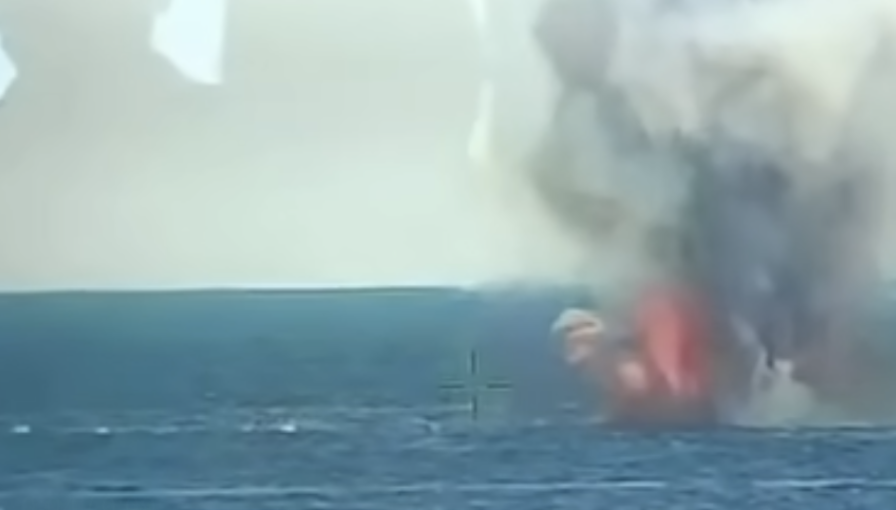
Video footage posted by Romania's defence ministry shows a suspected Russian drone being destroyed several hundred metres from the Neptun Alpha natural gas platform. / MApN via FacebookFacebook
By IntelliNews August 25, 2026

Three drone incidents in 36 hours last week highlighted the growing security challenge facing Nato's Black Sea flank, culminating in Romania scrambling an F-16 to destroy an explosive-laden naval drone near the country's biggest new offshore gas project.

European officials have warned that repeated drone incursions into Nato territory are increasingly difficult to dismiss as accidental spillover from the war in Ukraine.

The first incident occurred at 02.23 on August 20, when Romanian radar detected an aircraft north of Tulcea county, as detailed by Euronews. It entered Romanian airspace at 0321, about 13 km east of Galati, and crashed three minutes later, about 4 km northeast of the village of Grindu. Two Spanish F-18s and a Romanian IAR-330 SOCAT helicopter were scrambled, according to Euronews.

Three hours later, at 06.28, the Romanian coastguard spotted a naval drone carrying explosives a few hundred metres from the Neptun Alpha gas platform, around 80 nautical miles east of Constanta. One of two Romanian F-16s destroyed it.

Overnight into August 21, Russian drones damaged the Tabaky border crossing between Ukraine and Moldova in Ukraine's Odesa region, forcing traffic to be suspended.

"An escalating campaign of threats is underway, unsettling our citizens and seeking to divide our Union," European Commission President Ursula von der Leyen wrote on X on August 21. "This is hybrid warfare."

For much of the war, drones entering the airspace of Romania, Moldova, Bulgaria and the Baltic states have been described as strays - weapons knocked off course by electronic warfare or otherwise unintentionally crossing borders.

That explanation has become harder to sustain as incidents have multiplied. A purpose-built naval drone carrying explosives and found beside critical offshore energy infrastructure is difficult to characterise as an accidental incursion.

From strays to a pattern

The number and frequency of incidents have increased sharply over the past year. In September 2025 between 19 and 21 Russian drones entered Polish airspace and flew halfway across the country; Warsaw triggered Nato's Article 4 for the first time in the alliance's history.

On November 25, drones crossed into both Romania and Moldova, one of them landing on the roof of a house in Cuhurestii de Jos.

By April 2026, Moldova was logging three airspace violations in a single week. On April 25 a Geran-2 carrying explosives flew 15 km at low altitude over Romanian territory and crashed on the northern edge of Galati, damaging an outbuilding and a power pole; debris from two more drones turned up in Tulcea county over the following day, and Bucharest summoned the Russian ambassador.

On the night of June 7-8 a drone with an explosive payload detonated at Lopatna in Moldova, 50 km from Chisinau, while on the same night a French jet shot one down over Latvia. Between July 24 and 26 Romanian F-16s downed three drones in three days, and on July 27 Romania expelled a Russian diplomat and recalled its ambassador from Moscow.

Then on August 8 a drone crossed roughly 100 metres into Bulgaria from Romania and exploded near the town of General Toshevo. Romania's radar had not seen it cross. Sofia ordered more counter-drone systems the following week.

Four years of war have produced a Russian drone force that no longer resembles the one Nato planned against. Moscow is out-producing Ukraine across its whole missile and drone arsenal, and the newest Geran-4 and Geran-5 classes are jet-powered, fly close to 1,000 km with a 90 kg warhead and are far harder to intercept than the propeller-driven Shaheds.

The Telegraph reported on August 16, from satellite imagery and leaked documents, that Russia has built ten launch-pad bases along the Ukrainian and Belarusian borders carrying at least 59 rails, roughly 20 of them lengthened for the bigger aircraft.

That infrastructure potentially puts Poland, Romania, Turkey and the Baltic states within the arc of Russian drone operations.

The problem of attribution

Not every drone entering Nato airspace is Russian. Latvia's armed forces said on August 20 that debris from a drone shot down over Balvi municipality on August 14 was of Ukrainian origin, Brussels Signal reported. Officials declined to identify its model, saying that could reveal information affecting Ukraine's defensive operations. Latvian officials believe it entered from Belarus.

"The risks of drones flying in exist," Defence Minister Raivis Melnis told Latvian Television. "Ukraine, in defending itself, is continuing strikes on Russian territory with drones as well, while Russia is carrying out countermeasures."

Russian electronic warfare can disrupt Ukrainian drones and send them off course, creating an awkward situation for Nato governments that must decide whether to treat an incursion as an attack.

Latvia also identified a Ukrainian-origin drone in March. Neither incident caused casualties and both were shot down over Nato territory.

Warsaw's security committee reviewed the risk of a Russian false-flag operation using captured Ukrainian drones in July, with Defence Minister Wladyslaw Kosiniak-Kamysz warning they could be turned against the Baltic states, Finland, Romania or Poland itself. Neither government has published evidence that such an operation has taken place.

After a Ukrainian drone was found deep inside the port of Constanta, Bucharest and Kyiv used a direct communication channel within minutes. Kyiv confirmed that the naval drone found near the gas platform was not Ukrainian.

A five-kilometre bubble

This month, Bulgaria ordered counter-drone systems from US company Axon, receiving the first two of four and considering up to 10. The mobile platforms combine radar, sensors, cameras and jammers, but have an effective range of only about three to five kilometres.

"Two anti-drone systems are useless," said Todor Ivandzhikov, chairman of the Association of the Bulgarian Aviation Industry, according to Bloomberg TV Bulgaria. "A circle of 3-5 km will not save Bulgaria."

The problem is therefore not simply the number of systems but the lack of a layered network combining low-altitude radar, drone detection, electronic warfare and command centres.

Latvia faces a similar problem. Melnis has acknowledged that the country lacks sufficient counter-drone systems and radar along its eastern border. Latvian equipment is intended to cover the frontier with Russia and Belarus by the end of September, although the timetable is under review.

Latvia has no combat aircraft of its own and relies on allied deployments. Italian Eurofighters are currently based in Lithuania as part of Nato's Baltic air policing mission.

The economics are also unfavourable. Poland reportedly spent about $1.2 billion countering drones costing $10,000-$20,000 each, against a Russian production capacity estimated at roughly 2.5 million drones a year.

Using an F-16 and an expensive missile to destroy a cheap drone is not a sustainable long-term solution.

Von der Leyen used the Neptun Deep incident to push the EU's Eastern Flank Watch, the counterpart to the European Drone Wall she first called for in her 2025 State of the Union address. The two projects are meant to give the Union a multi-layered network able to detect, track and neutralise hostile drones along its eastern border. They were due to launch in the first quarter of 2026, reach initial operating capability by the end of this year and be fully functional by the end of 2027.

Nato has also established Eastern Sentry following the Polish incursions of September 2025 and agreed to broaden Baltic Air Policing into an air-defence mission. Romania has proposed an EU Centre for Maritime Security in the Black Sea, with one headquarters in Constanta.