Friday, August 28, 2026


Skyrocketing windmills: The world’s tallest wind power plant is going to dwarf the Eiffel tower


By Hans von der Brelie
Published on

The world’s tallest wind turbine is currently under construction in eastern Germany; it will rise 365 metres above ground level. This makes it taller than the Eiffel Tower. The technical masterpiece is due to be operational this autumn. Hans von der Brelie was granted access to visit the site.

Smalltown Klettwitz lies at the very heart of Germany’s Lusatia region. Lignite used to be mined here for decades. The bucket-wheel excavators have left gaping scars across the landscape.

But the country is reaching a turning point: Germany is now getting serious about ending coal burning. And Klettwitz is transforming into a frontrunner in the countrys race to handle the climate crisis in a more sustainable way.

Solar and wind farms now stand on the spoil heaps of the former opencast mine, as far as the eye can see. Among these, one steel structure in particular catches the eye - the GICON high-altitude wind power plant. It is still under construction but already outgrowing the neighbouring giant windmills.

It is a big day for the GICON team: Europe’s biggest and most powerful crane, a yellow monster machine, is lifting a tower segment weighing many tonnes into place. Up there, some 160 metres above ground level, climbers are putting the pieces together.
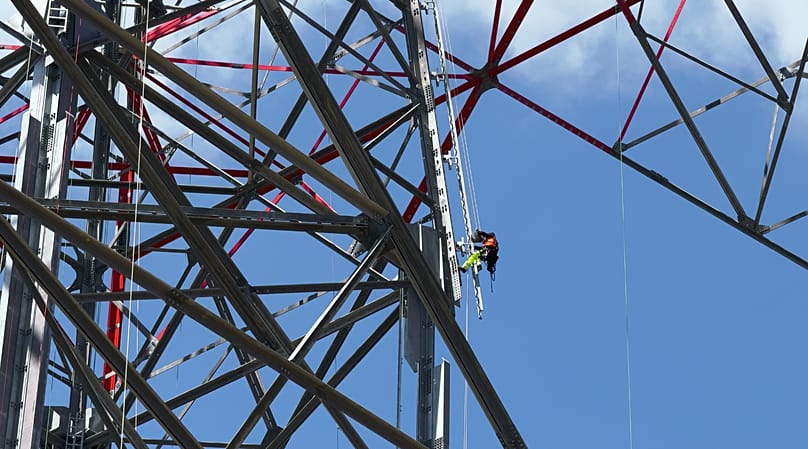
High above ground level, climbers are putting the pieces together spiderman-style... Hans von der Brelie

GICON employs some of Germany’s finest engineers. The company was founded by Jochen Großmann. Why is the GICON team building such a massive structure in the first place? Euronews wants to know.

Why so high, Professor Großmann?

“Because the wind blows stronger and more steadily the further I get from the Earth’s surface,” Großmann explains on site, while a team of high-altitude climbers is moving up and down the steel struts spiderman-style. “That’s why wind turbines have become taller and taller – because there’s so much wind up there that they generate more than double the output of the turbines standing here in the surrounding area.”

Großmann’s idea: future wind farms should have ‘two storeys’ so that the wind can be ‘harvested’ twice – once at the bottom and once at the top. “Retrofitting existing wind farms with taller windmills alongside regular ones give us two tiers of high-altitude windmills, and allows us to triple the yield from the same area,” Großmann estimates.
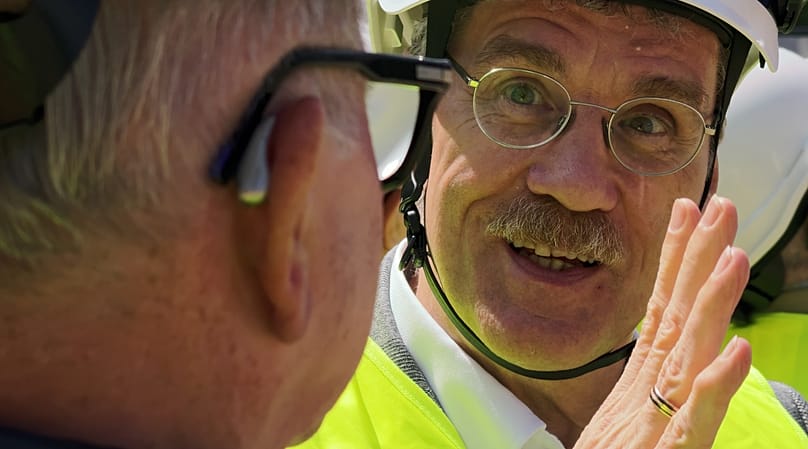
Großmann’s idea: future wind farms should have ‘two storeys’ so that the wind can be ‘harvested’ twice – once at the bottom and once at the top. Hans von der Brelie

GICON plans to erect 100 high-altitude windmills by the early 2030s, then the objective is to scale it up to 1,000 plants in a few years’ time. GICON could become a global player, “the opportunity is there”, Großmann tells Euronews.

“All the wind farms in Germany would offer the potential for 4,000 additional high-altitude wind turbines,” the GICON-CEO stresses, “Simply by retrofitting existing wind farms. That’s an incredible amount of potential. This also applies to African countries. We’ve had enquiries from Asia. The Chinese are asking about it. I think there’s huge international potential here.”


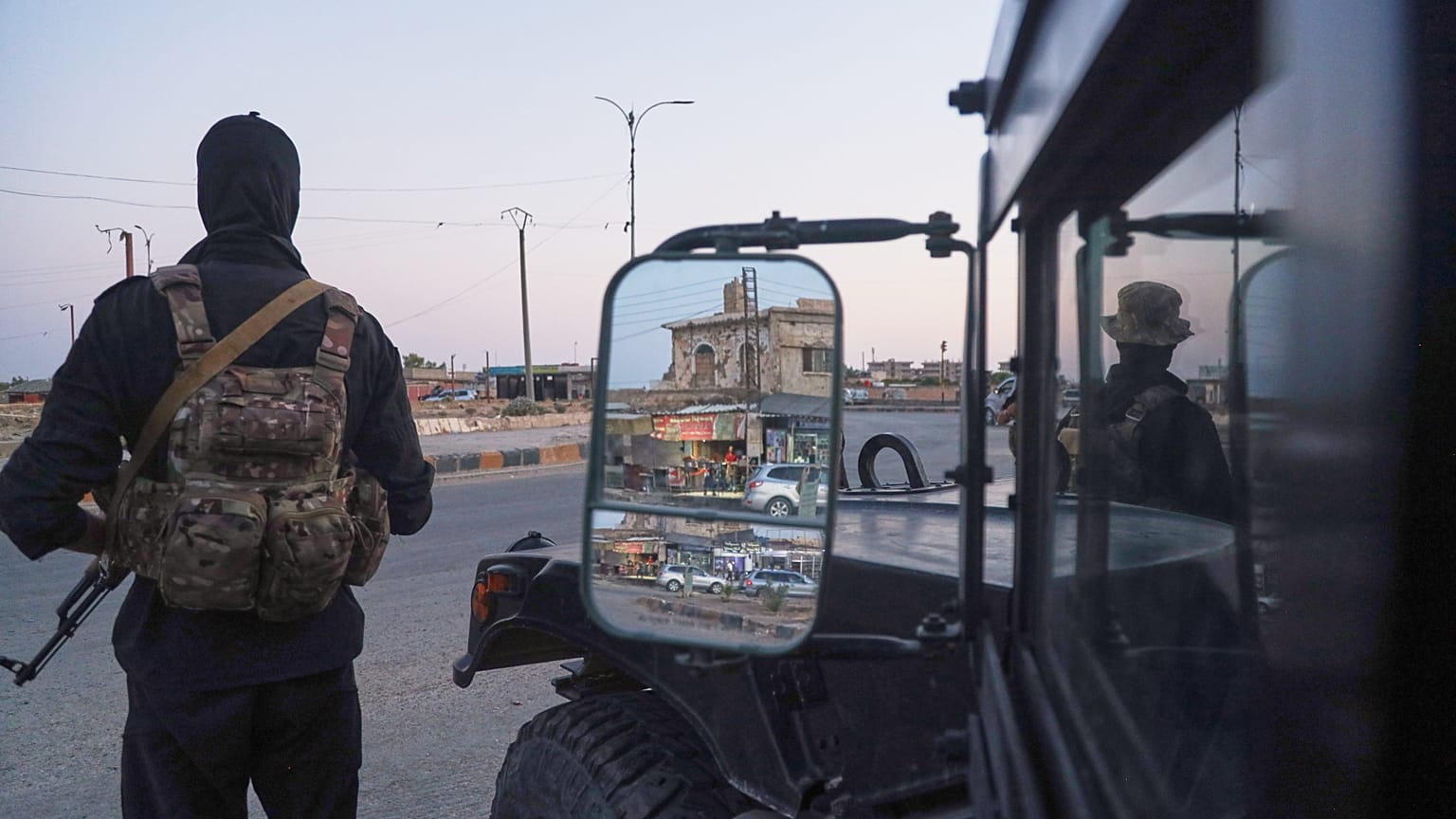
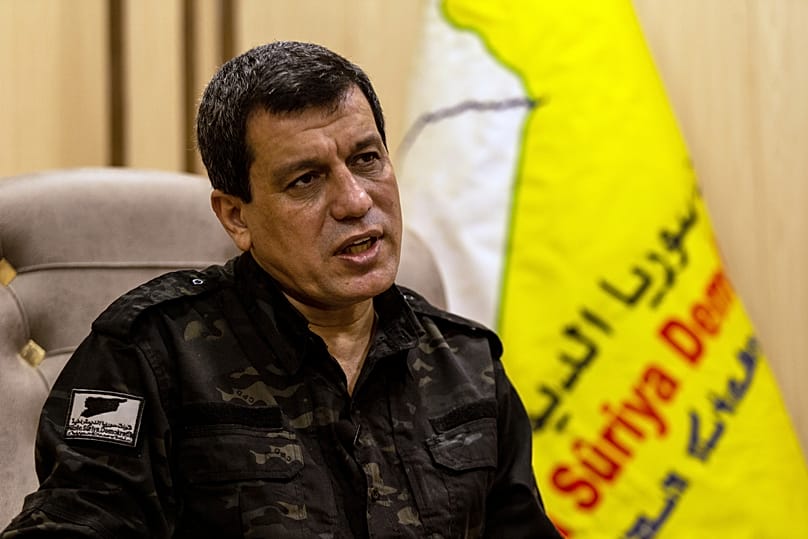
 

Syria's al-Sharaa appoints SDF commander as adviser after Kurdish force dissolves

Soldiers formerly with the Kurdish-led Syrian Democratic Forces stand guard in Hasakah, northeastern Syria, 26 August 2026
Copyright AP Photo

By Sait Burak Utucu & Ali Hasan & Euronews Turkish and Euronews Arabic
Published on

The appointment came days after Abdi declared the Kurdish-led force dissolved and integrated into the Syrian army, ending a decade of independent existence in a move Washington called "genuine integration".

Mazloum Abdi, who led the Syrian Democratic Forces (SDF) until its dissolution this week, was appointed adviser to Syrian President Ahmad al-Sharaa, Syria's official news agency SANA announced Friday.

Abdi on Tuesday declared the SDF dissolved and announced the completion of its integration into Syria's armed forces — a process that ended the Kurdish-led force's decade-long existence as an independent military organisation.

US Special Envoy for Syria Tom Barrack described the SDF's dissolution as "genuine integration" and said assigning influential government positions to Kurdish officials, including Abdi, showed respect for Kurdish leadership and the contribution Kurdish forces had made to regional stability.

Who is Mazloum Abdi?

Born Mustafa Khalil Abdi in 1967 in the Kobani region near the Turkish border, Mazloum Abdi studied engineering at Aleppo University and joined the PKK in the early 1990s, eventually rising through its ranks in Iraq and Europe.

He is known by several names, including Mazloum Kobani, Ferhat Abdi Şahin and Mustafa Halil Abdi. Turkey considers him a terrorist and says he is the subject of an Interpol Red Notice.

Syria analyst Nanar Hawach of the International Crisis Group described him as one of the "experienced cadres of the PKK" who founded the People's Protection Units in Syria after the civil war began in 2011.

Mazloum Abdi, the commander of the US-backed Syrian Democratic Forces, speaks during a news conference in Hassakeh, Syria, 26 November 2022 AP Photo

Abdi gained international recognition during the battle for Kobani in 2015, when Kurdish forces defeated the so-called Islamic State Group (IS) after months of fighting.

The victory became a defining moment for Syria's Kurds and the beginning of Abdi's close partnership with Washington, which backed the SDF as its primary ground partner against the IS throughout the Syrian civil war.

He is reported to have been close to Abdullah Öcalan, the imprisoned founder of the PKK, who announced in 2025 that the organisation was abandoning armed struggle.

In 2025, Öcalan, whose isolation conditions had been eased following years of requests by Kurdish politicians in Turkey, called on the PKK to lay down arms and abandon armed struggle.

The PKK formally accepted the call and announced it was disbanding as a fighting force, while Abdi said the move did not apply to the SDF.

Recognition from Damascus

The SDF's dissolution and Abdi's appointment are the culmination of an agreement signed in January 2026, which stipulated that Kurdish military and civilian institutions in northern and northeastern Syria would be brought under central state authority.

On 16 January al-Sharaa signed a decree guaranteeing the national rights of Kurds, recognising Kurdish as a national language, declaring Nowruz an official public holiday and granting citizenship to Kurds previously denied legal status — the first such recognition since Syria gained independence in 1946.

By integrating into the Syrian armed forces, the SDF retained aspects of its internal command structure within those brigades during an initial transitional period, though the long-term arrangements remain subject to ongoing negotiation.

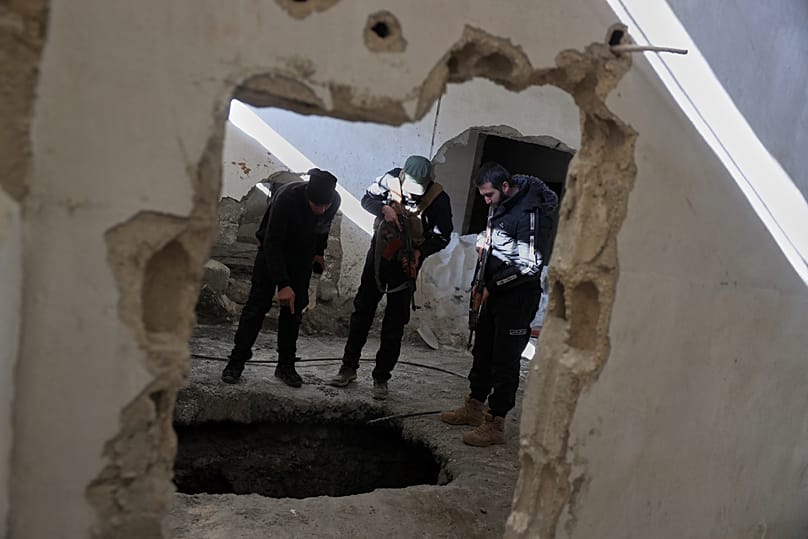
Syrian government security forces inspect tunnels used by the retreating Syrian Democratic Forces (SDF) in Raqqa, 20 January 2026 AP Photo

Armed clashes in January in which the SDF lost large swathes of territory to Syrian government forces, and the United States' decision to support the new Damascus leadership, pushed Abdi toward a negotiated settlement.

For al-Sharaa the deal is a significant achievement in his effort to extend state authority across all Syrian territory. For the Kurds it marks the end of their de facto autonomous administration in the northeast.

Abdi said political efforts would continue to ensure Kurdish rights were enshrined in the Syrian constitution. "Our struggle to secure our people's rights in the constitution will continue," he said.

Turkey regards the YPG — the main Kurdish component of the SDF — as the Syrian branch of the PKK, which is designated a terrorist organisation by Turkey, the US, the EU and the UK.

Ankara has conducted multiple military operations against YPG and SDF positions in Syria.

Ankara has pressed al-Sharaa to ensure that Kurdish armed groups are fully disarmed and that the YPG's former military structures do not survive within the Syrian state.


Thieves buy tickets before plundering necklace worth millions from Vienna museum


By Sertac Aktan & Gavin Blackburn
Published on

Police said the two men did not wear masks, paid to enter the museum and were clearly seen on surveillance cameras in Thursday's heist.

Two men bought tickets to enter Vienna's Museum of Applied Arts (MAK) before smashing a display case, grabbing a 200-carat platinum and diamond necklace and walking away, police said on Friday.

Austrian media said the Van Cleef and Arpels necklace, with 673 precious stones, was worth several million dollars. It is the latest in a series of high-profile heists to hit European museums.

Police said the two men did not wear masks, paid to enter the museum and were clearly seen on surveillance cameras in Thursday's heist.

They "smashed a glass display case" with a hammer before "fleeing with the jewellery in an unknown direction," said a police statement.

The MAK museum confirmed the theft but said it would not comment while the investigation went ahead.

The necklace had been part of an exhibition devoted to the French designers Van Cleef and Arpels. Some 500 pieces had been on display since June. The exhibition is scheduled to end on September 27.

Despite the MAK announcing the exhibition would remain closed until further notice, the wing where the theft occurred reopened hours later.

The stolen necklace was designed for the former Egyptian royal family and was worn by Queen Nazli in 1939 for the marriage of her daughter Faiza to the future Shah of Iran, Mohammad Reza Pahlavi.

On its website, Van Cleef and Arpels called the stolen piece a "triumph of white jewellery." The French company did not immediately comment on the theft.

European museums have been hit by a series of spectacular thefts since thieves in October broke into the Louvre museum in Paris in broad daylight, escaping in less than eight minutes with jewellery worth €88 million.

Thieves on Thursday raided the Treasure of Villena, one of the greatest Bronze Age gold collections, at a museum in the Spanish city of Villena, taking most of the 50-plus mainly gold bracelets, bowls, bottles and other items on display.

Four works "of extraordinary value" by Renaissance artist Antonello da Messina were stolen from a museum in Sicily, Italy's culture ministry said Sunday.

Two days earlier, Italian police said they had recovered paintings by Renoir, Cezanne and Matisse worth over €8 million which were stolen from the Magnani-Rocca Foundation museum near Parma.


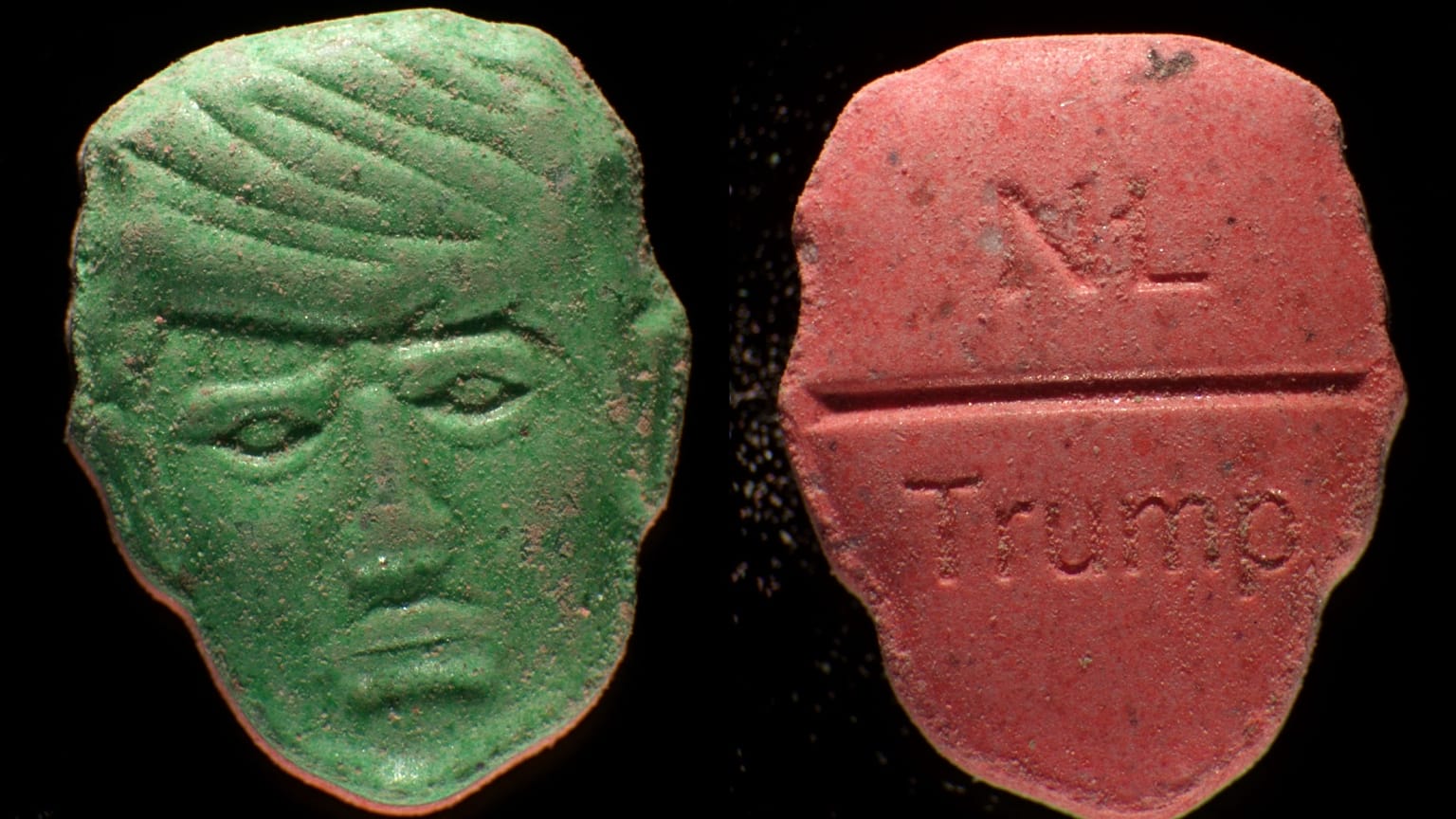
Dutch institute issues 'Red Alert' over potentially lethal Trump-shaped ecstasy pills

This undated photo provided by Trimbos Institute of Mental Health and Addiction shows pills that have a depiction of President Donald Trump on one side
Copyright AP Photo

By Gavin Blackburn
Published on

It's not the first time ecstasy pills in the form of Trump's head have appeared. In 2017, German police seized thousands of orange Trump-shaped tablets.

A Dutch drug addiction and mental health institute warned users on Friday about potentially lethal ecstasy pills shaped to look like the head of US President Donald Trump.

The Trimbos Institute said that several of the pills have been handed in recently at a network of centres that test drugs for users before they take them.

“Absolutely do not use these pills,” the institute warned.

It released a photo of the pills that have a depiction of Trump's head on one side and on the other side “NL” and “Trump” stamped into the surface either side of a vertical line.

One of the pills has a green face and another is yellow.

The institute warned in a “Red Alert” published on its website and social media that they contain a high concentration of a chemical called PMMA, or para-methoxymethamphetamine, that is similar to MDMA, the active ingredient in ecstasy pills.

However, PMMA is slower working than MDMA and that could lead users to take more because they think that the first pill didn't work, leading to a risk of overdosing, the institute said, adding that use of the pills “can lead to overheating with possibly deadly consequences.”

Spokesperson Anniek Groothuis said that the institute has no reported cases of serious illness or fatalities among people who may have used the drug.

“We do not know of any victims where PMMA was found in their blood,” she said.

Producing, selling and using ecstasy is illegal in the Netherlands, but it's widely used, particularly at clubs and music festivals.

A government report in 2024 said that some 550,000 people took the drug in a year.

It's not the first time ecstasy pills in the form of Trump’s head have appeared. In 2017, German police seized thousands of orange Trump-shaped tablets.


Greenland to open truth commission over forced contraception of Inuit women scheme

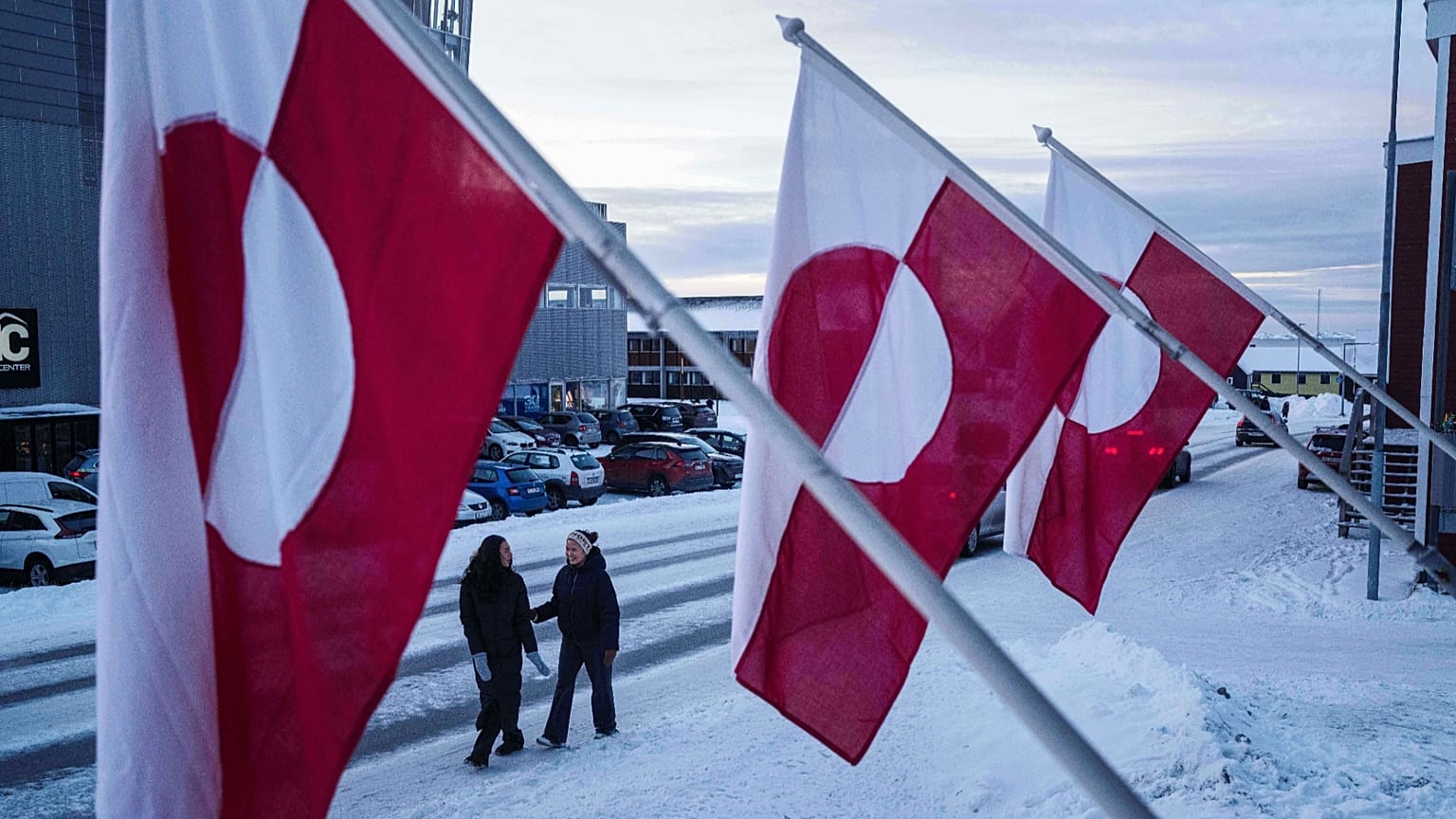
Women walk on a street in front of national flags in Nuuk, 14 January, 2026
Copyright AP Photo

By Gavin Blackburn
Published on

From the 1960s to 1990, more than 4,000 Greenlandic women were forced to wear a contraceptive coil, in the majority of cases without their consent.

Greenland said on Friday it would establish a Truth and Reconciliation Commission on Denmark's forced contraception of thousands of indigenous Inuits, after experts failed to agree on whether the scheme constituted "genocide."

The forced contraception campaign is one of the darkest chapters in Greenland's history with its former colonial master Denmark.

From the 1960s to 1990, more than 4,000 Greenlandic women were forced to wear a contraceptive coil, or intrauterine device (IUD), in the vast majority of cases without their consent or that of their parents if they were minors.

Girls as young as 12 were affected, some of whom were never able to have children afterwards.

"We cannot say, on behalf of the government, whether there was genocide. This is something we can continue to debate," Greenland's Justice Minister Marianne Paviasen told reporters.

Greenland's Prime Minister Jens-Frederik Nielsen said the priority now was to "begin the healing process."

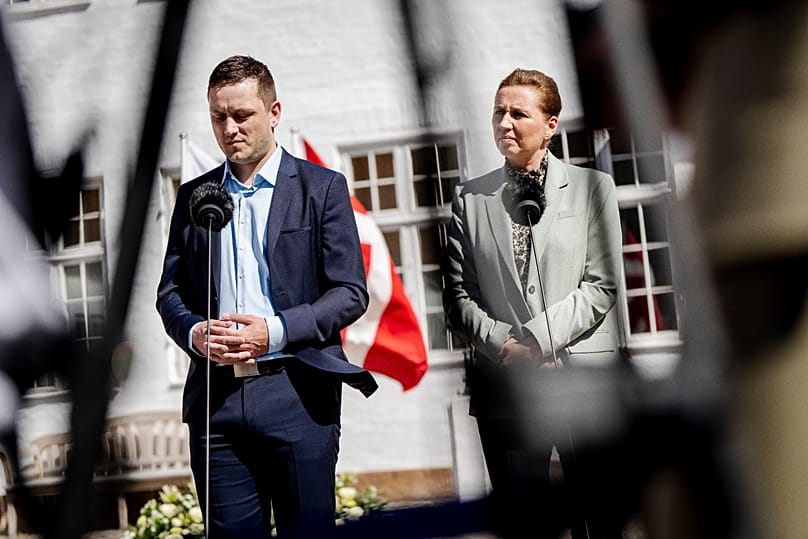
Greenland's Prime Minister Jens-Frederik Nielsen and Denmark's Prime Minister Mette Frederiksen in Marienborg, 27 April, 2025 AP Photo

"We will set up a reconciliation commission," he vowed, saying he wanted to cooperate with Denmark on the matter.

In Copenhagen, Danish Prime Minister Mette Frederiksen also sounded a conciliatory note.

"We will handle the political process together with the government of Greenland. The most important thing for me is that we find the right path together," she said.

A four-member commission was tasked in August 2024 with shedding light on the scheme.

The experts were unable to agree on a unanimous conclusion, presenting two different reports instead.

"One states there was no genocide at all, while the other says there might have been," Paviasen said.

The reports did however agree that the contraception programme may have violated multiple human rights and the rights of Indigenous peoples.

'Not just about history'

One of the victims, Henriette Berthelsen, told the AFP news agency before the reports were presented that the conclusions were skewed from the start since no Greenlandic Inuit was appointed as experts.

"For me, this is not just about history or politics. It's my body, my life and my right to self-determination," she said.

"And once again, I see that it is others who will investigate and define what was done to me and to other Inuit women."

On Thursday, the Danish parliament agreed that women affected by the forced contraception campaign can claim compensation from Copenhagen, an initiative pushed by Frederiksen, who presented Denmark's official apology last year.

Media coverage of the case has revived trauma that had been buried for decades

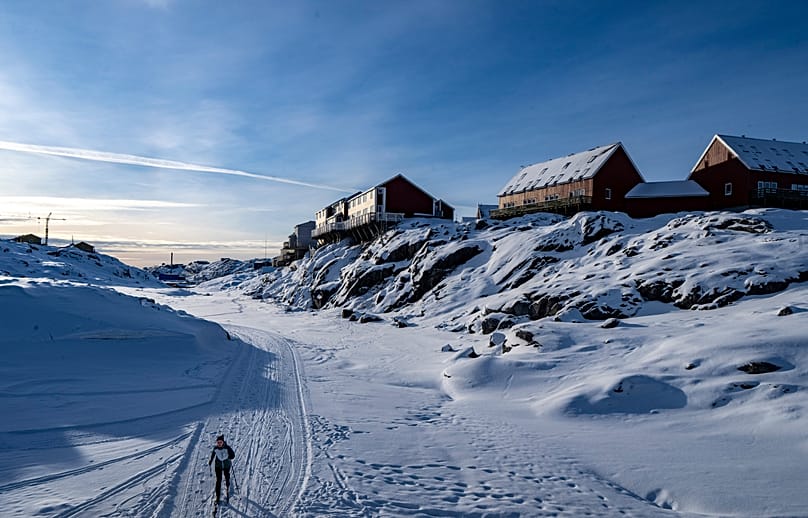
A person skis in Nuuk, 6 February, 2026
A person skis in Nuuk, 6 February, 2026 AP Photo

"I realised everything it had cost me, all those hospitalisations, those surgeries, the schooling I missed and, above all, those pains I had never associated with that damn IUD," said Kirstine Najarak Berthelsen.

"It was buried so deeply in my subconscious...Everything that happened to people is beyond imagination if you haven't experienced it yourself," she added.

By the late 1970s, one in two Greenlandic women of childbearing age, at least 4,070 women, had been fitted with an IUD, according to an investigation presented in September 2025.

The scandal came to light when one of the victims spoke out in the media about the trauma she experienced.

A podcast series in 2022 then revealed the full extent of the campaign.

Henriette Berthelsen has long called for a Truth and Reconciliation Commission to be established.

The 68-year-old psychologist said that would make it possible to "acknowledge what happened."

"I believe that only then will we be able to begin to heal and move forward - not as adversaries, but as human beings and as peoples equal in dignity."

Nuuk and Copenhagen are also shedding light on several other painful chapters from the past, including children adopted without their parents' consent.


Bayeux Tapestry: Macron to open landmark London exhibition next Wednesday

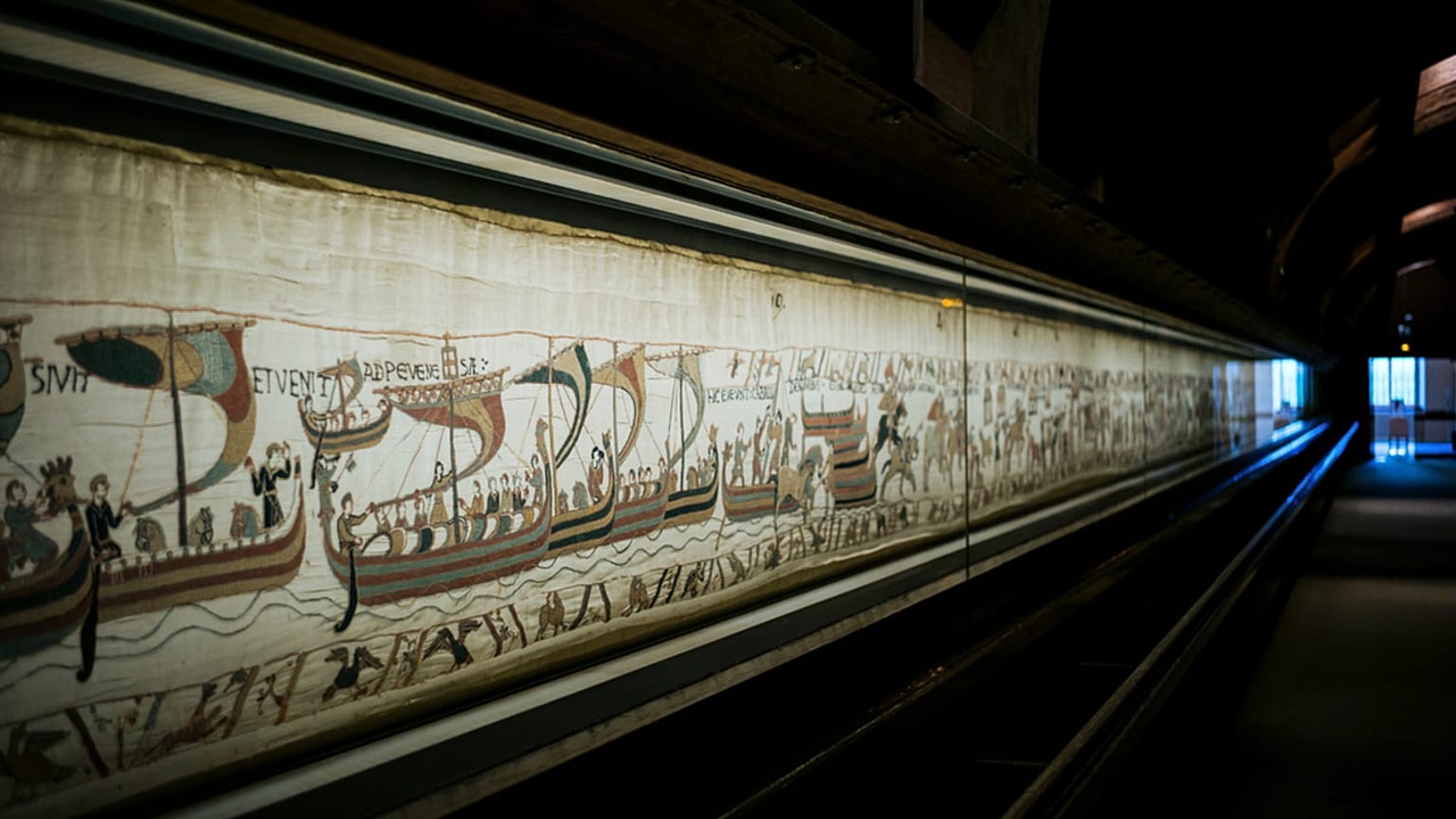
ARCHIVES - This photo taken on 18 September 2019 shows the Bayeux Tapestry, dating from the 11th century, which depicts the Norman conquest of England, in Bayeux, France.
Copyright Kamil Zihnioglu/Copyright 2019 The AP. All rights reserved.

By Serge Duchêne
Published on

According to the Élysée, this is "a highly symbolic moment the President of the Republic wanted for Franco-British relations". The French president thus aims to highlight the "exceptional loan" he himself approved in 2025.

French President Emmanuel Macron will travel to London this Wednesday 2 September to open an exhibition at the British Museum devoted to the Bayeux Tapestry, an 11th-century work depicting William the Conqueror's conquest of England, the Elysée announced on Friday.

Macron will also have a "first in-depth exchange" with the new British Prime Minister, Andy Burnham, on Thursday, the presidency said.

He is also expected to "have the opportunity to greet King Charles", a presidential adviser added, without giving further details.

The main purpose of the visit is "the opening of the exhibition marking the loan of the Bayeux Tapestry to the British Museum", an event described by a presidential adviser as "a particularly significant moment" for Franco-British relations and personally championed by the current occupant of the Elysée.

The French leader wants to highlight this "exceptional loan" of the piece, which left France for the first time in more than 900 years when it was transported to London under tight security.

On Friday, the British Museum unveiled some sections of the work depicting the 1066 Battle of Hastings and the invasion led by William the Conqueror's Norman army.

The exhibition will be open to the public from 10 September to 11 July 2027; 100,000 tickets have already been sold for the first four months.

The French president, who will be accompanied by his wife, Brigitte Macron, is "very much looking forward" to seeing the tapestry displayed "in optimal conditions".

In London, the 70-metre-long linen embroidery will be shown flat for the first time, rather than hung vertically as it has been in Bayeux for decades.

According to the British Museum, this exhibition layout makes it easier to grasp the full scale of the work.

This historic move from Bayeux in Normandy prompted protests from experts who feared irreversible damage to the tapestry, which had already been weakened by 30 unstabilised tears and nearly 10,000 holes. An online petition circulated at the time of Macron's decision, calling on the relevant French authorities to abandon the loan.

The journey nevertheless took place in optimal conditions, and the French Culture Minister, Catherine Pégard, visiting London in mid-July, said she was delighted to see the thousand-year-old embroidery "in very good condition".

The French leader's visit will be the first by a head of state or government from the European Union since Andy Burnham took office last month, following the resignation of Keir Starmer, with whom Macron had worked closely and forged warm personal ties.

"The president had built a very friendly and extremely effective relationship with Prime Minister Starmer, particularly on the Ukraine and Middle East files," a presidency official said.

Coordination with his successor is expected to be "equally important and regular". "Contact was established immediately" with Burnham, the presidency added, also highlighting his first steps in office, including a swift trip to Kyiv to demonstrate his support for Ukraine.

Additional sources • AFP, franceinfo

Ceuta warns it is 'on the brink of collapse' as Spain seeks Frontex and Europol help

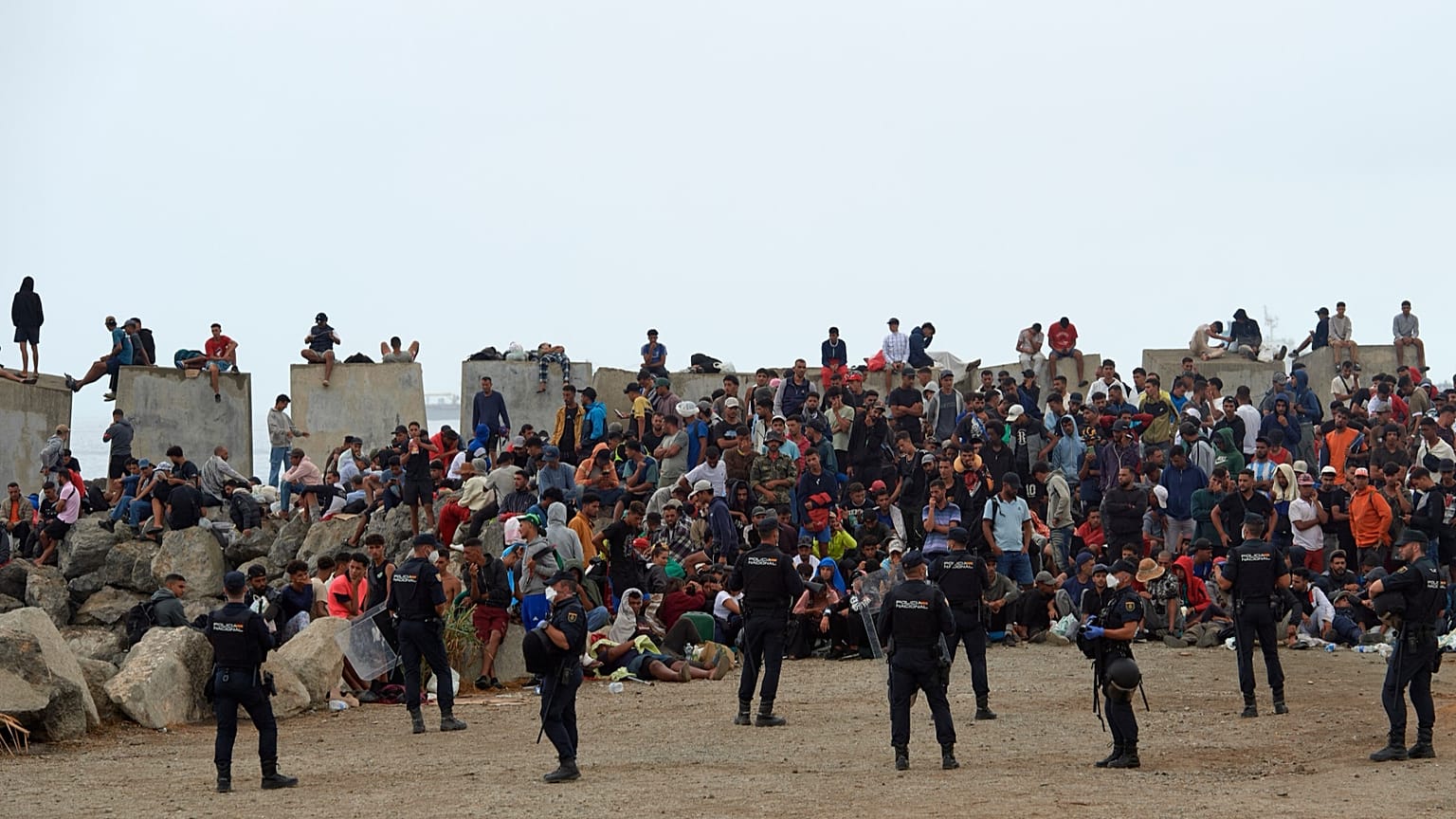
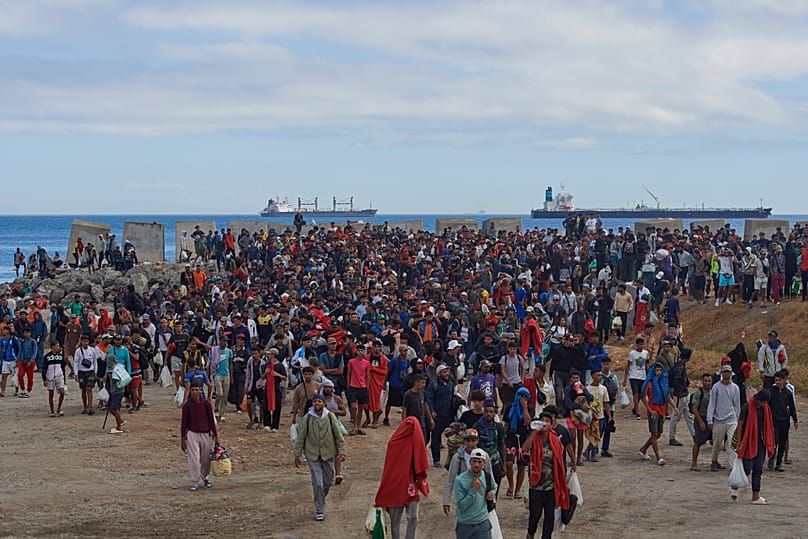
Migrants who crossed from Morocco into Spain return to a beach after being expelled from the area the previous day, 21 August, 2026
Copyright AP Photo


By Gavin Blackburn
Published on

Meanwhile, Spain's interior minister called for calm after Ceuta residents clashed with police during protests against migrants who have remained in the enclave following a mass influx.

Spain has asked the European Commission (EC) for the support from Frontex and Europol to assist with the screening of migrants who are staying irregularly in Ceuta, according to several Spanish media outlets.

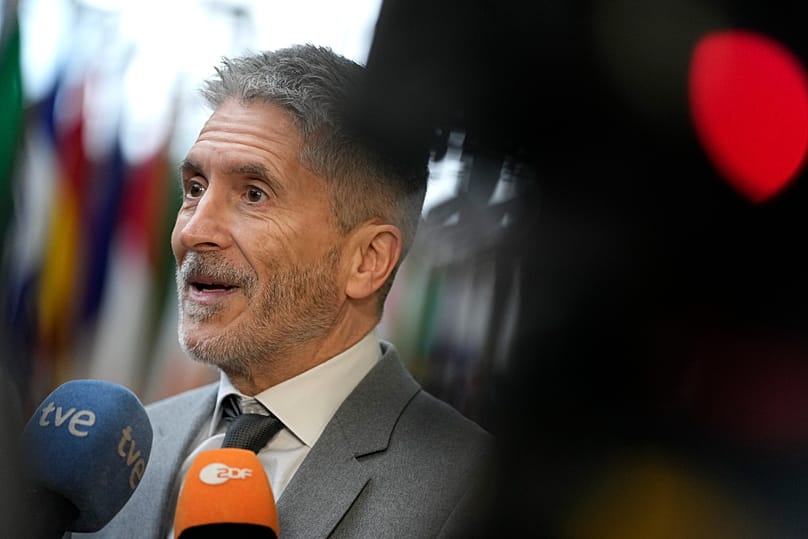
Spain's Interior Minister Fernando Grande-Marlaska has asked the EC for Frontex, Europol and the European Union Agency for Asylum (EUAA) to "reinforce the device set up to address the management of the triage and subsequent processing of the personal files of the immigrants who still remain in Ceuta irregularly."

The Interior Ministry also demanded the extension of Operation Minerva, a joint initiative of the Spanish police and the EU border protection agency Frontex.

Madrid ask that that operation run until 2 September until "the situation created in the autonomous city is resolved."

Madrid also asked for the " assistance of the European Union Agency for Asylum in conducting interviews and providing interpreters" in order to triage migrants.

Due to space limitations in Ceuta, this process is expected to be carried out electronically.

Migrants who crossed from Morocco into Spain return to a beach after being expelled from the area the previous day, 21 August, 2026 AP Photo

The Interior Ministry announced on Friday that Ceuta's border would be reinforced with a package of "extraordinary" measures such as extending the Tarajal and Benzú breakwaters, a permanent system of maritime containment buoys, aerial surveillance with drones, light intervention vessels and remotely operated underwater devices.

At the same time, Ceuta's Assembly unanimously called on the central government on Friday to act "immediately and without further delay" arguing that the city is in an "extreme situation, on the verge of collapse."

The Board of Spokespersons, together with the non-affiliated MPs, unanimously approved on Friday an institutional declaration calling on the government to adopt urgent measures one month after the mass entry of at least 72,000 migrants from Morocco.

"Ceuta has lost its way of life and its calm. We do not have much time to avert disaster," Ceuta's President Juan Vivas warned.

The declaration calls for a return to their countries, "in accordance with the law" of those who took part in the mass entry and are still in Ceuta. It also backs citizens' right to demonstrate, as long as it is done "peacefully and in an orderly manner," and condemns violent incidents recorded in recent days.

"No one can or should take the law into their own hands. The defence of Ceuta and the interests of its people can only be pursued through legality," Vivas said.

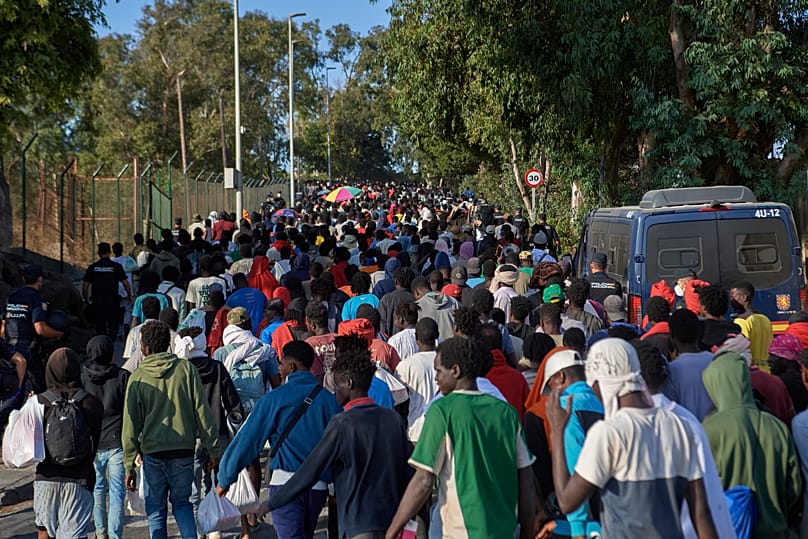
Migrants who crossed from Morocco into Spain are escorted by Spanish police to temporary shelters after being cleared from a beach in Ceuta, 20 August, 2026 AP Photo

Appeal for calm

Meanwhile, Spain's interior minister called for calm on Friday after residents of Ceuta clashed with police during protests against migrants who have remained in the North African enclave following a mass influx.

Tensions have been high in the territory of 80,000 people since at least 72,000 people crossed into Ceuta over several days in July, triggering a Europe-wide migrant alert.

Spain's leftist government says most have since left the enclave of 18.5 square kilometres but thousands remain wandering the streets and sleeping on beaches.

Demonstrations have intensified in recent days, with some protesters clashing with police on Thursday at a beach where migrants have been sleeping. Some of their belongings were burned.


Migrants who crossed from Morocco into Spain are escorted by Spanish police to temporary shelters after being cleared from a beach in Ceuta, 21 August, 2026 Copyright 2026 The Associated Press. All rights reserved.

A soldier was injured in a separate incident on Thursday when migrants threw stones at troops, while 12 Moroccan migrants were arrested.

Two more arrests were made after migrants attacked a police officer, sources said.

"Violence is not the answer," Interior Minister Fernando Grande-Marlaska told parliament on Friday.

"I call for calm and an end to any form of violence, because...violence is not the way to resolve any problem with the complexity" of that facing Ceuta, he added.

Right-wing and far-right parties have demanded that all the migrants be rounded up and sent back to their home countries.

Grande-Marlaska accused them of "inciting hatred and confrontation" in Ceuta.

The government has warned that each individual must be identified to determine whether they are entitled to asylum or subject to deportation, while unaccompanied migrant children require special protection.

Ceuta and Melilla, another small Spanish territory in North Africa, form Europe's only land border with Africa.