Friday, August 28, 2026


Are the Baltics safe? CIA director's Moscow trip raises more questions than answers
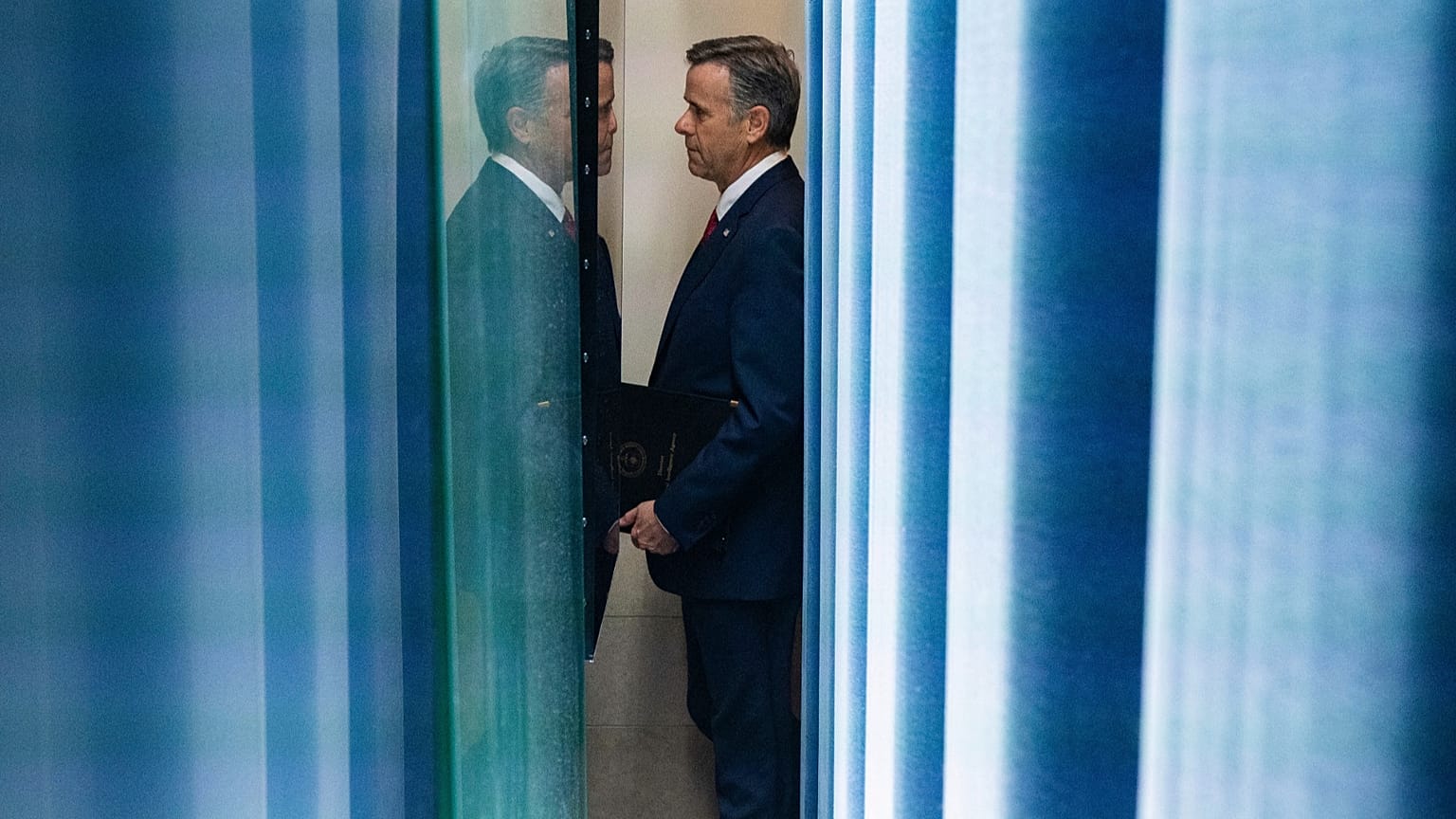
FILE: CIA Director John Ratcliffe arrives to speak with reporters in the James Brady Press Briefing Room at the White House, Monday, April 6, 2026, in Washington.
Copyright AP Photo


By Sasha Vakulina
Published on

A rare CIA mission to Moscow has fuelled fears of a possible Russian test of NATO. Baltic officials insist their threat assessments have not changed, but are their reassurances mostly intended to keep public anxiety in check?

If CIA Director John Ratcliffe’s secret trip to Moscow was intended to calm fears of a confrontation between Russia and NATO, it appears to have achieved almost the opposite.

His sudden arrival in the Russian capital this week triggered days of speculation over what intelligence could have prompted Washington to dispatch its spy chief to deliver a message to Moscow and whether the Baltic states should be worried.

US media reported that Ratcliffe warned Russia against attacking NATO members, particularly Estonia, Latvia and Lithuania, amid intelligence assessments that Moscow could seek to test the alliance as its war in Ukraine remains deadlocked.

American thinktank the Institute for the Study of War (ISW) said the circumstances of the visit suggest Washington regarded the intelligence behind it as sufficiently urgent and sensitive to justify Ratcliffe travelling to Moscow in person.

“US Central Intelligence Agency Director John Ratcliffe’s visit to Moscow suggests that Russia may be preparing to conduct an act of aggression against a NATO member in the relatively near term to invalidate NATO’s Article 5,” ISW said.

But the Washington-based organisation also drew an important distinction: there are no signs of the kind of large-scale Russian military build-up around the Baltic states that preceded the invasion of Ukraine in February 2022.

Instead, it said, any near-term Russian action could be considerably more limited: an air, missile or drone strike, or a small land incursion designed not to seize large amounts of territory but to test whether NATO allies would respond collectively under Article 5.

Former Estonian President Toomas Hendrik Ilves questioned whether the Baltic states were the reason for Ratcliffe’s trip at all.

In an exclusive interview with Euronews, Ilves said he had “severe doubts” that concerns over the Baltic states were behind the CIA director’s mission, arguing that Washington’s more immediate concern was Russia’s support for Iran.

“What is the real problem for the United States right now? The real problem is Iran, the fact that the Russians are giving targeting information to the Iranians,” Ilves said.
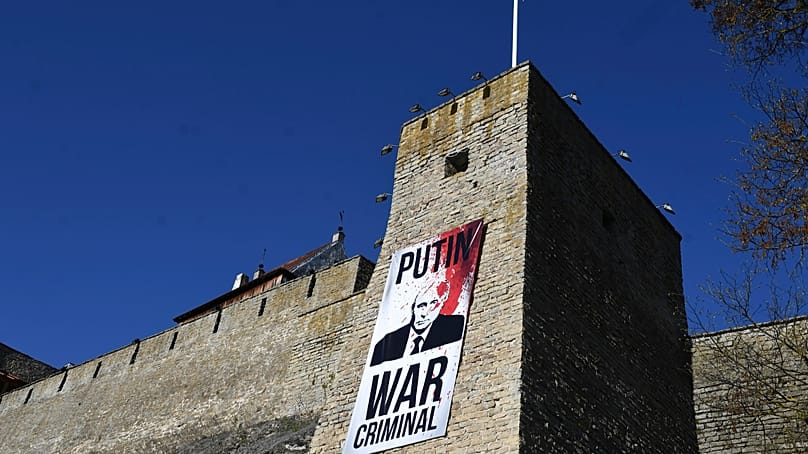
 
A poster with an image of Russian President Vladimir Putin is seen on the wall of the Narva Castle opposite Russian border, in Narva, Estonia, Tuesday, May 9, 2023. AP Photo

He was equally sceptical about suggestions of an increased Russian military threat to the Baltic states, dismissing them as “all spin.”

“Why would they do anything in the Baltic states at this time?” he said, arguing that Moscow had little reason to risk a confrontation with NATO while its war in Ukraine remained deadlocked.

Concern in European military circles

A European military source told Euronews that intelligence agencies have been picking up signals for months suggesting that Moscow could seek to exploit the Trump administration’s changing approach to its European NATO allies to launch another attack in the region, as Washington pushes Europe to assume greater responsibility for its own defence.

The source cautioned that this did not amount to evidence that Russia has taken a decision to act. But the concern, they said, was that a distracted Washington, combined with the shift in responsibility towards Europe, could present Moscow with a window of opportunity.

Seen through this lens, Ratcliffe’s trip could have been intended to remove any doubt in Moscow about the consequences of testing NATO at a time when Washington is both heavily preoccupied elsewhere and redefining its role in European defence.

The source described Ratcliffe as one of the Trump administration’s strongest supporters of NATO, Europe and Ukraine, but doubted that Putin would heed his warning. The timing itself may be part of those calculations.
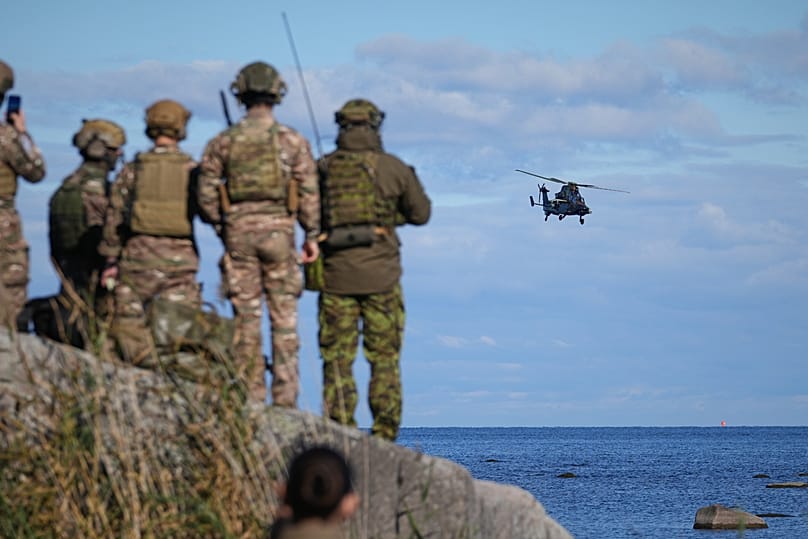
An Airbus Tiger multi-role attack helicopter flies during a multinational military Exercise Pikne ("Lightning") near Suurekivi, Estonia, Tuesday, Sept. 30, 2025. AP Photo

The source stressed that the Baltic states, particularly Estonia and Lithuania, are considerably better prepared for a potential confrontation with Russia than much of the rest of Europe.

As Europe strengthens its defences, it raises another strategic question: if Moscow is considering testing NATO, why wait until the continent is better prepared and a new US administration that might be more committed to its defence?

A painful memory of 2021

Nearly five years ago, Ratcliffe’s predecessor, William Burns, travelled to Moscow with a warning. When he arrived in November 2021, Russia was already months into a large and increasingly visible military build-up around Ukraine. Less than four months later Russia launched its full-scale invasion.

A European military source drew an uncomfortable parallel between the two missions.

“It is good that the CIA director went to Moscow to deliver a warning," the source told Euronews. “Not that Putin will listen.”

But there is a crucial difference between the two cases. No comparable Russian build-up is visible around the Baltic states today. A Russian attempt to test NATO, however, would not necessarily require one.

A more limited operation could require little of the visible military preparation that preceded the invasion of Ukraine. If the objective is to test NATO rather than seize territory, ambiguity could be the point.
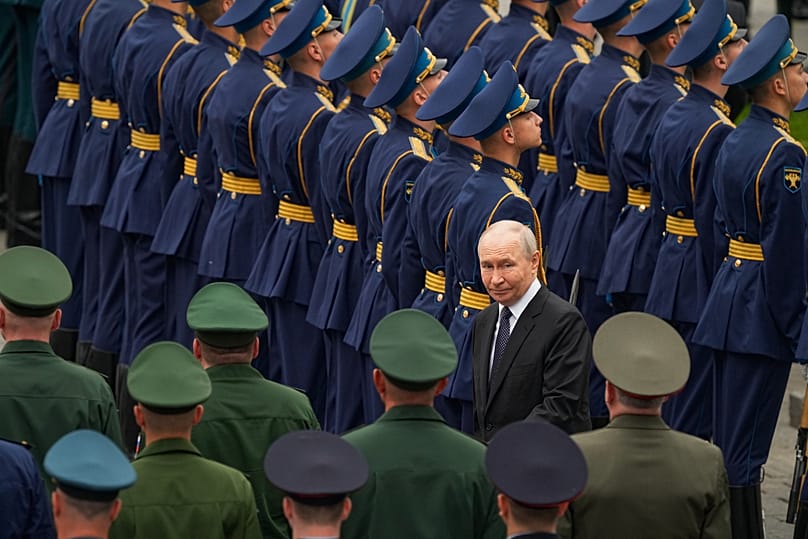
Vladimir Putin arrives at a wreath-laying ceremony marking the 85th anniversary of the Nazi German invasion into Soviet Union in World War II, Moscow, June 22, 2026. AP Photo

‘Our threat assessment has not changed’

Officials in the Baltic states have spent the days since Ratcliffe’s visit trying to dampen fears that another 2021 may be unfolding on NATO’s eastern flank.

Estonian Foreign Minister Margus Tsahkna said the possibility of Russian provocations against NATO must be taken seriously, but insisted that Estonia’s threat assessment had not changed.

Latvian officials similarly said their assessment of the conventional military threat remained unchanged and the risk of a Russian invasion was low.

Yet public reassurance has been accompanied by calls for considerably greater preparedness.

Five European Commissioners from countries on the EU’s eastern flank have urged European Commission President Ursula von der Leyen to take additional measures in response to what they described as mounting security challenges in the region.

Their proposals include appointing a high-level coordinator for the eastern flank, strengthening regional stockpiles and civil preparedness, improving the protection of critical infrastructure and accelerating the EU’s Eastern Flank Watch initiative against hybrid threats.

Baltic officials may see no evidence of an imminent conventional invasion, yet preparations continue for sabotage, drone incursions, hybrid operations and more limited Russian military provocations — many of which the region has already faced.

From Kyiv’s concerns to Washington’s warning

In April, Ukraine's President Volodymyr Zelenskyy warned that Russian preparations could point to further mobilisation and a possible offensive either against Ukraine or the Baltic states.

Estonia publicly pushed back. Tsahkna said the warning did not correspond with Estonian intelligence or Tallinn’s own assessment.

“We do not see Russia concentrating its forces or preparing in any way militarily to attack NATO or the Baltic states,” he said.

By July, however, Lithuania and Latvia were themselves warning about the possibility of more limited Russian action.

Lithuanian President Gitanas Nausėda said intelligence indicated Russia could be planning limited attacks on critical infrastructure, including energy and transport facilities, while Latvian President Edgars Rinkēvičs warned that Moscow could seek to test NATO’s Article 5 commitment without launching a full-scale invasion.

A week ago during a summit in Kyiv, Estonian Prime Minister Kristen Michal said there was no direct conventional Russian threat to the Baltic or Nordic states.

Russia’s Second-Front Dilemma: Why Pressure On Japan Could Backfire – Analysis

Russia President Vladimir Putin visit fish processing complex on Iturup island, August 13, 2026. Photo Credit: Kremlin.ru


Key Takeaways:

  • Putin’s first trip as president to disputed Iturup/Etorofu is framed as a show of Pacific power after Ukraine, but the author argues turning the Kurils into a second sustained confrontation would overstretch Russia.
  • Moscow already faces a huge European war, a larger NATO after Finland and Sweden joined, and limited spare forces; U.S. troops in Japan and Korea plus Tokyo’s 2% defense push, Tomahawks, and Quad/Squad ties would likely harden, not crack.
  • Pressure on Japan would also hurt Arctic shipping hopes, deepen dependence on China and North Korea, and shrink the energy/investment fallback Tokyo once offered—narrowing Russia’s options rather than opening a new Pacific era.

The Kuril Islands or Northern Territories’ visit by President Putin is intended to project Russian power. However, turning pressure on Japan in the Far Eastern flank in a second strategic confrontation would almost certainly stretch Moscow, further complicate its Arctic ambitions, deepen its conventional dependence on Beijing and Pyongyang, and accelerate the very US-led security architecture that Russia is opposing.

The recent unprecedented visit to Iturup, known as Etorofu to Japan, came immediately after the Russian president observed Pacific Fleet exercises in Sakhalin. It is seen as a demonstration of power at Russia’s opposite end from the Ukrainian battlefield, and more strategically, it was Putin’s first visit to the disputed island chain during his long rule. This invited response from Prime Minister Sanae Takaichi, reflecting how this sovereignty dispute has remained unresolved for more than eight decades, being a thorn in the efforts for both Tokyo and Washington to conclude a formal post-World War II peace treaty.

This show of strength and lending of support by Putin to this Far Eastern symbolism is meant to show Japan, the United States and the wider region that the four-and-a-half years of war in Ukraine have not diminished Russia’s ability to project power thousands of kilometres away in the Pacific on the other end.

However, will Moscow actually benefit from transforming the Far East from a zone of coercive signalling into a second sustained theatre of confrontation? The calculations point to the unfavourable.

For now, Putin may be testing the geographical elasticity and stretch capacity of Russian power but testing it to the breaking point might invite greater risks.

A Second Pressure Axis Is Not Yet a Second Front

Questions abound on whether Russia can generate enough military pressure simultaneously in Europe and East Asia, sustaining two major theatres over time. Geography remains both a boon and a bane for Moscow, and in this case, its strategic vulnerability.

Moscow must simultaneously secure a vast continental state extending from NATO’s eastern frontier across Siberia to the Pacific, while in parallel needing to maintain its nuclear forces, Arctic infrastructure, the Northern and Pacific Fleets and the contested and squeezed maritime openings. Every additional theatre will demand an increase in troops, air defence, logistics, intelligence, surveillance, maintenance, and strategic reserves.

All these are further complicated by the little room left for Moscow for additional military tasks. It set aside 13 trillion rubles for defence this year, with a combined defence and security expenditure of almost 17 trillion rubles, around 7% of GDP.

The most immediate strategic contest remains westward of Russia and Ukraine, and Moscow is also facing a strengthened NATO in the northern frontier with the accession of Finland and Sweden.

The Limits of Russia’s Eastern Deterrence

Military and geographical assets of Sakhalin, Kamchatka, the Kuril chain and the Sea of Okhotsk form a strategic complex for Russia in the Far East. They can increase operational risks for others and strengthen Moscow’s local defensive position but cannot eliminate the ingrained American presence there that has been embedded in the regional security architecture for decades.

More than 88,000 American troops are already positioned across both Japan and South Korea, not including the current reinforcement from Guam, Hawaii or the wider Pacific. Japan hosts the largest concentration of US forces overseas, and Beijing, despite having greater economic and military resources in East Asia than Moscow, has not succeeded in challenging that American strategic presence, and Russian pressure is likely to produce the opposite effect.

The Paradox of Pressure on Japan

Added distracting capacity from Beijing and Pyongyang could help Moscow in the long term power calculation with Washington in this part of the world. Chinese pressure in the East China Sea and around Taiwan, coupled with North Korean missile and nuclear capabilities and Russian military activity farther north could form a combined distracting force for Washington, requiring it to distribute its attention across multiple fronts.

However, the more Japan is threatened by Moscow, the more Tokyo is incentivised to embed deeper into the US axis of deterrence and pursue greater fallback options with other partners beyond conventional regions and players.

Japan’s military transformation has been stark and strategic for years, catching up to the reality of this three-pronged threat. Prime Minister Takaichi accelerated defence expenditure equivalent to 2% of GDP, and has been acquiring long-range Tomahawk missiles capable of striking targets more than 1,000 kilometres away.

Domestic sentiments strengthened the moves where a record 94% expressed a favourable view of Japan’s Self-Defense Forces. External alliances and framework continue to be strengthened. The Camp David frameworks of Tokyo-Seoul-Washington continue to become institutionalised, while the four-country Japan-US-Australia-Philippines arrangement, called the “Squad,” also stayed on despite arguments to the contrary, as does the Quad.

The Arctic Cost Moscow Cannot Ignore

Russia sees the Northern Sea Route as the future economic corridor linking Russian energy production to Asian markets, with China as the main destination for crude and cargo shipments. A military crisis or a potential conflict in the Far East would complicate Moscow’s attempt to uplift the NSR as a dependable future Eurasian transport artery.

Japan conventionally has the characteristics that can serve Moscow’s Arctic intent as a partner: capital, advanced maritime technology, energy demand and interest in diversified shipping corridors. Japan has long examined the commercial potential of the NSR and the potential of Russian resources in serving Tokyo’s energy diversification needs. Hence, driving Tokyo away risks further tightening of Moscow’s options.

The Beijing-Pyongyang Trap

The more hostile Russia’s relationship with Japan becomes, the more dependent Moscow will be on the conventional partners of Beijing and Pyongyang, thus deepening Moscow’s trap in further complicating any efforts to jettison this long held dependence on both.
The Asian market still remains Moscow’s lifeline, where roughly 80% of Russia’s oil exports in 2025 went to China and India, as compared with the dwindling European market.

Moscow needs Asian markets, but might also risk this by further narrowing its options with new complex moves. Russia has always wanted to be an independent Eurasian great power but that will require options and the ability to jettison long term one sided dependence on traditional allies in the region.

A functional and practical relationship with Japan gives Moscow another fallback in the form of a major Asian economic partner, a source for energy market and investment, and most strategically, a greater alternative option in dealing with Beijing and a long-term decoupling from China. The visit risks validating decades of Japanese strategic suspicion, especially now at a moment where Tokyo is recalculating how far its post-war defence transformation should go.

The late former Prime Minister Shinzo Abe tried for years to address the territorial dispute and improve bilateral relations but those efforts ultimately failed; both sides realised that neither country will benefit from an adversarial relationship. While many have argued that the age of accommodation is over between them especially with the visit, it is very much premature. Geography has always remained stark and realistic, and often pushes adversaries back into dialogue.

Moscow is already keeping active operations across a 1,200-kilometre Ukrainian battlefield, and with possible new fronts with NATO if what recent reports and arguments are being displayed. By deepening new footprints in the Far East, Moscow will stretch itself across Eurasia, risking a closed door with Tokyo, weakening the diversification of its Arctic ambitions, and locking Russia more tightly into the sphere of dependence on Beijing and Pyongyang. This means that it would not be the opening of a new Russian era in the Pacific. It would be the narrowing of Russia’s strategic choices.

About Collins Chong Yew Keat

Collins Chong Yew Keat has been serving in University of Malaya, the top university in Malaysia for more than 9 years. His areas of interests include strategic and security studies, American foreign policy and power analysis and has published various publications on numerous platforms including books and chapter articles. He is also a regular contributor in providing op-eds for both the local and international media on various contemporary global issues and regional affairs since 2007.

View all posts by Collins Chong Yew Keat →


Macron Pledges Delivery Of French Air Interceptors Following Deadly Wave Of Russian Attacks

A train station damaged by a Russian attack in Ukraine's Odesa region on August 22.


Key Takeaways:

  • After a deadly Russian drone strike on a Kryvyi Rih shopping mall that killed at least 16 people and injured more than 130, French President Macron pledged accelerated delivery of air interceptor missiles and broader allied support following a call with Zelenskyy.
  • Paris will advance SAMP/T deployments, license Ukraine to produce interceptors and other weapons, and join a Coalition of the Willing meeting on August 24 focused on increasing pressure on Russia.
  • Ukraine continues long-range drone strikes on Russian oil and military sites, while Putin warned of retaliation against Ukraine’s “most sensitive economic sectors.”

French leader Emmanuel Macron vowed to accelerate delivery of new air interceptor missiles to Kyiv following devastating Russian attacks on a Ukrainian city and a call with President Volodymyr Zelenskyy.

“I spoke with President Zelenskyy in the aftermath of the double Russian strike in broad daylight against a shopping center in Kryviy Rih, which caused numerous civilian casualties, and I expressed our horror and deep sorrow,” Macron wrote on Twitter.

Macron said he assured Zelenskyy of “the strengthening of our support with the deployment of interceptors…It is essential that all countries with available capabilities also join this effort. We must also continue to increase pressure on Russia as long as it chooses to refuse a ceasefire and peace.”

Macron, in his X posting on August 22, also said Ukrainian allies in the so-called Coalition of the Willing — an initiative led by Paris and London — will meet on August 24 to explore ways to ramp up pressure on Moscow to halt its full-invasion of Ukraine that began in February 2022 and has cost tens of thousands of lives on both sides.

British Prime Minister Andy Burnham and German Chancellor Friedrich Merz are set to host the coalition meeting, which will be held in Kyiv, with leaders attending in person and remotely. Macron’s office did not specify which leaders will be there in person.

Defense Against Ballistic Missiles

Without providing details, Macron said the accelerated delivery of interceptor missiles is in line with commitments made in July at the launch of an Integrated ‌Anti-Ballistic Missile Coalition.

In that Paris meeting, a grouping of 10 European countries agreed to develop an anti-ballistic missile system as a cheaper alternative to the US-made Patriot air defense system. The Patriot is the only weapon Kyiv holds that is capable of downing high-speed ballistic missiles used by Russia against Ukrainian cities.

Macron said ⁠Paris would advance the deployment of the new SAMP/T system to Ukraine and license Kyiv to manufacture ‌the interceptor missiles, as well as the SCALP long-range cruise missile and other weapons.

Following the two-hour phone call, Zelenskyy said he and Macron also discussed the status of peace talks and contacts with the US. Attempts by US President Donald Trump to bring about a peace deal between Moscow and Kyiv have so far proved unsuccessful.

“We agreed on steps that could open up additional diplomatic opportunities,” Zelenskyy said.

Rescue Operations In Kryviy Rih

As the two spoke, Ukrainian search-and-rescue operations continued at the site of a devastating Russian drone attack on a shopping mall in the Ukrainian city of Kryviy Rih, as Russia continues to launch strikes across Ukraine.

Two Russian jet-powered drones struck the largest shopping mall in the south-central city on the afternoon on August 21, as many residents were out shopping at the end of the work week.

The attack killed at least 16 people, leaving more than 130 others injured, including 23 children, some of whom are in critical condition. A day later, four people remained unaccounted for.

Zelenskyy, a native of Kryviy Rih, said that “every day that Ukraine lacks air defense is a sacrifice that could have been avoided.”

European Union foreign policy chief Kaja Kallas said the bloc’s defense and foreign ministers would discuss Ukraine’s air defenses during their first meeting after the summer break in September.

The attack “shows the absolute and utter depravity of Moscow’s war,” Kallas wrote on X. “This is terror by design. Russia wants to make Ukrainian cities unlivable.”

Separately, since the beginning of summer, Kyiv has been actively responding to Russian attacks by targeting oil and military infrastructure inside Russia, leaving the country facing its worst fuel crisis in years.

Early on August 22, Ukrainian drones hit an oil refinery in Novokuybyshevsk in Russia’s Samara region, 900 kilometers away. One person was killed, the local governor said.

The day before, the Ukrainian military targeted a Russian oil facility in Perm, more than 1,600 kilometers from Russia’s border with Ukraine, and a military air base in the Volgograd region.

Russian President Vladimir Putin on August 22 said Kyiv’s campaign against his country’s economic sites had opened a “Pandora’s box” and that Moscow would ‌hit back at Ukraine’s “most sensitive economic sectors.