Saturday, August 29, 2026


Number of missing in Nepal floods rises to nearly 3,000 as UNICEF says 17,000 children need aid
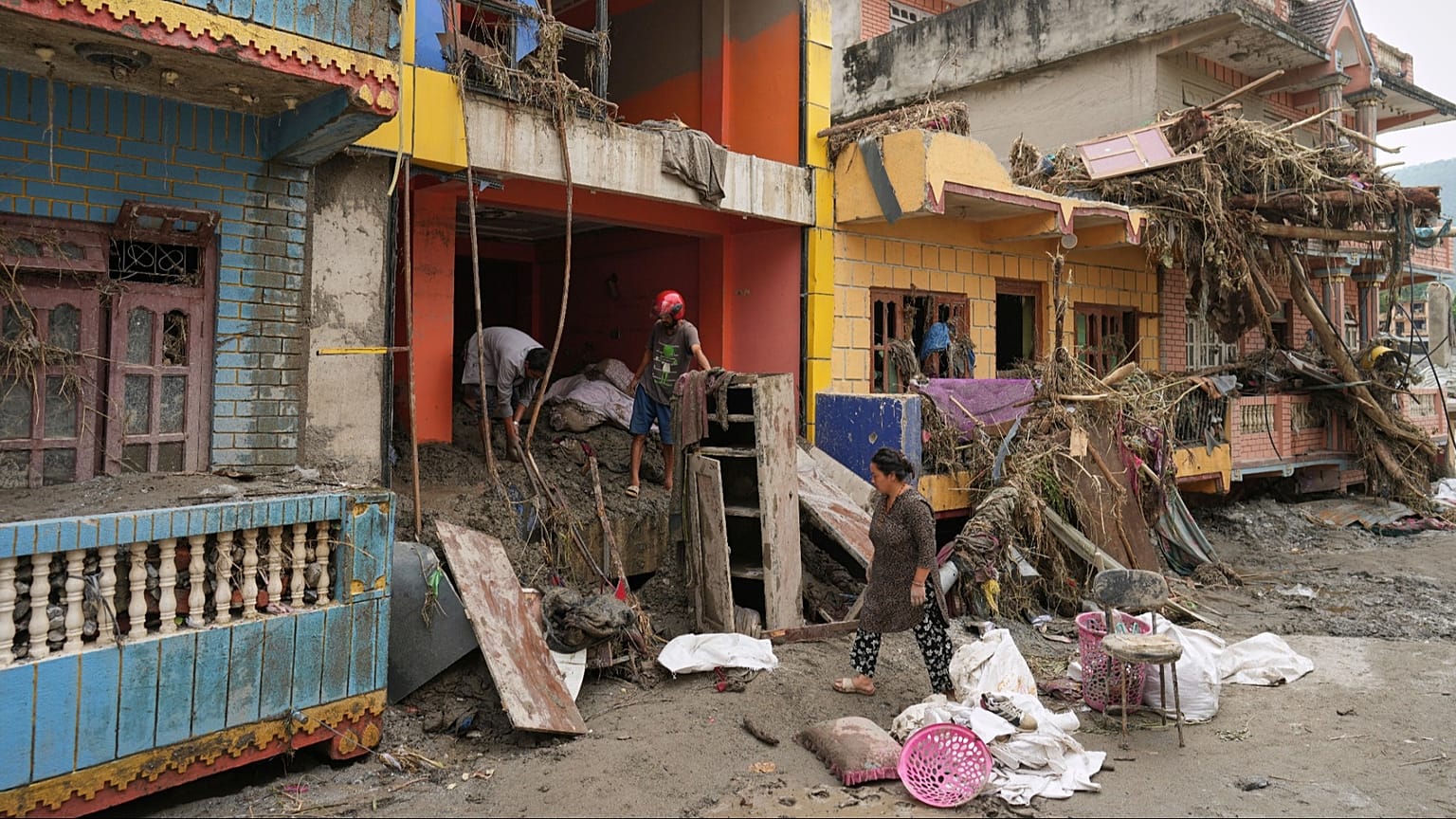
Residents salvage their belongings from damaged houses after flash flooding in the Devighat area of Nuwakot district in Nepal, 28 August, 2026
Copyright AP Photo

By Gavin Blackburn
Updated


Rescuers were battling through mud even as the threat of new floods loomed, with emergency teams recovering 633 bodies so far.

The number of people missing in Nepal and China climbed to nearly 3,000 on Saturday, underscoring the scale of the disaster days after a tsunami-like wall of water and debris swept away villages and killed hundreds

Rescuers were battling through mud even as the threat of new floods loomed, with emergency teams recovering 633 bodies so far and some of the dead reportedly swept downstream as far away as India.

The new figures came as Nepal's disaster authority added 933 hydropower workers to a missing persons list already including trekkers and pilgrims to Tibet's sacred Mount Kailash.

Relatives have crowded hospitals in Nepal's capital in a painful hunt for their loved ones, with posters on the walls bearing photos and names of the missing.

"Today is the third day and we don't know anything. Hopefully he is in a safe place," Samjhana Thing, 27, told the AFP news agency referring to her brother. "We lost everything. He is our everything."

The US Geological Survey said the disaster, the deadliest for Nepal since a 2015 earthquake, was caused by a glacial collapse that triggered a vast flow of icy debris.
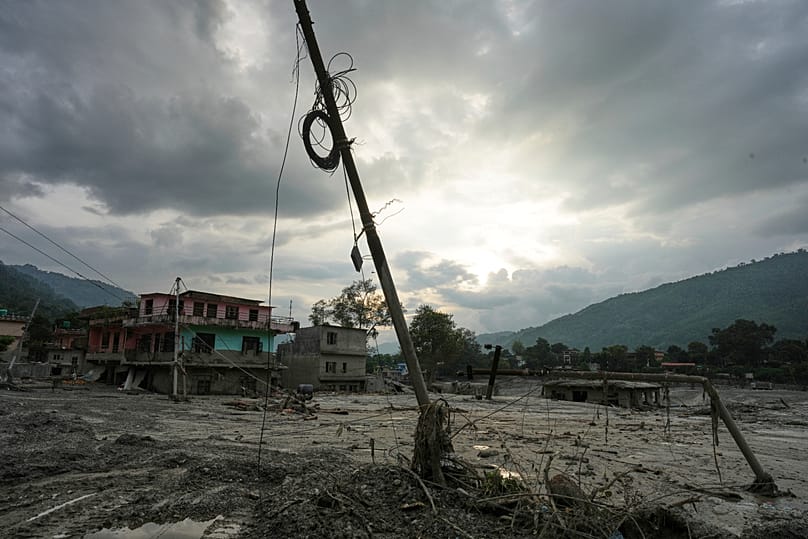
A damaged electric pole leans after flash flooding in the Devighat area of Nuwakot district in Nepal, 28 August, 2026 AP Photo

The deluge of ice and mud also caused huge lakes to form and one of these formations has become a direct threat to emergency workers scouring the region for survivors.

Nepali police urged all rescuers to "immediately move to a safe location", saying it had received information that "a water dam has burst again on the Tibetan side."

In Tibet, China was forced to suspend its rescue operation at the hardest-hit area of Gyirong over the risk of renewed flooding on Friday, before saying the threat had eased.

State broadcaster CCTV reported that a lake formed by immense piles of debris began overflowing toward where rescue teams were headed, but later said the water level of the pool had dropped.

Rescue operations were therefore "proceeding in an orderly manner", it added.

Chinese President Xi Jinping, who chaired a meeting on rescue efforts, offered Beijing's help to Nepal's emergency operations.
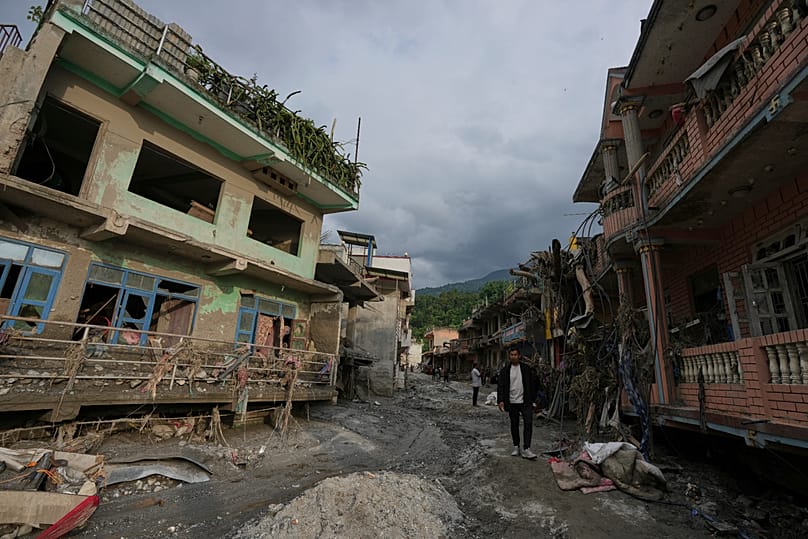
People walk along a street lined with damaged structures after flash flooding in the Devighat area of Nuwakot district in Nepal, 28 August, 2026 AP Photo

Swept away

Emergency teams had been racing to retrieve survivors from affected zones, where the widespread devastation meant food and water supplies were running out.

The Nepali military located people trapped in the tunnel of Trishuli 3A hydropower project, where they were working to find a way in to extract the survivors.

"Two helicopters have been dispatched but it is challenging because it is tough to even locate the entry points of the tunnel," army spokesman Raja Ram Basnet told AFP.

Some 350 workers and residents have been brought to safety from the site, he added, but efforts were ongoing to rescue more than 100 people trapped in the same area.
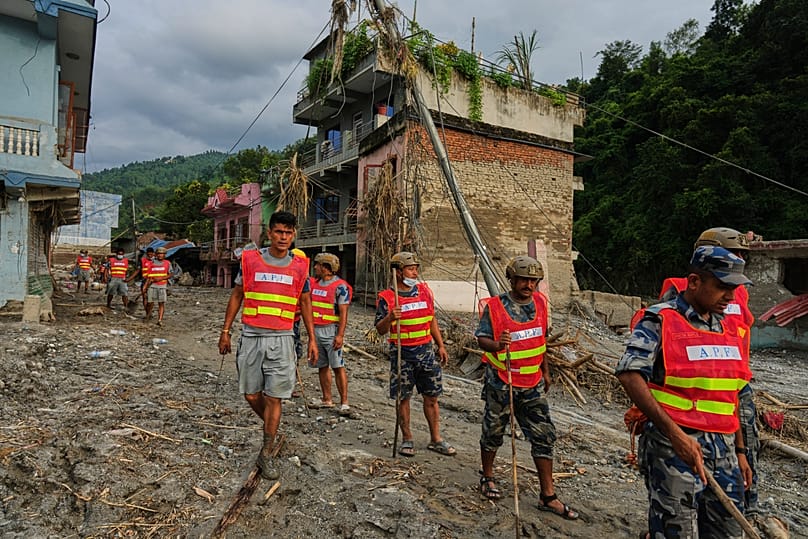
Workers clear debris in the aftermath of a flash flood in the Devighat area of Nuwakot district in Nepal, 28 August, 2026 AP Photo

Workers rescued from other dam projects along the Trishuli valley described a disaster that unfolded with terrifying speed.

Buddha Tamang told AFP he survived only because he was inside a tunnel at the dam where he worked when the flood struck.

"The senior officers working on the other side, they were all swept away," Tamang, who was airlifted on Thursday after being marooned for more than 24 hours, said.

Aid trickles in

Aid began to reach some survivors in Nepal on Friday, as the full scope of the devastation continued to emerge and survivors sought shelter at makeshift army relief centres.

Children who have been separated from their families are being given shelter as attempts are made to reunite them with families.

The UN's agency for children UNICEF said at least 17,000 children are in urgent need of humanitarian assistance, while 18 schools have been destroyed and another 20 damaged.

The International Red Cross estimates that at least 93,000 people have been affected and are in “great need.”

Also on Friday, the European Union promised €2 million in aid for Nepal with European Commission chief Ursula von der Leyen writing on X that the "immediate humanitarian aid" would help "deliver life-saving assistance to families and communities hit hardest."


Rescuers claw through mud as Nepal, China


 flood missing toll nears 3,000

Bidur (Nepal) (AFP) – Rescuers in Nepal and China were battling Saturday to locate thousands of people missing days after a deadly, tsunami-like wall of water and debris swept through the Himalayan region, engulfing entire villages.


Issued on: 29/08/2026 -  RFI

Flood survivors face an agonising wait to learn the fate of missing relatives, and the prospect of rebuilding their lives © MANAN VATSYAYANA / AFP

The latest figures from both countries put the number of missing close to 3,000, with 633 bodies recovered -- and reports of some dead possibly swept downstream as far away as India.

Rescue worker Kawan Koirala, from the Nepal Scout Disaster Response Team, said they were struggling in thick, leg-sucking mud.

"People want their want their family's body back, either dead or alive, but we cannot find them... you can see the mud," he told AFP, exhausted after an 18 hour shift.

"It is very traumatic for me too. It is my first time seeing these types of things. Everywhere is mud. We faced flood in Nepal before, but not like this."

The US Geological Survey said the disaster on Wednesday on the Tibet-Nepal border was caused by a glacial collapse that created a torrent of debris downstream.

Survivors face an agonising wait to learn the fate of missing relatives, and the prospect of rebuilding their lives from nothing.

A student participates in a vigil for victims of Nepal's flash flood, in India's Chennai © R. Satish BABU / AFP

"All the settlements near the river were swept away," Buddhi Ram Dangol told AFP in Nepal's Nuwakot district. "There is nothing left."

At Bidur's army base, a key rescue hub in the same district, relatives crowded around lists of rescued people pasted on a wall.

"I have come here looking for my son," said Kalka Sharda, scanning the list in desperation. "He was a labourer at the hydropower plant, but I can't find his name, and the authorities are not saying anything."

In an area home to vast energy infrastructure projects, Nepal's disaster authority listed 933 hydropower workers among the missing, along with 517 foreigners, including trekkers and pilgrims to Tibet's sacred Mount Kailash.
'Enormous' trauma

The trauma of Wednesday's catastrophe has been "enormous", and as many as 93,000 people may have been affected, the Red Cross said, with the death toll expected to rise.

Emergency teams worked flatout to find survivors as widespread devastation left communities short of food and water.

Fears of further flooding have compounded the search for the missing.

(COMBO) This combination of handout satellite images released by Vantor on August 28, 2026 shows a part of the town of Timure, Nepal on July 1, 2026 (top) and on August 28, 2026 (bottom) after the floods. The number of people missing in Nepal and China surpassed 2,400 August 28, underscoring the scale of the disaster days after a tsunami-like wall of water and debris swept away villages and killed hundreds. Rescuers were battling through mud even as the threat of new floods loomed, with emergency teams recovering 586 bodies so far -- and some of the dead swept downstream as far away as India. © - / Satellite image ©2026 Vantor/AFP

The deluge of ice and mud caused huge lakes, and one of these formations has become a risk of further floods.

While the exact cause of the collapse is unclear, climate change is causing glaciers to melt worldwide, increasing the risks of such disasters.

In Tibet, where Chinese authorities are the only source of information, Beijing had paused its rescue operation at the hardest-hit area of Gyirong over the risk of renewed flooding.

On the Nepali side, soldiers were trying desperately to drill through to 100 people trapped in the tunnel of the Trishuli 3A hydropower project on Saturday.

The prime minister's office said teams had begun "clearing mud and debris" to open the entrance, while a specialised Indian tunnel rescue unit had arrived to help.

Workers rescued from other dam projects along the Trishuli valley described a disaster that unfolded with terrifying speed.

Pilgrimage route

Nepal reported a death toll of 626 people on Saturday.

There are 2,426 people, including hundreds of foreigners, who are out of contact in the country.

A woman looks at photographs of the missing and dead following flash floods in Nepal, outside a hospital in Kathmandu © PRAKASH MATHEMA / AFP

Across the border in Tibet, which is largely inaccessible to foreign journalists, seven people died and 554 remain missing, the state Xinhua news agency said Saturday.

Authorities also said they had evacuated 555 stranded tourists and 499 Chinese residents from Tibet.

In India, authorities said they had recovered seven bodies from rivers flowing from Nepal, believed to be flood victims.

Scores of Hindu devotees from across the world are among those missing on the border, as many were on a pilgrimage to Tibet's Mount Kailash.

Sivaranjani Muthunathan was travelling by bus with 56 others towards the Chinese border when they became stuck in what they thought was a traffic jam.

Around them, vehicles were swept away or buried under mud.

"One by one, we also climbed out through the driver's side," then scrambled up a hill, she said.

burs-pjm/ami

© 2026 AFP


Vehicle-mounted spectroscopy system detects methane in real time


New system could help locate hidden methane emissions that contribute to climate change and pose safety risks


Optica

Mobile methane monitoring 

image: 

Researchers developed a vehicle-mounted spectroscopy system that detects methane in real time while driving. This conceptual illustration shows how the vehicle-mounted platform might be used to detect methane emissions from sources such as livestock farms, landfills, gas stations and oil and gas facilities.

view more 

Credit: Daping Luo, Chenglin Gu, and Wenxue Li, East China Normal University


WASHINGTON — Researchers have developed a vehicle-mounted spectroscopy system that can reliably detect methane in real time while driving. Using a moving vehicle to detect methane could make it easier to locate hidden methane emissions across large areas.

Methane is a potent greenhouse gas released from sources such as natural gas infrastructure, livestock farms, landfills and coal mines. Leaks from natural gas infrastructure, which are typically invisible to the naked eye, can also create fire and explosion hazards.

“Dual-comb spectroscopy uniquely enables simultaneous, high-precision measurement of multiple gases, but is sensitive to environmental noise, which can degrade its performance. Our work addresses and overcomes this key challenge,” said research team leader Wenxue Li from East China Normal University. “SUVs equipped with our spectroscopy system could cruise residential streets day and night. If an underground gas pipeline has a methane leak, the system could capture the concentration of the gas, record the GPS coordinates and notify maintenance crews.”

In the Optica Publishing Group journal Optics Express, the researchers describe their new vehicle-mounted system, which is based on mid-infrared dual-comb spectroscopy. They show that it can identify simulated natural gas leaks and map the 2D gas diffusion distribution around emission sources across multiple outdoor sites and road environments.

“With further development, this technology could help cities and industries quantify hard-to-detect greenhouse gas emissions, providing data to support emissions-reduction policies,” said Li. “More accurate methane leak localization could enable targeted repairs, reduce resource waste and improve air quality for nearby residents. The technology could also be integrated into unmanned aerial vehicles, allowing methane detection in off-road areas and further expanding potential applications.”

From the lab to the road

Mid-infrared dual-comb spectroscopy detects gases using two precisely matched frequency combs — light sources that produce many evenly spaced wavelengths. The mid-infrared region is especially useful because many molecules have strong, distinctive absorption signatures there, making it well suited for sensitive gas detection.

While dual-comb systems are commonly used in laboratories, taking the technology into the field is challenging. The systems typically rely on precisely aligned optics, including fixed telescopes and mirrors, which limit their ability to move freely and search for unknown leak sources. In real-world settings, emission sources can be scattered across an area and shift with changing wind direction.

To address this challenge, the team combined several advances to create a compact system that can perform high-precision gas detection reliably on a moving vehicle. The frequency combs are generated by specially designed, vibration-resistant fiber lasers. The researchers also developed a method that allows the two frequency comb light sources to stay naturally synchronized, eliminating the need for complex hardware to actively keep them in phase.

The mid-infrared light enters a compact, open-path gas cell that provides an effective 25-meter path through air drawn from the surroundings, increasing the system’s sensitivity without requiring a large instrument.

“Our system requires no pre-deployed hardware at the field site, maintains near-laboratory-grade detection accuracy while in motion, supports vehicle speeds up to 100 km/h and can geolocate gas plume hotspots,” said Luo. “In addition, the overall hardware is compact, relatively low in power consumption and has a modular plug-and-play design.”

Road-testing the system

To test the new system, short drives were carried out on a university campus at approximately 20 km/h while collecting data at multiple locations. This was followed by a one-hour, 47-km road test conducted on urban roads and expressways at speeds up to 100 km/h, with readings taken every second.

The system achieved a figure of merit of 3.4 × 10⁶ Hz, which is comparable to typical laboratory‑based mid-infrared dual-comb spectroscopy systems. It also measured methane with a precision of 66 ppb and water vapor with a precision of 114 ppm. During the long-distance urban measurements, background methane averaged 1.815 parts per million (ppm), while water vapor averaged 1.072%. The measurements remained consistent, providing a stable baseline for identifying localized increases in gas concentrations.

The researchers also conducted controlled methane-release tests, driving past two simulated leaks to detect and locate the plumes. They drove in circles around one of the leaks to create a 2D concentration map, which closely matched local wind patterns.

The testing confirmed that the hardware withstands the vibration and outdoor weather conditions of real roads and can accurately detect both atmospheric background concentrations and high-concentration gas plume signals from controlled leak sources.

To advance the research prototype, the researchers plan to improve performance by expanding spectral coverage to enable simultaneous detection of multiple trace gas species and further suppressing baseline drift during long integration times. They also plan to develop automated analysis software optimized for massive volumes of mobile data and continue miniaturizing the system to reduce its size, weight and cost. Ultimately, they hope to integrate the system onto drone platforms for monitoring off-road areas.

Paper: X. Jing, K. Wei, C. Gu, X. Qin, J. Li, X. Yang, Z. Huang, J. Zhang, C. Sun, C. Liu, Z. Zhu, D. Luo, W. Li, H. Zeng, “Vehicle-mounted mid-infrared dual-comb spectroscopy for on-road trace gas detection,” Opt. Express, 34

Cop17 races for desertification deal as report warns half world’s soils under threat

Delegates at the Cop17 summit on desertification in Mongolia are seeking to seal a deal to combat drought on Friday, the last day of the event – as a United Nations report warns the world's soils are rapidly deteriorating, while tried and tested solutions are not being implemented.


Issued on: 28/08/2026 - RFI

A sunflower field near the Po River Delta at Scardovari, northeast Italy, 26 June. 
© STEFANO RELLANDINI / AFP

More than half of the world's soils are in poor condition, threatening global food supplies and biodiversity, while proven measures to improve soil health are not being implemented, said the UN report released on Thursday.

The report was presented at the Cop17 summit on desertification in the Mongolian capital of Ulaanbaatar, where representatives hope to agree a global deal to combat drought. Cop16, held in Riyadh two years ago, failed to reach such an agreement.

One of the main sticking points is whether countries should tackle land degradation alongside climate change, biodiversity loss and water scarcity, rather than treating each problem separately.

For the UN's Food and Agriculture Organization (FAO), a change in land management is essential.

"Globally, we must shift from a mindset of soil exploitation to one of soil stewardship," the body said.

Soils "support 95 percent of our food production, host 59 percent of global biodiversity, and serve as the planet's second-largest carbon sink after the oceans," said the report's authors – yet "soil degradation continues to accelerate at an alarming rate".

The FAO said limited access to resources and high upfront costs were preventing farmers from implementing better soil management, rather than a lack of knowledge, and called for greater financial incentives, more localised data and the use of indigenous knowledge, among other suggestions.

The UN report found that in 52.5 percent of regions and sub-regions, soil management was poor or very poor. In a third of them it was fair, while in only 14 percent was it good or very good.
Population explosion

This is the second major report by the FAO assessing soil health across the planet, with the last published in 2015. It found that most of the world's soils were in fair, poor or very poor condition.

Since then, the FAO said, the world's population has grown by 800 million, while 80 million hectares of additional land, almost the combined area of France and Germany, had been turned over to major crops.

By far the greatest threat to soil is from erosion, the experts said, with soil washed or blown away because of unsustainable practices.

Other threats include loss of the organic matter in soil (known as soil organic carbon), nutrient mismanagement, depleted soil biodiversity, salt build-up, pollution and urban expansion.

Climate change threatens to make most of these problems worse, while soil degradation itself can in turn contribute to climate change – meaning that improving soil health could also improve resilience and help fight global warming.

The authors said most techniques for protecting and restoring soils were already well known prior to 2015, but were still not being widely implemented.

In the period between the two reports, soil management improved in just 10 percent of assessed areas and deteriorated in 58 percent.

One major technique for reducing soil degradation is reducing – or abandoning – tillage, such as ploughing. While this method is as old as agriculture itself, tillage destroys organic life in the soil and, by breaking it up, leaves it prone to erosion.

Other methods for protecting and improving soil include planting cover crops, such as legumes and brassicas, which are grown on fallow fields to lock soils in place and improve their nutrient content, as well as agroforestry, in which trees are integrated into farming practices.

Better use of natural and artificial fertilisers, which can be a source of pollution, is also a key strategy.

(with AFP)


INTERVIEW

France says US risks ‘blocking everything’ at UN talks to protect world’s soils

The soil that grows the world's food and holds its water is becoming less productive, yet governments are struggling to agree on how to respond to this crisis. As political talks at Cop17, the United Nations conference on desertification and land degradation, stepped up in Mongolia on Tuesday, France's environment ambassador Barbara Pompili warned that disputes involving the United States are threatening progress.


Issued on: 25/08/2026 - 

Arid land that has been prepared for cultivation is seen in Anantapur district, Andhra Pradesh, India. AP - Rafiq Maqbool

The summit in Mongolia's capital Ulaanbaatar has entered its second and decisive week, traditionally when ministers and other senior political figures step in to try to resolve issues negotiators have so far been unable to settle.

One of the main sticking points is whether countries should tackle land degradation alongside climate change, biodiversity loss and water scarcity, rather than treating each problem separately.

A former French ecological transition minister, Pompili says protecting soil cannot be separated from food, water, energy and the economy.

She spoke to RFI from Ulaanbaatar about the risk of deadlock, what France wants from the talks, and how the United States is "blocking progress on many issues".

RFI: We’ve been closely following what's been happening at Cop17 over the past week. What do you hope the conference will achieve?

BP: We want this Cop to deliver a number of useful decisions for the future and, in doing so, show that multilateralism can provide concrete solutions for countries facing desertification.

Desertification is caused largely by intensive agriculture and livestock farming, as well as urban expansion and mining. These are issues that affect every country in the world, including traditionally temperate countries such as France.

Unfortunately, we have seen the damage that climate change and biodiversity loss can do to soils, and the extremely serious consequences land degradation can have, including in our own countries. Degraded soil becomes less fertile. It retains less water, produces less food and stores less carbon, so it can affect huge numbers of people.

As governments seek a way forward at UN desertification talks in Mongolia, around 40 percent of the Earth's land surface is already degraded, threatening food production, water supplies and livelihoods worldwide. AP - Felipe Dana

We now know that half the world's population is already affected by desertification, including people in France. The issue is still not well understood, and the discussions here are largely about how to connect it with other challenges.

France wants to show that taking care of soils means taking care of everything – our economy, our food and our energy. How do we connect this with the other Cops dealing with climate and biodiversity, and with issues such as water? We need all these issues to be linked, and that is precisely one of the sticking points in the negotiations.

RFI: The US has opposed efforts from the outset to link the three Cops on climate, biodiversity and desertification. It also opposes gender parity and the participation of indigenous peoples at the Cop. With the US taking these positions, can this conference still achieve anything?

BP: We can clearly see that the United States is blocking progress on many issues, although it is not the only country doing so. Russia, for example, is preventing the scientific body from working.

RFI: Russia has also challenged the presence of Ukrainians on one of the convention's scientific committees. But back to the US – can you make progress with Washington as things stand?

BP: This Cop works by consensus, and we are seeing issues that are not directly related to it being brought into the negotiations. That is a problem environmental and climate bodies are increasingly facing – issues that were not previously priorities are now being brought on to the agenda.

So yes, the United States is trying to block the agenda to prevent certain issues from being discussed. But the US also faces desertification and the visible consequences of soil degradation. It therefore has a strategic interest in not being the country that, in the end, has blocked everything.

RFI: So is France's message to Washington that it needs to be reasonable because these problems affect Americans too?

BP: Exactly. These are questions of sovereignty. Drought, destroyed harvests, damaged infrastructure and decimated livestock affect every country to varying degrees. So every country has an interest in being constructive, including the United States.

The US is also negotiating – it is part of the negotiating game to raise the stakes before things start moving. Our aim is to bring not only the United States but other countries as well back towards a reasonable position.

There are also countries that want to use this Cop to add all sorts of other issues. We need to be reasonable and achieve something concrete.

RFI: What would a concrete outcome look like for France?

BP: There are several issues that are very important to us. The first is drought, which primarily affects African countries – although not just them, as we saw this summer. We need a clearer framework for dealing with it.

We also need – and this is a little more technical – a strategic framework for the convention. Basically, we need a roadmap for how it will operate after 2030. Then there are projects on land management and protecting soil health. These are very concrete areas where initiatives are already under way.

We also want to bring the private sector on board. An initiative called Business for Land was launched at the last Cop, and there is strong demand for local Business for Land initiatives. France was the first country to announce a French Business for Land hub.

In practical terms, companies are helping to put policies in place to protect the soils they work on and the land they depend on for agriculture or industry. These are very concrete issues. Above all, we need to remember that France is also affected by desertification.

RFI: Protecting soil may require new agricultural and economic models. Are governments prepared to rethink how things are done?

BP: That is what Amina Mohammed, the UN Deputy Secretary-General, has said. Many people ask whether we can afford to put all the necessary policies in place. Her point was that we cannot afford not to.

So we absolutely have to rethink how we manage land, whether that means agriculture or the way land is developed.

RFI: So there really is no choice – countries have to reach an agreement?

BP: Exactly. There is no choice. And if we act together and give ourselves the means to do it – because all this also requires funding – we can succeed.

But that means moving away from separate policies, where we deal with soil on one side, industry on another, agriculture somewhere else and water somewhere else.

If instead we take all these things into account together, we will save money, be much more coherent and create opportunities for economic development. That applies to developed and developing countries alike. It will make development more sustainable and allow us to look to the future with a little more confidence than we can now.

This interview has been adapted from the original version in French by Arnaud Pontus.


WHO declares Uganda Ebola-free after 42 days without new cases

A health worker walks at a temporary health clinic at the Mpondwe border crossing linking Uganda and the Democratic Republic of the Congo, Thursday, 4 June, 2026.
Copyright Copyright 2026 The Associated Press. All rights reserved

By Greta Ruffino
Published on

Uganda shares an 877-kilometre border with the DRC, which is battling the deadliest Ebola outbreak in its history.

Uganda was declared Ebola-free by the World Health Organization (WHO) on Thursday after 42 days without a new case

"Uganda has reached 42 days since the last confirmed imported Ebola case was discharged on 16 July 2026, with no documented onward transmission associated with the case, marking an end to the outbreak," the WHO posted on X.

WHO praised the government, health workers and their partners for “the strong measures taken to contain the outbreak and prevent wider spread”.

The east African country recorded a total of 20 Ebola cases, almost all people who had travelled from neighbouring Democratic Republic of Congo (DRC), and two deaths.

"We had assessed the risk, we had assessed the whole chain of transmission and the dynamics of importation of the virus in the country, and we knew that we were free from Ebola,” Diana Atwine, the permanent secretary for Uganda’s Health Ministry, told national broadcaster NTV,as quoted by Al Jazeera.

“However, WHO had to wait because that’s the process. That’s the guideline.”

Atwine also urged countries that imposed travel restrictions on Uganda during the outbreak to lift them.

“Unless they have other reasons, they should definitely lift the restrictions off the country, and Ugandans should be free to travel to any country,” she said.

Uganda has announced plans to open two more Ebola treatment centres in the DRC, bringing the total to four.

Since the outbreak was declared on 15 May, more than 5,600 cases have been confirmed in the DRC, including over 2,700 deaths. It is considered the fastest-spreading Ebola outbreak on record.

Back on the grass? US Open’s courts overtaken by smell of marijuana

29.08.2026, dpa

Photo: Michael Brandt/dpa

Britain’s US Open hopefuls thought they had put the grass behind them when Wimbledon finished – but the smell of it is all around Flushing Meadows.

Marijuana is legal for adults in New York and while smoking is not allowed on site, the aroma of weed wafts over some outside courts from the nearby Corona Park.

British number one Katie Boulter said: “Yeah, I have experienced it. You go down to the practice courts and down in the park courts, you do smell it a lot.

“But yeah, I’m not a huge fan of it. I know a lot of players have complained on some of the specific courts.

“I’ve played on one before and I did smell it during my match. It’s something that I wouldn’t like to smell in the middle of my match.

“I’m trying to focus and then obviously, it takes you out of the moment and you really don’t want to. You don’t need distractions. So yeah, I wasn’t a huge fan of it.”

Fran Jones, the British number three, recalled: “Last year I made a joke about that, in my first round, and I said to the guy, ‘is this normal?’. Because I was on the stadium, and it’s next to the park.

“He’s like, ‘yeah”. And I was like, ‘well, no wonder I’m playing pretty well’.

“This year I’ll be like ‘no, lock in, lock in!”

Harriet Dart, who came through qualifying along with Jones, added: “I mean it’s New York. It’s New York. I feel like everywhere you walk around, it’s everywhere, no? It is what it is. Same for everyone.”

The USTA said in a statement: “While we can’t control what takes place off the grounds of the USTA Billie Jean King National Tennis Center, we continue to be vigilant as we maintain this.”


Study shows sharp increase in rate of unintentional ingestions of recreational drugs among young children since 2000


Marijuana edible ingestions in the home drove dramatic rise over the last decade. Experts call for increased prevention efforts


Nationwide Children's Hospital


(COLUMBUS, Ohio) – A new study reveals that unintentional ingestions of recreational drugs by young children have increased dramatically in the last 25 years. Researchers at the Center for Injury Research and Policy of the Abigail Wexner Research Institute at Nationwide Children’s Hospital and the Central Ohio Poison Center analyzed calls to U.S. poison centers and found that the recreational drug ingestion rate per 100,000 U.S. children younger than 6 years old increased 3,307% from 2000 to 2024, with a rapid increase beginning in 2013.

In a study published in BMC Public Health, researchers found 41,612 unintentional ingestions involving recreational drugs among children younger than 6 years reported to United States poison centers from 2000-2024. Most were among children younger than 3 years (58%), involved a single substance (96%), and occurred in a residence (96%).

“The recreational drug ingestion rate among children younger than 6 years reported to United States poison centers increased substantially over the study period, with increases especially pronounced for edible marijuana and psilocybin products,” said Gary Smith, MD, DrPH, senior author of the study and director of the Center for Injury Research and Policy at Nationwide Children’s.  “Additional efforts are needed to prevent these unintentional ingestions among this vulnerable population, including education of parents and caregivers, promotion of safe storage practices, and implementation and enforcement of child safety-focused public policy.”

Although 51% of children experienced no or minor effects, 5% had a major effect (i.e. symptoms are life-threatening or result in significant disability or disfigurement). There were six deaths, all children younger than 3 years. Children younger than 3 years were more likely to experience a major effect, be medically admitted and specifically, admitted to a critical care unit than children 3-5 years old. The higher ingestion rate in children younger than 3 years is consistent with the younger age group’s developmental behaviors associated with increased mobility, exploration of the environment, and placing objects in the mouth.

Cannabinoids accounted for 85% of ingestions, with edible marijuana preparations representing almost half of all ingestions. The rate of cannabinoid ingestions increased by 2,349% from 2015 to 2024. This increase in cannabinoid ingestions was driven by the ingestion rate of marijuana edibles, which rapidly grew from 2013 (when the first marijuana edible ingestion was reported in this study) to 2024. Although the rate of marijuana edibles exceeded that of other preparations starting in 2019, the rate of the latter also increased by 1,460% from 2010 to 2024. This may, in part, be associated with growing state legalization of cannabis and increased availability of cannabis products in the home. Ingestion rates following cannabinoids were stimulants (8%), psychedelics (including psilocybin) (4%), opioids (3%), and dissociative agents (<1%). Ingestions involving opioids, stimulants, and dissociative agents were more likely to be admitted to a critical care unit than the other substance categories combined.

"Because almost all exposures in our study occurred in a residence, parent and child caregiver education should emphasize keeping recreational drugs out of the home, or at a minimum, stored up, away and out of sight and reach of children, preferably in a locked location,” said Hannah Hays, MD, co-author of the study and medical director of the Central Ohio Poison Center. “Adults should avoid using these products around young children, who naturally imitate adult behavior. Edible preparations of recreational drugs may be appealing to toddlers because they resemble candy or food, and they often contain multiple servings in one package.”

Prevention strategies for manufacturers and policy makers include requirements for opaque, child-resistant packaging with limits on the total dose contained in each serving and the number of servings per package, single-serving packaging, and appropriate labeling. Given the increase in legalization of cannabis and psilocybin for recreational and medical purposes, access to these products in the home by young children is likely to continue, underscoring the need for increased prevention efforts.

Data for this study were obtained from the National Poison Data System (NPDS), which is maintained by America’s Poison Centers. Poison centers receive phone calls through the national Poison Help Line (1-800-222-1222) and document information about the exposure, which is reported to the NPDS.

The Center for Injury Research and Policy (CIRP) of the Abigail Wexner Research Institute at Nationwide Children’s Hospital works globally to reduce injury-related pediatric death and disabilities. With innovative research at its core, CIRP works to continually improve the scientific understanding of the epidemiology, biomechanics, prevention, acute treatment, and rehabilitation of injuries. CIRP serves as a pioneer by translating cutting edge injury research into education, policy, and advances in clinical care. For related injury prevention materials or to learn more about CIRP, visit www.injurycenter.org. Follow CIRP on Instagram @CIRPatNCH.

The Central Ohio Poison Center (COPC) provides state-of-the-art poison prevention, assessment, and treatment to residents in 64 of Ohio’s 88 counties. The center’s services are available to the public, medical professionals, industry, and human service agencies. COPC handles more than 42,000 poison exposure calls annually, and confidential, free emergency poisoning treatment advice is available 24 hours per day, seven days per week. To learn more about COPC, visit www.bepoisonsmart.org. Follow COPC on Facebook Facebook.com/CentralOhioPoisonCenter.

About The Abigail Wexner Research Institute at Nationwide Children's Hospital
Named to the Top 10 Honor Roll on U.S. News & World Report’s 2025-26 list of “Best Children’s Hospitals,” Nationwide Children’s Hospital is one of America’s largest not-for-profit free-standing pediatric health care systems providing unique expertise in pediatric population health, behavioral health, genomics and health equity as the next frontiers in pediatric medicine, leading to best outcomes for the health of the whole child.  Integrated clinical and research programs are part of what allows Nationwide Children’s to advance its unique model of care. As home to the Department of Pediatrics of The Ohio State University College of Medicine, Nationwide Children’s faculty train the next generation of pediatricians, scientists and pediatric specialists. The Abigail Wexner Research Institute at Nationwide Children’s Hospital is one of the Top 10 National Institutes of Health-funded free-standing pediatric research facilities in the U.S., supporting basic, clinical, translational, behavioral and population health research. The AWRI is comprised of multidisciplinary Centers of Emphasis paired with advanced infrastructure supporting capabilities such as technology commercialization for discoveries; gene- and cell-based therapies; and genome sequencing and analysis. More information is available at NationwideChildrens.org/Research.