Saturday, August 29, 2026

Carmakers enter energy storage business amid data centre backlash

28.08.2026, dpa

Photo: Marijan Murat/dpa

US consumers are increasingly against data center developments nationwide. Could that pushback could extend to automakers in the stationary battery energy storage business that supplies data centers?

By Breana Noble, The Detroit News

US consumers are increasingly expressing opposition to data center developments across the country, raising questions about whether that pushback could extend to automakers in the stationary battery energy storage business that supplies data centers.

From Saline Township to Washington Township in Michigan and across the country, some residents are protesting massive data center projects popping up in their communities as demand for artificial intelligence tools grows. Concerns related to the environment, energy costs and the impact of AI's expansion fuel the pushback and have become hot topics in this year's elections.

Meanwhile, data centers also have made stationary energy storage an attractive, high-margin business for automakers, especially as lower-than-expected electric vehicle demand creates overcapacity in EV battery plants.

"I think that’s cordoned off for now," Daniel Ives, analyst at investment firm Wedbush Securities Inc., said in response to a question on the impact of data center controversy on automakers' stationary energy storage businesses. "If that becomes a bigger piece, it throws them into the political argument. It’s a tightrope they need to navigate."

Although data centers have existed for decades, a building boom has come about from a heightened demand for data processing and power for generative AI. The sites often require massive plots of land, energy to power the servers and water to keep equipment cool. Once up and running, they often don't need many people to operate, limiting job creation.

Automakers' turn to stationary energy storage is an agile way to respond to the changing dynamics of EV demand following the elimination of a federal tax credit for plug-in vehicles and deregulation of greenhouse gas and fuel economy regulations. But it also affords them capacity should they need to reverse course again and use these plants for EV battery supply.

"If they needed to change over to the automotive capacity, they could," said Stephanie Brinley, S&P Global Mobility associate director of AutoIntelligence. "It would be expensive, but they still have battery supply."

EV maker Tesla Inc.'s utility-scale Megapacks, long used in the battery storage business, now are driving the division with supply going to centers supporting the likes of SpaceX, Facebook's Meta and others. By itself, Tesla CEO Elon Musk's Space Exploration Technologies Corp., an aerospace and defense technology conglomerate, purchased $295 million worth of Megapacks in the second quarter.

Musk recognized the controversy around data centers in a conversation with JPMorgan CEO Jamie Dimon during a road show presentation ahead of SpaceX’s record initial public offering in June: “There are very few people who want a power plant in their backyard. If we wanted to, say, double the electricity usage of the United States, we would have to build twice as many power plants. Most communities are not super excited about that.”

Ford Motor Co.'s new subsidiary, Ford Energy, is retooling one of its battery plants in Glendale, Kentucky, to produce stationary battery storage systems starting next year. Executives are betting on the business to help turn the automaker's money-losing Model e EV division around by 2029 and have said utility companies, industrial manufacturers and data centers are potential customers.

"It's early days, but at the strategy level, there is no doubt that the growth for battery storage, for both data center build-out and grid stability, (in) places like California, and Texas, and Florida is exploding, both for consumers and business users like data centers," Ford CEO Jim Farley said earlier this month on an investor call. "We have been deeply engaged with customers as we develop this business plan, and we continue to engage them in specific contracts for our 20-gigawatt-hour capacity in '27 and beyond."

General Motors Co.'s battery joint venture with LG Energy Solution, Ultium Cells LLC, has launched production for stationary battery storage. GM also plans to enter the stationary battery storage industry itself, though its focus is on residential applications initially.

The first three months of 2026 produced the largest single-quarter concentration of blocked or delayed data center projects on record, according to the most recent report from Data Center Watch, a research project backed by AI security company 10a Labs. At least 75 projects worth about $130 billion faced disruption from local opposition.

"Some of the opposition is grounded in concerns of increased electricity bills, water shortages, noise, and land use changes affecting local character," Emily Hoch, a senior fellow at Data Center Watch, said in an email. "However, we are also hearing about the role of technology, job displacement, and other parallel concerns relating to the technology supported by this construction."

In Michigan, local petitioners in Augusta Township forced a public rezoning vote in which the electorate rejected a data center proposal. Developers withdrew projects in Lansing and Washington Township. The University of Michigan's leadership paused a supercomputer data center in Ypsilanti Township in response to community concerns. Several municipalities have passed moratoriums on data center developments.

Many voters also cited opposition to data centers in the midterm primary elections. In the Democratic contest for U.S. Senate in Michigan, Abdul El-Sayed, whose plan calls for increasing regulations on data centers, beat out Haley Stevens, who took an AI optimist approach.

"I don't like data centers," Dom Binguit, 25, of Canton Township said earlier this month about casting her vote for El-Sayed. "They're not good for the environment."

Meanwhile, Ultium Cells began producing lithium iron phosphate battery cells for energy storage systems last month at its plant in Spring Hill, Tennessee, following a $70 million investment. The plant's cells supply LG Energy Solution Vertech, the U.S. energy storage division of LG Energy Solution. LGES spokesperson Phil Lienert said in a statement that these energy storage systems are used in a variety of applications, but he deferred to end-user consumers to comment on the specifics of the deployment of the products.

The launch in Tennessee came a month after the Detroit automaker said it would build sodium ion battery cells for energy storage systems starting in 2028 in partnership with startup Peak Energy. In a news release, Peak Energy emphasized how its system's passive cooling reduces energy waste.

"GM is focused on residential energy solutions today and is gearing up to support the reliability needs of the electricity grid tomorrow through vehicle-to-grid technology and battery chemistries suited for energy storage," GM spokesperson Stuart Fowle said in a statement. "We play no role in the planning and placement of data centers.”

GM also has a partnership with Redwood Materials that seeks to repurpose EV batteries for second-life applications like energy storage and to recycle the batteries' materials.

Ford plans to start producing stationary battery storage products next year. It's fully taken over the Kentucky site from the joint venture it dissolved with SK On Ltd. after nixing plans last year for future EVs that it didn't see becoming profitable. Ford Energy hasn't announced a deal with data centers at the moment. It does have a five-year framework agreement with EDF power solutions North America, a subsidiary of France's EDF Group and a developer of energy facilities. EDF is deploying grid-scale energy storage projects across the United States.

Ford declined to comment on general data center backlash and its potential impact given its energy storage system business.

Dealers like Jim Seavitt, president of Village Ford in Dearborn, however, aren't worried: "I don’t think that will influence people in buying Fords. I don’t think they will tie them together. They want to know, 'what is the new product and what it's going to cost me.' "

It's too early to determine whether consumers will make that leap, S&P Global's Brinley said. She added: "Consumers are notorious for being upset about something and proceeding to make a buying decision that doesn’t align with what they are angry about."

Some issues, however, do sway buyers. Tesla's global sales declined 13% in early 2025 as Musk aligned himself with President Donald Trump. But that plus Musk's position at the center of the AI revolution with his other businesses may make him less vulnerable to fallout, Ives said.

"GM and Ford and Stellantis, if they head down the path, are just dipping their toe in the water," Ives said. "They could get thrust into the political spotlight. Musk is already in that."

Still, automakers supplying energy storage systems helps address some of the points of opposition to data centers, said Glenn Stevens, executive director of MICHauto, the automotive arm of the Detroit Regional Chamber that's a member of the Michigan for Responsible Data Centers coalition. If these centers will be built regardless, energy storage can help alleviate strain on the electrical grid at times of peak demand and encourage more renewable energy supplies that can be stored and deployed at times when the wind doesn't blow, or the sun doesn't shine.

"As we proceed, the demand for them is not going to go away," Stevens said of data centers. "For Michigan, we are citizen- and community-first, but we also have to understand we have to move the way the world is going, the way technology is going and prepare people for the jobs of that future. Otherwise, we could get left behind, and that’s not an option."

Two internationally recognized scholars join UVic through federal research chair program


AMERIKAN SCIENTISTS FLEE TO CANADA

University of Victoria


A $16 million federal investment announced on Thursday is helping the University of Victoria (UVic) expand its leadership in marine sustainability and preventative health research through the Eddie Goldenberg Research Chairs of Canada program.

"We are delighted to welcome two outstanding global leaders to UVic through this program. These new chair appointments align strongly with UVic’s lofty ambitions in ocean science and mental health. Elliott Hazen and David Almeida will strengthen our research community, catalyze new collaborations and help address urgent global challenges.”

—Lisa Kalynchuk, UVic’s vice-president research and innovation

Hazen joins UVic following a 12-year career leading climate and ecosystem programs with the US National Oceanic and Atmospheric Administration’s Southwest Fisheries Science Center and recent professorship at the University of Aarhus in Denmark. He will lead research aimed at improving climate-ready ocean stewardship through real-time data and partnerships with government and Indigenous communities.

"The goal is to shift marine governance from reactive to proactive. Rather than responding after fisheries collapse, whales are entangled in fishing gear or hit by a ship, or climate-driven disruptions reshape human uses of the ocean, we can identify early ecosystem warning signals and help managers anticipate risk and respond in near-real time.”

—Elliott Hazen, Eddie Goldenberg Research Chair

Hazen’s research will involve collaborators at Ocean Networks Canada, Fisheries and Oceans Canada, Environment and Climate Change Canada, Dalhousie University and Indigenous communities. The work will integrate Indigenous knowledge and data sovereignty principles to support climate-responsive ocean stewardship.

UVic’s other Eddie Goldenberg Research Chair will focus on prevention-focused health research. Almeida joins UVic from Pennsylvania State University where he was a distinguished professor of human development and family studies. At UVic he will establish a digital and community-based research hub that uses mobile and wearable technologies to measure changes in stress, mood, sleep and cognition in everyday settings.

"Most health challenges don’t begin in hospitals. They develop gradually through the accumulation of everyday experiences. By combining detailed daily measurements with biological indicators and real-world implementation, we can identify risk trajectories years before clinical impairment becomes established. This prevention-first approach has the potential to transform how mental health is monitored and supported across the lifespan.”

—David Almeida, Eddie Goldenberg Research Chair

His research will examine connections between daily experiences and long-term outcomes related to mental health, cognitive decline, aging and cardiometabolic disease. Almeida also plans to build a network of researchers, community organizations, health care providers and policy leaders to accelerate the use of prevention-focused approaches.

Through this work, UVic will help advance Canada’s leadership in prevention-focused mental health and aging science while supporting innovative approaches to improving health and well-being.

The Eddie Goldenberg Research Chairs of Canada program, formerly named the Canada Impact+ Research Chairs, is part of the Canada Global Impact+ Research Talent Initiative, which supports Canadian institutions to recruit leading researchers from around the world.

US shoppers urged not to panic buy toilet paper amid Canada tariff row

29.08.2026, dpa

Photo: Daniel Karmann/dpa

A US trade association has urged consumers to exercise restraint when buying toilet paper during the escalating trade dispute with Canada, which threatens to push up prices for this and other household essentials.

"It is important that families and households understand there is no need to panic buy," a spokeswoman for the American Forest & Paper Association (AF&PA), the trade association for US manufacturers of toilet paper and other paper products, recently told dpa.

"US tissue supply chains are designed to be predictable and efficient, and sudden spikes in demand can place unnecessary strain on a system built to reliably meet normal household needs," the spokeswoman added.

Canada has announced retaliatory tariffs on a wide range of products from September 8 in response to US punitive tariffs.

According to the government in Ottawa, as well as affecting kitchenware, packing materials, cosmetics, shampoos and many other items, the tariffs will also apply to 25-50% of toilet roll and paper products used for toilet roll.

World champion consumer of loo roll

The association subsequently stated that the retaliatory tariffs would risk adding uncertainty and cost for manufacturers, workers, customers and communities on both sides of the border.

"At the same time, escalating tariff disputes between the US and Canada will disrupt the cross-border supply chains that help mills and manufacturers invest, compete and deliver essential products people depend on every day."

Currently, a roll of toilet paper costs around $1 in the US, where citizens are considered to be particularly keen users.

According to calculations by the statistics platform Statista in 2018, consumption averaged 141 rolls per person per year - more than in any other country surveyed at the time.


How Canada’s turn toward Europe might test the EU's borders

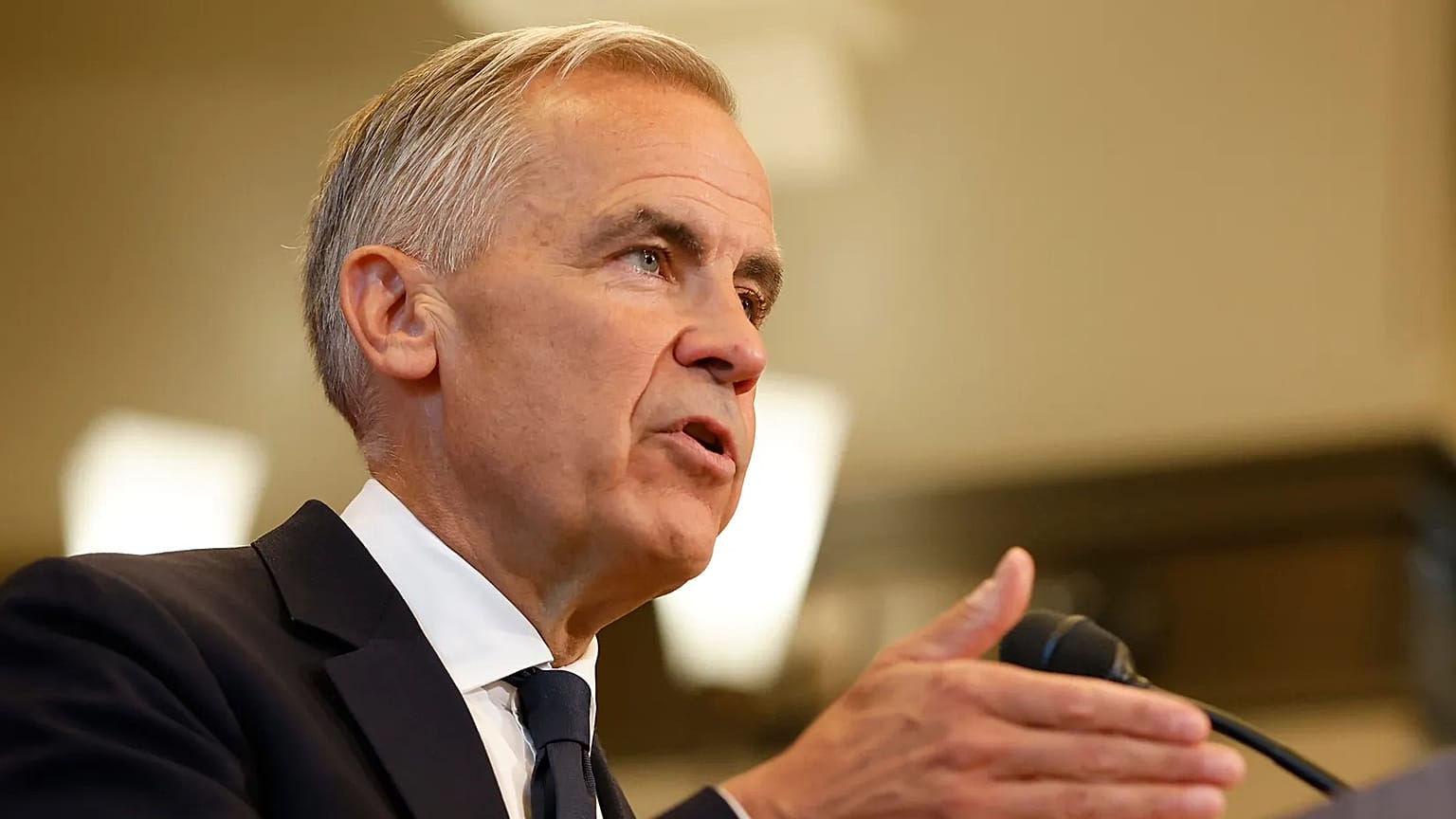
Prime Minister Mark Carney speaks about Canada's response to new US tariffs during a news conference on Parliament Hill in Ottawa.
Copyright AP Photo


By Peggy Corlin
Published on

The boundaries of the EU are inevitably informed by geography – but Canada, which shares the EU’s values and its vision of the world order, could challenge the bloc’s limits and open the door to a new form of association with Brussels.

General Charles de Gaulle used to talk about Europe stretching “from the Atlantic to the Urals”. At the time, he was defending a geopolitical project designed to reunify the continent as the Cold War split Europe into two blocs.

But in the midst of the current global geopolitical shift, could the Atlantic border extend to Canada?

Perhaps de Gaulle, who had a fierce desire for independence from the US, would have sympathised with Ottawa’s concerns and said “oui”.

The arrival of Canada’s Prime Minister Mark Carney in Strasbourg in mid-September to attend the State of the Union address by European Commission President Ursula von der Leyen and then address the EU’s parliamentary assembly will be the first step in a rapprochement between Ottawa and Brussels.

Since last week, Canada has been waging a trade war against its historical ally, the US, a move that could lead Ottawa closer toward the EU. European Parliament President Roberta Metsola said in a social media post that the visit would be “an opportunity to deepen EU-Canada ties and strengthen our bond.”

But what shape will this new bond take – and would it be beyond the pale to think of EU membership?

An ocean apart

“Asking the question puts us somewhere between hope and constructive provocation,” Italian liberal MEP Sandro Gozi, from the parliamentary committee on constitutional affairs, told Euronews. The MEP thinks that the new geopolitical order makes the issue unavoidable.

According to a poll by Nanos Research published in April, 28% of Canadians support full EU membership, while 29% “somewhat” support it.

Geography, however, is a fundamental issue. Article 49 of the Treaty on European Union states that “any European State which respects the values referred to in Article 2 and is committed to promoting them may apply to become a member of the Union.”

The values referred to are “human dignity, freedom, democracy, equality, the rule of law and respect for human rights, including the rights of persons belonging to minorities”, but the term "European state" would appear to put a geographical limit on EU membership.

“The notion of a 'European state' is imprecise for countries on the continent’s margins, where questions may arise over Europe’s geographical boundaries, but it is clear-cut for countries that are manifestly outside the European geographical space,” Sebastien Maillard, special adviser at the Jacques Delors Institute, told Euronews.

In 1987, the European Communities rejected Morocco’s membership application as the country was regarded as an African state and not a European one, and the question was then debated after Turkey applied the same year. Turkey has only around 5% of its territory in Europe, with the rest in Asia. (Membership negotiations with Ankara have since been frozen.)

In the east, some geographers argue that the Caucasus is part of Europe, while others, on the contrary, consider it part of Asia.

“But there is no doubt that a Canadian in Vancouver feels far away from Europe,” Maillard added. “The EU is regional, it is not intended to have a global scope.”

Nonetheless, shared values and a common vision of the current geopolitical order, in which the US is challenging its historical alliances, are bringing Canada and the EU closer.

Last May, in Armenia, Carney travelled for the first time to a meeting of the European Political Community, the political forum of European countries launched after the start of the war in Ukraine to discuss strategic issues in Europe. Ottawa is also, with the US, the only non-European member of NATO, and is also part of the G7, as are EU members France, Germany and Italy.

Last January, in a speech at the World Economic Forum in Davos, Switzerland, Carney took note of the new geopolitical realities facing the West and urged fellow 'middle powers' to come together.

"Middle powers must act together because if we're not at the table, we're on the menu," he said, adding that powerful nations were exploiting economic leverage to get their way.

A 'transatlantic United Kingdom'

Another point of reference for what a Canada-EU relationship could look like lies just across the English Channel.

“Canada is somewhat like the “transatlantic United Kingdom” in relation to Europe: a state that is not a member of the European Union, but with which we share a genuine community of interests and values,” Eric Maurice, an expert from the European Policy Center, told Euronews.

After Brexit, the UK and the EU clinched the largest and most open trade and cooperation deal the EU has ever had. It has neither tariffs nor quotas, and has a broad scope encompassing not only goods but also public procurement, energy, fisheries, security cooperation and the participation of the UK in some EU programmes such as Horizon Europe, a research and innovation programme.

“In this new historical movement we are living through, we need to show creativity and imagination,” Gozi said.

While conceding that it is difficult to envisage Canada becoming a full member of the EU any time soon, he believes that “increasingly, if we look at the United Kingdom or Norway – which is part of the single market and cooperates with the EU in the field of defence – and now Canada, there is a need to develop new forms of association and special partnerships.”

The EU and Canada already have a trade deal, but there is room to push it further. Turkey and the EU share, for instance, a customs union. Access to the single market, where EU member states share four core freedoms of movement – of goods, persons, services and capital – is another step.

“Access to the single market would mean, however, that Canada would agree to align with European law without having a say in shaping it,” Maillard said. “Because when you are part of the European Economic Area, you adopt EU legislation without having a hand in shaping it. So that can be democratically frustrating.”

According to Gozi, the EU should consider a “special association” status with Canada that could include enhanced political dialogue, with invitations for the Canadian Prime Minister or Canadian ministers to participate in the work of the Council – where EU leaders meet and EU ministers vote on legislation – as well as joint work on defence.

The EU should seize a membership application from Canada as a political opportunity to brainstorm on reforms, Gozi said.

“The future of the European Union is to become a leading player in forging new alliances among democracies."


‘Damaging the Antarctic damages us all’ – scientists warn of the potential impacts of coastal freshening


University of Plymouth

The giant amphipod species Paraceradocus miersi 

image: 

New research by the University of Plymouth and the British Antarctic Survey focused on the giant amphipod species Paraceradocus miersi, found in abundance in Antarctic waters and relatives of the sandhoppers on temperate beaches

view more 

Credit: John Spicer/University of Plymouth


Many of the Antarctic’s smallest inhabitants have evolved over millions of years so their body fluids are similar in chemical composition to that of sea water. However, a combination of melting glaciers, increased rain and extreme weather events means that waters in some of the remotest parts of the planet are increasingly being exposed to a reduction in salt levels.

Scientists refer to this phenomenon as freshening, and a new study has highlighted the impact this could have on species living in the shallow coastal waters off Antarctica. It has led researchers to warn that continued coastal freshening may pose a significant threat to many marine invertebrates living in the region, but that it could also change the nature of the global ocean.

The research was conducted by scientists at the University of Plymouth and the British Antarctic Survey (BAS), and builds on previous work by the organisations to assess the impact of changing ocean conditions on some of the planet’s smallest, but most important, inhabitants.

Professor John Spicer, Professor of Marine Zoology at the University of Plymouth and the study’s lead author, has spent almost 40 years examining the effect of climate change on marine organisms.
He said: “I was working at the Rothera Research Station on the Antarctic peninsula in 2017 when there was an extreme freshening event. I was interested in the effect this would have on one of the region’s largest amphipods, and we found that even if the water is diluted fractionally, the amphipods lose their salts, gain water and their gills are damaged.

“This is important for the whole planet as while Antarctica and its wildlife are wonderful, they are also essential to a functioning environment. Damaging the Antarctic damages us all, and if there is freshening it will not have to be very strong before the health of many invertebrate species will be severely impacted.”

Published in the Marine Environmental Research journal, the new research focused on the giant amphipod species Paraceradocus miersi, found in abundance in Antarctic waters and relatives of the sandhoppers on temperate beaches.

Using creatures collected from Ryder Bay on the Antarctic Peninsula, researchers assessed how their body fluids and internal organs responded when exposed to a simulated freshening experiment. They found that when exposed to reduction in salt levels within the water, the species was still able to regulate some of the key chemicals – including calcium – which are critical to its bodily functions.

However, its overall regulation of the ions that make up the full concentration of sea water is impaired meaning the amphipods lose their salts, gain water and their gills are damaged. This, the researchers say, could have led to significant deaths among shallow-dwelling individuals during the 2017 freshening event and other similar events before and after it.

Dr Simon Morley, an Ecophysiologist at the British Antarctic Survey and a study co-author, added: “As climate change continues, environments will change beyond the conditions that animals living there can cope with. In the seas around Antarctica, the biggest signal of climate change is the melting of ice and this is adding large quantities of freshwater into the oceans. This lowering of salinity could have dramatic impacts, reshaping the communities on the sea floor. Our study provides critical evidence of what could happen to different species in the future.”  


‘Damaging the Antarctic damages us all’ [VIDEO] 

Professor John Spicer, Professor of Marine Zoology at the University of Plymouth and the lead author of the new study published in Marine Environmental Research, has spent almost 40 years examining the effect of climate change on marine organisms


Off-equatorial warming triggered air–sea antagonism that suppressed 2024 La Niña


Institute of Atmospheric Physics, Chinese Academy of Sciences
Upper panel illustrates Bjerknes feedback sustains La Niña; lower panel shows Off-equatorial warm pools generate westerly anomalies, suppressing La Niña in 2024. 

image: 

Upper panel illustrates Bjerknes feedback sustains La Niña; lower panel shows Off-equatorial warm pools generate westerly anomalies, suppressing La Niña in 2024.

view more 

Credit: Jiayi Shen


ENSO (El Niño-Southern Oscillation), the dominant interannual air-sea oscillation, shapes worldwide seasonal weather. Unfortunately, its prediction skill has declined since 2000, especially for weak neutral events like the 2024 case. Most climate models overestimated the intensity of cold ENSO conditions that year, sparking a critical forecasting conundrum. Early spring ocean subsurface cooling initially favored La Niña, yet the event stalled and stayed neutral, confusing most multi-model ensembles.

Addressing this bias, Prof. Fei Zheng's research team from Institute of Atmospheric Physics, Chinese Academy of Sciences, China, carried out a new study revealing that off-equatorial Pacific warming acts as the core factor halting La Niña development, delivering key insights to mitigate systematic forecast biases. These results were recently published in Atmospheric and Oceanic Science Letters.

The team used the ENSO Ensemble Prediction System and pattern clustering to split 100 March 2024 forecast members into best and worst performers for comparison. The analysis found clear air-sea decoupling from May to July. Off-equatorial warm sea surface temperature anomalies in the northeastern and southeastern Pacific induced equatorial westerly wind anomalies via wind-evaporation-SST feedback. These westerlies blocked cold ocean signals from spreading eastward and broke the Bjerknes feedback, arresting La Niña at an early stage.

Poor-performing simulations failed to capture subtropical warming, generating fake strong cooling and overestimating La Niña intensity. Extra tests with GloSea6 and grouped ensemble samples further verified this conclusion.

"Subtropical Pacific signals are decisive for ENSO phase shifts, yet most models poorly represent them," said Dr. Jia-Yi Shen. The team will refine ensemble forecasting frameworks to fully integrate off-equatorial ocean signals, aiming to deliver more reliable seasonal climate predictions for disaster prevention.