Sunday, August 30, 2026

Unsettling question raised over Trump admin's role in devastating Nepal floods


Alexander Willis
August 29, 2026 
RAW STORY
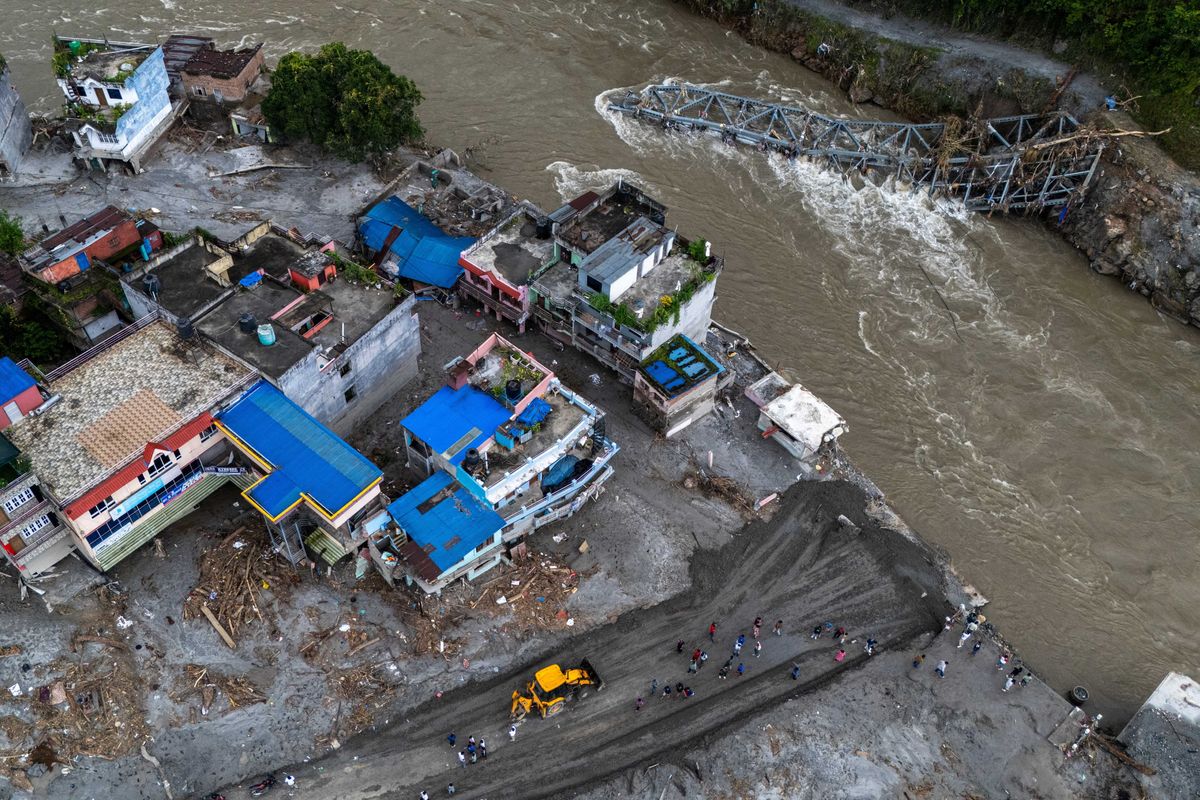

A drone view of houses covered in mud and the broken bridge after deadly flash floods and mudslide, at Devighat, Nuwakot district, Nepal, August 29, 2026. REUTERS/Athit Perawongmetha

The devastating flash floods in Nepal this week that killed at least 670 people and left around 3,000 missing — including 90 Americans — might have claimed fewer lives if not for the actions of the Trump administration, former USAID disaster-response chief Jeremy Konyndyk suggested on Saturday.

A series of catastrophic flash floods hit Nepal near its border with China on Wednesday causing unprecedented destruction. The event is believed to have been caused by a glacier collapse in the Himalayas.

Konyndyk, who led USAID’s response to the COVID-19 pandemic under the Biden administration, raised an unsettling question as to whether the Trump administration and its Department of Government Efficiency, or DOGE, may have crippled locals’ ability to adequately prepare for such a disaster.

“DOGE famously used keyword searches for terms like ‘climate’ to terminate federal grants,” Konyndyk wrote, referring to the DOGE-led blitz to gut funding for USAID, the U.S. Agency for International Development.

“Among the victims: a collab between USAID and NASA for flood prediction, early warning, disaster readiness, glacier inventories, and mapping dangerous glacial lakes… in Nepal.”

Spearheaded by Tesla CEO Elon Musk, DOGE oversaw around $60 billion in cuts to U.S. foreign aid under the Trump administration, leaving “few surviving” USAID projects in its wake. Among the USAID programs Konyndyk said was affected was SERVIR, a program that produced detailed and advanced flood forecasting with “days lead time” that “allows people to plan and prepare for [floods].” The program also specifically monitored the “potentially dangerous glacial lakes of Nepal.”

A notice from NASA supports Konyndyk’s assertion that SERVIR was impacted by DOGE cuts.

“Earlier this month USAID notified SERVIR partners that they have terminated all agreements and contracts with NASA and the SERVIR network,” the notice, published in late March of 2025, reads. “Without the partnership with USAID, NASA cannot continue the SERVIR program.”


What to know about the Mount Kailash pilgrimage site after floods in Nepal and Tibet

BEIJING (AP) — Mount Kailash holds sacred significance for Hinduism, Buddhism, Jainism and the Tibetan Bon tradition. Each associates the mountain with different beliefs and sacred histories.


Maria Teresa Hernandez
August 28, 2026


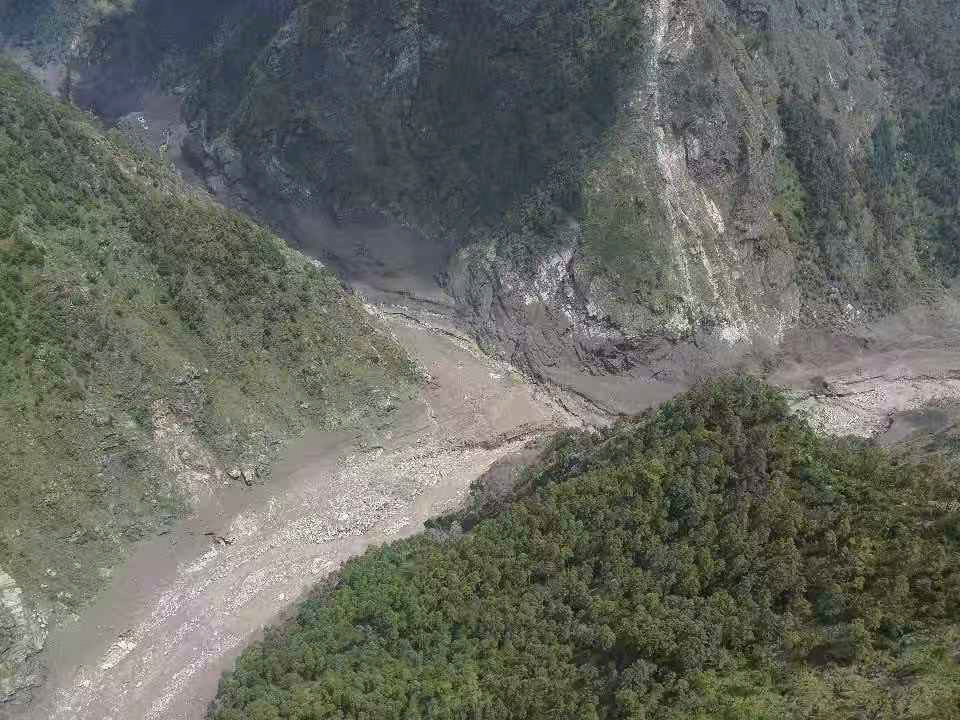
BEIJING (AP) — Devotees on a pilgrimage to Mount Kailash — a sacred site in the Himalayas — were among the many people missing after the massive floods along the border between Nepal and China.

Here’s what to know about the mountain and its centuries-old role as a pilgrimage site.

Mount Kailash is sacred for several religious traditions

Mount Kailash is a Himalayan peak in southwestern Tibet, near China’s borders with Nepal and India. It rises more than 6,400 meters (21,000 feet) above sea level and lies close to Lake Manasarovar. Both have long been part of Sanskrit religious and literary traditions.

Mount Kailash holds sacred significance for Hinduism, Buddhism, Jainism and the Tibetan Bon tradition. Each associates the mountain with different beliefs and sacred histories.

According to the International Centre for Integrated Mountain Development, the mountain is considered the home of Shiva, the Hindu god of destruction, and Parvati, a Hindu goddess associated with marriage, fertility and motherhood.

Followers of the Tibetan Bon tradition regard it as a seat of spiritual power and associate the region with Tonpa Shenrab, the tradition’s founder.

Geographer Emily Yeh, a professor at the University of Colorado Boulder, who has conducted research in Tibet, wrote in 2017 that Kailash is associated with the mythical Mount Meru, considered the center of the world in Hindu and Buddhist cosmology.

The surrounding landscape also figures in local legends and Himalayan traditions. “Shared Sacred Landscapes,” a book published by ICIMOD in 2017, gathers some of them.

One story tells of Guru Nanak, the founder of Sikhism, who visits villagers longing to make the pilgrimage to Mount Kailash. Nanak teaches them that the true pilgrimage is a spiritual journey within themselves.

Pilgrims travel to the mountain for purification

India’s government operates an official Kailash Manasarovar pilgrimage from June through August or September each year, with routes through the states of Uttarakhand and Sikkim. Private operators also organize pilgrimages through Nepal.

Pilgrims traditionally walk around Mount Kailash rather than climb it, completing a roughly 33-mile (53-kilometer) circuit around the mountain.

The journey around the peak is believed to cleanse pilgrims of their sins and can take about three days to complete. Hindus and Buddhists traditionally circle the mountain clockwise, while followers of Bon travel counterclockwise.

At nearby Lake Manasarovar, some Hindu pilgrims bathe in its waters as a ritual of spiritual purification.

Yeh wrote that Tibetan pilgrims stop at monasteries and other sacred sites along the route, touching prayer beads or their foreheads to features believed to bear sacred imprints. Other rituals are meant to test a pilgrim’s merit, sin or fortune.

Pilgrims are among the missing after floods

The death toll for the disaster continues to grow, and hundreds more are missing in Nepal and China.

The missing include at least 178 people from India, most of whom were believed to be on the pilgrimage. The missing also includes people from U.S., Australia, Britain and Canada.

Indian spiritual guru Jaggi Vasudev, also known as Sadhguru, said in a post on X that 77 people returning from the mountain with groups organized by his Isha Foundation were at an immigration center in Gyirong, Tibet, when the floods struck.

___

Associated Press religion coverage receives support through the AP’s collaboration with The Conversation US, with funding from Lilly Endowment Inc. The AP is solely responsible for this content.

Floating Wetlands a Promising Way to Decrease Wastewater Emissions

Source: The Conversation

Treating dirty waste water solves one environmental problem but creates another by releasing large amounts of climate emissions. As microorganisms break down sewage, they release carbon dioxide, methane and nitrous oxide – three potent greenhouse gases.

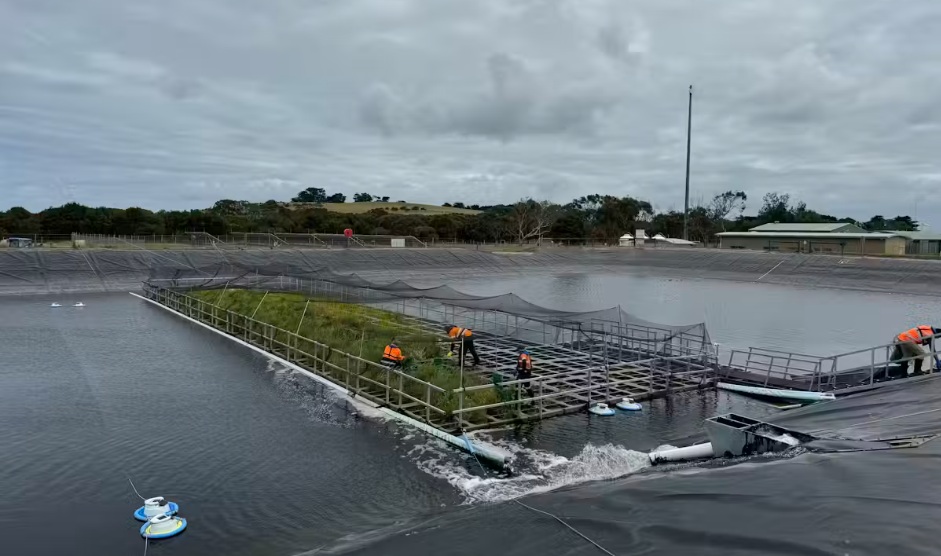
Our new research found a surprisingly simple way to cut greenhouse gas emissions from open wastewater treatment lagoons: growing plants on buoyant rafts.

Water treatment companies have made progress in reducing emissions from their operations, including switching to renewable energy. But the greenhouse gases produced by the biological and chemical processes used to treat wastewater – particularly in open treatment ponds – are harder to tackle.

The first, full-scale trial of its kind worldwide, our project on Phillip Island in Victoria showed reductions in greenhouse gases by nearly a third over two years.

The climate problem hiding in wastewater

During wastewater treatment, organic matter and nutrients are broken down and removed by  microorganisms, cleaning the water. But these microbial processes can produce powerful greenhouse gases, including carbon dioxide, methane and nitrous oxide.

Methane and nitrous oxide pack a much greater climate punch than carbon dioxide. Over a 100-year period, methane is about 27 times more powerful at trapping heat than carbon dioxide, while nitrous oxide is about 273 times more powerful.

Globally, wastewater treatment is estimated to account for around 7% of human-caused methane emissions and 10% of nitrous oxide emissions. Wastewater treatment companies currently have relatively few options for reducing these emissions, particularly from open wastewater lagoons.

Putting plants on the water

Floating wetlands are buoyant platforms planted with native wetland species, such as rushes, reeds and sedges. The plant roots hang down into the wastewater, creating a large surface area where roots, microorganisms and water can interact. The plants can absorb nutrients and pollutants, while microbial communities living on the roots can consume organic matter.

Floating wetlands are already being used to improve water quality in wastewater treatment lagoons, storm water ponds and other polluted water bodies around the world. One advantage is they can be installed on existing ponds and lagoons, without additional land or major changes to treatment infrastructure.

To investigate if they could also reduce climate emissions, we installed a floating wetland the size of nearly two tennis courts (330 m2) in an operating wastewater lagoon on Phillip Island, off the Victorian coast.

The lagoon contained two parallel channels. We installed the wetland in one, and planted it with three Australian native plant species: common reed (Phragmites australis), jointed rush (Baumea articulata) and marsh club rush (Bolboschoenus caldwellii). We used the other channel as a control, allowing us to compare them.

For two years, we continuously measured carbon dioxide, methane and nitrous oxide emissions at the start and the end of each channel. We also measured water quality and nutrient concentrations each month.

A drop in emissions

The results were striking. Overall, greenhouse gas emissions from the channel containing the floating wetland were 22-31% lower than emissions from the control channel. Methane emissions fell by 32-66%, while carbon dioxide and nitrous oxide emissions were reduced by 24-36% and 18%, respectively.

Importantly, the reduction in emissions occurred within four to seven months of installing the floating wetland. We expected this drop in emissions to be linked to the plants removing nutrients from the wastewater, because nutrient removal can reduce the microbial processes that produce greenhouse gases.

However, we could not detect substantial reductions in nutrient concentrations until about 12 months into the study. This suggests that nutrient removal alone cannot fully explain why greenhouse gas emissions began to fall so early. There is still much we don’t know about exactly how floating wetlands reduce greenhouse gas emissions.

What does this mean for wastewater emissions?

Floating wetlands may be a promising way to decrease wastewater emissions. But there are still important questions.

Our experiment was confined to two channels within a large wastewater lagoon, rather than measuring emissions across the entire lagoon. Accordingly, the emission reduction potential across the entire lagoon remains to be tested.

We also conducted our study at a single site. Further studies are needed to test whether these results hold across different wastewater systems and lagoon settings.

There are practical questions too. The floating wetland used in our trial relied in part on plastic-based materials. Other floating wetland designs using natural or biodegradable materials may offer a reduced environmental footprint.

Nevertheless, our results provide encouraging evidence that a relatively simple intervention can reduce greenhouse gas emissions from open wastewater lagoons.

We would like to thank Dr Kavindra Paranage, Dr John Award, Dr Divina Navarro, Dr Chris Walker, Meg Humphrys, Mark Dishon, Zoe Geyer, Ilse Hall, Tamika Johnston, Melinda Glew and Johanna Randall for their contributions to and support of the project.


This article was originally published by The Conversation; please consider supporting the original publication, and read the original version at the link above.

Lukas Schuster is a Research Fellow in Environmental Sciences, RMIT University.

Martino Malerba is an ARC DECRA Fellow, RMIT University.

Professor Peter Macreadie is Director of the Centre for Nature Positive Solutions, RMIT University.

The Rush To Power Data Centers is Weakening the Clean Air Act

Source: Grist

Across the country, the electricity needs of data centers have been a major driver of the widespread resistance to speedy development. The rapid buildouts of data centers have raised concerns that residential and small business utility customers will end up shouldering the costs, and about the health and climate impacts because much of the new capacity relies on burning fossil fuels. The rush has also given rise to a popular refrain: Make the data centers provide their own electricity.

Pennsylvania Governor Josh Shapiro recently announced a moratorium on “any AI data center that does not bring, develop, and pay for their own power,” citing electricity costs in a post announcing the move on Instagram. Texas Governor Greg Abbott blocked new data centers from connecting to the state’s power grid. A drumbeat of calls for data centers to make their own power has been sounding for months among regulators, consumer advocates, and other stakeholders. Proponents of this approach argue it will shield utility ratepayers from data center costs. And it might.

But new guidance from the Environmental Protection Agency about “islanded” power plants — those built to serve a single facility rather than the electricity grid — shows there aren’t as many reliable safeguards against the environmental and climate impacts. The EPA published guidance last month clarifying that the Clean Air Act’s Acid Rain Program “does not apply to power generation facilities that are not connected in any way to the larger electricity grid.” It’s part of a broader effort, experts said, to loosen regulations for data centers and the power plants built to serve them.

The Acid Rain Program is just one component of the complex federal air pollution law, which can require one facility to obtain numerous Clean Air Act permits, according to Mindy Goldstein, director of Emory Law School’s environmental law program. Exempting islanded power plants from the acid rain provisions means one fewer permit that independent power plants built for data centers need to obtain, though the EPA’s guidance and several experts contend such plants were never covered by the program.

In 1990, the Acid Rain Program was added to the Clean Air Act to address the emissions of sulfur dioxide and nitrogen oxide from large power plants. From the beginning, the program applied only to utility power plants, or those producing electricity for sale primarily for use by the public. It largely captured coal plants that were old enough to have avoided other Clean Air Act regulations, according to University of Texas energy law and politics professor David Spence. Newer gas plants that were already subject to the rest of the Clean Air Act joined later.

Compliance with the Acid Rain Program requires power plants to continuously monitor their emissions and report that data — something, Goldstein said, that states can’t mandate outside of the Acid Rain Program or another program that applies in fewer states. The monitoring inherent to the program has worked; sulfur dioxide and nitrogen oxide emissions from power generation have dropped significantly since the ’90s. 

“The anchor of the Clean Air Act is a set of programs that are, in the end, the responsibility of states and counties to implement targeting that local pollution,” said Joe Goffman, a former EPA official who’s now with the Environmental Protection Network. “Local regulators will have to decide, and communities will have to ultimately demand, some kind of system that reveals what the emissions profile of these things are.”

Now, following the EPA’s guidance, state agencies have lost one of their most reliable tools to gauge the impact of these data center power plants.

The dedicated data center power plants now being proposed and built come as the entire electric utility sector races to adjust to a new reality. After years of fairly steady demand, the advent of generative artificial intelligence and the hyperscale data centers that run it presented the electricity industry with massive projected load growth for the first time in decades. It’s shifted the trajectory of an industry that was trending away from fossil fuels.

“For a long time, we just didn’t have anybody building gas plants at all because wind and solar are cheaper,” Spence said. “Then along came data centers with their incredibly large demands for power that has to be 24-7 and a lot of money to spend on these things.”

OpenAI has announced a 9.2-gigawatt natural gas plant, to be built by the U.S. Energy Department, at the site of a data center in Ohio. In Texas, Amazon is planning a 7.65-gigawatt gas plant and Nexus has proposed a 6-gigawatt plant. These projects would be some of the largest power plants of any type in the country, but smaller plants are cropping up, too. The EPA’s guidance on islanded power plants cites a 500-megawatt natural gas plant being proposed for an unspecified data center. Microgrid developer VoltaGrid has applied for a permit to build a 90-megawatt facility in Georgia to power a Serverfarm data center.

It will be up to state environmental agencies to issue permits for these projects. Though Goldstein stressed that EPA’s guidance is only that — it’s not a binding rule. State regulators can still do more than the minimum that federal rules demand.

In a statement, the EPA said the Acid Rain Program guidance “expands opportunities for companies to develop and operate islanded power generation facilities for data centers. This will give developers greater flexibility in where and how quickly they can build new facilities while helping to protect the environment and reducing burdens on communities’ electric grid.”

EPA has also proposed a more formal rule change that would further streamline the permitting process for data centers and power plants alike. Under that proposal, new pollution sources classified as “minor” would no longer require public notice and comment before permits are issued.

“The proposal also does not demand that states make particular revisions to their programs and does not alter emission standards or weaken environmental protections,” the agency said in a statement. “This approach is intended to reduce administrative burden and responsibly speed up permitting, supporting American economic development and energy dominance.”

That change, if implemented, would apply to any new power plant classified as “minor” rather than only islanded ones. But the overall trend of federal policy adds up, Goldstein said.

“This is a piecemeal approach to trying to clear the way for data center siting and for the siting of corresponding electric generating units,” she said. “It seems like a continuous knockdown of dominoes to clear the way for these data centers, and they’re leaving states and communities to hold it back.”

Some plants being built to serve data centers, meanwhile, are trying to skirt even local permitting. 

VoltaGrid and Serverfarm applied for state permits for their proposed power plant and backup generators in Georgia, but the Georgia Environmental Protection Division recently issued violation notices to both companies for beginning construction before getting those permits. A lawsuit by the NAACP alleges that xAI did not even apply for permits before building a 495-megawatt power plant in Mississippi to power a data center in Memphis, Tennessee. 

Within the broader context of the utility sector’s race to meet data center demand with fossil fuels, the rash of non-grid gas plants that fall outside some of the regulatory and environmental controls in place for grid-connected plants may raise some eyebrows — though Spence believes it’s unlikely to do more than that in the current political climate.

“If AI had been invented in 1975, all of this growth would have been regulated because politics of regulation was starkly different then than it is now,” he said. “The partisan environment in Congress is not conducive to regulating this explosive growth.”


This article was originally published by Grist; please consider supporting the original publication, and read the original version at the link above.

Do Rural Residents Have the Power to Say No?

Source: Barn Raising Media

Organizing still won real things, to be sure, from North Carolina’s CAFO moratorium in 1997 to Chris Jones’s clean-water campaign for agriculture secretary in Iowa today. When it comes to CAFOs, the lessons came late, but in the age of artificial intelligence, those same lessons can give rural communities a leg up.

While CAFOs crept into rural America, data centers are arriving as a land rush. This speed is both terrifying and an advantage. Texas alone has some 248 proposed data center projects, even though 56% of Texans tell pollsters they do not want one nearby, which means that, unlike the CAFO era, rural communities are asking questions before the statutes are locked in. And rural people need their voices to be heard. According to Pew Research Center, of the more than 1,500 data centers proposed or under development, 67% are in rural communities.

The ultimate question will be: Do rural residents have the power to say no? 

The answer is playing out across the country. In November 2025, 800 people filled a board meeting to oppose a billion-dollar Meta-linked project in Howell Township, Michigan, and the developer withdrew. In February, the city council of San Marcos, Texas, rejected a $1.5 billion campus after nearly nine hours of public comment, then became the first Texas city to ban data centers through its zoning code. Fort Worth, Texas, is drafting data center zoning rules of its own. 

Nationally, the poorest census tracts resist data center projects at five times the rate of the richest. Projects that meet resistance are cancelled at several times the rate of those that do not. One tracker counts tens of billions of dollars in blocked or delayed projects.

Opposition to data center projects is one of the few issues that many Americans agree on. A found that only 14% of respondents would support a data center being built in their community. On July 18, organizers held 142 protests across 42 states in the and artificial intelligence. 

Data center hyperscalers are copying the CAFO playbook as best they can. West Virginia has stripped its counties and towns of the power to regulate data centers; similarly, the state’s right-to-farm law prohibits local governments from bringing civil or criminal action against an agricultural operation as long as it meets state and federal laws, permits and regulations. When Hill County, Texas, passed the state’s first county moratorium in May, a developer sued for $100 million and the county rescinded within a week, because Texas counties can zone against neither a data center nor a feedlot. Hood County pulled its own moratorium after state Sen. Paul Bettencourt (R-Houston) asked whether counties even hold that power; the same senator calls the San Marcos ban illegal. 

Right-wing organizations like the American Legislative Exchange Council (ALEC), behind the pro-CAFO model legislation of right-to-farm laws since the 1990s, likewise appear intent on denying local control in the data center buildout. At its annual meeting in July, ALEC considered a model legislative framework that would undercut local bans and moratoriums and give data centers the “clear authority to secure power … subject only to objective safety and interconnection standards,” as the Center for Media and Democracy reported. The meeting featured speakers from Google and Nvidia, along with a Meta sponsorship.

The outburst of anti-data center sentiment ahead of the midterms has forced political leaders to reckon with the issue of local control. This is where data centers and CAFOs diverge. In June, Texas Republican Gov. Greg Abbott, who once hailed Texas as “the epicenter of AI development,” called for a ban on AI data centers in rural neighborhoods and a cut to their billion-dollar-a-year tax exemption after facing rare bipartisan pressure. Florida Republican Gov. Ron DeSantis signed a law to preserve local control over data centers. Michigan’s candidates for governor are split over the server halls sprouting between Lansing and Detroit. Illinois recently reversed course on its data center policy, reeling in the subsidies it had rolled out in 2019. And in July, New York became the first state in the nation to enact a one-year moratorium. 

So, who hasn’t been able to say no? We pulled the locations of CAFOs and data centers in North Carolina and Texas, where the data is easily available, and—yes—got Claude to plot it for us against demographic and county boundaries.

In North Carolina the answer is pretty clear. The state’s 2,482 permitted animal operations cluster in the Black Belt coastal plain where the epidemiologist Steve Wing found hog lagoons a generation ago. Weighted by the number of permits each county holds, those counties are 46% people of color, against 34% across North Carolina’s hundred counties as a whole. Duplin County alone holds over 500 permits and 2.2 million allowable hogs in a county where almost half the population of 49,000 are people of color.

Data centers are the inverse of CAFOs. The state’s data centers sit in counties whiter than the state average, in the Piedmont towns that lost their historic furniture and textile businesses as well as in wealthy Wake and Mecklenburg counties (respectively home to large cities Raleigh and Charlotte). Two of the state’s suspended projects are in adjacent Edgecombe County and Pitt County, where residents informed their resistance based on their history fighting CAFOs. 

In 1995, residents of predominantly Black Kingsboro, in Edgecombe County, successfully blocked a major meatpacker from building a 300-acre slaughterhouse in their backyard through efforts to rezone land. When a $19 billion, 400-acre data center came knocking three decades later, residents opposed it en masse. The developer Energy Storage Solutions withdrew its proposal in July and by August, Edgecombe County enacted a two-year moratorium. 

In Texas the pattern is a little more complex. Rural Texas tends to be whiter than a state average balanced by majority-Hispanic cities. Yet the feedlot Panhandle is majority-Hispanic meatpacking country, with counties like Deaf Smith and Castro where the workforce lives beside the feedyards it staffs. The rural counties now hosting data centers likewise run less white than rural Texas as a whole. 

Other outlier cases in the U.S.: the world’s densest data center cluster is outside Washington, D.C., in Loudoun County, Virginia, among the wealthiest counties in America, while xAI’s Colossus runs beside Boxtown, a majority-Black neighborhood in Memphis. 

The patterning and the possibilities for asking questions about data centers are very different. CAFOs were put next to the disempowered by history. In most of the counties with proposed data centers, there’s no local billionaire hyperscaler whose family has been on the land for generations to champion the project, with the historical ability to make people of color, in particular, suffer the consequences in the ways that CAFOs had. 

In contrast, data centers are being aimed by site selectors in a hurry, looking for cheap land and water, cheap power and thin resistance. But they don’t have their local defenders and hands on the levers of power in the ways that CAFOs do.

At this intersection of race and class is the oldest American proxy for who can, and who can’t, say no. 

Here are the questions that constituents should ask their local governments about new data center projects: 

1. About water

Does the permit say the cooling loop is closed, with maximum gallons per day, public metering and penalties? We have yet to find a binding closed-loop commitment in any permit. Who owns the aquifer data, and who pays for the test wells?

2. About power

Electric cooperatives, unique to rural America, have long been a way for farmers and rural people to claw back some power over their destiny. These cooperatives were established with a “duty to serve” the areas that investor-owned utilities refused to serve because the load factors were low. By pooling their demand, cooperatives could connect their members to a grid and lower their prices. 

In the age of artificial intelligence, public utilities—rural electric cooperatives included—face a dilemma. The more a cooperative buys from its wholesale supplier, the greater its load factor and therefore the lower the cooperative’s average cost of power. When a data center project fields new requests for power, it can be life changing. Having a client with a reliable 24/7 demand for electricity means a predictable increase in the co-op’s load factor. All that new volume could, in principle, make every member’s bill cheaper and bring new system upgrades. It’s tempting to shut up and take the deal. 

But as with any gift horse, every farmer knows to check the teeth. Data centers often have greater access to capital than their would-be electric cooperative providers, and their rise as buyers means a shift in the balance of bargaining power in the marketplace. Will attitudes toward universal service obligations remain in place? Will consumer protection policies evolve? And which regulator should be responsible for developing and overseeing new industry guardrails?

Who pays for the substation and the lines? Port Washington, Wisconsin, found itself on the hook for a $90 million substation it did not need. Is there a curtailment agreement cutting the data center first in a grid emergency, as Texas now requires of loads over 75 megawatts? Are residential rates fenced off in a separate rate class? And for rural electric cooperative members: Does the all-requirements wholesale contract cap the solar and wind members may build, and would a giant new load deepen that dependence? Why do big loads get lower per kilowatt prices as they increase their usage while conservation earns nothing? Will data centers inherit the same pricing structure?

3. About money

What does each abatement cost per permanent job, when a hyperscale facility employs a few dozen people? Will advance payments be required to pay for infrastructure upgrades? Will they accept provisions for interruptible power during times of peak demand to prevent rolling blackouts? Are there clawbacks? Is there a decommissioning bond for the day the hardware is scrap, as we now demand of wind farms?

4. About democracy

Did any utility or government official sign a Non-Disclosure Agreement (NDA)? Can our county or township legally say no, and if not, which law took the power and who voted for it?

Everything CAFO country learned, it learned too late, after the wells were ruined, after the smell lowered adjacent property values and health outcomes, after the statutes were written. Data centers are arriving early enough that the questions can still be asked in time, even as the hyperscalers find friends in Washington D.C., and in statehouses around the country, who’ll say yes to them so that local communities won’t be able to say no. 

If we want to stop Amazon, Meta and OpenAI riding roughshod over our communities and land, it will be because average people, urban and rural alike, will have joined forces to stop the trillionaire class from building their wealth off our backs.


This article was originally published by Barn Raising Media; please consider supporting the original publication, and read the original version at the link above.
avatar

Raj Patel is an author, film-maker and academic. He is a Research Professor in the Lyndon B Johnson School of Public Affairs at the University of Texas, Austin. He has degrees from the University of Oxford, the London School of Economics and Cornell University, has worked for the World Bank and WTO, and protested against them around the world. He has testified about the causes of the global food crisis to the US, UK and EU governments and is a member of the International Panel of Experts on Sustainable Food Systems. In 2016 he was recognized with a James Beard Foundation Leadership Award. In addition to scholarly publications in economics, philosophy, politics and public health journals, he regularly writes for The Guardian, and has contributed to the Financial Times, Los Angeles Times, New York Times, Times of India, The San Francisco Chronicle, The Mail on Sunday, and The Observer.